
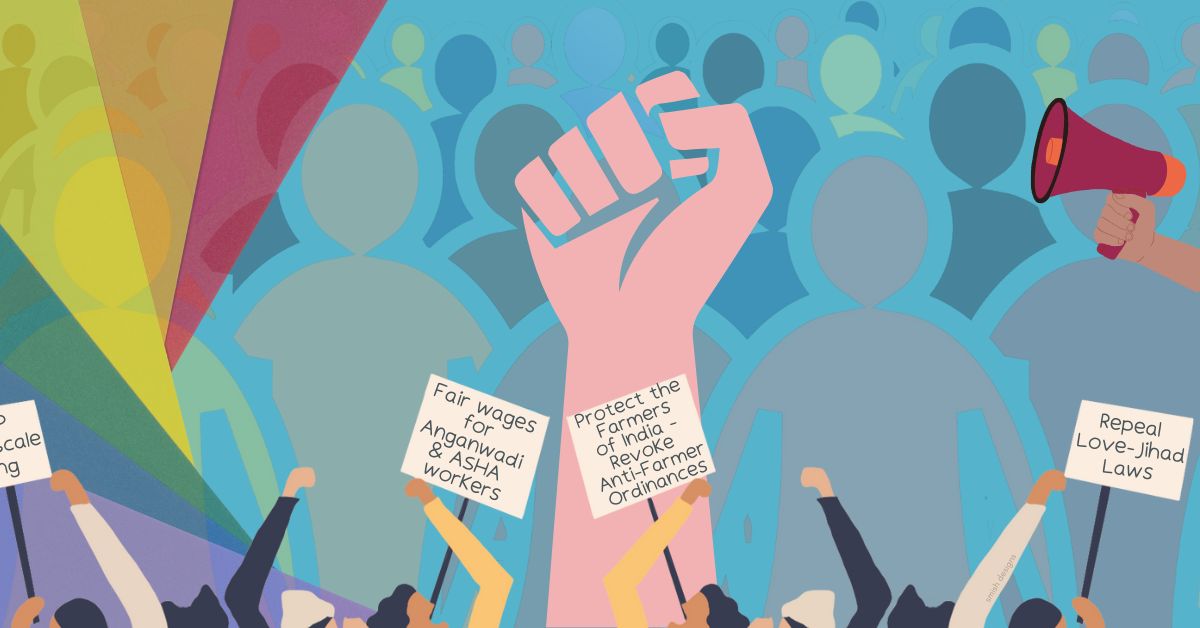
The year 2025 was marked by sustained public mobilisation across India, reflecting a wide range of social, economic, environmental, and political concerns. Rather than being defined by a single nationwide movement, the year saw protests emerge in diverse locations and sectors, often in response to specific policy decisions, administrative actions, or prolonged governance failures. These mobilisations were shaped by local contexts but were connected by shared demands for accountability, participation, and protection of rights.
Protest in 2025 was neither exceptional nor episodic. It formed part of the routine functioning of a democratic society in which citizens repeatedly turned to collective action when institutional mechanisms proved inadequate or unresponsive. From workers and farmers to students, environmental defenders, and religious minorities, different groups asserted their claims through peaceful assemblies, strikes, marches, sit-ins, and, at times, confrontational resistance.
Farmers returned to the streets years after the repeal of the farm laws because core demands remained unaddressed. Workers mobilised because new labour regimes threatened job security and social protection. Students protested because universities were being reshaped without consultation, autonomy, or academic rationale. Indigenous communities resisted development projects that endangered land, forests, rivers, and cultural survival. Women-led care workers demanded recognition of labour that the state depends upon but refuses to formalise. LGBTQIA+ communities marched not for symbolic inclusion, but for tangible civil rights denied through legislative inaction.
Equally significant was the geographic spread of these protests. They were not confined to metropolitan centres or politically oppositional states. Demonstrations occurred in border regions, hill states, conflict zones, university towns, industrial belts, forest villages, and district headquarters. This dispersion reflected a deeper reality: that the pressures producing dissent were systemic rather than sectoral.
The State’s response formed a critical backdrop to these mobilisations. Increasingly, protest was governed through prohibitory orders, preventive detentions, mass registration of FIRs, denial of permissions, barricading of public spaces, internet restrictions, and aggressive policing. Laws originally framed as exceptional—such as national security statutes or public safety legislation—were routinely invoked against demonstrators, students, and organisers. The language of governance shifted decisively from negotiation to control.
This year-ender documents these protests chronologically, treating each mobilisation as a distinct political event rooted in its own context. It does not seek to romanticise dissent or frame protest as crisis, but to record how public action functioned as a means of negotiation, contestation, and constitutional engagement throughout the year.
January 2025: Fragmented beginnings, shared democratic anxiety
1. Universities push back against the draft UGC regulations, 2025
January opened with Indian universities acting as early warning systems for democratic erosion. Students and faculty across campuses mobilised against the Draft UGC Regulations, 2025, which proposed fundamental changes to the governance of higher education. The regulations sought to centralise power in the hands of the Union government by altering Vice-Chancellor appointment processes, diluting academic qualifications, and legitimising the induction of non-academic ‘industry experts’ into university leadership.
Left-leaning Students’ Federation of India (SFI) organised marches, classroom boycotts, public readings of the draft regulations, and discussions highlighting how these changes threatened institutional autonomy. Faculty associations warned that the proposals undermined peer review, disciplinary expertise, and the principle of universities as self-governing communities. The protests framed higher education as a constitutional public good linked to equality and freedom of thought, rather than as a market-driven enterprise.
2. Trade Unions place economic justice at the centre of the budget debate
Parallel to campus mobilisations, organised labour intervened in the Union Budget process. Ten Central Trade Unions (CTUs) submitted a joint memorandum to the Union Finance Minister ahead of the 2025–26 Budget. The memorandum foregrounded unemployment, inflation, contractualisation of labour, and the erosion of social security.
Workers demanded the filling of vacant public sector posts, expansion of MGNREGA to 200 days with enhanced wages, introduction of an urban employment guarantee, restoration of the Old Pension Scheme, and a halt to privatisation and disinvestment. The memorandum underscored that fiscal policy choices have direct constitutional implications for the right to livelihood and social justice.
3. Farmers reclaim Republic Day as a site of constitutional assertion
On January 26, farmers once again occupied public space through tractor rallies organised by the Samyukta Kisan Morcha across northern and central India. The rallies reiterated unresolved demands following the repeal of the farm laws, including a legal guarantee of Minimum Support Price, loan waivers, compensation for families of deceased protesters, and withdrawal of criminal cases against farmer leaders.
By mobilising on Republic Day, farmers deliberately linked their demands to constitutional promises of dignity, equality, and economic justice. The presence of tractors in urban centres challenged narratives of growth that marginalise agrarian distress.
February 2025: Labour, pensions, and the crisis of secure employment
1. Nationwide government employees’ protests against the new pension scheme
Throughout February, government employees across states organised coordinated demonstrations demanding the restoration of the Old Pension Scheme (OPS). Rallies, organised by 10 central trade unions and independent sectoral federations and associations, were held in state capitals, district headquarters, and outside secretariats, with participation from teachers, clerical staff, engineers, health workers, and employees of public sector undertakings. Protesters argued that the New Pension Scheme (NPS), which links retirement benefits to market performance, fundamentally undermines the principle of social security.
Many participants highlighted that deductions from salaries over decades no longer translated into guaranteed post-retirement income. Retired employees spoke publicly about sharp reductions in expected pensions, while younger workers expressed anxiety about their future in the absence of defined benefits. The protests framed pensions not as a fiscal burden, but as deferred wages and a constitutional obligation of the welfare state.
State governments responded unevenly. While some engaged in negotiations, others invoked prohibitory orders and restricted assemblies. The persistence of these protests throughout the month underscored the depth of discontent among salaried public servants.
2. Trade Union mobilisation against the four Labour Codes
February also saw intensified mobilisation against the four Labour Codes passed earlier but yet to be fully implemented. Central trade unions organised gate meetings, factory-level demonstrations, and citywide rallies in industrial belts and banking centres. Workers argued that the Codes diluted protections relating to job security, union recognition, collective bargaining, and workplace safety.
Union leaders warned that provisions allowing longer working hours, simplified retrenchment processes, and reduced inspection mechanisms would institutionalise precarity. The protests connected labour law reform to broader economic trends—privatisation, contractualisation, and informalisation—arguing that the Codes formalised employer dominance.
Police presence was heavy in several cities, and union leaders were briefly detained during demonstrations. Despite this, protests continued across the month, signalling organised labour’s refusal to accept the Codes without substantive revision.
3. Education sector protests in Kerala against draft UGC Regulations
In Kerala, February witnessed sustained protests by teachers and academics against the Draft UGC Regulations. Under the banner of the All India Save Education Committee, faculty members organised marches, seminars, and symbolic actions including the public burning of draft copies. These protests explained in detail how the regulations threatened academic autonomy by centralising appointments and diluting qualification norms.
Speakers at the protest warned that universities would be transformed into administratively controlled entities, undermining peer review and disciplinary expertise. The protests framed education as a constitutional instrument of social justice rather than a market-driven service. The sustained nature of the protests reflected deep concern within the academic community.
4. Samsung workers continue sit-in against union suppression in Tamil Nadu
Workers at Samsung India Electronics Limited’s Kancheepuram facility continued a sit-in protest that entered its fifteenth day on February 19, following the suspension of three office-bearers of the Samsung India Workers Union (SIWU). The union alleged that the suspensions were retaliatory and aimed at weakening collective bargaining.
The protest centred on two demands: reinstatement of the suspended union leaders and an end to the company’s reliance on contract labour. Workers accused the management of acting without due process, including suspending leaders without issuing show-cause notices.
Family members of workers joined the protest, underscoring the broader social impact of the labour dispute. The union announced plans to escalate the agitation if negotiations failed, including serving a strike notice.
The standoff highlighted ongoing tensions in India’s manufacturing sector over unionisation, labour rights, and state labour department intervention.
March 2025: Gendered labour and environmental resistance
1. Anganwadi and ASHA workers’ indefinite secretariat protest in Kerala
March marked one of the most sustained women-led protests of the year. Thousands of Anganwadi and ASHA workers gathered outside the Kerala Secretariat, launching an indefinite sit-in. These workers—central to nutrition delivery, maternal health, vaccination, and disease surveillance—demanded minimum wages of ₹21,000, recognition as government employees, pension benefits, and retirement security.
Protesters detailed long working hours, expanding responsibilities, and stagnant honorariums that failed to reflect their workload. Many women spoke of debt, health issues, and the absence of social protection despite decades of service. The protest highlighted how the welfare state relies on feminised labour while refusing formal recognition.
Negotiations with the government remained inconclusive, and police barricading restricted movement around protest sites. The sit-in continued through the month, becoming a focal point of labour resistance.
2. University of Hyderabad students defend the Kancha Gachibowli Forest
Students at the University of Hyderabad organised sustained protests against the proposed auction of the Kancha Gachibowli forest for commercial development. Marches, sit-ins, poster campaigns, and night-long vigils framed the forest as an ecological commons vital to the city’s environmental health.
Protesters demanded transparency, environmental impact assessments, and public consultation. They warned that urban expansion without ecological safeguards would exacerbate climate vulnerability. The protests linked environmental protection to democratic planning and the right to the city.
April 2025: Preventive Laws and the Criminalisation of Dissent
1. Statewide Mobilisation Against the Maharashtra Special Public Safety Bill
April saw widespread protests across Maharashtra against the proposed Maharashtra Special Public Safety Bill. Civil liberties organisations, lawyers’ collectives, farmers’ unions, student groups, and political parties organised district-level marches and public meetings. Protesters warned that the Bill’s vague definitions would enable preventive detention of activists without adequate judicial oversight.
Legal experts explained provisions clause by clause at protest sites, transforming demonstrations into spaces of constitutional education. The protests stressed that normalising preventive laws erodes the presumption of innocence and chills democratic participation.
Despite heavy police presence and restrictions on assemblies, protests continued throughout the month, forcing public debate on the Bill’s implications.
May 2025: Indigenous Land, Development, and Militarisation
1. Protests against the Siang upper multipurpose project in Arunachal Pradesh
Indigenous communities in Arunachal Pradesh organised continuous protests against the proposed 11,000 MW Siang Upper Multipurpose Project. Under the Siang Indigenous Farmers’ Forum, villagers held sit-ins, road blockades, and village assemblies opposing displacement and ecological destruction.
Resistance intensified following the deployment of armed forces to facilitate survey work. Protesters described the move as intimidation, particularly in the absence of free, prior, and informed consent under the Forest Rights Act. Women led many of the protests, asserting custodianship over land, rivers, and cultural heritage.
The movement framed development as a political choice rather than a neutral necessity, demanding community consent as a binding requirement.
2. Tamil Nadu sugarcane farmers demand higher FRP and revival of SAP
Sugarcane farmers in Tamil Nadu held protests in Chennai demanding a Fair and Remunerative Price (FRP) of ₹5,500 per tonne and the reinstatement of the State Advisory Price (SAP) by scrapping the revenue sharing formula introduced in 2018. The agitation was led by the Tamil Nadu Sugarcane Farmers Association (TNSFA), affiliated to the All India Kisan Sabha.
Farmers argued that the Union government’s announced FRP of ₹3,550 per tonne for the 2025 season was insufficient to cover rising input costs. They reiterated demands for implementation of the M.S. Swaminathan Commission’s recommendation of MSP at C2+50, warning that current pricing policies were accelerating the decline of sugarcane cultivation in the state.
The protest also highlighted long-pending dues of ₹1,217 crore owed by private sugar mills for procurements between 2013 and 2017. Farmers accused mills of delaying payments despite legal obligations under the Sugar Control Order, 1966, and demanded immediate disbursal of arrears.
Additionally, farmers called for the reopening of closed cooperative sugar mills, citing mismanagement and policy failures. They argued that reviving these mills would not only ensure fair procurement prices but also provide rural employment and stabilise the sugar economy in Tamil Nadu.
June 2025: Rights, Recognition, and the Limits of Constitutional Morality
1. Pride marches as claims to substantive citizenship
June 2025 marked a significant shift in the character of Pride marches across India. Held in Delhi, Mumbai, Bengaluru, Kolkata, Chennai, Hyderabad, and several smaller cities, Pride this year unfolded in the immediate aftermath of the Supreme Court’s refusal to recognise same-sex marriage, with the Court deferring responsibility to Parliament. This context fundamentally shaped the tone of the marches.
Participants framed Pride not as a celebration alone, but as a protest against legislative inertia. Placards, speeches, and manifestos articulated concrete demands: civil unions, inheritance and succession rights, joint adoption, medical decision-making authority, spousal benefits, and protection from discrimination in housing and employment. Protesters repeatedly emphasised that the absence of legal recognition translated into material precarity—particularly for queer persons estranged from natal families or excluded from informal social safety nets.
The marches also reflected generational differences within the movement. Older activists spoke of decades lost to criminalisation under Section 377 and warned against courts retreating from their role as protectors of minority rights. Younger participants highlighted intersections with caste, class, disability, and religion, arguing that queer exclusion compounds existing vulnerabilities.
Police presence was visible but restrained in most cities, though organisers reported heightened surveillance and bureaucratic hurdles in securing permissions. The marches collectively underscored a central contradiction: constitutional morality invoked in judgments remains hollow without legislative and administrative follow-through.
2. Mass mobilisation at Azad Maidan against Maharashtra Special Public Safety Bill
Thousands gathered at Mumbai’s Azad Maidan on June 30 to protest the proposed Maharashtra Special Public Safety Bill, 2024, which critics described as a sweeping law aimed at curbing dissent. The protest brought together people’s movements, Left parties, and opposition formations under the Maha Vikas Aghadi (MVA), marking one of the largest coordinated mobilisations against the Bill.
The demonstration was organised primarily by the CPI(M) and CPI, with participation from trade unions, student organisations, farmers’ groups, and civil liberties collectives. Leaders from the Shiv Sena (UBT), Congress, and NCP (Sharad Pawar faction) attended, signalling a broad political consensus against the proposed legislation.
Addressing the gathering, CPI(M) state secretary Ajit Nawale characterised the protest as a decisive stand against what organisers viewed as an authoritarian expansion of state power. Protesters travelled from across Maharashtra, responding to calls to oppose provisions that allegedly allow for preventive action against vaguely defined threats to public order.
With the Bill expected to be tabled in the monsoon session of the Assembly, the mobilisation underscored growing concerns about legal frameworks that, according to critics, could be used to target activists, political opponents, and marginalised communities under the guise of public security.
July 2025: Mass Mobilisation and the Convergence of Long-Standing Struggles
1. Adivasi resistance to Forest Department overreach in Chhattisgarh
In July, Adivasi communities across Chhattisgarh intensified protests against forest department actions that curtailed Community Forest Resource (CFR) rights recognised under the Forest Rights Act (FRA), 2006. Large rallies were held in Bastar, Surguja, Dantewada, and Kanker districts, drawing participation from village councils and grassroots organisations.
Protesters detailed how administrative circulars and evictions undermined Gram Sabha authority. Marches culminated in district headquarters, where memoranda were submitted demanding withdrawal of orders that violated statutory rights. The protests were marked by repeated assertions of the constitutional principle that development and conservation cannot proceed by dispossessing Indigenous communities.
Police monitored demonstrations closely, and in some areas, prohibitory orders were imposed. Despite this, mobilisation continued throughout the month, reflecting deep-rooted resistance to bureaucratic encroachment.
2. Nationwide Bharat Bandh of July 9
On July 9, a nationwide Bharat Bandh called jointly by Central Trade Unions (CTUs) and the Samyukta Kisan Morcha brought together workers and farmers in one of the largest coordinated actions of the year. Banking services, transport networks, coal mining operations, steel plants, and manufacturing units were disrupted across multiple states.
The bandh opposed the implementation of the four Labour Codes, privatisation of public sector undertakings, rising unemployment, and inflation. Protesters emphasised that economic policy was being formulated without democratic consultation, disproportionately burdening workers and small producers.
Heavy police deployment, detentions of union leaders, and prohibitory orders were reported in several cities. Nevertheless, participation remained significant, underscoring the scale of economic discontent.
3. Protests by terminated school staff in West Bengal
July also saw repeated marches by thousands of teaching and non-teaching staff in West Bengal who lost employment following judicial scrutiny of recruitment irregularities. Protesters described themselves as “untainted” and demanded differentiated accountability rather than blanket termination.
Demonstrations in Kolkata included long marches, sit-ins, and symbolic actions highlighting the human cost of administrative failure. Families spoke of financial distress, interrupted education of children, and social stigma. The protests raised difficult questions about governance failures and the limits of punitive institutional responses.
4. Bipartisan protests over arrest of Two Keralite nuns in Chhattisgarh
Protests intensified in Kerala and New Delhi following the arrest of two Catholic nuns—Sister Vandana Francis and Sister Preeta Mary—at Durg railway station in Chhattisgarh on July 25, on charges of kidnapping, human trafficking, and forced conversion. The arrests were made following a complaint by a Bajrang Dal member, triggering widespread outrage among religious groups, civil society, and political leaders across party lines.
The protests assumed a rare bipartisan character, with Members of Parliament from both the United Democratic Front (UDF) and the Left Democratic Front (LDF) publicly denouncing the arrests outside Parliament. Leaders alleged that the charges were fabricated and reflected a broader pattern of targeting minorities, while also criticising the role played by right-wing groups in precipitating police action.
As protests gathered momentum, Kerala Chief Minister Pinarayi Vijayan wrote to Prime Minister Narendra Modi demanding justice for what he described as the “unfair incarceration” of the nuns. Senior leaders from Left parties, including Brinda Karat and Annie Raja, travelled to Chhattisgarh to engage with local authorities and affected families. Opposition leaders in Kerala linked the arrests to a wider climate of hostility toward Christians in BJP-ruled states.
The Union Minister of State for Minority Affairs stated that the matter was sub judice, while noting efforts by BJP leaders to engage with church authorities. Despite these assurances, protests continued, reflecting broader anxieties over religious freedom, misuse of criminal law, and the growing role of non-state actors in triggering arrests related to alleged conversions.
August 2025: Electoral Integrity, Labour Precarity, and Agrarian Anxiety
1. Protests over electoral roll revisions and voter deletions
August 2025 saw sustained and coordinated protests across Delhi, Maharashtra, Bihar, Karnataka, Telangana, and West Bengal over alleged irregularities in electoral roll revisions. Opposition parties, civil society groups, student organisations, and independent election watchdogs mobilised demonstrations outside offices of the Election Commission of India (ECI) and district election authorities.
The immediate trigger for these protests was the publication of revised electoral rolls in several constituencies that showed large-scale deletions of voters, particularly from urban poor settlements, minority-dominated neighbourhoods, migrant worker colonies, and informal housing clusters. Protesters argued that many deletions were carried out without due notice, verification, or accessible grievance redress mechanisms.
Demonstrations included marches, sit-ins, submission of memoranda, and symbolic actions such as mock voter registration drives to highlight procedural opacity. Legal activists addressed gatherings, explaining how disenfranchisement—whether intentional or through administrative negligence—directly undermines the basic structure of electoral democracy.
Police responses varied by region. In Delhi and Mumbai, heavy barricading and preventive detentions were reported, while in smaller towns protests were dispersed citing prohibitory orders. The protests foregrounded electoral integrity as a constitutional concern rather than a partisan issue.
2. Prolonged agitations by sanitation and municipal workers
Across several cities in August, sanitation workers intensified protests against privatisation, contractualisation, and delayed wages. In Chennai, Hyderabad, Gurugram, and parts of Uttar Pradesh, municipal workers staged sit-ins outside civic offices, undertook hunger strikes, and halted sanitation services for limited periods.
Workers detailed chronic issues: employment through contractors despite performing perennial civic functions, absence of social security benefits, hazardous working conditions, and lack of compensation for occupational injuries. Many protesters belonged to marginalised caste communities, underlining the intersection of caste and labour precarity.
Municipal authorities responded with threats of termination, police complaints, and selective negotiations. Arrests of protest leaders and forcible dispersal of sit-ins were reported in some cities. The protests highlighted the contradiction between celebrating cleanliness initiatives and eroding the rights of those who perform essential sanitation labour.
3. Farmers’ mobilisation against trade policy and import liberalisation
A joint platform of the Samyukt Kisan Morcha (SKM) and ten central trade unions across Punjab, Haryana, Rajasthan, and parts of Maharashtra organised rallies in August opposing trade agreements and import policies perceived to expose Indian agriculture to volatile global markets. Tractor rallies, village-level meetings, and district marches were held to articulate concerns over declining crop prices and rising input costs.
Farmers warned that tariff reductions and import liberalisation disproportionately harm small and marginal cultivators while benefiting large agribusiness interests. Protest speeches frequently referenced the unresolved demands from earlier farmers’ movements, including legal guarantees for Minimum Support Price (MSP).
Police presence remained significant, particularly near state borders, reflecting continued state sensitivity to agrarian mobilisation.
4. Farmers push back against scrapping of import duty on Raw Cotton
The All India Kisan Sabha (AIKS) strongly condemned the Union government’s decision to scrap the 11% import duty on raw cotton between August 19 and September 30, 2025, a move notified by the Central Board of Indirect Taxes and Customs (CBIC). According to the CPI(M)-affiliated farmers’ organisation, the temporary removal of the duty would lower the price of imported cotton, thereby exerting downward pressure on domestic cotton prices at a crucial point in the agricultural cycle.
AIKS highlighted that the timing of the decision was particularly damaging, as cotton farmers across major producing regions had already completed sowing and incurred substantial input costs in anticipation of remunerative prices. With harvesting approaching, any decline in prices would directly impact farm incomes. Cotton-growing regions, the organisation noted, are already marked by chronic agrarian distress, indebtedness, and a history of farmer suicides, conditions that could be further aggravated by this policy shift.
The organisation also drew attention to what it described as a contradiction between the decision and the Prime Minister’s Independence Day speech, in which assurances were made about safeguarding farmers’ interests. AIKS argued that India’s inability to protect its textile sector amid tariff measures imposed by the United States had resulted in domestic farmers bearing the burden of global trade pressures, despite being the weakest actors in the supply chain.
Citing data from the Commission for Agricultural Costs and Prices (CACP), AIKS pointed out that cotton farmers were already receiving minimum support prices far below the C2+50 formula recommended by the Swaminathan Commission. The organisation further underscored the stark disparity between state support to cotton farmers in India and the United States, warning that continued concessions under external pressure could extend similar policy measures to other crops. AIKS called for a united nationwide agitation to compel the government to reverse the decision.
September 2025: Incarceration, representation, and regional discontent
1. Families of political prisoners protest prolonged undertrial detention
In September, families of activists and students incarcerated under stringent national security and anti-terror laws organised prolonged sit-ins and demonstrations at Jantar Mantar and in several state capitals. Many detainees had spent years in custody without commencement or completion of trial.
The protests were marked by testimonies from parents, spouses, and siblings who described the financial strain, psychological trauma, and social isolation caused by prolonged incarceration. Lawyers addressing the gatherings highlighted systemic issues: repeated denial of bail, delayed filing of chargesheets, and the normalisation of long-term undertrial detention.
Placards and speeches reframed the issue as one of constitutional rights rather than individual guilt or innocence. Police permitted the protests but maintained heavy surveillance, occasionally restricting movement citing security concerns.
2. Protests against media narratives and communalisation in Kashmir
In Srinagar and other parts of the Kashmir Valley, residents organised protests against national television channels accused of communalising incidents of violence and erasing local contexts. “Godi media hai hai!”- this is what a crowd of locals chanted today as they gathered around ABP News anchor Chitra Tripathi in Srinagar’s Lal Chowk during a protest to condemn the Pahalgam attack. Demonstrators gathered near press clubs and public squares, holding placards demanding ethical journalism and accountability.
These protests took place under intense surveillance, with movement restrictions imposed intermittently. Participants argued that misrepresentation in national media contributes to stigma, collective punishment, and further securitisation of civilian life in the region.
3. Intensification of the Ladakh movement for statehood and safeguards
September marked an escalation in the Ladakh movement demanding statehood and constitutional protections under the Sixth Schedule. Youth-led marches, hunger strikes, and shutdowns were organised across Leh and Kargil districts.
Protesters argued that prolonged central administration without elected representation had led to policy decisions taken without local consent, particularly regarding land, environment, and employment. Heavy security deployment, clashes, and reports of casualties deepened regional alienation and drew national attention to unresolved autonomy questions.
October 2025: Universities, autonomy, and administrative centralisation
1. Panjab University students’ shutdown over democratic deficit
In October, students at Panjab University enforced a complete shutdown of academic activities protesting delays in Senate elections and increasing centralisation of decision-making. Sit-ins, teach-ins, and marches were organised within and outside the campus.
Students argued that prolonged administrative control without elected bodies undermined institutional autonomy and student representation. Faculty members expressed solidarity, framing the issue as symptomatic of broader governance trends affecting public universities.
Police presence remained restrained, but university authorities initiated disciplinary proceedings against protest leaders. Similar, smaller protests were reported in other central universities, indicating a wider crisis of institutional democracy.
2. Dalit settlement demolished in Gurugram
Residents of Premnagar Basti in Gurugram protested after large-scale demolitions razed most of the 45-year-old Dalit settlement. Families alleged forced evictions carried out despite legal protections and promises of rehabilitation.
The demolitions followed long-standing litigation initiated by local commercial interests. Protesters argued that the action violated constitutional protections and land acquisition laws.
Police action against protesting residents drew sharp criticism, reigniting debates over urban evictions and housing rights.
November 2025: Public health crisis, environmental breakdown, and faith under threat
1. Mass protests against lethal air pollution in North India
November 2025 saw sustained public protests across Delhi and the National Capital Region as air quality deteriorated to hazardous levels, with Air Quality Index readings remaining in the ‘severe’ category for extended periods. Residents, environmental groups, parents’ associations, and medical professionals mobilised protests demanding urgent state intervention to address the public health emergency.
Demonstrations were held outside government offices, pollution control bodies, and public squares. Protesters highlighted the failure of short-term emergency measures and criticised policy inertia despite recurring annual crises. Doctors and health experts participating in protests warned of irreversible harm to children, the elderly, and those with pre-existing respiratory conditions.
Placards and public statements framed air pollution not as an environmental issue alone but as a violation of the right to life and health. Protesters demanded long-term structural solutions, including regulation of industrial emissions, vehicular pollution control, agricultural stubble management through state-supported alternatives, and accountability of enforcement agencies. Police presence remained visible but protests were largely peaceful, reflecting broad public consensus on the gravity of the crisis.
2. Flash protest at Lalbagh against Hebbal–Silk board tunnel project
On November 15, student and environmental collectives held a flash protest inside Bengaluru’s Lalbagh Botanical Gardens opposing the proposed 17-km twin tunnel road project between Silk Board and Hebbal. The protest was led by the All India Students Association (AISA) and Fridays For Future–Karnataka, who described the project as an expensive and environmentally hazardous intervention being pushed forward without adequate scrutiny or public consultation.
Protesters alleged that the Karnataka government was advancing the multi-crore tunnel project despite expert warnings and unresolved gaps in the Detailed Project Report (DPR). They highlighted that the estimated cost of the project—between ₹17,000 and ₹20,000 crore—would make it one of the most expensive transport infrastructure initiatives in the state. Activists questioned the prioritisation of such expenditure at a time when metro fares were being increased on the grounds of funding shortages, arguing that the tunnel would primarily benefit a limited section of private vehicle users.
A central concern raised during the protest was the absence of a mandatory Environmental Impact Assessment (EIA). According to the organisers, no comprehensive geological, hydrological, or biodiversity studies had been conducted, despite the tunnel passing beneath ecologically sensitive zones. Environmental groups warned that large-scale underground drilling could destabilise soil layers, disrupt groundwater flow, and worsen Bengaluru’s already severe flooding and drainage problems.
The protest also drew political attention, with Leader of the Opposition in the Karnataka Legislative Assembly, R. Ashok, accusing the Congress-led state government of damaging the environment in the name of development. Speaking at a separate event near Sankey Lake, he alleged that the project was proceeding without approvals from key departments, including the Environment, Archaeology, and Forest Departments. Together, the protests and political interventions highlighted growing public concern over transparency, environmental governance, and urban planning priorities in Bengaluru.
3. Workers’ and farmers’ protests mark five years of the 2020 Farmers’ Protest
On November 26, hundreds of thousands of workers and farmers across India participated in coordinated protests to mark the fifth anniversary of the 2020 farmers’ agitation. Rallies and demonstrations were reported in over 500 districts following a joint call by the Samyukta Kisan Morcha (SKM) and Central Trade Unions (CTUs), making it one of the largest nationwide mobilisations of 2025.
The immediate trigger for the protests was the notification of the four Labour Codes on November 21, which trade unions opposed as anti-worker and detrimental to long-established labour protections. Workers from coal mines, railways, ports, refineries, textile mills, banks, and other sectors organised rallies, strikes, and workplace protests, with demonstrators in several locations burning copies of the labour code notifications as a symbolic rejection of the reforms.
Farmers joined the protests in large numbers, staging demonstrations at local, district, and state administrative headquarters in solidarity with workers and to press their own unresolved demands. SKM linked the mobilisation to the earlier farmers’ movement that forced the repeal of the three farm laws in 2021, while also highlighting the government’s failure to fulfil its commitment to provide a legal guarantee for Minimum Support Price (MSP), a key promise made at the time of the withdrawal of the protests.
The November 26 actions also carried constitutional significance, as the date coincides with Constitution Day. Protesters accused the BJP-led central government of undermining constitutional values through labour reforms, majoritarian politics, and policies that marginalise religious minorities. The participation of student unions, women’s organisations, agricultural workers, and civil society groups reflected a convergence of labour, agrarian, and democratic rights concerns across the country.
4. Goa mobilises against Coal Transportation corridors
People’s movements in Goa, supported by the National Alliance of People’s Movements, organised mass protests against infrastructure projects facilitating coal transportation through the state. Protesters warned that rail, road, and port expansions threatened Goa’s ecology and livelihoods.
Demonstrations demanded the halting of port expansion, railway double-tracking, and denotification of rivers declared national waterways. Activists argued that public hearings had been ignored.
The Chalo Lohia Maidan protest highlighted sustained resistance to projects perceived as prioritising corporate interests over environmental protection.
December 2025: Workers’ rights, environmental resistance, and targeted violence
1. ASHAs, Anganwadi and midday meal workers’ day-and-night agitation in Hubballi
December opened with a significant mobilisation of women workers in Hubballi, Karnataka, where hundreds of Accredited Social Health Activists (ASHAs), Anganwadi workers, and midday meal workers launched an indefinite day-and-night agitation outside the office of Union Minister Pralhad Joshi. Workers travelled from Vijayapura, Bagalkot, Belagavi, Gadag, Haveri, Dharwad, and Uttara Kannada districts to participate in the protest, converging at Chitaguppi Park adjacent to the minister’s office.
The protest was centred on long-pending demands for regularisation of services, improved honoraria, and recognition as workers rather than volunteers or part-time staff. Protest leaders highlighted that despite performing essential public health, nutrition, and education-related work, ASHAs and Anganwadi workers remain excluded from basic labour protections, social security benefits, and fair wages.
As negotiations with officials failed to yield immediate results, protesters spent the night in the open, continuing their agitation into the following day. Trade union leaders, including representatives from Akshara Dasoha Noukarara Sangha, CITU, and the Anganwadi Workers Association, addressed the gathering, framing the struggle as one for dignity of labour and gender justice. The agitation was suspended only after assurances were given by both State and Central Ministers, including an offer for dialogue in Delhi, underscoring the persistence required even to secure negotiations.
2. Violent clashes over Amera Coal Mine expansion in Surguja, Chhattisgarh
On December 3, tensions escalated sharply in Chhattisgarh’s Surguja district as villagers protested against the proposed expansion of the Amera coal extension mine operated by South Eastern Coalfields Limited (SECL) in Lakhanpur block. Residents alleged that attempts were being made to expand mining operations without lawful land acquisition, consent, or adequate compensation, threatening agricultural land, water sources, and residential areas.
When villagers attempted to prevent officials and workers from accessing the mine site, clashes broke out between protesters and police personnel deployed at the location. According to reports, villagers used sticks, axes, and slingshots, while police resorted to force to control the crowd. Around 40 police personnel sustained injuries, and several villagers were also hurt during the confrontation.
The protest reflected deep-seated anger over extractive projects proceeding without community consent, particularly in tribal and rural areas. Villagers demanded an immediate halt to mining activities until land acquisition was carried out lawfully and livelihood concerns were addressed. The incident highlighted the volatility of resource conflicts and the consequences of bypassing participatory decision-making processes.
3. Farmers’ ‘Rail Roko’ protest against Electricity (Amendment) Bill in Punjab
On December 5, farmers and farm labourers in Punjab, under the banner of the Kisan Mazdoor Morcha (KMM), staged a statewide ‘symbolic rail roko’ agitation to protest the draft Electricity (Amendment) Bill, 2025, and the installation of prepaid smart meters. Railway tracks were blocked at several locations, including near Amritsar, for a few hours.
Protesters argued that the proposed amendments would adversely affect the agriculture sector by increasing electricity costs and exposing farmers to market-driven tariff regimes. Farmer leaders accused the Centre of ignoring their concerns and warned that the policy would deepen agrarian distress. Several farmer leaders were reportedly detained by police ahead of the protest, though farmers continued to mobilise in large numbers.
The agitation was framed as part of a broader resistance to policy decisions perceived as undermining rural livelihoods. Farmer unions warned of escalating protests, including the removal of smart meters, if demands were not addressed.
4. Anganwadi workers’ statewide strikes in Andhra Pradesh and sit-ins in Tamil Nadu
Between December 10 and 12, over one lakh Anganwadi workers in Andhra Pradesh went on a statewide strike, while workers in Tamil Nadu organised sit-ins and protests in Chennai demanding improved working conditions and recognition as full-time government employees. Clad in pink saris to symbolise unity, Anganwadi workers and helpers gathered in large numbers, raising slogans and submitting memoranda to authorities.
Key demands included twelve days of menstrual leave annually, twelve months of maternity leave, substantial pay hikes, travel allowances, and regularisation of services. Workers highlighted the contradiction of being classified as part-time employees while routinely working more than eight hours a day for meagre honoraria. Police removed protesters from protest sites in Chennai, underscoring the constrained space for collective bargaining.
The protests foregrounded gendered labour exploitation within state-run welfare schemes and drew attention to the emotional, physical, and economic toll on women workers delivering essential services.
5. Protests against threats to the Aravalli Hills in Rajasthan (December 23)
On December 23, protests intensified across Rajasthan against a new definition of the Aravalli hills accepted by the Supreme Court, which activists and Opposition leaders warned could leave over 90 per cent of the range vulnerable to mining and construction. Demonstrations were held in cities including Jodhpur, Udaipur, and Sikar, with protesters demanding environmental protection and review of the decision.
Clashes were reported in some locations, with police resorting to baton charges and detentions. Environmentalists, lawyers, and local communities argued that the revised definition threatened not only ecological balance but also the livelihoods and cultural sites of tribal and rural populations residing below the 100-metre elevation threshold.
The protests drew on decades-long histories of environmental resistance in the Aravalli region and framed the issue as a struggle to protect a fragile ecological heritage from renewed extractive pressures.
6. Kerala Protests After Attack on Children’s Christmas Carol Group
Widespread protests erupted in Kerala after an alleged attack on a children’s Christmas carol group in Palakkad by an RSS-BJP worker. The incident, involving physical assault and damage to instruments, triggered condemnation from political parties and church authorities.
Youth organisation DYFI announced district-wide protest carols, framing the response as a defence of communal harmony. Political leaders across parties criticised attempts to justify the attack. Police arrested the accused, who was already facing charges under the Kerala Anti-Social Activities Act. The incident came amid heightened concern over communal violence in the state.
7. Protests against Christmas-time violence targeting Christian communities
Between December 24 and 26, Christian communities and civil rights groups organised protests and solidarity gatherings across multiple cities in response to a wave of violence, intimidation, and disruptions targeting churches and worshippers during the Christmas period. Incidents included vandalism at Raipur’s Magneto Mall and disruptions of worship services in Jabalpur and Delhi’s Lajpat Nagar.
A prominent silent protest was held in Mumbai’s Goregaon West, organised by the Samvidhan Jagar Yatra Samiti and the Bombay Catholic Sabha. Participants held placards invoking constitutional values and freedom of religion, deliberately avoiding slogans to underscore the dignity and gravity of the protest.
Organisers described the attacks as part of a broader pattern threatening the constitutional right to freedom of conscience and worship. The protests demanded accountability, protection for religious minorities, and an end to impunity for perpetrators.
8. Women protest outside Delhi High Court over bail in Unnao Rape Case (December)
Women’s groups staged protests outside the Delhi High Court following its decision to grant conditional bail to former BJP MLA Kuldeep Singh Sengar in the Unnao rape case. Protesters expressed fear for the survivor’s safety and criticised the suspension of sentence in a case involving grave violence.
The survivor and her family publicly voiced distress and loss of faith in the justice system, stating their intention to approach the Supreme Court. Demonstrators demanded accountability and reversal of the bail order.
Police issued warnings to disperse, but protests continued over several days. Women’s rights activists described the agitation as a response to systemic failures in protecting survivors of sexual violence.
Following sustained public pressure, the Central Bureau of Investigation announced it would challenge the bail order, underscoring the impact of protest on institutional responses.
9. Nationwide gig workers’ strike against unsafe work conditions
The year closed with escalating mobilisation by gig and platform workers across India. Following a digital protest on December 25 that saw tens of thousands of workers log off delivery apps, unions announced a nationwide strike on December 31 under the banner of the Indian Federation of App-Based Transport Workers.
Workers demanded the removal of 10-minute delivery models, restoration of earlier payout structures, transparency in algorithmic management, grievance redress mechanisms, and social security benefits. Union leaders highlighted unsafe working conditions, income instability, and intimidation of workers through account deactivations and deployment of bouncers near warehouses.
The strike underscored the growing collective strength of gig workers and marked a significant moment in the evolution of labour resistance within the platform economy.
Conclusion: Protest as the moral record of a year
The protests of 2025, as documented month by month, form a cumulative moral and political record of India’s democratic life. Far from isolated eruptions, these mobilisations reflected sustained citizen engagement across issues of livelihood, environment, identity, labour, and governance.
Throughout the year, people protested not only against specific policies but against patterns of exclusion, neglect, and impunity. Farmers demanded economic justice, workers resisted precarity, students defended institutional autonomy, Adivasi communities protected land and forests, minorities asserted the right to live and worship without fear, and urban residents claimed the right to clean air and dignified survival.
Importantly, 2025 demonstrated that protest in India is adaptive. When streets were policed or permissions denied, dissent moved to courts, documentation, digital spaces, and symbolic action. When large mobilisations were curtailed, smaller local protests sustained democratic pressure. This adaptability reflects a deep-rooted commitment to constitutional values rather than episodic outrage.
The year also revealed the costs of dissent—surveillance, arrests, delayed justice, and social stigmatisation. Yet these pressures did not extinguish public mobilisation. Instead, they underscored the centrality of protest as a corrective mechanism when institutional responsiveness falters.
This year-ender records protest as democratic labour: the continuous work undertaken by citizens to make constitutional promises meaningful. In doing so, it affirms that the strength of a democracy is measured not by the absence of conflict, but by the presence of people willing to publicly contest injustice, month after month, across the country.
Related:
Defending Citizenship, On the Ground | CJP Assam 2025
A Cultural Burden: The ascending hierarchy of caste warfare and the crisis of the Indian republic
From Fringe to Framework: How AHP’s hate ecosystem reconfigured law, society, and electoral politics
2025: On the ground, the bulldozer still arrives before the rule of law