
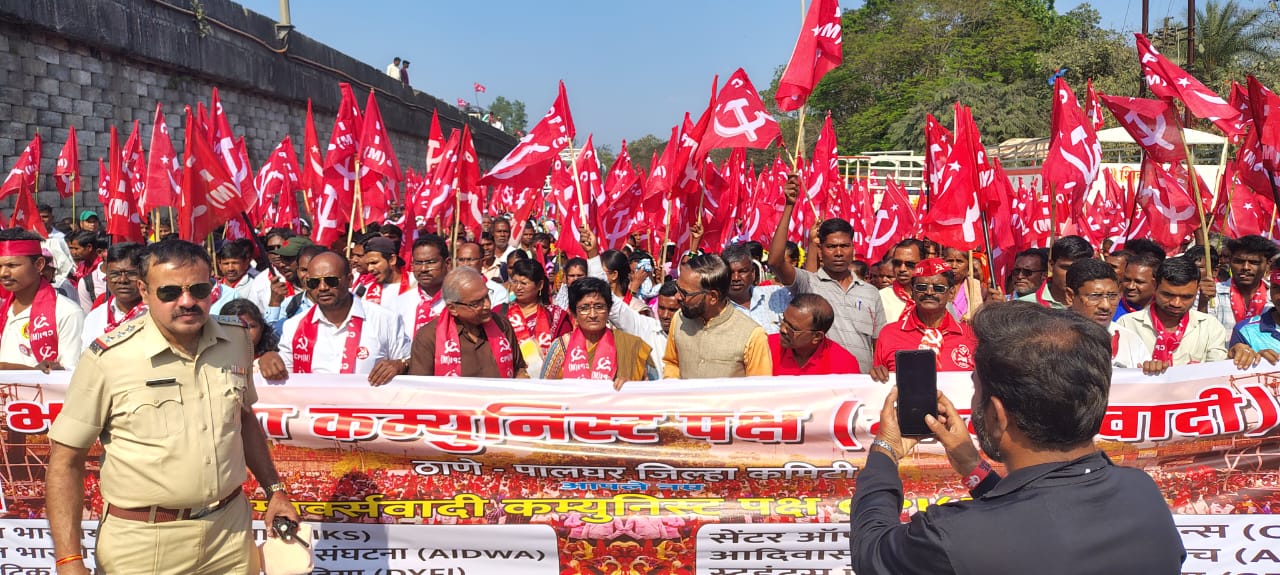
Demanding community ownership rights under the Forest Rights Act, 2006 and restitution of the Mahatma Gandhi Rural Employment programme (MNREGA), 50,000 women Adivasi and other farmers have been marching from Charoti to Palghar in Maharashtra with their demands. The key demands of this March are as follows: Rigorous implementation of the Forest Rights Act; Vesting of all temple, inaam and govt land in the name of the tillers; Restoration of MNREGA; cancellation of the Smart Metre scheme; Implementation of PESA; Repeal of the Labour Codes; Cancellation of the Wadhwan and Murbe Ports in the Dahanu coastal region; Water for drinking and irrigation; Increased facilities for education, employment, ration, health, and among others.
Protesters are mostly from the tribal communities of Palghar district. They had started their trek towards the collectorate, demanding better implementation of land rights, reinstatement of the MGNREGA, cancellation of the Vadhavan port and availability of water for drinking and irrigation purposes, among others. Accompanied by protest songs on microphones, striding purposefully with CPI-M flags and banners, chanting slogans, protesters reached the Collectorate office of Palghar on the evening of January 20, where they plan to camp until their demands are met – the most longstanding of which is the enforcement of land rights. Adivasis have been tilling forest and grazing land for centuries but still don’t own the plots they cultivate.
The Forest Rights Act, 2006, vests forest land and resource rights in Scheduled Tribes and other traditional forest dwellers who have resided in such areas for generations. Gram sabhas initiate claims, verified through sub-divisional and district committees, protecting dwellers from eviction until their rights are settled. But most of the tribal farmers at the rally have not had their claims approved. The last time that farmers marched in their thousands was from Nashik to Azad Maidan in Mumbai, a stretch of 180 kilometres with several marchers barefoot.
Mass organisations All India Kisan Sabha (AIKS), Centre of Indian Trade Unions (CITU), All India Democratic Women’s Association (AIDWA), Democratic Youth Federation of India (DYFI) and Student’s Federation of India (SFI) and Adivasi Adhikar Rashtriya Manch (AARM) have also joined this March in huge numbers. Beginning the long walk on January 19, the marchers have reached the Palghar Collectorate where they were denied permission for the dharna inside the Collectorate. Undettered they have begun the indefinite protests outside.
Citizens for Justice and Peace has long analysed national and international law on Farmers Rights. Some of these may be read here and here.
The March is being led by CPI (M) Polit Bureau member and AIKS National President Dr Ashok Dhawale, Polit Bureau member and AIDWA National General Secretary Mariam Dhawale, Central Committee member, state secretary and AIKS National Joint Secretary Dr Ajit Nawale, Central Committee member and CITU State Secretary Vinod Nikole, two-term MLA from Dahanu, State Secretariat member and AARM State Convenor Kiran Gahala, and many others. Later CPI (M) Polit Bureau member and AIKS National General Secretary Vijoo Krishnan also joined the March.
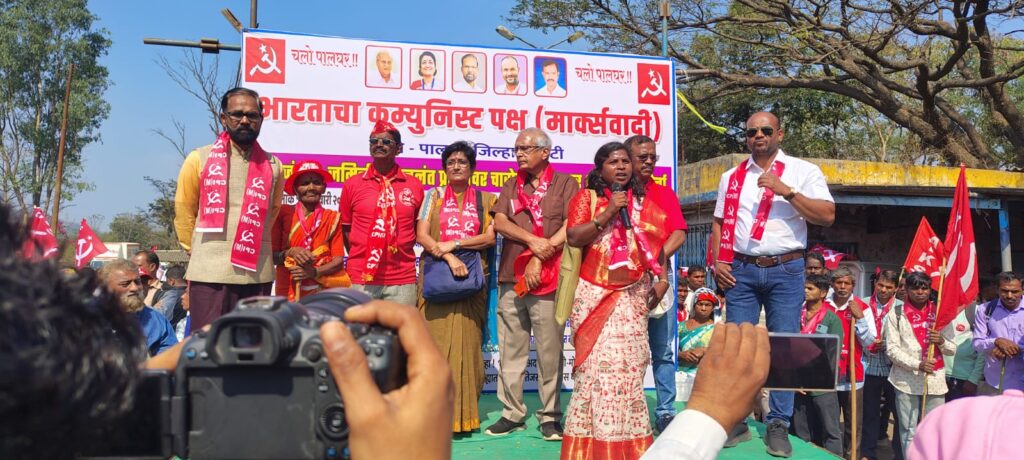
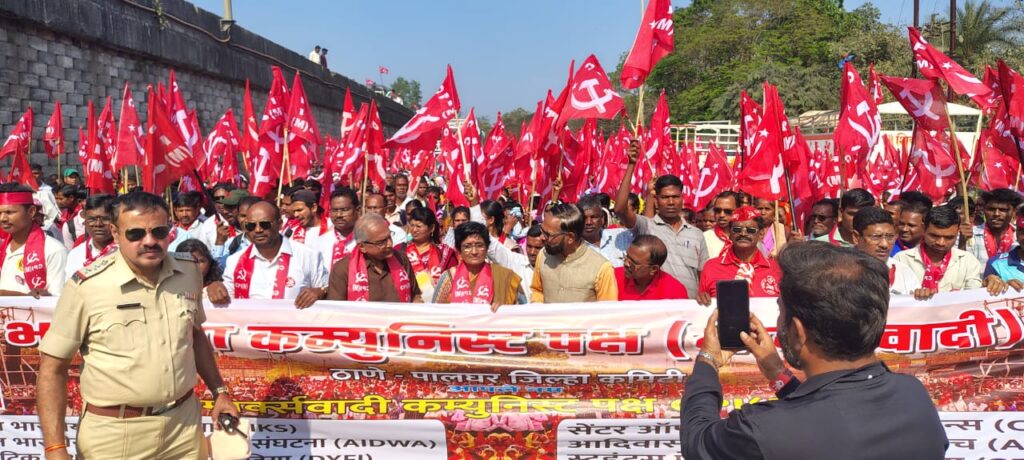
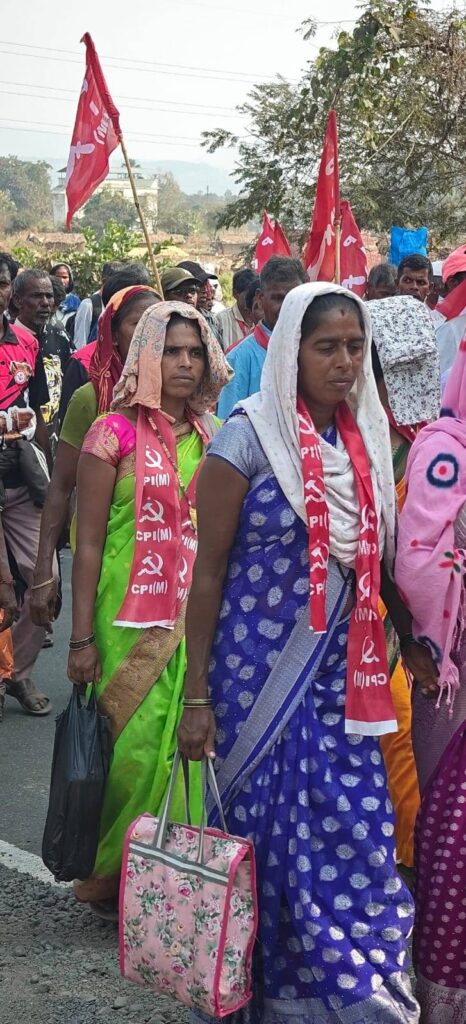
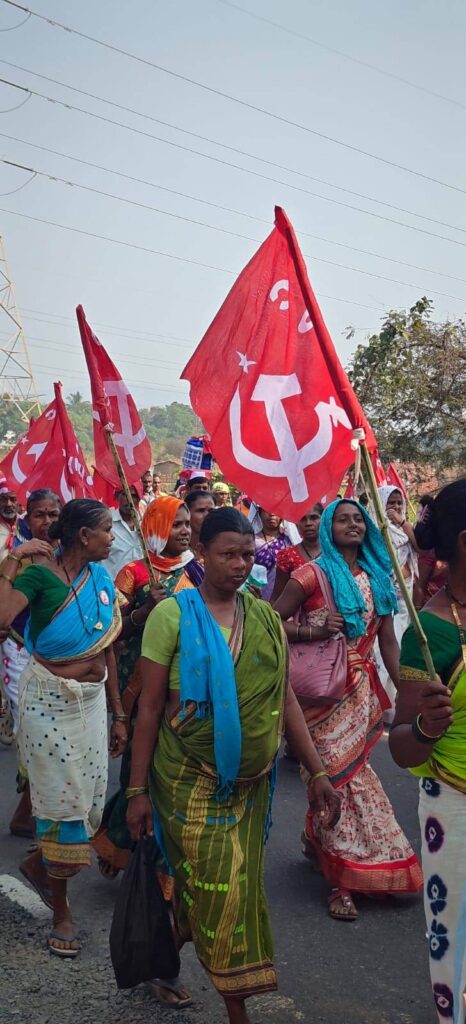
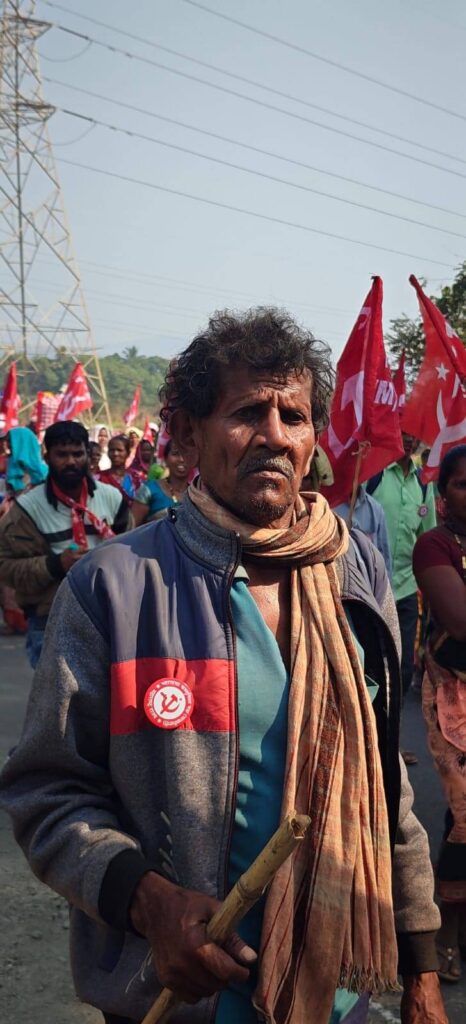
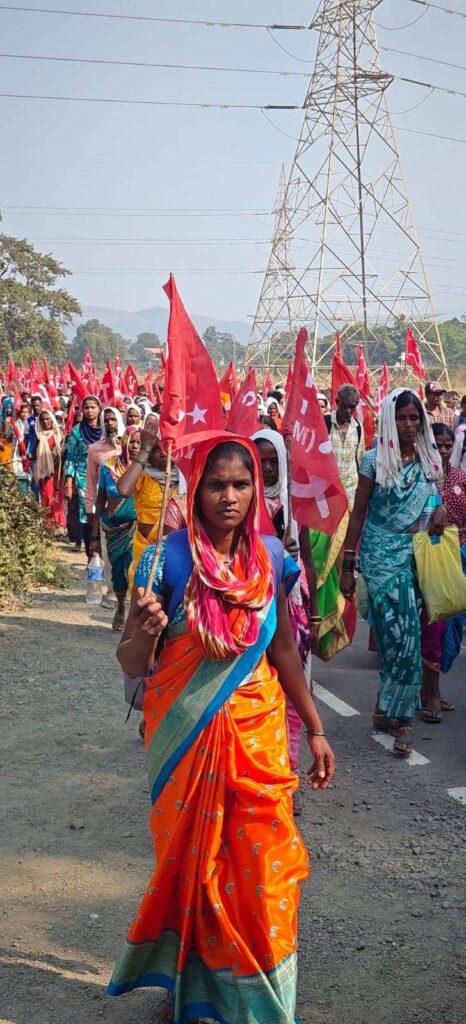
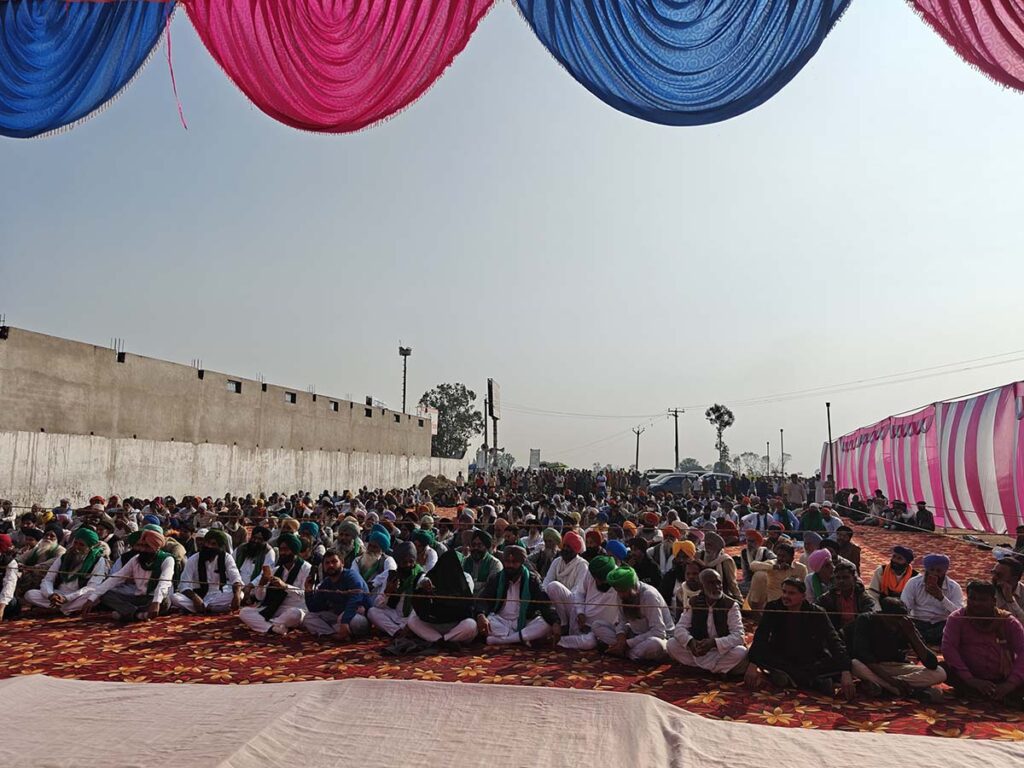
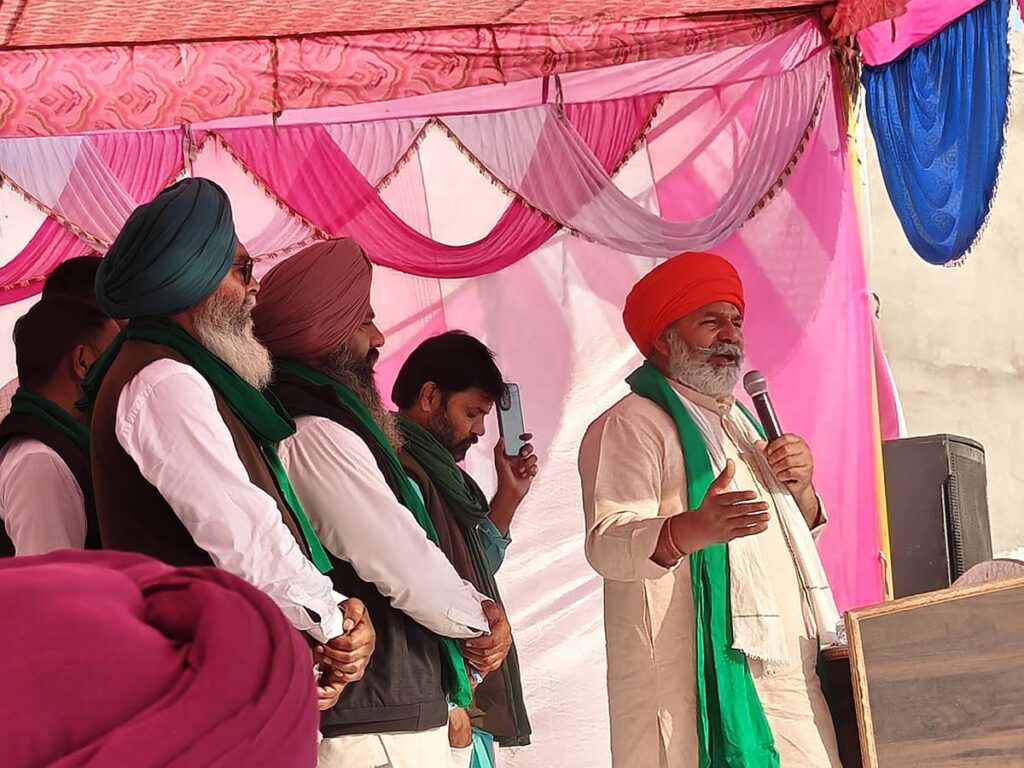

According to Palghar Police officials, as reported in The Hindu, around 30,000 protesters joined the long march. The demands include full implementation of the Forest Rights Act, the Panchayats Extension to Scheduled Areas Act PESA, revival of the Jal Jeevan Mission scheme to provide work, cancellation of the smart meter scheme, appointment to all the vacant posts in the government service of Palghar district, providing the benefits of the Gharkul scheme, and cancellation of the development of Vadhavan and Murbe ports.
CPI (M)’s women wing State secretary Prachi Hatiwlekar told the newspaper, “This struggle is age-old, starting from bonded labour to now working for long pending issue of land ownership transfer. Central government is only trying to dilute the Forest Rights Act.”
The protesters are also articulate and vocal against the smart metres, media reports indicate. They want that the government reinstall old meters and instruct their officials not to impose smart meters. Maharashtra State Electricity Distribution Company Limited (MSEDCL) rolled out the smart meters in 2021, which automatically record real-time power consumption and send the data to the electricity distribution company. However, the device has been criticised for bill hike, no consent for installation, and poor awareness about tariff changes.
Read this story on smart metres here
The protest shows discontent among tribal communities over land ownership, large infrastructure projects in the district and changes to MGNREGA. All the protesters unanimously reiterated that unless and until “we don’t get all our papers stamped, we won’t go home”.
Related: