
The Transgender Persons (Protection of Rights) Amendment Bill, 2026 has emerged as one of the most contentious legislative developments in recent months, not only because of its substantive provisions but also due to the manner in which it was enacted. The Bill was introduced in the Lok Sabha on March 13, 2026, passed on March 24, and cleared by the Rajya Sabha the very next day through a voice vote, compressing what is ordinarily a deliberative legislative process into a matter of days, as per The Hindu. This rapid progression has itself become a central site of critique.
Across party lines, opposition Members of Parliament repeatedly demanded that the Bill be referred to a Standing or Select Committee to enable wider consultation with stakeholders, including transgender persons, legal experts, and civil society organisations. These demands were rejected without substantive reasoning. Civil society groups later highlighted that the Bill had been introduced through a supplementary list of business, limiting the time available for parliamentary scrutiny. In their joint letter to the President, the All-India Feminist Alliance (ALIFA) and the National Alliance for Justice, Accountability and Rights (NAJAR) characterised the process as one marked by “undue and unjustifiable haste,” arguing that the government had disregarded both parliamentary conventions and the Pre-Legislative Consultation Policy, 2014.
The Bill now awaits assent from President Droupadi Murmu, even as legal scholars, activists, and citizens urge her to exercise her powers under Article 111 of the Constitution to return the Bill for reconsideration.
The Core Legal Shift: From self-identification to state certification
At the heart of the amendment lies a fundamental transformation in how Indian law conceptualises gender identity. The Transgender Persons Act, 2019 was built upon the constitutional foundation laid down in NALSA v. Union of India, where the Supreme Court recognised the right to self-identify one’s gender as intrinsic to dignity, autonomy, and personal liberty. The judgment made it clear that gender identity is not contingent on medical procedures or external validation, but rather on an individual’s deeply felt sense of self.
The 2026 amendment departs sharply from this framework. By removing the provision for “self-perceived gender identity,” it replaces a rights-based approach with a certification regime. Under this system, individuals seeking recognition as transgender must undergo evaluation by a designated medical board. The recommendation of this board is then examined by a District Magistrate, who ultimately decides whether to issue a certificate of identity.
While the government has defended this mechanism as necessary for administrative clarity and targeted delivery of welfare benefits, according to Hindustan Times, many argue that it effectively places the State in the position of validating identity. This shift is not merely procedural—it alters the philosophical basis of the law, moving from recognition to regulation. The concern is that identity, which the Supreme Court treated as an aspect of personal autonomy, is now being reframed as something that must be verified, measured, and approved.
Redefining Transgender Identity: Inclusion, exclusion, and legal erasure
The amendment also introduces a narrower definition of “transgender person,” with significant implications for who is recognised under the law. It includes individuals with intersex variations or congenital differences in sex characteristics, as well as those belonging to certain recognised socio-cultural communities such as hijras, kinnars, aravanis, and jogtas. However, it explicitly excludes individuals whose identities are based solely on self-identification.
This definitional shift has been widely criticised as exclusionary. Activists and scholars argue that it risks erasing large sections of the transgender community, including trans men, non-binary individuals, and those who do not belong to traditional community structures. Media reports have noted that the amendment effectively restricts recognition to those who can either demonstrate biological markers or align with specific socio-cultural identities, as reported in Indian Express.
The implications are not merely symbolic. Legal recognition is the gateway to accessing rights, welfare schemes, and protections. By narrowing the definition, the law may render many individuals ineligible for benefits they were previously entitled to under the 2019 framework. This has led to fears that the amendment could create a hierarchy within the transgender community, privileging certain identities while excluding others.
Penal provisions and the question of criminalisation
Another significant aspect of the amendment is the introduction of new penal provisions, including offences related to “inducing” or “compelling” someone to adopt a transgender identity. The government has justified these provisions as necessary safeguards, particularly to protect minors from coercion and exploitation. It has also emphasised that the law introduces graded punishments to reflect the seriousness of offences.
However, the language of these provisions is vague and potentially overbroad, as such clauses may inadvertently criminalise support systems that have historically sustained transgender communities, including families, chosen kinship networks, and civil society organisations. There is concern that by framing transgender identity in the context of inducement or coercion, the law risks reinforcing the idea that such identities are not self-originating but externally imposed.
This concern is particularly acute in a social context where transgender individuals often rely on informal networks for survival and support. The fear is that these networks could come under legal scrutiny, further marginalising an already vulnerable community.
Government’s Position: Welfare, clarity, and control
Union Minister Virendra Kumar has consistently defended the Bill as a necessary step toward ensuring justice and protection for transgender persons. According to the government, the amendments are intended to ensure that welfare benefits reach those who genuinely need them, and that the absence of clear criteria does not lead to misuse. The emphasis on biological and verifiable markers is presented as a way to bring administrative clarity to the system.
Several ruling party MPs echoed this reasoning during parliamentary debates, raising concerns about the possibility of individuals falsely claiming transgender identity to access benefits, as reported by Hindustan Times. The government has also pointed to its broader initiatives—such as awareness programmes, job fairs, and helplines—as evidence of its commitment to the welfare of transgender persons.
Yet, these arguments fail to address the central constitutional issue: whether the State can condition recognition of identity on verification processes that undermine autonomy and dignity.
Opposition and Constitutional Challenge: Rights, dignity, and judicial precedent
The parliamentary debate on the Transgender Persons (Protection of Rights) Amendment Bill, 2026 was marked by an unusually unified and forceful response from opposition parties, who framed their objections not merely in political terms but as a matter of constitutional principle. Across party lines—including the Congress, DMK, AITC, SP, RJD, AAP, CPI(M), BJD, and others—Members of Parliament consistently argued that the Bill represents a fundamental departure from the rights-based framework established over the past decade, and risks violating core guarantees of equality, dignity, and personal liberty, according to The Hindu.
At the centre of this critique lies the removal of the right to self-identification, a principle that had been firmly recognised by the Supreme Court in NALSA v. Union of India. Opposition MPs repeatedly emphasised that this judgment was not merely declaratory, but transformative—it located gender identity within the domain of autonomy, holding that individuals have the right to determine their own gender without medical or bureaucratic validation. By replacing this framework with a system of medical certification and administrative approval, the amendment, they argued, effectively reverses a settled constitutional position.
DMK MP Tiruchi Siva articulated this concern in particularly stark terms, warning in the Rajya Sabha that even if the Bill were to pass through Parliament, it would likely be struck down by the Supreme Court for violating Articles 14, 15, 19, and 21 of the Constitution, as per Hindustan Times. His intervention reflects a broader apprehension that the amendment is not merely controversial, but constitutionally vulnerable. For many in the opposition, the issue is not one of policy disagreement, but of legislative overreach into areas already protected by judicial interpretation.
This constitutional framing was echoed by multiple MPs who raised concerns about equality and non-discrimination under Articles 14 and 15. By narrowing the definition of “transgender person” and excluding those who identify on the basis of self-perception, the law, they argued, creates an arbitrary classification within the community itself. Such classification, lacking a clear rational nexus to the stated objective of protection, may fail the test of reasonable classification under Article 14, reported Indian Express. Moreover, by conditioning recognition on medical criteria, the law risks discriminating against individuals who cannot or do not wish to undergo such processes, thereby indirectly penalising certain forms of gender expression.
“Even a person who is being hanged, is asked what their last wish is? Then why are we not asked about our wishes while creating this (Trans) Bill? Who will listen to our Mann ki Baat?” – BJD MP @SulataDeoMP from Odisha pic.twitter.com/M5XI8WGyaZ
— Yes, We Exist 🏳️⚧️🏳️🌈 (@YesWeExistIndia) March 25, 2026
Honestly, give @RenukaCCongress Ally of the Year Award already.
What a speech in the Rajya Sabha! Laced with sarcasm, hitting where it hurts, she’s shown why we #RejectTransBill2026 – because it’s illegal, unconstitutional and illogical! pic.twitter.com/n3V3mhcLRg
— Anish Gawande (@anishgawande) March 25, 2026
Equally significant are concerns relating to personal liberty and dignity under Article 21. MPs such as Sandeep Pathak and Priyanka Chaturvedi questioned the logic of requiring transgender persons—unlike cisgender men and women—to subject themselves to medical boards for identity recognition, provided Times of India. This differential treatment, they argued, not only violates the principle of equality but also intrudes into the most intimate aspects of personhood. Gender identity, in this view, is not a fact to be verified but an experience to be respected. The requirement of certification thus transforms a deeply personal aspect of identity into an administrative hurdle, raising concerns about dignity, autonomy, and bodily integrity.
The debate also invoked the right to privacy, particularly in light of the Supreme Court’s landmark judgment in K.S. Puttaswamy v. Union of India. Opposition MPs argued that the process of medical evaluation and potential disclosure of sensitive personal information to state authorities may constitute an unjustified intrusion into privacy. The absence of clear safeguards regarding data protection, confidentiality, and purpose limitation further intensifies these concerns. In a constitutional framework that recognises privacy as intrinsic to dignity and autonomy, such provisions are likely to face rigorous judicial scrutiny.
BRS Party opposes the Transgender Persons (Protection of Rights) Amendment Bill, 2026
The new bill excludes certain identities from the definition of “transgender” based on subjective perceptions.
Identity is personal, and the law should respect that.
The process of… pic.twitter.com/Q6JltuQIyp
— BRS Party (@BRSparty) March 25, 2026
Another strand of opposition critique focused on the penal provisions introduced by the amendment. MPs raised concerns about the vague and expansive language used to define offences such as “inducement” or “influence” in relation to transgender identity. There is apprehension that these provisions could be misused to target families, community networks, healthcare providers, and civil society organisations that support transgender persons as per Indian Express. This raises a classic constitutional issue of overbreadth and vagueness—whether a law, in seeking to address a legitimate concern, casts its net so wide that it captures protected conduct and creates a chilling effect on lawful activity.
The absence of a robust grievance redressal mechanism was also highlighted during the debate. MPs pointed to the fact that thousands of applications for transgender certification under the existing 2019 Act had already been rejected, with little clarity on the grounds for rejection or avenues for appeal, reported Hindustan Times. By strengthening the role of medical boards and district authorities without simultaneously enhancing accountability and transparency, the amendment risks institutionalising arbitrariness. This concern ties directly into the constitutional guarantee against arbitrary state action, which has been read into Article 14 by the Supreme Court.
Importantly, opposition leaders also situated the Bill within a broader pattern of legislative and executive action. Some MPs argued that the amendment reflects a growing tendency to privilege administrative convenience over fundamental rights, and to treat marginalised communities as subjects of regulation rather than holders of rights (The Hindu). This critique is not limited to the transgender context, but speaks to a wider constitutional anxiety about the erosion of rights-based governance.
Outside Parliament, political leaders reinforced these concerns in public statements. Congress MP and Leader of Opposition Rahul Gandhi described the Bill as a “brazen attack” on the constitutional rights and identity of transgender persons, arguing that it strips individuals of their ability to self-identify and subjects them to dehumanising scrutiny. Such interventions indicate that the constitutional critique of the Bill is not confined to legislative debate, but forms part of a larger political discourse on rights and governance.
The BJP government’s Transgender Persons Amendment Bill is a brazen attack on the Constitutional rights and identity of transgender people.
This regressive bill:
– strips transgender people of their ability to self identify, violating a Supreme Court judgement
– wipes out the… pic.twitter.com/et6lqpgTXw— Rahul Gandhi (@RahulGandhi) March 24, 2026
Many also took to social media to convey their disagreement with the Bill.
Though I will miss Parliament because of the ongoing #KeralaElections, I am following reports of legislative developments there.
I’m deeply concerned by the Transgender Persons (Protection of Rights) Amendment Bill, 2026, introduced in the Lok Sabha, which was tabled rather…
— Shashi Tharoor (@ShashiTharoor) March 22, 2026
The @BJP4India Govt’s Transgender Amendment Bill 2026 is a shameful rollback of rights. It kills self-identification, revives colonial-era suspicion, and erases trans men, trans women & non-binary citizens affirmed by the Supreme Court in NALSA.
I reject this bill outright. I…— Karti P Chidambaram (@KartiPC) March 22, 2026
CPI(M) Polit Bureau demands the withdrawal of the Transgender Persons Amendment Bill pic.twitter.com/JJgvflFDvo
— CPI (M) (@cpimspeak) March 14, 2026
I stand in solidarity with the transgender community and will strongly raise these serious concerns in Parliament.
Met a delegation of transgender community members and civil society representatives regarding the Transgender Amendment Bill, 2026; a deeply regressive and… pic.twitter.com/WjVYVMZ7fq
— Renuka Chowdhury (@RenukaCCongress) March 20, 2026
Chandra Shekhar Azad @BhimArmyChief Lok Sabha MP of the @AzadSamajParty extends support to #RejectTransBill2026 ✊🏽🏳️⚧️ pic.twitter.com/KeGjgqC4Sm
— Yes, We Exist 🏳️⚧️🏳️🌈 (@YesWeExistIndia) March 24, 2026
Ultimately, what emerges from the opposition’s position is a coherent constitutional argument: that the amendment undermines the principles of equality, dignity, autonomy, and privacy that form the core of India’s fundamental rights framework. By departing from the jurisprudence established in NALSA v. Union of India and potentially conflicting with the privacy protections recognised in K.S. Puttaswamy v. Union of India, the law sets the stage for an inevitable judicial confrontation.
Institutional Dissent: Resignations and judicial alarm
Beyond parliamentary opposition and street-level protest, one of the most striking aspects of the controversy surrounding the Transgender Persons (Protection of Rights) Amendment Bill, 2026 has been the emergence of dissent from within institutional frameworks themselves. This is significant because it reflects not merely ideological disagreement, but a breakdown of confidence within bodies that were specifically created to represent, advise on, and safeguard transgender rights.
Our demand is clear: Take the bill back.
Lawyers Call Trans Amendment Bill “Unconstitutional,” Seek Withdrawal#RejectTransBill2026 pic.twitter.com/W4gfL9YXAE
— P // 🏳️🌈🏳️⚧️🇵🇸 (they/them) (@pratzhell) March 22, 2026
A particularly visible manifestation of this institutional unease came through the resignation of two members of the National Council for Transgender Persons (NCTP)—Rituparna Neog and Kalki Subramaniam—immediately following the passage of the Bill in Parliament, as per Times of India. The NCTP, a statutory body constituted under the 2019 Act, is tasked with advising the government on policies affecting transgender persons and ensuring that the community’s concerns are meaningfully represented within governance processes. The resignations, therefore, are not merely symbolic acts of protest; they raise deeper questions about whether the consultative mechanisms built into the law are functioning at all.
I have officially resigned as the Southern States Representative of the National Council for Transgender Persons (NCTP).
The Ministry passed the #TransgenderAmendmentBill2026 without consulting the Council. I cannot hold a seat where our voices are silenced.
I stand with my… pic.twitter.com/Fkt9SGC2Ai— Kalki Subramaniam (@QueenKalki) March 25, 2026
In their resignation letters, both members pointed explicitly to the absence of consultation as the central reason for stepping down. Rituparna Neog stated that attempts to engage with the Ministry as “the voice of the community” had gone unheard, suggesting that the institutional channels for dialogue had effectively been bypassed. Kalki Subramaniam went further, describing her continued presence within the Council as untenable in a situation where the “collective voice” of the community had been silenced. Her resignation underscores a fundamental contradiction: a body designed to represent transgender persons was neither consulted nor meaningfully involved in shaping a law that directly alters their legal status.
These resignations must also be understood in the context of prior attempts by NCTP members to engage with the government before the Bill’s passage. Reports indicate that community representatives had, in meetings with ministry officials, strongly reiterated that self-identification—recognised by the Supreme Court—must remain the foundation of gender recognition. They also raised concerns about the proposed definition of “transgender person,” the introduction of medical boards, and the potential for invasive verification processes. Despite these interventions, the final legislation appears to have incorporated none of these suggestions, reinforcing the perception that consultation was procedural rather than substantive, as reported by Times of India.
Parallel to this institutional dissent from within the executive framework is a significant expression of concern emerging from the judiciary itself—more specifically, from a Supreme Court-appointed advisory committee chaired by Justice Asha Menon. This committee, constituted to examine the implementation of transgender rights and recommend improvements, reportedly wrote to the government urging withdrawal of the Bill, Bar & Bench reported. Its intervention is particularly noteworthy because it represents a quasi-judicial assessment of the law’s compatibility with existing constitutional principles.
The committee’s concerns are both substantive and structural. At the core is the removal of self-identification as the basis for legal recognition of gender identity. The committee observed that by linking recognition to biological characteristics or medical processes, the amendment risks excluding individuals who identify as transgender but do not meet these criteria. This, in turn, could limit access to identity documents, welfare schemes, and legal protections—effectively rendering certain sections of the community invisible in the eyes of the law (Bar & Bench).
Equally significant are the committee’s concerns regarding privacy. The amendment’s requirement that details of gender-affirming procedures may be shared with district authorities raises serious questions about confidentiality and bodily autonomy. In a legal landscape shaped by the Supreme Court’s recognition of privacy as a fundamental right, such provisions are seen as potentially intrusive and lacking clear justification. The committee reportedly noted that the objective of such data collection remains unclear, further intensifying apprehensions about surveillance and misuse, according to Bar & Bench.
The advisory body also questioned the necessity of introducing new penal provisions, pointing out that many of the offences outlined in the amendment are already covered under existing criminal laws. This raises a broader concern about legislative redundancy and the possibility that the new provisions may be used in ways that disproportionately affect transgender persons or their support networks. By highlighting these overlaps, the committee implicitly challenges the rationale that the amendment is required to fill legal gaps.
Perhaps the most consequential aspect of the committee’s intervention is its implicit constitutional warning. By flagging the removal of self-identification, the committee draws attention to a potential conflict with the principles laid down in NALSA v. Union of India, where the Supreme Court affirmed that gender identity is a matter of personal autonomy and self-determination. This raises the possibility that the amendment, once enacted, could face judicial scrutiny for contravening established constitutional jurisprudence.
Civil Society and Community Voices: Law meets lived reality
If Parliament reflected the formal contest over the Transgender Persons (Protection of Rights) Amendment Bill, 2026, it is within civil society and community responses that the deeper stakes of the law become visible. Across the country, a wide spectrum of actors—transgender collectives, queer rights groups, feminist alliances, parents’ networks, legal advocates, and independent activists—have articulated a layered critique that moves beyond doctrinal disagreement to foreground lived experience, structural exclusion, and everyday vulnerability.
One of the most organised interventions has come from coalitions such as the All-India Feminist Alliance (ALIFA) and the National Alliance for Justice, Accountability and Rights (NAJAR), which formally wrote to the President to return the Bill for reconsideration. Their critique extends not only to the substance of the amendments but also to the process of law-making itself. They argue that the Bill was pushed through without meaningful consultation, in violation of the Pre-Legislative Consultation Policy, 2014, and describe its passage as marked by “undue and unjustifiable haste”. Substantively, their concerns centre on the removal of self-identification, the imposition of medical certification, and the introduction of vague penal provisions—all of which, they argue, undermine constitutional guarantees under Articles 14, 19, and 21.
The statement may be read here.
Parallel to these institutional interventions are deeply personal responses emerging from families and support networks. The collective Sweekar, comprising parents of LGBTQIA+ individuals, has framed the amendment through the lens of care and lived reality. Their public appeal emphasises how the law transforms identity into a matter of scrutiny, forcing individuals to “prove” their gender before medical boards and administrative authorities. For families who have struggled to support their children in the face of stigma, this requirement is experienced as a form of state-imposed doubt—one that risks undoing fragile processes of acceptance and belonging.
The statement may be read here.
A recurring concern across civil society responses is the question of access and inequality. Activists have pointed out that the requirement of medical verification presumes access to healthcare, financial resources, and bureaucratic systems—conditions that are unevenly distributed across class, caste, and geography. For many transgender persons, particularly those in rural or economically marginalised settings, navigating a medical board and district administration may be practically impossible. In this sense, the law risks producing exclusion not through explicit denial, but through procedural barriers that render recognition inaccessible.
Another major strand of critique relates to the impact of the law on existing community support structures. Transgender communities in India have historically relied on networks of care—such as the guru-chela system, peer groups, and NGO support—for survival in the face of systemic exclusion. The introduction of penal provisions relating to “inducement” or “influence” has raised fears that these very networks could be criminalised if the provisions are interpreted broadly, reported Hindustan Times. Activists argue that the law, in attempting to regulate identity, risks destabilising the informal but essential systems that sustain transgender lives.
Protest and Public Resistance: From parliament to the streets, a nationwide rejection
The passage of the Transgender Persons (Protection of Rights) Amendment Bill, 2026 has not remained confined to parliamentary debate; it has triggered a widespread, deeply emotional, and sustained wave of resistance across the country. From organised marches to spontaneous gatherings, from formal resignations to cultural expressions of dissent, the response from the transgender community and its allies reflects not just disagreement with the law, but a profound sense of betrayal.
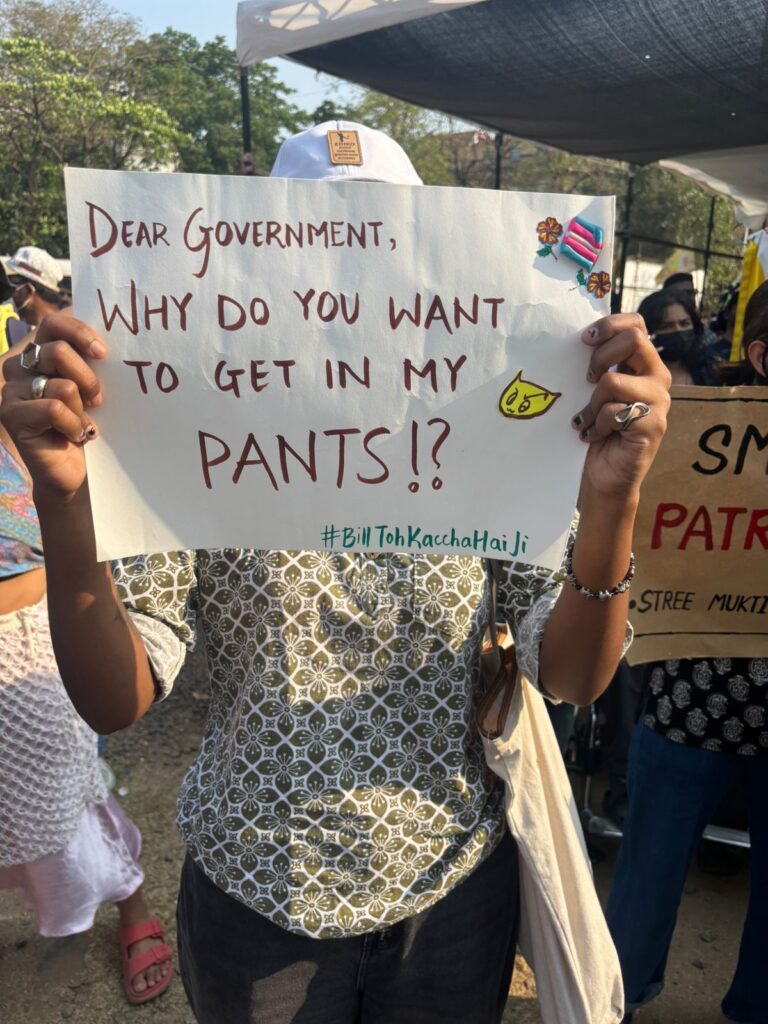
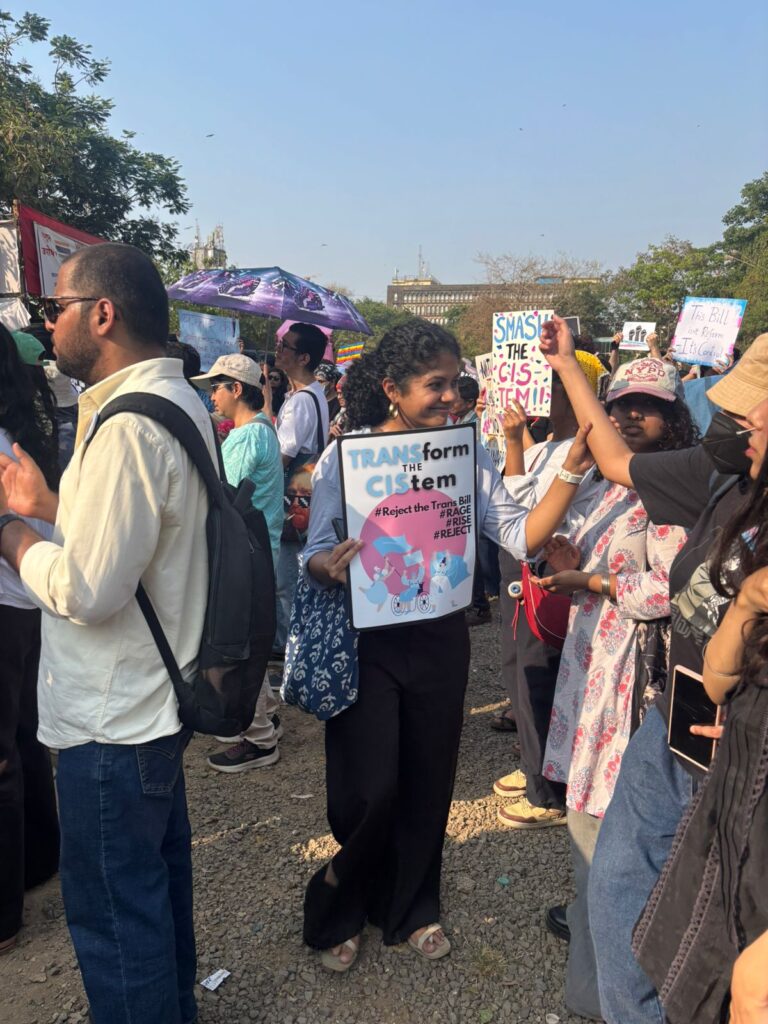
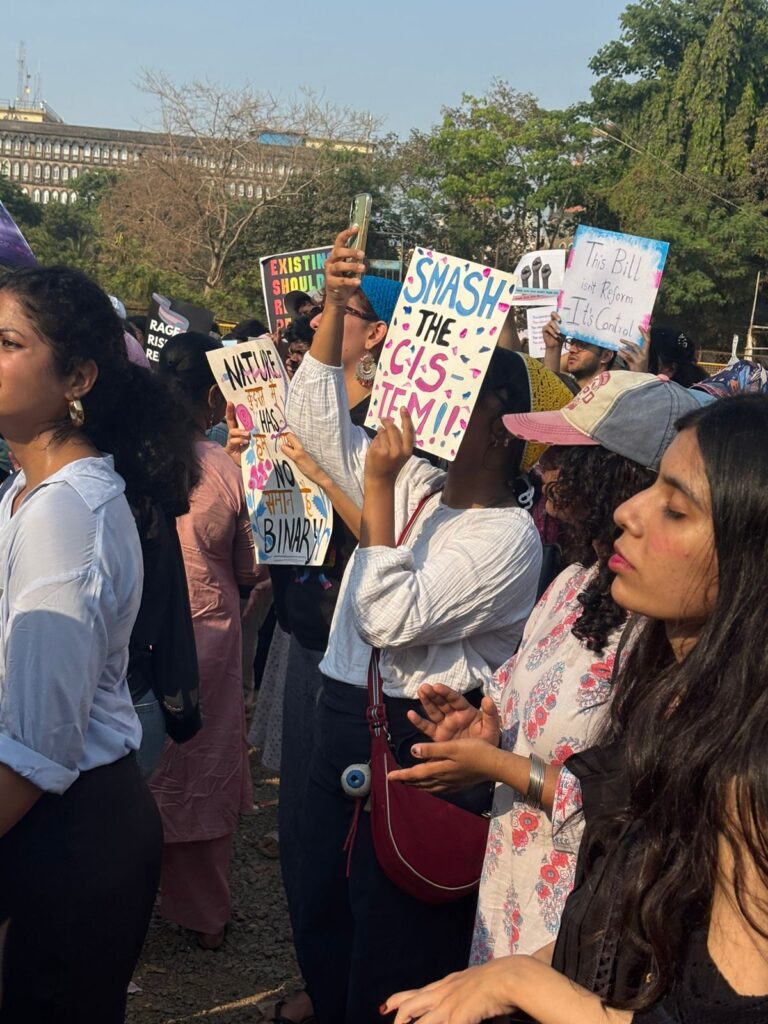
One of the most visible protests unfolded in Mumbai, where over 200 individuals gathered at Azad Maidan in a peaceful but charged demonstration, as reported by The Hindu. The protest was marked not only by slogans and placards, but by a striking use of cultural resistance. Participants sang a reworked version of a popular Bollywood song—“Bill toh kaccha hai ji”—turning satire into a tool of political critique. Slogans such as “Amka naka Trans Bill” (We don’t want the Trans Bill) and “Hum apna haq maangte hai, naa kisi se bheek maangte hai” underscored a central demand: recognition of rights, not conditional welfare. The gathering brought together transgender individuals, families, and allies, with many emphasising that family support remains crucial in a society where stigma continues to shape everyday life. Several speakers warned that the Bill could deepen fear and push individuals further into invisibility.
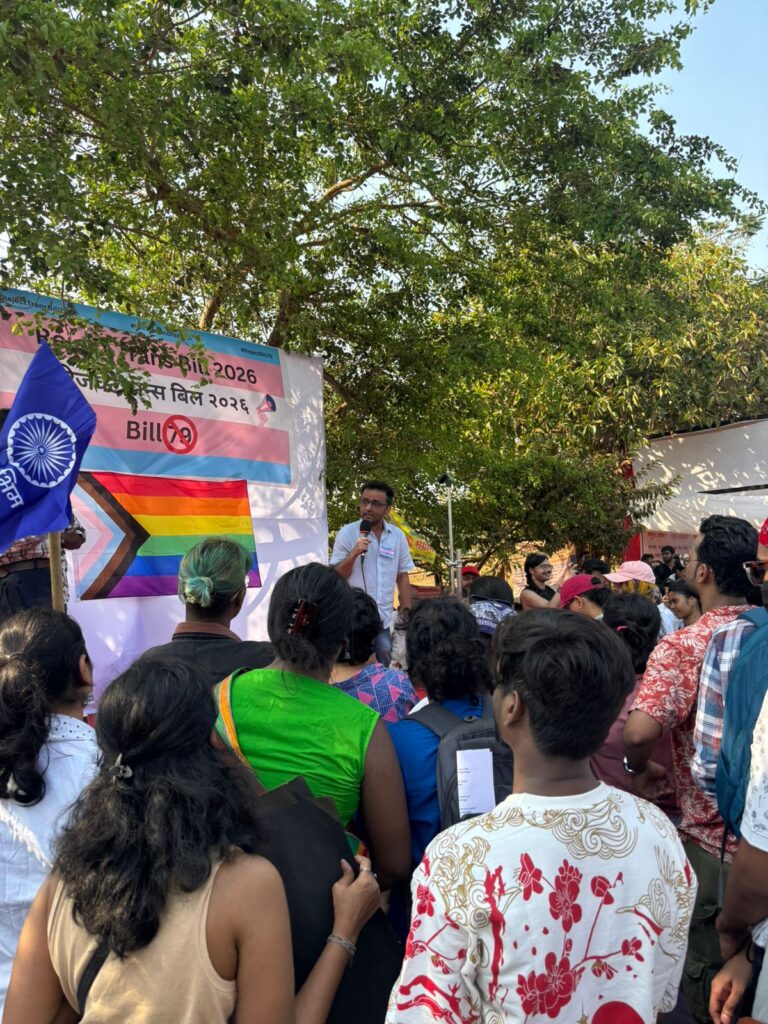
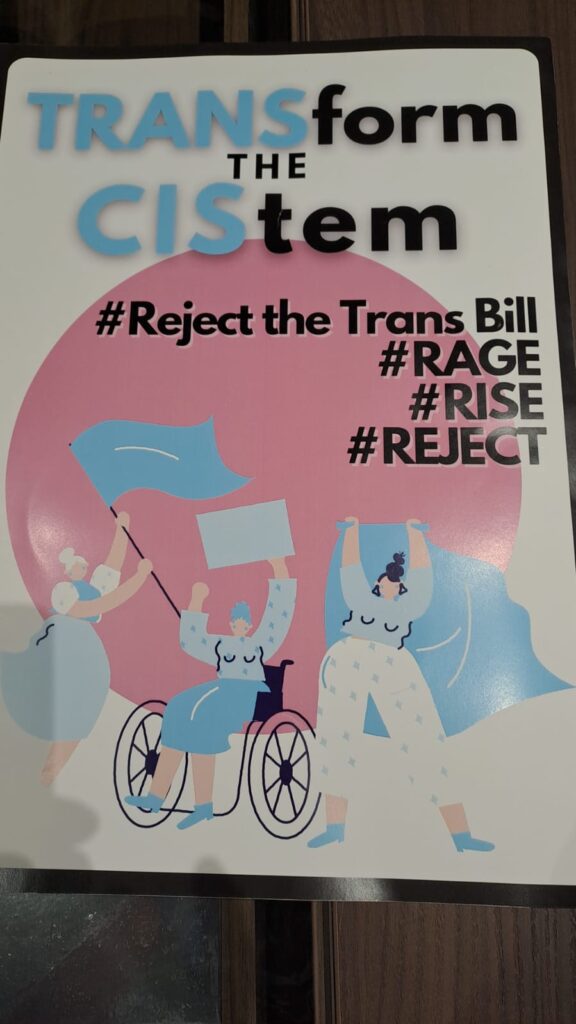
Transgender people, activists and supporters protested against the contentious Bill at Jantar Mantar, New Delhi.
Trans people, activists & supporters protest against Transgender Persons Amendment Bill, 2026 at Jantar Mantar, New Delhi. Bill has been passed in Parliament. Activist Kalki Subramaniam has resigned from National Council of Transgender Persons over the bill
Photos: @Surajbisht25 pic.twitter.com/2VeCFiKrRj
— ThePrintIndia (@ThePrintIndia) March 26, 2026
Standing room only for the Jan Sunwai on the Transgender Bill 2026!#RejectTransBill2026 #NoGoingBack pic.twitter.com/XvzUT0puGE
— Anish Gawande (@anishgawande) March 22, 2026
MP Manoj Kumar Jha, Renuka Chowdhury, John Brittas, NCP-SP Spokesperson Anish Gawande, Dalit & Trans Rights activists Grace Banu and several other community member — Krishanu, Tan, Nikunj, Samar, Abigail, etc. raised their voice to #RejectTransBill2026 at a Public Hearing, Delhi pic.twitter.com/mtBYWCdioe
— Yes, We Exist 🏳️⚧️🏳️🌈 (@YesWeExistIndia) March 22, 2026
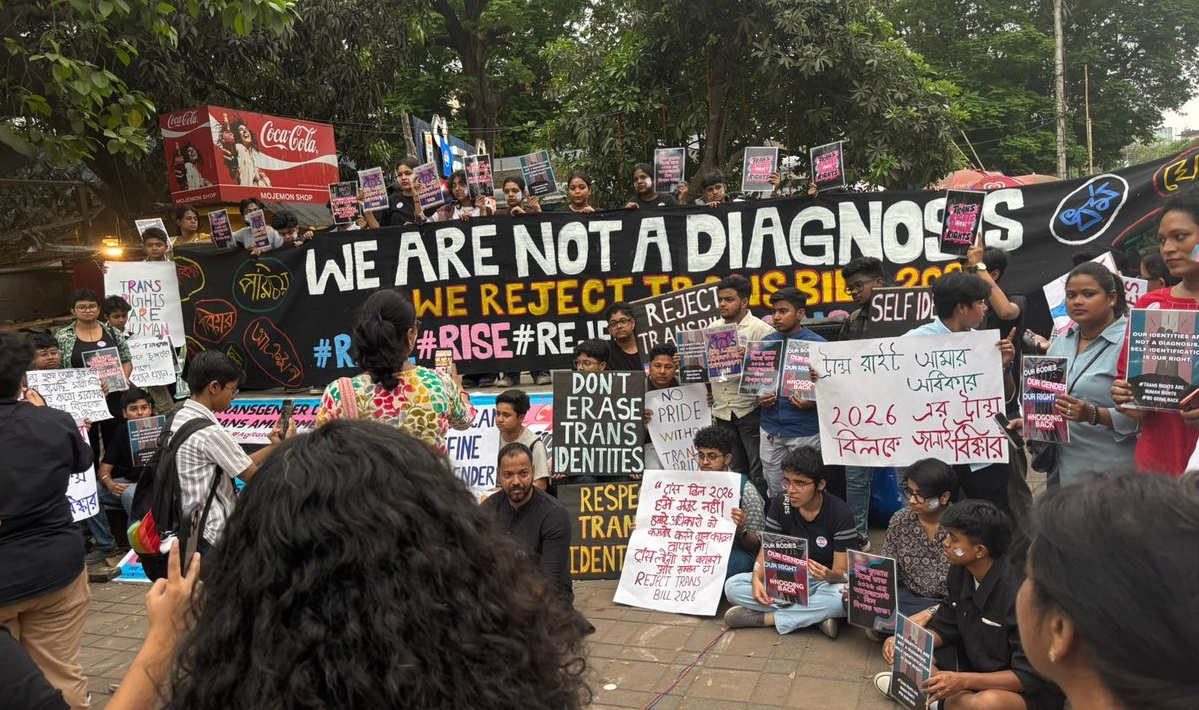
Protest also took place in Kolkata.
Beautiful images from Kolkata ♥️
The fight shall continue. Press conference tomorrow. #RejectTransBill2026 https://t.co/toD8t7m8i2 pic.twitter.com/WGwQpevV84— Niloshka ☭🏳️🌈🇵🇸🇮🇳🐈 (@ruhunaxxine) March 15, 2026
In Thiruvananthapuram, protests took a more confrontational form, with demonstrators marching from Palayam to Lok Bhavan and publicly burning copies of the Bill, as per The Hindu. Organised under the Queer-Trans-Intersex Rights Joint Action Committee Keralam, the protest explicitly framed the amendment as a violation of constitutional guarantees and a reversal of the rights recognised in 2014. Protesters highlighted how the Bill’s definition fails to reflect regional diversity, noting that identities such as hijra or aravani do not capture the lived realities of transgender persons in Kerala. There was also a strong articulation of legal anxiety: participants warned that vague penal provisions could be weaponised against community networks, support groups, and even families who assist transgender individuals through transition and survival.
Today we met our comrade, a constant supporter of my trans community, Tmt. @ThamizhachiTh, to support our #RejectTransBill2026 campaign. She assured us of the entire DMK’s solidarity with the community. Thanks, Tholar.#transrightsnow #transrightsarehumanrights🏳️⚧️ pic.twitter.com/5Opq2EFbpC
— GRACE BANU (@thirunangai) March 23, 2026
In Hyderabad, protests at Dharna Chowk echoed similar concerns, with demonstrators raising slogans such as “Our Body – Our Rights.” Speakers emphasised that gender identity is a deeply personal and experiential reality that cannot be determined by external authorities. Activists pointed out that the requirement of medical certification undermines dignity and autonomy, while also introducing new forms of surveillance and control.
Beyond these major urban centres, the protests have taken on a decentralised and expanding character. Community members have announced district-level mobilisations, beginning with demonstrations in Ernakulam and Kozhikode, signalling that resistance is likely to intensify rather than dissipate. The protests are not limited to metropolitan visibility; they are spreading into smaller cities and regional networks, reflecting the breadth of concern across the country.
What emerges from these multiple sites of protest is a pattern that goes beyond opposition to specific provisions. There is a shared perception that the law has been imposed without listening, that it redefines identity without consent, and that it transforms lived realities into categories subject to bureaucratic control. The protests reveal a community that is not fragmented but deeply interconnected—transgender persons, intersex individuals, non-binary persons, families, and allies standing together across caste, class, and regional divides.
Protests continue across the country against the (anti) Transgender Rights Bill introduced by the BJP government! #NoGoingBack The community is united to #RejectTransBill2026 ✊🏽🏳️⚧️ pic.twitter.com/XLY600dErj
— Yes, We Exist 🏳️⚧️🏳️🌈 (@YesWeExistIndia) March 23, 2026
At a deeper level, these mobilisations reflect a struggle over narrative. While the State frames the Bill as a measure of protection and administrative clarity, protesters articulate it as erasure, surveillance, and regression. The streets, in this sense, have become an extension of the constitutional debate—where questions of dignity, autonomy, and recognition are not argued in abstract terms, but lived, voiced, and contested in real time.
The Larger Constitutional Question: Who defines identity?
At its core, the controversy surrounding the Transgender Amendment Bill, 2026 is about the relationship between the individual and the State. It raises a fundamental question: can identity be subject to verification, or must it be recognised as an inherent aspect of personhood?
The Supreme Court in NALSA v. Union of India answered this question by placing identity within the domain of personal autonomy. The 2026 amendment, however, moves in a different direction, emphasising verification, classification, and administrative control.
Related:
Withdraw the Transgender Persons (Protection of Rights) Amendment Bill, 2026 NOW!
Maharashtra’s Anti-Conversion Bill: Legislating suspicion in the name of “love jihad”
‘Faith Is Not a Crime’: Mumbai’s Christians rise against Maharashtra’s proposed anti-conversion bill