
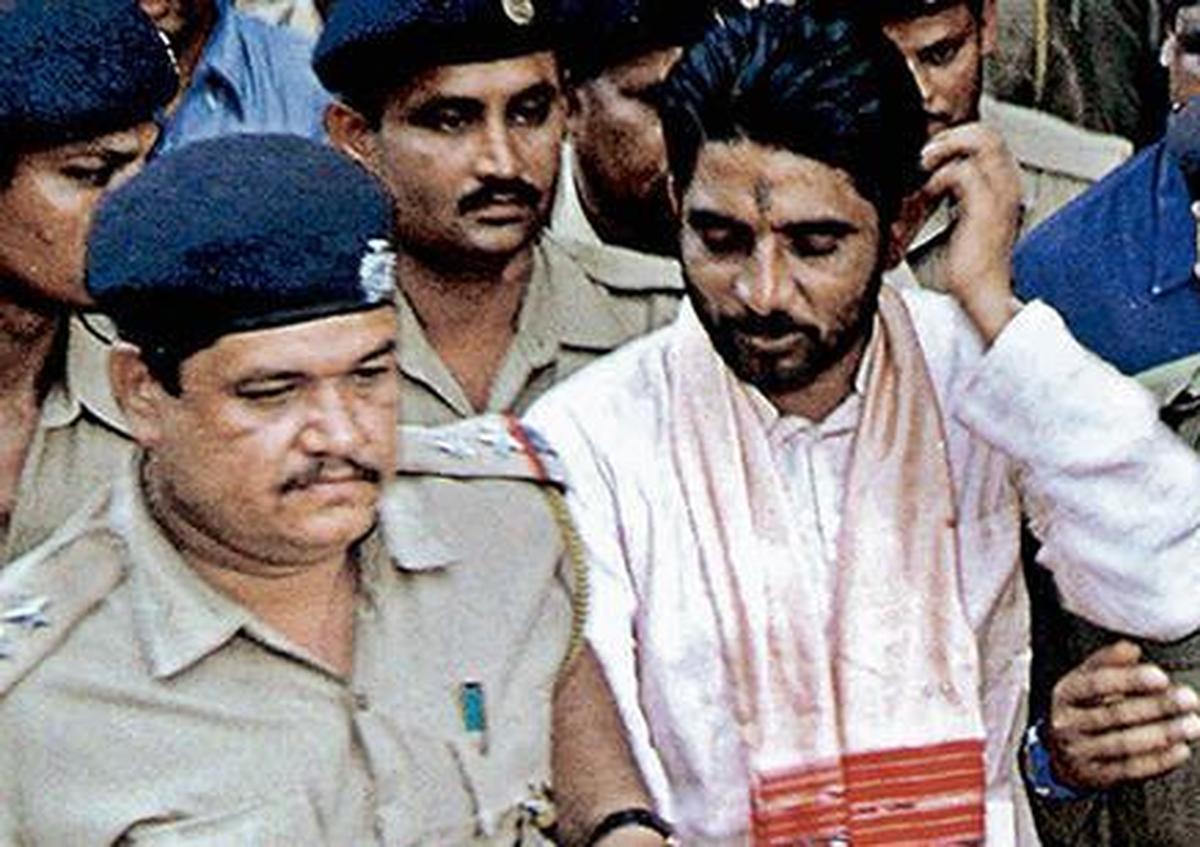
The early release of Rabindra Kumar Pal alias Dara Singh, serving a life sentence for the brutal murder through mass arson, of Australian missionary Graham Staines and his two minor sons, has hit a deadlock, with the State Sentence Review Board (SSRB) rejecting pleas for his release. These developments came after months of dithering (since July 2026 at least) and only after the Supreme Court directed the Odisha government to take a clear stand on the matter. Before this, the Director General of Prisons and Correctional Service and Kendujhar Jail Authorities had recommended his release on grounds of good behaviour.
At the time of these killings in 1999, Dara Singh was an active member of the Bajrang Dal (BD) and the Vishva Hindu Parishad (VHP), had campaigned for the Bharatiya Janata Party in the 1998 elections, and regularly attended Rashtriya Swayamsevak Sangh (RSS) camps and rallies. He was also a central figure in the vigilante band of Bajrang Dal’s cow-protection campaign, which in his hands took the form of ambushing trucks driven by Muslim cattle traders, intercepting the vehicles, freeing the cattle, and setting the trucks ablaze.
In this detailed background piece to the whole controversy, Citizens for Justice and Peace, had, on July 22, 2026, elaborated the sequence of events. The article may be read here. It was advocate Vishnu Shankar Jain who filed a plea in the Supreme Court seeking Singh’s remission of sentence and release, in which he had argued that Dara Singh met the state government’s criteria for granting remission (i.e. 25 years). Claiming that the burning alive of Graham Staines and his two minor sons was on account of “youthful rage” (Singh was 37 years old at the time of his arrest), the Odisha State Sentence Review Board had also recommended his release from jail on ground of “good behaviour.” Thereafter, on July 14, 2026, a bench comprising of Justices Manoj Misra and Vijay Bishnoi of the Supreme Court through its order had asked the Odisha Government to take a decision on the premature release of Singh by August 19. The decision was only relayed yesterday, however.
Interesting developments, as reported by The Hindu, led to this turnaround by the authorities in Odisha. The newspaper reported that, “The Kendujhar district authority on August 28, 2026, have reported that on August 15, 2026, a congregation comprising approximately 200-250 persons associated with Dara Sena assembled in front of the District Jail, Kendujhar in connection with the proposed release of the convict, during which provocative slogans were reportedly raised,” says the proceeding copy of SSRB’s August 31, 2026, meeting.
The piece by CJP traced the three cases that Dara Singh was involved in before the killing of Staines and his two sons (January 1999). Dara Singh was also convicted for beating and burning to death Shaikh Rahaman, a Muslim garment trader. In the same year, he led the mob that hunted down and killed Arul Das, a Catholic priest, with an arrow as the priest fled a church his attackers had set alight. Singh had been also implicated in the killing of Shaikh Imam, a Muslim cattle-truck driver’s assistant, who was beaten to death in September 1998 after his truck was looted and set on fire. Singh was acquitted in that case in 2006 for want of sufficient evidence.
Given the widespread national and international outcry, the 1999 murders hled to a CBI’s investigation after which, 14 adults including Singh, were put to trial, along with one minor who was tried in Juvenile Court. In September 2003, the Sessions Judge convicted all the accused for life imprisonment but sentenced Dara Singh to death. On appeal in 2005, the Orissa High Court commuted Dara Singh’s death sentence to life imprisonment. Thereafter, in its judgment on January 21, 2011, the Supreme Court of India upheld the High Court’s decision. The judgment notes that,
“In the case on hand, though Graham Staines and his two minor sons were burnt to death while they were sleeping inside a station wagon at Manoharpur, the intention was to teach a lesson to Graham Staines about his religious activities, namely, converting poor tribals to Christianity. All these aspects have been correctly appreciated by the High Court and modified the sentence of death into life imprisonment with which we concur.” (Para 43). The Court upheld the commuted the death sentence to life only because it did not meet the ‘rarest of rare’ threshold for capital punishment.
Related:
Dara Singh, convicted in string of 1999 communal killings, likely set for release by August 15
Odisha: Graham Staines’ Brutal Murder; Mystery Hangs Over Dara Singh’s Release