
In recent years, public spaces across India — markets, parks, neighbourhoods, gymnasiums — have increasingly become arenas of majoritarian assertion. Names are scrutinised. Shops are marked. Couples are questioned. Boycotts are called. Identity is policed in the open.
But another pattern has emerged alongside these flashpoints: ordinary citizens refusing to comply.
From Kotdwar and Nainital in Uttarakhand to Jaipur in Rajasthan, small acts of resistance are creating ripples that extend far beyond their immediate geography. These moments do not erase communal tension — but they complicate the narrative of inevitability.
Kotdwar: Republic Day, a shop sign, and a national ripple
On January 26, 2026, as reported by The Hindu (February 9, 2026), patriotic music echoed across Kotdwar’s Jhanda Chowk when a confrontation unfolded outside “Baba School Dress and Matching Centre,” a decades-old garment shop run by 71-year-old Wakeel Ahmed.
A group of young men demanded that Ahmed remove the word “Baba” from his signboard, claiming that Kotdwar — associated with Baba Siddhabali — did not permit a Muslim trader to use the term. Mobile phone videos later circulated widely, showing Ahmed visibly shaken.
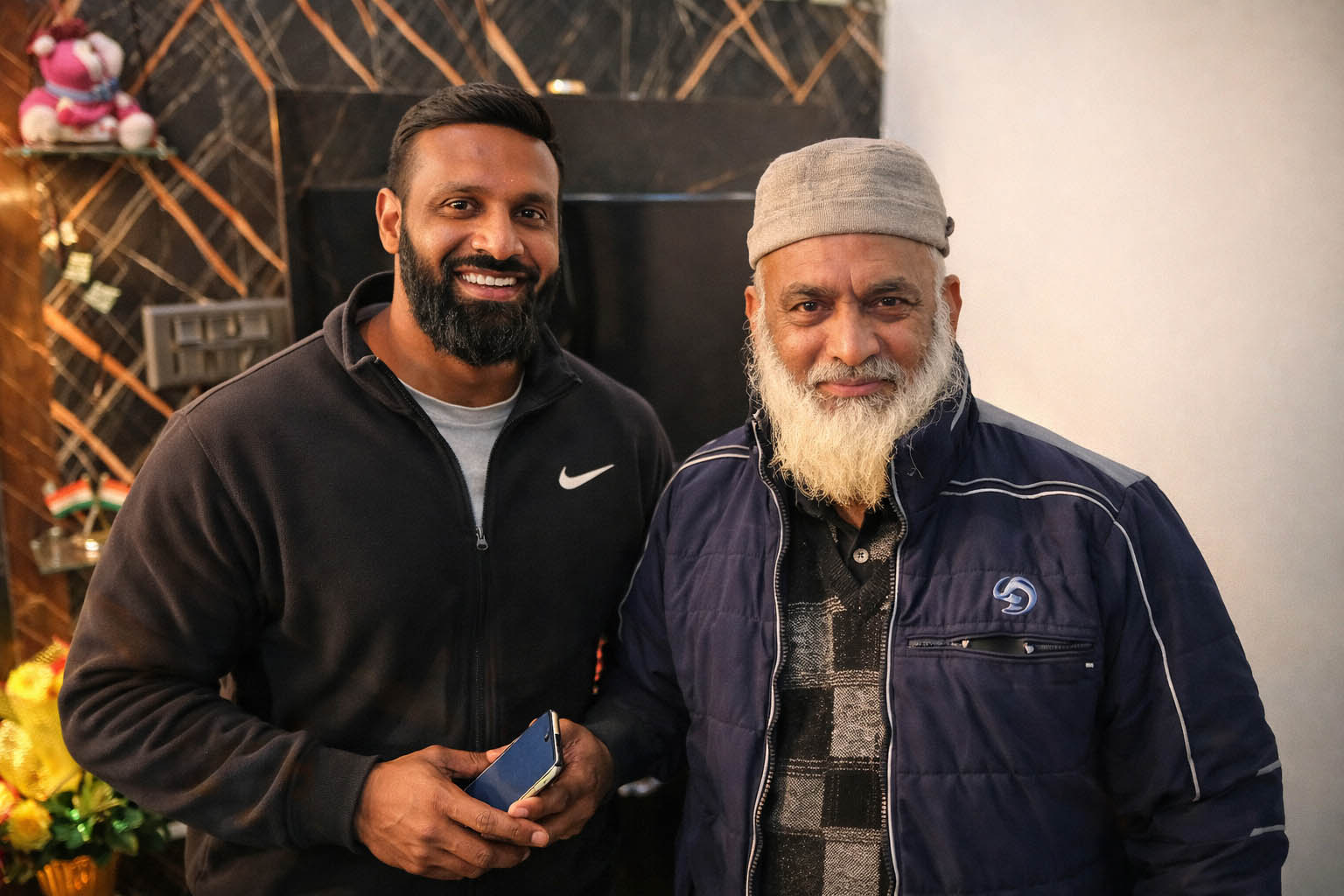
The incident may have remained another viral moment of coercion had Deepak Kumar, a local gym owner, not intervened. When asked to identify himself, he responded: “My name is Mohammad Deepak.” The addition of “Mohammad” was deliberate — a symbolic rejection of rigid identity boundaries.
What followed, again reported by The Hindu, was swift escalation. An FIR was filed against Deepak, reportedly based on a complaint from members of the Vishwa Hindu Parishad. His gym memberships collapsed from 150 to 15. A crowd gathered days later outside his premises raising slogans. Police were deployed. His family reportedly received threats.
Yet this is where the story altered course.
As reported by The Indian Express, CPI(M) MP John Brittas publicly purchased a gym membership in solidarity. Fifteen Supreme Court senior advocates followed, each contributing Rs 10,000 as annual membership fees — deliberately structured as subscriptions, not donations, because Deepak refused direct financial aid. More than 20 lawyers pledged pro bono legal assistance.
Public figures such as Kaushik Raj, Raju Parulekar, Ramchandra Guha, Swara Bhaskar and Teesta Setalvad amplified calls for support.
A local confrontation thus transformed into a national solidarity campaign.
The Association for Protection of Civil Rights (APCR), in its January 2026 report Excluded, Targeted & Displaced, contextualised such incidents within a broader pattern of communal narratives, economic boycotts, and displacement in Uttarakhand since 2021. Kotdwar was not an aberration — it was part of a documented trajectory.
And yet, the ripple effect from Deepak’s intervention shows that the story does not end with targeting. It can expand into resistance.
Nainital: “Why are you beating everyone?”
In April 2025, Nainital witnessed unrest following the arrest of a 72-year-old man accused of molestation. According to reporting by The Hindu, although the accused was swiftly detained, protests escalated into vandalism of Muslim-owned shops and attacks on property.
Amid the chaos, Shaila Negi — daughter of a traders’ association office-bearer — confronted a swelling mob. In a viral video, she asks: “Sabko kyun maar rahe ho?” (“Why are you beating everyone?”).
She refused to shut her shop during a bandh called against Muslims.
The backlash, she later told The Hindu, included online rape threats and abuse. But her action inserted dissent into what might otherwise have appeared as unanimous anger.
The importance of her intervention lies not in scale but in rupture — she broke the logic of collective punishment.
Purola: When an 83-year-old lawyer said “no”
The summer of 2023 in Purola saw boycott calls and intimidation after allegations involving two youths of different faith in a love jihad case. Posters marked Muslim homes. Tenants were pressured to vacate. Protests reportedly involved groups including the Bajrang Dal.
As documented in The Hindu’s coverage and referenced in the APCR report, fear spread, and some minority families left. But 83-year-old lawyer Dharam Singh Negi refused to evict his Muslim tenants despite threats and posters pasted outside his own house. His defiance reportedly encouraged other landlords to stand firm. This was not viral. It did not trend nationally. But it stabilised a town at a fragile moment.
Jaipur: Public reversal of moral policing
On February 14, 2026, a public park in Jaipur became the setting for a confrontation that quickly travelled far beyond Rajasthan. Videos widely circulated showed a group of men, reportedly linked to the Bajrang Dal, approaching couples in the park on Valentine’s Day. Dressed in saffron scarves and carrying sticks, the men were seen demanding identification cards and questioning the legitimacy of the couples’ presence. Such scenes have, over the years, become almost ritualistic in parts of India, where fringe groups position themselves as defenders of culture against what they describe as Western influence.
Tingus from Bajrang Dal were asking for ID cards from couples.
People saw them and asked THEM for their ID cards.
All Bajrang Dal tingus started shivering.
This is gold stuff.🤣🤣🤣pic.twitter.com/LNRw55gqZ0
— Jawaharlal Nehru (@PMNehru) February 14, 2026
What made this incident different, however, was the reaction it provoked. Instead of dispersing or complying quietly, the couples — joined by bystanders — began demanding identification from the vigilantes themselves. Voices in the video are heard asking under what authority the men were conducting checks. One individual insists on knowing their names and addresses and warns that he would take them to court. The dynamic of intimidation visibly shifted. What had begun as an attempt to assert moral authority turned into a public challenge to that very authority.
The exchange quickly escalated into a tense standoff, but the significance lay in the reversal. Moral policing typically operates through spectacle and psychological pressure — the presence of a group, symbolic attire, raised voices, and the implicit threat of escalation. Its power depends on the assumption that those targeted will feel embarrassed, cornered, or fearful. In Jaipur, that script collapsed. By demanding accountability, the public reframed the encounter as a legal question rather than a cultural one: who has the right to demand identification in a public park?
The viral circulation of the clip amplified this reversal. Social media users described the moment as an “UNO reverse,” but beneath the humour was a serious civic assertion. Instead of the now-familiar images of couples being chased or shamed, the video showed alleged vigilantes on the defensive, being questioned about their authority. The spectacle of humiliation, so often directed at young people celebrating Valentine’s Day, was replaced by a spectacle of resistance.
The Jaipur episode is important not merely as a viral moment but as an indicator of shifting public thresholds. Unlike instances in Kotdwar, Nainital, or Purola — where individuals initially stood almost alone — the Jaipur confrontation reflected collective, spontaneous pushback. It suggested a growing unwillingness among citizens, particularly younger urban residents, to concede public spaces to self-appointed moral enforcers. In doing so, it signalled that while intimidation may remain visible, compliance is no longer automatic.
The Pattern: From isolation to contagion
These incidents, taken together, reveal an emerging civic reflex:
- A gym owner interrupts harassment.
- Senior lawyers institutionalise solidarity.
- A woman challenges collective punishment.
- An elderly lawyer defies eviction pressure.
- Couples publicly question vigilante authority.
They are geographically scattered. They are politically unaffiliated. They are socially risky.
But they share one thing: they disrupt the perception of unanimity.
Communal polarisation often depends on silence. It thrives when intimidation goes uncontested. What these incidents demonstrate is that public dissent — even by one person — fractures that narrative.
The ripple from Deepak Kumar’s Republic Day intervention is especially instructive. His stand did not remain local. It catalysed legal networks, political support, and social media amplification. It reassured others that resistance might not mean isolation.
Jaipur shows what happens when that reassurance spreads.
None of these incidents eliminate structural tensions. None reverse policy shifts or ideological mobilisation. The APCR report makes clear that displacement and targeting remain real concerns in parts of Uttarakhand.
But they demonstrate something equally real: civic resilience.
They show that:
- Names cannot be monopolised.
- Crime cannot justify collective blame.
- Landlords need not obey mobs.
- Vigilantes can be questioned.
- Solidarity can be structured, visible, and contagious.
Hate travels quickly — through slogans, rumours, and viral clips. But courage travels too.
And increasingly, it is not travelling alone.
Related:
Public Resistance and Democratic Assertion: India through protests, 2025
Law as Resistance: A year of CJP’s interventions against a rising tide of hate