
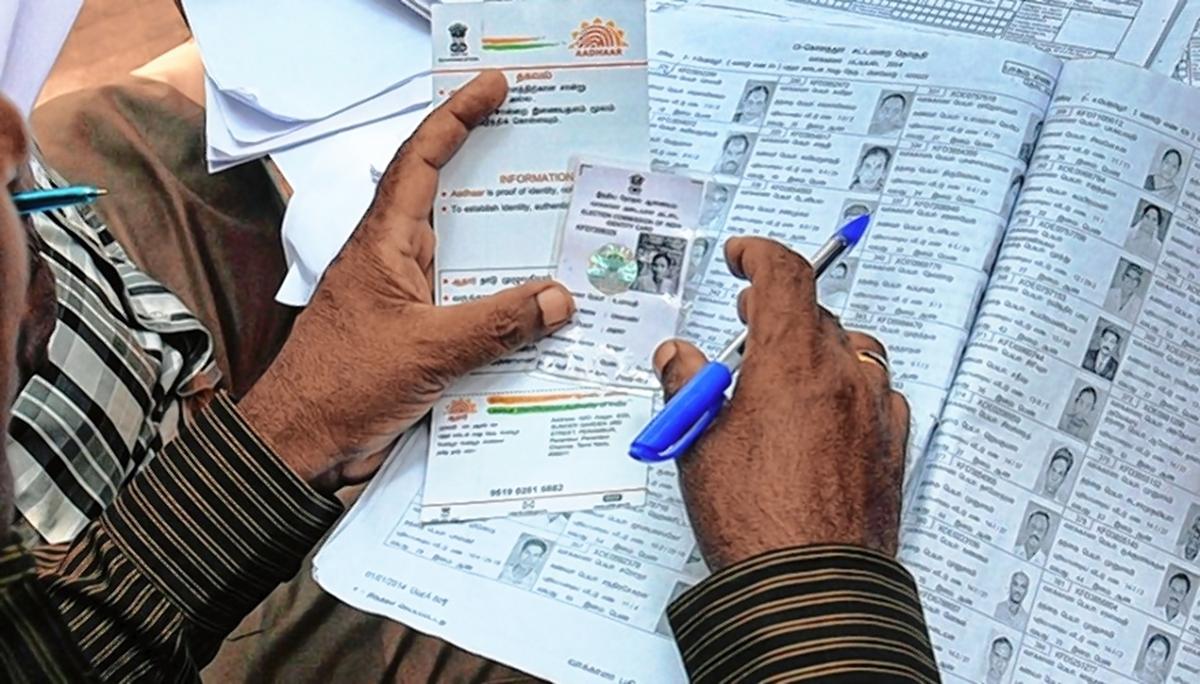
Although a “Karnataka Domicile Certificate” may qualify as a Permanent Residence Certificate under SIR, the conditions laid down by the Election Commission in West Bengal indicate that obtaining and using such a certificate may not be easy for marginalised communities in Karnataka
Dear friends,
Some newspapers reported that after a meeting with officials yesterday, Deputy Chief Minister D.K. Shivakumar instructed authorities to immediately provide residence certificates to those who require them for SIR. As per a report in The New Indian Express.
However, according to the list of 11 documents released by the Election Commission for SIR, a simple “Residential Certificate” is not sufficient. The Commission specifically requires:
Permanent Residence Certificate (PRC) issued by the competent State authority
To obtain a Residential Certificate, documents such as Aadhaar, ration card, electricity/water bills, rental agreements, etc., are usually sufficient.
However, for a Permanent Residence Certificate, additional proof is required showing permanent residence in the state for more than six years. This may include long-term ration cards, property records, or evidence of having studied in the state or resided in the state for more than six years.
Only after verification of such documents can the competent authority—the Tahsildar or Deputy Tahsildar—issue the certificate.
The question is: if the government hurriedly issues certificates without fully following these requirements, will the Election Commission accept them?
The West Bengal Experience
When SIR was conducted in West Bengal, residents submitted domicile certificates issued by the state government to prove their status. Attention: These were not ordinary residence certificates but permanent residence (domicile) certificates.
However, the Election Commission initially rejected them, arguing that they did not satisfy its prescribed Permanent Residence Certificate requirements. It also ordered that even those who had already submitted domicile certificates could be issued fresh notices. This was reported here.
As a result, then Chief Minister Mamata Banerjee publicly protested and later approached the Supreme Court. Only after these developments did the Election Commission, on February 9, agree to accept West Bengal domicile certificates as SIR eligibility documents, subject to several conditions. The conditions included:
1) EROs and AEROs could accept only those residence certificates issued in accordance with the West Bengal Government Order dated November 2, 1999.
2) The certificates had to be issued only by competent authorities such as District Magistrates, Additional District Magistrates, Sub-Divisional Officers, or the District Collector of Kolkata.
3) The certificates had to be issued strictly according to government guidelines.
4) All officials were required to be informed of and comply with these guidelines.
This has been detailed here.
This demonstrates the Election Commission’s “strict” (or exclusivist) approach—even toward permanent residence certificates issued by a state government. The Supreme Court has also upheld this authority.
States like Karnataka May Face Greater Difficulties
The ordinary residence certificate referred to by the Chief Minister of Karnataka, DK Shivakumar does not meet the “Permanent Residence Certificate” requirement under SIR. Given the West Bengal experience, only a Karnataka Domicile Certificate is likely to satisfy the Commission’s Permanent Residence Certificate requirement.
However, the same conditions imposed in West Bengal may effectively apply in Karnataka as well.
Generally, to establish Karnataka domicile status, one may need to show:
– Residence in Karnataka for seven years,
– More than six years of education in Karnataka,
– Parents residing in Karnataka, or
– Ownership of property in Karnataka.
These documents must then be verified and approved by the competent authority, usually a Tahsildar or higher-ranking official.
Therefore, since the Election Commission appears determined to use SIR to remove/exclude as many people as possible from electoral rolls on technical grounds, even minor procedural lapses in obtaining domicile certificates could be treated as discrepancies and lead to rejection.
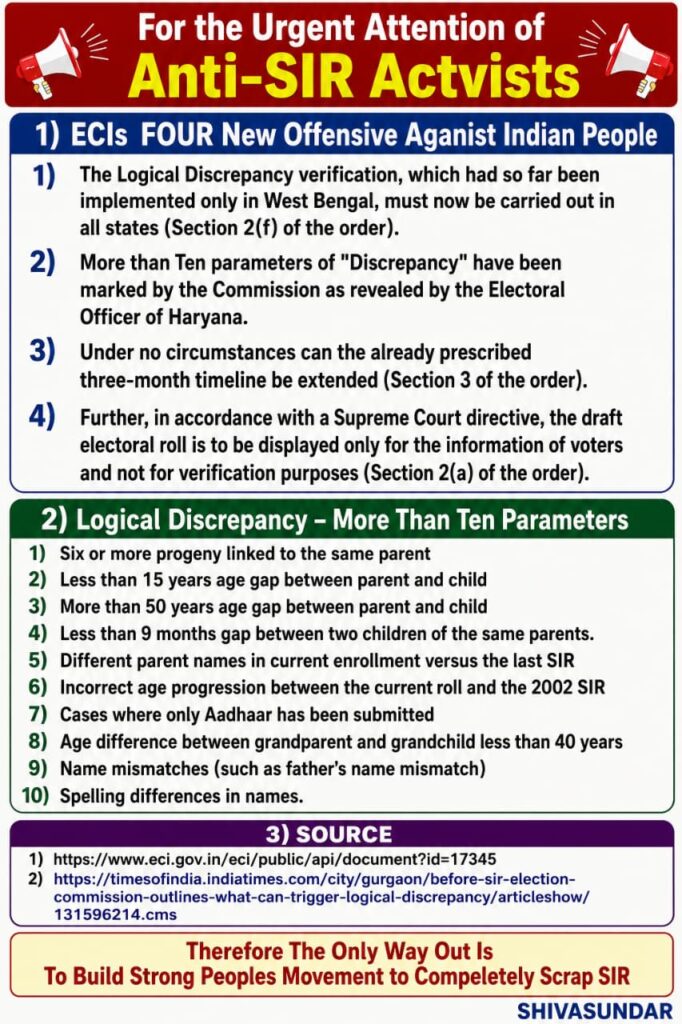
Karnataka’s Chief Electoral Officer, Ambu Kumar, has already stated that a “discrepancy” AI will be applied after submission of Enumeration Forms in Karnataka as well.
Consequently, D.K. Shivakumar’s general instruction to issue residence certificates to everyone who needs them is unlikely, by itself, to protect Dalit and other marginalized communities in Karnataka from the risks posed by SIR. For this reason, the instruction to issue residence certificates should not be viewed as a victory, nor is a cause for complacency.
Therefore, let us remember:
– A Residential Certificate does not satisfy the Permanent Residence Certificate requirement.
– Obtaining a Domicile Certificate that may satisfy the Permanent Residence Certificate requirement is not easy for many eligible members of marginalized communities.
– Documents obtained without following the proper procedure and authority may not be accepted by the Election Commission.
Let us remain alert and not get carried away
Let SIR be completely withdrawn — let democracy survive
Disclaimer: The views expressed here are the author’s personal views, and do not necessarily represent the views of Sabrangindia.
Related:
Jharkhand’s Biggest Democratic Test Yet: The SIR Challenge
SC greenlights SIR, upholds ECI’s power to revise electoral rolls
Documents Cannot Decide Democracy: How CJP is training communities to navigate the SIR process