
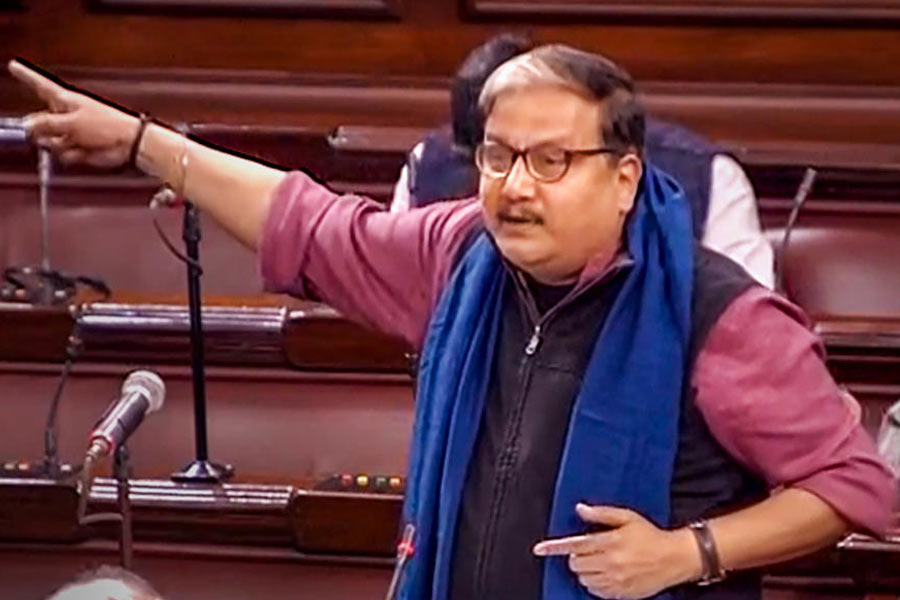
“Defend a law born of democratic consensus and moral clarity. Let us stand by the principle that every hand deserves work and every worker deserves dignity.” Dr Jha
Even as the Lok Sabha debated the intent of the present Modi regime to replace the Mahatma Gandhi National Rural Employment Guarantee Act, 2005 with the Viksu Bharat Guarantee for Rozgar and Ajeevika Mission (Gramin Bill, 2025) late past midnight yesterday, December 17, the urgent issue is agitating Parliamentarians and activists/academics alike.
Dr Manoj Jha, academic activist associated with the Rashtriya Janata Dal (RJD) and also a member of the Rajya Sabha has, in an Open Letter to other Rajya Sabha members appealed to the fellow parliamentarians against the intended repealment. Meanwhile, senior activists and academics including Jean Drèze and Prabhat Patnaik have warned of nationwide protests against the ill-intended move.
In his Open Letter to fellow parliamentarians dated December 18, 2025 (MPRS/BHRID/2025/7-80) Dr Jha reminds us of the history and context of this historic law guaranteeing rural work, passed in 2005, 55 years after the enactment of the Constitution.
Reminding us that any failures in the existing MNREGA arise from failures or drawbacks in implementation not the statute itself, Dr Jha writes how MGNREGA was enacted in 2005 with the support of all major political parties. The House then acknowledged a shared constitutional obligation that the right to work with dignity is integral to our democracy. Article 41 of the Constitution directs the State to secure the right to work and to provide public assistance in cases of unemployment and undeserved want, MGNREGA translated this directive into a justiciable legal guarantee. The proposed bill dismantles that guarantee.
Dr Jha made his letter public on X.
Appeal to fellow members in Parliament to save MGNREGA, which was not merely a government programme but a moral commitment made by the Indian Republic to its poorest citizens. It embodies the constitutional promise of dignity, livelihood, and social justice.
Jai Hind pic.twitter.com/qOjRGHugcY— Manoj Kumar Jha (@manojkjhadu) December 18, 2025
Meanwhile announcing that protests against the move to end MGNREGA will start this week, civil society groups said Modi govt cannot use a “mere parliamentary majority to end a rural livelihood programme that resulted from extensive consultations across the board and forging of a national consensus that included BJP. “Founding members of MGNREGA, intellectuals and advocacy groups associated with the scheme came together to slam the “VB-G RAM G” bill, arguing that provisions in the proposed legislation will mark the end of job guarantee and hurt the socially vulnerable groups that depend on it for sustenance. NREGA Sangharsh Morcha, comprising economists Jean Drèze, who was part of the Sonia Gandhi-headed NAC that played a key role in drafting the job scheme, Prabhat Patnaik and Jayati Ghosh, Annie Raja, Yogendra Yadav, B Venkat of All India Agricultural Workers Union, Mukesh Nirvasit, several NGOs and activists, addressed a press conference to express their concerns, while warning they will this week start nationwide protests against the abolition of MGNREGA. They said the shifting of financial burden to states has made the new programme uncertain as the states are cash-strapped.
Patnaik said mere parliamentary majority cannot undo the national consensus that resulted in the enactment of MGNREGA, and the Modi govt needs to bring an “alternative consensus” to repeal MGNREGA. The new Bill takes away the “right-based approach” and makes the scheme a “gift” from the govt, Ghosh said. “We have seen the pattern …Right to food is a right, but now we have ration bags coming with the PM’s photo on it,” she said. Drèze said, “The Union govt would now have full power to decide when and where to implement the scheme, while the obligation is on the states. It is like saying I give a work guarantee, but don’t guarantee that the guarantee will be in place.”
The entire text of Parliamentarian (Rajya Sabha) DR Manoj Jha’s letter may be read below:
“Date: 18.12.2025
Dear Colleagues,
Many of us will recall the first page of our school textbooks, which carried Gandhi’s tulisman. He urged us to remember the face of the poorest and weakest person we have seen, and to ask whether the action we are about to take would be of any use to that person whether it would restore to them control over their own life. He believed that if our action met that test, all doubts would dissolve. That talisman was meant to guide every decision in public life. I write you today with that principle in mind.
On December 15, 2025, the government introduced a Bill to repeal the Mahatma Gandhi National Rural Employment Guarantee Act and replace it with the Viksit Bharat Guarantee for Rozgar and Ajeevika Mission (Gramin) Bill, 2075, While the Lok Sabha has held discussion till late night yesterday, I urge you to oppose this move in our house.
This appeal is not partisan, MGNREGA was enacted in 2005 with the support of all major political parties. The House then acknowledged a shared constitutional obligation that the right to work with dignity is integral to our democracy. Article 41 of the Constitution directs the State to secure the right to work and to provide public assistance in cases of unemployment and undeserved want, MGNREGA translated this directive into a justiciable legal guarantee. The proposed bill dismantles that guarantee.
The government claims that the new framework will provide 125 days of work instead of 100. This claim is misleading. Unlike MGNREGA, which was demand-driven, the new hill makes employment dependent on central allocations and administrative discretion. Its coverage in no longer universal but limited to arcus notified by the Central Government. At a time when even MGNREGA workers received only 50-55 days of work annually due to inadequate funding, the promise of additional days without assured resources lacks credibility. Further, the proposed cost-sharing arrangement-requiring states to bear 40 per cent of the expenditure-will place an unsustainable burden on many states, leading to exclusion and contraction.
MGNREGA has its shortcomings, but they arise from failures of implementation, not from the law itself. Over two decades, it has provided crucial support during periods of distress, enhanced women’s participation in the workforce, and upheld the principle of work as a right, not a favour. It could and should have been strengthened. Repealing it without consultation or consensus is not reform, it is a retreat from constitutional responsibility.
I appeal to you, as fellow legislators, to defend a law born of democratic consensus and moral clarity. Let us stand by the principle that every hand deserves work and every worker deserves dignity.
The poorest citizens of our country are watching our choices.
With regards,
Prof. Manoj Kumar Jha”
Related:
CJP submits detailed feedback to Labour Ministry on Draft Shram Shakti Niti 2025
Labour rights, health of workers hit in the name of “reform”: PUCL Maharashtra
Beyond the Clock: Deconstructing Telangana’s Labour Law Reform and the Flawed Pursuit of Investment