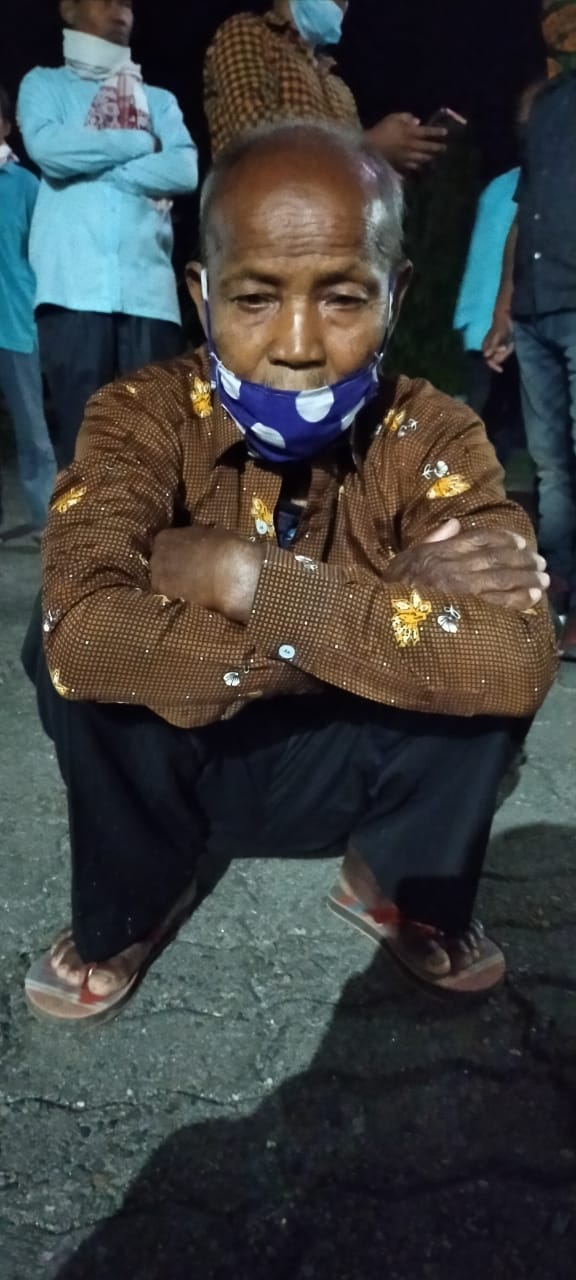
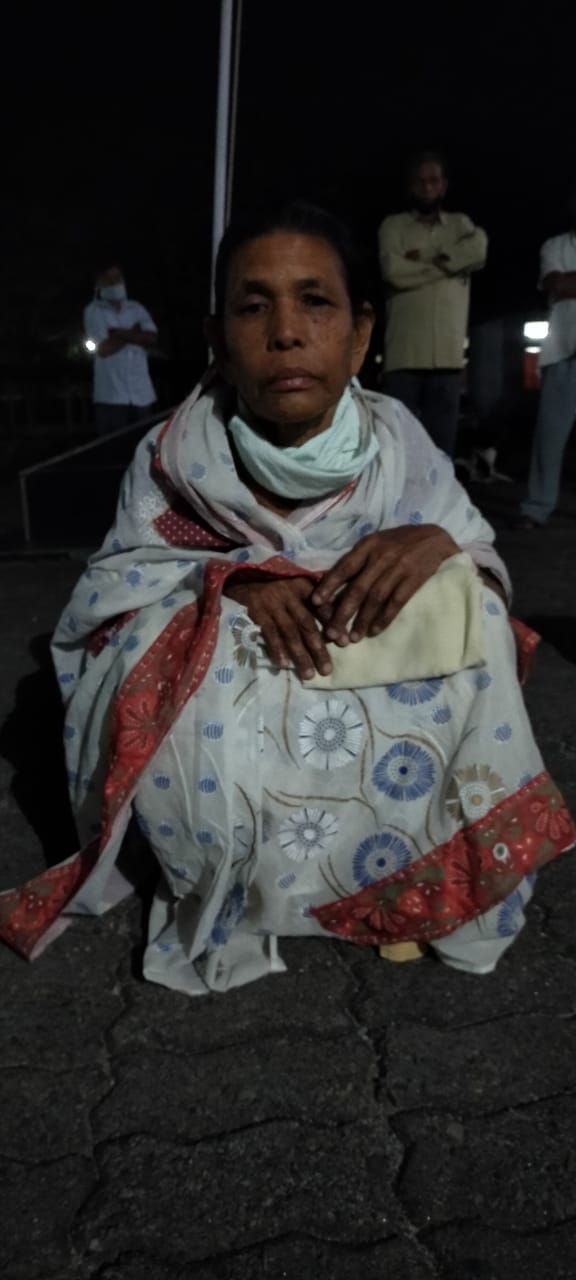
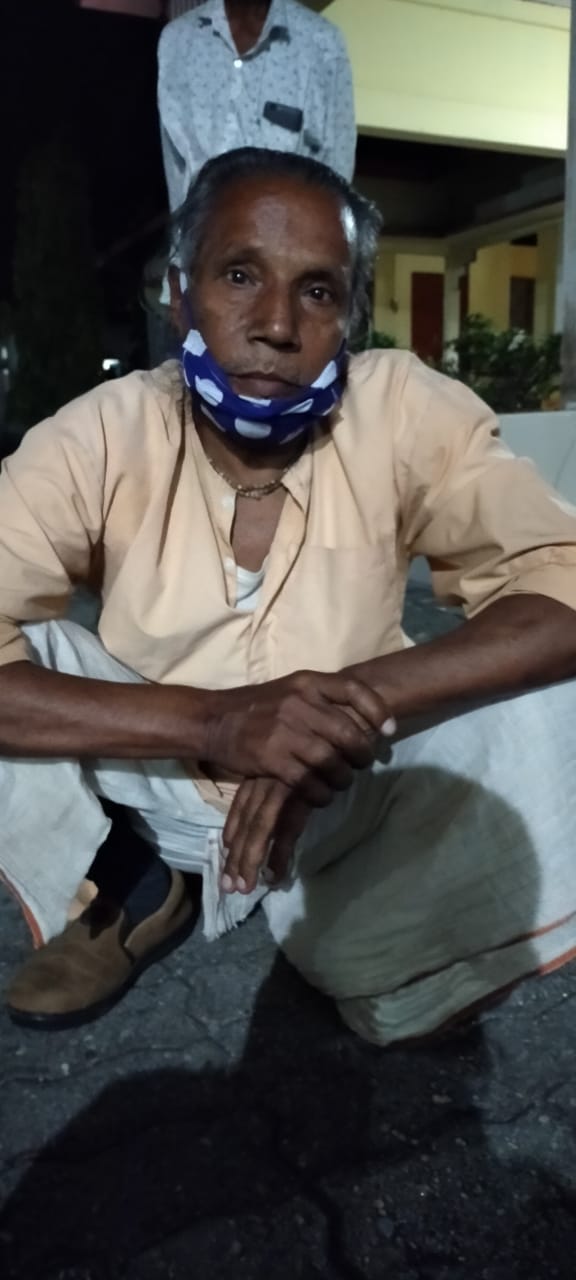
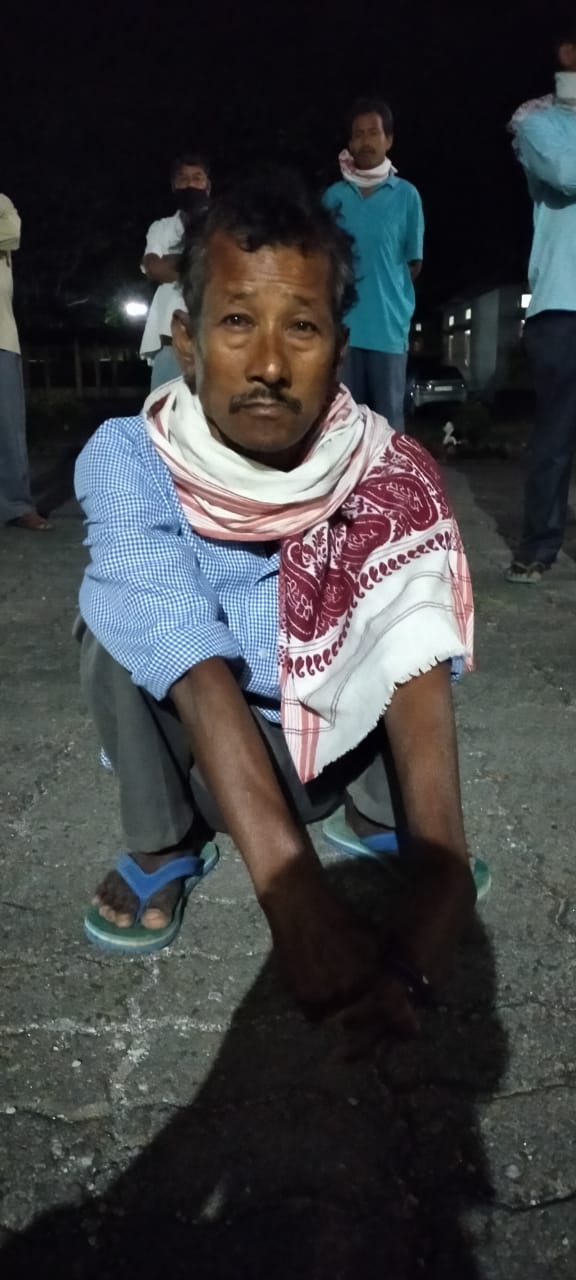
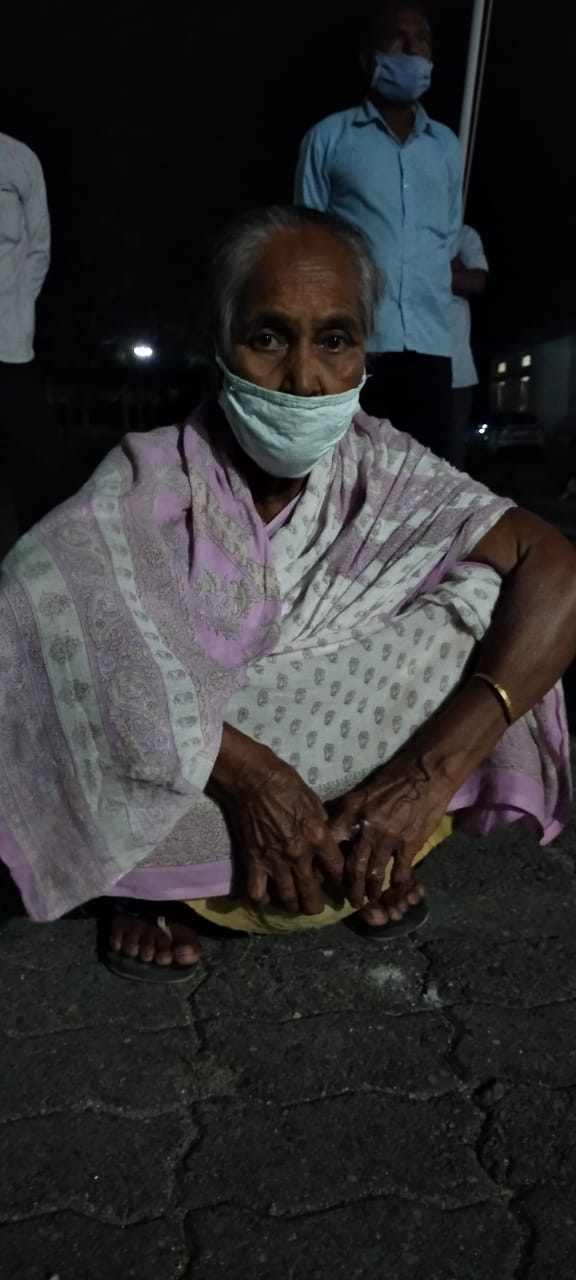
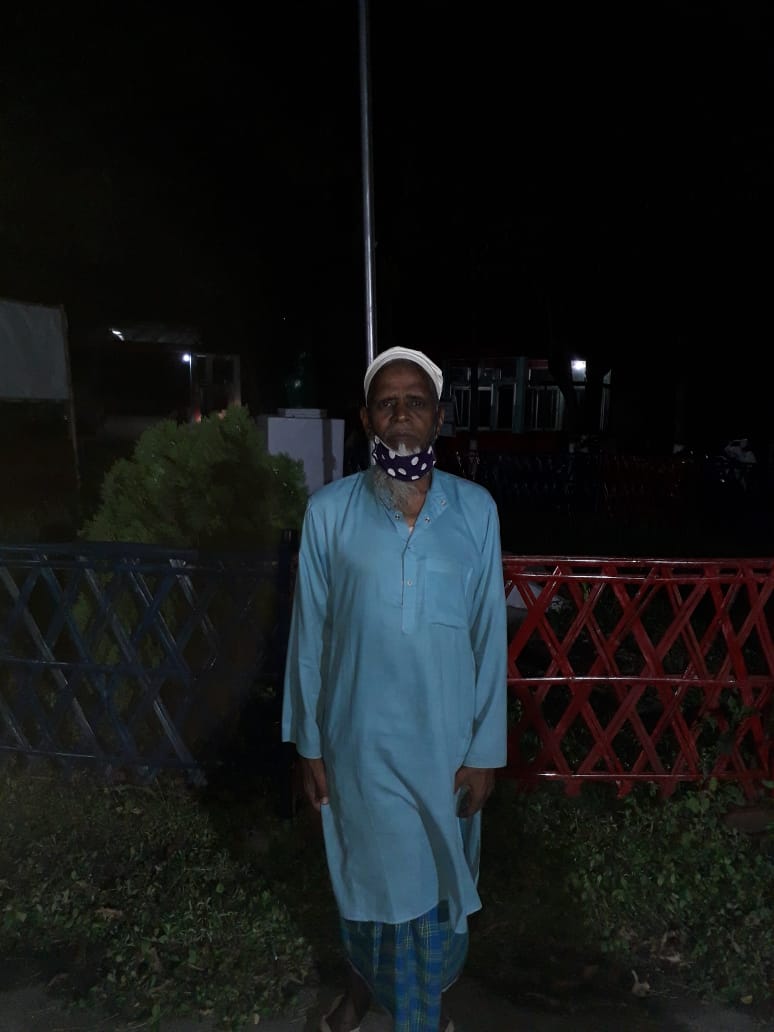
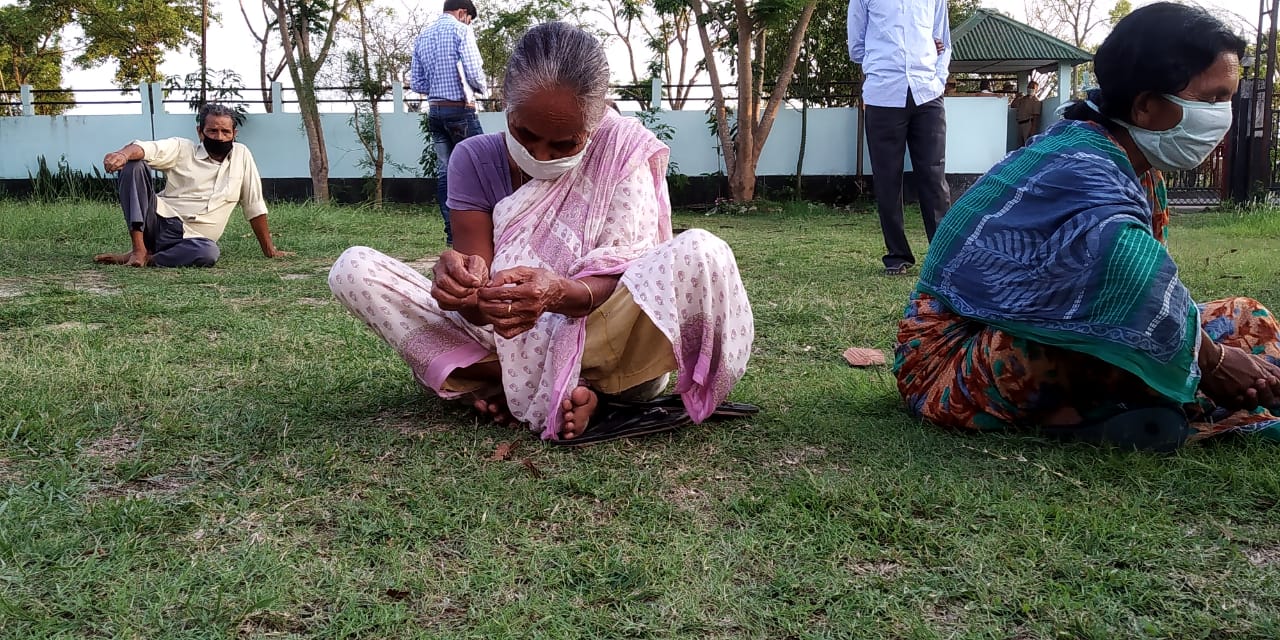
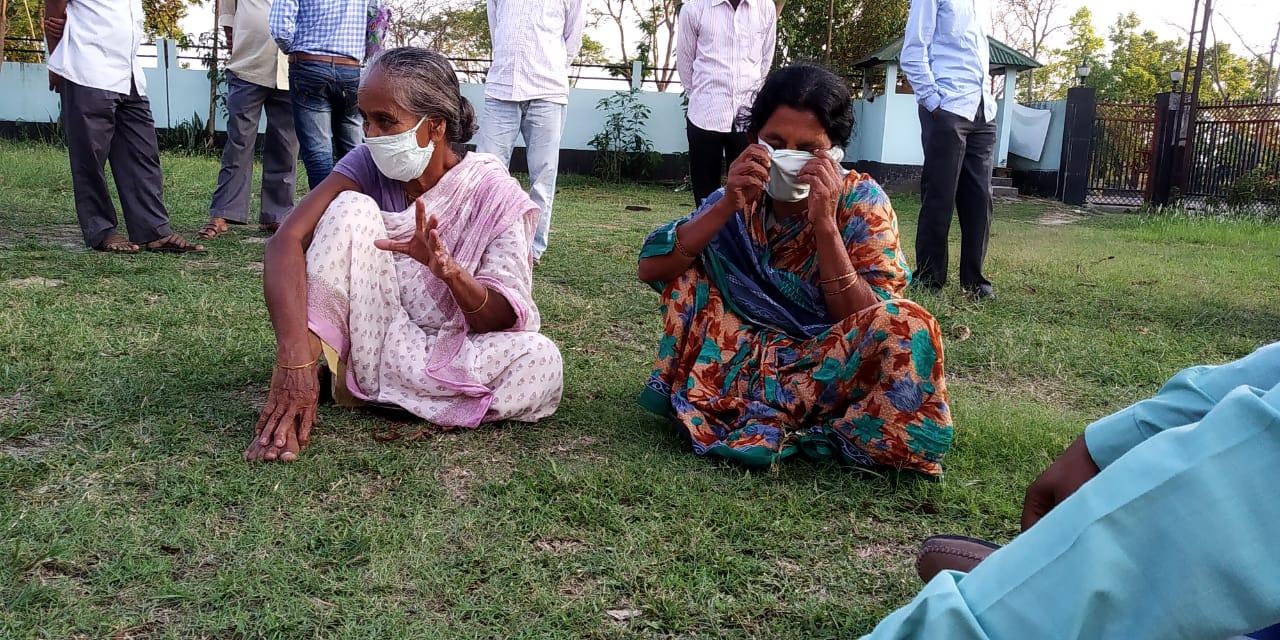
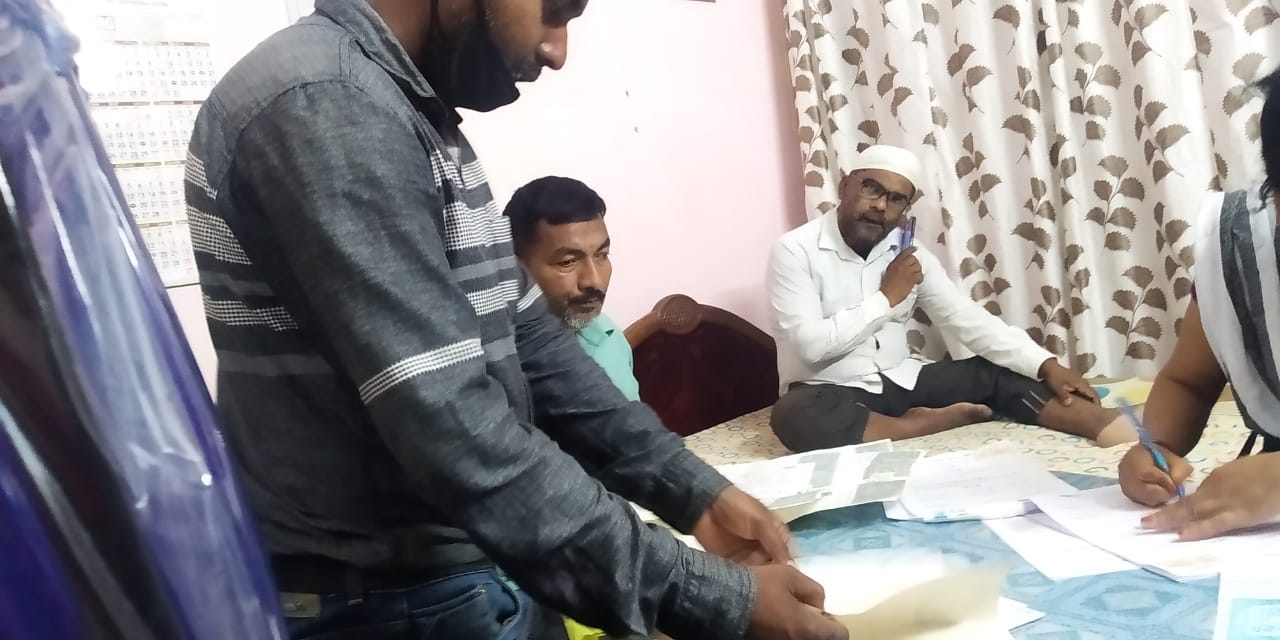
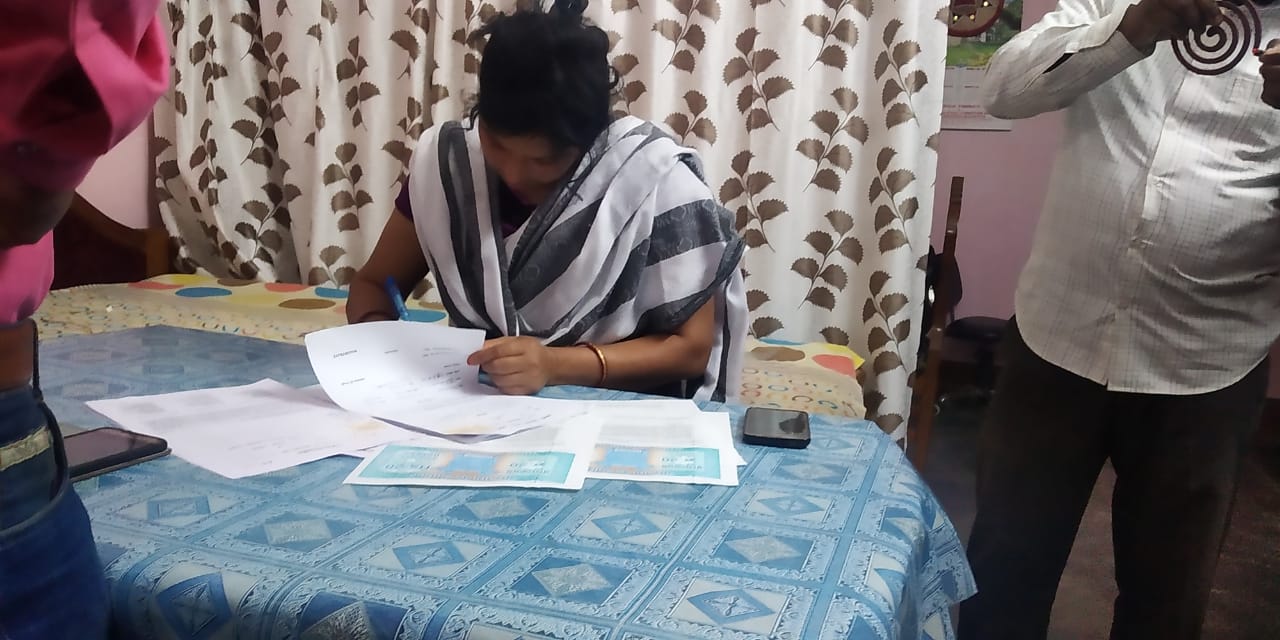
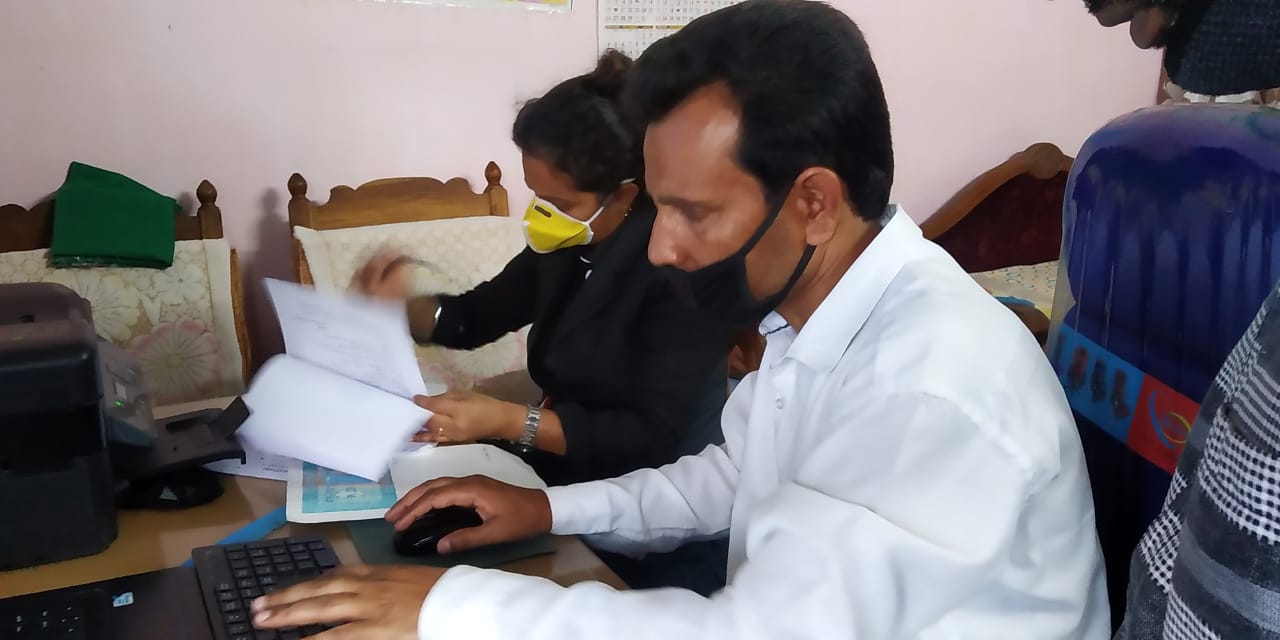
At least 35 Bru refugees were booked under the Disaster Management Act, 2005, and Section 188 of the IPC (Disobedience to order duly promulgated by public servant) for violating the lockdown, reported the Telegraph India.
The North district administration of Tripura has registered a complaint against the 35 Bru refugees for entering Tripura through a jungle from Mizoram on April 15 and April 16, even as the lockdown was in place. The Tripura police have now intensified their vigil and deployed more personnel along the Tripura-Mizoram border.
A senior police officer told The Telegraph, “A case has been registered against 35 Bru people under the Disaster Management Act, 2005. All the 35 Brus entered Tripura on April 17 violating the lockdown. They bypassed all checkgates and came through the jungles from Mizoram. When they reached their camp at Naisingpara, only then we came to know. They said they had approval from a local council of Mizoram which is not valid. We have put them under quarantine at Kanchanpur ST boys’ hostel of Kanchanpur sub-division of the North district.”
District Magistrate Raval H Kumar said that the refugees were screened, were kept under quarantine and were asymptomatic.
He said, “These Bru inmates are from Naisingpara Bru camp at Kanchanpur sub-division of North Tripura. They are migrant labourers working in Aizawl. Now they are under quarantine and we will take legal action against all.” Scroll.in reported that the police informed that the 35 refugees were put under quarantine at a hostel in Kanchanpur sub-division of the North district.
Covid-19 nodal officer, Dr. Deep Kumar Debbarma said, “We have collected some samples from the Brus. The results are yet to come. And the second patient of the state who was found in Damcherra of North district is stable now.”
The second patient of the state was found in Damcherra village of the North district which is very close to the Mizoram border. According to data from the Union Health Ministry, the state currently only 1 active case up until now, with one person having recovered and no Covid-19 deaths have been reported from the state.
In January, a quadripartite agreement was signed between the Centre and State governments of Tripura and Mizoram and representatives of Bru organization, Mizoram Bru Displaced people’s Forum, allowing some 35,000 Bru tribals who had been displaced from Mizoram, to settle permanently in Tripura. The Brus were forced to leave Mizoram after facing ethnic violence there had been residing in Tripura in six relief camps in Tripura.
The Brus, also known as Reangs, are spread over the states of Tripura, Mizoram and southern Assam. Brus of Mizoram converted to Christianity, while Brus of Assam and Tripura are mostly Hindu. In 1995, clashes with the majority Mizos, led to the demand that Brus be removed from Mizoram’s electoral rolls as they were perceived to be non-indigenous. This had led to an armed movement by a Bru outfit, Bru National Liberation Front (BNLF) which led to the killing of a forest official in Mizoram. This in turn to retaliatory ethnic violence which saw more than 40,000 Brus fleeing to Tripura where they were houses in six relief camps in Kanchanpur and Panisagar subdivisions.
Disciplinary Action is being taken against the erring Police Officials. Appeal to observe the holy month of Ramzan as per the advisory given below to stay safe and follow lockdown in your and public interest: Delhi Lieutenant Governor Anil Baijal
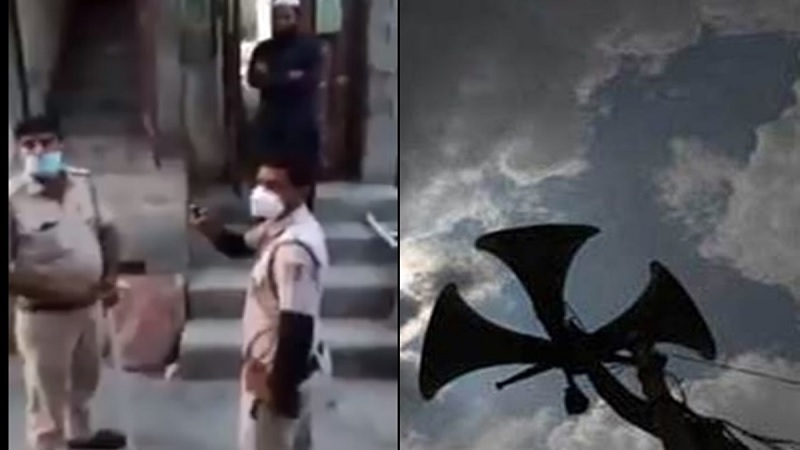
“Azaan ke liye bhi mana kar diya hai LG sahab ne. LG sahab ke order hain (azaan is also banned, these are the orders from the Lieutenant Governor )” two uniformed Delhi Police officials, took it upon themselves to tell the local muezzin at a mosque in Delhi’s Prem Nagar area, that azaan, or the Muslim call to prayers recited by a muezzin, was banned by the state’s Lt Governor a day before the month of Ramzaan began. This of course is not true. There is no ban on the call to prayers under the Covid19 lockdown. All religious gatherings, and congregational prayers have been banned and mosques, churches, temples, gurdwaras have already suspended them. The faithfull have been asked to pray at home.
However, the two Delhi Policemen’s decision to make additions to the list of banned activities has done the damage. The short video clip has since gone viral, where the cops are seen giving stern instructions to the Muezzin not to give the call to prayer. Two women can be heard reasoning with the cops that Ramzaan was starting soon and azaan was essential to let people know when to break their fast. They told the cops that no one was going to the masjids to pray and only the muezzin would give the call. “This is wrong, this is ramzan, the rozas (fasts) will be observed, there is no ban on Azaan, we see the news too,” reasoned the women. “Go and fight with LG. The LG has said no,” the policeman replied. “What is the problem? Is corona increasing with the azaan,” asked an exasperated woman.
“LG Sahab has said not one person will read the azaan,” the cop continues to chant his line ad nauseum. Not to be intimidated, the women continue to school him. The clip soon found its way to social media where users such as civil rights activist Navaid Hamid, president All India Muslim Majlis e Mushawaratm secretary S. Asian CouncilForMinorities tagged the authorities and tweeted “DelhiPolice (PS PremNagar) claims tht @LtGovDelhi has ordered to ban Azaan. Reports coming frm areas where Muslims r in minority tht policemen hav instructed Imam/Muezzin not to give Azan in Mosques. Muslims wld not accept any illegal directive. #Ramadan @ArvindKejriwal @CPDelhi”
@DelhiPolice (PS PremNagar) claims tht @LtGovDelhi has ordered to ban Azaan. Reports coming frm areas where Muslims r in minority tht policemen hav instructed Imam/Muezzin not to give Azan in Mosques. Muslims wld not accept any illegal directive. #Ramadan@ArvindKejriwal@CPDelhi
Senior journalist Saba Naqvi too shared the video, flagging the sensitive issue, “
Is azaan during #Ramzaan now not allowed in Delhi? These cops say it’s order of LG. Hear them. Video from riot affected mustafabad where many lost lives, home and shops.”
Is azaan during #Ramzaan now not allowed in Delhi? These cops say it’s order of LG. Hear them. Video from riot affected mustafabad where many lost lives, home and shops. pic.twitter.com/JlIkZ8qRyr
While the conversation between the cops and the Muslim citizens, heard in the video is not a shouting match, the stress it has caused, and the dangerous potential it has to fan communal flames is obvious. “This is yet another attempt to intimidate,” said a Muslim lawyer, “azaan is a call to prayer. This is a holy month for Muslims across the world. We will all pray within our homes,”. “Why are they trying to provoke us?” asked a student, “they keep finding one thing or the other to attack us with.”
“There is a greater design behind this,” added a Muslim activist, “it can have dangerous consequences, even riots if not shut down right now.”
A local resident says the cops action was to create a disturbance where there was none. “How is azaan a problem? Ramzaan is holy to us and comes only once a year. They cannot stop a call to prayer. It is a simple tradition.”
Hours later Anil Baijal, Lieutenant Governor of Delhi: posted this on Twitter: “Observe Ramazan while following the lockdown guidelines”
With not even a word to calm frayed nerves and set the record straight that he had not given any instructions to the policemen to stop muezzins from reciting the azaan to mark the end of each roza.
Delhi Minorities Commission wrote to Anil Baijil, Lt. Governor Delhi and Arvind Kejriwal, Chief Minister of Delhi, about prohibition of azaan in NCT mosques. DMC Chairman Dr Zafarul-Islam Khan raised the issue of banning azaan over loudspeakers in mosques in various parts of Delhi.
“The issue of azaan from mosques is very pressing due to the beginning of the month of Ramzan when Muslims fast and break their fast on hearing the azaan at sunset time. Ramzan is starting in Delhi tomorrow, April 25. The Commission has requested that azaan should not be banned from mosques while mosques will continue to meticulously follow the Covid19-restrictions on permitted numbers of people for any gathering and social distancing,” said Dr Khan.
No congregational prayers are being held in Delhi mosques since the lockdown but azaan, recited by a single muezzin has continued. The Commission sent notices to the DCPs of Dwarka and South districts to provide it a copy of any circular banning the azaan. “If it does not exist, allow azaan in mosques in their areas” stated Dr Khan.
On his part, Delhi’s Deputy Chief Minister Manish Sisodia tried to add a touch of diplomacy by saying there was no ban on azaan, but during the lockdown there was a ban on going to the mosques for namaaz and the complete ban extended on congregational prayers of any other religion as well: “अजान के लिए कोई पाबंदी नहीं है. लॉकडाउन में मस्जिदों में नमाज़ के लिए इकट्ठा होने या किसी अन्य धार्मिक स्थल पर पूजा आदि के लिए लोगों के इकट्ठा होने पर पूरी तरह पाबंदी है.”
अजान के लिए कोई पाबंदी नहीं है. लॉकडाउन में मस्जिदों में नमाज़ के लिए इकट्ठा होने या किसी अन्य धार्मिक स्थल पर पूजा आदि के लिए लोगों के इकट्ठा होने पर पूरी तरह पाबंदी है. https://t.co/OxYGiqaIrR
— #DilKiPolice Delhi Police (@DelhiPolice) April 24, 2020
According to the newsportal The Quint Delhi Police PRO, Anil Mittal, has said the two cops seen in the video are being identified, “ and, an official DCP-level inquiry has been launched into the matter. With the month Ramzan starting on 25 April, people must offer Namaz and have Sehri at home.”
An activist said the cops may now say they were confused between ‘azaan’, and ‘namaz’. Perhaps the two policemen should have just stopped talking for a moment and listened to what the women were trying to tell them in the first place. After all, in the midst of the Covid19 lockdown Delhi Police does want to be known as “Dill Ki Police” https://twitter.com/DelhiPolice or is that a pun (un)intended?
In a huge victory for nine inmates of Assam’s infamous detention camps, CJP has managed to secure their conditional release allowing them to go home to their families. The inmates hail from Chirang and Bongaigaon districts and were lodged in detention camps in Kokrajhar and Goalpara. They were released on April 22.
CJP Assam state team coordinator Zamser Ali explains, “We had been working to secure the release of detention camp inmates since even before the May 2019 Supreme Court order allowed conditional release for those who had completed three years. And while we were successful in helping many people go back home, things picked up speed after the Supreme Court order on April 13, 2020 that reduced time served requirement to two years and sureity amount to just Rs 5,000/- from the previous Rs 1 lakh. After the SC order, the Gauhati High Court had also ordered on April 15, that maximum number of eligible detainees be released within a week.”
The nine people released are:
From Chirang:
1) Parbati Das: A 73-year-old woman from a Scheduled Caste who had been languishing behind bars at the Kokrajhar detention camp for 3 years, 7 months and 8 days.
2) Asthami Das: A 60-year-old woman who also hails from a Scheduled Caste and had spent 2 years, 2 months and 16 days at the Kokrajhar detention camp.
3) Shantibala Ray: A 60-year-old Koch Rajbongshi woman who spent 3 years, 7 months and 8 days in captivity at the Kokrajhar detention camp.
4) Khitish Singha: A 58-year-old Dalu tribal from an extremely impoverished background who spent 2 years, 10 months and 27 days behind bars at the Goalpara detention camp.
5) Bongshidhar Rajbongshi: A 63-year-old member of the Koch Rajbongshi community who is also from an extremely economically backward family, and had spent 2 years, 9 months and 18 days at the Goalpara detention camp.
6) Kiswar Barman: A 49-year-old Koch Rajbongshi man who had spent 3 years, 2 months and 29 days in captivity at the Goalpara detention camp.
From Bongaigaon:
1) Hellal Ali: A 70-year-old Muslim man who had spent 3 years behind bars at the Goalpara detention camp.
2) Chitta Ranjan Ghosh: A man who had previously been released on bail two years ago, but was sent back to the detention camp after the court ruled his school leaving certificate to be fake.
3) Gour Mandal: Who spent 2 years and 6 months in the Goalpara detention camp.
Apart from Zamser Ali, the efforts were also led by CJP senior team members Pranay Tarafdar, Nandu Ghosh and Abul Kalam Azad. Advocate Dewan Abdur Rahim, assisted by Advocate Jahera Khatun and Advocate Prity Karmakar, was also a key member of the team that also comprises hundreds of community volunteers, paralegals, assistants and drivers.
Explaining the logistics of operating during the lockdown, Zamser Ali says, “We had already done a lot of leg work and travelled to the villages of all the detainees on multiple occasions over the last one and half years. But when the lockdown was ordered, we could not stop our work. Also, we were engaged in providing rations and relief materials to impoverished people at the time. We managed to get permission for one vehicle for this purpose. Since the detainees’ families also comprise extremely poor daily wage earners who had lost their source of incomes and were facing starvation, we were able to provide two different forms of service to them.”
Nandu Ghosh, elaborated on the procedural hurdles faced by the team saying, “For every person who agrees to bail out a detainee, we have to get their ‘Jamabandi’ document (proof of land ownership), their land valuation document and their tax clearance document. All these had to be verified by government authorities who would often reject documents due to minor discrepancies causing us to run from the Mandal department in the Circle Office to the Sub Divisional Office (Civil) and back multiple times.”
Additionally, each bailor had to provide legacy data and certified copy of voters list and voter ID. Ghosh says many times the procedure took as long at four months to complete because they were made to jump through bureaucratic hoops. But the team remained patient, and did not budge.
“But we all got very emotional in the cases of Kshitish Singha and Bongshidhar Rajbongshi. Singha’s wife is ill and bed ridden. One of his children works in another state and is stuck there. The other child is in class five. They are extremely poor and helpless. In case of the Rajbongshi family, we discovered that they had been forced to go hungry for two consecutive days as supplies ran out and they did not have any source of income during the lockdown. Though we immediately provided them with rations, it was very difficult to get over what we saw that day,” recalls Nandu Ghosh.
Ghosh and Tarafdar often had to make multiple trips to far flung villages to help families with the documentation process and get bailors. “Many times, we would go to the village to help the families, but they would be out trying to find work. So, we would return at night, but by then they would have fallen asleep exhausted from toiling all day.”
Zamser Ali elaborates, “Often people would be reluctant to become bailors as nobody wants to get into the long drawn out process. Sometimes people would want to help, but they did not have adequate documents. There are 2500 people living near Kiswar Barman’s home in Phaisobari village who do not have a single permanent land patta (land ownership document). Around 3,000 people are living in the Borpathar village, where Bongshidhar Rajbongshi lives, but only 25 of them have permanent land patta documents. Most tribals don’t have permanent land pattas and basically depend on produce from the forest land. In many villages it is only the upper caste people who have them and they are usually unwilling to help detainees unless they can get something out of it.”
Explaining how CJP had to step in and often protect vulnerable families of detainees from bailors with ulterior motives, Zamser Ali says, “People would expect the family to turn over their land in exchange for help in securing the detainee’s release. They would then be expected to work as bonded labourers on this land. This is virtual slavery and we could not allow helpless people to be exploited like this!”
But the CJP team soldiered on, with the objective of protecting and defending the vulnerable people. At last, our perseverance paid off, and when word came that release was possible for these nine detainees, CJP swung into action and arranged for 6 vehicles to first take the bailors to complete the last leg of formalities at the office of the Superintendent of Police, and then to take the detainees back home.
“The night before the release neither Zamser da, nor I slept a wink as we meticulously went through all paperwork with our legal team with a fine-tooth comb to ensure nothing went wrong at the last minute. We left at 6 AM the next day and formalities at the Superintendent’s office got completed only around 11 PM. By the time the detainees were released it was midnight. Our community volunteers ensured that they were all dropped home, all the while maintaining social distancing measures,” says Nandu Ghosh.
“Because of social distancing, we could not have more than two detainees and a bailor in one vehicle, forcing us to make multiple trips. By the time everyone reached home, it was well past 2 AM! But we had to be responsible,” says Zamser Ali.
So far, through direct intervention by CJP, 15 people have been able to walk out of detention camps. The team is now gearing up for the release of five more people over the next seven days. Here is a powerful video of detainees after their release.
Meanwhile CJP volunteers and volunteer motivators have also worked closely with people from Prayash and Aikyatan, two local organisations, to help secure the release of 50 more people. Here is a list of people who have helped in this enormous endeavour. While some have physically run from pillar to post through this tedious process, gone door-to-door and helped with document collection, form filing and verification, many of the following people have provided much needed emotional support as well as support from outside:
Bipul Sarkar, Pijush Chakraborty, Papiya Das, Gauranga Karmakar, Raj Barman, Mohanbashi Das, Dilip Kumar Ray, Sayan Kumar Singha, Chirang District BJP General Secretary Rintu Kumar Das, Kalicharan Barman, Sukdev Rajbongshi, Prahlad Das, Krishna Das, Ashananda Mondal, Ajit Barman, Rakhal Rajbongshi, Kartik Debnath, Ranjit Mondal, Manoj Saha Mrinal Kanti Saha, Ratan Goswami, Raju Saha Mondal, Swapan Saha, Raju Ghosh, Sushankar Ghosh, Subhas Ghosh, Samir Ghosh, Amal Kanti Raha, Ujjal Ujjwal Bhowmick, Aminul Ahmed, Ananta Kalita, Rituraj Kalita, Shantiranjan Mitra, Ratish Deb, Ak Goldsmith, Teesta Setalvad, Pranjal Choudhury, Faruk Ahmed, Majidul Islam, Mubarak Ali, Sanjay Chakraborty, Amritlal Das Sushanta Kar, Har Kumar Goswami, Jamir Uddin Talukdar, Hasinus Sultan, Zesmin Sultana, Chitta Paul and many more.
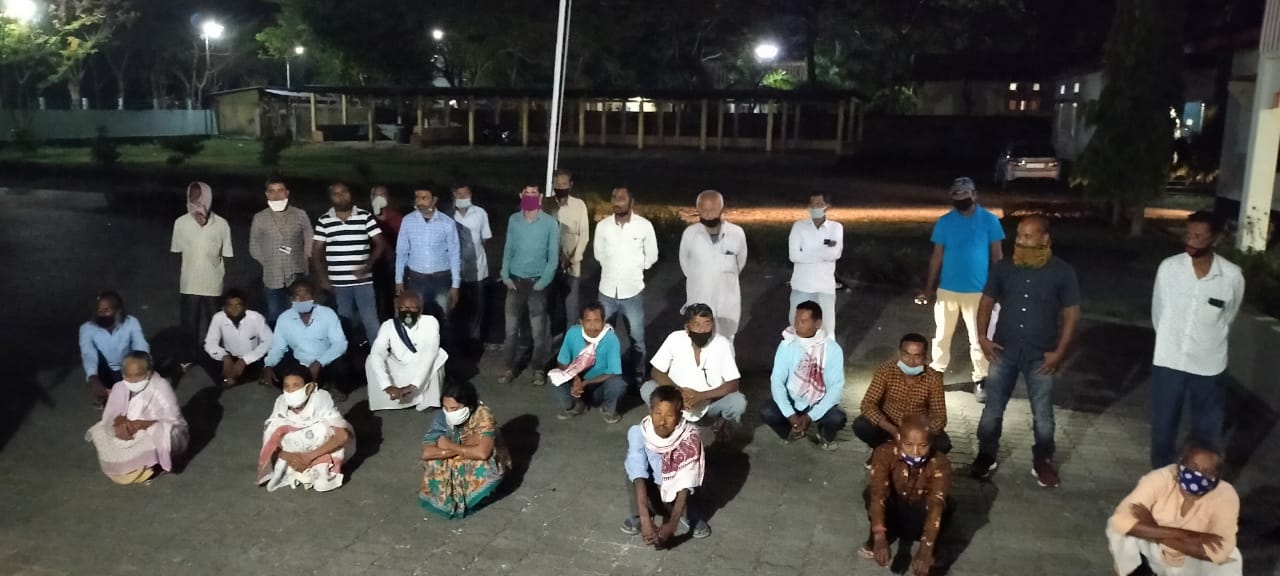
Here are a few images showcasing the detainees and our team:
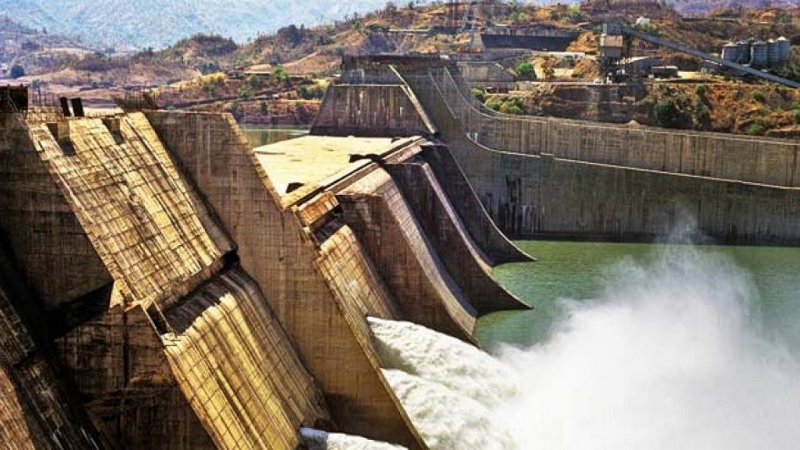
The environment ministry’s Forest Advisory Committee (FAC) discussed the issue of forest clearance for the Etalin Hydroelectric Project that requires the clearing of 2.7 lakh trees in what is described as a “subtropical evergreen broad-leaved forest and subtropical rain forest”, one of the most biodiverse Himalayan zones in Arunachal Pradesh’s Dibang Valley, reported the Hindustan Times.
Though the decision on granting forest clearance hasn’t been taken yet, a senior member of the FAC, on condition of anonymity, has told the media that most members have a favourable view of the project because it is a large “clean energy project” which can replace dirty energy.
HT reported on April 23 that a sub-committee of FAC which visited the site in February has recommended in its report dated April 21 that Etalin Hydroelectric Project of 3097 MW be allowed with a condition that the developer deposit money that will go towards wildlife conservation in the area.
According to the sub-committee which visited the site in February, the developer, Etalin Hydro-Electric Power Company, a joint venture of Arunachal Pradesh’s Hydro Power Development Corporation with Jindal Power Limited (JPL), has reduced the forest area needed to be diverted to 1150.08 ha from 1165.66 ha.
Mongabay India reported, “First envisaged in 2008, the Etalin hydropower project is proposed to be developed as a combination of two run-of-the-river schemes and involves the construction of concrete gravity dams on the Tangon and Dri rivers. It seeks diversion of about 1,165.66 hectares of forest area from the environment ministry. However, the area that is sought for diversion is classified as an “inviolate area” as prescribed by the environment ministry which is an area where no developmental project is allowed.”
In light of this, several scientists have written to the six-member FAC, citing a number of peer-reviewed studies that highlighted the ecological and biodiversity richness of the Dibang Valley. They asked the committee to assess the impact of all the hydropower projects in the region writing, “We’d like to kindly request you to direct the necessary agencies to conduct systematic studies on assessing the potential cumulative impacts of a run of the river projects on the riverine habitats and riverine birds before these projects are given clearance and before the river systems are permanently and irreversibly altered.”
In the same vein, they have asked citizens to come forward and sign off an email to the FAC, asking it to reject the forest clearance for the Etalin Project.
Asking citizens to address the below email to the Director General of Forests (dgfindia@nic.in), Additional Director General of Forests (adfgc-mef@nic.in), Inspector General of Forests (igfc-mef@nic.in) and non-official members of the FAC, Dr. Rajesh Kaushal (kaushalrajesh1@rediffmail.com ) and Suramya Vora, Ex – Additional Principal Chief Conservator of Forests (suramya.vora@gmail.com), they wish to save the pristine Dibang Valley from a destructive project.
The email reads –
Subject: Reject Forest Clearance for the Etalin Project
Respected Member of the Forest Advisory Committee,
I write to you as a concerned citizen of India and implore you to reject the forest clearance for the Etalin Hydropower Project. The project should not be viewed as a “clean energy” project, as it involves the destruction of a minimum of 270,000 trees in the Dibang Valley of Arunachal Pradesh. The Dibang Valley lies in a Global Biodiversity Hotspot and its old growth forests are irreplaceable. They harbour rich species diversity, including a unique, high altitude population of tigers.
Such forests are also crucial to public health and our fight against the climate crisis. In a letter by the Ministry of Environment, Forest and Climate Change to the Ministry of Corporate Affairs, Environment Secretary C.K. Mishra acknowledges that “there is a consensus among scientists that a rise in zoonotic diseases like Nippa, Avian Influenza, Zika and Coronavirus is linked to loss of biodiversity and forest”.
Once lost, such complex ecosystems are irreplaceable. The Dibang Multipurpose Project has already been approved on the same Dibang River. It would be a tragedy if the Etalin Project is approved too.
I urge you to unanimously reject forest clearance for the Etalin Project.
Yours truly.
According to Mongabay India, the Dibang Valley houses 680 bird species – more than half of India’s total bird species. It is also home to tigers, the national animal of India.
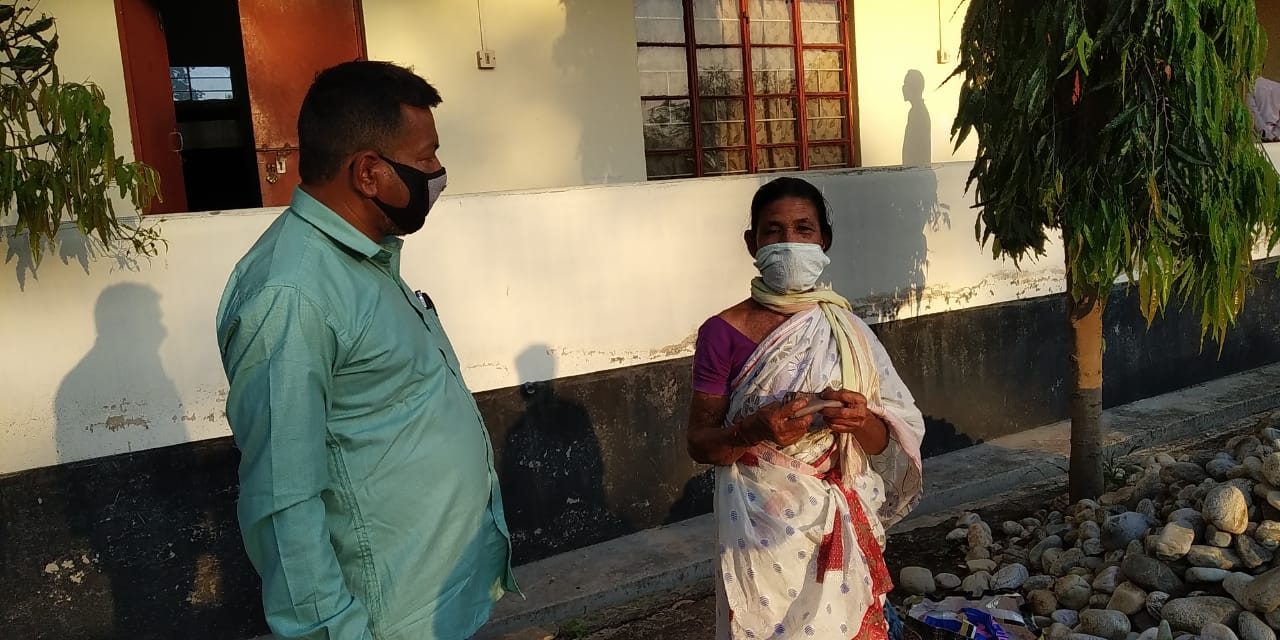
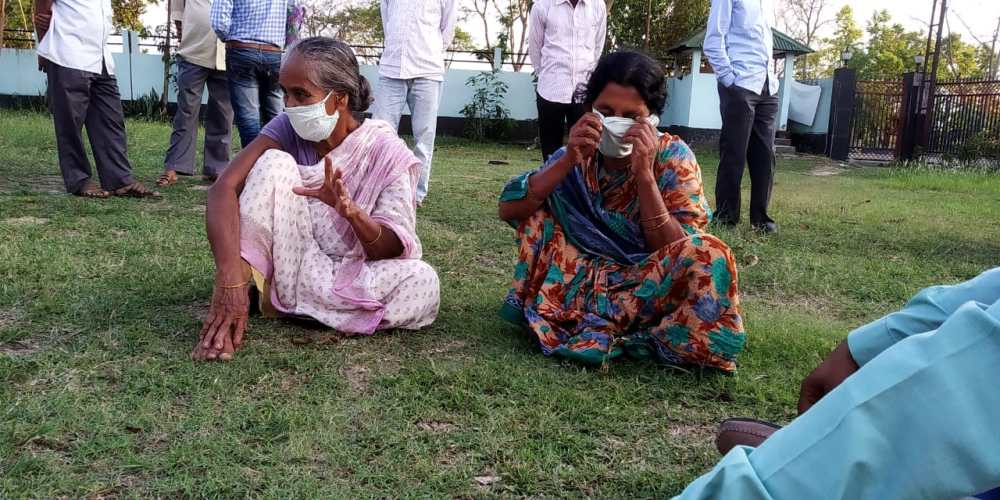
Across India, especially in its Eastern parts, the homecoming of goddess Durga is celebrated with much enthusiasm by Bengali Hindus as the annual Durga Puja festival. One of the 108 avatars of the goddess is named Parvati often pronounced Parbati in these parts. So, when 73-year-old Parbati Das came back home from a detention camp in Assam with the assistance of CJP’s Assam team on April 22, her homecoming too was a deeply emotional affair.
Her son Biswanath was at a loss of words and tears won’t stop streaming down his face. Parbati too broke down at the sight of her son as she alighted from the vehicle CJP had arranged to drop her home. But after sometime, Parbati displaying a feistiness much like her namesake goddess and spiritedly denied the charge of being a foreigner. “They called me Bangladeshi and sent me to jail. I was born here in India on land owned by my father. I have never been to Bangladesh and don’t know anything about that country,” says the woman who was forced to live behind bars at the Kokrajhar detention camp.
CJP has been working to help secure the release of detention camp inmates who have completed the requisite amount of time behind bars in line with two Supreme Court orders that allow for their conditional release. The first order passed in May 2019 had stipulated that inmates who had spent three years in a detention camp could be released if they produced two sureties of Rs 1 lakh each. Another SC order issued on April 13, 2020, in wake of the Covid-19 pandemic reduced the amount of time served to 2 years and surety amount to just Rs 5,000/-.
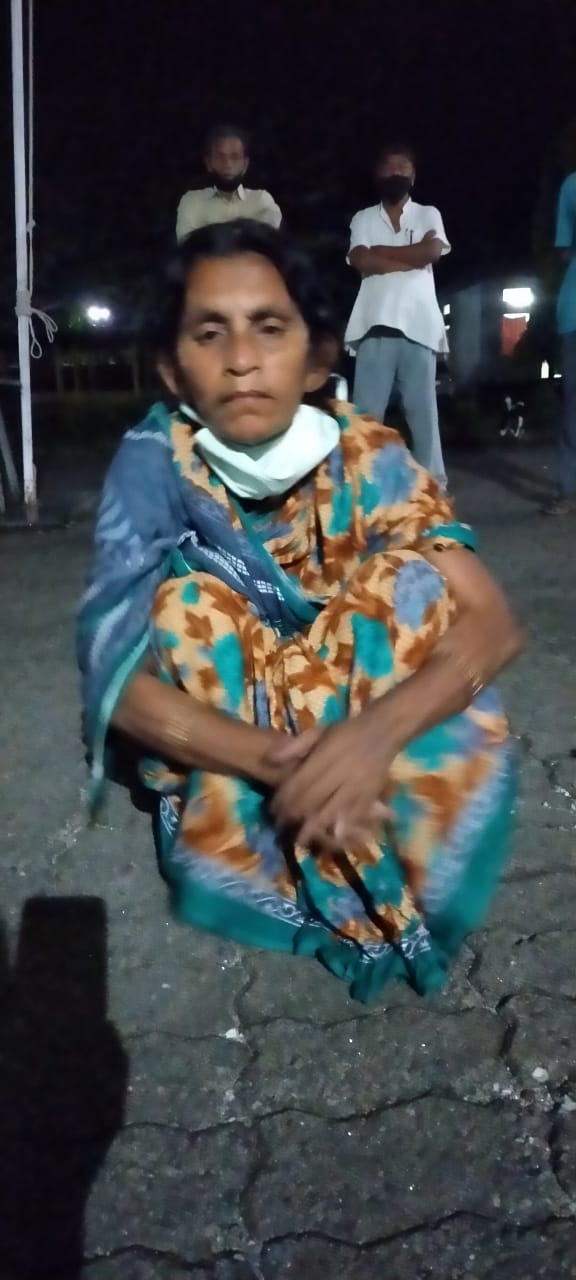
PARBATI DAS WAITING TO BE RELEASED AS FORMALITIES ARE BEING COMPLETED AT THE OFFICE OF THE SUPERINTENDENT OF POLICE
We had first brought to you Parbati’s story when we met her son Biswanath during our tip to Assam in June 2019. At that time, CJP was leading a delegation of eminent lawyers and journalists to Assam to take stock of ground realities. Biswanath who is a rickshaw driver had then told us that her health was deteriorating in the detention camp and he pleaded with us to help with her release saying, “I don’t want her to die in captivity. I want her to be comfortable and loved amidst her family, in her home.” The family belongs to a Scheduled Caste and is extremely economically weak.
Parbati’s ordeal
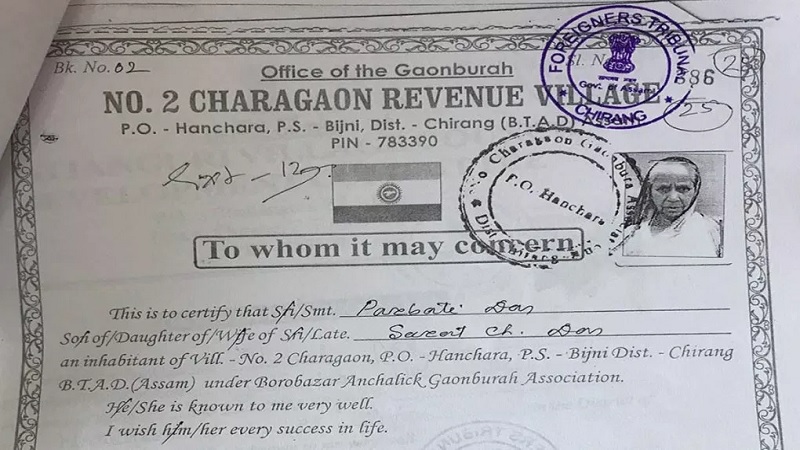
A reference was made against Parbati in September 2005 at the Foreigners’ Tribunal at Dhubri. It was transferred in May 2008 to Bongaigaon when a new FT was set up there. Parbati missed the first few hearings, but made it to the FT on July 2, 2008 and submitted her documents. She missed a few other subsequent hearings but her submissions included a copy of her father’s ration card from 1949 and a copy of her father’s name in the electoral rolls of 1970. The Gaon Panchayat secretary had also issued her a link certificate (Gaon Burah certificate) which was also presented to build Parbati’s case. But Parbati was declared foreigner as she could not prove her linkage to her father.
Her father Sharat Chandra Das was considered ‘projected father’ by the FT. This is because of a discrepancy in her grandfather’s name on two different documents. The FT ruled that the Gaon Burah certificates were unreliable and that they do not establish Parbati’s link to her projected father. She was declared a foreigner and sent to the Kokrajhar detention camp. She was also denied bail by the Gauhati High Court.
CJP’s campaign for Parbati Das’s release
The CJP team immediately swung into action. Zamser Ali who leads the team in Assam says, “At first we had tried to get her released by filing a review petition against the Gauhati High Court order. Then after she had completed three years behind bars and became eligible for conditional release, we got to work finding sureties to secure her bail.”
But there were many hurdles in getting sureties. “Many people were reluctant. Even when we found people willing to help, the authorities would often reject their application due to different reasons. Sometimes the legacy data was missing, sometimes there was a discrepancy in the way the names were spelt in different documents, sometimes land patta was missing and sometimes there was a problem with the voter ID.”
CJP Team member Nanda Ghosh and Pranay Tarafdar played a key role in securing the release often running from the Mandal department of the Circle Office to the Sub Divisional Office (Civil) to make sure that the documents of the sureties were properly authenticated. These included the Jamabandi document (proof of land ownership), land valuation document and the tax clearance document. Ghosh recalls, “In most cases it would take three to four months. But in Parbati Das’s case it took us nine months. This is because we had managed to arrange for sureties once before, but they were rejected at the last minute by the authorities. So we had to get new sureties and start the entire process from the scratch once again.”
Apart from Zamser Ali, Nanda Ghosh and Pranay Tarafdar, CJP’s legal team comprising Advocate Dewan Abdur Rahim, Advocate Jahera Khatun and Advocate Prity Karmakar, also played a key role in securing Parbati Das’s release.
Parbati’s homecoming
But the CJP team’s persistence paid off, and finally on April 22, we were able to complete all formalities and Parbati Das was released along with eight others. Speaking of her ordeal in the camp Parbati says, “My senses had stopped working in there. I missed home.”
Describing the conditions in the camp Parbati said, “There was one room with walls on all sides and one door. They’d give us a rice meal and tea. They didn’t give us blankets at first and then when they did, they were prickly and worn out.”
She also told the CJP team that despite being back at home she had serious concerns about her livelihood. She also has concerns because her son suffers from a developmental disability. CJP is now trying to help the family find a sustainable source of income so that they are not forced to go hungry.
This poor old woman’s ordeal begs the question, what kind of danger did this gray-haired toothless granny pose to anyone? Even if the right-wing supremacist forces peddle the “ghuspethia” or “infiltrator” narrative, are we going to suspect women like Parbati Das of terrorism now, or are we the terrorists striking fear in the hearts of frail old women… forcing them to live, rot away and die in detention camps?
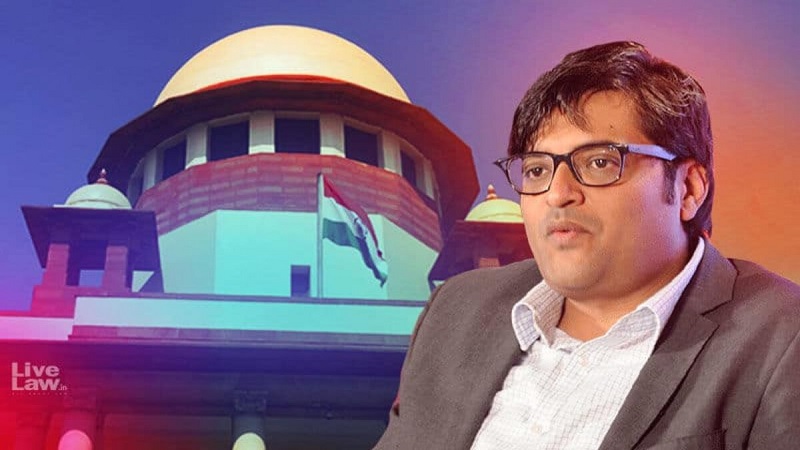
After blatantly communalising the narrative in the Palghar lynching case and even going on to accuse the Congress Party of involvement in the case Arnab Goswami found himself seeking the mercy of the Supreme Court when a series of FIRs were filed against him across the country. The FIRs spelled charges under under Sections 153A, 153B, 295A, 500, 504, 505 etc of the Indian Penal Code.
Advocate Kapil Sibal appearing for the state of Maharashtra said that Goswami’s statements during the show were highly provocative, and that not only did Goswami communalise the Palghar incident, he also made visious and tarnishing comments against Congress Chief Sonia Gandhi.
It may be mentioned that Goswami and his wife were attacked on the mid-night of April 23, while traveling back from their news studio. Goswami had then alleged that the attack was committed by Youth Congress members at the behest of the party’s top leadership. While the Press Council of India did issue a statement, purportedly in his support, many see the words in the statement as left-handed and actually an example of epic trolling. The statement said, “Violence is not the answer even against bad journalism.”
Meanwhile back at the SC proceedings, Arnab’s lawyer Mukul Rohatgi tried to paint Goswami as the victim saying FIRs had been filed against him in Maharashtra, Chhattisgarh, Rajasthan, Punjab, Telangana and many other places in a clear bid to harass him. He said, “I have impleaded the States. I can implead the complaints also. Could not do, so since I had to file in one day because of the murderous attack on my client and his wife.”
He also tried to justify Goswami’s communal vitriol by saying questions needed to be raised in a public debate.
SC bench comprising Justices D Y Chandrachud and M R Shah to consider shortly the writ petition filed by Republic TV Editor-in-Chief, #ArnabGoswami, seeking to quash the FIRs registered against him in various states over his news debate on #PalgharMobLynching case.@republicpic.twitter.com/4y7nFETGdg
A writ Petition was filed by Goswami in the Supreme Court, under Article 32, for quashing all of these FIRs filed across the country. Goswami, in his petition, contended that the FIRs have been filed in gross violation of his right to freedom of speech and right to liberty. In the petition, Goswami prayed that no coercive action be taken against him with respect to the FIRs already filed and which may be filed in the future basis the same show and similar charges. It was also prayed that security be provided to Goswami, his family and his colleagues as he alleges that he was attacked by Congress Youth Wing workers on his way to his home from studio. It was further prayed that no cognizance be taken of any complaint or FIR on the cause of action in this case.
But Kapil Sibal countered Goswami’s attempt to hide communalism behind the ‘freedom of speech’argument saying, “You are trying to ignite communal violence here by putting Hindus against minority.” He further asked if Goswami had some special privileges that FIRs could not be filed against him. The FIRs have been filed in Raipur, Chhattisgarh, by the state’s Health Minister, T.S. Singh Deo and state Congress president Mohan Markam; another one in Raipur by Congress district President Girish Dubey; in Nagpur, Maharashtra by the state’s Power Minister Nitin Raut; in Bihar by Congress leader Kokab Kadri; in Punjab by Harmohinder Singh Grover and so on.
The Bench comprising Justices DY Chandrachud and MR Shah, after hearing the arguments, ordered that no coercive action be taken against Goswami for three weeks and that he be permitted to file anticipatory bail application before trial court or the High Court. The Court also ordered that all FIRs, except the one filed in Nagpur be stayed until further orders and any other FIR which may be filed on same cause of action will also remain stayed.
The Nagpur FIR was filed on April 22 in response to a complaint filed by Maharashtra Power Minister Nitin Raut. The FIR includes charges of giving provocation with intent to cause riot, promoting enmity between two groups on grounds of religion or race, deliberate and malicious acts intended to outrage religious feelings of any class by insulting its religion or religious beliefs and defamation under relevant sections of the Indian Penal Code (IPC).
Further, the bench also directed Police Commissioner, Mumbai to give protection to Republic TV Office and to Goswami and also asked Goswami to cooperate with the investigation.
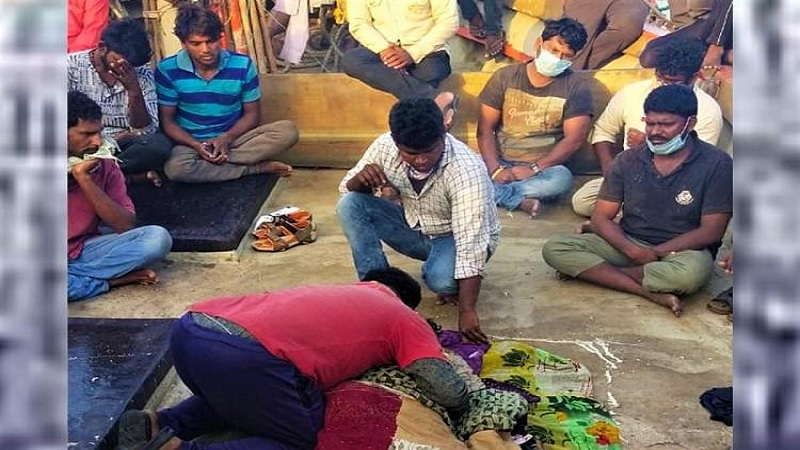
Raju, a healthy young man in his 20s who hailed from a fishing community in Andhra Pradesh’s Srikakulam district, must have gone to sleep on his boat anchored at Veraval in Gujarat’s Gir Somnath district hoping that he will wake up in morning on April 22 to the good news that he will be able to go home soon to his village in Srikakulam district. He never woke up. Raju had died in his sleep that night. He was found still, by his friend who had gone to wake him up for morning tea. The cause of Raju’s death is unknown so far. The other fishermen on the boat speculate it was stress that killed Raju.
Around 4000 fishermen who have been stuck for months on their boats, now harboured on the Veraval coast are probably feeling the same stress. Most of them had come here by train to work as contract fishermen in Gujarat as they do not own large boats backhome. They migrate mid-August, when the fishing season begins, and return home around mid-June, before the monsoon rains ground them.
This has not been a good year for the poor fishermen working as migrant labourers on the shoreline of Gujarat, far away from their homes in Andhra, Maharashra, Bihar, Rajasthan, and Uttar Pradesh. This fishing season had already faced a few cyclones and was barely starting again when they were hit by the sudden Covid-19 lockdown on March 24. With the extension of the lockdown and the ban on inter-state travel via road or rail, fishermen like other migrant workers have been stranded wherever they work. Even though local governments have been instructed to provide accommodation the fisherman are living on their boats. While they do have basic food and water, there is no access to proper medical care, and social distancing remains a myth.
According to data from the National Fishworkers Forum, India’s mechanised marine fishing fleet, that provides for 80% of the country’s annual fishing is manned by migrant workers who come from Central and East Indian harbours and move to the West coast each season.
Their living condtitions on the boats are of course less than ideal, “and most likely in violation, of the Standard Operating Procedures under the guidelines issued by the Ministry of Home Affairs” say fishing associations. Now stranded, most of the workers can just wait on the boat with no work and with no idea of when they can go home. They have been supplied food and water by the boat owners.
These stranded fishermen say they are stressed and just want to go home to their families.According to NFF officials fishing activities cannot be resumed under the present lockdown conditions even though exemptions have been granted by the Ministry of Home Affairs. They have been seeing financial relief a huge financial losses have already been incurred and even if the lockdown is lifted after May 3, it will not help the fishing sector. “It takes lakhs to run one boat, just the fuel is around three lakh, and another three lakh or so for the workers on board including their food and water etc,” said Veljibhai Masani, a social worker and presidents of the Boat Owners Association, “this season is over, shut down”.
While the boat owners are facing massive losses, the migrant workers stranded on the boat are facing great mental and emotional stress that is adding to their misery. Raju’s is not the first death being reported from the harbour of Veraval, Gujarat said the National Fishworkers Forum. “A few weeks ago, in the period of the lockdown, another migrant worker starved to death on board a fishing boat. His body was cremated by the officials in Gujarat, but no further details of his death are known,” they said. The deceased was identified as T. Jagannathan,45, resident of Gara Mandalam, Kalingapatnam, Andhra Pradesh.
There are also reports of accidents on board one of the boats, a worker D. Korlaiya, Chinnapallu village, Vizianagaram district is said to have sustained fratures in both his legs, his current condition is unknown. The boats, say NFF, are designed as places of work and not residence, the workers have been stranded in over- crowded and cramped harbours.
“There has been an absence in the state’s extension of services which has led to tremendous hardships,” they say that there is a “complete absence of relief and support from the government officials to address the extremely difficult circumstances under which the migrant workers are stuck.” In spite of repeated efforts to reach out to local, State and Central officials, nothing has been done to address the issue at hand, say members of various fishing associations.
According to an NFF statement, Chief Minister of Andhra Pradesh has requested the Chief Minister of Gujarat to look after the migrant fishworkers. However, it is not clear if a discussion on bring them back home has been initiated by the two CMs.
“The continued neglect of the sector has resulted in the financial ruin of many boat owners; more troublingly it is now resulting in the death of workers,” stated the NFF.
The fishing associations, have demanded that a task-force consisting of local, State/UT and Central government officials be put together, to coordinate relief efforts to transport the thousands of migrant workers back to their places of residence. They also asked that medical attention be given to support the fishermen’s physical and mental health, and to quarantine then under the Covid-19 protocol.
“At this critical stage, the workers must be immediately air-lifted from Gujarat to Andhra Pradesh and quarantined locally since it has become clear, following the second death at Veraval harbour today, that leaving the workers on the fishing boats is endangering their lives”, said the National Fishworkers Forum members.
“However, the workers have not been consulted regarding their needs; similarly representations made by the workers at various official levels remain unheeded. The neglect of the workers is taking a significant toll on their physical and mental health with reports of panic attacks, and ultimately of death,” says NFF.
The NFF has now demanded that the Chief Minister of Andhra Pradesh and the Chief Minister of Gujarat must coordinate and arrange for the fishworkers to return back to their homes in Andhra Pradesh. “The National Fishworkers Forum recommends that the fishworkers from Andhra Pradesh be airlifted immediately from Gujarat, be medically examined and quarantined accordingly.”
They have also demanded a compensation of Rs 10 lakhs along with a job for a member of the families of the two fishermen who have died on their boats in Gujarat.
The Hindu Businessline had recently reported that the Andhra Pradesh Government will be bringing back by sea route the thousands of fishermen who are stranded in Gujarat due to the Covid19 lockdown. However, the fishing groups and welfare associations have yet to confirm this.
According to sources, thousands of fishermen from Maharashtra have returned home by sea route, to areas such as Dahanu, and are now under home quarantine as prescribed by the Covid19 protocols. According to Mopidevi Venkata Ramana, Minister for Fisheries, AP, told Business line that it is expected that special boats will be being arranged to ferry the the migrant fishermen back from Gujarat.
Free pulses, announced a month ago as part of the relief package to the beneficiaries of the National Food Security Act (NFSA), are yet to reach many homes in underprivileged sections of the society, reported The Indian Express.
According to the data by the Ministry of Consumer Affairs, Food and Public Distribution, it has been reported that out of the total monthly allocation of 1.95 lakh metric tonnes (LMT) pulses under the Pradhan Mantri Garib Kalyan Ann Yojana (PMGKAY), only 19,496 tonnes had been distributed by the states till Wednesday.
Sources told the publication that the National Agricultural Cooperative Marketing Federation of India Ltd (NAFED), which is under control of the Agricultural Ministry, has been tasked with ensuring the supply of pulses from the buffer stocks it maintains.
The Finance Ministry on Thursday issued a statement – “Pradhan Mantri Garib Kalyan Package: Progress So Far”, saying that “109,227 metric tonnes of pulses have also been dispatched” to various states and Union Territories (UTs).
The Food Ministry’s data shows that against a monthly allocation of 195,531 MT pulses under PMGKAY to provide pulses free of cost to 19.55 crore families under the NFSA, 122,312 MT has been issued to states. Out of this, 44,932 MT have been sent to “destination” states, 34,768 MT received by these states, and only 19,496 MT distributed to the beneficiaries.
This delay in distribution, almost a month after the scheme for the beneficiaries was announced on March 26, is allegedly a result of the delay in the milling process by NAFED, sources in the food ministry say.
Clarifying that NAFED is sending pulses to states, a senior official of NAFED told The Indian Express, “We have to distribute free pulses to 19.55 crore families for three months across all 36 states and UTs. In big states such as Bihar, Uttar Pradesh, Jharkhand, Rajasthan, West Bengal, Madhya Pradesh and Rajasthan, the number of eligible beneficiaries is quite high and, therefore, the allocation is high, (so) we are taking some time.”
He also added that pulses in quantity have been sent to UTs such as Andaman and Nicobar Islands, Puducherry and Chandigarh, and smaller states such as Manipur, Nagaland and Tripura. “Buffer stock of pulses is always kept un-milled (whole), and the milling process takes some time,” the official said.
After Food Ministry officials flagged a sluggish response in supply of pulses to the states, the Cabinet Secretary is learnt to have asked officials concerned in the Agriculture Ministry and NAFED to ramp up supply.
NAFED, the nodal agency for the supply of pulses had dispatched 5,516 tonnes of pulses to Haryana, Punjab, Rajasthan, Gujarat, Madhya Pradesh, Chhattisgarh, Assam, Telangana, Tamil Nadu, Goa, Karnataka, Himachal Pradesh, Chandigarh, Delhi and Andaman and Nicobar Islands until April 14, reported the Hindu BusinessLine.
It is supplying arhar dal, masoor malka, chana dal, chana whole and urad dal to the beneficiaries. Out of these, except for the chana, all other supplies require processing. NAFED procures raw pulses from farmers at the Minimum Support Price (MSP) announced by the government and then hires millers through a transparent selection process to mill and deliver the processed pulses to different delivery centres.
It is hopeful to make dispatches for May and June in time.


 Image Courtesy:telegraphindia.com