In yet another repercussion of the spread of the Covid-19 pandemic, all activities and processes related to the National Register of Citizens (NRC) have been suspended till situation improves in Assam. For the last one week no body has been manning the Nagrik Seva Kendras (NSK) and the NRC headquarters in Guwahati also bears a deserted look.
Speaking to SabrangIndia NRC State Coordinator Hitesh Dev Sarma said, “Only essential staff from my Guwahati office is working and that too from home. All processes have been temporarily put on hold.”
It is noteworthy that March 20, 2020 was the deadline to start issuing rejection slips to people whose names had been excluded from the final NRC that was published on August 31, 2019. These rejection slips bear the reason for rejection of application for inclusion of name in the NRC and are based on speaking orders from hearings that were conducted as a part of the Claims and Objections process. People had been awaiting these slips in order to move forward with the process of defending their citizenship before Foreigners’ Tribunals which was the next step for them. But even this process has been put on hold now.
But Sarma told SabrangIndia, “No, we will not be able to issue rejection slips from March 20. This is because of the systems put in place due to the corona virus outbreak.”
When asked if there was an end date to the hold he said, “We cannot say till when because we don’t know when the situation will improve.”
The Madras High Court set aside an order passed by the Superintendent of Police Trichy (Rural) which denied permission for a public protest against the Citizenship Amendment Act, 2019, reported Live Law.
However, Justice GR Swaminathan, who passed the order, did not grant the petitioners permission to hold the protest in the wake of the prohibitory orders issued by the government in light of the Coronavirus pandemic.
“Even while setting aside the impugned order, I am not in a position to direct the first respondent to permit holding of the petition mentioned event on 20.3.2020. The jurisdictional Deputy Superintendent of Police shall issue proceedings permitting holding of the event at the petition mentioned site immediately after the ban issued by the government in the wake of Novel Coronavirus outbreak pandemic is lifted,” Justice Swaminathan ordered while allowing a petition filed by Sunnathaval Jamath Jumma Periya Pallivasal.
The petitioner Jamal Mohamed is the President of the administrative committee of the Sunnathaval Jamath Jumma Periya Pallivasal. He had sought permission to hold a public meeting on March 20, 2020 starting 5 PM at Kadaiveethi, Enamkulathur, Trichy, to protest against the CAA-NPR-NRC.
Addressing the police, Justice Swaminathan disagreed with its decision to cancel the protest on grounds of possible disturbance to law and order and inconvenience to public and traffic. Saying that he had observed that the police was invariably denying permissions for protests, he quoted a lecture delivered by Justice DY Chandrachud which said, “A state committed to the rule of law ensures that the State apparatus is not employed to curb legitimate and peaceful protest but to create spaces conducive for deliberation… The blanket labelling of such dissent as ‘anti-national’ or ‘anti-democratic’ strikes at the heart of our commitment to the protection of constitutional values.”
Justice Swaminathan said he quoted from the lecture because he had observed similar incidents and it wasn’t that it was just the officials alone who were discouraging and putting down dissent. He said, “Recently, in the 43rd book fair organized by The Book Sellers’ and Publishers’ Association of South India (BAPASI) in Chennai early this year, a publisher was evicted from his rental stall. The eviction notice read that the action was on account of the allottee selling a book against the government. (The Hindu dated 13.01.2020).”
Adding to say that it was okay to prohibit the sales of banned and pirated was understandable, he mentioned that it was absurd to not add books that were critical of the government. He also said that he wasn’t aware of such a book allotment condition at the fair, but if there was, it was unconstitutional.
Saying that the right to hold public meetings is traceable to Article 19(1)(a) and 19(1)(b) of the Constitution of India and guarantee to all citizens the right to freedom of speech and expression and to assemble peaceably and without arms, he referred to a judgement reported in 1973 1 SCC 277 (Himat Lal K.Shah V. Commissioner of Police) by the Constitution bench of the Supreme Court which held that “the right to hold public meetings flowed from Article 19(1)(b) and that the state cannot impose unreasonable restrictions. It was also observed that public streets are the natural places for expression of opinions and dissemination of ideas.”
In conclusion he said, “When it comes to upholding fundamental rights, it is the duty of the local administration to a stand in aid of the same. If any law and order problem arises, the same must be dealt with appropriately. The police should not choose the easy option of stifling the fundamental rights.”
The complete order by the Madras High Court may be read below.
Spain, the fourth most Covid-19 affected country after China, Italy and Iran has seen close to 600 deaths and about 14,000 positive cases until now. Though positive cases in India are still in the three digit figures and deaths in single digits, measures taken by other countries, both on ground and on a policy level, can become examples to follow.
Spain ruled by a centre-left coalition, has taken an unprecedented measure to deal with the COVID-19 outbreak in its country. It announced that private hospitals and health care providers would be temporarily nationalized to combat the spread of the disease. Health Minister Salvador Illa said private healthcare facilities and materials such as face masks and tests would be requisitioned for coronavirus patients, while companies and suppliers of needed equipment had 48 hours to notify the government. The government even called fourth-year medical students to reinforce health centres and hospital to increase the workforce in health care which is currently under immense pressure.
The spread of the disease has proved to be a challenge to health care systems of many countries. In many cases it has exposed whether a country’s health care system is pro-poor or is it just a profit-making sector. In India, many suspect that since the test are free and each test costs about Rs. 5,000, the government is reluctant on expanding testing beyond people with travel history, local transmission and now for health care workers coming in contact with positive cases. If that is the case then it is just the silence before the storm, one that India is not prepared to handle.
While Spain has been lauded for taking over private hospitals, the question about what is being done for social security is still looming. People are out of jobs, daily wage workers are suffering and the economy has taken a hit for most part of the world. In such times, while Spain has taken care of health care, the financial burdens of those who have been forced into isolation continues to worsen and that is one more imperative arena the government needs to look into and act fast.
India, going by data, has the lowest COVID-19 testing figures in the world. India is conducting only about 90 tests a day, despite having the capacity for as many as 8,000. So far, 11,500 people have been tested, according to The Associated Press. As per Indian officials the WHO guidance does not apply in India as the situation is not so severe here.
Since India is seemingly a less affected country, it needs to be prepared in case it needs to follow examples of such other countries and keep studying which of these measures are having a positive impact so the same may be replicated here as well, if the need to do so arises.
While the coronavirus contagion is growing in India, some of the media is still going all guns blazing to keep spreading the communal hatred contagion in the country.
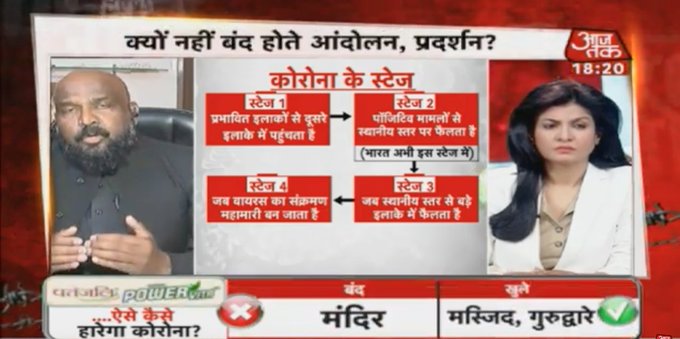
Aaj Tak, a Hindi news channel with a history of shows with a communal angle to its credit, has once again put out a news programme in a clear bid to single out minority religious organizations and an anti-Citizenship Amendment Act (CAA) protest in Delhi in particular, and ostracize them for not taking precautions to prevent the deadly Covid-19.
Its primetime show titled Halla Bol presented by the channel’s executive editor Anjana Om Kashyap, opened with showing how all the major temples in India, mostly the ones runs through a trust – the Siddhivinayak Temple, the Akshardham Temple, the Vaishnodevi Temple, The Shirdi Sai Dham, Trimbakeshwar Temple, The ISKCON temple at Vrindavan had all closed their doors to the public to fight the pandemic.
It also mentioned how the number of guests were reduced at the Kashi Vishwananth Temple and that the frequency of the Ganga Aarti in Benaras was reduced to limit the number of visiting devotees.
The show then went on to mention that these temples had been closed as per the decision of the temple managements as a responsible step towards the safety of the citizens. Then, it targeted, though indirectly, the mosques and Gurudwaras still open and the Shaheen Bagh protest at Delhi in particular.
Why is Aaj Tak giving this a communal slant by claiming that only Masjids and Gurdwaras are open and all Temples are closed.
The anchor singled out the Shaheen Bagh protest for continuing despite the public advisory given by the Delhi CM Arvind Kejriwal which banned a crowd of more than 50 people at any religious, social, political or cultural gathering. However, she failed to inform her viewers
It must be noted that post the Delhi government’s orders, the Shaheen Bagh protestors have taken strict measures to reduce the number of people at the protest site, apart from getting it sanitized. They have volunteers with a temperature gun to test people entering the site, have disallowed children from being present there and have installed sanitizers throughout the protest area.
The show presenter also forgot to mention that weddings were spared in the CM’s advisory. The number of people attending a wedding could be around a 100, while at the time of presenting the show, the number of people at Shaheen Bagh was less than 40. Don’t weddings count as community events where the threat of the virus is real too?
The media has been targeting Shaheen Bagh once again amid the coronavirus scare posing it to be the only threat to the lives of the people.
Building a communal narrative
Though the presenter did not come down heavily on the Gurudwaras throughout the show for not being shut down completely, the channel went on to criticise mosques saying that mosques were not shut, even though all the temples were. This, forgetting that major temples like the Kashi Vishwanath temple were not completely shut and had only placed visitor curbs and sanitization facilities in the premises. The channel also did not mention how Uttar Pradesh CM Yogi Adityanath is unwilling to cancel the Ram Navami Mela to be held in Ayodhya from March 25 to April 2, 2020. She also forgot to mention how completely defying the ban on large public gatherings, thousands of people participated in an annual religious procession – the Kadiri Narasimha Swamy Brahmotsavam in Andhra Pradesh on Sunday.
Also, most mosques have issued directives suspending mass prayers that take place on Friday and have restricted the number of devotees entering the premises to offer prayers. Instead of showing the true picture, the channel failed to mention how the Aligarh Muslim University (AMU) which is home to around 20 mosques, asked students and staff to stay away from Friday prayers and stop ‘wuzu’ (collective washing of hands) and maintain a distance between each other while offering prayers.
The channel also did not mention how Christian bishops and top clergymen had issued official communiques and advisories against large gatherings at masses and prayer services, exempting parishioners from attending services to check the spread of the virus. In fact, the Bishop of Delhi has put on hold all services till March 31. But the show did not highlight any proactive measured taken by members of religious minorities.
Conclusion
Through its TV programming, Aaj Tak has not only engaged in spreading communal hatred, but also insinuated that if the corona virus spreads in Delhi, only minorities will be to blame. This is a classic example of ostracizing minorities and also a smear campaign against the anti-CAA campaign, a fight that is being taken up to protect the identity of the minorities. It is just another attempt of the channel appears to side disproportionately with the ruling government to paint the Shaheen Bagh protesters who are staging a legal protest, as those who can bring harm to the nation. The TV programme did not in any way revolve around the safety of the Shaheen Bagh protesters or the safety of the general public, but instead was aimed at spreading vitriol against them.
Not only was the TV programme communally charged – proof being the ticker showing that mosques and gurudwaras are open while temples are shut, it also holds the potential to go viral on social media to further deepen the communal divide – the continual agenda of the alleged state-sponsored media.
Channels like Aaj Tak have been issued advisories by the News Broadcasting Standards Authority (NBSA) in the past. It is time, the same is done again to ensure that news channels deliver real news to the public and not engaged in state-sponsored agenda.
A young Kashmiri student has written an open letter to the Prime Minister showcasing the hardships faced by students who are struggling to keep up with their academic regime amidst the social distancing and quarantine measures to check the spread of the Corona virus. He says that students have no option but to switch to online methods of completing their educations and while 2G services have been restored, the speeds are too slow and are proving to be a deterrent to their education.
The Honourable Narendra Modi
Prime Minister of India
Sir,
I am writing this on behalf of myself and all other students of Kashmir Valley. We are extremely concerned with our education as Covid-19’s spread to India resulted in the unwanted but necessary suspending of our class work. The fact that right now internet is the only road which can be taken by the students to complete the syllabi and other assignments is true to every community of the world. We understand there are some valuable reasons which are restricting the authorities to restore 4g internet speed in the Valley but we have suffered huge losses in the previous year as well which can’t be allowed to happen this year also.
Our part of the world is very less affected from the disease as compared to other parts of the country and then to other cities of the world. This is a good omen but the terrible internet speed is what haunts us the most in these adverse circumstances. We have been cooperating with the authorities since months, then on internet restoration and now on 4g speed restoration. In addition, the speed of brodbands is also not matching their actual one. The low internet speed is really adding to our frets.
I am aware that you have a lot on your plate as Prime Minister of India, but as a responsible citizen and a student of high school, I am asking you to restore the 4g internet speed to help out the education system of Kashmir. I know a number of students and teachers who are extremely worried about the education in Kashmir and it breaks my heart.
I appreciate all that you do for our new Union Territory, and I look forward to seeing restoration of 4g internet speed. Thank You for listening.
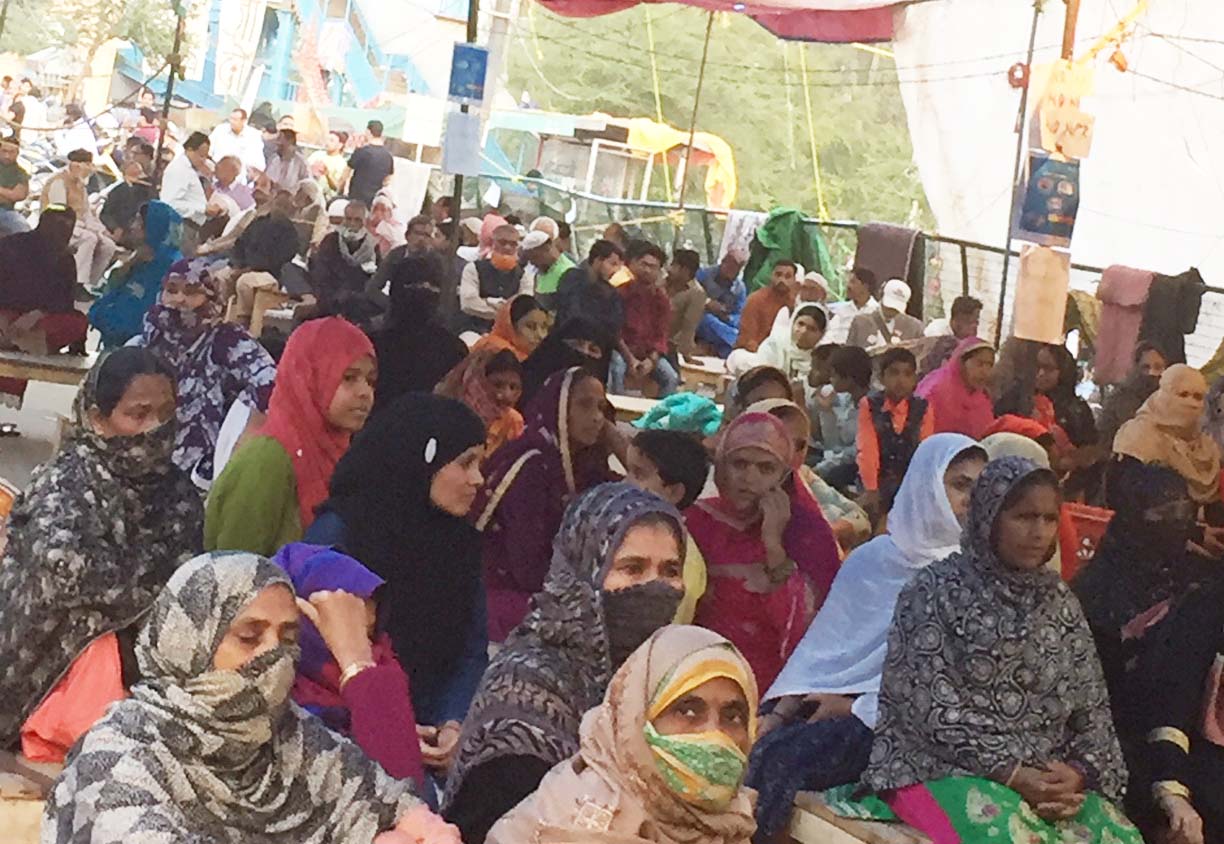
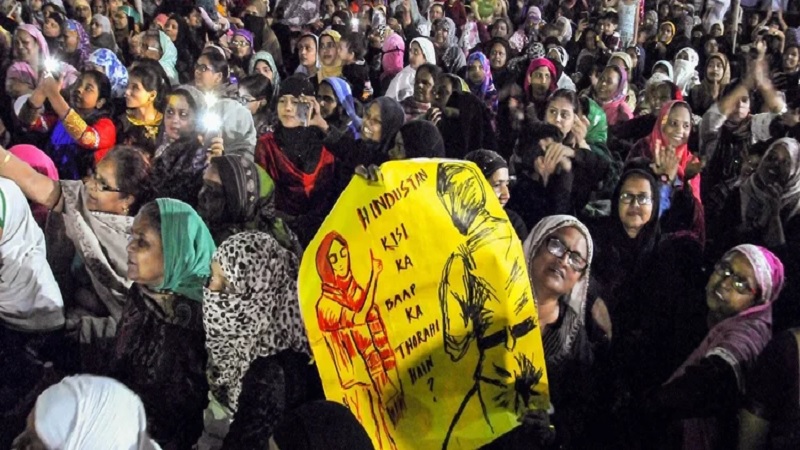
“Please sanitise your hands,” request volunteers at the Shaheen Bagh protest as they move around with spray bottles full of sanitisers and make sure visitors and protesters periodically disinfect their hands. Those even with the slightest cough or sniffle are told to go to the medical assistance tent behind the stage and show themselves to the medics volunteering there. Even the young vendor selling protest memorabilia of banners and badges has begun stocking and selling triple layer surgical face masks. “You can buy the banner anytime, today get the mask, 20 rupees only. Okay, take it for 15 rupees, it is important,” insists the teenager who will not remove his own mask or touch anything he does not need to.
In the tent the number of women has thinned down. There are fewer elderly women. Some are coming in shifts, smaller groups. “We are careful and will take precautions, but the protest must be kept going. This issue is a matter of life and death,” said a woman protester who has not been bringing her elderly mother in law to the protest this week. “She is home and will pray and support us from there,” she says.
This writer saw less than a couple of hundred women at the site, as dusk fell on Wednesday March 18. Those who are not sitting in protest just hang around the borders to listen to speeches, and do not enter the tent. Even they get their hands sprayed with sanitisers regularly. The sanitiser pump itself is the large one used to water indoor plants etc, and the liquid inside has been checked by doctors, said the volunteers. “We will do our best to make sure no one falls ill. Hand hygiene is most important,” he said as he walked and sprayed the hands of those outside the tent too. The volunteers look to have figured out a relay style schedule, and take rounds of the protest tent, and outside one by one with their pumps, but are on hand for extra spraying if someone approaches them.
Meanwhile, the women of Shaheen Bagh sitting in this peaceful protest for the 96th day and counting, say they are not scared of any disease but they need to continue their fight against laws that threaten their very existence. “We can prevent the virus from spreading. And the virus will die out soon Inshaallah. But how can we protect ourselves and our children from these inhuman laws?” asked a woman, who was wearing a protective mask and gloves, but she did not get her children along to the protest that evening.
“This CAA, NRC will kill us before any disease does,” said a man, who came backstage to tell a speaker why the virus was not the bigger threat here. “The government is okay if we die of hunger, unemployment, lack of medical facilities, and say our protest is dangerous,” asked an activist who came from West Bengal to show solidarity with the Shaheen Bagh women.
Some distance away, at the protest site at Jamia Milia University, young articulate speakers continue to tell people how governments, both central, and state, hope to use the Coronavirus pandemic, as yet another tool to disband the protest. They say they will not back off or be scared by this. However, the crowds there too have been thinned down considerably. “If the government is really concerned about us protesters they can send us more masks and clean water to wash hands,” added a protester at Shaheen Bagh. “I can see everyone is being careful. This protest is very important. There are protests in parts of Punjab too. I came from Ludhiana to support my sisters here,” said a Sikh man, adding that he comes to Shaheen Bagh everyday.
On Wednesday, the District Magistrate of South East Delhi was asked to give an update on the protest by the National Commission for Protection of Child Rights. A Public Interest Litigation (PIL) has also been filed before the Supreme Court seeking the evacuation of the Shaheen Bagh protest due to the Coronavirus spread in India. The SC had adjourned hearing on pleas challenging the Shaheen Bagh protests, till 23 March 2020.
Ironically, many people at the protest sites wondered how the Delhi government decided that all protests should be banned and all weddings spared. On Monday, the Aam Aadmi Party (AAP) led Delhi government, that had previously shut down all schools, anganwadis, colleges, swimming pools and cinema halls, further decided to ban gathering of more than 50 people at a place in a bid to control the spread of the coronavirus. The decision is applicable to all social, political, cultural, religious and family events. However, speaking at a press conference on the subject, Delhi Chief Minister Arvind Kejriwal said, “Gyms, nightclubs, spas will also be shut 31 March. Other gatherings that involve more than 50 people – social, political, cultural, religious and family will not be allowed. Weddings have been excluded from this but we appeal to people to postpone them if possible.”
At the time of filing this report, there were fewer people at both protest sites than there are at a medium sized Delhi wedding. “Does the Coronavirus ignore wedding parties, and attack only peaceful protests,” asked a young woman protester. Perhaps Prime Minister Narendra Modi, and Delhi Chief Minister Arvind Kejriwal are the best persons to answer that question.
A recent verdict of the Calcutta High Court can be termed as a ray of hope for victims or families of victims who are entitled to receive compensation from the government owing to any kind of injustice inflicted upon them or if they have been victims of crimes that make the government liable to pay them compensation.
In a case of human trafficking when the West Bengal government directed the victim to deposit 3/4th of their compensation amount in a bank, the Calcutta High Court ruled that it had no authority to impose any such conditions.
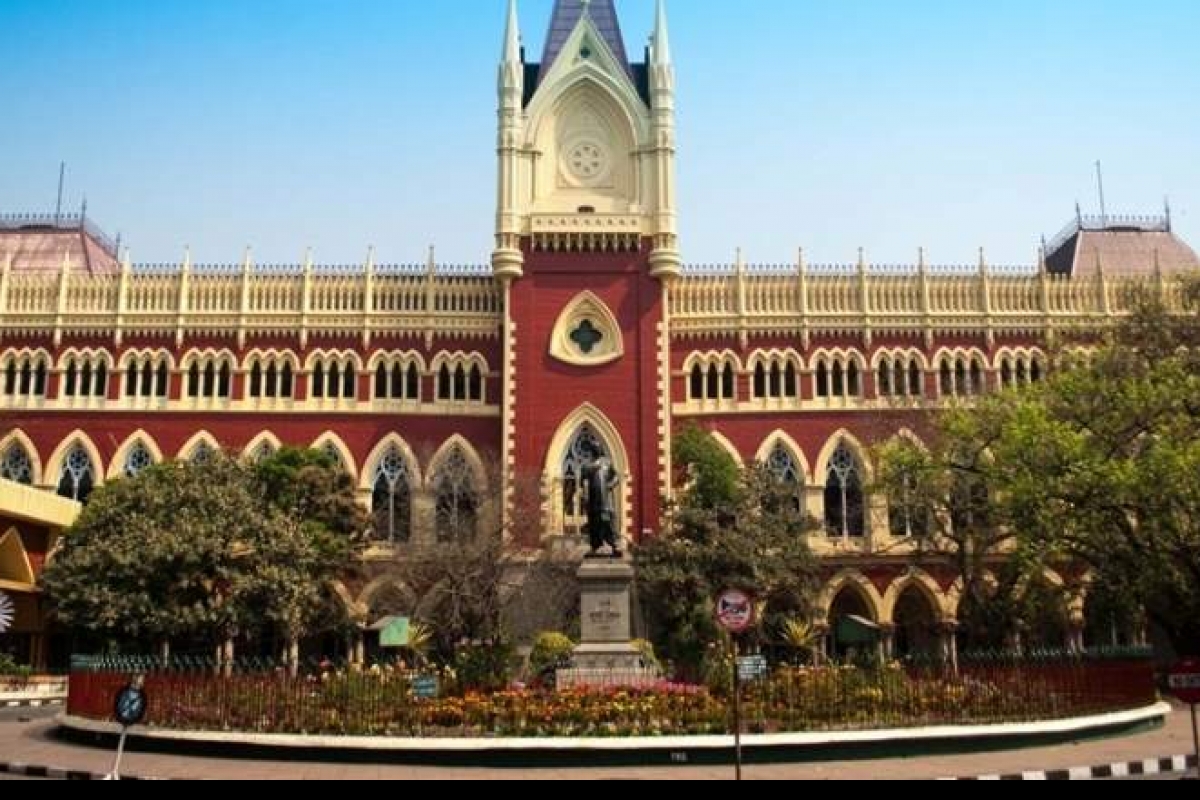
Justice Sabyasachi Bhattacharya delivered this verdict last week while hearing petitions filed by two victims of human trafficking who had been asked by the government to deposit three fourth of the compensation amount in a nationalised bank for a certain period. Justice Bhattacharya held that “The state pays the compensation because of its failure to secure the victims. So, it has no right to impose any condition while disbursing the compensation amount.”
In their petitions, the two victims had challenged the orders of the State Legal Aid Service that had asked the state government to impose the said conditions while disbursing the compensation. In turn, the state authorities said three fourth of the Rs 4 lakh compensation would have to be deposited in any nationalised bank in a Monthly Income Scheme in the name of the victim for a period of ten years, with auto renewal option. The order said that if the same was not complied with, necessary action would follow!
A high court lawyer said that after any victims of human trafficking are rescued, they have a right to claim compensation before the state or district legal aid service which then recommend the government to disburse the compensation.
Recalling an incident, a lawyer told The Telegraph, “ After the death of 167 people in a hooch tragedy at Sangrampur, the state had announced compensation of Rs 2 lakh each to the families of the deceased, but imposed a condition that the amounts would have to be deposited in a nationalised banks in their names and they would not be allowed to withdraw the cash for 10 years. Henceforth, the government cannot impose such condition.”
A similar situation had arisen when the Gujarat government led by then CM Narendra Modi had announced compensation for victims of Gujarat riots in 2002. Not only was the compensation, reportedly, lower than what was announced for victims of the Godhra train carnage, but the conditions imposed were also unfair. The government had a condition that 40 per cent of the compensation would be paid in cash while the rest would be in the form of Narmada Shrinidhi Bonds. Basically, compensation to victims of one of the worst genocides seen in the country in the 21st century was not only marred with discrimination but also with unfair conditions that did no good for the poor and hapless families, many of whom had become homeless in their own home state due to loss of property to the riots.
During this time, when the victims were waiting for justice to be served, Citizens of Justice and Peace had relentlessly worked on the ground with the victims and had held their hand throughout the battles in court. CJP had called out this move of the Gujarat government to be completely illegal, arbitrary and unconstitutional. CJP and its counsel maintained that the amount should be in consonance with the state’s obligations under Article 14 (guaranteeing equality before the law) and Article 21 of the Constitution of India.
Hence, this latest judgment from the Calcutta High Court is a welcome and a much needed precedent for victims of such crimes where government is liable to compensate them. The court held that the “State Legal Services Authority has no authority to control and monitor the amount of compensation disbursed to a victim who has attained majority. She or he has every right and the liberty to choose the mode of expending the compensation amount, as she/he feels appropriate for her rehabilitation after the trauma of the offence… The SLSA can at best offer post‐disbursal schemes to the victim to safeguard her/his best interests, but that has to be optional, chosen by the victim only in the event she/he opts for it, and not mandatory… Such a method is counterproductive to the scheme of Section 357A of the Code of Criminal Procedure and would be an illegal fetter on the personal liberty of the victim.”
The Court further referring to George Orwell’s dystopian book titled ‘1984’ said, “We are in 2020 now, and not in ‘1984’ (as contemplated by George Orwell). As such, the ‘Big Brother’ approach of the disbursing authority should be shunned and the victim should be free to spend the compensation granted to her/him at her/his option. The right to commit a mistake inheres in the right to personal liberty and freedom and should not be curtailed mandatorily and arbitrarily by the SLSA merely because it is in charge of the purse‐string, that too for such meagre amounts of compensation as contemplated under the Scheme.”
In february this year, Amulya Leona, a student activist, was taken into custody by Bengaluru police after she raised ‘Hindustan Zindabad’ and ‘Pakistan Zindabad’ slogans at an anti-Citizenship Amendment Act (CAA) rally organised by AIMIM chief Asaduddin Owaisi in the city. She had been charged with the offence of sedition and for promoting enmity at the Upparpete police station. On February 20, Public TV telecast a TV show where statements were made allegedly calling for violence against her. Now, a group called Campaign for Ethical Media Reporting in Bangalore has submitted a complaint to the District Level Monitoring Committee for Private Television Channels against Public TV in its endeavour to make news media accountable.
This is a group of concerned activists, parents, lawyers, academicians who are working towards making media more accountable to journalistic standards, ethics and principles. The complaint dated March 12, was aimed at holding HR Ranganathan of Public TV accountable for making statements in violation of the Programme Code in Rule 6 of the Cable Television Network Rules, 1994 in a TV show called ‘Big Bulletin with HR Ranganathan’ that aired on 20th February 2020.
In this show, Ranganathan, while speaking about Leona, made some deeply offensive statements against her and allegedly even gave a call for violence against her. The transcript of what he said has also been provided in the complaint which reads as follows:
“She should have been punched in the face, and her teeth knocked out, right there on the dais. Letting her on it was the mistake. It would have been fine if her teeth had been knocked out. She could have then been chopped up and thrown away.”
“Oh, if you bash her head in you won’t find cow – dung there.”
“If she comes out, she should be lynched with cow – dung, wherever she can be seen. If we hit her will they file cases? Let them file the cases, let us see.”
“If three of them are chopped up and thrown away, the rest will fall into line.”
“That is why, sometimes, I think it’s better to dispense mob justice/aranya , though it is wrong.”
“Whether it is being incited or not, the legs of those who get caught should cut off and thrown away.”
“Their faces should be bashed in, what kind of people are these.”
The complaint states that Ranganathan’s statements amount to incitement of violence and have created an atmosphere of lawlessness and fear. Additionally they amount to a statement conducing to public mischief, and also criminal intimidation. This is being seen as a violation of the Programme Code which states as follows:
“(d) Contains anything obscene, defamatory, deliberate, false and suggestive innuendos and half – truths ;
(e) is likely to encourage or incite violence or contains anything against maintenance of law and order or which promote anti – national attitudes;
(i) Criticises, maligns or slanders any individual in person or certain groups, segments of social, public and moral life of the country”
The complaint sought strict action against the news channel in the form of seizure of equipment used for operating the cable television network under Section 11 of the Cable Television Networks (Regulation) Act as well as for violation of the Programme Code requiring Public TV to scroll an apology for a 2 months and suspension of broadcast of Public TV for a period of 2 months.