Post India’s independence, our society has gone major transformation vis-a-vis Hindu – Muslim relations, and in this journey there have been several stages:
Green revolution resultant emerging strong farmer community and emergence of their leadership specially from OBC’s
Nationalisation and India’s decisive victory over Pakistan and resultant Bangladesh
Emergency, JP movement and resultant decisive defeat of Congress with RSS and Lohiates combining together
India winning cricket World Cup and emergence of Amitabh Bachchan as angry young man and resultant Shahanshah of Bollywood
Indira Gandhi and Rajiv Gandhi’s assassination
Rise of BJP, Ram Mandir movement,and resultant Babri Masjid demolition
Neo-liberalisation, resultant huge emerging Hindu middle class, rise of OBC and Dalit leadership
First BJP govt at the Centre under Atal’s leadership
Gujarat riots and emergence of Modi as face of Hindu chauvinism
Khan troika ruling the Bollywood
India’s hegemony in World cricket and Sachin Tendulkar as Emperor of World cricket
Return of Congress and Manmohanomics and resultant more buoyant Hindu middle class
Modi winning big and Congress losing badly with Gandhi-Nehru family aura completly wiped out
Emergence of new regional faces of Akhilesh, Kejriwal, Mamta, Jagan and Stalin
Modi-Shah in control, with divisive CAA pushing Muslims back to the wall politically and making them fight for their survival and amidst that, India facing it’s biggest economic slowdown in the last 50 years.
Amidst all these stages Hindu society, by and large, was also reshaping into distinctive social classes as per their belief in Indian Constitution and Hindu thought and they can be categorised as follows:
First, who believe in the essence of the Vedas, the ‘Puranic’ and religious texts and it’s approach to the oneness of Man with the divine i.e. the eternal ‘Atman’ (the soul) and its eventual merger with the Paramatman (the supreme) in the ‘divine karmic’ order. All the while, upholding the egalitarian and non violent spirit of Hindu theism and it’s well propounded philosophies.
The first kind is further divided into two sub categories:
1. That has acceptance of all religions in conformity with the traditional Hindu vedantic thought of ‘Vasudev Kutumbakam’ (world is a family) and perhaps, is a bit in the atheistic mould. Yet, believes in a higher power and life cycles of cause and effect and thinks of the other as his own.
2. Is more adjunct to his religious and ritualistic duties: in his devotion and prayers to the chosen one in the pantheon of Hindu gods, a believer in the holy texts and the essence thereof, as also in the play of karmic cycle in the destiny of man etc. But deep down, still believes that all paths lead to one god and therefore, is tolerant of other religions and dogmas if they don’t infringe on his faith and religious practices.
Second is the one who is having this fear of the ‘other’, that is Muslims in this context, apprehensive of his country being subsumed overtime by the radical wave of Islamization that is currently sweeping across some parts of the world, including Europe, and so is willing to fraternise with the Hindutva philosophy as his shield, despite government demographic statistics stating otherwise and thus serving to Sangh’s political agenda.
Third is left liberal who thinks Hindu ethos can be kept on the back-burner to push their agenda of liberalism which cannot be compromised for anything.
Similarly, the Muslim society reshaped exactly the same with greater influence of Gulf money a clergy led society came with large influence of Wahabi Islam.This Islamic school of thought believed in purtitanism and ridiculed those who practiced Islam with Indian traditions and that is Sufi Islam or Barelvi school of thought.
Then, of course, there was the emerging middle class among Muslims which because of modern education came in contact with left liberal ideology on the one side which believed in the equality and liberalism with women being given equal opportunities whereas within that middle class there was those who where in the influence of Wahabi Islam and puritanism.
The Hindu-Muslim relations in India are decided by this middle class, of both the communities, and it is a contradiction that their aspirations do not match their actions. Both aspire to a luxurious life with economic betterment but ongoing struggle leads to social disorder thus economic slowdown. Whether they are left liberal Hindus and Muslims they have to bear the brunt of clash of Wahabi Islam and Hindutva and resultant social disharmony.
The immense harm that this can cause to the ‘philosophy of (Sanatan Dharma) Hinduism and Islam which teaches equality and brotherhood and the nation cannot be overstated, since it is bound to lead to further fissures and distrust in society, shredding the social fabric of India. This is a matter of grave concern for all of us, residing here in India, and also for our future generations, as it is our responsibility and duty to keep the country united, safe and strong; free of sectarian strife, to prevent foreign investment from shying away from Indian shores. Growth of a nation is commensurate with its social stability and unity. Let us not disrupt it to irreconcilable and irredeemable levels, it is perhaps time for us who believe in Indianess only to barricade this onslaught of hate and insecurity.
* The author is Director, Centre for Objective Research and Development (CORD), Lucknow.
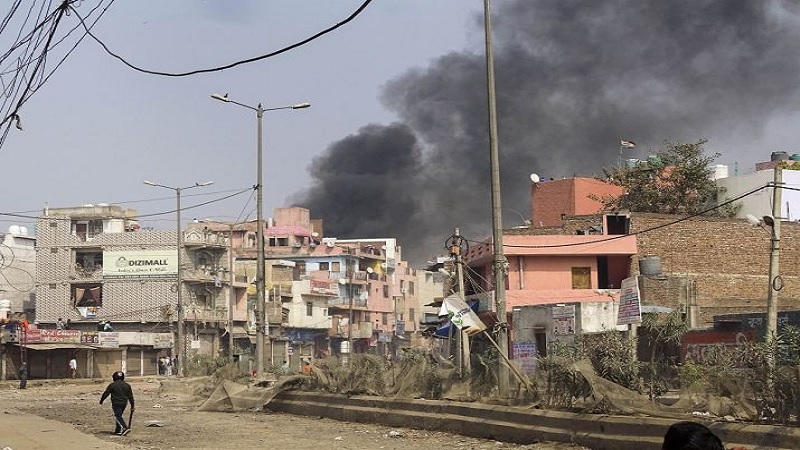
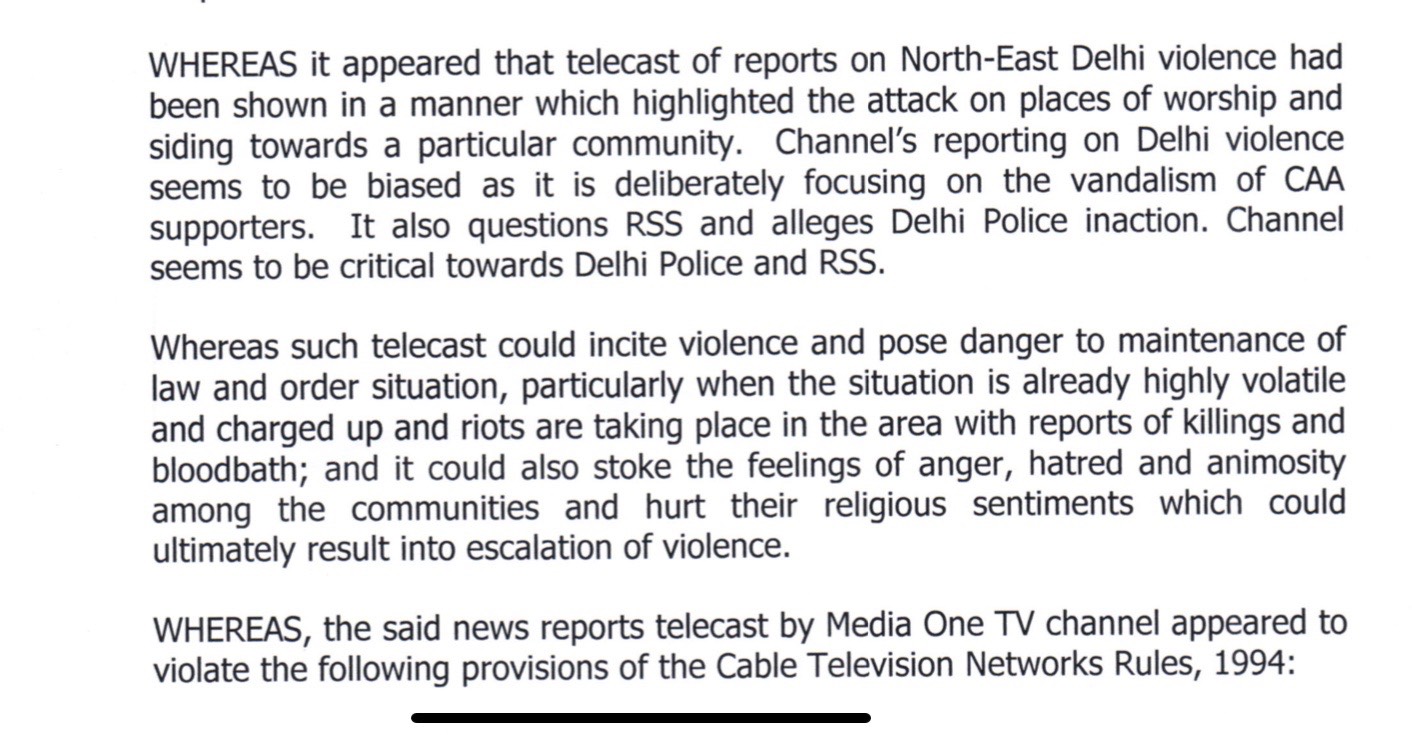
They say ‘history repeats itself first as a tragedy and then as a farce’. In case of India, communal violence not only keeps repeating itself, the pattern of the tragedy keeps changing every time. Some features of the violence are constant, but they are under the wraps, mostly. The same can be said about the Delhi violence (February 2020). The interpretations, the causative factors are very discernible, but those who are generally the perpetrators, have a knack of shifting the blame on the victim community or those who stand for the victims.
As the carnage began presumably in the aftermath of statement of Kapil Mishra of BJP, which was given in front of a top police official, in which he threatened to get the roads emptied. The roots of violence were sown earlier. The interpretations given by the Hindu Nationalist camp is that the riot is due to the changing demographic profile of the area with Muslims increasing in number in those areas, and coming up of Shaheen Bagh which was presented was like ‘Mini Pakistan’. As per them the policies of BJP in matters of triple talaq, Article 370 and CAA, NPR, NRC has unnerved the ‘radical’ elements and so this violence.
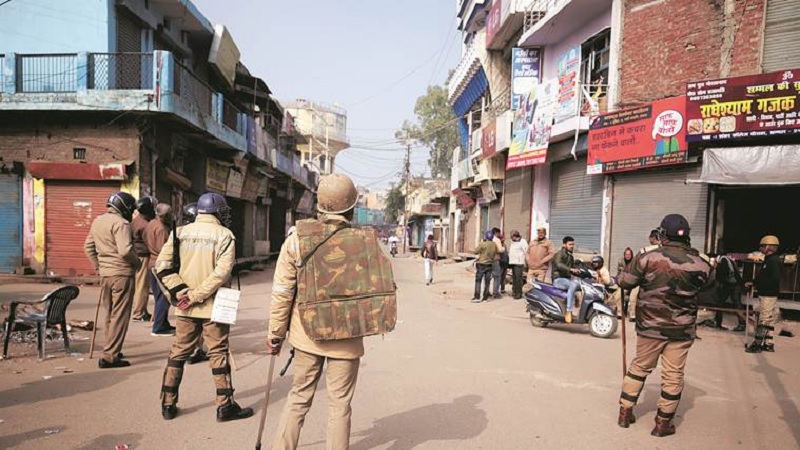
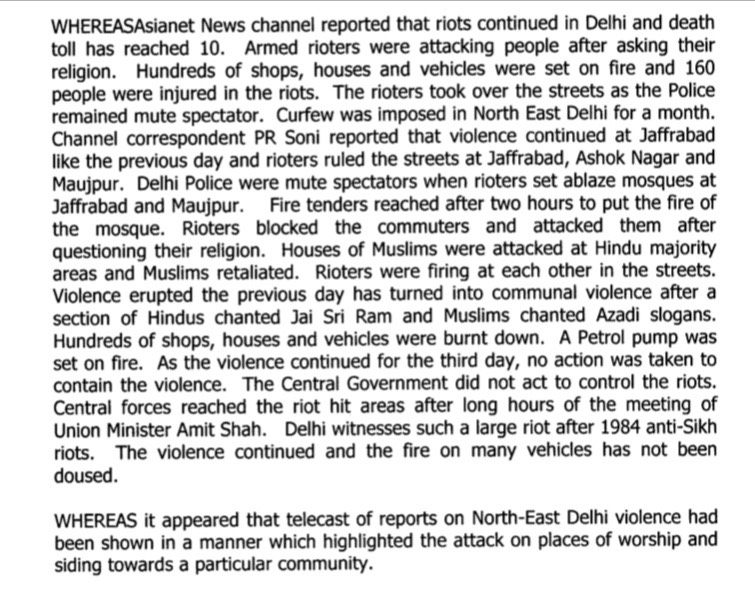
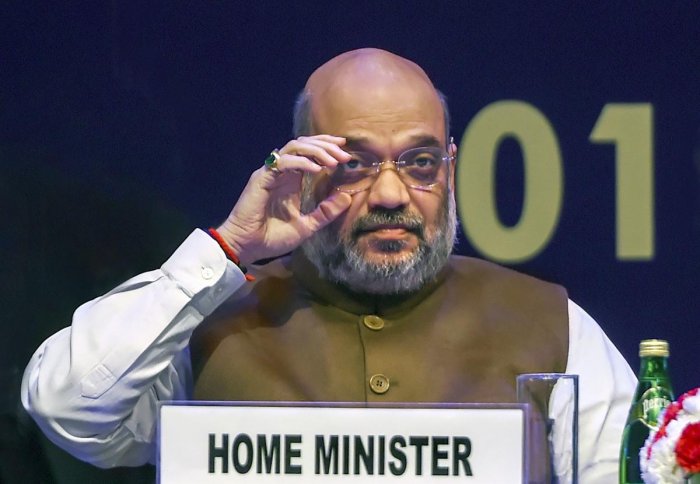
As such before coming to the observations of the activists and scholars of communal violence in India, we can in brief say that violence, in which nearly 46 people have died, include one from police and another from intelligence. Majority of the victims are Muslims. The violence started right under the nose of the police and the ruling party. From the videos and other eye witness accounts, police not only looked the other way around, at places it assisted those attacking the innocent victims and burning and looting selective shops. Home minister, Amit Shah, was nowhere on the scene. For first three days the rioters had free run. After the paramilitary force was brought in; the violence simmered and slowly reduced in intensity. The state AAP Government, which in a way is the byproduct of RSS supported Anna Hazare movement, was busy reading Hanuman Chalisa and praying at Rajghat with eyes closed to the mayhem going in parts of Delhi.
Communal violence is the sore point of Indian society. It did begin during colonial period due to British policy of ‘Divide and Rule’. At root cause was the communal view of looking at history and proactive British acts to sow the seeds of Hindu-Muslim divide. At other level, the administrative wing and police, the British were fairly neutral. On one hand was the national movement, uniting the people and creating and strengthening the fraternal feeling among all Indians. On the other were Muslim Communalists (Muslim League) and Hindu Communalists (Hindu Mahasabha, RSS) who assisted the British goal of ‘divide and rule’ promoting hatred between the communities. After partition the first major change was the change in attitude of police and administration which started tilting against Muslims. Major studies by Dr. Asghar Ali Engineer, Paul Brass and Omar Khalidi demonstrated that anti Muslim bias is discernible in during and after the riots.
Now the partisan role of police has been visible all through. Sri Krishna Commission report brought forth this fact; as did the research of the Ex DIG of UP police Dr. V.N.Rai. Dr. Rai’s studies also concluded that no communal violence can go on beyond 24 hours unless state administration is complicit in the carnage. In one of the violence, investigation of which was done by concerned Citizen’s team (Dhule, 2013) this author observed that police itself went on to undertake the rampage against Muslims and Muslim properties.
General observation about riots is that violence sounds to be spontaneous, as the Home Minister is pointing out, but as such it is a well planned act. Again the violence is orchestrated in such a way that it seems Muslims have begun the riots. Who casts the first stone? To this scholars point out that the carnage is so organized that the encircled community is forced to throw the first stone. At places the pretext is made that ‘they’ (minorities) have thrown the first stone.
The pretexts against minorities are propagated, in Gujarat violence Godhra train burning, in Kandhamal the murder of Swami Laxamannand and now Shaheen bagh! The Hindu Muslim violence began as riots. But it is no more a riot, two sides are not involved. It is plain and simple anti-minority violence, in which some from the majority are also the victims.
This violence is possible as the ‘Hate against this minority’ is now more or less structural. The deeper hate against Muslims and partly against Christians; has been cultivated since long and Hindu nationalist politics, right from its Shakhas to the social media have been put to use for spreading hatred. The prevalent deeper hate has been supplanted this time by multiple utterances from BJP leaders, Modi (Can be recognized by clothes), Shah (press EVM machine button so hard that current is felt in Shaheen Bagh), Anurag Thakur (Goli (bullet) Maro) Yogi Aditya Nath (If Boli (Words)Do not work Goli will) and Parvesh Varma (They will be out to rape).
The incidental observation of the whole tragedy is the coming to surface of true colors of AAP, which not only kept mum as the carnage was peaking but also went on to praise the role of police in the whole episode. With Delhi carnage “Goli Maro” seems to be becoming the central slogan of Hindu nationalists. Delhi’s this violence has been the first one in which those getting killed are more due to bullets than by swords or knifes! Leader’s slogans do not go in vain! Courts the protectors of our Constitution seem to be of little help as if one of them like Murlidhar Rao gives the verdict to file against hate mongers, he is immediately transferred.
And lastly let’s recall the academic study of Yale University. It concludes; ‘BJP gains in electoral strength after every riot’. In India the grip of communalism is increasing frighteningly. Efforts are needed to combat hate and hate mongers.
Often referred to as the weaker, fairer sex, women around the world and their voices have been silenced under the din of patriarchy. Though throughout eras, there have been women who have managed to scream and make them heard; even for the betterment of their sisters; it is now, at this moment precisely that women across the world have put a collective foot forward, taken the narrative into their own hands, broken the glass ceiling and emerge as the voice of the universe.
From domestic violence to sexual abuse, equal rights and even overthrowing governments, women have now stood up to be the superpower that will hopefully make the sly rabble rousers and wrongdoers accountable for their actions now and in the future.
From India to Mexico, from Brazil to America, here is a look at how women are claiming their rights, not as the second gender, but the equal one.
India: From Razia Sultan to Savitribai Phule to the Dadis of Shaheen Bagh
India has produced historic iconic women who have championed various causes – be it education, science or art. Be it the valor of Razia Sultan – the first and last female ruler of Delhi who proved her worth as a just ruler, who was an ace administrator or the undying perseverance of Savitribai Phule who founded the first girls’ school in the country, India has witnessed a spurt in social reforms through the actions of such brave women.
From then to now, not much has changed. From women forces behind the success of Mangalyaan to Adivasi activists learning how to fight for their jal, jungle, zameen; women in India have now taken the centre stage in a bid to protect their identity.
Post the announcement of the Citizenship Amendment Act (CAA) and the possible implementation of the nationwide National Register of Citizens (NRC) that is set to affect the minority communities and the marginalized, the women in India have hit the streets to make the government accountable of its fascism and repeal the above mentioned CAA and NRC.
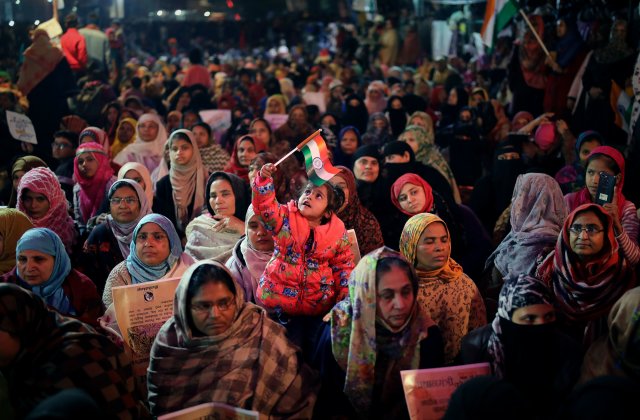
This is possibly the first time that women have become the face of political protests in India. In Shaheen Bagh, a working-class, majority-Muslim neighborhood, the protests began with a small, peaceful sit-in and candlelit vigil by local women. It has been over 70 days now that the women continue undeterred by threats to their lives and possible police and state sponsored atrocities. With children in their laps, they shout slogans for a united and secular India.
Age no bar, it is now the grandmothers who are leading the protests from Shaheen Bagh in Delhi. Following their footsteps, women throughout India have become inspired to come out of their homes and take responsibility for their future and their childrens’ future with mini Shaheen Bagh’s sprouting all over the country.
With artwork, poetry recitals, interfaith prayers, community kitchens that keep the stomach full and the fire burning along with the Constitution of India in hand, the women are going from strength to strength to stand up with their sisters from different communities and overthrow the oppressive policies of the government.
Speaking to Time Magazine, veteran activist and the frontrunner in the Save Narmada Movement Medha Patkar said, “The specialty of a women-led movement is that they can be sustained longer. Women don’t give up. India sees women as shields, but in fact, they are the swords.”
Chile: ‘Never again without us women’
With the slogan – “Nunca más sin nosotras” – Never again without us women, the women in Chile are raising their voices against patriarchal violence, fighting for specific ender-related issues like an end to domestic violence, equality at the workplace and legal abortion, says Alondra Carrillo of La Coordinadora Feminista 8M, the largest feminist advocacy group, reports The Guardian.
The anti-rape song, Un Violador en Tu Camino – A Rapist in Your Path, popularized by a Chilean feminist collective, Las Tesis, was sung by women everywhere across the world to denounce the inaction of the police, judges and the highest authorities in preventing sexual violence.
The song read, “The patriarchy is a judge that judges us for being born, and our punishment is the violence you don’t see,” the chant begins. “It’s femicide. Impunity for the killer. It’s disappearance. It’s rape. And the fault wasn’t mine, not where I was, not how I dressed. … The rapist is you. It’s the cops, the judges, the state. The president. The oppressive state is a rapist.”
According to a report by the Chilean Network Against Violence Against Women, 42 cases of sexual abuse are reported each day. Paula Cometa, a member of Las Tesis told The Guardian that the song was never intended to be a protest song, but the women of the marches transformed it into something more.
She said, “It adapted to the moment that we are now living in Chile. The violence and the human rights violations that women have been exposed to recently.”
Talking about the part of the song where the performers squat down, assuming a position similar to that of arrest she said, “It’s a simple form of torture and punishment carried out by the Chilean police.”
Feminists in Chile say that the right-wing government hasn’t done much to address women’s issues. Belén Calcagno, a woman organizing protests throughout the country says that women have always pushed social movements in Chile.
Camila Vallejo, the former student protest leader said, “We will all march for our own reasons. But every woman will march for her own reasons, and on 8 March we will unite with a common demand: to be respected.”
Mexico: ‘This is our feminist spring’
3,825 Mexican women were killed in 2019, out of which the government accounted 1,006 to be femicides – where women are killed because of their gender.
On March 9, the women in Mexico are planning a national strike #UNDIASINMUJERES, or “a day without women” to throw light on the unending violence on women there. On Monday, March 9, women in Mexico will stay off the streets and purchase nothing throughout the day to put across the message – “what if we all just disappeared?”
A total of 1,006 killings were officially classified as femicides, based on a variety of criteria, including whether the victim’s body showed any signs of sexual violence and whether there had been a “sentimental” relationship between the victim and the killer, reported the LA Times.
Now, a call for action is growing louder and protestors are bringing the world’s attention to the failure of the Mexican government to put a stop to the femicides. Speaking to The New York Times, Sabina Berman, a Mexican novelist and feminist activist, said that the nucleus of these latest protests was a younger generation of women who have lost patience with a more measured approach to activism.
Last month, masked feminists covered the presidential palace with blood-red paint and graffiti, calling out the president’s failure to protect women.
“This is not the fight against any government,” she said. “t is against the entire Mexican state, against the private sector, against the men who harass, who rape, who kill, and against those good men who stand by and do nothing.”
Carolina Barrales, one of the founders of Circulo Violeta, a Tijuana-based feminist collective says, “This is our feminist spring here in Tijuana … and we won’t stop until we get justice.”
Fighting to keep the world safe – From India to Brazil to Greta Thunberg
Citizen’s for Justice and Peace, an NGO, tells us the story of Sokalo Gond – the Adivasi warrior, a human rights defender and one of the most important forces in the struggle for the implementation of forest rights act 2006 in Sonbhadra, a heavilty forested region in Uttar Pradesh.
It also tells us the story of Rajkumari Bhuiya, resident of Sukhda tola [hamlet] in Dhuma village, near Dudhi in Uttar Pradesh who has traveled far and wide to educate people about their rights on their lands for they are dependent on the forest for their livelihoods.
Adivasis often collect Tendu leaves, honey, dry branches and medicinal herbs from the forests and sell those in the markets. Some also have small farms, on which they grow rice or different vegetables. Many Adivasis living in the region have been denied of their lands and rights because of the Sections 4 and 20 of the Indian Forest Act, 1927-a colonial legislation to regulate the movement and transit of forest produce. Many Adivasis have also been charged with false cases under this Act.
The entire region is affected by industrial pollution and displacement of local people has become a regular phenomenon. Researches have pointed out that Sonebhadra’s waters have become poisoned and the air toxic to breathe.
Speaking to CJP Sokalo recounted the horrific firing she and her fellow protestors were subjected to by the police when they were agitating against the Kanhar Dam project. “18 rounds were fired right in front of my eyes. It was terrible. They arrested almost all the women leaders including Rajkumari immediately,” she recalled.
However, encouraged by her and Rajkumari’s unwavering spirit, Adivasis in the region began to file claims to land as a community resource under relevant provisions of the Forest Rights Act 2006.
In Brazil, the indigenous women, the keepers of the Amazon rainforest, came out against President Jair Bolsonaro, also known as the ‘Trump of the Tropics’ and his campaign of destruction claiming that the Amazon forest fires were started deliberately.
Since his inauguration earlier this year, Bolsonaro has worked to dismantle key protections and policies that protect the rights of Indigenous peoples and the Amazon in Brazil. His administration’s devastating assaults on social and environmental protections has led to a surge in deforestation and violations of Indigenous Rights, culminating now in massive fires, reported commondreams.org.
The indigenous women in Brazil have been speaking up for years, in shrill voices, warning about the dangers to the Amazon due to demands of fossil fuel and mining which have been emboldened under Bolsonaro’s administration.
The women’s march in Brazil in 2019, marked another step forward for women-led protests for the protection of the Amazon. Speaking with Amazon Frontlines, Nemonte Nenquimo, Waorani leader and President of the regional Waorani political organization of Pastaza, CONCONAWEP, who led her people’s struggle and triumph against the Ecuadorian government, said, “Around the world, the governments are trying to kill us. They want to exploit our lands with no regard for us as human beings. Yet we are the guardians and owners of our territories, which we have cared for and protected for thousands of years. We want to protect our land for the future generations. We want our forest to be free from contamination, free from destruction.”
Across Brazil, indigenous women are taking the baton to spearhead resistance movements for Mother Earth which gives them life. Indigenous leader Sonia Guajajara rightly put it when she said, “We don’t have to accept the destruction of our rights. ubmission is not culture. We are here to demystify the idea that indigenous women do not participate in this struggle and to demonstrate that we are prepared to occupy any space.”
Another powerful woman, Greta Thunberg – a Swedish teenage climate activist, deserves a special mention. She began with holding a placard that read, “School Strike for Climate” when she started missing school on Fridays to strike against climate change, while urging students across the world to join her.
Her activism went viral on social media and climate change had a new hashtag #FridaysForFuture. Little did she anticipate in August 2018, around when she started the movement that by December 2018, more than 20,000 students across the world would join her in her fight to protect the earth.
Choosing to travel by road and waterways to practice what she preached, she also travelled to New York in 2019 to address a United Nations climate change conference in a yacht, enduring a journey of over two weeks, to educate people of the consequences of air travel.
She was named Time Magazine’s Person of the year in 2019 after she pulled up world leaders as she boomed into the mic at the climate change conference saying, “How dare you? I shouldn’t be up here. I should be back in school on the other side of the ocean, yet you all come to us young people for hope. How dare you?”
She has been mocked by Donald Trump and Vladimir Putin, but that has not knocked her down. In her fight to make authorities accountable for their actions against the environment and in her protests to create awareness for cutting down carbon emissions, Greta is one girl, who has inspired everyone to fight for the world they live in and that the future children will inherit.
To write about the brave women of the world, all the pages would not be enough. From fighting against sexual abuse to fighting for equal pay, from fighting against domestic violence to fighting for legalizing abortion and reclaiming reproductive rights, from fighting for education to fighting for an identity; women have now broken all shackles to truly identify their power and demand what is theirs.
It is now, with collective solidarity and empathy, that women have found the courage to overcome their fears and march ahead as their own savior.
From a continuous sit-in at Shaheen Bagh to forming human chains around their fellow male protestors to ward off the police, women are leading the charge of India’s awakening and revolution. Yet, it is still commonplace for various male leaders to use, “Choodiyan pehen lo” (“Go wear bangles”) as a derogatory slur to talk down to other male opponents. The hands of women adorned in bangles, mehndi, smart watches, and FitBits, wielding laptops, cameras, milk bottles, or kitchen utensils, are much stronger than these misogynistic stereotypes.
The unpaid and unsaid labor of women has been glorified on every Women’s Day, deeming them Goddesses and bringers of life, so is India ready to see women who do not want to be put on a pedestal? Is India prepared for women who want their rights, and are willing to fight for them? And when I say women, I mean all women. Transwomen are women. Transwomen have been fighting very visibly against the discriminatory Transgender Persons (Protection of Rights) Actas well as CAA/NRC that adversely affects transpersons and non-binary people.
Many Indians are quick to dismiss women empowerment with thin arguments like, “Go see the condition of women in Pakistan/Bangladesh and see how empowered Indian women are”. It is easy to take this apparent empowerment for granted, but if Indian women have achieved enough empowerment, why is India still among the most dangerous countries for women? Why is sexual violence so rampant? We are still coming to grips and slowly unraveling the true extent of sexual abuse of women in the Delhi pogrom 2020. The fact that relief materials being collected include emergency contraceptives speaks volumes about the yet to be uncovered cases of sexual violence.
In any war, pogrom, or riot, women and children are adversely affected. As long as women’s bodies and lives are treated as property, as conquest, as spoils of war, we cannot say that we have achieved enough rights for women. Another perspective to consider is what empowerment means to women themselves. It is very succinctly put by Pakistan’s Aurat March slogan “Mera Jism, Meri Marzi” (“My body, My will”). This is also the core of the multitude of things that are wrong with the Transgender Persons (Protection of Rights) Act. How can any authority, any other person, ever determine someone’s gender identity? How can anyone set any criteria- physical or psychological- to certify whether they are trans or not?
Our leaders, our family members, and our fellow citizens may have been conditioned by centuries of patriarchy into believing that women are the weaker sex. Maybe this is why slurs and derogatory comments are inherently misogynistic and transphobic. Yet, this is no excuse to continue perpetuating these notions. Women are fighting an entire regime, putting their bodies in the line of fire, and all you see is a tapestry of bangles, burqas, and bindis that has far greater integrity than any man who stands in the hallowed halls of Government passing orders that can and have ruined lives and communities.
This Women’s Day, do away with glorification and condescention. All you need is to open your eyes and look at the women doing everything in their power to RESIST. Multiple women’s protests and sit-ins have erupted all over the country besides Delhi, Mumbai, and Bangalore. Witness their strength and beauty in all its glory.
To all those who think this is a new phenomenon, I urge you to read about the nude protests by Manipuri grandmothers 16 years ago to voice their rage against the brutal gang rape and murder of a Manipuri woman, Manorama, by members of paramilitary forces.
Image courtesy BBC.com
The message is clear. When you threaten our rights, we will fight, and we will not back down. Our Burqas, Bindis, and Bangles will be the symbols of our protests. These are our lives, our families, our communities, our bodies. Will India accept us without our pedestals?
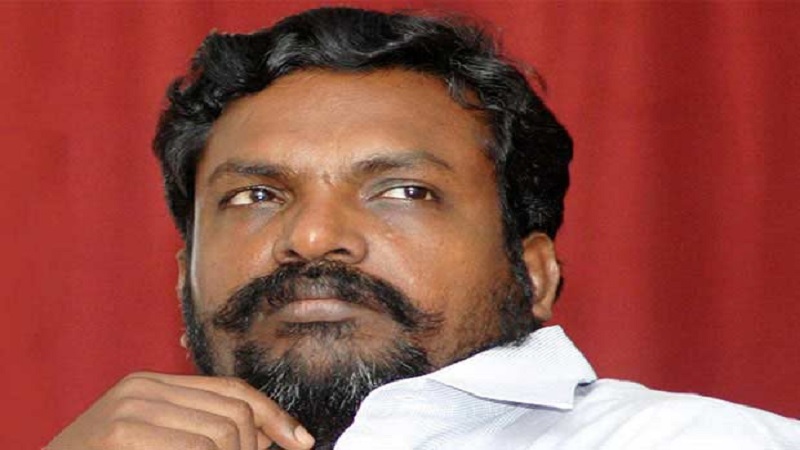
Thirumavalavan—a member of parliament from Tamil Nadu and the president of the Viduthalai Chiruthaigal Katchi, or Liberation Panther Party—spoke in fiery Tamil, which many of those listening did not understand. The crowd of over a thousand people nodded along, and encouraged Thirumavalavan with occasional shouts of “Jai Bhim.” A similar refrain was heard from many speakers at the “Chalo Delhi” rally of Ambedkarite organisations from across the country in Delhi’s Jantar Mantar on 4 March, called by Prakash Ambedkar of the Vanchit Bahujan Aghadi, an alliance of oppressed caste groups with its strongest presence in Maharashtra.
The speech before Thirumavalavan’s was delivered in the Telugu dialect of the mining hinterlands of north Telangana, and the speech after his in the terse Marathi native to drought-stricken Vidharbha. But in a mix of voices and tongues, those gathered told a common tale of oppressed groups struggling for state recognition and the protection of the Constitution in the middle of a right-ward lurch in the country’s politics. Many spoke of a vast and largely overlooked struggle in India’s hinterlands against the Citizenship (Amendment) Act, the National Registry of Citizens and the corresponding National People’s Register—showing that it is not just Muslims who oppose them, as the ruling Bharatiya Janata Party and its allies often claim. Other oppressed groups and Ambedkarite organisations have also risen up against these policies, in solidarity with Muslims and in reaction to the threat they see to themselves from the policies.
Standing in the crowd, I spoke to Eremalla Ram, the convener of the SC, ST, BC, Muslim Front in Visakhapatnam. He spoke of the political tumult in Andhra Pradesh over the last three months. “Most Dalit organisations before this were looking only at our own issues, ignoring the larger changes that are sinking this nation,” Eremella said. “It was only after the Bharat Bandh, when we knew we were as much a target as our Muslim brothers, that we took to the streets.” The bandh was a nationwide strike in February against a Supreme Court ruling that stated, “It is settled law that the State Government cannot be directed to provide reservations for appointment in public posts. Similarly, the State is not bound to make reservations for Scheduled Castes and Scheduled Tribes in matters of promotions.” Oppressed-caste organisations saw this as a move to deny them the promises and protections of the Constitution, much as the ruling government is trying to do with Muslims.
Oppressed-caste organisations saw the Supreme Court judgment weakening reservations as a move to deny them the promises and protections of the Constitution written by BR Ambedkar—much as the ruling government is trying to do to Muslims via the CAA and NRC.. utkarsh for the caravanOppressed-caste organisations saw the Supreme Court judgment weakening reservations as a move to deny them the promises and protections of the Constitution written by BR Ambedkar—much as the ruling government is trying to do to Muslims via the CAA and NRC.. utkarsh for the caravan
Dilkarrao Ambore, from the Dalit Muslim Sena of Indore, told me of an increased Ambedkarite presence at Muslim-led protests in Maharashtra. Muslim women in Indore had begun numerous sit-ins against the CAA and NRC in January, the most prominent of them in Badwali Chowki, a predominantly Muslim area in the centre of the city. When these were attacked by police soon after they started, “only a few Dalits went there to help them.” After the bandh, Ambore said, Ambedkarite organisations brought Dalits from surrounding rural areas into the city to lend more support. “We all go there now, protect them from any police attacks,” Ambore said. “We even cook for the protestors. They all eat the food we cook. We eat it together. Would any of these people who call us Hindu do that?”
Thirumavalavan, on the stage, said, “This is a war between sananthanam”—the Tamil term for caste Hinduism—“and the Constitution.” Another representative of the Viduthalai Chiruthaigal Katchi, speaking earlier, had told the crowd of the CAA and NRC’s threat to disenfranchise Dalits as well as Muslims. Many Dalit women who change their names after marriage, the speaker said, don’t have papers to link them to their earlier names and original families, meaning they would not be able to establish the unbroken documentary chain of heredity that the government now plans to demand of all citizens. Another speaker pointed to how a former hostel for students from the SCs, STs and Other Backward Classes has been turned into a detention centre in Karnataka. He added that groups such as the Narikuruvas—a nomadic community from Tamil Nadu previously classifies as a criminal tribe—have no documents to show where they are from, and are already treated as outsiders by any government office they approach. A speaker from the transgender community said that more than two thousand transwomen were excluded from the NRC in Assam because they had changed their names when they transitioned, so their earlier documents were not recognised.
“It is the Constitution that allowed inter-caste marriage, it is the Constitution that allowed us to learn and study,” Thirumavalavan said. “That is why the upper castes in power need to destroy every aspect of the Constitution. They fundamentally can’t believe in anything that allows for equality and fraternity. They cannot allow a document that allows us to question their supremacy.” “It is not brahmins who die when they massacre Muslims and destroy the country,” Thirumavalavan added. “It is our people—SCs, STs and OBCs.”
VR Jayanthi, a member of the VCK’s women’s wing, listed a string of sites that had seen protests by Ambedkarite, Periyarist and Muslim groups. A highlight for the VCK cadre was the Desamkaapom Maanadu—the Save the Nation Rally—that the party held in Thiruchi on 22 February, alongside the national Bharat Bandh. The thousands in attendance passed resolutions that called for an end to the CAA, NRC and NPR, and for reservations to be given constitutional protection. Jayanthi described some creative forms that the protests had taken. In at least one place, protestors had performed vallakaappus—traditional Tamil Hindu celebrations of pregnancy—for Muslim women, with the hope that their children will not be blinded by divisions of faith. Aadhi Mozhi described how Muslim protestors were making kolams—traditional designs drawn on the ground with powdered rice—saying “No CAA, No NRC, No NPR.” Usually, “only women usually make kolams,” she said, but at the protests she was struck “to see a man making them.”
Vincent Ekka, a Jesuit priest from Jashpur in northeastern Chhattisgarh, told me that Adivasi groups in the state were also mobilising against the CAA and NPR, and preparing to boycott all government officials collecting demographic data in their villages. “Everything we fear, we have seen it happen in Assam,” he said. Ekka described the shock of learning that Puna Munda, one of the first people to die in a detention camp in Assam, was an Adivasi migrant from Jharkhand. Munda had been wrongly classified as a Bangladeshi, and died in June 2019 after collapsing in detention.
Earlier, a speaker from Maharashtra had suggested that among the people excluded from the NRC in Assam, many of those classified as Hindus were from oppressed castes outside the four Hindu varnas. Ekka told me, “They tell you that 13 lakhs of those struck off the list are Hindus. That is absurd.” Large numbers of the excluded are Adivasis, he added “who have just been written off as Hindu.” The CAA, he said, “is made to make our people disappear.”
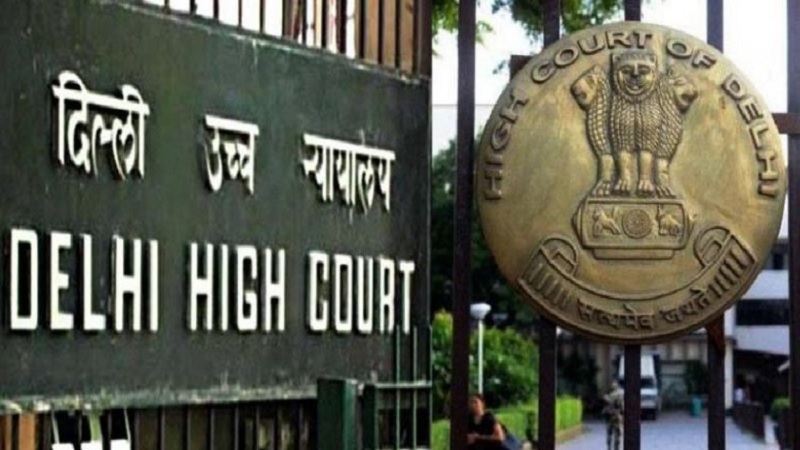
In path breaking directives, the Delhi High Court has directed all government hospitals to videograph the post-mortem of those killed during the communal violence in north-east Delhi last week. A bench of Justices Siddharth Mridul and I.S. Mehta asked authorities to collect and preserve DNA samples from all the bodies, and not to dispose of any unidentified body till March 11, the next date of hearing. The High Court’s directions came while hearing a habeas corpus petition by a man seeking details of his brother-in-law who went missing during the riots. Twenty-five-year-old Hamza went missing on February 26 evening. During the hearing, the police informed the court that Hamza’s body was recovered from a drain in Bhagirathi Vihar on March 2 and his autopsy would be conducted during the day at the RML Hospital. The court was also informed that after the autopsy, the body will be released to the family members.
In instances of mass targeted killing, it has been found that the medico legal procedures are found wanting with the state apparatus, especially the polic exerting undue pressure on doctors and hospital. Independent judicial scrutiny is therefore crucial and a must to ensure accountability and justice.
After allegedly inflicting violence on the people protesting the Citizenship Amendment Act (CAA), the Uttar Pradesh police are now resorting to ‘scare tactics’ and warning them of consequences of participating in such further protests.
Door-to-door warnings
According to The Telegraph India, the cops carry lists of alleged anti-CAA protestors and their addresses, questioning locals of their whereabouts, houses, size of families, who and where they are and their age and profession. Speaking to the publication, a senior police officer said that the scare campaign was meant to “make the people aware the police might act against them if they don’t stop the protests.”
The women, who have been staging a sit-in have also complained about the police barging into their homes and asking for information on their husbands and children and bullying them into ending the protests. A woman resident of the Kotwali area who was reportedly questioned by a dozen policemen said, “The policemen intimidate us by unnecessarily knocking at our doors. They came to my house on Thursday afternoon and asked the names of my husband and father-in-law. They allegedthat my husband had been involved in anti-CAA violence in December and February. My husband supplies food to the Shah Jama Idgah (site of the largest dharna in Aligarh) but never participated in any protest.” She also added that the police had asked for the names of her two children and “jotted them down on the register”.
However, this latest drive from the police comes after they promised not to harass protesters or their families without any evidence of their direct involvement in the violence. In a bid to vacate the Quarsi Road Bypass in Aligarh City on March 1, the circle officer Anil Samania had declared, “No action will be taken against the protesters without a proper enquiry.”
But now, the Additional City Magistrate, Aligarh, Ranjeet Singh has claimed that the campaign was undertaken to reassure the women who have complained that they are threatened and forced to join the dharnas.
He said, “Many women had complained that criminals were forcing them to participate in the protests. So we started the door-to-door campaign to interact with households and prevent any unpleasant situation. (During the visits) some women said their husbands too were forcing them against their wishes to join the dharna.” He added, “We are collecting the names of the provocateurs and will summon them to police stations and warn them. We have served notices to 250 people and are identifying more.”
However, debunking the claim of the Additional City Magistrate, a senior police officer in Lucknow said that the force was merely doing “community policing to keep people away from the anti-CAA protests”, adding that it was a “preemptive measure to prevent the protesters from occupying any new place in the city”. “We are doing this at many places, including Aligarh, Allahabad and Sambhal,” he said.
Public shaming
Not only has the government gone door-to-door to warn the protesters to not participate in anti-CAA agitations, but it has also put up posters and hoardings throughout the state capital of Lucknow of alleged anti-CAA protestors; around 57 of them, with their names, addresses and photographs accusing them to be a part of the violence during the protests. The content of the hoardings show that these allege protesters have been asked to pay compensation for damage to public property that took place during the violence at the protest last year in December. The hoardings also say that if these people fail to pay up, their properties will be confiscated. The total amount of damage to property listed in the hoardings is up to Rs. 1.55 crore.
While legal experts say that the move of the government is illegal because property can only be confiscated after a criminal trial, the activists whose names and addresses have been put up all across town now fear for the safety of themselves and their families. Speaking withNews Click, Robin Sharma of the Rihai Manch whose name appeared on the hoardings said, “The matter is still in the court. This is strange. What if my house is attacked by anti-social elements? If anything like that happens then Lucknow police and administration will be fully responsible for it.”
Social activist Deepak Kabir too in a video statement said, “We were arrested, assaulted, sent to jail and then given bail. I got a recovery notice in jail and later they sent me a recovery order. You (the government) know our addresses, we have the notice. Then why this? Is this to create fear? This is nothing but a new tactic to create pressure on us.”
Sadaf Jafar, the only woman who appears on the hoardings and who had spoken of the brutal ill-treatment by the prison authorities when they had taken her into custody said, “This has made us more vulnerable now. Making our addresses public may invite a mob and this is not at all justified. I feel scared now. This step was not at all required since the matter is in court, and we all have been appearing in the courts when asked to.”
Former IPS officer SR Darapuri also said that the government was trying to name and shame them and inviting a mob to lynch them. Speaking to News Click he said, “If they (the state government) are gearing up to confiscate anyone’s property, then they have to send them a notice, but they did not do so. When this case is already challenged in SC and the High Court has put stay on it, how can the government do this to us?”
The violence in Uttar Pradesh claimed 21 lives, more than 1,100 people were arrested and 5,558 people were kept in preventive detention. UP CM Yogi Adityanath had earlier said in December that the state government would take revenge against those involved in the violence and auction off the properties of those accused to compensate for the losses.
In yet another body blow to India’s reputation, The Freedom in the World report released by global non-profit Freedom House has slammed the ruling regime for an alarming departure from democratic norms, mainly on account of how it dealt with two key issues; abrogation of Article 370 in Kashmir and protests against the Citizenship Amendment Act (CAA).
The report titled Freedom in the World 2020: A Leaderless Struggle for Democracyranks 195 countries using 25 indicators along seven criteria; electoral processes, political processes and pluralism, functioning of government, freedom of expression and belief, association and organisational rights, rule of law, personal autonomy and individual rights.
The report clubs Indian Prime Minister Narndra Modi with US President Donald Trump when it comes to appreciation for freedom and democratic processes. It says, “…many freely elected leaders are dramatically narrowing their concerns to a blinkered interpretation of the national interest. In fact, such leaders—including the chief executives of the United States and India, the world’s two largest democracies—are increasingly willing to break down institutional safeguards and disregard the rights of critics and minorities as they pursue their populist agendas.”
The report goes on to say, “The Indian government has taken its Hindu nationalist agenda to a new level with a succession of policies that abrogate the rights of different segments of its Muslim population, threatening the democratic future of a country long seen as a potential bulwark of freedom in Asia and the world.”
It specifically places India in the spotlight by stating, “Prime Minister Narendra Modi’s discriminatory actions against Muslims, and a fierce crackdown on protesters opposing the changes, indicated a deterioration of basic freedoms in the world’s largest democracy.”
The Freedom report pulls no punches as it states, “Almost since the turn of the century, the United States and its allies have courted India as a potential strategic partner and democratic counterweight to China in the Indo-Pacific region. However, the Indian government’s alarming departures from democratic norms under Prime Minister Narendra Modi’s Bharatiya Janata Party (BJP) could blur the values-based distinction between Beijing and New Delhi. While India continues to earn a Free rating and held successful elections last spring, the BJP has distanced itself from the country’s founding commitment to pluralism and individual rights, without which democracy cannot long survive.”
The report also compares India to Chine when it comes to persecution of minorities saying, “Just as Chinese officials vocally defended acts of state repression against Uighurs and other Muslim groups before international audiences in 2019, Modi firmly rejected criticism of his Hindu nationalist policies, which included a series of new measures that affected India’s Muslim populations from one end of the country to the other.”
Kashmir is ‘Not Free’
Reserving perhaps its sharpest criticism for how the Indian government went about creating a humanitarian crisis in Kashmir, the report says, “The first major step was the central government’s unilateral annulment of the semiautonomous status of Jammu and Kashmir, India’s only Muslim-majority state. Federal authorities replaced the state’s elected institutions with appointees and abruptly stripped residents of basic political rights. The sweeping reorganization, which opponents criticized as unconstitutional, was accompanied by a massive deployment of troops and arbitrary arrests of hundreds of Kashmiri leaders and activists. Restrictions on freedom of movement and a shutdown of mobile and internet service made ordinary activities a major challenge for residents. As a result, Indian Kashmir experienced one of the five largest single-year score declines of the past 10 years in Freedom in the World, and its freedom status dropped to Not Free.”
It adds, “Indian Kashmir’s status declined from Partly Free to Not Free due to the Indian government’s abrupt revocation of the territory’s autonomy, the dissolution of its local elected institutions, and a security crackdown that sharply curtailed civil liberties and included mass arrests of local politicians and activists.”
Report slams Assam’s NRC
Taking the government to task for the citizenship related crisis in Asport says, “The government’s second move came on August 31, when it published a new citizens’ register in the northeastern state of Assam that left nearly two million residents without citizenship in any country. The deeply flawed process was widely understood as an effort to exclude Muslims, many of whom were descended from Bengalis who arrived in Assam during the colonial era. Those found to be undocumented immigrants were expected to be placed in detention camps. However, the Bengali population that was rendered stateless included a significant number of Hindus, necessitating a remedy that would please supporters of the ruling BJP.”
Damning indictment of CAA
Finally, the report explores the Indian government’s interest in making an amendment to the citizenship law in the country saying, “That remedy was provided by the third major action of the year, the December passage of the Citizenship Amendment Law, which expedites citizenship for adherents of six non-Muslim religions from three neighboring Muslim-majority countries. In effect, India will grant Hindus and other non-Muslims special protection from persecution in Bangladesh, Pakistan, and Afghanistan, but Muslims—including those from vulnerable minority sects or from other neighboring states like China and Sri Lanka—will receive no such advantage. Home Affairs Minister Amit Shah has pledged to repeat the Assam citizens’ register process nationwide, raising fears of a broader effort to render Indian Muslims stateless and ensure citizenship for non-Muslims.”
Conclusion
The report concludes, “These three actions have shaken the rule of law in India and threatened the secular and inclusive nature of its political system. They also caused the country to receive the largest score decline among the world’s 25 largest democracies in Freedom in the World 2020. Tens of thousands of Indians from all religious backgrounds have taken to the streets to protest this jarring attack on their country’s character, but they have faced police violence in return, and it remains to be seen whether such demonstrations will persuade the government to change course.”