I am annoyed. And it is not easy to annoy me. I am sure there are millions, who like me, are facing a similar predicament. I am finding myself bulldozed into stupid, wasteful discussions, where one’s opinions or views are being sought! For over three decades, I had a simple defense, “I keep away from such issues. I am apolitical”. It would not just suffice, it would actually enhance my prestige. Here is a man, who stays focused on the most important things in life – studying, working, eating, partying and creating wealth – folks would say. Many would be green with envy. Much as they would try, the skill of being neutral, ambiguous, non-committal or preferably vague – is one that cannot be acquired easily even over a life time.
These classical skills honed over decades, are now under assault. From friends who seek opinions on issues of pre-historic insignificance. Was India’s fight for freedom a cleverly orchestrated charade? Was a temple judgement an unusual mix of reward and retribution? Does the caste system actually exist? Is the Constitution under threat? Will a particular state election determine the course of the country’s polity? Have you seen Vikas? When will Ache Din come? (that by the way is simple – never. Cause the King of Good Times left the country). There is a constant barrage. From those, who have acquired a hyperactive persona on WhatsApp. From those, who believe that everything they see on social media must be responded to and firmly dealt with. From those, who are always in an “alarmist” mode. From those with an undesirably heightened civic sense. From those with an unseemly desire to respond to “injustice”.
I have had to adopt some modern techniques to keep these folks at bay:
1. Exiting social media groups – yes this works. I usually say that I am taking a break, but I never return!
2. The clever ones find ways to bombard me with issues by reaching me directly. For them, I have an “auto-response vocabulary” that can be activated with simple clicks. One click gives “I see”. Two clicks yield “Interesting”, three “Wow!”, four “Boy, that’s unexpected!” and five “Jeez, that’s a lot of food for thought!”. In most cases, these have the required calming effects. These diabolically cunning responses, with some suitable modifications, work even at parties, where one cannot avoid these chaps. My favorite one remains “You do have a point. One must examine every aspect, look in every nook and cranny, in the times we live in. Because you don’t know what will happen. Deliberation is indeed the need of the hour”
3. Yet, there are folks who are relentless. These folks are made of sterner stuff. They send me links to subjects I couldn’t care about and even provide a “reading list” to understand how, for instance, Mughals destroyed Hindustan! Or why India will flourish under a benevolent dictator. Or why Women and Students are creating history, as we speak. I deal with them through the A / B swap. A is sent material received from B and vice versa. Of course, one must be careful that A and B do not have contrarian views on the subject. This takes some effort, but if one must remain secure in one’s own bubble, it is an effort worth taking!
4. For the absolute hardcore ones, who send me invites to events such as “Democracy and Dissent”, “Reclaiming the Republic”, “Students Against Hatred”, “Zanana Ka Zamana”, “Celebrating Secularism, Pluralism, Democracy and Freedom”, and insist that I attend – I have another “auto-response vocabulary” – “I am away on work travel, perhaps another time”, “What a pity! I have a family engagement that I must attend”. Both responses reinforce my image of a focused person devoted to his family – which I am.
Recently my daughter took a short break from her studies and came to visit me. I started to plan our holiday together – consulting my friends on contemporary restaurants, movies, music gigs, dance and theatre. As I proudly sent my proposed plan, with neatly laid out reviews, I received a chilling request from her “Let’s go to a protest site each day and understand the issues first hand. We will create posters and banners, reflecting our stand and show our solidarity to the cause!” Clearly, the “fence-sitter” gene had skipped a generation!
The colonial usage of ‘riots’ denoted two religious groups indulging in bloody violence. The British, who thought themselves as morally superior to every other group in India, sought to distance themselves from these warring factions in trying to impose order. The British have long gone, but the usage of this colonial word continues and is employed to understand various occurrences of post-colonial violence in India. This colonial category of riot has been employed once again in the recent Delhi violence which saw the destruction of life and property which the city had not witnessed since the brutal anti-Sikh violence of 1984.
The Delhi violence is certainly not a riot: more and more it is looking like an anti-Muslim pogrom. Pogroms are not about two groups of people fighting each other.
They are fundamentally waged against the powerless minority often with the involvement of the state machinery. What we saw in Delhi was a systematic brutalization of Muslim life, their businesses attacked and destroyed, the police acting as bystanders or actively complicit with the organised Hindu mob; and complete apathy of the ruling political establishment to the woes of suffering Muslims.
This is not a riot, certainly not a clash. This is an orchestrated, systematic campaign to teach Muslims a lesson. The Hindu majority has long been gripped with imaginary fears of the Muslim other and it doesn’t take long for this fear to vent itself on the streets given the right political signals.
Certainly, Hindus have also been killed in this violence. But the disproportionate violence inflicted on Muslims is for all to see. Not just in terms of human life, but wherever possible, Muslim businesses have been targeted deliberately which can only lead to one conclusion: that this violence must have been planned for some time now. Those who think this was a spontaneous burst of ‘mob-violence’ are certainly, participating in normalising anti-Muslim hatred. Those Hindu liberals who are arguing that violence happened from both sides are necessarily drawing a conscious false equivalence and are equally guilty of not calling the evil by its name.
Also guilty are those media houses who have indulged in full time anti-Muslim bigotry and have succeeded in making anti-Muslim prejudice as common sense for a large section of Hindus. When Muslims were being called ‘termites’ from the highest levels of political establishment, these media houses were laying the ground for extermination of such ‘termites’. Through the last many years, this normalizing of hatred towards Muslims was bound to have an effect and this is what we saw in Delhi.
We have called out the political establishment for indulging in hate speech. It is time to understand that various media houses, in the name of doing journalism, have immersed themselves full time in peddling and normalising hate speech against Muslims. Those who defend them in the name of media freedom fundamentally misrecognise their character and are, therefore, indirectly complicit in this anti-Muslim hatred.
After any such anti-Muslim pogrom, it is Muslims themselves who are called upon to show magnanimity and accept peace in the name of communal harmony. We are already seeing such moves afoot wherein Muslims who have suffered the most are being asked to forgive the marauders and forget whatever happened to their kith and kin. This has been attempted before but whether it has ever worked is an open question.
What is more certain is that such a careful and manufactured art of forced forgetting has only emboldened the perpetrators of violence. Long back, a prominent social scientist had asked the question: can there be any reconciliation without justice? To all those currently engaged in fostering inter-faith harmony after the Delhi pogrom, this decades old question needs to be asked with renewed urgency.
Muslims today are in an unprecedented situation. They are standing alone, bruised and battered, without any social or political allies. If it is true that Dalits constituted the majority within the Hindu mob who killed Muslims and pillaged their neighbourhoods, then it is a worrying sign indeed.
A handful of liberals within Hindu society are certainly not enough for a besieged community to bank upon.
Parties who depend on their votes have stopped speaking for them. Partly out strategic thinking and partly because they themselves have shifted to the right, any empathy for Muslims threatens them with the erosion of their core social base.
This pitiless situation is so grave that the ruling party of Delhi does not think twice before sacking its own Muslim councillor on a charge essentially levelled by the Hindu right. His only crime was that he did not rely on the police and tried his own means to save his life and property.
We should also understand that this anti-Muslim pogrom must have had the sanction of the highest levels. After all, it coincided with the visit of the President of the most powerful country. Those who are baffled by it and think it was a miscalculation neither get the game nor the messaging. The very fact that India could do it this to Muslims and manage the silence of Donald Trump, only tells us that in the eventuality of an NRC, when more such pogroms may be required, the government can rest assured that the world would not interfere with its ideological design. And that’s why this Delhi anti-Muslim pogrom may be a precursor to something more sinister in the making.
(Arshad Alam is an independent researcher and comments on social and political issues.)
We went to North-East Delhi where communal violence had broken out on February 24, 2020 and carried on till February 26, 2020. As per latest figures available, 42 people have died, more than 200 are injured and thousands have been rendered homeless due to destruction and looting of their houses. We met with Muslim and Hindu families in Bhajanpura, Chaman Park and Shiv Vihar to understand their immediate concerns and whether ongoing relief efforts adequately address their needs.
1. No Relief being provided by Govt Agencies
Based on seeing the ground situation and talking to affected people, it is clear that the Central and Delhi governments have failed in providing any modicum of relief to those affected or displaced by the recent spate of violence. In each place, families which had to abandon their homes due to violence are taking refuge with their relatives or have made private arrangements in different localities or are staying in temporary accommodation provided by private individuals. The Central and Delhi governments have not set up a single relief camp in the areas which we visited.
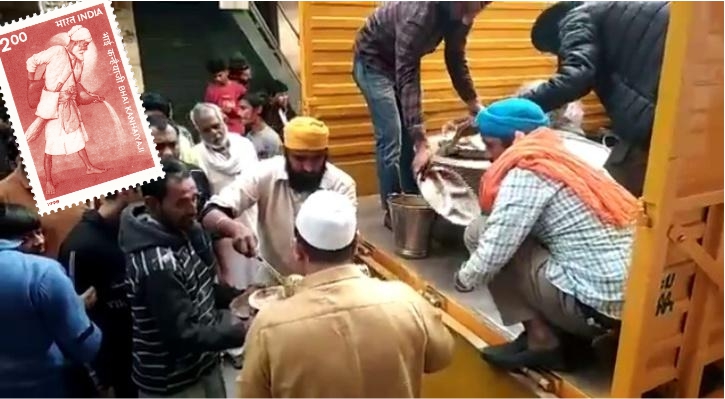
During the time of our visit from 3 pm to 7 pm, private vehicles carrying some relief material reached Chaman Park. We did not find any government agency or representative involved in co-ordinating or delivering relief during the time we were there. Further, everyone we spoke to reported having received assistance only from non-government entities. According to those present at the site, all relief including food, clothing and medicines are being provided only by private entities- either through religious bodies (Gurudwaras, Church) or through civil society groups.
The abdication by the Delhi and Central governments, of their basic responsibility of providing help to people rendered homeless and vulnerable due to violence is shocking. After maintaining a deafening silence for more than 3 days after the violence broke out, the measures announced by the Delhi government are inadequate to meet even the basic needs of affected persons – we did not find even those being implemented on the ground during our visit.
We call upon the Central government and the Delhi government to immediately provide relief in a dignified manner to those who have been affected by the violence. The Chief Minister, ministers of the Central and Delhi government, MPs and MLAs must meet with all affected persons and immediately initiate confidence building measures. Relief measures must include:
Safe shelter with adequate privacy for families who have been forced to abandon their houses, where they can stay till their homes are rebuilt and the atmosphere is conducive for their return;
Provision of cooked food, preferably through 24*7 community kitchens in the area and provision of milk, vegetables at subsidized rates through mobile vans;
Establishment of 24*7 medical camps in affected areas including availability of gynaecologists and child psychologists;
Provision of clean clothing for all affected persons;
Setting up camps for helping people obtain copies of official documents which have been destroyed in the violence and arson;
Setting up facilitation desks for providing legal help and completing formalities for seeking compensation;
Immediate rebuilding and repair of all places of worship damaged in the violence;
Delhi government officials must be present and easily accessible in the affected areas;
Procedure for applying for compensation must be simple taking into cognisance that most affected people would have lost their documents in the violence and arson.
2. Observations from the Sites we visited
Chaman Park
Nearly 1000 people, from the Muslim community, who fled from their homes in Shiv Vihar due to the violence, are taking shelter in private homes in nearby Chaman Park.
We visited two of these homes, where hundreds of people, mostly women and children, were sitting on the floor in different rooms. One room was functioning as a medical camp. The homes belong to private individuals who opened them up to provide emergency shelter. People were extremely anxious and traumatised about the condition of their homes and their future. Several people stated that when men attempted to return to Shiv Vihar to retrieve belongings, especially their documents, they were brutally attacked and there were reports of some people being murdered (we cannot verify this independently). Most families had fled with nothing other than the clothes on their backs. Children appeared to be experiencing a lot of trauma as well. They spoke of the violence they had witnessed- houses being burnt, people attacked by mobs. Several children were extremely concerned about missing out on their final exams, especially those who had to appear for board exams.
We met with a young man who had stitches on the back of his head and his left eye was swollen shut. He said he was returning from Karawal Nagar to check on the condition of his family on the evening of the 25th of February, when he was caught by 16-17 men who asked whether he was Hindu or Muslim. Upon hearing that he was Muslim, they mercilessly beat him. He received the stitches on his head at GTB Hospital but said he was too scared to return to the hospital to get his eye treated.
People shared that a Madrasa and 2 masjids in the area- Auliya Masjid and Madina Masjid – were set on fire and looted and destroyed from inside. People said they saw mobs armed with petrol bombs, guns and rods setting fire to homes and attacking people. People said that calls to emergency numbers of Police (100) and Fire Brigade (101) went unanswered. Most people took help of neighbours or relatives to escape while one family reported that the Police helped them escape from their house. As Shiv Vihar is a mixed locality and in several lanes, there are Hindu and Muslim families, we asked people whether they could see recognisable faces of their neighbours in the mob. Every person who we spoke to said it was outsiders who were in the mob- no local person was involved in the violence.
People said that they require accommodation in the local area with atleast one room dwelling per family and facility for cooking, till they can rebuild their homes or take other appropriate action. Most were terrified of returning to Shiv Vihar.
While private homes, in Chaman Park and elsewhere, have provided emergency shelter, it was clear that it would not be feasible for people to stay there beyond a few days. Relief in terms of food, clothing and health camps was being provided through non-government organisations.
People we spoke to had no information about the compensation scheme announced by the Delhi government and no one had even seen the form which is required to be filled up. No representative of the Delhi or Central government had visited them.
Shiv Vihar
We visited the deserted galis of Shiv Vihar, which resembled a ghost town. Thousands of people, both Hindus and Muslims, have abandoned their homes due to the riots. Rapid Action Force personnel were stationed at every corner. Blackened walls of houses, charred remains of vehicles, burnt household items, furniture from shops strewn on the streets and barricades put up using almirahs and desks bear testimony to the tragic consequences of communal hate & violence.
We came across the burnt Auliya masjid and could see the remains of gas cylinders which had been lit and thrown inside. It was our impression that primarily targeted attacks were made on houses and places of worship of Muslims. Some houses belonging to Hindus were also burnt and damaged.
We could only locate a few Hindu families in the riot affected area, and most of them said they were taking shelter in nearby localities of Johripur and other areas. They said that all the Muslims had abandoned their homes. We met with Mithlesh and Sunita, who are neighbours and run a small halwai (sweet) shop in Gali no. 14, 25 foot road. They said that armed mobs entered lanes from both sides and burnt dwellings, destroyed homes, attacked people. They said they tried calling the police and fire brigade repeatedly, but with no success. Two brothers-in-law of Sunita who were standing in the lane during the violence were injured. One is admitted to GTB with severe burn injuries while the other was standing there with his head in a bandage. The women said that while their houses were not set on fire, they left the area on Wednesday morning (26th of February) due to the violence and when they returned to retrieve their belongings, they found furniture and appliances in the house had been damaged. They said that it appeared people were brought in from outside to do this violence as they could not identify any known person from the locality.
Several people (only Hindus as no Muslim families have been able to return) reported that the SDM had visited the area and taken down their details for the compensation form.
Bhajanpura
While travelling towards Bhajanpura from the Seelampur metro station, we saw that most shops had their shutters down. We saw several burnt school buses, trucks, vehicles and also the remains of the burnt petrol pump.
At Bhajanpura main road, we saw the Mazar which had been set on fire. It was barely 10 feet away from a Police Help Centre (located on the same pavement). Page 5 of 6
The first three shops on the left side of the road were completely burnt. We met with Azad and his brother Bhoora, who along with 2 other brothers owned these shops – a restaurant called Azad Chicken Centre, a shop selling peanuts and chickpea and a fruit shop. In the whole market only these three shops had been set on fire. Burnt fruits, furniture from the restaurant lay strewn around. The brothers said that a mob set the shops on fire around 2.30pm in the afternoon of the 24th of February, 2020 and started pelting stones on them. Their houses which are located on top of the shops also caught fire. They tried to douse the flames engulfing their vehicles and shops but when tear gas shells were thrown into their houses, 16-17 of them (including their little children, women and workers from the restaurant), saved themselves by running to the terrace and jumping into the back-lane from a 12 feet high terrace. They said that 8-10 policemen were standing and watching but did not control the mob, as perhaps they were vastly outnumbered. Despite repeated calls to emergency numbers, the first fire brigade arrived only around 7 pm by which time the shops and houses were completely gutted and all the belongings inside were reduced to ashes. Seeing the condition of the house and the shops, it was clear that the structures were extremely unsafe and would need to be demolished and then rebuilt. The brothers felt that only their shops were targeted as they were Muslims. While none of the other shopkeepers helped during the attack, most of them sat with the brothers through the night and extended solidarity.
The brothers shared that they returned at night and tried to secure the entrance in a bid to protect their valuables and belongings, but everything had already been ransacked and looted including money and jewellery kept in the house. All the remaining clothes, documents had been burnt and household appliances and fixtures had been broken including the wash basins. They had not heard of the compensation offered by the Delhi government and said no official, other than the Police had met with them. When we told them about the compensation announced, they said that the government should extend loans as well as the compensation amounts declared may not be adequate. They were keen to rebuild and restart all three shops. The brothers proudly shared that their grandfather Bundu Khan had served in the Indian Army.
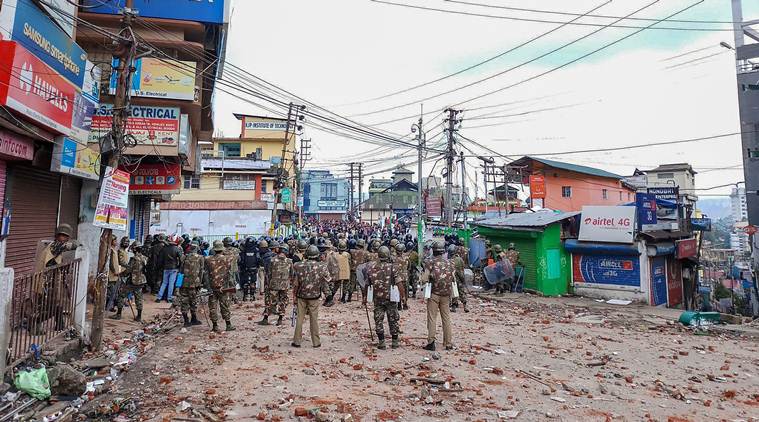
On Friday February 28, clashes broke out In Ichamati village located in the East Khasi Hills district of Meghalaya between members of the Khasi Students Union (KSU) and non-tribals. The violence took place at a rally against the Citizenship Amendment Act (CAA) where KSU, that opposes the CAA demanded the implementation of Inner Line Permit (ILP) at Ichamati. One member of the KSU identified as Lurshai Hynniewta, a resident of Khliehshnong Sohra, was killed in the clashes.
Thereafter, in a series of attacks non-tribal people, both Hindus and Muslims, were either killed or injured grievously: (Sources-India Express, Northeast News)
On Saturday, Rupchand Dewan, a vegetable vendor originally hailing from Assam’s Barpeta district was stabbed to death in Shillong’s Bara Bazar area
Another vegetable vendor Jaddu Choudhury from Silchar was also stabbed, but survived
Akash Ali from Barpeta, who works as a courier delivery boy was hit on the head with a hammer in Langsning on Saturday
Also, on Saturday, a member of Meghalaya Basin Development Authority was attacked in Mawthabah
A 28-year-old man identified as Aditya Kumar was stabbed at Mawprem and hospitalized with serious injuries
On Sunday, a 37-year-old man identified as Upas Uddin was killed in Pykran village that falls under the jurisdiction of Shella police station in Meghalaya’s East Khasi Hills district on Sunday morning. His three assailants are absconding and yet to be identified.
On Sunday morning, District Magistrate Matsiewdor W Nongbri said in an order, “There is a likelihood of a serious breakdown of peace and tranquillity which may lead to loss of life and property… I do promulgate curfew in these areas from 8 am on March 1 until further orders.”
Eight people have been arrested so far in connection with the attack that killed Hynniewta
Tribal group blames Hindutva groups, issues ultimatum to Bengali Hindus
The Hynniewtrep National Liberation Council (HNLC), a banned insurgent group from Meghalaya, has issued an ultimatum to all the Hindu-Bengalis to leave Ichamati and Majai areas at Shella in East Khasi Hills within one month. HNLC general secretary-cum-publicity secretary Sainkupar Nongtraw in a statement issued on Sunday said, “If they fail to do so by not complying to our ultimatum then we shall not be made responsible in case of any eventuality. This time it shall be a mass bloodshed.”
The HNLC blames Hindutva groups and Bengali Hindus for Lurshai Hynniewta’s death. “It was quite visible that the attacks were similar to the ones that happened in the country’s capital by Hindutva forces,” said the statement. “Whatever had happened in the country’s capital Delhi in the recent times was an outcome of the pro-CAA activists attacking the anti-CAA groups,” continued the statement, adding, “These incidents are all stage-managed by the Hindutva forces.”
Meghalaya’s ethnic make-up
The eastern state of Meghalaya is home to many tribes such as Khasi, Garo, Jaintia, Hajong, Biate, Tiwa (Lalung), Rabha, Kuki, Boro, Nepali, Karbi, Koch, Rajbongshi etc. In fact, till 1972 the state was a part of Assam, and the present-day state of Meghalaya was formed by carving out the Khasi, Garo and Jaintia Hills districts on January 21, 1972. According to the official website of the Meghalaya Tourism department, “Meghalaya’s main ethnic communities, each having its own distinctive customs and cultural traditions are the Khasis (of Mon-Khmer ancestry), the Garos (of Tibeto-Burman origin) and the Jaintias said to be from South East Asia.” Also, “The principal languages in Meghalaya are Khasi, Pnar and Garo with English as the official language of the State.”
According to census 2011 data, over three quarters of tribals practice Christianity. These include Garos and Khasis. However, tribes like Hajong, Koch and Rabha people are predominantly Hindu. Muslims account for less than five percent of the state’s population.
Anti-Bengali sentiment
In 1979, when the “anti-foreigner” sentiment swept across Assam, a parallel movement against Bengalis began in Meghalaya. The derogatory word Dkhar was used for ethnic Bengalis, who were mainly Hindu settlers. Ethnocentric Khasi organisations such as KSU and HNLC raised the slogan Beh Dkhar meaning chase the Dkhars away. Violence broke out in October 1979 after two Khasi boys allegedly desecrated an image of a Bengali Hindu deity. Bengali owned businesses and shops were subsequently shut down forcible and over 20,000 Bengalis were forced to flee the state.
Even today, Bengalis are viewed as outsiders and ethnocentric groups fear their influx will spoil the demography of the state. An HNCL statement released recently says that it fears that if “the CAA comes into its implementation then the Bengali Hindu community shall become the biggest threat to our Hynniewtrep land.”
Following the footsteps of Seattle City council that unanimously passed a motion against discriminatory citizenship law adopted by India, a councillor in New Westminster is going to make a similar move next week.
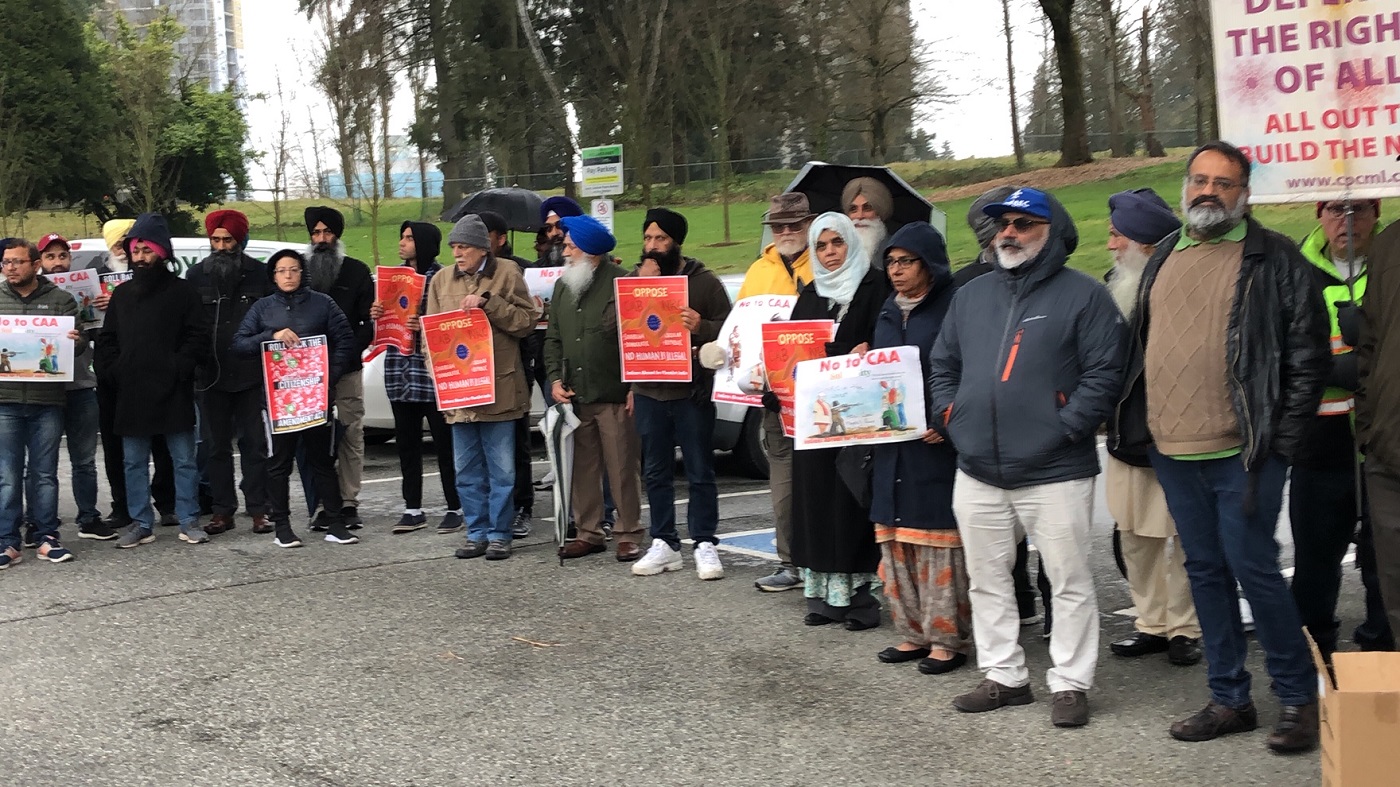
Chuck Puchmayr who is vocal on social justice and human rights told a rally held against India’s Citizenship Amendment Act (CAA) and recent violence that claimed more than 40 lives in New Delhi on Sunday evening that he was determined to bring the motion on the night of Monday, March 9.
Organized by Indians Abroad for Pluralist India, the rally was attended by scores of people who came out to register their protest despite rain and cold weather at Holland Park in Surrey.
The right wing Hindu nationalist Bhartiya Janata Party (BJP) government in India recently passed CAA that discriminates against Muslim refugees coming from neighbouring countries, including Pakistan, Afghanistan and Bangladesh on the pretext of giving shelter to non-Muslims facing religious persecution in those places.
There have been angry protests against CAA all over the world. The recent demonstrations by the BJP supporters against peaceful protesters in Delhi culminated into bloodshed that left more than 40 people dead. Most of these deaths were the result of mob attacks incited by BJP supporters with the help of police.
The rally began with a moment of silence for those who were killed.
Puchmayr was the only elected official present while South Asian MPs from Surrey remained absent. He announced that he will be bringing a motion to denounce CAA and urge upon the Canadian government to intervene and break its silence over what was happening in India.
Jagmeet Singh of New Democratic Party (NDP) is the only federal leader, who has spoken out against CAA and Delhi violence so far. Annie Ohana, an anti-racism educator and former NDP candidate also spoke at the rally.
The Sikh activists outnumbered the gathering. Many of them strongly believe that the Delhi violence is the repetition of 1984 pogrom during which state sponsored goons targeted thousands of Sikhs in Delhi and other parts of India following the assassination of then-Prime Minister Indira Gandhi by her Sikh bodyguards. This time however, those targeted were mainly from the Muslim community.
The speakers included Hardeep Singh Nijjar from Guru Nanak Sikh temple, Gian Singh Gill from Dashmesh Darbar Gurdwara and Ranjit Singh Khalsa from Banda Singh Bahadur Society, besides Muslim activists Auzeb Manzoor, Dawood Ismail, Imtiaz Popat and Tarek Kyani.
IAPI members and supporters Rakesh Kumar, Amrit Diwana, Sayyad Wajahat and Harbir Rathi also spoke at the event.
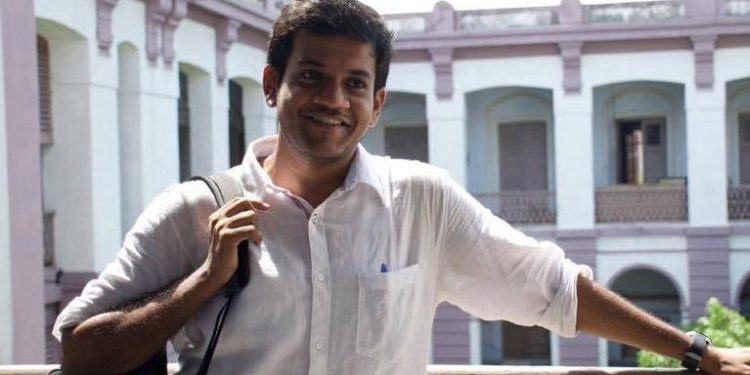
Souradeep Sengupta, a physics teacher at Gurcharan College in Silchar, Assam, was arrested after a group of students accused him of posting ‘objectionable material on Facebook’, reported The Indian Express.
The students registered an FIR against him for “making derogatory remarks and abusing the Sanatan Dharma”. Their FIR filed by the 10 students also stated, “He has also alleged the prime minister of the nation [w]as a mass murderer and tried to incite communal violence by making inflammatory comments against the Hindu community.”
Ironically, Dilip Ghosh, a BJP leader and serial hate speech offender, asked for Souradeep’s arrest.
This person should get serious punishment for such type of instigative and anti-national speeches… pic.twitter.com/PWFJREEwTO
Manabendra Dev Ray, SP Chachar mentioned that Sengupta was booked under sections 295A (deliberate and malicious acts intended to outrage religious feelings of any class by insulting its religion or religious beliefs), 153A (promoting enmity between different groups on grounds of religion), 507 IPC (criminal intimidation) and 66 of the IT Act. “He has been arrested on Friday due to anti-social comments on Facebook which may lead to communal tensions,” Ray said.
IE reported that Sengupta had put up a post (now deleted) in context of the Delhi violence suggesting that some sections were trying to recreate the 2002 Godhra Riots in the national capital.
Following the backlash, Sengupta deleted the post and apologized for hurting “any religious sentiments”. He wrote, “I apologise for any religious sentiments I may have hurt by my posts. I made some irresponsible comments about a communally sensitive issue. It was a lapse of judgement. My intention was not to insult any religion at large.”
Barak Bulletin reported his family member as saying, ““A a mob of 50 abusive young students surrounded the house in the evening. A while later, around 30 students entered the residence and created a ruckus. They looked around and started shouting at his parents. They asked his mother what kind of upbringing have you given to your child that he grew up to post all this nonsense on Facebook. Another boy said not a single image of any God or Goddesses in the whole house, you all cannot be called Hindus at any cost. The family members kept apologizing as they wanted to settle it out of the court.”
The person added, “When the parents requested to settle it all, they demanded that Souradeep must go live on Facebook and apologise for his posts. Souradeep was not at his home but when his mother called he went back to his residence and that is when Police officials arrested him and took him to Silchar Sadar Police station. He is still there and we will appeal for a bail tomorrow.”
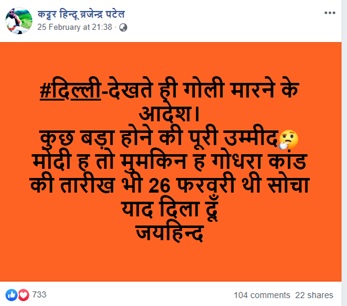
However, a man who claims to be a staunch right-winger had posted a similar post on Facebook, in fact it was thinly veiled threat to the minorities. Yet, he wasn’t arrested.
There are millions like Brajendra Patel who have posted outright threats against the minorities. Yet, the police hasn’t taken any action against them.
Is Sengupta’s arrest just another example of the suppression of free speech and the quashing of anybody who speaks against the ruling party?
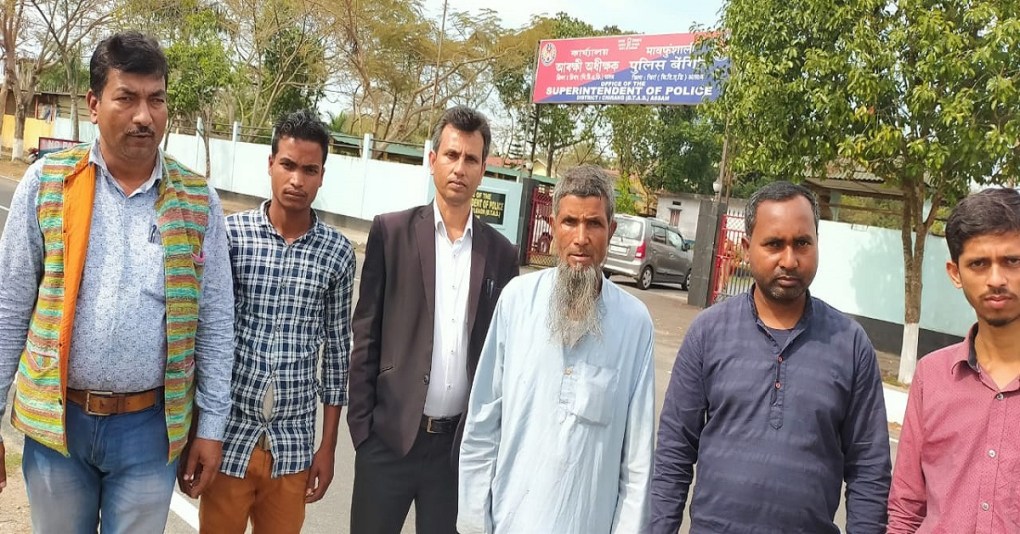
In a huge relief for two men from Assam, CJP has helped secure their release from a detention camp. Brothers Samsul Ali (67) and Abdur Rashid (60) had been lodged in the Goalpara detention camp for over three years.
Both hail from Village no. 2 Goraimari that falls under the jurisdiction of the Panbari police station of Chirang district in Lower Assam. They were daily wage earning labourers when they were imprisoned. Sons of late Elimuddin, both Samsul Ali and Abdur Rashid were born in Monakocha village in late 1950s, which is only 3 km from their present home in Goraimari. They shifted to their new home in late 1970s.
They were referred to a foreigner’s tribunal (FT) by the Border Police as suspected foreigners. Both, Samsul Ali and Abdur Rashid belong to indigenous Assamese community as per popular narratives in present Assam. They submitted documents including legacy documents of their father Elimuddin’s 1951 NRC, Voters list of 1966 and 1971, they were declared foreigners by the Foreigners’ tribunal. As they are uneducated, they do not have a school leaving certificate, but both also submitted their Voter IDs.
Despite this, an FT member who has an alleged track record of declaring a large number of people foreigners, ruled against them citing the reason that the written statement submitted by the Advocate of Samsul Ali and Abdur Rashid didn’t mention why Elimuddin who was resident of Monakocha till 1971, shifted to Goraimari in 1970s! Another reason cited was that the written statement didn’t mention that they were Indian by birth!
It may be recalled that last year, the Supreme Court had paved the way for the conditional release of detention camp inmates on bail if they had completed three years in captivity. When CJP found out about the brothers, we immediately swung into action.
CJP team members Nanda Ghosh and Pranay Tarafdar ran from pillar to post to get documents necessary to secure their bail. “We needed two sureties of Rs 1 lakh each for both brothers. For this we had to get land documents of the people who were offering the surety. These included land ownership documents, land tax payment documents, land valuation documents and many more. Plus, we needed to get signatures of officials on these documents and have them verified,” says Nanda Ghosh explaining the tedious process. “We collected documents and moved from one office to another, from the Circle Office to the Sub Divisional Officer and the process went on for four months,” he says. CJP advocate Abdur Rahim helped with all legal formalities.
But our efforts paid off and after the last set of formalities were completed, Samsul Ali and Abdur Rashid walked out of the detention camp after three years and ten days. The team led by CJP Assam program coordinator Zamser Ali, along with Nanda Ghosh and Pranay Tarafdar went to receive the brother and bring them back from the detention camp.
Abdur Rashid recounted the horrors of captivity saying, “The food was of an extremely poor quality and the place where we ate was next to an open drain. I found rat dropping sin food. The hygiene was extremely poor, so after a few days all inmates went on a hunger strike. After seven days of surviving only on water the authorities relented and things improved marginally.”
Samsul Ali is hard of hearing and sometimes just keeps repeating his own name in answer to any question. He also needs an inhaler to breathe if he walks more than a few steps. His fragile health and the fact that he will have to make weekly visits to the police station is a source of concern for his family. But they are grateful the brothers are back. “Had it not been for Nandu and Pranay, my husband wouldn’t have come back,” says Abdur Rashid’s wife.
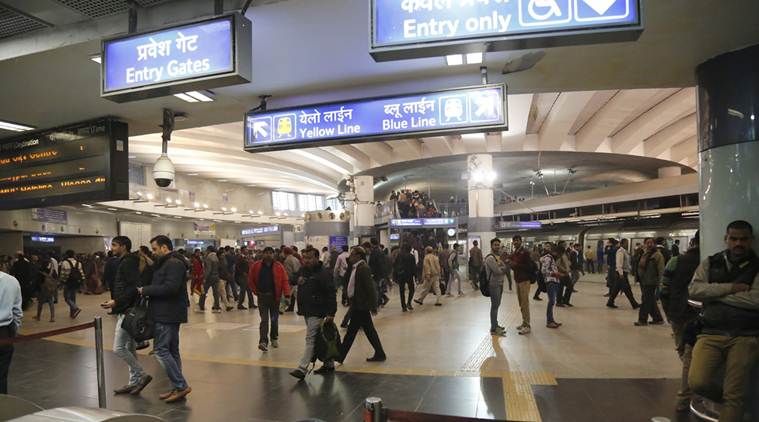
The Delhi police has arrested six people from Delhi’s Rajiv Chowk Metro Station for shouting the slogan, “Shoot the traitors”, made famous by BJP leader Kapil Mishra, The Indian Express reported.
Circulated widely on social media, the incident took place at the metro station at around 10:52 AM on Saturday, February 29.
Men shouting “desh ke gaddaaron ko, goli maaron saaron ki” in broad daylight, in the middle of Delhi, at Rajiv Chowk metro station, earlier this morning. This is how Hindu terror is normalised. Please amplify. Everyone should know the dangerous direction this country is taking. pic.twitter.com/80cKO95MF8
In the video clip, the boys are heard saying, “Desh ke gaddaron, goli maaro saalon ko”, a slogan frequently used against those protesting against the Citizenship Amendment Act, National Register of Citizens and National Population Register.
Anuj Dayal, executive director, corporate communications at the Delhi Metro Rail Corporation (DMRC) has issued a statement in this regard saying, “In reference to a video clip going viral on social media, showing sloganeering by some passengers at Rajiv Chowk Metro station, it is to state that this incident happened today around 10:52am at the station and DMRC/CISF staff immediately handed them over to the Delhi Metro Rail Police for further necessary action.”
“Under Delhi Metro O&M Act 2002, any kind of demonstration or nuisance is prohibited in Delhi metro premises. Any passenger indulging in such act is liable to be removed from the metro premises,” it added.
It was reported that the Central Industrial Security Force (CISF) that is responsible for the security of the Delhi Metro, handed over the men to the Delhi police.
In a statement, the CISF said, “On February 29, at about 10:25 hours, six youths were seen shouting slogans at Rajiv Chowk metro station, Delhi. They were immediately intercepted by CISF personnel & thereafter handed over to Delhi Metro Rail Police officials for further action. Metro Rail operation remained.”
Scroll.in reported that another video surfaced a while later, showing men walking around the Connaught Place area where the Rajiv Chowk Metro Station is located. The men were carrying the national flag and shouting the same slogan – “Shoot the traitors”. The march was allegedly taken out under the banner of the Delhi Peace Forum and attended by Kapil Mishra.
In Delhi’s Connaught Place, men shouting “Desh Ke Gaddaron Ko, Goli Maaron Salo Ko.” marching through our capital as @DelhiPolice stands and watches. Are the deaths of our citizens already not quite enough? What is this nonsense #DelhiRiotspic.twitter.com/ziTFZD79vW
Delhi has just been rocked by the worst communal violence it has seen in decades. Over 42 people have lost their lives in the incident and 200 have sustained injuries. Kapil Mishra has emerged to be the main instigator of the riots. Ironically, he attended a ‘peace march’ organized at Jantar Mantar against ‘jihadi terrorism’ post the incident.