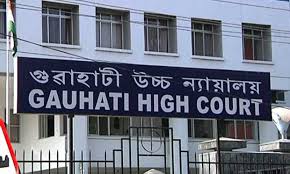
In yet another example of how challenging it has become for people to prove their citizenship, the Gauhati High Court has ruled that a school leaving certificate needs to be authenticated by providing the testimony of the issuing authority. The court ruled against the suspected foreigner in the case because she failed to get her school headmaster to testify to this effect.
It is well known that when it comes to providing proof of citizenship, the burden of proof lies on the proceedee instead of the prosecution. This is unlike proceedings in criminal cases where the accused is presumed innocent until proven guilty.
In the present case, Sahera Khatun provided12 documents to provide linkage to her ancestors. These included seven voters lists that contained names of her grandparents, parents and siblings along with her own. She also submitted a copy of her school leaving certificate from Omkar Sarkar School in Khatara. This certificate gave her date of birth as February 2, 1978. She also submitted certificates issued by two Gaon Burahs from Laruajan and Kanhara villages.
Additionally, her mother and brother also gave oral evidence. But their oral testimonies were discarded for lack of supporting documentary evidence. Moreover, her mother could not turn up for the cross examination. But a division bench of Justice Manojit Bhuyan and Parthivjyoti Saikia ruled, “We would observe that in a proceeding under the Foreigners Act, 1946 and the Foreigners (Tribunals) Order, 1964 the evidentiary value of oral testimony, without support of documentary evidence, is wholly insignificant. Oral testimony alone is no proof of citizenship.”
With respect to her school leaving certificate, the bench ruled, “Although an argument can be made that since the school in question at Exhibit-9 is a provincialised school and on that account the Certificate is admissible in evidence, we may observe that a document which is found admissible is not the end of the matter. The content of the same has to stand proved through the legal testimony of the Issuing Authority. In the present case the Headmaster of the school in question was not examined to prove the contents of the Certificate.”
Over the last two years, CJP has been bringing to you stories of people’s struggle to prove their citizenship, first in Foreigners’ Tribunals and then in the Gaujati High Court. The odds are against them, especially in case of married women who rarely have any documentary evidence as they are usually born at home in the village, rarely sent to school and then married of before their names are entered in the voter’s list. But even when they do have documents as in the case of Sahera Begum, they are made to jump through hoops and their families are dubbed “projected families” as if in a final insult to their injury.
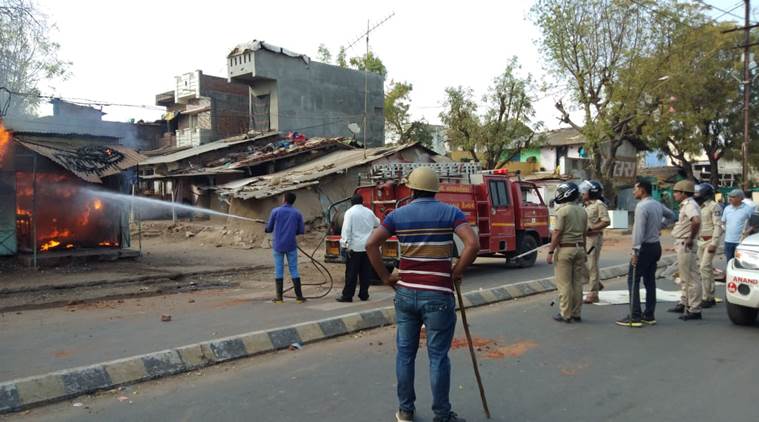
Gujarat’s coastal town Khambhat in Anand district too has been simmering in communal violence for two days now. On Tuesday, in a fresh round of violence, a mob set a house ablaze in the Mochiwad area of the town. There were no reports of anyone getting injured in the incident.
The matter seemed to have erupted after a public gathering that was organized under the umbrella of the Hindu Jagran Samiti, addressed by some local BJP leaders near the Gavara tower in the heart of the town.
On Sunday, the town had witnessed clashes between the Muslims and members of the Chunara community in Akbarpura which had left 13 persons, including four cops injured. A mob of 1,000 people was booked for illegal assembly, rioting, damage to public property, intentional insult with intent to provoke breach of peace, criminal intimidation, outraging religious sentiments, causing hurt by using acid and endangering life among other sections of the IPC in the clash where 30 houses and shops were set ablaze and a dozen vehicles were damaged.
Post the violence, 60 percent of the town has been declared to be ‘disturbed’ and placed under the Disturbed Areas Act for a period of five years starting Wednesday February 26, 2020 to February 25, 2025, forbidding any sale or transfer of immovable property during the period, reported The Indian Express.
The issued notification read, “The government of Gujarat having regard to the intensity and duration of riots and mob in respect to the areas of Khambhat town, is of the opinion that public order in the said areas was disturbed for a substantial period by reason of riots and violence of mob.”
District Collector Anand RG Gohil said, “This is for the first time that the Disturbed Areas Act has been implemented in Khambhat after the recent instances of riots and violence. Between 60 – 70 percent of the town has been covered under the Act, keeping in mind the sensitivity of the areas and to ensure and maintain a population balance of the two communities in these areas. The areas are a combination of both Muslim and Hindu dominated neighbourhoods. Prior to this on January 1, 2020, the Act was implemented in parts of Anand town.”
“For the past 10 years or so, there have been sporadic incidents of violence in the city. The reasons have been multiple and at times very trivial, including fights among children, during festivals and others. In most areas, people of both communities live in the opposite lanes and at times situations spiral out of hand at the slightest trigger. In 2011-12, I was here as the ADM and things were grim then. After that every now and then there have been such incidents in the city,” he added.
Post the incident, the Khambhat police has booked 18 political and religious leaders, including members of the right-wing Hindu Jagran Manch (HJM) for illegally organizing the public gathering and delivering inciting speeches, reported The Times of India. Four FIRs have been registered in the incident.
The offence was registered against BJP MLA Sanjay Patel, Khambhat BJP’s city unit president Pinakin Brahmbhatt, Yogesh Shah alias Saadi, Nanka Patel, Jayveer Jayraj Joshi, Nandkishore Brahmbhatt, Vishwanand Swami of Chhatardiwala Ashram, Hansa Shrigol from Hindu Jagran Manch (HJM), Nadiad unit president of HJM Ketan Patel, Vadodara unit president of HJM Niraj Jain, Dharmendrasinh Rathod, Kalpesh Pandit, Ashok Khalasi.
Councillor Raju Rana, former councillor Mangoo Shah, Rita Rana, a resident of Gandhrak Wado Balram Pandit and a resident of Gavara area Parthiv Patel have also been booked for the offence.
In another FIR, three accused including one Viraj Patel, Jignesh Chunara and Ishwar Macchi have been booked along with a mob of around 500 others for targeting houses in Mochiwad area of Khambhat on Tuesday afternoon.
According to the complaint registered, the BJP leaders and members of the HJM had called for a bandh on Tuesday and around 6,000 people had attended the public gathering at the Gavara tower area where inciting speeches were made. The report states that the cops had stopped the leaders from delivering their speeches and asked the crowd to disperse.
Divya Mishra, Superintendent of Police, Kheda had said that the exact reason of the clash was unknown and that they had rounded up 46 people in relation with the matter.
MoS Home Pradipsinh Jadeja at a press conference said that there were many reasons including “different food and tradition” that could have led to the clashes and that such incidents are happening due to changing demography.
Khambhat’s Akbarpura area had witnessed similar riots on January 24, again between the Muslim and Chunara communities that had left 15 cops injured and an elderly man dead due to the firing. Over 50 persons had been arrested then after 10 houses and shops were set ablaze and several vehicles left vandalized.
Khambhat was also an area that witnessed violence during the Gujarat riots in 2002 when 27 incidents of communal violence took place there starting February 28, 2002.
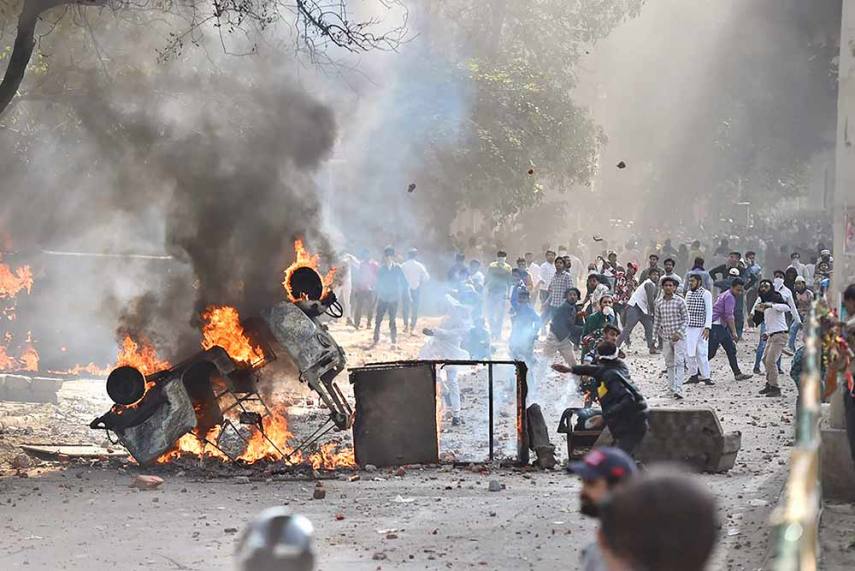
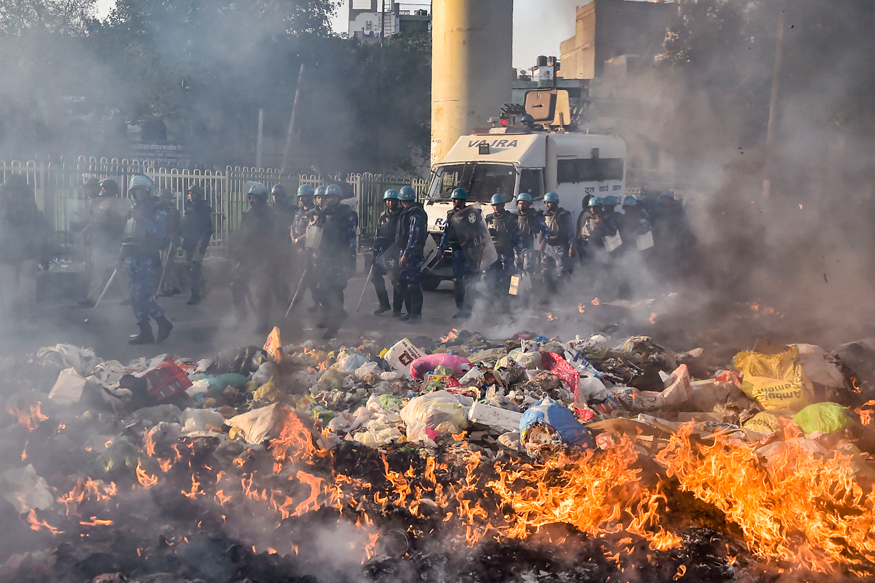
The death toll in Delhi touched 35 on Thursday afternoon after the government failed to curb the spread of mob violence in Delhi’s North East district. Reports of arson and destruction of property have only increased with homes and shops torched in many neighbourhoods.
But the shocker emerged when crates full of large stones as well as petrol bombs were found on the terrace of a property belonging to Aam Aadmi Party councilor Tahir Hussain.
While, Hussain insists that he had to flea the spot fearing a threat to his life, and that the weapons may have been placed there to frame him, police behaviour in the case is rather curious; first, they failed to cordon off the area, second news reporters were allowed to access the spot and even touch the contraband thereby contaminating evidence.
Hussain has been in the regime’s crosshairs ever since he was accused of killing Ankit Sharma, a 26 year old who was working as a security assistant with the Intelligence Bureau. His body was recovered from a drain in Jafrabad. It is alleged that he was lynched by a mob at the Chand Bagh bridge on Tuesday.
Meanwhile, Delhi Chief Minister Arvind Kejriwal held a high-level meeting where deputy CM Manish Sisodia and Minsiter Kailash Gahlot were present. The Delhi government has decided to provide relief materials to affected neighbourhoods.
Meanwhile a Congress delegation led by Sonia Gandhi and Dr Manmohan Singh met President Ramnath Kovind and handed him a memorandum with a list of demands, the chief among which is the removal of Home Minister Amit Shah.
It is clear that shoot-at-sight orders issued against rioters have failed to check the spread of violence proving once again that peace can never be achieved through violent means.
Amid the stories of gruesome violence and disruption of communal harmony coming in from the national capital New Delhi, it is heartening to see stories of hope too coming through, disrupting the narrative of intolerance and hate.
The good people at the heart of the violence have come out to help their anxious and fearful fellow citizens showing utmost respect for all religions and supporting each other through this trying time brought about by anti-minority elements.
Respect for all faiths: Saving the Holy Quran
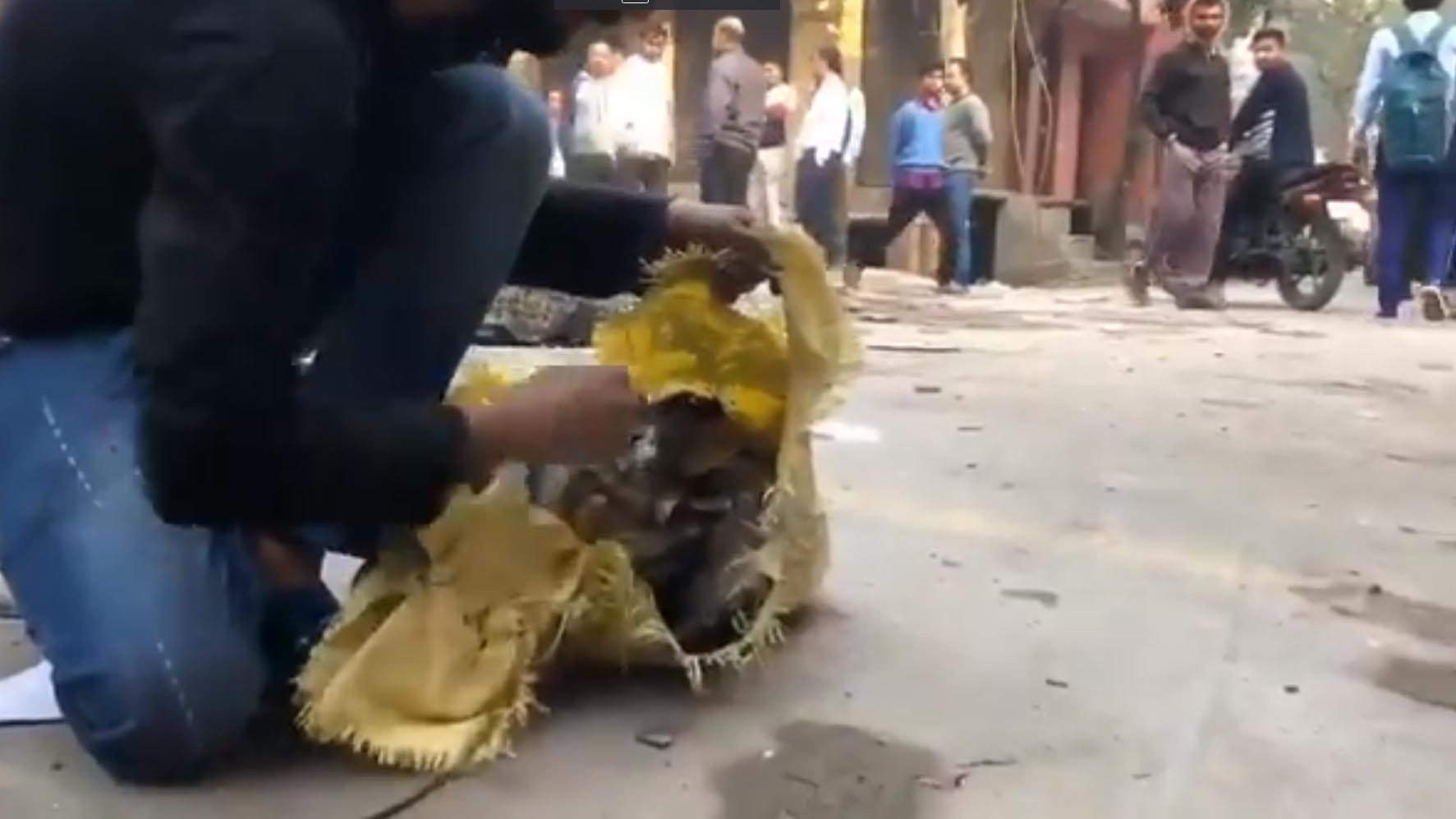
After vandalizing a mosque in Ashok Nagar, a man, allegedly from a fringe Hindutva group climbed atop its minaret and hoisted a flag dedicated to Lord Hanuman on it. The burnt pages of the Holy Quran that were strewn on the road post the damage, were then collected by members of both, the Hindu and Muslim communities.
Hindus and Muslims collecting burnt pages of Quran outside the Masjid that was vandalized in Ashok Nagar, Delhi yesterday.
At Chand Bagh, one of the worst affected areas in the violence, Muslim residents formed a human chain around a temple to save it from any damage.
Saleem (67) told the Indian Express, “It would have been shameful for us if the temple would have been damaged.”
Tabassum (30), another resident said, “We have ensured that nothing happens to the temple. We also ensured that no damage happens to the shops of our Hindu brothers.”
Some rays of hope: Delhi: Chand Bagh Muslims protect temple by forming human chain https://t.co/0qBtVEzjHW
In Maujpur too, members of the Muslim faith protected a temple in the area and stood guard in the area so that nobody could escalate violence in the area.
In Shiv Vihar, when a Hindutva mob ran amok to assault the minorities, a Hindu protected Asif and his family, reported Maktoob Media. For two days, the Hindu family offered shelter and have also suffered attacks once the Hindutva mob got to know of it saving the Muslims. Yet, unity and peace prevailed.
Escorting the fearful to safety
A group of Hindu men also helped Muslim women and other elders to move away from the centre of the violence safely. An elderly Muslim man who was attending a wedding in Gonda with his two grandsons which stood cancelled due to the violence there, was safely escorted out of the area by the group of Hindu youth who said that they didn’t believe in the Hindu – Muslim narrative and that they were all Indians and human beings first who were meant to protect each other from harm.
Ronak Chhabra, a journalist with Newsclick who was covering the incident, was attacked by a minority mob who were troubled by the media coverage they had been receiving. Thinking that Ronak was one of the journalists who belonged to the pro-government channels, they attacked him. Ronak heard them say, “They won’t show how the saffron flag bearers rampaged through our lanes.” “We don’t trust the media…”
However, he was saved by the same community that hurt him. He was rescued by two men, Faizan and Shoeb (name changed) who rescued him and assured him that he was safe. They told Ronak who was drenched in blood, “Nothing will happen to you. We will get you treatment.”
The men ensured that Ronak was taken to a clinic and treated for the head injury he had sustained. Shoeb, a compunder, treated him for his wounds while Faizan, a pharmacist called informed Ronak’s family and friends about his condition.
Faizan said, “We have been protesting since more than a month in a peaceful manner. We don’t want violence. We just wanted our voices to be heard.”
Protecting each other’s homes
At Indira Vihar, there are only 8 Hindu families live among 3,200 Muslim families. Amid the violence, three Muslim men sat guard at a Hindu temple to ensure no harm came to it. Not just that, the Muslims members helped the Hindus by changing the name plates of their homes, by either covering them up or writing Muslim names on it.
Delhi riots: How outsiders were kept at bay in this ‘island of peace’
In Mustafabad, a Muslim neighbour saved a Hindu resident from a violent mob. “Yehi sab the hamare sang,” said an elderly Hindu lady about the members of the minority community who ensured the safety of the area.
Hindu, Muslim Bhai Bhai!
People from the two communities also took out a Unity March pledging that they wouldn’t let the atmosphere of their area get affected or influenced by hatred.
Don’t wait for the Govt, Don’t wait for the Police, They are part of the problem.
We must take out peace & unity march like this in each & every corner of East Delhi. Show them we are ONE. Hindu-Muslim Ekta Zindabad. Hindustan Zindabad! pic.twitter.com/ybPukUhaiG
Chants of ‘Hindu Muslim Sikh Isai’ reverberated in narrow gullies as the communities got together to share a laugh and ease anxiousness during this tense atmosphere.
And as proven before that there is no better medium of unity than food, the two communities erupted in laughter as a Hindu brother said, “Biryani tum khilao, halwa hum khilayenge.”
“Biryani tum khilao halwa hum khilainge” people from different communities joined together to show unity in diversity amid communal violence in parts of Delhi. pic.twitter.com/ObYR5SSiUT
The Sikh community has opened its doors to Muslim families who have reportedly started leaving their homes out of the fear for their lives. The Majnu Tila Gurudwara has offered shelter to Muslims who have now been forced to leave the area. Other Gurudwaras too came forward to provide shelter to those who were in need of refuge, shelter and food.
Another heart rending story comes of Seelampur, one of the worst hit areas of the violence. There, the Dalit community blocked routes leading to Muslim localities and stood guard to prevent the entry of rioters in the area.
Activists too have come forward, making support groups and launching helplines for all those who are in need of ration and those who are anxious for their safety.
Since medical facilities are critical, we share the names of hospitals and doctors therein. Please send a DM for more details and we will get back. pic.twitter.com/oTdB7S7YZt
The most heart-wrenching story was of Premkant Baghel who literally jumped into fire to save his Muslim brothers and sisters after their house was set on fire by rioters. Premkant had already saved six people of the family, but his friend’s mother was still in the house. Premkant suffered burn injuries as he tried to save her. Because the Shiv Vihar area was in the midst of the violence, Premkant couldn’t avail an ambulance and suffered at home. His family members were not sure if he would survive the night. He was then taken to GTB Hospital the next morning where his condition is critical.
Both, Hindus and Muslims, have suffered indiscriminate horror during this violence. Reporters speaking to people at the epicentre have shown that people say it is the ‘common man’ who lost their lives and livelihoods.
While the police and the politicians did not step up to do their duty, it was the public who suffered the ‘targeted’ violence.
However, the examples of humans stepping beyond the deep religious divide only instil more hope in us that no matter how bad the situation, there will always be good people who will stand up for love over hatred.
The Allahabad HC on Monday directed the Chief Secretary Govt. of Uttar Pradesh to provide suitable compensation to 6 students who were grievously injured by the U.P. Police’s brutal and inhumane action upon the protesting students of Aligarh Muslim University on December 14 and 15, 2019.
The Court has acted promptly and so has the NHRC in conducting an enquiry and ordering relief, what has gone missing however, is accountability and punitive action against the erring personnel and those giving them orders.
The NHRC was directed by the HC on January 7, 2020, to initiate an inquiry into the matter. While the bench comprising Chief Justice Govind Mathur and Justice Vivek Varma observed that the NHRC was not a party to the writ petition filed by Adv. Mohd. Aman Khan(a practicing advocate of Allahabad HC and a former student of AMU ), it opined that it was best for the NHRC to look into the matter since it was already inquiring into a similar matter concerning excesses of Delhi Police upon the protesting students of Jamia Milia Islamia University, New Delhi.
In pursuance of the directions given by the HC on January 7, 2020, an inquiry was conducted by a six members team of National Human Rights Commission. The report submitted by the team has been accepted by the Commission. A copy of the report along with order of proceedings was sent to the HC by the Registrar (Law) of the National Human Rights Commission.
The Bench accepted the recommendations of NHRC in toto and ordered compliance reports to be filed by the next hearing fixed on March 25, 2020.
The recommendations made by the Commission are as under:
“Upon consideration of the facts discussed above, the Hon’ble Commission may be recommended to consider the following:
Directing the Chief Secretary Govt. of Uttar Pradesh to provide suitable compensation to the six students who have been grievously injured commensurate with their injuries, on humanitarian grounds.
Directing the DGP-Uttar Pradesh to identify the policemen (both district police and PAC), as seen in CCTV footages involved in stray incidents of damaging motorcycles and unnecessarily caning the apprehended students which has no bearing on the task of controlling law and order. A suitable action may also be taken against them as per rules and provisions that exist for subordinate officers in UP Police. The police force should be sensitized and special training modules be carried out to inculcate professionalism in handling such situations.
Similar directions as in point (b) above may also be given to the Director General, CRPF for RAF. RAF being a specialized force primarily set up to deal with riots and handle law and order situations, should show utmost professionalism in such crisis situations while at the same time, respecting the human rights of civilians also.
Directing DGP of UP, to ensure that the SIT set up vide his order dated 06/01/2020 investigates all the related cases on merits and in a time bound manner. The Hon’ble court may also like to set the time limit and periodic review, if any, for the completion of investigations on time.
The DGP UP and Senior Officers are also advised to improve and set up a robust intelligence gathering system. Special steps may be taken to counter rumour mongering and circulation of distorted and false news especially on the social media. This is to better control such law and order incidents which occur spontaneously and unexpectedly.
To direct the AMU-Vice Chancellor, Registrar and other authorities to establish a mechanism of better communication with the students’ fraternity so that they are not influenced by outsiders and rusticated unruly students. They should take up all confidence building measures to rebuild the trust of students so that such incidents do not occur in future.”
The approach taken by the HC in the present case may provide namesake relief to the injured students, however, the need of the hour is policing the UP police and the State Government which ordered the Rapid Action Force to carry out what clearly appears to be a brutal lathi charge, rubber bullet and pellet firing upon the protesting students.
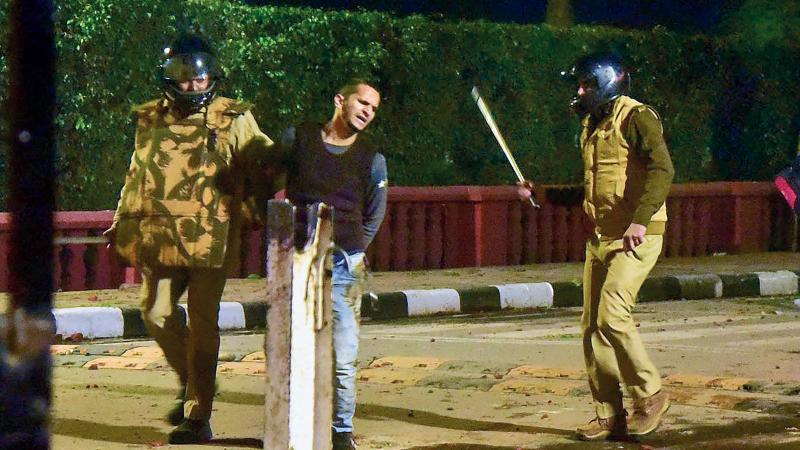
The contingent of police reportedly forcefully entered different parts of the Universityincluding library, hostels, classrooms, offices, etc. and brutally behavedwith students, consequent to that several students suffered serious injuries. The police officials reportedly, intentionally assaulted the students and alsovandalized the vehicles parked in the University campus near library. Thestudents in a big number were detained at different places by the Stateagencies and no medical aid was provided to them. The detained students were also alleged to be brutally tortured. On December 16, 2019, theRegistrar of the University issued notices to all the students to vacate thehostels though no reason was there to do so.
In its January 7, order, the HC observes that “Sri Colin Gonsalves, learned Senior Advocate while referring the observations made by the Supreme Court Extra Judicial ExecutionVictim Families Association and another Vs. Union of India and othersreported in 2017 (8) SCC 417 states that the inquiry or investigation bythe National Human Rights Commission is of civil nature and that too isnot an effective measure to bring the culprits of doing wrong to board.According to him, looking to the facts of the case, it would be appropriateto constitute a Special Investigating Team to investigate the entire matter.He has suggested names of three former Officer of Uttar Pradesh Police tobe nominated as member of the SIT.”
Even then, the HC preferred that an inquiry be done by the NHRC, which cannot initiate criminal action against the Police Personnel at fault. Also, the quantum of damages to be paid to the petitioner according to the NHRC recommendations to the HC are to be decided by the ‘Chief Secretary Govt. of Uttar Pradesh’. The rationale behind having the government itself decide the quantum of damages to be paid to those injured by its own doing seems unclear. Further, the compensation is to be paid on ‘humanitarian grounds’, which gives the impression of a charitable act on the side of the government, instead of being a punitive action for the offences unleashed by its officers.
Although the Court has accepted the recommendation of the NHRC to direct the DGP-Uttar Pradeshto constitute a Special Investigating Team to investigate the officers ‘involved in stray incidents of damaging motorcycles and unnecessarily caning the apprehended students which has no bearing on the task of controlling law and order’ and the same for the RAF as well, it would have been a welcome relief if the SIT could be constituted in a more independent method, and perhaps the names of former U.P. police officers recommended by Senior Counsel for the Petitioner could be considered for the same.
While 23 people in U.P. have died from bullet wounds at the hands of the UP Police, no personnel of the armed police has suffered any major injuries. This striking fact was put up by the Chief Justice to the Attorney General, when an argument was that the protesting students were violent and carried arms. The Police reportedly burned down a Hostel, thrashed over 100 students who sustained injuries, 3 of them are in critical condition, and 2 students had to have their arms amputated.
Independent fact finding reports on the incident prepared by NGO Human Rights Law Network (HRLN) and the jury of the People’s Tribunal on State Action in UP (Karwan e Mohabbat), ascertain that the police used rabid communal slurs against the protesters. The HRLN’s Report notes that “The entire incident is a shocking display of police brutality and impunity in the face of peaceful democratic protests by AMU students. The police actions seem not only brutal but also vindictive motivated by a desire to ‘show students their place’.
All witnesses we spoke to recalled the police was hurling insults and abuses of a rabidly communal nature at the students and the university at large. These communal abuses were being shouted even before they lathi-charged the protest, and only intensified as they moved further into the university, targeting individual students with their lathis, tear gas shells, rubber bullets and pellets.
At the first instance, it seems clear that the large scale violence carried out by the police and RAF forces was excessive, brutal and completely disproportionate to the stated objective of breaking up a protest. And the culpability for this large scale violence against peaceful students lies with the police and RAF as well as the university administration which allowed them in.”
The Court has acted promptly and so has the NHRC in conducting an enquiry and ordering relief, what has gone missing however, is accountability and punitive action against the erring personnel and those giving them orders.
The excesses of the UP Police and the Delhi Police against peaceful protesters and students should not be covered up in piece-meal relief orders of compensation. It is time that the Courts rap the knuckles of those in the Executive responsible for high handed actions upon the dissenting members of the public.
In a statement released on Wednesday, the United States Commission on International Religious Freedom (USCIRF) has expressed grave concerns about the ongoing violence in Delhi. The statement reads, “As President Donald Trump’s inaugural visit to India winds down, northeastern Delhi has been rocked by deadly rioting, with reports of violence and mobs specifically targeting Muslims.”
It goes on to add, “According to reports, several mosques have also been set alight or vandalized. Many Muslim residents have been forced to flee the area.”
Taking the bull by the horns USCIRF Commissioner Arunima Bhargava says, “The brutal and unchecked violence growing across Delhi cannot continue,” adding, “The Indian government must take swift action to ensure the safety of all of its citizens. Instead, reports are mounting that the Delhi police have not intervened in violent attacks against Muslims, and the government is failing in its duty to protect its citizens. These incidents are even more concerning in the context of efforts within India to target and potentially disenfranchise Muslims across the country, in clear violation of international human rights standards.”
USCIRF Chair Tony Perkins urged the Indian government to protect its minorities saying, “The ongoing violence we are witnessing in Delhi and the reported attacks against Muslims, their homes and shops, and their houses of worship are greatly disturbing. One of the essential duties of any responsible government is to provide protection and physical security for its citizens, regardless of faith. We urge the Indian government to take serious efforts to protect Muslims and others targeted by mob violence.”
But, the statement hasn’t gone down well with Indian authorities. Ministry of External Affairs (MEA) spokesperson Raveesh Kumar tweeted, “We have seen comments made by USCIRF, sections of the media and a few individuals regarding recent incidents of violence in Delhi. These are factually inaccurate and misleading, and appear to be aimed at politicising the issue.” He added, “Our law enforcement agencies are working on the ground to prevent violence and ensure restoration of confidence and normalcy. Senior representatives of the Government have been involved in that process. Prime Minister has publicly appealed for peace and brotherhood. We would urge that irresponsible comments are not made at this sensitive time.”
Meanwhile, the death toll has risen to 35, with many reports of targeted violence against minorities being reported from North East Delhi. These include destruction of homes, shops, vehicles and other property owned by minorities.
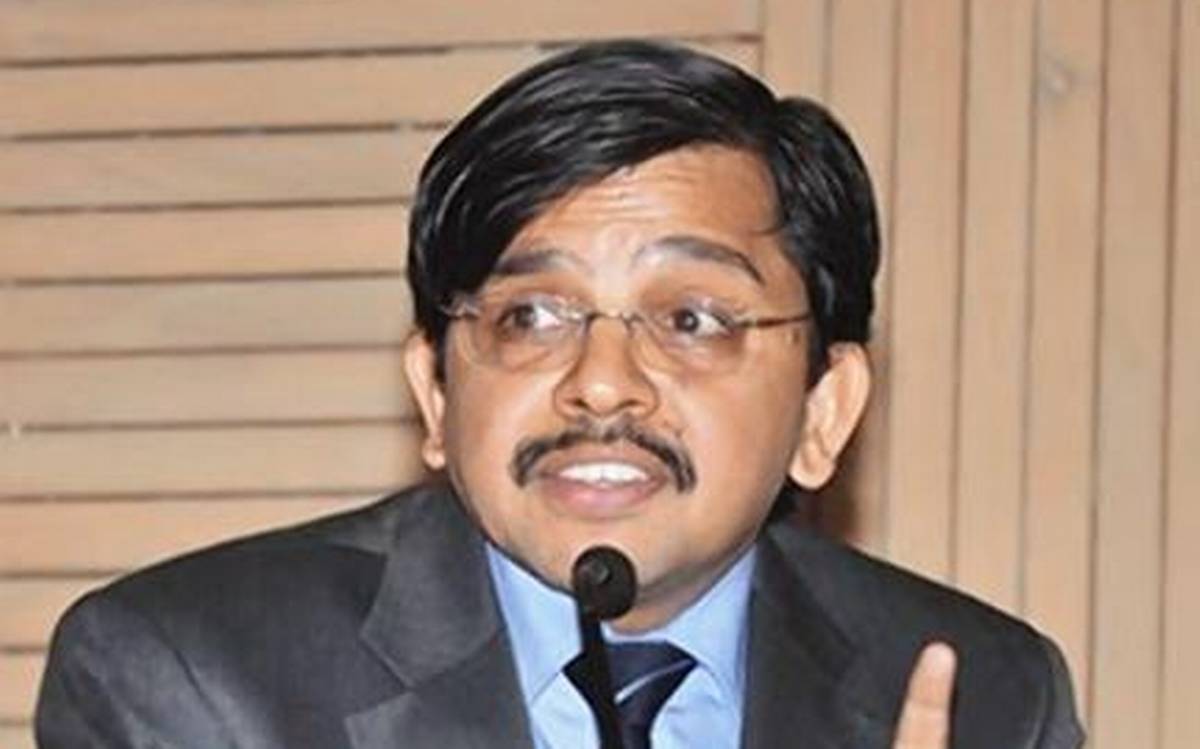
Justice Murlidhar, who has over an illustrious career, established himself as a hero of the oppressed and a friend of the people, now been made to pay the price for walking the path of justice. The Delhi High Court judge has now been transferred to the Punjab and Haryana High Court. The timing of his transfer is most curious given how over the last 24 hours he has helped secure justice for people affected by the widespread violence in Delhi.
On the intervening night between Tuesday and Wednesday, Justice Murlidhar convened an emergency hearing at his home along with Justice Bhambhani, when pleas to help ambulances safe passage to and from the Al Hind Hospital in Mustafabad area failed to elicit any response from the Delhi Police. It was an order past post-midnight by that directed police to provide protection to ambulances so that critically injured people could be taken out of the Al Hind Hospital and be taken to other medical facilities where they could get the more specialized care they required.
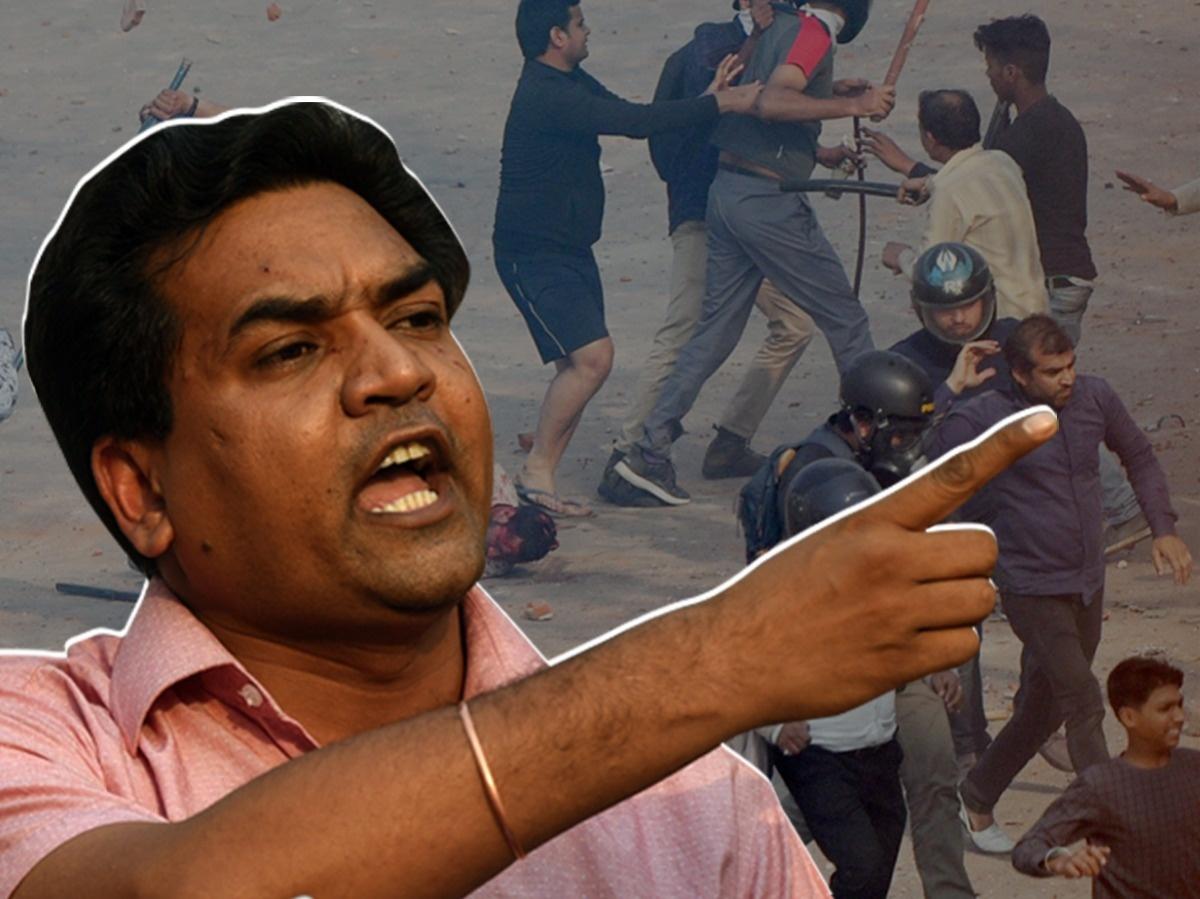
Then on Wednesday afternoon, it was Justice Murlidhar who ensured that a video showing controversial BJP leader Kapil Mishra issuing a chilling ultimatum to the Delhi Police to evict anti-Citizenship Amendment Act (CAA) protesters from near the Jafrabad metro station, was played before the Solicitor General Tushar Mehta as well as the police officer present in court. Murlidhar was hearing a petition seeking directions to the police to file and FIR against Mishra for using hate speech to incite violence. During this hearing he had also allowed for other videos of hate offenders such as Anurag Thakur, Parvesh Verma and Abhay Verma to be played before the court. He had also upbraided the Solicitor General for his remark that FIRs will be filed at an “appropriate time” wondering aloud if the moment wasn’t now. When proceedings concluded he had directed the Delhi Police to take a conscious decision about filing FIRs reminding them that failure to do their duty could lead to a serious miscarriage of justice.
The transfer
On February 19, the Supreme Court Collegium recommended Justice Murlidhar’s transfer from the Delhi HC to the Punjab and Haryana HC. This led to the Delhi HC Bar Association to conduct an emergency meeting where it was resolved to protest this move. They even resolved to abstain from work on Tuesday to showcase their displeasure.
In a statement, the Bar Association expressed their shock, dismay and outrage saying, “Such transfers are not only detrimental to our noble institution but also tend to erode and dislodge the faith of the common litigant in the justice dispensation system. Such transfers also impede free and fair delivery of justice by the Hon’ble Bench.”
Career and key judgements
At present Justice Murlihar is the third senior most judge at the Delhi HC. He started his law practice in 1984 in Chennai and in 1987 started practicing at the Supreme Court and Delhi HC. He worked pro-bono to secure justice for survivors of the Bhopal Gas Tragedy and those displaced by the Narmada dam. InMay 2006, he was appointed a judge of the Delhi HC.
Here are a few of his illustrious judgements:
·Decriminalisation of homosexuality in the famous 2009 Naz Foundation case
·Convicting Sajjan Kumar for his role in the 1984 anti-Sikh pogrom
·Convicting 16 policemen in the Hashimpura case
·He also stayed the transit remand for Gautam Navlakha in the Bhima Koregaon case in 2018 when activists were hounded by a vindictive state and accused of being ‘anti-national’ and ‘urban naxal’.
In light of all this, it appears that Justice Murlidhar is just being punished for daring to take on a regime that has zero tolerance for either defiance or dissent.
The video of Kapil Mishra issuing an ultimatum to Delhi police and suggesting that his people would take the law into their own hands should the police fail to evict anti-Citizenship Amendment Act (CAA) protesters from near the Jafrabad metro station, was played before the Delhi High Court today.
The video was played as the Solicitor General Tushar Mehta, who was representing the government of India, claimed that he had not seen the video. Justice Murlidhar who was hearing the matter then insisted that the video be played before the court. After the video was played and Mishra could be seen delivering the ultimatum while standing next to a uniformed policeman, the identity of the policeman in the frame was also revealed to be DCP (NE) Ved Prakash Surya.
Meanwhile advocate Rahul Mehra who was representing the government of Delhi took the opportunity to reiterate how it was the Ministry of Home Affairs and not the Government of Delhi that controlled the Delhi Police. He also said, “I don’t see any reason why FIRs can’t be registered. It ought to be registered against everybody. If they’re later found to be wrong, they can be cancelled.”
Thereafter, advocate for the petitioners, Colin Gonsalves also showed the court clips of hate speeches made by Anurag Thakur, Parvesh Verma and Abhay Verma, saying they had clearly incited people to commit hate crimes. He demanded their arrest. Meanwhile, SG Mehta kept insisting that the limited number of videos amounted to selective outrage and that harsh words or action against the police would demoralize them. Gonsalves told the court, “This is not a normal case. More than the FIR, police must state why the BJP leaders were not arrested.” He said that Sections 295, 295A, 153A, 154B of the IPC were applicable in the case.
Meanwhile, at the Additional Chief Metropolitan Magistrate Vishal Pahuja was hearing another petition moved by CPI(M) leaders Brinda Karat and KM Tiwari under Section 156(3) of the Code of Criminal Procedure (CrPC) regarding hate speech by Anurag Thakur and Parvvesh Verma. Interestingly, here the Delhi Police submitted their report saying that the complainant has made the presumption that speeches made by Thakur and Verma incited violence. According to Bar and Bench, the report said, “…incidents of violence…are independent act which did not have any connection to the speeches mentioned in the complaint.” Karat and Tiwari had sought directions to the Parliament Street Police Station to file FIRs against Thakur and Verma under sections 153A/153B/295A/298/504/506 of the IPC. The court has reserved it order till March 2 in this case.
Meanwhile, back at the Delhi High Court Justice Murlidhar wanted to know what was the “appropriate stage” that SG Mehta kept referring to for filing an FIR. The court then adjourned the matter till tomorrow asking the Delhi Police to take a conscious decision with respect to the registration of FIRs and report back tomorrow.