Wife of slain officer says with anguish, “Kill me!”

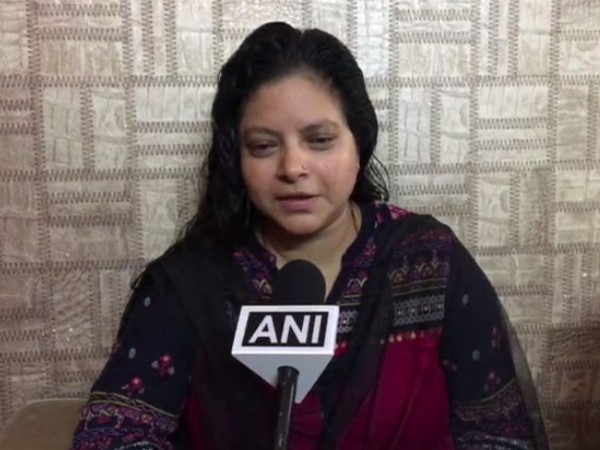
Image Courtesy: ANI
Reacting strongly to the bail granted to four of those accused of killing her late husband, IPS officer, Subodh Kumar, Rajni Singh said that the “government should kill her if they can’t imprison the criminals.”
“I am very upset that the accused got bail. Bail was not possible in this case. I am very upset with the justice system. What is happening is very wrong. I want to appeal to the government, kill me if you cannot punish the criminals then get me killed! Then there will be nobody to question the government and the government will not have to answer to anybody!” Ms Singh was speaking to ANI.
“This is very bad news for us,” said the slain IPS officer’s son, Shrey Pratap Singh. “They were prime suspects in the case and he (Yogesh Raj) was mainly responsible for what had happened. What guarantee is there that he will not indulge in such activities again? It is only eight months since the tragedy and they have got bail!”
Yesterday, the Allahabad high court granted bail to Bajrang Dal leader, Yogesh Raj and three. In less than three months after the UP government sanctioned sedition case against 44 jailed accused in the December 2018 Bulandshahr violence, the Allahabad high court on Wednesday granted bail to four accused, including Bajrang Dal leader Yogesh Raj, whose alleged role in instigating the locals had hogged national headlines. It was on December 3 last year, that the heated arguments between the police and the agitated men had taken place.
Last month, Sabrangindia had reported how after seven other accused were released on bail, the accused got a heroes welcome! In August 2019, seven accused in Bulandshahr violence, where an inspector was killed by a mob last year, were released on bail recently. The accused including one of the key conspirators Shikhar Agarwal got a hero’s welcome amid sloganeering of “Jai Shree Ram” and “Vande Mataram”. The video was posted on facebook.
Seven persons accused of the brute killing of police inspector and SHO, Subodh Kumar Singh, on December 3 last year were released on bail by the Allahabad high court on Saturday. The accused, Rajiv, Rohit, Raghav, Shikhar Agarwal, Jitendra Malik, Rajkumar and Sourav allegedly attempted murder, rioted and committed arson during the protests against cow slaughter on December 3 in Siyana, which led to the death of Inspector Subodh Kumar Singh. Agarwal, who headed the BJP’s local Yuva Morcha and posted a video along with Yogesh Raj, another accused, while in hiding, received a hero’s welcome outside the prison. Earlier too, Sabrangindia’s exclusive investigation had revealed how ‘social media’ had been used to plot the killing.
Videos of the accused being released emerged on Facebook and social media which showed the crowd chanting ‘Jai Shri Ram’ while welcoming Shikhar Agarwal and other accused with garlands and flowers. People in the video can also be seen hugging the accused as they leave the jail premises.
The gruesome killing of Subodh Kumar Singh in December last year had elicited a sharp response across India. Former civil servants demand resignation of UP CM Adityanath. They had said,”
“The mob violence in Bulandshahr in Uttar Pradesh (U.P), on December 3, 2018, instigated and engineered with malicious intent,which led to the cold blooded murder of a police officer brave enough to step forward single-handedly to pacify the mob, marks the most dangerous turn yet in the direction taken by the politics of hate in recent times. It shows that in India’s most populous state, Uttar Pradesh, fundamental principles of governance, of constitutional ethics and of humane social conduct stand perverted. The Chief Minister of the state acts as a high priest of the agenda of bigotry and majoritarian supremacy – an agenda which now seems to take precedence over everything else.
Why is this incident such a frightening indicator of the complete collapse of constitutional values? This is not the first instance of a situation intentionally created to foment communal tension. The history of U.P. is replete with such instances. This is not the first time that a policeman has been killed by a frenzied mob. This is also not the first time that the politics of cow protection has been used as a means of isolating and cornering the Muslim community and deepening the social divide.”
Our investigation published on December 6 had found how, the social media posts by the main accused Yogesh Raj, a member of Bajrang Dal and other posts show that the violence which claimed the life of police inspector Subodh Kumar Singh (SHO) and a student named Sumit, was pre-planned. Various news reports and social media posts paint a gory picture of the Bulandshahr violence that rocked Uttar Pradesh on Monday. The social media posts by the main accused Yogesh Raj, a member of Bajrang Dal and other posts show that the violence which claimed the life of police inspector Subodh Kumar Singh (SHO) and a student named Sumit, was pre-planned.
It had also come to light that a letter was sent by representatives of BJP and other Hindutva outfits to Bulandshahr MLA Dr. Bhola Singh on September 9, complaining about Inspector Subodh Singh. The written complaint spoke about how inspector Singh was creating obstacles in Hindu religious events and that people were angry with his interference. The ‘controversy’ that was deliberately generated was the Ijtema which is an integral part of the Tablighi Jamaat. Many Hindutva outfits questioned the validity and aim of holding the Ijtema and tried to incite hatred towards the organisers through social media.
Bail
Following the bail granted to seven accused in August 2019, the police reaction was ambivalent, given the offence was against a policeman on duty. “We respect the judgment of the honorable High Court. As per procedure, the bail has been granted on certain conditions which includes that the accused will not, in any way, attempt to influence the investigation. If they are found violating any such condition, we will file for their bail cancellation. Five accused facing section 302 (for Subodh Kumar Singh’s murder) have not been granted bail yet,” said Raghvendra Kumar Mishra, who headed the Special Investigation Team constituted to look into the incident.
According to the police, the lawyers of the defendants argued that the accused did not have any prior criminal record and that they are not prone to commit a crime if they are granted bail. Accused Yogesh Raj and Shikhar Agarwal released videos alleging innocence and witch-hunt by the authorities, while they were absconding. Jitendra Malik, an Army jawan who was allegedly part of the rioting crowd, was also granted bail. A charge sheet against 38 accused was filed on March 2 in which five people were charged with the murder of the Inspector.
“The police have clubbed Sumit’s murder with the rioting and police officer’s murder in the same investigation. The police should investigate that (Sumit’s murder) separately,” said Sanjay Sharma, the lawyer representing Jitendra Malik and three others.
On December 3, Bajrang Dal activist Yogesh Raj and several other accused protested outside Chingrawait police booth against an alleged incident of cow slaughter in Siyana. Siyana SHO Subodh Kumar Singh tried to control the crowd but riots broke out soon. During the violence, one of the accused shot Subodh Kumar Singh with his service revolver. One of the protesters, Sumit, was also shot dead by the police officer, allegedly in self-defence.
This is not the first time that the social media has been misused by allies of the ruling regime to justify this crime. Earlier, Hindutva organisations Bajrang Dal and Vishwa Hindu Parishad had put up posters in Uttar Pradesh’s Bulandshahr district that carry a photograph of local Bajrang Dal leader Yogesh Raj wishing the public on Makar Sankranti and Republic Day.
Yogesh Raj, the main accused in the December mob violence in Uttar Pradesh’s Bulandshahr in which a police officer was killed, was featured in Bajrang Dal posters across the region.
On these posters by Bajrang Dal and Vishwa Hindu Parishad, Yogesh Raj “wishes” people on behalf of the two organisations on the occasion of Makar Sankranti and the upcoming Republic Day celebrations.
The wishes came on the behalf of Praveen Bhati and Yogesh Raj whose title is mentioned as District coordinator. Defending the move, Bajrang Dal’s Assistant Regional Convenor Praveen Bhati told News18.com, “There is nothing wrong in putting up such posters as Yogesh Raj is the local convenor, and just an accused. He is yet not guilty.” Bhati also features in the poster.
The second application for bail, filed a month later, was solely of Yogesh Raj. The order could not be accessed by TOI but Tiwari confirmed the bail of Yogesh as well. All the accused have been granted bail in other crimes pertaining to the incident including an attempt to murder and dacoity.
It may be noted that a local (Bulandshahr) court of the chief judicial magistrate had already granted bail to seven of the accused, including Shikhar Agarwal, Jeetu Fauji, Kalua, Sachin Kumar, Hemu, Rohit Raghav and others on August 13. Shikhar was heading the district unit of Bharatiya Janata Yuva Morcha, the youth wing of BJP.
Yogesh Raj and BJP youth wing leader Shikhar Agarwal were accused of instigating crowds and later played hide and seek with police by uploading videos on social media claiming their innocence. Yogesh was finally arrested on January 3 while Agarwal was nabbed from Hapur on January 10 this year.
It may be noted, on March 6, 2019, after police had filed the chargesheet, including the sedition charges, under IPC section 124 A, the CJM court had pulled up investigation officer Mishra as to “Why sedition charges were applied without the approval by the state government.” Reacting to the development, Mishra had replied back then, “The court had sought clarification as to why IPC section 124 A was slapped without government approval. We have informed the court that at the time of filing of the chargesheet the permission had not yet arrived and we will submit the same moment we receive it in writing.”
Later, in June, the UP government had granted the sanction and on June 28 the then circle officer Khurja and investigation officer in the case Raghvendra Mishra had deposited the letter of sanction in the court.
Related Articles:
- Opinion: When a Hindu got caught in the Bulandshahr cow slaughter crossfire
- Bulandshahr violence: Main accused Yogesh Raj sends wishes in Bajrang Dal’s Sankranti and R-Day posters
- Bulandshahr violence: BJP youth leader who blamed Subodh Kumar Singh for violence arrested
- Bulandshahr violence: Main accused Bajrang Dal activist Yogesh Raj arrested
- Naseeruddin Shah & backlash for Hijacked Political Narrative of Muslims
- Bulandshahar incident: Former civil servants demand resignation of UP CM Adityanath