Email: sabrangind@gmail.com

Please, refer to the information pic.twitter.com/N90uUUiMZl
— NRC Updation Assam (@NRCupdateAssam) June 12, 2019
Today, at around 7:15 am, an eight-member team of the Maharashtra police once again raided the Bagaicha campus in Namkum near Ranchi, the residence of 83-year old Stan Swamy, a well-known activist of Jharkhand. The police searched Stan Swamy’s belongings for about 3.5 hours. They seized Stan Swamy’s hard disk and internet modem and forced him to give his email and Facebook passwords. Thereafter, they changed the passwords and seized these accounts. The Maharashtra police had raided Stan Swamy’s residence last year as well on August 28, 2018 as well.

Stan Swamy works for the rights of Adivasis and other underprivileged groups in the state. Among other issues, he works on displacement, corporate loot of resources, the condition of undertrials and PESA. He has been a vocal critic of the government’s attempts to amend land laws and the land acquisition act in Jharkhand, and a strong advocate of the Forest Rights Act, PESA and related laws. Known as is an exceptionally gentle, honest and public-spirited person, this repeated targeting iof him has shocked many.
The central government and media houses close to the BJP claim that the human rights activists were part of a Maoist conspiracy related to the Bhima-Koregaon incident. This concocted story seems to be part of a larger propaganda, based on terms like “urban naxals”, aimed at stifling any criticism of the government. The raids and arrests are part of the government’s growing attempts to stifle dissent and intimidate those who are fighting for justice.
Activists have demanded an immediate end to the raids, dropping of all false charges against human rights activists across the country and release of those who are arrested. They have also alleged that these harassments are politically motivated and wholly unjustified.
Related Articles:
Fr. Stan Swamy: The Jharkhand Priest who made People his Religion Human Rights Defender Profile

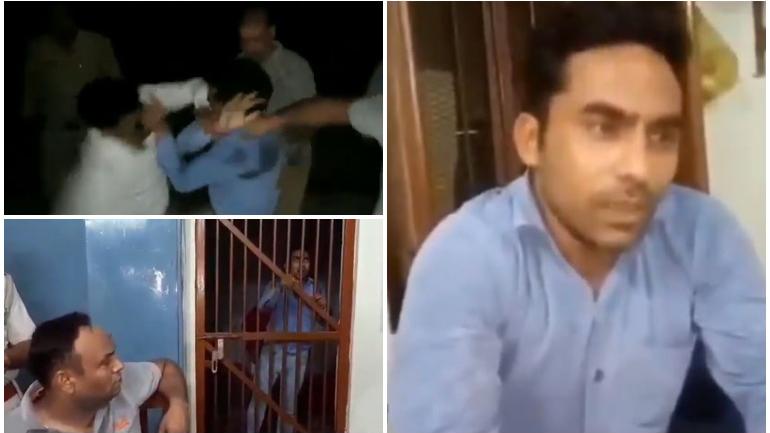
In a video that has gone viral, it can be seen that two police officials in plain clothes are beating Sharma and even verbally abusing him. Not stopping there, they even purportedly urinated in his mouth. The incident took place the previous night when he was shooting the derailment of a goods train in Shamli.
#WATCH Shamli: GRP personnel thrash a journalist who was covering the goods train derailment near Dhimanpura tonight. He says, “They were in plain clothes. One hit my camera&it fell down. When I picked it up they hit&abused me. I was locked up, stripped&they urinated in my mouth” pic.twitter.com/nS4hiyFF1G
— ANI UP (@ANINewsUP) June 11, 2019
As reported in the NDTV, Amit Sharma, a stringer for TV channel News24, said “They were in plain clothes. One hit my camera and it fell down. When I picked it up, they hit and abused me. I was locked up, stripped and they urinated in my mouth.”
Several local journalists rushed to the police station on learning about the incident and reportedly contacted senior officials at the police headquarters after which Sharma was released this morning. Sharma has also alleged that one of the personnel, GRP Shamli, Rakesh Kumar, had a grudge against him due to a previous story covered by him. Coming out of the lock up, Sharma said, “10 to 15 days ago, I had done a story on them. The mobile phone that they snatched from me had the footage of the story.”
Uttar Pradesh police has taken cognisance of this incident and have suspended the two accused. The UP police tweeted, “We have come across a video where a journalist has been beaten up & put up in a lock up. DGP UP OP Singh has ordered for immediate suspension of SHO GRP Shamli Rakesh Kumar & Const. Sanjay Pawar. Stricter punishment shall be accorded to policemen misbehaving with citizens.”
This unfortunate incident comes just a few days after another journalist, Prashant Kanojia, was arrested by the UP police for allegedly defaming the UP CM, Yogi Adityanath. Yesterday, the Supreme Court granted him bail.
Freedom of speech and the press forms the basis of any democracy. Lately, these freedoms appear to be under grave threat!
Related Articles:

Shutterstock
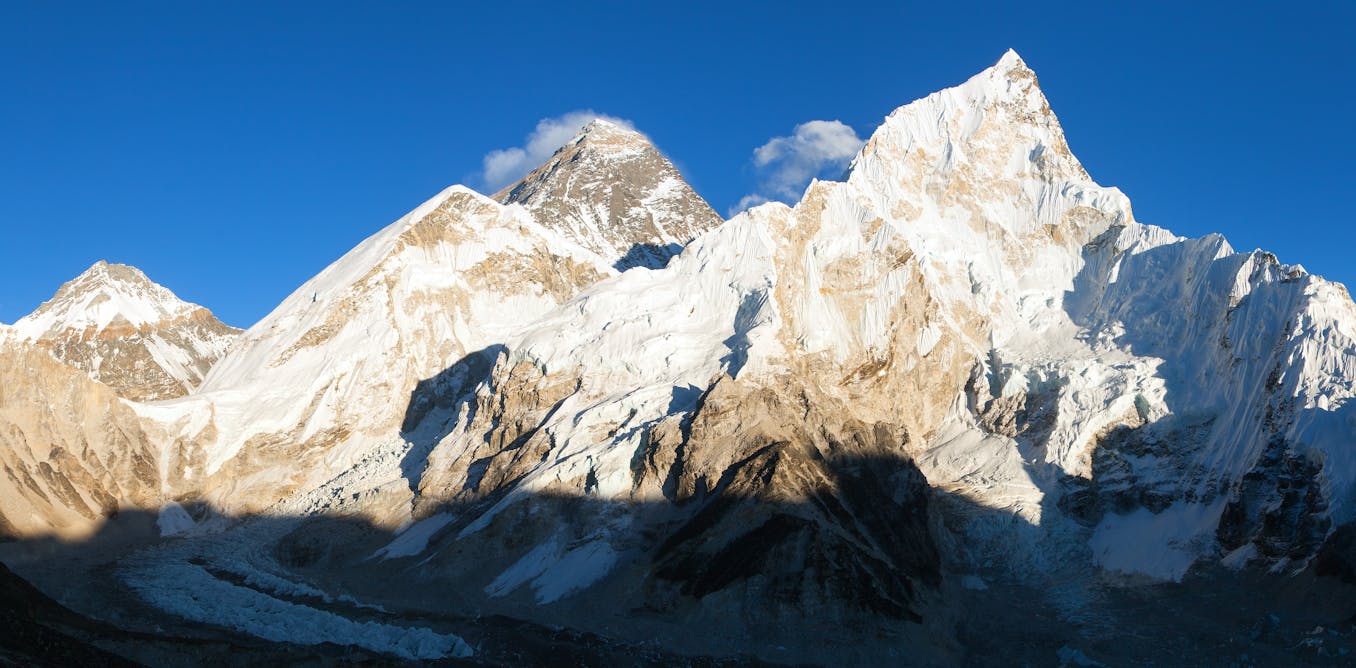
After the conquest of Annapurna and Everest in the 1950s, mountaineering became popular among the more privileged. But in the past two decades, mountaineering has taken on a increasingly commercial angle with disastrous results.
Experts report that aside from a very short weather window to climb Everest this season, a new generation of guides offering cheap expedition rates attracted a rash of novice mountaineers, which contributed to the high number of deaths. Those inexperienced climbers, some of whom had only climbed Mont Blanc (4,810m) and Aconagua (6,962m), should not have been there.
Until the beginning of the 21st century, mountaineering was an exclusive activity accessible only to a few. Twenty years later, despite being a high-risk activity that requires a high level of specialised skill, its popularity among recreational climbers has drastically increased.
Climbing legend Reinhold Messner once said that for a fee, “almost anyone could brave a top-class peak” – meaning regardless of skill, ability or experience.
Many modern mountaineers are attracted by the Seven Summits Challenge, introduced by Messner in the 1980s, with the aim of climbing the highest peak on every continent. Cashed-up adventure tourists lured by the challenge face expensive mountain expedition packages – from £3,000 for Aconcagua and £30,000 for Everest.
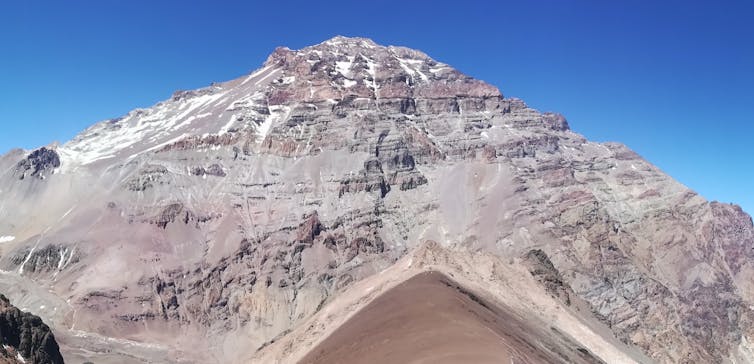
Aconcagua in the Argentinian Andes is the second highest of the Seven Summits after Everest, and one of the cheapest to climb. The number of climbers attempting Aconcagua has increased by 400% since 1990 – 4,000 people a year now push for the summit.

Mount Aconcagua in Argentina. Yana Wengel, Author provided
Our current research project focusing on mountaineering tourism shows that this recent trend can be explained by the transformation of mountaineering from personal exploring to a commercial guided-tour industry which is capitalising on better accessibility to big mountains, affordable transportation and more advanced equipment. This boom in commercial adventure sports means “real” mountaineers are often outnumbered by tourists whose ambitions exceed their climbing skills.
Although technically Aconcagua is not considered a difficult climb, it reaches a high altitude, where climbers struggle with low humidity, low oxygen and severe winds, so the summit success rate is 30-40%.
In February 2019, we spent three weeks at Aconagua’s base camp, where rangers told us that the popularity of the mountain has triggered an increase in accidents and fatalities. But reinforcement of safety measures implemented over the past five years have minimised casualties, averaging two to five deaths a season – with no deaths in 2019 so far.
Such measures include climber check-in and medical checks at ranger stations, and the availability of doctors and rescue teams up to 5,500m. Our interviews with rangers, guides and porters reveal that accidents are associated with an high number of inexperienced climbers who often carry insufficient equipment and underestimate the difficulty and risks of a high-altitude mountain environment. The question is, should everyone be allowed to climb any mountain they decide to?

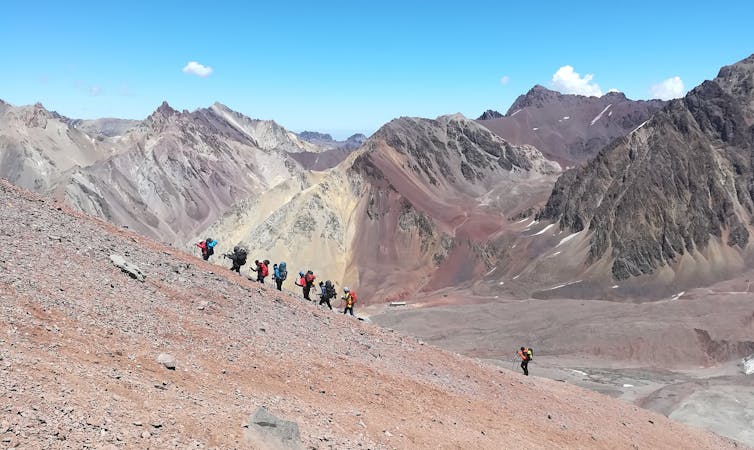
A commercial expedition heads up to Nido de Condores at 5,550m on Aconagua. Yana Wengel, Author provided
Many recreational mountaineers opt for package expeditions, relying solely on the experience of service companies and the help of porters and guides. Without this professional support, they would fail. The paradox of modern mountaineering is that the provision of necessary expedition support and all-inclusive packages also encourages inexperienced climbers who wish to reach the desired summit at any cost, putting others at risk.
Of course even the most skilled mountaineers need logistics and local support on the world’s highest peaks. But experienced climbers possess the knowledge, skill and strength to reach the summit – and often rely on themselves as far as possible. But their achievements, together with the “all-inclusive” adventure tourism industry, lull inexperienced climbers into a false sense of security about what they are capable of.
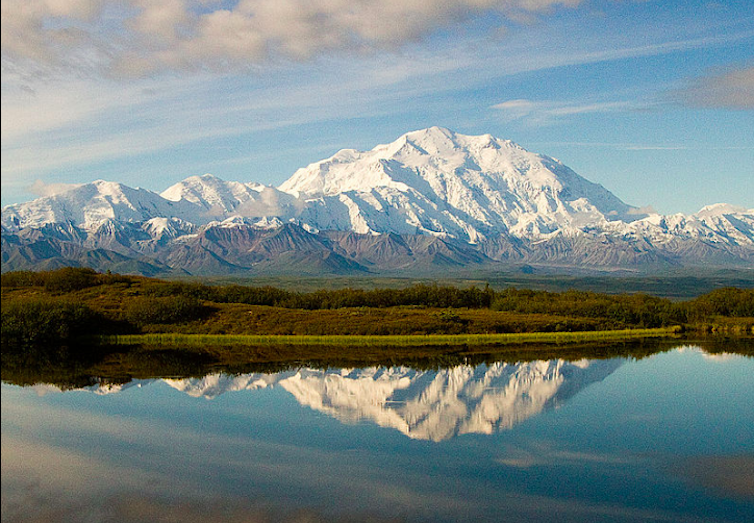
Each country manages climbing permits in different ways – and only a handful of authorities check mountaineering experience seriously. To climb Alaska’s Mt Denali (6,190m), the highest peak in North America, climbers are required to have advanced mountaineering skills along with backcountry winter camping experience.
Only seven mountain guide companies are authorised to lead expeditions on Denali and solo climbers need to prove their mountaineering experience to obtain a climbing permit. This strict control minimises the risks to climbers and the impact on the environment, allowing sustainable management of expeditions without casualities – which was achieved in 2018.
Other countries have much looser requirements. The New York Times reported that to get a climbing permit for Everest all a climber has to do is submit a copy of their passport, limited biographical data and a certificate of good health.

Mt Denali in Alaska has strict conditions regarding experience when it comes to issuing climbing permits. Denali National Park
Climbing a mountain is mentally and physically demanding. Climbers need to have good ethics – such as taking responsibility for their actions, respecting local climbing traditions, taking care with the environment and so on – proper equipment and real mountaineering experience. In our view high-altitude climbers should be required to demonstrate a standard of experience to obtain a permit. But mountaineering is a lucrative industry and brings huge amounts of money to often impoverished local economies. Over the years, overcrowding and safety issues have become a serious problem.
Mountain tourists lack the experience and the requisite attributes to summit difficult peaks. This foolhardy arrogance can lead to tragedy, as we saw on Everest this year. The global mountaineering community needs to call for specific conditions of ability and experience be met when issuing permits for high-altitude mountain expeditions. It has to be about more than simply being able to afford to take on the world’s most difficult peaks.
But how do we achieve that? Who is responsible for managing modern mountaineering in a safe, responsible and sustainable way? If we don’t address these issues, avoidable tragedies caused by commercialised mountaineering will continue to appal the world.
Courtesy: The Conversation

Long ago, in a memorable poem, Robert Frost guessed that there was a human need to bring the moods of the world into conformity with our moods:
“Tree at my window, window tree,
My sash is lowered when night comes on;
But let there never be curtain drawn
Between you and me.”
He says he has seen the “head” of the tree “taken and tossed” in rough weather, as his own head was “taken and swept” by a dream. This resemblance between the world and himself somehow added to his interest in life:
“That day she put our heads together,
Fate had her imagination about her,
Your head so much concerned with outer,
Mine with inner, weather.”
This sense of the human place in the fabric of nature — that there may be a deep connection between inner and outer weather — is starting to seem a thing of the past.
Can we still have inner weather when the outer weather changes so regularly and drastically? When 500 tornadoes rip through the country from Kansas to Pennsylvania in a matter of weeks? Or when 875,000 California acres burn down in the course of a summer? Rather than hear the message, we look into our smartphones or at our computer screens whose backgrounds may include breathtakingly lovely pictures of the planet — photos that show how beautiful a place it has been. As if we could have this Earth forever in reach, as if we could preserve it with a password or, by logging off, exchange it for another as lovely.
What Benjamin Franklin is rumored to have said about the American Republic is now true of the planet as well: we have a world, if we can keep it. But so much of our interest is directed elsewhere — to the work of “renaming,” for example. There are scholars who think that by christening our age the Anthropocene, they are putting the fires and floods under a microscope. But does this human-centered word do much more than carve a new channel for pride? (“Just look around! It’s all us!”) The world, it seems, has become but one more link in the cyber-human chain by which we exit our natural bodies and turn into something rich and strange.
Greenhouse effect, global warming, climate change, climate disruption. Think of the succession of words we’ve used to describe the gradual onset of catastrophe and you see at once how inadequate words can be. In our time, corporate lingo has even rendered “disruptive” an admiring adjective for tech innovations on a par with “transformative.” Think back to the way “creative destruction” was used in an age of trickle-down economics — the message was that the economic damage to so many people signaled a corporate creativity that would make the crooked places straight. Never mind the “destruction” part — the victims would find their recompense at a higher level.
The destruction always seems to be happening elsewhere. Of course we know better. The issue that should dwarf everything in sight today is planetary climate destruction. It’s happening in plain sight and all around us, and most of us clearly can’t bear to think about it. Why not? Because we are creatures of habit and immediacy, because the imagination can’t fix for long on a distant and unbearable future. Habit disposes us to normalize the abnormal. It’s a human propensity as natural as the protective mechanism that helps us not get stopped in our tracks by the painful things we did or suffered.
Lurking under the exhaustion, the unraveling, even the obliteration of nature is our awareness of another danger we have long grown used to denying. For there is a second way that organized society could be brought to an end: nuclear weapons, which require a kind of international control we haven’t begun to imagine. To make much headway there, the world’s sole remaining superpower would have to change its focus and drop all those other warswe’re in. Few people can remember how we got into them, and even fewer (National Security Advisor John Bolton, Secretary of State Mike Pompeo, various Washington warriors and think-tank adepts) want them to continue, but these wars too have become a habit, a kind of addiction. Evidently we’ll keep on fighting them unless something very big stops us.
War Parties and Other Distractions
In another remarkable poem, Robert Frost wondered whether the world would end in fire or ice. Destruction by fire, the poem suggests, may be the offspring of desire — the desire, above all, for power of a sort that keeps nations on the uneasy brink of war. However, as the poem goes on to say, cold indifference or hate could also bring an end to life on this planet:
”But if it had to perish twice
I think I know enough of hate
To say that for destruction ice
Is also great
And would suffice.”
There could hardly be a surer allegory of our moment. The fire of the poem can stand in for our multiple wars and the shadow of nuclear cataclysm. And ice? Arctic sea ice is melting more rapidly than expected, as are the Antarctic ice sheets and glaciers everywhere. As they do, the sea level rises. Think of the ice as a premonition of the flood. And yet (naturally enough) these matters are off limits in polite conversation. We are kept on a steady course of avoidance by a wish for things to be normal. Perverse as it sounds, nothing is more normal than the next round of daily news about a bad man who is also big and crazy and (confess it) bizarrely fun to watch. The race to fetch and carry news about you-know-who helps us cling to a present that resembles the cartoons and comic books of the past.
Everyday politics is filled with distractions. On March 26th, for example, The Hill reported that Mitch McConnell had affirmed climate change is a human-caused phenomenon. Did he really believe that? “I do,” he insisted, but the problem ought to be attacked in a reasonable state of mind: “The way to do this consistent with American values and American capitalism is through technology and innovation.” So the Republican senate majority leader offered a Republican “solution” to global warming. Let the vested interests — Big Banks, Big Energy, Silicon Valley — join forces and solve it together. These things always get done eventually, don’t they? As if on cue, from the minority leader of the Senate, there emerged a classic Democratic solution. Chuck Schumer said that the Senate ought to form a committee and investigate.
Another day, another distraction: the chairman of the Joint Chiefs of Staff, General Joseph Dunford, reported last month that Iran was engaged in an unprecedented “campaign” against the United States, a campaign revealed by his scrutiny of “multiple threat streams that were all perhaps coming together in time.” The evidence on which his estimates were based appeared to be of Israeli provenance — a source that (on this subject particularly) many Americans have learned to distrust. About the same time, former Boeing executive Patrick Shanahan, who for the last half-year has served as acting secretary of defense, suggested that the president “doesn’t want a war with Iran.” Yet statements by Secretary of State Pompeo and National Security Advisor Bolton can hardly be said to bear out that claim. In a 2017 speech to MEK, the Iranian insurgent-terrorist group, John Bolton confidently predicted that “regime change” in Iran was imminent. Last month, he promised a similar insurrection in Cuba. Bolton’s past behavior shows a consistent preference for war over other possible methods of undermining and destroying a foreign government.
Occasionally, a more hopeful distraction appears on the horizon. Just the other day, the Democratic presidential candidate Kirsten Gillibrand tweeted: “Our future is female. Intersectional. Powered by our belief in one another. And we’re just getting started.” In America, however, that prophesy is open to various interpretations. When it comes to the future and female leaders, consider the curriculum vitae of Condoleezza Rice, who served as national security advisor and later secretary of state for President George W. Bush and has since emerged as the leading name in the strategic consultancy firm RiceHadleyGates. It’s an upmarket outfit, all of whose partners had a role in creating, widening, or protracting the never-ending war on terror and none of whom has been chastened by her or his experience of disaster. RiceHadleyGates’s online bumpf assures you that the firm.
“works with senior executives of major companies to develop and implement their strategic plans and help companies expand in major emerging markets, including Asia, the Middle East, and the Americas. In addition, we assist companies dealing with the national security and foreign policy challenges associated with offering sophisticated technologies, products, and services in these overseas markets.”
So the apostles of destruction by fire, female or otherwise, continue to reap their reward in status as well as hard cash.
And they have plenty of company. In the age of Trump, the war party of 2003-2006 has been resurrected behind the scenes. It can claim both a neoconservative and a neoliberal wing. Though in different tones of voice, both promote a return to American world leadership by force of — the polite word is “democracy” but the reality is, of course, ever-advancing strategic and tactical weapons systems in a Washington where the Pentagon budget grows more swollen every year. The neoconservative wing of that party, the Alliance for Securing Democracy, has on its board former Secretary of Homeland Security Michael Chertoff, former Republican congressman and chairman of the Select Committee on Intelligence Mike Rogers, and the neoconservative editor and columnist Bill Kristol. The neoliberal think tank, National Security Action, includes Barack Obama’s speechwriter Ben Rhodes, along with Obama’s national security advisors Tom Donilon and Susan Rice and the intervention strategist Anne-Marie Slaughter. Jake Sullivan, who was in line to be Hillary Clinton’s national security advisor, sits on the advisory council of the first group and serves as co-chair of the second.
All of these people are pushing for a full-scale global renewal of liberal hegemony, supervised by the United States. The neoconservatives may look for regimes to topple, the neoliberals may prefer trade deals, but count on one thing: former officials and retired generals have already created a fresh environment in which they can safely mingle, brainstorm, and divvy up the world.
These people are the spiritual descendants of Alden Pyle, the “innocent” protagonist and title character of Graham Greene’s 1955 Vietnam War novel, The Quiet American. “I hope to God you know what you are doing there,” the English narrator Thomas Fowler says to Pyle. “Oh, I know your motives are good; they always are. I wish sometimes you had a few bad motives; you might understand a little more about human beings. And that applies to your country too, Pyle.” After a plastic explosive goes off in a public place and kills the wrong people, Pyle says of the dead civilians: “They were only war casualties. It was a pity, but you can’t always hit your target. Anyway, they died in the right cause.” A little later he adds, “In a way you could say they died for democracy.” Fowler replies: “I wouldn’t know how to translate that into Vietnamese.”
From our continuing failures, we can always be distracted by the memory of past glory — even when we know that the memory is largely counterfeit. George Packer’s recent biography of the American diplomat Richard Holbrooke, Our Man, offers a proof of the method. Holbrooke was the finest flower of the U.S. foreign policy elite in the late twentieth century. He worked on the pacification program in Vietnam for the Agency for International Development, served as assistant secretary of state under Jimmy Carter — where, among his other duties, he facilitated the Indonesian occupation of East Timor — broadened his credentials for a decade on Wall Street, returned to public service as the Clinton administration’s Balkan envoy and U.N. ambassador, and became at last a venerated but powerless authority on “global reach” as President Obama’s special representative for Afghanistan and Pakistan.
Vietnam, Iraq, Afghanistan: Holbrooke supported all three of those disastrous wars in public, while reserving any guilty doubts for his private conversations and his diary. In non-diplomatic language, he was a careerist and a serial dissimulator, but Our Man contrives to elevate and almost pardon him because he did it in an idealistic cause, while seeking to preserve the façade of benevolent motives on which the reputation of his country depended. And he had to his credit one celebrated achievement: the Dayton Accords of 1995, which temporarily settled the conflict between Serbia and Croatia. This led to the 11-week-long bombing of Yugoslavia in 1999, which was said to have reasserted the “international norms” that NATO and the West stood for. The success of that mission would later be held up as a model for the anticipated success of the bombing, invasion, and occupation of Iraq.
Holbrooke politicked hard to get a Nobel Prize that never came his way for the Dayton Accords. As it turned out, the most lasting consequences of his actions in 1995 and his advice in 1999 have been the dismantling of Yugoslavia and the creation of Kosovo as a drug-warlord state. His biographer tells us that he was a charmer to some, an obnoxious self-promoter in the eyes of others. Even so, “our man” is praised in this account (with a touch of elegiac pathos) as one of the “almost great” American figures we ought to remember with respect and affection — the hero of a lost world of big ambitions and good intentions.
As Packer sees it (and many foreign-service and combat journalists would agree), America’s faults have only been Holbrooke’s faults, writ large. “After all,” he writes,
“we Americans have never been good at managing the internal business of other countries. We’re lousy imperialists. We’re too chaotic and distracted — too democratic. We don’t have the knowledge, the staying power, the public support, the class of elites with the desire and ability to run an empire. And we rarely have the moral standing we imagine.”
The last sentence is careful to guard the author against any imputation of nostalgia for American hegemony, but in a sense the caution is unnecessary: in this account, the evil that we wrought came from incompetence, not malignity.
Still, look at the words again: “we rarely have the moral standing we imagine.” It is the mildest of rebukes. Go to the back of the class, it says; get things right the next time. To see what is missing from such a judgment, compare the uninflected plainness of a sentence in John Mearsheimer’s book The Great Delusion on the consequences of U.S. actions in Afghanistan, Iraq, Egypt, Libya, and Syria. “Not only has the United States failed to protect human rights and promote liberal democracy in those countries,” Mearsheimer writes, “it has played a major role in spreading death and disorder across the greater Middle East.” Count Vietnam and Iraq alone and the death toll inflicted by U.S. militarism is upward of two million abroad in the years since the Second World War. No other country comes close. And none of those engagements in Southeast Asia and later across the Greater Middle East and northern Africa can be claimed as a war of self-defense. All were wars of choice. How much should it matter that we only wanted to help?
There is a thought that never enters the mind of well-meaning liberals like Holbrooke and his biographer. The reason we can’t teach others how to live is not that there is a good way of being an imperialist and Americans haven’t learned it. No, we can’t teach them because we don’t understand ourselves well enough to know what we would teach. Yet Packer is drawn to admire Holbrooke by the nagging thought that “he believed that power brought responsibilities, and if we failed to face them the world’s suffering would worsen, and eventually other people’s problems would be ours, and if we didn’t act no one else would… He was that rare American in the treetops who actually gave a shit about the dark places of the earth.”
Notice the familiar and hackneyed warning that if we didn’t venture out onto those distant battlefields of the planet, “other people’s problems would be ours.” In short, we must go to meet the enemy or he will come here. This has been the essential justification for every American war from Vietnam to the war on terror and the invasion of Iraq. That we could cause far worse problems by going to meet “the enemy” is the possibility invariably omitted under a haze of self-love and handsome regrets.
An Anything But Great World
When, in his essay “Perpetual Peace,” Immanuel Kant spoke for an enlightened understanding of justice and called the apologists for war and empire “sorry comforters,” he meant that they took the patterns of individual pride and fear as a collective rule for nations, and by doing so propagated a false idea of what action and suffering on a global scale could mean. Inseparably mixed with the cult of national self-love is the yearning to join the big boys who have made history. But where the fate of the world is at stake, the idea of “making history” through a struggle of great powers has been exposed as a cheat and a swindle.
Greatness in modern politics, in fact, has usually meant decisions that bring death to a great many unsuspecting people, most of whom have no connection to any problem the decisions were meant to solve. And yet this idea of greatness — or indispensability or exceptionalism — has so rooted itself in American electoral politics that a refusal to speak the comforting words may cause astonishment.
Senator Bernie Sanders was recently asked, “Do you feel you would be capable of using nuclear weapons in defense of the country?” He answered with bitter sarcasm, “Oh, yeah, anytime!” — and to make the meaning of “greatness” clear, he added: “Am I capable of blowing up the world?” The interviewer responded that he believed whether or not a politician would order a nuclear strike was “a great moral question.” To this Sanders responded, “It’s a great immoral question.”
There are questions that should never be answered, because they degrade anyone involved in answering or even listening to them. The overriding legitimate question for governments today is this: Will the world end in fire or in flood — in nuclear catastrophe or climate catastrophe? With the exception of scientists, a few politicians, and increasing numbers of school-age children, most citizens and most of our leaders are looking away from the flood while greeting the fire with clichés as familiar as lullabies.
And now for the name you haven’t heard but must somehow have expected, the subject of our favorite angry lullabies: Donald Trump. To mainstream journalists, he has become an object of unlimited enchantment and fascination. They treat him as if he were still the gonzo real-estate mogul and reality TV host it was impossible not to put on the front page because, in this age of social media, we’re all writing for tabloids, aren’t we? The symptomatic traits of a tabloid are no longer confined to journals like the National Enquirer. They encompass the New York Times, the Washington Post, CNN, MSNBC, and the major networks, not to mention the rest of us when the internet surf is up.
The reporters who build up Donald Trump as president — something they do with every smirk and gasp meant to show how much they want to take him down — surely believe in the reality of climate change (even if they seldom mention it) and they surely accept the dangers of a possible nuclear conflagration (though they mention it not at all). But the 24/7 journalism of the age of Trump has unfitted them to respond to the real dangers of this planet whose names are not Trump. To bring their reporting into line with the reality of climate change and the possibility that all our small wars could someday erupt into a world war, mainstream journalism would simply have to take him off the front page for weeks at a time.
Let us be optimists and suppose our luck holds out for another generation. Suppose we are spared destruction by fire. Climate change remains and its effects will be devastating, even though those effects are regularly dealt with as if they belonged to separate categories: immigration, inequality, environmental destruction, and war. There will be wars as a result of climate change; there will be mass migrations; there will be environmental destruction almost beyond imagining; and there will be increased inequality from all of those causes. Meeting the disruption that is already upon us will require kinds of planning and international arrangements that are foreign to our habits as the last superpower. Individuals, however powerful, however capricious, however destructive, in this context are never more than paltry symptoms. Paltry — that is to say, meager, sorry, anything but great.
David Bromwich, a TomDispatch regular, teaches literature at Yale University. His new book, American Breakdown: The Trump Years and How They Befell Us (Verso Books), will be published later this month.
Follow TomDispatch on Twitter and join us on Facebook. Check out the newest Dispatch Books, John Feffer’s new dystopian novel (the second in the Splinterlands series) Frostlands, Beverly Gologorsky’s novel Every Body Has a Story, and Tom Engelhardt’s A Nation Unmade by War, as well as Alfred McCoy’s In the Shadows of the American Century: The Rise and Decline of U.S. Global Power and John Dower’s The Violent American Century: War and Terror Since World War II.
Originally published by TomDispatch
Copyright 2019 David Bromwich
Courtesy: Counter Current

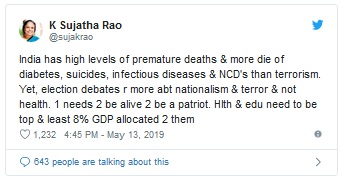
New Delhi: “One has to be alive to be a patriot,” former Indian health secretary K Sujatha Rao wrote on Twitter on May 13, 2019, referring to election debates that focussed on issues of “nationalism and terror and not health”.

The data back Rao’s assertion of misplaced priorities.
In 2017, terrorism claimed the lives of 766 Indians, or 0.007% of all deaths, while health reasons claimed 6.6 million Indians, or 90% of all deaths.
In 2017, the last year for which comparable data are available, India’s spending on defence was double its health expenditure, according to the 2017-18 budget.
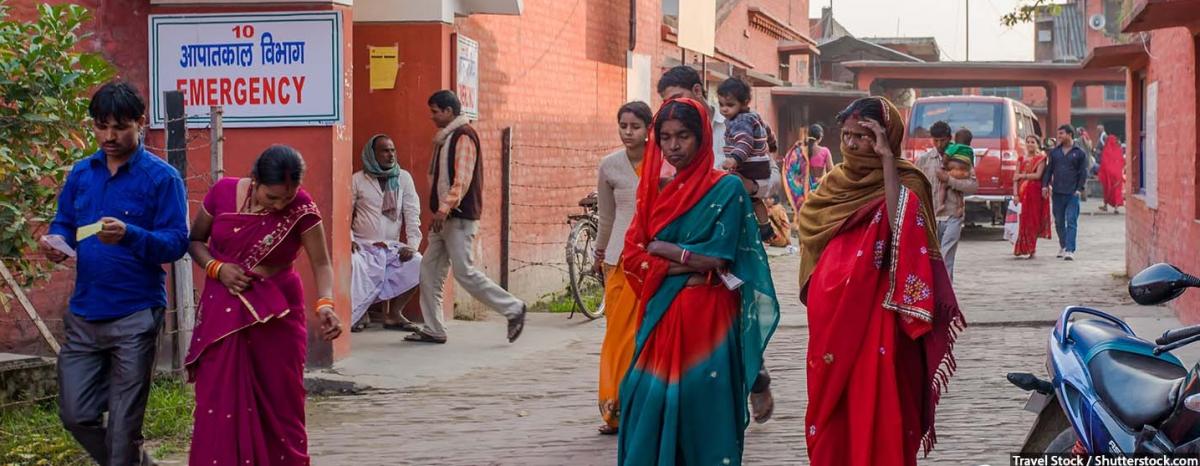
Poor investment in health and education directly impacts the country’s productivity and economic growth. Indians work for six-and-a-half years at peak productivity, compared to 20 years in China, 16 in Brazil and 13 in Sri Lanka, ranking 158th out of 195 countries in an international ranking of human capital, as IndiaSpend reported in September 2018.
8,000 times more deaths from ill-health than terror
There were 9.9 million deaths in India in 2017, with a death rate of 717.79 deaths per 100,000 people, according to the 2018 Global Burden of Disease (GBD), a global estimate of morbidity and mortality published by the University of Washington.
Communicable, maternal, neonatal and nutritious diseases caused 26.6% of all deaths in India, and non-communicable diseases caused 63.4% of all deaths, while injuries accounted for 9.8%.
Deaths by conflict and terrorism fall under the “interpersonal violence” category, accounting for 0.007% of all deaths, or 766, according to GBD data.
Terrorism claimed fewer lives, according to another database: there were 178 terror incidents reported nationwide in 2017, killing 77 and injuring 295, according to the South Asia Terrorism Portal.
Deaths due to diabetes (254,500), suicides (210,800), infectious diseases (2 million) and non-communicable diseases (6.2 million) put together are 8,000 times the deaths caused by terrorism (766).
Defence vs health vs education spending
“… Hlth [Health] & edu [education] need to be top (sic) & [at] least 8% GDP allocated 2 [to] them,” Rao wrote in her tweet.
India’s public health spending is among the world’s lowest. With a fifth of the world’s population, India’s public expenditure was 1.02% of gross domestic product (GDP) in 2015, IndiaSpend reported in June 2018.
While India’s public-health spending was estimated to be 1.4% of GDP in 2017-18, the equivalent proportion of GDP spent on health in the Maldives is 9.4%, in Sri Lanka 1.6%, in Bhutan 2.5% and in Thailand 2.9%.
India is the fifth largest defence spender in the world. The defence budget in 2017-18 was Rs 4.31 lakh crore ($ 72.1 billion, using 2017 rates), or 2.5% of GDP, as per Institute of Defence Studies and Analyses, a think-tank. This is double the health budget that year, according to our analysis.
About a fourth of the defence budget, or 24%, goes towards pensions.
| Defence Budget Almost 50% Higher than Health Budget In 2017-18 | |||
|---|---|---|---|
| Sector | Budget (Rs lakh crore) | Budget (As % Of Gross Domestic Product) | Budget (As % Of Total Government Expenditure) |
| Defence | 4.31 | 2.5 | 9.8 |
| Education | 4.41 | 2.6 | 10 |
| Health | 2.25 | 1.4 | 5.1 |
Source: Economic Survey 2017-18, Institute of Defence Studies and Analyses
In 2017, India’s school education budget, including central and state spending, was about Rs 4.41 lakh crore ($ 73.8 billion) or 2.6% of GDP, more than defence and health separately. However, almost half of India’s grade V students cannot read a grade II text and more than 70% cannot carry out division, according to the Annual Status of Education Report (ASER) 2018, IndiaSpend reported in January 2019.
India had the second-lowest score for quality of education in South Asia in 2016 (66 out of a possible 100, just ahead of Afghanistan’s 64) and behind group leader Sri Lanka (75), IndiaSpend reported on September 25, 2018.
Health and education need more money
While India’s health budget is rising–in 2018 it was double of what it was in 2010–as IndiaSpend reported in January 2019, it is still inadequate, considering that India is home to a third of the world’s stunted children, has the highest number of tuberculosis patients and reports among the world’s highest out-of-pocket expenditure, an indicator of public healthcare failures.
The National Health Policy of 2017 talked about increasing public-health spending to 2.5% of GDP by 2025, but India has not yet met the 2010 target of 2% of GDP, IndiaSpend reported in April 2017.
The National Policy on Education, which guides India’s approach to education, has since 1968 recommended a minimum spending of 6% GDP on education but that target has never been met. There have been “pervasive and persistent failures in implementation leading to sub-optimal utilisation of the resources provided”, the 2016 document said.
(Yadavar is a principal correspondent with IndiaSpend.)
Courtesy: India Spend
Today the Supreme Court ordered the immediate release on bail of freelance journalist Prashant Kanojia, who was arrested on Saturday afternoon for social media posts about Uttar Pradesh chief minister Adityanath. The vacation bench of Justices Indira Banerjee and Ajay Rastogi observed that Kanojia’s arrest and remand were illegal and went against personal liberty, LiveLaw reported. Apart from Kanojia, two more journalists have been arrested by UP Police over these comments. Several Press Organisations including the Editors Guild issued statements condemning the “arbitrary” arrest and called it “an effort to intimidate the press and stifle freedom of expression.”
When journalists are arrested on the basis of their social media posts, it is imperative to ask – what is it about social media that prompts this degree of punitive action? In her report, How India’s Media Landscape Changed Over Five Years, Sevanti Ninan analyses how widespread emergence of multiple media platforms including social media is redefining the role of the media in politics and government, and the relationship between the two. Below is an abdridged version of her report which appeared in The India Forum.

Image courtesy: The India Forum
The five-year period of 2014-2019 has seen such an explosion of media creation and media use in India that the answer to the question, who is the media, has become, literally, everybody.
Many developments that contributed to this end: the explosion of internet connectivity and cheap smartphones in small town and rural India, leading to growing numbers online and on social media. With 500 million Indians on the Internet by the end of 2018 (a growth of 65% over 2016), the acquisition of WhatsApp by Facebook in February 2014 and its accelerated growth in India thereafter has meant that the messaging app now has over 200 million users in India. The 65% growth is partly explained by the launch of Reliance Jio in September 2016, the 4G telecom service of Reliance Industries which was free for six months.
[…]
Access to media tools—a cheap smartphone with a camera, an online app on which you can edit your video — has become a marker of changing demography.
Changing demography has also led to changing the Indian psyche where, now, if a coaching centre catches fire, passers-by now stop and shoot a video. When people lynch or rape they also shoot a video to record it.
De-legitimising mainstream media
In the five years of the Modi-I regime, party and government operated on a simple formula: delegitimise existing media and create your own channels of communication with the voter and citizen.
Narendra Modi was elected in May 2014. In June Scroll.in reported that the Prime Minister had asked both senior bureaucrats and cabinet colleagues to refrain from speaking with journalists. When surveyed on whether the government had really clammed up, journalists covering government said cabinet notes and cabinet meeting agendas were no longer available, nor were inter-ministerial exchanges coming out.
[…]
Prime Minister Modi also started a monthly radio programme, “Mann Ki Baat” on All India Radio, and the programme quickly began to drive stories in the press and on television.
The notion that the government needs mainstream media was made to stand on its head. It was the other way around. With major media houses given to holding sponsored events every year as a source of revenue, they needed the Prime Minister and ministers to speak at their events. If you displeased the government, participation was withdrawn.
[…]
A more drastic instance of the government leaning on a major newspaper came when the editor of the Hindustan Times resigned, in September 2017, just 14 months after joining the paper. The Hindustan Times had been running a “Hate Tracker” since July, which it described as “a national database on crimes in the name of religion, caste, race”. After the editor’s exit it was taken down.
Increased self-censorship
Over these five years, more than any time in the past, media houses in India (TV, print and online) discovered the virtues of self-censorship. Published news items disappeared from websites. TV channels dropped interviews or stories done by their correspondents. NDTV was exposed as a channel that had practised internal censorship during the United Progressive Alliance (UPA) regime as well. The entertainment channel Star Plus decide not to air a comedy act that mimicked Prime Minister Modi.
The resignation of the ABP anchor Punya Prasun Bajpai, according to a piece by him in The Wire.in, followed explicit instructions from the proprietor (presumably Arup Sarkar though Bajpai did not name him) to not mention Prime Minister Modi in his show “Masterstroke” or to even carry any pictures of him. Bajpai referred to one edition of the show which reported on farmers being forced to part with their land for an Adani power project.
[…]
July 2017 saw the saga of the Economic and Political Weekly editor Paranjoy Guha Thakurta quitting his job after the Board of the Sameeksha Trust, which publishes the journal, asked for the takedown of a published investigation relating to Adani Power. More self-censorship. The company had sent a legal notice to EPW. Did any other publication try to see if this investigation had any merit and do a follow-up? No.
[…]
The de-legitimisation of mainstream media has been achieved by communicating directly with citizens and voters, by leaning on private sector media outlets in ways that lead to increasing self-censorship, and by giving interviews to only those journalists with whom the prime minister is comfortable. While not addressing a single press conference during his tenure, in the final weeks before the elections he gave several interviews, at least one of which was shown up to be pre-scripted.
Murder, attacks, trolling, co-option, fake news
De-legitimisation is also achieved by threats and violence. Gauri Lankesh was murdered in September 2017 for being a critic of right wing extremism, an unprecedented act of silencing, the chilling effect of which still endures. Scroll.in correspondent Malini Subramaniam’s house was attacked in Jagdalpur in 2016, a petrol bomb was hurled at the house of Patricia Mukhim, the Shillong Times editor, last year.
[…]
The ultimate de-legitimisation of the media as an institution however comes from co-option by the ruling establishment. During the first tenure of the NDA government led by the BJP this has been particularly true of television, with a host of channels—Zee News, India TV, Republic TV, Times Now, among others—turning openly partisan. There are enough examples of this on YouTube to prove the point.
[…]
Finally fake news videos about journalists are painstaking constructed and circulated, presumably by the BJP’s IT cell army, using archival footage from channels such as NDTV. The one on Tiranga TV’s Barkha Dutt, for instance, goes to some trouble to pull out footage related to all the controversies associated with Dutt’s coverage, going back to the Kargil war and the Pandit exodus in Kashmir, to try and establish her anti-national record over decades.
All of this energetic media management is unprecedented.
The BJP creates its own media
Enormous energy has gone into creating media to suit the party’s purpose. First in order to win the 2014 election, then re-election in 2019 and in-between a number of state elections. Also, in order to shape the media narrative for the NDA government.
[…]
The 2019 campaign was powered by an indefatigable media machine described in this Time Magazinereport on how Whatsapp was fuelling fake news ahead of the elections.
[…]
There was also the more audacious experiment with NaMo TV launched on 31st March 2019, just days before the polling schedule got under way. It was a YouTube channel which simply telecast repeats of Modi’s rallies and speeches 24×7, was carried on DTH platforms and defied the regulation that cable and satellite platforms could only carry licensed channels. Complaints to the Election Commission from other parties got nowhere, and NaMo TV promoted Modi through every phase of polling, cocking a snook at the Model Code of Conduct of the Election Commission, which could not decide whether it was a violation or not.
The rise of independent alternative media
The same five-year period which has seen the changes described above has also seen a significant rise in independent media, most of it online, several offering specialized content.
There is enough fake news being generated to keep them all busy. On the day election results were announced, 23 May 2019, Nieman Lab pulled together information from various sources to put out a newsletter on fake news in the Indian elections. One assertion made was that more than a quarter of the content shared by the BJP and a fifth of the content shared by the Indian National Congress was junk news. This came from Oxford’s Project on Computational Propaganda which sampled and studied WhatsApp groups for visual content shared.
[…]
Given the altered landscape, where should the pushback to the BJP’s media management juggernaut come from?
The first recognition has to be of a newly empowered citizenry that is generating its own media. Beyond targeting them with aggressive tweets during the election, political parties and citizenry have to strategise their communication for the mobile phone connected generation of all economic strata. Schools and colleges need to offer more media literacy.
Civil society and the more thoughtful sections of English and regional media need to lend more heft to efforts to counter fake news. Do we have the laws to deal with this phenomenon? If courts cases are being filed by individuals under horrific attack what becomes of them? Do they get support from the legal community and their media compatriots?
More people need to simply recognize the much enlarged landscape that the media has become.
Courtesy: Indian Cultural Forum
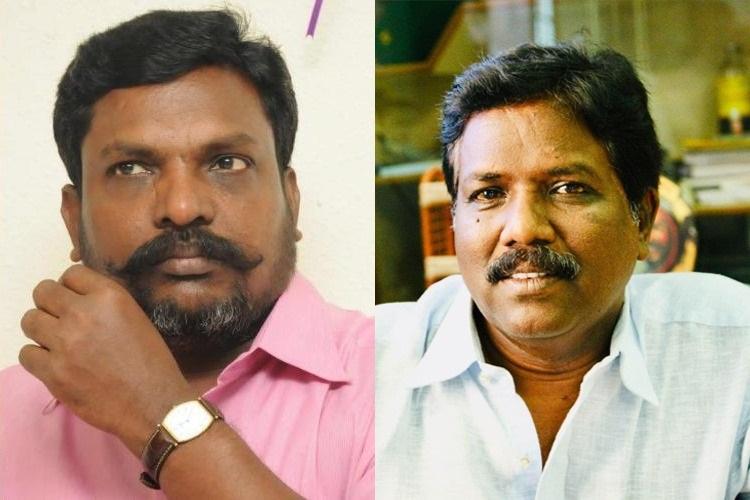
These two MPS Dr Thol. Thirumaavalavan,M.A., B.L., P.hD, President Viduthalai Chiruthaigal Katchi (VCK, or Liberation Panthers Party) and Hon’ble Dr. D. Ravi Kumar, ,M.A., B.L., P.hD, General Secretary, Viduthalai ChiruthaigalKatchi (VCK, or Liberation Panthers Party) were facilitated jointly on 8th June 2019 at Andhra Bhawan, Ashoka Road, New Delhi by National Campaign on Dalit Human Rights (NCDHR), National Dalit Watch (NDW), All India Dalit Rights Forum (AIDRF) and A.P Bhavan SC/ST Employees Welfare Association.
There are more than 250 MPs from dominant castes. Therefore the victory of these two Dalit MPs is very significant for representing the issues concerning Dalits in Parliament.
Dr. Ramesh Nathan (General Secretary, National Dalit Movement for Justice) said that this is a moment of great pride for the Dalit community that despite the tough competition and increased popularity of BJP Party in other parts of India, still VCK party managed to win in Tamil Nadu. The ideology of Dr.Thol. Thirumaavalavan and Dr. D. Ravi Kumar are very relevant to fight against caste system, untouchability, atrocities and caste feudal system.![]()
Dr Thol. Thirumaavalavan and his party singularly raised their voice against the Sanatan Dharma and mobilised the voters to Save Democracy in Tamil Nadu.
Dr Thol. Thirumaavalavan has once again proved his mettle as the most charismatic leader of the present generation of Tamil and Dalit politics. He represents not only the political aspirations of the populous Dalit community in the State, but also ensured of the Tamil Dalits living across the world. He has again emerged victorious for the second time from the Chidambaram constituency.
The emergence of Dr. Thirumavalavan onto the Tamil political landscape dominated by Dravidian politics was a historical watershed for subaltern politics. His emergence as a political leader in the post-1990 Ambedkar centenary era is a significant moment in the history of Tamil and Dalit politics.
The other Dalit MP, Writer D. Ravikumar, the party’s general secretary, is a former M.L.A, who has a number of literary works to his name including Venomous Touch: Notes on Caste, Culture and Politics and has written passionate critiques of casteism. He has intellectual and political standing and has made several policy interventions when he was elected as MLA from Kattumannarkoil constituency in 2006.
Dr Ravi Kumar, a great writer on Dalit struggles and aspirations said that he is fighting for numerical strength, financial strength and political equality of Dalits. He said that he will take up the issue of ‘Reservation in Universities’ in the coming days.
On the occasion of the felicitation, Mr. N. Paul Divakar, Chairperson, Asia Dalit Rights Forum-ADRF, Ms. Beena Pallikal, General Secretary, DAAA-NCDHR, Rev. Dr. Vincent Manoharan, National Convener, National Dalit Christian Watch, Rev. Dr. Vincent Manoharan, National Convener, NDCW,Ms. Shabnam Hashmi, Social Activist, ANHAD, Mr. Anand Rao, Assist. Commissioner, AP Bhavan and National Convener, AIDRF ,Prof. Sugumar, University of Delhi, Rev. Fr. Vijoy Kumar Nayak, Secretary, CBCI, Hon’ble Sr. Anastasia Gill, Member, Delhi Minority Commission Adv. Franklin Caesar, Supreme Court of India, Father Denzil Fernandes Executive Director Jesuit Indian Social Institute were present.
Courtesy: Two Cirlces
Join our mailing list to get the latest human rights news that matters, straight to your mailbox.
© Sabrang | All Rights Reserved