Email: sabrangind@gmail.com


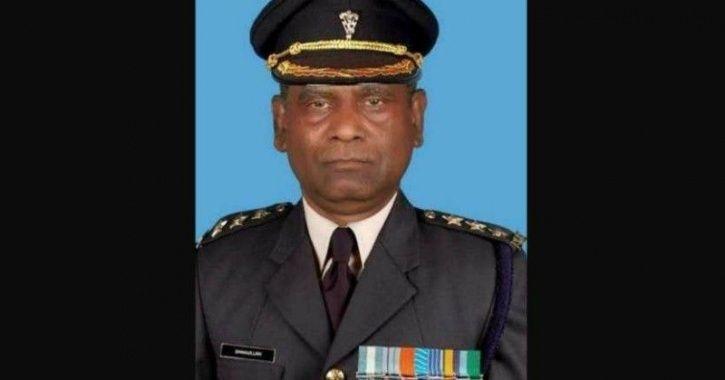
Mohammed Sanaullah, who had served in the Army and fought in the Kargil war, had also received a medal and letter of appreciation from none other than the then President of India for his service to the nation. But the nation was shocked when on March 2017, the Boko Foreigner’s Tribunal declared him a ‘foreigner’. He was subsequently arrested and sent to a detention camp in Goalpara. He moved the Gauhati High Court immediately
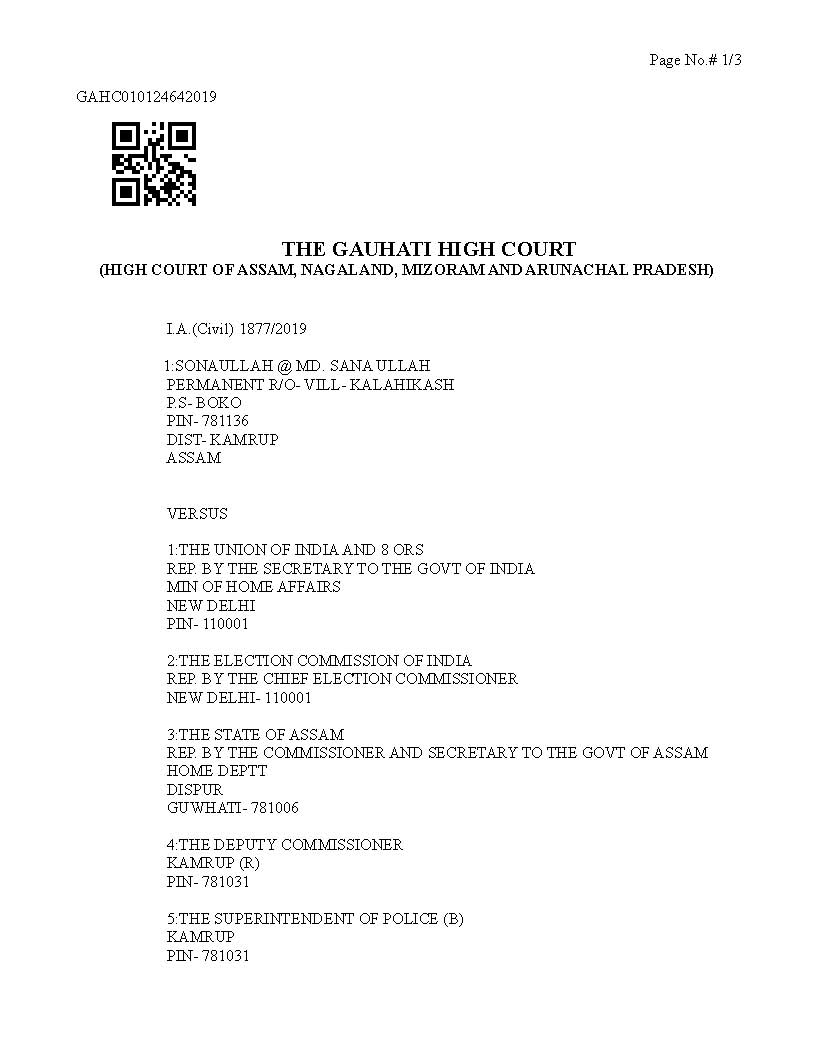
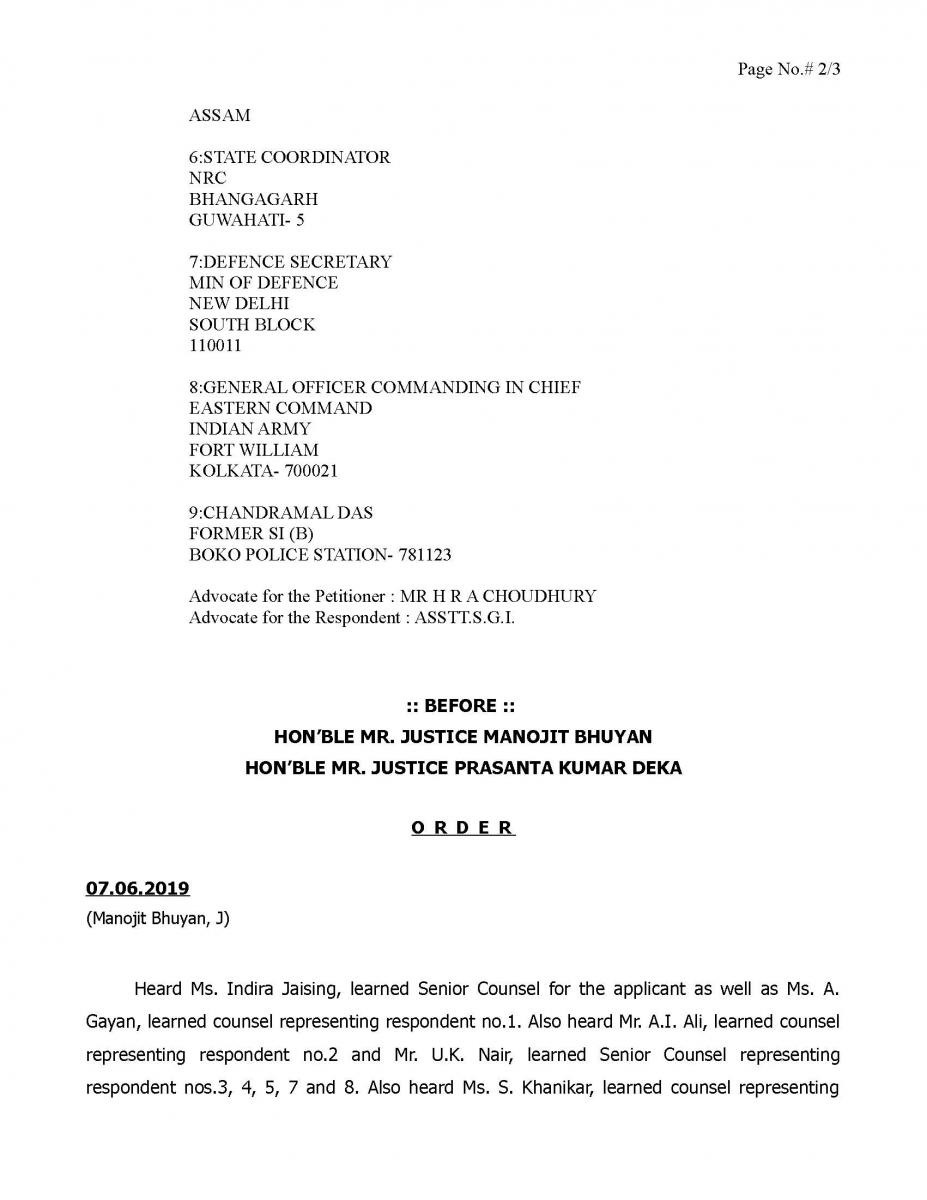
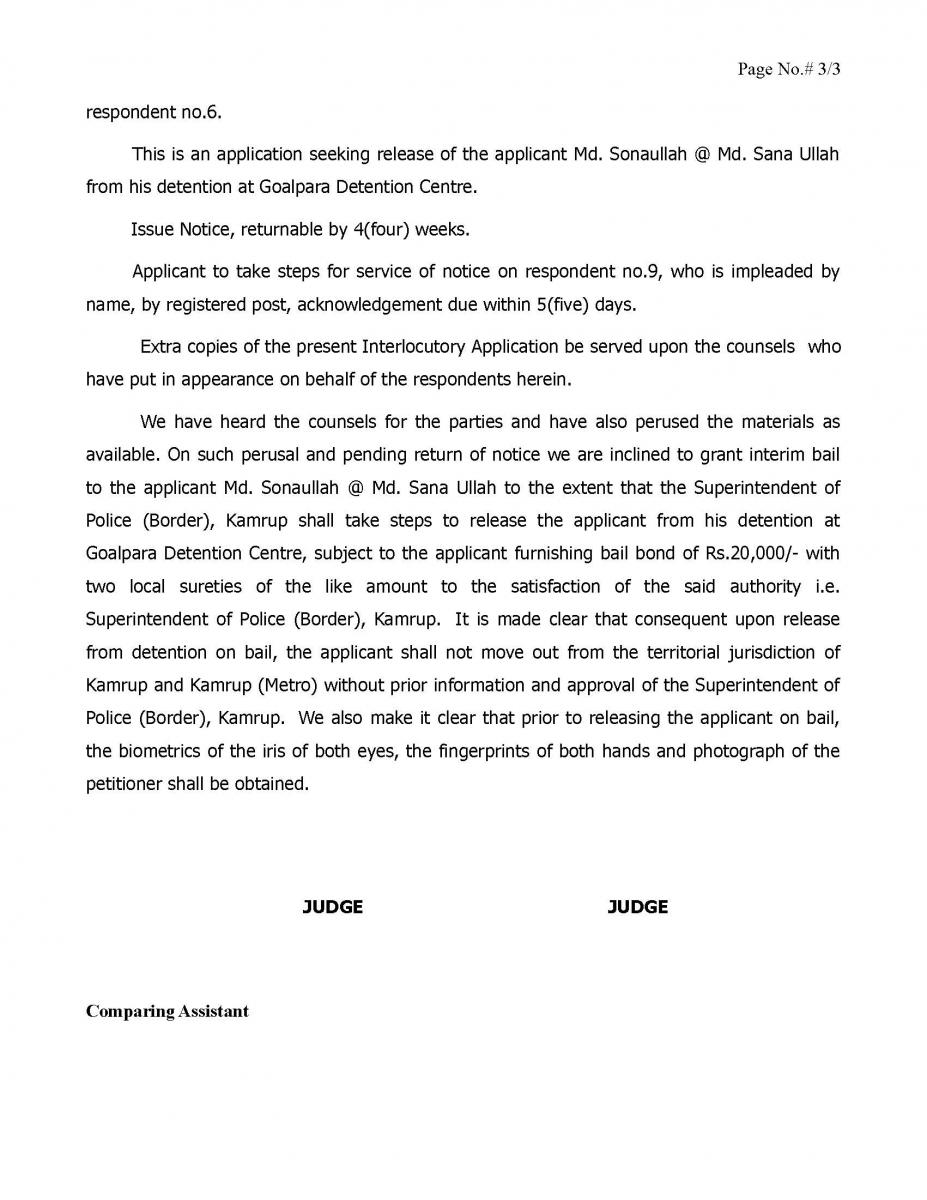
On Thursday, June 7, 2019, the Gauhati HC granted him interim bail and directed the Superintendent of Police (Border), Kamrup, to take steps to release him from the Goalpara Detention Camp subject to Mohammed Sanaullah furnishing a bail bond of Rs 20,000/- (Rupees Twenty thousand only) with two local sureties. He is also forbidden from leaving the territorial jurisdiction of Kamrup and Kamrup (Metro) regions without prior permission of the SP. He is also required to provide biometric data including iris scans of both eyes and fingerprints of both hands.
Th entire bail order by the Gauhati HC may be read here:


Who is Mohammed Sanaullah
Mohammad Sanaullah was born in 1967 in the village of Kalahikash that falls under the jurisdiction of the Boko Police Station in Kamrup district. He passed his matriculation examination in 1985. He father Mohammad Ali has land patta (document) of 1936 in the village Kalahikash along with his name recorded in the NRC, 1951, Voters List of 1966 and 1971. All these documents were submitted before the FT but overlooked.
As far as his service to the nation goes Mohammad Sanaullah served as a jawan in the Army from 1987 and was promoted to junior commissioned officer in 2012. In the year 2017, serving 30 years in Indian Air Force, Mohammad Sanaullah retired from service as an honorary Lieutenant. In the subsequent year he joined the Assam Border Police as an Assistant Sub Inspector. Interestingly, it is the Border Police that looks into cases of suspected foreigners and doubtful voters and makes a reference to the FT.
Allegations of foul play
It is alleged that an inspector of the Border Police submitted a false report that stated Khan was a daily wage labourer who was originally from Bangladesh. This was enough to get him to prove his citizenship before a Foreigners’ Tribunal.
Minor discrepancy in dates
This discrepancy is because the last two digits of the year of joining the IAF ie. 1987 were switched accidentally and read 1978 when recorded during FT proceedings, thus making it appear as if Mohammed Sanaullah joined the defence forces at the age of 11!
“During one of the hearings, he had mistakenly mentioned the year of his joining the Army as 1978 and based on the gaffe, the Foreigners’ Tribunal declared him a foreigner. It argued that nobody can join the Army at the age of 11 years,” Hoque told The New Indian Express.
This also made it appear as if his siblings’ ages are different i.e one younger sister appears older and an elder brother appears younger than Mohammad Sanaullah. This is clearly a small and genuine error. But the FT refused to consider it and ruled that the siblings were ‘projected’ as brother and sister. They then declared him as Bangladeshi and the police called on him to police station on May 29. When he rushed to the police station he was arrested and promptly sent to the Goalpara detention camp.

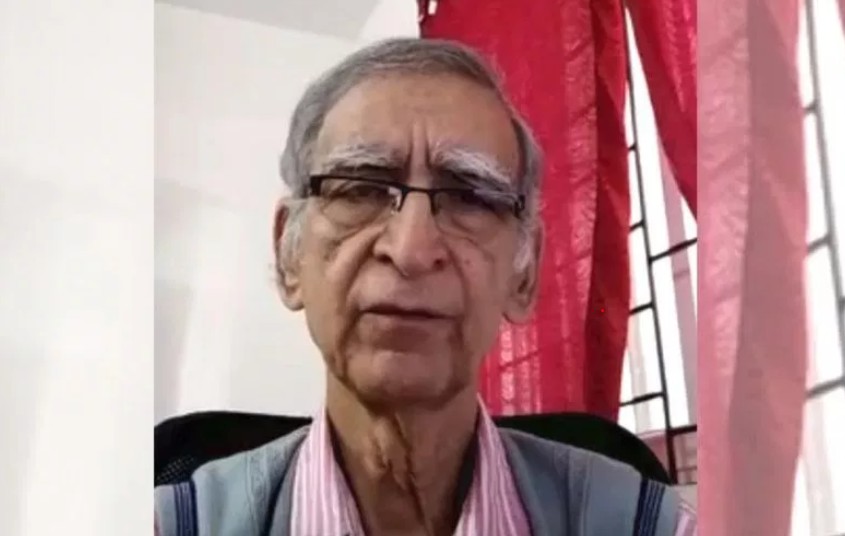
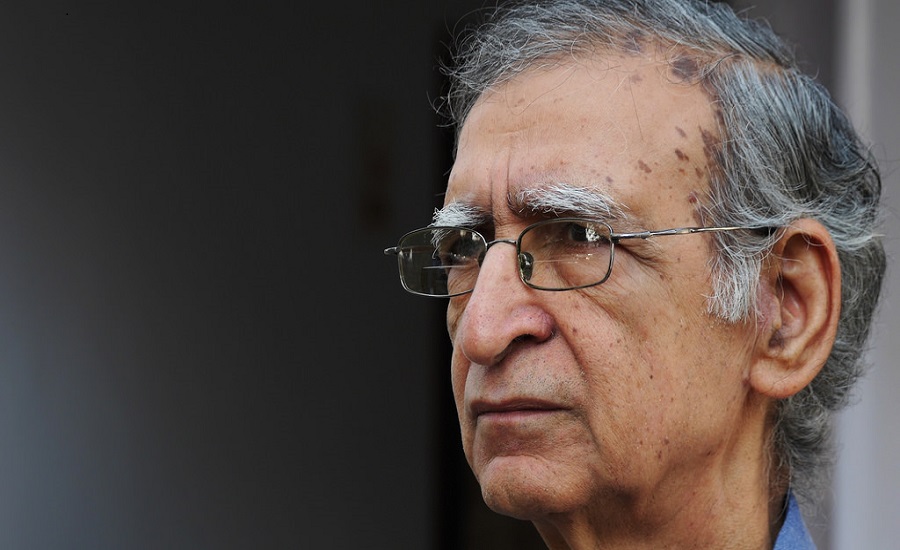
Below here is the email sent by Dr Puniyani to the Commissioner of Mumbai urging an appointment with other activists to impress upon him the seriousness of the matter.
*************************************************************
Dear Sir
I got a threatening calls on my landline no. (details below). The person abused me saying I am writing/speaking against Hindus. It was a threat to stop my activities.
Some concerned citizens and I will like to call upon you in this matter.
Sincerely
Ram Puniyani
*************************************************************
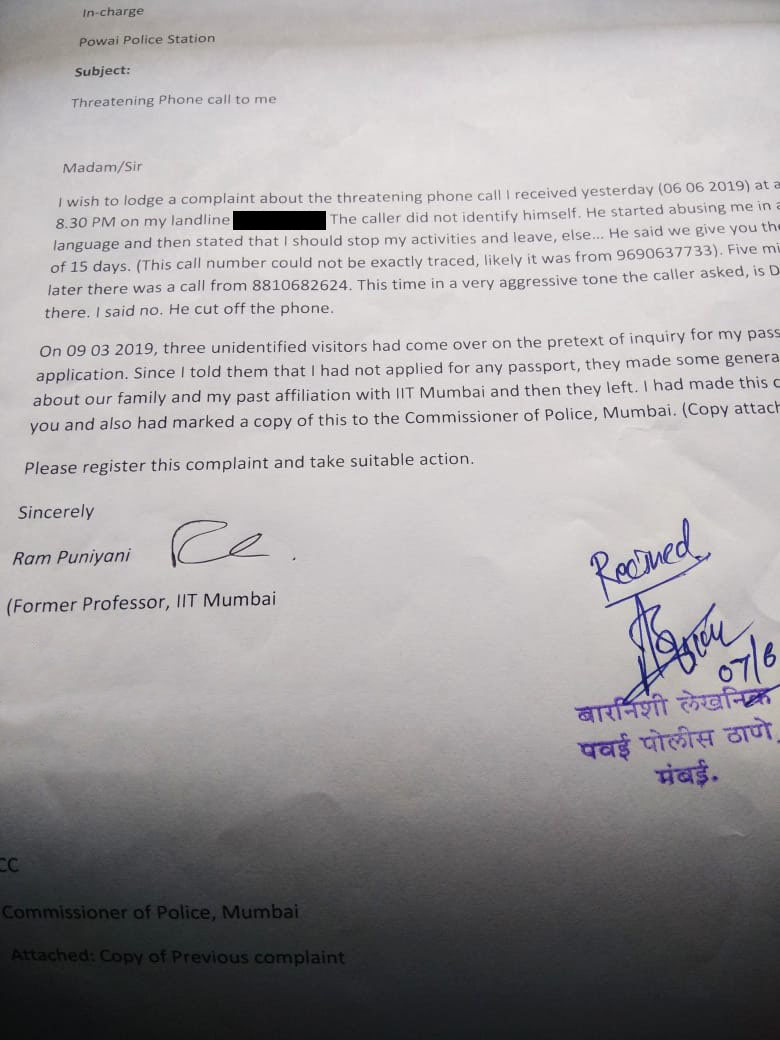
On June 6, unidentified men made two calls to Punyani’s home. Accusing Punyani of being anti-Hindu, the caller(s) demanded he stop his ‘activities’ or suffer dire consequences. Here is the text of the compliant submitted to the Powai police station on June 7, 2019
**************************************************************
To
In-charge
Powai Police Station
Subject:
Threatening Phone call to me
Madam/Sir
I wish to lodge a complaint about the threatening phone call I received yesterday (06 06 2019) at around 8.30 PM on my landline (XXXXXXXX). The caller did not identify himself. He started abusing me in a filthy language and then stated that I should stop my activities and leave, else… He said we give you the time of 15 days. (This call number could not be exactly traced, likely it was from 9690637733). Five minutes later there was a call from 8810682624. This time in a very aggressive tone the caller asked, is Doctor there. I said no. He cut off the phone.
On 09 03 2019, three unidentified visitors had come over on the pretext of inquiry for my passport application. Since I told them that I had not applied for any passport, they made some general inquiries about our family and my past affiliation with IIT Mumbai and then they left. I had made this complaint to you and also had marked a copy of this to the Commissioner of Police, Mumbai. (Copy attached)
Please register this complaint and take suitable action.
Sincerely
Ram Puniyani
(Former Professor, IIT Mumbai)
************************************************************
Following the incident in March, when ‘plainclothes’ policemen went to Punyani’s home on the false pretext of conducting ‘passport related’ enquiries, several prominent members of civil society had written to the police commissioner asking him to take congisance of the clear and present danger to professor Punyani’s life. A copy of that letter may be read here:

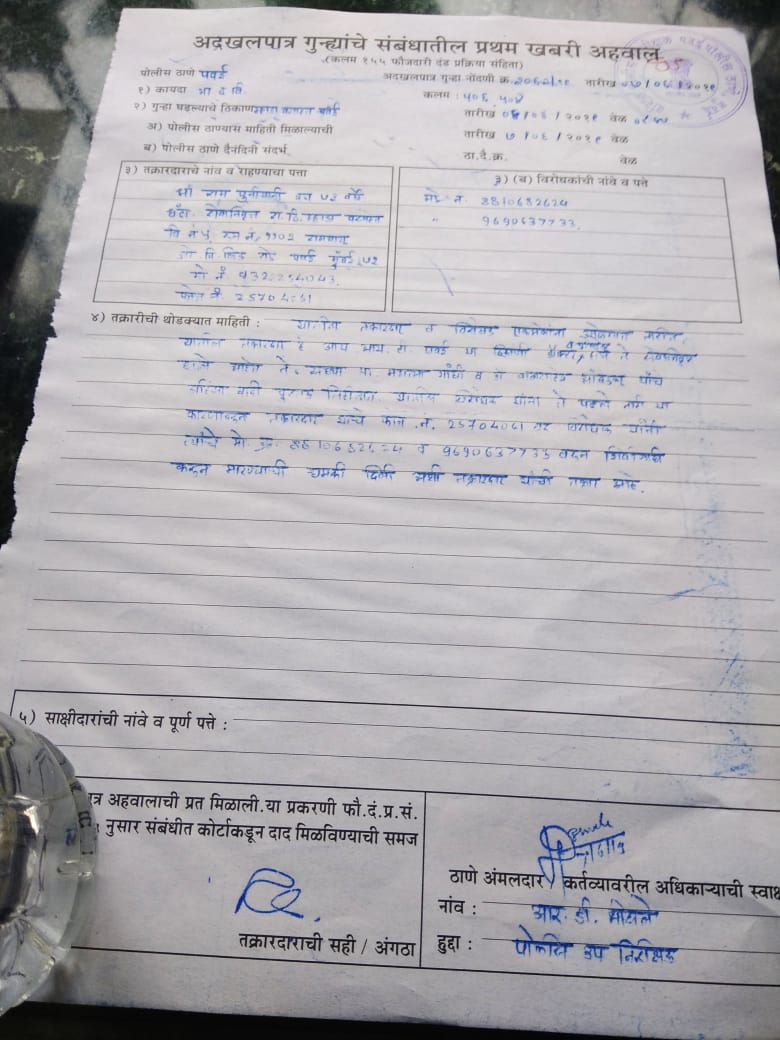
Professor Puniyani’s letter to the police and the non-cognisable complaint filed by the police may be viewed here:


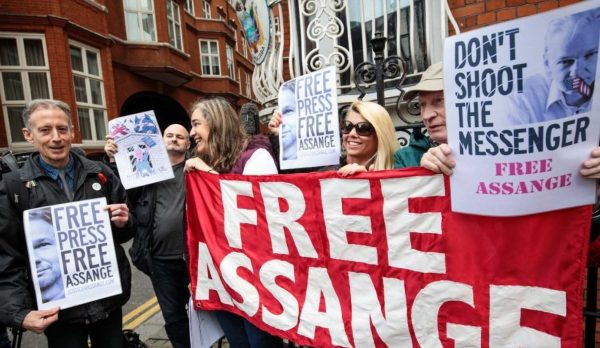
In a June 1 interview with ABC Radio Adelaide, UN Special Rapporteur on Torture Nils Melzer warned that Julian Assange could die in prison if his persecution is not stopped immediately.

Last week, Melzer issued a scathing denunciation of Assange’s persecution, calling it “psychological torture.”
Reporter Philip Williams asked Melzer, “If your calls are ignored, do you fear that he could actually die in prison?” Melzer replied, “Absolutely, yes. That’s a fear that I think is very real … the cumulative effects of that constant pressure, it will become unpredictable how this will end. What we see is that his health condition is currently deteriorating to the point that he cannot even appear at a court hearing. This is not prosecution; this is persecution and it has to stop here and it has to stop now.”
The full radio interview with Melzer can heard here. WikiLeaks publisher and journalist Julian Assange was sentenced to 50 weeks in jail on May 1 by a British court in a vindictive show trial on fabricated charges of “skipping bail.” Following his eviction from the Ecuadorian embassy on April 11, where Assange had sought asylum and was effectively detained for seven years, he was arrested by British authorities and is now held in Her Majesty’s Prison Belmarsh in southeast London.
Melzer’s comment about Assange’s dire condition follows a statement he issued on May 31 demanding an immediate end to the “collective persecution” by the United States and its allies.
The UN torture expert visited Assange in Belmarsh on May 9 along with a medical doctor and psychologist in order to evaluate the condition of the heroic journalist. Melzer issued his statement just one week after the US Justice Department announced 17 counts on charges of violating the Espionage Act—which carry up to 170 years in prison if convicted—and renewed the demand that the WikiLeaks publisher be extradited to the US for prosecution.
Melzer warned that the nine-year “persistent and progressively severe abuse” of Assange by US, British and Ecuadorian authorities and the threat of his being extradited to the US would pose “a real risk of serious violations of his human rights, including his freedom of expression, his right to a fair trial and the prohibition of torture and other cruel, inhuman or degrading treatment or punishment.”
Speaking from Geneva during his interview with ABC Radio Adelaide, Melzer reiterated his warning that Assange cannot get a fair trial in the US “in light of the prevalent prejudice against him and the image of the public enemy that has been portrayed over there.”
In answering a question from Williams about the role of the Australian government in the unfolding attacks on Assange, Melzer said, “The Australian government has been the glaring absentee in this case from my perspective. I would have expected Australia to take steps to protect their national … to protect him from this excessive persecution that he is experiencing currently.”
Assange is the target of an international campaign of vilification, persecution and silencing due to WikiLeaks’ exposure to the people of the world both the war crimes American imperialism and its allies.
Melzer’s warning points to the urgent need to organize a struggle to defend Assange. We urge all of our readers to take up this fight .
Originally published by WSWS.org
Courtesy: Counter Current

The 5 human rights activists are Sudhir Dhawale, a writer and Mumbai-based Dalit rights activist, Surendra Gadling, a UAPA expert and lawyer from Nagpur, Mahesh Raut, a young activist on displacement issues from Gadchiroli, Shoma Sen, a university professor and head of the English literature department at Nagpur University, Rona Wilson, a Delhi-based prisoners’ rights activist.
These arrests were followed by witch hunting of other activists from all over India and advocate Arun Ferreira, advocate Sudha Bharadwaj, writer Varavara Rao and Vernon Gonsalves, Anand Teltumbde were arrested subsequently.
On January 1, 2018, hundreds of Dalits had gathered for the 200th anniversary celebrations of the Anglo-Maratha War of 1818 in which Dalits had fought bravely alongside the British, defeating the upper caste Maratha army of the Peshva. But there was stone pelting allegedly by the right winged groups who attacked the Dalits that resulted in the death of a youth while others were attacked and even detained. Vehicles were torched and some policemen were also injured.![]()
The activists were charged under the Unlawful Prevention Activities Act by a trial court and later the police filed a charge sheet containing more than 5000 pages claiming that these activists were involved in Maoist activities under the banned party Communist Party of India ( Maoist) and that they were planning the assassination of Prime Minister Modi.
However the police have not provided any evidence despite their claims of having solid evidence against these activists. On the contrary they have kept delaying the trial on one pretext or the other.
Today despite more than 60 hearings the 5 activists have not been granted bail.
Activists, lawyers, academicians and others have initiated a campaign on Twitter to demand the release of human rights activists and lawyers arrested by tweeting to the Chief Minister’s office and the police of Pune.
Join the campaign today 6th June between 7 pm to 9 pm.
Courtesy: Two Circle
A woman saint-poet, a contemporary of Basavanna called Urilinga Peddigala Punya Stri Kalavve, critiqued the orthodox Brahmanical traditions and the caste system. “The Hindu religion, which stands on the foundation of the caste system,” she wrote, “distinguishes people according to what they eat. Those who eat chicken, sheep and fish are considered middle castes. Those who eat beef are considered outcastes, since the cow is believed to have given panchamrita to Shiva.” It was the sharana movement — a dramatic development led by Basvanna and others in erstwhile Karnataka — that gave a dalit woman poet like Kalavve the confidence to be be a rebel. The sharana movement enabled people from the lower rungs of society to raise their voices against the dominant caste structures.

Image courtesy: Youtube
In our own times, the words of Urilinga Peddigala Punya Stri Kalavve act like an axe to hit at the roots of Manuvadi, and the constant discrimination against dalits and minorities in the name of cow slaughter. The sharana period, and its ideas of equality, still have much to say to us.
The sharana movement encouraged equality, brotherhood and free thinking. It was revolutionary: people of the working class got together to fight for equality, and against inhuman caste and gender discrimination. They created awareness about superstition by propagating reason. Most of all, the mass movement created by Basavanna and aimed at the root of exploitation by opposing the sanatana traditions of the Brahmins.
Basavanna was, perhaps, the first person in the world who wrote about the novel and revolutionary idea that work is worship. He organized people from the lowest strata of the society to realise this worthy objective. This leader of the working class became a saviour of the people who had been suffering for centuries. He worked hard to spread the concept of one God. He emphasized the importance of education and insisted on gender equality.
To the orthodox Brahmins who said a person was born untouchable because of the karma of the sins committed in previous births, Basavanna said, “Look at the houses of the poor, all the sharanas of Koodala Sangama are champions of self-respect.” This is how he motivated the exploited to strive for self-respect. Basavanna was a pioneer in making people aware of political consciousness, and ideas like equality and freedom.
Again, the sharana movement has a lesson for us about freedom of expression – at a time when free speech and dissent are being curbed.
Basavanna built an “Anubhava Mantapa”, a platform to express views without caste and gender prejudice. Basavanna handed over leadership to the oppressed castes. The Anubhava Mantapa consisted of 770 sharanas, something like the first parliament in the world. Allama Prabhu, a dalit, propagated the philosophy ‘attainment of nothingness’ was like the Speaker of this parliament, which included women saints such as Akkamahadevi, Gangambike, Neelambike, Sule Sankavva, Dhanamma, Kalyanavva and Aydakki Lakkamma, and others such as Dohara Kakkayya, Ajaganna, Kurubara Bommanna, Holeyara Boganna and Madhuvarasa. All of them, women and men, participated in the discussions on the welfare of the people.
Basavanna introduced an adult education system which led many people from the lower castes to become writers – vachanakaras or writers of vachanas. This led to a boom in literary production; more important, it proved that knowledge did not brook discrimination. These vachanas could be considered the first writings produced by dalits and other lower castes, as well as women.
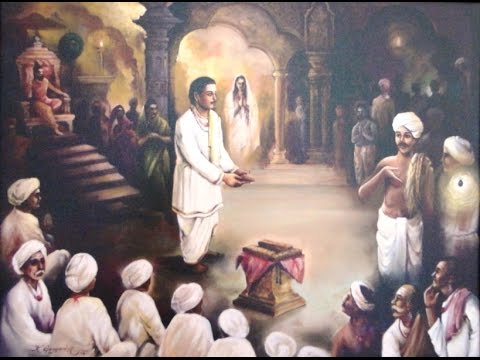
But a shocking development was in store for the sharana movement. Hundreds of them were hounded and butchered for having thought of, and put into practice, a movement against inequality and human rights violations. One instance of the sharana practice of equality was a marriage arranged between the son of the dalit Haralayya and the daughter of the brahmin Madhuvarasa. As Haralayya’s son Sheelavanta and Madhuvarasa’s daughter Lavanyavati had become sharanas, there should have been no obstacle such as caste keeping them from marrying each other. But Manuvad did not want this marriage to take place. The conservative Brahmins argued that this marriage was against Hindu tradition and Rajadharma which would eventually lead to destruction of the empire. The conflict was between people who firmly believed in caste hierarchy and who did not. The noteworthy point here is that the sharanas were even ready to sacrifice their lives to fight against the cruelty of Manuvad.
The sharanas decided to face whatever came their way, saying, “Let what is likely to happen in the far future happen now, and what might transpire the next day, let it happen this minute.” Although King Bijjala and the brahmins opposed the inter-caste marriage, the sharanas went ahead with the inter-caste marriage despite death threats. Enraged, the brahminsplucked out the eyes of the sharanas and tied them to the legs of elephants to be dragged along the streets. Then the Sharanas were trampled to death by the elephants. Other sharanas were beheaded and cut into pieces, such was the hatred and cruelty of the “Hindutva elements” of the time. The sharanas martyrs died for the sake of a secular marriage. The remaining sharanas went into exile to save the vachanas.
Literary critic and historian Ramzan Darga notes, “This movement which fought for human dignity on the basis of an idea of ‘one path, one tone’ witnessed the worst killings in history.” He adds, “The counter protest by Manuvadi-s which halted the revolution led by Basavanna and other Sharanas was a huge setback for humanity.”
While anyalysing caste, Babasaheb Ambedkar writes that “Buddha’s revolution was followed by the Brahmin’s counter attack. This led to the spreading of the roots of the caste system helping spread the cruelty of inequality everywhere.” It is a well documented disaster in history that the Kalyana revolution was followed by a counter-protest by Brahmins. Anyway, one should not forget the fact that the revolutionary event of inter-caste marriage was symbolically against the caste system. It is also quite evident that Basavanna and other sharanas addressed the core issues of people’s livelihood.
The sharanas’ struggle against caste structures through their vachanas is still remembered by the lower castes. In recent times, people belonging to the Lingayat caste project Basavanna as their leader. It is shameful that few self-proclaimed followers of Basavanna glorify Hindu gods by making use of Basavanna’s ideas. There have been thousands of mata-s built in the name of Basavanna. These have become centres for business. Followers of Manu are against the demand of a separate Lingayat religion. Lingayat leaders have been misled since they have joined hands with the Sangh parivar.
M.M. Kalburgi, who wrote the play “Kettithu Kalyana” (Destruction of Kalyana) based on the killings of Sharanas in the twelfth century, was killed by the Hindu extremists. Similarly, Gauri Lankesh was murdered for spreading rational thought. The followers of Basavanna should worry deeply about the growth of the Sangh Parivar, and the growing intolerance which has led to the killing of progressive writers.
Every Indian should understand that the Indian constitution is replete with the ideas of Basava and his followers. It is the need of the hour to come forward and support these voices to uphold human dignity. We have to try build afresh, for our own times, the Kalyana revolution.
Courtesy: Indian Cultural forum

Join our mailing list to get the latest human rights news that matters, straight to your mailbox.
© Sabrang | All Rights Reserved