The argument against affirmative action or reservations has been obfuscated with false arguments around “merit” being posited; displaying a blind sightedness towards the historical marginalisation of oppressed groups. One of the most stark manifestations of this marginalised is caste based oppression. The myth spread by dominant caste groups is that affirmative action interferes with the opportunities of the “General” category groups and impacts the “efficiency” of administrative functions.
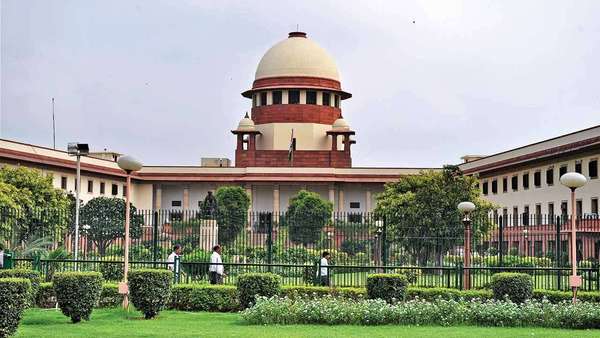
A recent judgment by a two-judge bench of the Supreme Court, comprising Judges UU Lalit and Justice DY Chandrachud, is an important step towards setting right the debate, placing emphasis on quantifiable data. It is also one of the first instances of a judgement using available empirical data to justify reservation. This judgment is also an eye-opener on the discourses around caste based reservation.
On Friday, May 10, the Supreme Court upheld a Karnataka state law granting reservations in promotions to state government employees belonging to the Scheduled Caste and Scheduled Tribe communities.
The judgment concerned a set of challenges against the Karnataka Extension of Consequential Seniority to Government Servants Promoted on the Basis of Reservation (to the Posts in the Civil Services of the State) Act 2018, which facilitates a one-time promotion to SC/ST employees largely relying upon a “catch-up” clause. However, the judgment goes beyond merely commenting on the specific issue at hand and is likely to impact the attitudes and mind-sets in general, laying down a rationale as it does of principles of justiciable equity
A brief background and explainer on what has transpired so far
The Supreme Court’s Indra Sawhney vs Union of India (1992) has been hailed as a landmark judgment as it upheld reservations for Other Backward Classes (OBCs). However, this judgment also held that reservations in appointments, under per Article 16(4) of the constitution, don’t apply to promotions.
What does article Article 16(4) say? This Article lays down that nothing in the article shall prevent the State from making any provision for the reservation of appointments or posts in favour of any backwards class of citizens which, in the opinion of the State, is not adequately represented in the services under the State.
The Constitution (77th Amendment) Act, 1995 was passed by parliament, inserting Article 16(4A) which allows the State to provide reservations to SCs/STs in matters of promotion, as long as the State believes that this category of the marginalised populations –the SCs and STs – aren’t adequately represented.
Article 16(4B) provides that reserved promotion posts for SCs and STs that remain unfilled can be carried forward to the subsequent year. Article 16(4B) ensures that the ceiling on the reservation quota – capped at 50% by Indra Sawhney – for these carried forward unfilled posts does not apply to subsequent years.
Article 335 says that the claims of the members of the Scheduled Castes and the Scheduled Tribes shall be taken into consideration, consistently with the maintenance of efficiency of administration, in the making of appointments to services and posts in connection with the affairs of the Union or of a State
A five judge constitution bench of the Supreme Court delivered its judgment in M. Nagaraj vs Union of India (2006) in which it validated parliament’s decision to extend reservations for SCs and STs to include promotions albeit with three conditions. These were:
The judgment soon faced criticisms as it was highlighted that it failed to recognise the centuries of discrimination faced by SCs and STs as it required the state to “reassess” their backwardness. Critics expressed apprehensions that if some of them fail to qualify the criteria for backwardness, reservations for SCs and STs in promotions could be denied.
This, it was claimed, was inconsistent with the preceding judgment in Indira Sawhney case.
In 2018, a five judge bench in the case of Jarnail Singh vs Lachhmi Narain Gupta reviewed the criticisms made against Nagaraj judgment and held that its insistence on collection of quantifiable data on backwardness in relation to the SCs and STs was contrary to Indra Sawhney but it approved Nagaraj’s insistence on proof for inadequate representation of classes for whom promotional posts are reserved, and on submission of additional proof that efficiency wouldn’t be impacted by such reservation, because of Article 335.
It was in this situation and with this judicial history that a two judge bench of the Supreme Court, while presiding over B.K. Pavitra vs Union of India-I, declared a 2002 legislation passed by Karnataka assembly invalid on the grounds that Karnataka hadn’t collected quantifiable data on the three parameters as required in the Nagraj judgment.
The 2002 judgment provided for consequential seniority to roster-point promotes based on the length of service in a cadre.
The Ratna Prabha committee was formed by the Karnataka government after the decision of the Supreme Court in the B.K. Pavitra case. The committee was headed by the additional chief secretary Ratna Prabha and was entrusted with the responsibility of submitting a report on the backwardness and inadequacy of representation of SCs and STs in the state civil services and the impact of reservation on overall administrative efficiency in the state.
The Karnataka Extension of Consequential Seniority to Government Servants Promoted on the Basis of Reservation Bill, 2017 was passed by the state assembly on the basis of Ratna Prabha Committee report.
Under Article 200 of the Indian constitution, the bill received president’s assent after it got mired in a controversy around whether a state legislature could or could not undo a Supreme Court’s judgment.
What happened on May 10, 2019 ?
In a judgment that is historic, in the B.K. Pavitra II matter, the Supreme Court (bench of Justices U.U. Lalit and D.Y. Chandrachud) held that the state legislature has remedied the underlying cause which had led to a invalidation of the 2002 Act. The bench made curative legislation constitutionally permissible, and clarified that it isn’t an encroachment on judicial power.
Since the legislature could not simply override the declaration of invalidity without remedying the basis on which the law was held to be ultra vires, it was important to remove the very basis of the SC’s former decision.
Commenting on the methodology by which the committee reached its findings, the bench said that the committee can’t be held to have acted arbitrarily in adopting recourse to sampling methodologies or to have based its conclusion on any irrelevant material. It said,
“We are unable to find that the Committee has based its conclusions on any extraneous or irrelevant material. In adopting recourse to sampling methodologies, the Committee cannot be held to have acted arbitrarily. If, as we have held above, sampling is a valid methodology for collection of data, the necessary consequence is that the exercise cannot be invalidated only on the ground that data pertaining to a particular department or of some entities was not analysed. The data which was collected pertained to thirty one departments which are representative in character. The State has analysed the data which is both relevant and representative, before drawing its conclusions. As we have noted earlier, there are limitations on the power of judicial review in entering upon a factual arena involving the gathering, collation and analysis of data.”
Catch up rule
A significant part of the ruling is its observation on the catch-up clause. On 1 October 1995, a two judge Bench of the Supreme Court held in Union of India v Virpal Singh Chauhan (―Virpal Singh‖) that the state could provide that even if a candidate belonging to the SC or ST is promoted earlier on the basis of reservation and on the application of the roster, this would entitle such a person to seniority over a senior belonging to the general category in the feeder cadre.However, a senior belonging to the general category who is promoted to a higher post subsequently would regain seniority over the reserved candidate who was promoted earlier. This rule came to be known as the catch-up rule.”
Comments on “Adequacy of Representation”
The bench said, “The adequacy of representation has to be assessed with reference to a benchmark on adequacy. Conventionally, the State and the Central governments have linked the percentage of reservation for the SCs and STs to their percentage of population, as a measure of adequacy.
Benchmark of Efficiency can’t be grounded in Exclusion!
Regarding ‘efficiency’ it said, “The benchmark for the efficiency of administration is not some disembodied, abstract ideal measured by the performance of a qualified open category candidate. Efficiency of administration in the affairs of the Union or of a State must be defined in an inclusive sense, where diverse segments of society find representation as a true aspiration of governance by and for the people. If, as we hold, the Constitution mandates realisation of substantive equality in the engagement of the fundamental rights with the directive principles, inclusion together with the recognition of the plurality and diversity of the nation constitutes a valid constitutional basis for defining efficiency. Our benchmarks will define our outcomes.”
It added that if the benchmark for efficiency is grounded in “exclusion”, it will produce a “pattern of governance which is skewed against the marginalised.” It said that if the benchmark of “efficiency” is grounded in “equal access”, “our outcomes will reflect the commitment of the Constitution to produce a “just social order.”
Highlighting the grave dangers of not recognising the unequal footing on which marginalised groups, especially caste based groups are located, it said, “Otherwise, our past will haunt the inability of our society to move away from being deeply unequal to one which is founded on liberty and fraternity. Hence, while interpreting Article 335, it is necessary to liberate the concept of efficiency from a one sided approach which ignores the need for and the positive effects of the inclusion of diverse segments of society on the efficiency of administration of the Union or of a State. Establishing the position of the SCs and STs as worthy participants in affairs of governance is intrinsic to an equal citizenship.”
The judgment has significant and a long term bearing on the discourses on affirmative action as it smashes the misconstrued notion that reservations impact administrative efficiency. It draws attention to the fact that merit lies not only in performance but also in achieving goals such as promotion of equality, and not just a formal equality of opportunity but the achievement of substantive equality.
It puts in perspective the historical injustices meted out to disadvantaged groups and the related socio-political reasons for reservations. The judgment also has a bearing for legislative intent. And policy makers need to heed the appeal that reservations and “efficiency” aren’t antithetical to each other.

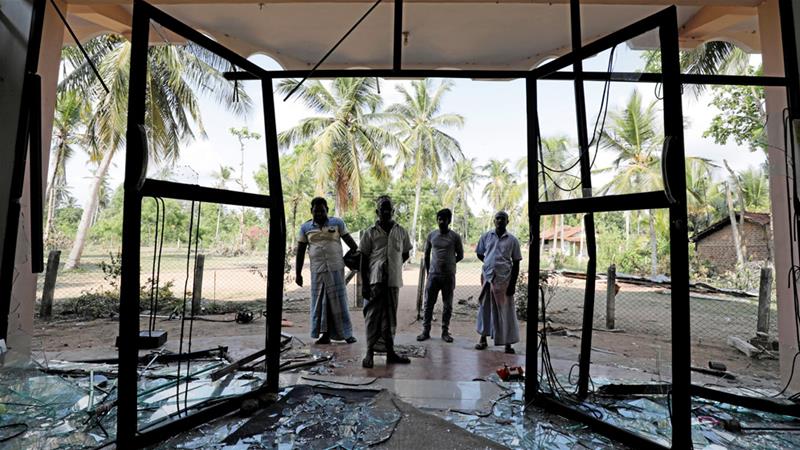
Colombo: On Monday afternoon, mobs unleashed sustained violence on a group of villages in Kurunegala district in the island’s North-Western Province, damaging several mosques in the area. Dozens of homes and shops were torched. The allegedly planned attacks prompted a police curfew and several residents spent the night in nearby jungles, The Hindu reported.
A 45-year-old man, who ran a timber store, died of stab injuries, even as two busloads of people, aided by local goons, carried out raging attacks on mosques, Muslim-owned shops and homes on May 13 at Kurunegala in Sri Lanka.
This is the worst outbreak of violence since the Easter bombings in the island nation.
“The fact that the mobs arrived in buses showed that these attacks were planned,” said Hilmy Ahmed, vice-president of the Muslim Council of Sri Lanka, an umbrella body of Muslim civil society organisations. “It was very much like the previous instances of anti-Muslim attacks,” he told The Hindu on Tuesday.
Sri Lanka has partially lifted an overnight curfew imposed nationwide after the worst bout of anti-Muslim violence since the deadly Easter Sunday bombings.
In several towns, police fired into the air and used tear gas to disperse mobs.
Tensions have been high since Islamist militants attacked churches and hotels three weeks ago on Easter Sunday, killing more than 250 people.
In a televised address, Police Chief Chandana Wickramaratne warned that officers would respond to rioters with maximum force.
Authorities also imposed a temporary ban on social media networks and messaging apps, including WhatsApp, after a clash in another part of the country was traced to a dispute on Facebook. A police source said police had fired tear gas to disperse mobs in some places in North Western Province.
In the north-western town of Kiniyama, hundreds of people stormed Abrar mosque, destroying windows and doors, burning Korans and urinating in the area of ablutions according to witnesses. The attack was triggered by a group of people demanding a search of the building after soldiers inspected a lake nearby looking for weapons, Reuters news agency reported. Authorities suspect lakes and wells are being used as hiding places to conceal weapons.
A 34-year-old man who was at the mosque said about 150-200 came towards the mosque with rods and swords on Sunday but the Muslims who were in the mosque persuaded them to go away with the help of the police.
But they came back and this time there were about 1,300 people. The Muslims, huddled in the mosque, asked the police to fire in the air to disperse the mob, but the police said the people wanted to inspect the mosque for weapons. Then the crowd surged into the mosque and ransacked it, the witness said.
“They destroyed and burned Korans, broke every glass window and door and urinated on the water storage which Muslims used to take ablution,” he said in a report by News18.
Police spokesman Gunasekera did not respond to a request for comment on the incident. But in an emailed statement he said there had been some damage to property in Hettipola area of Kurunegala district but no injuries reported.
Prime Minister Ranil Wickremesinghe also appealed for calm, saying the current unrest was hampering the investigation into last month’s attacks.
On May 14, a special police team arrested Amith Weerasinghe of Mahason Balakaya, a reactionary Sinhala-Buddhist group; and Namal Kumara, a self-declared anti-corruption activist. Thirteen others were also arrested.
Muslims make up nearly 10% of Sri Lanka’s 22 million people, who are predominantly Sinhalese Buddhists. Mob violence in central Sri Lanka targeting Muslim communities in March of last year prompted the government to declare a state of emergency.
Easter Sunday incident
On Sunday 21 April six near-simultaneous suicide bombs exploded at hotels and churches across the country. Hours later, two more bombs were detonated, with fewer casualties, as police closed in on those behind the bombings.
More than 250 people were killed in the wave of the attacks which stunned the world and the country – Sri Lanka was weeks away from marking 10 years of relative peace since the end of its brutal civil war.
Police have blamed two local Islamist groups for the Easter Sunday bombings and dozens of arrests have been made in the weeks since. The Islamic State group has said it was involved but has given no details.
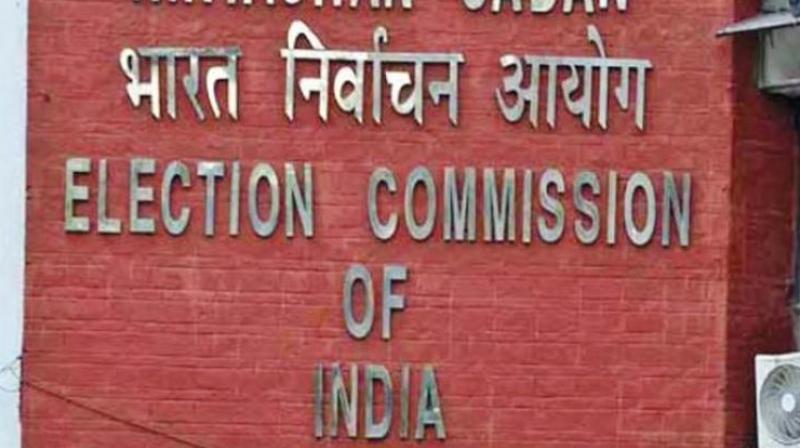
Uttar Pradesh with 80 parliamentary constituencies is the largest contributor Members of Parliament. However, it also has the distinction of maximum number of instances of violation of the Election Model Code of Conduct during the ongoing general elections. The state has reportedly notched as many as 139 cases of poll code violations out of the over 500 cases across India so far!

The largest number of violations were reported from Firozabad. Of the total 28 violations, 13 were courtesy the BJP, followed by Pragatisheel Samajwadi Party (Lohia) with 7 and the SP-BSP alliance with 6. The constituency of Rampur came in a close second with 24 violations. Key offenders here include SP’s Azam Khan who made a comment about “khaki underwear” of a female opponent and Union Minister Mukhtar Abbas Naqvi who called Azam Khan “Magambo” and “Khalnayak”.
But UP’s most prominent case is the one where Chief Minister Adityanath referred to the Indian armed forces as “Modiji ki Sena”. However, in this case Adityanath got nothing more than a light rap on the knuckles. Other prominent cases of poll code violation from UP include Culture Minister Mahesh Sharma making a derogatory remark about Congress General Secretary Priyanka Gandhi Vadra for which he was served a notice by the EC. Another offender was SP leader Feroze Khan who made a sexist remark against Jaya Prada.
Interestingly, UP Chief Electoral Officer L Venkateshwarlu told India Today that there were no pending cases.

Image Courtesy: Reuters
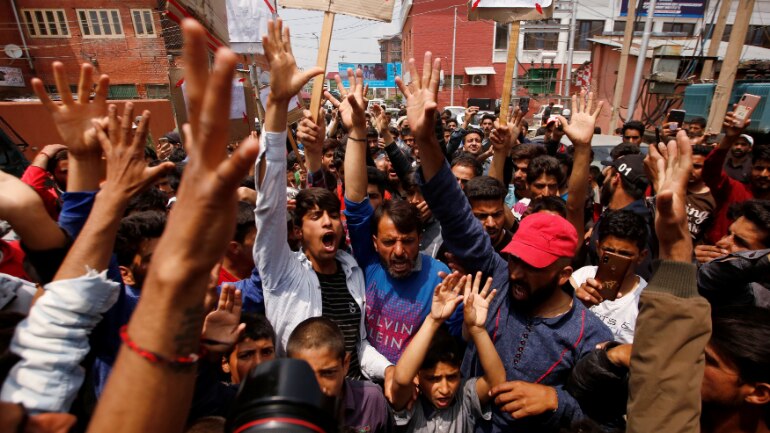
Srinagar: The Kashmir valley shut down on Monday to protest against the sexual assault of a 3-year-old girl in Sumbal area of Bandipora district in northern Kashmir. The rape of a minor during the holy month of Ramzan has rocked the valley and there are fears of protests leading to sectarian violence.
The accused has been arrested and identified as Tahir Ahmad Mir. According to locals, he raped her in the toilet of the school. Locals say that the accused was working a car mechanic in nearby Sumbal town and is 20-years-old. The accused has claimed that he is a minor.
The incident happened last Wednesday evening when a local of Malikpora, in Sumbal area of Bandipora, lured the child with chewing gum and took her to a toilet in a nearby school and raped her. Her mother found her an hour later at the scene of the crime. On her way back home, the child identified the accused, loitering in the locality. The police took him into immediate custody and formed a special investigation team to probe the crime. The school certificate of the accused said that he was a minor but senior police officials claimed they were treating him as an adult as preliminary medical tests have shown.
A narrow stretch of dirt road leads down from the tin shed where the family lives to the toilet blocks of the local school, roughly 25 feet from the child’s home.
The mother found her daughter there on May 8. “I finished the evening prayers as the mosque announced iftaar, I started looking for her outside the house and after a while, heard her calling out in a weak voice. I pushed open the bathroom door and saw her on the floor with blood on her clothes,” her mother said breaking down in a report by The Indian Express.
Unable to continue, her aunt narrates the events of the evening in the report. The three-year-old’s paternal uncle lives a short walk away from her parents’ tin shed. On May 8, the aunt said, “Her uncle walked her back to her house and dropped her right outside the door. She got busy playing and he left for his own house as prayer time was approaching.”
At this point, according to the family, the accused spotted her and bought her chewing gum from a make-shift shop just outside her house. “He took her down to the school’s toilet block and pushed her inside before locking the door.” Her mother has no sense of how long she lay there.
Protests by students, political parties and the civil society have spread across the Kashmir Valley, with calls for strictest possible punishment.
Thousands of people have taken to the streets in Kashmir which escalated into intense clashes between protesters and government forces.
At least a dozen people, including government forces personnel, were injured when tear gas and pellet shotguns were fired to quell the protests in many towns, top police officer Swayam Prakash Pani told the AFP news agency.
Accused not a minor
Protests erupted on Sunday and spread to new areas on Monday after the suspect’s family produced a school-issued birth certificate giving his age as 13.
Hundreds of students at three university campuses also protested, demanding capital punishment for the alleged perpetrator and action against the school principal.
The protesters claimed it was a fake birth certificate produced by the family to show him as a juvenile and save him from a maximum sentence of life imprisonment.
On Monday, allegations emerged that the principal of another school issued a certificate for the accused that he was a minor.
Angry villagers demanded that the school be sealed, some even attempted to set it on fire. Police said the school’s principal, who is also a close relative of the victim, has been taken into custody.
“A medical board will determine the age of accused through ossification test. We have not entertained the certificate issued by school principal” said a senior police officer. Official sources said the principal is in “protective custody” because police fear he may be harmed by angry villagers.
The family of the accused has been asked to leave the village, a neighbour said in the report by IE, “There was a lot of hostility post the incident here and we asked them to leave.”
Many took to Twitter to say that the accused was either 23 or 27 years old and had a history of assaulting minor girls, but the allegations are yet to be proven.
Sectarian violence
“While the incident has elicited widespread condemnation from across the political divide in the Valley, it has also led to fears of sectarian tension. According to the police, the victim and the accused belong to two different Muslim sects. Fears of sectarian clashes grew deeper when fake pictures and videos, apparently of the three-year-old, began circulating on social media,” Scroll reported.
Religious and separatist leaders have appealed for unity.
“Fervent appeal to all people of Kashmir to maintain unity and vigil especially in view of mischievous forces waiting to create a sectarian divide out of this most reprehensible crime against a child which is indeed a crime against all humanity,” tweeted Mirwaiz Umar Farooq, who is also the presiding cleric of the Jamia Masjid in Srinagar. “All of Kashmir stands in unison…demanding sternest punishment against the brute perpetrator.”
In Bandipora, a mass meeting of various religious sects was held at a prominent religious seminary on Monday. “All the religious groups are on the same page and have demanded exemplary punishment for the culprit,” said a senior police officer. “It’s a positive development and will certainly have an impact on the ground.”
The appeal for calm also came from the office of Jammu and Kashmir Governor Satya Pal Malik. “Governor has also talked to religious leaders of different communities and asked them to deplore this gruesome incident unanimously and make an appeal to the people to remain calm and not let antisocial elements disturb peace and harmony in the society,” said a statement from the Governor’s office on Monday.
Mortified to hear about the rape of a 3 yr old girl in Sumbal. What kind of a sick pervert would do this?Society often blames women for inviting unwanted attention but what was this child’s fault?Times like these, Shariah law seems apt so that such paedophiles are stoned to death
— Mehbooba Mufti (@MehboobaMufti) May 11, 2019
The rape of a child in Tirgaam is a travesty. @JmuKmrPolice must ensure a speedy investigation with only one consideration and that is to identify the guilty, prepare a watertight case & ensure exemplary punishment to those responsible.
— Omar Abdullah (@OmarAbdullah) May 12, 2019
The police urged the local population to remain calm and not pay heed to rumours, seeking to dislodge attempts being made to give the incident a sectarian colour. The police have also imposed section 144 in the area.
There was a massive outpouring of shock and anger immediately after the incident was reported and religious groups, separatist organisations, trade groups and political parties have rallied behind the survivor’s family.
The incident has occurred barely a year after an 8-year-old girl belonging to a nomadic Bakarwal community in Jammu’s Kathua district was gang-raped, drugged and murdered by the acquaintances of a local temple priest and policemen in January 2018, shocking the entire country. It caused widespread outrage and protests in Kashmir and many Indian cities and towns.

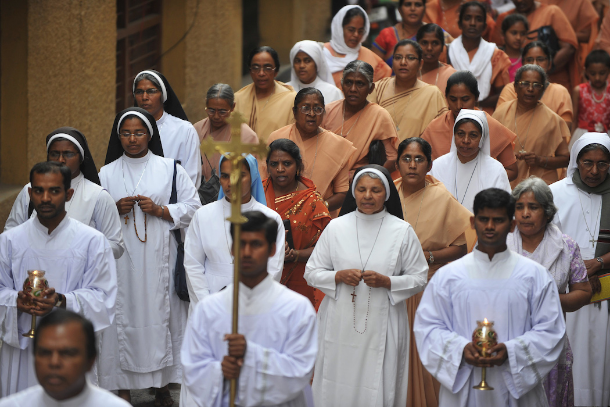
The case can be traced back to 2015, when the Tamil Nadu Income Tax Department instructed state-funded institutions to deduct tax from salaries of nuns and priests employed there. But the church officials moved HC where a single judge bench dismissed the order.
The primary argument against taxation of their incomes was that these nuns and priests had renounced the world and had taken a vow of poverty. Therefore, their salaries were salaries were surrendered to the church/diocese and no income is effectively accrued to them. No income tax has been applicable to their salaries since 1944.
Father L Sahyaraj, deputy secretary of the Tamil Nadu Bishop’s Council told ucanews.com that the order has the potential to affect over 5000 priests and nuns who work in more than 2,800 church managed, but state-aided educational institutions in TN.
But the TN IT Department then challenged the order before a Division Bench of the Madras HC. On March 20, the Madras HC had held that Canon Law, that governs the working of various institutions run by the Catholic Church, does not bind Income Tax Act. Therefore, salaries earned by nuns and priests in schools run by Christian missionaries should be subject to Tax Deduction at Source (TDS). The division bench of the Madras HC comprising Justices Dr. Vineet Kothari and CV Karthikeyan held that the salaries were received by them in their individual capacity, therefore subsequent surrender of the salary to the religious institutions can only be treated as application of income.
But the petitioners, Institute of Franciscan Missionaries of Mary, moved SC against the judgment claiming it interfered with the vow of poverty and therefore was an infringement of their right to religious freedom under Article 25 of the Constitution.
Now, the SC has stayed the Madras HC judgement and ordered to maintain “status quo as on today”. The center has asked for four weeks to respond. The case has been adjourned to August 7.

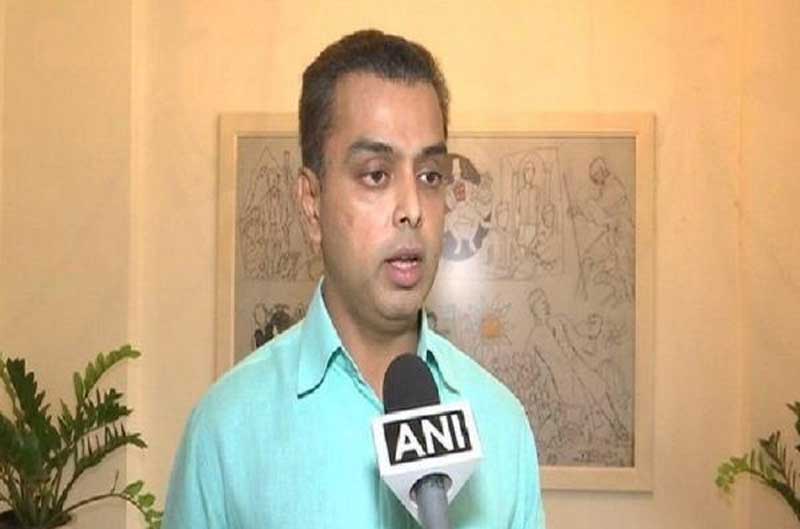
Mumbai: The Election Commission on Monday censured Congress leader Milind Deora for his reported remarks pressing the Jain community to vote against the Shiv Sena.
The poll body said that Deora, a Congress candidate from South Mumbai, violated the provisions of the model code in a speech during a rally in Mumbai.
“The Commission, after considering his reply found it violative of para 1 and para 3 of MCC and therefore Commission censured him and warned him to be more careful in future,” the EC said.
The ECI’s action came after Deora while addressing an event at Zhaveri Bazar, had accused Shiv Sena of hurting religious sentiments of Jain followers. The Mumbai Congress president urged the Jain community to teach them a lesson by not voting for the party in the ongoing Lok Sabha elections.
“Shiv Sena has been against the minorities. A few years ago, the party insulted the Jain religion by cooking meat outside Jain temples during Paryushana festival. Remember, you have to teach them a lesson through your votes,” he had said at an event.
Later, one of the Shiv Sena candidates complained to the EC stating that the allegations made by Deora were “false and are religiously sensitive”. Following this, the EC looked into the matter and had asked the police to register an FIR.
Earlier, he was served with a show cause notice for his reported remarks that Jains should teach Shiv Sena a lesson in the Lok Sabha elections for allegedly cooking meat outside a Mumbai temple during Paryushana festival in 2015.
The Paryushana festival is an annual event within the Jain community in which an eight-day fast is observed.
In 2015, the Brihanmumbai Municipal Corporation banned the sale of meat for four days during the festival. The BJP-led government had pushed for an eight-day ban but the Sena, which had a majority in the civic body, refused.
The Mumbai South constituency went to the polls on April 29. The seat is currently held by Shiv Sena’s Arvind Sawant, who beat Deora in the 2014 Lok Sabha polls.
With inputs from ANI.

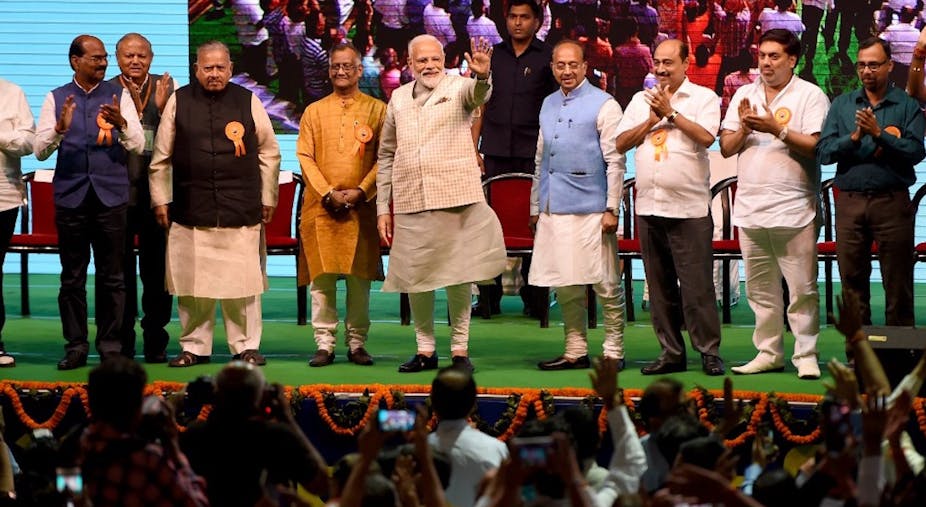
Indian Prime Minister Narendra Modi (C) waves from the stage during a traders national convention in New Delhi on April 19, 2019. Money SHARMA / AFP
Modi has been accused of favouritism toward his friend and political ally Anil Ambani, a multi-millionaire at the head of Reliance, a 1.7 billion dollar firm. In 2015, Ambani formed Reliance Defence Limited, which bypassed the mandated procedures to obtain a deal with French defence company Dassault for the sale of 36 Rafale fighters for 8 billion euros. Ambani’s company won the contract over the government-owned HAL and the deal reportedly pushed up the price of the aircraft by more than 40%. Yet Ambani’s firm was not a defence specialist.
Such examples of intertwined relationships between government and business figures in India are so frequent that a book by Financial Times journalist James Crabtree, The billionaire raj: A journey through India’s new gilded age, has become a bestseller.
In 2002 (the latest year for which figures are available) 30 of the 245 members of the upper house (the Rajya Sabha) were from business.
This involvement of business directly in politics is common. In France, 21 senators are listed as being heads of enterprises. In the United States, two notable if very different examples are the current president, Donald Trump, and the former mayor of New York (2001-2013), Michael Bloomberg.
As pointed out by Paul A. Baran of Stanford and Paul M. Sweezy of Harvard, it is rare for politicians to be open with voters about their business dealings.
Most such politicians describe their approach as “business friendly” or connections as “progress”, which in Hindi is translated as vikas. The word has been at the heart of Narendra Modi’s campaign since 2014.
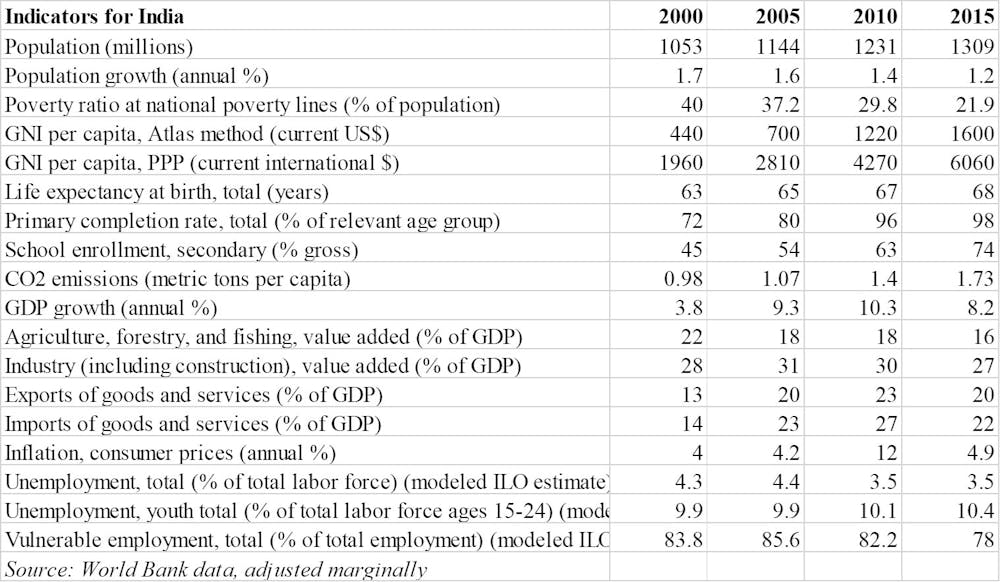
Yet the country faces serious economic and development issues. The table below is based on selected indicators from World Bank and other sources, and is important for understanding the background to the statistics being bandied. For example, when inflation was running at above 10% during 2009-2012, it was a serious election issue, but today it is not because inflation is down to 5%.

A selection of indicators from the World Bank and other sources. When data was not available, the last available figures are used. Poverty for the year 2000 is an estimate. World Bank, Author provided
Data indicate that in India poverty levels have fallen from 40% to 20%. But with a population of 1.4 billion people, the 20% figure means that 280 million of the country’s population is living in poverty – the combined total population of the biggest four or five European countries.
Certainly, India’s gross national income per capita has quadrupled, but has only tripled in purchasing power parity terms. This means that the currency is devalued against the US dollar and the real progress is significantly less. GDP growth rates have been as high as 10% in a few years, and given that the poverty ratio is reduced, part of this seems to have trickled down, as can be seen from the World Bank data. For example, almost all Indian villages have now been electrified, even though this may mean that only a small number of people actually have electricity.
This unequal access to progress is disturbing, as indicated by India’s Gini coefficient, a measure of inequality. A Gini coefficient of 0 shows perfect equality, while 1 indicates maximal inequality. A recent OECD working paper shows that income inequality is higher in emerging economies – including India, where it is almost 0.5 – than those in developed countries.
The Gini coefficient is usually looked at in terms of income or wealth: Income is a “flow” concept of what one earns over a year, while wealth is a “stock” concept of the assets one owns at a point in time. The Gini coefficient of wealth inequalities are much higher than Gini coefficients of income inequalities even in the OECD – for example, the wealth Gini of France would be 0.70, and that of the United States and most Scandinavian countries would be over 0.80.
However, for emerging countries the data required to calculate these is not available and other proxies must be used. For example, Credit Suisse reports that wealth inequality in India is second only to Russia: the top 1% and the top 10% control more than 50% and 70%, respectively, of the country’s wealth.
One of the reasons for such disparities is the tendency of capitalism to limit wages and increase profits. This is enhanced by mergers and acquisitions that increase monopoly power. This in turn leads to the rise of the “happy few” who concentrate and aggregate wealth, stock options and companies. However, there is a limit to what these few people can consume. As a result, aggregate demand falls, limiting growth and pushing into poverty greater numbers of those who need to consume but do not have the purchasing power. They in term search the cheapest solution, which is often to purchase Chinese-made goods.
In China, growth is fuelled by global demand, economies of scale and high productivity of its workers. In India, however, the share of industry seems to be rapidly declining, unable to compete with imports. Some observers such as Dani Rodrik, Amrit Amirapu and Arvind Subramanian consider that it is unlikely that industrialisation will return to India and that the country still relies heavily on its software services.

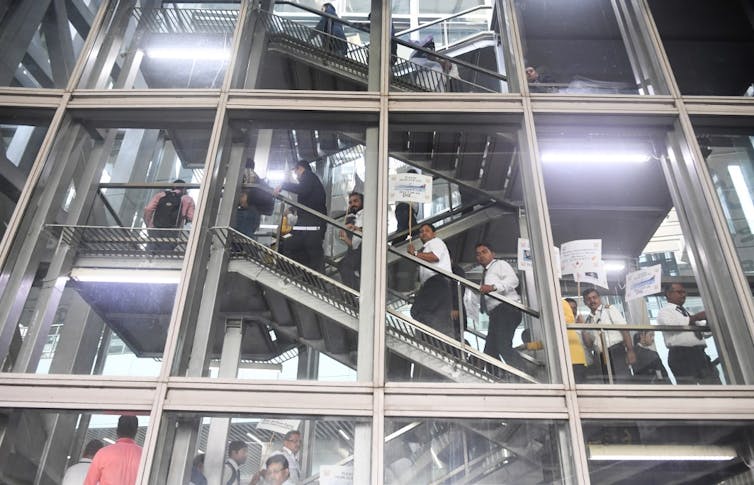
In April 2019, India’s Jet Airways announced it would declare bankruptcy. Here, employees of the carrier in Kolkata hold placards at a rally to save their jobs on April 24. Dibyangshu Sarkar/AFP
The table above shows that the value added by agriculture and industry has reduced to 16% and 27% of GDP, respectively. However, these sectors still employ a lot of people, 43% and 24%, respectively. During the elections, the votes of farmers and industry workers remained important and politicians have to appeal to the two sectors, as much as to services, whose share has grown to 33% of the occupational structure.
The working class in India are no longer the traditional voters of the waning communist parties which now rule only in the southern most Kerala State. The other major state is West Bengal, where the working class brought them to power two decades ago but have now changed their support to the regional party, Trinamool Congress, headed by Mamata Banerjee.
This partly explains why the farmers remain the core of support for several political parties. For example, the Congress Party has promised a farm loan waiver. During the ongoing elections it has also pushed its “Nyuntam Aay Yojanan” (NYAY) scheme, which would assure minimum income to all farmers.
Many in India feel that the basic infrastructure has improved, the digital divide remains a major problem for those who do not have electricity to charge phones or get Internet.
Primary education has taken a great leap forward, but secondary education has still a long way to go. Nevertheless, the secondary enrolment rate has increased by over 60% in the 15-year period reported from 45% to 74%. The life expectancy has increased very little – 68 years in India compared to 80 in developed countries, indicating that public and private investments in health have not kept up.
At the same time, pollution has doubled since 2000, as indicated by the CO2 emissions. According to a recent statement by Greenpeace 22 of the world’s most polluted cities are in India.

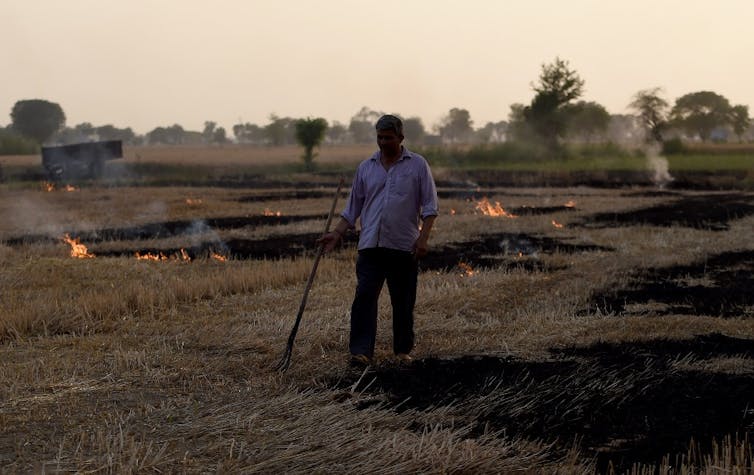
An Indian farmer walks as he burns straw stubble on his field on the outskirts of Faridabad, in the northern Indian state of Haryana (April 18, 2019). Money Sharma/AFP
Unemployment today in India is only 6.7%, considerably below that of France and many developed countries, but 80% of the jobs are vulnerable or within the informal sector. This represents a demographic time bomb, as most of those who fall victim to unemployment are men and women between 15 and 24 years. As indicated in the table, their unemployment rate in 2015 was 10.4%, almost three times the overall figure of 3.5%.
The impact of youth unemployment is particularly severe, as recent studies have demonstrated that it can create or increase substance-abuse issues and mental problems.
But with India’s GDP growing at 8% per year, the impact on politics has been considerable. Many Indian voters seem willing for the moment to overlook the everyday struggles they may face, hoping that the trickle-down effect of a “business friendly” government will help the overall economy.
Courtesy: The Conversation
Join our mailing list to get the latest human rights news that matters, straight to your mailbox.
© Sabrang | All Rights Reserved