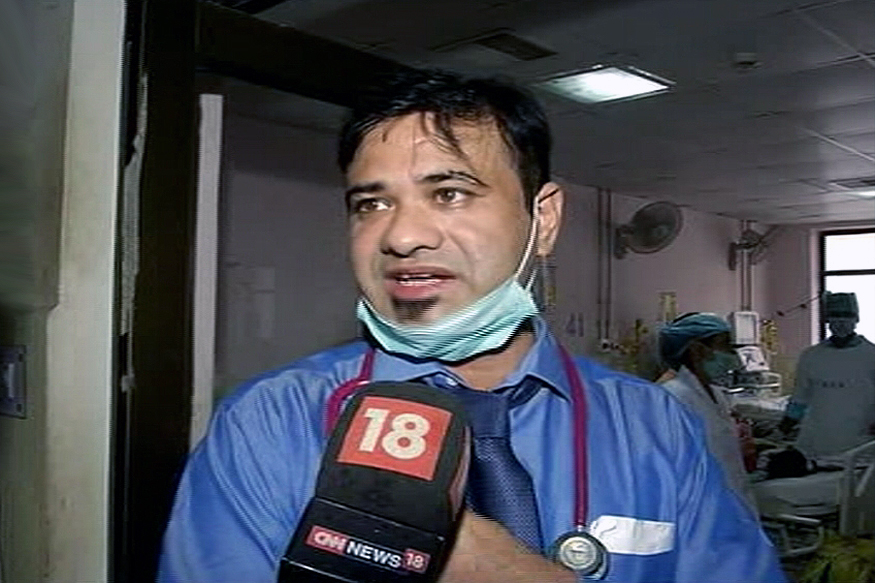
On May 10, a division bench of Hon’ble supreme court of India comprising Justice Sanjay Kishan Kaul and Justice Indira Banerjee ordered the enquiry regarding suspension of Dr. Kafeel Khan to be concluded timely and has further directed the Yogi Adityanath government in Uttar Pradesh to pay all subsistence allowances payable to Dr. Kafeel Khan pending his suspension.
New Delhi: On May 10, a division bench of Hon’ble supreme court of India comprising Justice Sanjay Kishan Kaul and Justice Indira Banerjee ordered the enquiry regarding suspension of Dr. Kafeel Khan to be concluded timely and has further directed the Yogi Adityanath government in Uttar Pradesh to pay all subsistence allowances payable to Dr. Kafeel Khan pending his suspension.
Dr. Kafeel was represented before the Court by Senior Advocate Ms. Meenakshi Arora and Advocate on Record Fuzail Ahmad Ayyubi.
In a video posted on his Twitter account, Dr. Kafeel Khan stood in front of the Supreme Court and spoke about the order. He said that the Yogi government will have to speed up the trial and pay him subsistence allowance pending for 20 months.
SC orders UP government to pay dues to Dr Khan
SC orders UP government to honour the Allahabad HC order which had on 7th March 2019 asked UP govt to conclude departmental inquiry against Dr Khan within 90 days https://t.co/A3FwSYA0kQ
In the video, he said that the Yogi govt wants the case to remain suspended so that an enquiry against the real culprits is not taken up. He named the two doctors and said that their greed for 10% commission had led to 70 children dying at the BRDO Hospital. He was thankful to the Supreme Court for giving him relief during Roza.
A Twitter campaign to revoke Dr. Kafeel Khan’s suspension order was announced on March 15. “It’s been 18 months and I am still suspended. Even though the High Court has given me a clean chit, the Yogi government is neither revoking my suspension nor letting me serve,” he said announcing the campaign, adding that he was being punished for a crime he didn’t commit and he needed public support.
He has urged Twitter users to use the hashtag #RevokeDrKafeel and use links of the #BRDOXYGENTRAGEDY in their tweets and urge the government to revoke his suspension. “Please help me to raise my voice. I just tried to save innocent kids,” he said.
In December 2018, talking straight from the Gorakhpur criminal court, Dr. Kafeel Khan said that things have not changed much in the last one and a half years. “What should have been finished in 90 days since the Supreme Court order, is still going on one and a half years later. No enquiry has begun,” he said.
In September, suspended paediatrician of BRD Medical College Hospital Dr. Kafeel Khan was arrested by Bahraich police for allegedly creating nuisance at the district hospital and later granted bail. A day after he was granted bail, Gorakhpur police arrested him and his brother for allegedly opening a bank account in a nationalised bank using fake documents.
He was arrested following deaths of around 30 children in August at the BRD Medical College. The kids had allegedly died of disruption in the oxygen supply in August 2017. In April 2018, Khan got bail in the case but has been mired in different conspiracies along with a vicious attack on his brother ever since he decided to take on the authorities.
Dr. Kafeel Khan, the head of the encephalitis ward in the hospital, managed to save many lives and the parents in the hospital said that had it not been for his work, the number of deaths could have been higher.
However, this did not make Kafeel Khan a hero in the eyes of the administration. Khan was booked for criminal conspiracy, attempt to commit culpable homicide and criminal breach of trust by a public servant, among others. The police filed the chargesheet in November 2017.
Lodged in a Gorakhpur jail since September 2, 2017, Dr. Kafeel Khan in his letter alleged that he and others are being made “scapegoats” for an “administrative failure” at a higher level.
In one of the most extensive interviews, Dr. Kafeel Khan spoke to Human Rights activist Teesta Setalvad on the chilling accounts of what happened during the tragic 48 hours in August 2017. Dr. Khan was hailed as a hero initially and in a day’s time, he was haunted as the most wanted. Even though the public got to know that it was the lack of oxygen which caused the deaths of children, we do not know everything that happened in-between.
Dr. Kafeel Khan dismissed point by point, all propaganda to the contrary. He also went on to describe how Yogi warned him and how he had to pay a heavy price for doing his duty. In one of the most chilling disclosures, Dr. Khan sought everyone’s attention to what happened in the other departments of the hospital on the same days. The liquid oxygen had run out of supply to all the other departments as well, but nobody talked about it.
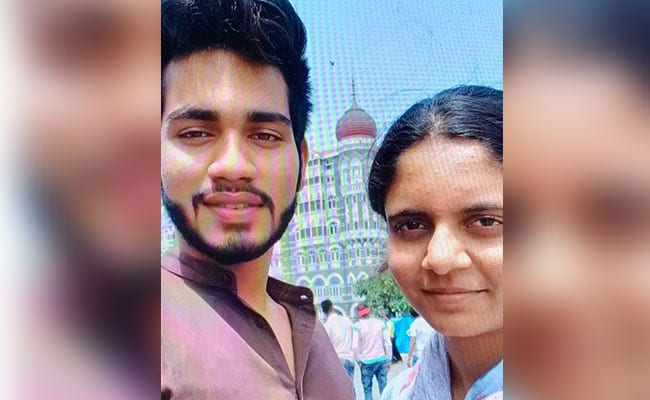
According to the latest reports, an FIR has been registered against three family members of Shete at Pune’s Talegaon Dabhade police station. This comes after Shete had written to the National Commission for Women (NCW) seeking its intervention, fearing the violent backlash from her family for being in a relationship with Aghwate.
“In the FIR, the 19-year-old Priyanka Shete has mentioned that her family has been threatening to kill her as she wants to get married to a person who belongs to lower caste. We have registered an FIR against three persons of her family and further investigation is underway,” the police said.
FIR has been registered under sections 344 (wrongful confinement for ten or more days), 352 (assault or criminal force otherwise than on grave provocation), 323 (voluntarily causing hurt), 506 (criminal intimidation) and 507 (criminal intimidation by an anonymous communication).
Shete’s counsel, Advocate Nitin Satpute, said that the police did not make arrangements for her security despite receiving a request. “What we see here is a clear violation of the Supreme Court’s order in the Lata Singh vs State of Uttar Pradesh case. In any situation where a couple comes under threat for planning an inter-caste marriage, it is the duty of the state to protect their lives. Nobody can stop their marriage. In fact, the government offers Rs. 50,000 for inter-caste marriages, especially if the groom belongs to the lower caste. But the police here seemed least bothered to protect this couple, forcing us to approach the court,” Satpute said.
Earlier Ms Shete had sought protection under Article 21 of the Constitution, which guarantees personal liberty to every citizen, because her family was opposed to their relationship.
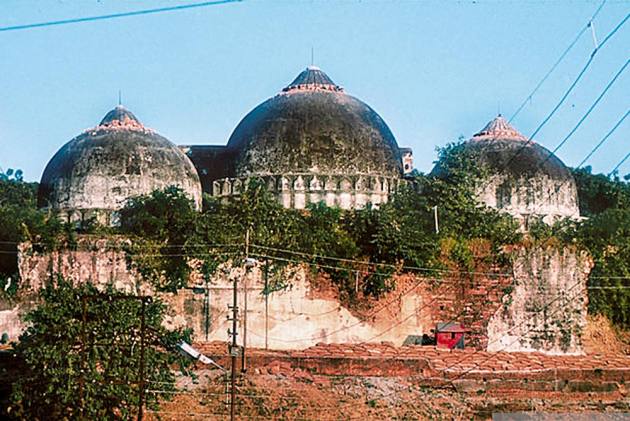
The Supreme Court has granted an extension to the team that is mediating between various stakeholders in the Ayodhya dispute to find an amicable solution. The mediation team comprising former SC judge FM Kalifulla, spiritual guru Ravi Shankar and senior advocate Sriram Panchu now has until August 15 to deliver a solution acceptable to all parties.
A bench comprising Chief Justice Ranjan Gogoi, and justices SA Bobde, DY Chandrachud, Ashok Bhushan and S Abdul Nazeer are presiding over the case. As many as 14 appeals had been filed against the 2010 judgement by the Allahabad High Court that directed the 2.77 acres land at the disputed site be partitioned equally among three parties, namely; Sunni Waqf Board, Nimrohi Akhada and Ram Lalla (the infant deity).
CJP had also filed an Intervention Petition requesting that the dispute be seen as more than just a property dispute, but one that threatens the socio-cultural fabric of India. The petition was signed by over 30 eminent citizens including Aparna Sen, Shyam Benegal, Anil Dharkar, Medha Patkar, Aruna Roy, Anand Patwardhan, Teesta Setalvad, Cyrus Guzder, Sohail Hashmi, John Dayal, Kumar Ketkar, Dolphy D’ Souza, Kiran Nagarkar, MK Raina and Joy Sengupta among others. Though our petition was dismissed we are happy to note that the SC has focused on healing. When the matter was referred for mediation in March, Justice Bobe had reportedly remarked, “We are looking at minds, hearts and healing if possible.”
The next meeting between stakeholders will take place in June.
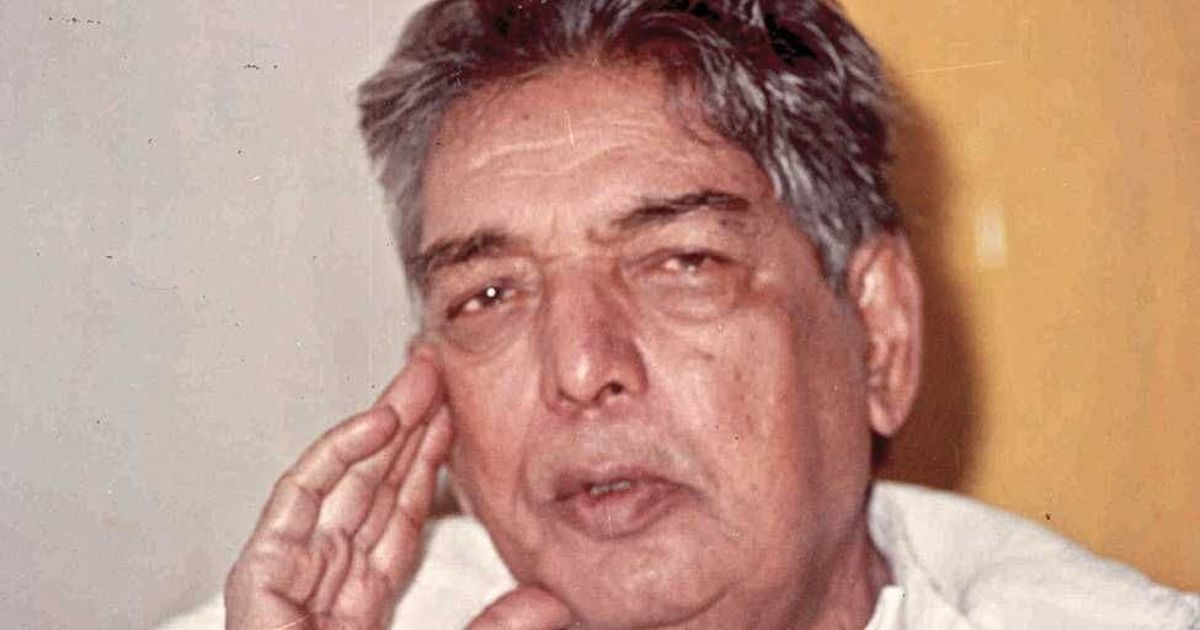
Kaifi Azmi was a romantic, revolutionary, contrarian and rebel. Azmi was initially educated in Islamic seminaries, became a celebrated poet-lyricist in the Hindi film industry and eventually became a true adherent of Marxism, dedicating his life to the service of the Communist Party of India.
Mumbai: It is the year of Kaifi Azmi. His birth centenary was celebrated earlier this year and today is his 17th death anniversary.
He was a gifted poet and lyricist. His first film as a lyricist in Hindi cinema was Buzdil followed by Kaagaz Ke Phool, Anupama, Hanste Zakhm and Arth. Azmi is also remembered for his screenplay – dialogues in M S Sathyu’s Garam Hawa and Chetan Anand’s Heer Ranjha in verse.
The celebrated poet-lyricist, who passed away on May 10, 2002, due to a prolonged illness, gave Bollywood some of its most stunning classics, tapping his Urdu prowess to celebrate emotions as diverse as romantic love and patriotism. ‘Waqt Ne Kiya Kya Haseen Sitam‘ (Kaagaz ke Phool, 1959) to ‘Tum Itna Jo Muskura Rahe Ho‘ (Arth, 1983), are some of his most celebrated works.
In 1975, he won the National Award and Filmfare Award for screenplay and dialogues in M.S. Sathyu’s Garm Hava.
Born Athar Husain Rizvi on January 14, 1919, in Mijwan, near Azamgarh, present-day UP, to a zamindar family, Azmi wrote his first ghazal when he was 11 years old:
“Itna to zindagi mein kisi ki khalal pade Hansne sey ho sukoon na roney sey kal pade Jis tarah hans raha hoon main pii pii ke ashk-e-gham Yun doosra hanse to kaleja nikal pade”
It was later sung by legendary ghazal singer Begum Akhtar.
Azmi was initially educated in Islamic seminaries, but eventually became a true adherent of Marxism, dedicating his life to the service of the Communist Party of India. He joined the Communist Party at 19 and turned columnist for Qaumi Jung when he shifted from Azamgarh to Mumbai. He wrote Aavara Sajde (Vagabond Obeisances) when the CPI and CPM split in the 1960s.
He was married to actor Shaukat Azmi and had two children, actor Shabana Azmi and cinematographer Baba Azmi.
In the last 20 years of his life, he returned to his home in Mijwan and transformed it into a model village. In recognition of his efforts, the UP government named the road leading to Mijwan, as well as the Sultanpur-Phulpur highway after him. A train from Delhi to Azamgarh is also named after him, the Kaifiyaat Express.
In 1993, he set up Mijwan Welfare Society for the girl child and women in rural India, and made education and skill training its fulcrum. Namrata Joshi wrote for The Hindu that Kaifi had once told his son in passing that it would be nice if a film were made in his birthplace, Mijwan. “This week, Baba begins shooting Mee Raqsam (I Want To Dance), the story of a father and daughter, in the U.P. village. It stars Aditi Sharma, a 14-year-old Mijwan resident, in the lead and is expected to be ready for release by the year end, in a fitting finale to the Kaifi year,” she wrote.
“An interesting story about my father: He was always different. His mother used to recall that, in spite of being born to a zamindar family in the village of Mijwan in Eastern UP, Athar (he took on the pseudonym Kaifi much later) would refuse to wear new clothes on Eid because the kisan’s children who tilled their land could not afford to do so. His father Fateh Hussain was very fond of Urdu poetry and his two elder brothers also wrote poetry,” Shabana Azmi, the celebrated actress wrote for The Print.
“He was sent to the Sultanul Madaris in Lucknow for religious learning. Within weeks, he formed a union and rallied the students to go on strike against the institution. He was thrown out,” she wrote.
“From there, he went on to Kanpur and started working with factory workers, took on the pseudonym Kaifi, and began writing revolutionary poetry. This caught the attention of Communist leader Sajjad Zaheer, and he was invited to Bombay to write for the paper Qaumi Jung. He joined the Communist Party formally and found the path on which he was to traverse the rest of his life,” she added.
He joined the Progressive Writers Association in 1936 where he wrote about social justice, communal harmony, gender justice, and the plight of farmers. Along with other writers of the Progressive Writers Association, he believed in using writing as an instrument for social change, she wrote.
“Remembering her growing up years in the Red Flag Hall in Mumbai, Shabana says her father, born in ‘ghulam’ India, was confident he would die in socialist India. But the violence in independent India shook him. She describes how shattered he was by the Gujarat carnage in 2002. “I would watch him as he looked at the television coverage, face frozen in pain. But, he would say that the common man craves roti, kapda aur makaan, irrespective of the faith he follows, and that this madness will pass,” The Indian Express reported.
The report added that a decade ago, it was the sadness at the demolition of the Babri Masjid on December 6, 1992, that had made him write his seminal poem, Doosra Banbas. He wrote: …Paanv Sarju mein abhi Ram ne dhoe bhi na the/Ki nazar aae wahan khoon ke gahre dhabbe/Paanv dhoe bina Sarju ke kinare se uthe/Ram ye kehte hue apne dware se uthe/Rajdhani ki faza aai nahin raas mujhe/Chhe December ko mila doosra banbas mujhe (Ram had not even washed his feet in the Saryu river/When he spotted blots of blood/He got up saying/The capital’s ambience doesn’t appeal to me/I was exiled a second time on 6th December). Kaifi also played a role in Saeed Mirza’s Naseem in 1995, a poignant film on the fissures that surfaced in India after 1992.
Kaifi Azmi was a romantic, revolutionary, contrarian and rebel. The report added, “a poet who often brought together disparate themes in his works, Kaifi, who died in May 2002, is best summed up in a tribute by his son-in-law and and poet Javed Akhtar. In his poem Ajeeb Aadmi Tha Woh, a tribute to Kaifi, he writes: Woh aankhein jinmein hai sakat/Woh hont jin pe lafz hain/Rahunga inke darmiyaan/Ki jab main beet jaaunga/Ajeeb aadmi tha woh (The eyes that have power and strength/And the lips that have the words/I will remain, between the two/ Even when I shall pass/What a strange man he was).”
The BJP backers who continue to pretend as well wishers of the Sikhs had actually meekly supported both the army attack on the Golden Temple Complex and the anti-Sikh massacre in 1984. The late Nanaji Deshmukh, the towering RSS leader, had justified these events and instead blamed the Sikh leaders or these bloody episodes. Early this year, the BJP government gave the Bharat Ratna, the highest civilian award to Deshmukh posthumously.
In sheer desperation to win the second term, the ruling right-wing Hindu nationalist Bhartiya Janata Party (BJP) has intensified its attacks on the opposition Congress party over its complicity in the 1984 Sikh massacre.
Thousands of innocent Sikhs were murdered across India in mob violence in the first week of November 1984 following the assassination of the then Prime Minister Indira Gandhi by her Sikh bodyguards. The supporters of Gandhi’s so-called secular Congress party were seen leading the gangs involved in the bloodbath.
35 years later, the BJP government led by Prime Minister Narendra Modi is locked in a tough electoral battle with the Congress party. Modi who came to power in 2014 with a brute majority has failed to deliver on a number of issues as a result of which it might lose the ongoing general election. On top of that, the BJP government faces criticism for patronizing organized violence against religious minorities, particularly the Muslims and Christians.
The BJP think tank and its mother organization Rashtriya Swayamsewak Sangh (RSS) wants to transform India into Hindu theocracy and considers Islam and Christianity as foreign religions, while Sikhism as part and parcel of the Hindu fold.
The past five years have seen a spike in vicious attacks on Muslims and Christians, even as their assimilationist policy toward Sikhs has also been resisted by many Sikh organizations, barring Akali Dal that is the mainstream Sikh political party of Punjab.
Akali Dal has remained a staunch ally of the BJP and considers Congress as its main enemy force.
The past hostilities between Akali Dal and Congress has brought the former closer to the BJP which is an important national party. To the advantage of the BJP, the ugly political events of 1984, including Sikh massacre had widened a gulf between the Congress and Akali Dal.
This is despite many complexities of the saga of 1984. If Congress was the main driving force behind anti-Sikh violence, the BJP must also share blame for it.
The murder of Indira Gandhi was the result of the army invasion of the Golden Temple Complex, the holiest Sikh shrine in Amritsar in the month of June that year. The military attack was ordered to deal with a handful of militants who had fortified the place of worship. The ill-conceived army operation that left many worshipers dead and historical buildings inside the complex heavily destroyed was preventable. But Indira Gandhi wanted to indulge in something spectacular to win the forthcoming general election by polarizing Hindu majority against the Sikhs who only make two per cent of the Indian population.
The government was trying to take advantage of the anti-Sikh wave that gripped the Indian mainstream because of the murders of Hindus in Punjab. The Indian establishment frequently blamed those hiding in the Golden Temple Complex of carrying out these killings. The army attack on the martyrdom day of the fifth master of the Sikh faith had left a heavy casualty of innocent pilgrims. The Sikhs felt completely alienated after such a ruthless attack on their spiritual centre.
The BJP backers who continue to pretend as well-wishers of the Sikhs had actually meekly supported both the army attack on the Golden Temple Complex and the anti-Sikh massacre. The late Nanaji Deshmukh the towering RSS leader had justified these events and instead blamed the Sikh leaders or these bloody episodes. While on one hand, Prime Minister Modi and other senior BJP leaders have been raising noise over the involvement of Congress party in the Sikh massacre, early this year, the BJP government gave the Bharat Ratna, the highest civilian award to Deshmukh posthumously.
It is pertinent to mention that the BJP supporters not only celebrated the attack on the Golden Temple Complex, many of them also participated in the Sikh massacre. This explains why Indira Gandhi’s son Rajiv Gandhi won the next election with a huge majority riding on anti-Sikh tide, whereas the BJP was reduced to the strength of only two MPs.
Even otherwise, the BJP did the same to Muslims in Gujarat in 2002. Thousands of Muslims were slaughtered in the state following the burning of a train carrying Hindu pilgrims. Over 50 people had died in the incident that was blamed on Muslim fundamentalists even though one commission of enquiry found that it was an accident.
It is widely acknowledged that Modi, who was the Chief Minister of Gujarat back then, was directly responsible for allowing the mobs to target Muslims with the help of the police. The technique was no different than the one applied on the Sikhs in 1984. Much like 1984, 2002 violence against Muslims paid electoral dividends to Modi in the next assembly elections.
Today, Modi and the BJP unashamedly describe 1984 as terrorism and genocide, but won’t accept such terminology to define the incidents of 2002. We all know that Congress was responsible for 1984, and we don’t need a party whose own hands are smeared with blood to remind us of that. Congress was and remains accountable for that. Especially the reaction of a senior Congress leader Sam Pitroda to these allegations didn’t sit down well with the Sikh community. By brushing aside these accusations saying, “what happened, happened” he has only shown that Congress lacks genuine remorse for what it did to the Sikhs in 1984. The recent appointment of Kamal Nath, a senior Congress leader involved in the massacre as the Chief Minister of Madhya Pradesh makes it more obvious.
It’s a shame that the Congress wants us to forgive and forget the past, while continues to shed tears for Indira Gandhi on her death anniversary every year. Congress must acknowledge its sins and stop taking the support of anti-BJP voters for granted.
That said, the BJP cannot deny the fact of being a party with an agenda to turn India into a homogenous fascist Hindu nation with no future for minorities. What separates it from the Congress is that the latter indulged in sectarian politics for opportunistic reasons, whereas the BJP has a well-thought-out policy program based on the idea of an exclusionist society. By repeatedly bringing up the past deeds of the Congress, BJP can neither escape from its own failures nor hide its real face.
The BJP is only using the 1984 issue as a trump card for a couple of reasons. Firstly, it suits them to rake up any such baggage against Congress to dilute allegations of spreading religious hatred against the BJP and silence its critics. Secondly, the BJP knows that it isn’t going to gain much from the Sikhs and people in Punjab as they make a small minority and only 13 seats in the parliament. Significantly, Modi magic didn’t work in Punjab during the 2014 election and isn’t likely to work this time either.
The BJP knows that the 1984 issue has been kept alive by the Sikh Diaspora for all these years. Since Sikhs have made progress outside India and hold the power of balance in many countries, such as Canada, US and UK, by trying to keep them on their side they want to showcase to the global community that they aren’t really anti-minority. A case in point is their use of word genocide to describe the Sikh massacre that has until now been vehemently opposed by the pro-India lobby and Indian diplomats in countries like Canada.
The BJP obviously understands this and one does not need rocket science to figure this out.
Prison walls or iron bars can’t hide truth, torture or harassment can’t detain anyone for long…
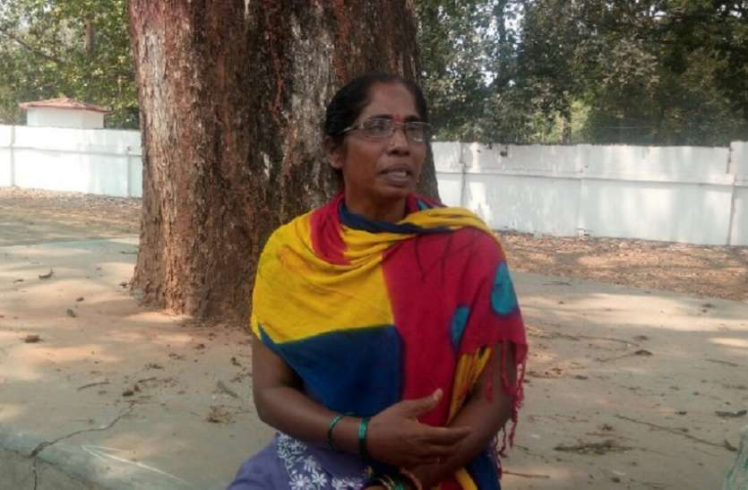
That was proved on April 3, 2019 when a brave woman Nirmalakka travelled from Sukma to Kunta for two hours with around twenty journalists after her release from jail in Chhattisgarh. After 12 years in jail, she was finally acquitted from all cases. (“Framed in 157 cases, woman gets acquitted in all, released after 12 years from Chhattisgarh prison”, by Shams Ur Rehman Alavi, newsbits.in). Her family members reached Jagdalpur central jail along with court orders accompanied by lawyers.
Life of struggle
In 1989, at the age of 22, Venkatalakshmi alias Nirmala began to work among the people leaving her native place in Andhra Pradesh. In 1994, before moving to forest area of Chhattisgarh, she learned about the lives of tribals besides, she learned languages like Tamil, Hindi, Marathi , Kannada and tribal languages Gondi and Halbi and formed a political base for future movements.
She started to acquaint with socio-economic and cultural situation of the adivasis and how they are being exploited by the corporates who are occupying forests for their wealth and mining purposes. She stood by them and helped them by treating their wounds sustained in gunfire. Despite the ruthless oppression of state and ‘salwa judum’ atrocities and her failing health, she continued to provide staunch and effective leadership for the poor women with her speaking firepower.
Imprisonment
On July 5, 2007, she was imprisoned along with her husband and others. She was even subjected to torture in front of the villagers and threatened them with dire consequences if they dare to follow her.
Trial and release
She was not allowed to appear for trials in the first few years. Even in the court warrant, nothing was mentioned except her name till she protested the procedure. She used to prepare her arguments and had her lawyers argue on the notes prepared by her for ten years. She had to struggle all these years to defend herself.
At last, she was not proved guilty in any one of the cases. There was no evidence to prove her links or involvement in any terrorist or extremist violence. She was incarcerated for her ideological beliefs.
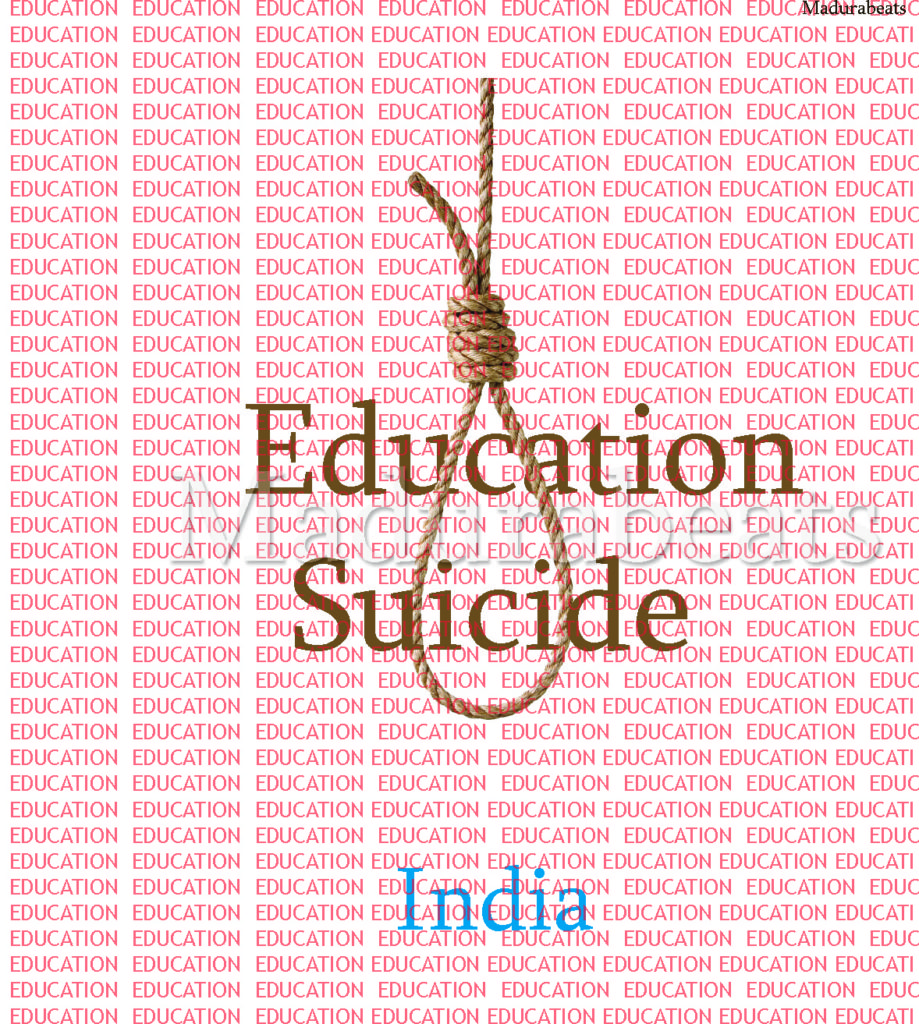
It is not that education is in crisis. Education is a crisis now. When people involved in education face problems in practicing it, it is an educational problem or educational crisis. Education as a crisis is it has become an instrument of crisis in society. How? Everyone, be it a politician, administrator, educationist, teacher, parent, student and thinker wants education to become an instrument of change and transformation, but in their own perspective and perception. Education needs to fulfill the basic material needs of an individual is one thing, a major thing, but it needs also serve the greater purpose of societal and human needs of transforming the society to another level of human development. Does it serve the purpose? It is time for all stake holders of education to reflect and introspect on it. ‘Current tragedy’ of suicides by children soon after the board examination in the state of Telangana and the places where the coaching factories operates stands a testimony of how education is posing a crisis in today’s children, parents, teachers and the society as a whole. An education which is mandated to nurture children with values and qualities to face the world with courage and determination is killing them. The recently reported number of suicides reported in the above mentioned state is about 20. This is only reported and there may be many more. Why do children commit suicide? This is an open open known fact. They expected above ninety, but failed or secured less than the expected number. Who expected – the child, parent, school, everyone in the neighbourhood and whole country? Yes, the whole country expects only above 90 and cracking the high stake examination like the NEET, IITJEE and to realise the great ‘Indian American Dream’. No one asks for how the child with her familial and school circumstances has been able to put up a brave face and cleared the examination. Everyone wants to be the first class first ranker so that they can get into the premier institutions and move to any other lucrative job giving country. Aspirations are not a crime; everyone should aspire to achieve something in life. Do we need to put our children’s life at stake and push them to end their life? The most worrying thing is nobody seems to bother about these suicides, loss of young lives. It is news, as usual, part of 24X7 breaking news. They are repeated once or twice and forgotten. Release of the highest money invested movie, slapping of a politician or an official or by someone who matters, who has twin electoral voting cards, drunken driving accidents are reported a hundred times and discussed in the ‘yelling intellectual talk shows.’ Death of 20 children after a board examination is only passing news. It appears this country has come into terms with educational suicides as normal or ‘new normal’. Even educationist and educational administrators seem to be accepting it as normal.
It is high time that the country woke to the bitter truth that our educational system has become a crisis. Children are burdened for unfounded reasons. Education has been commodified to the extent that rich get rich education and poor get poorer education. Privatization of education is the order of the day. The state where the suicides has happened has a series of residential schools where children are stressed to the extent that they have no time except studying, coaching, drilling and learning the techniques of cracking the board examination and high stake entrance examinations like NEET and IITJEE. Quarter of a century ago (in 1992-1993) as a follow up to eminent writer R.K. Narayan’s maiden speech in the Rajya Sabha the then Prime Minister Rajiv Gandhi appointed a committee to study the burden on children under the chairpersonship of noted scientist and educationist Professor Yashpal. The report of the committee, rightly titled as, Learning Without Burden, brought out appalling condition of teaching-learning in school which burden children. There were efforts to reduce burden- no or less homework for early learning stages in primary school, reduction in the number of tests, abolition of corporal punishment, reduction of curriculum load were some of the initiatives. National Curriculum Framework – 2005 (available at www.ncert.nic.in) which is under implementation across the country has also recommended reduction of curriculum load as one of its five guiding principle. Right to Education Act 2009 (which is now diluted) also set some non-negotiable norms to make learning less burdensome for children in school. But the real stress and trauma begins in high school where learners think of or are made to think of their higher education and making a career. This is being influenced by many factors. Who decides this matter more than what the children wants to become in life. Majority of the cases it is not the child who decides what she will do in her higher education. It is the over ambitious parents, skewed society which runs after one kind of professional courses or looking forward to job outside the country. This shows that school education has failed to instill confidence in our children. The gap between board examination and the high stake entrance examinations is another major reason for this tragedy. Has education failed? No. Even it has, we ought to believe that education cannot fail. The way it is practiced has become a threat to children and society as a whole. It is high time that the governments, particularly state governments and institutions working in and for education of children in school gave a renewed thinking on the crisis. Any concerned citizen would not hesitate to suggest that there needs to be high level committee of educationist, administrators, politicians, people from judiciary, writers, thinker, artistes, students and teachers to delve deep into the problem and check the educational menace which affects the society as a whole before it (education) becomes a catastrophe.
Dr. Ramanujam Meganathan rama_meganathan@yahoo.com Associate Professor of Language Education Department of Education in Languages National Council of Educational Research and Training (NCERT) Sri Aurobindo Marg, New Delhi 16
New Delhi: The cow trade at a leading cattle fair in Rajasthan, India’s second-largest cattle-trading state, fell 95% over six years to 2017, an indication of the decline in cow rearing–once a popular livelihood choice–during the tenure of the Bharatiya Janata Party (BJP).
In 2011, at the state’s biggest animal fair held at Tilwara in Rajasthan’s western district of Barmer, 7,430 cows were traded for Rs 1.35 crore. By 2017, the number of cows at the fair fell to 342, as revenues declined to Rs 7.3 lakh, according to official records made available to IndiaSpend.
These trends held true across Rajasthan. At cattle fairs in the state in 2018, only 500 of 2,000 (25%) animals brought were sold, Down To Earthreported in January 2019. This was a 44% fall since 2012-13, when 37,000 of 54,000 animals brought to the fair were traded.
Also, despite the BJP’s multiple official missions to protect the cow, especially vanishing native breeds, Rajasthan’s rare desert variety, the Tharparkar, moved closer to extinction over the five years of the BJP’s rule, according to an ongoing Cattle Survey started in 2017.
In arid desert districts absent of industrial activity, cattle rearing has traditionally been a lifeline for Hindus and Muslims. But our investigations across the rural areas of Jaipur, Jodhpur and Barmer showed that cow vigilantism–right-wing lynch mobs attacking people on suspicion of cow slaughter or smuggling–had terrified villagers into abandoning businesses associated with the cow.
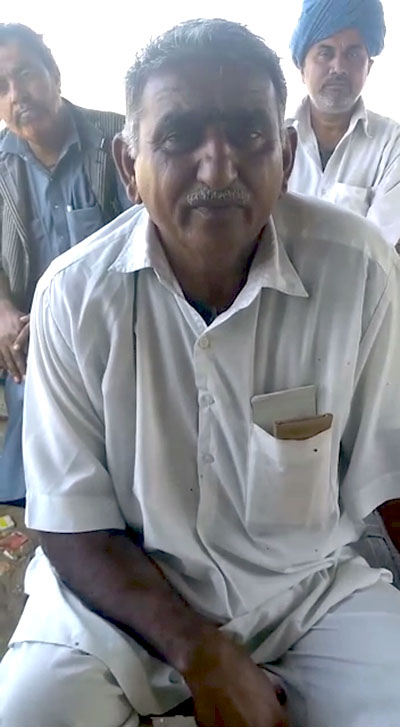
“Around 95% villagers from the (Muslim) community in the two bordering districts have abandoned the cow business because of threats from the Hindutva brigade,” said Mohammed Isha Khan of Barmer’s Derasar village.
The cow, with a daily milk yield of around 6 litres, has lost its place as India’s primary milk provider to the buffalo, which yields approximately 12 litres. But its market value took a further blow when severe cow protection laws were brought in by BJP governments at the Centre and in states and vigilante attacks became frequent.
Between May 2014 and March 2018, 45 people were killed in cow-related violence across nine states, as per the union home ministry. Rajasthan reported seven such incidents over the same period.
From 2010 to-date, 127 cow-related attacks have been reported across 22 states, according to a FactCheckerdatabase that tracks English media reports of such violence. Over 98% of these attacks took place after May 2014, when the BJP came to power at the Centre. Rajasthan has reported 10 such attacks, the database shows–all after 2014.
Farmers who could no longer sell ageing cows to the bovine trade had to either bear the cost of feeding them or surreptitiously turn them loose. These stray cattle have ended up raiding and destroying farms. This is particularly the case in states situated in India’s heartland where the enforcement of cow protection rules has often led to violence–Madhya Pradesh, Uttar Pradesh and Rajasthan.
“Stray cattle have emerged as a major issue in recent years,” Rajasthan’s additional chief secretary (animal husbandry), Pawan Kumar Goyal, told IndiaSpend. “There are 2,727 registered goshalas (cowsheds), which are not financially viable at all. They aren’t admitting any old and infirm cows or calves. These are roaming the streets and fields, harming the crops.”
The number of cows dying on India’s railway tracks increased 112% over three years to 2018, the Indian Expressreported in August 2018.
There were 2,183 cases reported across India in 2015-16 but the number rose to over 10,105 in 2017-18, a 362% rise. Most of these deaths are from the Hindi heartland, the report said, where cow protection has been a strident issue since the BJP assumed power.
In February 2019, nearly 500 cows reportedly died of starvation at the Hingonia cowshed near Jaipur. On January 23, 2019, Rajasthan’s chief minister Ashok Gehlot alleged that more than 70,000 cows died over five years from 2013 to 2018.
Pramod Jain Bhaya, Rajasthan’s gopalan (cow welfare) minister, admitted that there were several “legacy issues” the Congress government was dealing with. “On March 2, 2019, the state government had convened a conference with cowshed owners at Jaipur,” he said. “Based on their suggestions, we will frame a policy.” Rajasthan was the first state to set up a ministry for cow welfare which has now become an administrative department.
‘We will not allow them to have anything to do with the cow business’
Muslim villagers in Rajasthan’s bordering districts have, for generations, been engaged in the cattle-rearing business. Most of them are out of work now.
“Muslim families have traditionally looked after the cows with greater devotion in these areas,” said Bhuvnesh Jain, convenor of Thar Jagruk Nagrik Manch, an organisation working for the conservation of the Tharparkar breed. “They do not eat beef. But the activities of Hindu radical groups in the last five years have changed the socio-economic profile of these areas. Muslims have been abandoning the cow business to migrate to other livelihood options.”
At Sanchore in Jalore district, three incidents of cow-related violence have been reported in the last two years. Local units of the Bajrang Dal, a right-wing group, are determined not to let local Muslims return to any kind of cattle business.
“They may not be beef eaters but some of them are cow smugglers,” alleged Sant Sarvandas of the Bajrang Dal unit in Sanchore. “We have set up units with approximately 15 volunteers in each of the bordering districts to keep a watch. We will not allow them (Muslims) to have anything to do with the cow business.”
Bajrang Dal’s strategy appears to have worked. “There is no money to be made from the sale/purchase of bulls; no state protection from the Hindutva gangs,” said Mulaqat Ali, a farmer from Derasar village. “We have no alternative but to abandon the cow business.”
Dal activists are not even sparing Muslims who run cow shelters, villagers complained. “At Bhujawad village on the Jodhpur-Barmer Road, our organisation–the Marwar Muslim Education and Welfare Society–had been running a cowshed for the last 10 years,” said Shokat Ansari, the organisation’s patron. “But I had to close the business last month as hundreds of Bajrang Dal activists had started to arrive on motorcycles, issuing death threats.”
Hakam Khan of Bandasar in Barmer recounted a similar story. “Bajrang Dal volunteers have been on a rampage in recent years, preventing the sale/purchase of the male bull,” he said. “The Muslims of Rajasthan are not beef eaters but the community was still targetted. We have migrated to other business activities in order to escape the anger of these groups.”
Funds for cow welfare lying unused
In Rajasthan, the BJP government’s rhetoric on cow protection was not matched by its actions. No more than Rs 9.84 crore of the Rs 123.43 crore sanctioned for cow welfare schemes, or 8% of the amount allocated, was spent, as per this 2016-17 report of the state cow welfare ministry.
Funds for the department progressively declined: From Rs 100.39 crore in 2014-15 to Rs 13.75 crore in 2015-16 and Rs 9.28 crore in 2017-18. Major schemes, the report showed, floundered. During 2014-15, the state government sanctioned Rs 91.30 crore as grants for goshalas, but nothing was spent. The following year, Rs 3 lakh was sanctioned and again left unused. There was a small improvement in 2016-17 when against the official sanction of just Rs 3 lakh, Rs 21.63 lakh was spent.
“During the year, it is likely that the department asked for more funds in the revised budget,” said Nesar Ahmed of the Jaipur-based Budget Analysis Research Centre, a Jaipur-based think tank.
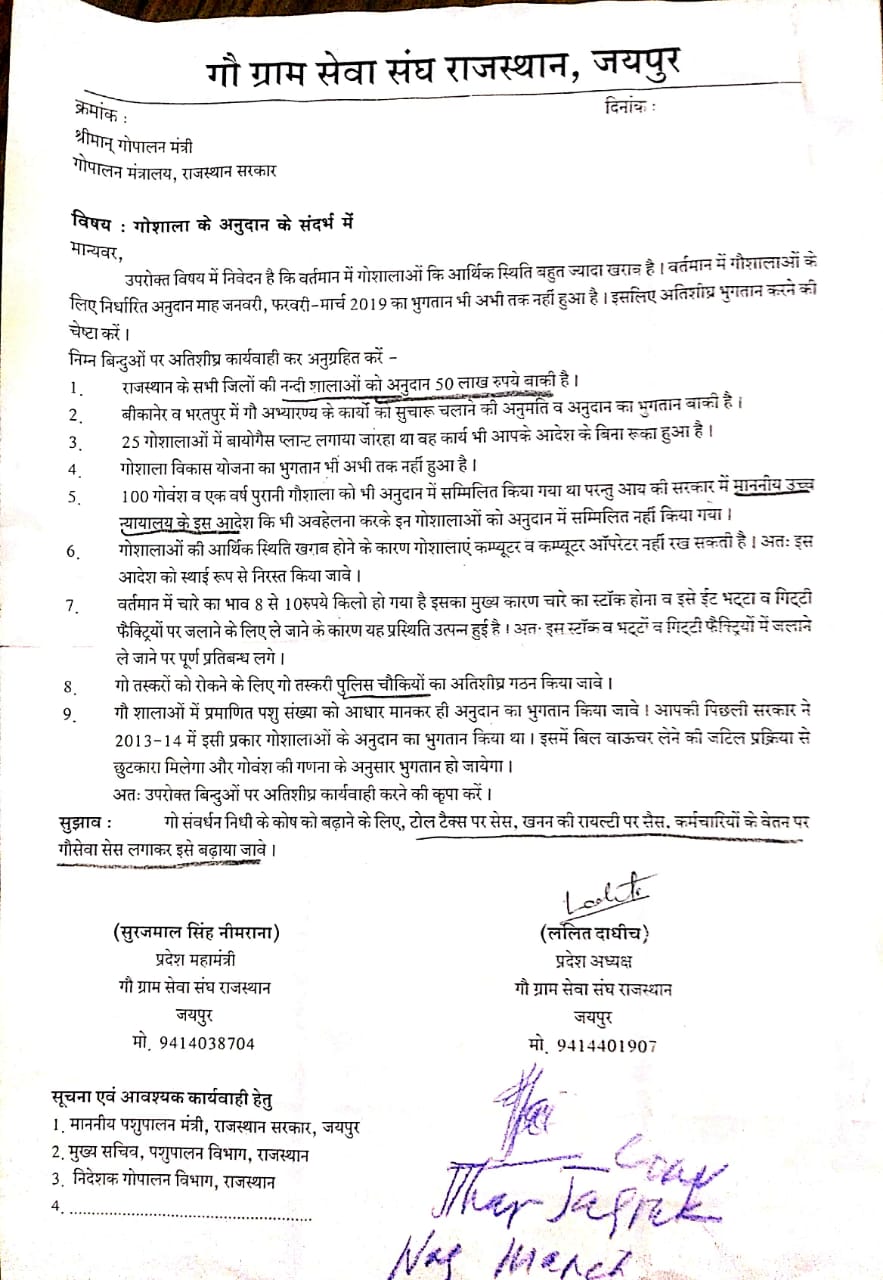
Under a scheme for the rehabilitation of sick cows, no allocations were made in 2014-15. For the next two years, Rs 2.06 crore of the Rs 7.88-crore budget was spent, approximately a third of the sanctioned sum. In a memorandum to new gopalan minister Pramod Jain Bhaya, the Rajasthan Go Gram Sewa Sangha–an alliance of 2,000 cowsheds–flagged two major issues:
In five years to 2018, the state government has not released regularly the Rs 50 lakh assured for the development of nandishalas (shelters for male bulls). The amount outstanding so far is Rs 16.50 crore;
Payments have not been released for a scheme to install biogas plants at 25 identified cowsheds.
Former chief minister Vasundhara Raje had announced plans to set up two cow sanctuaries over a 1,000-hectare plot each in Bikaner and Bharatpur districts but neither came to fruition. She also promised to develop Bikaner into a “cheese hub” and Bhilwara into a “chocolate hub” to help improve the dairy business but the plans never took off.
In December 2014, the Narendra Modi government announced a Rs 150-crore scheme for the preservation of native cow breeds. Although the Tharparkar and other desert cow breeds such as the Nagori, Rathi and Gir have been declining in numbers, the scheme was only partially implemented in Rajasthan. In its first year (2014-15), the Centre allocated Rs 3 crore for the state, but no funds were released.
“These plans have not been translated into actionable programmes because the BJP has only been interested in using the cow as a political tool,” said Poonam Bhandari, former member of the Rajasthan Go Sewa Aayog (cow welfare authority), later renamed gopalan ministry by the BJP government.
“Several cow welfare schemes were left in the lurch when the BJP was voted out of power in last year’s assembly elections,” said Otaram Dewasi, Rajasthan’s former cow minister. He lost to an independent by 10,000 votes in the 2018 assembly election.
The decline of the Tharparkar
This sturdy breed draws its name from the Tharparkar district of Pakistan bordering Rajasthan. As we said earlier, it is prized for its ability to withstand the desert heat and resistance to disease. While other indigenous breeds, such as the Nagori, yield an average 5 litres of milk each day, the Tharparkar produces 8 litres, according to Bhuvnesh Jain.
There were around 2,301 “exotic” cow breeds in Barmer and 1,637 in Jaisalmer–mostly Tharparkars–as per the 2012 Cattle Census. These numbers are likely to plunge further in the 2017 census, highly placed sources in the Rajasthan government told IndiaSpend on condition of anonymity.
“Native breeds such as the Tharparkar are close to extinction,” said Khajan Singh, director of the Rajasthan government’s gopalan department. There are multiple reasons for the Tharparkar’s decline. “Climatic change, alterations in cropping pattern (causing fodder shortage), the introduction of mechanised farming techniques such as the use of tractors and the gradual encroachment of oran and gochar lands (common grazing lands) have contributed to the gradual decline in the Tharparkar numbers,” said Lata Kachawa of the Society for Rural Upliftment (SURE), a Barmer-based voluntary organisation. “But the biggest obstacle to the survival of the Tharparkar breed in recent years has come from the cow vigilante groups.”
During late 1990s, two male Tharparkars would fetch as much as Rs 30,000 at animal fairs. “But there are no takers these days,” said Dalbir Singh of the Jaipur-based Vikas Adhyayan Sansthan, a voluntary organisation dealing in livestock research. (Jha is an independent journalist based in New Delhi.)