Home Blog Page 1452

Only six companies out of 90 spent over 50% of their CSR budget on skill, livelihood development

0

Excerpts from the report “Enhancing Capabilities, Empowering Lives – CSR in Skills and Livelihood: What are India’s top companies up to?” published by Samhita, and supported by Ambula Cement Foundation, DHLF, Godrej, and UNDP:

CSR

With India at the forefront of a ‘demographic dividend’, it is essential for the country to capitalise on the advantage of a young workforce through developing a skilled manpower base. While the corporate sector had always recognized the need for skill development and invested in skilled manpower for their own operations, the introduction of Section 135 of Companies Act, 2013 gave a fillip to their efforts through Corporate Social Responsibility (CSR). Under the ambit of CSR, skilling and livelihood development have appeared to garner considerable interest among companies.

India is currently facing a huge socio-demographic challenge given that majority of its population is in the working age with limited or no skills. As per the Labour Bureau Report 2014, the size of the skilled workforce in India is only 2%, which is extremely low when compared to countries such as China (47%), Japan (80%) and South Korea (96%). It is estimated that by around 2025, 25% of the world’s total workforce will be in India.

It has also been forecasted that the average age of India’s population would be 29 in 2021 as compared to China’s average age of 37, thus giving India a unique advantage of having one of the world’s youngest populations. However, a large young population alone does not guarantee India an advantage. The country needs to ensure that its young workforce is equipped with the skills and knowledge required in a workplace so it can reap the “demographic dividend”.

In order to understand the implementation process of skills and livelihood development programmes, a survey was conducted with approximately 155 non-government organisations (NGOs) involved in the skills and livelihood development space. Detailed interviews were also undertaken with a smaller subset to obtain a more nuanced understanding of the processes.

Overall corporate participation in skills and livelihood development is very high

Ninety out of the top 100 companies reported at least one programme in skills and livelihood development over the last three years. Most industries, apart from media and entertainment and financial services, reported a strong participation of over 75% in skills and livelihood programmes. Public sector undertakings (PSUs) showed a slightly higher involvement in skills and livelihood programmes (96%) than private sector companies (88%).

The high level of participation is not surprising as most companies are well-aware of the desirability of investing in human capital to build and run viable and successful businesses from their own experience. The government’s call to action through the “Skill India”, “Make in India” and “Digital India” campaigns could also have contributed to the high level of interest among companies.

Budget distribution

Budget calculations are based on data reported by 90 companies. Data shows that the amount allocated towards skills and livelihood development programmes accounted for around 12.7% of a company’s total CSR budget on average. Only six companies spent over 50% of their CSR budget in this sector. This reflects the general finding that most companies supported 4-5 causes on average.

The median CSR budget allocated to skills and livelihood development was Rs 3.92 crore with a median spend of 92% in 2015-2016. The budgets varied widely among companies as shown in the table below. Twenty-six companies (29%) reported a budget below Rs 1 crore, 37 companies (41%) had budgets between Rs 1 to 10 crore and 24 companies (27%) between Rs 10 to 50 crore. Three companies (3%), belonging to the IT and banking sectors had budgets above 50 crore, the highest amount being Rs 9,519 crore.

The CSR contribution to skills and livelihood development for the year 2015-16 was slightly more than one-third of the government’s budget towards key skills and livelihood schemes such as the Pradhan Mantri Kaushal Vikas Yojana (PMKVY), National Skill Development Agency (NSDA), National Rural Livelihoods Mission (NRLM) and National Urban Livelihoods Mission (NULM) – the total CSR contribution amounting to Rs 944 crore, as compared to the government’s budget of Rs 2,618 crore.

CSR programmes are plugging sectoral skill gaps

Out of the 90 companies undertaking vocational trades, seven companies have not published any information on the type of trades supported by them. Hence, the valid total for analysis in this sector is based on information given by 83 companies. The data on types of trade supported indicates that almost all companies supported multiple trades. Based on the quantitative mapping, the top five sectors supported through CSR programmes were agriculture (52%), textiles (mainly sewing) (49%), building, construction and real estate (47%), auto and auto components (37%) and IT and ITES (30%).

While agriculture may not face a shortage of labour, it definitely requires skill enhancement in order to raise productivity — almost all companies (95%) supporting agriculture focused on improving productivity by enhancing the knowledge and skills of the farmers by emphasising on improved practices such as multi-cropping, sowing, irrigation, pest management, poultry and cattle training, among others. However, only 5% (two companies) facilitated market linkages. Enhanced productivity may not lead to income increases for farmers, if market linkages, especially those that reduce the role of middlemen, are not well established.

A few companies recognised the fact that it is not possible to look at agriculture in isolation—water scarcity is a key problem in many parts of India. Thus, their agricultural livelihood programmes were part of larger integrated community development programmes that included promoting better watershed development and management and storage practices; aiming to increase the resilience and productivity of farmers. The predominance of sewing programmes could indicate a worrying trend where certain trades are stereotyped for certain target groups (sewing for women, in this case), with little cognizance of the actual market requirement or value to the trainee’s life.

Strategic orientation is slowly gaining traction in CSR interventions

With 28% of companies (24 out of 83) aligning their CSR in skills and livelihood development to their business in one of the three ways mentioned below, data indicates that while some companies are beginning to think strategically, many others still do not subscribe to this approach. A strategic orientation could be articulated in three ways:
 

  • Aligning programmes to business objectives
  • Aligning programmes to a company’s core product or service or expertise
  • Aligning programmes to the needs of key stakeholders

Companies that aligned their programmes to their company’s core product, stakeholder or business objective believed that it helped to bring a higher level of rigour and expertise within the skilling ecosystem and also encouraged sustainability as the company saw these interventions as central to its business, and not just as philanthropy. Many companies reported following a dual approach—while the flagship programme was aligned to their expertise and synonymous with their brand, they also undertook more localised programmes in skills in the vicinity of their factories or plants to respond to the community’s needs.

Companies move towards rural areas for imparting skills and livelihood training

Only 57 companies clearly reported the type of geography of their programmes, with six companies mentioning pan-India as the focus areas of their programmes. Thirty companies did not provide any information on this aspect. Available data points towards a mixed pattern, with 25 (44%) companies conducting programmes in only rural regions, 10 (18%) companies conducting programmes exclusively in urban areas and 16 companies (28%) in both rural and urban areas. The same pattern held true for most industries, except for the IT (50%: only urban, 25%: only rural, 25%: both) and Telecom sectors (100%: only urban), where the concentration of skilling programmes was in the urban areas.

Interviews indicated that many companies were actively moving to address the skills gap in rural areas as they believed that urban areas were saturated with programmes. However, a few respondents believed that skills development in India was a predominantly urban phenomenon with urban NGOs running urban operations; there were very few expert NGOs in rural areas.

State-wise distribution of CSR programmes in skills and livelihood development reveals imbalances

Only two companies out of 90 did not publicly disclose the location of their programmes. The “Human Resource Deficits and Surpluses across India” map shows the expected surpluses and deficits in semi-skilled and unskilled workforce per state by 2021/2022, calculated as demand for workers by industry minus supply of workers. Ideally, skilling programmes should focus on states with a surplus of semi-skilled and minimally skilled workers (such as the north-eastern states, Jammu and Kashmir, Jharkhand, Chhattisgarh and Telangana) as these workers would be either under-employed or unemployed, thereby creating a greater need for them to be absorbed in gainful occupation through skilling or upskilling.

However, these are states in which less than 20 companies run skill development programmes individually. Maharashtra, Karnataka and Tamil Nadu were the most popular states for CSR programmes, even though their needs were not as critical. This analysis highlights two conclusions –

  • Essentially, training programmes occur where the need from industry is felt more acutely. Companies also appear reluctant to invest in training in geographies where the challenge of ‘placement’ is higher.
  • States in the north-east, and Jharkhand and Chattisgarh are economically backward, have suffered from political turmoil and unrest and/or geographical isolation and, hence, do not have industrial markets to absorb the labour, leading to a surplus.

Solutions to these are two-fold—increase demand by focusing on developing micro enterprises that can create employment opportunities and simultaneously reduce the supply by undertaking “informed and safe” migration to states with employment opportunities.

CSR programmes in skills and livelihood largely ignore people with disabilities

Of the 88 companies that explicitly mentioned beneficiary groups, most companies reported conducting programmes across a multitude of beneficiaries. The youth (84% companies) and women (70% companies) were common target groups for programmes. On the other hand, only 30% of companies had programmes for people with disabilities. This falls in line with the lack of support received by disabled people in India in general.

Non-financial support by companies was marginal

While every company offering skills and livelihood programmes supported it financially (either covering infrastructure or trainees’ fees or both), only 17% (15 companies) offered non-financial support to the programme and their implementing partners. When provided, nonfinancial support was in the area of curriculum development (10), accommodation (six) and transportation (one) for the duration of the training. In the space of skills and livelihoods, companies have much more to offer than mere financial support. Companies and their industrial associations could leverage their expertise to help develop better curricula in their areas of expertise.

Additionally, companies could also use their cross-industry connections to facilitate trainee placements outside their operation areas. Employees can also play an active role in training or contributing to soft-skills programmes. The nonfinancial contribution of a company needs to be harnessed to ensure that this does not become a missed opportunity.

Courtesy: Counterview

Fact- finding visit to Niyamgiri – Lanjigada area by CDRO and GASS

0

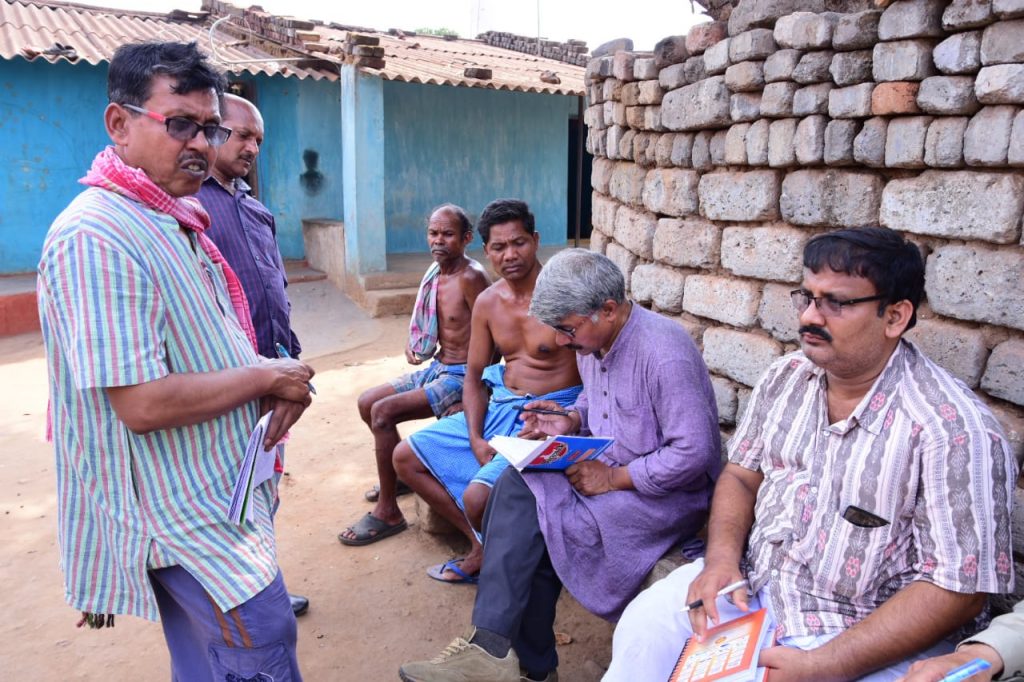
A 16-member fact-finding team of All India Coordination of Democratic Rights Organisation (CDRO) and GanatantrikAdhikar Suraksha Sangathan, Odisha (GASS) had been to Niyamgiri area and Vedanta Plant site, Lanjigada and spent three days from 26th to 28th April, 2019 there. All members got divided into two teams. One team visited various villages of Niyamgiri like Lakpadar, Belang Mandal and Dangamati to investigate violation of human rights in the region. Another team visited affected villages of Vedanta Plant like Chatrapur, Rengapali and Bandhaguda, met family members of Dani Batra died on by Industrial security forces on 18th March at plant site. The team also went to meet British Kumar at his village Ghatikundru who was allegedly beaten by the SP of Kalahandi. The team members also met Inspector In-charge at Lanjigada police station and talked with the District Collector and the SP over phone.

Our findings :-

More violation of Human Rights in name of ‘Maoists’ :In Niyamgiri Dongaria adivasis who are in leadership of Save Niyamgiri Movement under banner of Niyamgiri Suraksha Samiti have been targeted more in post –gramsabha (2013) situation.  At Dangamati village Manda Kandraka died in an encounter by the security forces on 27th February 2017 allegedly as ‘Maoist’. Since then none of the official has visited his village. Lado Sikaka of Lakpadar village has been picked up twice by the police without notice and had been released every time with a warning. In  a similar way 16 tribals leaders either have been put into jail in name of Maoist like in case of Dasuru Kadraka of Garata village or have been released with a confessional statement not to be associated with any joint activities. The midnight raid and arrest of Kuni Sikaka (17) of Garata village on 1st May 2017 by the police suspecting her as ‘Maoist’ and when agitation happened then she was released under false confessional statement are undemocratic. Lingaraj Azad who is at the forefront of the struggle has been arrested and harassed by the police several times.
Adivasis of Niyamgiri and surrounding areas of both districts of Kalahandi and Rayagada have been dependant on the hill. It is their life and livelihood also. The existence of Vedanta Co. in this scheduled area has always been a threat for them. They have been demanding for more schools, anganwadi centres, healthcentresunder their banner of Niyamgiri Suraksha Samiti before the government. But in reply the government has been foisting false cases to pressurise them to leave Niyamgiri.

CRPF camp at Trilochanpur: Recently the govt. has converted Trilochanpur Panchayat office into a CRPF camp for the time being.

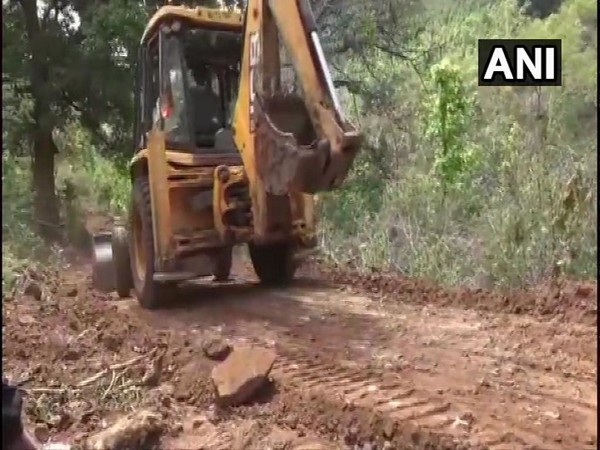
Construction of a new camp has already been started on encroached land of Layi Majhi of Belaguda village.The villagers did gramsabha in this fifth scheduled area and had opposed this plan of setting up of the camp. But none of the officials attended the meeting.  People were cultivating that land since generations and had applied for patta under Forest rights act. The administration has neither taken consent of gramsabha before constructing the camp nor has given importance to the application Layi Majhi under FR Act.

Death of Dani Batra:In this ‘alleged’ clashes happened on 18th March 2019 at Vedanta Plant Gate site between the affected villages of Chatrapur and Rengapali and security forces, Dani Batra died due to heavy lathi-charge done by the Odisha Industrial Security Forces(OISF) engaged by the Vedanta Co. He was standing far from the gate as a spectator when security forces  beat mercilessly many people including Dani Batra. Later on he was found inside a pond. His brother-in-law who received dead body after post-mortem was telling that Dani’s hands and other parts of the body were broken.

Suspicious Death of Sujit Minz:The allegation is that the local villagers after death of Dani got angry and went on a rampage and destroyed company furniture. Then the villagers “violent in nature bound Hav Major Sujit Minz in the CCTV control room alone tied his legs and killed him by  setting fire” (as mentioned in FIR given by Ashok Kumar Raul, Inspector of OISF). The team finds his death as “suspicious” because;

1)The CCTV Control panel room is about 100 meters far from the main gate where dead body of Sujit Minz was found by the police. This was confirmed by the Inspector In-charge of Police. Also IIC says the villagers have not destroyed any other place on the way to Control Panel except that place. How a mob could go and tie Sujit Minz and set fire and come back just after a severe lathi charge?

2)The police version is that after post-mortem of dead body of Dani Batra, his family members received the dead body from Lanjigada Hospital and took the body to the Vedanta Gate. But this has not been written in the FIR. Mahendra Bibhar, brother in law of Dani Batra who received body from the police says that all of them came to the village in the night from the hospital and cremated the body on early morning of next day.

3)Two FIRs have already been filed. On Dani Batra’s death though section 320 of IPC has been lodged but no action has yet been taken. But on ‘killing’ of Sujit Minz the Lanjigada police have promptly taken action and have arrested 6 people. The FIR copy says list of suspects as ‘villagers of Chatrapur and others’ but Police have circulated ‘27 names and 300 others’ which the team got from the villagers which shows more arrest would happen in near future. Why is there such discrimination in taking action then?

More Displacement by Vedanta Co: In between Vedanta Company has increased its capacity from 1MTPA to 6MTPA and has occupied land of Rengapali, Borabhattaand also Bandhaguda village for expanding its already made Red Mud Pond. The Co. has not yet displaced all of them though it has paid them compensation. The villagers are facing sever health problem because of dust coming from pond site. Thevillage like Bandhaguda (80 families) was  not in the earlier plan when the Co. started its operation.

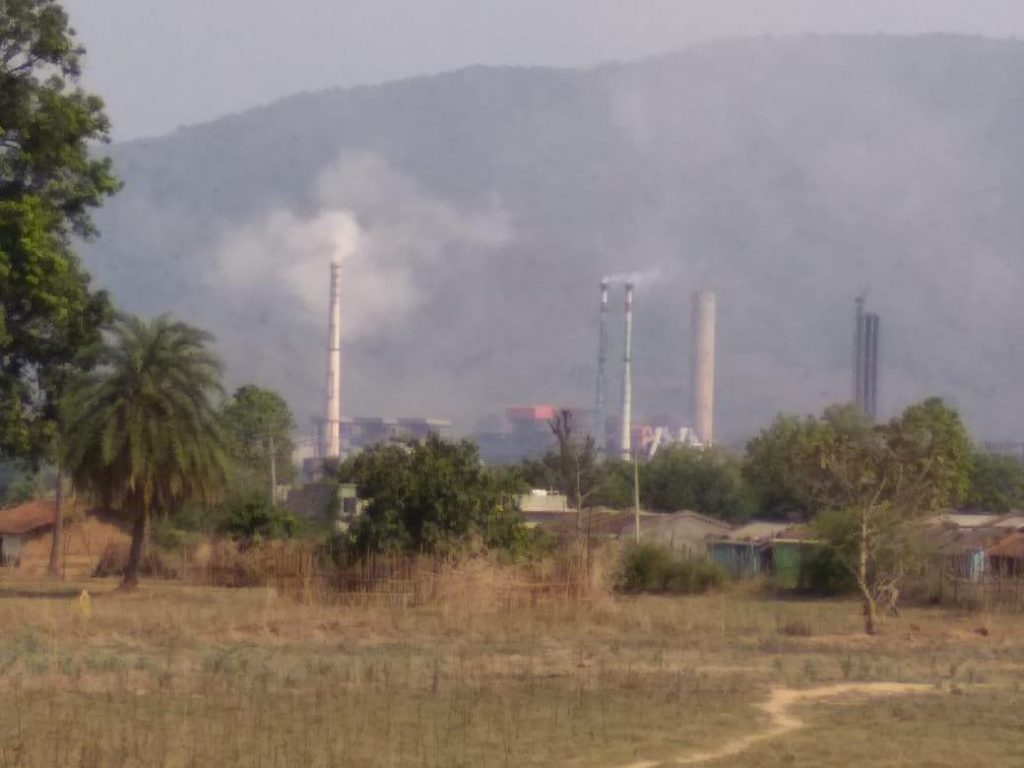
Pollution in Lanjigada/Niyamgiri :The Red Mud Pond has already reached footstep of Niyamgiri. This would disturb entire eco-system of this plateau. The government should set up committee to evaluate impact on environment and before Titukurin-like situation happened the government should close down Vedanta factory.

Harassment of British Kumar by Kalahandi SP: British Kumar, a tribal activist and leader of ‘Khandualmali Suraksha Samiti’(Save Khandualmali Organisation) was picked up by Kalahandi police on 22nd December 2018 while he was in Bhawanipatna town. British says he was taken to the SP office. At 8pm the SP came and asked about his association with Niyamagiri and Khandualmali struggle. The SP first threated him, ‘I would fire at you and kill you because you are supporting the Maoists’. British argued that this struggle is part of their rights. ‘Don’t brand it as Maoist.’ Then the SP beat him up inside his office and left with a condition that he would sign daily at Bijepur Police Station. British was going till State Human Rights Commission asked detail about the cases filed against him. It was learned that till that date no such cases had been filed against British Kumar.

Our demands:
 

  • Closing down Vedanta Co.:The Vedanta Co. had its earlier plan in setting up alumina plant at Lanjigada and to mine bauxite from Niyamgiri. When in Gramsabha adivasis rejected its plan of mining in Niyamgiri and when the Supreme Court has already uphold decision of the Gramsabha (2013) then we strongly demand before the state government for closing down of the Alumina plant of Vedanta Co. immediately.
  • No CRPF Camp:The setting up of CRPF camp at Trilochanpur goes against gramsabha resolutions. The government should close its down.
  • Cases should be withdrawn: The government should withdraw all false cases foisted against the tribals.
  • Demanding for Judicial Enquiry:A judicial inquiry should be done on suspicious death of Sujit Minz by the High Court sitting judge and till findings of that committee no such arrest should happen.
  • Basic necessities should be fulfilled:The Adivasi villages have demanded for school, teachers, drinking water and health facility. The government should give respect to these demands and should give priority in providing basic necessities.

We conclude here that the state government has been treating Vedanta Co. as if first citizen of the Odisha. The way brutality of industrial Security forces have been suppressed at Plant site and repression by the paramilitary forces on tribals of Niyamgiri have been increased all these actions go against basic spirit of our democracy. The government should be attentive more towards its own citizens rather than the Multinational company like Vedanta Co.

Name of participating Organisations:

APDR, West Bengal ;  CPDR, Tamilnadu;  AFDR, Punjab
CLC, Telengana;  PUDR, Delhi and GASS, Odisha
Date : 29th April 2019
Bhubaneswar

Courtesy: Counter Current