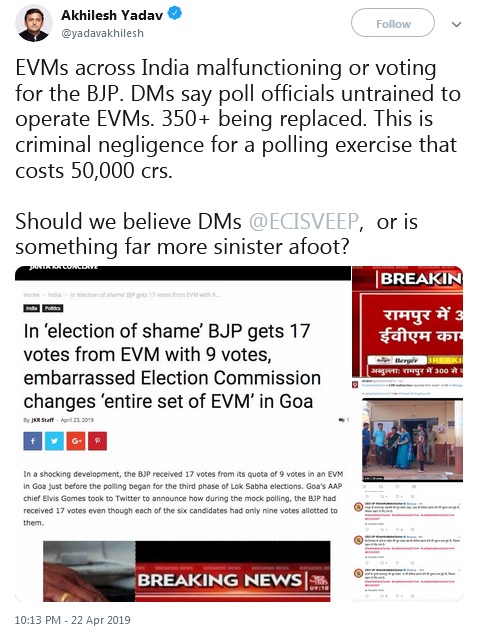
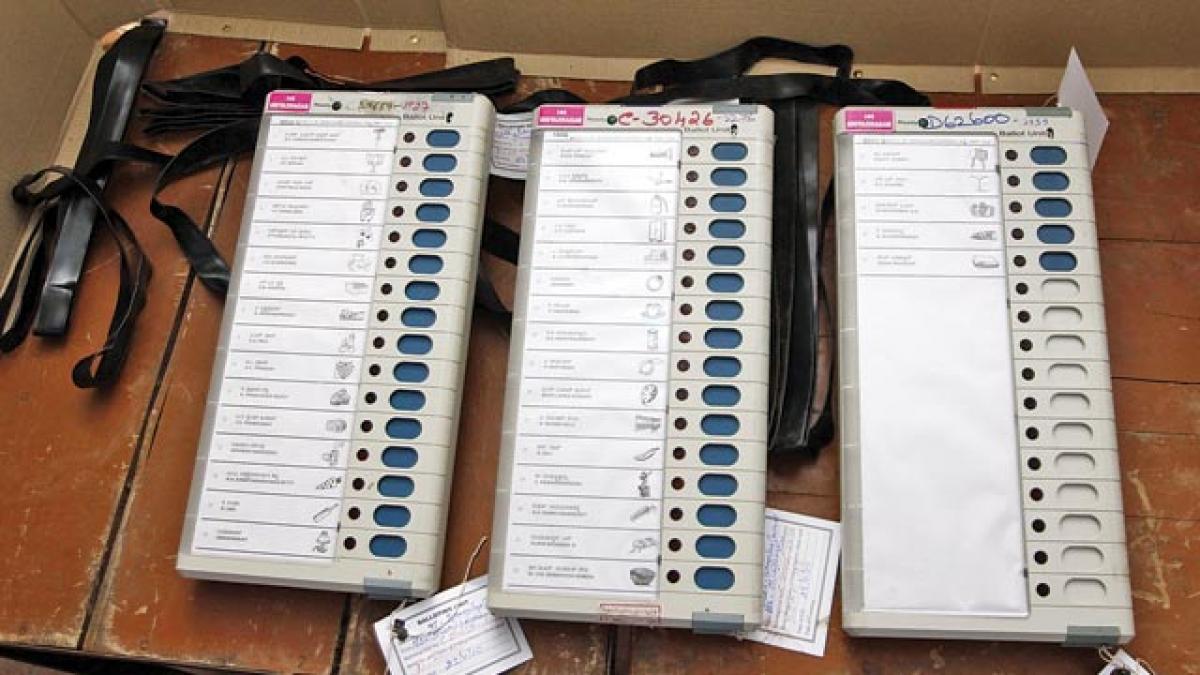
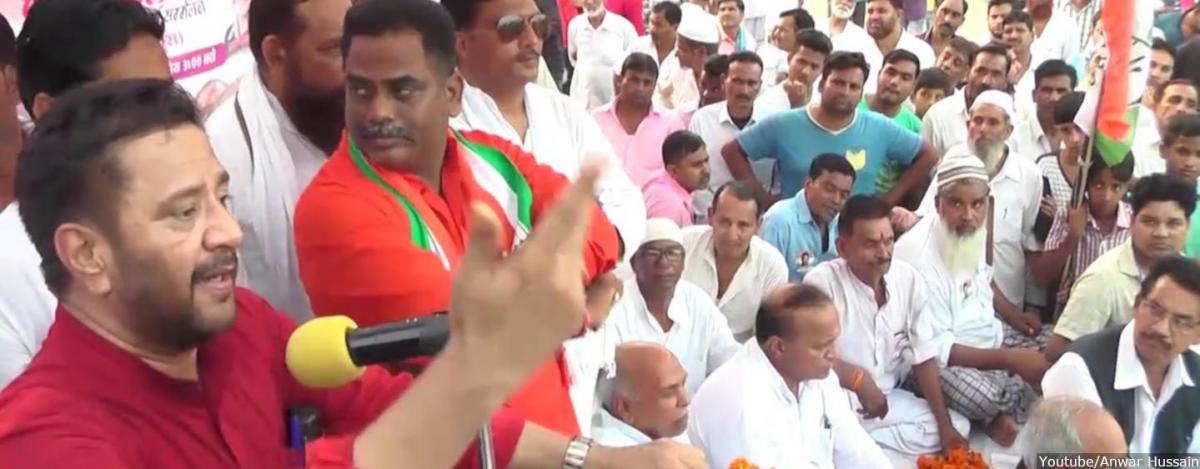
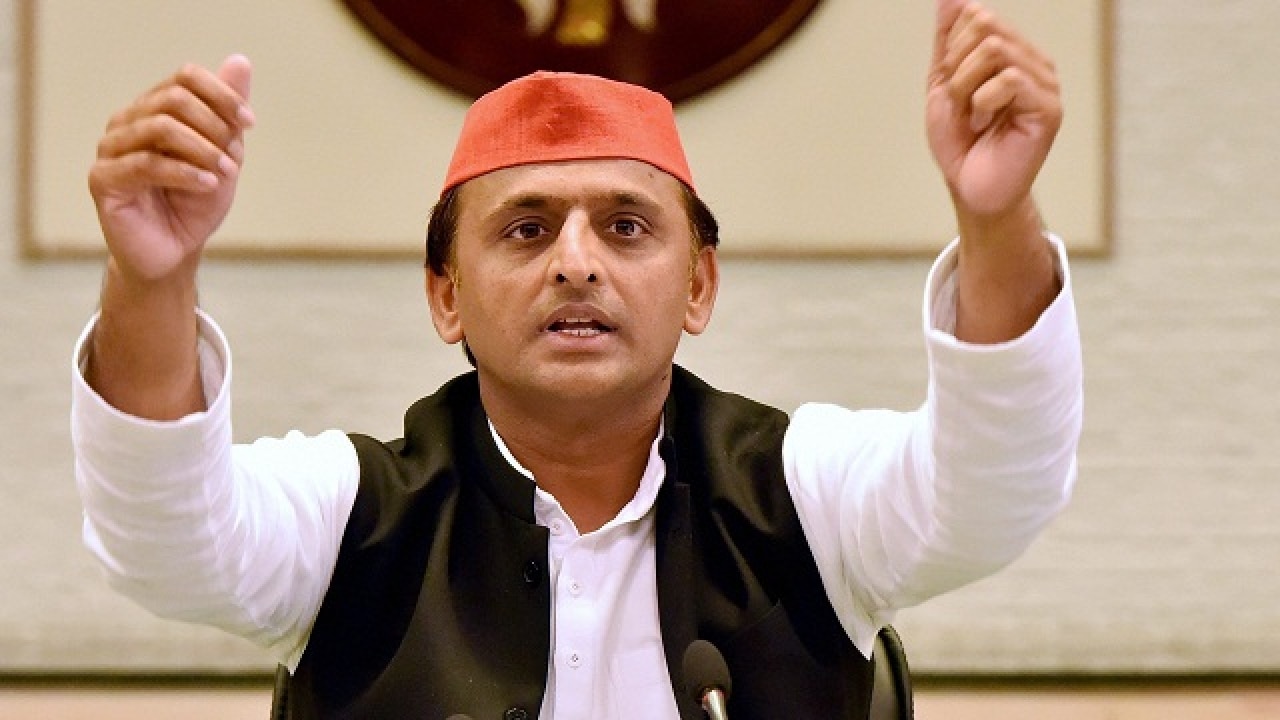
Samajwadi Party leader Akhilesh Yadav alleged on Tuesday, April 23, that Electronic Voting Machines (EVMs) across India were malfunctioning, as the third phase of the 2019 Lok Sabha Elections was underway.

Image Courtesy: Akhilesh yadav , PTI


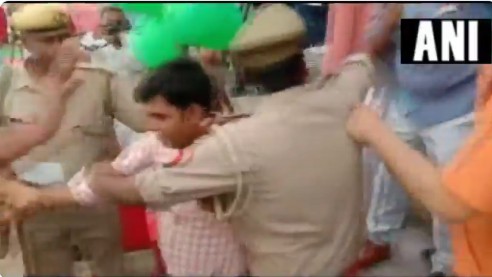
As Moradabad in Uttar Pradesh went to polls today, BJP workers thrashed a presiding officer at a polling booth in Bilari. The police had to intervene to save him.

The BJP workers alleged that the presiding officer was asking voters to press the button beside the cycle symbol.
#WATCH Moradabad: BJP workers beat an Election Official at booth number 231 alleging he was asking voters to press the ‘cycle’ symbol of Samajwadi party pic.twitter.com/FokdXCAJ1z
— ANI UP (@ANINewsUP) April 23, 2019
The cycle symbol belongs to the Samajwadi party (SP) which is contesting the elections in an alliance with Bahujan Samajwadi Party (BSP).
Reportedly, the BJP workers alleged that the officer, Mohd. Zubair was pressurizing women voters to press the ‘cycle button of the SP.
Though the officer was removed from the booth no action was taken on the attackers who resorted to violence.
On the other hand, in Rampur, SP leader Azam Khan’s son, Abdullah Khan alleged that over 300 EVMs have malfunctioned in the constituency and that the DM has resorted ot threats
Ten constituencies of Uttar Pradesh (UP) vote on April 23 in the third phase of Lok Sabha polls of 2019. These are Firozabad, Mainpuri, Etah, Badaun, Aonla, Moradabad, Sambhal, Rampur, Pilibhit and Barelly.
Both SP and Congress have fielded a Muslim candidate in Moradabad. While SP has given the ticket to a popular doctor, Congress has given it to a popular Urdu poet Imran Pratapgarhi.

File Photo
Demanding re polling in 28 poll booths of Raniganj in Bengal, NilotpalBasu, member of the Communist Party of India (Marxist) Polit bureau has in a strongly worded letter to the Chief Election Commissioner Sunil Aroraalleged rigging and manipulation of the ongoing polls in both Bengal and Tripura. In his letter, he has raised concerns about the polls in West Bengal and Tripura due on April 23, in the third phase of LokSabha elections. Senior CPI(M) leader, MohdSalim is contesting the polls from Raniganj. Other CPI(M) leaders have demanded re-polling in 846 booths of West Tripura.
Expressing “deep sense of disappointment and anguish” over the manner in which Election Commission has presided over the elections held in Tripura West constituency on April 11, 2019, he says that such a level of subversion has rarely happened in the country. The letter also alleges that the EC belatedly took note of the “gravity of the situation” and decided to postpone the elections of the Tripura East (ST) parliamentary constituency which was due for April 18. The election was thus scheduled for April 23.
The EC postponed the polls owing to the “law and order” situation, which it said was not “conducive for free and fair elections.” Just days before the scheduled poll date, severed chicken heads and notes threatening violence to those voters who stood by the left, were found hanging outside several homes.
Basu further highlighted that despite the fact that elections were postponed, “very little was done on the ground on behalf of the Election Commission of India”.
He mentioned in the letter that on an assessment done by the CPI (M), they had found out that re-polling needs to be undertaken in 846 polling booths across the constituency. The senior leader of the CPI(M) has called the elections so far held in West Tripura a “farce”. Shankar Prasad Datta, the CPI (M) candidate from Tripura West had written to the Returning Officer of Tripura West parliamentary constituency demanding re-polling 846 polling booths.
He drew attention to the fact that their complaints stand vindicated as the District Magistrate and Collector of West Tripura district announced the lodging of an FIR against the people responsible for the reported rigging in certain booths which happened with the alleged involvement of polling agents and even polling officials.
However, as per Basu’s letter, many named in the FIR got bail, and some of them got bail from the police station itself.
Basu said that it was already highlighted that the “action process of verification of video footages in the presence of all candidates and their representatives on April 12 and April 13 was also reduced to a farce.”
Basu mentioned in the letter that the RO of the Tripura West PC wasn’t “fit” to undertake polling responsibility and that he was “biased” in shutting down a progressive Bengali daily ‘Desarkatha’ which had to be subsequently restored by judicial order.
Basu also highlighted that there was a need for some measures to be undertaken for ensuring free and fair poll on April 23 and asked the RO that the previous incidents of rigging etc shouldn’t be repeated on April 23.
Regarding the situation in Bengal especially Raniganj PC, there was a similar demand for re-polling in 28 booths in different assembly segments of the constituency.
He highlighted that most of the precautionary arrangements like deployment of central forces, video streaming or CCTV were absent. While sometimes, it wasn’t ensured that there was a backup to power cuts.
The letter also highlighted the attacks on Salim, the candidate from —- on the day of polling on April 18. Basu said that the pattern [of attacks and rigging] was similar to that of Tripura West, only on a “lesser scale.”
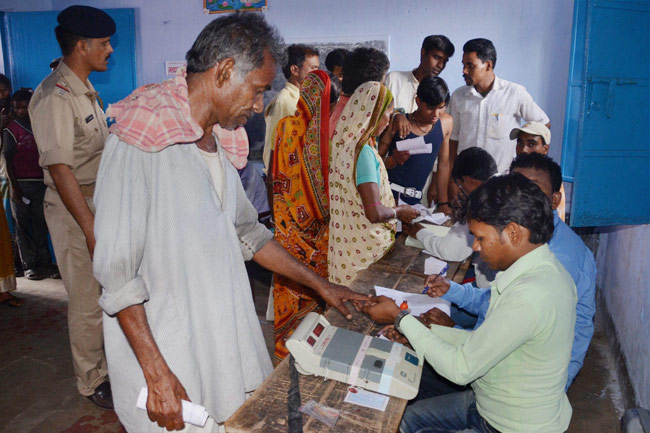
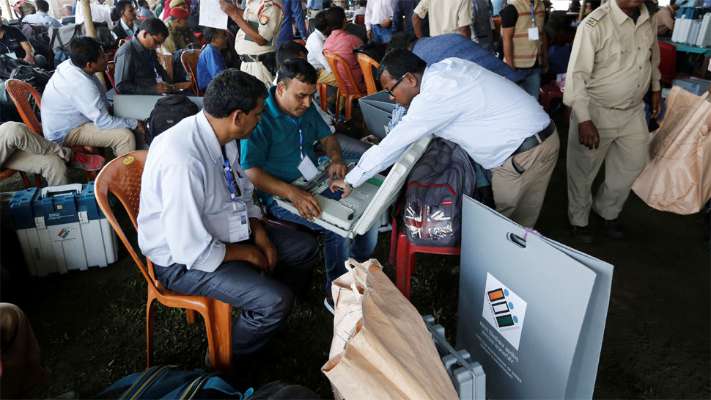
Glitches in the Electronic Voting Machines (EVMs) were reported in several areas on Tuesday, April 23, during the third phase of the 2019 Lok Sabha polls. Samajwadi Party leader Akhilesh Yadav, in a tweet, alleged that EVMs “across India” were “malfunctioning or voting for the BJP,” terming this “criminal negligence.”

At around 10:30am, The Hindu, in its live election updates, reported that polling had been paused at a centre in the Hrisyanmukh area in the East Tripura constituency because of issues with EVMs. A similar situation had occurred at another polling place in East Tripura, the Anath Choudhury Para booth in Asharambari, The Hindu said.
Moreover, The Hindu noted that, as of 10:30am, polling had still not begun at Bhagyapur and Jubaraj Nagar, both polling stations in Dharmanagar, also in East Tripura. Per election officials, the EVMs were being replaced after glitches were reported. Pragya Debbarman, the Congress candidate in the East Tripura constituency had made allegations of votes being rigged at multiple polling stations, per The Hindu, which said that Debbarman had said that he had filed a complaint with election observers.
The Hindu also reported that 20 families in the North Durgapur village in the Khowai sub-division, which is also in the East Tripura constituency, had boycotted the Lok Sabha polls after a local youth was allegedly assaulted by paramilitary personnel on Tuesday morning.
While Tripura West went to the polls on April 11, polling for Tripura East was initially scheduled for Thursday, April 18. However, it was then postponed to Tuesday, April 23, with the Election Commission saying that the “prevailing law and order situation” was not “conducive to holding free and fair polls.” Reports said supporters of the CPI(M) received threats, including severed chicken heads and handwritten notes at their residences.
In another shocking incident, a presiding officer was arrested in Bani Vidya Mandir polling station in Gauripur under Dhubri Parliamentary constituency for allowing a person to enter the booth without checking the identity card, which was proved as proxy vote. The arrested presiding officer was Gaur Prasad Sharma.
In another incident a woman voter died while waiting in line in to cast her vote at Chitalmari Forest Village in Tiplai area under Dhubri Parliamentary constituency. The lady was identified as Kunan Nath.
GUWAHATI: As polling began in Guwahati, reports are coming in of EVM malfunctions and VVPAT display mismatch that are causing much anxiety among voters in Assam.

Deka told G Plus, “I went inside, voted and found that the VVPAT was showing a different name than my vote. As I complained about this to the polling authorities, I was told to pay Rs. 2 where my complain would be looked into and if it was found genuine, I would be. allowed to re-vote.”
There are also reports of EVMs not working. For example the EVM at the Soil Conservation office, Zoo Road, Booth number 2013.

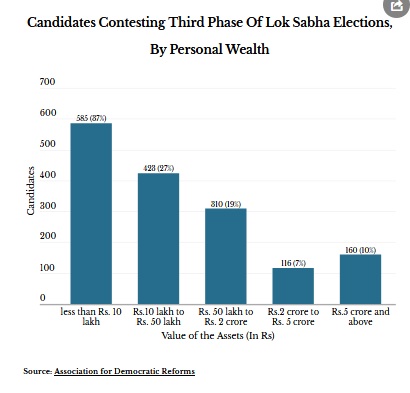
As many as 392 (25%) of 1,594 candidates whose affidavits were studied have declared assets worth Rs 1 crore or more. Among the major parties, the Bharatiya Janata Party (BJP), Congress and Samajwadi Party have the highest proportion (90% from SP, 84% from BJP and 82% from Congress) of ‘crorepati’ candidates.
Nearly 43% of all candidates have declared they have a graduate degree or above, while 3.6% have declared they are just literate and 1.4% are illiterate.
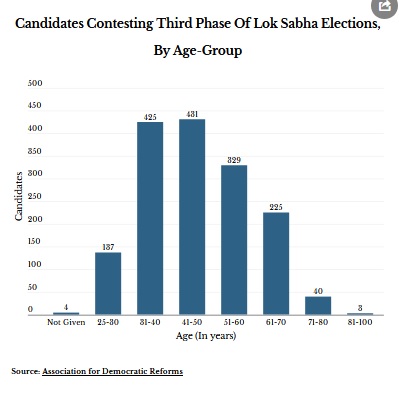
More than a third of candidates are aged between 25 and 40 years, while nearly half are between 41 and 60 years.
The third phase of polling began on April 23, 2019. Affidavits of 18 candidates were not analysed as they were not properly scanned or were incomplete.
Criminal charges
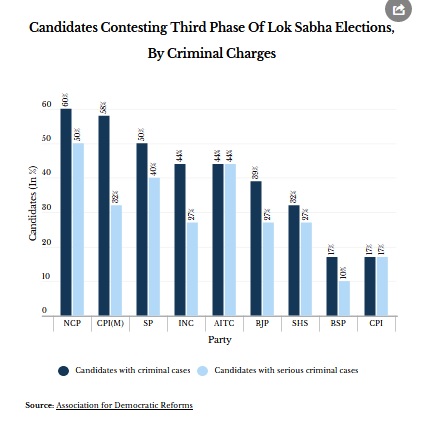
Of the 230 candidates facing serious criminal charges, 14 have declared they have been convicted in the past. Persons convicted are debarred from contesting elections for six years from the date of conviction, but only if they have been sentenced to imprisonment of two years or more.
Among Congress’s candidates, 27% (24 of 90) face serious criminal charges. As many as 27% (26 of 97) of BJP candidates face serious criminal charges, 10% (9 of 92) of Bahujan Samaj Party (BSP), 27% (6 of 22) of the Shiv Sena, 32% (6 of 19) of the Communist Party of India (Marxist), 50% (5 of 10) of Nationalist Congress Party, 40% (4 of 10) of Samajwadi Party and 44% (4 of 9) candidates from All India Trinamool Congress face serious criminal charges.
13 candidates have declared they are facing cases related to murder, 30 have declared cases related to attempt to murder, 14 related to kidnapping, 29 related to crime against women and 26 related to hate speech, the ADR analysis shows.
Among the major parties, 44% (40 of 90) Congress candidates have declared criminal cases against themselves. As many as 39% (38 of 97) candidates from BJP and 17% (16 of 92) candidates from BSP have declared criminal cases against themselves.
In the second phase, 16% were facing criminal charges, and in the first phase candidates, 17% candidates were facing criminal charges, IndiaSpend reported on April 17, 2019 and on April 11, 2019.
The highest proportion of candidates facing criminal charges are from Nationalist Congress Party (NCP): 60% (6 of 10) face criminal charges.

Assets of Rs 1 crore or above
25% candidates have declared assets worth Rs 1 crore or more. Among the major parties, 74 (82%) out of 90 candidates from the Congress, 81 (84%) out of 97 candidates from BJP, 12 (13%) candidates from BSP, 9 (90%) out of 10 candidates from SP, 10 (53%) out of 19 candidates from CPI(M), 9 (41%) out of 22 candidates from Shiv Sena and 7 (70%) out of 10 candidates from NCP have declared assets worth more than Rs 1 crore.
The top three states with the highest number of crorepati candidates are Gujarat, Maharashtra and Karnataka: 75 candidates from Gujarat, 71 from Maharashtra and 46 from Karnataka have assets worth more than Rs 1 crore.
Candidates who are crorepatis
The three richest candidates in terms of assets are Devendra Singh Yadav of Samajwadi Party from Etah constituency of Uttar Pradesh with total assets worth more than Rs 204 crore, Udayanraje Bhosale of Nationalist Congress Party from the Satara constituency of Maharashtra whose total assets are worth more than Rs 199 crore, and Praveen Singh Aron from the Bareilly constituency of Uttar Pradesh who has total assets worth more than Rs 147 crore.

The top three candidates with the highest declared income during the past financial year are from Odisha and Maharashtra. Pinaki Misra from Biju Janata Dal, contesting from Puri in Odisha declared an income of more than Rs 24 crore. Misra has mentioned advocate as profession and source of income.
Supriya Sadanand Sule of Nationalist Congress Party from Baramati in Maharashtra has declared income of more than Rs 1 crore. She has declared business as her source of income. Hindurao Naik Nimbalkar of BJP from Madha, Maharashtra has income of more than Rs 3 crore and business and agriculture as its source.
There are 11 candidates who have declared no assets. The candidate who has declared the least assets (excluding the zero assets candidates) is Sreejith PR, an independent candidate from the Wayanad constituency of Kerala, who has declared a bank balance of Rs 120.
Johnson Vasant Kolhapure, an independent candidate from the Pune constituency of Maharashtra, has declared Rs 207.
Educational qualifications
Of 1,594 candidates, 788 (49%) have declared their educational qualification to be between 5th and 12th standard while 681 (43%) candidates have a graduate degree or above. As many as 57 (3.6%) candidates have declared they are just literate and 23 (1.4%) are illiterate.

Age profile
More than a third (35%), or 562 of 1,594 candidates, are in the 25-40 years age group while nearly half (48%), or 760 candidates, are in the 41-60 years age group as per the affidavits analysed by ADR.

As many as 265 (17%) candidates have declared their age in the group 61-80 years while three candidates are aged above 80 years. Four candidates have not given their age.
Gender profile
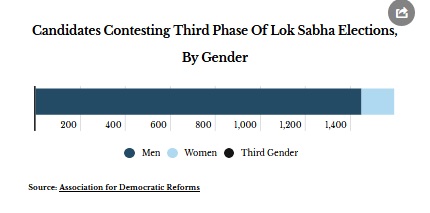
Of the 1,594 candidates, 143 (9%) female candidates, one candidate from the third gender and 1,450 (91%) male candidates are contesting the third phase of the Lok Sabha elections.

(Ahmad is an intern at IndiaSpend.)
We welcome feedback. Please write to respond@indiaspend.org. We reserve the right to edit responses for language and grammar.
Courtesy: India Spend
As ten constituencies of Uttar Pradesh (UP) vote on April 23, in the third phase of Lok Sabha polls of 2019, political observers see this round as another litmus test for the Gathbandhan (Samajwadi and Bahujan saj Party), seen as the major challengers this election.

Image Courtesy: PTI
The question being debated is whether the Samajwadi Party (SP) will be able to hold on to its core Yadav-Muslim vote bank or will it get impacted by the Bharatiya Janata Party(BJP) presence and, as some are saying, a strong “Shivpal factor”. An equally strong factor is how the other OBCs will vote this election.
The ten constituencies voting in the third phase are Firozabad, Mainpuri, Etah, Badaun, Aonla, Moradabad, Sambhal, Rampur, Pilibhit and Barelly. The first five seats have a large presence of the backward Yadav vote bank, and the area is often also described as the Yadav land of UP politics. The other five, meanwhile, have a strong presence of Muslims.
In Badaun, Yadav voters are estimated to be 20% and the total OBC voters 35%. The Yadav/Ahir vote base is around 26% in Aonla, 21% each in Firozabad and Mainpuri, and 14% in Etah. The maximum base of Muslim voters – 45% — is in Moradabad. This estimate is 44% in Rampur, 38% in Sambhal, 31% in Bareilly, and 25% in Pilibhit.
Of the core Yadav-dominated seats, Aonla has the maximum — 17.5 % — of Muslim voters as well. The Dalit vote is uniformly distributed across these constituencies, ranging from 11% to 18%.
While in first and second phases, the Jat and Gurjar vote was a significant factor, in the phase due on April 23, the Dalit-Muslim voters will play the major role. Caste equations are always the major factors, especially in a non-wave election. While the Yadav OBCs are predictably going to the SP, a large section of Dalits would largely like to stick to Bahujan Samajwadi Party (BSP).
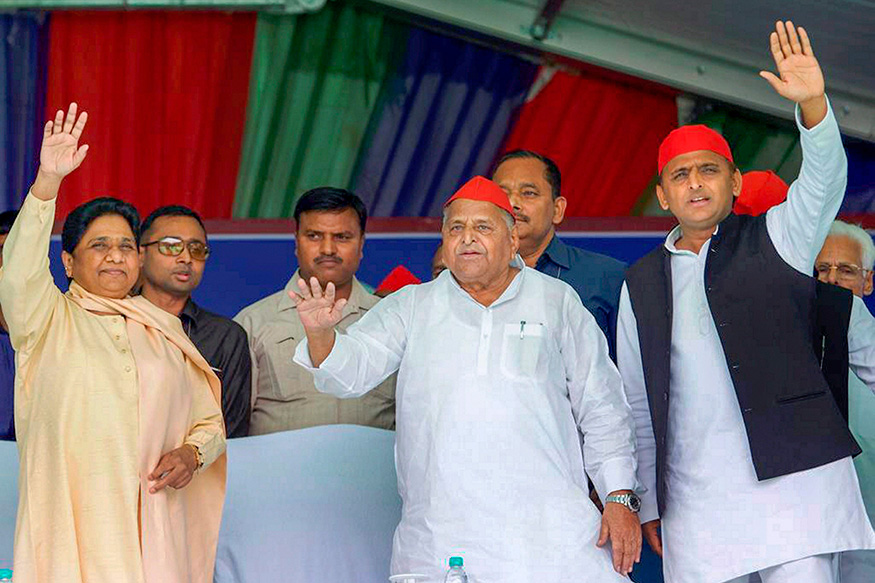
It is mainly in the light of this Yadav vote base that arch rivals Akhilesh Yadav and Mayawati have come together. Mayawati even made a statement to the extent that while Modi was a “fake OBC”, Mulayam Singh is the “real leader of the OBCs”. Mayawati has also emphasised that the “country is in danger” and hence they have come together even in the background of a historic rivalry. Mayawati has also shown a commitment to breaching the decades old rivalry and Mulayalam too, by mentioning Mayawati seven times in a speech and welcoming her to the Yadav heartland Mainpuri. With the symbolic gesture of Mayawati seated between the father-son duo in the Mainpuri rally, the messaging was clear, to ensure no division of votes and to emphasise the strength of the alliance.
Shivpal the Spoiler
However, Mulayam Singh’s younger brother Shivpal Yadav is contesting the election independently on his Pragatisheel Samajwadi Party (PSP) ticket. He has fielded his nephew and SP candidate from Firozabad, Akshay Yadav. Shivpal Yadav has made no secret about his plans to “dent the SP-BSP alliance” even at the cost of BJP benefitting from the splitting of votes. Shivpal’s “closeness” to the BJP is no secret in political and public circles.
Not that the ruling BJP isn’t aware of these dynamics. The UP Chief Minister Adityanath, riding “high” on his rabid brand of hate speech, has largely adopted polarisation and hate speech as his campaign weapons. After a 72 hour ban imposed on him, he rekindled his fascination for extreme speech. He said recently in a Badaun rally, “The previous governments prohibited KanwarYatras while we lifted the ban on them. Similarly, while previous governments gave funds to ‘kabrastans’ and ignored ‘samshanghat’, we have ended that discrimination.” He also referred to the SP candidate from Sambhal as ‘Babur ki Aulad’. In the 2017 state election, it was Narendra Modi, the prime minister who had “pioneered” the use of the phrases ‘samshanghat’ or ‘kabrastan’.
The election in Moradabad is of special consequence to both the Gathbandhan (SP) and Congress as both have fielded a Muslim candidate. While SP has given the ticket to a popular doctor, Congress has given it to a popular Urdu poet Imran Pratapgarhi.
In Pilibhit, union minister Maneka Gandhi was replaced with son Varun Gandhi. Maneka Gandhi’s campaign has been laced with aggressive and controversial statements ( bordering on hate speech). She has been even pulled up by the Election Commission when she stated that she will categorise villages depending on how they vote for BJP, merely a few days after she made a statement saying she won’t do anything for Muslims who don’t vote for BJP.
Phase three campaign also saw the banning of various political figures from the region banned for several hours. The Election Commission barred SP leader Azam Khan for 72 hours for making an indecent remark on BJP’s Jaya Prada, Yogi Adityanath (72 hours), BSP supremo Mayawati (48 hours), and BJP’s Maneka Gandhi (48 hours), for making “provocative” speeches.
Key contest/s:
Mainpuri – SP’s Mulayam Singh Yadav versus Prem Singh Shakya of BJP
Rampur – Jaya Prada of BJP versus Azam Khan of SP
Pilibhit – BJP’s Varun Gandhi versus SP’s Hemraj Verma
Firozabad – Samajwadi Party Lohia (SBSP)’s Shivpal Singh Yadav versus ChandrasenJadun of BJP versus SP’s Akshay Yadav
Key constituencies and demography
Moradabad Lok Sabha Constituencyhas a total number of 17,72,046electors.
Chandra Vijay Singh of Akhil Bharatiya Loktantrik Congress won the seat in 1999. In the 2004 elections, Shafiqur Rahman Barq of the Samajwadi Party won the seat. In 2009, former India cricket captain Mohammad Azharuddin won the seat on a Congress ticket. In 2014, KunwarSarvesh Kumar of the BJP won the seat defeating his nearest Samajwadi Party rival.
Moradabad Lok Sabha is a Muslim dominated Lok Sabha constituency, with Kanth, Moradabad Nagar, Moradabad Rural having plurality of Muslim voters. According to one report, Moradabad has over 40 percent voters who belong to the Muslim community.
Rampur Lok Sabha Constituency has 16,16,984 electors.
In the 1999 elections, Begum Noor Bano of the Congress party won the seat. Yesteryear actress Jaya Prada won the seat in the 2004 and 2009 elections as a Samajwadi Party candidate. In 2014, the seat was won by Nepal Singh of BJP.Rampur is notably a Muslim-majority constituency. This can be gauged by the fact that all elections except four have seen Muslim candidates returning to the Lok Sabha. According to the 2011 Census, Muslims constitute a little over 50 percent of the population of the Rampur district, in which the seat falls.
Sambhal Lok Sabha Constituency has 16,93,245 electors.
Mulayam Singh Yadav, the Samajwadi Party patriarch won the seat in the 1999 elections. In 2004, Ram Gopal Yadav of the Samajwadi Party won the seat. In the 2009 elections, Shafiqur Rahman Barq won as a candidate of the BSP. However, he lost to Satyapal Singh Saini of the BJP in the 2014 elections.The constituency is dominated by Muslims and Dalits. Muslims constitute 44 percent of the electorate, while the Dalits constitute 16 percent of the electorate. According to a report, the consolidation of the 60 percent of the voters is key for the victory of any candidate.
Firozabad Lok Sabha Constituency has 16,36,738 (2014 estimates) electors
Ram Ji Lal Suman of the Samajwadi Party represented the Firozabad Lok Sabha seat between 999 and 2004. In 2009 elections, Akhilesh Yadav won the seat but decided to retain his other seat: Kannauj. In the ensuing bypoll, yesteryear actor and Congress leader Raj Babbar won the seat. In the 2014 elections, Akshay Yadav, a scion of Yadav family, won the seat.Considered a pet constituency of Mulayam Singh Yadav, Firozabad is part of the Yadav belt in Uttar Pradesh. As per a report, Firzobad has over 16 lakh voters. The population of Yadav and Muslim voters are estimated at 3 lakh and 1.8 lakh respectively.
Mainpuri Lok Sabha Constituency has around16,53,065 electors.
This is a Yadav stronghold if not only of the Samajwadi Party. The constituency has sent 13 Yadavs to the Parliament since 1952. Mulayam Singh Yadav, the founder of Samajwadi Party, has won this seat in 2004, 2009 and 2014. In 1999, Balram Singh Yadav won the seat on a Samajwadi Party ticket. In the 2014 bypoll, Tej Pratap Singh Yadav of the Samajwadi Party won the seat. The Yadavs are the most dominant caste in this constituency. According to reports, 35 percent of the voters are Yadavs. The second most dominant caste in the constituency is that of the Rajputs, who constitute 20 percent of the electorate. The other dominant castes are the Shakya, Brahmins, SCs and Muslims.
Badaun Lok Sabha Constituency has around17,69,145 (2014 estimates) electors
This seat has been a Samajwadi Party stronghold since 1996. In the 1999 and 2004 Lok Sabha elections, Saleen Iqbal Sherwani won the seat while Dharmendra Yadav won the seat in the 2009 and 2014 elections. The Muslims and Yadavs are the predominant communities in the constituency with each having 15 percent of the votes share in the electorate.
Aonla Lok Sabha Constituency has a total electors: 16,53,577 (2014 estimates)
In the 1999 and 2004 elections, KunwarSavraj Singh won the seat, first as a Samajwadi Party candidate and then as a JD(U) candidate. Union Minister Maneka Gandhi won the seat in 2009 elections while Dharmendra Kashyap of the BJP won the seat in the 2014 elections.
The seat has been won by Thakur candidates eight times. This highlights the dominance of the community in the electoral landscape of the constituency. Muslim, Dalit, Brahmin, Kashyap and Kurmi communities are also found in large numbers in this constituency.
Pilibhit Lok Sabha Constituency has total electors: 16,71,151 (2014 estimate)
Pilibhit is a stronghold of Maneka Gandhi, who has been winning this seat continuously between 1989 and 2014, except for losing once in 1991 elections. In 2009, she vacated the seat for his son Varun Gandhi, who went on to represent the constituency till 2014.
The Muslim (3.5 lakh) and the Dalit community account for about a third of the Pilibhit’s electorate (16 lakh). The Kurmi (3.5 lakh) and the Lodh-Rajput (2 lakh) have traditionally backed the BJP.

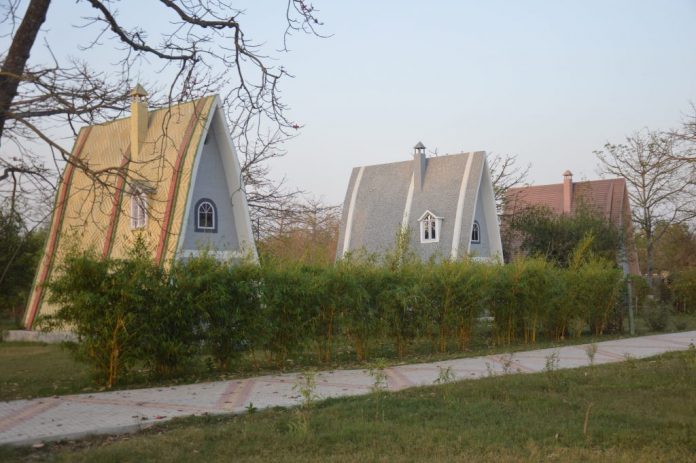
Bio Diversity Park Kusiargaon, Araria Dist. ( Pic from araria.nic.in
This is where
the road ends
tarmac
of India shining
gives way
to gravel
and red dirt
of India whining…
(The End by SoibamHaripriya)
Sitting in Sudha Devi’s courtyard, one is immediately reminded of Haripriya’s poem, The End. Sudhais a resident of Bajraha village in Raniganj Block of Araria, which is one of the most backward districts in Bihar. Located on Indo-Nepal border, parts of Arariais witness to Kosi’s wrath each year. During monsoon season, one has to wade through knee-deep water to reach villages such as Bajraha. Sudha narrates, “During bhaado (monsoon) it becomes extremely difficult to move around and perform daily household chores as there is water everywhere. Every year after the flood water subsides, we reconstruct ourkuchha houses made of mud and bamboo. Bamboo has also become very expensive now.”While Sudha was‘whining’ aboutthe situation prevalent in her part of India, two young men sitting nearby were watching a video on their phoneshowing images of ‘India shining’ – a super-fast, air-conditioned train which would cover the distance between Ahmedabad and Mumbai in just 2 hours.
Sudha’s narration is not just hers but that of hundreds of Sudha belonging to rural, Dalit working-class households in Araria.Conditions in which Dalit communities live,is pitiable. A large proportion of Dalit population is landless. Those who have struggled against oppressive forces such as local zamindars, corrupt government officials to get the 3 decimelhomestead land in their name as per a land redistribution scheme of the Government of Bihar, have unfortunately been allocated areas such as Bajraha where each year flood waters create havoc, making everyday life and livelihood, miserable for the poor. Along with landlessness, Dalit working-class families grapple with rampant unemployment. There are very few employment opportunities in the area which would fetch them living wages because of which a large section of working-class men migrates to places such as Delhi, Punjab, Bangalore, Chennai, to name a few. Women work in farmsand barely earn 150-200 rupees per day during sowing and reaping seasons. The public education systemin these villages is in shambles. Private coaching centres can be found in every nook and corner of Araria. Those who can afford private coaching, send their children to these centres. Likewise, private clinics have mushroomed everywhere given the wretched state of the public health system. Poor families spend large sums of money to seek care and treatment.![]()
This abysmal state of affairs in the peripheral areas such as Araria is not going to change any time soon, no matter which political party wins election. Issues such as – low wages, diminishing employment opportunities in rural areas, denial of land rights to Dalits, collapsing public systems – whether it is health system, education system or public distribution system – cannot be fundamentally addressed as long as neo-liberal forces coupled with feudal relations continue to dominate and govern people’s lives. When a vast majority of the Dalit-Bahujan working-class population in Araria is uneducated, the false promise of 2 crore jobs per year, means nothing to them. A young Rishidev boy – musahar by caste and one of the most marginalised sections even amongst the Dalits- of Farhi village in Narpatganj Block said that only ‘educated’ people will get jobs and this promise was not applicable to him. Similarly, the 6000 rupees that the Modi government has promised farmers, holds no meaning for numerous landless workers in these areas.
Absence of counter-hegemonic narratives at grassroots might prevent people from immediately seeing the linkages between global push for privatization of education along with systemic disdain for marginalized communities, and appalling learning levels of Dalit students in government run schools but people know very well that the status quo is not going to change nomatter which netaor political party wins the election. They will not get any respite frommisery. Kallu Rishi ofKoshkapur, another village in Raniganj Block narrates, “Just before elections, allnetas will come and touch our feet, promising to give us land, a Pradhan Mantri Awas house, pensions, etc. but as soon as the casting of vote is over, they will not return. Their car wheels slip on our dirt roads.”
Despite being aware of the hollowness of the grand speeches delivered by political leaders, people will cast their vote. They will cast their vote on the basis of several push and pull factors such as“what the tola (part of a village with usually a homogeneous caste composition) decides”, “which candidate has a better chance of winning”, “what one hears at chowk-chaurahas”,“what the elders or the important people will say”,“who had won elections last time”,etc.Interestingly, spaces such as satsangand jeevikameetings, which are frequented by the working-class women, are also being used for election campaigning. These spaces have emerged as sites which is used by the ruling class to perpetuate its ideas or in Gramscian term, ‘manufacture consent’.
Caste affinity interspersed with local power dynamics based on feudal relationscontinue to play an important role in the selection process of a candidate or a party to be voted for. Alandless Rishidev who faces exploitation at the hands of a local zamindar belonging to Yadav caste, is not inclined to vote for RashtriyaJantaDal (RJD) which is seen as a party of Yadavs.Weakening of Yadavs’ political power would mean less trouble for Rishidevs in their struggle for homestead land orin a land dispute leading to police intervention.In everyday life, a landless peasant are exploitatedby local zamindars whether regarding ownership of land, passage to their tola, forced labour, or other such forms of exploitation. The face of the immediate oppressor is etched in their memory. But with Jiten Ram Manjhi(ex-chief minister of Bihar who also comes from the musahar community) joining the MahaGathbandhan, Rishidevs who had earlier voted for Nitish Kumar because of the ‘Mahadalit’ card and also to oppose Yadavs, are also seen inclining towards Mahagathbandhan. This might lead to a split in Rishidev’s votes between Mahagathbandhan and NDA.However, in a Paswantola, one can see a clear inclination towards Ram Vilas Paswanand NDA.
The larger communal discourse and ‘othering’ of Muslims that has happened in the country since the demolition of Babri Mosque, will also guide the election result in Araria. Araria falls in the Seemanchal region of Bihar whichhas a substantialMuslim population.Fourparliamentary constituencies in Seemanchal, namely Purnea, Katihar, Kishanganj and Araria, have around 40 % or more Muslim population.The communal narrative has also made in-roads into Seemanchal. Sanskritisation amongst Dalit communities in the area has led to beliefs such as consumption of animal meat is sinful, whichhas further distanced these communities from Muslims. Politics of RSS-BJP haspainted Muslims as Pakistanis and have put a question mark in the minds of Hindus about their loyalty to the country. Given such a context, with a strong Muslim candidate in fray in the district, polarisation is easy to do and has been one of the dominant features of the election in Araria. Polarisation of votes based on religion coupled with split inMuslim votes because of the caste rivalry between ‘Kulhaiyas’ (Kulhaiyas belong to OBC category and are high in numbers only in this region) and other castes, has resulted intothe victory of BJP candidates like Pradeep Singh, in the past.
However, Modi’s overtly anti-Muslim politics have helped consolidate Muslim votes in favour of candidates that can defeatBJP and its allies.SarfarajAlam, the sitting MP and son of late strongmen of the area Md. Taslimuddin, knows that his best chance is in consolidation of Muslim and Yadav votes in his favour. However, with LaluPrasad Yadav missing in action, this election year, along with heightened communal sentiments playing their role and BJP hoping to cash in Pulwama, Yadav vote is something that cannot be taken for granted. In 2018 by-elections, Sarfaraz Alam had won by 61,988votes but this one is too close to call.
Millions will be spent on election campaign before the casting of vote in Arariaon the 23rd April. By the end of May there will be a victor and a vanquished but democracy would have failed Sudha Devi who will again wade through knee-deep water during the early showers of Monsoon in June.
Courtesy: Two Circle
Join our mailing list to get the latest human rights news that matters, straight to your mailbox.
© Sabrang | All Rights Reserved