First Published on: February 1, 2009
The crime
On September 29, 2008 there was a bomb explosion in a crowded locality of Malegaon. The explosion occurred opposite the Shakil Goods Transport Company, located between Anjuman Chowk and Bhiku Chowk, a busy and populous part of town. The blast was caused by an improvised explosive device (IED) fitted on an LML Freedom motorcycle bearing the registration number MH-15-4572. Six persons were killed as a result of the explosion and 101 persons sustained various degrees of injuries. Property worth Rs 4,23,500 was also destroyed. The IED was assembled using RDX, ammonium nitrate and ammonium nitrite.
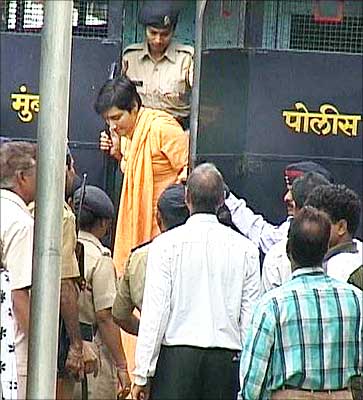
This act was the handiwork of a group of conspirators whose ultimate aim, according to the ATS charge sheet in the Malegaon case, was to “propagate a separate Hindu Rashtra with its own constitution and aims and with Bharat Swarajya, Surajya, Suraksha, in its preamble”. The charge sheet goes on to say that members of “this organised crime syndicate wanted to adopt a national flag i.e. solo-themed saffron flag with a golden border. The length of the flag would be twice its breadth, with an ancient golden torch (bhagwa dhwaj)”.
The charge sheet filed by the ATS runs into 4,528 pages. It contains two confessional statements of accused Rakesh Dhawade and Sudhakar Dhar Dwivedi alias Swami Dayanand Pandey, a list of 431 witnesses the prosecution wishes to examine and forensic evidence. The ATS has also included telephone, audio and video transcripts running into hundreds of pages. A total of 14 persons have been named as accused in the crime and arrests began in October 2008. Three of the 14 accused are absconding.
The conspirators
1. Sadhvi Pragnyasingh Chandra-
palsingh Thakur alias Swami Purnachetanand Giri (38), originally from Madhya Pradesh but living in Surat, Gujarat. A member of the VHP’s Durga Vahini and a former member of the ABVP, Pragnya Thakur is closely associated with BJP leaders and has participated in their election campaign meetings as well.
2. Shivnarayan Gopalsingh Kalsangra (36), a native of Madhya Pradesh and living in Indore.
3. Shyam Bhavarlal Sahu (42) from Madhya Pradesh.
4. Ramesh Shivji Upadhyaya (57) from Uttar Pradesh. He organised camps and training modules to ideologically and physically draw young men into violence. (The fact that Upadhyaya is a retired officer of the Indian army is not mentioned in the charge sheet.)
5. Sameer Sharad Kulkarni (39), a resident of Pune but originally from Jalgaon in Maharashtra. A former ABVP member, Kulkarni revived the Abhinav Bharat in Pune. He worked at a Bhopal printing press for some time and was in charge of Abhinav Bharat’s activities in Madhya Pradesh.
6. Ajay alias Raja Eknath Rahirkar (39), living in both Pune and Jalgaon. He was Abhinav Bharat’s Pune-based treasurer who provided logistical and financial support to Kulkarni and Purohit.
7. Rakesh Dattatraya Dhawade alias Rao (42) from Pune district. He is an arms expert linked to Abhinav Bharat.
8. Jagdish Chintaman Mhatre (40) from Dombivli, Thane.
9. Lt Col Prasad Srikant Purohit alias Balawant Rao alias Shreyak Ranadive (36), living in Pune and Panchmarhi, Madhya Pradesh. This is the first time that a serving army officer has been accused in a terror attack. Purohit is charged with providing training, coordinating the blasts, sourcing funds and arranging for the explosives. Being an army officer, he operated under at least two aliases.
10. Sudhakar Udaybhan Dhar Dwivedi alias Swami Dayanand Pandey alias Swami Amrutanand Devtirth alias Shankaracharya of Sharada Sarvagy Peeth (40), a native of Jammu living in Uttar Pradesh. A self-styled ‘Dharma Guru’, Dwivedi was also guru to the Sadhvi, Pragnya Thakur. There are possible indications that could link Dwivedi to the Kanpur blast in October and the Jammu agitation over the Amarnath shrine last year.
11. Sudhakar Onkarnath Chaturvedi (37), a resident of Nashik but originally from Uttar Pradesh.
Absconding accused:
12. Ramchandra Gopalsingh Kalsangra (38) from Indore in Madhya Pradesh. The person responsible for planting the explosives at Malegaon, Ramchandra Kalsangra was in constant touch with Sadhvi Pragnya Thakur and coordinated the blasts.
13. Sandeep Vishwas Dange, from Indore in Madhya Pradesh.
14. Pravin Mutalik, a resident of Karnataka.
Sections Applied: Sections 302, 307, 326, 324, 427, 153A, 153A(1)(b) and 120B of the IPC read with Sections 3, 4, 5 and 25 of the Arms Act 1959 read with Sections 3, 4, 5 and 6 of the Explosive Substances Act 1908 read with Sections 15, 16, 17, 18, 20 and 23 of the Unlawful Activities (Prevention) Amendment Act 2004 read with Sections 3(1)(i), 3(1)(ii), 3(2), 3(4) and 3(5) of the Maharashtra Control of Organised Crime Act (MCOCA) 1999.
The police are also on the lookout for Swami Ashim Anand from the Dangs district in Gujarat who has been absconding since the day news leaked out that the ATS was on the hunt for him. If caught, fresh details about the plot might be revealed along with possible links to the Ajmer and Mecca Masjid, Hyderabad, blasts as well as the blasts on the Samjhauta Express.
This crime syndicate procured and transported the materials required for the bomb explosions… These acts are often committed in areas where there is a dense population of Muslims. The supposed justification for these actions is revenge for acts committed by the Muslim community
Unlawful assembly
The terror ring held meetings at various places i.e. Faridabad, Kolkata, Bhopal, Jabalpur, Indore, Nashik, etc to plan their conspiracy under the banner of Abhinav Bharat, which was concurrently propagating its idea of a Hindu nation to be established through a takeover by the army.
To further this larger conspiracy, a meeting was held at Faridabad on January 25-26, 2008 at which the accused Prasad Srikant Purohit, Ramesh Upadhyaya and Sudhakar Chaturvedi were present. At the meeting Srikant Purohit took on the responsibility for providing the explosives while Sudhakar Chaturvedi took on the responsibility for providing two men who would set off a blast at an unspecified location. Chaturvedi also offered the use of his house at Vanat Chawl, Bhagur Road, Deolali camp, Nashik, as a location where the IED could be assembled and stored. The keys to Chaturvedi’s house were kept at the Military Intelligence (MI) office at the Deolali camp, Nashik. Purohit had asked Pravin Mutalik (an absconding accused) to collect the keys from the MI office at Deolali so as to enter Chaturvedi’s house for the purpose of assembling the IED which was finally used to explode bombs at Malegaon.
At a similar meeting held in Bhopal on April 11-12, 2008 the conspirators, Pragnya Thakur, Ramesh Upadhyaya, Sameer Kulkarni, Srikant Purohit, Sudhakar Dhar Dwivedi alias Dayanand Pandey and Sudhakar Chaturvedi among others, together plotted to take revenge against Muslims in Malegaon by exploding a bomb in a densely populated area. Srikant Purohit took on the responsibility for providing the explosives while Pragnya Thakur took on the responsibility for providing men to carry out the explosion. It was at this meeting that all the participants decided to carry out the explosion at Malegaon.
Around June 11, 2008 another meeting was held, this time at the Circuit House in Indore. At this meeting Pragnya Thakur introduced Ramchandra Kalsangra (an absconding accused) and Sandeep Dange to Sudhakar Dhar Dwivedi, saying that both these persons were her confidants and had always supported her. Sometime in the first week of July 2008, at another meeting in Indore, Pragnya Thakur asked Dwivedi to direct Srikant Purohit to give the explosives to Ramchandra Kalsangra and Sandeep Dange in Pune.
Unravelling a conspiracy
The ATS has held that all the accused persons were part of a criminal conspiracy operating through meetings held in different parts of Maharashtra and Madhya Pradesh between January 2008 and October 23, 2008, the object of which was to commit unlawful acts in furtherance of the criminal conspiracy.
The charge sheet states that the organised crime syndicate has been active since the year 2003; a key member of this syndicate, arrested accused Rakesh Dattatraya Dhawade, has been active since then. Rakesh Dhawade was among those present at an oath-taking ceremony of members of Abhinav Bharat that was held at Raigad Fort in 2006, which Srikant Purohit and Ajay Rahirkar also attended. Dhawade and the organised crime syndicate had been carrying out bomb blasts since 2003. All the accused also joined this syndicate and continued its unlawful activities. Dhawade was involved in procuring arms and ammunition for the group. This organised crime syndicate procured, acquired and transported the materials that were required for the bomb explosions and also transferred vast amounts of money, arms and ammunition used to carry out its unlawful activities. These unlawful acts are often committed in areas where there is a dense population of Muslims. The supposed justification for these actions is revenge for acts committed by the Muslim community.
Missing links
Army and intelligence links
The most dangerous trend revealed by the Nanded investigations and reconfirmed now in the Malegaon probe is the involvement of both serving and retired officers of Indian intelligence agencies and the Indian army in training outfits that are ideologically opposed to the Indian Constitution, in the making of bombs, in generating terror and in spreading bitter communal poison.
A serving officer and four retired officers of the Indian armed forces have already been shown up for their links to various recent acts of terror. The Malegaon charge sheet implicates Purohit and Upadhyaya in the crime. But Col (retd) S. Raikar, a former Indian army officer and until recently the commandant of the Bhonsala Military School, Nashik, who made the school campus available for training terror groups, was questioned by the police but has been spared in the ATS charge sheet. He has since resigned from his position at the Bhonsala Military School.
The earlier charge sheet(s) of 2006 (prepared by the ATS Maharashtra) in the Nanded blast case implicate Sanatkumar Bhate in training members of the Bajrang Dal at the Akanksha Resort at Sinhgad near Pune. Bhate is a former officer in the Indian navy. A legitimate follow-up to this would be to probe the true depth of ideological infiltration into the Indian armed forces, of ideologies that seek to establish a religion-based state through violent means. The ATS does not mention the positions or former positions that some of the accused have held in the armed forces. Does this omission by the ATS stem from a reluctance to track the role of army and navy officers in unconstitutional acts? The ATS has also not probed the involvement of any army officials in these crimes. Those army men who were questioned have been given a clean chit and been named only as witnesses.
Lt Col Purohit procured the RDX (research department explosive) used in the blast while he was posted in Jammu and Kashmir. He stored it in his homes in Pune and Nashik. The transcripts included as part of the charge sheet implicate Purohit in at least two other similar incidents whereas the ATS charge sheet limits itself to the Malegaon incident alone. In these transcripts Purohit said, “Main kuch baat kahunga isse pehle kabhi nahi kahi gayi thi. Do operation humne kiye, successful ho gaye. Operation karne ki meri kshamta hain, swamiji. Mere paas equipment ki kami nahi hain. Main equipment paida kar sakta hoon. Equipment la sakta hoon. Agar jab thaan leta hoon. Lekin target chunna yeh mere ek ke vishay ke hisaab nahi hona chahiye (I will say something that I have not spoken of before. We have carried out two operations in the past and they were successful. I am capable of carrying out operations. I have more than enough equipment. Getting equipment is easy… But choosing the target should not be my decision alone).”
In this probe, the ATS has also failed to question many of the conspirators who plotted a Hindutva takeover of the country. For instance, reference is made to a two-time BJP parliamentarian named Col Dhar and a Delhi-based doctor, RP Singh, who were actively engaged in giving shape to Purohit’s idea of a “new nation”. The probable links of the accused with others who currently occupy influential political positions have not been probed further.
The ATS also stops short of drawing the wider link to the larger network of terror that resulted in the Nanded blast of 2006 and the Malegaon blast in 2008. While it has included the Parbhani and Jalna mosque blasts within the wider conspiracy, Nanded is mysteriously absent.
Bhonsala Military School, Akanksha Resort spared
The Bhonsala Military School, located at two places in Maharashtra (Nashik and Nagpur), which were the locations used for training cadres in bomb-making and the use of explosives, has escaped the ATS net. So has the Akanksha Resort at the Sinhgad Fort, Pune, where such training in explosives creation possibly takes place even today.
While some of the school’s functionaries have been cited as witnesses, the ATS has given the institute lenient treatment. This despite the fact that a top functionary of the school, Col (retd) S. Raikar, the then commandant of the Bhonsala Military School, Nashik, and a former officer of the Indian army, is accused of making available the campus where these groups were trained. Raikar himself has only been made a witness.
Materials used
RDX was used in the IEDs exploded at Malegaon. Another disturbing trend over the past few years or so is the leakage and consequent availability of highly controlled and dangerous substances like RDX in the marketplace for easy use by any outfits that wish to make a career out of bomb-making. In India, RDX is only legally available to the Indian army. Yet there have been reported cases of RDX leakage in Maharashtra, Gujarat, Rajasthan and Haryana, which have been treated casually by the state police. Gelatine sticks and ammonium nitrate, volatile substances that are often used in the making of bombs, are carefully controlled in law and leakages from both industrial and retail users should be very easy to trace. The ATS charge sheet in the Malegaon case avoids any investigation into the leakage of these explosive substances.
The fact that this has not been done in any blast-related cases, be it the Samjhauta Express, Ahmedabad, Jaipur, Thane or Panvel, establishes not just the laxity in our investigating agencies. It underscores the cynicism of a political class, across party lines, that places a tragically low premium on life itself and uses communalism of all hues to further electoral gain.
The missing Mithun Chakraborty
The Malegaon investigation also reveals in its forensic laboratory reports that a person who went by the name of Mithun Chakraborty, after a training session with recruits, handed over a bag containing large quantities of RDX to conspirators at the Pune railway station. Investigators have concluded that this is an assumed name. Chakraborty is untraceable and the ATS’s failure to trace him remains a gaping hole in their investigations.
The name of a mysterious trainer, Mithun Chakraborty first surfaced during the interrogation and narco analysis test of Rahul Pande, a key suspect in the 2006 Nanded blast investigations who revealed that a tall well-built man identified as Chakraborty alias Sir was the main conspirator in the plot. Pande also stated that Chakraborty had trained right-wing Hindu militants to prepare various kinds of bombs and IEDs and had even procured and provided them with large quantities of explosives to make more bombs.
Organisations spared
What is Abhinav Bharat? The ATS charge sheet tells us that the Abhinav Bharat is an organisation floated in 2007. The charge sheet claims this organisation is not the same as the public charitable trust registered in the same name even though its founder, Himani Savarkar, was present at one of the meetings the conspirators held! Savarkar is on record as stating her concurrence with the actions of the Malegaon accused and justifies her position with the assertion that “only bombs can reply to bombs”. The ATS’s assertion – that the two organisations bearing the same name and sworn to the same ideology are unconnected – rings hollow.
Why was Section 125 not applied?
The crime syndicate has among other things also advocated the overthrow of the Indian republic bound by the Indian Constitution in favour of a Hindu nation under army rule. These chilling visions of the syndicate’s dream future are clearly revealed in the Malegaon charge sheet. This vision was advocated in public and secret meetings to fire youngsters and urge them to enlist in the cause. The ideology that drives the conspirators is not only manifest in ‘retaliatory’ acts of bomb terror, such as the attack in Malegaon, but also goes to the very foundation of the republic itself. The transcripts describe extensive mobilisation of young cadres by the conspirators and others, in public, to generate anger against the Indian Constitution and advocate the overthrow of the Indian republic. If these acts do not amount to sedition, what does?
Despite detailed transcripts of conversations between Purohit and others that reveal commitment to the overthrow of the Indian secular republic and the creation of a militarised Hindu nation, Section 125 of the IPC – for waging war against any Asiatic power in alliance with the Government of India – has not been applied.
(Speaking to CC, acting chief of the ATS, KP Raghuvanshi said that he was concerned with creating a watertight case that could ensure convictions and not in outlining charges that could not be proved. “We consulted senior public prosecutors who advised us that the ingredients of sedition were not present in the crime itself.”)
Section 125 of the IPC states: “Whoever by words, either spoken or written, or by signs, or by visible representation or otherwise, brings or attempts to bring into hatred or contempt, or excites or attempts to excite disaffection towards the government established by law in India, shall be punished with imprisonment for life to which fine may be added.”
In law the actions of these conspirators amount to sedition and war against the Indian state. If it is proved that this war is being waged from the inside, from a section, not exactly small, of our army, and this fact has escaped the attention of the top echelons of the armed forces so far, it would be logical to conclude that the infiltration into our armed forces runs deep. Just as an ideologically fanatic ISI of Pakistan must shoulder a substantial share of the responsibility for their country’s disintegration into violence and chaos, the trends revealed in the Nanded and Malegaon investigations have the potential, if allowed to pass unchecked, of driving India to disintegration, if not total destruction.
Archived from Communalism Combat, February 2009 Year 15 No.137, Cover Story 2
First Published on: February 1, 2009
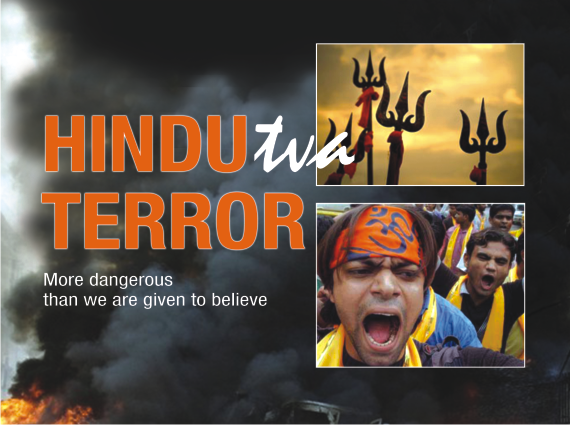
The terror trail: From Nanded to Malegaon and beyond

The horrifying spectacle of the Mumbai terror attacks that held us all paralysed for 60 hours, killing more than 187 persons and injuring dozens, also took the pressure off the saffron alliance, squirming for once, for being openly associated with acts of bomb terror. The sangh parivar, including its parliamentary face, the Bharatiya Janata Party (BJP), had been facing acute embarrassment, October through November 2008, over the revelations in the Malegaon blast investigations. Six persons died when pipe bombs placed on a motorcycle in a crowded street of Malegaon exploded on September 29, 2008, the eve of Id celebrations in the month of Ramadan.
The slaying of Anti-Terrorism Squad (ATS) chief, Hemant Karkare, along with 13 others from the Mumbai police (a total of 17 men from law enforcement died in the attacks) at the hands of Ajmal Kasab and his accomplices on November 26 had an unexpected consequence. The self-appointed saffron torch-bearers of Indian (read Hindutva) patriotism were miffed into silence. The reason? They, who had been busy tearing Karkare’s reputation to shreds for weeks before and right up to the day he was killed, had now been embarrassed into acknowledging him as martyr. But for Karkare’s death, these graceless pseudo-patriots would have cynically raised the public temper to a far more hysterical note, baying for some blood.
What was Karkare’s crime, for which he was a hunted man, targeted by the sangh parivar the day he died? He had dared to carry out the Malegaon blast investigations with integrity and transparency, tracing the masterminds of the crime to a serving lieutenant colonel in the Indian army, Srikant Purohit (who was ably assisted by other, retired army personnel), a Sadhvi, Pragnya Thakur, and Swami Dayanand Pandey among others. Purohit’s close association with an organisation called Abhinav Bharat and the Sadhvi’s own links to the student wing of the BJP, the Akhil Bharatiya Vidyarthi Parishad (ABVP), embarrassed the highest echelons of the parivar. Moreover, the Sadhvi has also been a popular part of the BJP’s campaign trail in Madhya Pradesh and Gujarat.
On January 20, 2009 the ATS under its former chief, KP Raghuvanshi, filed the charge sheet in the Malegaon blast case naming 14 persons (11 under arrest and three absconding) as accused, holding them guilty of crimes under 16 major sections of Indian criminal law, including murder and criminal conspiracy. The accused have been booked under the Indian Penal Code (IPC) for murder (Section 302), attempt to murder (Section 307) and conspiracy (Section 120B); for promoting enmity between groups on grounds of religion, race, place of birth, residence, language, and committing acts prejudicial to the maintenance of harmony (Section 153A); under Sections 3, 4, 5 and 25 of the Indian Arms Act; and Sections 3, 4, 5 and 6 of the Explosive Substances Act.
This was not the first time that the insidious hand of the Hindutvavadi terrorist was revealed. The Malegaon blast investigation is the ATS Maharashtra’s third serious investigation into Hindutva-driven terror. The first was its probe into the Nanded 2006 blast, which resulted in two charge sheets being filed by the squad that were subsequently diluted by the Central Bureau of Investigation (CBI) under the present UPA government (see ‘Blast after Blast’, CC, July-August 2008). The CBI was forced to reopen investigations into the Nanded blast of 2006 following the campaign by Communalism Combat which also happened to receive some welcome support from an unexpected quarter. During interrogations, Rakesh Dhawade, one of the accused named by the ATS Maharashtra in the Malegaon charge sheet, confessed his involvement in the consistent training of seven-eight youth, who were instructed in the preparation and detonation of bombs, at a location near the Sinhgad Fort, Pune, in July-August 2003.
Both the Nanded investigations as well as the Malegaon probe have pointed to the indoctrination/inspiration provided by leaders of the VHP, Dr Praveen Togadia and Acharya Giriraj Kishore, in exhorting youngsters towards these acts. But the ATS has been wary of drawing them into the charge sheet as accused or witnesses.
A third such investigation, also underway in Maharashtra, is related to the Thane-Panvel blasts of 2008. In October 2008 the then ATS Maharashtra chief, Karkare, had also investigated and charge-sheeted persons accused in the Thane-Panvel blasts where activists from the Hindutvavadi outfits, Sanatan Sanstha and Hindu Janajagruti Samiti, were involved. The 1,020-page charge sheet named six accused charged with attempt to murder, criminal conspiracy, causing disappearance of evidence and causing damage to property under the IPC as well as sections of the Arms Act, the Explosive Substances Act and the Unlawful Activities (Prevention) Act. Significantly, the ATS did not directly implicate the organisations in the crime. At other times similar incidents, where Hindutvavadi outfits were found to be involved in explosives creation, have surfaced only to be suppressed. A blast also occurred at Modasa in Gujarat’s Sabarkantha district on September 29, 2008, the same day as in Malegaon, and primary evidence pointed to a link between this incident and the group(s) responsible for the Malegaon terrorist attack. The Gujarat police however have brazenly refused to make public any details of the incident.
In the charge sheet filed in the Malegaon case, a significant omission is the ATS’s failure to charge-sheet the accused under Section 125 of the IPC for waging war against the nation despite some serious ingredients of the crime being in evidence.
The ATS has also on the face of it treated the involvement of serving and retired army officers (a serious development) as a one-off event despite the evidence that has repeatedly surfaced, through the Nanded, Malegaon and even the Jalna, Purna and Parbhani blast investigations, of a wide network of serving and retired officers being involved in some of these activities. Instances of RDX leakage from the armed forces that have surfaced in over a dozen cases all over Maharashtra since 2002 have also not been treated with the severity the offence demands. Public prosecutor, Ajay Misar, first told Judge HK Ganatra of the chief judicial magistrate’s court in Nashik that another (unnamed) army man had told investigators about Purohit’s role in stealing 60 kg of RDX from the Deolali army base, Nashik, and leaking it out through a person named Bhagwan for use in the blasts. This is not an offence for which Purohit is specifically charged, however.
The ATS has also spared two important private institutes, the Bhonsala Military Schools at Nashik and Nagpur, which were found to have been regularly used for terror training and bomb-making, as well as the Akanksha Resort at Sinhgad near Pune. These institutes enjoy patronage from the highest echelons of the sangh parivar. These locations had earlier been used to train cadre in bomb-making as has been revealed in the Nanded blast charge sheets filed by the ATS in 2006. In the Nanded investigations, and the investigations into both the Malegaon and the Jalna mosque blasts, a common link is accused Rakesh Dhawade, an expert in arms-making. Dhawade’s statement (a copy of which is in our possession) clearly demonstrates his involvement in this terror ring for over six years now.
Both the Nanded investigations as well as the Malegaon probe have pointed to the indoctrination/inspiration provided by high-profile rabble-rousing leaders of the Vishwa Hindu Parishad (VHP), Dr Praveen Togadia and Acharya Giriraj Kishore, in exhorting youngsters towards these acts, both individuals having allegedly visited Nanded on the eve of the blast in 2006. The ATS has been wary of drawing them into the charge sheet as accused or witnesses, however. Similarly, in the Malegaon case, the involvement of Himani Savarkar, niece of Mahatma Gandhi’s assassin, Nathuram Godse, and daughter-in-law of Narayan Savarkar, the brother of Hindutva ideologue, Vinayak Damodar Savarkar, is also handled with kid gloves. Himani Savarkar, a member of Abhinav Bharat, (who is on record on video as saying that she supports the ‘bomb versus bomb theory’) was, according to the ATS’s own investigations, also present at the meeting in which the Malegaon conspiracy was hatched. She is not named as part of the conspiracy but is only named as witness.
Links to other blasts in which this widespread terror ring may be involved have also surfaced during these investigations. During a narco analysis test conducted on November 9, 2008 Lt Col Srikant Purohit spilt the beans about his own role in, and his network’s connections to, the Samjhauta Express blasts that occurred on February 18-19, 2007, killing 68 persons, most of them Pakistanis. Similarly, he spoke during his interrogations of a possible role in the Ajmer Sharif blast (that killed two persons) and the Mecca Masjid blast in Hyderabad (where 11 people died in the blast and five in subsequent police firing). The police forces in Haryana and Rajasthan are reinvestigating two of these blast cases in the wake of this information while the CBI is handling the Mecca Masjid blast case. (Muslim youth who were initially accused of perpetrating the attacks but were subsequently found not guilty had been brutally tortured while in custody of the Andhra Pradesh police.) When public prosecutor, Ajay Misar, first made these declarations public in November 2008, ATS chief, Hemant Karkare, had quickly clarified that the Malegaon investigations had revealed no connections whatsoever with the blasts on the Samjhauta Express.
Given these details, how does one rate the charge sheet in the Malegaon blast case?
The charge sheet has drawn a firm net around the 14 persons accused of the immediate crime that took place at Malegaon. Making a strong argument for the application of MCOCA (Maharashtra Control of Organised Crime Act), the charge sheet states that “this organised crime syndicate of Rakesh Dhawade (accused number 7) had been committing bomb blasts since year 2003”. All the other accused had joined this organised crime syndicate and continued its unlawful activities which “included the procurement and transportation of the materials which are required to make bombs”. They had also transferred large amounts of money, arms and ammunition used to carry out unlawful activities and had worked together to advocate and promote their organised gang and continue its unlawful activities, namely promoting their fundamentalist ideology to form a separate Hindu Rashtra. Their strategy, according to the ATS charge sheet, was to explode bombs and other improvised explosive devices in areas with a dense Muslim population even as they seek to create the impression that they act in retaliation and revenge for acts committed by the Muslim community.
But the charge sheet fails to draw a picture of the wider nexus, of a preparatory training ground that breeds cadres of such terrorists, of the scale of their operation and their continued access to the expertise provided by Indian military and intelligence agencies. The latter point raises serious questions about ideological infiltration into India’s security agencies. Detailed revelations of the involvement of over half a dozen serving and retired army officers in this network of Hindutva–driven terror, which spans at least eight states in the country and goes back at least a decade, remain largely ignored, with the ATS Maharashtra treating it as a single, albeit serious, case of terror-driven crime. As investigations go, under both Karkare and Raghuvanshi the results have been professional but limited.
The reluctance of the authorities to track and trace the vicious spread of Hindutva’s terror network despite its systematic planning and exhaustive training in violence is a historical legacy. Eight attempts were made on Gandhi’s life before the final one on January 30, 1948 was successful. Yet public discourse is reluctant to recognise that the first act of terror perpetrated on independent India’s soil stemmed from determined and vicious planning by the Hindu Right. Discourse is formed by what a society allows and accepts out in the open. Be it in our public parks, drawing rooms, state assemblies, Parliament, school texts or public speeches.
It is this reluctance to accept the genesis, seriousness and viciousness of Hindutvavadi terror that has affected our law enforcement agencies as a whole and can be analysed in the charge sheets of both the Thane-Panvel and the Malegaon investigations. These lacunae are rooted in the assumptions reflected in the pervasive discourse that surrounds home-grown terror and violence. Cleverly but not entirely influenced by the ideologues of the BJP and the sangh parivar who are omnipresent in the national media, Hindutva–driven terror is slotted by definition as reactive and through this association as less pervasive and dangerous than the jihadi’s murderous games. Its easy and natural certificate of association with patriotism lends a further dangerous ambivalence to the Hindutvavadi’s actions.
The limitations in the Malegaon charge sheet therefore stem as much from probable and insidious political pressure exerted on officers of the ATS both within and without the system as from this carefully formulated discourse of the sangh parivar. It is a strategy cultivated through propaganda which stresses that any violence stemming from the Hindu fold is only retaliatory, driven by a righteous angst against the heap of injustices perpetrated on ‘us’ in the name of Islam. Where jihadi attacks are seen as only the most recent manifestation of a centuries old plan to devour this civilisation through invasions of both a physical and moral kind.
Archived from Communalism Combat, February 2009 Year 15 No.137, Cover Story 1

Image Courtesy: Zee News
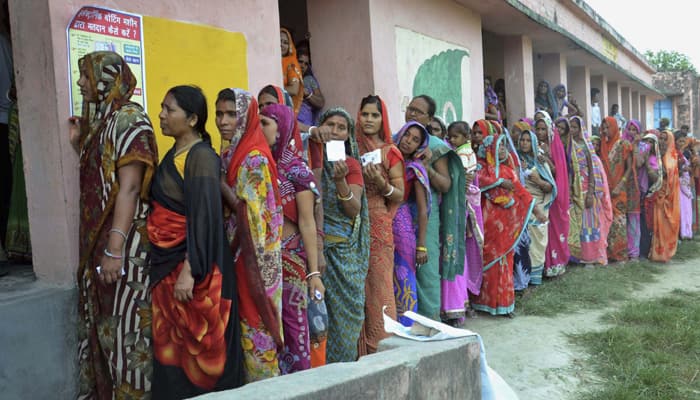
In the 2014 elections, the Bharatiya Janata Party (BJP) had won 22 out of the 40 seats, followed by Lok Janshakti Party which won 6 seats. The Lalu Yadav-led Rashtriya Janata Dal won four seats, while Nitish Kumar’s Janata Dal United (JD-U) grabbed two constituencies.
However, it is the ‘mahagathabandhan’ or the grand alliance that is being seen as a major game changer this time. The alliance comprises old allies like the Congress and the RJD, besides new entrants such as Upendra Kushwaha’s RLSP, Jitna Ram Manjhi’s Hindustani Awam Morcha (HAM), Sharad Yadav’s Loktrantik Janata Dal (LJD) and the Vikashsheel Insaan Party (VIP), an outfit floated by former Bollywood set designed Mukesh Sahni.
The grand alliance also seeks to have an electoral understanding with the Left Front, which has three constituents in Bihar the CPI, the CPI (ML) and the CPI (M).
The key constituency of Madhepura will see a triangular contest with caste as a key factor. Madhepura is the place with an adage that has almost taken the form of a folklore, it’s said, “Rome Pope Ka, Madhepura Gope ka (Rome belongs to Pope and Madhepura to a Gope (Yadav).
The triangular contest will take place between Loktrantik Janata Dal chief Sharad Yadav (contesting on the RJD’s ticket), sitting MP and Jan Adhikar Party leader Rajesh Ranjan alias Pappu Yadav and Bihar minister Dinesh Chandra Yadav.
The sitting MP Pappu Yadav, had turned on a RJD rebel soon after winning in 2014. Thiugh he tried hard to become a nominee of the grand alliance, that could not be possible.
The Madhepura electorate comprises about 5 lakh Yadavs, 2 lakh Muslims, 3 lakh OBC Baniyas, 2 lakh Brahmins and 2.5 lakh EBCs.
During the campaigns, Sharad Yadav has been raising the issues of reservation and accusing the NDA government of “planning to do away with reservation.” He has also said that there will be no elections if PM Modi is voted to power again.
On the other hand, Pappu Yadav has said, “I am like their son and can rush to them in hours of distress while other candidates are outsiders.”
The general pattern followed in Madhepura elections shows a polarisation on caste lines. While the RJD hopes for the Muslim-Yadav combination to work in its favour, the NDA looks to consolidate votes from non-Yadav OBCs, upper castes and Dalits. In 2009, the NDA consolidate votes on this basis. Though the NDA hopes for a similar feat, this time it is set to fight more formidable opponents. JD (U)’s Dinesh Chandra Yadav is seeking votes by talking about development by the state and central governments. Dinesh Chandra Yadav has earlier represented Saharsa which is now part of the Madhepura constituency.
Madhepura has a total voter base of 17,25,578. It covers a large part of Madhepura and Saharsa districts. Yadavs, Brahmins and upper castes call the shots in Madhepura in east Bihar. The Yadavs have determined the results in this constituency.
The other two important constituencies are Ararira and Jhanjharpur.
With a total voter base of 15,87,348, the seat of Araria is held by RJD’s Tasleem Uddin. It covers the entire Araria district. It has a population of 28,11,569 people as per Census 2011. It has 12.07 lakh Muslims residing and an SC population of 382684 people. It receives funding under the Backward Regions Grant Fund Programme.
The Jhanjharpur Lok Sabha constituency has 16,50,753 total electors and at present BJP’s Birendra Kumar Chaudhary is the MP. It covers parts of Madhubani district. It receives funding from the Backward Regions Grant Fund Programme. It has a population of 44,87,379.
In the run-up to the world’s largest democratic exercise, the current ruling party is leaving no stone unturned to promote its agendas and influence the voters; mainly through the use of social media platforms like Facebook, Whatsapp and Twitter. Time and again, the saffron party has been accused of spreading fake news and promoting its propogandas by customizing the messages for its target audience. What is being missed in this extensive exercise, is the grave threat that it imposes on the Indian democracy.

The BJP IT Cell, headed by Amit Malviya, has enrolled thousands of volunteers to ensure that Modi’s message is being reached all across the nation.
Shivam Shanker Singh, a whistleblower and an ex-member of the BJP IT Cell has revealed the ‘modus operandi’ of the cell. He has accused the Hindu right-wing party of manipulating the voters merely on the basis of emotions and nationalist appeals. He says that a dedicated team collects personal data of the voters (through the electoral roll), analyses them and then adds them to specific WhatsApp groups based on their caste, religion, age-group, local issues and prejudices. Further, Mr. Singh has exposed the BJP’s polarisation attempts to create a Hindu-Muslim divide by sending across specific messages through such public platforms.
The possibility of performing such large scale activities poses serious questions on the credibility and reliability of our data protection laws.
Recently, there had been reports of Mr. Malviya editing politician and psephologist Yogendra Yadav’s speech to make it appear as a communal speech catering to the Muslim population. Later, Yadav rebuffed the allegations by tweeting a link to the entire video which revealed that it was from 2018 when he was addressing a crowd in Kolgaon, Haryana in the aftermath of the lynching of Rakhbar Khan in Alwar, Rajasthan.
Another investigative report by Journalist Samrath Bansal has revealed that the BJP-sponsored NaMo app is spreading misinformation. A report by the Alt News has shown a pro-BJP account, The India Eye, promotes fake news on social media and the NaMo App. Further, the ruling party and its members have spent the highest on political advertisements especially on Facebook. A report by HuffPost India has confirmed that the BJP has hired a Jaipur-based private company, Sarv Webs Pvt. Ltd, to push its political propaganda through mass messages on WhatsApp.
Brushing aside all allegations of giving misinformation to sway the voters, Bihar’s BJP IT Cell head, Manish Pandey, in an interview to Al Jazeera, said, “Our product is Modi; anyone can sell this product on the streets. You don’t have to open a special showroom for it. Modi is a well known brand, a huge product.” He further added, “There are over 50,000 whatsapp groups that we maintain officially. There are facts that the print media may not be able to convey to the people, then there are some media outlets that don’t like us, so they don’t convey our view. So we convey our own message through social media and our volunteers.” However, such groups are infamous for disseminating misinformation and provoking sectarian tensions.
Reportedly, Facebook has removed 687 pages and accounts linked to individuals of the Congress IT Cell and 15 pro-BJP pages and accounts. Further, around $39,000 has been spent on advertisements by the Congress-connected pages while $79,000 was spent on advertisements by Silver Touch, a Ahmedabad-based IT firm which has developed various projects for the BJP government including the NaMo App. Recently, twitter also deleted two controversial tweets from Uttar Pradesh Chief Minister Yogi Adityanath’s handle after the Election Commission issued a notice to the micro-blogging site. It even deleted the tweets of Union Minister Giriraj Singh, Shiromani Akali Dal MLA Manjinder Singh Sirsa and BJP’s IT cell head Amit Malviya, among others, as they violated the model code of conduct.
With the fight for power intensifying, politicians are trying all means possible to influence the voters even if that requires spreading of fake news or falsely implicating the opposition. The BJP leads this race!

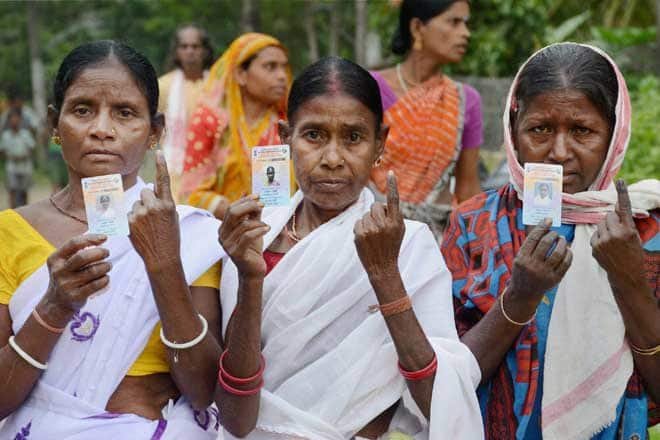
Dhubri: Dhubri once a Congress stronghold has now elected incumbent Badruddin Ajmal of All India United Democratic Front (AIUDF) with impressive margins in both 2009 and 2014. Dhubri includes the assembly constituencies of Mankachar, South Salmara, Gauripur, Gokalganj, Bilasipara (East and West), Goalpara (East and West), Jaleswar and Dhubri.
The constituency has a Muslim majority in terms of population with 79.67 per cent following the faith according to the 2011 census. The region was affected by violence when riots broke out in the neighbouring Bodo Terrirorial Area Districts (BTAD) allegedly between ethnic Bodos and Bengali speaking Muslims in 2012.
Other candidates include TMC’s Nurul Islam Chaudhry, Javed Islam of the AGP (BJP ally), and the Congress’s Abu Tehar Bepari.
Barpeta: This constituency has been a traditional Congress bastion, but was clinched by the AIUDF in 2014. AIUDF chief Badruddin Ajmal’s brother Sirajuddin is the current MP, however it is Hafiz Rafiqul Islam who will contest elections from the seat from AIUDF.
This constituency also has a Muslim majority population with 70.74 per cent of the population practicing the religion as per the 2011 census. Over 90 percent of the population lives in rural areas. Barpeta suffers every year due to river erosion. The region is also economically backward.
The AIUDF, an alliance partner of the UPA for over 10 years claims it has scaled back on the number of constituencies to contest from, hoping that it would help the Congress in keeping BJP out. However, the Congress is contesting all 14 seats in Assam. The AGP candidate is Rajya Sabh MP Kumar Deepak Das.
Kokrajhar: This is the headquarters of the BTAD and has a large population of ethnic Bodos. There is also a significant Bengali speaking Muslim population. According to the 2011 census, over 19 per cent of the population is Muslim. The MP seat is reserved for Scheduled Tribes (ST).
Kokrajhar is home to a detention camp for Declared Foreigners. This is the only facility that has women inmates. The parliamentary constituency covers 10 assembly segments, including Tamulpur and Bijni among others. The region has also seen communal violence and clashes along ethnic and tribal lines.
Incumbent Nana Kumar “Heera” Saraniya is an independent and also a former commander of an ULFA battalion. His immediate competitors is Urkhao Gwra Brahma from the United People’s Party Liberal (UPPL). Brahma is a Sahitya Akademi award winning poet who has been an open champion for the cause of a separate state of Bodoland. While the UPPL enjoys the support of All Bodo Students Union as well as the National Democratic Front of Bodoland – Progressive faction (NDFB-P). Interestingly, UPPL has also allied with the AIUDF to consolidate the Muslim vote. Also contesting Is 6 Kokrajhar East MLA Pramila Rani Brahma of the Bodoland People’s Front, a BJP ally. Sabda Ram Rabha is the Congress candidate.
Gauhati: The parliamentary constituency includes the state capital of Dispur, as well as 9 other assembly constituencies. Traditionally, this has not been the stronghold of any one political party.
The current MP is Bijoya Chakravarti of the BJP, though the party has fielded Queen Ojha. Ojha recently landed in a controversy about allegedly falsifying her educational records. The Congress has fielded Bobbeeta Sharma against her. Sharma is a former beauty queen.
There are over 4 lakh Muslim voters and the SC-ST population stands at about 20 percent. If either Ojha or Sharma win, it will be the first time the MP will be a woman since Renka Devi Barkakati in 1977.
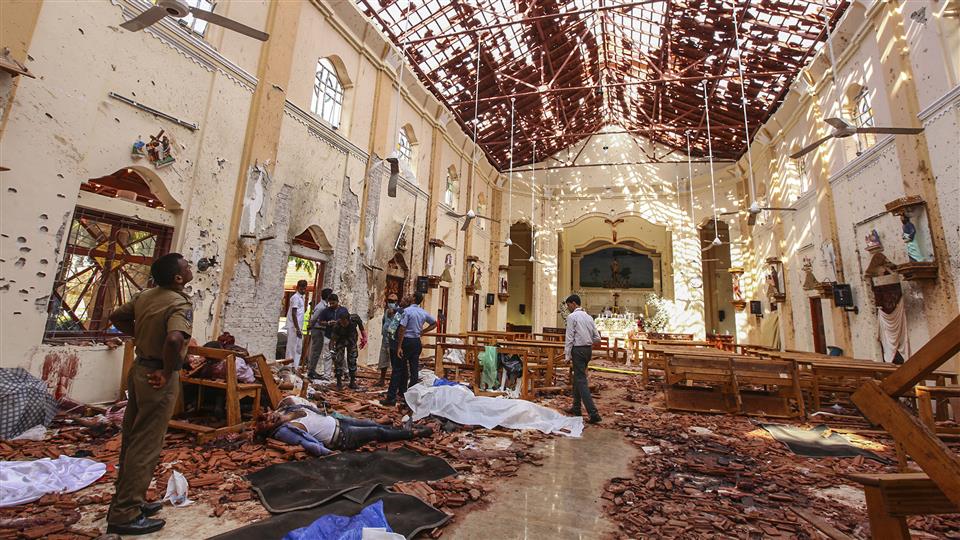
Twenty-four persons were arrested in connection with the eight bombs blasts that left nearly 500 people injured. Late on Sunday, authorities defused an improvised pipe bomb on a road leading to the main terminal of the Colombo airport. Social media services continued to remain blocked in the country to curtail the spread of false information and ease tensions until the probe into the blasts is concluded.
Karnataka Chief Minister H D Kumaraswamy said four JD(S) workers were among the five Indians who were killed in the attacks. He added that three other workers were still missing.
————————————————————————————————————
(Reports from Sri Lanka Newspapers including The Sunday Observer)
Easter Sunday on the emerald isle of Sri Lanka was shattered by a A series of devastating bomb explosions have occurred on Easter Sunday morning (April 21) targeting multiple churches around the country and three luxury hotel complexes in Colombo.Six explosions occurred simultaneously across Sri Lanka, three of which targeted Catholic and Christian churches and three luxury hotels in Colombo. Explosions are reported in the Shangri-La, Kingsbury and the Cinnamon Grand Hotels. All of them took place between 8 and 8.45 a.m. The explosions are said to have occurred during Easter Sunday service at the churches. The staggering figure of over 205 dead with 35 of them being foreigners and (so far) and over 300 injured stunned Sri Lanka, India and the world. As the day wore on, reports of the attacks on the St Anthony’s Church in Kochchikade in Colombo 13, St. Sebastian’s Church, Katana and Zion Evangelical Church, Batticaloa, are confirmed by Sri Lanka Police. Among the injured are a large number of churchgoers and several foreigners.

Cardinal Malcolm Ranjith Fernando condemned the attack. The Cardinal requested the public to remain calm and advised not to “take [the] law into their hands”. He urged the public to help the victims and also donate blood if possible. Sri Lankan president, Maithripala Sirisena expressed shock and dismay at the attack. He noted that the Police and tri-forces have already commenced investigations and urged the public to stay calm and refrain from spreading misinformation.
Department of Government Information issued a public notice expressing condolences to those affected by the attack. The Department urged the public to not to get swayed by gossip. Till late into Sunday and Monday, social networking sites were shot down by the government. The Prime Minister Ranil Wickremesinghe condemned the attack. He highlighted that the government is taking immediate steps to contain the situation.
PM @RW_UNP met w ministers n senior military personnel; all measures taken to maintain peace. Security tightened. Please stay calm. Please act responsibly. Please NO politics. We must all act together as #SriLanka citizens. My condolences to all families who lost loved ones. pic.twitter.com/j6e3qEPgNt
— Harsha de Silva (@HarshadeSilvaMP) April 21, 2019
Opposition Leader and former President Mahinda Rajapaksa condemned the attack.
It is absolutely barbaric to see such violent attacks on such a holy day. Whoever is behind these attacks must be dealt with immediately. My thoughts and prayers are with the families that lost loved ones and all of Sri Lanka.
— Mahinda Rajapaksa (@PresRajapaksa) April 21, 2019
Karu Jayasuriya, Speaker of Parliament issued a statement condemning the attack.
Multiple cowardly attacks this morning were not against any religion or ethnic group, but the whole Sri Lankan nation, bound together by friendship and brotherhood. In this difficult time, let us stand stronger to wipe out these heinous forces from our country, whoever they are. pic.twitter.com/n31N5GVTbG
— Karu Jayasuriya (@KaruOnline) April 21, 2019
An eighth explosion was reported in Dematagoda, Colombo 09 at about 2.40 p.m. This explosion reportedly took place at a house and a fire was reported as well. Three people admitted to Colombo General Hospital.
Sri Lankan State Minister Ruwan Wijegunawardene said that seven suspects have been arrested in connection with today’s coordinated attacks in Colombo, Negombo and Batticaloa. Government confirmed that most of the blasts were suicide bomb attacks, organised and carried out by one group. It was only at 06 am on Monday morning that the police lifted state wide curfew imposed last evening.
Increasing anti-Christian attacks
The Sunday Observer published out of Sri Lanka reported that, from February 3 to April 14 this year, across Sri Lanka, there has been some sort of disruption against a Christian worship service every Sunday – on 11 successive Sundays to be specific.
Christians in Sri Lanka suffer violations of their right to religion and belief regularly, but most incidents do not make it to the news – or even to the Twittersphere. But the attack on the Methodist Church Centre in Anuradhapura, last Sunday, which was also Palm Sunday, a day of religious significance for Christians, was widely reported because of the forthright personal testimony and determined efforts of the President of the Methodist Conference, Bishop Asiri Perera, who had experienced the attack first hand.
In the past two months, this same church centre had obscenities shouted and stones pelted at it. A Municipal Councillor and villagers had forcibly broken in and threatened the priest and worshippers with assault. The Sunday before the Palm Sunday attack, they had cancelled the service due to intense pressure about the legality of their premises and services.
Types of violations
The violations reported this year against Christians include forcible entry to places of worship while services were ongoing, disrupting services, damaging properties, throwing stones and gathering outside places of worship in a threatening manner. Those leading prayers, hosting prayer services and participants have been threatened and obscene language used against them. Among the more serious violations was an assault of two females in two different incidents, a death threat and a threat to burn a place of worship.
At least 15 police complaints have been filed, some dealing with several violations. In some cases, police had refused or been reluctant to take complaints, sometimes going to the extent of siding with the alleged perpetrators, mocking and admonishing victims. On some occasions, police had refused to take matters to courts, demanded that victims file private plaints, and even refused to offer protection.
The right to Religion or belief cannot be restricted under any circumstances in the Sri Lankan Constitution. But one of the most regular violations have been questioning the legality of Christian prayers and places of worship, by Government officials, police, bhikkus and ordinary persons, often demanding registration, authorisation or approval from an official. Only on a few occasions have the police insisted on the right to freedom of religion or belief of Christians.
Numbers
This year, at least 13 churches and one individual have been affected in nine districts, with about 35 incidents and about 70 violations. Some churches have been affected multiple times, with multiple violations, such as disrupting a service, assault, death threats, shouting obscenities and damage to property.
Such violations against Christians have occurred regularly in Sri Lanka over several years, under successive governments.
A report by Verite Research in 2014 reported that a state institution or public servant was recorded as the key perpetrator of religious violence against Christians in 175 incidents (18%) out of 972 incidents examined between 1994 and 2014. Many of these have been diligently documented for years by the National Christian Evangelical Alliance of Sri Lanka. 226 incidents of violence against Christians have been reported between January 2015 – June 2017 and 86 incidents in 2018. Many of the Christians under attack have been small rural Christian communities.
They have had little support from Churches which wield more political-social influence such as the Catholic Church, and various inter-religious bodies operating at local and national level. Though I have focused on the situation of Christians here, Muslims too have been under fire in Sri Lanka, with some of the harshest violence against them being concentrated within a few days in towns such as Aluthgama in 2014 and Digana in 2018. There have also been reports of violations against Hindus.
Way forward
Impunity has served as a licence for continued violence against religious minorities. Despite compelling evidence in some incidents, there has been a reluctance to use the existing legal framework to arrest and prosecute those responsible. Ironically, the ICCPR Act was recently used to imprison a writer and suppress free expression based on complaints by a Buddhist group that the writer has caused pain of mind to Buddhists and insulted Buddhism, but the same Act has not been used to arrest and prosecute those responsible for blatant and serious violations against Christians. Political will and legal action is essential to protect the rights of religious minorities.
Asserting rights sensitively would help, but it is unfair to expect victims to compromise and tolerate violations of their inalienable rights. Rather, the ‘good’ among the majorities, especially, Buddhists, must proactively protect the rights of religious minorities being persecuted and the more influential Christian churches must show support and solidarity to smaller and more vulnerable churches.
Unless and until all persons and communities, especially, the minorities and the vulnerable, can freely practise their religion without fear, religious harmony and co-existence will be a myth.
Examples of violations against Christians in 2019
1. As a female pastor and worshippers were preparing for a Sunday worship service, a mob of around 200 led by some bhikkus had forcibly entered the church premises, demanded to stop the worship, threatened the worshippers in obscene language, and damaged furniture and roofing sheets. A bhikku had threatened the Christians with death if they refused to stop their worship. The mob had also dragged a female worshipper on to the street, threw her at the feet of the bhikkus, and beaten her, and she had to be hospitalised. Some of the bhikkus had lodged a complaint, claiming the pastor was breaching the peace. At an inquiry, the monks and villagers had demanded the pastor stop conducting her services and only engage in worship in private. The Officer-in Charge (OIC) had told the pastor to comply with the demands of the monks and said the police wouldn’t provide her with further protection.
2. While a Sunday worship service was ongoing, bhikkus and a group of youth had forcibly entered the place of worship, shouting in obscene language and threatened the worshippers. Later, the policemen in civil clothes had tried to compel the pastor to attend an inquiry within 15 minutes, despite the pastor’s request for adequate time to consult his lawyer.
3. While a Sunday worship service was ongoing, a bhikkus had stood outside taking pictures of the premises and later, a group of around 35 villagers had gathered and stoned the premises. They had forcibly entered the place of worship and demanded to stop the worship immediately and threatened to burn the building if they refused to comply. A few days later, the pastor’s residence was stoned by unidentified individuals. The Officer-in-Charge (OIC) of the police had refused the pastor’s request to refer the matter to court and told him to file a private plaint.
4. A pastor had received a copy of a letter addressed by a Divisional Secretary (DS) to the OIC of the local police, instructing the latter to stop Christian religious worship activities, claiming the place of worship was not registered with the DS. A few days later, while the Sunday service was ongoing, around 30 individuals, two police officers and the Grama Niladhari had questioned the pastor and told him to meet with the DS the following day. The DS had demanded the pastor stop his religious worship activities immediately and threatened to confiscate the pastor’s home (received through a tsunami resettlement scheme) if he refused to comply.
5. A group of 30 individuals had arrived at a place of worship and demanded to speak to the pastor, who was not there. Two individuals had then assaulted the female owner of the premises.
6. While a pastor and his wife were visiting a congregant’s home, a group of villagers had damaged the front door of the house and a cross hanging on it. The group had demanded to know about approval to carry out worship activities in the village and threatened the pastor. They had scolded the pastor’s wife in obscene language and attempted to assault the pastor. The police had been reluctant to take down the complaint.
7. Villagers had threatened a Christian not to invite a pastor to conduct bible studies in his home. Later, when he had gone to lodge another complaint to the police about threats to his life, he was arrested, based on a false allegation of assault. After he was released on bail, a government official had told him to stop having bible studies at his house.

Image Courtesy: First Post
SabrangIndia’s Teesta Setalvad noted,
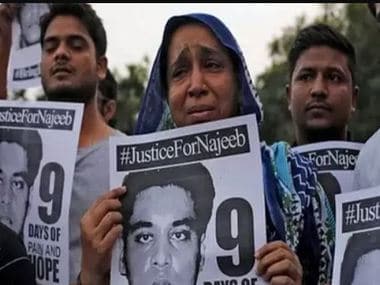
Breaking: CBI Court Orders CBI to give full documents in evidence statements and documents in JNU Students Najeeb Ahmed’s disappearance case! Kudos to Fatima Nafees Ammi to all and her legal team. The wheels of justice grind slowly, but well #Najeeb @FatimaNafis1 @standwithjnu
— Teesta Setalvad (@TeestaSetalvad) April 22, 2019
The documents that the court ordered to be presented include call data records (CDR), witness statements and other documents mentioned in the closure report. Earlier, after closing the case, the CBI had denied presenting these documents to Fatima Nafees, the petitioner in this case.
On March 28, CBI had argued that “there is no provision in law” to present the documents.
The Delhi High Court had allowed the CBI to file a closure report in his case and had “declined” Fatima Nafees’s plea to constitute a Special Investigation Team (SIT) to monitor the probe. The CBI took over his case in May 16, 2017 and after more than an year of investigation said that it had looked into all the aspects of the case and was of the opinion that no offence was committed against the missing student.
Najeeb’s brother Haseeb Ahmed said that this was the first hopeful news they heard since Najeeb went missing. He added, “Now we are hopeful that my brother will be back soon and the ones behind his disappearance will be behind bars.”
Najeeb Ahmed, a first year MSc Biotechnology student in the JNU went missing on October 15, 2016 after the alleged attacks on him by members of the Akhil Bharatiya Vidhyarthi Parishad (ABVP), the student wing of the ruling party. This had sparked students’ movements across the country. His mother Fatima Nafees has been tirelessly following up his case. On multiple occasions she has faced extreme police brutality despite peacefully demanding for her son to be found.
His case was initially investigated by the Vasant Kunj Police, and was subsequently passed on to the Special Investigation Team (SIT) of the Delhi Police, the Crime Branch of the Delhi Police and then the CBI. But all these institutions failed to find his traces.
Join our mailing list to get the latest human rights news that matters, straight to your mailbox.
© Sabrang | All Rights Reserved