The senior television journalist says media has become the voice of those in power, not of the people.
Courtesy: News Click

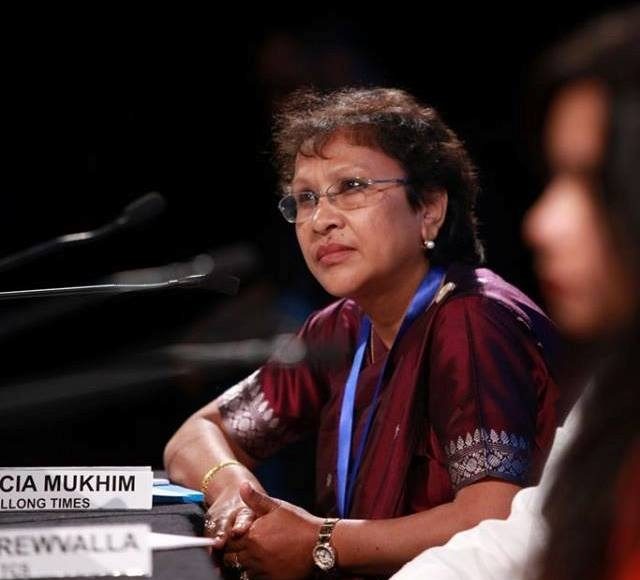
Shillong/New Delhi: A Supreme Court Bench led by Chief Justice of India Ranjan Gogoi on Thursday agreed to hear a plea by The Shillong Times editor Patricia Mukhim against an order of the Meghalaya High Court finding her and her publisher, Shobha Chaudhuri, guilty of contempt.
The CJI listed the case for hearing on March 15. The SC issued notice and stayed the Meghalaya High Court’s contempt order against the Editor and publisher of the Shillong Times.
The case relates to articles published by the paper on the perks and facilities for retired judges and their families. A Bench comprising Chief Justice M.Y. Mir and Justice S.R. Sen of the Meghalaya High Court, taking umbrage at two reports published in The Shillong Times, had held the newspaper liable for contempt of court.
One of the articles titled, “When judges judge for themselves”, had drawn parallels between the order by Justice SR Sen and an order passed by two former judges of the High Court in 2016.
The High Court invoked its powers under Article 215 of the Constitution to sentence the contemners.
The two were made to sit in a corner of the courtroom as a punishment till the judges rose for the day and fined ₹2 lakh each. Failure to deposit the amount would result in six months of simple imprisonment and a ban on the paper.
The Press Council of India said the conviction of a newspaper editor will have “adverse impact” on the freedom of press and would file an application to implead itself in the case.
The Shillong Times, first published in 1945, is said to be one of the oldest English-language newspapers in the region.
The Editor’s Guild had also condemned the High Court’s order, calling it “intimidatory”. The Guild said the court’s order, “which among other things imposes a fine along with a threat of imprisonment and a ban on the publication, is intimidatory and undermines press freedom”.
It is “ironical”, it said, that the judiciary “which should uphold press freedom has instead issued an order that militates against freedom of expression” and urged the judiciary “to exercise its constitutional powers with utmost caution so that the role of a free media in a democracy is duly respected”.

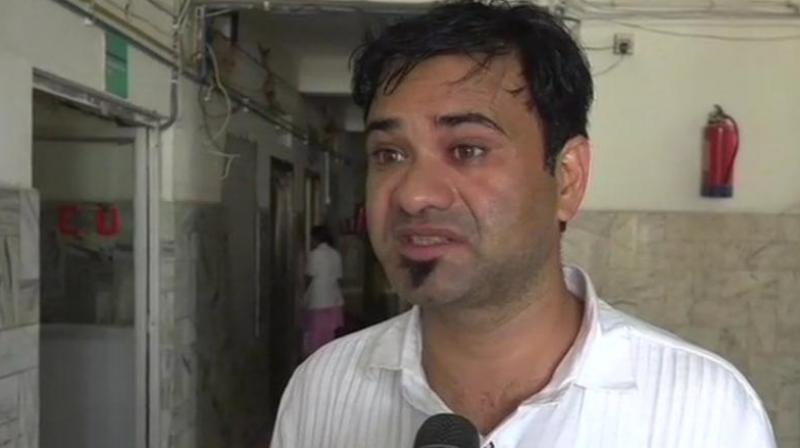
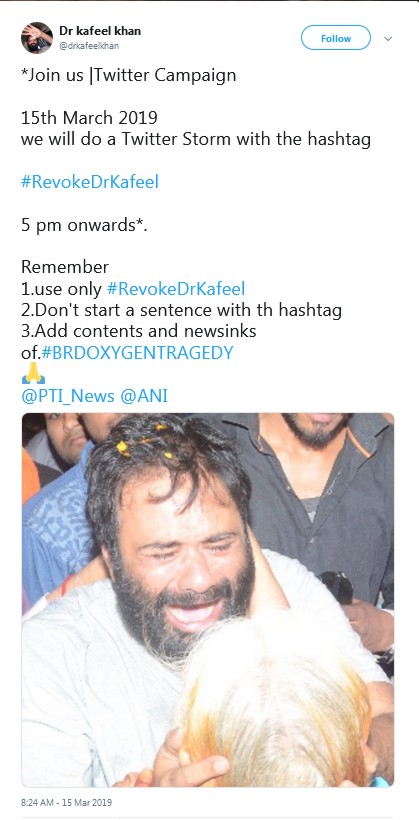
A Twitter campaign to revoke Dr. Kafeel Khan’s suspension order was announced on March 15. “It’s been 18 months and I am still suspended. Even though the High Court has given me a clean chit, the Yogi government is neither revoking my suspension nor letting me serve,” he said announcing the campaign, adding that he was being punished for a crime he didn’t commit and he needed public support.
He has urged Twitter users to use the hashtag #RevokeDrKafeel and use links of the #BRDOXYGENTRAGEDY in their tweets and urge the government to revoke his suspension. “Please help me to raise my voice. I just tried to save innocent kids,” he said.

In December 2018, talking straight from the Gorakhpur criminal court, Dr. Kafeel Khan said that things have not changed much in the last one and a half years. “What should have been finished in 90 days since the Supreme Court order, is still going on one and a half years later. No enquiry has begun,” he said through a Facebook live video from his profile.
He added that he has to visit the court every 14 days just to sign some documents. Every other week he has to shuttle between Allahabad and Lucknow to appear either keep tabs on the probe initiated over his brother’s attack or for his job. “They are neither revoking my suspension nor letting me serve,” he said.
“Whatever the authorities are doing, I urge them to come to a decision. Either let me go or let me serve. People who have no role in the tragedy are being hounded, put in jails for a year and are left with no jobs. They have families and small children and everyone needs to earn their daily bread. I just have a message for the authorities and the government that you can intimidate us as much as you want, we will rise with a new spirit every day and we are not afraid of you,” Dr. Khan said in the video.
He even requested UP CM Yogi Adityanath to expedite the enquiry through a letter on Tuesday. He urged him to request the authorities to come to a solution sooner.
In September, suspended paediatrician of BRD Medical College Hospital Dr. Kafeel Khan was arrested by Bahraich police for allegedly creating nuisance at the district hospital and later granted bail. A day after he was granted bail, Gorakhpur police arrested him and his brother for allegedly opening a bank account in a nationalised bank using fake documents.
He was arrested in September last year following deaths of around 30 children in August at the BRD Medical College. The kids had allegedly died of disruption in the oxygen supply in August 2017. In April this year, Khan got bail in the case but has been mired in different conspiracies along with a vicious attack on his brother ever since he decided to take on the authorities.
Dr. Kafeel Khan, the head of the encephalitis ward in the hospital, managed to save many lives and the parents in the hospital said that had it not been for his work, the number of deaths could have been higher.
However, this did not make Kafeel Khan a hero in the eyes of the administration. Khan was booked for criminal conspiracy, attempt to commit culpable homicide and criminal breach of trust by public servant, among others. The police filed the chargesheet in November 2017.
Lodged in a Gorakhpur jail since September 2, 2017, Dr Kafeel Khan in his letter alleged that he and others are being made “scapegoats” for an “administrative failure” at a higher level.
In one of the most extensive interviews, Dr. Kafeel Khan spoke to Human Rights activist Teesta Setalvad on the chilling accounts of what happened during the tragic 48 hours in August 2017. Dr. Khan was hailed as a hero initially and in a day’s time, he was haunted as the most wanted. Even though the public got to know that it was the lack of oxygen which caused the deaths of children, we do not know everything that happened in-between.
Dr. Kafeel Khan dismissed point by point, all propaganda to the contrary. He also went on to describe how Yogi warned him and how he had to pay a heavy price for doing his duty. In one of the most chilling disclosures, Dr. Khan sought everyone’s attention to what happened in the other departments of the hospital on the same days. The liquid oxygen had run out of supply to all the other departments as well, but nobody talked about it.
“I am a doctor; curing kids is my passion,” Dr. Kafeel Khan said in this interview. He discussed what his plans are and what might happen if his suspension is not revoked.
Read Also:
The Tragic Hero Of Gorakhpur Hospital Tragedy: Full Text Of Dr Kafeel Khan’s Letter
Is Dr. Kafeel Being Unjustly Accused in Gorakhpur’s Children’s Death Case?
We will not be scared into silence: Umar Khalid and Dr. Kafeel Khan

Image Courtesy: Laxmidhara Murmu / Times of India
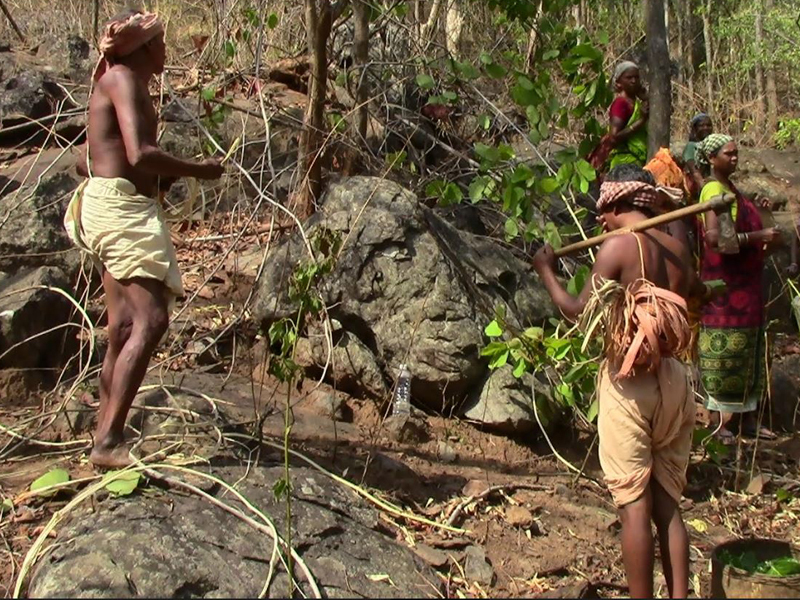
Kolkata: Dwellers of the mangrove forest of the Sundarbans on Monday demanded immediate implementation of the Forest Rights Act in the islands and declared they would vote for candidates who support their cause ahead of the Lok Sabha elections.
They also said non-implementation of the Scheduled Tribes and Other Traditional Forest Dwellers (Recognition of Forest Rights) Act 2006 poses a threat to their livelihood.
“We demand immediate implementation of the Act. We would vote for candidates who will support our demand. Forest-dependent communities do not destroy forests as it is their only source of livelihood,” said Pabitra Mandal, Secretary of the Jana Sramajibi Manch, an organisation of fishermen and forest dwellers.
About six lakh forest-dependent people in the islands are facing daily challenges in getting access to forests, the Manch’s organiser Tapas Mondal said. He alleged they were required to pay fines arbitrarily and illegally detained and charged with false cases. Their collection of the forest produce was often confiscated, he added.
Forest-dependent people who collect honey, crabs and involved in fishing are “harassed in the name of law by the forest department”, although, the Forest Rights Act empowers them to control activities of the forest through locally elected bodies called gram sabhas, activists said.
The Forest Rights Act 2006 recognises the rights of forest-dwelling people to live or pursue a livelihood in forests. “Although the Act was implemented in many parts of the country and also in West Bengal, surprisingly, it has not yet been implemented in the Sundarbans, the most well-known forest area in the state. We want to know the basis on which two districts, North and South 24 Paraganas, have not been included,” Nagarik Manch’s Secretary Naba Datta said.
According to activists, implementation of the Act in other forest bearing districts of the state was questionable.
“There was no concept of rejection of claims of the forest dwellers in the Forest Rights Act. But the data, presented before Parliament in August 2017, had suggested that 68 per cent of individual and community claims were rejected,” All India Union of Forest Working People General Secretary Ashok Chowdhury said.
Activists, however, condemned the Supreme Court’s February 13 order directing eviction of tribals, including forest dwellers. Later, the apex court put on hold its order and it asked the state Chief Secretaries to submit details of the procedure followed by them in deciding claims over the forest land and also if the same was monitored by the state-level monitoring committees.
“Even though the apex court has suspended its February 13 order, we want the Centre should bring an ordinance to set aside the order,” Chowdhury said.
Inputs from IANS bdc/ssp/rs/pcj.

Representatives of more than 30 civil groups met on March 11 and decided to work together to bring back the narrative of the elections on real issues that the country is facing.
They unanimously decided that coordinated action will be held at at least 1000 places across the county on March 23, the day of martyrdom of Bhagat Singh, Sukhdev and Rajguru. This may take different forms like public meetings, rallies, march, human chains, etc. “Irrespective of the form, it must involve a ceremony to garland or commemorate Bhagat Singh or other martyrs. This can be done at a place hosting the statue of the martyr(s) or at any other symbolic public place. Other icons may also be honoured during this event,” a message shared by the group said.
A common banner “Desh Mera, Vote Mera, Mudda Mera” will be used by all participant organisations. A common logo will be designed and sent by the central team for this purpose. The central team will also share some slogans, parcha or other publicity material and each organisation will be free to improvise or evolve their own communication for this purpose. The central team will also share some digital posters that can be used for the social media campaigns, templates for press invitation, and press release. A detailed SOP will be shared with all participating organisations.
“Interested organisation are requested to confirm their participation and also mention the number of places on which they will hold the event. They are also requested to designate a PoC for their organisation to make the coordination smoother,” they said.

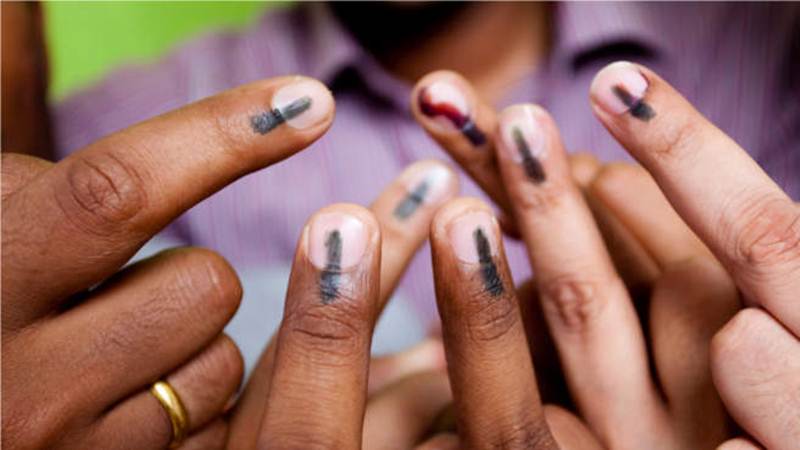
According to 38-year-old software wiz Khalid Saifullah, almost 3 crore Muslims out of 11 crore eligible voters in the country are missing from the electoral rolls.
Saifullah, the founder of the Missing Voter App and CEO of the Hyderabad based RayLabs undertook a study to find out how many Muslim and Dalit voters existed or were missing from the voting list. He found that 15 per cent of all voters and 25 per cent Muslims are not present on the electoral list. Therefore approximately 12.7 crores of all voters and three crore Muslims will not be able to vote in the May 2019 Lok Sabha elections. His study also found that 4 crore Dalits out of some 20 crore eligible Dalit voters were missing from the rolls.
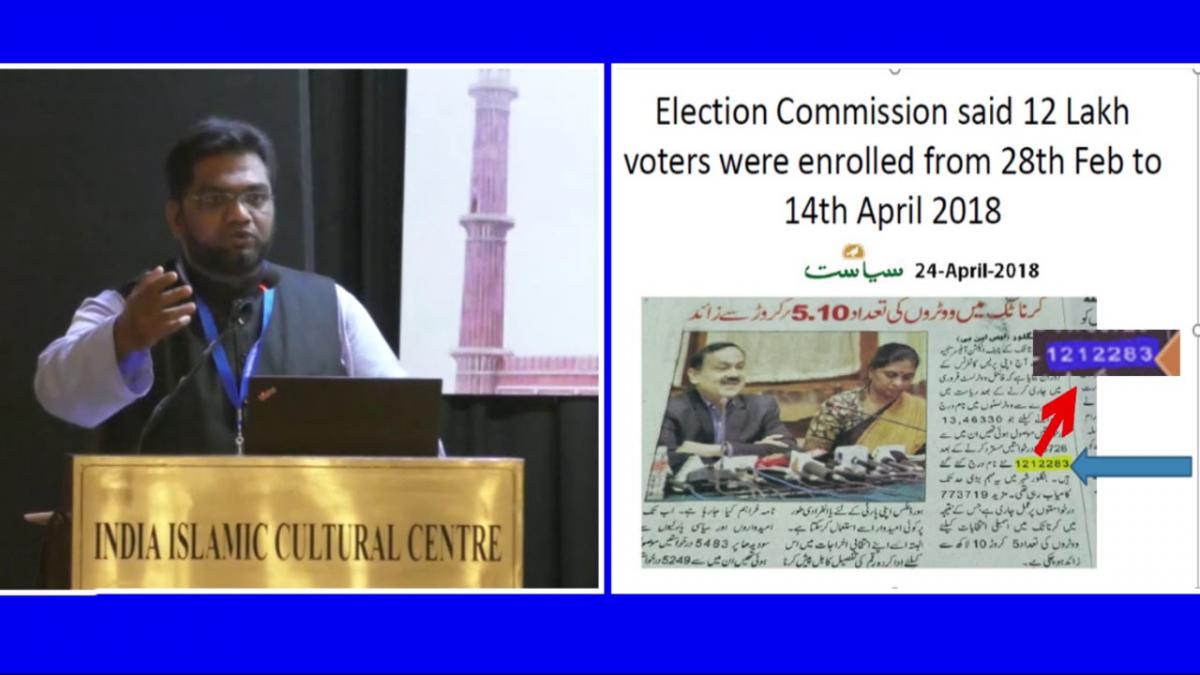
At the 3rd National Leadership Summit 2019, India Islamic Cultural Centre, New Delhi, he spoke about why the names had gone missing and how his app could bridge the gap.
He said that he first noticed the discrepancy when lakhs of Muslim names were missing from the voter’s list depriving them of their right to vote in the last parliamentary elections held in 2014. He studied the state of Gujarat where lakhs of Muslims were reportedly unable to vote as their name was not on the electoral list. A huge proportion of Muslim voters were missing in 16 Assembly Constituencies of Gujarat where BJP won with a margin of fewer than 3000 Votes.
He acted upon this information and decided to launch the Missing Voter’s app. This free mobile App has the details of all the street names of constituencies, the number of households on each street and the number of voters in each household. The App can be used to identify missing voters, do a household survey and apply for a new voter id online. It is possible to download the Missing Voters App from the Google play store or after giving a missed call on 8099 683 683.
He claims that the process to make a new voter id is simpler than that on the ECI website and he noticed that many politicians were misusing the Form 7 to remove voters from the lists. He Data mined of 800 Assembly Constituencies and has identified 1.6 Crore Missing Voter Households, which is about 40 lakh Muslims so far with the help of the app. They now have more than 9000 volunteers registered on the App and 25,000 new Voter Ids applied through App.
They have even seen success due to the app. In the state elections in Karnataka, data showed that 18 lakh Muslim names were missing. Some 12,000 volunteers registered to enrol more voters. Up to 12 Lakh new voters were enrolled in a fresh drive over three weeks.
Registering so many voters would have a definite impact on the final result. He added that there were three reasons for the present scenario including the political conspiracy related to form 7, the vulnerability and helplessness of Muslims and Dalits and the ignorance on the part of literate people.
He also designed Citizens for Justice and Peace (CJP’s) HateHatao App, to fight hate and can be used by anyone with an Android smartphone.
As the Uttarakhand gears up to go to Lok Sabha polls in a single phase on April 11, a survey conducted by Chetna Andolan, spanned across Dharampur, Raipur and Mussoorie in January has revealed that about 12-13 per cent of the total electorate could have been disenfranchised. It also revealed that about 90 per cent names missing from the voter list are of the Dalit and Muslim voters.
Muslim voters missing across the country
“If you are a Muslim in Uttar Pradesh with four voters in your family, chances are that only three will get to exercise their right to a franchise granted by Article 326 of the Constitution. The fourth person’s name would either be missing or excluded from the electoral rolls,” The Hindu Frontline reported.
“In Tamil Nadu, too, every fourth Muslim person’s name is found missing from electoral rolls. The situation in neighbouring Andhra Pradesh and Telangana is not any better; nor in Gujarat and Karnataka, from where the first voices were heard about Muslim names missing from electoral rolls. Incidentally, the number of Muslim voters has declined over the years, giving rise to fears about discrimination, political exclusion, total elimination and so on. In Karnataka, the names of 6.6 million people were reportedly missing from the electoral list; later, about 1.2 million were re-enlisted. The names of members of other communities also go missing, but the figures are significantly higher for Muslims—15 per cent for other communities and 25 per cent for Muslims,” the report said.
Abusaleh Shariff of the U.S.-India Policy Institute, Washington, who is also the founder of the Centre for Research and Debates in Development Policy (CRDDP), New Delhi, in the report said, “There is a huge exclusion of Indians at large from the electoral rolls, but the exclusion of Muslims is higher. It threatens to make a mockery of our democracy. It is estimated that there is an exclusion of 150 to 180 million Indians from the electoral process. It is like excluding a whole country or even a hundred small nations. That in itself is a disgrace to India. For Muslims, I would say, in up to 50 per cent of the households in a State, there is at least one person who does not have a vote though he/she is otherwise eligible. Though we started with Karnataka, the pilot work is on in Gujarat, Telangana, Andhra Pradesh and Tamil Nadu. The trend is similar in all States. It is a cause for concern.” The percentage of people left out of the electoral process, ranging between 15 and 25 per cent, becomes extremely significant when one sees that in any Assembly election, a third of the seats are decided by margins of less than 2,000 votes.”
Why is it that more Muslim names are left out than those from other communities? “There can be many reasons. One is not getting into the politics of it, but the exclusion could be because the people at the block level may not be doing their job well. There are cultural and linguistic differences. For instance, not many block level officers can spell a name like Zebunissa. There can be many spellings for names. Also, many Muslims give their ages in Urdu rather than English. Thus, discrepancies creep in age data at the time of enrolment itself,” says Shariff. He does agree that there is a strong possibility of a systemic bias against Muslims which, at times, even leads to the exclusion of the entire community or a locality from a constituency.”
21 million women voters missing
Voters from across the country have gone missing from electoral rolls and the number is higher for women. A staggering 21 million women are missing from electoral rolls across the country.
Three states – Uttar Pradesh, Maharashtra and Rajasthan – accounted for more than half of the missing female voters. Southern states such as Andhra Pradesh and Tamil Nadu fare better, BBC reported.
According to the BBC report, analysts say that the missing women voters translate into 38,000 missing women voters on average in every constituency in India. In places like Uttar Pradesh, India’s most populous and a key bellwether state, the figure swells to 80,000 missing women in every seat.
“Given that more than one in every five seats are won or lost by a margin of fewer than 38,000 votes, the missing women could swing the results in many seats. The absence of a large number of women also means that India’s electorate would be higher than the 900 million people who are eligible to vote in the summer elections. If the sex ratio in a constituency is skewed against women and the average voter is male, the preferences of female voters are likely to be ignored,” the report said.

Salute to Kanshi Ram Saheb on his birth anniversary. In today’s polity, people miss him, his acumen and his understanding of issues. In today’s times, he would have been encouraging the young dedicated Ambedkarites to take the plunge into politics. The one thing which makes him an absolutely different person than his contemporaries is that he did not care about what others said about him and his party. Rarely did he go to get ‘certified’ by the Brahmanical parties and media. Of course, once in mainstream politics, he did everything he could to strengthen his party. Many of his actions might have looked controversial but remember one thing, nobody could ever accuse him of sacrificing the interest of the Bahujan Samaj. It is essential for our politicians to not only be seen beyond corruption but also beyond doubtful integrity.
Kanshi Ramji’s contribution can also be understood in terms of creating a whole new team of leadership in diverse communities. He nurtured Mayawati and converted BSP into a powerful national force. Unfortunately, he did not have the cooperation and support of many of his colleagues. Health was not on his side. The issue of support is important in understanding as to why the party could not grow as powerfully after his demise; particularly in the states of Punjab, Chhattisgarh and Madhya Pradesh where it had a sizable presence.
Kanshi Ramji did not get anything on a platter. Everything was hard earned. His life was full of struggle yet his head was always high. He was an assertive Ambedkarite. He provided millions of people with a reason to fight and stand up with their head held high.
Bahujan Samaj Party has a legacy of Ambedkarite political movements launched by Kanshi Ram Saheb. But he could not have succeeded if he had not launched the socio-cultural movement for the emancipation of the community. The fact is, he always considered the cultural movement a very essential part of the Ambedkarite assertion, which at a later stage, helped BSP and its rise to power in Uttar Pradesh.
Kanshi Ram Saheb’s life is an example for all of us. He created powerful leaders but many of them compromised with the high ideals and forgot the community. Some of them became a part of the power structure. People may have differences with BSP but it needs strengthening and vibrancy. Don’t dream of eliminating a party which has been responsible for wider political changes in India as far as Dalits and Bahujan Samaj are concerned. In today’s polity, we need to preserve it as it is the hope for millions who remain unrepresented and are always called to be governed.
It is the duty of the leadership to develop the dynamic young leadership. In polity, there are lots of adjustments and even compromises given the nature of money and muscle power in it and a will to survive. The Bahujan movement must strengthen the legacy of Dr. Ambedkar and take it further towards those communities where it has not reached. The class discourse in the Bahujan movement means that it must provide space to those communities who are on the margins and remain so for centuries. It is important we reach them, give them a sense of hope and space as Manyawar Kanshi Ram did when he provided space to them in power structure and who had never got an opportunity to be part of it.
Politics might give us many disappointing things but let the powerful legacy of Ambedkarism guide the Bahujan polity and strengthen it further. At a time when Brahmanical capitalist agenda of the ruling party has been unleashed on the country, an Ambedkarite vision of secular socialist democratic and inclusive India is the only option for all of us to live together in dignity and with the spirit of friendship, bhai-bahin chara; and defeat those parochial Manuwadis who want to enslave the vast Bahujan masses by all means including money, media and mafia.
Kanshi Ram’s life is his mission that once the Bahujan Samaj is united and has understood Dr. Ambedkar’s vision and ideals, no one can make ever make them a slave, in fact, those who were always ruled became the rulers. He gave people big dreams and hopes and it is time for all of us to work towards achieving them.

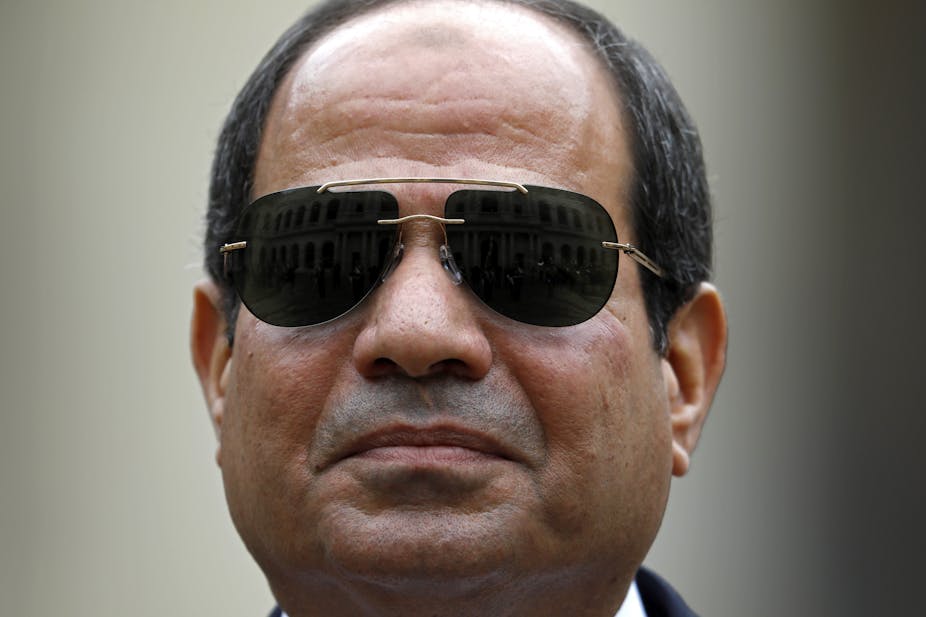
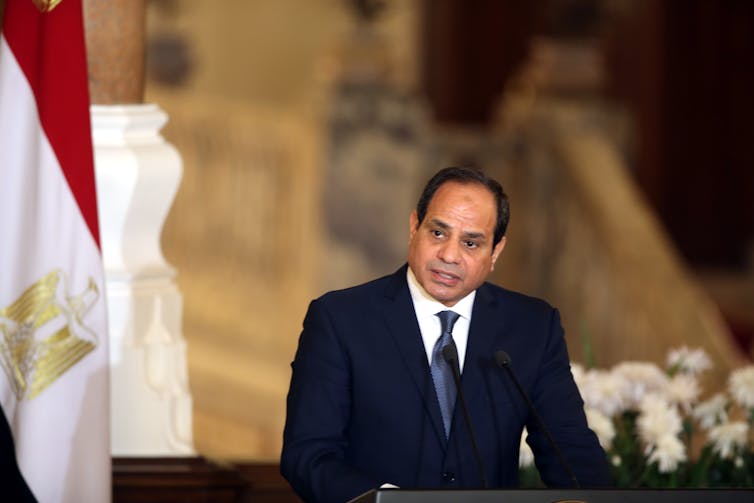
Al-Sisi: more Mubarak than Mubarak. EPA Images
The armed forces have realised that the Egyptian people, who are calling on us to come to their support, are not in fact calling on us to assume power. Rather, they have called on us to perform public service and to secure essential protection of the demands of their revolution.
Six years on, Sisi is still president and the Egyptian parliament is on the verge of endorsing his rule until 2034, losing sight of the revolutionary demands which prompted millions of Egyptians to end the 29-year rule of Hosni Mubarak in January 2011.
Contrary to the hopes of 2011 and 2013, Egypt is sliding even further towards authoritarianism. Tens of thousands of citizens are languishing in overcrowded prisons. Freedom of expression, media independence and opposition movements are curbed in the name of state stability. Torture, unjustified detentions, police assaults and death sentences are the state’s strategic tools to silence protesters.
On February 14, 485 of 596 Egyptian MPs approved sweeping constitutional amendments to allow Sisi’s extension of power. The modifications to the national charter will lengthen the current four-year presidential term to six years, expand the role of the army as a state supervisory body, and give the president the constitutional right to appoint judges and the prosecutor general.
Although the new constitution still limits the president to two terms, Sisi – who was elected for a second term in March 2018 – will be granted a personal exception. The proposed amendments will now be reviewed by the parliament’s legislative and constitutional committee within 60 days before another House of Representatives vote, followed by a national referendum.
“This is totally a new phenomenon,” Ahmed Samih, the director of the Egyptian NGO Andalus Institute for Tolerance and Anti-Violence Studies, told me. “Neither Nasser nor the other presidents who followed him have been able to manipulate the state and the army to such a point as al-Sisi has done in the last five years.” He added:
While Nasser, and in part Sadat [both former Egyptian leaders], addressed public opinion attention toward the fight against Israel, Sisi does not have an external enemy and his struggle is thoroughly focused on repressing the Egyptian people.
Throughout his time in power, Sisi has endorsed widespread draconian laws. He has trampled on human and civil rights by detaining thousands of activists, journalists, students and political opponents, including the former army chief of staff, Sami Anan. He has curbed the independence of the judiciary by stressing its pivotal role in fighting terrorists, Islamists and any hint of opposition. He has hindered academic autonomy by reintroducing the direct appointment of university heads.

Al-Sisi is militarising everyday life. EPA Images
New legal dispositions, such as the anti-protest law (2013), the counter-terrorism law (2015), the NGOs law (2017), and the cybercrime law (2018), have substantially increased the authorities’ power to surveil, repress, silence and detain political opponents. Amendments to the nationality law proposed in 2017 may revoke the Egyptian nationality of citizens living abroad and working with a foreign agency deemed to undermine the social or economic order of the state.
These laws have been harshly criticised for being excessively vague in defining what constitutes a danger for the Egyptian socioeconomic order. Moreover, legal and extra-legal measures – including torture, unfair trials and forced disappearances – have been actively implemented by Egyptian police, intelligence services and the military to ensure no one will obstruct Sisi from keeping his grip on power and militarising Egyptian life.
Sisi’s power has been further enhanced by the approval of the recent constitutional amendments. A statement signed by at least 11 Egyptian civil society organisations explains:
The amendments eliminate all remnants of judicial independence by immunising exceptional legislation from judicial review while constitutionalising the president’s unilateral authority to appoint judicial leadership … and annul the judiciary’s financial independence.
Through these amendments, the constitutional separation of power will be destroyed, leading to an excessive concentration of authority in the president’s hands. Sisi has proved several times his reluctance to follow constitutional precepts – as in Egypt’s sale of the Tiran and Sanafir islands to Saudi Arabia without calling a popular referendum as required by the constitution.
The recent parliamentary vote crystallised this authoritarianism and repression in Egypt. Far from checking power, legislators gave away their responsibility as a democratic mechanism of the system. Only 16 MPs stood against the modifications.
Among them was Ahmed Tantawy, who emphasised how it dangerously concentrated power in one man’s hands and represented “a setback and a return to what is worse than the pre-25 January [2011] system”. Other opponents, such as Khaled Youssef and Haitham al-Hariri, were subjected to harsh defamatory media campaigns – in both cases, an alleged sexual affair was used as a pretext to whip up a public scandal over “moral indecency”.
Sisi still relies on the support of many Egyptians who see him as the last bastion against the spread of political and economic instability. But, according to Samih, even staunch Sisi supporters are fading away amid the repression and a stagnant economy. Samih said:
Many Egyptian families involved in specific economic sectors, such as fishing, have been kicked out from the business, as the army has now gained an upper hand in their activities.
But the likelihood that disillusionment will lead to Sisi’s departure – or even a check on his ambitions – is slim. Even the military, often seen as the repository of power, is neutered by one of its own. During the past three years, Sisi has implemented a series of reshuffles within the executive and a purge among army generals, buttressing his undisputed authority.
The detention of the former army chief of staff, Sami Anan; the replacement of the once-powerful head of the Egyptian intelligence service, Khaled Fawzi, with a Sisi ally, and the appointment of Sisi’s sons – Mahmoud and Hassan – to key positions within the general intelligence directorate are all clear signs of Sisi’s intention to out-Mubarak Mubarak, transforming his presidency into a full-blown dictatorship.
Courtesy: The Conversation

Join our mailing list to get the latest human rights news that matters, straight to your mailbox.
© Sabrang | All Rights Reserved