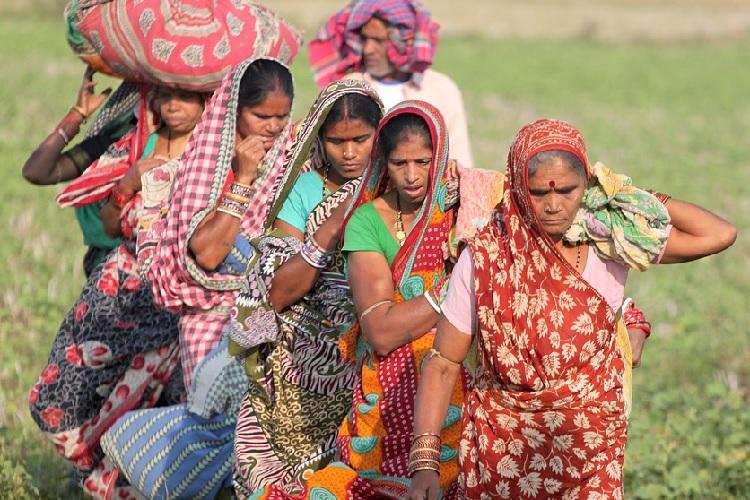
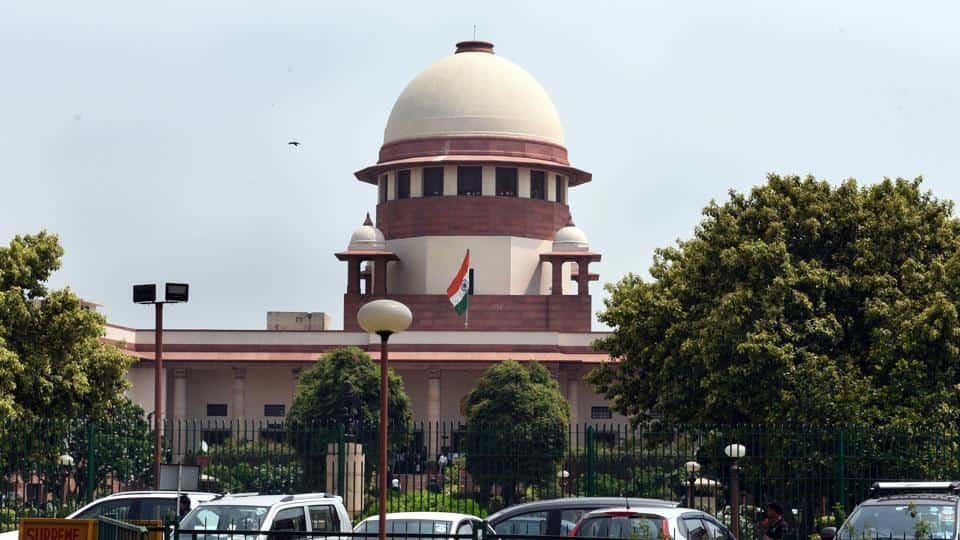
A Supreme Court bench headed by Justice Arun Mishra has ordered eviction of Adivasis and other forest dwelling communities from the ‘forest’ regions whose claims for entitlement have been rejected by the Forest department. The written copy of the order was made available on February 20, 2019. The court order says :
“The Chief Secretary shall ensure that where the rejection orders have been passed, eviction will be carried out on or before the next date of hearing. In case the eviction is not carried out, as aforesaid, the matter would be viewed seriously by this Court. Let Forest Survey of India (FSI) make a satellite survey and place on record the encroachment positions and also state the positions after the eviction as far as possible.”

Pixabay/Image used for representational purpose only
The court asked the state governments to file affidavits by July 12, 2019.
The language used is not only harsh but is constructed to read as if the ‘rejected’ claims of forest dwellers and Adivasis are that of ‘encroachers’. This is because the Central government, who should have defended the law, remained conspicuously silent on the issue thus endangering the lives and livelihood of over two million Adivasis and other forest dwellers. The court, with its own pre-conceptions and deliberately un-aided by a Government that has made no secret of its brazen tilt towards crony capital, had perhaps already reached the conclusion that all the Adivasis are encroachers and must be evicted.
The Forest Rights Act 2007 came into effect after decades long campaigns and struggles of organisations and activists. These campaigns were geared to undo the historical wrongs perpetuated on the Adivasi and other forest dwelling communities predominantly Dalits, nomads and pastoralists.
It is a well-known fact that Forest Departments in the states (during and after colonial power and rule) and the environmental lobby has been creating huge obstacles towards the implementation of the Forest Rights Act, which came into being after massive public efforts as well as pressure from the Adivasi organisations who faced the brutality of the police and administration as most of the time they have been declared encroachers in their own land.
World over, institutions and governments have realized that the best way to protect the pending climate crisis is to allow the indigenous communities to live their way and follow the same pattern to protect our wild life and environment.
The problem was not merely rejection of claims under the flimsy ground but deliberate attempts to deny people rights over individually held land. It is not as if poor are running from urban areas to forest areas to get the land. This law has recognised centuries old claims over those who have nurtured land, carried out cultivation and preserved forests. The law was enacted not only to provide justice to the Adivasis, of technically, what we call, Scheduled Tribes but also to other forest dwellers and forest peoples. The law recognises that forests are preserved by these communities.
Background:
The present case was related to the order of a three judge bench headed by Justice Madan Lokur, Justice Kurian Joseph and Justice Deepak Gupta, on March 7, 2018. The court made certain observation related to a previous order suggesting that enough time has lapsed and a fresh directive order was needed. It was in this context that the state was asked to file an affidavit in a specified time period.
The issues before the court were:
- Immediate removal of ‘forest dwellers’ who they termed as ‘encroachers’. The entire premise is that due to FRA-2006, a huge number of bogus claims have been applied for and therefore they need to be ejected out of the forest zones.
- The challenge to the Forest Rights Act 2006, suggesting that Indian Forest Act and Wild Life Protection Act provide enough protection to forest dwellers and that the spirit of the Forest Right act actually violate the Forest laws and its management.
- Recognition of the Rights should only be decided by the officials and Gram Sabha must not have any power as it is an unskilled body.
Who should have been the petitioners in this case?
Which are the forces determined to destroy the peace and tranquility on our forest zones and who feel that the Adivasis are the threat to our environment and ecology?
World over, institutions and governments have realized that the best way to protect the pending climate crisis is to allow the indigenous communities to live their way and follow the same pattern to protect our wild life and environment.
But here in India, there are former forest Officials, ex zamindars and a few wild life organisations who rarely raised voices against the ecological damage caused by large resorts and eco-tourism being promoted in these forest zones by large corporations but want to get the Adivasis declared as encroachers in their own land.
Here are portions of the text of the Supreme Court order dated March 7, 2018:
“We have been informed that most State Governments have filed affidavits in compliance with the order of 29.01.2016 but some ofthem have not filed any affidavit of compliance. Be that as itmay, whatever information has been supplied pursuant to our orderdated 29.01.2016 is about two years old. This outdated informationmay not assist us in disposal of the present batch of writ petitions and transferred cases.
But here in India, there are former forest Officials, ex zamindars and a few wild life organisations who rarely raised voices against the ecological damage caused by large resorts and eco-tourism being promoted in these forest zones by large corporations but want to get the Adivasis declared as encroachers in their own land.
Under the circumstances, we issue a fresh direction to all theState Governments to file a tabular statement in the form of anaffidavit indicating the following:-
(i) The number of claims for the grant of land under theprovisions of the Scheduled Tribes and Other Traditional ForestDwellers (Recognition of Forest Rights) Act, 2006;
(ii) The claims should be divided into claims made by the ScheduledTribes and separately by other traditional forest dwellers;
(iii) The number of claims rejected by the State Government inrespect of each category;
(iv) The extent of land over which such claims were made andrejected in respect of each of the two categories;
(v) Action taken against those claimants whose claims have beenrejected;
(vi) The status of eviction of those claimants whose claims havebeen rejected and the total extent of area from which they havebeen evicted;
(vii) The extent of the area in respect of which eviction has notyet taken place in respect of rejected claims.
The cut-off date for providing this information is 31.12.2017.
There is no dearth of lawyers to fight the cases for ‘environment’ and wild life which can be seen in the list of lawyers appearing on behalf of the wild life organisations. It also shows how powerful these organisations are in terms of money, social capital and influence.
Shockingly, there was no representation from the Central government and the Ministry of Environment and Forest, Minstry of Tribal Affairs or National Commission for Scheduled Tribes. A moot question is why the Centre’s conspicuous absence was neither noticed nor commented upon by the court? Was any notice was issued to Central Ministry given that the statute under judicial axe was one passed by Parliament ?
In its order the Judges observed that the ‘learned counsel’ for the petitioner challenged the constitutional validity of the Forest Rights Act and Parliament’s authority to enact a law.
Should not then the judges give notice to the MoEF or the Central government to explain thing.
Is this not it justice denied to India’s 104 million Adivasis.
Can the obvious ‘lapse’ on the part of the government be condoned ?
Was it part of a deliberate attempt to allow the Act to be declared invalid by the court?
If notice was issued to the Central government and it did not appear then the Court’s should have taken the Government to task. Instead the Supreme Court has ‘benignly ignored this ‘absence.’
There was absolutely no effort by the Central government or various concerned Ministries and institutions to intervene pro-actively or positively on this issue and defend a legislation that came into being after years of struggle by Adivasis and indigenous people. It clearly appears that the government is deliberately interested in getting the FRA defunct so that its own agenda to promote corporatization of the forest is fulfilled.
The Supreme Court in its hearing on February 13, 2019 actually did not order anything new. It has simply passed a directive based on the affidavits filed by the states. The Supreme Court has not questioned the states about the stand taken by them especially since many of the stances by the states are ambiguous. Moreover, the court did not bother to demand the active presence and stand, in Court of both the Union Ministry of Environment and Forest or Ministry of Tribal Affairs in this regard.
How is it possible that hundreds of thousands of Indians who will be adversely affected by this Supreme Court directive do not get any opportunity to be heard? This violates all settled norms of jurisprudence.
Status of Implementation of FRA
An updated status of State-wise implementation of the Act as per the information collected till March 31, 2017:
- 41,69,982 claims (40,31,557 individual and1,38,425 community claims) have been filed and 17,91,706 titles (17,28,817 individual and 62,889 community claims) have been distributed.
- A total of 36,38,234 (87.25%) claims have been disposed of as per the Ministry of Tribal Affairs website. This in the opinion of human rights groups are incorrect figures as most of the state were unable to give correct figures.
- According to a report in the Business Standard the total number of claims rejected are 1.89 millions or simply around 19 lakh people. It means that these families will have to be ‘evicted’ from their places as per the Supreme Court order.
This is data only based on those who have filed claims under the Forest Rights Act.
In my opinion the number can be far higher.
One, if the Supreme Court order is implemented at all, it is gives a ‘licence’ to Forest Officials to dislocate the Adivasis and other Forest Dwelling communities. The issues are not merely those related to FRA but there are other issues when the Forest Department have not acknowledged the land titles given by the revenue department to people living in villages. This is another crisis which has been deliberately kept alive by the Central government and state governments.
In Uttar Pradesh’s Bundelkhand region and Madhya Pradesh, this has resulted in a huge crisis because the land titles given to Adivasis and other dwellers many years ago have been rejected by the forest bureaucracy, who claim the land belong to them. Now, between the two departments, it is the rural poor and predominantly the Dalit, Adivasi, OBC who are facing the threat of eviction. The Supreme Court Order, in effet gives officials the handle to exploit people living there.
It is time that the Supreme Court and High Courts must fix up specific benches to deal with the issues of Dalits and Adivasis. Judges who are appointed in general and to hear these cases must have a record and established understanding of these issues.
There are other issues too. India has deliberately denied many communities their ‘Adivasi’ status. Constitutionally, Adivasis are referred as Scheduled Tribe and not as Indigenous people even when India has ratified UN Declaration on Indigenous People’s Rights which remain ‘unimplementable’ in the absence of a clear guideline and identification of communities. The fact is that in all our political and social parlance, Adivasis are known as Indigenous people but we do not want to accept it legally because it will create ‘hurdles’ for the cronies who want to suck our vast natural resources for their private profit.
The fact is that while the data compiled by Ministry of Tribal Affairs is actually based on the application for claims and their subsequent rejection(s), the Ministry itself has accepted that in many states the process has not even started. In almost all the states, the process has been deliberately delayed by the forest departments. Uttarakhand, Uttar Pradesh, West Bengal, Bihar have shown the least respect for bringing peoples within the ambit of Forest Rights Act, 2007.
A report about the FRA implementation in the environmental magazine, Down to Earth says, ‘“Latest data compiled by MoTA on the implementation of FRA till November 30, 2018, shows that there have been more claims rejected than the number of claims for which title deed distributed. Of the approximately 42.24 lakh claims — both, individual and community-filed — so far, around 18.94 claims have been given title deeds, while around 19.39 claims have been rejected.”
Diversion of Forest Land and dilution of laws to enable the private corporations to exploit it
What is happening today in the country can be understood as how the government is diversifying the forest land. Apart from the crony wild life groups that care little for human lives, there are others who are jumping in the bandwagon of agro forestry and afforestation process as if the entire thing cannot happen with the support and participation of the communities living there for centuries.
After the Modi government assumed power, it has diluted the norms to allow the forest land diverted for commercial use for the profiteering of the crony companies. The Forest Rights Act section 12 gives Gram Sabhas powers to reject the suggestions and recommendations of ‘expert’ ‘committees’ but in the ‘rejection’ of the claims, it is the dominance of the Forest Bureaucracy which has dominated the events but still the petitioners in the Supreme Court insist removal of this power of Gram Sabha as if they don’t know the issue.
The fact is that in the past four years, it is powerful corporations who have opposed the ‘consent’ clause of the communities for Land Acquisition for which the government went out of its way to bring out ‘ordinances’ despite its failure to get these passed in the Rajya Sahba on several occasions. A similar thing is happening now especially this so called pro-environmental lobby that has never ever challenged, in court, the hundreds of acres of forest land being diverted for mining and other non-forest purposes. The forest range for Adivasis and other communities is shrinking as while the government continue to give land to companies as well as for Wild Life Sanctuaries, Tiger Reserves which are being exploited by the ‘Eco-tourists’. There is a deafening silence on the impact of these on our forests.
A detailed report of how Forest Land has been diverted for the non-forest purposes was tabled in Parliament in December 2018. ‘ “According to the official data revealed by the National Democratic Alliance government in Parliament in December 2018, a total of 20,314.12 hectares of forest land (almost the size of Kolkata) was diverted in three years 2015-2018 (till December 13, 2018). During this period, the ministry had received a total of 4,552 proposals and of those 1,280 (28.11%) got approved.According to information revealed in the Parliament, Telangana topped the list with 5,137.38 hectares of forest land diverted, followed by Madhya Pradesh with 4,093.38 hectares and Odisha with 3,386.67 hectares of forest area diverted. The three states together account for over 62% (12,617.43 hectares) of the total forest land diverted during the said three-year period.With close to 70.82 million hectares of forest area, about 21.54% of India’s land is under forest cover.According to another set of data of the environment ministry, since the enactment of the Forest Conservation Act 1980, nearly four decades ago, a total of about 1.51 million hectares has been diverted for 27,144 projects. To put it in perspective, it means forest land equivalent to over ten times the size of India’s national capital has been diverted in the last four decades for various kind of developmental projects.”
Role of Ministry of Tribal Affairs and National Commission for Scheduled Tribes
There are about 617 Protected Areas including 50 Tiger Reserves in India as per the information available and ironically more than 70% is invested in Tiger preservation while the rest of the 567 protected areas are getting a a meagre 30% of the total budget allocated for the purpose.
In February 2018, the National Commission for Scheduled Tribe wrote a letter to Ministry of Environment and Forest stating that any displacement of tribal from Protected Zones and Tiger Reserves under the Wild Life Act, violate the Forest Rights Acts and rights of the communities living there and must be stopped unless a fair compensation of Rupees Twenty Lakh and four hectare of land is granted prior to the beginning of the project. According to The Economic Times, the Commission had formed a three member committee to look into these particular issues.
We do not know whether this committee ever reported back but given the nature of these commissions post 2014, nothing substantial can be expected from them. Most of the reports and interventions on important Adivasis matters took place before 2013. At the moment, when the Ministry of Environment and Forest has become a facilitator for the big corporate interests. Under these dire circumstances, it was the duty of the Ministry of Tribal Affairs to have intervened in the cases but nothing but silence has been forthcoming. The National Commission for Scheduled Tribe too remained quiet.
Now the situation is serious. There is a need for immediate intervention. The question is will the Supreme Court intervene and commit a crucial issue to a larger bench ?
Need a White Paper on Adivasis of India
The fact is that the number of Adivasis dislocated from their natural habitat because of various developmental and other projects is estimated to be around 11.5 million for the period between 1950 to 1990. This is a pretty moderate estimate. The situation is much worse now in the aftermath of the globalization and economic liberalization process hence a white paper on Adivasis is now required which can give the whole picture of how much we have protected their rights or betrayed them. Post 1990s when India embraced the ‘liberal’ economic policies that had nothing liberal but more greed of the corporate sector to grab the vast natural resources so well protected by the Adivasis and other forest dwelling communities.
Big dams, wild life, Protected Zones, Tiger Projects, Mining, Eco Zones have been the ‘new developmental’ module for the 21stcentury India which are necessarily made on the destruction of the adivasi culture and life. This has created an enormous crisis of civilization when indigenous resistance is being criminalized and plunder of these regions have been legalized.
Protests by the Adivasis against their displacement without any honorable rehabilitation has been resisted by the states who have bent their rules to benefit the crony corporate. Laws have been changed, altered and diluted in states like Jharkhand, Chhattishgarh and Odisha to enable these companies to easily acquire land despite people’s protest. Besides, Adivasis zones have been militarized and those protesting against this are targeted and criminalized. The number of Adivasis in Indian jails is substantially high and they have been languishing for a long period.
Will the courts take the political leadership to task for failing in its duty to protect the rights of India’s indigenous people in need of support and justice from the institutions and the state?
Political participation of the community has been nominal and now even the affirmative action (‘reservation’) meant for them in the government services along with the scheduled castes has been under attack (13 Point Roster System by MHRD is just one example). The tribal population in India is about 104 million as per 2011 census which is 8.6% of our total population but their percentage in the government services remain far below this percentage. With the 10% quota for the upper caste ‘poor’ and a new system of appointment in the academic institutions and universities, the savarna (Brahmanical) leaders of India have ensured that the percentage of Adivasis dips further in all our representative bodies and institutions. The Courts in India have not brought themselves any glory on issues related to the rights of Dalits and Adivasis, especially in the more recent past. The singular bias of the Court is apparent, whether this is on the question of affirmative action or reservations in particular, the view of the Court on the SC/ST Atrocities Act, or on the issue of rights and access to land and other natural resources.
The fact is that the Scheduled Tribes in India are entitled to rights and benefits in tune with the UN Declaration on Indigenous People’s Rights. This despite the fact that the Government of India did not, at the time, accept, that there are any particular communities who may be called ‘indigenous’ who existed in India. This is and was definitely a deliberate ploy to deny Adivasis their legitimate rights over the forest and other natural resources. The UNDIPR gives indigenous people autonomy on their land which is resisted by most of the governments but it has been explained in the documents that the ‘sovereignty ’ issue not meant as ceding from the nation state but honoring indigenous people’s autonomy within the nation state.
It is time that the Supreme Court and High Courts must fix up specific benches to deal with the issues of Dalits and Adivasis. Judges who are appointed in general and to hear these cases must have a record and established understanding of these issues. These issues relate to the wider issue of deepening of our institutions and social justice. the Government cannot allow them to be dealt in the cavalier and casual way that it has done. This has given a free license to corporate sponsored environment lobby to legally destroy the livelihood and culture of the Adivasis who need justice and honor historically denied to them by us.
Will our Courts rise to the occasion to be the Defenders of social justice and human rights of the people or will they simply go by the corporate lobby terming the Adivasis as encroachers in their own land ?
Will the courts take the political leadership to task for failing in its duty to protect the rights of India’s indigenous people in need of support and justice from the institutions and the state?
An insensitive decision has the potential to result in chaos and anarchy in the hitherto peaceful Adivasi zones which will only be detrimental to the wider national interest.
(The views expressed by the author in this article are personal)