A day after Kashmiri students were attacked by members of the Yuva Sena in Yevatmal district of Maharashtra, the Supreme Court has directed the government to take necessary steps to prevent acts of violence and discrimination against Kashmiris.


New Delhi: On February 13, the Supreme Court ordered the eviction of millions of people belonging to the Scheduled Tribes (STs) and Other Traditional Forest Dwellers (OTFDs) categories across 21 States whose claims as forest dwellers were rejected under the Forest Rights Act of 2006. Approximately 11 lakh tribal and Adivasi families will be affected if the order is implemented.
A petition was filed by the Wildlife Trust of India, Nature Conservation Society and Tiger Research and Conservation Trust. Even when the FRA was being drafted, the Forest Rights Act was criticized by the Union Environment Ministry and wildlife groups like Bombay Natural History Society, Wildlife Trust of India and Wildlife First. They said the Act would encourage further encroachment on India’s already battered forestlands.
The case has dragged on for around 10 years under various benches and activists believe that this order reeks of a colonial mindset against forest dwellers.
“Evicting of more than a million forest dwellers whose claims under the Forest Rights Act has been ‘rejected’, is in line with the sustained attack by the pro corporate and conservation lobby since enactment of the Act in 2006 in the name of public interest. By blocking the process of claiming and reclaiming of forest rights of the forest dwellers this order will make the process of implementation of FRA 2006 dysfunctional,” Forest Rights Alliance – Bhumi Adhikaar Andolan said in a statement.
Background
The Forest Rights Act, which was passed during the Congress-led United Progressive Alliance’s first tenure, requires the government to hand back traditional forestlands to tribals and other forest-dwellers against laid down criteria.
The Act is intended to provide a framework to “recognise and vest the forest rights and occupation in forest land in forest dwelling Scheduled Tribes and other traditional forest dwellers who have been residing in such forests for generations but whose rights could not be recorded.”
The Act, passed in 2006, has seen opposition from within ranks of forest officials as well as some wildlife groups and naturalists who believed that FRA was against the Constitution and would cause widescale deforestation and encourage squatters.
There are over 100 million people who make up India’s tribal population, 4 million of which reside in protected forest areas made up 500 wildlife sanctuaries and 90 national parks. The FRA gave them and other forest dwellers living on forest land before December 2005, the legal right to live and work on the land for three generations.
What the SC order means
Some 1.8 million claims have been accepted and land titles handed over to families living on 72,000sq km of forest land, an area equivalent to the north-eastern state of Assam. But more than a million claims have been rejected, so an equal number of families face eviction. Environmental journalist Nitin Sethi calls this the “largest mass scale, legally sanctioned eviction of tribals in independent India,” BBC reported.
The Union Government failed to present its lawyers in defence of the Forest Rights Act on February 13, leading a three-judge bench of Arun Mishra, Navin Sinha and Indira Banerjee to pass orders giving states till July 27 to evict tribals whose claims had been rejected and submit a report on it to the Supreme Court. The written order was released on February 20, 2019.
The court said that the state governments would “ensure that where the rejection orders have been passed, the eviction will be carried out on or before the next date of hearing. In case the eviction is not carried out, as aforesaid, the matter would be viewed seriously by this Court.” The next date of hearing is set for July 27 – the effective date by when states would have to evict tribals to comply with the court orders.
The total number of rejected claims from 16 states that have reported rejection rates so far to the apex court add up to 1,127,446 tribal and other forest-dwelling households shows an analysis of the court order. Several other states that have not provided details to court have been asked to do so. Once they follow suit these numbers are likely to swell.
The Scheduled Tribes and Other Traditional Forest Dwellers (Recognition of Forest Rights) Act 2006 (FRA)which was passed during the Congress-led United Progressive Alliance’s first tenure, requires the government to hand back traditional forestlands to tribals and other forest-dwellers against laid down criteria.
The Act, passed in 2006, has seen opposition from within ranks of forest officials as well as so-called wildlife groups and naturalists.
This, combined with the fact that at the ground level, it is the forest bureaucracy that has to administer the law, that has made the implementation difficult and tardy.
The absence of the government’s lawyer during the hearings only reinforced the predominance of colonial mindset against forest people in this legal process and how the government views their rights and welfare, Bhumi Adhikar Andolan said. Sabrang India had reported how the lawyers failed to make compelling arguments in the court and remained absent for many hearings, hinting at NDA and BJP’s complicity with forest officials.
The case itself is being fought since 10 years under multiple benches, with the Supreme Court yet to answer questions on the constitutional validity of the law.
Many demands have made from the tribal families living in forest areas right from providing proof of residence, evidence that they are indigenous to that region to satellite images of the land that they are staking claim to. These are families who live on forest produce and were asked to provide satellite images as evidence.
The forest bureaucracy that has to administer the law has made the implementation of FRA difficult and tardy.
The states are required to carry out a three-step verification of more than four million tribal occupancy claims, each requiring 13 different kinds of evidence of each family living on forest land.
Last year, Ministry of Tribal Affairs (MoTA) told chief secretaries of states that it has noticed that state forest authorities move immediately to evict people whose claims under FRA are rejected, without waiting for a decision on review or appeal or allowing time to file an appeal.
The process of recognising rights has been poorly implemented. Of the 41 lakh claims filed so far, 18 lakh have been approved, 3 lakh are still being processed and the remaining 20 lakh have been rejected. activists claim that they were purposely rejected when it became daunting for Adivasis to prove an abstract concept of their rights. States are wary of vesting forest rights since this could hinder their ability to divert forest land for industrial activities.
The 21 states that have come under the scanner of the top court are Andhra Pradesh, Assam, Bihar, Chhattisgarh, Goa, Gujarat, Himachal Pradesh, Jharkhand, Karnataka, Kerala, Madhya Pradesh, Maharashtra, Odisha, Rajasthan, Tamil Nadu, Telangana, Tripura, Uttarakhand, Uttar Pradesh, West Bengal and Manipur.
Centre’s collusion
Activists on the ground have been asserting that the government is doing its best to not recognise the FRA, and manipulate the tribal records to make the process of their eviction much easier.
Speaking to Newsclick, Rahul Choudhary, an environmental lawyer, said, “Under the FRA, there are three levels of committees. It also comes down to the opinions of the committee; we have been constantly witnessing cases where the government is deliberately not doing enough to defend the Act for its ulterior motives.” Citing the example of Kinnaur in Himachal Pradesh, he said, “Lease for the land was very conveniently given to the dam project despite opposition from the tribals. In another instance in Chhattisgarh, the government is not taking into consideration linear projects such as that of roads and railways under its ambit.”
Aradhna Bhargav of the National Alliance of People’s Movement (NAPM) said, “We have been working with the tribals for a while now. We condemn the behaviour of the government towards the tribals and their right to livelihood. The government is furthering the agenda of forceful acquisition by the hands of the corporates.”
Speaking to Newsclick, she added, “Other policies protecting the tribals have been completely weakened, they (the corporates) are making inroads even into the buffer zones, while the government is doing nothing to safeguard their rights because of this hand in glove mentality.”
The last time country-wide evictions took place was in 2002-2004, by an order issued by the MoEF, under the Bharatiya Janata Party led National Democratic Alliance government, (that too with a passing reference to a non-existent Supreme Court order of 23 November 2001) in giving a wrong impression that evictions had been ordered by the Supreme Court to all the state and union territories, stating that approximately 12.50 lakh hectares of forest land is under encroachment and that ‘all encroachments which are not eligible for regularisation should be summarily evicted in a time-bound manner and in any case not later than September 30, 2002, Bhumi Adhikar Andolan said.
Those evictions led to many cases of violence, deaths and protests in the central Indian tribal forested areas and uprooting of around 300,000 households, researcher C R Bijoy noted in his published research.
Villages were set on fire, houses demolished, crops damaged and people killed in police shootings. “Tribespeople and other forest dwellers become encroachers simply because their ownership rights have not been recorded and settled by officials as stipulated by forest laws,” wrote Mr Bijoy in a paper.
What wildlife and forest authorities gain
The hostility of forest authorities towards the claimants is mainly due to the right of collecting and selling the minor forest produce (MFP) they (Adivasis and forest dwellers) get under the FRA act.
MFP is a major source of revenue and forest authorities do not want to lose it. States earn more revenue from MFP than they earn from timber. For instance, Andhra Pradesh earns almost double the income from MFP than it does from timber. Other states also earn more than 50 per cent of all revenue from MFP like mahuwa, gums, tendu leaves and several flowers, a report said.
Result of evictions
This order, if followed, can become a pretext for forest officials to attack lakhs of forest dwellers across the country, preventing which was the very purpose for enacting the law.
At least two-thirds of the country’s forest lands are tribal lands under the Vth Schedule of the constitution. The implementation of this order will definitely see more unrest in various parts across India which will be leading to the impoverishment of the tribals and the other forest dwelling communities. With this draconian order even the status of right holders, who have already received the rights will be endangered. In all probability, they would also be attacked by the Forest department and by the mafias engaged by the companies, Bhumi Adhikaar Andolan said.
Bring an ordinance
Communities across the country are still struggling to ensure proper implementation of the Act since governments have not shown any political will and made every attempt to dilute the law and also violate it in name of development and conservation.
CPM leader Brinda Karat, who was also part of the Select Committee constituted to look into the proposed bill during UPA–1, wrote a letter to the prime minister to pass an ordinance to protect the tribal people from eviction.
“This is a total betrayal of Adivasis by the Narendra Modi government. Not only was the Forest Rights Act not represented properly before the Supreme Court, but also the state governments run by the BJP have been on the forefront, diluting and changing laws under the patronage of the Modi government. It has now come to a stage where they want to evict tribal people. So, we have demanded that the Modi government immediately issue an ordinance. They can issue an ordinance on Triple Talaq, but are not bothered about the Adivasis,” said Brinda Karat.
“Since more than a decade of its enactment and implementation, despite all limitations and failures, the FRA had been a beacon of hope to millions of forest-dependent people in the country for securing their tenure over land and access to forests. However, this order has turned the wheel backwards and also has the potential of deterring claimants from filing claims, thus sounding a death knell for the critical and historic FRA. It is a landmark legislation for recognizing the equal right of women of land titles, this order of the Apex Court does a monumental disservice to the ownership rights of women who have managed forests for centuries,” National Alliance for People’s Movements (NAPM) stated.
“Union Government must issue an Ordinance forthwith to stop any execution of this order leading to unjust evictions of forest people across the country. All State governments must immediately intervene in the Supreme Court with affidavits seeking time for review and fair implementation of the Act. An Independent Commission needs to be set up to review, state-wise, the gaps in the implementation of FRA and reasons for such large scale rejection,” NAPM stated.
https://twitter.com/abhayfxaxa/status/1098824129887666177
Uncertain tribal future
Already over 56% of the Scheduled Tribes are displaced due to development projects and forest conservation plans. Now, this order makes adivasis into a miserable situation. Historically, the whole forest and natural resources were protected and conserved by the tribal people. Forest Department that was formed in 1862 began a new history use of timber, the Forest Act of 1864 curtailed rights of local people, then the Indian Forest Act 1927, and further the Wild Life (Protection) Act (1972) are forced for migration pushed tribals into starvation.
In the name of environment conservation, how can the indigenous people who have living historically with nature as their mother can be displaced? This eviction order should not have made and the Supreme Court needs to consult the adivasi leaders and the concern tribal department, because it is about millions of people who are true citizens of this country. It is the question of “Right to Life as per Article 21 of the Constitution”.
India’s tribespeople, according to historian Ramachandra Guha, suffer from what he describes as a “triple resource crunch”, living as they do in India’s “densest forests, along with its fastest-flowing rivers and atop its richest veins of iron ore and bauxite”. Over the years they lost their homes and lands to dams, mines, and factories. Now a mass court-mandated eviction from forest land, again, proves how vulnerable they remain, the BBC report said.
Rahul Gandhi urges Congress CM’s to undo changes
Congress President Rahul Gandhi asked the party’s chief ministers in Chhattisgarh, Rajasthan and Madhya Pradesh to undo changes that previous Bharatiya Janata Party (BJP) governments in these states made to the land acquisition law and related regulations.
He wrote similar letters to Chhattisgarh Chief Minister Bhupesh Baghel, Madhya Pradesh’s Kamal Nath and Rajasthan’s Ashok Gehlot. “The Modi government tried to dilute the (land acquisition) law in 2015 by severely curtailing its provisions. It was forced to withdraw these amendments in the face of nationwide protests led by the Congress party. However, in a sleight of hand, the BJP government urged the states where it was in power to dilute the law through state laws, rules and practices,” Gandhi has written in separate but similarly worded letters to each of the three state chief ministers.
In another set of letters that focus on the Forest Rights Act, Gandhi told the chief ministers, “My attention was brought to several writ petitions filed by environmental NGOs challenging the constitutional validity of the Forest Rights Act and the legislative competence of the Parliament to enact the same. Given the significance of the case, I request you to ensure competent legal representation for the above-mentioned matter and to review the implementation of the Act.”
“It is equally important to reopen the rejected cases and aid claimants to secure their rights under FRA. We must honour the people’s mandate by effectively implementing the Forest Rights Act,” he wrote.
(Compiled by Preksha Malu)

Gandhinagar: Over 1,018 children died at the Adani Foundation-run G K General Hospital in Bhuj town of Kutch district during the last five years, the Gujarat government told the legislative assembly on Wednesday.
GK General Hospital is the first of the state government’s public-private partnership initiatives in the health sector.
The disclosure was made by Deputy Chief Minister Nitin Patel in a written reply in the Assembly on the deaths of infants at the hospital. Patel also holds health and finance portfolios.
The state government had in May 2018 set up an inquiry into the hospital’s functioning following uproar over deaths of 111 infants there in five months.
As per the figures shared by Patel, 188 children had died in 2014-15, 187 in 2015-16, 208 in 2016-17, 276 in 2017-18 and 159 in 2018-19 (till now.)
Patel said the committee concluded that deaths occurred due to serious complications among premature babies and infectious diseases, respiratory complications, birth asphyxia and sepsis among infants, either referred to the hospital or born there.
He, however, claimed treatment administered by the hospital was according to “set protocols and standard guidelines.”
Death of children in hospitals has become routine for many state and private run hospitals in India.
Just months after the GK General Hospital tragedies, 18 infants had died at Ahmedabad’s Civil Hospital, Asia’s biggest government hospital, in 48 hours. “Five-six children die here every day,” H.H. Prabhakar, Civil Hospital, medical superintendent, had said during the controversy.
As many as 164 infants died in the first four months of last year at the government-run KD Children’s Hospital in Rajkot, the hometown of Gujarat Chief Minister Vijay Rupani.
In August 2017, nearly 70 children died at BRD Medical College and Hospital in Uttar Pradesh’s Gorakhpur. Although many alleged that the children had died after oxygen supply at the hospital was disrupted because of lack of payment, the Uttar Pradesh government had dismissed this claim.
The same month, 52 children died at the Mahatma Gandhi Memorial Medical College Hospital in Jamshedpur. The hospital superintendent blamed malnutrition for the deaths.
Inputs from IANS

Image Courtesy: Rahul Gandhi Twitter / @RahulGandhi
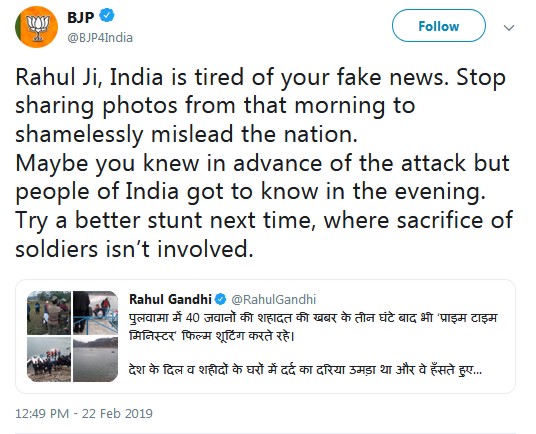
New Delhi: Barely a week after the Pulwama terror attack in which 40 CRPF troopers were murdered by a suicide car bomber, the opposition party Congress and ruling BJP have locked horns and are indulging in a mudslinging match.
After promising to exercise restraint and support each other for the benefit of the country, On Thursday, they were seen indulging in a slugfest and in campaign mode for the upcoming elections.
Congress spokesperson Randeep Singh Surjewala attacked Prime Minister Narendra Modi for “misplaced priorities” and “not giving the attack its due importance”. “When the entire country was mourning the deaths of the jawans, Prime Minister Modi was shooting for a film at Corbett National Park in Ramnagar and indulging in a boat ride to look at crocodiles,” Congress alleged.
Congress also alleged that the shooting went on till 6:30 pm on 14 February and that the PM had tea and snacks at 6:45 pm. The attack had happened in the afternoon on the same day.
“It is horrific that till four hours after such an attack, Modi was busy with his own branding, photoshoot and snacks,” Surjewala said.
While referring to reports in a section of the media and providing a timeline of events of the day, Congress spokesperson Randeep Singh Surjewala said the Prime Minister was neglecting his “raj dharma” (duty of governance.)
Addressing the media later in the day, Union Minister Ravi Shankar Prasad hit back at the Congress saying the opposition party has shown its “true colours” after maintaining the “facade” of standing with the government and security forces following the terror strike.
He snapped when he was asked questions about Modi’s presence in the park for long after the attack in which 40 CRPF jawans were killed. “This is a totally baseless charge,” he said when a journalist asked if the Prime Minister continued with the film’s shooting till the evening, by when everyone knew of the magnitude of the attack. When the journalist continued with his question, a visibly angry Prasad said, “I have answered your question, don’t argue with me”. He added, “I deny it completely.”

Image Courtesy: Rahul Gandhi Twitter / @RahulGandhi
Earlier, addressing the media, Prasad said Modi “was in Ramnagar for an official programme related to tiger conservation”.
The minister then said, “If the Congress party knew that an attack was going to take place in Pulwama. If their information network is so strong, good. We didn’t know.” He added that Modi had to drive a long way to catch a flight back to Delhi because of bad weather.
“The whole country is united. The morale of the armed forces is soaring sky high. Country after country is standing with India. At this critical juncture the Congress party is exposing its true colours,” he said, accusing the Congress of weakening the “resolve of the country” and the “morale of the armed forces”.

To questions about how the Pulwama attack had taken place despite the government’s claim that demonetisation would break the back of terrorism, Prasad said no big terror attack had taken place in the rest of the country.

BJP-led Union government jeopardizes the interests of country’s forest dependent people and adivasis:
State governments fail in implementing FRA in true spirit
Centre must issue Ordinance to stop evictions as per SC Order
21st Feb, 2019: National Alliance of People’s Movements is shocked and outraged at the order of the Apex Court issued yesterday directing forcible evictions of more than one million forest dwellers including large numbers of adivasis whose claims under the Forest Rights Act, 2006 (FRA) have been ‘rejected’ by the respective District Level Committees in different states. The Court has mandated that the order be complied by 12th July, by the 16 state governments which filed status reports on the implementation of the FRA. Notably, the numbers are bound to increase once the affidavits and data from all the states are received in the ongoing matter.
The order passed by Justice Arun Mishra, Justice Navin Sinha, Justice Indira Banerjee came on a bunch of petitions filed by conservation, wild life groups and retired forest officers who have been challenging FRA since its inception. However, it is not surprising that given the anti-farmer, anti-dalit, anti-adivasi and anti-poor stance of the BJP-led NDA government at the Centre, not a single lawyer was present on behalf of the Union Government who could have defended the provisions of the law in the Apex Court and protected the rights of some of the most marginalized and disenfranchised rights people as enshrined in the FRA.
The Scheduled Tribes and Other Traditional Forest Dwellers (Recognition of Forest Rights) Act, 2006 also know as Forest Rights Act was enacted with a view to address the widespread historical injustice meted out to the forest dwelling communities in the country since the colonial period. The elite ‘conservation’ lobby very often in cohorts with the Ministry of Environment and Forests has made repeated attempts to scuttle and dilute the law since its drafting stage and is relentless to this day in divesting the forest-dwelling peoples of their rights. Aided by the forest bureaucracy that has always resisted the democratization of forest governance, these lobbies have constantly been at loggerheads with the rights of people residing in forests since generations.
This order of the Supreme Court, if implemented, will take us to the situation of almost 2 decades ago, which had led to the passing of the Forest Rights Act, after protracted mass movements across the country. Any forceful implementation of this order will only cause unprecedented chaos, suffering and misery and set the forests on fire. This order revives memories of 2002, when the Inspector General of Forests issued a circular dt. 3rd May, 2002 to all the Chief Secretaries, Secretary (Forests) and Principal Chief Conservator of Forests (PCCF) of all states and union territories, outlining a “time-bound action plan” for the eviction of encroachers by 30th September, 2002. Between May 2002 and March 2004 alone, evictions were carried out from 1,52,400.100 hectares of forest land. About 3,00,000 forest dwellers were evicted from their habitat and deprived of their livelihood during this period. Their houses were burnt, crops and food were destroyed, women were raped, and men were shot at and killed. Hundreds of villages were set on fire or demolished, which led to clashes and deaths in police firings. Are we going to see a repeat of this again ? Can this be legally and constitutionally allowed ?
This had emanated from two Supreme Court judgements in 1996 which extended the ambit of Forest Conservation Act, 1980 to all lands, conforming to the dictionary definition of forest, irrespective of ownership. It stayed even regularisation of eligible land prior to 1980 and then further in 2000 banned the removal of dead, diseased, dying or wind fallen trees, drift wood and grasses, etc from all national parks and wildlife sanctuaries. MoEF and Central Empowered Committee misinterpreted the SC order to mean that “no rights can be exercised” in the protected areas and banned the collection and sale of all non-timber forest produce from them and denied livelihood opportunities to the forest dwellers.
It needs to be noted that FRA, since 2008 when it came into force and was immediately challenged by these petitioners in so called ‘public interest’, has been recognised as part of the law of the land in other protective legislations as well such as, (a) Section 3(1)(g) of the Prevention of Atrocities Act, 1989 recognises that dispossession of a tribal or dalit forest dweller from their forest right is an ‘atrocity’ and a crime punishable with imprisonment; (b) the LARR of 2013 recognises that forest rights need to be settled before land is to be acquired for public purpose following due process of law and only after proper rehabilitation and compensation (c) At least 2/3rd of the forest lands are under the Schedule V of the Constitution where special protection and provisions of PESA Act, 1996 are applicable.
The FRA has been relied upon by scores of court decisions, judgments, and executive decisions over the last 11 years, and there is a burgeoning jurisprudence around it, including a three judge bench decision of the SC itself in the Niyamgiri case, upholding the constitutional rights of Gram Sabhas. Is all that case law and judicial precedent to be thrown to the winds by an interim order based upon the arguments of fringe elements in the conservation scene? Is this in the ‘public interest’ or is there some other not-so-public interests that these groups are serving?
Since more than a decade of its enactment and implementation, despite all limitations and failures, the FRA had been a beacon of hope to millions of forest dependent people in the country for securing their tenure over land and access to forests. However, this order has turned the wheel backwards and also has the potential of deterring claimants from filing claims, thus sounding a death knell for the critical and historic FRA. A landmark legislation for recognizing the equal right of women of land titles, this order of the Apex Court does monumental disservice to the ownership rights of women who have managed forests for centuries.
The historic Kisan Long March to Mumbai undertaken by a large number of adivasis farmers last year and happening even now, despite state repression, also raises concerns regarding the large-scale irregularities in the settlement of claims under FRA. Forest people across the country are still struggling to ensure proper implementation of the Act, both individual and community rights, since state governments have not shown any political will and made every attempt to dilute the law and also violate it in name of development and conservation. In numerous places (such as in Polavaram in Andhra Pradesh) forest lands are being ‘acquired’ on a massive scale and sought to be submerged without settlement of claims or arbitrary ‘rejections’.
NAPM condemns this colonial and callous attitude towards the forest dwellers and adivasis prevalent in the conservation lobby, the bureaucracy and even the judiciary and demands that Union government immediately intervenes in Supreme Court through effective legal representation and stop this massive eviction across the country. Union Government must issue an Ordinance forthwith to stop any execution of this order leading to unjust evictions of forest people across the country. All State governments must immediately intervene in the Supreme Court with affidavits seeking time for review and fair implementation of the Act. An Independent Commission needs to be set up to review, state-wise, the gaps in the implementation of FRA and reasons for such large scale rejection.
We stand in solidarity with the struggling adivasis and forest based people of this land, who continue to face an onslaught on their lives and livelihoods at the hands of an insensitive, corporatized State. We also express full support to all organizations, campaigns and coalitions who have been working to get the Forest Rights Act enacted and implemented over these years and assure that we stand together in the fight to protect the rights of the forest dwelling communities and constitutional rights of Gram Sabhas. We call upon all political parties to take a categorical stand for implementation of FRA and protection of rights of forest peoples in the run up to the General elections.
Medha Patkar, Narmada Bachao Andolan (NBA) and National Alliance of People’s Movements (NAPM);
Aruna Roy, Nikhil Dey, Shankar Singh, Mazdoor Kisan Shakti Sangathan (MKSS), National Campaign for People’s Right to Information, NAPM;
Dr. Binayak Sen, Peoples’ Union for Civil Liberties (PUCL); Gautam Bandopadhyay, Nadi Ghati Morcha; Kaladas Dahariya, RELAA, NAPM Chhattisgarh;
Prafulla Samantara, Lok Shakti Abhiyan; Lingraj Azad, Samajwadi Jan Parishad & Niyamgiri Suraksha Samiti, NAPM Odisha; Chennaiah, Andhra Pradesh Vyavasaya Vruthidarula Union-APVVU, Ramakrishnam Raju, United Forum for RTI and NAPM, Meera Sanghamitra, Rajesh Serupally, NAPM Telangana – Andhra Pradesh;
Kavita Srivastava, People’s Union for Civil Liberties (PUCL); Kailash Meena, NAPM Rajasthan;
Sandeep Pandey, NAPM, Richa Singh, Sangatin Kisaan Mazdoor Sangathan; Arundhati Dhuru, Manesh Gupta, Suresh Rathaur, Mahendra, NAPM, Uttar Pradesh;
Sister Celia, Domestic Workers Union; Maj Gen (Retd) S.G.Vombatkere, NAPM, Karnataka;
Gabriele Dietrich, Penn Urimay Iyakkam, Madurai; Geetha Ramakrishnan, Unorganised Sector Workers Federation; Arul Doss, NAPM Tamilnadu;
Dr. Sunilam, Adv. Aradhna Bhargava, Kisan Sangharsh Samiti; Rajkumar Sinha, Chutka Parmaanu Virodhi Sangharsh Samiti,NAPM, Madhya Pradesh;
Vilayodi Venugopal, CR Neelakandan, Prof. Kusumam Joseph, Sharath Cheloor, NAPM, Kerala;
Dayamani Barla, Aadivasi-Moolnivasi Astivtva Raksha Samiti, Basant Hetamsaria, Ashok Verma NAPM Jharkhand;
Anand Mazgaonkar, Swati Desai, Krishnakant, Parth, Nita Mahadev, Mudita Paryavaran Suraksha Samiti, Lok Samiti, NAPM Gujarat;
Vimal Bhai,Matu Jan sangathan; Jabar Singh, NAPM, Uttarakhand;
Samar Bagchi, Amitava Mitra, NAPM West Bengal;
Suniti SR, Suhas Kolhekar, Prasad Bagwe,NAPM, Maharashtra;Bilal Khan, Ghar Bachao Ghar Banao Andolan, Mumbai, NAPMMaharashtra;
Anjali Bharadwaj, National Campaign for People’s Right to Information (NCPRI), NAPM;
Faisal Khan, Khudai Khidmatgar, J S Walia, NAPM Haryana;
Guruwant Singh, NAPM Punjab;
Kamayani Swami, Ashish Ranjan, Jan Jagran Shakti Sangathan; Mahendra Yadav,KosiNavnirman Manch; Sister Dorothy, Ujjawal Chaubey, NAPM Bihar;
Bhupender Singh Rawat, Jan Sangharsh Vahini; Sunita Rani, Domestic Workers Union;Nanhu Prasad, Nirman Mazdoor Union; Rajendra Ravi, Madhuresh Kumar, Himshi Singh, Uma, NAPM, Delhi
For any further details, contact: 9971058735 | napmindia@gmail.com
Courtesy: Counter Current

Excerpts from the paper “Where Bharat Goes” by Diane Coffey of the Research Institute for Compassionate Economics (RICE):
Several conference participants mentioned that villagers see few benefits of latrine use. The discussion at the 1956 conference also touched on another aspect of village life that is crucial to understanding rural sanitation outcomes today. In the words of Professor Karve, one of the conference participants, ‘[I]f we want to promote changes in the village we must recognize the importance of caste difficulties’ (Ministry of Health, 1957, p. 119).
Of particular importance in the 1950s was manual scavenging: In well-off households it was common for newlymarried women and the elderly to defecate in or near the home, and for the faeces to be carried away by a person from a sweeper caste. This unsanitary practice endangered health of the whole village, especially of the sweepers. People from manual scavenging castes were considered the lowest among untouchables and suffered severe discrimination.
The conference participants noted that as a result of economic exploitation and social exclusion many sweepers were leaving their work and migrating to cities. The participants resolved that additional attention to the situation of manual scavengers was needed, but they also opined that ‘it would be nearly impossible to expect the high caste people to cooperate in the manual handling of faeces’ (Ministry of Health, 1957, p. 115).
Data suggests that, although it still exists today, manual scavenging is not very common: The 2011 Census found that about 800,000 households, or less than 0.5 per cent, still use dry latrines serviced by humans (Government of India, 2012b). Nevertheless, the fact that manual scavenging and the extreme social exclusion that accompanied it were common in rural India’s past plays a crucial role in today’s sanitation outcomes.
To understand why, we need to understand how the latrines provided by the government work. The government builds and promotes pit latrines, which consist of an approximately 50-cubic-foot hole in the ground, lined with bricks and covered with a cement slab. These latrines also have a latrine pan connected to the hole, with walls or curtains around the pan for privacy. Where they are used, these affordable latrines are a boon to public health. They have been used to greatly reduce open defecation and the diseases it spreads in low- and middle-income countries all around the world.
For example, in rural Bangladesh, as of 2014, only 4.7 per cent of households defecate in the open, and 84.4 per cent of households use pit latrines (BDHS, 2014). Despite the success of pit latrines elsewhere, however, they are unpopular in India. The National Family Health Survey 2015-16 found that 55 per cent of rural Indian households defecate in the open, and that only 18 per cent use pit latrines (NFHS, 2016).
When rural Indian households build their own latrines, they are more likely to build expensive latrines with large underground tanks. Rural Indians tend to reject the affordable pit latrines promoted by the government, and which are used in other countries, because the pits, which fill up after a few years, require manual emptying.
If managed properly, manually emptying a latrine pit can be safe and hygienic from a biological perspective. That is because when a full latrine pit is left to decompose for a period of six months to a year, the faeces turn into fertilizer, which is safer to handle than fresh sludge. For this reason, the government recommends that each household have two pits: While one is decomposing, the other can be used.
Yet, as the conference participants pointed out in 1956, most rural Indians refuse to handle faeces; they see it as a task that only the sweepers can do. They believe that manually handling faeces would not only be degrading, but it would also result in their own social exclusion.
This view has changed little from the 1950s: Even when I or my research collaborators explain to villagers that emptying decomposed latrine pits poses little threat to their health, people are nevertheless extremely concerned about the social consequences of handling faeces (Coffey & Spears, 2017). The fact that affordable latrine pits need to be emptied manually means that few in rural India are interested in having one.
The 2018 survey described above confirms that rural households in Rajasthan, Madhya Pradesh, Uttar Pradesh and Bihar still tend to practise open defecation until they invest in a latrine with a large tank or pit that is not emptied manually. The average cost of latrines that households built for themselves was Rs 34,000, which is far in excess of the Rs 12,000 subsidy, and implies investment in large pits or containment chambers.
Further, those households that had small pits (likely because they had received contractor-constructed latrines) were least likely to use them: the survey found that about 40 per cent of Hindus with small latrine pits (around 50 feet) defecated in the open (Gupta et al., 2019).
The Swacch Bharat Abhiyan (SBM) disregards the fundamental relationship between sanitation and caste. Although the programme is highly visible—the logo, Gandhi’s glasses, has even been printed on currency—the sanitation workers who clean public places remain highly invisible. In a 2014 article published in Economic and Political Weekly, Anand Teltumbde points out that India is less clean than other countries not because people are poorer, but because of the caste ethos that relegates sanitation work to people who are considered untouchable (Teltumbde, 2014).
Teltumbde explains that ‘(upper-caste) people derive a sense of superiority in littering the place, expecting it to be cleaned by a lower-caste scavenger’ (p. 12). Teltumbde argues that without addressing casteist attitudes towards sanitation workers, the SBM is unlikely to radically improve India’s cleanliness. Ravi Bathran, a scholar who researches manual scavenging, points out that the SBM has done little to change the fact that the Indian government frequently disregards its own rules and laws when providing public services (Bathran, 2015).
For example, most toilets in the Indian Railways dispose of faeces on the tracks, rather than collecting the waste and disposing it of hygienically. The choice not to outfit train cars with waste-collection containers not only is dangerous to health, but also means that the government hires people almost exclusively from sweeper castes to clean faeces from the tracks. The government also hires sweepers to manually de-sludge drains and deblock sewers and pipes. All of these practices are banned under the 2013 Anti-Manual Scavenging Act.
Yet, even the high-profile SBM has not made the necessary investments in machines and technology to prevent this work from being done by people. Bezwada Wilson, Magsaysay Award – winner and convener of the Safai Karmachari Andolan – warns that increasing the number of full latrine pits may also increase the demand for manual scavenging work, thus reinforcing the social exclusion and humiliation of manual scavengers (The Hindu, 2016).
These three omissions—failing to make provisions for latrine pit–emptying, failing to abide by the Anti-Manual Scavenging Act and failing to combat casteism against sanitation workers—are likely themselves enough to undermine the SBM.
Courtesy: Counter View

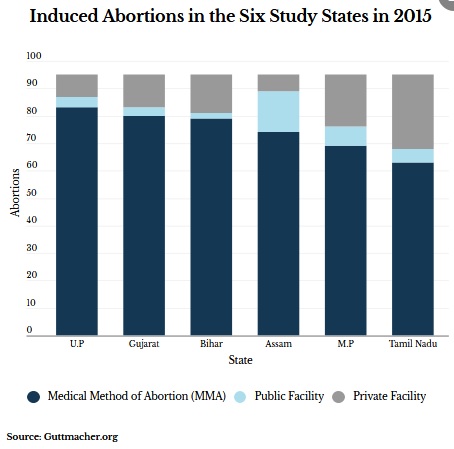
While this medical method of abortion (MMA) has a success rate of 95%-98% if administered properly and before nine weeks of gestation, the study found that the lack of medical supervision has resulted in a significant number of botched abortions in India.
Incomplete abortions after the use of pills caused 65% of complications in women seeking post- abortion care in Assam, 59% in UP and 51% in Bihar, stated the report. The method was legalised in India by amending MTP act in 2002 to strengthen access to safe abortions up to seven weeks and it is still considered one of the safest and most effective measures.
The report ‘The Incidence of Abortion and Unintended Pregnancies in Six Indian States’, published on November 13, 2018, provides data for Assam, Gujarat, Bihar, Madhya Pradesh Tamil Nadu and Uttar Pradesh, which together account for 45% of women of reproductive age in India. The study was conducted jointly by Indian Institute for Population Sciences, Mumbai, Population Council, New Delhi and New York-based Guttmacher Institute, a research organization that promotes reproductive health and rights globally.
The prime reason for the abortion complications, the study found, was that women did not undergo the stipulated 15-day procedure for termination of pregnancy which requires at least two visits to a health facility.
Of the 7.6 million abortions that took place in 2015 in the six study states, 77% or 5.8 million were carried out through non-facility MMA and Uttar Pradesh alone accounted for 2.6 million.
The guidelines in the Handbook for MMA, issued by the ministry of health and family welfare, require that Mifepristone and Misoprostol, the two-drug regimen used to induce abortion, can only be provided only by a registered medical practitioner or a government hospital. But, the UPAI study found that most women obtained it from informal vendors and chemists. This means that they are not counselled and lack adequate information about the usage and side-effects of these drugs.
More than half of all abortions in India continue to be unsafe, and incomplete abortions have increased from around 30% to over 50% in the last five years, which shows the increase in unsuccessful home medical abortion attempts, IndiaSpend had reported on November 5, 2016.
The new study underlines the importance of abortion as an indicator that reflects a region’s contraceptive behaviour, unintended pregnancies and the type of termination services offered.
‘Abortion numbers are underestimated in India’
While abortion has been legal in India for over five decades, maternal deaths remain an issue: As many as 56% abortions in India are unsafe; 8.5% of all maternal deaths in India are due to unsafe abortion; and 10 women die every day due to this reason, IndiaSpend had reported on November 22, 2017.
The new study is a follow-up of the report published by The Lancet Global Health in December 2017 titled The Incidence of Abortion and Unintended Pregnancy in India, 2015.
The previous report estimated 15.6 million abortions in the country in 2015, of which 73% or 11.5 million were obtained through MMA medication outside health facilities, 22% or 3.4 million occured in health facilities and 5% were done outside facilities using unsafe methods.
But the NFHS-4 survey estimated that a majority of abortions, as many as 52%, were provided in private health facilities, about 20% in public facilities and 26% were performed by women themselves.
“Statistics compiled by the Indian Government on the number of abortions provided in facilities are known to greatly underestimate abortion incidence because the coverage of facility-based services is incomplete and in addition, many abortions occur outside of a facility setting,” the report argues. Hence, the study used data from indirect sources, by conducting a large-scale sample survey of public and private facilities that provide abortion and data on sales of medication abortion drugs.
Public health facilities plagued by shortage of trained doctors and stigma
Of all the facility-based abortions in the six states studied, about 13% were performed in private facilities; public facilities accounted for only 5% of abortions. Only Assam registered 15% of induced abortions in public facilities while Bihar, Gujarat and UP lagged behind at 2%, 3% and 4% respectively.
“The state government of Assam had over the last four- five years made a concerted attempt to improve comprehensive abortion care in the public health facilities,” said Vinoj Manning, chief executive officer of Ipas Development Foundation India, an advocacy group that works to prevent unsafe abortions. “They allocated adequate money in their annual health budget and ensured utilisation of the budgets for training and certifying new MBBS providers to provide abortion care at primary and community health centres (PHCs and CHCs).”
Though the medical termination of pregnancy (MTP) Act, 1971 was passed 50 years ago, safe abortion is still not a reality for women in India. Manning puts this down to multiple reasons. “Lack of access to safe abortion for women owing to the paucity of services where it is needed the most – close to their homes/communities – and shortage of legal providers, is one of the core reasons,” he said. “Additionally, many women continue to be unaware about abortion being legal in India, and the knowledge about where, when and how they can access safe services.”
PHCs need to step up abortion services
Barriers to abortions were commonly observed in PHCs, which are essentially the first point of contact to a qualified medical practitioner for those living in rural areas. “PHCs typically have limited capacity to offer the service, and across the six study states, only a small proportion do so (3–14%)”, the report said. Hence the burden of performing abortions shifted to the large public facilities like the public hospital or the community health centres.
“MTP trained doctors are mostly located in the urban area, while majority of our population live in the rural areas,” Sushanta Banerjee, head of research and evaluation team at Ipas Development Foundation, told IndiaSpend. “We still have high unmet need for safe abortion at PHCs. Even when a PHC doctor is trained on providing abortion services, the community remains unaware of this service.”
Although there is a provision for one gynaecologist in every CHC, there is a 76.3% shortfall of obstetricians and gynaecologists compared to their requirement at CHCs, IndiaSpend had reported on November 22, 2017.
Why women end up looking for informal, dangerous abortion services
Public and private health facilities denied women abortion beyond the prescribed 20-week gestational period, as per the study. As many as 29% of public hospitals in Bihar and 63% in Assam provided second trimester abortions, the study showed. But in Gujarat and Tamil Nadu, CHCs and PHCs did not provide second trimester abortions which made women look to informal methods of termination.
The report also states that 54-87% of facilities in the six study states had turned away at least one woman seeking termination of pregnancy. The reasons cited by facilities included shortage of staff, lack of supplies or for not having consent from their husbands or a family member which are not legal grounds for denying abortions.
To ensure that women do not buy MMA pills from informal vendors, Banerjee recommended improved abortion services at all levels of public health facilities. “There is also an urgent need to move from medical doctors to mid-level providers, including nurse and midwives,” he said. “Over reliance on medical doctors will restrict the access and will influence to women to go to informal providers.”

Courtesy: India Spend

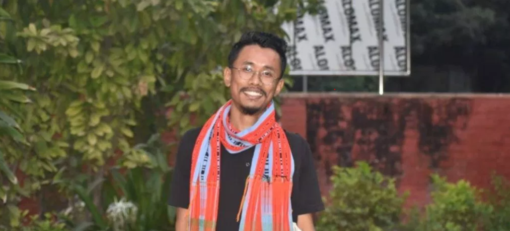
Thokchom was arrested on February 16 by a team from the Manipur Police accompanied by Delhi Police personnel from his residence in Saket in Delhi. A case under sedition charges was lodged against the former president of the Manipur Students’ Association in Delhi (MSAD) for posting an update on Facebook that was critical of the Citizenship (Amendment) Bill.
Police in Manipur had filed the charges for the student leader’s post where he had said: “Indefinite curfew imposed in Manipur. Internet banned for five days. All cable networks asked not to cover any speech or footage of the protest. High possibility that CAB will be passed today at Rajya Sabha. Manipur once burned down the state Assembly in 2001. Self-determination the only way forward”.
Details of Thokchom’s arrest charges and his whereabouts remained a mystery for the first 24 hours of his arrest and he was ultimately brought to Manipur’s capital on Tuesday after the Manipur Police managed to get a transit remand from the Lower Divisional CMM South Saket Court.
He was charged with various offences under the Indian Penal Code, including Section 124 (A).
After being brought to his home state on February 19, Thokchom was immediately produced before the court of the Chief Judicial Magistrate (CJM) of Imphal East district. Police were seeking custody of him till February 22.
Granting bail to Thokchom, the CJM noted that “it is not stated anywhere the accused committed any other act, apart from uploading the said post”.
The court added that the “grant of police custody cannot be conducted in a routine manner, remand prayer is allowed if there exist well-founded accusations for the commission of an offence. There has to be prima facie case that an offence has been committed”.
Dismissing the charge, the court said that Thokchom’s Facebook post “cannot be stated to bring into hatred or contempt, or excite or attempt to excite disaffection towards the government”.
The judge said that he does not “find any attempt or incitement to commit violence” and that his Facebook post is not seditious.
Although Thokchom was granted bail, the judge let him off with a warning to “not commit an offence similar to the one he is accused of” and warned him against “directly or indirectly make any inducement, threat or promise to any person acquainted with the facts of the case so as to dissuade him from disclosing such facts to the court or to the police or tamper with evidence”.
He was quoted by a local newspaper saying that “People of Manipur know what is wrong and what is right. I am happy with the decision given by the court today”.
Courtesy: Indian Cultural Forum
Join our mailing list to get the latest human rights news that matters, straight to your mailbox.
© Sabrang | All Rights Reserved