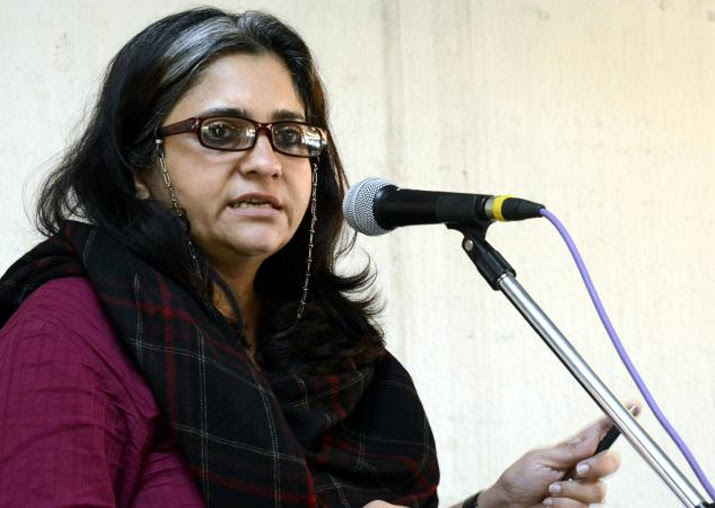
She also talked about the onslaught of women’s rights under the current right wing Narendra Modi led government, and the resistance being organised to counter it.
First published in Peoples Dispatch
Australia’s biggest coal ambition
The W&J registered their land claim half a decade before the Australian government got serious about its ambition to open up the Galilee Basin, the continent’s largest reservoir of coal. Roughly 400 kilometres inland from the Great Barrier Reef, the region covers an area as large as the United Kingdom, and holds thrice as much coal as has ever been mined in Australia. The International Energy Agency offers some perspective on the scale of the Galilee’s coal deposit: if all of the Basin’s coal were to be loaded onto a single train, it would stretch to a length of 2.5 million kilometres, or six and a half times the distance to the moon.
Although the first exploration licence to mine the Galilee was taken out in 1970s by Australian mining magnate Lang Hancock, plans to ‘develop’ the Galilee Basin did not eventuate before the 21st century, owing to both to the region’s remoteness and the need for higher prices and demand for thermal coal. Australia’s recent resource boom, the biggest since the gold rush of the mid-1800s, began around 2003 when prices for coal and iron ore, Australia’s two biggest mining exports, started to rise.
Adani embarked on its ambitious Australian mission when the resource boom was at its peak in 2010. Initially estimated to start operations in 2014 and reach full capacity by 2022 to export 60 million tonnes of coal, the Adani mine would be the largest of six megamines, and a total of nine proposed coalmines in the Galilee. The original list of proponents also included the Indian mining company GVK in a joint partnership with an Australian resource giant, Hancock Prospecting.
The scale of Adani’s Carmichael proposal promised to put Australia in the same league as the Powder River Basin coalmines in the United States that have an export capacity of up to 100 million tonnes of coal a year. The Basin constituted one of the four “pillars” for Queensland’s growth as envisioned by the state Liberal National Government under Campbell Newman, with an estimated A$60 billion in revenue generation and the creation of 15,000 jobs. Being ‘in the business of coal’, the Newman government subsidised the Galilee megamines through the Galilee Basin Development Strategy.
Subsequent Queensland governments also meted out special treatment to the Galilee Basin, and particularly to the Carmichael project, the biggest and the first scheduled to begin. The Labor government that followed Premiere Newman’s Liberal government declared the Adani Carmichael project ‘critical infrastructure’, a status that had never before been granted to a private commercial development, on grounds of its perceived economic benefits, allowing the Coordinator General to reduce red tape and sign off on the various ‘conditional approvals’ for the Carmichael project quickly.
Adani and Queensland vs the W&J
The W&J first appealed to the UN Special Rapporteur on the rights of indigenous peoples in October 2015, submitting about Australia’s failure to protect their rights:
“Our ancestral homelands in central‐western Queensland, Australia, are threatened with devastation by the proposed development by a private company, Adani Mining, of the massive Carmichael Coal Mine. … We exist as people of our land and waters, and all things on and in them – plants and animals – have special meaning to us and tell us who we are. Our land and waters are our culture and our identity. If they are destroyed, we will become nothing…We have not consented to the development of the Carmichael mine or any other proposed mine on our traditional lands.”
Australian media has reported a rift within the core council of W&J family representatives who claimed native title over the lands designated for Adani’s mine, with one part of the family council dead set against the mine, and the other side wishing for a better outcome than had been offered from the ILUA [Indigenous Land Use Agreements] negotiations with Adani. However, a key bone of contention for the Wangan and Jagalingou claim group, one shared by all core members, relates to the Carmichael project’s perceived benefits.
Adrian Burragubba, the head of the W&J family council that has sustained a long legal fight against Adani is reported to have first heard of Adani’s exaggerated jobs claims from a high-level company official during a meeting with traditional owners in August 2014. This information came just months before an important meeting between the family members and the company to authorise a land use agreement.
Adani needed an ILUA to undertake all works associated with the project, and secure a 2,750-hectare area for critical infrastructure related to various mining operations including an airstrip, workers’ village, and a washing plant. The Native Title Act, 1993 allows for an agreement between indigenous groups and a mining corporation to be drawn up in six months, failing which the company can approach the Native Title Tribunal to facilitate an ILUA and override objections from traditional owners. The law also allows the state to extinguish Native Title and compulsorily acquire mining land; however, Australian governments have so far avoided such a clear disregard for the wishes of the traditional owners.
The W&J family council refused to grant Adani an ILUA, and the company approached the Native Title Tribunal in April 2015. The company’s 10,000 jobs promise had attracted controversy by this time following the testimony of its own expert in the Queensland Land Court that the forecast was closer to 1464 jobs.
The Tribunal, however, ruled in favour of Adani, finding the project in the public interest on account of Adani Australia’s advertised 10,000 jobs figure that both state and federal governments had accepted. The W&J maintained that Adani had misled the Tribunal with false economic benefit claims from Carmichael. The Tribunal authorised Queensland to issue mining licences and the W&J moved to the federal court for a judicial review of the case of mining licences without an ILUA. The Federal Court also dismissed the W&J case. At the third stage of legal appeal from the W&J, the state’s Supreme Court of Queensland also struck down the case.
Outside the courtroom, the W&J emphasised that they had struck down Adani’s proposed ILUA on three separate occasions during bona fide meetings of the claim group. After the W&J family council first formally rejected Adani’s ILUA in March 2015, they took a Defence of Country Declaration which stated their rights as indigenous people under the UNDRIP [United Nations Declaration on the Rights of Indigenous Peoples] to the Queensland Parliament.
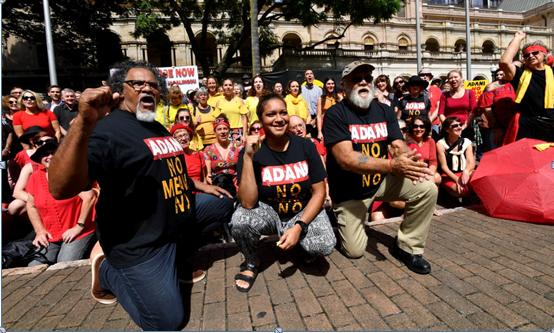
Adrian Burragubba’s ‘Adani, No means No’ slogan grew to become the headline for a sustained indigenous land rights movement to stop Australia’s largest coalmine. Not only were the W&J opponents opposed to coalmining on their ancestral lands, they were concerned about the nature and the adequacy of the benefits, particularly jobs that the company had proposed. A W&J commissioned economic assessment of the ILUA found the proposed compensations to be less than half the industry average. The land use agreement had pegged three quarters of the economic benefits on jobs, raising concerns about its viability in the future given the negative outlook for coal.
At the heart of their ‘No’ lies an understanding of their fundamental right to reject developments that would devastate their legacy, and endanger the future, essentially of free and prior informed consent as they choose to exercise it. Burragubba’s assertion exposes the limitation of Australia’s Native Title Act that does not give indigenous groups the provision to altogether veto mining.
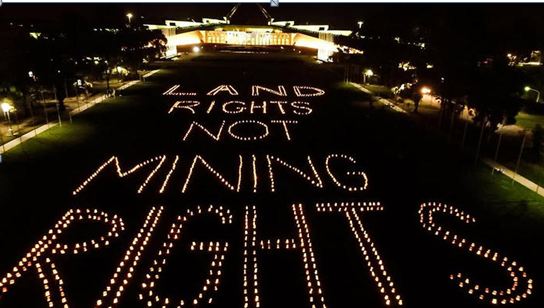
Australia’s Indigenous Youth Climate Network sends a message to federal parliament in May 2017. Image courtesy: Seed Indigenous Youth Climate Network
The W&J pulled out all stops to prevent coalmining on their ancestral lands. The two faces of the campaign, Burragubba and his niece Murrawah Johnson went on a world tour with environmental activists in 2015 to appeal to global investors against the Carmichael project. Eleven international banks including HSBC and Barclays committed to not fund Australia’s largest proposed mine on grounds of standing up for indigenous rights, repeated delays in starting the project, and the effects on the Great Barrier Reef.
Most large banks are signatories to a set of standards commonly known as the Equator Principles that rule out the financing of projects that can harm world heritage sites. The London-based Standard Chartered ended its association with Carmichael, reportedly to avoid reputational damage that the distancing of other global banks from the project had exposed it to.
In a video on the campaign website adaninomeansno.com, Murrawah Johnson talks about the “tremendous task that it is in Australia and Queensland to take on a mining corporation when the laws are stacked against us”. Juggling college assignments and an international advocacy tour in 2015, she had a firsthand chance to experience the scale of devastation of ancestral lands by large fossil-fuel projects when she visited First Nations people in Canada fighting the Keystone Pipeline.
The W&J resistance to the Adani coalmine established itself as part of a global indigenous solidarity against fossil-fuel mining on First Nations people’s land, linking with major indigenous protests in Canada to the Keystone Pipeline and in the United States to the Dakota Access Pipeline. At a Brisbane symposium in July 2018, the global alliance called for rethinking development so that ‘indigenous people’s rights and the realities of a climate constrained world’ are both kept at the centre.
In the meantime, a significant opportunity to reject Adani’s ILUA arose for the W&J after a High Court ruling in February 2017 from Western Australia interpreted the Native Title Act to mean that any ILUA drawn up without the consent of all registered native title claimants from an indigenous community is invalid. The Australian prime minister is reported to have delivered assurances of ‘fixing native title uncertainty’ to the Adani Group in person during a state visit to New Delhi in April.
Less than two weeks after the McGlade decision, the federal government introduced legislation to annul the effects of the High Court ruling, and it finally passed through both houses with the support from the Labor opposition in August. It was widely held that the government’s move on Native Title was to help clear the way for the Carmichael project.
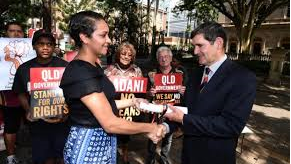
Murrawah Johnson presents a Declaration of Defence of Country to Queensland’ speaker of the house in 2015. Photo courtesy: Dan Peled/AAPImage
‘Disproportionate’ cost of resistance
The W&J’s legal track of work against the Carmichael mine continued side by side with its international public campaign. After three unfavourable decisions from various courts, the W&J lodged a case in the Federal Court in December 2016 around how Adani ‘conducted’ a crucial meeting in April where traditional owners voted for an ILUA for Adani. The W&J native title claim group is made up of 12 W&J families. Seven of these families are reported to have voted for an Adani ILUA.
The W&J federal case alleged that Adani provided generous travel and accommodation for attendees who voted favourably, that the company ‘stacked’ the meetings with non W&J native title claimants who had never attended a single meeting before. Various allegations of bribery included claims that the company collectively paid more than A$10,000 to the seven pro-Adani family members.
Adani spokespersons refuted these allegations, and maintained that due process had been followed in the meeting where traditional owners had “overwhelmingly” voted for the Carmichael mine. Adani’s ILUA success was however short-lived since by June one of the seven pro-W&J family representatives withdrew his support.
The allegedly ‘sham’ ILUA case continued till mid-2018, and the final decision yet again ruled against the W&J. It raised the prospect of the state stepping in to wipe out the W&J’s native title over and hand over property rights to Adani. The W&J wrote to the state government asking not to risk extinguishing their rights over ancestral lands for a project whose prospects of going ahead were weak.
It has been reported that following internal pressure from within the Labor party that is currently in power in Queensland, the state government decided to hold off on extinguishing the W&J’s native title rights at the mine site till the company could prove its finances were in place. The Queensland government acknowledged that the ILUA was “contested amongst traditional owners”.
Next, the W&J moved for a Federal Court full bench appeal of the decision. By this time, Adani Australia’s lawyers had tallied up cost orders against the W&J from previous Supreme and Federal Court proceedings at A$870,000. The company asked the court to direct W&J to pay A$160,000 in security money within a fortnight, failing which the “appeal be dismissed with costs”. In a hearing last December, the court found Adani’s estimate “disproportionate”, and revised the W&J’s security money to A$50,000.
The W&J’s legal and public campaigns have mostly been crowd-funded and assisted by lawyers on a pro-bono basis. Many of the 100,000 supporters on their campaign list, and the 12,000 followers on Facebook have personally donated to the fight. The ‘Adani no means no’ campaign was able to salvage its legal fight within the stipulated 14 days through a public interest litigation group Grata Fund’s donations. This appeal is now due for hearing in May.
For the W&J, a hectic pace in and out of the courts has become the new normal. As Adani announced in late November that it will finally begin operations, a small group of traditional owners travelled to Korea to dissuade major financial institutions not to lend to the controversial project. Adani had reportedly been in talks with establishments in Seoul. The W&J received written commitments from Korean banks to not fund the Carmichael project. And then in the new year, the United Nations wrote to the Australian government expressing its concerns about the rights of the W&J.
Unprecedented resistance
The W&J’s resistance to surrendering their lands evokes other such historic indigenous environmental struggles in Australia, most prominently, the resistance to the Jabiluka uranium mine on the land of the Mirrar people in the Northern Territory in the nineties and the resistance to a coastal gas hub on the Kimberley coast in Australia’s northwest, the traditional lands of the Goolarabaloo people six years ago.
But their global reach, set against the broader context of Australia’s economic dependency on coal and international movements on climate change, make the relevance of their struggle more complex, and its stake perhaps more widely shared.
Even though the Carmichael project has now significantly reduced in scale from its original proposed capacity, it still holds the key to the rest of the Galilee Basin’s projects. On several occasions during the last five years, the repeated W&J legal challenges stood as the only legal hurdles in the path of the mine commencing operations, with most other environmental challenges having been ruled unfavourably by courts.
Their long legal battle severely exposed the limitations of Australia’s Native Title Act to protect the historic and cultural interests of indigenous communities. The rushed amendments to the Act in response to the McGlade decision, passed through Parliament amidst criticism from indigenous communities betrayed a certain desperation of the part of the Australian government to open up its last coal frontier.
The W&J’s international campaign coincided with critical and significant movements in North America against fossil fuel mining on indigenous lands at a time when the world was moving towards a global climate consensus in Paris. The concurrence of these struggles against massive coal, oil and gas projects made the human rights aspect of climate resistances starkly obvious. The fight against the Carmichael mine has been the largest Australia has seen in recent times. And the indigenous land struggle against Adani, fought by a small group of traditional owners entirely with public donations, has been one of its most tenacious arms.
Ruchira Talukdar is a PhD scholar at the School of Social and Political Sciences, University of Technology Sydney. Her research compares energy politics and environmental mass movements in India and Australia. The material for this article was collected through interviews during research field trips as well as through a variety of news media.
Courtesy: Newsclick.in
After seizing power in all 8 states in North-East with the help of various regional parties and by the way of horse trading, the BJP was quite confident of winning 22 of the 25 Lok Sabha seats in the area. But the ruling party at the centre is facing a tough time here just ahead of the general elections. This has become evident during the three-day North-East visit of BJP leader and Prime Minister Narendra Modi.
The visit of Prime Minister started on February 7, through his maiden election campaign at Tripura, who visited Arunachal Pradesh the following day. After completion of Arunachal Pradesh visit, the Prime Minister entered Assam by the evening of February 8. On his way along the 20 kilometer stretch from Gopinath Bardoloi International Airport to Raj Bhawan, the Prime Minister had to face at least half a dozen black flag protests by different organizations. Though a huge number of police personnel and paramilitary forces were deployed to spare the Prime Minister the sight of the unprecedented protest, all efforts failed during his visit late evening.
Protest at Gauhati University
The first such protest was organized at Gauhati University, where hundreds of students came out on the streets of National Highway 37, as a mark of their protest against Narendra Modi. The student community of Gauhati University staged a demonstration, calling the Prime Minister Modi a saviour of Bangladeshis, they also showed black flag and various posters where Modi was declared as Anti-Assamese and killer of democracy. They chanted various slogans against the Prime Minister such as “Go back Modi”, “Scrap Citizenship Amendment Bill”, “Save the Constitution, save Democracy”, “Save the secular fabric of Indian Constitution” and many more.
Protest at Gauhati University
Anindita Das, student of law at Gauhati University said, “Though the Prime Minister passed through the University area in the dark, the students community didn’t miss the opportunity to protest his visit and the communal activities of the BJP led government at the Centre and as well as Assam. Every one came out spontaneously to show their anger against communal and fascist activities of the regime.”
Just after passing one km after the Gauhati University, Krishak Mukti Sangram Samiti (KMSS) led 70 other organizations, came out with black flags in huge numbers at Adabari. Another group of KMSS protesters showed black flags at Fancy Bazaar against the visit of the Prime Minister. Meanwhile, hundreds of All Assam Students Union (AASU) members mobilized at its headquarter Swahid Nyash at Uzanbazar. Taking stock of the situation, BJP workers including three Ministers of Assam, Piyush Hazarika, Pallab Lochan Das and Sidhyartha Bhattacharjee, rushed to the spot and created a barricade, to prevent the AASU workers from coming out of Swahid Nyash.
Protest by AASU at Swahid Nyash, Uzanbazar at the time of passing prime Ministers vehicle.
The police forces and BJP members jointly took an initiative, so that the Prime Minister can pass by safely. The BJP Minister, Piyush Hazarika, criticised the AASU workers for their protest and challenged them to come out to the street. Reacting to the hooliganism of BJP leaders, AASU Advisor, Dr. Samujjal Kumar Bhattachariyya said, “If the BJP goons have the courage, let them come without police. AASU, will take out a massive protest against the BJP on Saturday. AASU also appeals to the people of the state to hoist black flags in the each and every village against CAB and the visit of the Prime Minister.”
Just before the entrance to Raj Bhawan at Kharghuli, Asom Gana Parishad (AGP), the biggest regional political party of North-East, which was alliance partner of BJP until recently, took out another protest march with black flags. The AGP President, Atul Bora, who led the protest of thousands of party workers warned, “The Prime Minister must understand the mood of the people of the state. If the government makes any further move to pass the CAB in Rajya Sabha then BJP will have to face severe consequences.” It may be mentioned that in Tripura and Arunachal Pradesh too, the Prime Minister had to witness several such protests. In the meantime, Tai Ahom Yuba Parishad of Assam has called for an Assam Bandh on February 9 against the visit of Prime Minister. The bandh call has been supported by KMSS.


Miguel Gutierrez/EPA
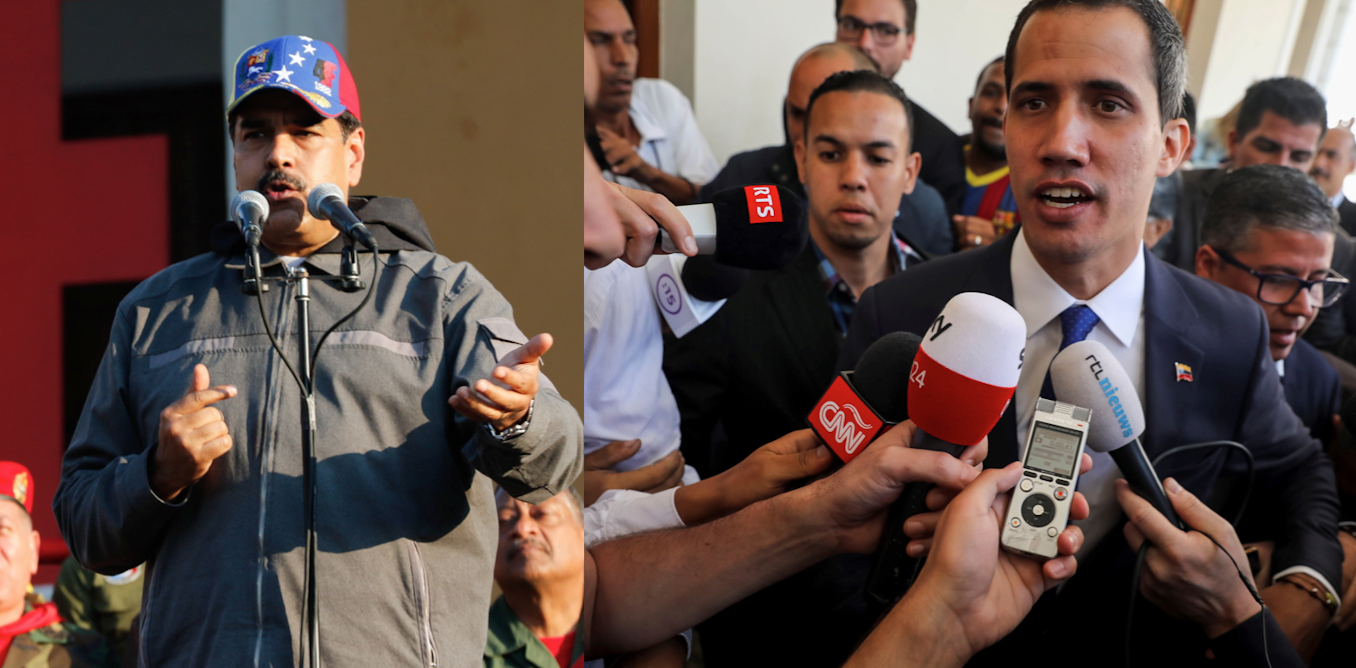
President Nicolás Maduro claims to be Venezuela’s constitutional president because he won the
presidential election in July 2018.
On January 23 2019, Juan Guaidó, one month after becoming president of Venezuela’s National Assembly, disputed Maduro’s legitimacy and declared the presidency vacant. He then took an oath to serve as the interim president of Venezuela.
Although involved in politics since 2009, Guaidó was until recently little known outside political circles. A member of the Voluntad Popular (“Popular Will”) party, he was an understudy to Leopoldo López, the party’s leader who is currently imprisoned for allegedly encouraging violent protests seeking the ousting of Maduro.
The 1999 Bolivarian Constitution, written in the first year of the administration of former president Hugo Chávez, fulfilled a promise Chávez made in his successful 1998 presidential campaign to replace the constitution of 1991. Most Venezuelans had come to see the earlier constitution as a democratic façade, serving the interests of a corrupt, wealthy ruling elite that controlled the only two parties with any chance of winning power through elections.
Maduro was Chávez’s vice president and the clear choice to succeed Chávez after his death in March 2013, only five months after winning an election for a third term. Elections during the Chávez years were criticized by observers, such as the Carter Center, for the government favoritism in the campaigns, but most saw the vote count as honest.
Chávez won easily due to strong support among the country’s poor majority, who benefited from social programs funded by the country’s oil bounty – which, before Chávez, had mostly gone to the wealthy and middle class.
The Maduro era has seen more questions arise about the fairness of campaigns, but also about official results. Despite Chavez’s blessing, Maduro barely won the special election to replace the deceased leader, winning only 50.6% of the vote.
Maduro’s political standing plunged further in mid-2014 when the price of oil, which can vary from 20 to 40% of GDP in any given year, collapsed, falling from US$130 to US$30 per barrel in late 2015.
In December 2015 Maduro’s United Socialist Party of Venezuela (PSUV) suffered a severe defeat in the National Assembly elections of December 2015. The opposition won a super majority of seats, enough to undo the programs of the Chávez era. Much of the opposition had participated in a failed coup in 2002 and never accepted the 1999 constitution – but all now embraced it as a tool to try to remove Maduro.
They gathered enough signatures to force a recall election upon Maduro, but the PSUV used delaying tactics to ensure that an opposition win would result in the vice president taking over. The recall effort faded away.
The opposition-controlled National Assembly began to act to slow or end Chavez’s programs and to limit Maduro’s power. The country’s Supreme Court, filled with PSUV appointees, used a dispute over the election of three assembly deputies to rule that the body was unconstitutionally abusing its power and threatened to close the unicameral Congress down.
Maduro instead decided to convene a new National Constituent Assembly (NCA) to rewrite the constitution and create what Chávez himself had called the “communal state”. This state would theoretically shift much power over policies and state spending (generated almost entirely by oil exports) to local and regional citizens’ councils.
To do this, Maduro used a vague phrase in Article 348 of the constitution that says: “The initiative for calling a National Constituent Assembly may emanate from the President of the Republic sitting with the Cabinet of Ministers.”
The opposition refused to participate in the election (turnout was 41%) of delegates to the NCA – as a result it is almost entirely composed of Maduro supporters. On August 8 2017 the NCA took legislative powers for itself, away from the National Assembly, under Article 349 of the existing constitution, which is intended to avoid obstruction of a constitutional assembly’s work.
Venezuela’s electoral authorities scheduled the May 2018 presidential election half a year early. Though constitutional, the timing made it difficult for the deeply divided opposition to choose its candidate. A large faction boycotted the vote; another backed a candidate, the governor of an important state.
Maduro won with 67.8%. The turnout was 46.7%, low by Venezuelan standards. Maduro claims this election makes him the legitimate president and accuses the opposition, the United States and other foreign governments of fomenting a coup.
Guaidó claims to be the constitutional interim president after the National Assembly declared the presidency to be “vacant” under Article 233 of the constitution, which allows for an interim president to replace a sitting president “upon abandonment of his position, duly declared by the National Assembly”.
Guaidó defends his action as a constitutional route out of the country’s economic and political crises – and his move has been endorsed by much of the mainstream news media in liberal democracies. Maduro has highlighted that he won an election – and Guaidó has not. Guaidó promised he would call elections once he has actual control of government.
Why did both presidents try so hard to justify their status as “constitutional” when almost everyone agrees the military holds the keys to power? For one thing, many in the military feel it’s their job to uphold the constitution. And both sides wanted to appeal to international public opinion.
Both sides wanted the support of Venezuelans in the poor urban neighborhoods and countryside, who see the 1999 constitution as guaranteeing their right, won under Chavez, to be politically included in determining the country’s future.
This article was originally published in Spanish
Courtesy:The Conversation

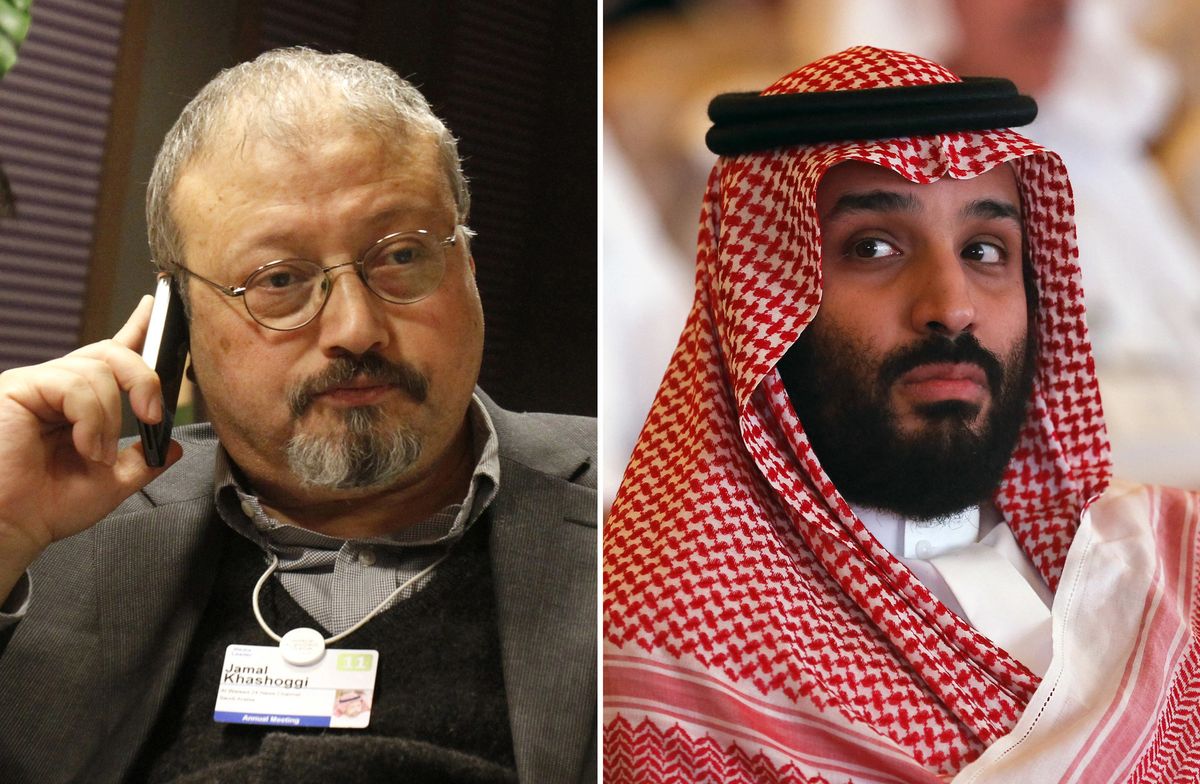
A UN report has found that Washington Post columnist and Saudi regime critic Jamal Kashoggi was murdered by Saudi official and Saudi Arabia “seriously curtailed and undermined” Turkey’s ability to investigate the murder of Jamal Khashoggi, a UN expert has said.
The UN human rights investigator leading the international inquiry into the murder of Saudi journalist Jamal Khashoggi said evidence showed he was a victim of “a brutal and premeditated killing, planned and perpetrated by officials of the state of Saudi Arabia,” Al Jazeera reported.
Special Rapporteur Agnes Callamard said on Thursday her three-member team had access to part of “chilling and gruesome audio material” of the murder obtained by Turkish intelligence agencies while they visited Turkey between 28 January and 3 February.
A preliminary report says it was 13 days before Turkey was allowed into the consulate where the journalist was killed.
Khashoggi was last seen alive entering the Saudi consulate in Istanbul on 2 October. The 59-year-old was a prominent critic of Crown Prince Mohammed bin Salman. US intelligence agencies believe Prince Mohammed ordered the assassination.
On Wednesday, the Wall Street Journal reported that Riyadh was trying to contest an element of a CIA assessment that concluded MBS likely ordered the killing. Riyadh denied his involvement, alleging “rogue” Saudi elements acted on their own accord, the Al Jazeera report said.
Saudi Deputy Public Prosecutor Shalaan bin Rajih Shalaan said investigators had concluded an intelligence officer ordered Khashoggi’s murder, applying a lethal injection inside the consulate, BBC reported.
The officer had been tasked with persuading the dissident journalist to return to the Gulf kingdom, he added. Khashoggi’s body was dismembered inside the building and the body parts were then handed over to a local “collaborator” outside the grounds, according to Shalaan.
Callamard plans to present a final report to the UN Human Rights Council in June.

Image Courtesy : Ndtv.com
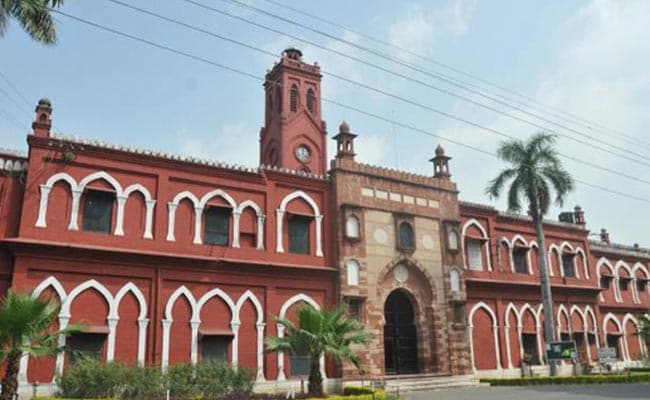
The youth wing of BJP demanded the construction of a temple for Hindu students in the Aligarh Muslim University campus.
Mukesh Singh Lodhi, the district president of Bharatiya Janata Yuva Morcha (BJYM), wrote a letter to vice-chancellor Tariq Mansoor on Thursday threatening him that he had 15 days to reply or thousands of BJYM workers will enter the campus to do a “murti sthapana”.
‘’Sir Syed Ahmad Khan, the founder of Aligarh Muslim University, had stated that both Hindu and Muslims are the two eyes of AMU and this should be the driving force for the vice-chancellor of the university to allow the construction of a temple on AMU campus,” Lodhi wrote in his letter to the vice-chancellor.
“This act of the vice-chancellor would strengthen Hindu-Muslim unity in the nation and would communicate a message for the nation. The VC should follow the maxim of ‘Sabka Saath Sabka Vikas’ and allocate land for the construction of the temple,” Lodhi said.
The spokesperson for AMU Shafey Kidwai said the university is yet to receive the letter from Lodhi.
“At this juncture, we will not be able to comment on the content of the letter,” Kidwai said.
An office bearer of AMU’s students’ union has questioned the timing of Lodhi’s demand and termed it as a “stunt” to gain attention ahead of the Lok Sabha election later this year, Hindustan Times reported.
AMU students’ union vice-president Hamza Sufyan said those who are demanding temples inside the campus will only be allowed to do so if they receive permission from the government and university administration.
“If the university doesn’t grant them any permission to make any temple inside the premise, they can’t set a foot inside the campus. This statement of building temple forcefully is showing their mentality. They are nothing more than a group of uneducated people,” Sufyan said in the report.
“Such false issues of mandir-masjid are only raised before the elections. It doesn’t have anything to do with reality. The university is there for a long time and it took them 100 years to raise this non-existing issue. This is a clear stunt to gain attention before the 2019 Lok Sabha elections. I am requesting everyone to avoid hearing such statements. Let them talk, our silence will become a rather louder answer,” he added.
Dr Manvendra Pratap Singh, a member of the National Monitoring Committee for Minorities Education, also backed the demand for the construction of a temple inside the AMU campus in December. “There are at least 6,000 Hindu students in the university, but there is not a single temple, while there are mosques in almost every hostel. What kind of secularism is this?” he had said.
The grandson of BJP MLA Dalveer Singh, Ajay Singh, who is also an LLM student at AMU, had also demanded the construction of a Saraswati temple in the campus in December.
In 2015, the Supreme Court had ruled that any new religious building, like temples, mosques, churches, etc, will not be constructed in central universities or educational institutions. The court also said that any existing temple or mosque will not be demolished.
Image courtesy: Indianexpress.com
The Supreme Court will hear a fresh petition on February 12 seeking a new investigation into the murder of former Gujarat home minister Haren Pandya in March 2003, it posted on Friday.
Haren Pandya was shot dead on March 26, 2003, in his car outside Ahmedabad’s Law Garden. His wife, Jagruti Pandya, had raised questions over the initial probe in the murder, which was handled by Ahmedabad City Detection of Crime Branch under Deputy Commissioner of Police DG Vanzara. Vanzara has since retired.
“A petition filed in the Supreme Court sought a fresh, court-monitored probe into the murder. The plea by NGO Centre for Public Interest Litigation (CPIL) says the need for a fresh probe had arisen in view of “some startling information that has recently come to light and has been extensively reported by the media regarding Mr Haren Pandya’s murder, information which was never investigated into by the investigating agency, the CBI,” The Indian Express reported.
“The petitioners said that Azam Khan—a witness in the encounter case of gangster Sohrabuddin Sheikh, his wife Kauser Bi, and associate Tulsiram Prajapati—had told a Mumbai court during the trial that “Sheikh had told him that Mr Haren Pandya was murdered as a part of a contract killing…” involving a senior IPS officer. In November last year, Khan, an associate of Sohrabuddin and Tulsiram Prajapati, said that while he had told the CBI investigator about it in 2010, the officer had refused to record it as part of his statement,” the report said.
The CBI had named 15 accused in Pandya’s murder. A trial court convicted 12 of them on June 25, 2007. Lack of evidence in the case made Gujarat High Court acquit all of them.
Join our mailing list to get the latest human rights news that matters, straight to your mailbox.
© Sabrang | All Rights Reserved