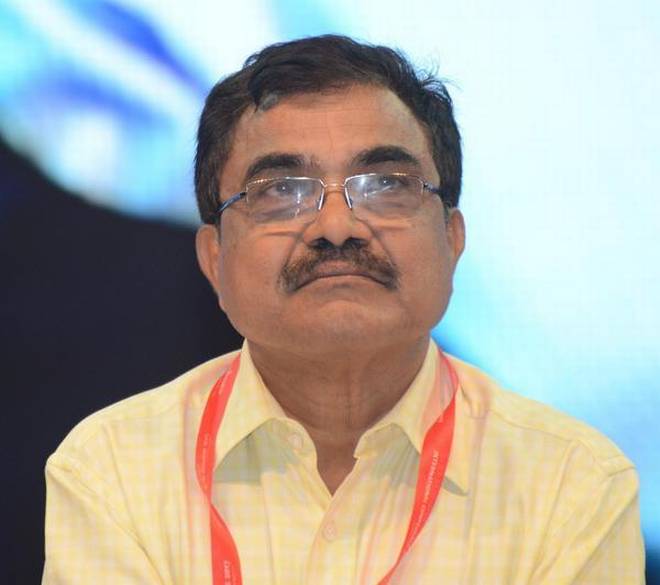
In a statement by COSTISA, they said that an eminent academician, intellectual, human rights activist and management professional, Prof. Anand Teltumbde’s arrest from Mumbai was illegal and violeted SC orders.
Image Courtesy: Nitin Brahme
COSTISA (Coordination of Science and Technology Institutes’ Student Association) coordination between progressive and democratic student organizations of IIT Madras, IIT Bombay, IIT BHU, IIT Kharagpur, IIT Kanpur, IIT Gandhinagar, IMS BHU and other Science & Technology institutes condemned the illegal arrest of Prof. Anand Teltumbde on February 2.
In a statement by COSTISA, they said that an eminent academician, intellectual, human rights activist and management professional, Prof. Anand Teltumbde was arrested from Mumbai domestic airport when he was returning to Mumbai from Kochi.
“This action blatantly violates the Supreme Court order dated 14th January which gave Anand protection from arrest for four weeks so that he could approach the courts for bail from the farcical FIR against him by the Pune police. This arrest was made while he came to Mumbai as he was scheduled to file his anticipatory bail petition in the High Court this morning,” they said.
They added that the Pune police hold him responsible for “inflammatory” speeches that supposedly led to the violence in Bhima Koregaon, although it is well known he wasn’t there. Moreover, there is documented proof of him being a critic of the episode.
“He has been vocal about the education sector which adversely affected by the neoliberal policies adopted by successive governments. By closing down primary schools, severely cutting funds in higher education institutes, encouraging private investments on education, funding private institutes by tax-payers’ money, forcing institutes to generate their own funds through fee hikes or corporate-funded research etc., the ruling dispensation has continually tried to push forth their monstrous neoliberal agenda of liberalisation and privatisation. These actions of the state aim towards dissociating the marginalized masses from the fruits of education. Prof. Teltumbde has been a guiding force behind the nationwide movement to save the education sector from these anti-people policies under the banner of All India Forum for Right To Education (AIFRTE),” they added.
Recently, this interim budget again decreased fund allocation towards important S&T institutes like IITs, IISERs and regulatory bodies such as UGC and AICTE, while directing the higher educational institutions to increase around 25% seats, which means another obvious hike in student tuition fees in near future and making higher education a more faraway dream for the marginalized. Similar is the attitude of the government towards research scholars who were demanding a scholarship hike of 80% but have only been granted a token increase even after so many days of agitation and movements. In such a scenario, arresting a crusader like Prof. Teltumbde is to crush a bold and important voice who always stand beside the students and the youth of our country, they said.
They said that this arrest shows the desperation of this fascist RSS-BJP government who take police actions against dissenting voices like Prof. Teltumbde even violating the Supreme Court order.
“COSTISA strongly condemns this arrest and urges all the students, intellectual and democratic voices to rise in rage against this action and demand his immediate and unconditional release so as to preserve some democracy in the country we live in,” they said. Holding that academic Anand Teltumbde’s early morning arrest by the Maharashtra police was “illegal” and amounted to contempt of the Supreme Court, a Pune sessions court on Saturday ordered his immediate release.
The Central Government has forgotten that the Mahatma Gandhi National Rural Employment Guarantee ACT is an employment generation programme and not merely a rural asset generation scheme.
The idea of MGNREGA was conceived, based on the fact that the planning and implementation of the schemes will be done in a decentralized manner, which will honor the local and traditional knowledge and decision making. However in the last twelve years MGNREGA has seen strong centralized bureaucratic control over the programme which has demolished the spirit of employment guarantee and the idea of a demand based allocation of work.
MGNREGS today has become everything, which it was suppose to challenge and rectify. The exploitation of workers, non dignified wages, contractor based delivery have become some of the common features of MGNREGA. The great Indian bureaucracy has again turned a revolutionary programme into a failed dream. The over centralization and administrative control over implementation and misinterpretations of the law by the administrators, have been the primary reasons why NREGA could not give out, what it was suppose to deliver. However, the programme still is a lifeline for crores of rural households but it could never reach it’s true potential. In true sense, MGNREGS as a programme hasn’t evolved since it’s inception and an ACT which was suppose to transform the scenario of rural jobs has now become an agonizing compulsion for the workers across the nation. The need and benefits of rural employment guarantee is unquestionable but the implementing mechanisms and policy inertia has kept the programme at stagnation.
MGNREGA in it’s current form is seen as an asset creation machine which considers the workers as tools for generation of assets. The Ministry of Rural Development presently has little focus on worker’s dignity and well being and thus, contractor based service delivery, which is common in rural job schemes can be observed everywhere despite the fact that employment guarantee ACT completely eradicates the idea of contractors in the MGNREG schemes. The wages and benefits of the workers are non-lucrative and monitoring in terms of preserving worker’s rights are negligible. Disinterest among workers further paved way for the contractors and middle men to take control which resulted in heavy leakages.
Asset generation focus in an employment guarantee programme further has an implication on the budget allocations. Too much asset focus has resulted in state wise targets for assets and thereby having limited allocation of funds based on number of targeted assets. This has huge implication on ground. The MGNREGA budget allocation has always been inadequate to meet the needs of workers. While the budget allocations should be made based on the decentralized labour budget planning in the Gram Sabhas and number of job card holding households, the allocation nowadays are being done based on asset generation plans of the government. The idea of MGNREGA was also to provide additional employment of 100 days to people apart from the existing jobs available in the rural schemes. In the present scenario MGNREGA has been integrated with a whole lot of other existing rural asset schemes such construction of Pradhan Mantri Awas Yojna, Anganwadi centres and toilets under Swachh Bharat Mission, which reduces the scope of additional income. Also, these programmes have a contractor or owner driven implementation process wherein contractors or the owners themselves supervise the schemes, causing regular violation of the MGNREGA provisions.
The MGNREGA wages are ridiculously low and in most states it is even lower than the state’s agricultural minimum wage. While, this itself is a blatant violation of the Law, the constant wage delays in MGNREGA has put workers into more trouble. The centralized payments systems have further added more insult to the injury as people have to now wait for their rightful wages for a long long time due to central delays in release of funds.
The Ministry of Rural Development, for the past couple of years have been constantly boasting up about the NREGA budget allocations and have been terming the allocations as highest ever. Not only the ministry has terribly miscalculated the budget, it has also ignored the inflation adjustments and the yearly increase in the number of job cards while exultantly announcing the allocations as highest ever. In real terms the budget has only reduced in the past few years as the funds for a certain financial year include a huge pending liability of the previous year. As a result of the inadequate allocations, every year funds get dried up halfway into the year and thus causing tremendous stress on the workers and joblessness at ground. Joblessness in the peak working seasons cause huge number of people migrating to towns.
In an employment guarantee programme the claims of highest ever allocation does not hold any value, if it is insufficient to meet the needs of the workers. Adequacy of funds is what is important to meet the current demand in the nation and claims of highest ever allocations does not really change the abysmal situation on ground. The central government should now stop bragging about the funds and work on providing sufficient allocations and timely release of funds to states.
While, several ground surveys show that MGNREGA is not functioning properly, the central government’s repeated claims of MGNREGA running successfully, raise questions on the credibility and intentions of this government. Furthermore, it is more derisive that the central government has been making these claims on the basis of their official Management Information system(MIS), authenticity of which is already questioned on various occasions and in different platforms. It has been proved on multiple occasions that reports shown on the MIS vary distinctly from the ground realities.
The larger issues of inadequate allocations, centralized payments and delays in wages have destroyed MGNREGA which was already suffering from multiple local issues and malpractices. Now the target based asset focus in MGNREGA is further damaging the essence of employment guarantee. The irony is that the quality of assets too haven’t improved and one can find poor quality and incomplete MGNREGA assets across the nation. In absence of a robust monitoring and grievance redress strategy, the condition of the programme can never be revived. The ministry has always been prompt in responding to the critics but highest officials never respond to the ground issues. While the workers across the nation demand higher wages, increase in work days and enhanced benefits, the officials keep their mouth shut.
The central government have allocated Rs.60000 crores for MGNREGA for 2019-20. The total budget for 2018-19 was Rs. 61084 crores. While independent activists, researchers and organizations have repeatedly claimed with data that MGNREGA cannot function properly with anything less than Rs.88000crores, this reduction in the budget has no logical explanation.
The world’s largest rural job scheme is going through a deep crisis. In the times when frequent reports of starvation deaths have shaken the nation, the rural development minister and the MGNREGA officials at the centre cannot shun from their responsibilities. With the general elections round the corner, BJP government needs to understand that 13crores job card holding families will be closely watching their next moves.
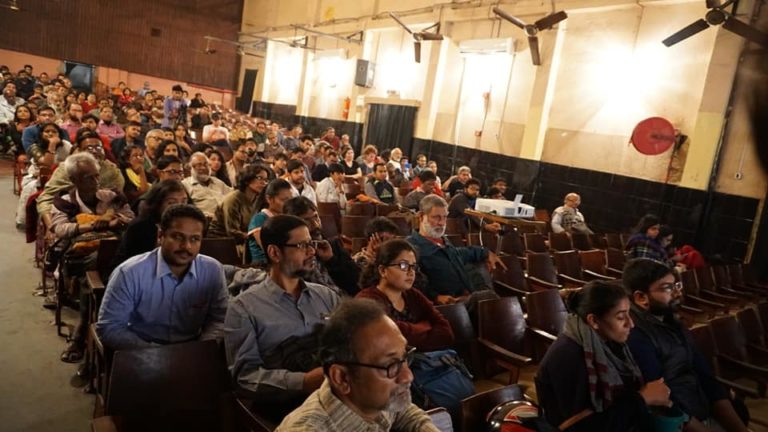
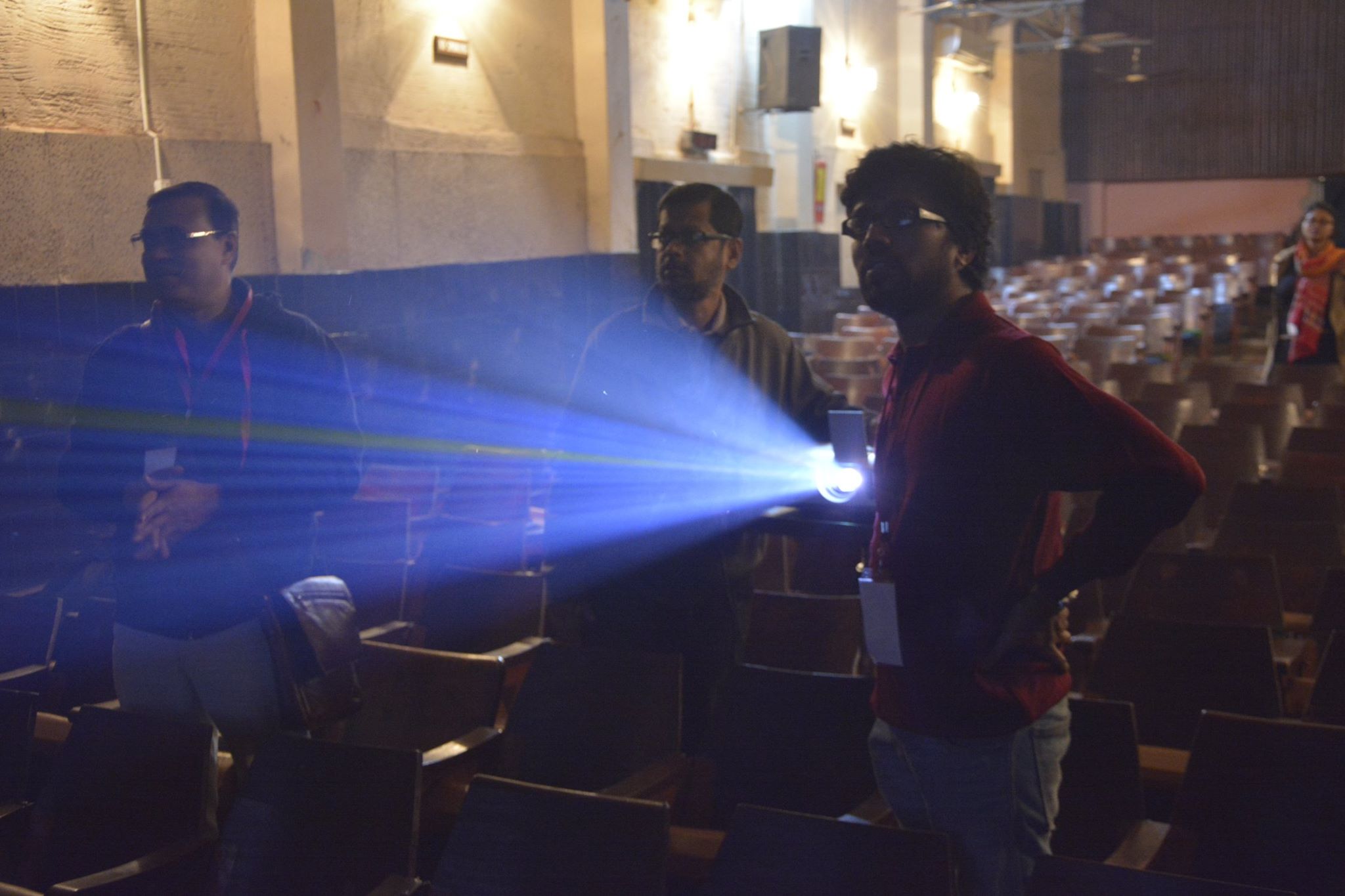
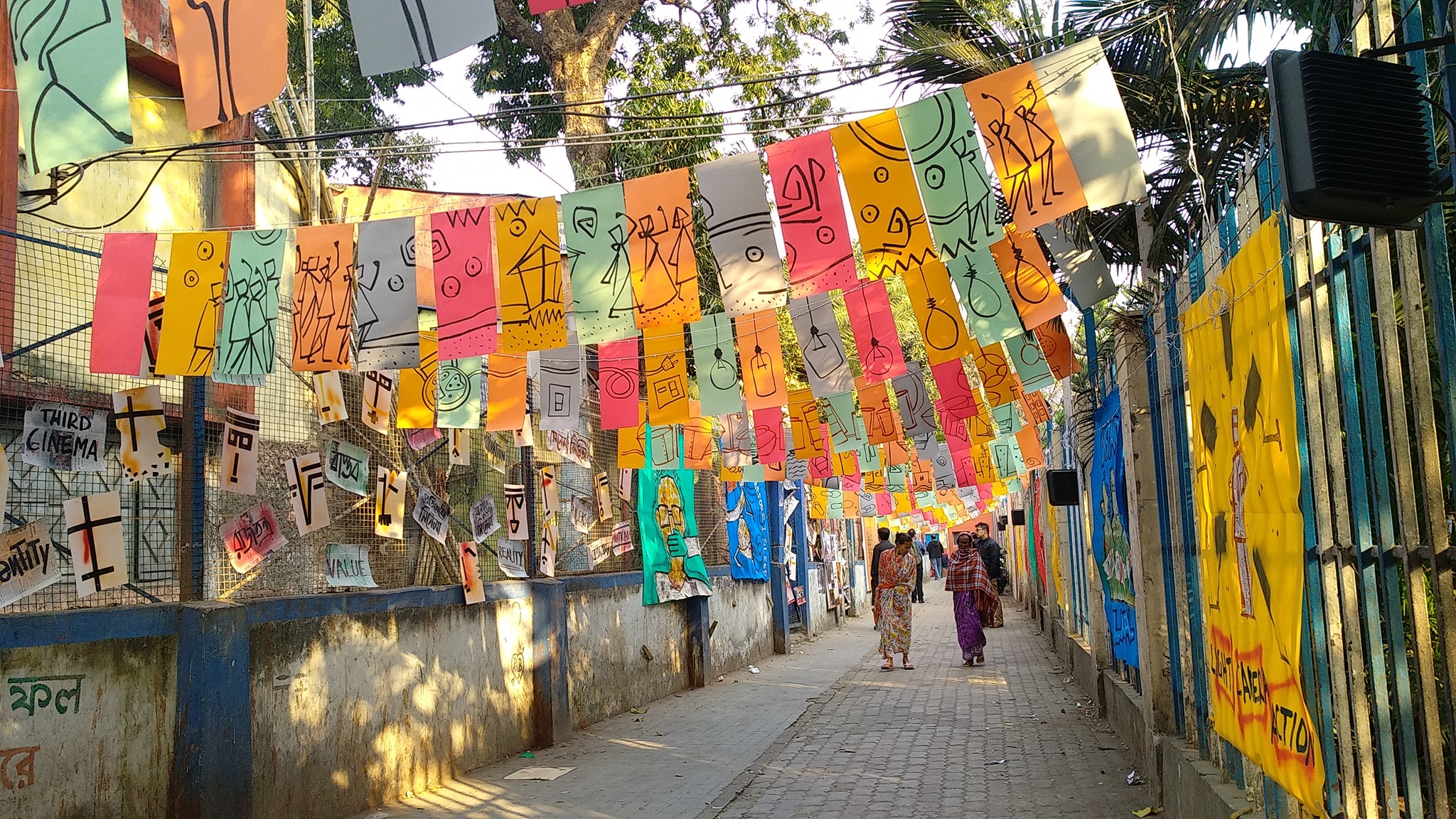
The sixth annual Kolkata People’s Film Festival brought to the city a diverse range of South Asian films and documentaries, which were screened by the Kolkata based People’s Film Collective, over a span of four days. The dialogue between the audience and the filmmakers also engendered a discussion on the challenges that the contemporary socio-political scenario in India offers.
The festival began with a tribute to Rohith Vemula whose tragic Shahadat on the same day three years ago had sparked student resistance across the nation. In memory of Rohith and countless others who continue to face institutionalized caste-based oppression, various films that explored the Dalit-Bahujan experience were screened. Gouri Patwardhan’s In a Shadowless Town traces the histories of the memorialisation of the Dalit-Bahujan community in the city of Pune. The ‘heritage walks’ often claim to represent the true cultural heritage and ethos of cities, but the statues and monuments which are integral to the lives and aspirations of the Dalit-Bahujan community are selectively invisiblised from the mainstream making of history. The historic event of Bhima-Koregaon enters the narrative too, as the film documents how these statues or memorials in the otherwise starkly Brahminised city of Pune provide them with a sense of a community which have been denied to them historically. Vivek Gopinath’s Rampatar tells the story of a specific bowl, named after Lord Rama, which discriminates the Dalits from the upper-caste in their culinary habits. Pawan K Shrivastava’s new Indian fiction, Life of an Outcast traced the story of a Dalit family and their lives through three generations caught under the wheels of caste-discrimination. The discussion with the director took the audience through his personal journey as a director, the politics of his films and his convictions as a filmmaker. Randeep Singh’s Landless narrates issues arising in the daily lives of Dalit agricultural labourers in Punjab. On the fourth day of the festival, Deepa Dhanraj’s We Have Not Come Here To Die was screened. The film recounts the struggles of the student activists interviewed by the filmmaker and captures the backlash as well as the many strands of anti-caste discourse, which emerged.
Another such film capturing the recent turn of events in the student movements of India was Sunil Kumar’s Ammi which brought us to a mother whose son Najeeb Ahmed disappeared amidst a violent turn of events in the Jawaharlal Nehru University campus, following an altercation with members of the ABVP. The University refused to file an FIR despite massive pressure from the students of the university. The CBI finally took up the case, however, no arrests were made. Ammi, Fatima Nafis, herself was present to talk us through her predicament. She told us with confidence over a cup of tea, “I know Najeeb isn’t dead. We share a close connection. If he was dead, something would surely have happened to me too.” These lives continue to shape the lives and thoughts of numerous others – and another film by Schokofeh Kamiz captures the intricacies of that afterlife. After Sabeen paid tribute to Pakistani activist Sabeen Mahmud who was shot dead by unknown assailants on the streets of Karachi. The film focuses on the impact Sabeen’s life has had on her friends, family and co-workers, and how she continues to inspire activism in the country.
The recurrent theme of destabilized lives was voiced perhaps most scathingly through the study of migration. 298-C, by Nida Mehboob, spoke of the maltreatment faced by the Ahmadiyya community in Pakistan. Rohingya’s Dream by Mohammad Mahdi Khaleghi’s opened a window into the Rohingya crisis through the personal tale of Arafatallah, a Rohingya child. The film explores his dreams, aspirations and struggles. Nuruzzaman Khan’s Men With No Name is about the journey two Bangladeshi men make as migrants. Harsh Virag’s The Exile told us a story closer to home, on how an Afghani refugee family has been surviving in India for the past thirty-two years. Yeh Mera Ghar or The Colour of My Home directed by Sanjay Barnela and Farah Naqvi captured the struggles of internally displaced migrants in the aftermath of the Muzaffarnagar communal violence. We often overlook the struggles of people and their lives as we move from one disastrous event to another. Our attention span wanes along with the twenty-four seven news-cycle that feeds us this conveyor belt of sensationalist information. The film urges the audience to pause and look at all that is missed out in this fast forgetfulness and captures how the haunting memories of communal violence form a part of the everyday lives of so many.
The festival connected the lives of people through the stories of struggle- collective and personal. Agar Woh Desh Banati, by Maheen Mirza and Rinchin, or rather by the fighting women of Raigarh, reminded us of the violence inflicted on the Adivasi people of Chhattisgarh by the state-corporate nexus in the name of progress and development. The women articulately shared their stories of struggle and were very much the narrative force behind the documentary. It was a heartening example of truly collaborative filmmaking and also provided a glimpse of what real grassroots change means. Lorali’r Sadhukatha(Tales from our Childhood) by Mukul Haloi is a gripping tale concerning the nationalist conflict in Assam. Bloody Phanek by Sonia Nepram connected the personal to the political in exquisite ways. Phanek, a cloth worn by Manipuri women has become a symbol of protest against the State. Several other films – Vani Subramaniam’s The Death of Us, Anamika Haksar’s Ghode ko Jalebi Khilane Le Ja Riya Hoon, Anirban Datta’s Kalikshetra, Jainendra Dost and Shilpi Gulati’s Naach Bhikari Naach shed light on lives on the margin, blurring the boundaries between fact and fiction and the personal and the political.
The festival also brought directors, filmmakers and film activists in various formal and informal discussions. The roundtable discussion, Documentary in the time of Fascism, between Deepa Dhanraj, Pradeep KP, Randeep Singh and moderated by Trina Nileena Banerjee on behalf of People’s Film Collective was a fruitful exchange. The roundtable culled out different personal stories from the speakers’ lives, their film making processes and the challenges they have faced over time. Pradeep KP reminisced the murder of his dear friend, the activist, writer and journalist Gauri Lankesh and spoke about the various threats and challenges faced by all those who dissent at the hand of the ruling regime. The conversation enumerated the task of the documentary filmmaker in our contemporary times where an overload of images and videos shroud the real issues.
The hope, as these stories from the margins, remind us time and again, is to carry on the struggle with the means we have.
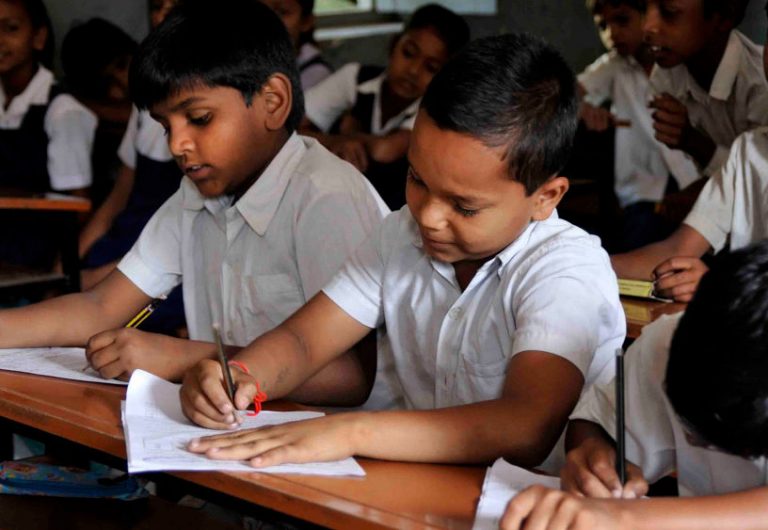
Mumbai: Indian states can now choose to hold children back in grades V and VIII if they fail the year-end tests, but this is not enough to improve learning outcomes, experts said.
Earlier, students could not be held back–or ‘detained’–until grade IX, under the Right of Children to Free and Compulsory Education Act, 2009 (RTE Act). This meant that students were promoted to the next grade even if their learning outcomes did not match their grade level.
The parliament passed an amendment to the RTE Act on January 2, 2019, empowering states to choose to detain students in grades V and VIII.
The amendment was introduced after 22 states demanded it, Human Resources Development Minister Prakash Javadekar told parliament’s lower house, the Lok Sabha, on July 18, 2018, adding that the no-detention policy had led to a scenario where there was a lack of responsibility towards quality of education.
“Schools, teachers, parents and students have become less responsible towards education,” Javadekar said when he moved the amendment in the Lok Sabha in July 2018. “Many schools have become ‘Mid-day-meal schools’. Students come to school, eat and go back home.”
As per the amendment, if a state decides to re-introduce detention in grades V and VIII, students who fail the year-end tests should be allowed a second attempt within two months of the declaration of results. A student can be made to repeat the grade only if he or she fails the second exam.
The amendment is aimed at improving learning outcomes in Indian schools, Javadekar said.
Numeracy and literacy standards remain sub-par and, in many instances, lower than standards recorded 10 years ago in 2008, IndiaSpend reported on January 15, 2019, based on the Annual Status of Education Report, 2018.
The percentage of rural children in grade V who can read text at grade II level fell from 52.9% in 2009, when RTE was introduced, to 47.8% in 2016, as per the Annual Status of Education Report (ASER), published by Pratham Education Foundation, a non-governmental organisation working to improve quality of education in India. The percentage of children who could solve a division problem fell from 38.1% in 2009 to 26% in 2016.
However, the rates have shown improvement recently. In 2018, 50.5% of grade V students could read a grade II level text, up by 2.7 percentage points from 2016. Similarly, 27.9% of grade V students could do division, up by 1.9 percentage points from 2016.
Some experts blamed automatic promotions introduced by the RTE in 2009 for the poor learning outcomes. “No-detention policy did affect the learning outcomes,” said Sudha Nair, headmistress of Shri Madhavrao Bhagwat High School in Vile Parle, a western suburb of Mumbai, “Automatically promoting a child irrespective of what he or she knows has led to students and parents taking the system for granted. This needs to change.”
Hailing the amendment as a good move, Nair said, “I don’t want the child to lose a year. If the child is not able to perform well in an exam, take a re-exam and promote him to the next class.”
However, some experts say the amendment puts the blame of failure completely on the child by penalising him with detention, without adequate focus on addressing the causes for detention such as underutilisation of funds, untrained teachers, vacant teacher posts and flailing school infrastructure.
“The consequence of detaining a child in the same class works adversely on the child’s psyche and has a deep impact on his or her self-esteem,” said Ambarish Rai, national convener of Right to Education forum, a platform of educational networks, teachers unions, NGOs and educationalists. “It’s a very unfortunate move which will impact all children, particularly those belonging to most marginalised communities leading to an increase in the number of dropouts,” Rai added.
The negative effects of repetition largely outstrip the expected benefits, a 2015 report by a sub committee under the Central Advisory Board of Education (CABE) said, adding that repetition leads to wasting of resources as it reduces the intake capacity of the grade the student repeats.
Experts agree that only reintroducing detention may not solve the problems.
There needs to be a shift in learning assessment methods, said Madhav Chavan, co-founder of Pratham Education Foundation. “There should be more focus on foundational skill learning and not just ‘completion of syllabus’. There should be focus on learning skills rather than memorising lots of information.”
Funds remain unutilised; cases of diversion and misappropriation noted: Govt’s auditor
In the last three years, the school education budget has increased in absolute terms, according to a December 2018 study by Centre for Budget and Governance Accountability (CBGA), a non-profit working towards transparency and accountability, and Child Rights and You (CRY), a non governmental organisation working for child rights. The study analysed education budgets of six states–Uttar Pradesh, Bihar, West Bengal, Chhattisgarh, Maharashtra and Tamil Nadu–for the periods 2014-15 to 2017-18 and found that despite increased funding, states have not utilised the budget to change the composition of their spending.
Poor planning and execution on the part of state governments had led to non-accomplishment of some goals under the RTE Act, a 2017 Comptroller and Auditor General (CAG) report on implementation of the Act noted.
There is no separate budget for RTE; it is funded through Sarva Shiksha Abhiyan (SSA or Education For All), a central government programme- now subsumed under Samagra Shiksha. Expenditure under the Act is shared between the Centre and the states in 60:40 ratio (60% of the expenditure by the central government) except for north-eastern states and Himachal Pradesh, Uttarakhand and Jammu and Kashmir, where the ratio is 90:10.
Some of the interventions under SSA include building of school infrastructure, provisioning for teachers, periodic teacher training and academic resource support.
The audit, which covered 3,370 schools in 112 districts across all states from April 2010 to March 2016, found that there were huge unutilised balance under SSA ranging between Rs 12,259.46 crore and Rs 17,281.66 crore at the close of each year.
The CAG also noted several cases of diversion, misappropriation of funds and irregular utilisation of grants at various levels.
Between 2010-16, Uttar Pradesh, reported an expenditure of Rs 47,403.24 crore ($7.24 billion) to the central government. However, the audited financials account for only 96.61% (Rs 45,797.05 crore or $6.99 billion) of the amount.
In Odisha, the audit found that 58 headmasters in five sampled districts had withdrawn and retained Rs 1.04 crore without executing 80 infrastructure works allotted to them. Similarly, in Bihar, headmasters of 234 schools in six districts had withdrawn Rs 12.06 crore meant for civil works–which remained incomplete.
Funds for the Research Evaluation Monitoring and Supervision programme–meant to undertake research activities, conduct achievement tests or evaluations and create a pool of resource persons at various levels for effective field-based monitoring–were being underutilised.
Also, underutilisation of funds under the Learning Enhancement Programme–which calls for child-centric curricular reforms–resulted in affecting the teaching-learning process, the report said.
Infrastructure goals which were to be fulfilled by March 2013 remained unmet even by 2016, the report found.
This is even as many schools remain short-staffed and lack basic infrastructure.
As of April 2014, there was a shortage of more than 500,000 teachers in elementary schools and 14% of government secondary schools did not have the prescribed minimum of six teachers, the CBGA-CRY report said. Bihar and Uttar Pradesh together account for more than 420,000 of vacant posts, while Tamil Nadu and Maharashtra reported recruitment in nearly 95% of the sanctioned posts.
Instead of recruiting regular teachers, states are in the process of deploying teachers or employing contractual teachers. The low recruitment rates or no recruitment situation is caused by the low fiscal space available, said the report.
This paucity of funds that the states face when it comes to teacher recruitments is because funding under SSA is conditional, said Protiva Kundu, senior research officer at CBGA and author of the study by CBGA and CRY. “Also, hiring permanent teachers requires the states to pay the salaries as per the pay commission and to provide the teachers with other benefits.”
Teacher salaries constitute the major share of school education budgets in Indian states, ranging from 60% (Chhattisgarh) to 82% (Maharashtra). But, it should be much higher than what it is, given the huge shortage of professionally qualified teachers, the study said.
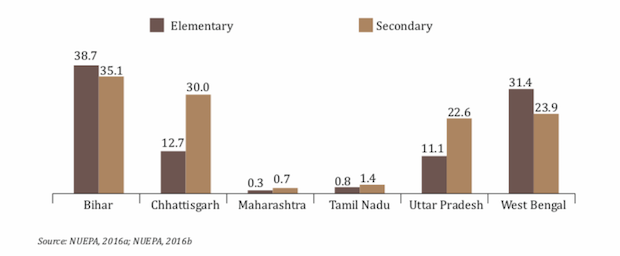
Further, of 6.64 million teachers at the elementary level, 1.1 million (16.5%) are still untrained.
Professionally Untrained Teachers, Statewise
After the RTE Act was enacted, the government addressed the issue of untrained teachers through in-service teacher training under Sarva Shiksha Abhiyan, instead of building institutional capacity for teacher education, the report said. Building institutional capacity is resource-intensive and states have not invested in it for long.
School infrastructure also plays a key role in provisioning of quality education. To create an enabling environment for learning, availability of basic infrastructure in school is a prerequisite.
However, across states, there are gaps in school buildings, classrooms, repair work in classrooms and other physical infrastructure such as drinking water, separate toilets for girls and playgrounds.
As of April 2016, only 34.9% of schools in Bihar and 40.5% in Uttar Pradesh had electricity.
There should be at least one teacher for every 30 students in primary schools (grades I-V) and at least one teacher for 35 students in upper primary (VI-VIII) schools. Further, there should be one classroom for each teacher in the school. As of April 2016, in Bihar, two in three primary schools had more than 30 students per classroom, and seven in 10 upper primary schools had more than 35 students per classroom, data show.
School Infrastructure At Elementary Level, By State
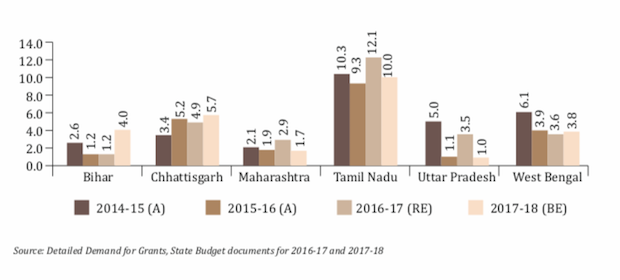
Despite the shortfall in basic infrastructure, there is no clear trend in resource allocation for infrastructure. While Bihar and Chhattisgarh increased their allocations, Uttar Pradesh and West Bengal reduced them.
Share Of Infrastructure In State Education Budget
“Along with better and efficient management of material resources, it is essential to address the issue of shortage in human resources to raise the quality of the education system,” said Priti Mahara, director, policy research and advocacy at CRY, “A substantially improved process of planning, smoothening fund flows, addressing bottlenecks in the fund utilisation process and constant monitoring can help bridge the gaps between resource needs, budget allocation and actual spending.”
“The no-detention policy was not balanced by a ‘high learning outcomes for all’ policy,” said Chavan of the Pratham Education Foundation, “This is why no-detention policy led to overall relaxation without adequate attention to the causes of detention.”
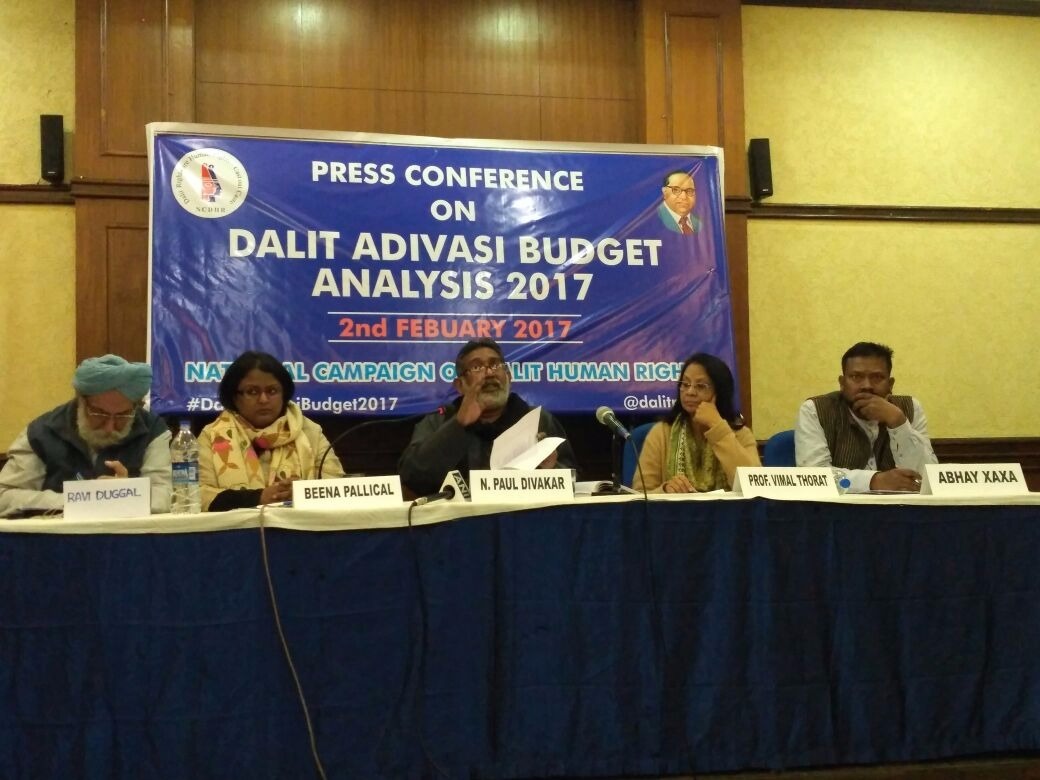
New Delhi: The Union Budget looks like a “very glossed over budget” for Dalits and Adivasis with reduction in allocations for key schemes, said National Campaign on Dalit Human Rights (NCDHR).
File Photo
“Although there is an increase in the allocation, there are several key schemes where the allocation has been reduced, like the post matric scholarship where it has been reduced to Rs.2926 crore starving the one scheme which will directly benefit the youth of the community…the gloss is only a ‘dhikhawa’”, said N Paul Divakar, General Secretary, NCDHR.
It is important to point out that in 2017, there was a fundamental shift made towards a ‘welfare model of SC/ST’, revamping Scheduled Caste Sub Plan and Tribal Sub Plan to Scheduled Caste Component and Scheduled Tribe Component (henceforth, SCC-STC). Following this shift, new guidelines were issued by Niti Ayog in December 2017 for earmarking of funds for Development Action Plan for SC & ST (AWSC & AWST) which have shed light on how the funds for development schemes for the SCs & STs have to be allocated by the concerned Ministries. These guidelines were not incorporated in the Union Budget 2018-19.
“The projections of historical increase in the allocations for SC are at 35.6% and 28% for ST’s this year hide several harsh realities we have to deal in this election year. The biggest take-away from Budget Speech of Interim Finance Minister is that it ignored its own ministry’s formulated guidelines of December 2017 which had laid very important series of norms for allocating and implementing schemes for SCs and STs. Allocations under CSS and CS towards SC and ST development are to be a minimum, and not less than their proportionate population, which according to Census 2011 is 16.6% for SCs and 8.6% for STs,” NCDHR said.
In the current year, Rs. 76,801 crore i.e. 8.16 % of the total eligible Central Sector Scheme & Centrally Sponsored Schemes is allocated for the SCs and Rs. 50,086 crore i.e. 5.34 % for the STs.
“The due share of the Scheduled Castes in SCC this year amounts to Rs. 1, 39,660 crore and for Scheduled Castes in STC is Rs. 75,987 crore. There are 9 new ministries / departments for SC’s and 3 for ST’s which are set to implement new programmes along with the existing ones. The share of Dalit & Adivasi women in the gender budget statement amounts to Rs. 6851.48 crore which constitutes 5.2 % of the total gender budget statement which is proposed to be of Rs. 1,31,699.5 crore,” NCDHR added.
The NCDHR analysis of last five-year trend of the Scheduled Caste Component plan shows that out of total allocation of Rs. 5,05,015 crore which is the mandate as per guidelines, only Rs. 2,29,243 crore has been allocated. And only Rs. 81,155 crore is a direct allocation, meaning directly benefiting the Dalits. A huge amount of Rs. 1, 48,088 crore has been allocated for non-targeted schemes which can hardly be of any direct benefit to the community.
Pointing out this trend, NCDHR said in the current year, “targeted or direct allocation under SCC amounts to Rs. 41391.41 crore out of Rs. 76,801 crore and Rs. 20167 crore out of Rs. 50,086 crore under STC. The trend of non-targeted allocations both in statement 10A and 10B continues unabatedly. Good schemes are getting punished and irrelevant schemes keep increasing. This year, out of 315 schemes for SC, 226 schemes are non-direct and without any strategy to give benefits to the community. Similarly, only 21 out of 324 schemes for scheduled tribes have potential to give direct benefits, while rest of them are general in nature. Huge amount of fund has been allocated under irrelevant schemes which amount to Rs. 35409.48 crore for SCC and Rs.29919 crore for STC. This means, under STC, 60% allocation is irrelevant and under SCC 47% allocation is irrelevant.”
Take for example the fact that Rs. 2,200 crore has been allocated towards Swacch Bharat Abhiyan from SCC and Rs. 1,000 crore from STC but less than proportionate allocation has been allocated towards ensuring alternative employment opportunity to the community engaged in manual scavenging. Similarly, an allocation of Rs. 30 crore has been done under the Self Employment Scheme for Rehabilitation of Manual Scavengers and allocation of Rs. 35 crore has been done for the National Safai Karamcharis Finance & Development Corporation.
But more worryingly, massive amount of allocation amounting to Rs.1823.32 crore has been allocated under the Department of Telecommunications and Rs. 3,166 crore has been allocated under the Department of Higher Education which involves major diversion of funds towards setting up and supporting IIT’s, IIM’s, IISER,NIT and others.
The following demands were made by NCDHR during its press conference:
National Legislation: The policy of allocation of funds is hanging loose post-merger of Plan-Non Plan scenario. This must be legislated and machinery established not only to bridging the gap but for ensuring financial inclusion.
Manual Scavenging: Increase allocation for manual scavenging to ensure that this practice is totally eliminated and adequate mechanisms should be in place to monitor and track the effective use of the funds.
Gender Justice: A special component for the Dalit women should be allocated within the scheduled caste component and Scheduled Tribe Component. Innovative schemes like the Nirbhaya Fund for the survivors of sexual assault, schemes for the socio-economic rehabilitation of the survivor of atrocities and their families should be ensured, by providing housing, livelihood support, education facilities and safety including free legal aid to survivors of atrocities.
Planning with Community: For the new ministries which will now earmark allocations under the sub-plans, there need to be new schemes planned and designed for providing direct benefits for the SC & ST communities.
Access to Justice: Adequate budgetary allocations to ensure that both punitive and pecuniary measures are in place to prevent the high incidences of violence and atrocities that are taking place on Dalits and Adivasis. Special Courts for speedy trial of cases related to Dalit & Adivasi community. Increased compensation amount to be given to victims of caste and ethnicity-based atrocities. Schemes for the socio-economic rehabilitation of the survivor of atrocities and their families should be ensured, by providing housing, livelihood support, education facilities and safety including free legal aid to survivors of atrocities.
Appoint teachers in the government schools, specific /special schools for ST and SC such as the Eklavya Model Schools, Kasturba Gandhi Vidyalaya;
Legislate and Implement the Bill – Prevention of All Forms of Discrimination and Violence against Children in Educational Institutions.
ensure prevention of all forms of discrimination and violence in primary, secondary, senior secondary schools, anganwadis and hostels
Empowered Nodal Ministries: Though Nodal
Ministries for SC funds – MSJE (Ministry for Social Justice Empowerment) and for ST funds (Ministry of Tribal Affairs) are appointed, there needs to be sufficient resources allocated for an efficient machinery capable of implementing the plans for SC ST welfare and development. Nodal ministries should be empowered to take strict penal measures against the defaulting Ministries and Departments.
Jignesh Mevani and Sai Balalj argue why substantial section of the youth are going to vote against the Narendra Modi and Amit Shah led Bhartiya Janta Party
Interview with Jignesh Mevani, N Sai Balaji Interviewed by Paranjoy Guha Thakurta
Jignesh Mevani and Sai Balalj argue why substantial section of the youth are going to vote against the Narendra Modi and Amit Shah led Bhartiya Janta Party.
After a high tension day, Prof. Anand Teltumbde has been released by Special Court in Pune and has protection as per SC order till February 11. As per lawyers, the court held the detention “illegal”. This comes as relief to his family and supporters who were thrown into a complete state of shock with the arbitrary arrest.
The Pune police arrested Prof. Teltumbde from Mumbai airport today at 3.30 am from Mumbai airport. The arrest took place despite a Supreme Court order which granted him interim protection till February 11.
Prof. Teltumbde has been charged with the draconian Unlawful Activities Prevention Act (UAPA) by the Pune police. Police had alleged that he had links with Maoist organisations and that his name surfaced during the enquiries made into violence that erupted at Bhima Koregaon on January 1, 2018.
Yesterday, Prof. Teltumbde’s Anticipatory Bail Application (ABA) was rejected by the Pune sessions court. On December 21, Bombay High Court dismissed the petition filed by Prof. Teltumbde. Later, it was challenged in SC but the SC too dismissed the petition.
In an open letter after his petition was dismissed in the SC, Prof. Teltumbde had said, “There is not an iota of unlawfulness in either my voluminous writings or selfless activism. Rather, my entire academic career and corporate career of nearly four decades has been without a single blemish and is an exemplar of integrity of the highest degree”.
Prof. Teltumbde received widespread support from various national, international organisations, individuals, students, and many others. Over 90 organisations, 50 institutions and intellectuals including Noam Chomsky, Jean Dreze, Sukhdeo Thorat, Vimal Thorat, Cornel West and Chirstophe Jaffrelot have written to UN secretary general Antonio Guterres asking him to intervene and withdraw the ‘fabricated charges’ against Anand Teltumbde. Terming the charges to be “one of the severe most human rights violations” against freedom of speech and dissent, the letter by international civil rights activists said “We therefore urge the United Nations to engage with the Government of India to immediately withdraw all charges against Dr. Teltumbde and oblige in serving justice and protecting democracy from the perils of tyranny.”
After his arrest today morning, various left and Ambedkarite organisations have expressed their shock, outrage and dismay at this complete disregard of SC order of interim protection and relentless hounding of Prof. Teltumbde.
Twitter was enraged with his illegal arrest with hashtag #AnandTeltumbde trending for several hours in the morning. Noted activists, lawyers, writers such as Teesta Setalvad, Indira Jaising, Siddharth Verdarajan, Jignesh Mevani tweeted on the arrests.
Prof. Teltumbde was being produced in the Sessions Court at around 2 pm today. His wife Rama and advocate and Dalit leader Prakash Ambedkar were in court. High Court senior counsel Mihir Desai told Sabrangindia that the anticipatory bail application will now be filed in the Bombay High Court on Monday.
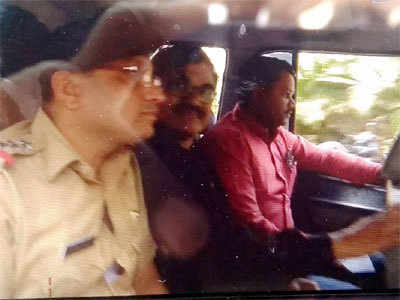
The Pune police arrested writer, intellectual and academic Prof. Anand Teltumbde from Mumbai airport today at 3.30 am from Mumbai airport. The arrest took place despite a Supreme Court order which granted him interim protection till February 11.
Image Courtesy: V Sreenivasa Murthy / The Hindu
The news was confirmed by Adv. Pradeep Mandhyan of the Bombay High Court who spoke to Inspector Indulkar from Pune. Inspector Indulkar arrested Prof. Teltumbde from the airport. Indulkar claimed Prof. Teltumbde was being arrested since his bail had been rejected by the Pune trial court.
Earlier, Prof. Teltumbde was charged with the draconian Unlawful Activities Prevention Act (UAPA) by the Pune police. Police had alleged that he had links with Maoist organisations and that his name surfaced during the enquiries made into violence that erupted at Bhima Koregaon on January 1, 2018.
Yesterday, Prof. Teltumbde’s Anticipatory Bail Application (ABA) was rejected by the Pune sessions court. On December 21, Bombay High Court dismissed the petition filed by Prof. Teltumbde. Later, it was challenged in SC but the SC too dismissed the petition.
Summary of Teltumbde’s petition In an open letter after his petition was dismissed in the SC, Prof. Teltumbde had said, “There is not an iota of unlawfulness in either my voluminous writings or selfless activism. Rather, my entire academic career and corporate career of nearly four decades has been without a single blemish and is an exemplar of integrity of the highest degree”.
Prof. Teltumbde received widespread support from various national, international organisations, individuals, students, and many others. Over 90 organisations, 50 institutions and intellectuals including Noam Chomsky, Jean Dreze, Sukhdeo Thorat, Vimal Thorat, Cornel West and Chirstophe Jaffrelot have written to UN secretary general Antonio Guterres asking him to intervene and withdraw the ‘fabricated charges’ against Anand Teltumbde. Terming the charges to be “one of the severe most human rights violations” against freedom of speech and dissent, the letter by international civil rights activists said “We therefore urge the United Nations to engage with the Government of India to immediately withdraw all charges against Dr. Teltumbde and oblige in serving justice and protecting democracy from the perils of tyranny.”
After his arrest today morning, various left and Ambedkarite organisations have expressed their shock, outrage and dismay at this complete disregard of SC order of interim protection and relentless hounding of Prof. Teltumbde.
The Pune police had also arrested Adv. Surendra Gadling and poet Varavara Rao in a 2016 case even as they were already in the Yerwada Central prison after they were arrested in June and October respectively, all allegedly in connection with the Bhima Koregaon case.
The Polit Bureau of the Communist Party of India (Marxist) condemned the arrest of Anand Teltumbde saying, “It may be noted that the Supreme Court of India has granted this renownedscholar four weeks protection from arrest to enable him to obtain bail. That protection period ends only on 11th February.” Criticising the government, it said, “This shows the highly vindictive policy of the BJP government led by Modi against anyone who is critical of their disruptive communal agenda. In the name of combating ‘urban naxals’ the Sangh Parivar game plan of launching a witch-hunt against human rights activists and secular and progressive scholars cannot be tolerated.” The CPI (M) has called upon all democratic and secular forces to strongly protest against this anti-democratic authoritarian assault on freedom of association and expression.
Twitter was enraged with his illegal arrest with hashtag #AnandTeltumbde trending for several hours in the morning. Noted activists, lawyers, writers such as Teesta Setalvad, Indira Jaising, Siddharth Verdarajan, Jignesh Mevani tweeted on the arrests.
Prof. Teltumbde is being produced at 2 pm today. His wife Rama and Adv. And Dalit leader Prakash Ambedkar will be in court.