This is the first in the two-part series on the much-forgotten Malabar Struggle and stories of ghastly violence committed by the British in the region around 1921. I Sameel, the author of this article, also looks at why and how such incidents were ‘left out’ or/and ignored by our mainstream historians. This article was originally published by Madhyamam Weekly on October 8, 2018. The article has been translated from Malayalam by Najiya O of TwoCircles.net. 
The Malabar Struggle is a critical time space in the Indian freedom struggle. The different angles of viewing the struggle are evident in the terms of Mappila Rebellion and Malabar Revolt etc. The Malabar Struggle has been significant in influencing the creation of the ‘common’ conscience of ‘modern Kerala’, determining the path of the Indian nationality and the formation of the social identity of Malabar, according to EV Ramakrishnan in Malabarine Kandethal: Padanam, Malabar Desheeyathayude Idapadukal (DC Books, 2008). However, the Malabar Struggle still remains a critical timespace in the history by the different ‘looks’ mentioned above.
The official statements regarding the Indian freedom struggle either kept silent on the popular protests related to Malabar or mentioned them only casually. There are no evidences for even the Wagon Tragedy, which received a bit more public visibility compared to other incidents related to the Malabar Struggle, to have deeply touched the conscience of Malayalis (EV Ramakrishnan – Page 13). Questions are arising as to why the incidents that led Malabar to a battlefield for nearly a century did not receive the deserving relevance in the historical conscience of Malayali. Even the Wagon Massacre (named as Tragedy in history) gained visibility only through the popular cultural media, including the cinema. As MT Ansari points out in ‘Malabar: Desheeyathayude Idapadukal’ (DC Books, 2008) “Only the Wagon Tragedy of November 20, 1921, can be seen in the nationalist history lessons. As if all the other incidents, whether of Muslims or Hindus, insult us. However, we do not conceal the Jallianwala Bagh massacre of April 19, 1919 (379 people were killed on the orders of General Dyer, according to official records) and the Chauri Chaura incident in which angry peasants burnt alive 23 policemen on February 5, 1922. Compared to the Malabar Revolt (2,337 people killed, 1,652 injured and 45,404 imprisoned in the Malabar Revolt as per official records – and according to unofficial records, 10,000 were killed, 50,000 imprisoned, 20,000 exiled and 10,000 found missing), other incidents are limited in extensiveness.”
Just like the Malabar Revolution was ignored by the national historical studies, it can also be seen that some significant incidents in it were ignored or only casually mentioned even in the special studies related to it. Important among them is the massacre by the British at Melmuri-Adhikarithodi in Malappuram. This incident comes second only to the bloody Pookkottur battle in the number of people killed among the various incidents in the Malabar Rebellion. While more than 350 people lost their lives at the Battle of Pookkottur, the massacre at Melmuri-Adhikarithodi took the lives of 246 people on October 25, 1921. People including women, children, aged and sick people were forced out of their houses, lined up and shot dead by the Dorset Regiment, an infantry regiment of the British army. However, it has not found a place in the public history. Some incidents including the Melmuri-Adhikarithodi massacre have been totally neglected from the general readings about the violence of the colonial government and massacres that took place in Kerala. And hence, more detailed studies should be carried out about the massacres that took place in Kerala, especially Malabar, during the colonial rule.
Massacres: the seen and unseen
It can be seen clearly that the Punnapra-Vayalar struggle (a communist uprising in the princely state of Travancore, British India, against Prime Minister, C. P. Ramaswami Iyer and the state in which around 1,000 people were allegedly killed) has got much importance in the public readings and history in the studies related to the massacres in Kerala. Though the massacres in the Malabar Revolution including the Pookkottur Battle have been exceptional considering the nature of the struggle and power of the enemy etc when compared to the Punnapra-Vayalar struggle, they are given only lesser attention in the public readings.
The Punnapra-Vayalar incident as such is considered a central theme in the history of struggles in Kerala. But such a position is not given to the Mappila struggles in Malabar in which thousands of people have died. The Melmuri-Adhikarithodi massacre has not become a central theme for even the studies about the Malabar Struggle.
There have been studies on whether the massacres related to the Malabar Revolution were part of the national history or not; but even those studies have not probed into the government terror involved. Such a probe would be possible only through the historiography centred on these massacres. This article is an effort to discover the material causes and archives from the memory of people and historical remnants of this region for such a historiography. And this effort is relevant as the historical narration of the Malabar Struggle should go beyond the colonial records of RH Hitchcock, GRF Tottenham, CT Atkinson and Divan Bahadur C Gopalan Nair as well as the studies carried out by Dr M Gangadharan and Dr KN Panicker.
The second biggest massacre
“Large gang reported last night 4 miles north-west Malappuram. Operations undertaken against them by Dorsets, Artillery and armoured cars. Enemy met in jungle west of Melmuri opposing our troops there and in the houses, refusing to come out when ordered to surrender and offering continued and determined opposition resulting in 246 rebel casualties.” This was the content of a Telegram [No.S 250/453/G] sent by the General Commanding Officer of Malabar to the Madras Government on October 25, 1921. (GRF Tottenham – ‘The Mappila Rebellion 1921-1922’, Madras Government Press, 1922)
Innocent women and children along with old and sick people were forced out of their houses and shot dead, houses looted and set on fire by the British army’s Dorset Regiment. This took place in the places named Konompara, Adhikarithodi, Melmuri Muttippadi and Valiyattappadi, in a 1.5 kilometre circumference on the Kozhikode-Palakkad national highway, which is 3 kilometres from Malappuram town. This is the Melmuri-Adhikarithodi massacre that took place on October 25, 1921. The soldiers in the companies A and D in the second battalion, Dorset Regiment, reached Konompara in armoured vehicles with cannons under the leadership of Lieutenants Hevic and Goff in the morning and massacred 246 people.
Cannon balls were fired in the beginning with a big sound, said Nambankunnan Moideen of Melmuri Valiyattappadi who was born 10 years after the incident. The frightened people hid in their homes. Then the army entered each and every house and forced everybody out. Those who refused to get out of their houses were forced out by hitting and torturing with the stock and bayonet of guns. Wooden storage boxes named ‘mancha’ and ‘pathayam’ were broken and the contents looted. Books including the Qur’an, Sabeenappattu (Arabic songs praising prophet Muhammed), baiths (Arabic songs), padappaattu (war songs) etc were piled up in the yard and set ablaze, and then the houses roofed by palm leaves and grass were set on fire. Then all the men were lined up and shot dead one by one. Those who tried to prevent, including women and children, were also shot dead. The operation which began in the morning came to an end by the long siren of the Army Commandant around noon. The army was aiming the gun at Chalattil Kalladithodi Moideenkutty Haji on a sideway at Konompara when the long whistle blew and they let him free, said PT Muhammed Master who was four years old at the time and died recently. (Nisar Kaderi – ‘Pookkottur Yuddhavum Melmuri Operationum’, ‘1921 Churul Nivaranam’ – Pookkottur Yuddha Smaraka Samithi Souvenir, 2007)
Hundreds of people were killed in the orchards and courtyards, and about 100 houses were set ablaze in the operation of a few hours. Some remained in a critical situation as good as dead after having been shot. There were some others who lay abandoned for about four days and then died as there was nobody to take care of them. The martyrs were buried in the places they lay dead.
The graves in the courtyards
Though most of the studies on the freedom struggle and the Malabar struggle kept silent on this massacre, the graves played an important role in keeping the incident alive in the memories of the region and the generations that followed. Those who were shot dead in the courtyards in front of the houses were buried there itself. The burial was completed by the people who came from nearby places on the request of Kunjithangal of Malappuram Valiyangadi, the president of the Malappuram Khilafat Committee.
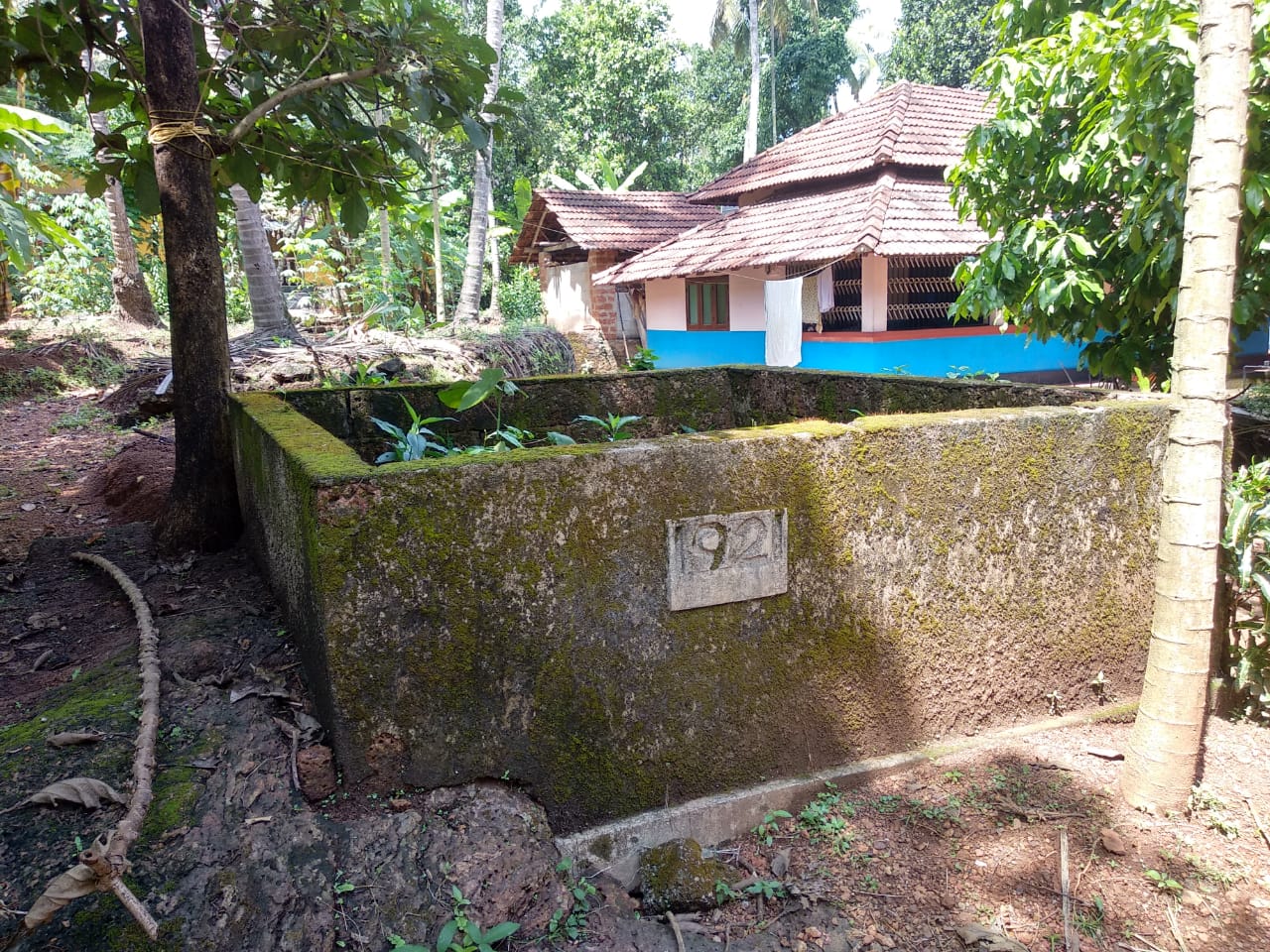
Many people have been buried in a single grave. Many were buried in the dead of the night out of fear of the army. While some were buried in the laterite stone quarries (Kalluvettukuzhi) near the houses, in some places women alone dug graves and buried the dead. Women had to do the burials, which is the duty of the men according to the Islamic belief, as all the men in the locality had fled fearing the army. One of the graves dug by women, which is only 2 feet in depth, is still there. Now we have information about only 40 people buried in nine graves out of the 246 martyred.
Daughters shot dead for their fathers
Most of the cruelties done to women, children and the aged by the British army during the Malabar Revolution haven’t been included in the public historical narratives. What the women, children and the aged experienced at the Melmuri-Adhikarithodi incident were cruelties violating the common norms to be followed even during war time. Among the graves are those of two daughters who were killed while trying to prevent the army taking away their fathers.
One of them is an 11-year old from the Keedakkadan family at Adhikarithodi. She was beaten by gunstock when she tried to prevent the British from taking away her father from their house, holding him tight. When they couldn’t take her apart from the father even after several attempts, the army killed both of them together. It is said that they were visiting the girl’s mother’s house.
The other one is Kadiyamu, daughter of Areeppuram Parakkal Kunjeen Haji of Konompara Cheeranganthodi. Kadiyamu had come from her husband’s house to take care of her sick and aged father. The army tried to push her off too with gunstock when she tried to prevent them dragging off her aged father who was lying on the big wooden storage container (pathayam). At last, Kunjeen Haji was forcefully taken off to the eastern yard of the house and laid on his front on the ground. Kadiyamu lay on her father to prevent him from getting shot. Finally, both were shot dead. Our pages of history couldn’t document these two brave daughters. And this can be read as evidence for the selected silence of the public mind towards Mappila history and Mappila woman.
While the common historical narrations kept silent about the Melmuri-Adhikarithodi massacre, this history was documented at least to some extent by the Qissappattu, a type of songs popular among the Malabar Muslims earlier. One of them is the work of Yogyan Hamsa Master, a Qissappattu expert. This is found in the ‘Abdurahman Qissappattu’ which he wrote about freedom fighter Muhammed Abdurahman Sahib:
“Lahalakkaar Melmuri parisaramil undarivaal
Lahika padayalar vanna aayudhamaale – avaril
Shatham mail aavaasethum balliya thokkum
Shakthamerum peerankiyum bayanettum bombum
Shabdamilla thuppaakkiyal vedivech chirichum
Lakkum lagaanumilla nattare vadhichum.” (Yogyan Hamsa Master – Page 51)
(*The army came to Melmuri with weapons including cannons, guns and bombs, learning of the presence of mutineers, and laughed and killed people with silenced guns without any heed)
This article was first published on twocircles.net