Home Blog Page 1658

US political candidate Padma Kuppa endorses Hindutva agenda of supremacy

0
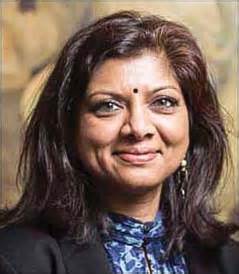
The news that Padma Kuppa, an Indian-American is running for Michigan’s State House of Representatives, has raised concern among the other Indian Americans because of her right winged ideologies.

Her writings reflect shades of Hindu nationalism and anti Muslim and anti-Christian stance. She is said to support   Indian laws which criminalize people who change their religion without government permission which is a direct violation of the fundamental constitutional right of religious freedom.

Through her writings she has clearly explained her beliefs. One can see the kind of communal feelings she harbours when she writes about conversion of people into Christianity saying that this actually makes the Hindus intolerant and defensive. Besides she attributes westernization of daughters to conversion to Christianity which is worrying other Indian Americans.

Kuppa has even called the 2002 pogrom of Muslims in Gujrat as “retaliatory violence in Gujarat, where both Hindus and Muslims were killed.”   But the Human rights watch findings say that it was anything but spontaneous. The 2002 genocide was state sponsored according to the HRW findings.

“Padma Kuppa’s support for Indian laws which criminalize people who change their religion without government permission is an assault on the fabric of a free society,” remarks Arvin Valmuci, a spokesperson for Organization for Minorities of India (OFMI). “The United Nations and the U.S. State Department have warned about these laws, which lead to violence and pogroms, especially against Indian Christians. But it doesn’t matter to Kuppa: she’s busy demanding American votes and seeking the $70,000 salary of a Michigan state representative.”
In 2018, watchdog group Open Doors USA ranked India as the world’s 11th most dangerous country for Christians, with radical groups and organizations like Rashtriya Swayamsevak Sangh (RSS), Shiv Sena and Vishwa Hindu Parishad (VHP) and even  the Bharatiya Janata Party (BJP) being behind the persecution of Christians.

“Laws which empower the government to permit or deny a person’s right to convert are the very definition of a denial of religious freedom,” says Valmuci. “Yet there is much more about Kuppa that worries us. Not only does she excuse intolerance in response to people exercising their right to free speech by promoting their religion, but Kuppa glamorizes Hindutva and justifies Prime Minister Modi’s 2002 Gujarat Genocide, which killed thousands of Muslims.”

The United States Commission on International Religious Freedom (USCIRF) has said that Hindutva is an ideology “which holds non-Hindus as foreign to India.”

Since the BJP took power in 2014, there has been a sharp rise in violence targeting religious minorities as well as India’s 200 million Dalits (formerly known as Untouchables or outcastes). According to 2018 reports by HRW, “Vigilante violence aimed at religious minorities, marginalized communities, and critics of the government — often carried out by groups claiming to support the ruling Bharatiya Janata Party (BJP) — became an increasing threat in India in 2017. The government failed to promptly or credibly investigate the attacks, while many senior BJP leaders publicly promoted Hindu supremacy and ultra-nationalism, which encouraged further violence.”

However, Kuppa contradicted HRW by dismissing these concerns. According to her religious conversion is far greater a threat than nationalism.”

Balbir Singh Dhillon, the current president of West Sacramento Sikh Gurdwara shared his experience when he was on a pilgrimage to holy sites in India and Pakistan in 1996, he was arrested under false charges, jailed for three months, and tortured. “If I wasn’t an American citizen, I would have been killed for my faith,” says Dhillon.

He was only released after over 50 U.S. congressional representatives signed a letter to the U.S. State Department which pressured India to admit it had no proof he committed any crime.

He further added that Padma Kuppa’s support for anti-conversion laws is a great offense to the First Amendment freedom of religion we have as Americans,”These anti-conversion laws treat people who just want to change their religion like criminals. I know from my own experience of fleeing religious persecution in India that it puts religious minorities in danger to require them to ask the government for permission to convert.”

Besides endorsing anti-conversion laws, Kuppa approves  Ghar Wapsi,”as well which she calls “the effort to bring Hindus ‘back to the fold.’” Like all the Hindutva nationalists she too believes that all Indians were once Hindus and now they need to come back to Hinduism
 “We’re deeply concerned that Kuppa embraces the idea that Indian equals Hindu,” says Maryam Mirza, a Kashmiri Muslim from Michigan. “She has called herself an ‘ethnic Hindu,’ which is not a real thing, and says that India’s Republic Day is part of the Hindu religious heritage — can you imagine a candidate calling America’s Independence Day part of their Christian heritage? She defends use of the ‘Hindutva’ word, and I’ve seen she even quotes from sources like Koenraad Elst, an Islamophobic writer who wants to uproot Islam from India.”

Furthermore, Kuppa writes, “While I often use the term Hindu-American to identify myself, I am nearly as likely to use the term Indian-American. The two terms have much overlap for me as an ethnic Hindu, since faith and culture are so intertwined.” She adds, “India and Hinduism are so intertwined that I must reconsider the importance of celebrating India and in identifying as an Indian-American.” She additionally claims that “proud Hindus of Indian origin” can “celebrate India’s Republic Day as part of their religious heritage.”

In another article, she criticizes an event where Hindu women wore hijab while Muslim women wore sari. “There are many women in America who choose to wear a hijab, but there are activists who don’t – voices from within who may push beyond what people in the Islamic community want to hear,” she writes. “There is in fact no choice for Muslim women in many parts of the world about wearing not only a hijab, but a burka.” Saying the activists should not “sell out” by wearing hijab, she claimed that Muslim women “cannot escape a culture that oppresses them.”

“Kuppa’s writings appear to be lifted directly from the RSS’s talking points.

Valmuci concludes, “Does America truly want or need elected representatives who pen apologetics for religious nationalists, endorse the Hindutva agenda of supremacy, and justify violence against religious minorities and marginalized peoples?”

Courtesy: Two Circles
 

JICA rules violated to power Bullet Train in India, activists submit memorandum

0

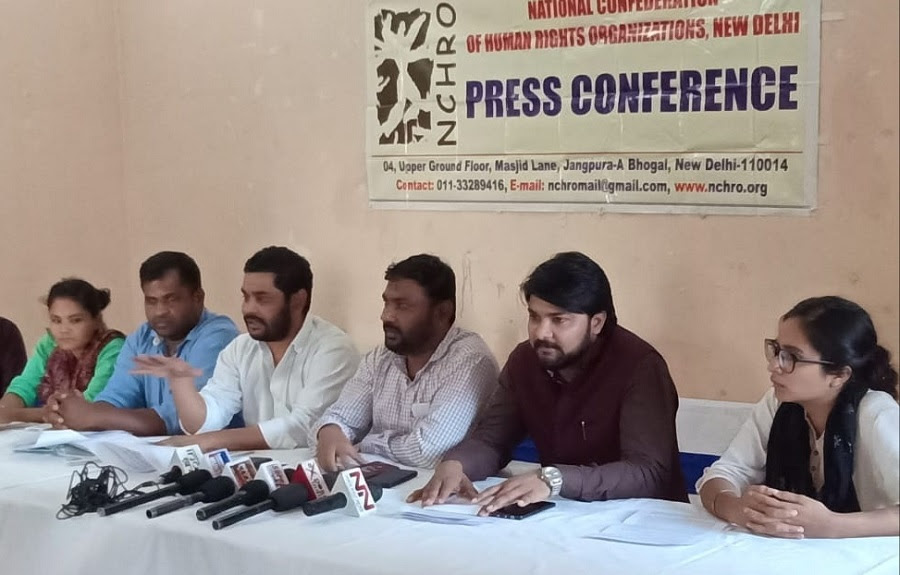
Bhumi Adhikar Andolan submitted a Memorandum signed by representatives of 12 major political parties to JICA, to reiterate gross violations in Bullet Train Project. Farmers, Adivasis and other affected communities demanded to scrap the project and detailed the attack on their democratic rights.


New Delhi: While PM Modi has gone on to visit Japan and will be discussing various strategic projects with the Prime Minister of Japan including the controversial Bullet Train project, the farmers, Adivasis and other affected communities of the proposed project reiterated their demands to scrap the project and submitted a memorandum to Japan International Cooperation Agency (JICA) with the details of gross violations of their guidelines.
 
The Bullet Train project is an ambitious project for the current government and PM Modi is believed to be taking a personal interest and falsely promoting it as a developmental project for the people of the country. The socio-economic effect of the project has been much debated in public forums by various academicians and activists. The impact will be irreversible for the Indian economy as well as the environment. The farmers are losing land not only in Bullet Train Project but various other highway projects when there is an Indian Railway line already running parallel to the Bullet Train blueprint.
 
“In the name of infrastructure development, the government is attracting foreign investment. But the question remains, at whose cost are these projects being initiated?”, asked Ulka Mahajan of Sarvahara Jan Andolan. She also articulated the peoples’ frustrations while stating that it’s the common people, the farmers of the country who carry the burden and face the brunt of such “development” projects. She stated that the need of the hour is to remove fear, hunger, poverty and the divisive politics from the country instead of such pointless, so-called, development projects.
 
The Modi government has diluted the law to acquire land, denying the consent and social impact assessment provisions laid out in the central land acquisition act of 2013. Even after being tagged as a national project, the state laws are being used to subvert the democratic rights of people of Gujarat and Maharashtra state, by using the powers of a majority in Gujarat assembly.
 
The public consultations could not have been more farcical. In the name of public consultations, officials intentionally put out notifications just 24 hours before the consultations to prevent the people’s voices and critics of the project from expressing their discontent. The people were deliberately classified as authorized and unauthorized for the consultations and were prevented from participating with the use of police forces.
 
Over 12 major political parties have extended their full support and solidarity with the people of both the States against the project. Earlier, during the Jan Manch in Delhi held this month, political parties termed the project anti-people, anti-farmer, and anti-worker in nature. The project is only facilitating a few rich conglomerates. The need of the hour is to invest in the Indian Railways which actually caters to the larger public, unlike the Bullet Train. When the fundamental infrastructure is not yet in place, a project like this for a small distance is unjustified and is a distortion of the people-centred development.
 
The government of Japan and JICA must listen to the people of India and stop funding the project to protect the environment and democratic rights of the people. The impact of the said project will be irreversible and the people of India strongly believe that a country like Japan, which has already faced the wrath of nuclear warfare will not want to be remembered for such a destruction.

The memorandum was sent to Shinichi Kitaoka, President, JICA, Junichi Yamada, board member in charge of South Asia and an Indian representative of JICA India, the memorandum has been endorsed by DP Tripathi (Nationalist Congress Party), Danish Ali (Janta Dal- Secular), Somnath Bharti (Aam Aadmi Party), Manishankar Aiyar (Indian National Congress), Nawalkishore (Rashtriya Janta Dal), Javed Ali (Samajwadi Party), Raagesh (Communist Party of India-Marxist), D Raja (Communist Party of India), Raju Shetty (Shetkari Swabhiman Sangathana), VM Singh (Rashtriya Kisan Mazdoor Sangathan), Prem Singh (Communist Party of India-ML), and Dr Suraj Yadav (Loktantrik Janata Dal).
 
Copy of the memorandum is attached below

Full text of the memorandum below: 

Date: 15-10-2018
 
To,
 
1. Shri Shinichi Kitaoka
The President
Japan International Cooperation Agency (JICA)
1-6th floor, Nibancho Center Building,
5-25 Niban-cho, Chiyoda-ku, Tokyo 102-8012, Japan
 
2. Junichi Yamada
 Board Member, JICA &
Incharge of South Asia Department
1-6th floor, Nibancho Center Building,
5-25 Niban-cho, Chiyoda-ku, Tokyo 102-8012, Japan
 
3. The JICA representative (India)
 16th Floor, Hindustan Times House,
18-20, Kasturba Gandhi Marg,
New Delhi – 110001. INDIA
 
Subject: Bullet Train affected farmers from Maharashtra and Gujarat adopt resolution in presence of representatives from various political parties, Farmers organisations, and other Human rights organizations.
 
Sirs,
 
The affected farmers, Adivasis (indigenous people) and other affected persons came together today in Delhi at a Jan Manch (peoples’ forum) jointly organised with Bhoomi Adhikar Andolan (a group of organisations working on land and livelihood rights of people) at Mavlankar Hall, Constitution Club, Rafi Marg, New Delhi.
 
Political parties viz. – Indian National Congress, Nationalist Congress Party, Samajwadi Party, Janta Dal (Secular), Rashtriya Janata Dal, Communist Party of India, Communist Party of India(M), Communist Party of India (ML), Aam Aadmi Party, Janata Dal (Loktantrik), SUCI, Swabhiman Shetkari Sanghatana, Rashtriya Kisan Mazdoor Sangathan, were represented by their senior members.
 
During the Jan Manch affected people presented their concerns and experiences regarding implementation of the Mumbai – Ahmedabad High-Speed Railway project (popularly known as Bullet Train).
 
The major issues highlighted during the Jan Manch were that the JICA guidelines for Environmental and Social Considerations are being consistently flouted by the project implementers. As per the said Guidelines, JICA is to assure fairness to the socially vulnerable, reduce the gap between the rich and the poor, reduce the gap among various regions, ensure democratic decision making and information transparency and most importantly, respect for human rights. However, all these are being violated as listed below:
 
1. The acquisition of land for the Project is taking place forcibly and thus by disregarding the Human rights of the affected population. The excessive use of police force at all levels – during consultations, during land measurement surveys, discussions etc. vitiates the atmosphere and puts tremendous pressure on the affected population.
 
2. In Maharashtra, despite the stated position that land will be obtained only through a process of mutual negotiation and that joint measurement of land will take place only after the affected person assents in writing, in reality, a process of forcible take-over is taking place. In Village Kotbi (Palghar district), Notices for Joint Survey of land were issued to people on 5/10/2018 despite the fact that most of them had not given their consent in writing for the same.
 
3. The JICA guidelines with respect to Indigenous Peoples are being violated. The JICA guidelines specifically mention that the rights of the Indigenous People in relation to land and resources in accordance with the spirit of the UN Declaration on Rights of Indigenous Peoples shall be respected. Art 10 of the Declaration states that Indigenous People shall not be forcibly removed from their land. Whatever be the reason, no relocation shall take place without the free, prior and informed consent of the Indigenous People concerned. Also, viable Alternatives are to be explored. However, all these safeguards are being violated in the Scheduled Area (predominantly inhabited by indigenous people) through which the Bullet Train passes.  India may not be a signatory to the UN Declaration, but for JICA, failing to fulfil the provisions of the UN Declaration is non-negotiable.
 
4. Environmental and Social Consultations as mandated by the JICA guidelines are carried out in a manner as to ensure that people are unable to participate in an informed manner:
 
a. The consultations are announced at a very short notice to the concerned stakeholders. The advance notice period has varied from 24 hours (1 day) to a few weeks.
 
b. There is no coherent approach to the announcement of stakeholder consultations. At times they are announced for district level and sometimes they are conducted at Taluka levels.
 
c. There is no clarification to the stakeholders invited to the consultation whether they should represent on Social concerns or on Environmental issues. In fact, purposely confusions are created. Different public advertisements are published by NHRSCL at the same venue and same timing, but for a different purpose.
 
d. In the case of Environmental Consultations, the Supplementary EIA copies are kept for public viewing at different places which are hundreds of kms away at offices of NHRSCL. The nearest place is the District Collector office, which in some cases is about 30 kms away. Even these were not made available during consultations in most districts of Gujarat.
 
e. Most of the reports are available in the English language, while they should be made available in the local vernacular language for the public to be able to read through and understand, and subsequently participate through an informed representation.
 
f. Farmers/ affected indigenous population (who are mostly illiterate or semi-literate) are disallowed to raise questions/queries.
 
g. Environmental activists/experts are deliberately shunned out of the consultation venue with use of police force. This is a violation of basic human rights of the people. And stakeholders are left with no choice to consult or assist during the consultation.
 
h. Even farmers and local civil society organisations and other social/environment groups are kept out of the process.
 
i. Elected representatives who can potentially raise uncomfortable queries regarding the project are man-handled and taken away before the start of consultations. The Surat consultation is one such example.
 
j. The queries raised during the consultations are very casually addressed and there is no written response to the submissions or oral queries raised at the consultations.
 
k. The minutes of the consultations are yet to be made public. Neither has the video documentation been made public. These are necessary for a transparent process. Letters seeking copies of the minutes are yet to be responded to.
 
l. In Maharashtra, the consultations on 2/5/2018 and 2/6/2018 in Palghar district were organised but cancelled by the district administration itself due to lack of proper organising and non-availability of necessary information/documents respectively NO consultation has been held subsequently. However, the district administration has sent a report to the concerned authorities that the Public Hearing has been completed. This is a blatant lie and misrepresentation of facts.
 
m. As if it was not enough the recent announcement for the Stakeholder consultations for districts of Navsari and Valsad (both in the state of Gujarat), went one step further. They published an invitation in local newspapers for the Consultations specifically mentions that ‘unauthorized people would not be allowed at the consultation’. We fail to understand what criteria are prescribed under JICA guidelines to segregate attending stakeholders into authorized and unauthorized categories.
 
n. From the manner in which the stakeholder consultations are conducted it appears that these are just paper arrangements, with no serious concern to the society and environment seems that in the case of these consultations for the proposed Mumbai-Ahmedabad High-Speed Rail project, Participation, Transparency, Respect for basic Human Rights of people etc. are just words to be bandied around, but not seriously considered.
 
o. Trampling of basic Human Rights through police force seems to be a part and parcel of the conducting of stakeholder consultations.
 
p. It should be noted that at several places, due to the apprehensions of affected people arising out of the high-handed and opaque functioning for the consultation, the atmosphere was vitiated and the consultations had to be postponed/rescheduled.
 
5. JICA’s guidelines also lay down that the intervention must reduce the gap between rich and poor and among various regions. We fail to understand how this is being addressed through this Project. The Bullet train will be accessed by only a minuscule percentage of the entire population. The needs of the poor and the middle class will not be met by the bullet train. In fact, the opportunity cost of the expense incurred on the Bullet Train will impact the availability of funds for social sector spending in the field of health, education etc. The transportation needs of the poor and the middle class will be met if the large outlay on the Bullet Train will be used for the modernization of the present rail system including increasing safety standards and improving facilities. Regional imbalances are not being reduced by the Bullet Train either.
 
6. The JICA guidelines state that JICA will actively support projects that promote environmental conservation and to projects that contribute to global environment eg. attempts to reduce greenhouse gas emissions. However, the claim that the Bullet train will be “clean and green” has also not been substantiated in the light of “embedded emissions” of CO2 and other pollutants, energy-intensive machinery and construction, per-passenger-Km energy consumption etc.
 
The Jan Manch today resolved to continue its opposition to the proposed Bullet Train project. All the attending political parties who came to show their support and solidarity with farmers, indigenous people and other project affected people have endorsed their support to the affected population.
 
We request a personal hearing from the JICA team at the earliest.
 
Thanking you,
 
Yours faithfully,
 
Endorsed by:
D P Tripathi, Nationalist Congress Party
Danish Ali, Janta Dal (Secular)
Somnath Bharti, Aam Aadmi Party
Manishankar Aiyar, Indian National Congress
Nawalkishore, Rashtriya Janta Dal
Javed Ali, Samajwadi Party
Raagesh, Communist Party of India (Marxist)
D. Raja, Communist Party of India
Raju Shetty, Shetkari Swabhiman Sangathana
V. M. Singh, Rashtriya Kisan Mazdoor Sangathan
Prem Singh, Communist Party of India (Marxist Leninist)
Dr. Suraj Yadav, Loktantrik Janata Dal

This report has been written on the basis of a press release and memorandum submitted by the Bhumi Adhikar Andolan.
 
Read Also:
https://sabrangindia.in/article/bullet-train-or-bullet-environment
https://sabrangindia.in/article/activists-call-probe-illegal-detention-related-bullet-train-project
https://sabrangindia.in/article/japanese-investors-guidelines-violated-bullet-train-project