Email: sabrangind@gmail.com
Casteless Collective’s song about Periyar on his 140th birthday
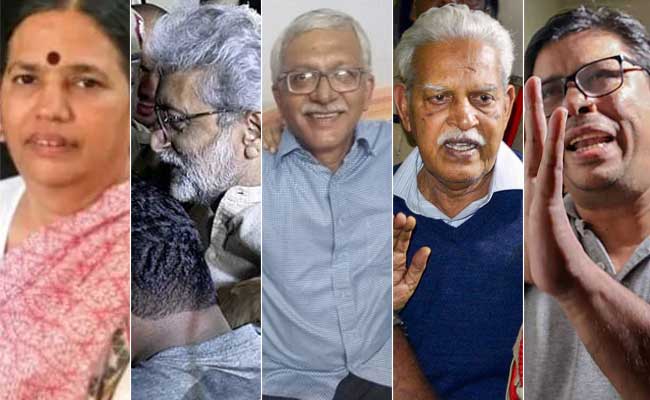
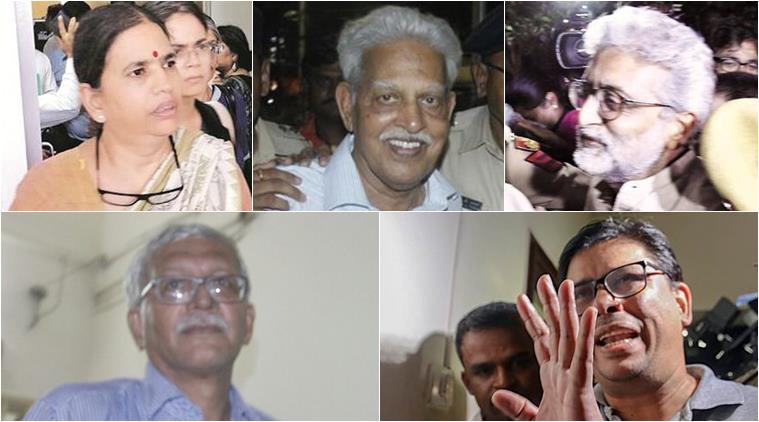
SC demands to see evidence against arrested activists, extends house arrest

The court was hearing a petition filed by civil society members led by historian Romila Thapar, economists Prabhat Patnaik and Devaki Jain among others, against the unlawful raids and subsequent arrests of the human rights activists. During the hearing the government also asked the Apex Court to allow a “competent court to hear the case as the case is pending before other courts.” Abhishek M Singhvi, appearing for many petitioners, submitted to SC that the petitioners are seeking for an independent enquiry and that SC has jurisdiction. He said that none of the accused were present at the Elgar Parishad and even the FIR doesn’t have names of any of the five accused persons in the case.The CJI observed, “We entertained the case on the foundations of liberty. Issues like independent enquiry come at a later stage.”
ASG Maninder Singh appearing for Union of India made long winded submissions about how the Union has no role to play because this investigation is under the State of Maharashtra and about how the problem of Naxalism is prevalent in several states and is an extremely serious problem, the present case involves very grave allegations impacting on national security. He also argued that the SC should not deal with the matter as the HC and subordinate courts are competent to deal with it.
Abhishek Singhvi began with the origin of this incident, Bima Koregaon and the violence of 1st January 2018. He argued that in Elgar Parishad- Elgaar means a ‘clarion call’ and not a ‘call to attack’ the State (as alleged by State of Maharashtra in its counter affidavit). The entire basis of the FIR against those arrested is that Sudhir Dhawale sang a song the lyrics of which were a call to bring down the State. He explained how these words are actually a translation of a poem in a play by Bertolt Brecht, The Good Person of Szchewan. He quoted CJI Dipak Mishra’s judgments rejecting the ban on the Malayalam novel Meesha where the SC upheld freedom of expression particularly cultural, artistic expression of a poet.
Abhishek Singhvi then went on to explain that Elgar Parishad was organised by Retd. Justice Sawant and Justice Kolse Patil; that none of those arrested in August 2018 had anything to do with the event or were present at the event. He emphasised that 2 FIRs were filed, first by Anita Sanwle on 2nd January, 2018, about the violence incited by right wing groups on 1st January, which names Milind Ekbote and Sambhaji Bhide- how these are the people and groups responsible for the violence, and how some days after this FIR another FIR was filed by Tushar Damgude (who is being represented by Sr. Adv Harish Salve in the SC) on 8th January, which for the first time introduces the ‘Maoist’ angle through a bald averment. He argued that even in February 2018, when Milind Ekbote had applied for anticipatory bail, the State of Maharashtra had filed a counter affidavit opposing the bail saying that the violence was planned and Ekbote had a role to play in the violence. He questioned how then the present arrestees became involved in the incident all of a sudden?!
He referred to the report by Siddharth Dende the Deputy Mayor of Pune submitted to the IG police, Pune which also categorically holds that the violence was planned using social media and by collecting material to attack the Dalit community, and that Sambhaji Bhide and Milind Ekbote played key roles in this and the motive was to teach the community a lesson for celebrating a history which undermines the Hindutva agenda. He argued that while this report was submitted to the IG Pune police in January 2018, after petitioners filed this Writ Petition and their Rejoinder referring to this contradiction on September 10, 2018. The Pune police on September 11, 2018 issued a press note denying this Committee’s report. This shows the shifting stands and mala fide intention of the State. Singhvi went on to explain how the investigation itself is mala fide since witnesses to the seizure were brought along with the Police from Pune, though the CrPC mandates that they are supposed to be independent witnesses from the locality. He explained how the “letters” being leaked by the Pune Police, are on the face of it, fabricated.
Earlier, Maharashtra state had alleged that the petition was filed by “strangers” and hence, that it shouldn’t be entertained. But this claim also fell flat when an additional affidavit was filed on petitioners’ behalf where all the arrested activists said that the petition had been filed on their behalf! The Pune Police had accused the activists of being involved in instigating the Bhima Koregaon violence, a claim debunked by both Justice PB Sawant and Justice Kolse Patil, the original duo that had organised the Elgaar Parishad.
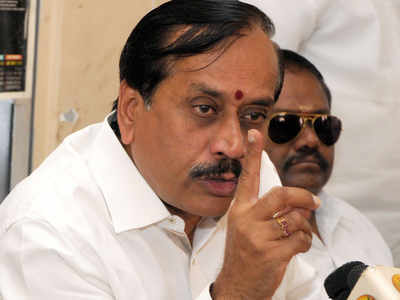
FIR against H. Raja for insulting police, judiciary in Tamil Nadu
BJP national secretary H. Raja is in hot water after allegedly making derogatory remarks about the Tamil Nadu police and judiciary in Meyyapuram in the state’s Pudukkottai district on Saturday, September 15.

Raja took part in a Ganesh Chaturthi procession, and was caught on video arguing with police officials who laid down certain restrictions during the procession. “When the police officials, asked those participating in the procession to avoid crossing a sensitive area, the BJP leader lost his cool and started using abrasive language,” NDTV reported, adding that Raja said, “Police have become too corrupt now, you all are taking bribes. You (Police) are anti-Hindu. If you torture a Hindu, you cannot be called one. Don’t be their enemy.” He went on to say, “You are not allowing people to celebrate Pournami, I don’t care about High Court or anything,” adding, “Are you all not ashamed of wearing police uniform? The entire state police has become corrupt. How can I stand on the ground and speak? I need a stage to speak.”
According to the Times of India, the police’s Inspector Manoharan said that he had denied permission for the construction of a stage as they had wanted to put it up on disputed property. “Majority of the villagers belong to a particular religion. They opposed the move to erect a permanent stage in front of the temple. The issue is in the high court,” he said. The Times of India reported that, earlier, “another section of the villagers moved the court seeking its permission to take out a Vinayagar procession in the village.” The court granted permission and said that the police would decide on the procession route. “We allowed Raja and his supporters to take out the Vinayagar procession through another route to avoid a place of worship of the other people. But they removed the barricades and took out the procession,” a police official told the Times of India.
The Times of India noted that the procession was held when Pudukkottai Superintendent of Police S. Selvaraj and other police officials were present. When the Times of India asked why action had not been taken against him, Selvaraj said that Raja had been asked to abide by the high court’s order but had refused to do so.
The video of Raja’s remarks went viral on social media. However, according to the Deccan Herald, Raja claimed, “The voice in the video being circulated is not mine. The voice has been doctored. The video that is doing the rounds has been edited”.
An FIR has been registered against Raja and seven other people, as per The Hindu, which said that they have been booked under Indian Penal Code “sections 143 (unlawful assembly); 188 (disobedience to order duly promulgated by public servant); 153 (a) (promoting enmity between different groups on grounds of religion, race, place of birth, residence, language, etc and doing acts prejudicial to maintenance of harmony); 290 (public nuisance); 294(b) (uttering obscene words in public place); 353 (assault or criminal force to deter a public servant from discharge of his duty); and 506 (i) (criminal intimidation).” The other accused include officials belonging to the BJP and the Hindu Munnani.
The Hindu reported that Tamil Nadu fisheries minister D. Jayakumar said that the state government was consulting legal experts and mulling action against Raja for insulting the police. “As for his comments on the court, we hope the judiciary will initiate suo motu proceedings against him,” Jayakumar said. Moreover, R. Sudha, vice president of the Madras High Court Advocates Association and national executive member of the All India Mahila Congress sent a complaint to the DGP and others seeking action against Raja. According to the Hindu she said that Raja had not just prevented public servants from carrying out their duties, “but as malignantly and wantonly entered into a provocative dialogue with the police officer with an intent to cause rioting and promote enmity between different groups on the ground of religion.”
Raja is no stranger to controversy. Earlier this year, he posted about Periyar statues being taken down after a statue of Vladimir Lenin was pulled down in Tripura. However, in a subsequent post, he expressed regret and said his “admin had uploaded the post” without his knowledge. Raja has also called DMK MP Kanimozhi the “illegitimate child” of the late DMK president Karunanidhi.
Terrorism at the Taj: ‘Hotel Mumbai’ pulls no punches at film festival

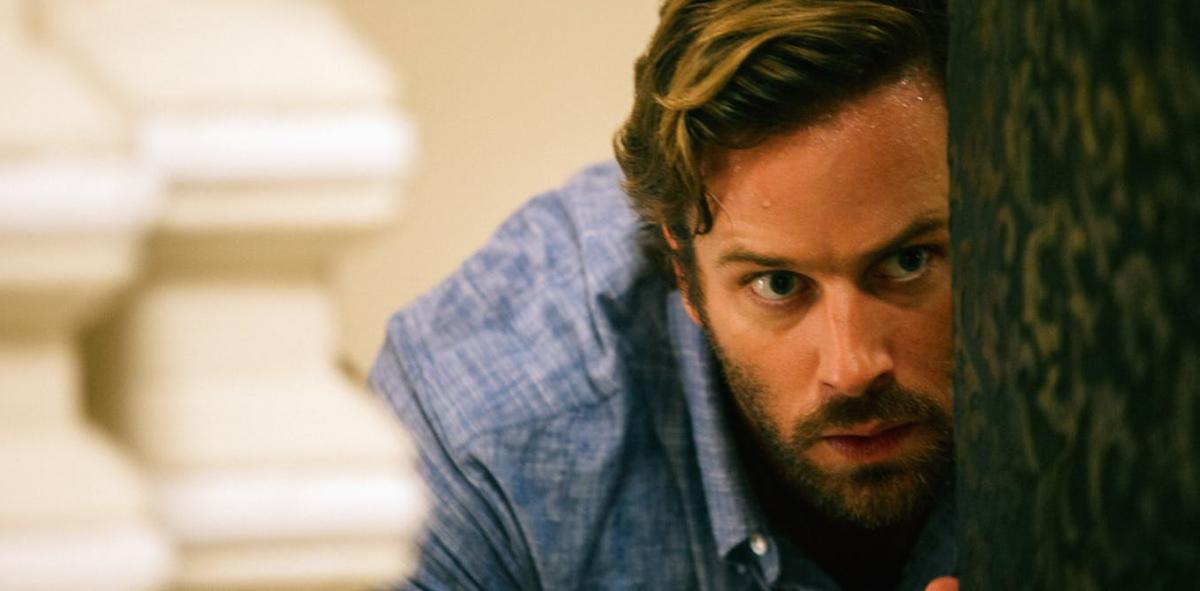
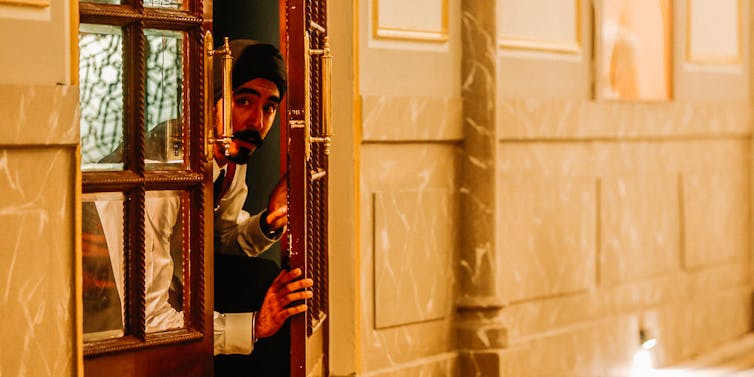
‘Hotel Mumbai’ is a gripping film that provides a glimpse into the fear and brutality of terrorism but also the everyday bravery of its victims. Here Armie Hammer in ‘Hotel Mumbai.’ Courtesy of TIFF
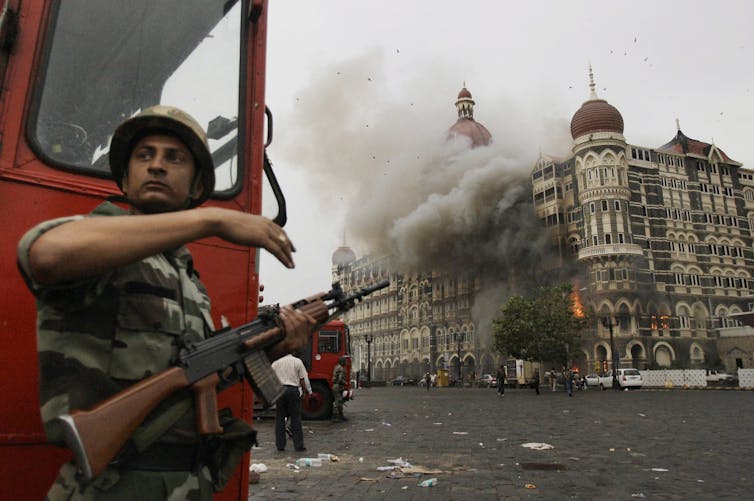
The movie depicts the Mumbai terror attacks that took place Nov. 26-29, 2008, when 10 gunmen belonging to the Pakistan-based militant organization Lashkar-e-Taiba staged a series of co-ordinated attacks across the city, ending with a multi-day siege of the luxurious Taj Mahal Hotel that left 164 dead and hundreds wounded.
Based on hundreds of hours of interviews with survivors and witnesses and told from the perspective of hotel guests, staff and to some extent the gunmen, the film sets out to recreate the attacks faithfully and authentically.
The film expertly ratchets up tension and confusion, drawing the viewer into a harrowing experience that is not broken up by lengthy plot digressions or exposition.

An Indian soldier takes cover as the Taj Mahal hotel burns during a gun battle between Indian military and militants in Mumbai, India, on Nov. 29, 2008. (AP Photo/David Guttenfelder)
Hotel Mumbai provides a raw and rare look behind the curtain of a terrorist attack, inviting the audience to experience its unrelenting and gut-wrenching reality. The film doesn’t concern itself with the contextual details that emerge in the aftermath of a terror plot; instead it replicates the confusion, panic and genuine fear one would feel at the time.
For almost the entire two hour run-time, the viewer is left to struggle with the intensity of that confusion, not knowing when or if safety will materialize.
Since Sept. 11, 2001, popular media in North America has moved from amorphous representations of political violence to a plot format that explicitly uses terrorism, invokes real militant groups and focuses almost exclusively on the United States and Islamic extremism as their bread and butter. Few films actually take the viewer inside the experience of terror plots as they happen; this is where Hotel Mumbai ushers in a new complex path with audiences.
The only potential drawback of this narrative style is that for viewers unfamiliar with the broader political context of terrorism in India — and in Western audiences they may be the majority — there is little information about where the attack comes from or how it fits into the larger story of the Indian subcontinent.
Terrorism in India
The Mumbai gunmen were trained in Pakistan and, as depicted in the film, carried out their attack with direction via mobile phones from planners in Pakistan’s metropolis port, Karachi. The gunmen were found to be members of Lashkar-e-Taiba (LeT), a Pakistan-based militant group that was also responsible for a 2001 attack on the Indian Parliament in New Delhi.
The existence of groups like LeT is a significant sore spot in India-Pakistan relations. India accuses Pakistan of enabling or even encouraging such groups and Pakistan consistently denies these allegations.
LeT emerged out of the radicalization of the Kashmir conflict — a territorial dispute between India and Pakistan over which country has the right to govern the Muslim-majority Kashmir valley. This conflict began with the 1947 partition of British colonial India into the two sovereign nations of India and Pakistan and has gone through numerous phases of escalation and détente.
India’s continued military presence and the human rights abuses carried out by security forces in Kashmir provide a major source of grievance to some Indian and Pakistani Muslims. Although India is home to the second largest Muslim population in the world after Indonesia, Muslims in India are heavily disadvantaged in comparison to the Hindu majority. They also experience higher rates of poverty and lower literacy levels.
Despite this, the vast majority of Muslims — whether in India or elsewhere — consistently reject religious extremism.
Everyday heroism
As a suspenseful and emotional snapshot of the events of November 2008, the film certainly succeeds. The audience’s applause felt genuine and visceral, not polite or obligatory. The cast themselves were visibly emotional on stage, notably when Maras revealed that one of the real-life survivors of the attack portrayed in the film was present in the audience. This survivor (unnamed here to avoid spoilers) received an immediate and emotional standing ovation.
The film is full of heroes, but not the kind that audiences are accustomed to seeing in movies about terror attacks. In Hotel Mumbai, heroes can die with the casual and unceremonious pulling of a trigger, just like anyone else. Though the film uses character archetypes, it does so in a way that disrupts common film tropes associated with the genre.
For example, the local police are brave but are hopelessly outgunned and out of their depth when faced by trained insurgents with automatic weapons. Armie Hammer’s character, the white American male that so often saves the day in Hollywood blockbusters, spends most of the film wanting to protect his family but having no real idea how to do so.
By contrast, Anupam Kher’s Chef Oberoi displays a quiet dignity by relinquishing his opportunity for escape in favour of protecting the hotel guests by calmly hosting them in one of the hotel’s hidden lounges. Dev Patel, as always, gives a memorable performance as a hotel staff member who just wants to get back to his family but displays remarkable courage and compassion along the way.

Dev Patel in ‘Hotel Mumbai’ Courtesy of TIFF
Just as there is no Hollywood action hero ready to jump in and save the day, Hotel Mumbai also steers clear of depicting the kind of one-dimensional villains that dominate most films in the spy or terrorism genres. The attacks in the film (as in real-life) are brutal, shocking and almost casual in their indifferent disregard for human life.
But the gunmen themselves remain undeniably human. In one scene, we see the terrorists coldly gunning down unarmed civilians and in the next we see them teasing each other about whether there is pork in the canapés. Later, we see the inner conflict of one of the gunmen, who seems to be in over his head as he oscillates between crippling self-doubt and brutal determination.
It is the dissonance between these two dimensions that make this depiction of terrorism so compelling. We also see how the attack impacts each of the attackers in subtly different ways, reinforcing that each has been drawn into this act of horrific violence through their own distinct motivations, whether religious, political or socio-economic.
It is not necessarily that the gunmen in this movie are relatable or sympathetic in the traditional sense (for the most part they are not), but they are resolutely human and that is part of what makes their violence so disturbing. The viewer is asked to face the uncomfortable truth that the people who carry out these attacks might not be the monsters hiding in the shadows that we so often see depicted on screen, but are simply ordinary people carrying out extraordinary acts of brutality.
Despite the horror that this film paints with such gritty and meticulous attention to detail, Hotel Mumbai is ultimately not about violence as an act that is carried out upon passive victims. Instead, it is about the resistance, resilience and quiet heroism of people confronted by chaotic scenarios filled with impossible choices.
Rising terrorism on ‘soft targets’
The film asks us to challenge easy assumptions and to rethink any sensationalist preconceptions we may hold about how we would, or would not, react in such a crisis.
Hotel Mumbai feels every bit as relevant today as if it had been released back in 2008 when the attacks occurred. If anything, the passage of a decade has perhaps made the tragedy of the Mumbai attacks resonate even more strongly with international audiences.
Massacres carried out by armed gunmen in “soft targets” such as hotels, train stations and shopping malls have become depressingly common in recent years.
Historically most of al-Qaida’s most well-known attacks have used explosives, making them devastating in their death tolls but also relatively difficult to plan and execute.
Since 2014, ISIS has popularized the strategy of using any and all weapons available to attack public spaces, making attacks carried out by their sympathizers incredibly challenging to prevent. This style of attack is widespread across the ideological spectrum with notable examples including the Norway massacre of 2011 and the Las Vegas shootings of 2017.
Hotel Mumbai is ultimately intended as an “anthem of resistance” for those who survive such attacks, a quiet memorial of those who don’t and a sobering snapshot of the chaos of terrorism for those who, fortunately, have never found themselves inside its brutal plot.

Joseph McQuade, SSHRC Postdoctoral Fellow, Centre for South Asian Studies, Munk School of Global Affairs, University of Toronto and Emily LeDuc, Doctoral Candidate and Teaching Fellow, Queen’s University, Ontario
This article is republished from The Conversation under a Creative Commons license. Read the original article.
After humiliating defeat in JNUSU elections, ABVP attacks student leaders
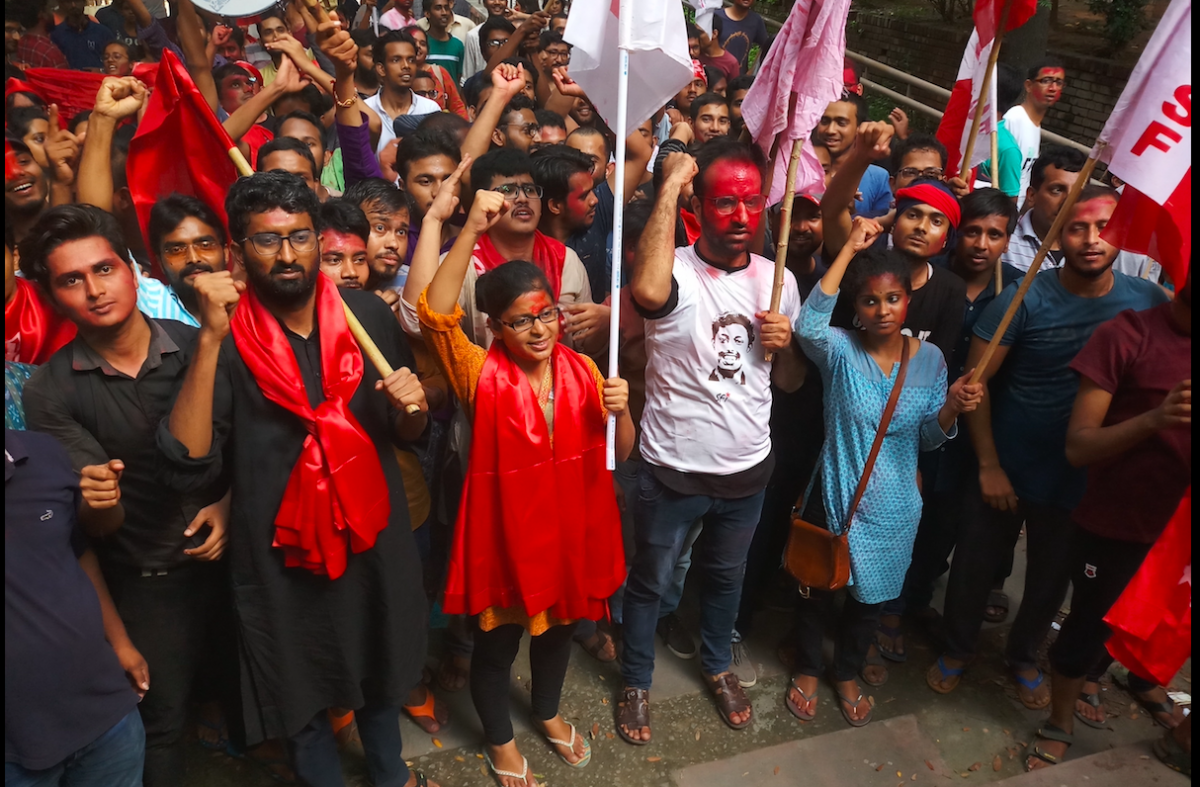
After being squarely trounced in the Jawaharlal Nehru University Student Union (JNUSU) election, members of the Akhil Bharatiya Vidyarthi Parishad (ABVP) have reportedly resorted to multiple acts of violence on the JNU campus in New Delhi. Large mobs of ABVP members have reportedly attacked many student leaders including some of the newly elected office bearers of the students union.

JNUSU ex-president Geeta Kumari who witnessed the attacks said, “Today our comrades Pawan Kaushik and Ashutosh Abhinay were brutally beaten up by ABVP members,” adding that the attack looked like a “mob lynching”. She said she was also attacked by an ABVP member when she tried to help her friends. “While I was trying to save Abhinay I was also attacked by Saurabh Sharma”, she said adding that Sharma pulled her hand and pushed her, causing her to fall on the road near the Jhelum Hostel gate.
According to Geeta Kumari, when another student Jyoti tried to record the incident on video, she too was allegedly manhandled. But this did not stop Geeta and she tried to help the newly elected JNUSU President, N Sai Balaji, as he was being mercilessly beaten. She said, “When they attacked N Sai Balaji, I tried to stop them, but he (Sharma) threatened me saying that he would cut my neck off!”
Video : https://www.facebook.com/nsai.balaji/videos/pcb.10211072779529598/10211072673926958/?type=3
Earlier, ABVP had also allegedly disrupted the counting process after the elections took place. However, once counting resumed, the Left Unity, a coalition of All India Students’ Association (AISA), Students’ Federation of India (SFI), Democratic Students’ Federation (DSF) and All India Students’ Federation (AISF), swept all 4 key seats in JNUSU. N Sai Balaji was elected as the President, Sarika Chaudhary as the Vice President, Aejaz Ahmed Rather as the General Secretary and Amutha Jayadeep as the Joint Secretary.
After the JNUSU election results came out, the frustration of the ABVP became visible. The voter turn-out in the current election was 67.8%, which is being seen as the highest in the recent years with over 5000 students casting their vote. Students were rejoicing the victory of Left and defeat of ABVP in the elections.
https://www.facebook.com/nsai.balaji/videos/pcb.10211072779529598/10211072745648751/?type=3
Commenting on the fresh bout of violence that reportedly began after midnight, N. Sai Balaji said, “Today ABVP students randomly attacked students. I was called to the scene at Sutjel (hostel). As elected JNUSU President I went to ensure Pawan Meena’s safety who was attacked by ABVP students with sticks. Upon reaching what I saw was mayhem. The mob led by Saurabh Sharma was baying for blood of any student they thought a friend of Pawan Meena and were attacking students with sticks.”
He confirmed being thretened by the ABVP members saying, “They openly threatened me, Geeta and other students present there with dire consequences if we intervened to stop the violence.” In his words, Abhinay was “almost lynched”. Sai Balaji ran with other students to save him. But Abhinay lost consciousness after the brutal attack. Sai Balaji then took him to the ambulance so he could get medical aid.
However, it did not stop there. He added, “What happened next was terrifying. I was again threatened by the mob and fearing my safety some students asked me to sit inside the PCR (police) vehicle. However the mob led by Ashutosh Mishra and Saurabh Sharma stopped the PCR vehicle and got an ABVP student to sit beside me. These two students were repeatedly stopping the PCR and threatening me. To my surprise Saurabh Sharma stopped the PCR between Jhelum and Sutlej and the ABVP student sitting inside the PCR van opened the door. Upon opening more threats were given to me and I was physically assaulted inside the PCR van by ABVP students.”
In a state of shock and fearing his own safety, Sai Balaji asked the PCR to take him to Vasant Kunj Police station. However, there his health deteriorated and he had to come back to hostel to take medication. But he plans to lodge the FIR soon.
After this incident, reportedly, the ABVP members led mobs to different parts of the JNU campus, including Sutlej, Mahi Mandavi and Damodar to “create a fear psychosis in the atmosphere”. Over a dozen faculty members who had gone to the police station to ensure that no harm came to the students who had gone there to report the incident, now found themselves in the ABVP’s crosshairs. Over 50 people allegedly blocked both gates to the police station and are allegedly pointing out various faculty members to others in the mob. This may lead to targeted violence when they eventually leave the police station. Meanwhile, the police have allegedly taken no action to disperse the mob that is openly threatening the JNUSU office bearers.
The attacks on student activists and even ordinary students began last night and have continued during the day.
Egyptian Junta continues mass executions spree
The US-client regime of Field Marshal Abdul Fattah Al-Sisi continues mass executions spree as an Egyptian kangaroo court sentences another 75 anti-government people to death.

According to Reuters report, an Egyptian kangaroo court sentenced 75 people to death on Saturday (Sept 8) including prominent opposition leaders Essam al-Erian and Mohamed Beltagi over a 2013 sit-in which ended with killing hundreds of protesters by the Egyptian security force.
The sentencing, which included jail terms for more than 600 others, concluded a mass trial of people accused of murder and inciting violence during the pro-Muslim Brotherhood protest at Rabaa Adawiya square in Cairo in 2013.
Rights groups say more than 800 protesters died in the single most deadly incident during the unrest that followed Egypt’s 2011 popular uprising against longtime President Hosni Mubarak.
Death sentences have been handed down to hundreds of Al-Sisi’s political opponents on charges such as belonging to an illegal organization or planning to carry out an attack.
The protest occurred weeks after General Abdul Fattah Al-Sisi (who later assumed the title of Field Marshal) ousted Egypt’s first freely elected head of state, president Mohamed Mursi.
“We condemn today’s verdict in the strongest terms,” Amnesty International said in a statement. “The fact that not a single police officer has been brought to account.. shows what a mockery of justice this trial was.”
Amnesty International and Human Rights Watch have both described the situation in Egypt as the worst human rights crisis in the country in decades, with the state systematically using torture, arbitrary arrests and enforced disappearances to silence political dissent.
Last year, the Egyptian government pledged to take action against Human Rights Watch after it released a damning report on state torture.
Two parliamentary groups in Algeria have called for official national and international action to halt mass executions against activists, human rights workers and political figures in Egypt.
Movement of Society for Peace; the largest political party in Algeria and Union for Development, Justice and Building said in a joint statement that lawmakers “are following with great concern the developments of the human rights situation in the Arab world; the most recent of which was the issuance of mass death sentences against political, human rights and community symbols”.
The signatories described the executions as “a flagrant attack on the right to life”, which is politically motivated “amounting to genocide or mass murder according to international law”.
UN Human Rights chief urges Egypt to overturn mass death sentences
United Nations human rights chief Michelle Bachelet has urged Egypt’s appeals court to overturn mass death sentences handed down by a lower court after what she said was an “unfair trial”.
The former Chilean president, who took office as UN High Commissioner for Human Rights earlier this month, criticised a law giving immunity from future prosecution to senior military officers.
An Egyptian court on Saturday delivered death sentences to 75 people, including prominent Islamist leaders Essam al-Erian and Mohamed Beltagi, over a 2013 sit-in that ended with security forces killing hundreds of protesters.If carried out, the sentences “would represent a gross and irreversible miscarriage of justice”, Bachelet said in a statement.
Defendants were denied the right to individual lawyers and to present evidence, while “the prosecution did not provide sufficient evidence to prove individual guilt”, she said.
“I hope that the Egyptian Court of Appeal will review this verdict and ensure that international standards of justice are respected by setting it aside,” Bachelet said.
Bachelet decried the “lethal military crackdown” saying it had led to the killing of “up to 900 mostly unarmed protesters by members of the Egyptian security forces”. The government later claimed that many protesters had been armed and that a number of police were killed, she added.
“Despite the huge death toll, no State security personnel have ever been charged in relation to the so-called ‘Rabaa massacre’,” Bachelet said.
Tellingly, a law was passed in July gives Field Marshal al-Sisi the right to name officers who are eligible for immunity from investigation of offences alleged to have been committed while Egypt’s constitution was suspended between President Mursi’s overthrow on July 3, 2013, and the reconvening of parliament on January 10, 2016.
Not surprisingly, US Secretary of State Mike Pompeo has authorised the release of $1.2 billion in military aid to Egypt, overriding previous human rights concerns that had held up funding.
“Strengthened security cooperation with Egypt is important to US national security. Secretary Pompeo determined that continuing with the obligation and expenditure of these foreign military financing (FMF), funds is important to strengthening our security cooperation with Egypt,” the State Department said in a statement.
Abdus Sattar Ghazali is the chief editor of the Journal of America (www.journalofamerica.net) email: asghazali2011 (@) gmail.com
S Shankar: “We need to think of free speech both in terms of form and content”
The novelist and writer in conversation with Souradeep Roy
In the latest in our series of interviews #WritersTalkPolitics, Souradeep Roy speaks to S Shankar, critic, novelist and translator. They begin by talking of Shankar’s current project on translating E V Ramaswamy (Periyer)’s commentary on Ramayana. In the latter half, Shankar talks about the need to think of free speech both in terms of its form and the content. In America, for instance, free speech is often cited to favour Right-wing opinion, because the content of that speech is never scrutinised. Shankar also says that his larger commitment is to foster “cultures of reading”, a term he explains in the course of the interview.
Courtesy: Indian Cultural Forum
Constructing Democratic Rights Activists as Conspirators
The recent arrest of activists and intellectuals, and raids on various others connected with rights activism across five states in India is a grim reminder of the shrunken space for protest, criticism and dissent in our democracy today. This tendency to muzzle opposing voices has been on brazen display over the past four years though earlier governments had also tried to brand civil rights activists as ‘Maoists’ and as anti-development and anti-progress in a sense. The case against Dr. Binayak Sen, an office bearer of People’s Union for Civil Liberties comes to mind who was also alleged to be a Maoist.

The entire episode raises many questions on the motives of the government for this kind of concerted clampdown on human rights defenders. As of now, the charges against the activists seem far-fetched and entirely fabricated. Most of the activists who are now in jail or under house arrest are long-time members of the civil liberties movement in our country in the post-emergency period. Civil and democratic rights organizations and their activists have faced the charge of being fronts of this and that organization earlier too, and some have been attacked and killed also as in Andhra Pradesh. But what is important to understand is the location of the civil and democratic rights movement vis a vis democracy in India. The civil and democratic rights movement emerged in the space of civil society at a particular moment in Indian democracy, the time of grave repression of liberties and rights of people during Emergency. Since then the movement has tirelessly worked to guard the rights of people through various means like fact findings, publishing reports, public meetings, court cases, public protests, pamphlet distribution and such other activities, to publicise and fight against the violations of rights by the state and other powerful formations. All these activities of the civil and democratic rights movement are public in nature, the reports of fact findings are released to the press, the events are publicised. Their meetings happen in public spaces as the organizations want more and more people to know about civil liberties and democratic rights, and work with them.
Civil liberties organizations are said to play an important role in deepening democracy and widening the ambit of rights given in our constitution. The work of the civil liberties movement over the years is a testimony to the role it has played in giving voice to the most disadvantaged sections of our society. It has consistently taken up cases of violations of workers’ rights, the issue of violence in custody, exposed fake encounters, has stood against death penalty, has canvassed against extraordinary laws for they give extraordinary powers to the executive, impinging on rights and liberties of citizens. Even in conflict zones such as Dantewada in Chhattisgarh, the civil liberties movement continued to bring to light the violations of rights of people living in the area. In so doing, the movement made democracy in India take cognizance of the issues raised by the people of the region and also showed it a mirror for the kind of violations that a democratic state can also indulge in. It stood providing an important window for the state to engage with the disgruntled, excluded people of this region than repressing them.
As Ram Manohar Lohia had written in the backdrop of formation of Indian Civil liberties Union in 1936, the concept of civil liberties was an outcome of the struggle that the citizen has waged against the state and history provides enough examples to show that people who have been critical of the state have faced its wrath. Civil liberties provided the citizens with rights to basic minimum safety and provided limits on state’s authority. For Lohia, the concept of civil liberties was essentially a liberal concept acting as a buffer between state tyranny and mass revolts. It is this role that the civil and democratic rights movement seems to be fulfilling even in independent India for which it is facing the wrath of the state.
The kind of work that the civil rights groups in India and even in other parts of world do, involve holding the state accountable in an ever widening construction of rights. An example of the successful attempt by the democratic rights groups to widen the understanding of rights can be seen in the famous Asiad Case Judgement in 1982 by the Supreme Court on a report filed by People’s Union for Democratic Rights on the basis of its fact-finding about the non-payment of minimum wages to workers on Asiad Games construction sites. The judgement defined the non-payment of minimum wages as forced labour which stands prohibited under article 23 of the Indian Constitution. This case also led to the widening of the ambit of locus standi to third parties.
Consequently, on many occasions civil liberties organizations seem to be manifestly standing in opposition to governments of the day and even the state machinery. Most of the time they also stands against the dominant understanding in the larger society. It is therefore easy to target them as anti-national, supporting a banned party and the like. Of course, civil liberties movement over the years has stood against the politics of banning precisely because it denies space to an alternative voice. The work of the civil rights organizations brings them in contact with many movements like the women’s movement, the trade union movement, the dalit movement and possibly also the Maoist movement. But despite allegations of acting as fronts of these movements, the civil liberties movement has taken an objective view of the situation and has carved out an autonomous space for itself, as affirmed by press statements and reports.
For instance, People’s Union for Democratic Rights (PUDR) has condemned wanton acts of violence by the Maoists. It strongly condemned the killing of Inspector Francis Induvar in Jharkhand by the Maoists in October 2009. Condemning the Maoist attack on Tata Bilaspur passenger train in November 2009, the statement by PUDR writes that it has time and again pointed out that political formations using armed resistance cannot evade the responsibility for causing civilian casualties. Civil casualties cannot be regarded as collateral damage in contexts such the attack on a passenger train. Ironically, the person writing these statements condemning these acts of the Maoists and asking them to abide by international norms like Geneva Convention was none other than Guatam Navlakha, the then secretary of PUDR. Gautam is today under house arrest and accused of being an active member of Maoist party! Gautam Navlakha has been a founder member of PUDR and thereby has been a witness to the founding moment of the civil democratic rights movement in the country post-independence. He has relentlessly worked for the cause of civil and democratic rights across India going on fact findings, preparing reports, taking organizational responsibilities.
Anyone who has seen these organizations work know the kind of human and financial constraints they work with. They are non-funded and have meagre financial resources drawn entirely from contributions of the members and the sale of their reports. For any public event which needs more than 15000 rupees, the civil liberties organizations face a fund crunch. These are small organizations comprising of students, teachers, journalists and lawyers, all of whom, while being engaged in their respective livelihood battles also take time out to fight for the cause of civil rights. Some of them have dedicated their lives exclusively to the cause of upholding the rights of people. Their efforts can only be lauded as heroic for what keeps them going is a common concern for rights and liberties, not of themselves but of the marginalised and the violated. To target these kinds of people as “conspirators”, “waging war against the state”, deprives our democracy of the important aspect of citizens coming together and acting as defenders of rights of people.
The meaning of democracy has been turned into a crass majoritarian one in recent times where every kind of dissent has been turned into “anti-nationalism”. The core of our constitutional democracy is that alternative opinions, ideas, ideologies, even one differing voice is heard. Imagine a democracy without these differing voices, without these activists and without the issues brought to the public sphere by the civil democratic rights movement over the last 40 years of its working in our country. Much that is valuable to democracy, to the ideas of justice and equality would have been lost if we did not have these activists and movement that they come from.
If a democratic state feels insecure because of civil democratic rights activities and starts framing activists in false cases invoking draconian laws like Unlawful Activities Prevention Act (the civil liberties movement has been campaigning against this law for long now), clearly there is the intention to silence these voices. Democracy cannot be reduced only to its electoral form and hollowed of its essential and substantive content. What happens after elections are over is what a democracy should be more concerned with. That is what gives substance to the idea of democracy and that is where the role of civil society becomes important. These activists were trying to do just that by taking up issues of the most marginalised sections of our society for years together and working as a watchdog on the state. To imprison them for doing this is to imprison the very core of the democratic ideal.
Preeti Chauhan is Assistant Professor, Dept. of Political Science, Lakshmibai College, University of Delhi
Courtesy: Kafila.online