With Madhya Pradesh, Chhattisgarh and Rajasthan set for assembly elections later this year, all political parties are gearing up for elections and campaigns. While the fight is likely to be between the Bharatiya Janata Party (BJP) and the Congress, one Adivasi youth organisation is trying to disrupt their election equation in Madhya Pradesh. “Jai Adivasi Yuva Shakti” or JAYS is an Adivasi youth organisation which has won student body elections in the colleges of districts like Dhar and Alirajpur in Madhya Pradesh. A familiar face among Adivasi voters and youngsters, on September 1 JAYS announced that it will contest elections on 80 assembly seats of Madhya Pradesh out of a total 231 seats. Out of these 231 seats, the election commission has reserved 47 seats for Schedule Tribe category. Moreover, there are around 40 seats in the state on which Adivasi voters will hold the key to deciding the outcome.
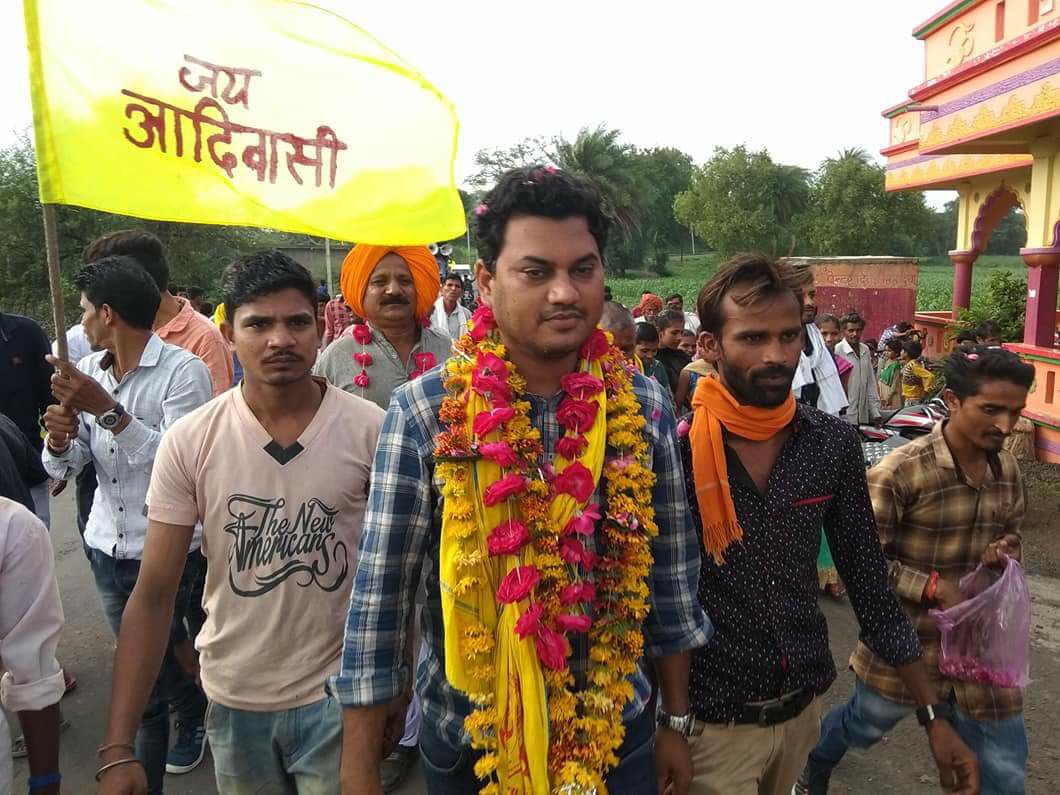
Hiralal Alawa with his supporters (Photo – TwoCircles.net)
Since July 29 this year, JAYS has also launched “Adivasi Pride Rallies” across Madhya Pradesh’s several districts, claiming to continuously grow its support base among Adivasi youth. Dr Hiralal Alawa, the convener at JAYS and assistant professor at the All India Institute of Medical Sciences, Delhi, told TwoCircles.net, “We are getting the support of young people among the Adivasi groups. They want to see us fight and win because we are putting Adivasi pride before everything.”
In the student body elections held last year across Madhya Pradesh, JAYS bagged key seats in various colleges of Madhya Pradesh defeating candidates of NSUI, the student wing of Indian National Congress, and ABVP, the student wing of BJP by huge margins.
“We noticed that we are getting the support of people, mostly young ones, and they want us to win,” said Alawa. “The reason is simple. People have not seen Adivasi leadership in a state where Adivasis are still the deciding factor in electing a government.”
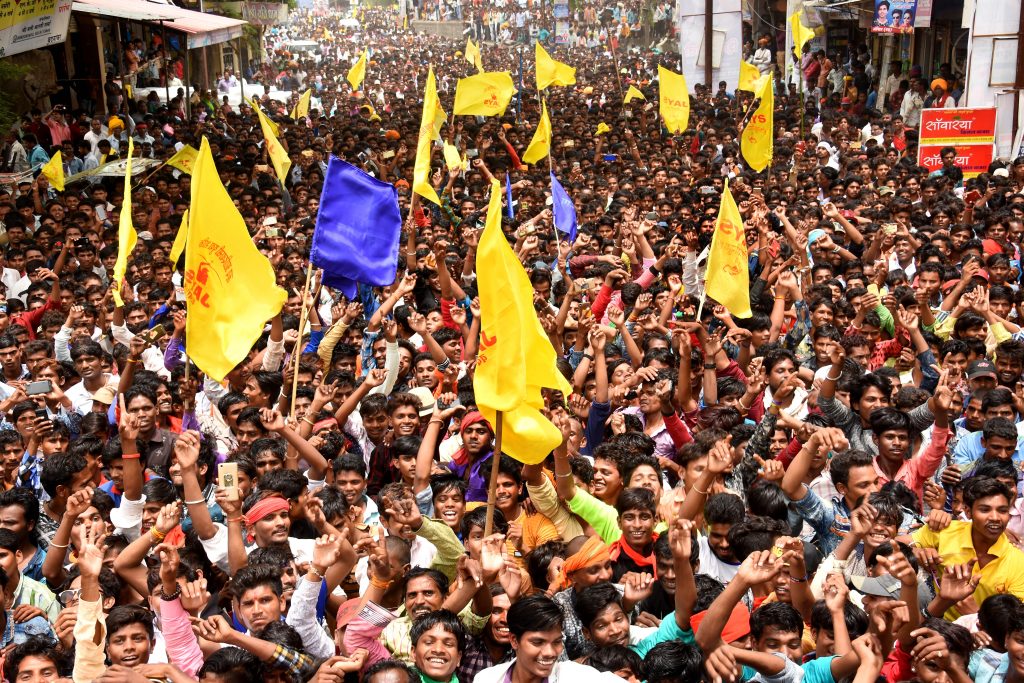
Tribal rights rally of JAYS (Photo – TwoCircles.net)
According to the functionaries of JAYS, Madhya Pradesh’s authority should be given back to the Adivasis because mainstream politics and parties have not been able to address the issues of Adivasis of the state. The administration at Madhya Pradesh has also been accused of doing consolation practices with Adivasis—like Chief Minister Shivraj Singh Chouhan giving slippers to the Adivasis which were infected with carcinogenic chemicals—which is nothing more than a mockery of social injustice.
After the conclusion of statewide Adivasi Pride Rallies, JAYS convener Hiralal Alawa announced that the outfit will fight assembly election on 80 constituencies. According to the several projections, JAYS may bag 20-30 seats in the areas where Adivasi populations are deciding factor. However, Alawa said that JAYS will easily get 40 seats in upcoming elections.
He said, “We are certain about our winning and wish to assure the Adivasi brothers and sisters that in the immediate future, we will be deciding factor in deciding the chief minister of the state.” He further said, “Both Congress and BJP ruled Madhya Pradesh for ages, and that too on the votes of Adivasis, but they never gave the leadership to us. JAYS is all set to stop that.”
JAYS, originally a social movement, started in 2011 and is not registered as a political party, but according to party’s activists and workers, JAYS is in talks with Bharatiya Tribal Party or Gondwana Republic Party for contesting elections. Alawa said, “We will decide that after taking everyone into confidence.”
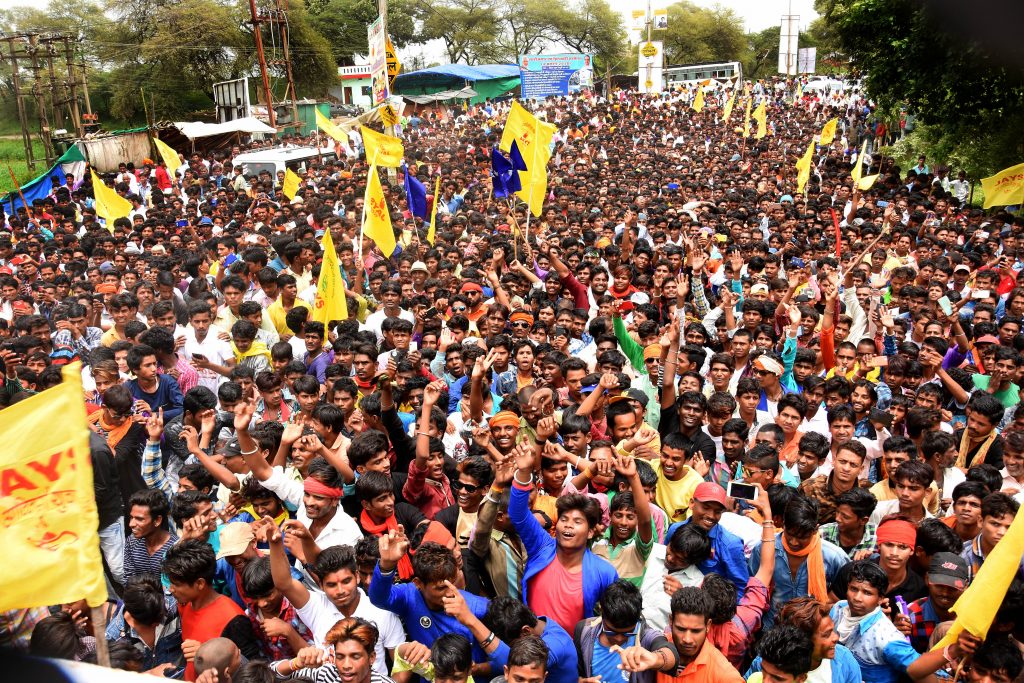
The recent upliftment of JAYS has indeed put Congress and the BJP under stress. According to sources, the party leaders from both the sides have been instructed to camp in Adivasi areas more aggressively. Moreover, BJP’s leaders have been busy in talking to the core and leading figures of JAYS to get hold of the strategy and most importantly, break them. On August 9, Shivraj Singh Chouhan welcomed several Adivasi leaders in the BJP claiming that they were from JAYS, a point neither confirmed nor denied by JAYS. But the heavy crowd which JAYS has been attracting in its rallies is also a point of worry for political rivals.
But BJP leaders claim that they are stress-free when it comes to JAYS. Rajneesh Agrawal, the spokesperson at Bharatiya Janata Party, told us, “See, JAYS is nothing but a B-team of Congress…these are not mere accusations…Listen to their speeches, it is clear as crystal. When they were more of a social movement, everyone was welcoming for them. But equations changed soon after they announced that they will be fighting elections.”
“A large chunk of JAYS leaders from Dhar region came into BJP,” said Agrawal, adding, “ I am sure many more are in the way to join us. BJP does not see any kind of threat to its vote bank from JAYS.”
But Congress has opened its gates for a coalition with JAYS in order to welcome “like-minded political groups” of the state. Pankaj Chaturvedi, the state spokesperson of the Congress, told TwoCircles.net, “If the party notices that JAYS could help in defeating BJP in the state, the party will think of an alliance with it.”
However, JAYS leadership claimed that the Congress state leadership has failed in coalition talks, so it will directly deal with the Central Committee of Congress if the latter is ready for an alliance. Chaturvedi replied, “Any decision on alliance always comes from Central Committee. If talks from both sides stand fruitful, the party will proceed for an alliance.”
With slogans such as “Abki Baar, Adivasi Sarkaar” and “The JAYS Express”, Hiralal Alawa and other JAYS members and moving around villages of Madhya Pradesh trying to increase their base among the Adivasis. While JAYS may not be able to form a government in the state, experts are sure that it can help create one large coalition against the BJP.
Tribal rights rally of JAYS in Madhya Pradesh (Photo – TwoCircles.net)
Nine-eleven matters because on this date in 1906, Mahatma Gandhi launched his non-violent resistance campaign at a historic mass meeting in Johannesburg, South Africa. It was the birth of a new movement, ‘Satyagraha’, the relentless pursuit of truth and justice. Gandhi believed that they were non-negotiables; two sides of a coin. More than three thousand Indians (both Hindus and Muslims), and others gathered to support the beginning of civil obedience. Later, with ‘Ahimsa’ (non-violence), ‘Satyagraha’ would ultimately become Gandhi’s twin doctrine in belief and in practice. He used it effectively in his struggle against British colonial rule in India. Many civil rights leaders like Martin Luther King, Jr. and Nelson Mandela have, over the years, embraced this twin doctrine. Sadly, we still do not learn from the past; racism, xenophobia, exclusion, pseudo-nationalism, discrimination, and divisiveness seem to have a stranglehold on nations and peoples across the globe. The emergence of the ‘extreme-right’ ideology wedded to fascism and fundamentalism is a growing cause of concern. Some want to ‘build walls and fences’ to keep people out. ‘Satyagraha’ was a movement to make people realise that they have dignity, and to help build bridges.
Nine-eleven matters because on this day in 1893, at the very first World Parliament of Religions in Chicago, Swami Vivekananda gave a powerful and passionate speech to end sectarianism, bigotry, fanaticism and violence on this earth by fostering the values enshrined in every religion. He spoke plainly, saying, “I fervently hope that the bell which tolled this morning in honour of this convention, may be the death-knell of all fanaticism, of all persecutions with the sword or with the pen, and of all uncharitable feelings between persons, wending their way to the same goal”. Ironically enough, his clarion call does not seem to evoke any positive response from right-wing Hindu fundamentalists. A ‘World Hindu Congress’ was held in Chicago this past week. Most of the organisers and speakers were right-wing Hindus who spew venom on the minorities and others who take a stand for human rights in India. On September 8, the Alliance for Justice and Accountability (AJA), an umbrella organisation of progressive South Asian groups across the United States, held a protest outside the conference venue, with the stated goal of “standing in solidarity with our sisters and brothers in India who are fighting against the #Hindutva rule and will not be silent in the face of mob lynchings, rapes, murders, and the targeting of our leaders and academics.”
Nine-eleven matters because of what happened in the United States on this day in 2001. Any and every form of violence is unacceptable and needs to be strongly condemned. No violent act can be justified, whatever the provocation. That unprecedented violence in the US is remembered and defined by a date “9/11.” The very utterance of it evokes all kinds of emotions: from undiluted hatred to a feeling of utter helplessness in the face of rabid terror; from inconsolable grief at the loss of a loved one to heated debates on imponderables. A visit to ‘Ground Zero’ brings back painful memories of the almost three thousand lives that were lost in just one place. One is also reminded of the millions of people who suffer every day in Palestine and Yemen, Syria and Iraq, DR Congo and Sudan, Myanmar and Afghanistan, Venezuela and El Salvador, and so many other parts of the world. Though 9/11 will continue to remain etched in memory of many, Hiroshima and Nagasaki, Vietnam and Cambodia, Germany and Poland and other places will not be forgotten. We need to stop all war and violence just now. We must close down the military-industrial complex and all nations need to de-nuclearize immediately. Do we have the courage to say ‘never again’ this 9/11?
Nine-eleven matters because significantly it is also the start of the Islamic New Year 2018 officially marked as 1440AH (Anno Hegirae). The New Year commemorates Muhammad’s emigration from Mecca to Medina, known as the Hijra, starting in 622 CE. For many Muslims it is also a time of mourning. The period of prayers and fasting leads to Muharram’s tenth day, Ashura, when Moses managed to free his people from the Egyptian Pharaoh. Sunnis observed fasting as the prophet Muhammad asked Muslims to do this to show gratitude to Moses for taking them through the parted Red Sea. Fasting is not customary for Shia Muslims, who sometimes self-flagellate as mark of respect to the battle of Karbala. This is when Muhammad’s grandson, Imam Hussein ibn Ali, was killed after refusing to pledge allegiance to Yazid, the then successor of the Umayyad caliph. Very strangely, the day also marks the end of Rosh Hashanah, which for Jewish people commemorates the creation of the world and marks the beginning of the Days of Awe, a ten-day period of introspection and repentance that culminates in Yom Kippur, also known as the Day of Atonement. Rosh Hashanah and Yom Kippur are the two ‘High Holy Days’ in the Jewish religion. Amazing coincidences; but will they address the Shi’a – Sunni or the Muslim – Jewish divide?
Nine-eleven matters because Hurricane Florence, a tropical cyclone that has now intensified to a Category 4 storm is all set to hit Southeastern US. Thousands are being evacuated from the areas that will be hit. This is a grim reminder of Hurricane Irma, the catastrophic storm that left behind it a trail of devastation and death exactly a year ago and badly affected people and property all over Florida. Several millions more (particularly the poor) are affected everywhere because of hurricanes, cyclones, floods, and earthquakes. Some nations and people are still unable to accept the fact that the wanton destruction of nature and their over-consumption are directly responsible for global warming, which creates these catastrophic climate changes. The fury that so many experience today is not merely the ‘wrath of nature’ but has much to do with our lack of sensitivity and care of our common home: Mother Earth!
Nine-eleven matters because ‘FEAR’ is the key! It is not merely the name of a book to be released, but the terrible reality that grips the lives and destinies of many people because of incompetent, autocratic, biased, violent leaders everywhere. Marketing and manipulations greatly contribute to the fact that they are in power. These people use every trick in the book to keep people divided. Today is surely about commemorations: the sad, tragic ones: a day of mourning. Nevertheless, it is also about new beginnings: atonement, fasting, prayer, truth, reconciliation, healing, building bridges, hope and resilience. Nine-eleven matters because the day is pregnant with meaning.
During Modi’s rule, the price of oil imported by India fell by 32% yet central taxes were hiked by 129%.
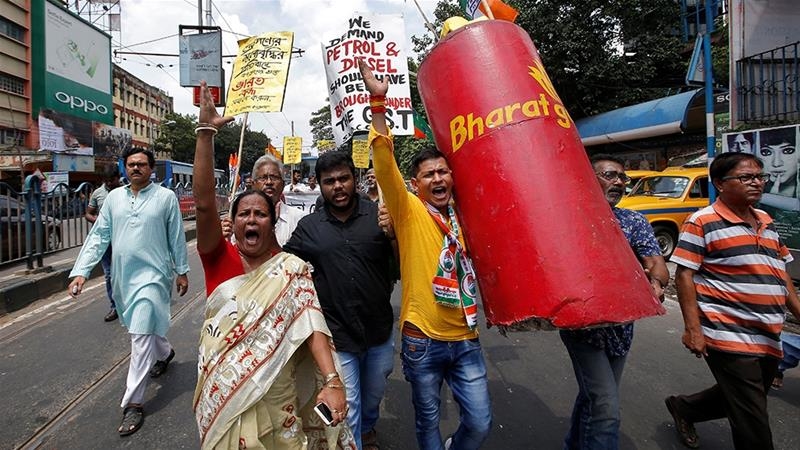
Protesters shout anti-government slogans in the eastern city of Kolkata
The BJP government at the Centre, led by Prime Minister Narendra Modi, who likes to refer to himself as the pradhan sevak, is brazenly trying to fool the people of the country on the issue of petrol and diesel prices. After the Bharat Bandh of September 10, called by 21 Opposition parties that saw widespread support across the country, one central minister came out with the spurious argument that fuel prices in India are rising because international crude prices are rising.
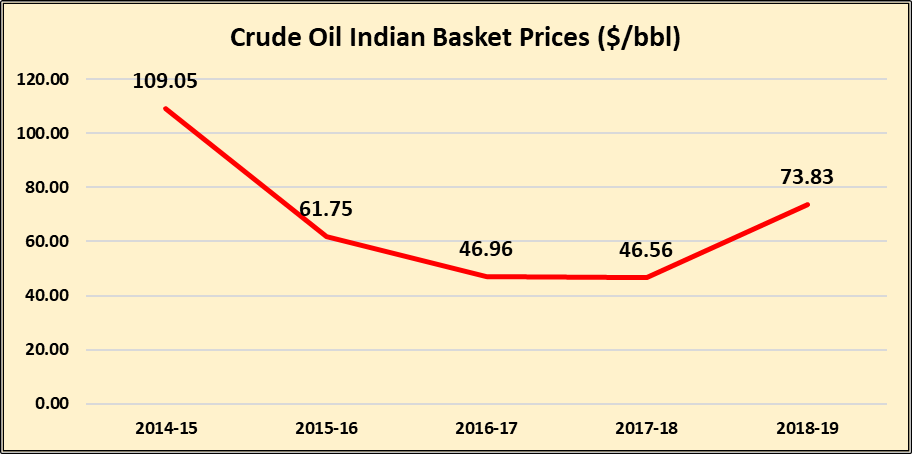
But the truth is something else. For three years straight after the Modi government took over power in May 2014, the price of crude oil in the Indian basket fell from $109.05 per barrel in June 2014 to $46.56 per barrel in June 2017. After that, it has risen to end up at $73.83 per barrel in June 2018. This is according to official data put out by the Petroleum Planning & Analysis Cell (PPAC) under the Ministry of Petroleum and Natural Gas. So, in four years, the price has actually dipped by about 32% since the Modi government took over. The Indian basket is a mix of two types of crude oil that India imports.
But there is more. The colossal deception that the Modi government’s spin-masters are trying to peddle is further exposed by the fact that international crude oil prices have little to do with what the Indian consumer pays. It is the taxes that are killing people. About 46% of what the common consumer pays for petrol is made up of taxes charged by both, the Central as well as the state governments.
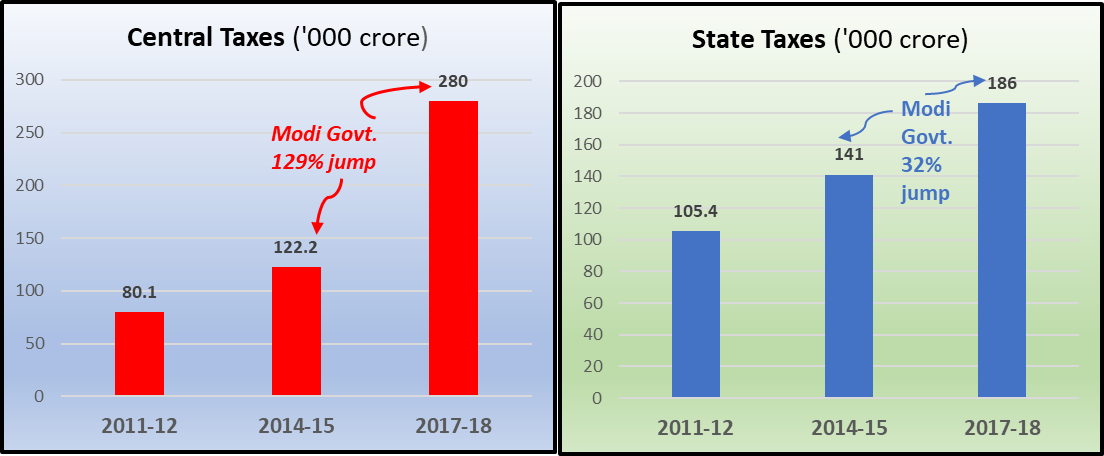
As shown in the charts, in 2014-15, the Modi government was making some Rs.1,22,200 crore out of taxes that it levied on oil. By 2017-18, this has zoomed up to Rs.2,80,000 crore! That is an increase of a staggering 129%. According to some estimates, the Central government has collected over Rs.11 lakh crore worth of taxes in this period riding on this bonanza.
The Myth of State Taxes The ruling BJP has also been propagating the myth that it is state governments that are actually responsible for the rising prices of oil. There has been a 32% increase in state taxes during the past four years. But all the states put together collect some Rs.1,86,000 crore in taxes on fuel compared with the Centre’s cut of Rs.2,80,000 crore. And, in any case, the BJP is ruling in 21 states, as their leaders never tire of reminding us. Only recently has one of its state governments – in Rajasthan – reduced the state tax, because it is facing a tough Assembly election in a few months.
Another deception that the central BJP govt. is attempting to propagate is that higher tax revenues are good for the states and the people because all the money collected in the tax kitty goes for the benefit of the people. It is also argued that central tax collections are shared with states and so, higher tax earnings will benefit state govts.
This would be true if the BJP government was actually spending money for the benefit of the people. But, in fact, there have been cutbacks in almost all central welfare schemes over the years of Modi rule with paucity of resources being cited as the reason. So, the Centre doesn’t seem to be redirecting the money earned from oil taxes to any public good.
On the other side, corporate houses have been indiscriminately given loans which they are now refusing to return. Such bad loans – given from public money collected through taxes – have reached over Rs.10 lakh crore, as per Reserve Bank of India. There are many such cases of corporate houses and cronies of the government/ruling party being given massive handouts from the public exchequer. In fact, the government has been selling off national assets, like the public sector units, to private entities. The Modi government can hardly be said to have used tax revenues for the people in any fair or inclusive manner.
What the sordid saga of oil prices shows is that the Modi government has actually been extorting money from farmers, workers and other common people of the country in order to satisfy the greedy appetites of corporate houses and big landowners. Oil and its products (petrol, diesel, kerosene, etc.) are used not just by the rich or middle classes. It is essential for irrigation, for transport of agricultural commodities and finished goods and for cooking fuels. Increasing prices directly as well as indirectly (through price rise of other commodities) rob the people of their hard-earned money. No amount of lies by BJP will assuage the anger felt by the people at this daylight robbery.
In some ways, I had always expected the news of Gautam’s arrest. Over the last 25 and more years that I have known him, first as a friend and comrade in anti-communal mobilisations in the early 1990s and then as a part of family, the one thing which has stood Gautam apart is his ability to stand up for his beliefs, untampered by the caution of costs that he may have to bear.
It was relatively easy, in a manner of speaking, to stand up for the victims of the 1984 anti-Sikh killings, or against the rising crescendo of Hindu communalism in the 1980s and 1990s. Even if it was a minority opinion facing the wrath of State and majoritarian opinion, there were enough people on this side too. What stood Gautam apart for me was his public stand during the Kargil war. I did not agree with him, as was true for most of his friends. Kargil was a clear instance of a breach of trust by the Pakistan military in an attempt to force the Kashmir dispute towards a military resolution.
Gautam, along with a handful of his friends, did not agree. He felt, strongly, that this particular combat between the armies of India and Pakistan was but a symptom of the immoral and wasteful fight between the two countries. He could not see a moral basis to India’s claim in a land where both India and Pakistan had treated its people as expendable pawns in a geo-strategic game. He did not see anything exceptional in Pakistan’s behaviour (“breach of trust”) where both states had breached trust that the Kashmiri people had placed on them. He argued that the war will, whatever the outcome, only mean more young men dying for an immoral cause. I remember vividly sitting and watching the news with him when the reports of Vikram Batra’s death were “breaking”, and Gautam feeling angry – his hands in a fist of rage – telling me that this is what will be the only achievement: the loss of young people’s lives for a futility.
It was not just the vacuous anger of the drawing room for Gautam, an anger which is cautious because it is careful of public moods and state power. Gautam went campaigning in public against the Kargil war while it was going on. He spoke at street corner meetings, telling people of the wastefulness of war and calling for an end to fighting.
I did not agree with him then, and I did not agree with him today either on many of his political stands. In the over two decades he has been part of my family – my aunt’s companion, partner and support – I have realised that Gautam’s politics emanates from a deeply moral stand. If he was public in his opposition to the Kargil war, asking for cessation of hostilities while the peaks were still in Pakistani control, he was also in the forefront of pointing to defence corruption and the flaws in defence purchase which weakened India’s army and make cannon-fodder of its soldiers.
While he has moved to become a more convinced “Leninist” in his politics, Gautam carries the moral conviction of the Pacifists of a hundred years ago, who were willing to face public censure and State repression in standing up for their belief in the futility of the “Great” War. To stand up against the excesses of the State, to hold the State to account for its promissory note: the Constitution, to speak up against chauvinism and hysteria, stand against the mythical “will” of the people when you know they are wrong; I have seen Gautam do this consistently and fearlessly. Which is why I learn so much from him even when I disagree. His single-minded passion to raise his voice against injustice and to stand with those who have been wronged has been a life-lesson.
The Indian State, helmed by a narcissistic petty-minded man at present, may concoct charges against Gautam and his comrades, but prisons can’t lock up ideas and ideals. Today’s persecution of Gautam and his friends reminds me of these lines by Faiz, another communist who was often persecuted by India’s midnight twin, on similar concocted charges:
Zulm ka zahr gholne wale Kaamran ho sakenge aaj na kal Jalva-gah-e-visaal ki shamein Vo bujha bhi chuke agar to kya Chand to gul karein to hum janey [there are those who may concoct tyranny’s poisons, they will have no victories, not today or tomorrow. So what if they douse the candles in rooms where lovers meet? If they’re so mighty, let them snuff out the moon.]
Aniket Alam is Associate Professor, Humanities/IIIT-H, Hyderabad
Binoy Chanda, the only earning member of his family, became the 28th suicide victim in Assam since the BJP came to power in May 2016 due to the ‘D’ Voter issue. The poor youth of Dimlapar village under the Tamulpur Police Station in the Baksa district committed suicide late at night on Sunday, September 9, due to fears that his mother, Santi Rani Chanda, was going to be declared a ‘Foreigner’ by a Foreigners’ Tribunal (FT).
Although Santi Rani Chanda had all the relevant documents to prove that she is an Indian citizen, she received a ‘Suspected Foreigner’ notice in the early part of 2018. After receiving the Foreigners notice, Binoy Chanda approached senior advocate and prominent writer Omar Ali Choudhury, and took his mother to the Foreigners’ Tribunal of the Baksa district so that she could be proved an Indian citizen. For the last seven months, Binoy, along with his mother repeatedly appeared before the Foreigners’ Tribunal, and collected all documents by which her rights to citizenship could be protected. In the process, Binoy, a daily wage labourer, had to spend all the money that he could earn in collecting documents and travelling. His debts increased day by day. In spite of this, he seemingly felt that there was no sign of hope that his mother would be declared an Indian citizen because of what he perceived was the bias of the member of the Foreigners’ Tribunal. He became increasingly frustrated, and finally took the extreme step of suicide.
Binoy’s mother, Santi Rani Chanda, said, “I myself have all valid documents to prove myself an Indian citizen. I have migration certificate of 1964 along with my family, which is enough to prove myself an Indian citizen. But the member of the Foreigners’ Tribunal under whom my case is pending did not attend to my advocate’s arguments. Thus, my son Binoy Chanda became depressed, that I am going to be declared a ‘Foreigner’. In this situation, he found no option but took the supreme decision.”
Notice served to the Chanda family by the Foreigners’ Tribunal, Baksa District
Santi Rani Chanda expressed her displeasure over the functioning of the Foreigners’ Tribunal. She said, “As per the dates given by the Foreigners’ Tribunal, my son took me to the Tribunal on each and every occasion, but in maximum number of occasions, I found that the Member of the Foreigners’ Tribunal was absent. So, another date was given to us. But our problem was that to attend the Tribunal, my son had to spend his working day and had to spend huge sum of money for our travel, which was beyond his capacity.” Adhir Arya, All Bengali Youth-Student’s Federation leader of Tamulpur district said, “It is quite unbelievable that thousands of genuine Indian citizens have been harassed by the Foreigners’ Tribunals on the behest of the present government. The response of the government towards the genuine Indian citizens is most irresponsible.”
Advocate and writer Omar Ali Choudhury, who represents Santi Rani Chanda, was shocked to hear the news of Binoy’s suicide. He said that her case is ongoing, adding, “The Member of the Foreigners’ Tribunal, Baksa at Tamulpur is working like an obedient servant of the present government of Assam. He is working like a machine to make Foreigners without any justification. Whatever the genuine documents submitted to this Tribunal, it doesn’t matter to him. He sets aside all documents and declares Foreigners whimsically. Till now about 100 cases has been disposed in his Tribunal, where only four cases have received positive results. Many people in the Dimlapar village have been declared Foreigners during his tenure of four months in this Tribunal. Before Tamulpur, he was a Member of Foreigners Tribunal-1, Nalbari.” According to Choudhury, in that Tribunal, the Member disposed 249 cases, in which he rejected “all just and genuine documents,” and only nine people were declared Indian citizens. The advocate said that Binoy Chanda was aware of this, and that he took an extreme decision out of frustration.
Santi Rani Chanda’s Relief Eligibility Certificate containing date of arrival from erstwhile East Pakistan
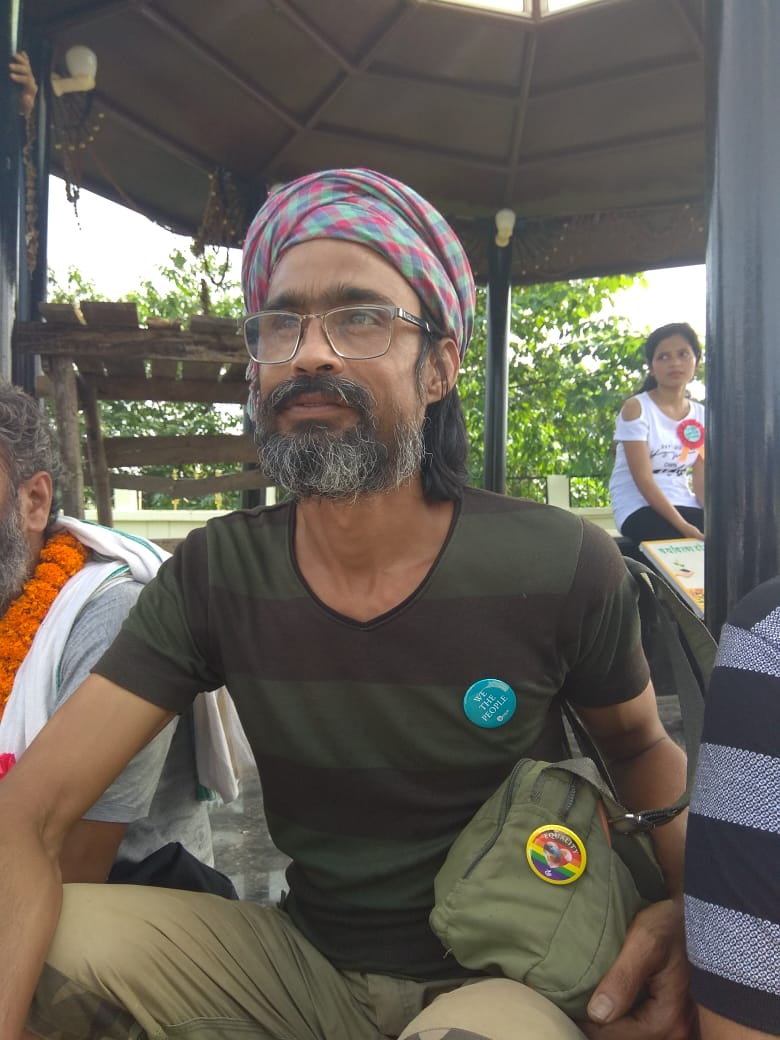
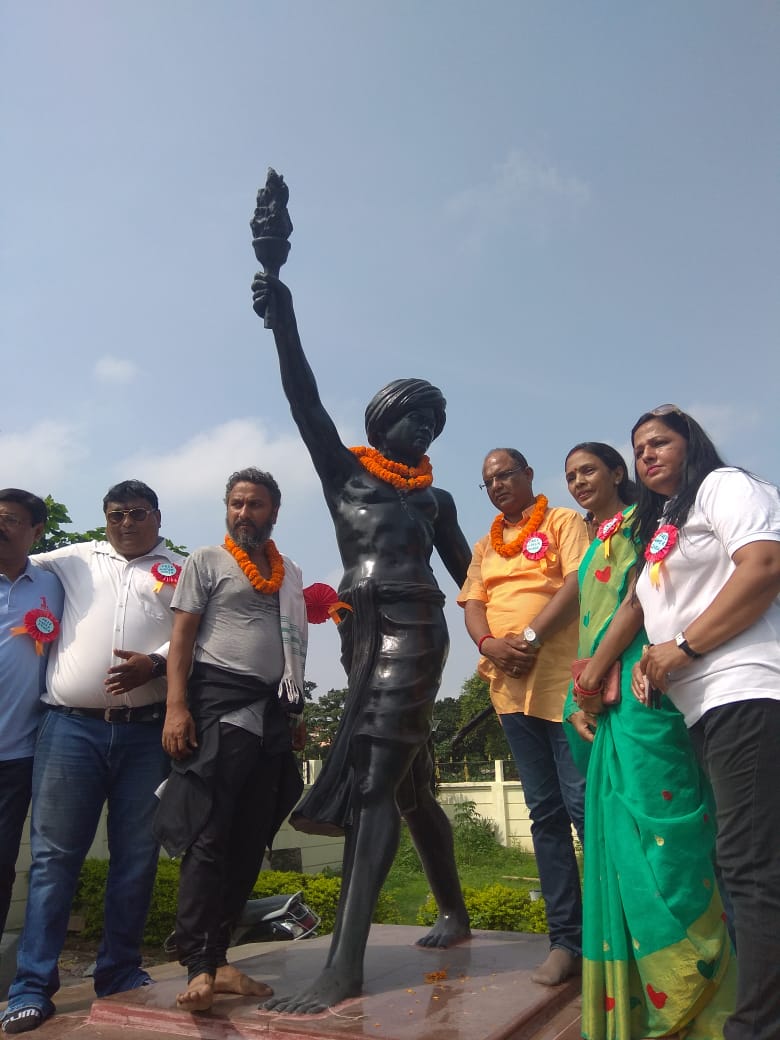
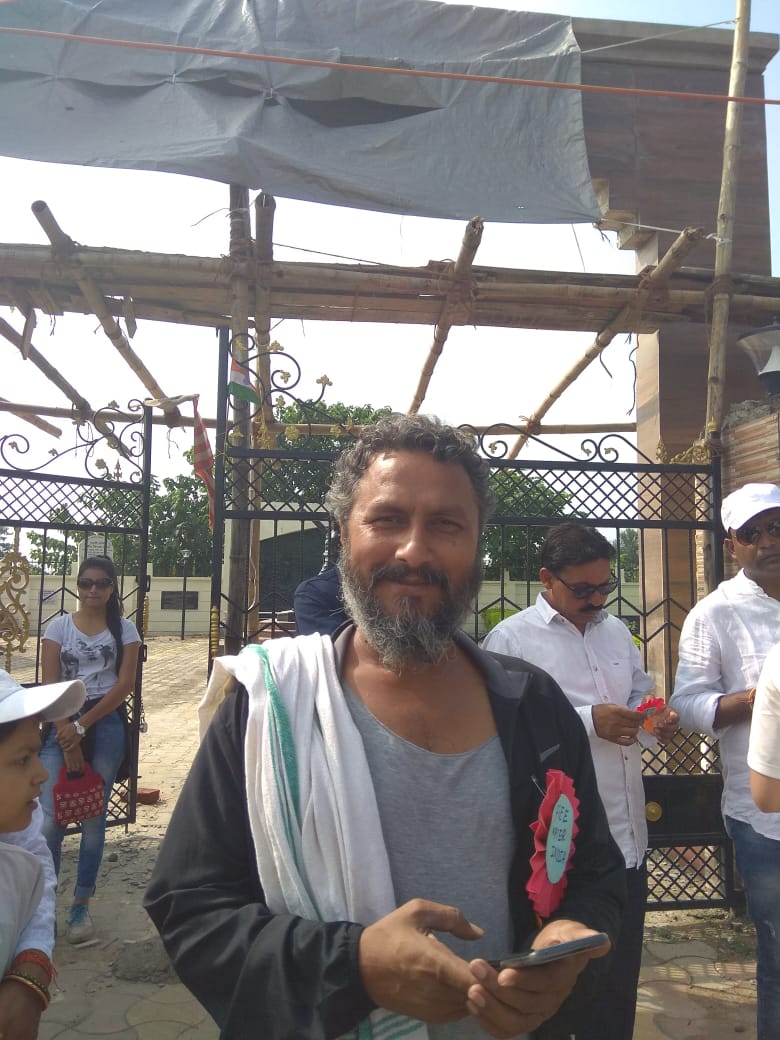
Sriram Dalton from Daltongunj in Palamu district of Jharkhand walked from Mumbai to Ranchi this environment day to spread awareness on the privatisation and corporatisation of natural resources in India.
Sriram wears multiple hats, that of a director, editor, writer and more
Born on 25th August 1979 in Daltonganj, Jharkhand India, Sriram completed his Bachelor’s in Fine Arts from Banaras Hindu University (B.H.U) India in commercial art in the year 2001. After which he came to Mumbai and under tutelage of legend late Ashok Mehta, he endeavoured to beautify camera work of films like Kisna, Waqt, Family, No entry, God Tusi Great Ho, Meridian, part of pop culture. His creative genius also nourished some corporate ad films. His film profile maps a wide range.
In a career spanning more than two decades, he has seen how the corporate and corrupt politicians have exploited natural resources.
Deeply concerned about the issue of privatisation of water, where corporate giants are selling water at exorbitant rates, unaffordable for common masses, on this world environment day he decided to walk from Mumbai to Jharkhand and tell people on the way that water, forest and land belong to the people of India. And we must at least get free water.
He documented his journey on Facebook live, interacted with people, and visited many schools in Maharashtra, MP, Chhattisgarh and Jharkhand.
He ended his walk on 9th September in Ranchi.
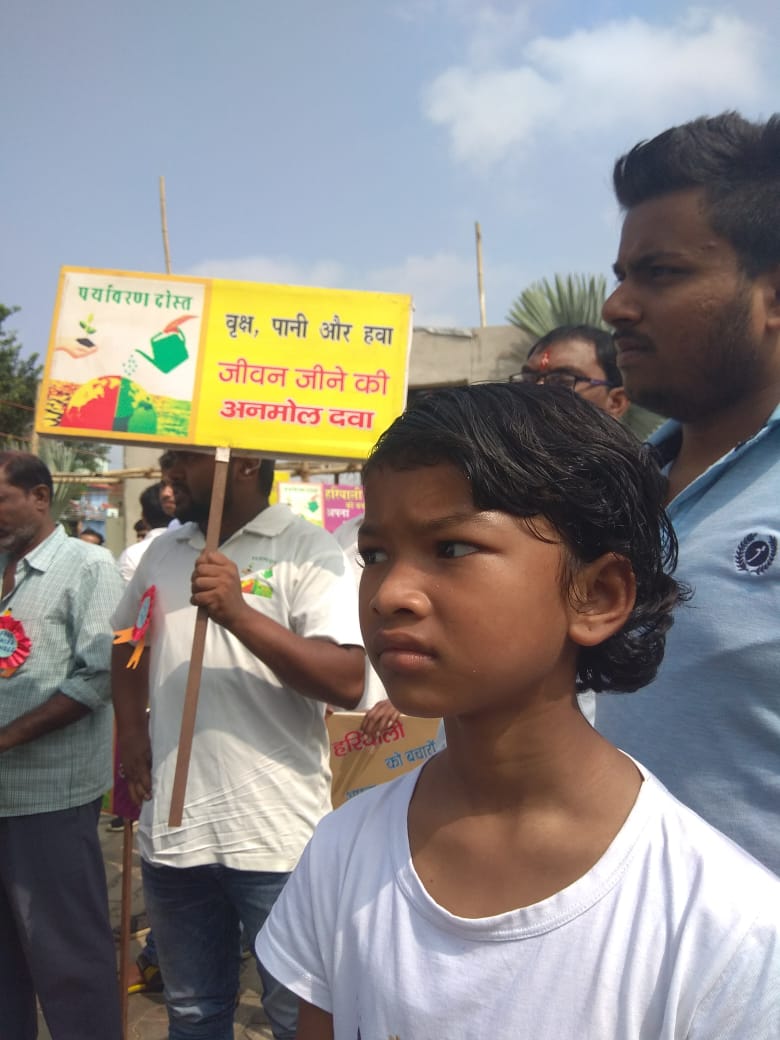
Local environment groups joined his rally in Ranchi and walked from Bhagwan Birsa Samadhi to Bapu Vatika. The corporate control over people’s water, mineral and forests is against the nature and it is also unconstitutional.
His film on the Uranium mafia, Spring Thunder is scheduled for its world premiere on September 23 at BASAFF (Bay Area South Asian Film Festival), USA. The film showcases the fight in rural India between sustainability and development against the backdrop of Uranium mining. Showcasing the tussle between ‘Sustainability’ & ’Development’ in the context of rural India, ‘Spring Thunder’ narrates the story of a Uranium mining tender at the highest plateau of India, enriched with thick forests where various native communities are living. Starting from conflict of policymakers, to crime, money, politics, and rage at the local level concerning land acquisition to universal environmental concerns. The selfish political inadequacy leads the local tribes to unite and retaliate for the survival of their existence.
He wants like-minded people to support him in his long term mission of having free water in India and short term goal of promoting his film on the conflict of sustainability and so called development.
A line of protesters against the construction of the Dakota Access oil pipeline on the Standing Rock Reservation in North Dakota head to a unity rally on the west steps of the State Capitol in September 2016 in Denver. (AP Photo/David Zalubowski)
Discoveries continue to reveal unexpected details about our shared human past. But the new information also brings new responsibilities and concerns about the political, ethical and social dimensions of archaeological research and heritage management. This is especially true for Indigenous peoples for whom heritage is about more than objects of scientific study or items to preserve in museum displays.
A leaf shaped slate point is one of over 490 artifacts found near an Indigenous burial site of at least 35 bodies of the ancestral lands of Ye’yumnuts in Duncan, B.C. The Canadian Press/Chad Hipolito
Indigenous perspectives of heritage have become widely known over the past 30 years, and are being integrated into research projects and management practices. In some cases, divisive relationships between Indigenous and Native American communities and archaeologists, (sometimes labelled grave robbers), have been transformed into collaborative, mutually beneficial relationships.
More importantly, a growing number of Indigenous archaeologists and anthropologists are discovering, interpreting and protecting their own ancestral sites. And there is a growing recognition of the legitimacy of Indigenous traditional knowledge. For example, the Nyungar Cultural Rangers program in Western Australia is a community-driven program, in which Indigenous men and women train others in the traditional ways of caring for their own lands.
Nyungar Cultural Rangers. Despite these incremental changes, Indigenous peoples continue to press for meaningful engagement with those controlling their heritage. Current policies in settler countries like Australia, Canada and the United States still provide only limited room for Indigenous input into decision-making on issues of heritage.
The influence of economic development
Development projects are claiming ancestral sites at alarming rates. This ineffective protection of Indigenous heritage is a violation of human rights, while the continued destruction of ancient sites, burial grounds and sacred places can be considered a form of violence. While heritage is essential to all peoples, Indigenous peoples in colonized lands have historically had the least control over theirs. State-controlled heritage policies are a source of regular conflict, with substantial social, political and economic consequences.
Fundamental differences in how heritage is valued raise tremendous challenges to establishing respectful, ethical and effective policies to protect objects, practices and places of local significance.
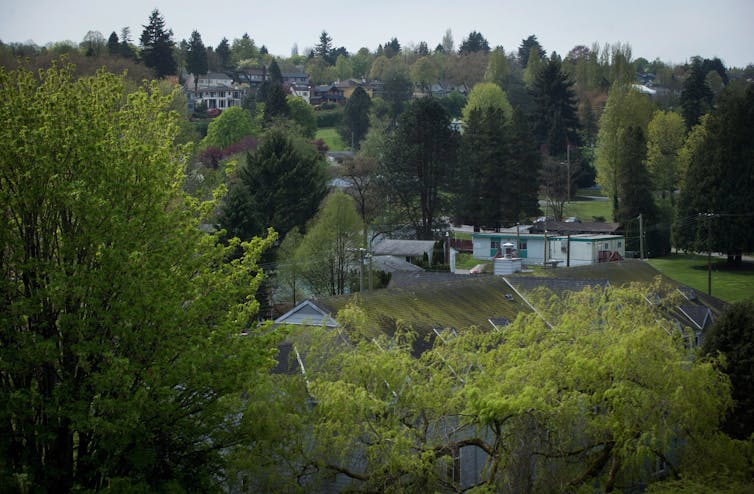
Buildings are seen on the Jericho Lands, a 15.7-hectare parcel of land formerly owned by the Department of National Defence, in Vancouver, B.C., on April 8, 2016. The Musqueam, Squamish and Tsleil-Waututh First Nations have paid $480-million for the prime piece of real estate on the west side of Vancouver. THE CANADIAN PRESS/Darryl Dyck
In the U.S., there is extensive federal legislation, but archaeological sites on private land receive little protection. This is not the case in Canada, where most heritage legislation is provincial but no less problematic.
Economic pressures strongly influence heritage policies. Today, heritage site protection is largely the domain of professional cultural resource management, a $1-billion-a-year industry. Some critics say this profession helps commercial projects comply with heritage laws and effectively facilitates development more than it protects heritage.
Furthermore, protecting heritage sites may pit Indigenous peoples against private landowners and other interest groups.
In British Columbia, private landowners wishing to build are responsible for the cost of archaeological testing, as required by provincial legislation, raising loud complaints about protecting “a bunch of stones and bones.”
Grace Islet, B.C. is the home to a sacred burial ground. Flickr, CC BY
In South Dakota in 2016, the Standing Rock Sioux tribe led the resistance to the Dakota Access Pipeline not only over lack of adequate consultation, but also failure to recognize the impact of the pipeline on the cultural, spiritual and environmental dimensions of the land and water.
Ancestors vs. scientific specimens
The unequal protection under the law for settler vs. Indigenous human remains is especially problematic, with the latter often considered to be scientific specimens.
In B.C., human remains dating before 1846 (the date of Confederation) — predominantly ancestral First Nations — are considered part of the archaeological record, which is protected by the Heritage Conservation Act. Those dating after 1846 — predominantly white — are protected under the much stronger Cemeteries Act.
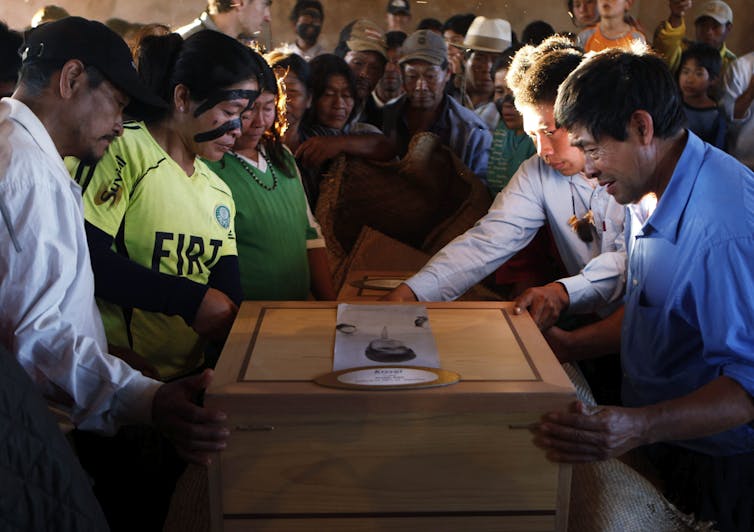
Ache Indigenous people open a coffin containing the bones an Ache woman and child captured 114 years ago in the jungles of Paraguay, in Ypetimi, about 300 kilometers southeast of Asuncion, Friday, June 11, 2010. Preserved at a museum in Argentina, the bones of the boy and another Ache woman, whose indigenous name was Kryygi, were returned by Argentine authorities to their ancient community in an act of historical reparation to the Ache tribe. (AP Photo/Jorge Saenz)
Not surprisingly, it has proven very difficult to redress the types of inequalities faced by Indigenous peoples because of Western notions of heritage and the guiding principle of stewardship. There is a lack of neutrality, with heritage management policies operating from a privileged, largely Western-centric position.
There is now some accommodation of Indigenous knowledge, but with limited credence given to oral histories, except when it concurs with archaeological sources. Some scientists have concerns of relinquishing any significant control over decisions about archaeological projects and policy development — lest the integrity of the archaeological record be diminished.
These concerns include fear of an “anything goes” non-scientific approach to heritage. The idea is that if we protect Indigenous heritage we will only operate from a stance of political correctness and will no longer engage in science. Yet this is challenged by recent studies that demonstrate the complementarity of Western science and Traditional Knowledge.
Working together
Despite these hurdles, there is increasing acknowledgement worldwide that protection of everyone’s heritage needs to be a fundamental human right.
Government agencies and NGO’s are increasingly joining with universities and Indigenous organizations to develop solutions. Protecting Indigenous cultural heritage is more than an issue of academic interest, however.
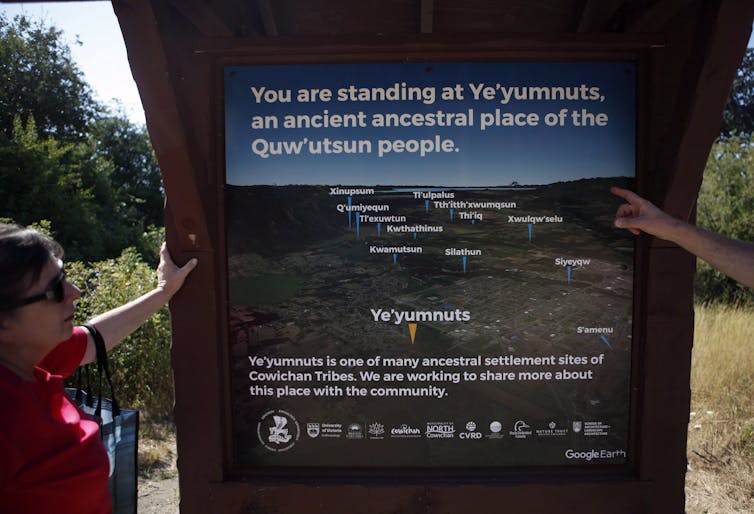
UVic anthropologist Brian Thom points to a board mapping out ancient ancestral settlement sites of Cowichan Tribes in the area as Dianne Hinkley looks during a cultural tour of the ancestral lands of Ye’yumnuts in Duncan, B.C., in July 2018. The Canadian Press/Chad Hipolito.
We urgently need a set of practical guidelines for addressing and preventing heritage loss by Indigenous peoples.
Canada’s Truth and Reconciliation Commission was created in 2008. The U.S. established its commission in 1998 but with a much broader mandate and has yet to address specific Native American concerns.
It is another matter to transition these ideas from theory to practice to policy. There is uncertainty about what the acceptance of UNDRIP means and what the steps are for implementation, especially for Canada, the U.S. and New Zealand, the three countries that initially voted against it.
The various initiatives launched in recent years offer at least nominal restitution for past harms suffered by Indigenous peoples, including the loss of land, language, cultural traditions and sovereignty due to colonialism.
The passage of the Native American Graves Protection and Repatriation Act in the U.S. in 1990 sent shock waves through the discipline of archaeology, but the world did not end as some archaeologists feared.
Instead it has contributed to new and productive relationships with Native Americans. It created opportunities for scientific research on the ancestors that has revealed their life histories, as well as connections between past and present-day communities.
School District 79’s head of Aboriginal Education Program Rosanna Jackson is photographed during a cultural tour of the ancestral lands of Ye’yumnuts in Duncan, B.C., in July 2018. THE CANADIAN PRESS/Chad Hipolito
Some Indigenous Elders believe the ancestors let themselves be found so they can teach today’s Native youth about their history.
Herb Joe, a member of the Stó:lō House of Respect Caretaking Committee, said:
What comes to mind for me is the gift of knowledge [and] awareness that is happening for us [in working] with the ancestors. The amount of knowledge that we’re acquiring and will continue to acquire with the DNA samples and all that, that’s going to be a gift to the Stó:lō people … our children, grandchildren, and great-grandchildren, they’re going to be healthier people with the gift of this knowledge about who they are and where they came from.
There can be no argument that colonialism robbed First Nations of much of their heritage. As a society today, we must support the restoration and protection of their cultural heritage beyond lip service.
(Please note, this story quotes excerpts from multiple news publications and websites.)
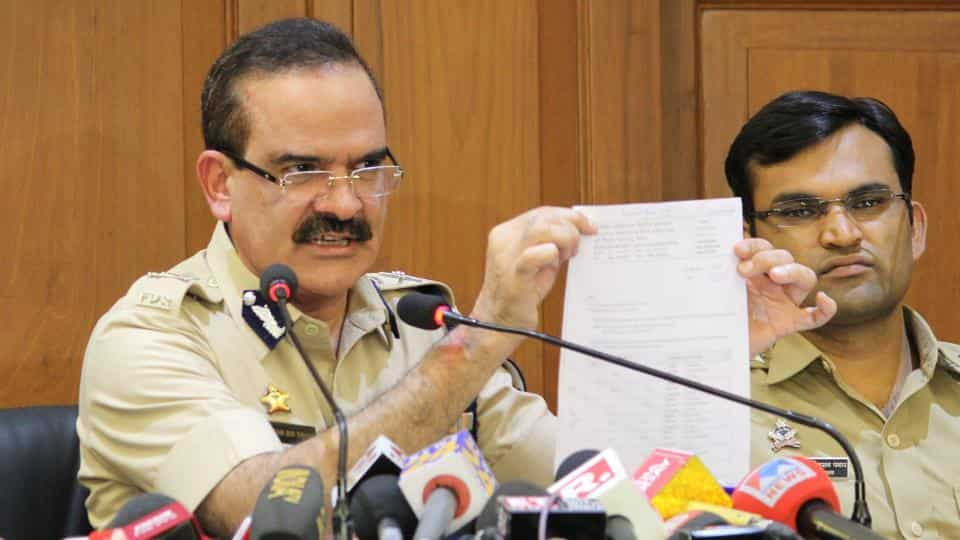
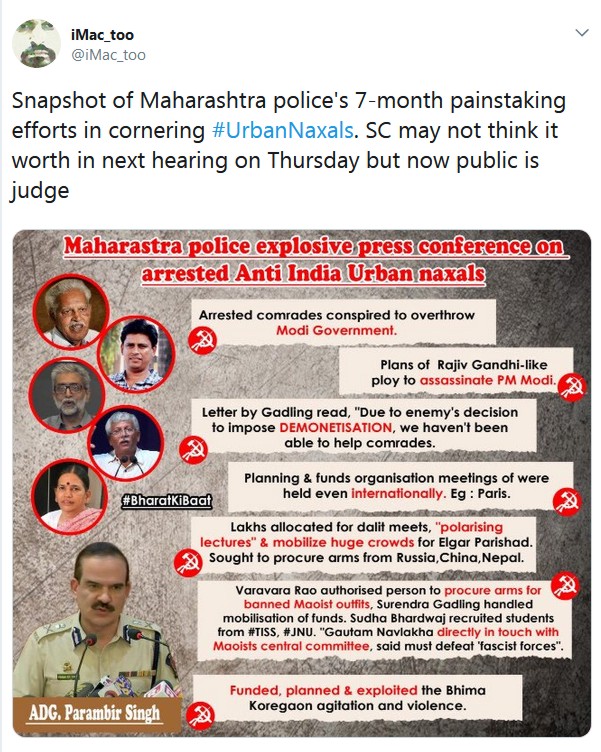
The Press Conference Parambir Singh, ADG (Maharastra Police), flanked by his two deputies – Shivaji Bodkhe, JCP, Pune and the investigating officer, Shivaji Pawar, ACP, in a press conference in Mumbai, inaugurated a distinctly new storyline, incorporating and retaining only fragments of the earlier official versions, on the nationwide raids and arrests carried out on August 28. In fact, during the briefings, he himself said as much. Here’s a useful summarisation of the press conference, echoing the charges made by the Pune Police: <https://mobile.twitter.com/iMac_too/status/1035567590293164032?s=08>.
The New Storyline The sum and substance of this surprise version is as under: Finding-I. The CPI (Maoist) is engaged in a conspiracy to overthrow the lawfully established government through unlawful means. Analysis: That’s, however, hardly any discovery of America! The outfit is engaged in armed insurgency against the Indian state, in a bid to overrun it, for years by now. Even since well before the emergence of the current structure back in 2004. It would, eventually, be banned in 2009.
Finding-II. The CPI (Maoist) is of late engaged in trying to expand to urban areas – link up with Dalit and Muslim groups. Analysis: While the insurgency, for decades, remains limited to rural patches, or rather remote and fairly inaccessible backwaters of India, the outfits involved, in their various avatars, always had urban pockets of influence – mostly among students and, to a significantly lesser extent, workers. That’s also rather widely known.
Reports of systematic Maoist attempts to link up with Dalit groups is also hardly anything new.
Here’s just an example: A 2004 document seized by investigating agencies suggests that garnering support of Dalits formed an integral part of the Maoist agenda before the Khairlanji (in Maharashtra) incident (in 2006, involving a ghastly attack on a six-member Dalit family, rape of the women – two in number, parading them naked and murder of all barring one.
The fact that the Naxals reportedly aimed at amalgamating the Dalit aspirations and struggle with the revolutionary zeal since the last few years was established after the seizure of literature and documents found in possession of several arrested sympathisers like Anil Mhamane and three others and leaders like Arun Ferreira, Murli, Vishnu, Vikram and Tusharkant Bhattacharya.
Similar is the case with Muslims: The current statement (by CPI-Maoist in 2008) relating to the (extension of) proscription of SIMI could be understood by considering the following. One, it is an attempt to win over the support of the Muslim community and thus broaden their base.
Two, the Maoists are making common cause with SIMI by condemning its proscription as they too are a proscribed organisation in some states; they are also banned by the central government under the Unlawful Activities Prevention Act.
Three, and more importantly, this should be seen in the context of the Maoist tactic of making common cause with any organisation or body that opposes the Indian state either through peaceful means or violently. This is part of the United Front tactics of the Maoists.
Finding-III. The five accused, now under house arrest, are linked to the CPI (Maoist).
But, then: (M)ere membership of a banned organization cannot incriminate a person unless he is proved to have resorted to acts of violence or incited people to imminent violence, or does an act intended to create disorder or disturbance of public peace by resort to imminent violence. (Excerpted from: ‘Arup Bhuyan vs. State of Assam; decision dated 3-2-2011 of Supreme Court in Criminal Appeal No.889 of 2007 – held applicable.’ p. 1-2.)
Finding-IV. The five accused are actively engaged, including procurement of arms, mobilisation and disbursal of funds and plot to assassinate the Indian Prime Minister, in the project “overthrow”, by violent and unlawful means. The police have allegedly recovered “thousands of letters” (mostly from Rona Wilson’s hard disk) to substantiate this claim. The above allegation, beyond doubt, constitutes a serious offence.
A Sudden Departure The interesting point is that even on August 29, two days before the press conference, the Maharashtra police didn’t, reportedly, cite the project “overthrow” as a ground for seeking remand of the accused either before the Delhi High Court or the Supreme Court, even though the arguments of the Public Prosecutor, the same day before a Pune court, seeking remand of three of the accused, broadly, prefigured the case that’d be put across in the press conference two days thereafter.
At least five leadingnational dailiesfollowed up with stinging editorials, the next morning. The fact that some of the raided and arrested, this time round, are well-known public figures with pretty impressive track records, conceivably, went a long way to trigger the nationwide outrage. Five eminent persons, none with any known “Maoist” tinge, took the initiative to knock the doors of the Supreme Court to scuttle the much derided move of the Pune police.
The reports of highhanded and outright brutish conduct of the forces during raids also, apparently, helped stir the conscience of the nation.
Here’s a representative sample: “They asked me (Varavara Rao’s son-in-law, who heads the Department of Cultural Studies at the English and Foreign Languages University (EFLU) in Hyderabad, whose house was also raided), why are there so many books in your house? Do you read all of them? Why purchase so many books? Why do you read so many books? Why are you reading books on Mao and Marx? Why do you have books published in China? Why do you have songs of Gaddar? Why are there photos of Phule and Ambedkar in your house, but no photos of gods?’’ he said. One officer, Satyanarayana said, pointed to the books and told him he was “reading too many books” and “spoiling students”.
The Backdrop It may be recalled here that the Bhima-Koregaon violence, which was officially alleged to be the ground for raids and arrests on the previous, and first, occasion, on the June 6, and also this time (as was being presumed till now), had occurred around the New Year’s Day 2018.
On April 17, this year, the first instalment of raids in multiple cities were carried out. The Pune police have carried out searches at five places at the residences of some prominent activists and a lawyer in connection with their alleged links to the Bhima-Koregaon commemorative program on January 1. The activists include Rona Wilson (Delhi) and lawyer Surendra Gadling (Nagpur). The residences of Sudhir Dhawale and Harshali Potdar, Jyoti Jagtap and Ramesh Gaichore and Dhawala Dengle are being searched in Pune.
A senior police official said, “An offence had been registered at Pune against Kabir Kalamanch in connection with alleged provocative speeches during Elgar Parishad at Pune on January 1. The program had been organized on the occasion of Bhima-Koregaon commemoration. We already had some evidence of Maoist links to the events connected Bhima-Koregaon. The searches on Tuesday are to check for further evidence in the matter.”
This was followed up with arrests of five on the June 6 following, after an interval of over a month and a half, from Delhi, Mumbai and Nagpur.
This was claimed to be based on the forensic analysis of the materials seized during the raids on April 17. Police sources said that following the forensic analysis of electronic and other evidence obtained during the search operations [on April 17], four teams of Pune city police were dispatched to Mumbai, Delhi and Nagpur on Tuesday (June 5). Police teams started arresting the suspects in the early hours of Wednesday.
The ground, as indicated by the police was: “We have been able to establish the money trail between these Naxal sympathizers and Naxals ahead of the Elgar Parishad in Pune on 31 December 2017. Offences were registered against some of these activists, including Dhawale, in January ***for the violence in Bhima-Koregaon on 1 January*** [emphasis added] that we believe was triggered by their inflammatory speeches at the Elgar Parishad. We have accumulated more evidence in the last few months and have a stronger case now,” the official said.
It’s worth noting that: A special court had granted the Pune police a 90-day extension for filing charge sheet against the five activists arrested on June 6 for their alleged links with the outlawed Communist Party of India (Maoist) and the Bhima-Koregaon clashes of January 1.
Also noteworthy: On the prosecution’s claim about purported funds being supplied to the accused to aggravate the clashes, he (defence counsel Advocate Rohan Nahar) said: “We have nothing to confirm or deny the allegations as we are not furnished with any report of the police’s investigations or their findings. We will come to know of the specific allegations only once the charge sheet is filed.”
So, after more than four and a half months since seizure of the incriminating materials and almost three months after the first wave of raids and arrests, based on the forensic analysis of the materials seized during the raids on April 17, while carrying out the second instalment of raids and arrests, the Pune police are unable to file a charge sheet against those arrested earlier within the stipulated (first) deadline of 90 days of arrests.
The Storyline Challenged It’s yet another matter that those who were arrested now, and also some others, have just pooh-poohed these “letters”. Some of these articles may be read here:
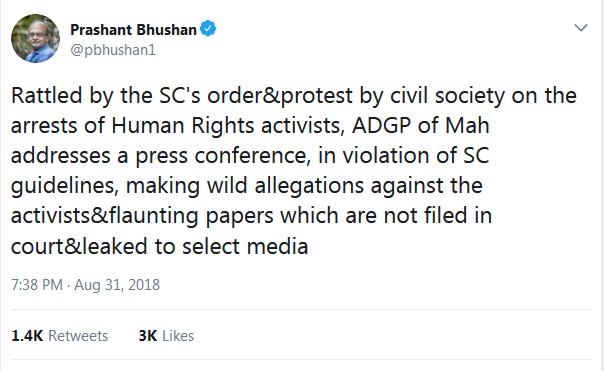
Questionable Legality of the Press Conference It’s also pertinent to note that whether the subject press conference has breached the bounds of legality is an issue of controversy.
It, in fact, appears that the press conference has very much violated the instructions laid down in the Para 2. VI & X of the ‘Advisory on Media Policy of Police‘ issued by the GoI on April 1st, 2010. Even more relevant: The Bombay High Court (on Sept. 3) has pulled up Maharashtra Police for holding a press conference, elaborating on the evidence it claims to have, against activists arrested in connection with the Bhima Koregaon case. While hearing a petition, the court said how can the police hold a press conference when the case is subjudice.
“How can the police do this? The matter is subjudice. The Supreme Court is seized of the matter. In such cases, revealing information pertaining to the case is wrong,” said Justice Bhatkar.
Why Press Conference? Be that as it may, one just can’t help wonder why the Maharashtra police opted not to ambush its opponents with a sudden disclosure as regards the “thousands of letters” at the next hearing of the case in the Supreme Court on the coming 6th! That too going beyond the bounds of permissible conduct. That’s rather remarkable.
The press conference was, plausibly,
a defensive response deeply rattled by the nationwide outrage, as also encapsulated in the five editorials by leading newspapers, cited above, and the harsh reaction of the Supreme Court,
the urge to influence and pressurise the Supreme Court ahead of the 6th September hearing and, finally,
as brought out by a tweet summarising the briefings, cited above, to shape public opinion in its favour, by stirring up paranoia and all that.
Implications of the Storyline As we did see above, out of the four essential points, listed above, made during the press briefings, there is nothing earth-shaking as regards the first three. The points, one and two, are just old points, presented as something new.
The presentation of attempted link-up with Dalits and Muslims, as something new, understandably, apart from trying to sensationalise and stir up anti-Dalit and anti-Muslim sentiments, suggests that the police want also to open a window to launch attacks on the Dalit activists, in view of rising belligerence against the incumbent regime, and also Muslims to quell future protests against mob lynching by Gau Rakshaks, using the alleged link-up with Maoists as a useful peg.
The third point, that the accused are linked to the CPI (Maoist) is by itself not an incriminating one, as has been brought out above.
The fourth one, the charge of active involvement in the project “overthrow” including a plot to assassinate the incumbent Prime Minister, by way of mobilising of forces, collection and disbursal of funds and procurement of lethal and sophisticated weapons rests solely on the “thousands of letters”, three (?) of which had already been leaked to the friendly media outlets – at least two as early as in early June, but none produced in the court so far. And, this is a charge distinctly different from one anchored in Bhima-Koregaon violence, which had (officially) been the case till now. It’s also not clear, at least as yet, what the new FIR looks like.
Credibility of the “Letters” The accused have, based on the contents shared publicly, have trashed these as just “concocted”.
One of the points raised there (point: VI.), in a way, has now been echoed and quite sharply put across by a senior Congress politician:
After disclosing that he is defending some of the arrested activists in court, senior Congress spokesperson Abhishek Manu Singhvi said, “Do you think it’s an illusion of grandeur that the Pune police is in-charge of investigation and the NIA and CBI are nowhere to be seen? The biggest investigating agencies of our country are not to be seen in a case of an assassination attempt against the PM. The Pune police is in-charge? I find it absurd. [Emphasis added.] I am gravely concerned about the security of the Prime Minister if you are leaving a matter like this to the Pune police.”
In fact, a plain reading of these leaked “letters” would reveal how implausible they look like. (Ref. points VI to VII of the ‘audit’ referred to above.)
In this context, one should very well remember how the Prime Minister himself, during the closing phase of the campaign for the last Gujarat assembly poll, had hurled a charge of treason, nothing less (!) at his immediate predecessor and the previous Vice President of India, only to be meekly withdrawn later, the poll having been over and results declared, on the floor of the parliament:
“Thousands of Letters”: Likely Use/Impact In any case, the claim of “thousands of letters”, whether contents fully disclosed or not would be used to pressurise the Supreme Court. The fact that the draconian UAPA has been applied which mandates establishment of prima facie innocence by the accused makes the things even trickier, regardless of the fact that various procedural and other lapses have already been pointed out.
Not difficult to imagine that the arguments made by the government advocate before the Court, citing selected portions of the alleged “letters”, would also be used to launch a vicious and vigorous campaign against those raising their voices against stifling of dissenting voices within the country and stir up a mood of paranoia.
In case of grant of remand of the accused to the Pune police by the Supreme Court, which cannot just be ruled out, under the weight of “thousands of letters”, this campaign would get even more vicious and shriller by tom-tomming it as its conclusive vindication.
It’s precisely, in this context, the following thoughtful observation becomes particularly pertinent: Obviously, not a single charge will actually stick, but that is clearly not the intention. The case will drag on in what I have described as a process of “punishment by trial”. The judicial system is slow, and is willing to pretend that it does not notice the utter silliness of the prosecution’s submissions. The accused will either continue to languish in jail or, even if enlarged on bail, will be harassed for years by the judicial process.
Bogey of “Urban Naxals” It’d be pertinent to note here that the DGP, during his briefings, repeatedly pointed out that anybody daring to take on the police version and challenge its validity is an overground Maoist, trying to discredit the police. One only wonders whether he’d place the Supreme Court and High Courts, apart from the editorial boards of the five leading national newspapers, cited above, in the same very slot.
Obviously, the purpose is to throttle voices of opposition by dangling the threat of implicating as “Maoists”. Not that it’s not already being done.
Interestingly, here’s a strong refutation of the police version of the Bhima-Koregaon violence, as manifested in terms of their actual actions on the ground, by an officially appointed panel to probe into it led by the Pune Dy. Mayor: The ‘secret’ report also revealed that villagers were aware about the clash conspiracy a night before it took place but were forced to stay quiet. Water tractors full of kerosene were also prepared a night before the violence, while lathis and swords were stacked up at a tea stall in the village, the report stated. The eight-page report, submitted on January 20, claimed that Hindutva activists Sambhaji Bhide and Milind Ekbote allegedly roped in Hindutva ultras to create unrest. The document further stated that Milind and Ekbote’s men also announced the conspiracy on social media and were aware about the clashes since 16 December 2017.
This, however, is a dangerous game threatening to subvert the very purported purpose as has been quite aesthetically brought out here: The projection about Urban Naxals may help the government gain immediate political support, but it could help the guerrillas in two ways. First, it perpetuates a myth about their spread and might. An underground insurgent needs a mythical aura. An insurgency is as much a reality as it is the product of myths that society weaves around the insurgent.
The Main Danger Coming to the essential purpose of the latest wave of onslaughts, backed up with sustained media campaigns, the observation by an eminent, and no radical by any whatever stretch, analyst deserves careful attention: The most alarming aspect of the current situation is that these specific arrests and raids are a pretext for something even more sinister: The creation of permanent internal war. This is an excuse to say that the nation is always under peril — first from anti-nationals, then the urban Naxals, and maybe next will be Homo sapiens. The idea of a nation under constant peril is the pretext for legitimising excessive state power, it is the pretext for targeting your opponents as traitors, and it is the pretext for creating the conditions where the necessity of a “strong” leader who can confront the peril becomes an inevitability. [Emphasis added.] … This may not be a declared Emergency. And, statistically, the crackdown might pale in relation to the Emergency. But the Emergency was merely about power. What we are seeing is something more insidious: The production of a psychological complex where everyone is a traitor. It is time for the courts and civil society to push back against a power that seeks to not just imprison our bodies, but stultify our souls. [Emphasis added.]
Broadly similar sentiments have been expressed by an octogenarian academic-activist of some eminence, whose house was raided this time: The mahaul [current environment] in … the country is that if you raise questions and find facts, you are anti-development. If you are anti-development, you are anti-government. If you are anti-government, you are anti-national. That is the logic being followed here.
That, of course, doesn’t rule out the room for other subsidiary objectives.
Conclusion In any case, the essential, and inescapable, point that emerges is: It is time for the courts and civil society to push back against a power that seeks to not just imprison our bodies, but stultify our souls. The cost of failure is going to be too high.