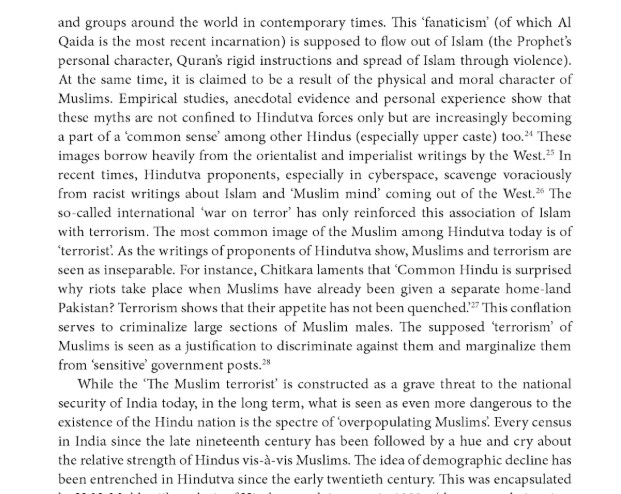
A cultural war is raging. We must unite across geography, across political parties, across class and caste to create a culture that is casteless, democratic, just and humane: Filmmaker Anand Patwardhan’s speech as he receives IDSFF Lifetime Achievement Award in Kerala
Kerala: Noted filmmaker Anand Patwardhan addressed the International Documentary and Short Film Festival in Kerala on July 20, 2018. He spoke about how Kerala has resisted extreme right wing Hindutva violence and how films on political subjects will have to chart the current geography. While receiving the Lifetime Achievement Award, he said that the right wing is a well-oiled machine which spreads fake propaganda through films and it could only be countered with reason and compassion.
Full text of the speech:
Thank you, Kerala! Not only for this award, but for being what you are. For being the last bastion of hope for this country where despite their best efforts, the extreme right wing has never won more than a single seat in Parliament. Thank you for retaining a sense of community without letting it degrade into religious identity so that being a Keralite has more meaning than being a Hindu, Muslim, Christian or Jew. Thank you for being a State that has still not fully succumbed to the mindless industrialization and destruction of ecosystems that the rest of India proudly parades as “development.” Thank you for literally giving us a chance to breathe.
Thank you, International Documentary and Short Film Festival of Kerala and Chalachitra Academy for your hard work and your many years of existence. Thank you to the vision of the political party that gave birth to you and sustains you even when times are bad.
I know I mustn’t stray from the world of cinema so I will try to get back to talking films. The problem is, my films are always about the world I inhabit and that world is changing for the worse. A few years ago, when I was given a similar award it was at a point in time when the current Prime Minister was about to come to power in 2014. In introspecting whether my films over the years had changed the world in any way, I could only conclude that they had not. How could we elect whom we had elected if the films had made any difference? I know that many in the audience and outside will consider it an act of hubris that I expect my films to make this kind of a difference in the real world. But really, I am no poet who writes for myself or singer who sings in the bathroom or artist confined to the gallery. I want the world to take notice. That is the level of my ambition. Without it, I would not be able to make films.
The writing was on the wall in 2014 when I concluded I had failed. But people like me had not failed because our films were bad or did not communicate. They failed because the mechanism of showing our films far and wide had failed. Because those in power in different parts of the country did not prioritize the need to show them. Today, four years later things have gotten worse.
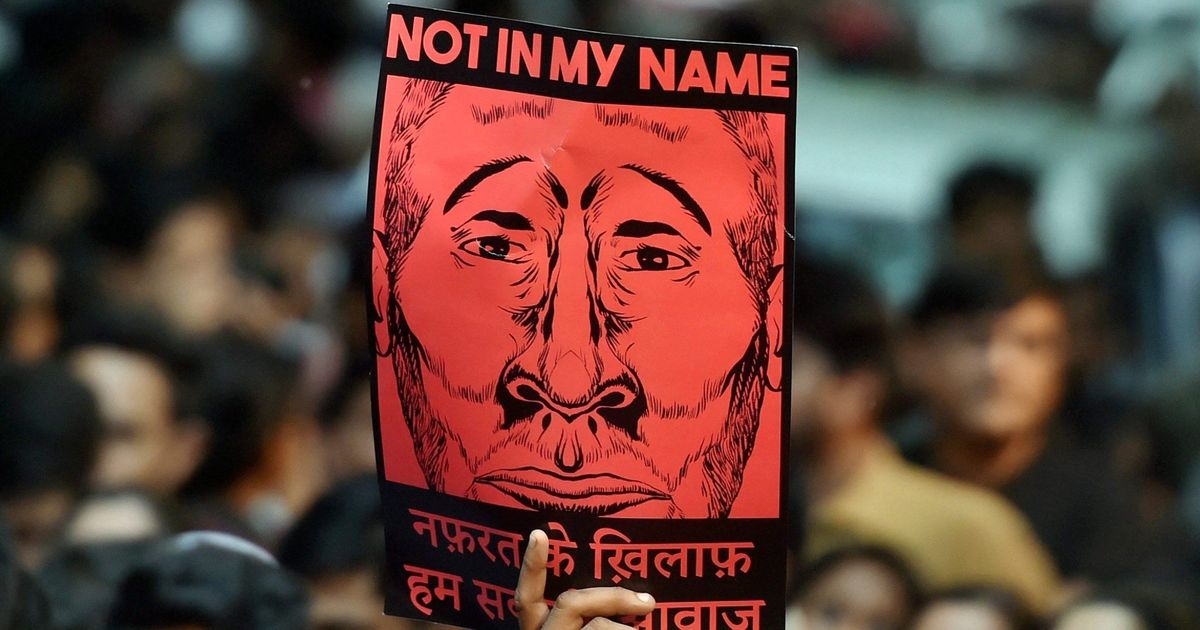
Today’s India has no freedom of expression unless of course you happen to be a right-wing murderer or part of a lynch mob, or a rapist-murderer of Dalits, minorities and weaker sections. Then you not only have freedom of expression, you also have full impunity. On the rare occasion you are arrested, not only will you get bail but ministers will come out to garland you.
Today we are up against the total corporatization of the media. And if you want to know what corporates do when fascists come to power, you don’t have to look far back in history. Today we don’t need a Goebbels to crack the whip. The corporates have already done it. Soon after the romance of Independence ended, we forgot our commitment to quality mass education and later the IMF and World Bank virtually enforced privatization, creating a new form of Brahminism. Dumbed down generations are now fed pop history and fake news. The iconography can change. Saffron can get temporarily covered under the tricolour. Hindutva can become the new National. But for Brahminism to rule, there must always be an object of hate. This Brahminism is not restricted to one caste. It is an exclusivist mindset that always needs to hate enemies. New technology in the form of social media carries the hate to ubiquitous cell phones in the pockets of every lynch mob.
They also train such people to use guns and we have lost many brave human rights activists. Kavita Lankesh is here tonight and it reminds us of our tragic losses.
How can we resist? We cannot do it with counter violence. We can only do it by addressing hearts and minds. A cultural war is raging. We must unite across geography, across political parties, across class and caste to create a culture that is casteless, democratic, just and humane. We are cultural warriors. Our weapons are reason and compassion.
I thank you once again for this award and accept it as a contribution for the work that lies ahead.
The Supreme Court, on Monday, July 24, 2018, ruled that there could not be a “complete ban” on protests at Jantar Mantar in New Delhi, the Indian Express reported. A bench of Justices Ashok Bhushan and A. K. Sikri said, “There cannot be a complete ban on holding protests at places like Jantar Mantar and Boat Club (near India Gate),” and directed the Central Government to formulate guidelines regarding the issue.
The ruling came in the case of a petition filed by Mazdoor Kisan Shakti Sanghatan, which challenged an order from the National Green Tribunal (NGT), which in October 2017 had asked the Delhi government to end all protests in the Jantar Mantar area, Scroll reported. The NGT said the protests breached environmental laws, and that it was the state’s duty to shield people from nois pollution, the Indian Express reported. The bench, led by Justice R. S. Rathore, had directed the New Delhi Municipal Council (NDMC) to take down all temporary structures, loudspeakers, and other protest-related equipment on the road leading to Jantar Mantar. It had deemed the Ramlila Grounds in Ajmeri Gate as an alternative option for demonstrators, where, as per North body authorities, just one group can hold an event at a time.
It is Article 19(1) of the Constitution Of India that gives Indians the Right to Protest. Article 19 reads: Article 19 (1) All citizens shall have the right (a) to freedom of speech and expression; (b) to assemble peaceably and without arms;
The petition challenging the NGT’s order argued, “….holding peaceful demonstrations in order to air grievances and to see that their voice is heard in the relevant quarters, is the right of the people. Such a right can be traced to the fundamental freedoms that are guaranteed under Articles 19 (1) (a) and 19 (1) (b) of the Constitution. Article 19(1)(b) specifically confers the right to assemble and thus guarantees that all citizens have the right to assemble peacefully and without arms,” Bar and Bench reported. The petitioner had argued that authorities and the police had curbed protests by constantly imposing Section 144 of the CrPC. The petition had said that the Delhi Police had for multiple years been issuing such directives as soon as the previous order lapsed, which constituted an abuse of power and hampered citizens’ right to protest, violating Article 19. The petitioner also submitted that in other areas of New Delhi, protests were previously permitted but have been slowly curbed over time.
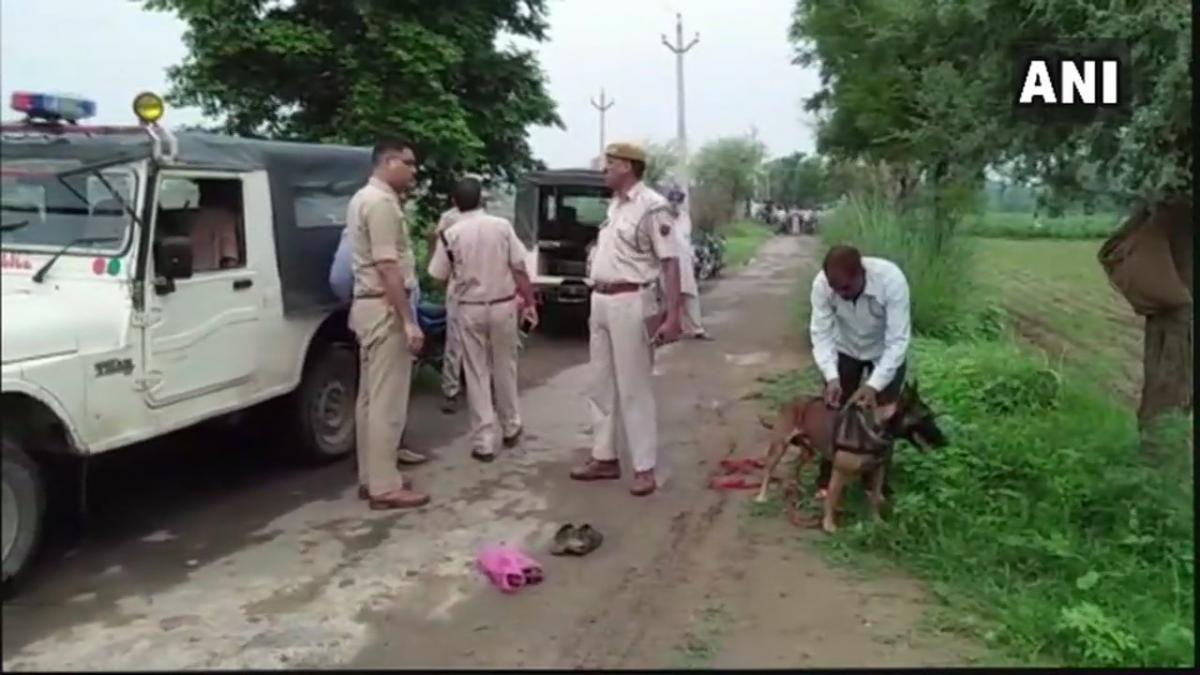
Just days after the landmark judgment of the Supreme Court in matters pertaining to mob lynchings, yet another man was lynched by a mob in Alwar, Rajasthan on Friday July 20. The man identified as 28 year old Akbar Khan of Haryana, was walking back home with his friend and two cows through a forested area in Alwar district’s Lalawandi Village, when he was killed by a mob on suspicion of cattle smuggling. Khan’s companion managed to escape.
Image Courtesy: ANI
Alwar IG Hemant Priyadarshi held a press conference on July 21, saying, “The police received intimation at 12:40 at night and immediately set out for the spot.” By the time the police reached the spot, Khan was bleeding profusely. He was declared brought dead to the hospital. “The body has been sent for post mortem. Two people suspected of their involvement were questioned and later arrested. We are still looking for the other suspects. We are committed to ensuring justice in the case,” said IG Priyadarshini. Meanwhile, an FIR has been filed against unknown persons.
Akbar Khan was a resident of Kol Village in Ferozepur Jhirka in Haryana. He is survived by five children. According to Jag Ram, the Sarpanch of his village, far from being a cattle smuggler, Khan was a shepherd who occasionally also worked as a labourer to make ends meet.
Activists claim that this is a part of a larger extortion network operated by the so called gau rakshaks. The People’s Union of Civil Liberties issued a statement on Saturday saying, ”
It is well known that extortionists under the garb of gaurakshaks are roaming the streets looking for a prey. If those carrying cows are able to pay the sum demanded, then they are allowed to go or else fired at and killed. This time too this has been the case, as reported by activists from the ground level.”
PUCL has also made the following demands:
the immediate transfer of investigation to an independent agency, like an SIT or under the IG.
Arrest the killers of Akbar Khan.
Immediately and restore the cows to the family of Akbar Khan.
Compensation including cash of 25 lakhs and land to the family. And a government job to his kin.
Aslam be given protection.
No false case of cow smuggling be filed against Akbar and Aslam.
The Ramgarh SHO be dismissed from duty. As the onus is on the State to protect the people from lynching.
The Home minister give a plan for the protection of dairy farmers particularly the Meos in Mewat region.
Meanwhile, Rajasthan Chief Minister Vasundhara Raje responded to the lynching in a tweet saying, “The incident of alleged lynching of a person transporting bovines in Alwar district is condemnable. Strictest possible action shall be taken against the perpetrators.”
This incident comes just 15 months after dairy farmer Pehlu Khan was lynched by a mob along a highway in Alwar district. In fact, Ummar Khan whose body was discovered near railway tracks in November 2017 was also alleged to have been killed by cow vigilantes. These successive instances of a group of people feeling empowered and confident enough to take the law into their own hands in the state, one wonders if there is a reason why the fear of the law is absent in Rajasthan.
Akbar Khan who was lynched by alleged “Gaurakshaks” in Alwar, Rajasthan, was actually a victim of the growing pattern of extortion in the name of cow protection. This is the direct allegation made by the Rajasthan, People’s Union for Civil Liberties (PUCL) in a press release issued on July 21 from Jaipur
“It is well known that extortionists under the garb of ‘gaurakshaks’ are roaming the streets looking for a prey. If those carrying cows are able to pay the sum demanded, then they are allowed to go or else fired at and killed. This time too this has been the case, as reported by activists from the ground level.” The PUCL has collated this information from activists working at the ground level. “After having studied collectively with others activists, the lynchings in Mewat area of Rajasthan, it has become clear to the PUCL that Akbar Khan who had bought two cows from village Ladpur, Ramgarh tehsil, Alwar district and was taking back the cows in the night to his own village Kol near Firozpur Jhirka, Mewat, Haryana, was killed due to extortion. He was killed in Jungle Lalawandi, Ramgarh. It is well known that extortionists under the garb of Gaurakshaks are roaming the streets looking for a prey. If those carrying cows are able to pay the sum demanded, then they are allowed to go or else fired at and killed. This time too this has been the case, as reported by activists from the ground level.”
Facts of the Case
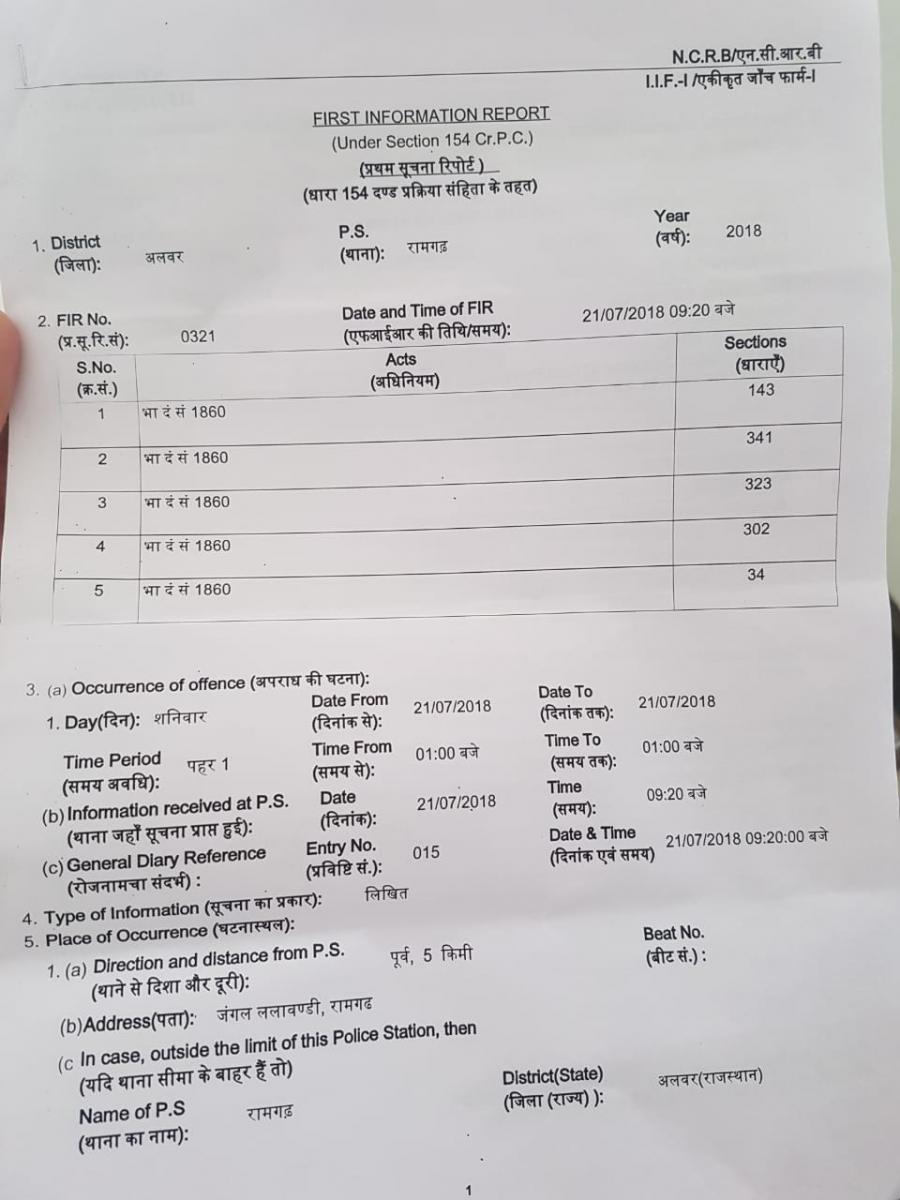
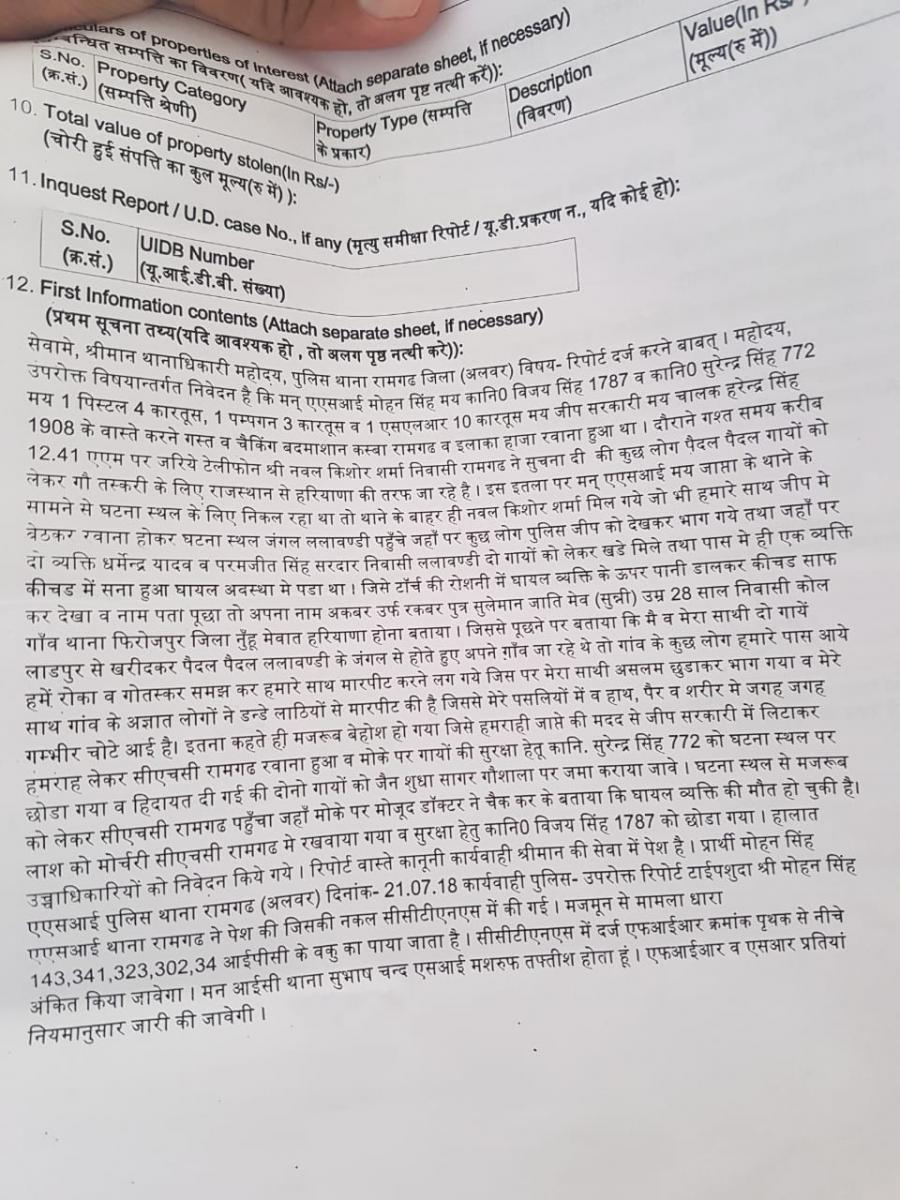
Reportedly, Akbar Khan bought two cows from village Ladpur, Ramgarh tehsil, Alwar district and was taking the cows back in the night to his own village Kolgaon near Firozpur Jhirka in Mewat, Haryana. He was accompanied by another man, Aslam. Suddenly, a group of people started thrashing them, as per Subhash Sharma, the officer at Ramgarh police station. The murder of Akbar is the complete failure of Rajasthan government in protecting Muslims, in particular dairy farmers from the killer “Gaurakshaks”, who are basically extortionists, the statement records. The Ramgarh police brought the deceased Akbar Khan to Alwar and lodged an FIR 0321/18 under Sections 143, 341, 323, 302, 34 etc. of IPC at the police station.
Since 2017, incidents of lynching had increased pointing to the deliberate subversion of the law and order machinery. Three incidents took place in that year alone:
May 30 2015, Abdul Gaffar Querishi, Birloka, Didwana tehsil, Nagaur district
April 11, 2017 Pehlu Khan, Behror thana, Alwar district
June, 16, 2017 Zafar Khan, Pratapgarh town, Pratapgarh district
September 10, 2017 Bhagtaram Meena, neem ka thaana Sikar district.
November 12, 2017, Umar Mohammed, a resident of Ghatmatika Pahadi, near Pahadi Kaman killed near RamgarahTehsil, Alwar
Lawlessness on the Rise
It was not merely lynching, but police encounters too had increased in frequency in cities such as Alwar, especially targeting Mev Muslims in the name of picking cows, it added. The civil rights body has also questioned the government on its inability to bring a halt to the “bloody madness” and alleged that the supposed Gaurakshaks have the full support of the police and administration. It highlighted, how Pehlu Khan’s killers roam around with impunity as his acquaintances, Azmat and Rafiq still face cases related to cow smuggling. Similarly, Zafar Khan’s killers too, are roaming scot free. Moreover, the eye witnesses in Umar’s case were lodged into jail making the cynical pattern of victims being made accused complete. Expressing concern over this prevalent culture of impunity to the killers, said, “There seems to be complete impunity to the killers, with the Home minister Gulab singh Kataria going on record that Gau Rakshaks to good work, after Pehlu khan was killed”.
All the killers named by Pehlu Khan were thrown out of the purview of investigation and cases of cow smuggling are still being faced by Pehlu khan’s companions, Azmat and Rafiq. Todate Zafar khans killers are roaming free and the eye witnesses in the Umar case were thrown into jail. In Bhagtaram’s case nothing happened, till the High Court intervened earlier this month in July. There seems to be complete impunity to the killers, with the Home minister Gulab singh Kataria going on record that Gau Rakshaks ‘do good work,’ after Pehlu khan was killed.
Among the demands made in the statement were sharp questions on whether or not the government of Rajasthan had any plans of implementing Supreme Court guidelines in which it has clearly made the Centre and the state responsible for lynching, and has said mobocracy will not be allowed. Further, it has said that all states should make nodal officers and there should be immediate arrests and filing of chargesheets as well as fast track courts and maximum punishment.
Besides there are specific demands made by PUCL:
The transfer of the case to an independent agency, SIT or under the IG
The arrest of Akbar Khan’s killers immediately
The restoration of his cows to the family
Compensation of Rs. 25 lakh and land to the family, a government job to the kin.
Immediate protection to eye witness, Aslam be given protection.
Ensure that no false case of cow smuggling be filed against Akbar and Aslam.
Dismissal that the Ramgarh SHO be dismissed from duty as the onus is on the State to protect the people from lynching.
Rajasthan Home Minister give a plan for the protection of dairy farmers particularly the Meos in Mewat region.
PUCL has I also urged that no cases related to cow smuggling should be filed against Akbar and Aslam. Moreover, that the Ramgarh SHO should be dismissed from his duty. It has asked the Home minister to give a plan for the protection of dairy farmers particularly the Mevs in Mevat region.
Finally, the PUCL has demanded from the CM that there should be an immediate halt to the cases of lynching.
Christian churches belonging to different denominations are facing a lot of heat in India, in light of the recent spate of cases of sexual exploitation and abuse of women, allegedly by members of the clergy. While concerned church authorities have cooperated with the police during investigations, in some instances, they have also faltered in their response to the issue at hand by either defending or shielding the accused or shaming the survivor.
This is why there is a need for the Church to make public its standard operating procedures (SOPs) for investigating claims of sexual abuse as well as how it plans to stem the rot in the system that has become more and more evident in light of the following cases.
Case-1: The rape of the Kerala nun The controversy surrounding the rape of a nun and its alleged cover up by Syro-Malabar Church refuses to die down. Instead of assuring the nun of an impartial and thorough inquiry into the matter and subsequent action against the accused, the church’s Cardinal has claimed during a police investigation that he received no complaint of rape from the nun. This, just days after the accused Bishop made counter allegations that the nun had filed a false complaint against him because he was investigating allegations that she was having an affair with her cousin’s husband!
Brief Background of the case The nun had filed a police complaint saying that she was allegedly raped 13 times by Jallandhar Bishop Franco Mulakkal over a period of two years (2014-2016), when she was at a convent in Kuravilangad, a small town near Kottayam in Kerala. The accused Bishop admits to have stayed in a room at a mission house at the convent on 13 occasions when he visited Kerala during that period.
The nun said that she had approached church authorities on multiple occasions, but her complaints fell on deaf ears, forcing her to approach the police. In fact, during police investigations, Joseph Kallarangatt who is Bishop of the Syro-Malabar diocese of Pala, told investigators that the nun had met him and told him about her ordeal.
Cardinal claims never received any rape complaint Now, fingers are being pointed at Cardinal George Allencherry for knowing about the abuse but failing to act against it. However, the Cardinal has claimed that his office did not receive any complaint of rape! When a police team led by Vaikom Dy SP K Subhash questioned the Cardinal, he said he never received a rape complaint from the nun, though she did raise some concerns about some issues at her convent for which she was directed to approach the concerned congregation.
In fact, the official communique from the Church said, “It is unclear from media reports who is this nun. However, a nun working with Jalandhar diocese had met the cardinal and complained about some appointments and transfers in her congregation and the inconveniences she faced. Since her congregation belonged to Jalandhar diocese, which comes congregation belonged to Jalandhar diocese, which comes under the Latin hierarchy, she was advised to approach it as the cardinal had no jurisdiction.”
Accused priest engages in victim shaming Meanwhile, Bishop Franco Mulakkal, the accused, has claimed in an interview to Times of India that his conscience is clear. In fact, in the same interview he launched a counter allegation against the nun claiming that she was getting back at him because he was investigating her for her alleged affair with the husband of one of her cousins. In 2016, the nun was posted with the Mission of Jesus Sisters in Jallandhar, where the accused is the Bishop of the diocese.
According to Sister Regina, Superior General of the mission, in November that year, the nun’s cousin had approached the church alleging that the nun was having an affair with her husband and she urged the church to step in to save her family. Sister Regina and a committee of four sisters pursued the investigation after getting the go ahead from Bishop Mulakkal. Interestingly, Bishop Mulakkal’s duties have neither been terminated nor has he been even suspended pending investigation.
Senior clergy and nuns write to CBCI and Vatican Several senior priests and nuns have written to Cardinal Oswald Gracious, President of the Catholic Bishops Conference of India and Vatican Nuncio Giambattista Diquattro, demanding that that the accused Bishop be relieved of his duties. “Now that the case has gone to the courts, we urge you to please advise Pope Francis to relieve the bishop concerned of his pastoral responsibilities, so that the Church is seen to actually practice the ‘zero tolerance’ it professes to observe in abuse cases. With the accused bishop continuing to remain in his position, it will continue to erode the faith of the people in the credibility of the Church to implement its policy of zero tolerance and act justly in abuse matters,” said the letter to the CBCI president.
“The accused bishop continuing to remain in his position will erode the faith of the people in the credibility of the Church to implement its policy of zero tolerance and act justly in abuse matters,” said the letter to the Vatican Nuncio.
Case-2: Priest misuses Kerala woman’s ‘confession’, sexually exploits her with other priests Recently a Kerala woman had accused five priests from the Malankara Orthodox Syrian Church in Kozencherry of sexually exploiting her. According to a statement the woman from Pathanamthitta made before the Crime Branch, Father Abraham Varghese of Mundyapally had had sexual relations with her after promising to marry her when she was just 16 years old.
She further alleged that when she had confided into a priest, Father Jais K. George of Anicaud, about this during confession, instead of counselling her Fr George himself proceeded to sexually exploit her by threatening to reveal her secret to her husband. This betrayal of a confessor’s trust, that too by a priest who is expected to provide wise counsel and support, is shocking and despicable! Later Fr Job Mathew also allegedly joined in the exploitation. When she confided in yet another priest Father Johnson V Mathew, he too allegedly started sending her lewd and abusive messages!
The matter came to light when the woman’s husband discovered some discrepancies in transactions as per her bank statements and discovered hotel room rental bills. The woman then broke down and told him about her ordeal. The husband then called and spoke to a church official. An audio clip of this ended up on social media, exposing the entire story.
While the church assured to conduct an inquiry and take action against those found guilty, the husband alleged that he was being pressured to take back the complaint. Meanwhile two of the four priests are in custody, while the police are looking for the other two. The Crime Branch of the Kerala Police has slapped rape charges on all four. There is another, (fifth) as yet unnamed priest whose role is not clear so far.
Pope Francis and the new approach to cases of sexual abuse The Catholic Church had been long reeling under multiple complaints of sexual exploitation where the alleged perpetrators were members of the clergy. After Pope Francis took over the reins of the Catholic Church in March 2013, he had made his stand clear on a zero tolerance policy for sexual abuse, harassment and exploitation. He had even met survivors of sexual abuse who had been earlier exploited by church officials and clergy, and apologised for the Church’s previous silence on the matter. However, subsequent scandals including the one in Chile following which the Pope’s off the cuff remark demanding proof appeared to suggest that he was accusing the survivor of slander, showcase the Church in poor light. The Pope later apologised.
Guidelines to deal with Sexual Abuse cases In India, the Catholic Bishop’s Conference of India (CBCI) came up with Guidelines for dealing with Sexual Harassment at the Workplace. Published in September 2017, the guidelines aim to provide a safe working environment for women in Church run facilities as well as suggest ways to deal with offenders. In a message from Cardianal Baselios Cleemis that is a part of the published guidelines, “The Catholic Church upholds the rights of personnel and others within working environments to be treated with fairness, dignity and respect in accordance with espoused values and the law. Any form or method of workplace harassment, bullying and discrimination is unacceptable and will not be tolerated.”
The foreword by Jacob Mar Barnabus OIC, Chairperson CBCI Council for Women says, “The Church, while wanting to ensure the protection and respect for women at workplace and without in any way underestimating the seriousness of sexual harassment of women at work place, wants to address all forms of sexual harassment at work place. In keeping this objective, ‘CBCI Guidelines to Deal with Sexual Harassment at Workplace’ is gender inclusive and has been formulated to create a safe, healthy and loving environment that enables its employees (irrespective of the gender) to work without the fear of prejudice, bias and sexual harassment and creates a mechanism for prevention of any form of harassment.” This showcases the Church’s progressive stand on sexual harassment that recognises that people of all genders can face sexual abuse, exploitation and harassment.
According to the guidelines, every diocese that employs 10 or more people is required to form an internal complaints committee. There are guidelines about how the committee should be composed, procedures for registering complaints, methods of investigation, and how to report matters to higher authorities. After hearing both parties and conducting an investigation, the committee is required to file a report within three months and the Church must act on the report within 90 days.
However, the awareness about the guidelines is limited. If this were to change, perhaps the certainty of an investigation and subsequent punishment would prevent potential perpetrators from engaging in any form of gender based discrimination, harassment or violence in the Church.
When Mahatma gave up expensive clothes in favour of Dhoti, it was seen as a revolution. For a Dalit to wear a three-piece suit, just like BR Ambedkar, is equally revolutionary. Why then is a Mahatma celebrated but a Dalit humiliated, even murdered?
Image Courtesy: Amir Rizvi
Sanjay Jatav wore a proud blue coloured suit for his wedding on Sunday. He shone when he rode on a horse-drawn carriage through his bride’s village routes, a velvety red cushion providing contrast from the back, making his face more visible to the dancing crowd below.
It was the first time in 80 years that a Dalit wedding procession had crossed the path of a Thakur dominated village.
It is no surprise that the upper caste people in the village have seen green over his proud, blue and suited appearance. Threats to the bride’s family have been surreptitiously made, even though the ceremony received unprecedented security.
Over the last few years, Dalits have been threatened, killed, maligned and maimed for apparently breaking age-old caste rules that often look petty on the surface. It could be twirling a moustache, wearing a white shirt, riding a horse, jumping into a pond, dancing to music and even having a common Indian name.
On July 17, human rights advocacy group Amnesty International released its data recorded on its ‘Halt the Hate’ website. “In the first six months of 2018, 100 hate crimes have allegedly been committed against people from marginalised groups. 67 incidents of alleged hate crimes against Dalits and 22 against Muslims were recorded in just the first six months of 2018. 42 incidents involved killings and 13 involved sexual violence against women from marginalised groups,” the report said. UP topped the list of hate crimes followed closely by Gujarat.
When mostly Savarna movie critics do not appreciate the significance of Rajinikanth’s suits in the movie Kabali, it is wilful ignorance on their part. A mere slip of the upper caste gaze. As compared to when Dalits, or the marginalised, cross caste lines indelibly drawn through the centuries, a laxman rekha crafted to keep them subservient and meek. Why do such actions of assertion by a Dalit person or a person supposedly from a lower caste, draw such murderous ire?
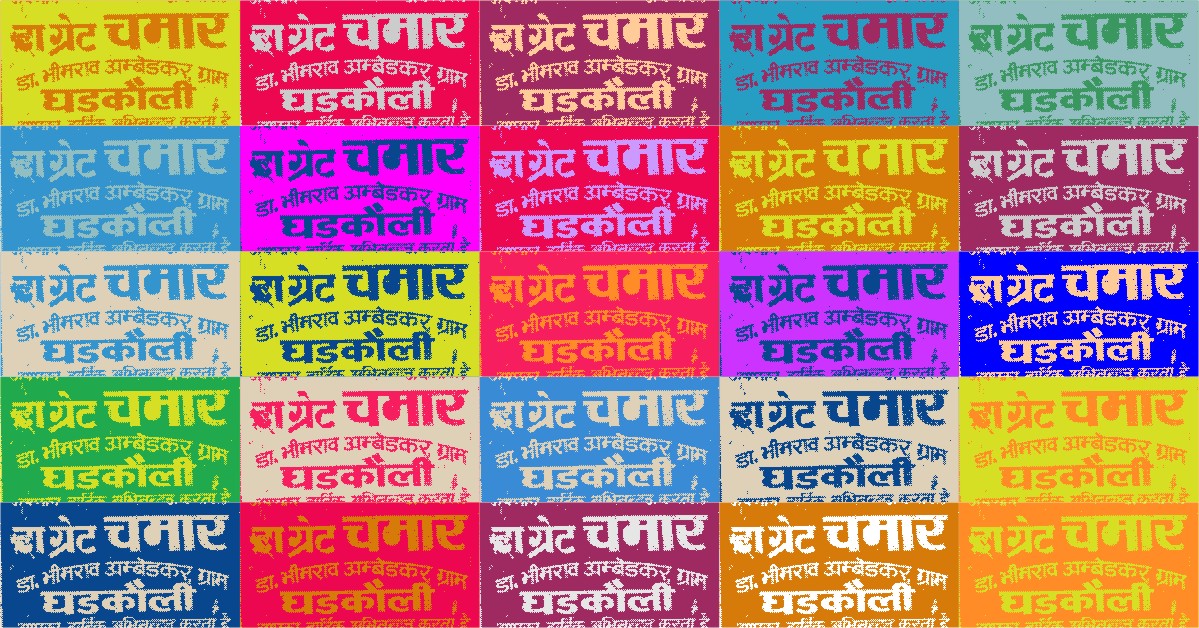
Social patents justify caste violence? Dalit rights activist Chandrashekhar Azad ‘Ravan’ took a militant approach to instil pride in every Dalit person. He twirled his moustache, wore a blue scarf and posed in front a banner which read ‘The Great Chamar welcome you to Gharkoli.’ The image drew immense focus on him and his politics. The UP govt wants to arbitrarily keep him behind bars (he has been in jail since June 2017) by slapping the draconian National Security Act against him. Why did his pride hurt upper caste sentiments so much?
A Dalit boy was murdered for wearing ‘Mojdi’s’ in Ahmedabad, Pradip Rathod was beaten to death for riding a horse in Gujarat and Maulik Jadav was beaten for adding the word ‘sinh’ to his name, also in the same western Indian state. A ‘sinh’ literally means a lion and Rajputs have claimed that name for themselves over centuries, apparently showcasing their bravery and past glory as warriors. Men were beaten for sporting moustaches and killed for watching the Garba dance in Gujarat. In Rajasthan, a mob attacked a Dalit wedding procession for playing a popular Bollywood song.
The answer lies in social patents.
“A social patent is a phenomenon in which dominant groups lay claim to exclusive enactments of social conduct, even of the most universal kind, apart from appropriating sartorial choices and facial hair styles for themselves. Their replication is then proscribed for the lower castes, who violate these social patents at their own peril,” wrote Ajaz Ashraf, a journalist from Delhi.
“A social patent is as restrictive as a manufacturing patent. Unlike products that are copyrighted, though, a social patent is a right that belongs to a group, not an individual. Social patents reward a social group not for its inventiveness but for ensuring that the inequality of status between its members and the downtrodden stays undiminished,” he added.
“A social patent determines who can sport a moustache, particularly of the sort that can be twirled. It decides who can hold a wedding procession, ride a horse to the bride’s house, hire a music band to strike notes of celebration. A social patent can debar a person from watching a dance performance, or riding a bicycle, or even wearing a white shirt. Social patents could include in their ambit any human activity likely to inject a sense of worth and joy among the lower castes,” he observed.
He said that the social patent of greatness lay with the Rajputs, so Azad claiming to be great while being a Chamar was an insult.
“Such stand-offs are a manifestation of a deeper struggle within society: Men and women from upper castes are increasingly anxious that Dalits – who makeup 16.3 percent of India’s population–previously considered untouchables, and relegated to jobs considered impure, are enrolling in schools in greater numbers, studying in colleges, finding better jobs and aspiring for long-denied equality,” reported Firstpost.
Could social patents be the only reason why traditionally advantaged classes resent the assertion of ‘inferior’ or ‘lower’ castes in personal and social politics?
Talking about upper caste insecurity, an article in DailyO said, “As modernisation and liberalisation create their own classes of the disadvantaged and take away tangible manifestations of their superiority – land, money – from some upper-class groups, they then hold onto the trappings even more fiercely. Any Dalit making pretensions to what had been their prerogative – leisure (attending garbas), pride (moustache, horse, dressing well) – has to be struck down, surely and swiftly. This attitude is by no means limited to rural societies alone. In the poshest of circles, Dalits most often exist only as ‘projects’ to be patronised, not equal humans to be fraternised with.”
Paying the price for existing The legend of Nangeli from Kerala is proof of how caste bias meant one had to pay a heavy price for being born. Even though the practice of taxing the backward and lower castes just for being themselves existed 300 years ago, the struggle for asserting their fundamental rights hasn’t quite ended.
“Over three hundred years ago, the southern state of Kerala had a system of taxation, whereby women belonging to backward castes and Dalits had to pay a tax, if they wanted to cover their breasts. Standing bare chested was taken as a sign of respect towards those castes supposedly “superior” to them – for both men and women. The tax however, was levied only on Avarna (lower caste) women who wanted to cover their chest. It goes without saying that some of these “superiors” would have also got their voyeuristic kicks out of this system as well. Royal officials would travel door to door, collecting this heinous “Mulakkaram” – literally Breast Tax- from Avarna women who had passed puberty. Sickeningly, the amount would depend on the size of the breasts,” wrote Supriya Unni Nair, a journalist from Bengaluru.
Nangeli had had enough of this humiliation. “When the pravarthiyar, or village collector came asking for her share, she lit a lamp and laid down a plantain leaf as per the custom, but instead of money, she cut off her breasts and placed them on the leaf, shocking the officials,” she wrote.
Having a name killed a minor boy in UP in 2011. “Ram Sumer and Jawahar Chaudhary have sons named Neeraj and Dheeraj and that has long been an issue between the two families, Sub-inspector Praveen Kumar said. Mr Chaudhary, who belongs to a higher caste, had given several warnings to Mr Sumer to change the names of his boys. On 22 November, Neeraj left home after dinner to watch television at a friend’s house. His body was found the next day. Police said he was strangled,” reported BBC.
A Dalit man was killed in Jharkhand for celebrating the festival of colours. In 2017, the police beat 52-year-old Pradeep Choudhary to death for ‘daring’ to throw colour on a man. He and his friends had thrown colour at a local chowkidar on Holi. The man then called the police to ‘teach them a lesson. Another Dalit man from the same state was tonsured and paraded in his village in 2015, on the suspicion of lighting the Holika pyre.
When did celebrating a festival become a death sentence?
The emperor’s new clothes Those aware of the fairy tale know how dangerous ignorance and blind fear can be.
While the upper castes find varied ways to secure their social hierarchy’s, they also find ways to not let those they consider below them to ever question their place.
Lessons in caste began early in a Tamil Nadu school where students had to wear wristbands with colour codes based on caste.
“It’s red and yellow for Thevars, blue and yellow for Nadars, saffron for Yadavs — all socially and politically powerful Hindu communities that come under the Most Backward Classes (MBC) category — while students of the Dalit community of Pallars wear wrist bands in green and red and the Arundhathiyars, also Dalits, wear green, black and white,” reported the Indian Express in 2015.
The colour of their tilak on their forehead is also a code for caste. “The headmaster at a school near Tirunelveli town said there were other markers. “Like you have different houses — green house, yellow house, etc — in city schools, children here wear coloured vests. We cannot ban everything, definitely not what children wear under their uniform. These vests come in handy during a game of basketball to draw up teams based on caste lines, but they are as effective to settle scores,” he said in the report.
In 2012, A Dalit man was beaten up for wearing a white shirt.
“Clothing, a symbol of social standing and power, has also been an instrument of oppression and an integral tool for determining and imposing identity in traditional Indian caste-hierarchies,” wrote Sunaina Kumar in Scroll.
“These codes of dressing have been a part of the wider social structure across India and anytime they have been broken, there have been reprisals from the upper castes. In Rajasthan, Dalit men were forbidden from wearing colourful pagdis and punished and thrashed if they dared to do so. In Tamil Nadu, lower caste men were forbidden from folding up their lungis and had to wear it to their toes. In parts of the state, this rule still applies. Dalits were generally not allowed to wear clean, bright or new clothes or sandals. In some places, if a Dalit wore new clothes, they had to be smeared with soot so they would appear unclean. Dalit women were not allowed to wear gold or silver jewellery, or saris in which gold thread was used,” she wrote.
The article makes a thought-provoking point. When Mahatma gave up expensive clothes in favour of the Dhoti, it was seen as a revolution. For a Dalit to wear a three piece suit, just like BR Ambedkar, is equally revolutionary. Why then is a Mahatma celebrated but a Dalit murdered?
Dehumanising people to perpetuate caste bias ‘Bhangi,’ ‘Chamar,’ ‘Harijan,’ are just some words that are used to deny basic human dignity to people from ‘lower castes.’ They are seen as pollutants to the ‘upper caste’ hegemony. A group of Dalit boys were paraded naked after being beaten in a village because they dared to ‘pollute’ a well by swimming in it to beat the summer heat.
Not just people in the patriarchal social hierarchy that traditional Hindus follow, Muslims are also called words and names to strip away their humanity. “Barbaric,’ ‘dirty,’ ‘Katua,’ (meaning circumcised,) are just some words used to describe Muslim people in the country.
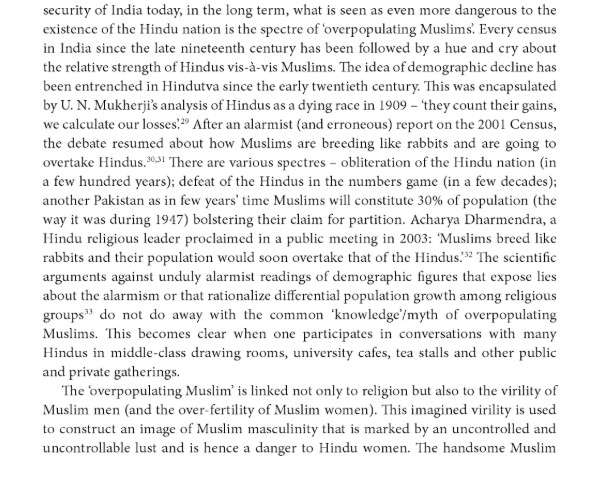
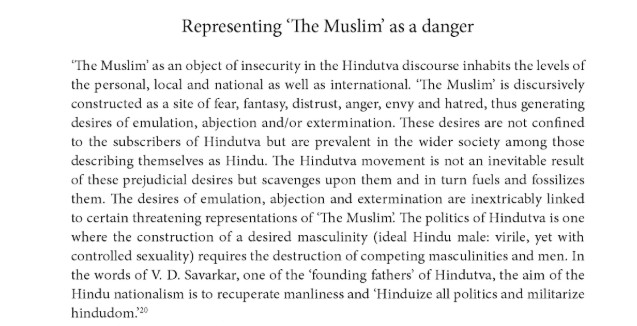
Excerpts from the book ‘Genocidal Nightmares: Narratives of Insecurity and the Logic of Mass Atrocities,’ show how masses justify their violence against minorities by dehumanising them. It is written by Dr. Abdelwahab El-Affendi, originally from Sudan, Dean of the School of Social Sciences and Humanities, Professor of Politics at Doha Univeristy and Co-Ordinator of University of Westminster’s Democracy and Islam Programme since 1998. He wrote about what preceded the Gujarat 2002 carnage.
[Embed 1,2,3,4 screenshots]
Caste bias during Ambedkar’s time BR Ambedkar seminal work, ‘Annihilation of Caste,’ is compulsory reading material to learn about caste. On December 12, 1935, Bhimrao Ambedkar had been asked by the Jat-Pat Todak Mandal (Society for the Abolition of Caste System), a Hindu reformist group, to address their annual conference and speak about the ill-effects of caste in Hindu society. When he sent them ‘Annihilation of Caste,” they responded by asking him to delete certain paragraphs. He responded by saying that he would not change a single comma.
He was swiftly uninvited and his speech lay undelivered. He published it himself and the rest is history. Excerpts from the speech show how caste symbols were used to defile and denigrate people:
Under the rule of the Peshwas in the Maratha country the untouchable was not allowed to use the public streets if a Hindu was coming along lest he should pollute the Hindu by his shadow. The untouchable was required to have a black thread either on his wrist or in his neck as a sign or a mark to prevent the Hindus from getting themselves polluted by his touch through mistake. In Poona, the capital of the Peshwa, the untouchable was required to carry, strung from his waist, a broom to sweep away from behind the dust he treaded on lest a Hindu walking on the same should be polluted. In Poona, the untouchable was required to carry an earthen pot, hung in his neck wherever he went, for holding his spit lest his spit falling on earth should pollute a Hindu who might unknowingly happen to tread on it. Let me take more recent facts. The tyranny practised by the Hindus upon the Balais, an untouchable community in Central India, will serve my purpose. You will find a report of this in the Times of India of 4th January 1928. ” A correspondent of the Times of India reported that high caste Hindus, viz. Kalotas, Rajputs and Brahmins including the Patels and Patwaris of villages of Kanaria, Bicholi-Hafsi, Bicholi-Mardana and of about 15 other villages in the Indore district (of the Indore State) informed the Balais of their respective villages that if they wished to live among them they must conform to the following rules:
(1) Balais must not wear gold-lace-bordered pugrees.
(2) They must not wear dhotis with coloured or fancy borders.
(3) They must convey intimation of the death of any Hindu to relatives of the deceased—no matter how far away these relatives may be living.
(4) In all Hindu marriages, Balais must play music before the processions and during the marriage.
(5) Balai women must not wear gold or silver ornaments; they must not wear fancy gowns or jackets.
(6) Balai women must attend all cases of confinement of Hindu women.
(7) Balais must render services without demanding remuneration and must accept whatever a Hindu is pleased to give.
(8) If the Balais do not agree to abide by these terms they must clear out of the villages. The Balais refused to comply; and the Hindu element proceeded against them. Balais were not allowed to get water from the village wells; they were not allowed to let go their cattle to graze. Balais were prohibited from passing through land owned by a Hindu, so that if the field of a Balai was surrounded by fields owned by Hindus, the Balai could have no access to his own field. The Hindus also let their cattle graze down the fields of Balais. The Balais submitted petitions to the Darbar against these persecutions; but as they could get no timely relief, and the oppression continued, hundreds of Balais with their wives and children were obliged to abandon their homes in which their ancestors lived for generations and to migrate to adjoining States, viz. to villages in Dhar, Dewas, Bagli, Bhopal, Gwalior and other States. What happened to them in their new homes may for the present be left out of our consideration.
The whole episode and the rest of the speech can be read here.
Donald Trump and the Nazi Throwback Dehumanising language and words have been commonly used throughout history to deny human rights to people and even justify their genocide. World media could not stop from making parallels between Donald trump’s diatribe against immigrants and Nazi propaganda employed to wipe out Jews.
He informed the world like he usually does, with a tweet. He called immigrants infestations. “Democrats are the problem. They don’t care about crime and want illegal immigrants, no matter how bad they may be, to pour into and infest our Country, like MS-13. They can’t win on their terrible policies, so they view them as potential voters!” he tweeted.
Infestations are caused by insects. Adolf Hitler consistently propagated this view about Jews. He compared them to rats and demanded their ‘extermination’ and eradication. The propaganda lead to the genocide of 6 million Jewish people.
“The use of the word “infest” to talk about people is literally out of the Nazi/anti-Semites’ playbook for talking about the Jewish threat. It was also a standard for talking about Chinese in the western United States and it remains part of the vocabulary for talking about Romani (Gypsies) in parts of Europe. This is the most hard-boiled kind of racist demagogic language, the kind that in other parts of the world has often preceded and signalled the onset of exterminationist violence. The verb “to infest” is one generally used to describe insects or vermin (rats), creatures which are literally exterminated when they become present in a house or building or neighbourhood,” said Josh Marshall, editor and Polk award winner.
Rwandan genocidaires also claimed that their victims, the Tutsi people, were cockroaches and snakes that had to be wiped out.
Closer home, all we need is the life of a dog, to dehumanise a person. Dilip Mandal wrote a searing essay ‘Just like a Dog’ in Sabrang India about how the animal has been used by Indian politicians to pardon violence and rid the criminals of guilt.
“Dogs are so prominent in mythology that we just can not ignore them. They are all over. As in the consciousness of General Singh. In the Mahabharata, the dog is the only companion of Yudhishthira in his journey to heaven, the dog is also present as a pathetic creature in the story of Drona and Ekalavya. In the 13th century Telugu text called Vijnaneshvaramu, as cited in the journal Modern Asian Studies (43-1) there is mention: if a Brahmin commits a crime deserving capital punishment, this is what should be done: shave his head, mark his forehead with the sign of a dog’s paw and so on. For others, less fortuitously born, the punishment is going to the gallows. So there is always some poor dog, or a dog reference, during life and even after death, the after life,” he wrote.
Perpetuating violence in the name of religion What has happened in the name of various religions over the past four years is not news.
Centuries-old dehumanising customs are making a comeback and being used to deny basic human rights enshrined in the Constitution and practised in the 21st century today. What changed in the last few years that caste biases, symbols, nomenclature and language became the sole obsession of the country?
“Last week, RSS chief Mohan Bhagwat told a gathering at the Bombay Stock Exchange that politicians are compelled to practise caste politics because society votes on the basis of caste, that even those politicians who would seek to change caste politics feel compelled to pander to it first. Bhagwat’s portrayal of caste politics as a sort of necessary evil reflects the RSS-BJP world-view, which perceives caste primarily as an impediment to the forging of political unity of Hindus. A corollary is the refusal to acknowledge that caste politics has provided agency to historically disprivileged communities to fight social and political exclusion,” an Op-Ed of The Indian Express read.
Harish S. Wankhede, a professor at JNU summarised the hatred for Dalit assertion in politics. “Rashtriya Swayamsevak Sangh (RSS) understands the dynamic legacy of the Dalit movement in disturbing the Hindutva’s ideological rigour. Hence, to neutralise the impact of Dalit assertion on the political and social fronts, the right wing forces have improvised their tactics at both levels. On the political front, the BJP is showcasing its inclusive character; however, in the social sphere, the right wing is using anti-Dalit sentiments to consolidate its political base,” he wrote in The Wire.
“A recent study by the University of Pennsylvania under Social Attitude Research for India highlights that large sections within the upper-middle class society still hold explicit prejudices against the Dalits. Brahmanical conservatism grips the social psyche even in times of high-modernity and refuses to change. Social relationships are still disciplined through caste and communal prejudices. Muslims and Dalits face humiliation and violence everyday because of the ingrained hatred constructed by the conservative Brahmanical social values. The agenda of social reform, therefore, remains incomplete, as the radical transformation of social attitudes needs annihilation of caste pride. The social elites have not only resisted the agenda of social reforms, but have also categorically treated those who stood against Brahmanical values, rituals and customs as anti-social. The claims for constitutional safeguards, reservation policy and social dignity by the Dalits are often belittled as demands of ‘freeloaders’ and ‘non-meritorious’ people,” he wrote.
“The way Muslims as the ‘political other’ are required to be submissive to majoritarian Hindu communalism, the Ambedkarite Dalit minority, too, is being projected as the new ‘social other’ to help the right-wing mobilise conservative Brahmanical Hindus. One can see such trends, especially in UP and Maharashtra, where ideologically committed Dalit castes, like Jatavs and Mahars, are being projected as ‘aggressive’ anti-Hindutva castes. The Ambedkarite Dalits are thus branded as counter-culturists to the collective will of the Hindus and, therefore, as ‘anti-social’ and ‘anti-national,’ he added.
“The BJP is trying hard to retain its conventional upper caste support. It is pretty clear that the right wing is consciously trying to engineer a broad social alliance of upper castes and other dominant castes by projecting Ambedkarite Dalits as a new militant social “enemy,” he said.
When will we stop seeing these clearly caste-based provocations as a ‘minor skirmish,’ ‘isolated incident’ and ‘personal feud’ and call out the bullshit for what it is- a social and moral decline of a country. A rigid refusal to grow out of the retrograde custom, some sanctified by ancient scripture and move on, to embrace new realities. A cancer of the human community.
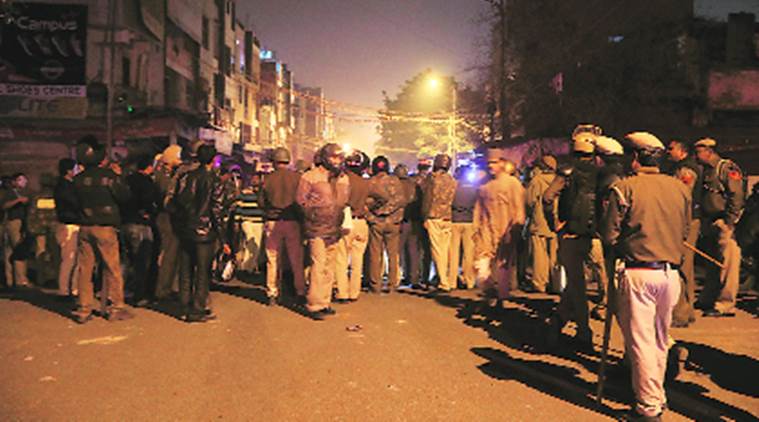
Soon after the Modi regime’s take over of power in Delhi, Trilokpuri had simmered, at that time over the Durga pooja procession in October 2014. Again, now four years later, the Indian Express reported how a scuffle during a cricket match on Thursday night at Trilokpuri’s block 20 escalated into stone pelting and communal tension in the area, which had seen trouble in February as well. In 1984, the brute killing of 350 Sikhs in this Trans Jamuna transit camp was even more gruesome. Are the communal fires being lit here, again ?
Representation Image: Express photo/Abhinav Saha
Day before yesterday, the attack on a Muslim boy reportedly began the skirmish. Trouble started when 18-year-old vegetable vendor Shoaib was allegedly beaten up by “boys from another community,” around 9.30 pm, his family claimed. Shoaib’s sister Sadiqa said, “We heard a noise in the lane near our house. When I called our elder brother about it, he told me Shoaib has been beaten up by some boys who live nearby.” DCP Singh has, however, denied the allegations: “No one was beaten up at the police station… some people protested outside and we told them to leave, that’s all.”
Reportedly, Shoaib sustained injuries on his head, back and shoulders, and was rushed to Lal Bahadur Shastri Hospital. His mother Farhad (45) alleged, “He was denied entry there and we took him to Mayur Vihar Phase I police station, where officers refused to register our complaint… they lathicharged us, even women were beaten up.” In a diametrically different version from the police one, Rashid’s eight-month pregnant wife Rukhsar (22) claimed: “He was home. I was serving him dinner when police came and dragged him away… they also pushed me and I fell. He wasn’t even at the scene of the fight”.
Police have arrested 10 men, including Shoaib, and deployed around 50 officers in the area as a precautionary measure.DCP (east) Pankaj Kumar Singh said, “We arrested Shoaib, Noor Mohammad, Rashid, Rahul, Ankit, Lalit, Saqib and three more men. They have been booked under IPC sections 147 and 148, which pertain to rioting; section 149, related to unlawful assembly; and sections 186, 332 and 352 for obstructing public servant in discharge of duty”.
Ved Prakash, a relative of one of the accused, Lalit (21), called police at 10.11 pm when he saw stones flying. He claimed Ankit and Lalit came indoors when the stone pelting began, and that they were innocent. “At 10.30 pm, police took them away,” he said.
Ankit’s mother Chameli (50) claimed, “He was playing cricket with Lalit… We don’t know how a fight erupted or who it involved.” But DCP Singh said, “Our investigation has revealed the role of each of these boys.” DCP Singh denied the allegations: “No one was beaten up at the police station… some people protested outside and we told them to leave, that’s all.”
2014 Trilokpuri area, before the communal tensions of October 2014 had seen a turn in local politics when Raju Dhingan of the Aam Admi Party had defeated BJP’s Sunil Kumar by over 20,000 votes. Dhingan’s election had brought communities together and this fraternity was sharply disrupted by the Octpber 2014 violence. Adjoining Trilokpuri is the Patparganj assembly constituency that has elected Delhi’s deputy chief minister, Manish Sisodiya.
1984: A Darkness Unforgotten In the wave of attacks against the Sikh community in November 1984, after Mrs Gandhi was shot dead by two of her Sikh bodyguards on the morning of October 31, Trilokpuri saw the most gruesome.
Whilst unbridled chaos and mayhem spread unchecked across the Capital, the casual slaughter of some 350 Sikhs, including women and children in the trans-Yamuna Trilokpuri resettlement colony, was without doubt the most brutal. The charred and hacked remains of the hundreds that perished in Trilokpuri’s Block 32 on a smoky and dank November 2 evening bore silent testimony to an unbelievable orgy of slaughter which, over two decades later, still haunts my memories.
The massacre took place in two narrow alleyways not more than 150 yards long, with one-roomed tenements on either side. It lasted over 48 hours, with the murderers — who go unpunished to this day — even taking breaks for meals before returning to resume their mad slaughter.Both lanes were littered with bodies with body parts and hair brutally hacked off, forcing people to walk on tiptoe. It was impossible to place one’s foot fully on the ground for one would step on either a hacked limb or a dead person.
Senior journalist Rahul Bedi recalled in Tehelka magazine, “It all began on the morning of November 2 around 11.30 am when my colleague from Indian Express, Joseph Maliakan, and I heard of the Trilokpuri massacre — then ongoing — from Mohan Singh who had shaved his head and face only hours before to save himself and had fled, taking refuge in our office canteen. A dazed Singh, who had somehow managed to escape the pogrom under cover of darkness, blandly told us that 300 Sikhs had been killed in Trilokpuri’s Block 32. These houses, we learnt later, were occupied by poor, low-caste Sikhs who wove string beds.
“Shortly after, along with Maliakan and Alok Tomar of Jansatta, I rushed to Trilokpuri and, on arrival at the re-settlement colony — which was established by Sanjay Gandhi during the Emergency in the mid-1970s — found the entrance blocked by massive concrete pipes, with lathiwielding men atop them.
“At about 300 yards from Block 32, we found our path blocked by a huge mob. Before we could reach them, two policemen astride a motorcycle burst through the crowd, coming from the direction we were headed. We flagged the motorcycle to a halt and asked the head constable driving it whether any killings had taken place in Block 32.
“…A truck parked nearby attracted our attention. On closer inspection we found three charred bodies in the back and a half-burnt Sikh youngster lying on top, still alive. In his quasiconscious state the man told us he was from Punjab and had come visiting relatives in Trilokpuri. He said that a few hours earlier, a rampaging mob armed with lathis and machetes had killed his hosts and set him on fire after dousing his body with kerosene. He had been brought to the police station, placed on top of the dead bodies, and had lain there for the past six hours. He died a horrible death soon after, we later learnt.
“When the three bodies in the truck and the grievously burnt yet still living Sikh were pointed out to the station duty officer, he denied all knowledge of them, saying they would be dealt with by “Saheb”, the Station House Officer, who was “away in Delhi on routine business and would return later in the evening”.
“Desperate to get help, we combed the area and were met by an army patrol commanded by a Sikh colonel, part of the detail summoned from Meerut to bolster civil authority who assured us that he would dispatch help to the beleaguered Block 32. We returned to Block 32 only to discover that no troops had arrived.
“Later we came to know that though the army had officially been summoned a day after Mrs Gandhi’s killing to maintain order, it was merely token deployment as none of the units summoned from cantonments around the Capital were provided necessary help, guidance or logistical direction by the local authorities.
“The army was not issued shoot-to-kill orders to quell the blood-thirsty mobs till after Mrs Gandhi’s funeral pyre was lit on November 3, despite claims to the contrary by officials, which were dutifully headlined by newspapers.
“Once those orders were given, the army restored order within hours, although for many days there were cases we investigated which revealed that the local authorities had deliberately concealed reports of pockets of Sikh refugees still fighting for survival across many east Delhi neighbourhoods.
“After pleading in vain with many military convoys to intercede and stop the Trilokpuri killings, we arrived at the Police Headquarters around 5 pm and informed Additional Commissioner of Police Nikhil Kumar (who later retired as head of the National Security Guard) of the goings-on in the east Delhi colony.
“To our chagrin and amazement, he asserted that he was a “mere guest artist” at Police Headquarters and only tasked with manning Commissioner SC Tandon’s telephone line. All our pleadings to Kumar — now an MP from Bihar — to do something about the Trilokpuri killings were insouciantly brushed off. Other senior police officers including those in charge of the Trilokpuri district also expressed indifference and their inability to help.
“On returning to Trilokpuri an hour later in the darkness we found the local Station House Officer and two constables surveying the sea of dead Sikh bodies, surrounded by thousands of people.
“The most frightening part, the part that still sends a chill up my spine after 25 years, was the pall of utter silence that shrouded the area.
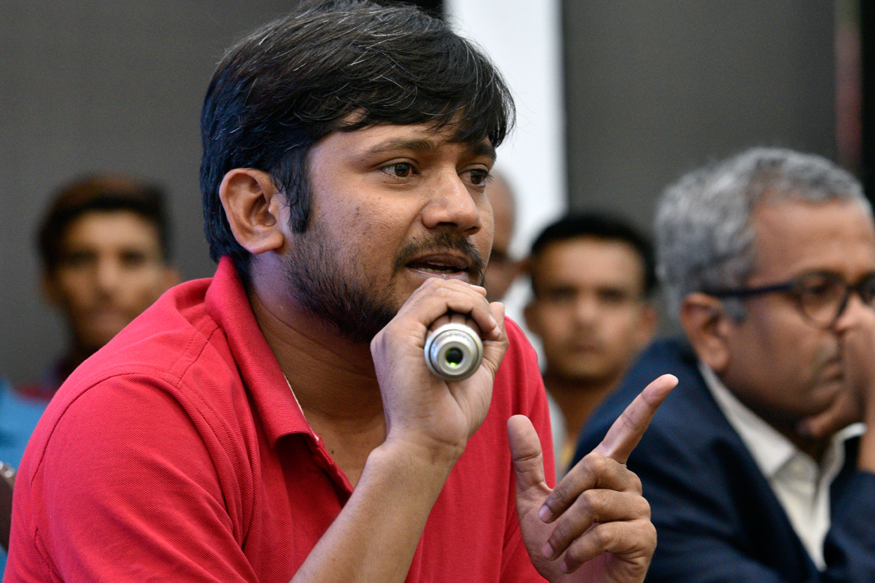
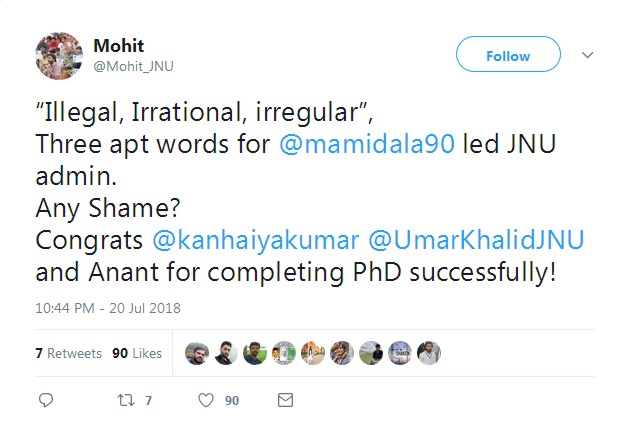
The Delhi Court set aside the order dated July 4, 2018 of Jawaharlal Nehru University’s appellate authority concerning former students’ union president Kanhaiya Kumar on the grounds of it “suffering from procedural impropriety, illegality and irrationality”. The order was in connection with February 9 event in 2016, in which it was alleged that anti India slogans were raised.
Image Courtesy: News18
Justice Siddharth Mridul reportedly said that the JNU office’s order was “unsustainable on innumerable counts” after which the counsel for the varsity submitted that they are recalling the decision.
A fine of Rs. 10,000 was imposed by the Appellate authority on Kanhaiya Kumar in connection with the said incident. Following the imposition of fine, the students had approached the court which had directed the varsity to place the matter before an appellate authority to review the panel’s decision.
The Bench noted that although the order purportedly imposes a fine of Rs. 10,000, the action against Kumar constitutes disciplinary action that entails “serious civil consequences” for him. Hence, on a prima-facie view, the order is unsustainable on innumerable counts. The court even asked the counsel for the varsity if their High Level Committee had a legal standing!
The hearing will continue for all other petitioners on Tuesday but coercive action can’t be taken in the meanwhile.
On Februrary 9, 2016, a poetry event was held at JNU called “The Country Without a Postoffice” in which students were protesting the hanging of Afzal Guru in connection with the Parliament attack on December 13, 2001. Moreover, the programme was also held to remember and commemorate human rights violations in Kashmir.
A ‘High Level Enquiry Committee’ (HLEC) had said that another student Umar Khalid be rusticated and simultaneously exorbitant fines were imposed on 13 other students.
Kumar, Khalid and Bhattacharya were arrested in February 2016 on charges of sedition in connection with the controversial event and now are out on bail.
SabrangIndia had done an exclusive expose of the District Magistrate’s investigation into the doctored video that led to the arrests, disciplinary actions and media trial of the students.
The said report had completely exonerated Kumar from shouting any alleged anti-India slogans. On the role of Khalid, the report had stated that the voice wasn’t audible in the video from the same source as the image, suggesting that the video was doctored.
Since the February 9 event in 2016, the university has seen many assaults on freedom of expression of the students and has consistently been in the news for one or the other reason. The JNU VC brought in several autocratic measures and rules that went completely against the autonomy and democratic ethos of the institute. Recently, the Delhi High Court even ordered that no coercive action could be taken against the students and faculty who were protesting the mandatory attendance rule arbitrarily imposed on the students.
The students are looking forward to submit their PhD theses on Monday. A feeling of rejoice struck twitter as the order came.
The current JNU students’ union president congratulated Kumar on twitter.