So Why Am I filing a Writ Petition and PIL on the Judge Loya case? How and Why am I concerned?

So Why Am I filing a Writ Petition and PIL on the Judge Loya case? How and Why am I concerned?
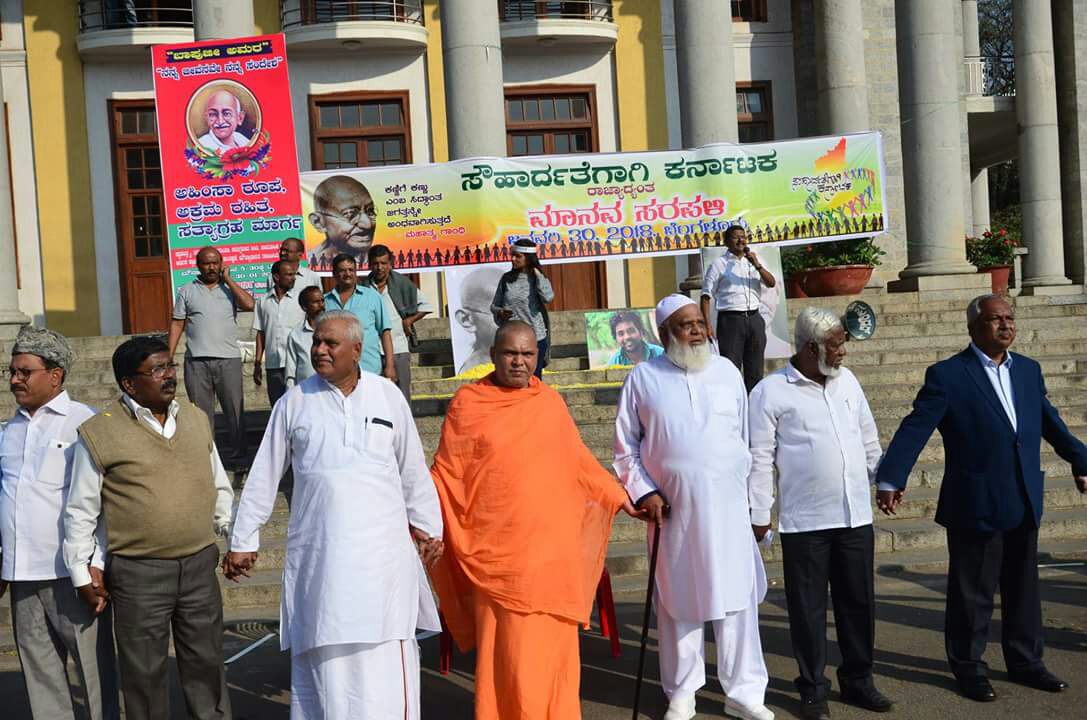
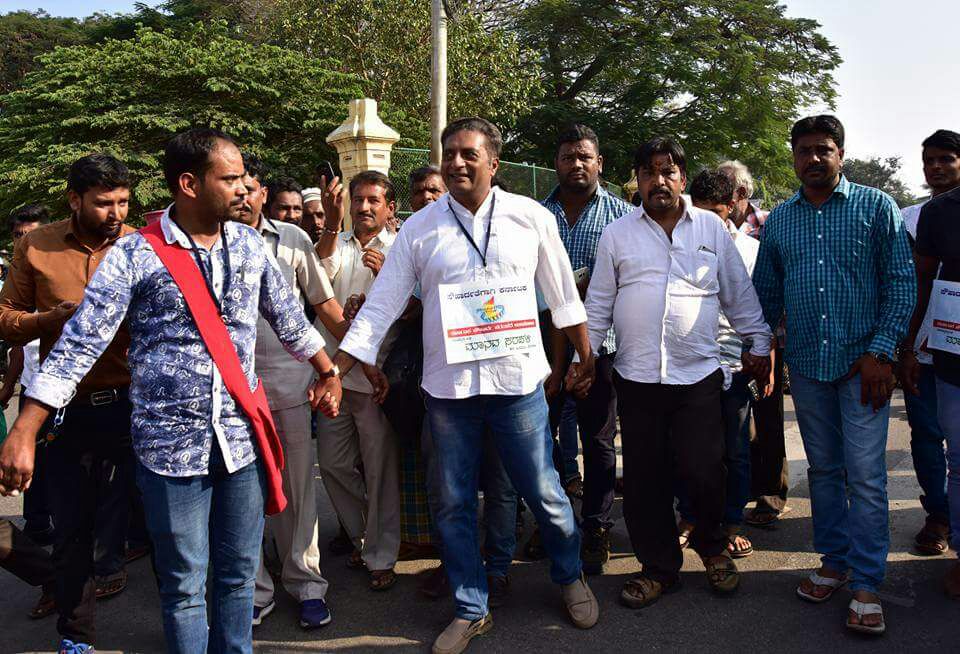
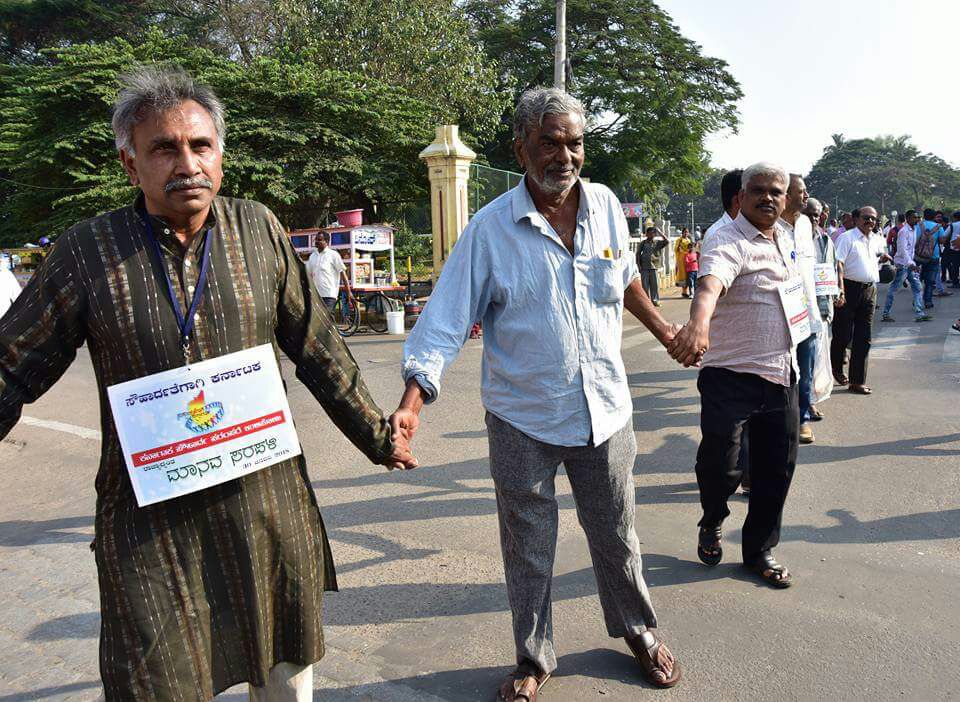
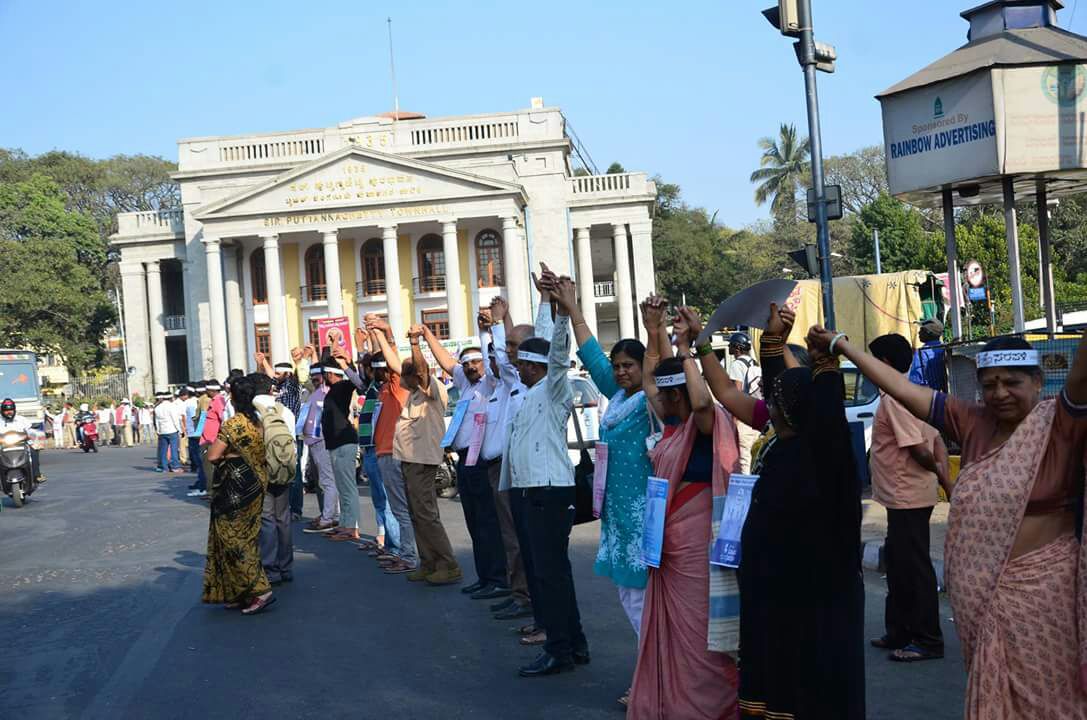
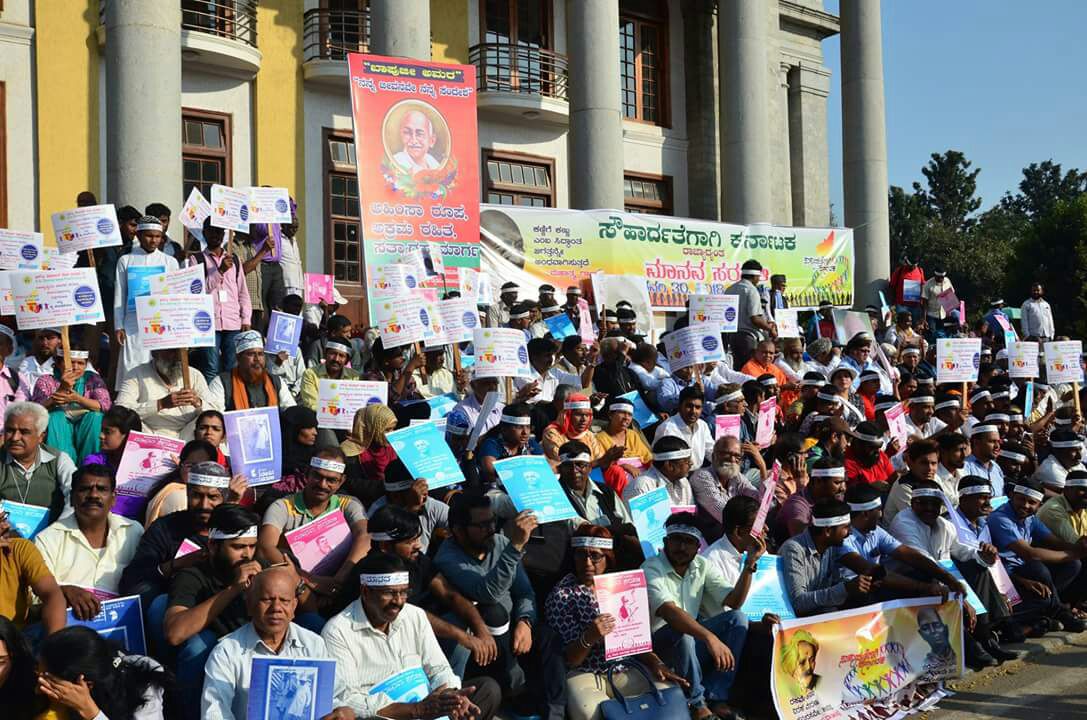
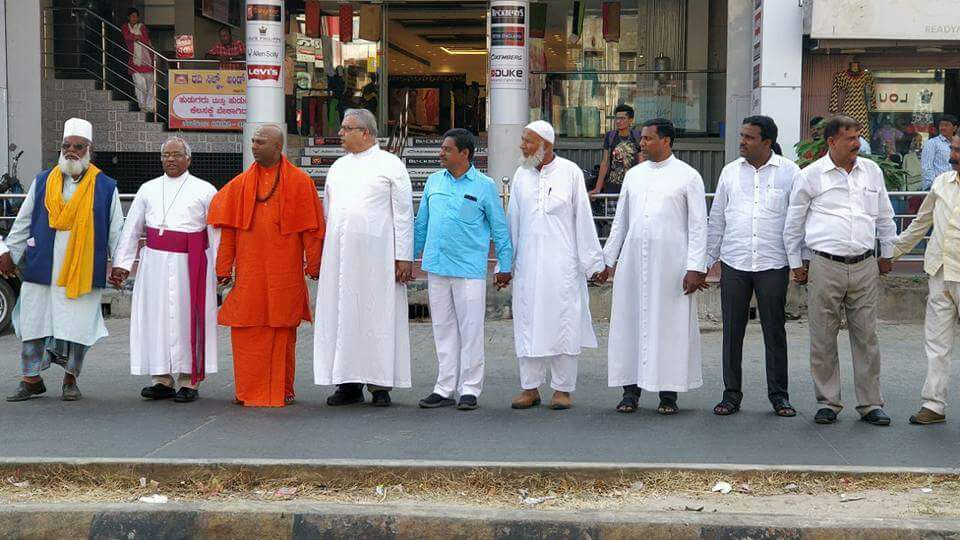
On the day of the assassination of Mahatma Gandhi, January 30, Karnataka witnessed a historic event. More than two lakh people from about 160 districts and talukas across Karnataka formed human chain between 4.00 pm to 4.10 pm. The activists said that they were defending “Karnataka for Harmony”. People belonging to different sections- Human Chain between 4.00 to 4.10 PM to defend “Karnataka for Harmony”. People from all walks of life – Writers, Artists, Intellectuals, Religious Leaders, Secular Political Leaders, Lawyers, Workers, Peasants, Students, Youth, Women participated in the Human Chain enthusiastically. Various left leaning political parties and secular groups including CPI (M) participated in the human chain in a big way. The chain was a stupendous culmination of a vibrant campaign against communal and fascist forces in Karnataka, particularly triggered by the dastardly killing of Dr. M. M. Kalburgi.

Karnataka for Harmony
“Karnataka for Harmony” was formed after several seminars, protests meetings and cultural jathas. Its founding convention was held at Bangalore which was inaugurated by CPI (M) General Sceretary Com. Sitaram Yechury. Com. Sudhakar Reddy from CPI apart from several other left parties and eminent personalities were present on September 5, 2017 for the occasion. Karnataka for Harmony gave a call for State-wide human chain on January 30.
Killing of Gauri Lankesh
Unfortunately, Gauri Lankesh was killed on the same day. This led to the eruption of people’s anger and galvanized the movement even further. Since then conventions, jathas, preparatory meetings, mass campaigns were held at all (more than 160) locations where Human Chain were held. A vigorous campaign in the social media with many posters videos depicting – tradition of communal harmony in Karnataka, quotes depicting harmony from writers poets thousand years ago to present, quotes from prominent personalities supporting the Chain – were widely circulated. Many participants in the Human Chain also carried prints of these posters and banners.
Why was the Campaign urgent?
What added an urgency to the campaign was the intense communal polarization and “Dead body politics” practiced by BJP-Sangh Parivar which has ensured the continued violence in the state. Hence the platform emerged as a united platform for all anti-communal and progressive forces.
The Human Chain
Many prominent personalities were seen supporting the cause of communal harmony and peace on this day. Some of them included writer Devanoor Mahadeva and renowned actor Prakash Rai at Mysore; Dinesh Aminmattu, media advisor to CM at Mangalore; veteran Gandhian H S Doreswamy at Tumkur; writer Prof Chandrashekar Patil, former Supreme Court Judge Gopal Gowda, Kuvempu Bhasha Bharathi, President Dr. K Marulasiddappa, Sahitya Academy President Aravinda Malagatti, former High Court Judge Nagamohan Das, Writer Baraguru Ramachandrappa, Actor Chethan at Bangalore; Prof. Rajendra Chenni at Shimoga; and Ramanath Rai, a Karnataka State Minister and Congress MLAs Abhayachandra Jain & Vasantha Bangera at Dakshina Kannada. CPI(M) State Leaders participated in various human chains across the State – Com. G V Shriramareddy at Chikkaballapura; Com. VJK Nair, Com G N Nagaraj at Bangalore, Com K R Sriyan at Mangalore.

The event of formation of the Human chains concluded with well attended meetings and cultural performances. Oaths were taken at all of these places administered by prominent personalities. Nidumamidi Swamiji led the oath at Bangalore. Participants vowed to defend centuries’ old tradition of communal harmony, pluralism in Karnataka from threats of communal and fascist forces. They also vowed to defend the Constitution representing people’s aspirations for Democracy, Secularism, Equality, and Social Justice.


Taung Paw Camp in Rakhine State, in 2012. Credit: FCO/Flickr. (CC BY-ND 2.0).
Some rights reserved.In the hastily-built displacement camps of Rakhine state, in the western part of Myanmar, where some 129,000 mostly Muslim Rohingya people have been interned since 2012, there’s very little to look forward to. With no freedom to work outside the camps, the survival of this long-persecuted minority hinges on international aid deliveries and special permits to leave which are granted only for medical emergencies.
In August 2017, the latest outbreak of violence returned to the fore long-standing anti-Muslim sentiments amongst the region’s ethnic Rakhine (primarily Buddhist) communities. Some of these communities went as far as blocking vital assistance from reaching the camps and, perhaps surprisingly, women were often seen taking a lead in efforts and protests aimed preventing life-saving aid.
Women “will actively stop heavily pregnant Rohingya women from getting to the nearest hospital,” a seasoned representative of an international aid organisation working in the area told us, speaking anonymously due to fear of reprisals from the government. “I’ve worked in many complicated places around the world, but I had never experienced this.”
“I’ve worked in many complicated places around the world, but I had never experienced this.”
In October 2017, the leader of a group called the Arakan Women’s Network, who staged a sit-down protest over another NGO’s attempt to provide education, hygiene and sanitation services to displaced Rohingya in the camps, called this assistance “simply unacceptable.” She told Reuters: “They have food, they have shelter to live… We can’t accept these kinds of excess things for them.”
Rakhine is the most visible and stark example of such extremism in action, but Myanmar (also known as Burma) is home to a growing ethno-nationalist movement that has gained widespread grassroots support.
At the heart of the ideology is the idea that Burmese Buddhism needs to be “protected”; extreme notions of ethnic purism and xenophobia; and violence-justifying concepts of “self-defence” against external and internal “threats” posed by Muslim populations, and by the Rohingya in particular.
Along with Sri Lanka, Myanmar is considered by many to be Asia’s last bastion of Buddhism. Rakhine State, which borders Bangladesh, is viewed by members of the country’s Buddhist population as the “Western Gate” through which Islam will spread unless action is taken to stop it. This is despite the fact that barely 5% of Myanmar’s 54 million population is Muslim.
Buddhist nationalists are capitalising on often repeated claims that the Muslim Rohingya are “illegal immigrants.” They use religious and racial rhetoric to present their arguments. Some have made chilling claims that the Rohingya are reincarnated from insects and snakes, echoing the language of genocide heard in other parts of the world.
Myanmar’s one million Rohingya have been systematically marginalised for decades, culminating in military “clearance operations” that began in August 2017, which killed an estimated 10,000 people, and brutally expelled more than 655,000.
While the UN denounced these actions as ethnic cleansing, a highly influential Buddhist religious leader in Myanmar referred to an ancient religious passage to claim that the killing of non-Buddhists can be justified “during warfare” on the grounds that they are not complete humans.
“Non-Buddhist are not human, so killing them is justified,” says top Myanmar Buddhist. pic.twitter.com/18Zhdm9930
— CJ Werleman (@cjwerleman) November 2, 2017
Central to the Buddhist nationalist movement is MaBaTha (the Association for the Protection of Race and Religion), a decentralised organisation of religious and lay persons. Officially established in 2013, MaBaTha’s approach seems to be strategically multidimensional.
On one hand there is outright incitement to violence and extreme rhetoric from some of its most popular figures such as Ashin Wirathu, branded by Time magazine as “the face of Buddhist terror.”
On the other hand, the group carries out respectable community-based activities that win support even from people who oppose its hate speech.
Under the MaBaTha banner, for example, monasteries champion the promotion of “Buddhist values,” provide assistance to the poor, and raise funds to assist communities affected by natural disasters.
For underprivileged youth, monastic schooling, often offered by MaBaTha-friendly monasteries, is the only chance they have to access education. Buddhist Sunday schools (Dhamma schools), are run across the country with the support of female activists from the group, who often work as teachers.

Buddhist pupils have lunch in a monastic school’s canteen in Shan State, Myanmar. Credit: Macarena Aguilar.
While numbers are hard to pin down, Melyn McKay, an anthropologist studying women’s involvement in Buddhist nationalism, told us that in Yangon (the country’s commercial capital and largest city) alone there are an estimated 20,000 to 80,000 MaBaTha members.
She also said that formal membership of MaBaTha by women is large and growing. In only the central Mandalay area up to 3,000 women have formally become MaBaTha members. But such figures may not include “many who participate in marches and such activities,” without formal membership.
The roles that women play within MaBaTha vary. Some contribute to administrative duties – managing donations, communications, or keeping historical records. Others teach in Dhamma schools, give talks in their communities on the importance of protecting Buddhist teachings and values, or apply their trade skills. Those with legal training, for instance, may give pro bono support to cases identified by MaBaTha.
In a society where women are often marginalised at home and in powerful institutions, including religious institutions, MaBaTha provides opportunities they don’t always find elsewhere, McKay explains.
Not only does MaBaTha allow women to study under some of the most respected monks in the country, the leadership also “supported an organisation of nuns pressing for the right to take the higher level exams so they could prove their knowledge of the Dhamma and improve their standing,” she said.
Women’s involvement in the movement also goes beyond the religious realm. Their political participation allowed and encouraged by MaBaTha provides “a powerful platform… to elevate the concerns of women and bring visibility to the struggles they face in daily life,” McKay said.
According to an International Crisis Group (ICG) report, many women members of MaBaTha specifically reference feminism as a reason for joining the group. The report describes community-level outreach, including efforts to “inform rural Buddhist women about their marriage rights and rights to practise their Buddhist faith,” as well as efforts to support women in abusive work or family situations.

Novices meditating. Credit: Honey Kochphon Onshawee/Wikimedia Commons. (CC0 1.0). Public Domain.
In 2015, Buddhist nationalists celebrated the government’s passage of a legal package known as the “Race and Religion Laws” which implicitly target Muslim women, regulating, for example, the number of children they can have and their ability to marry. These laws also place restrictions on Buddhist women wishing to marry non-Buddhist men, and force non-Buddhist men to convert to Buddhism before marrying Buddhist women.
International commentators, and various women’s groups inside Myanmar, denounced the laws as discriminatory to women and non-Buddhists. However, many Buddhist women welcomed them and female MaBaTha members organised signature-gathering campaigns to support the laws.
McKay says that many Buddhist women were particularly supportive of a provision banning polygamy. While this ban garnered attention from the international community, and human rights organisations in the country, for targeting Muslim communities, women supporters presented it as a straightforward women’s rights issue.
Nationalist women are now on stand-by to oppose a law aimed to curb widespread violence against women. The draft Violence Against Women and Girls Bill has not yet been publicly released or scheduled for debate, but nationalists plan to protest it on the basis that it may weaken parts of the Race and Religion laws if it does not explicitly prohibit polygamy and forced religious conversions.
“Nationalists will take this as a signal that the NLD [National League for Democracy, Myanmar’s governing party] is willing to sacrifice moral and religious imperatives in order to appear tolerant and appease Muslims at the expense of the majority – and Buddhist women, in particular,” said ICG.
Women involved in the nationalist movement seem to feel little dissonance between their sense of fighting for women’s equality and their involvement in a hugely discriminatory movement. “They see their work to promote women’s interests and to protect the religion as complementary,” McKay explains.

A woman sells books promoting MaBaTha, at the movement’s 2017 annual conference in Yangon. Credit: Melyn Mckay.
The use of women’s issues to garner support could well be a deliberate strategy of the Buddhist nationalist movement. This is not unique to Myanmar; recent research conducted by women’s rights groups shows a global trend towards the co-opting of progressive language of rights and justice, including women’s rights, by fundamentalist and anti-rights agendas.
“Fundamentalist and fascist movements often operate in this seemingly paradoxical way,” says Shareen Gokal of the Association for Women’s Rights in Development (AWID), who has led work on women’s rights and fundamentalisms for more than a decade.
“They are patriarchal, espouse oppressive gender norms and perpetuate discrimination and violence. But at the same time they offer women involved opportunities to experience some form of empowerment through political action, participation and even leadership – although the limits may vary – so long as their involvement serves the movement and ideology,” Gokal told us.
When it comes to ideologies where anti-Muslim sentiment is central, as in Myanmar, women’s rights arguments take on another layer of significance, she added.
“For various fundamentalist and fascist groups with an anti-Muslim agenda, be it European white supremacists or Hindu nationalists in India, the idea that Muslim communities are singularly oppressive towards women is consistently mobilised to widen support… You find those who have had no interest in gender equality suddenly speaking the language of women’s rights to justify their hate-filled ideologies.”
“You find those who have had no interest in gender equality suddenly speaking the language of women’s rights to justify their hate-filled ideologies.”
Behind the individual motivations of women MaBaTha members sits a complex political backdrop.
Buddhist nationalist ideas are by no means new, but things have gone up a gear in recent years as the country transitions towards democracy after decades of military rule. In opening its borders to foreign trade, the neoliberalisation of Myanmar’s economy has exacerbated poverty and inequality, which have fuelled the scapegoating of non-Buddhists, and in particular Muslims and the Rohingya.
State control of media has also skewed the nation’s perceptions of ethnic minorities, and sustained anti-Muslim sentiment. Some analysts have suggested that economic interests are fuelling recent, extreme violence in Rakhine, and that a new multibillion-dollar China-Burma oil and gas pipeline may be connected to the state’s expulsion of the Rohingya and subsequent land seizures.
The Buddhist nationalist movement shows no signs of slowing down soon. At present, it seems that hostility towards the Rohingya population is one of few things binding together Aung San Suu Kyi’s NDL party, the army that once opposed her, and the majority of people in Myanmar. Whichever direction the movement takes next, it seems likely that women will remain at its forefront.
Isabel Marler is a feminist based in the UK. She is the Communications Coordinator of the Association for Women’s Rights in Development (AWID)’s Challenging Fundamentalisms programme. She previously worked for WLUML.
Macarena Aguilar is an independent women’s rights advocate currently based in Myanmar. She worked for AWID as Interim Director of Communications and Senior Online Communications Manager.
Courtesy: Open Democracy

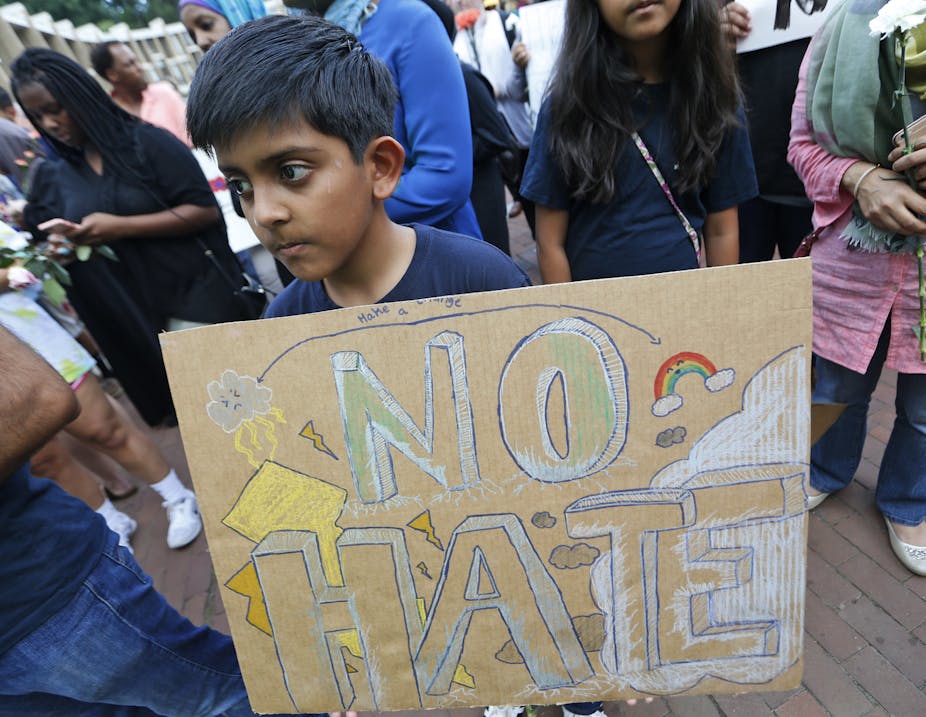
At the funeral of Nabra Hassanen, a Muslim girl who was beaten to death. AP Photo/Steve Helber
Under the ban, nationals from eight countries are subject to travel restrictions, varying in severity by country. Venezuela and North Korea are on the list, but the ban overwhelmingly targets Muslim-majority countries: Chad, Iran, Syria, Libya, Somalia and Yemen. Thus, what the American Civil Liberties Union has called a “Muslim ban” will have tremendous consequences on 150 million people, the majority of whom are Muslim.
This policy did not emerge in a vacuum. In fact, findings from our recently published research expose 15 federal measures and 194 state bills that impact Muslims directly. Here’s a brief overview of some of the most critical yet overlooked measures.
After Sept. 11, immigration became a key national security issue. As a result, 15 federal programs and initiatives were implemented that target and discriminate against Muslim individuals and communities. These measures rely on a narrative that depicts Muslims as untrustworthy and in conflict with American values. This framing has justified the surveillance, racial profiling and violation of citizens’ rights and protections enshrined in the U.S. Constitution.

Federal measures. Authors, CC BY
There are two important, often overlooked measures that have discriminated against Muslims and Arabs: the National Security Entry-Exit Registration System and 2015 changes to the Visa Waiver Program.
The Entry-Exit Registration System, created by the Justice Department in 2002, fingerprinted, photographed and attempted to track all non-citizen males over 16 years of age from 25 countries. With the exception of North Korea, all 25 countries had Muslim-majority populations and more than 85,000 individuals were registered in the system. The surveillance program was implemented as a counter-terrorism tool, but the program resulted in zero terrorism convictions. Although all target countries in the program were removed in 2011, its regulatory framework remained in place for 14 years and could have been reinstituted at any time.
In December 2016, President Barack Obama officially dismantled the program. Obama was motivated, in part, by preventing the incoming Trump administration from reviving the program. One of Trump’s campaign promises was to implement a Muslim registry.
Additional anti-Muslim travel policies were introduced following the November 2015 Paris attacks and the 2015 San Bernardino attack in California.
The attacks spurred changes to the Visa Waiver Program. The waiver allows citizens of specific countries to travel to the U.S. for up to 90 days without a visa. The 2015 changes exempted several Muslim-majority nations including Iran, Iraq, Sudan and Syria from these travel privileges.
Further updates were implemented in 2017 to target citizens of Iran, Iraq, Sudan, Syria, Libya, Somalia and Yemen and visitors to those countries.
In addition to federal measures, our database has documented 194 anti-Sharia bills introduced in 39 state legislatures across the U.S. from 2010 to 2016. The anti-Sharia movement is responsible for the creation of these bills, sponsored by anti-Muslim organizations like ACT for America, and politicians who spread misunderstandings and fears around Sharia. This movement frames Sharia as a cruel and violent set of Islamic laws that are infiltrating U.S. courts to undermine American values and freedoms.
Sharia is a moral code founded on the teachings of the Quran and the Hadith – the teachings and actions of the Prophet Mohammed. Sharia is not the equivalent of Islamic law, but rather outlines how devout Muslims should engage with the world, from what they eat to how they conduct business and personal affairs.
Anti-Sharia bills, founded on the fear of “creeping Sharia,” identify Sharia as “foreign law” and thus ban its use in courts. However, U.S. courts do regularly interpret and apply foreign law, like Sharia, so long as it does not violate the U.S. Constitution.
In states that have banned the use of foreign law, judges are unable to enforce individual contracts that call for the application of Sharia. This restricts Muslims from upholding a range of personal agreements including marriage, estate distribution after death, or awarding of damages in commercial disputes or negligence matters. For example, the Kansas State Legislature enacted anti-Sharia Senate Bill 79 in 2012. Later that year, a woman named Elham Soleimani, a Muslim immigrant from Iran, filed for divorce from her husband. Under the Islamic marriage contract she and her husband had signed, she was due US$677,000 in the event of divorce. The court refused to enforce the agreement, citing the enacted anti-Sharia law.
Anti-Sharia statutes not only fuel public fear around Islam and Muslims, but also prevent Muslims from using Sharia in rulings that call for cultural context.
Surveillance, travel restrictions, and anti-Sharia laws represent the ways in which U.S. policies discriminate against Muslims. As we anticipate the Supreme Court’s decision in June to either uphold or rescind Trump’s travel ban, the question remains: Will the Supreme Court continue to allow the legal discrimination against Muslims in the U.S.?
Basima Sisemore, Researcher, Haas Institute for a Fair and Inclusive Society, University of California, Berkeley and Rhonda Itaoui, PhD Candidate and Research Fellow, Western Sydney University
This article was originally published on The Conversation. Read the original article.

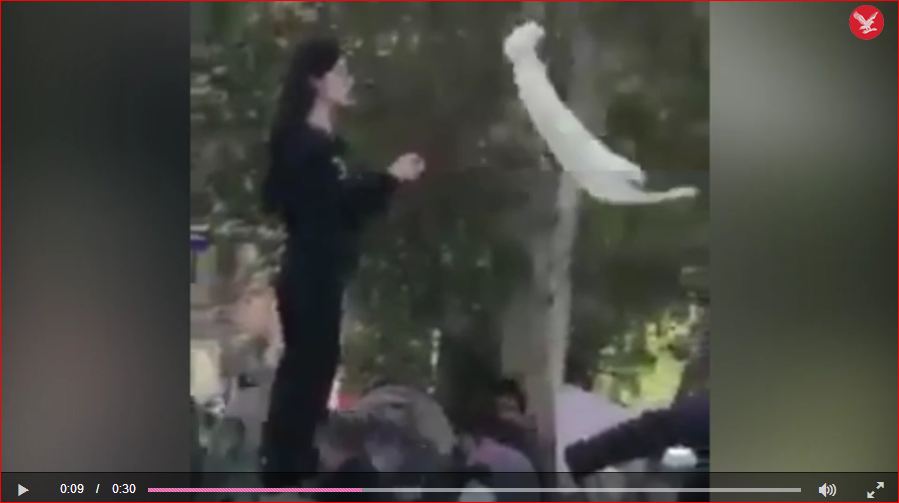
Video grab above shows a young Iranian women removing her hijab and waving it as a flag in Tehran in last month.
Click here to watch her waving the hijab. Courtesy: The Independent
TEHRAN — Climbing atop a five-foot-tall utility box in one of Tehran’s busiest squares on Monday, an Iranian woman removed her head scarf, tied it to a stick and waved it for all to see.
It was no small feat in Iran, where women can be arrested for publicly flouting the Islamic requirement that they cover their hair.
But there she stood, her curly hair blowing in the breeze. No one protested. In fact, she was applauded by many people. Taxi drivers and older women took her picture. The police, who maintain a booth in the square, either did not see her or decided not to intervene.
She was not alone. On Monday several other women, a total of six, according to social media accounts, made the same symbolic gesture: taking off their head scarves in public and waving them on a stick, emulating a young woman who climbed on the same sort of utility box on Dec. 27 and was subsequently arrested. Activists say she has since been released, but she still has not resurfaced in public.
Read the full New York Times report.
Githa Hariharan in conversation with Raja Shehadeh, discusses questions of history, memory, land and friendship, in his new book, Where the Line is Drawn: Crossing Boundaries in Occupied Palestine.
Courtesy: Indian Cultural Forum
Hamid Ansari delivered the 48th Annual Mahatma Gandhi Memorial Lecture on MK Gandhi’s 70th death anniversary at the Gandhi Peace Foundation. He talked about the teachings and values of Mohandas Karamchand Gandhi and how the current scenario in the country is failing to uphold those values.
Courtesy: Newsclick.in

Photo by Jennifer N. Fish.
Mistress, owner, guardian, and consumer – these are some of the labels that have obscured the identity of those who benefit from the household labour of others. Despite decades of research and activism, traditional representations of workers as being ‘one of the family’, and their employers as a substitute mother – or in some cases a capricious taskmaster – persist. The resilience of these tropes is mirrored by the limited changes in the actual labour conditions of domestic workers, even if many policies now set standards for wages, contracts, working hours, temporary employment, safety, and the protection of migrants.
While large areas of the world still exclude domestic workers from the law, small shifts in law and social policy have contributed to the recognition of domestic workers as workers. It is in this context that the possibility of employee-employer relations within the private household emerges. The question then becomes: can employers act as allies in the struggle of domestic workers for dignity, recognition, and living wages?
To put this question differently: can employers afford not to partner with domestic workers, given that their labour takes place in arenas of the familial, personal and intimate? As the Tanzanian trade unionist Vicky Kanyoka once explained, “It is our work in households that enables others to go out and be economically active . . . it is us who take care of your precious children and your sick and elderly; we cook your food to keep you healthy and we look after your property when you are away”. Domestic workers have become ‘the oil in the wheels’ of the global economy, and essential to the functioning of households of all types.
The condition of domestic workers has gained significant traction in light of the growth of this sector globally. In 2015, according to the International Labour Organization (ILO), there were 67.1 million domestic workers at the global level, and more than double the amount of employers, since a number of domestic employees work for multiple households. The demand for domestic workers is expected to grow in the face of an aging population, decreased social services, and women’s rising labour market participation.
Can employers act as allies in the struggle of domestic workers for dignity, recognition, and living wages?
Housework and carework have remained women’s work, even if adult men devote somewhat more time to unpaid labour in the home than they did a half century ago. The perception that domestic work is women’s work feeds into the way domestic labour is undervalued, similarly to how various forms of “dirty work” have been relegated to those at the bottom of perceived racial, ethnic, class, and caste hierarchies. Despite the necessity of domestic labour, conditions are deteriorating with over 40% of all workers uncovered by minimum wage regulations and over half outside of work hour limits.
Nonetheless domestic workers have won major victories during a period of union defeat. In 2011, they gained inclusion in global labour standards when employers and their representatives joined worker and government delegates to pass the International Domestic Workers Convention 189 (C189), the first global policy instrument recognising domestic work as part of the larger “decent work” agenda to bring the informal and migrant economy under the umbrella of human rights standards.
In record time for such conventions, 24 nations have ratified C189 to date. Workers have also formed the International Domestic Worker Federation (IDWF), the first woman-led international labour federation, building upon and feeding into the work of existing national and regional unions and worker associations. Organisation by employer counterparts, however, has lagged, despite notable exceptions, such as Hand in Hand in the United States or Uruguay’s Housewives’ Association, the latter of which engages in tripartite bargaining over the terms of a national contract for domestic workers. The lack of organising at the employer level has meant that worker groups have had to step up and educate households on their responsibilities as employers.
The policy advances that have anchored domestic workers’ organising victories hinge upon employers’ capacity and willingness to actualise these protections beyond paper. Rather than the moral consciousness that may have guided some ‘benevolent employers’ to provide selective protections in their individual homes – much like the ‘good employers’ who ‘cared’ for their servants during the colonial era – recently established policies provide a potential avenue for much needed structural shifts. Yet, the success of such policies still depends on the ability and desire of ‘good employers’ to enact newly established mandates, and agree on contracts that include a fair salary, days off, sick leave, parental leave, and so on.
The perception that domestic work is women’s work feeds into the way domestic labour is undervalued
The various victories resulting from domestic workers’ national and global organising have generated new possibilities through which employers can actively participate in the movement for rights and justice in the home. This series draws together contributions on the role of employers in the fight for domestic workers’ rights from a range of perspectives. As leaders in the realms of employer activism, academia, policy, and labour organising, the experts we have convened in this policy debate have analysed the potential role of employers in terms of ensuring the rights of domestic workers, participating in activist movements, and transforming household practices. In doing so, these experts shed light on the structural and political constraints as well as the range of individual experiences that pervade various forms of intimate labour.
As the leaders of the international movement of domestic worker repeatedly proclaimed, “women won’t be free until domestic workers are free!” The pieces within this dialogue invite a wider consideration of a collective investment in domestic worker rights, where the entrenched divides between “maids and madams” may gradually shift toward a co-investment in the the protection of the rights of those “who make all other work possible,” as the National Domestic Workers Alliance popularised.
Bridget Anderson from the University of Bristol (UK) offers a nuanced view on the limits and the paradoxes of such possible alliances, while Lucero Herrera and Saba Waheed (UCLA, USA) refer to a survey from Californian households to offer the case for an alliance driven by common interests in everyday life and shared political demands. Rosa Navarro and Mechtild Hart, from the Latino Union of Chicago (USA), emphasise how such alliances should be based on employers’ awareness, however difficult to achieve, of the structural exploitation of workers happening in this field, which goes beyond individual moral obligation. The practical challenge this poses is well illustrated by the Andrea Londoño (Fundacion Bien Humano) contribution on the Colombian case: the powerful movement that has been rising in recent years from the workers’ side does not find correspondence on the side of employers, putting under threat the results achieved so far. A contrasting example is offered by the US-based organisation Hand in Hand, which has been campaigning, side by side with workers and other stakeholders, for better working conditions, with the goal of improving the experience of care and personal services for all subjects involved. That struggle involves moving into related campaigns, like affordable health care and immigrant rights.
These experts shed light on the structural and political constraints as well as the range of individual experiences that pervade various forms of intimate labour.
The outcome of these tensions at the global level is a complex scenario, with strong differences across countries in the profile and the history of employers’ organisations. This is discussed in depth in the contributions by Elizabeth Tang and Marie-José Tayah (IDWF) and Claire Hobden and Moriah Shumpert (ILO). By describing the actors and the policy measures that have been taken at national and international level, both pieces underscore the importance of empowering employers’ organisations in order to improve workers’ rights. Among others, we include the case of a particularly significant country to this debate, by looking at what happened in the Philippines since the ratification of C189, through the eyes of a workers’ union, with an article by Julius Cainglet from the Federation of Free Workers (FFW) and Ronahlee Asuncion, from the University of the Philippines.
Indeed, the organising of employers generally appears to have been a positive step towards the expansion of rights for paid domestic workers, the recognition of domestic workers as workers, and the formalisation of the care sector. Precisely because the work occurs in private spaces, employers’ individualism still tends to shape workers’ treatment, which then becomes just a moral or affective concession. A social and collective solution comes up against engrained individualism, one of the main reasons why, in many circumstances, interlocking obstacles persist in the way employers serve as allies. Yet in individual households, domestic worker policy victories – even in their infancy – map the potential for employer alllyship and the gradual transformation of an industry through collective action.
Sabrina Marchetti (PhD) is an Associate Professor at Ca’ Foscari University in Venice, Italy. She specialises on issues of gender, welfare, labour and migration, with a specific focus on the question of migrant domestic work. Amongst her publications: “Black Girls. Migrant Domestic Workers and Colonial Legacies” (Brill, 2014) and “Employers, Agencies and Immigration: Paying for Care” (Ashgate 2015, with Anna Triandafyllidou). For more info see her personal website.
Giulia Garofalo Geymonat is a researcher and activist in the fields of labour, gender, sexuality and disabilities. She has conducted extensive research on intimate labour and social movements, especially in relation to issues of sex work, migration, trafficking, disabilities, and more recently domestic work. For openDemocracy, she co-edited Sex Workers Speak. Who Listens? in 2016 , and Domestic Workers Speak. A Global Fight for Rights and Recognition in 2017. She joined the DomEQUAL Project and Ca’ Foscari University of Venice in 2017.
Eileen Boris is Hull Professor of Feminist Studies and Professor of History, Black Studies, and Global Studies at the University of California, Santa Barbara. She writes on the home as a workplace and the racialised gendered state. She is the author, with Jennifer Klein, of Caring for America: Home Health Workers in the Shadow of the Welfare State. Her latest book is Women’s ILO: Transnational Networks, Global Labour Standards, and Gender Equity, co-edited with Dorothea Hoehtker and Susan Zimmermann. She tweets @eileen_boris.
Jennifer N. Fish is a global sociologist, Professor and Chair of Women’s Studies at Old Dominion University. She has traveled with domestic workers’ movements for 18 years, including research on women’s labor in South Africa’s democratic transition. Her recent book, Domestic Workers of the World Unite! chronicles the formation of the first global union of domestic workers and their policy victory at the International Labour Organization.
Courtesy: https://www.opendemocracy.net
Join our mailing list to get the latest human rights news that matters, straight to your mailbox.
© Sabrang | All Rights Reserved