
Email: sabrangind@gmail.com
1960s: When the Jazz Greats mixed politics with music to articulate the Black condition

By the late 1950s foremost musicians like Charlie Parker, Charles Mingus and John Coltrane explicitly introduced politics in their jazz, as the civil rights movement started gaining momentum in the US. Musician and author Gilad Atzmon explained it in a 2005 essay:

Leon Thomas – from his debut album ‘Spirits Known and Unknown’. Discogs
Black Americans were calling for freedom, and jazz expressed it better than mere words.
This trend continued and intensified over the following decades, especially in free and spiritual jazz. These sub-genres represented an angrier battle for political freedom.
Profoundly beautiful
In 1969 avant garde jazz vocalist Leon Thomas, with spiritual jazz giant Pharoah Sanders, composed “Malcolm’s gone”. It’s a profoundly beautiful tribute to American civil rights activist and revolutionary, Malcolm X, who was assassinated in 1965.
Leon Thomas’s ‘Malcolm’s gone’.
The song appears on Thomas’s debut solo album, “Spirits Known and Unknown”. It features Sanders (on tenor sax) and other free jazz luminaries like Cecil McBee (bass), Lonnie Liston Smith (keyboards) and Roy Haynes (drums).
Thomas is often a forgotten figure in popular music. He’s best known for his unique jazz vocal style that is characterised by the experimental use of yodelling and scatting, along with his own beautiful natural voice.
The singer, who died in 1999, is mostly remembered for his contributions to the recordings of jazz and rock heavyweights such as Randy Weston, Rahsaan Roland Kirk, Oliver Nelson and Carlos Santana. That is despite the gravity of Thomas’s own solo work and his contribution to jazz, especially in the area of vocalisation.
Seconds of silence
Thomas’s opening line, to the mostly instrumental “Malcolm’s gone”, is simply the utterance “Malik El-Shabazz”, X’s assumed Muslim name at the time of his death. It’s then followed by a few seconds of silence before the band starts playing a deeply melancholic melody. The melody is the sonic equivalent of the emotions that one feels upon hearing of the passing of a loved one.
Thomas rejoins the melody about two minutes later with the line:
I know he’s gone… but he’s not forgotten.
I know he died just to set me free… yes Malcolm’s gone, but he’s not forgotten, he died just to save me, give me back dignity.
Thomas then explodes into a yodel. His gloomy wail is set to a striking cacophony of beautifully layered rhythms and melodies. The song then transcends into what resembles a spiritual jazz version of a Pentecostal funeral service. It ends with the ululating congregation honouring the late Malcolm X by clapping in unison.
The song invokes the imagery of masses of mourning people at a funeral. At the same time it creates an atmosphere of jubilation reminiscent of a congregation experiencing glossolalia and spirit possession collectively.
Sonically it draws on various black spiritual traditions to express, in sound, the emotion of losing a well loved and respected member of the Ummah, or the Muslim community. The lyrics clearly draw parallels between X and Jesus Christ, which some may regard as the ultimate tribute, or perhaps a very strong political statement given the sociopolitical climate of the USA during that period.
A volatile period
The late 1960s, the period when Thomas released the song, was a very volatile period for African Americans. It marked the end of the relatively nonviolent American civil rights era, and the beginnings of the militant Black Power movement.
Many black people at the time felt that the passive resistance of the civil rights era was no longer a viable option in their quest for equality. Cue an ideological shift toward the black nationalist, Pan-Africanist and socialist ideologies offered by the Black Power movements, hellbent on protecting themselves by all means necessary against an oppressive state.
It was also when many influential and leading figures were either silenced, imprisoned or assassinated. The situation was further exacerbated by the Vietnam War and the Nixon-era conservative politics.
“Malcolm’s gone” is not only a song that pays tribute to one of the most influential black freedom fighters to walk this planet (which in itself is a revolutionary act). It’s a song that dares to liken him to the very same deity that racist nationalist white America prayed to at night, Jesus Christ. This was a very provocative act given America’s Christian foundations, and the fact that Malcolm X, a black Muslim, was perceived to be an enemy of the state.
With minimal lyrics and a robust otherworldly feel the song is able to capture the pain and optimism of black America in a time of great adversity. At the same time it consolidates ideas of civil rights pacifism (through the imagery of Christ) and Black power militancy (in the form of crashing instruments and wailing). It is a profound expression of the black condition of the time, and a deeply dignified tribute to a fallen soldier.
Protest music has made a serious comeback over the past five years. This article is the second in a series featuring Songs of Protest from across the world, genres and generations.
Michael Shakib Bhatch, Lecturer of English. PhD Candidate in Afrofuturism and African Studies, University of the Western Cape
This article was originally published on The Conversation. Read the original article.
2017 Was a Banner Year for America’s Arms Industry
Half of Pentagon spending goes to contractors, the military budget is set to skyrocket, and the Trump administration is peddling arms all over the world.

Chris Devers / Flickr
Arms companies have had a good year.
The top 100 learned in July that their annual revenues amounted to a healthy $364.8 billion, with American companies — as usual — dominating. While the military itself has suffered several calamities — the apparent murder of a Green Beret by two Navy SEALs in Mali in June, the deadly crash of the U.S.S. John McCain near Malaysia in August, the killing of four Special Forces troops in Niger in October, — the contractors have thrived.
The author of The Art of the Deal has helped.
$110 billion from Saudi Arabia, $2.4 billion from austerity-ravaged Greece, $1.4 billion from Taiwan — all these deals have been set in motion by the Trump White House. Even if they’re not completely fulfilled, as can often be the case in such an opaque and unpredictable market, the financial outlook for America’s arms companies will keep making other (less lethal) industries look like mom-and-pop stores.
“Last time I checked they were on our side”
But the real victory is political. One voice at the top of the Pentagon is, in the long run, far more valuable than a big, new F-35 contract — and this is where President Trump has been so useful to the makers and sellers of weapons.
Well before the Thanksgiving break, the Senate had already confirmed that the new No.2 at the Pentagon will come from the executive council of Boeing; and the new Army undersecretary from the vice presidency of Lockheed Martin‘s F-35 sustainment program.
The new undersecretary of defense for acquisition, technology, and logistics — a central role in deciding what the Pentagon purchases and from whom — comes from the very top job at Textron Systems, the 16th largest arms company in the world. On November 15, Raytheon didn’t miss out on the action, with its vice president of governmental relations confirmed as Army Secretary.
In all of these cases, notwithstanding a smattering of tough questions, senators haven’t thought twice. By margins of 89-6, 92-7, and simple voice votes, these confirmations have been anything but grillings.
The one exception was John Rood’s November 16 confirmation hearing for undersecretary of defense for policy. Senators Elizabeth Warren and John McCain asked whether a senior vice president of Lockheed Martin International — whose role included “developing and executing strategies to grow Lockheed Martin’s International business” — could be trusted not to do more or less the same thing in a top Pentagon job.
Yet the prospect of the Senate doing its job was, it seems, short-lived. The Senate Armed Services Committee voted to advance Rood’s nomination two weeks later, despite concerns over potential conflicts of interest.
It doesn’t stop there. As The Intercept’s Lee Fang noted back in March, “Personnel from major defense companies now occupy the highest ranks of the administration including cabinet members and political appointees charged with implementing the Trump agenda.” This includes the defense secretary himself, who had to resign from the board of General Dynamics to take up the most senior job at the Pentagon, and now White House chief of staff John Kelly, who had to step down from his role as a paid advisor to Dyncorp to become the Homeland Security chief.
These two former generals and close friends of defense contractors are now two of the most senior figures in the Trump administration. They may well be running our foreign policy, with the president himself so inexperienced and his secretary of state only apparently there to destroy his own department and occasionally be subjected to public humiliation by the commander-in-chief.
But even these exceptionally powerful military men still find time to win applause from their former paymasters. Defense Secretary Mattis, in particular, has assured industry representatives that the Pentagon will “aggressively and swiftly take advantage of the opportunities that we see developing around us in the private sector.”
When he was rebuked for meeting with contractors so soon after starting his new job in public service, he responded: “I became aware that some people thought, ‘you can’t do that,’ and I said, ‘why not, they’re Americans aren’t they?’ Last time I checked, they were on our side.”
The “Proactive” President
Congress has not questioned any of this.
Instead, it has ensured that a $700 billion budget for the military has cruised through both houses with bipartisan support. This, too, will be good news for defense contractors, who sucked up nearly half the Pentagon’s similarly massive budget for fiscal year 2016.
They continue to be rewarded for their long list of failures, which range from overpriced and constantly delayed “big-ticket” deals, to at least $31 billion of waste in rebuilding Iraq and Afghanistan. Their dubious and exaggerated claims of being “job-creators” and “innovators” are uncritically embraced by the Trump administration.
No wonder, then, that “industry leaders” have spared a rare favorable word for the embattled 45th president.
Jerry DeMuro, CEO of defense giant BAE Systems, Inc. (the U.S. subsidiary of the larger UK company), praised Trump’s “proactive” approach to promoting U.S. arms sales abroad, as well as the defense secretary’s willingness to “bridge the gap” between the public and private sector. Similarly, Raytheon’s CEO gushed that the Trump administration “has opened several doors for us” and is “accelerating our ability to grow internationally.”
The initial scare generated by Trump’s early Twitter attacks on the exorbitant cost of fighter jets has now dissipated: He’s become a reliable arms-dealer-in-chief.
So, with profits flowing, and political clout solidifying, the arms industry will begin 2018 happier than ever. President Obama was a good friend to them, approving more than double the value of arms sales reached by George W. Bush. Trump, it seems, will be even better.
Harry Blain is a PhD student in political science at the Graduate Center, CUNY (City University of New York).
Courtesy: http://fpif.org
In Four Gujarat Seats EC Admits Mismatch Between paper Trail and EVM
The 100% Match Between EVMs and Paper Trail Slips on Random Vote Count, Says EC Official
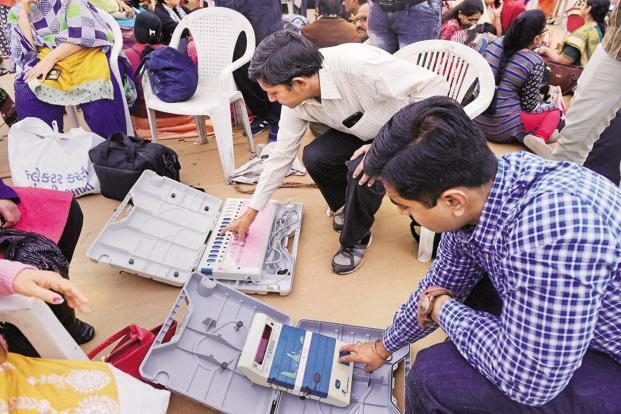
Image: PTI
The EC had said it would conduct random vote counts on EVMs and VVPAT slips in one polling station in each of the 182 Assembly constituencies. Gujarat’s Chief Electoral Officer ‘admits’ some mismatch in EVMs and VVPAT slips in Gujarat, sparks controversy according to a PTI report.
Gujarat’s Chief Electoral Officer, BB Swain, first claimed that there was ‘100% match’ between the EVMs and the slips of VVPAT machines. But, the same PTI report also quoted Swain as saying that at least on four booths, there were mismatch of paper slips and votes counted on EVMs.
Swain’s confession, hidden in the body of the PTI report carried by News18, assumes significance since there have already been allegations of EVMs tampering by opposition leaders including Hardik Patel and Sanjay Nirupam.
One user Ravi Gautam posted a series of tweets asking questions on the credibility of the results announced on Monday.He wrote, “There were mismatch between EVM and VVPAT slips on 4 out of 182 seats. so more than 2% mismatch. 2% vote share is questionable. that is 6 lakhs votes.”
Swain said that they were at Vagra, Dwarka, Ankleshwar and Bhavnagar- Rural seats.
“There was a mismatch of some votes on one booth each of these four seats. This occurred because the Returning Officer must have made the same mistake but it could not be detected earlier. So we took into account VVPAT slips for these booths during the counting and resolved the issue,” he was quoted as saying.
Sabrangindia had carried screenshots of local Gujarati channels showing more votes polled than recorded voters in at least three constituencies in Gujarat
Rohingya repatriation: Joint working group formed, repatriation process to begin by January 23
In the signed terms of references, the Rohingya refugees have been addressed as “displaced Myanmar residents.”
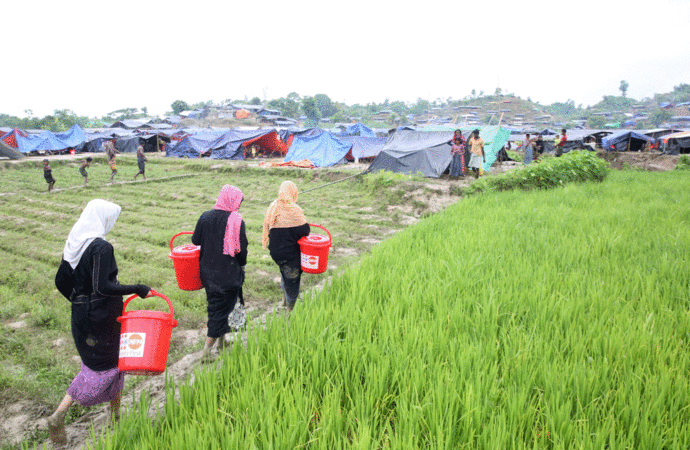
An estimated 655,000 Rohingyas have entered Bangladesh fleeing the violence in Myanmar since August 25Syed Zakir Hossain/Dhaka Tribune
Bangladesh and Myanmar formed a joint working group (JWG) on Tuesday to start repatriating Rohingya refugees by January 23 next year.
The UN migration agency estimated on Sunday that 655,000 Rohingyas had fled persecution in Myanmar’s Rakhine State since August 25, raising the total Rohingya population in Cox’s Bazar to 867,000.
The JWG for their repatriation comprises 15 members from each country and was formed under the terms and conditions of the bilateral arrangement between Bangladesh and Myanmar signed on November 23.
Minister of Foreign Affairs AH Mahmood Ali told reporters on Tuesday that the countries had agreed on the formation of the group in a meeting held at State guesthouse Meghna in Dhaka.
Foreign Secretary M Shahidul Haque and his Myanmar counterpart Myint Thu signed the terms of references (ToR) and mandates.
M Shahidul Haque will lead the Bangladesh side in the JWG, which will also include representatives of Prime Minister’s Office, Disaster Management Ministry, Home Affairs Ministry, Armed Forces Division, Bangladesh Border Guards, Directorate General of Forces Intelligence, National Security Intelligence, Department of Immigration and Passport and several other departments of the government.
The governments of Bangladesh and Myanmar signed a bilateral instrument “Arrangement on return of displaced persons from Rakhine State” on behalf of the respective governments in Myanmar’s capital Naypyidaw to repatriate Rohingya refuges who have taken shelter in Bangladesh.
According to the agreement, a joint working group is to be established within three weeks of signing to oversee the repatriation process and the process has to commence within two months after the signing.
Content of terms of references and mandates
In the signed ToR, the Rohingya refugees have been addressed as “displaced Myanmar residents.”
The JWG will work not only to repatriate the displaced Myanmarese minorities, but also in “resettling” them in Rakhine State and provide support to reintegrate them in the society.
A high Bangladesh government official, seeking anonymity, said under the ToR, the JWG have been armed with the authority of making any decision regarding Rohingya repatriation based on past experiences and current necessities.
The group will also prepare a draft “physical arrangement agreement” on Rohingya repatriation between the countries.
When asked about the tentative schedule of the above mentioned deal to be finalized, the official said his government believes it will be signed before January 23, the day the JWG fixed to start repatriation process.
Under the ToR, the JWG will have the authority to form sub-committee to provide it with technical support
The JWG will also conduct field trip for its members on both side of the borders to monitor and make recommendations for the respective governments.
One of the crucial elements under the ToR was if the members of the JWG disagree on different issues, they will have to refer it to their respective governments and the issues have to be resolved within three months
Another high Bangladesh government official, who was not authorized to speak with news media, said Bangladesh had experienced plenty of dilly-dally moves from the Myanmarese side regarding repatriation issue since 1997.
“That’s the reason why we emphasized on the three-month timeframe to resolve any issue,” said the official.
Both sides in the JWG also agreed on to include concerned UN agencies and international partner in every step of repatriation, resettlement and reintegration, sources in Tuesday’s meeting said.
The JWG will also use data provided by concerned UN agencies and submit progress to the respective government every three months.

Representatives from both Bangladesh and Myanmar attended the meeting at State guesthouse Meghna on Tuesday, December 19, 2017 Mahmud Hossain Opu/Dhaka Tribune
JWG’s relationship with news media
Under the ToR, the JWG will provide credible and objective information regarding repatriation process to the news media.
It will also brief news media about those who have decided to return to their own soil.
The ToR also includes allowing news media to visit situations in both sides of the border before and after the repatriation process.
Foreign Secretary M Shahidul Haque and his Myanmar counterpart Myint Thu led the Bangladesh and Myanmar delegations respectively at the meeting, which started at 8:45am and ended at around 12:10pm. They will also lead their countries in the JWG.
Representatives from relevant ministries, including Home and Disaster Management, also attended the meeting.
Afterwards, Foreign Minister AH Mahmood Ali expressed his satisfaction over the progress of the talks and said the next step of the repatriation process will start soon.
Under the instrument signed on November 23, only the Rohingyas who have fled to Bangladesh after October 2016, will be sent back.
Rohingyas who have been living since before the October 2016 Rohingya crisis will be sent back later.
According to the terms, the repatriation will require proof of residency in Myanmar.
They will have to produce copies of documents issued in Myanmar which indicate they are residents of Myanmar. This extends to, but is not limited to, citizenship identity cards, national registration cards, temporary registration cards, business ownership documents, school attendance, etc.
Any refugee documentation issued by the United Nations High Commission for Refugees (UNHCR) will also be subject to similar verification. The government of Myanmar gets the last say in any dispute.
Myanmar has also agreed to not prosecute or penalize any of the repatriated for illegal exodus and return, unless they are found to be specifically involved in terrorist or criminal activities.
And after the repatriation, both governments will not provide residency or citizenship to any illegal immigrants.
AH Mahmodd Ali on Tuesday noted the agreement is legally binding, but greatly depends on the sincerity of both governments to implement it successfully.
In preparation for Tuesday’s agreement, an inter-ministerial meeting was held at the foreign ministry on Sunday, where the formation of the joint working group and its structure were discussed.
An estimated 655,000 Rohingyas have entered Bangladesh fleeing the violence in Myanmar’s Rakhine State since August 25, raising the total Rohingya population in Cox’s Bazar to 867,000, said the UN migration agency on Sunday.
It said the new arrivals are living in spontaneous settlements increasing the need for humanitarian assistance, including shelter, food, clean water, and sanitation.
The article was first published on Bangla Tribune
India’s Rural Poor May Miss Green Jobs Boom. How To Avoid That
India’s clean-energy push to triple renewables over the next five years can generate 330,000 jobs, as IndiaSpend reported in August 2017. But can these renewable energy jobs help alleviate poverty in India, especially in its rural pockets?
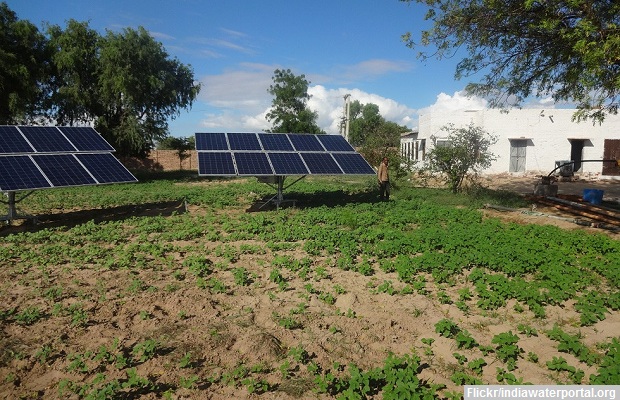
Only if the renewables sector can offer permanent jobs with stability and other benefits to contractual employees expected to form around 80% of its workforce, said a report by the World Resources Initiative (WRI), a think tank. To ensure that this jobs boom is inclusive, the sector must train unskilled and semi-skilled workers from rural India. It also needs to include women workers.
There are reasons for the fear that the impending job boom will leave the poor behind: In 2016, India’s clean-energy sector employed 385,000 workers but mostly on contract.
The Bharatiya Janata Party-led government has committed to the Paris Climate Agreement 2015 to install 175 gigawatt (GW) of renewable power capacity by 2022. This is enough to power 100 million bulbs (at 100 Watt each) and reduce India’s dependence on carbon-emitting fossil fuels.
Of the total target, 100 GW will come from solar power and 60 GW from wind power. The country has installed 58 GW renewable power capacity as of August 2017. This upsurge can provide India’s rural poor an alternative to subsistence farming, said the WRI report.
Source: Council on Energy, Environment and Water and National Research Development Corporation
The Narendra Modi government has been facing criticism for not being able to produce enough jobs in the country. And 18 million people in India are going to be jobless by 2018, according to an estimate by the International Labor Organization. The clean energy sector could be one of the solutions to the problem.
“But unless decision-makers act, this growth will leave the rural poor behind, unable to attain the thousands of new jobs created,” said Bharath Jairaj, director of WRI India’s energy programme and lead author of the report, in the statement. “Now is the time for leaders in business and government to build a clean energy sector that delivers electricity and employment to poor communities across India.”
Most renewable energy jobs are contractual, with no benefits or stability
The WRI approached policy makers, independent power producers (IPP), off-grid enterprises and current employees for insights on how green jobs can optimise poverty alleviation. There are four proxy measures of a good job, as per the study: Reliability of income, healthcare benefits, employee safety policies, and training and capacity building opportunities.
These benefits are most likely to help rural workers improve their economic condition, said the study.
The WRI found that most jobs in the sector are contractual and do not offer benefits or stability. The permanent jobs had the potential to reduce poverty but needed a lot more to make them good jobs that offered opportunities for an individual’s well-being and development.
For instance, the off-grid enterprises interviewed directly deposit the monthly salaries of permanent employees into bank accounts. However, IPPs use cheques and cash to pay their workers. They channel their payments through contractors. Daily wage labourers working on the site usually get paid in cash.
“Having a direct-deposit bank account gives their holders access to bank loans, which rural people use to cover expenses related to illness, weddings, and the purchase of household items,” the report said.
All enterprises the WRI interviewed provide employees’ state insurance (ESI) to permanent employees who earn less than Rs 15,000 per month. Mandated by a law, the ESI is a social insurance scheme that protects the interest of workers in contingencies such as sickness, maternity, temporary or permanent physical disablement, death due to employment injury resulting in loss of wages or earning capacity. (Some offer coverage for on-site accidents and access to some healthcare facilities including financial support and annual health check-ups.)
But this was not the case with IPPs and project developers interviewed, said the WRI study. They “did not provide healthcare benefits to people working for a short period during project execution”, as per the report. Short-term contractual workers form a almost 80% of the total workforce engaged in the clean energy sector.
On-the-job skill development opportunities can help the unskilled and semi-skilled workers in the field secure formal and long-term contracts for the operation and maintenance of plants. Currently, there are few of these, compared to those being created for construction, found the study.
Renewable energy sector jobs, both direct and indirect, in India form 4.6% of the global total, IndiaSpend reported in August 2017.
Training institutions are inadequate: Green sector employers
Renewable energy employers interviewed for the study said that unskilled workers lacked the technical and soft skills needed for full-time positions. But most training institutes refuse to admit applicants without a secondary school education, locking out 60% of poor Indians who are either illiterate or have only completed primary school.
Many training programmes are run in urban centers which makes it difficult for the rural poor workers to enroll. Women workers face additional gendered challenges, according to the study. Housework, childcare and gender norms make it nearly impossible for them to participate in training programmes, it said.
Even if poor rural workers manage to complete existing training programmes, they are unlikely to get jobs. “The institutes’ curricula don’t often align with industry needs, making it difficult for graduates to secure good-quality jobs,” Pamli Deka, the manager of WRI’s electricity governance initiative and co-author of the report, said in a statement. The study found that many clean energy employers preferred to train their new employees because they found training institutions unable to do so satisfactorily, she said.
Private sector leaders should build capacity among unskilled and semi-skilled workers to ensure sustainability of renewable energy projects and provide opportunities to rural communities, WRI recommended.
It further suggested that the government officials should create public training programmes to prepare the poor and less educated people— especially semi-skilled and unskilled–for employment in the clean-energy sector.
Nearly 240 million Indians lack basic electricity services. Apart from creating new jobs, India’s clean energy push can improve energy access in India’s poorest rural communities. This will allow children more time to study after school, bring in greater productivity and income for families, and improve health outcomes, according to the report.
(Tripathi is a principal correspondent with IndiaSpend.)
Courtesy: India Spend
Neoliberalism and Inequality are Inseparable
Prabhat Patnaik writes on the growing income inequality.
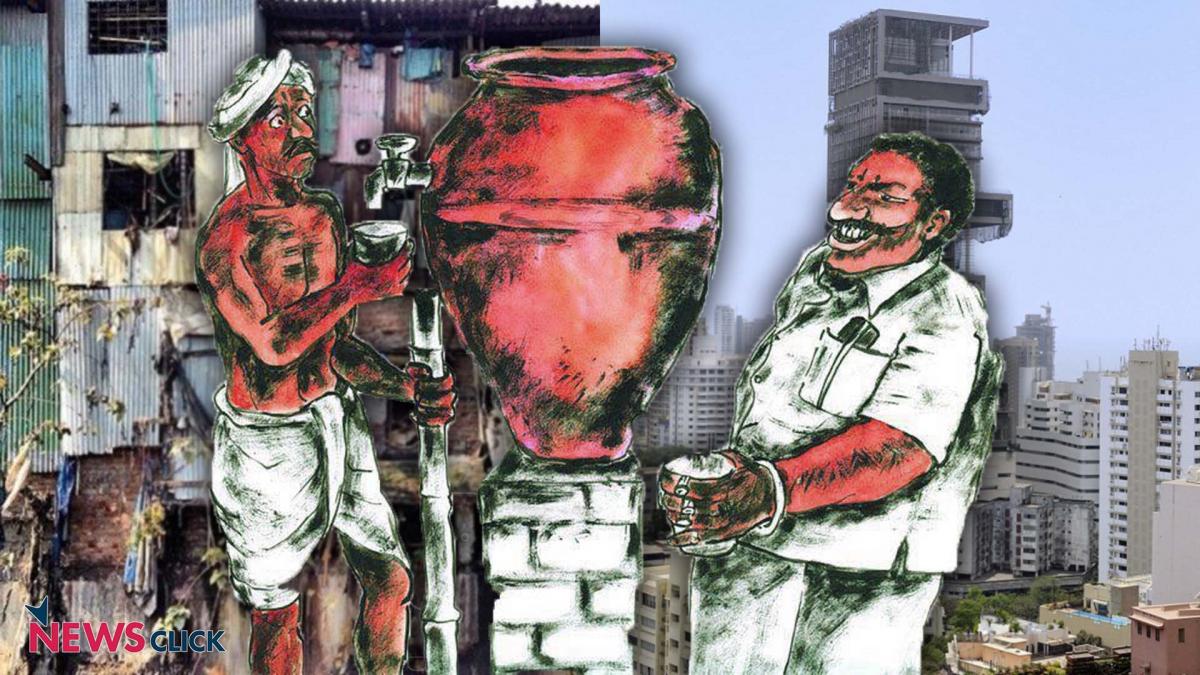
Newsclick Image by Sumit Kumar
Thomas Piketty and Lucas Chancel have just written a paper as part of their work for the World Inequality Report discussing the movement of income inequality in India. And their conclusion is that the extent of income inequality in India at present is greater than it has ever been at any time in the last one hundred years.
Their estimates go back to 1922 when the Income Tax Act became operational in India. The share of the top 1 per cent of the population in total income at that date was around 13 per cent. It increased to 21 per cent by the late 1930s and then fell to about 6 per cent by the early 1980s before rising to 22 per cent in 2014, the final year of their study.
What is striking about the paper’s finding is the almost exact synchrony between the break in inequality trends and the transition from dirigisme to neoliberalism. In the period between 1951 and 1980, the bottom 50 per cent of the population captured 28 per cent of the increase in total income while the top 0.1 per cent actually witnessed a decline in their income. In fact the income of the bottom 50 per cent increased faster over this period than the overall average. Between 1980 and 2014 however the top 0.1 per cent captured a higher share of the increase in income (12 per cent) than the entire bottom 50 per cent (11 per cent).
To be sure, data on income inequality can always be questioned. For a start we have no income surveys in the country; all we have are sample surveys relating to consumption expenditure and getting from the distribution of consumption expenditure to the distribution of income is problematical since we do not know how savings, which constitute the difference between the two, are distributed. Secondly, in all sample surveys, the top percentiles are always insufficiently represented, precisely because they are so few in number. Statisticians therefore make all kinds of assumptions about how income is distributed within the top decile to arrive at the share of the top 1 per cent or the top 0.1 per cent of the population. And these assumptions can always be questioned.
It is not surprising therefore that the Piketty-Chancel estimates too have been questioned by some commentators. But no matter how one views their absolute figures, the trends revealed by them can scarcely be questioned, since more or less the same method of estimation is employed across time. And this trend is entirely in conformity with what other researchers have been saying, and also with what one would theoretically expect. Credit Suisse for instance provides wealth distribution data. According to these data the top 1 per cent of households in India currently owns more than half (57 per cent) of the total wealth of all households, and wealth inequality in India has been rising extremely rapidly, indeed more rapidly than even in the United States.
Wealth distribution is invariably more unequal than income distribution, because the working class which has no wealth has nonetheless an income. Hence the Piketty-Chancel figures for the share of the top 1 per cent in income are by no means out of sync with the Credit Suisse figures about their share in total wealth. (By the same logic however they seriously negate estimates that put the share of wealth of the top 1 per cent at only 28 per cent, though even these latter estimates recognize the significant increase in wealth inequality since 1991 when neoliberal reforms began and when the share of wealth of the top 1 per cent was just 17 per cent according to them).
A measure of inequality that is often adopted is the Gini coefficient which captures the distance between the actual distribution and an ideal distribution characterised by absolute equality. The problem with the Gini coefficient however is that by looking at the distribution as a whole it misses out on questions like the shares of the top percentiles. For instance even when the share of the top 1 per cent may be increasing, the Gini coefficient may show a decline in inequality if some redistribution is occurring say from, say, the 4th decile from below to the bottom decile, ie, from the “poor” to the “very poor”. Piketty and Chancel accordingly do not use the Gini coefficient but look at the shares of the top few percentiles, which is a much more useful measure (especially if we are talking of economic power).
The Piketty-Chancel figures show that 1983-84 was the year of the lowest income-share for the top 1 per cent, after which this share started rising. It may be recalled that neoliberalism first made its appearance around that very time and that the budget presented in 1985 by Vishwanath Pratap Singh, who was then the finance minister in the Rajiv Gandhi government, contained significant steps in this direction (against which in fact the Left parties had organised a convention in New Delhi at that time). The association between growth in inequality and the pursuit of neoliberalism is thus strikingly close. And not surprisingly, such a growth in inequality has characterised almost every country in the world in the period of “globalisation” which is characterised by the almost universal pursuit of neoliberal policies under the diktat of international finance capital.
The authors, both in the paper itself and also individually in interviews, give a number of reasons why income inequality has increased in India in this period, reasons having to do with the pursuit of neoliberalism. The decline in the highest marginal income tax rate from 98 per cent to 30 per cent, the persisting inequality in land ownership, and the lack of access to education and health by the poor, are some of the points raised by the authors.
All these are very important. But there is an additional factor that needs to be mentioned here, namely the attack on petty production, including peasant agriculture, that neoliberalism has brought in its wake. While an improvement in the conditions of the peasantry does not necessarily benefit the agricultural labourers automatically, a deterioration in their conditions invariably gets “passed on” to the labourers. And what is more, since, in the event of such a deterioration, destitute peasants seek employment in the urban economy, where very few additional jobs are being created, they tend to swell the reserve army of labour which also affects the wages of the urban workers and hence the overall urban income distribution.
In other words, as rural India has on average a lower income than urban India, any widening of the rural-urban difference has the effect, other things being equal, of widening overall income inequality (by the Piketty-Chancel measure). But it also has the additional effect of widening the income inequality within the urban sector itself. It does this via a swelling of the reserve army of labour in the urban economy through the immigration of destitute peasants into it. For both these reasons, the assault on petty production launched by neoliberalism constitutes an important factor behind the growth of income inequality.
The case of China, where, according to these authors, income inequality was rising rapidly earlier but got reversed in the current century is instructive in this context. To be sure, there are basic differences between the Indian and the Chinese economies; but an important proximate factor behind the reversal of the growing inequality in China was the policy adopted by the Chinese Communist Party under the slogan “Towards a Socialist Countryside”. This policy checked and reversed some of the encroachments on peasant agriculture that the attempt to industrialise through a relentless export drive had entailed.
The introduction of a wealth tax (which, amazingly, India does not have), the increase in income tax rates upon the rich, the provision of quality education and health services to all under the aegis of the State, and of course land redistribution, are undoubtedly some of the steps that must be taken to reverse the growing income inequalities; and these entail a jettisoning of neoliberalism. But even while recognising this, we must also recognise, which the authors do not do explicitly, that neoliberalism is not just a policy of choice that can be given up at will. It corresponds to a stage of capitalism where international finance capital has acquired hegemony; overcoming neoliberalism therefore requires a class struggle against this hegemony through a wide mobilisation of workers and peasants.
The authors however rightly take on the apologists of neoliberalism who argue that such a growth in income inequality is essential for achieving the high GDP growth that has actually occurred in countries like India. This is absurd, since the highest rate of income growth that has ever occurred in world capitalism was experienced in the post-war period, during the so-called “Golden Age of Capitalism”, when income inequality actually was declining the world over. This decline in income inequality to be sure was not because of the operation of capitalism but because of the concessions that capitalism had been forced to make in the face of the looming socialist threat; but it shows that the argument that growing income inequality is essential for higher growth is a complete non-sequitur.
Courtesy: Newsclick.in
What’s Behind the Communal Violence in Karnataka
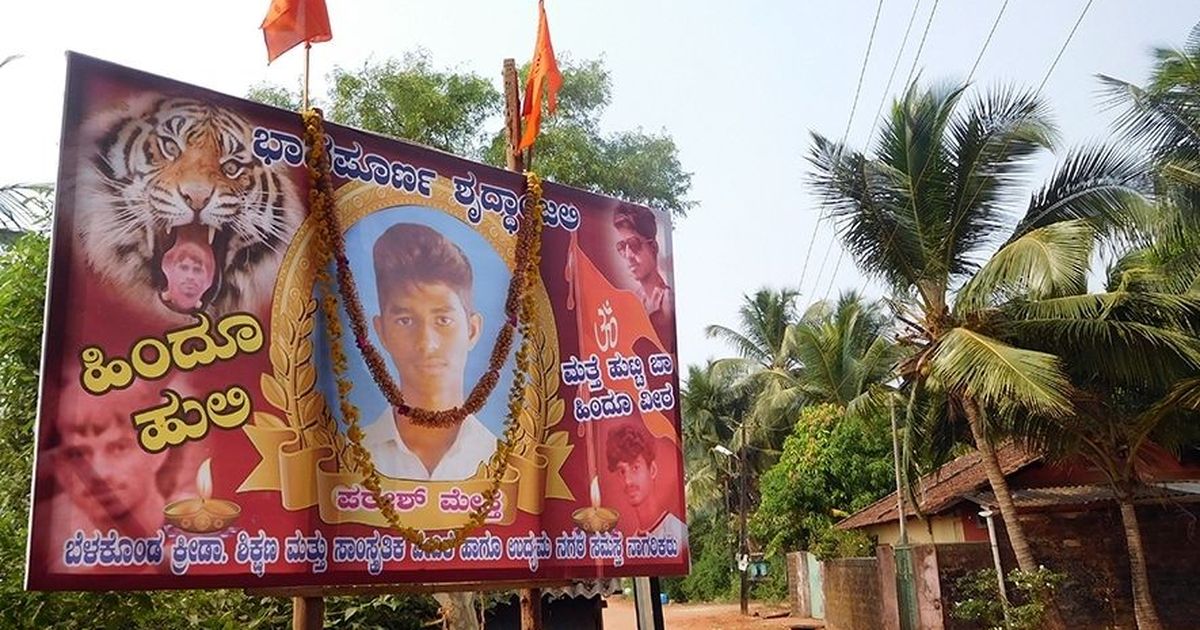
In the backdrop of the mysterious death of Paresh Mesta in Honnavara town of Karnataka’s Uttara Kannada district, members of Hindutva outfits have kept the district on a fore of communal violence. Rumours and lies around Mesta’s death that his dead body was found in a brutalised condition which later turned out to be false allegations which catalysed the situation. With Karnataka getting ready for assembly elections in coming May 2018, BJP leaders in the state have only intensified the tensed situation, perhaps for political purposes. Though signs of normalcy are being established, however, posters terming Mesta as ‘Hindu tiger’, claiming him to be ‘Hindu Martyr’ have been put up by various groups in villages of Uttara Kannada.
It all started on December 1 in port town of Honnavara. On the occasion of Eid-Milad, some Muslim youth had unfurled a green flag at the Chandavar circle in the town. After which a number of Hindu youth reached the place and installed a pole with saffron flag there leading to clashes between the two groups in which at least five persons were injured. On December 6, the town witnessed another incident of a communal clash over an accident in which Paresh Mesta was allegedly also a part of it. Mesta went missing since then and his dead body was found floating in town’s Shetty Kere Lake on December 8. Rumours around Mesta’s death started circulating in social media groups and State BJP leaders were the forerunners in spreading them. The rumours of Mesta’s body being brutalised were turned down by the preliminary postmortem report, however, Hindutva outfits have resorted to communal violence across the district. Muslim communities have remained in a state of fear, locking themselves inside their houses. In order to bring in normalcy, Karnataka Police arrested about 160 persons allegedly belonging to Hindutva groups for taking part in riots across the district. In the recent riots t was reported that at least 50 persons were injured and properties belonging to Muslims were vandalised.
Speaking to Newsclick, Civil rights activist H. S. Anupama, a doctor at Jalaja General and Maternity Clinic in Honnavara described the tensed atmosphere caused among the Muslim communities due to violence. “In the last ten days, my clinic hasn’t been visited by any Muslim patients. Instead, some of my patients have contacted me through phone and told that stones are being pelted at their houses”. She said, “at least in the last two decades, Uttara Kannada has not seen any such communal violence, however, other parts of the state have witnessed such situations.”
BJP MPs from the state, Anant Kumar Hegde, and Shobha Karandlaje have reportedly made hate statements despite communal tensions. Karandlaje claimed Paresh Mesta to be a BJP activist and accused “Jihadists” to be responsible for Mesta’s death, however, it turned out that Mesta’s father denied any such Party affiliation of his son. Hegde, on the other hand, had earlier called for a ‘Jail Bharo’ from December 19, demanding the release of the persons arrested during riots. After some of the arrested people were released on December 15, hedge wrote a Facebook post threatening more violence . It said, “The chief minister should be ready for a bigger Marikamba Habba”, (Marikamba Habbais an annual event where animals are sacrificed near a temple).
Brief history of communal violence in Karnataka
How did a region known for its secular values turn into a hotbed of communal politics in the state? Shivsundar, a longtime associate of Gauri Lankesh Patrike traced the history of communal violence in the state of Karnataka. According to him Uttara Kannada district transformed into such a site gradually, after a planned effort of Bharatiya Janata Party (BJP) and the Sangh Parivar.
In 1985 Kolar witnessed communal tension after the decision of BJP and RSS to celebrate Ganesh Utsav in public in grand scale; in 1990 a riot broke out with the preparation for Eid-Milad celebrations in Kolar. BJP along with RSS did a door to door campaign and mobilised the locals and protested the Eid procession being carried out in Kolar.
BJP and RSS sympathisers celebrated the laying of foundation stone of Ram temple in Ayodhya on 10 November 1989. This resulted in a series of riots in Arsikere, Hubli, and Dharwad. In 1990 the Rath Yatra of the BJP had again sparked a communal tension in the regions of the procession; this tension continued till1992 following the Babri Masjid demolition.
In 1994, a dispute around an Urdu news channel broke out. The Kannada Para Sanghas (Kannada organisation) joined hands with the Hindu fundamentalist groups in the state and opposed the initiative. This again triggered communal tensions in the state.
Shivsundar noted that since 2004, BJP has become stronger and in collaboration with RSS, has been trying to polarise the state. According to the database of communal violence in the state collated by Alternate Law Forum (ALF) in Bangalore, festivals and public gatherings have been the main sites of communal violence. Twenty four churches were vandalised under Yeddyurappa led BJP government, in 2008.
Shivsundar says, “In 2017 BJP has changed its agenda from development to communal polarisation. The recent attack on Baba Bundangiri shrine in December 2017 proves it.”
Shivsundar also pointed out that, BJP and RSS had tried hard to communalise the Hyderabad-Karnataka regions but were unsuccessful. The syncretic nature of the region posed a serious challenge to their efforts to communalise the region; after which, they have occupied the Mumbai Karnataka region. Dakshina Kannada is also one of the regions that are now the soft targets of communal agenda of the BJP and RSS.
Courtesy: Indian Cultural Forum