[ A month ago from yesterday, a teenager called Junaid was lynched and murdered on a train in Haryana. Sabiha Farhat writes in the wake of visiting his house and meeting his family. The news cycles may have moved on to other stories, but we need to keep remembering Junaid, and why he was killed. – Kafila]

Once upon a time there was a 15 year old boy called Hamid, who went shopping on the day of Eid with his Eidi . A few days ago there was Junaid who went shopping on the eve of Eid. Premchand’s Hamid was an orphan and lived with his grandmother in extreme poverty.
Junaid lived surrounded with love of his brothers, a sister, a doting mother, father and friends. Instead of the old, decrepit house of Hamid, Junaid’s house has two rooms, it is not falling apart but it’s size and unplastered walls, do speak about the economic condition of his family.
As we approached Khandawli, Junaid’s village in Ballabhgarh a fear gripped me. I did not have the courage to walk upto the house. Junaid was brutally murdered on 22nd and here I was on 25th. It was too soon, my mind said. I should have let Eid pass. But how could I have prepared Sewai in my house when a mother like myself had lost a young, healthy, happy child to hindutva fanatics? I am a mother, I was angry and ashamed at home. And here, standing outside Junaid’s door, I was weak and helpless. Useless too.
Junaid’s grandfather met us outside the house, his daughter-in-law was unwell and Junaid’s father had gone to Police station. We sat down on the charpais and tried to tell him that we were not from a political party nor were we Journalists. But he had not even asked us who we were! He wasn’t waiting for us or anyone in particular. All he said was, “We want ‘aman’, why did we fight against the British? So that we could live in our country with peace. Pardhan Mantri is the ‘maa and baap’ for all citizens, if he wants he can get us justice,”. This man had faith in Modi!!! He was hoping Modi would be able to get him Justice!!! I guess he just had old time innocence.
He let us go to the terrace to meet Junaid’s mother, Saira. There she was, stony eyed, not a tear, only a wail coming out of her. Her daughter was combing her hair while two ladies from the neighbourhood were sitting beside her, silently listening to Saira’s chilling wail, as if it had frozen them. I froze too. I sat in front of her but kept away. Gunit, my friend, had the courage to sit next to her and hold her hand. Gunit started talking and after what seemed like a very long time later, Saira, responded with tears and ‘mera beta’, ‘mera beta’, ‘moh ko ek hath se Utah leta tha’ , ‘abhi hafiz bana tha’, ‘amma naya suit pehan ke aiyo mere madarse mein’ ‘amma sabko dawat denge’ ‘jo jo usne kaha bibi maine sab kiya’, “jab hafiz baniyo tab main gayi to maulana ka kapda, unki biwi ka kapda, saare Bachchon ka khana le ke gayi, yahan se Jane se pehle Maine inko apne paas se paise nikaal ke diye our 10-10 ke naye note mangwaye, wahan dawat ke baad har bachche ko 10-10 rupaiye diye. Itta khush, itta khush ho gaya mera beta, bola amma tu toh kamaal kar di, har bachcha tujhe hi yaad karey hai madarase mein, ke jo junaid hafiz bana toh hamey 10 ka naya note mila, tu too mashoor ho gayi amma!!! aur khoob hanse tha!!! Abhi sehri mein moh se kunda le ke chal diyo ke amma tu baith aaj mein tujhe khilaonga…….” Saira kept describing Junaid’s innocent boyhood and we all cried with her. Saira’s question – ‘lekin kyon, mere beta toh rozey se tha, bhooka-pyasa, woh kaisey kuch kha sakta tha’ is still resounding in my ears. Saira knew Junaid was called a cow-eater before being killed. Ramzan is over and now Eid has passed too. Unlike Premchand’s Hamid who lived in Hindustan, Junaid lived in a Hindu Rashtra. So did Najeeb and Rohit Vemula. I can still see Rohit’s mother marching with the protestors, Najeeb’s mother being forcefully carried away by police and Pehlu Khan’s 80 year old mother wiping her tears! Why is it that in a hyper masculine fascist agenda – woman is the biggest looser?
The disappearances, suicides, public floggings and lynchings are not spontaneous acts of hurt-sentiments-venting-out by ‘Hindus’ as our BJP-RSS leaders have been claiming. Rohith Vemula was reduced to ‘his immediate identity, a vote, a number’ in his own words, he was marginalised and ignored to the extent of suffocation. Junaid must have felt the same suffocation.
Rohit was driven to suicide, Junaid was murdered, and no one was responsible! This indifference and numbness towards the lives of minorities is typical of Brahminical gaze. Can such people create a non-casteist Hindu Rashtra, as claimed by BJP-RSS? Will a Hindu Rashtra make our problems disappear? What will happen if all muslims were eliminated from India? Will you have better roads, clean water, clean ganga, no pollution, no land mafia, no rapes, no murders, no beggars, no poor, no unemployed, no homeless, no farmer suicides? Why then do Indian Hindus go crazy over this idea of Hindu Rashtra? The movement is already violent and till now it has only delivered political power to the likes of Modi and Amit Shah. To keep us engaged like irritant kids, they have dumped upon us the idea of Hindu nationalism. Nationalism requires symbols that arouse emotions. And since RSS or Hindutva-wadis didn’t play a role in the actual nationalist movement of India during the freedom struggle they are creating these symbols now. They have to re-write history and re-wire people’s understanding of history. The truth is their ideologue, ‘Veer’ Savarkar, originator of the concept of hindutva petitioned the British government several times when he was in Jail, betraying the national movement:
“…if the government in their manifold beneficence and mercy releases me, I for one cannot but be the staunchest advocate of constitutional progress and loyalty to the English government…I’m ready to serve the government in any capacity they like….”
(Savarkar’s letter asking for forgiveness dated November 14, 1913 is reprinted in a book, Penal Settlement In Andamans, published by the Gazetteers Unit of Union ministry of education.)
When a political party inspired by Savarkar, who was ready to be a loyal servant of the British, wants to take charge of Independent India, they know they have no roots. But ‘others’ do! Muslims have deep roots in India and were also at the forefront of the freedom struggle. RSS can’t digest that. They are trying hard to claim Ambedkar’s legacy but not of Ashfaqullah Khan or Barakatullah of Ghadar party or Khan Abdul Ghaffar Khan who spent 45 years in Jail! They uproot the ‘other’. A road in Aurangzeb’s name is not acceptable but to hang the portrait of Savarkar with Mahatma Gandhi, inside the Parliament?!!!
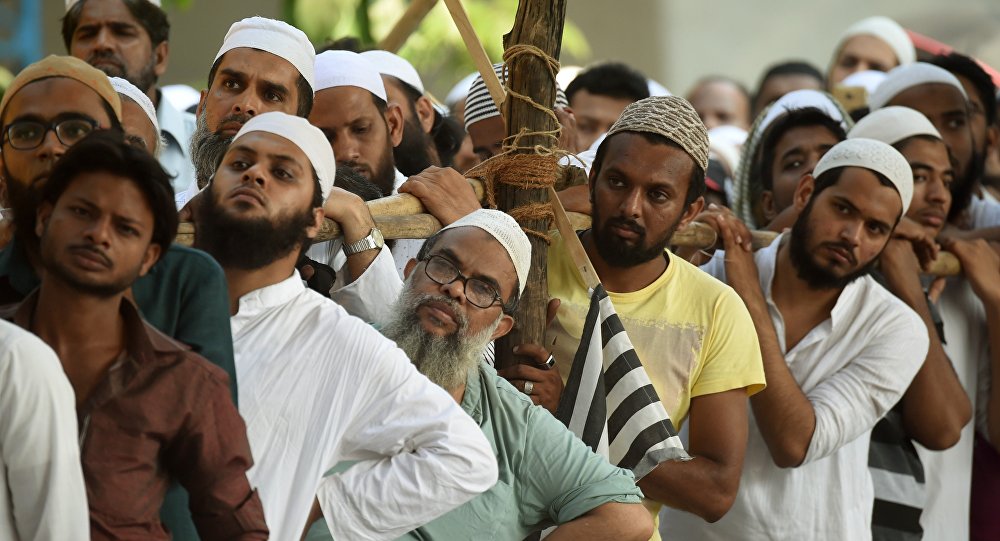
History is distorted, manipulated and created to suit a rootless Hindu nationalism. Since minorities can’t be sent to gas chambers, they have to be either invisible or assimilated. Their identities have to be wiped out for the hindu nationalist to feel rooted in Hindu rashtra. Any visible identity markers like skull caps and beards must lead to mob lynchings, while the hindu fanatics wear their religion on their sleeves! A gathering of muslims terrify hindus, a lot of them tell me they are scared of venturing into the ‘muslim areas’. Earlier the refrain was ‘all terrorists are muslims’, can I now say ‘all lynchers are hindus’? No. I have to qualify them as ‘fanatics’! Hindu nationalists did this to Sikhs too. In the anti-sikh riots of 1984 a lot of Sikhs had to cut their hair and beards for fear of being identified. Dalits live in mortal fear of being looted, murdered or raped at the slightest resentment. Shabbirpur village in Saharanpur is a recent witness of domination by force. And the propaganda is that Hindus are the most peaceful race!
All these years of demonising muslims has created a consensus among the general Janta too about the ‘place’ of muslims in India. It is either ‘muslims should behave themselves’ or ‘get out’ of India. What behaviour? “To live like second grade citizens, to not have the right to vote, to live at the mercy of Hindus, to be plundered and raped in our graves”, as claimed by Yogi’s outfit. Yogi is not fringe, he is not an extremist, he is a mainstream politician elected by Hindus. Why do hinds elect such people again and again? Is this what they want? This “putting muslims in their place” is not a new phenomenon, I remember the other black Eid in 1987 when VHP painted the walls in Meerut with the slogan, “If you want to live in India, live like Hindus”. In 1991, it became, “Hindustan main rehna hai to Jai Shri Ram kehna hoga”. Why? Hindu Rashtra belongs to manuwadi, brahminical Hindus, majority of whom have turned against Indian muslims. Indian Muslims are treated like a punching bag on which nationalist hindus take out their anger, frustration, irritation. By hitting the muslims, hindus de-stress themselves, it works like a feel good factor. They use the free Hindu licence (issued by Modi sarkar) to vent out on muslims or dalits. Moreover they also have the guarantee of ‘No Witnesses’ so they can hound us publicly, as a pack, tamasha is in full swing. Else there wouldn’t be 200 people on the railway platform, all of whom saw NOTHING when Junaid and his two brothers were stabbed in broad daylight. Sure there are those who stand in protest with Indian Muslims. Be thankful to them but know that it is not enough.
Lynchings are psychological too. They happen in offices, parties, parks, neighbourhoods. My identity has been reduced to my name hundreds of times! Anyone at any time can point a finger at us and call us – Pakistani, anti national, Babar ki aulad, Aurangzeb ki aulad, mullah, katuey, kat-mullah, beef eater, ….They don’t care if these ‘names’ hurt us! They may do so as a joke, “c’mon yaar don’t be so serious”, “madam, aap zyada hypersensitive ho”, using both ‘hyper’ & ‘zyada’ when I feel bad but when the hindu feels bad, it becomes a matter of ‘insult to the nation’ or ‘insult to hinduism’. This ‘anti-national muslim’ construct, has been created by no less than our Prime Ministers. In 1983 Assam elections, Vajpayee and Advani, backed with RSS, successfully turned the local Assam agitation into an anti-muslim ferment. They fanned hatred by calling Assamese muslims ‘outsiders’ in their own homeland. Vajpayee had said, “Foreigners have come here; and the government does nothing. What if they had come into Punjab instead, people would have chopped them into pieces and thrown them away”. And sure enough 4000 muslims were hacked to death in the Nellie massacre, within a few months of his speech.
Moradabad. Nellie. Hashimpura. Ayodhya. Bombay. Gujarat. Muzzafar nagar…….
Vajpayee. Advani. Modi. Amit Shah. Yogi….
Muslim monster. Riots. Elections…
This is what we are up against: Ruthless politicians armed with politics of hate. The fact that it yields rich political dividends is a no brainer but the fact that majority of Hindus vote for them is telling of the community. Advani himself had said, “Had I not played the Ram factor effectively, I would have definitely lost from the New Delhi constituency,” (18.06.1991). Vajpayee didn’t lag behind either, during the same election campaign, he claimed that the construction of ‘Ram temple at Ayodhya was necessary to save the honour of the Hindu community’ (TOI, 13.05.1991). Sushma Swaraj called the construction of temple in place of mosque, “a matter of national honour”. Ashok Singhal said no excavation was necessary as “temple is a matter of faith and identity of crores of Hindus”. Therefore, No litigation. No court. Justice delivered by the mob. Babri masjid was demolished to establish Ram mandir – a symbol of Hindu nationalism.
Modi openly laughed in his rallies across Gujarat, addressing Muslims as the community that lived by the philosophy of “hum paanch, hamare pachees”. In his Gujarat Gaurav Yatra, he repeated, “We have to teach a lesson to those who are increasing population at an alarming rate”. In another address he referred to Gujarat riot victim’s camps as “breeding grounds and child producing centres” – reducing the community to an ‘unwanted burden’ in the Hindu Rashtra. And yet Indian Hindus voted for him to become the Prime Minister. Why? In recent UP elections too he created a ‘kabristaan vs shamshaan’ and the ‘electricity on Eid vs Holi’ divide – presenting the muslims as the ones taking away from the hindu plate. His election rallies end with ‘Bharat mata ki jai or Vande matram’ but does he really care for mata, matram or mothers? Maybe Rohit’s mother or Najeeb’s mother, will be able to tell.
Cow is the new symbol of honour of the Hindu community. Cow is said to be the mother of brahmin Hindus. I wonder, for this mother to have her “rightful place” in the history of Hindu Rashtra, how many muslim mothers will loose their sons and husbands to lynching mobs? Sadhus and Sadhvis equated the lynchers with Bhagat Singh!!! It is a Public Honour. The ignorance and arrogance of it all is stupefying. And once again: No litigation. No court. Justice is delivered by the mob. A nationalist mob, the Gau Rakshaks are honourable citizens with complete immunity from the state.
BJP and its Hindutva brigade has blood on it hands. It is blood thirsty still. It is desperate for 2019…And Hindus* may vote for them yet again!
Indian muslims are the first game in the slaughter chain, while being accused of appeasement! It’s a double whammy! It is cleverly coded communal politics. The idea is to keep us in a continuous state of riots, relief camps, repression. The idea is also to make the biggest minority irrelevant in India.
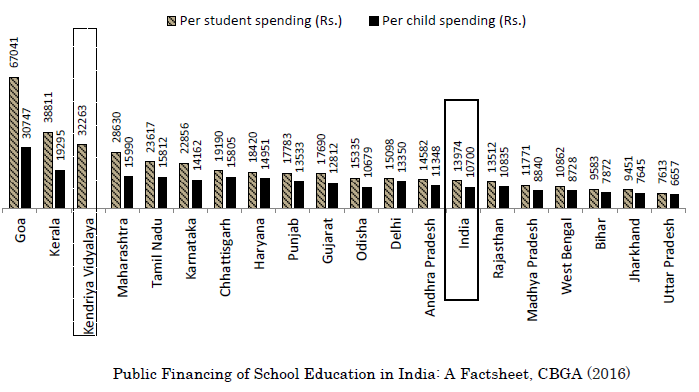
Are the Indian Muslims ready to take on this fight against a communal state, a complicit state machinery and at best an indifferent majority? No. Because we are the most socio-economically backward community, worse off than Dalits. Indian governments will not provide ‘muslim areas’ with development infrastructure like schools, drainage, roads, water,…but will spread the propaganda that muslims do not want to study, that we are unhygienic, that we want to live in ghettos. We have to be a “self-made” community. We have to build everything on our own – schools, colleges, dispensaries, hospitals, parks, drains, whatever and then go out and compete in the mainstream. There will be social biases. We have to defy it all.
Indian muslims have been at the margins for far too long, this has led to the belief that, ‘that’ is our place. No. Let no Amit Shah tell us that we are here to repair cycle punctures.
* (All hindus may not vote for BJP-RSS but all those who vote for Modi are Hindus)
Today, the truth is that majority of Indian Hindus sway to the tune of Modi whether it is the foot soldiers or virtual soldiers of hindutva, rural or urban, illiterate or educated. They are prisoners of Modi.
The truth is also that there are other minorities at the receiving end of hindutva fanaticism. Dalits. Sikhs. Christians.Tribals. The examples speak for themselves. The Dalit and Akali movements are strong enough to force BJP-RSS to appease them, even if through politics of tokenism. Muslims must learn and learn fast from these movements. A grass root movement of our own that reaches out to build solidarities with other vulnerable groups like Dalits, SCs, STs, LGBT,…is required. The only way to break the hindutva narrative is through alliance, progressive ideology and education. We must recognise and acknowledge our allies, respect their integrity and camaraderie.
Remember we have been the punching bag, we have been hit too hard for too long. It’s our turn to come back like the punching bag and hit the brazen fanatics in the face. It is possible to knock them down!
Courtesy: Kafila.online