Home Blog Page 2470

Geo-Strategic Shift in Pakistan

0

Pakistan's The Friday Times carried a prominent article opining that some sort of geo strategic shift appeared afoot in Pakistan.


Courtesy: The Friday Times

Najam Sethi wrote, " Prime Minister Nawaz Sharif has decided to dispatch a group of parliamentarians to Western capitals to highlight a brutal surge of human rights abuses by India in Kashmir. What is the urgent need for such an initiative? Why have Indo-Pak relations plunged in recent months? Is some sort of geostrategic shift taking place in the region for which Pakistan is flaying about for an appropriate response?

Mr Sharif was disabused of his desire for peace with India by the arrival of Mr Narendra Modi as prime minister and Mr Ajit Doval as his National Security Advisor of India in 2014. Far from clasping Mr Sharif’s hand of goodwill on the day of his inauguration by reviving the back channel on Kashmir initiated by his BJP predecessor Atal Behari Vajpayee a decade ago, Mr Modi intervened brutally in Indian-occupied Kashmir and aggressively against Pakistan (Mr Doval’s “offensive defense” doctrine).

The article can be read here

Deja Vu As All Party Delegation Arrives in Kashmir ?

0

As the All Party Delegation Arrives in Srinagar today and several members including those of the CPI(M) and Congress push for an open and honest dialogue, Greater Kashmir reported that a youth from Qazigund died with pellet injuries, head wound. Ahangar was hit by pellets during clashes with government forces today in Vesso village of Qazigund in south Kashmir’s Anantnag district. Meanwhile, the visit is being greeted with cautious optimism, almost a sense of deja vu, given New Delhi's track record — not helped by the cynical politics of Pakistan-inspired separatists –-to keep the conflict on the boil.

A youth with multiple pellet injuries and a head wound was declared dead on arrival at District Hospital Anantnag, doctors said on Saturday, September 3. They said that Basit Ahmad Ahangar, son of Ghulam Muhammad Ahangar, resident of Vessu, had suffered multiple pellet injuries in his legs. “He had a head wound as well,” said a doctor, who didn’t wish to be named reported Greater Kashmir.

Greater Kashmir also reported that extensively that ahead of the visit of an all-party delegation to Jammu and Kashmir, political parties today pitched for holding dialogue with "all stakeholders", including Hurriyat, to douse the unrest and banning the use of pellet guns by security forces. After a meeting held by the government to brief the MPs who are part of the 30-member delegation, leaders from Congress and CPI(M) said all stakeholders should be approached during the two-day visit of the delegation to Jammu and Kashmir beginning Sunday.

Meanwhile, Kashmir Times reported that five news channels have been prohibited from reporting on news in the Valley. Reports said district magistrate Srinagar in this regard has sent notices (vide order number Lgl/144-CrPC/4859-60) through SSP Srinagar to SEN Digital Network, JK Media Network Service and Take One Media asking them to block the news channels like KBC, Gulistan TV, Munsiff TV, JK Channel and Insaaf TV.

The order issued by District Magistrate Srinagar reads: “whereas Senior Superintendent of Police, Srinagar has informed that Cable Operators operating in District Srinagar are transmitting various programmes which has created law and order problem in the Valley in general and Srinagar in particular as these cable operators transmit programmes which promote hatred, ill-will, disharmony and a feeling of enmity against the sovereignty of State. Besides some of the channels transmitted by the cable operators viz: KBC, Gulistan TV, Munsiff TV, JK Channel and Insaaf TV have started to telecast programmes which have potential of causing mental and physical harm to particular functionaries of Government. Besides, these programmes have caused feeling of prejudice to the maintenance of harmony and public peace.” The order further reads that, “whereas, Cable Television Network (Regulation Act, 1995) provides a mechanism to regulate the operation of television network and in order to prevent the breech of peace and to stop incitement and instigation of the public to cause mental and physical threat to particular functionaries of the Government.”

Greater Kashmir reported extensively on the meeting of the All Party delegation in Delhi. "Government should invite Hurriyat for talks with the all-party delegation…. The invitation extended to others should be given to Hurriyat also. It is up to them whether they want to meet the delegation," CPI(M) general secretary Sitaram Yechury said.
 
Yechury said government should make "tangible" announcement like a ban on pellet guns, withdrawal of AFSPA from civilian areas and rehabilitation and compensation package for those who lost their lives in recent violence as a follow up of Prime Minister Narendra Modi's statement of taking peace initiative on the basis of 'Insaniyat, Jamuriyat and Kashmiriyat'.
 
The delegation will interact with individuals and groups aiming to bring peace in the Valley, which has been facing unrest following the killing of Hizbul Mujahideen militant Burhan Wani on July 8.
Leader of the Opposition in the Rajya Sabha and Congress leader Ghulam Nabi Azad said the UPA is open to holding dialogue with all stakeholders. After returning to Delhi on Monday night, the delegation would meet once again "and the government will take action based on their suggestions," he said.
 
Apart from the Home Minister and Minister of State in PMO Jitendra Singh, those who will be part of the all-party delegation include Finance Minister Arun Jaitley, leader of opposition in Rajya Sabha Ghulam Nabi Azad, his Lok Sabha colleague Mallikarjun Kharge, senior Congress leader Ambika Soni, Union Minister Ram Vilas Paswan (LJP), JD-U leader Sharad Yadav, CPI-M general secretary Sitaram Yechury and CPI leader D Raja, NCP's Tariq Anwar and Trinamool Congress' Saugata Roy, Shiv Sena's Sanjay Raut and Anandrao Adsul, TDP's Thota Narasimham, Shiromani Akali Dal's Prem Singh Chandumajra, BJD's Dilip Tirkey, AIMIM's Asaduddin Owaisi, AIUDF's Badaruddin Ajmal and Muslim League's E Ahamed will be part of the delegation.

TRS' Jitendra Reddy, N K Premchandran (RSP), P Venugopal (AIADMK), Tiruchi Siva (DMK), Y B Subba (YSR-Cong), Jaiprakash Yadav (RJD), Dharamveer Gandhi (AAP) and Dushyant Chautala (RLD) are also in the team.BSP and Samajwadi Party have extended their support but have not been able to nominate any of their members.

Meanwhile The Times of India on Sunday led with four column story featuring the hate-filled words of Hizbul chief, Syed Salahuddin screaming, "We'll flood Valley with Suicide Bombers, says Hizbul chief. The story can be read here. The web edition had this headline "Will turn Kashmir into a graveyard for security forces."

Clearly, not the best of climate for any ice-breaker attempts in the Valley.


For African-American families, a daily task to combat negative stereotypes about hair

0

Photo Courtesy: Cantu beauty.com

Mothers across all cultures may worry about being judged for their child’s appearance. But for African-American mothers, a child’s hairstyle can be especially anxiety-inducing. If they don’t properly care for it, many fear they are violating community norms. So they fashion it to appear less curled and unruly, sometimes even using chemical straightening products on kids as young as 36 months old.
Failure to do so can lead to intense backlash.

In 2014, a Huffington Post headline announced, “Beyoncé responds to Blue Ivy hair drama with a perm.”

The article described the uproar over the decision of singer Beyoncé Knowles and her husband, Jay-Z, to leave their daughter Blue Ivy’s hair in a natural, curly state. Some called the couple negligent for not grooming their daughter’s hair. Others accused them of “cruelty” for leaving her hair “nappy.” A petition even circulated calling Blue Ivy’s hair “disturbing.”

More recently, African-American Olympic gold medalist Gabby Douglas faced a barrage of insults about her hair on social media during the 2016 Olympic Games in Rio. Many complaints focused on her hair looking “unkempt.”

Why is hair such a hot-button issue in the African-American community? And what if hair weren’t a source of tension and shame, but instead served as an opportunity for African-American parents to bond with their kids?

For two decades, these questions have formed the basis of my research. They’re complicated ones – deeply ingrained in negative stereotypes – but I’ve been able to show how a simple daily task can help heal wounds caused by centuries of oppression.

Four hundred years of trauma

As a direct descendant of enslaved Africans who grew up in an African-American community, I have fond memories of sitting between my mother’s legs as a young child and getting my hair combed. For me, the daily ritual of hair combing was a special mother-daughter bonding time.

But while parents across all cultures comb their children’s hair, my research during graduate school revealed how, for African-American parents, the task is uniquely layered in emotionally charged, negative stereotypes about hair.

The origins of these attitudes are over 400 years old, deeply rooted in the psychological trauma of slavery. Part of the denigration of people deemed “property” meant vilifying all physical characteristics associated with their status, from dark skin color to thick, tightly curled hair – a stark contrast to the straight, thin hair of their oppressors. These debilitating stereotypes were merely one arrow in a quiver of psychological warfare used to subjugate the millions of enslaved men and women who outnumbered their owners.

Yet the negative intergenerational messages about hair still resonate today. Ironically, although these stereotypes about hair were originally perpetrated by whites, negative reactions to African features are also held by many African-Americans.

A hair-straightening kit marketed to African-Americans: Target

They’ve laid the psychological foundation for today’s “hair wars” within African-American communities: straight hair – deemed “good” hair – versus tightly curled, coily hair (“nappy” or “bad”). In many ways, it’s also related to the tendency to value light skin over dark skin.

Psychologists refer to this phenomenon as “internalized oppression,” or identification with the oppressor. A billion-dollar beauty industry that includes straight-haired wigs and skin-bleaching creams speaks to the legacy of this historical trauma.

Mothers who have internalized these historical stereotypes about what constitutes “good” and “bad” hair may express these attitudes in how they interact with their child while combing the child’s hair. For many parent-child relationships, hair remains a flashpoint for conflict and shame.

Flipping a negative into a positive

As a psychologist, I worry about parents who possess these subconscious beliefs about their child’s dark skin color or tightly curled hair – that these beliefs will be expressed in acceptance or rejection of children.
Numerous studies demonstrate that strong, supportive bonds between a parent and child – what’s called secure attachment – are required for infants to grow into healthy adults. This begins with the unconditional acceptance of infants from birth and continues with consistent encouragement and support in the child’s first months and years.

Hair combing interaction can play a key role in establishing secure attachments.

Findings from my research suggest that this simple task, which takes only around 10 minutes per day, facilitates some core parenting behaviors that lead to more secure attachments: positive verbal interaction, loving physical touch and responsive listening. (For example, research has shown just how important healthy physical touch is to both human development and survival.)

By studying videotaped interactions of mothers and daughters from a variety of income groups, I’ve been able to show how a young child can feel secure or insecure during the everyday routine of hair combing. In some instances mothers would laugh, invite the child to participate in the activity and praise the playful antics of the child’s pretend play. In these interactions, emotional skills were reinforced in the child that led to self-confidence and a strong gender identity, while laying the groundwork for healthy adult interpersonal relationships.

On the other hand, some children would be forced to sit stoically as their mother jerked the comb through their hair, their cringing faces reflecting the fear and pain they experienced. Perhaps the parents simply didn’t enjoy the task; or the hair elicited unconscious feelings of shame that begin during their childhood.

When I founded the Center for Natural Connections (CNC) at Tulane University in 2004, I hoped to promote the positive benefits of daily hair combing as an opportunity for parents to connect with their children, culture and community.

The CNC has translated findings from 15 years of research into cost-effective, community-based interventions. All the programs – which include Gentle Grooming for Hospitalized Children, Parent Café & Miranda’s Green Hair Puppet Show, and the Talk, Touch & Listen While Combing Hair parent support group – promote positive attitudes toward hair combing as an opportunity for caregivers to connect to their child.

The programs enhance parental self-efficacy, emotion recognition, conflict resolution and social support among parents. With seminars being held in community centers, it’s a psychologically safe place for parents of color to disrupt a legacy of trauma and create a new, positive narrative for future generations.

By recognizing the toxic stereotypes associated with their hair and skin color and learning from a community of fellow parents, African-American parents can begin to live out the African proverb “It takes village to raise a child.”

Courtesy: The Conversation

150 Million Workers Strike Work, Bring Industry to a Halt

0

Workers Protest
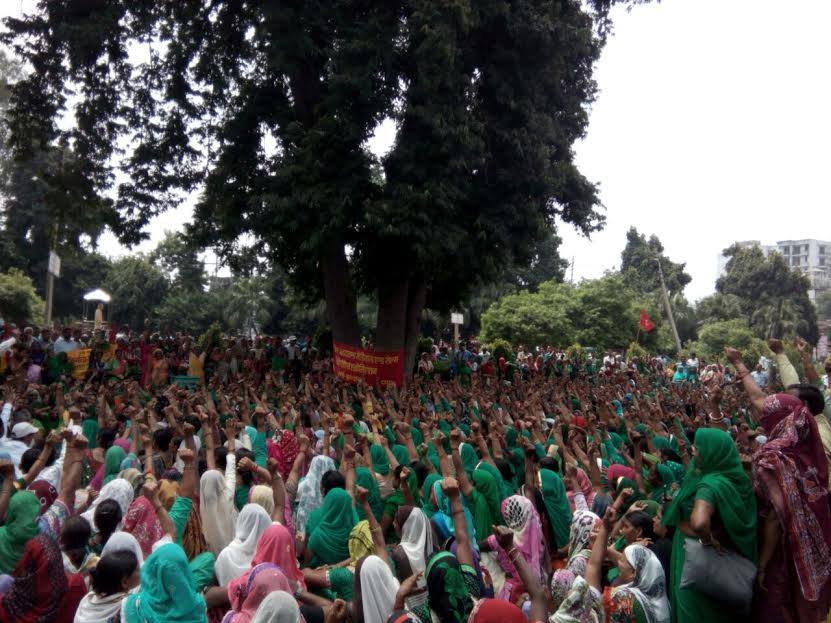
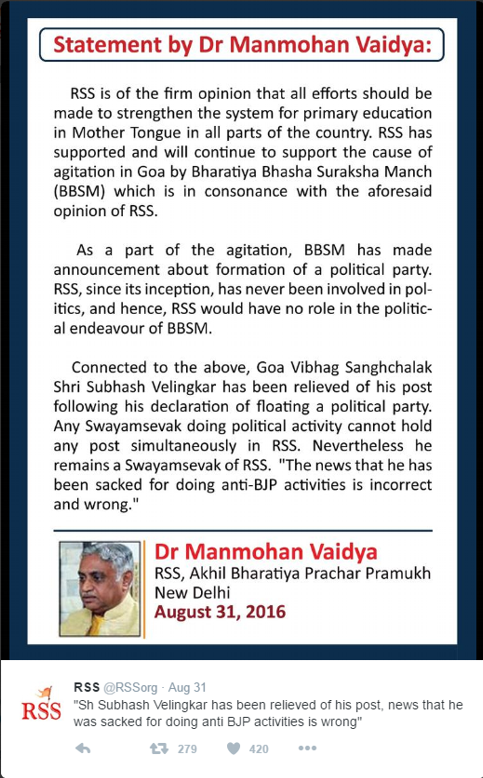
With more than 150 million workers on the streets, the 2nd September Strike by trade unions was the biggest ever industrial action by the working class of the country. Its sweep was much beyond participation of workers from public and organized sectors. Employees and workers from unorganized sectors, government schemes like ICDS, Aanganwadi and small scale industries too participated in this strike. In all , strategic sectors of the economy, viz., coal mines, electricity, engineering, petroleum, defence production, telecom, banks and insurance etc., were brought to a halt. All Central trade Unions and different federations participated in the strike except Bharatiya Mazdoor Sangh (BMS), the labour wing of the Rashtriya Swayamsevak Sangh (RSS) which tried its level best to sabotage the strike.

Photo 1.jpg

Photo 2.jpg

While many headlines in the newspaper claimed that the strike had mixed response, trade unions have called it a massive success. Centre of Indian Trade Unions (CITU) has congratulated the working class of the country calling it the biggest ever strike. “The Centre of Indian Trade Unions salutes the working class of India for the historic strike today rebuffing all attempts by the BJP led NDA government to confuse the workers through different channels,” the statement read. The statement of CITU also quotes data from NDTV which reports participation of more than 18 crore workers in the strike. UP, Maharashtra, Andhra Pradesh and States like Haryana, Kerala and Bengal saw massive participation of people from all sections of the society. The statement can be read here .

Photo 3.jpg
Women Workers in UP

 
Photo 4.jpg
CITU Workers in Haryana
 
It is to be noted that the workers participation was witnessed despite warnings from managements and repression by state governments. A large number of peasants, agricultural workers, youth, students and women participated in the road/ rail blockades and the demonstrations held across the country. Workers in Haryana, Tamilnadu, Andhra Pradesh were stopped from participation in the strike through use of police forces. 13 workers were arrested in Manesar while distributing pamphlets. It’s unfortunate that the Delhi government invoked ESMA on protesting nurses on the same day.

Photo 5.jpg
Workers being stopped by police in Tamilnadu

 
Photo 6.jpg
Workers being arrested in Andhra
 
The coal mines and big industries had come to a standstill in most parts of the country. The industrial areas of Durgapur in Bengal, Coal Mines in Jharkhand, Power Stations in MP and even the Film Division in Mumbai were shut. All India Coal Workers Federation General Secretary (CITU) D.D. Ramanadan said , that “dispatch, production and transport of coal have come to a standstill with operations in CIL subsidiaries BCCL, CCL, ECL and CMPDI badly hit. Around 300 workers have been arrested in Rajmahal and Chitra mines areas.”

Photo 7.jpg
Durgapur Industrial Area

 
Photo 8.jpg
 Film Division , Mumbai

 
Photo 9.jpg
Busy Domlur flyover connecting IT hub of Bangalore to the main city stands deserted. Transport workers too join strike!

In a statement, The Confederation of Central Government Employees & Workers said, “ The country wide general strike on 2nd September this year was even bigger and more widespread than that held on the same day last year, as initial reports from all over the country suggest. The country wide general strike this year too was held on the same 12 point charter of demands. The central trade unions claimed a participation of 15 crore workers in the strike last year. The impact of the strike this year was so huge that even before the trade unions made any claims, the electronic media reported that 18 crore workers participated in the strike.” Read More ….

The strike was called for a 12-point charter of demands which consist of all the major issues which concern the working people. It mainly includes the demand to curb price rise, strengthen the public distribution system; stopping dilution of labor laws; halting the privatization of public sector enterprises; end to contractualization of jobs; for a minimum wage of Rs 18,000 per month; and an assured pension of Rs 3,000 for all workers, including unorganized sector workers.

The Finance Minister in a press conference had spoken about acceptance of demands raised by the trade unions. The unions had called it mockery. The statement by unions can be read here…
The workers gave a fitting reply to the misinformation campaign unleashed by the BJP government aided by BMS. It reflects the anger and resentment of the workers against the attacks on their working and living conditions by the Neo-liberal agenda of the BJP led government.

Courtesy: Newsclick

National Protest Marking One Year since M.M. Kalburgi’s Assassination

0
Protest in Dharwad
 

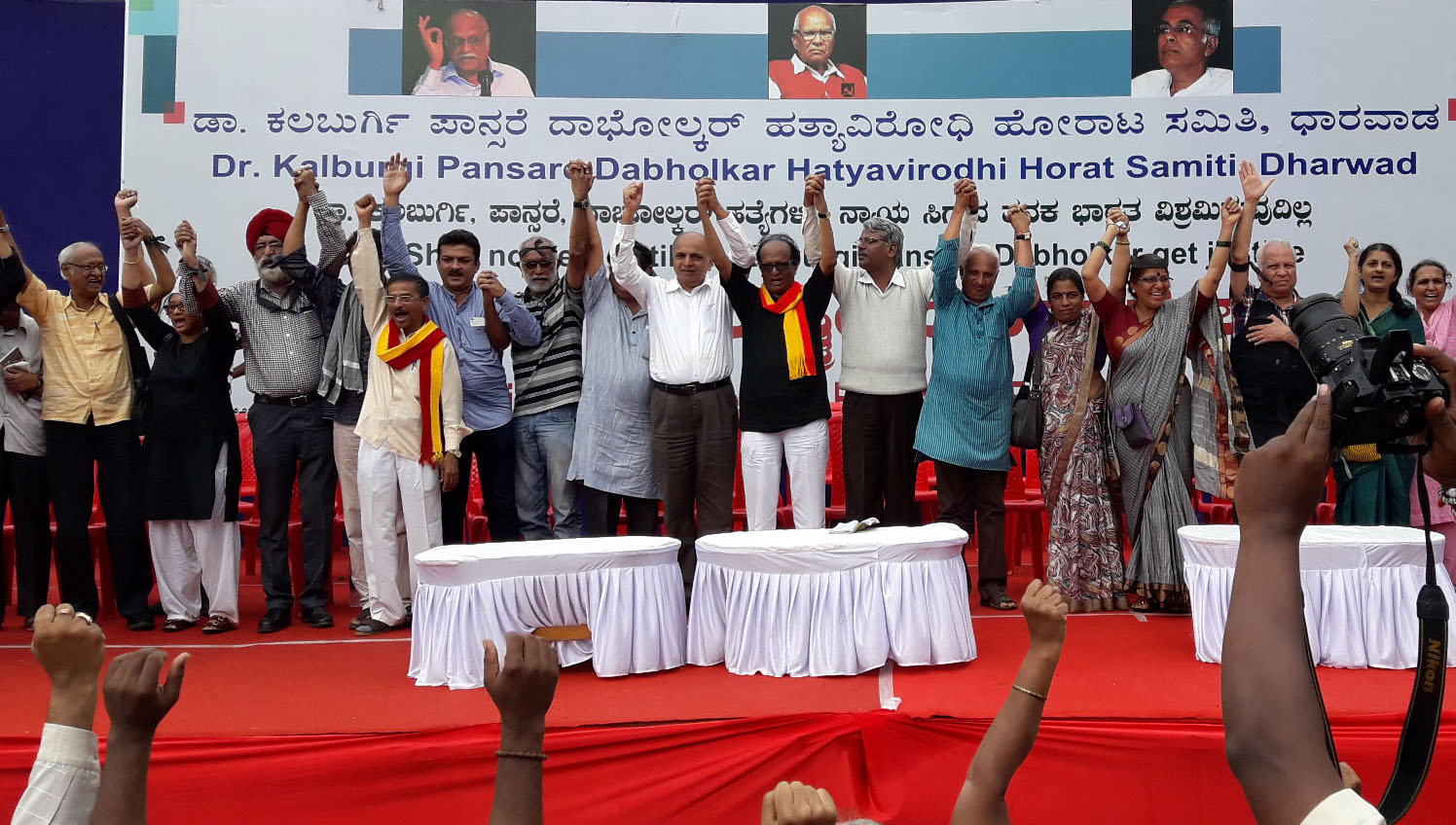
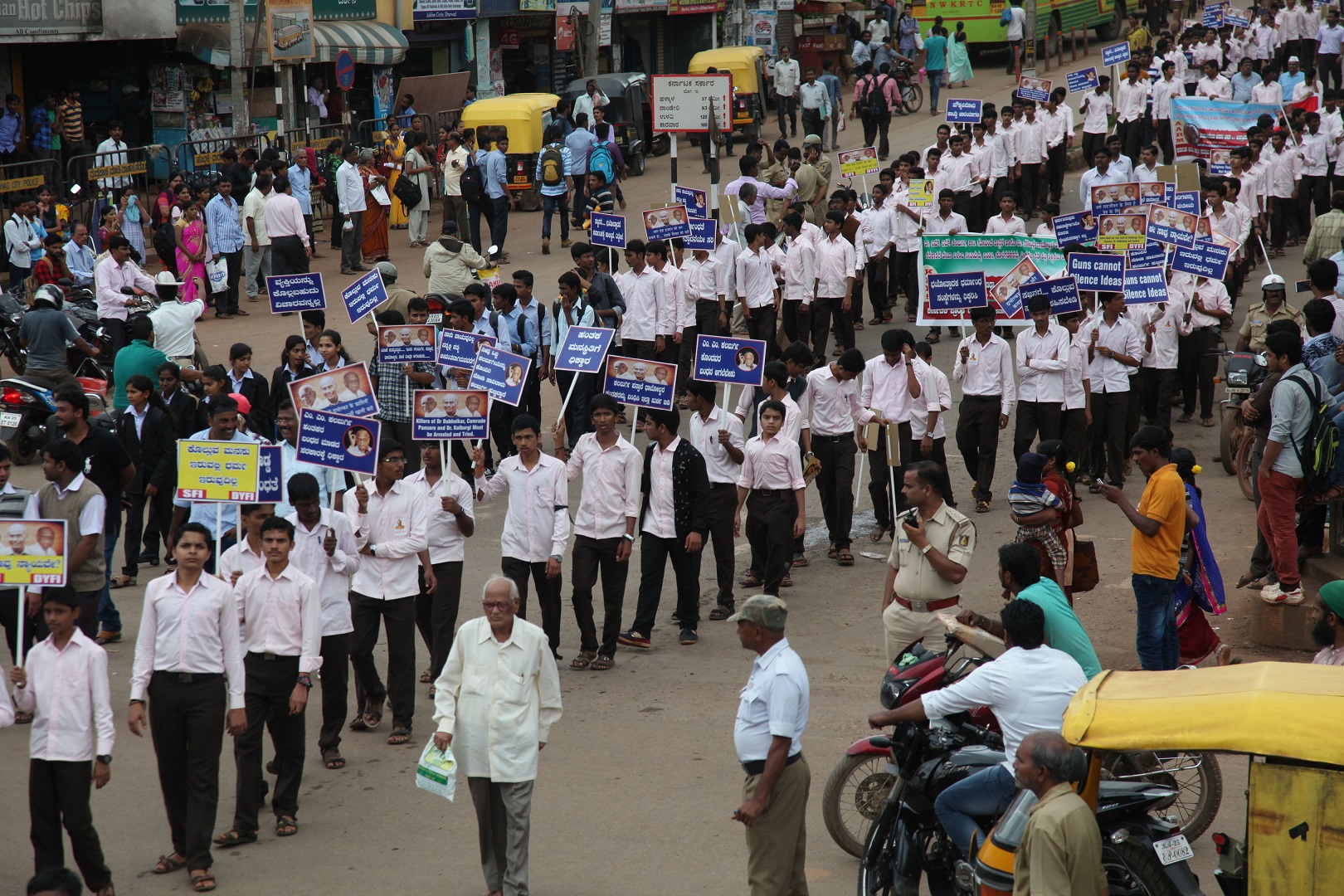
Writers, artistes and activists from different parts of the country came together in Dharwad for a protest march on August 30th to mark the passing of a year since the assassination of Dr M.M. Kalburgi. The protesters set a deadline of one month for the Karnataka government to arrest the persons involved in the assassination.

Expressing solidarity with the family members of slain thinkers and activists Kalburgi, Govind Pansare and Narendra Dabholkar, secularists attending the public meeting condemned the Karnataka government’s slow investigation of the case. They also threatened to gherao the upcoming assembly session to be held in Belagavi in November.

In his keynote address, linguistic scholar Ganesh Devy said the event was an answer to the fascist forces taking over the nation that are intolerant to different kinds of thought. Kannada critic Narahalli Balasubrahmanyam termed the convention a historic event.

Dharwad March.jpg
A rally was taken out from residence of slain scholar Dr M. M. Kalburgi in Kalyan Nagar, Dharwad on Tuesday, in which over 5,000 students and commoners of Karnataka were present.

Filmmaker Anjum Rajabali said the three martyrs continued to remind us of the significance of liberalism and freedom of expression, which were under threat in the current atmosphere. "It is the right time for us to become capable of respecting freedom of expression. We have also gathered here to protect our secularism. Let the rule of law prevail in the nation," he added.

Prof Rajendra Chenni, a writer from Karnataka, said freedom of expression stood threatened in many countries of the world. "Fascist forces are grabbing the rights of farmers, labourers, and selling them to corporate interests. If we don't raise our voices against this trend, we will all become slaves of one thought and religion."

He asserted that Kalburgi had revived truth by capturing facts in his scholarly output of about 4,000 pages in Kannada. "His researches always concentrated on truth and life. However, the government is insulting the scholar by delaying the investigation into his death. It does not have the moral courage to show its face to the martyrs' family members. Having waited one full year, we have lost faith in the government, and are dispirited by its readymade assurances," he lamented.

Kalburgi Death Anniversary.jpg
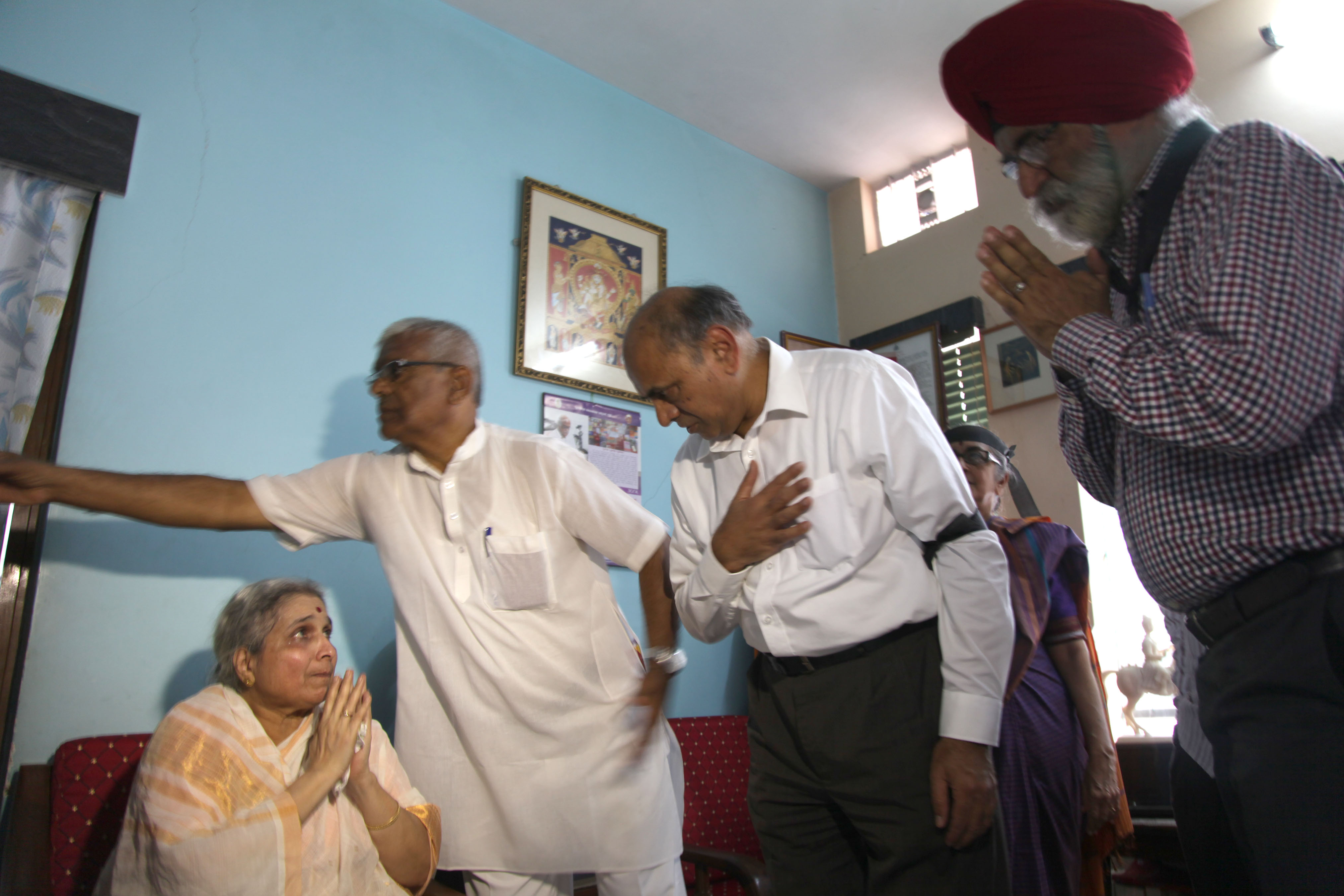
Linguistic scholar Ganesh Devy and Punjabi writer Atmajit Singh meet Umadevi, widow of slain scholar Dr M. M. Kalburgi on his first death anniversary on Tuesday in Dharwad.

Prof Chandrashekhar Patil, who was a classmate and colleague of Kalburgi's, said Kalburgi, Pansare and Dabholkar were synonymous with a revolution. "Today’s convention is not only about offering condolences, it is a platform of pain, protest. The government should crack the mystery of the murder at the earliest. There is an opinion that communal forces have been a hurdle in expediting the investigation. Chief Minister Siddaramaiah should clarify… whether his government has also bowed before fascism," he demanded.

Megha Pansare, daughter-in-law of Govind Pansare, demanded that the conspirators be brought before the people to maintain their faith in the administration. "Though governments have mechanisms like the CBI and CID, they are not doing effective work in cracking these assassination cases. At the other end, different thoughts are being suppressed and silenced using weapons."

Mukta Dabholkar, daughter of rationalist Narendra Dabholkar, demanded to know how Kalburgi was killed even though his residence was located in a posh area of Dharwad, right in the heart of the town. Calling him an asset to the nation, she blamed the Congress- and BJP-led governments for their failure to protect scholars and intellectuals. Goan writer Damodar Manjo echoed her words, adding, however, that he was glad to see fellow Indians fighting against fascists now targeting dalits in Gujarat and other states.

Kalburgi's son Srivijaya said the wounds created after his father's assassination were still fresh. He recounted, "My father used to tell us to work for society and humanity. He always fought for social equality and a healthy society. I feel that it is those who murdered him who are the anti-nationals. They killed an aged person; they are not brave, but cowardly." He concluded that even after their death, Kalburgi, Pansare and Dabholkar were still alive.

Aravind Malagatti, a dalit writer from Karnataka, questioned the state and central governments over the rise of moral policing and vigilante justice. He reminded the gathering of the need for a Gandhi nation, even as fascists attempt to convert India into a Godse nation. Claiming that progressive thinkers were the real patriots, Malagatti suggested that in order to discover the reality of India, the prime minister "should come face to face in a discussion with commoners rather than addressing citizens through his Mann Ki Baat show on the radio." Several speakers questioned the social developments that have led to increasing attacks on secular and rational thought.

Veteran Kannada writer Guruling Kapse noted that Basavanna, a social reformer of the 12th century, and Kalburgi were both from the Vijayapura district of Karnataka. "As a scholar, Kalburgi spread Basavanna’s teachings and revived them with his truth based research," he remarked. Noted scholar of Bhagat Singh's writings Prof Chaman Lal likened Kalburgi’s murder to the murder of the Vachanas ordered by the Sharanas of the 12th century, and placed his work in the tradition of thinkers like Guru Nanak, Kabir and Akkamahadevi.

Marathi writer Anand Karandikar observed that "assassinations of anti-brahminical and anti-caste movement leaders have been common in India." In the same vein, activist K. Neela from the Janwadi Mahila Sangathan, related the struggle against authoritarianism to the growing dalit movement in Gujarat as well as farmers' rights movements in other parts of the country.

Others in attendance included Noor Sridhar, Marathi writer Kumar Ketkar, veteran playwright Siddhaling Pattanseti, senior journalists Siddharth Vardarajan and Antara Dev Sen, economist Jaya Mehta, CPI leader Siddanagouda Patil, and TUCI state president R. Manasayya. Attendees voiced the urgent need to recast public discourse so as to protect India's multi-cultural, multi-linguistic heritage, and called attention to the repressive diktats around food, religion and thought issued during the Modi regime which have led to several incidents of mob violence. Several speakers attested that the struggle would continue until an end was put to atrocities committed on the basis of cultural and ideological differences.