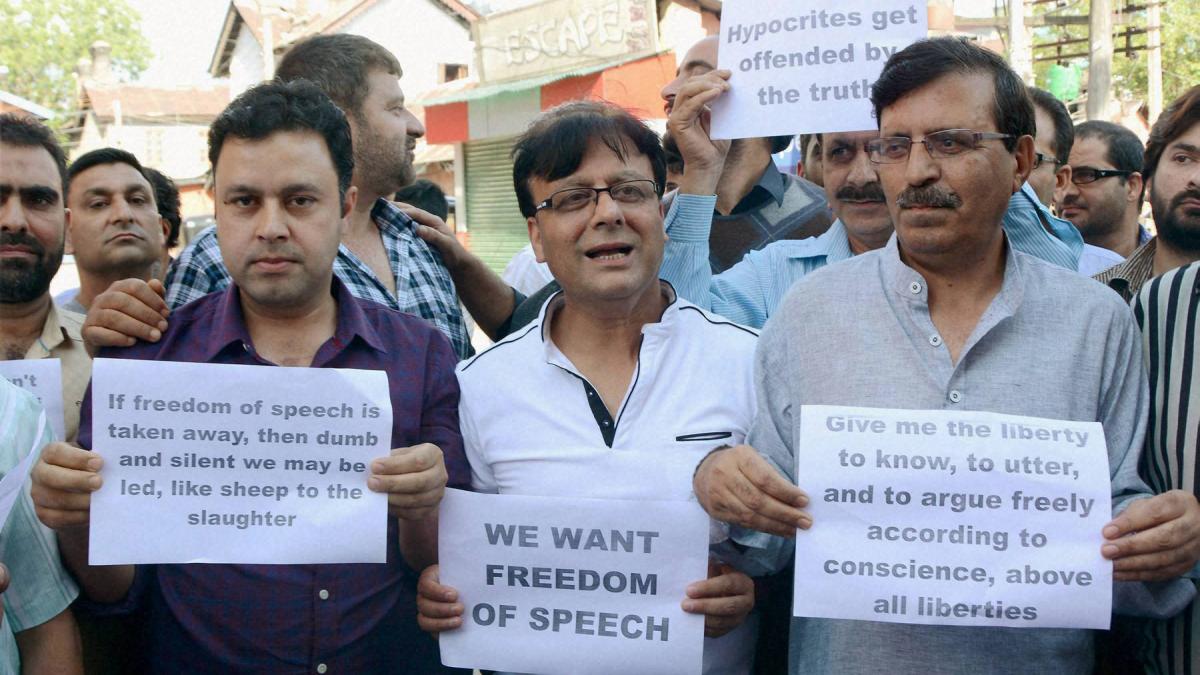
कश्मीर में मीडिया पहले से ही जंजीरों से बंधा हैं। राज्य में लगभग स्थायी कफ्र्यू के हालात में काम करने वाले मीडिया के लिए संचार के श्रोतों पर प्रतिबंध लगा कर और मुश्किल हालात बना दिए गए हैं। फिर मौजूदा दमन और प्रतिबंध अलग कैसे है? इसका मकसद क्या है?
Image: PTI
दरअसल यह दमन पुलिस की क्रूर ताकतों, कानूनों के खुल्लम-खुल्ला उल्लंघनों और नीति-नियमों और लोकतांत्रिक सिद्धांतों को दरकिनार कर राज्य को पूरी तरह काबू करने की सरकार की बढ़ती चाहत का नतीजा है।
प्रोपगंडा का शातिराना इस्तेमाल करें तो लोग जहन्नुम को भी जन्नत मानने लगेंगे और बेहद परेशान हाल जिंदगी भी जन्नत लगेगी। एडोल्फ हिटलर
हिटलर के नाजी शासन ने जर्मन जनता पर अपने दो औजारों के सहारे शासन किया था- प्रोपगंडा और सेंसरशिप। हर दिन हिटलर को महिमामंडित कर वह जनता पर अपनी पकड़ बनाए रखती थी। लोगों को अच्छी जिंदगी के ख्वाब दिखाए जाते थे लेकिन शासन यह भी पक्का कि ए रहता था कि नाजी शिविरों की जघन्य प्रताडऩाओं और नरसंहारों की बातें बाहर न आएं। लेकिन दुर्दांत यातनाओं, प्रताडऩाओं और हत्याओं की दिल दहला देने वाली कहानियां अंतत: बाहर आ ही गईं। कहीं कथाओं के रूप में,कहीं उपन्यासों कहीं डायरियों तो कहीं रिपोर्टों के रूप में।
इन कहानियों और तथ्यों को ढक-छिपा कर रखने का कोई तरीका नहीं हो सकता। आखिकार ये ब्योरे वक्त के साथ उभर ही आते हैं। ये बार-बार बयां होते हैं और सुने जाते हैं।
अगर यही सच है तो आखिरकार जम्मू-कश्मीर सरकार यहां के अखबारों को इतने निर्मम और बुरी तरीके से प्रतिबंधित करके क्या हासिल करना चाह रही थी।
किसी भी प्रतिबंध की जरूर तब पड़ती है,ृ जब कुछ छिपाना होता है। घाटी में 9 जुलाई से मोबाइल फोन और इंटरनेट कनेक्शन आंशिक तौर पर काट दिए गए थे। विरोध प्रदर्शनों से सबसे ज्यादा प्रभावित इलाकों में तो लैंडलाइन फोन भी काट दिए गए थे। कफ्र्यू लगे होने की वजह अखबार भी खुल कर नहीं बंट सके। इन हालातों की वजह से जनता से मीडिया और मीडिया से जनता तक पहुंचने वाली जानकारियां काफी कट-छंट कर पहुंच रही थी और रोक ली जा रही थीं।
जम्मू-कश्मीर में सरकार के इस कदम को देखते हुए कुछ अहम सवाल जरूर पूछे जाने चाहिए। भारतीय पत्रकारों के एक तबके और बुद्धिजीवियों की ओर से दिखाई गई असाधारण एकता की वजह से सरकार ने यह प्रतिबंध हटाया। लेकिन इस प्रतिबंध के पीछे किसी साजिश से इनकार नहीं किया जा सकता।
सरकार को डर है कि राज्य के मीडिया से जनता को जनता से मीडिया को मिल रही जानकारी अगर अखबारों में छपने लगेगी तो इससे हिंसा और भडक़ सकती है। अखबारों पर प्रतिबंध के बावजूद यह जानकारी डिजिटल तकनीक के जरिये एक छोटे तबके तो पहुंच ही रही हैं।
सरकार की एक और चिंता है । चूंकि छपे हुए शब्द की विश्वसनीयता ज्यादा है और वे दस्तावेजी सबूत के तौर पर ज्यादा दिन तक सुरक्षित रहते हैं इसलिए सरकार अखबारों पर बैन के लेकर ज्यादा दुराग्रही नजर आती है।
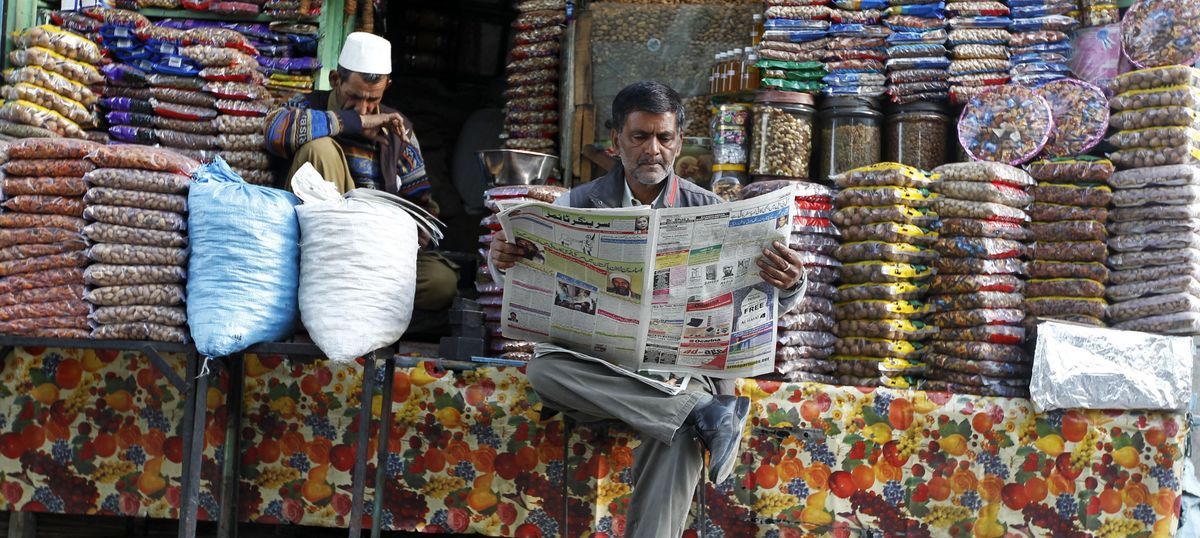
कश्मीर में अशांति के दौर में चौबीसों घंटे चलने वाले राष्ट्रीय चैनल प्रतिबंध से बाहर रखे गए। राष्ट्रीय प्रिंट मीडिया पर भी कोई प्रतिबंध नहीं था। सरकार ने अखबारों पर जो बैन लगाया या जिस तरह बैन लगाने की जरूरत समझी उससे कश्मीर के संदर्भ में क्षेत्रीय और राष्ट्रीय मीडिया के बीच की गहरी खाई उजागर हो गई। दरअसल कश्मीर को लेकर राष्ट्रीय मीडिया का रुख अति राष्ट्रवादी हो जाता है जबकि क्षेत्रीय मीडिया संघर्ष से पैदा संकट में आम कश्मीरी और जम्मू के लोगों की आवाज बनता है। दरअसल ये स्थानीय अखबार ही होते हैं जो राष्ट्रीय प्रेस की चु्प्पी या फिर अंध राष्ट्रवाद की वजह से पैदा खालीपन को भरते हैं। हाल के दिनों में कफ्र्यू की अड़चनों और संचार माध्यमों के दमन के बीच प्रामाणिक सूचनाओं को हासिल करने की मुश्किल में स्थानीय अखबार ही लोगों पर हो रहे बर्बर अत्याचार की खबरों के स्रोत बने हुए थे। स्थानीय अखबारों के जरिये ही कश्मीर में लोगों को मार दिए जाने की दिल दहलाने वाली खबरें आईं। इन्हीं अखबारों ने बताया कि सुरक्षा बलों की हिंसा की जद में आने वाले कैसे अस्पतालों में घिसट रहे हैं या फिर किस तरह पैलेट गनों ने लोगों को हमेशा के लिए अंधा बना दिया है। इन बंदूकों ने अब तक 130 लोगों को अंधा कर दिया और इनमें से ज्यादातर बच्चे और किशोर हैं। मुख्यधारा के राष्ट्रीय कहे जाने वाले अखबारों में ऐसी स्टोरी शायद ही दिखाई दे। कश्मीर के बारे में राज्य जो झूठ फैलाना चाहता है, उसकी राह में ये स्थानीय अखबार ही चुनौती बन कर खड़े हैं।
कश्मीर को एक तरफ तो अखबारों से महरूम रखा गया वहीं कॉमर्शियल टेलीविजन को पूरी छूट दी गई। दिल्ली से आने वाले उनके क्रू मेंबरों को सुरक्षा मुहैया कराई गई। इन टीवी चैनलों की ओर वही कहा गया जो सरकार को पसंद था।
कॉमर्शियल मीडिया और सरकार मिलकर किस तरह काम करते हैं, उसका एक तय पैटर्न है। स्थानीय मीडिया का गला घोंट कर सरकार जन प्रतिरोध के डर को बढ़ा-चढ़ा कर पेश करती है। और लोगों के दमन को छोटा कर दिखाना चाहती है। इस तरह वह अंध राष्ट्रवाद की हिस्ट्रिया पैदा करती है। अब तो कश्मीर के बारे में राष्ट्रीय मीडिया कहे जाने वाले अखबारों और टीवी चैनलों में सरकार के इस रुख को पुष्ट करते रिपोर्टों और खबरों का प्रसारण सामान्य मान लिया गया है।
स्थानीय मीडिया पर प्रतिबंध केंद्र से प्रेरित होकर लगाए गए होंगे लेकिन इस तथ्य से भी इनकार नहीं किया जा सकता है कि इसे पुलिस और प्रशासन में मौजूद उसके दलालों के जरिये लागू किया गया। राज्य सरकार भले ही इससे अनजान हो सकती है और वह ऐसा दिखा रही हो लेकिन इसके निष्प्रभावी रवैये और बिना कुछ सोचे-समझे कार्रवाई करने के फैसलों की अनदेखी नहीं की जा सकती। खासकर, इस रवैये की वजह के जो परिणाम निकले हैं, उन्हें देखते हुए तो बिल्कुल भी नहीं। असल में सरकार के कदम कश्मीर के हालात से जुड़े दास्तानों को जकड़ और काबू में रखने की कोशिश के नतीजे हैं। यह ब्योरों को बाहर आने से रोकने की कोशिश है। स्थानीय मामलों पर झूठ का मुल्लमा चढ़ा कर गढ़ी हुई कहानियों के जरिये यह सच को रोकना चाहती है। सरकार पेड एजेंट, जिहादी टेरर, हालात नियंत्रण में, दुश्मन पाकिस्तान जैसे जुमलों और सामान्य हालात बहाल होने और पर्यटन की खुशनुमा तस्वीर पेश कर असली हालातों पर परदा डाल रही है। कश्मीर के संघर्ष में सरकार की नैतिक हार का इससे बड़ा सबूत और क्या हो सकता है। गोलियां चलाने, बच्चों को अंधा करने, प्रताडऩा और क्रूरता की बदसूरत तस्वीरों को छिपाने के लिए ही झूठ के ये हथियार चलाए जा रहे हैं और प्रोपंगडा किया जा रहा है।
कश्मीर की दास्तानों को काबू मंे रखा गया है। 26 साल के अशांति के इतिहास में कई हथियारों जरिये मीडिया को चुप कराया जाता रहा है। नब्बे के दशक की शुरुआती में यह आतंकवादियों और सुरक्षा बलों की बंदूकों के बीच फंसा था। यहां पत्रकारों को काम करने से रोका गया। उन पर हमले हुए। उनकी हत्याएं हुईं। इन हालातों और कफ्र्यू के दौर के बावजूद अखबार लगातार प्रकाशित होते रहे। उन्होंने ज्यादा गहरी खबरें लिखीं और आत्महत्या करने की हद तक विस्तृत स्टोरी छापी। यहां तक कि दमन से बचने के लिए एडोटिरयल कंटेंट छापने से भी परहेज किया।
जब स्थानीय मीडिया ने आंदोलन विरोधी रुख और भारतीय राष्ट्रवादी विमर्श से खुद को अलग करना चाहा तो सरकार ने दमन का नया रास्ता निकाला। वह डीएवीपी विज्ञापनों को बंद कर अखबारों के वित्तीय प्रवाह को रोकने लगी। जबकि यही विज्ञापन जम्मू-कश्मीर के अखबारों की आय के प्रमुख ोत हैं।
2010 में केंद्रीय गृह मंत्रालय की ओर से एक पत्र मिलने के बाद डीएवीपी ने कश्मीर के कई अखबारों के विज्ञापन रोक दिए। बाद के दिनों में मनमाने ढंग से कुछ अखबारों के विज्ञापन जारी कर दिए गए । लेकिन श्रीनगर और जम्मू से निकलने वाले कश्मीर टाइम्स(इसमें मैं कार्यकारी संपादक हूं) को खास तौर पर निशान बनाया गया और इसके लिए डीएवीपी विज्ञापनों के दरवाजे बंद ही रखे गए। आश्चर्य की बात तो यह है कि 2010 की हत्याओं के बाद सरकार ने यह सुझाव दिया था कि श्रीनगर से राष्ट्रीय अखबार निकालने की जरूरत है क्योंकि स्थानीय अखबार विश्वसनीय नहीं हैं। 2010 में सरकार ने खबरों पर आधारित प्रोग्राम दिखाने के लिए श्रीनगर केबल टीवी चैनलों को यह कर बंद करा दिया था कि ये सही तरीके से रजिस्टर्ड नहीं हैं। हालांकि जम्मू में इस तरह के गैर रजिस्टर्ड चैनल चालू रहे।
कश्मीर में मीडिया पहले से ही जंजीरों से बंधा हैं। राज्य में लगभग स्थायी कफ्र्यू के हालात में काम करने वाले मीडिया के लिए संचार के ोतों पर प्रतिबंध लगा कर और मुश्किल हालात बना दिए गए हैं। फिर मौजूदा दमन और प्रतिबंध अलग कैसे है? इसका मकसद क्या है?
दरअसल यह राज्य में खाकी की क्रूर ताकतों, कानूनों के खुल्लम-खुल्ला उल्लंघनों और नीति-नियमों और लोकतांत्रिक सिद्धांतों को दरकिनार कर राज्य को पूरी तरह काबू करने की सरकार की बढ़ती चाहत का नतीजा है।
केंद्र और राज्य की अब तक की सरकारें स्थानीय मीडिया को ऐसी मारक मिसाइलों की तरह देखती आई हैं, जिन्हेें काबू में रखना जरूरी है। सरकारें उन्हें ऐसी सूचना देने वाले ोत की तरह नहीं देखती जिस पर लोगों की रोजमर्रा की जरूरतों के फीडबैक के तौर पर भरोसा किया जा सके। इन्हें लोगों की राजनीतिक आकांक्षाओं के वाहकों के तौर पर नहीं देखा जाता। सरकार इन अखबारों में छपी दमन की दास्तानों को नहीं मानती। जबकि राज्य में प्रोफेशनल क्षेत्रीय मीडिया अफवाहों को दरकिनार में अहम भूमिका निभाता रहा है।
एक स्वतंत्र मीडिया सरकार और जनता के बीच एक महत्वपूर्ण संपर्क बन सकता है। संघर्ष से घिरे क्षेत्र में यह जनता की आकांक्षाओं और भावनाओं को सरकार तक पहुंचाने का अहम जरिया होता है। यह याद रखना जरूरी है कि पीएम नरेंद्र मोदी ने 2015 में किस तरह मुफ्ती मोहम्मद सईद की इस सलाह की अनदेखी की थी कि कश्मीरियों से राजनीतिक बातचीत जरूरी है। मोदी ने बड़े ही रुखे अंदाज में कहा था कि हमें क श्मीर पर किसी से सलाह की जरूरत नहीं है। यही वह मानसिकता है जो लोगों को सत्ता में बैठे लोगों को न सिर्फ जनता को कुचलने को उकसाती है बल्कि उनके लिए बोलने वाली आवाजों को भी बंद करने लिए प्रेरित करती है।
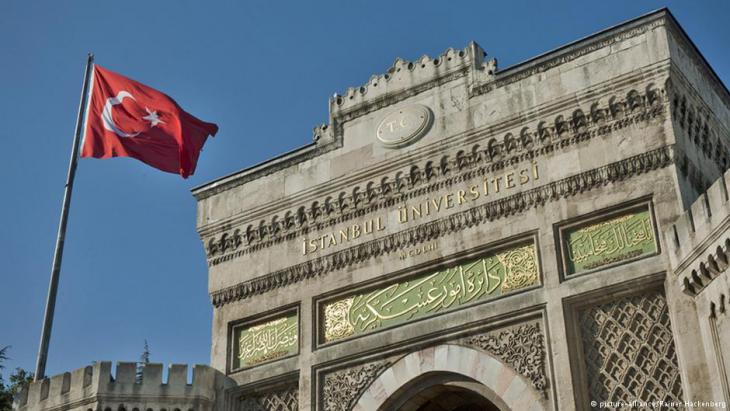
Turkish universities are coming down hard on academics who signed an appeal for peace, providing the government with an ideal pretext to deal with its political opponents, writes Joseph Croitoru
On 10 January this year, 1,128 Turkish academics published a petition sharply criticising the Turkish army's military operation in Kurdish regions in the southeast of the country, which has been ongoing since the summer of 2015.
The text speaks of a "deliberate and planned massacre", as well as the "targeted expulsion of Kurds and other ethnic groups". "We will not be party to this crime!" the signatories declared, demanding an end to the military operation and compensation for affected civilians.
The Turkish government intervened shortly after the publication of this appeal. President Erdogan insulted the signatories as "sinister and ignorant pseudo-intellectuals" and launched a witch hunt that continues to this day. The university council, a body loyal to the AKP, announced directly thereafter that the requisite steps would be taken.
At this point, many signatories were denigrated and threatened at their universities by ultranationalists to such an extent that they stayed away from their places of work. Disciplinary proceedings were opened against hundreds of academics, but not just within their universities: the authorities also opened investigations – among other things into the alleged supporting of terrorism. Many lecturers were discharged or suspended during this wave of sanctions.
When four representatives of the petition initiative protested against these measures at a press conference in Istanbul on 10 March, they were taken into custody for the alleged dissemination of terrorist propaganda. But accusations of assisting terrorism could not be upheld during the Istanbul trial against the academics, which began on 22 April. They were temporarily released and are now waiting for the case to be continued on 27 September, in which, based on Article 301 of the Turkish penal code, the charge sheet will read "Insulting the Turkish nation, the state of the Turkish republic and the institutions and organs of the state".
Layoffs, suspensions and dismissals The impending trial is just the spectacular part of the sanctions. The other part, which has thus far been more serious for those affected, has generated fewer headlines, because action has been taken against the rebellious lecturers individually and for varying reasons.
The latest report by the solidarity group "Academics for Peace" lists a total of 37 cases of dismissals, as well as 31 suspensions and 12 resignations. Disciplinary proceedings are underway against 513 signatories, with the authorities carrying out investigations against 412 of the academics. Upon closer inspection, there is a feeling that both public and private universities ("foundation universities") are using the petition as a pretext to get rid of an entire array of critical voices.
Ritual cleansing: some 35,000 members of the army, police, judiciary and civil service have been detained or suspended on suspicion of Gulenist links since last weekend's abortive coup, during which more than 230 people were killed. The purge extended to the education sector on Tuesday, with all university deans ordered to resign, according to state TRT television and the licences of 21,000 private school teachers revoked
In this process, owing to the greater freedom they have in the drawing up of contracts, it is much easier for private universities to discard disagreeable members of staff – so far, there have been many more dismissals at foundation universities (26 out of a total of 37 cases).
The most recent examples of these are the cases of the sociologist Asli Vatansever and the social-psychologist Serdar M. Degirmencioglu, both of them discharged from the private Dogus University in Istanbul. Both had come to the attention of the authorities even before the petition, through critical publications on the excessive privatisation of the higher education sector.
Asli Vatansever, who graduated in Hamburg in 2010, published the Turkish-language study "Willing to teach anything" in 2015, in which she spotlights the difficult working conditions at private universities that have put teachers in a precarious situation. Ms Vatansever reports that university managers began keeping a close eye on her as a result of the controversy resulting from this publication.
Just as in the case of many of the signatories, the first disciplinary proceedings were launched against the sociologist in February, soon followed by two more, as she continued her active involvement in the peace initiative – most recently in mid-March with the public reading of a press release in the Kurdish city of Diyarbakir under siege by the Turkish military.
The early termination of her temporary contract as assistant professor in the middle of the current term is proof, says the sociology lecturer, that the university management "is not taking its academic responsibility at all seriously". It is an indication of the "corruptibility and the ethical decline of the Turkish higher education sector," she says.
Criticism with grave consequences For Serdar M. Degirmencioglu too, his criticism of the state of the private universities was not without consequences. All the more so when he accused these institutions of disregarding their non-profit status to focus on their own enrichment. The social-psychologist had already been dismissed once because of this, back in 2013, just 40 days after his appointment as full professor – but he successfully appealed the decision. He also plans to take his case to court on this occasion.
The university is now citing the Civil Servant Act No. 657, Article 125/E-b. This Article allows for the maximum penalty of exclusion from public service for both the publication and dissemination of banned works and declarations with political and ideological content and their presentation in the form of flyers and posters in the respective institutions.
But Degirmencioglu says he does not see how this law can be applied to him. The reasons cited for the charges against his colleague Vatansever are even more vague: with the signing of the petition, she accused the state of a "massacre", which the university management claims justifies disciplinary proceedings. The sociologist also plans to appeal, saying that the university is using "a political difference of opinion to rob me of my contractual rights".
A veritable witch hunt: in the wake of the recent coup, Turkey's Council of Higher Education has announced that Turkish academics have been instructed not to travel abroad on assignments. Academics who are currently abroad and do not have a compelling reason to stay outside the country, should return
One does not have to search for long in the publications of both academics to find views that could ruffle the feathers of the AKP. Asli Vatansever's German dissertation is titled "Origins of Islamism in the Ottoman Empire. A World-System Analytical Perspective". In it, she ascertains "inherent contradictions in the Ottoman system of politicising Islam" and a "disproportionate state power", which is diametrically opposed to the current AKP line which glorifies the Ottomans as tolerant rulers.
And in 2012, Serdar M. Degirmencioglu analysed the "body politics and sexual education" of Erdogan's party, also outlining his personal views on the matter. According to him, the "ruler system" is finding increasing application in Turkish secondary schools: this increases the minimum distance between girls' and boys' desks from 45 centimetres to a whole metre.
In 2014, the social-psychologist published an anthology in Turkish that ventured into a taboo area: "They said die, so I died – myths of martyrdom in Turkey". In it, Degirmencioglu examined how Turkey commemorates the Battle of Gallipoli, an event that has undergone intensive Islamisation by the AKP. He castigates the subsidised excursions to this historic place, organised by local AKP politicians all over the country, as "martyr tourism".
The government clearly wants to gag these and other critics of the regime, who are also on the list of sacked and otherwise sanctioned lecturers. Even if those affected are able to defend their rights – many have been taken to court – the threat will by no means have been averted.
After all, should their colleagues, who have been temporarily released from detention, be given custodial sentences in September for "defamation of the state", all signatories could face the same fate. This would make it easy to eliminate the nation's academic elite. The fact that the initiative has been awarded this year's Aachen Peace Prize can only be welcomed.
In the midst of the brutality unleashed on the people of Kashmir by the State over the past few weeks, there is a small spark of hope: all over India, people have gathered together to speak up for Kashmir. There have been protests, public meetings, and efforts to organise smaller meetings or discussions on Kashmir. This is a welcome sign that at least a section of Indian citizens are refusing to fall in line with the hectoring of an influential section of the television media. In a vitiated climate where empathy with Kashmiri anger and aspirations is branded as a betrayal of India, there are Indian citizens willing to open themselves up to that empathy.
Prime Minister Narendra Modi has thanked all parties for "speaking in one voice" on Kashmir. Sadly, it is true that most of the voices in Parliament have actually spoken in a single voice on Kashmir – the modulations or variations on the ruling party’s Kashmir tune by, say, the Congress, are so slight as to be negligible. The grim consensus can be broken only when people across India begin raising their voices in favour of a political solution for Kashmir that is in keeping with what Kashmiri people want, that emerges from talks with Kashmiri people.
Kashmiri people have made it clear, over and over, that what they want is "azadi". What shape and forms can Kashmiri azadi take, and what is a way out of the seeming impasse? Arundhati Roy sums up the answer, when she says that “everybody, on all sides of the dispute” need to “find a new imagination” – an imagination based on being “able to think clearly, speak freely and listen fearlessly to things we may not want to hear”.
On a few occasions, Indian leaders have also said that they possess the necessary imagination and empathy to talk to Kashmiris about a political solution. Narasimha Rao said “the sky is the limit” when it comes to the shape and form of such a solution. Atal Bihari Vajpayee, when asked whether talks with separatist groups would be “within the scope of the Indian Constitution”, said the talks would be “within the scope of humanity.”
What these phrases indicate is that even India’s rulers know that a solution to Kashmir calls for unusual flexibility and openness, that it isn't possible within the scope of the slogan "Doodh maango kheer denge, Kashmir maango, cheer denge" (Ask for milk, we’ll give you milk pudding, ask for Kashmir, we’ll tear you apart). Those phrases are careful not to rule out or foreclose any possibilities for Kashmir’s future.
Nightly news potboilers The problem is that the hope represented by those phrases has remained still-born – those phrases have been presented to a Kashmiri audience, on occasion, but they have not been allowed to become part of India’s mainstream political imagination. The mainstream Indian political and cultural imagination continues to be shaped by the "cheer denge" discourse and its variations. In an age where the line between television news and entertainment has been blurred, the coverage of Kashmir by influential television channels has dropped to the level of the average Bollywood patriotic potboiler, with one-dimensional characters (the evil terrorist, the brave soldier). In that uni-dimensional world, there is simply no room for the people of Kashmir, let alone for the history of the Kashmir problem.
Such coverage drags us all inexorably away from the possibility of a solution in Kashmir, from an end to the bloodied, sightless eyes and pellet- and bullet-riddled, pain-filled bodies of Kashmiri children, youngsters, and people. In a recent article and in a live video-interview on Kashmir, I had appealed to Indian citizens to mute the TV and read up on Kashmir – read, not to reassure themselves that “Kashmir is an integral part of India” but to understand why so many Kashmiris assert otherwise. Even if you don't believe that secession is the answer, it is important that we at least frame the question correctly: that we understand why the right to self-determination is the political question in Kashmir.
In response to many queries about where to begin reading on Kashmir, I drew up a list of materials in a Facebook post. In the thread of comments, the list grew. I am now elaborating a little on that reading list. More than a reading list, I think of this as a road-map to an empathetic conversation with the people of Kashmir.
A disclaimer, before I begin: inclusion in this list does not imply that I endorse the perspective of the works in question. It should go without saying that one may benefit even from reading books with which one disagrees.
Where To Start? The average Indian citizen who is new to the Kashmir issue may choose to start with the pain of human beings of Kashmir, and move from there to the history of the Kashmir problem. That way, the human pain of Kashmir may act as a compass in the maze of historical material on the Kashmir problem. Or you may, of course, start the other way around – and begin your reading with the history of Kashmir conflict, in which the pain and suffering of the Kashmiri people is rooted.
Rights Violations in Kashmir When one speaks of rights violations, rapes, custodial killings and mass graves in Kashmir, one is sometimes greeted with whataboutery. Say that a Kashmiri student has been attacked in Bhopal, and another student attacked in Hyderabad for ‘looking Kashmiri,’ and you will be asked, "What about Biharis being attacked in Mumbai?" Talk about rapes in Kashmir, and you will be asked, "Don’t women get raped elsewhere in India?" The thing to remember about Kashmir (and the North East) is that much the violence and humiliations have been inflicted in the name of India, the perpetrators – many of whom wear Indian uniforms – have been protected in the name of India; and that is why they breed resentment against India, in a way that violence or rapes in, say, Bihar or Karnataka might not.
Read Buried Evidence: Unknown, Unmarked, and Mass Graves in Indian-Administered Kashmir, a report by the International People’s Tribunal on Human Rights and Justice in Kashmir. Imagine if mass graves with thousands of people buried in them were to be found in Uttar Pradesh or Tamil Nadu. Would such a discovery not be prime time news, greeted with shock and horror? Yet, Indian television has rarely, if ever, discussed these mass graves in Kashmir – mass graves in which, it is suspected, many of the people picked up by security forces and "disappeared", ended up.
To know more about the "disappeared" persons, get to know the remarkable organisation, the Association of Parents of Disappeared Persons founded by Parveena Ahangar, whose son was abducted by security forces in 1991 and never seen again.
To keep in touch with the current situation in Kashmir, you can visit the site of the Jammu Kashmir Coalition of Civil Society. Both the APDP and the JKCCS post regular Facebook updates also.
Another must-read book is Do You Remember Kunan Poshpora? In 1991, soldiers entered the villages of Kunan and Poshpora, tortured many men, and gang-raped the women of the village. The accused were never arrested, never prosecuted, never brought to trial. Nowadays, with the appeals of the convicts of the December 2012 gang-rape and murder case coming up for hearing, there will be no shortage of outrage and demands for death penalty on our TV channels. The same channels, who see Kashmir only through the prism of terrorism vs (Indian) nationalism, seem struck by amnesia when it comes to Kunan Poshpora.
This book is the story of five Kashmiri women who remembered and sought to revive the quest for justice for Kunan Poshpora in the wake of the Delhi December 2012 anti-rape protests. Their efforts resulted in a PIL filed by 50 Kashmiri women and a reopening of the Kunan Poshpora case.
If you ever participated in the Delhi gang-rape protests, or if you sympathised with the protesters, try and place yourselves in the shoes of Kashmiris. You, in Delhi, faced tear gas and lathis, and derision from the government. But you did not face bullets, and you were not told that your demand for justice is illegitimate and anti-national as the people of Kashmir or the North East are when they speak of sexual violence by military and paramilitary forces.
For vivid portraits of violence-torn Kashmiri lives, read Basharat Peer’s Curfewed Night. On the exile of the Kashmiri Pandits, you can read A Long Dream of Home: The Persecution, Exile and Exodus of Kashmiri Pandits, a collection of writings by Kashmiri Pandits, edited by Siddhartha Gigoo and Varad Sharma. Rahul Pandita’s Our Moon Has Blood Clots: A Memoir of a Lost Home in Kashmiris another memoir on the Kashmiri Pandit exile that is worth reading.
Until My Freedom Has Comeis an excellent collection of short fiction, reportage, essays, news reports, interviews and a rapper’s song by Kashmiris (from which the title is drawn), edited by the filmmaker Sanjay Kak.
Historical roots I find, in conversations, that our education and cultural exposure ill equips Indians to look objectively at the question of self-determination. The first bit of unlearning we must do is to stop looking at Kashmir as a question of Indian honour or a Pakistan- or US-inspired challenge to Indian national pride and instead as a question of Indian democracy. We should know that every mature modern country will be judged by history on its ability and will to deal sensitively and democratically with nationality movements. China will be judged on its handling of the nationality question in Tibet; Sri Lanka on its handling of the Tamil movement; as India will be on its handling of Kashmir, Manipur or Nagaland.
Secession is not necessarily the only outcome of such struggles – possible outcomes of nationality movements could range from various models of greater autonomy, up to secession. The only solutions that ought to be ruled out are the ones that involve triumphant defeats of the aspirations of the nationality in question, because subjugation by force cannot be a democratic solution. A solution in Kashmir will have to be one that respects Kashmiri aspirations; that Kashmiris can accept as being in keeping with their sense of dignity and identity.
My introduction to Kashmir’s history came from the slim Tracts For The Times booklet Kashmir: Towards Insurgencyby Balraj Puri. You might, today, like to read the revised and updated version, Kashmir: Insurgency and After. Even this mild and gentle book holds many surprises about the relationship between Kashmir and India – and shakes up many of the perceptions and assumptions we inherit on Kashmir.
Other must-read books for newcomers to the Kashmir story include the books and articles by the legal scholar AG Noorani. Have you, thanks to political propaganda, got the impression that Kashmir got unwarranted pampering and privileges as a result of Article 370? This article by Noorani tells you otherwise. It quotes India’s Home Minister GL Nanda stating that Article 370, the supposed guarantee of Kashmir’s promised autonomy, would serve as a “tunnel in the wall to increase the Centre’s power”. Noorani traces how thanks to “Constitutional abuse and political fraud,” Kashmir ended up being treated inferior to other states in terms of federalism. Noorani’s two volumes on Kashmir Dispute 1947-2012is also worth reading. His scholarly presentation of documents and facts is a refreshing contrast to the shallow rhetoric aired in most of the TV studios.
A book that thoughtfully discusses the historical roots of the Kashmir issue and explores paths towards a solution is Sumantra Bose’s Kashmir – Roots of Conflict, Paths to Peace.
An article that traces the Islamist shift in the Kashmir movement in the 1980s is Yoginder Sikand’s Changing Course of Kashmiri Struggle, Vol. 36, Issue No. 03, 20 Jan, 2001.
A useful reading list compiled by Hilal Mir in the Hindustan Times can be found here.
An unusual book, published last year, is The Many Faces of Kashmiri Nationalism: From the Cold War to the Present Day by the advocate and activist Nandita Haksar. Haksar traces the trajectory of Kashmiri nationalism through the lives of two Kashmiris – one, the Communist Trade Union activist of Kashmiri Pandit origin, Sampat Prakash; and the other, Afzal Guru, whom Haksar had defended.
Like Indian and Pakistani history-writing in general, Kashmiri history-writing too has been burdened with political agendas. A book that looks back at several centuries of Kashmir’s history and at those burdens shaping history-writing is Kashmir’s Contested Pasts: Narratives, Sacred Geographies, and the Historical Imagination by Chitralekha Zutshi. This is a book I’m yet to read but one that I look forward to reading sometime soon. Fiction and Poetry
Remember Venkaiah Naidu demanding to know why JNU students were trying to project India under Modi as a "country without a post office"? It is sad indeed that India’s ruling politicians should not be able to catch a reference to a poem by a Kashmiri poet of the stature of Agha Shahid Ali. Read Ali’s powerful collection of poems The Country Without a Post Office.
Of Gardens and Gravesis a collection of essays by Suvir Kaul, and a selection of modern poems in the Kashmiri language translated into English.
A haunting and painful novel is Mirza Waheed’s The Collaborator. A sensitive and insightful graphic novel on the everyday experience of Kashmiris is Munnu: A Boy From Kashmirby Malik Sajad.
Among the material suggested in the comments thread on my Facebook post is a comic rendering of Kashmir ki Kahani (The Story of Kashmir) in Newslaundry. I have not been able to read Part II of this comic, but Kashmir Ki Kahani Part I does a great job of spoofing Kashmir Ki Kali and narrating an important chapter of the Kashmir story.
Kavita Krishnan is Politburo member of the Communist Party of India (Marxist-Leninist) Liberation, and Secretary, All India Progressive Women’s Association.
(कश्मीर कवरेज पर जारी बहस में नयूज़ चैनलों की दुनिया के दो सबसे चर्चित चेहरों की अलग राय ने पत्रकारिता को लेकर एक पुरानी बहस को नये सिरे से सामने ला दिया है। यह बहस है, अपनी आँख से दिख रहे सच को बताने या सरकार की आँख से दिखाये गये या कूटनीतिक ज़रूरतों के लिहाज़ से बताये जा रहे 'सच' को बताने की। एम्बेडेड जर्नलिज़्म या नत्थी पत्रकारिता का ही नतीजा है कि मेसोपोटामिया जैसी सभ्यता को जन्म देने वाली इराक की धरती आज बारूदी गंध में डूबी है। अमेरिका जैसे युद्धपिपासु साम्राज्यवादी देशों ने अपनी हवस को पूरा करने के लिए कुछ झूठ प्रचारित किये जिसका मीडिया ने "राष्ट्रहित" या "आतंकवाद के ख़िलाफ़" युद्ध के नाम पर परीक्षण नहीं किया। इराक ही नहीं, कई देश बरबाद होते गये और आज आईएस जैसा जिन्न सामने है। उसे भी शक्ति संपन्न बनाने में साम्राज्यवादी देशों का कितना हाथ है, यह छिपा नहीं है। इंग्लैंड के पूर्व प्रधानमंत्री इराक युद्ध के लिए अब माफ़ी माँग रहे हैं, लेकिन इससे समय का चक्र उलट नहीं जाता। हाँ, लाखों स्त्रियों, बच्चों और बुज़ुर्गों की जान लेने वाले ये देश आतंकवादी नहीं कहे जाएँगे क्योंकि मीडिया की 'परिभाषा' में आतंकवाद सिर्फ़ कथित 'जिहाद' के नाम पर की जाने वाली हिंसा है !……नीचे वरिष्ठ पत्रकार शरद गुप्त ने राजदीप सरदेसाई और अर्णव गोस्वामी के नज़रिये में फ़र्क के बहाने पत्रकारिता के दायित्व को रेखाँकित किया है–संपादक )
कश्मीर के हालात को देखने परखने में मुख्य धारा के हिंदुस्तानी मीडिया और कश्मीर के स्थानीय मीडिया के नजरिये में जमीन आसमान का अंतर है.
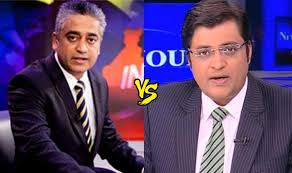
देश के दो बड़े टीवी संपादकों की बहस भी यही साबित करती है. इंडिया टुडे ग्रुप के सलाहकार संपादक राजदीप सरदेसाई ने अपने ब्लॉग पर एक लेख केदौरान बर्र के छत्ते में हाथ दे दिया. उन्होंने लिखा,– "देश के पत्रकारों और मीडिया संस्थानों का देशप्रेम कश्मीर प्रकरण की कवरेज के जरिये कसौटी पर कसा जा रहा है"
राजदीप का कहना है कि पत्रकार का धर्म है कि घटना को जहां है, जैसी है वैसी ही रिपोर्ट करना. न कि लोगों और सुरक्षा बलों को देशप्रेम और देशद्रोह के पाठ पढ़ाना. अपने लेख में उन्होंने ब्रिटेन की पूर्वप्रधानमंत्री मार्ग्रेट थैचर द्वारा बीबीसी की 1983 के फॉकलैंड युद्ध की कवरेज के लिए की गयी तीखी टिप्पणी का भी ज़िक्र किया. तत्कालीन बीबीसी डायरेक्टर जॉन बिर्ट का जवाब था – 'उनकी संस्था राजनीतिक उद्देश्यों की पूर्ति के लिए नहीं है. हमारा उत्तरदायित्व सिर्फ सच के प्रति है न कि देश के प्रति."
बस फिर क्या था. उसी दिन टाइम्स नाऊ के मुख्य संपादक अरनब गोस्वामी ने लाइव कार्यक्रम में बिना नाम लिए सरदेसाई पर हमला बोला. कहा —
'मुझे दया आती है उन छद्म-उदारवादियों पर जो पत्रकारिता में हैं लेकिन चाहते हैं कि हमारे सुरक्षा बल ज्यादा जिम्मेदार बनें. उन्हें समझ नहीं आ रहा बुरहान की मौत के बाद भड़की हिंसा की रिपोर्टिंग कैसे करें?मुझे कोई दुविधा नहीं है. जब बात आतंकी और सुरक्षा बलों में चुनने की हो, देशप्रेमी और देशद्रोही में चुनना है, राष्ट्र की संप्रभुता और उससे समझौता या राष्ट्रीय ध्वज के पक्ष या विपक्ष की हो तो मेरे लिए कोई बीच का रास्ता नहीं है. मैं हमेशा देश के पक्ष में हूं."
लेकिन इसी सवाल के जवाब में कोई कश्मीरी पत्रकार उलटा यह सवाल पूछ सकता है- किसका मुल्क – मेरा या आपका. किसका झंडा मेरा या आपका… ?
मीडिया के इसी रुख से नाराज हो सिविल सेवा की परीक्षा में टॉप कर चर्चा में आए आईएएस अधिकारी शाह फैसल ने इस्तीफा देने की धमकी दी है. वे आजकल कश्मीर सरकार में शिक्षा निदेशक के पद पर तैनात हैं.
अफ़्रीकी देशों के दौरे से लौटकर प्रधानमंत्री नरेंद्र मोदी ने आतंकीबुरहान वानी की मृत्यु के बाद कश्मीर में भड़की हिंसा पर चिंता जतायी. सरकार की ओर से यह पहली प्रतिक्रिया बुरहान की मृत्यु के चार दिन बाद आयी. उन्होंने इन घटनाओं की मीडिया कवरेज पर आश्चर्य व्यक्त करते हुए कहा कि बिना वजह मीडिया ने बुरहान हीरो बनाया हुआ है.
आख़िर सरकार का निष्कर्ष यह निकला कि 1989 के बाद से घाटी में भड़की सबसे जबरदस्त हिंसा की वजह मीडिया कवरेज था. लेकिन कौन सी कवरेज?हमारे यहां सारे अखबार बुरहान को नहीं बल्कि सुरक्षा बलों को शाबाशी दे रहे थे. घाटी की हिंसा महज आंकड़ों में थी. सुरक्षा बलों की फ़ायरिंग में 12दंगाई मारे गए. या मरने वाले दंगाइयों की संख्या 32 हो गयी है. या फिर सुरक्षा बल बहुत संयमित तरीके से कार्रवाई कर रहे हैं. यह कवरेज किसे हीरो बनाती है, बुरहान को या दंगाइयों को या फिर सुरक्षा बलों को?
अगर यह नहीं बना रही तो कौन सी कवरेज बुरहान को हीरो बना रही है? यह वह कवरेज है जो कश्मीर के अख़बारों, रिसालों,टीवी चैनल और सोशल मीडिया के जरिए हो रही है. इसीलिए यह हम तक नहीं पहुंच पाती.
लेकिन बुरहान की मृत्यु के तुरंत बाद कश्मीर में कर्फ़्यू लगा दिया गया. इंटरनेट बंद कर दिया गया. रिसालों और अखबारों पर कड़ी नज़र रखी गयी. तो फिर इतनी बडी भीड़ पूरी घाटी में क्यों और कैसे उमड़ पड़ी? आजादी के नारे फिर फ़िज़ाओं में गूंजने लगे. करीब चार साल की शांति के बाद घाटी फिर जल उठी.
दरअसल, यह घाटी और बाकी देश के बीच सोच की खाईं है जो दोनों जगहों के मीडिया तक में घर कर गयी है. हमारे लिए मरने वाले दंगाई हैं. घाटी के लोगों के लिए वे शहीद हैं. हमारे अख़बारों के लिए 32 दंगाई सिर्फ संख्या है. उनमें से एक आदमी का भी नाम हमारे अखबारों में नहीं दिया गया. घाटी के अख़बारों में उन 32लोगों के चेहरे हैं. उनके नाम हैं. उनके परिवार वालों के नाम हैं. उनका बैकग्राउंड है. वे कितने साल के थे, क्या करते थे, कैसे मारे गये, इन सब बातों के ब्यौरे हैं.
यही वजह है कि लाख रोक-टोक और निगरानी के बाद भी घाटी में ख़बरें फैल ही रही हैं. जब सूचना पर रोक लगती है तो अफ़वाहें खबर बन जाती हैं.एक व्यक्ति की मृत्यु घाटी के दूसरे छोर तक पहुंचते-पहुंचते दस की मौत बन जाती है. साथ ही जुड़ जाती हैं सुरक्षा बलों की ज़्यादती की दास्तानें.
कश्मीर हिंसा के वीडियो से साफ़ है कि सुरक्षा बल कितनी एहतियात बरत रहे हैं. मुंह पर मफलर लपेटे युवा गलियों से निकल कर उन पर पत्थर बरसा रहे हैं, लाठियां चला रहे हैं और कहीं कहीं पेट्रोल बम भी फेंक रहे हैं. फिर भी सुरक्षा बल अधिकतर बख्तरबंद गाडियों में बंद हो खुद की सुरक्षा कर रहे हैं. सहज ही समझा जा सकता है कि हवा में फ़ायरिंग करते,पीछे हटते सुरक्षाकर्मी तभी किसी पर गोली चलाते होंगे जब खुद उनकी जान पर बन आती होगी.
ऐसे में पूरा राजनीतिक घटनाक्रम जिसे देश के मीडिया का समर्थन है, यह सिद्ध करने में लगा है कि घाटी में हिंसा पर उतारू युवा आतंकियों के समर्थक देशद्रोही हैं. लेकिन इस पर कोई बात नहीं कर रहा कि इनके अंदर यह 'देशद्रोह' की भावना आयी कैसे? हमारी सरकार इस दौरान क्या कर रही थी? क्या कश्मीर साल दर साल यूं ही जलता रहेगा या इसका कोई राजनीतिक समाधान हो सकता है? या कश्मीर से भारत का संबंध केवल हिंसा रोकने,दबाने, काबू करने भर का है और शांतिकाल में पर्यटन का? सवाल उठाने का मतलब है आपको भी कश्मीर के देशद्रोहियों का समर्थक मान लिया जायेगा.
यह समस्या तब तक बनी रहेगी जब तक कश्मीरी हमारे राष्ट्रीय ध्वज को अपना न समझने लगें और यह काम बलपूर्वक नहीं हो सकता. पिछले सत्तर सालों में तो नहीं हुआ है. यह केवल बातचीत से ही संभव है
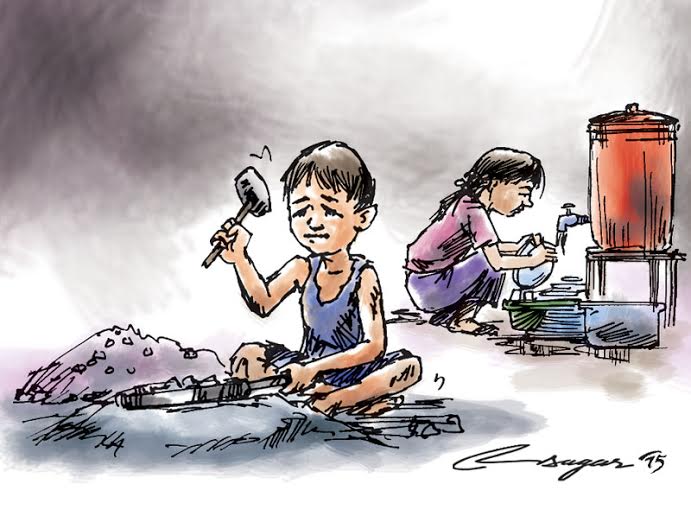
इस सप्ताह बाल श्रम (प्रतिबंधन एवं विनियमन) अधिनियम,2012 राज्य सभा में पास हो गया. लोकसभा में पास होने के बाद इस कानून को अमली जामा पहनाने के लिए इसके नियम बनाये जायेंगे और यह एक कानून बन जाएगा. इस कानून में कुछ बदलाव सकारात्मक हैं जैसे इसके अंतर्गत बालश्रम रखने को एक संज्ञेय अपराध बनाया गया है तथा इसके लिए अधिक सजा और जुर्माने और सजा का प्रावधान किया गया है जो सराहनीय है.
संवैधानिक विरोधभास
इस संशोधन से पहले १४ साल तक के बच्चों से केवल खतनाक व्यवसायों में मजदूरी कराने पर प्रतिबन्ध था. खतरनाक और गैर खतरनाक व्यवसायों का ये फर्क काफी विवादित था. बाल अधिकार संगठनो का मानना है कि किसी भी तरह की मजदूरी बच्चों के विकास में बाधक है इसलिए हर व्यवसाय बच्चों के लिए खतरनाक और हानिकारक है . पर भारत सरकार की सोच कुछ अलग थी और इसी सोच ने एक सवंधानिक संकट खड़ा कर दिया था . एक तरफ तो शिक्षा के मौलिक अधिकार के अनुसार १४ साल से कम के सभी बच्चों को शिक्षा का मौलिक अधिकार है और हर बच्चे को स्कूल में होना चाहिए. दूसरी बाल श्रम से सम्बंधित पूर्व कानून इसी आयु वर्ग के बच्चों से कुछ व्यवसायों में काम कराने की इजाज़त देता था . अब यह कैसे संभव है कि बच्चा स्कूल में भी दाखिल हो और काम पर भी जाये ? इसी तरह के अंतरद्वंद जे जे एक्ट और बाल श्रम कानून में भी थे. इस संशोधन में इस तरह के कुछ विरोधाभासों को ख़त्म करने की कोशिश की गयी है पर कई अभी भी बाकी है.
आर्थिक प्रगति और बाल श्रम
यह संशोधन भारत को कुछ अन्य शर्मनाक स्थितियों से बचाने में भी मदद करेगा. पिछले कई सालो से भारत एक तरफ तो अपनी आर्थिक प्रगति और ८% विकास दर का ढिंढोरा पीटता आ रहा है और दूसरी तरफ अंतर्राष्ट्रीय मंचो पर यह रोना रो रहा है कि हम एक गरीब देश है. हमारे पास बाल श्रम ख़त्म करने के लिए प्रयाप्त साधन नहीं है और हमारी अर्थव्यवस्था बच्चों की मजदूरी के बिना नहीं चल सकती. आज तक भारत ने संयुक्त राष्ट्र बाल अधिकार समझोते की धारा ३२ पर सहमती नहीं दी है, जिसमे वादा किया गया है कि सभी देश बाल मजदूरी को जड़ से ख़त्म करेंगे. अपने देश के बच्चों के प्रति भारत जैसे अग्रणी राष्ट्र का यह रवैया शर्मनाक था. इस सशोधन के बाद हम कहने को तो कह ही सकते हैं कि हम बच्चों के अधिकारों को पूरा करने के लिए प्रतिबद्ध हैं.
अपवाद
इस अधिनियम में संशोधन के बाद १४ वर्ष से कम के बच्चों से किसी भी व्यवसाय में मजदूरी करवाने पर पूरी तरह प्रतिबन्ध लगाने का दावा किया जा रहा है. बहुत अच्छी बात है कि बच्चो से कोई काम नहीं कराया जाएगा. परन्तु इसमें एक पेंच है. इसमें एक अपवाद रखा गया है कि अगर वह अपने ही घर पर काम करती या करता है और वह उसके स्कूल जाने में बाधक नहीं बनता तो इसकी अनुमति है. प्रश्न यह उठता है कि क्या ऐसा संभव है. अगर बच्चा घर पर काम करेगी/गा और काम स्कूल में बाधक नहीं बनेगा. क्या यह व्यवाहरिक है? बच्चों की घर पर काम में व्यस्तता उनके स्कूल के छुटने/ड्राप आउट का एक सबसे बड़ा कारण है. कानून बनाने वालो का कहना है कि घर में बाल क्ष्रम की इज़ाज़त तो अपवाद है और इसमें मात्र छोटी सी संख्या आती है. वास्तविकता कुछ और है. वैश्वीकरण के इस दौर में अधिकतर उत्पादन अनौपचारिक क्षेत्र में होता है. इस अनौपचारिक क्षेत्र में होने वाले उत्पादन का एक बड़ा भाग घरो में होने वाले काम से होता है. और आने वाले समय में इसके अनुपात के घटने की कोई संभावना नहीं है बल्कि उदारवाद के इस दौर में घरो पर होने वालो कामो का प्रतिशत बढ़ने ही वाला है. सच्चाई तो यह है कि यह अपवाद एक बड़ी संख्या में बाल क्ष्रम को कानूनी मान्यता है.
बाल श्रम बनाम बाल विकास
कानून बनाने वालों की बात मान भी लें कि केवल स्कूल के बाद बच्चों को काम करने की इजाज़त होगी तो इसका आशय क्या है. बच्चा दिन के उपलब्ध सोलह घंटो में से आठ घंटे स्कूल जायेगा, दो तीन घंटे खाने और दिन के आवश्यक कामो में लगाएगा /लगाएगी और चार घंटे काम में लगाएगा/गी. ऐसे में क्या हम उस पर 8 घंटे के स्कूल और चार घंटे के काम का दुगना बोझ नहीं डाल रहे. ऐसे में खेलने , स्कूल के काम और आराम का वक्त कहाँ है. क्या बच्चे के विकास के लिए खेलने और आराम करने की जरूरत नहीं है?
जातिप्रथा का सुदृढ़ीकरण
कानून बनाने वालो का इस अपवाद के पीछे एक औचित्य यह है कि इससे उसे अपने पारंपरिक कामों को सीखने का मौका मिलेगा. यानी कुम्हार के बच्चे को केवल कुम्हार का काम सीखने का अवसर मिलेगा और लौहार के बच्चे को केवल लौहार का. क्या इसमें डॉक्टर या वकील के बच्चे के लिए कुम्हार या लौहार का काम सीखने की सम्भावनाये है? वह तो डॉक्टर या वकील ही बनेगा/गी.
क्या यह हमारी स्थापित जाती व्यवस्था को बढाने का औजार नहीं है. क्या इससे समाज में व्याप्त असमानताओ को बढ़ावा नहीं मिलेगा?
खतरनाक व्यवसायों की सूची
नए कानून में १४ से १८ वर्ष तक के बच्चों से खतरनाक व्यवसायों में काम कराने पर रोक लगा दी गयी है. हालाँकि बाल अधिकार कार्यकर्ताओं एवं संगठनो का मानना है कि १८ से कम हर व्यक्ति बच्चा है और इस तरह का प्रावधान बाल अधिकार विरोधी है. कुछ समय के लिए अगर यह तर्क को किनारे भी रख दें तो प्रश्न यह उठता है कि पूर्व कानून में खतरनाक व्यवसायों की जो व्यापक सूची थी उसे नए कानून में क्यों हटा दिया गया. यह सूची पिछले तीन दशकों के जद्दोजहद के बाद बनी थी और इसे नए कानून में भी कायम रहना चाहिए.
कानून लागू करने में चुनौतियाँ
हम सभी जानते है कि कानून होना एक बात है और उसका क्रियान्वन दूसरी बात. माना कि बाल मजदूरी के खिलाफ पुराने कानून में कुछ खामियां थी पर ज्यादा समस्या उसके लागू करने में नज़र आती है. ये कानून सन १९८६ से लागू हुआ था और लगभग पिछले तीस सालों में पुरे देश में इसके अंतर्गत चालीस हज़ार केस दर्ज किये गए. इनमे से मात्र ४७०० को सजा हो सकी और उसमे भी अधिकतर सजाएँ १०० या २०० रूपये के मामूली जुर्माने की थी. बाल मजदूरी के सरकारी गैर सरकारी आंकड़े लाखों करोडो में हैं और उसके मुकाबले में कानून तोड़ने वालों को मिलने वाली सजा ना के बराबर रही है. कानून के क्रियान्वन का यही हाल रहा तो नया कानून भी बस किताबों में ही रह जायेगा.
क्षमतावर्धन और उन्मुखीकरण
कानून के पालन के लिए कानून को लागू करने वाली संस्थाओं सशक्त करना, उनका क्षमतावर्धन और उन्मुखीकरण बहुत जरूरी है. उदहारण के तौर पर कुछ समय पहले दिल्ली जैसे बड़े शहर में मात्र २२ लेबर इंस्पेक्टर थे जिन पर बालमजदूरी के साथ साथ श्रम से सम्बंधित सात अन्य कानूनों के क्रियान्वन की जिम्मेदारी थी. स्थिति अगर ऐसी ही रही तो नए कानून के आने के बाद भी हालात में शायद ही कोई बदलाव आये. श्रम विभाग के साथ साथ पुलिस का उन्मुखीकरण और उन्हें सवेंदनशील बनाना भी जरूरी है ताकि बच्चों को बालश्रम से छूटने के बाद थानों और न्यायालयों में फिर से पीड़ित न होना पड़े. अक्सर बाल मजदूरों को मुक्त कराने के अभियान कुछ इस तरह चलाये जाते हैं कि अपराधी बच्चों से काम कराने वाले न होकर खुद बच्चे ही हों.
समेकित बाल सरंक्षण कार्यक्रम ( ICPS) के अंतर्गत हर जिले मे बाल सुरक्षा समितियां और हर थाने में किशोर कल्याण पदाधिकारी की नियुक्ति अनिवार्य है पर देश के अधिकतर जिलों और थानों में या तो ये समितियां बनी ही नहीं है या उनका अस्तित्व सिर्फ कागजों तक ही सीमित है. जिले स्तर पर बाल कल्याण समितियां और राज्य स्तर पर बाल सरंक्षण आयोगों कि भी इस कानून को लागू करने के और बच्चों की सुरक्षा सुनिश्चित करने में एक अहम् भूमिका है. पर देश के कई जिलों और राज्यों में ये संस्थाएं गठित ही नहीं की गयी हैं. आज भी देश के चौदह राज्यों में बाल सुरक्षा आयोग का गठन नहीं हुआ है ओर लगभग २५० जिलों में बाल कल्याण समिति का गठन नहीं हुआ है. बहुत से जिलो में बाल कल्याण समितियां ओर जे जे बोर्ड केवल कागजों पर है ओर ऐसे लोगों से भरी पड़ी है जिन्हें बाल अधिकारों से कोई वास्ता नहीं है. ऐसी ख़बरें अक्सर आती है कि जे जे बोर्ड, बाल विकास समिति या किसी सरकारी अफसर के घर पर बाल मजदूर रखने और उसके साथ यौन शोषण की घटना सामने आई है. है. आये दिन सरकारी मुलाज़िमों और पढ़े लिखे तबके के लोगों के यहाँ बाल मजदूरी और उनके साथ होने वाले दुराचारों की घटनाएँ सामने आती रहती है . अगर बाल मजदूरी पर बने इस नए कानून को सही मायनों में लागू करना है तो बाल सुरक्षा के लिए बने संवेधानिक संस्थाओं को कारगर ढंग से काम करना होगा.
समस्या का सही सही आकलन
इस कानून को प्रभावी बनाने में दूसरी बड़ी चुनौती इस समस्या के आकार को ठीक ठीक नापने की है अर्थात ये पता लगाने की है कि आखिर बाल मजदूरों की संख्या कितनी है. जब तक समस्या के आकार का पता नहीं होगा उसके हल के लिए योजना बनाना संभव नहीं है . २००१ की जनगणना के अनुसार बाल मजदूरों की संख्या १२ करोड़ ६० लाख (केवल प्रतिबंधित व्यवसायों में) थी जो २०११ की जनगणना में भी लगभग उतनी ही है. यह बात सर्वविदित है कि लाखों ऐसे बच्चे है जिनका नाम स्कूल में दर्ज़ है (और वह बाल श्रमिकों की गणना में नहीं आते ) पर वो स्कूल न जाकर विभिन्न किस्म के व्यवसायों में लगे है . कृषि क्षेत्र में बड़ी संख्या में बच्चे लगे है पर उनकी कोई गिनती नहीं है. सरकारी आंकडो को गैर सरकारी आंकड़े लगातार चुनौती देते रहेते है और उनके हिसाब से बाल मजदूरों की संख्या तीन से छह करोड़ तक की है. यह ज़रूरी है कि सरकार बाल मजदूरों की संख्या का सही सही पता लगाये और उसके अनुसार योजना बनाये. बाल मजदूरी पुनर्वास के लिए एन.सी.एल.पी (NCLP) जैसे कुछ आधे अधूरे कार्यक्रम चलाये जा रहे हैं वह भी बहुत छोटे स्तर पर. अगर सरकारी आंकड़ो को भी माने तो बाल मजदूरों की संख्या १.२ करोड़ है और उनके पुनर्वास के लिए चल रहा कार्यक्रम मात्र छह लाख बच्चों के लिए है. ज़ाहिर है इस तरह के कार्यक्रमों के बूते इस समस्या को दूर नहीं किया जा सकता.
राजनैतिक इच्छाशक्ति और संसाधन
बाल श्रम को जड़ से दूर करने के लिए जरूरी है इनके पुनर्वास के लिए पर्याप्त कार्यक्रम हो और हर बच्चे के लिए गुणवत्ता पूर्ण शिक्षा के अवसर उपलब्ध हो ताकि उसे बाल मजदूर बनने से रोका जा सके. साथ ही परिवार के बड़े सदस्यों के लिए उचित मजदूरी वाले रोज़गार उपलब्ध हो जिससे वो अपने परिवार के भरण पोषण की जिम्मेदारी निभा सके और परिवार चलाने के लिए बच्चों की मजदूरी पर निर्भर न रहे. इसके लिए जरूरी है कि एक तरफ तो कानून को लागू करने के लिए आवश्यक आधारभूत ढांचा उपलब्ध हो और दूसरी तरफ शिक्षा और रोज़गार के प्रयाप्त अवसर मौजूद हो. इन दोनों ही के लिए जरूरी है की सरकार बजट में प्रयाप्त प्रावधान करे. कानून में बदलाव करके सरकार ने बाल मजदूरी को खत्म करने की मंशा तो दिखाई है पर अब और जरूरी है कि सरकार इस कानून को लागू करने के लिए राजनैतिक इच्छाशक्ति दिखाए और बच्चों के प्रति अपनी जिम्मेदारी को पूरा करे.
(लेखक डेवलेपमेंट प्रोफेश्नल के रूप में कार्यरत हैं और पिछले कई सालों से बाल अधिकारों के क्षेत्र में काम कर रहे हैं।)
Retired police Neill Franklin and Michael Wood Jr. join new TRNN producer Kwame Rose and Paul Jay to discuss the recent killings of unarmed black men and police officers
PAUL JAY, SENIOR EDITOR, TRNN: Welcome to the Real News Network. I'm Paul Jay in Baltimore.
On Monday night at the Republican National Convention in Cleveland, the face of American policing as presented by the Republican Party was Sheriff David Clarke. He's the sheriff of Milwaukee County. Here's a little bit of what he had to say there.
DAVID CLARKE: What we witnessed in Ferguson and Baltimore and Baton Rouge was a collapse of the social order. So many of the actions of the Occupy movement and Black Lives Matter transcends peaceful protest, and violates the code of conduct we rely on. I call it anarchy.
JAY: That was Sheriff David Clarke at the Republican Convention. Now joining us to discuss Sheriff Clarke, and more broadly the reaction of American policing to the recent shootings, first of all, from Baltimore is Michael Wood, Jr. He's a former sergeant for the Baltimore police department. Is now a national leader on civil-led police reform.
Also joining us from Baltimore is Neill Franklin. Neill's the executive director of Law Enforcement Against Prohibition, otherwise known as LEAP. He's a 33-year-old police veteran who led multi-jurisdictional, anti-narcotics task forces for the Maryland state police, and ran training centers for the Baltimore police department and the Maryland state police.
And also in Baltimore joining us is Kwame Rose. Kwame has been an activist. He's a defendant now in a First Amendment trial against the Baltimore sheriff department, and he's just begun as a producer at the Real News Network. Thanks so much for joining us.
Now, Neill, let me start with you. First of all, before we get started, let me show you one more clip of David Clarke being interviewed on CNN. Let's roll that.
CLARKE: First of all, this whole anti-police rhetoric is based on a lie. There is no data. And you know this. There is no data, there is no research, that proves any of that nonsense. None. Even–.
SPEAKER: You have to be more specific about what data and what nonsense you're talking about.
CLARKE: That law enforcement officers treat black males different than white males in policing in these urban centers.
SPEAKER: There is data that supports it.
CLARKE: There is not data.
JAY: So, Neill, do you think that Sheriff Clarke is speaking for a broad section of police public opinion? And what do you make of the remark?
NEILL FRANKLIN: I sure hope not, because if he were we would be in far more trouble than what we're currently in in this country regarding policing.
I don't know, maybe I've been asleep over the past few decades or whatever, but I've never known policing in this country to be anything other than treating blacks different than white. And here's my point. Historically in this country we've had a problem with policing and race. I mean, you only have to go back as far as the 1950s and '60s, and internally in policing black people couldn't even drive police cars. You know, you couldn't even get jobs in some police departments. And it's only been recent that we've been able to do that.
Internally in policing we still have a lot of racial issues and concerns, to where black embers of policing had to form their own organizations in order to feel like they were getting a fair shake, and in many cases had to sue police departments. If we're having these problems internally in policing, I mean, how can he sit there and say we're not having them in our communities, which we are? Blacks are arrested at higher rates, convicted at higher rates, and sentenced at higher rates than their white counterparts. And there's plenty of data to indicate that.
And I'll end my initial comment with this, Paul. One piece of data that needs to be collected and analyzed, which we haven't done yet, at least not to my knowledge, is the times that plainclothes black police officers are either fired upon or mistreated–but I say mainly fired upon, and in many cases, unfortunately, killed by their counterparts. New York City has had this problem. We've had it here in Baltimore City. And when–and I can't remember recently any cases involving white plainclothes officers who were killed by friendly fire. I know there are probably one or two out there. But when you compare that number to the number of black plainclothes police officers that are either fired upon, friendly fire by their counterparts compared to whites–I mean, it is a significant difference. And we need to collect that data and analyze that data. That way people cannot say that, well, it was criminal activity going on, or this person was doing this, that, and the other. It's one of your counterparts. And I guarantee that data's going to show something very important.
JAY: Are you suggesting that they actually know that they're plainclothes? Or that they're shooting at them because they're black men and they turn out to be undercover cops?
FRANKLIN: Because they're black and they turn out to be undercover cops wearing plainclothes. That's a clear indication that we in policing, unfortunately–and don't get me wrong, I'm not saying that all of this is intentional. It's just that we view blacks different. And not just in policing in this country, but unfortunately we as a people in this country view the black male differently. We view the black male as a danger to society, and that's because of the rhetoric that we have been fed over the past few decades in this country.
Even in the Nixon administration, John Ehrlichman spoke about this. John was one of Nixon's closest aides, and when he got out of prison for Watergate he spoke about this, that it was a plan for the Nixon administration in dealing with the Vietnam War protesters and in dealing with the civil rights movement, to vilify them by using, for instance, the war on drugs. You can't go after the protesters for the First Amendment rights, you can't go after the civil rights folks for being black anymore. So we go after them for what they do, hence the war on drugs. And we'll vilify them on late night TV. And that's what we've done in this country, and that's why we have some of the problems that we have.
JAY: And just one more quick question to you, Neill. I have heard in Baltimore the black cops in the past–and I don't know if it's still true–have been told they can't arrest white people in the more wealthy, well-to-do white neighborhoods. Is that true?
FRANKLIN: Well, I don't think you're going to see–whether you're black or white–see, when you're in policing, for the most part, the main color is blue. And we do not go into Guilford or Roland Park and police the way that we do in other parts of the city. I guarantee you, no police officer is going to take a drug dog into any of those communities and start scanning cars along the street, which is perfectly legal to do. And I guarantee you, you'll find a lot of drugs if you do that.
JAY: Michael, you were a Baltimore cop. And Baltimore is one of the police forces that's been accused of having a particularly violent and even racist culture. What do you make of the reaction of police–and maybe Clarke is a more exaggerated reaction. But does he speak for a lot of cops across the country?
MICHAEL WOOD: Well, I mean, I'm not even going to say that I speak for cops across the country. I mean, I have my own nuanced views. But Sheriff Clarke is a contradiction to his own statement within himself. The only reason he's infamous is because he's a black sheriff that's been elected in a white county, and because that's so damn rare. So why he doesn't see that as standing on the surface is preposterous.
And then to go on to say that the only people in this country that truly care about black lives are the police. It's not the victims, it's not–it's not the people that feel like they're under tyrannical pressure from an oppressive police regime. It's the cops that actually do it. The ones that retort with blue lives matter, and have disproportionate killing of black men. I don't know, why people can even take him seriously is completely preposterous. I don't even like the idea of giving his statements any credibility. There's no science, there's no data, there's no nothing that's coming out of him other than rhetoric because that's what gets him elected in a racist white neighborhood. [Say it.]
JAY: But his reaction that this is an unfair vilification of police, that they do go into very dangerous situations and that to target police as the problem is creating an atmosphere that somehow justifies these attacks on cops, what do you make of that?
WOOD: Nobody is vilifying policing in a broad perspective. They're vilifying police brutality and things like doing regressive taxation on poor communities, and the system of bail, and disproportionate killing. Nobody is going out there and saying that we are anti-police in any of these movements. What we are saying is anti-police brutality. So we're not criticizing police. We're criticizing police tactics, and the implicit bias, and the things that go through that we don't recognize and take care of how that affects communities, especially marginalized communities.
So like, what he's saying is completely without merit. It's like, he may as well be arguing that the Earth is flat. I don't know, how do you have a logical argument with somebody with such a position?
JAY: A week, week and a half before the convention, President Obama spoke about the shootings of police in Dallas. And it was a bit of a defense of the police, but also a bit of a critique of the Black Lives Matter movement, and not certainly the way Clarke did. Here's what Obama said.
BARACK OBAMA: And then we tell the police: you're a social worker. You're the parent. You're the teacher. You're the drug counselor. We tell them to keep those neighborhoods in check at all costs, and do so without causing any political blowback or inconvenience. Don't make a mistake that might disturb our own peace of mind. And then we feign surprise when periodically the tensions boil over.
We know those things to be true. They've been true for a long time. We know it. Police, you know it. Protesters, you know it. You know how dangerous some of the communities where these police officers serve are. We pretend as if there's no context. These things we know to be true. And if we cannot even talk about these things, if we cannot talk honestly and openly, not just in the comfort of our own service, but with those who look different than us, or bring a different perspective, then we will never break this dangerous cycle.
In the end, it's not about finding policies that work. It's about forging consensus. And fighting cynicism. And finding the will to make change.
JAY: Kwame, how do you respond to President Obama? It's kind of the other side of the argument, or a softer delivery of the argument of Clarke's. But the, the point of, one, the police are in very difficult circumstances, I think is true. You can't, I don't know how one can argue with that, that they have to police in areas where there's long-term chronic poverty. And two, I'm interested, his last sentence. It's not about policies that work, it's about having will. How do you respond, Kwame?
KWAME ROSE: You know, I think that the President's comments were made on the assumption, and in the suggestion, that Black Lives Matter activists, as well as the police, should be willing to meet in the middle and walk away with solutions. But I think for you to make a statement like that you would have to assume that the police want to change.
And what's very, very frightening is that a lot of police officers feel a certain type of way that reflects what Sheriff Clarke said. You don't have enough police officers speaking up saying that what we have done in the past is wrong. What happened to the victims of police brutality that have led to people marching in the street, that was wrong. Not enough police officers have stood up. But what you do have is a lot of police officers standing up and saying, well, y'all shouldn't be protesting us because we're all not bad, when you won't speak up yourself against the bad individuals.
JAY: But, Kwame, I think part of what Obama's saying–although personally I don't think he actually gets to a solution that's meaningful–but he's partly chiding Black Lives Matter for not being aware enough of the difficult situation that the police are in, and that–.
But I think there's another piece to this which Obama doesn't say, which is that it's the police, police within the set of a legal framework, that reinforces the chronic poverty that creates such a dangerous situation. And when, at the end when he says it's not about policies that work, it's about just having the will, well, no. It is about policies in whose interest. And if you have economic policies that don't do anything to alleviate the poverty, then this is just a question of some psychological hangup everybody has, and if they could just get over it.
ROSE: Yeah, exactly. I mean, in areas that are predominantly black and poverty is predominant in those areas, you have a lot of police officers. So the root cause is not the fact that they're police officers. The root cause, ultimately, is the fact that there's not opportunity, economic investment, or education investment in those areas. Police are just sent there as kind of the scapegoat to basically babysit poor black people.
And so, I don't think Obama ever addresses the fact that you have to have effective solutions and ulterior methods of investment into these communities, which ultimately will limit police violence, police brutality. Because the more opportunity individuals inside of communities where poverty is high, the more opportunity is presented to those individuals, the less crime actually happens, the less of a need there is for police.
JAY: Neill, you've done training–and I'm not suggesting you did, necessarily, what I'm about to say. But when you go to boot camp for the army, for the Marines, we've interviewed soldiers who have been through this. One of the things you get trained to do is, obviously, be willing to live with killing people. You're going to go into a war zone and you're going to be shot at. You're going to have to shoot back. We've–I've interviewed Marines who were in boot camp where they actually had to go through exercises where they–in returning fire, they might have to be willing to shoot women and children. And if you weren't able to, you didn't actually pass the test.
But it seems to me the, our society, and certainly the elites that have power in our society, they need and want police forces with a culture that will use force, and lethal force, if necessary, because they don't really want to do anything about the fundamental social conditions. So you gotta, you gotta contain it.
We had someone working at the Real News whose father was a cop, and we had this discussion with him once. And he said, you know, you've got a choice. You want your police forces to hand out flowers, or you want them to be a hammer? And it's pretty clear we're being told to be the hammer. So I mean–the culture of this use of force that, yes, sometimes goes too far–but the culture itself, isn't that what police departments are actually being asked to be?
FRANKLIN: It certainly appears that way. Now, in training, you know, unlike what you explained, we teach from a defense posture, not an offensive posture. So even, even our, some of our courses, like defensive tactics–so it's about defense, primarily, not so much about offense.
But the things that we're seeing–and this is even related to the policy piece–and what we're asking our police officers to do is culturally putting them in a place of being offensive. Of taking a posture of, which appears to be, I'm going to shoot first. You know, my life is more important, so I'm going to be offensive in order to survive. But that's not, at least where I was in training and what I was doing with the Maryland state police and Baltimore City, again, we were teaching folks how to make good judgment decisions. And we were integrating them, doing our best to integrate them with the community. Because we were bringing so many people from outside of the community, which is also extremely important.
But let me end with this: that that policy piece, when you referred to the president, you know, him saying it's not about so much about the policy. It's about the will for consensus and to work. The policy is central to this, because the policies regarding economics and dire conditions within poor communities–economics, health, education, and that whole long list of policies–including policies like the war on drugs drug prohibition that creates this conflict among the citizens who are poor and trying to make money by selling drugs and becoming a member of this crew or that crew or that gang, which leads to conflict and shootings and then retaliation from there. Making our communities more dangerous.
It is so much about all of these policies that separate us, preventing the consensus from occurring, and literally draining the will out of people to move in a better direction and position. So it is so much about policy, I say first and foremost, before we can get to a place of consensus-building and instilling the will in people to move in the right direction on all sides of this.
JAY: Michael, I talked to a friend of ours, a cop. He's very progressive politically. I believe he would have voted for Bernie Sanders. He's against NAFTA, he's against inequality, he would support all kinds of reforms that would weaken the concentration of ownership and power of the billionaire class, and so on. On issue after issue he would be very progressive internationally, against the Iraq War, so on and so on.
But he–and he's still an active cop. He was feeling very defensive about the critique coming from Black Lives Matter, from the point of view that it is about the social conditions. It is about the chronic poverty. It's about who runs the society and who has real power. And to have so much focus on the police as the enemy, which in his opinion was happening in the city he's in. That was unfair, and it was kind of, you know–he was even arguing that the number, you know, with the number of cases police have to deal with every year, you know, the tens of thousands of cases, that the number of people that get shot or killed is actually a small number. The number of killings that we've seen that seem completely unjustified, these killings that we see on videotape from time to time, while completely unacceptable, he would argue, is still a rather small number.
And even he's feeling defensive about this sort of broad–what he sees attack on cops. What do you make of that?
WOOD: Well, the first thing I have to make of that, Paul, is that there's about 50 things in there to unpack. And I'm never going to be able to do that in this quick snippet of an answer, here.
But I have to go back real quick to what President Obama said. I didn't hear that before, and I found that really striking. His statement to keep those neighborhoods in check sounds a hell of a lot like bring them to heel. I don't see the difference in that. And then he's acting like we should–the answer is to protect the cops more, instead of actually solving the problems that make a dangerous community. That doesn't make any sense. And the policy issue–I am not the only scholar that works on policy issue day in and day out on how to solve these problems. There's tons of scholars working on policy issues.
And like Neill was just saying, the drug war is a primary one. It's what got us into this problem, so it takes policy to get us out. As a manager one thing that I say is I'm concerned with human behaviors. So I can't control what people think. I'm not going to be able to solve racism, and I'm not going to be able to change our culture, but I am going to be able to put in policies that regulate and put checks and balances on what is implicit bias and human nature and things like that that we have to address.
This other officer–. There's a saying that when your paycheck depends on it, like, your willful ignorance is hard to break, and your cognitive dissonance. And maybe there's a level of Stockholm syndrome, because officers are getting pressure from command to do these type of things. They're being told from somebody to go into these communities and be an occupying force to lock somebody up for the very same thing that President Obama doesn't change the policies to fix that he did himself. So he's locking up tons of black males through policies that make that officer the enemy.
So he has to understand that it feels odd, and he has power on the streets, but he's no more than a pawn in this system. The problem is is that that pawn has incredible amounts of power. So when they are acting out that power, our oath and what makes us heroes and courageous is to stand up for what is right for those neighborhoods, to protect those neighborhoods. And that's protection from policy, that we've got to look inside ourselves and take a real moral stand on what we think service means.
JAY: Kwame, similar question to you. Do you think there's some validity that amongst black activists there is too much focus on police and not enough focus on the bigger, systemic issues that create such a police force?
ROSE: No, I mean, I actually think that in a large part the rest of society kind of limits the Black Lives Matter movement, or those who believe in Black Lives Matter, to just police brutality. And from what I've experienced in meeting hundreds of people from across the country and having thousands of conversations in the last year and a half is that there are multiple people doing–trying to solve the problem multiple ways on different levels. There's people tackling the issue of lead paint poisoning in the inner cities. People who are working on the educational front. So people who are working for, who work for a [developing] front.
Because I don't think that police brutality is just the root cause of the problems and living conditions of black people in this country. And I don't think that Black Lives Matter–that is what got us into the street to protest, that is what the media talks about–but it's not the one focus of Black Lives Matter. Black Lives Matter as a movement, it's not a monolithic movement.
So even if you have individuals gathered for protesting the death of Philando Castile, it's also about protesting the neighborhood protesting the living conditions in which he might have grown up in. You know, Freddie Gray had a long rap sheet. He was killed by the police. But his long rap sheet was because he wasn't afforded the same opportunity to go to, to have adequate education, adequate health, adequate access to being able to live and go to work from 9-5.
And so I think that, no, I don't think that we're all just focusing on police brutality. I just think that the other actions of other activists just don't get as much attention.
JAY: All right. Well, this clearly is just the beginning of the conversation, and I hope to have all three of you back soon. Thanks for joining us.
And thank you for joining us on the Real news Network.
DISCLAIMER: Please note that transcripts for The Real News Network are typed from a recording of the program. TRNN cannot guarantee their complete accuracy.
Many people these days are asking whether Islam and Muslims belong to Germany. In her recent book "Being German, Becoming Muslim", the Turkish anthropologist Esra Ozyurek provides an answer. Her results are more than clear. Interview by Emran Feroz
There has been a marked increase in people migrating to Germany from Muslim-majority countries in recent years. Since the events of last New Year's Eve in Cologne, prejudice towards them has also been on the rise, coupled with a surge in Islamophobia. There is a widespread view that Islamic attitudes are not compatible with so-called Western values. Why is this fear so dominant? Hasn′t Islam been a part of Germany for ages?
Esra Ozyurek: Here we seen the fear of the unknown overlaid with racist tendencies. Islamophobia is one aspect of the fear and hatred of what is other. When it comes to the fear of refugees, for instance, I believe Islamophobia is only part of the package. These newcomers are feared and hated simply because they are different. They are vulnerable and they have nowhere else to go.
Muslims have been part of Germany for ages, living peacefully, contributing to German society and the economy. I find it remarkable how, time and again, Islam is depicted as a very recent arrival in Germany, which has caught people by surprise. No dictionary definition exists, either for Islamic values or Western ones. Both are vaguely defined sets of values, which have been seen to mean different things at different times.
As in many other European countries, Islam is one of the religions that is seeing the most growth in Germany. This has been going on for many years and not just through immigration, but by conversion too. Why then do so many Germans still consider Islam alien and threatening?
Ozyurek: I see conversions to Islam as a result of healthy integration and co-existence. As Muslims become better integrated into society, they have more meaningful relations with non-Muslims. Some of these relations lead to conversions. Similarly a larger number of Muslims embrace more secular ways of living. Until the recent refugee conversions, Muslim conversions to Christianity were smaller in number. But there are many more Muslims who have embraced lifestyles where religion plays no role. Germans have been converting to Islam for more than one hundred years. It is only recently that converts to Islam have been seen as a threat. It has to do with how Islam and Muslims are perceived.
A vexed question: "Down the years, German Muslims have consistently revisited the concept of an authentic German Muslim identity. The imagined constellation has changed over time. There are so many different ways in which what is considered Muslim is also German. The two are in a constant state of intersection and transformation – rather like a kaleidoscope," says Ozyurek
Despite Islam′s negative image, especially in the media, many Germans do embrace the religion. They often adopt Islamic names, change their lives completely and allow Islam to become part of their identity. What is it, do you think, that attracts them to Islam?
Ozyurek: What I found in my studies – and what I have seen repeatedly in the work of others' – is that almost all conversions to Islam are initiated by a deep and meaningful relationship with a Muslim. This person may be a neighbour, a school friend, a colleague or a partner. What I found really interesting is that the Muslim who is the source of inspiration is not always religious. Most initial encounters take place in non-Islamic places, such as night clubs, bars, student accommodation, but also more neutral places such as schools and workplaces. Some peoples′ hearts open up to Islam through this interaction. When I asked them what they found attractive about Islam, all I got was a post-conversion narrative. And these narratives have their specific characteristics. People learn how to present these narratives.
They would tell me diverse reasons for their conversion. Some talked about being religious as a Christian but found that it wasn′t embracing enough. For others, Islam was the first religion they had a real encounter with. Yet all religions have the power to touch people's hearts and give them meaning. I concluded that it isn′t really possible to understand why anyone converts to a particular religion. It is just like trying to explain why we fall in love with one person and not with another. We can try to give an explanation, but each attempt would be just as meaningful or meaningless as the next. Indeed, I have also interviewed converts to Judaism – the reasons they gave were really quite similar.
At the moment, we are seeing the rise of right-winged political movements all over Europe. In Germany, the right-wing populist Alternative for Germany, like many other conservative politicians, is repeatedly arguing that Islam cannot be considered as a part of Germany. Besides, adherents to the movement also claim that you cannot be German and a Muslim. What does "German identity" mean these days?
Ozyurek: I guess there′s only one thing we can tell them: it is too late! Islam is an important part of German society, no matter what they want to think. As I have already mentioned, Muslim, German or Western identity – they are all so much more than a single fixed definition. They allow for a multitude of different lifestyles and ideologies and, what′s more, there are so many ways in which they can and do intersect. Down the years, German Muslims have consistently revisited the concept of an authentic German Muslim identity. The imagined constellation has changed over time. During the 1920s, German Muslims saw themselves as being closely related to the German Enlightenment. In the 1930s, with the emergence of National Socialism, they emphasised how important cleanliness was both ideologies. Later in the 1960s and 70s, Sufism seemed to tally with the era′s emphasis on youth culture. There are so many different ways in which what is considered Muslim is also German. The two are in a constant state of intersection and transformation – rather like a kaleidoscope.
In your book, you point out that many East Germans converted to Islam after the collapse of the Berlin Wall. It seems that these people were searching for some kind of new identity and new ideology after the collapse of Communism. To what extent is this true?
Ozyurek: I would not want to give the impression that tens of thousands of East Germans converted to Islam. I have a strong sense that there are more converts in West Germany. But, for the East Germans who converted to Islam soon after the fall of the Berlin Wall, Islam did give them a new identity that helped them move away from being "Ossies". Interestingly, today there are a good number of Sufi lodges in eastern Germany. But they display a different dynamic to that of the established Sunni communities. They live isolated lives away from the stigmatised Sunni Muslims.
For a couple of years now, hardcore Salafists such as Pierre Vogel, among others, have become the face of German conversion. Some of them are well-known for their extremist views which one finds throughout social media. At the same time, we see many young Muslims cheering for them. Why is this happening and why does the media only focus on this type of convert?
Ozyurek: Most likely because most converts are introverts who are occupied with their own spiritual growth. I have met hundreds of converts and there′s nothing sensational about them. They spend most of their time with themselves, with reading, learning and reflecting. A handful of others like Pierre Vogel are attractive for many reasons. Firstly, a great part of the Islamic scene in Germany is still in Turkish or Arabic.Young Muslims growing up in Germany don′t feel any connection with imams who are sent from Turkey. Many find these communities old, divorced from their issues and too strict about rules without explaining why. Pierre Vogel talks German, he has a good grasp of German youth culture and he is always on the Internet. The Salafist movement he represents is of course exclusive in many regards, but it is surprisingly open to Muslims coming from all social backgrounds. It is non-hierarchical, accepting of people who embrace their basic principles and presents a very clear world view.
How will Muslims, be they migrants or converts, continue to transform German society in the years to come? Ozyurek: The post-World War II Germany that exists today has been heavily shaped by Muslims. Muslims rebuilt the war-torn country and today they are an indispensable part of the urban culture, in particular. Many aspects of youth culture in Germany – fashion, food, music and many others – have been heavily shaped by those Muslims who arrived in Germany from the 1960s onwards. It is impossible to imagine major German cities without practising and non-practising Muslims. The Muslim communities will continue to be subject to multiple influences, global and local, as will German society. At this point I do not expect a dramatic change. Despite what the right-wing politicians say, the presence of Muslims in Germany has already achieved a more or less happy equilibrium. Germany is already part Muslim, Muslims are already German.
Kandhamal is not a new subject to me. Countercurrents.org had published an article on 2nd November 2003 by Angana Chatterjee “Orissa: A Gujarat In The making”. It was five years before the worst communal violence against Christians in modern India happened in Kandhamal in 2008 in which 93 people were killed, over 350 churches and worship places which belonged to the Adivasi Christians and Dalit Christians were destroyed, around 6,500 houses were burnt or demolished, over 40 women were subjected to rape, molestation and humiliation and several educational, social service and health institutions were destroyed and looted. More than 56,000 people were displaced.
After the dreaded thing happened Countercurrents.org had published dozens of articles including fact finding reports, analyses, opinions and on the ground reports.
I had visited Kandhamal in 2015 and extensively reported about the current situation in Kandhamal. I interviewed a dozen widows of Kandhamal violence. While interviewing them they looked upon me as someone who could bring them some succour to the pathetic situation they are in. Many of them are facing intimidation from Hindutva forces and can’t return to their villages. Most of them were living in different parts of India as house maids, tailors and doing other odd jobs to sustain their ruined families. Little did they know that an insignificant journalist like me could do very little for them. The hope in their eyes really shook me. Still I kept my calm and kept on doing my ‘job’. I visited ruined houses, visited a house where an old woman was burnt alive, visited a church that became a cow shed. I marched with thousands of victims in Raikia, the nerve centre of violence and heartland of RSS/Sangh Parivar in Kandhamal. I saw the collective defiance and courage of the victims who in spite of all the hardships and government apathy, came together and formed a movement for communal harmony. Marching with the masses I was convinced that the RSS/Sangh Parivar elements will never be able to repeat a 2008 again in Kandhamal.
On 19th of this month I was among the audience at K.P. Kesava Menon hall in Calicut, watching K.P Sasi’s documentary “Voices From The Ruins: Kandhamal in Search of Justice”. Sasi being a good friend of mine I had heard stories about Kandhamal from him too. I had seen the rushes of the film, a roughly edited version too. I also knew the pain and hardships that he went through in making this film. While I sat in the dark and went through the visuals that played before me on the screen I was re-living the Kandhamal violence once again. As the tales of the naked horrors of the violence, the helplessness of the victims, the courage of many Hindus who saved many Christian lives risking their own lives, the government and judicial apathy in delivering justice and finally the hope of building a resilient India that will defeat the nefarious designs of the communal forces through religious harmony overwhelmed me with emotions and I cried.
Soon after the screening I was called upon to the stage to give my reactions about the film. I wiped my tears off and went on to the stage. Still I could not stop my tears. I was embarrassed. Through my tears I told the audience it is through emotions that revolutionary actions are born. Sasi’s film was able to evoke emotion about an incident that happened thousands of kilometers away and now it is our duty to make sure that the victims get justice.
Although I was overcome with emotion while watching Sasi’s film, it is not a tear jerker. It is a calm and composed study of the Kandhamal violence. It delves into history to show how the hate campaign by RSS/Sangh Parivar elements slowly seeped through the veins of Kandhamal. How the killing of Swami Lakshmananda by the Maoists was used by the communal forces to unleash a pogrom on Adivasi and Dalit Christians. The film shows that the violence was not a spontaneous reaction to the killing of the Swami, but a well planned orchestrated attack on the minorities. The film then analyses the justice delivery system and how it failed to deliver justice to the victims. The film ends in a note of hope by showing the robust resistance movement the victims themselves built and solidarity and support coming to the victims cutting across political spectrum.
I am not alone to overcome with emotion in Kandhamal. In 2015, I saw Brinda Karat, Polit Bureau member of Communist Party of India (Marxist) wiping her tears off after visiting seven innocent Dalit/Adivasi Christians who are lodged in Phulbani jail allegedly for killing Swami Lakshmananda. Incidentally they are the only people who are convicted and still lodged in jail in any case related to this horrific communal violence. Yes, India failed in delivering justice to these poor Adivasi/Dalits in Kandhamal. Sasi brings out this truth forcefully through his film. That may be the reason I cried after watching this film.