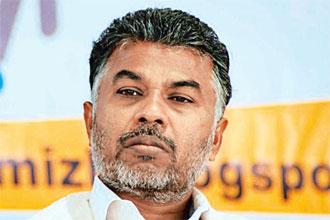
It is clear that without fighting the forces that represent Hindutva, both ideologically and politically, the legacy of Rohith Vemula cannot be carried forward. The larger challenge lies in envisioning and struggling for a caste free society.
If anyone not of our own
Happens to read this manuscript:
Heads will roll
Hearts will beat to death
Brains will curdle.
All that one has learned
Will be lost.
Now, I have placed curses
On my own words.
– NT Rajkumar
(translated from the Tamil Panirendhu Kavithaigal)
A Preface to the Current Discussion
Rohith Vemula’s death – an institutional murder of the casteist-communal combine – has led to numerous discussions and debates around the Bharatiya Janata Party (BJP), the Rashtriya Swayamsevak Sangh (RSS) and the political ideology of Hindutva.
This is not the first time that the BJP-RSS combine has surfaced in controversies in recent times. Nor is it the first case of suicide by a Dalit-Adivasi in higher educational institutions. In recent decades the RSS along with it’s frontal organisations rose to prominence with three incidents starting with the anti-reservation riots in Gujarat in the 80s, followed by Advani’s rathayatra and the attempt to demolish the Babri Masjid, leading up to the Muslim genocide in Gujarat in 2002.
Vemula’s death has raised eyebrows all over the world, as it is the continuum of the Hindutva assault on Dalit assertions. In many ways the radical Dalit politics espoused by groups like the Ambedkar Students Association (ASA) is diametrically opposite to that of Hindutva. Nothing else punctures the pompous claims about Hindu civilisation, culture and rashtra, as effectively as radical Dalit politics.
The present phase of fascism is a more organised and systematic blend to sustain the caste-class-communal legacy for a prolonged period.
Ever since the articulation of the Phule-Ambedkar discourse, radical Dalits have pointedly questioned the very existence of a Hindu society, culture and civilisation. Against tall claims of Brahmanical spirituality, this discourse laid bare the inhumanity of the Vedas[1] and Smritis in justifying and establishing the system of caste brutality.
Against claims of a unified Hindu world existing through the millennia, this discourse highlighted the continued opposition to Brahminism in history through Charvaka philosophy, Buddhism, Sramanic traditions and radical sections of the Bhakti movement. Thus, Hindutva forces cannot accuse radical Dalit politics of being a conspiracy of a westernised elite, or of de-classed intellectuals. It is organically Indian, and is a result of the real life experiences of one sixth of the most marginalised and poor sections of Indians.
The radical Dalit discourse has also resisted the culture of domination, and rejected the patronising overtures of reformist caste Hindus as for example, Gandhi re-christening erstwhile untouchables as Harijans, or the more recent claim of Narendra Modi who said in the book Karmayogi (published in 2007), that cleaning garbage is a spiritual experience for scavenger castes.
Golwalkar praises Manu as the greatest lawgiver mankind ever had. It was the same lawgiver Manu's book, which was burnt by Ambedkar in his pursuit of getting justice for the Dalits. In current times Golwalkars’ successor also demanded a throwing away of Indian constitution.
Ambedkar's announcement that ‘though I was born a Hindu, I solemnly assure you that I will not die as a Hindu,’ encapsulates the relationship of radical Dalit consciousness to Hindu religion. The hegemony of upper caste Hindus over Indian society in modern times grew out of the failure of the Ambedkarite radical separatism in the face of Gandhian intimidation that led to the 1932 Poona Pact. While there indeed is a generalised hostility towards Dalits among caste Hindus, the contradiction of radical Dalit consciousness is sharpest with Brahmanical Hindutva.
Radical Dalit consciousness, in its Ambdekarite form, stands for rational humanism and liberation of all irrespective of caste, gender and ethnicity. Brahmanical Hindutva’s motivating force is communal hatred, and its organising principle is religion based, patriarchal and violent nationalism.
No wonder the British never repressed the RSS. The collusion between religion based nationalism and colonialism can be understood from such statements.
It would not be out of place to state that these philosophical and ideological postulations have not arisen out of the blue, rather they had a steady and thorough progress in history.
It is time to examine these ideological positions, which essentially have a communal colour. Examining them from the Dalit-Adivasi viewpoint is crucial since it would unfold the dynamics of the social, and religious politics of communal fascism to the lowest level.
In a broader perspective, communalism of polity is preliminary to fascism of polity. In today’s context what is going on in India is not mere communalism of polity – rather it is the politics of fascism under the Hindutva brigade married to corporate capital. Hence, as a critical outlook, I would like to emphasis some of the major threats faced by the Dalits and Adivasis (or Indigenous people).
From left to right: Manu who inspired Friedrich Nietzsche who inspired Adolf Hitler
Fascism and the Political Theology of Dominance
Before getting into a detailed discussion let me place what fascism espouses. Fascism is a construct of entrenched political domination capable of infringing any eligible rights of any individual or group to an unpredictable degree, or magnitude. Historically it took different shapes and forms, depending upon the particular social order. Although it was coined as a political ideology in 1919 with the Italian dictator Benito Mussolini, it has much older roots in India and some parts of the world (George 2006).
Never before in history have we witnessed such a period of deliberate drift of further confusing and disempowerment of Dalits and Adivasis.
Fascism is an extreme right-wing ideology that celebrates the nation, or the race, as an organic community that transcends all other loyalties. It emphasises a myth of a national or racial puritan to be celebrated as a natural higher being. It could also be the resurgence of a particular race after a period of decline or destruction.
To this end, fascism calls for a ‘spiritual revolution’ against signs of moral decay such as individualism and materialism, and seeks to purge ‘alien’ forces and groups that threaten the organic community. Fascism as a rule celebrates masculinity, youth, mystical unity, and the regenerative power of violence. Often, except in exceptional situations, it resorts to racial superiority doctrines, ethnic persecution, imperialist expansion, and genocide. At the same time, fascists may embrace a form of internationalism based on either racial or ideological solidarity across national boundaries. Usually fascism espouses open male supremacy, though sometimes it may also promote female solidarity and new opportunities for women of the privileged races or nations (George 2006).
Fascism's approach to politics is both populist and elitist. While the former seeks to activate ‘the people’ as a whole against perceived oppressors or enemies, in the latter it treats the peoples’ will as embodied in a select group, or often one supreme leader from whom authority proceeds downward. Fascism seeks to organise a cadre-led mass movement in a drive to seize state power. It seeks to forcibly subordinate all spheres of society to its ideological vision of an organic community, usually through a totalitarian state. Both as a movement and as a regime, fascism uses mass organisations as a system of integration and control, and uses organised violence to suppress opposition, although the scale of violence varies widely (George 2006).
Understanding Fascism of Caste in Indian Perspective
In the Indian context historical fascism could be widely observed in caste domination and feudal relationship, championed by Hindutva. This is more vibrant than the modern paradigms of communal fascism. The mythical stories of killing of Shambhug by Ram, denial of Eklavya of his right to education and the subsequent chopping off of his right thumb, the counterfeited assassination of Asur king Ravana, the deceitful murder of Bali are only some impulses of this trend of domination over indigenous people. Further these communities were addressed as rakshashas (wild), mleccha (filthy) barbarian, uncivilised, and so on. Both Vedic and Sanskrit texts have justified the invasion and exploitation of Aryans and explicitly supported the superiority of the Aryan race and Vedic philosophy to the extent that their fate of being in the higher beings is considered as god given (George 2006).
The political successes of Hindutva are growing out of the casteism, patriarchy, insecurities and superstitions of the generalised Hindu common sense. It is high time social forces fighting against Hindutva realise its casteist core, and understand the nature of its assault on anything that is different or radical.
The present phase of fascism is a more organised and systematic blend to sustain the caste-class-communal legacy for a more prolonged period. In modern times it started with the emergence of Hindu Chauvinism and Cultural Nationalism under the leadership of the RSS led camp. This camp learnt various things from different sectors. They learnt the skills in organising and mobilising from Communist parties, mastered the management techniques from Churches and Christian institutions, the one-man dictator model of Adolph Hitler and the methods of maintaining private militia.
In a nutshell, the whole exercise was to sustain and strengthen the same old ideology of purity of the three upper varnas and to consider the Shudras and Panchamas as impure and polluting. This has resulted in a twin strategy of dictating to the ex-untouchables and non-Hindu groups, which is the present form of communal fascism in India. The current mode of ensuring a deeply polarised and communal polity coupled with sustained casteism apparently speaks of this truth (George 2006).
MS Golwalkar (left) and KB Hedgewar: Inspired equally by Manu and Hitler
The Ideological Upsurge of Hindutva
In modern times the ideological upsurge of Hindutva has got a definite periodicity which can be traced from the early nineteenth century. It arose as a system to put a break on the increasing reforms within the Hindu religion. These reforms could be listed as advocating freedom to women through abolition of sati, child marriage, opening the boundaries of educational institutions to women and to a certain level opening up educational space for the Shudras and untouchables.
However since the Muslims constituted a sizeable population, they were considered as a big threat to the Hindu society. Christians who opened health and educational institutions for all, particularly in Dalit and Adivasi areas, thus threatened the social fabric of caste. On the other side Christianity was accepted as the mainstream faith by these oppressed groups – as a means to escape the order of caste. Thus Christian conversion turned out to be a major threat to the Brahminical social hierarchy of caste. Hence a counter ideology was obligatory for the sustenance of Hindutva. The ideological formulation in the Indian context could be seen in three different phases – first is the sowing of seeds of communalism through articulations and practice of a Hindutva worldview in modern India included its consolidation (Hindutva) as an ideological tool, and third through devised programmatic patterns (George 2006).
Perhaps Bankim Chandra Chatterjee first sowed the seeds of communalism through his novel ‘Anand Math’. This novel could be considered to be the foundational text of the current Hindu Cultural Nationalism.
There is a specific backdrop of this novel during British rule in India, where the context is projected against the white supremacy applying for a prolonged process of piecemeal conquest and prudent consolidation. This text fuelled discontent, resentment and resistance at every stage, wherein deposed Rajas, Nawabs or uprooted Zamindars and landlords often led a series of rebellions during the first hundred years of British rule. Peasants, ruined artisans, demobilised soldiers and discontented people formed the backbone of such rebellion. These rebellions were generally localised involving armed bands of a few hundred to several thousands. The civil rebellions grew in Bengal and Bihar as British rule was gradually consolidated and further spread to other places. There was hardly any year without an armed rebellion in some part of the country. From 1763 to 1856 there were more than forty major and hundreds of minor rebellions. Dispossessed peasants and demobilised soldiers of Bengal were the first to rise.
One of the major rebellions was the sanyasi (saint) rebellion of Bengal, which was described artfully in Anand Math. This is the background from where a clear divide between the Hindus and Muslims in Bengal began. It is in this novel that the song Vande Mataram first surfaced, which the Indian nationalists chose to sing in praise of ‘Mother India’. It comes from a tradition of mythologising a fictive imagined nation personified as a Devi (goddess). In the novel the context of the anthem was overtly anti-Muslim and treated them as a separate nation. Invocation of the deities like Durga, Kali and Lakshmi all run counter to the secular credentials. This was basically meant to instil inspiration among the Hindus to work for the destruction of the Muslim rule in Bengal.
The hero of the novel, Bhawan and is an ascetic. He recruits men for his mission. He meets a youth, Mahender. He then tries to explain to him the meaning of Vande Mataram and warns him that unless the Muslims are banished from the Indian soil, his faith will be in constant danger. Mahender asks him if he would face the Muslims alone. Bhawanand replies by asking whether 30 crore voices with 60 crore swords in both their arms would be enough for the mission. (vide the third stanza of Vande Mataram) When Mahender is not satisfied even then, Bhawanand takes him to Anand Math (the title of the novel). The Brahmachari of the Math takes Mahender inside the Math.
The Math is half-illuminated with a narrow entrance. He enters the Math where he sees a big idol of Vishnu flanked by Lakshmi and Saraswati on either side. The Brahmachari introduces it to Mahender as the Mata and asks him to say Vande Mataram. He then takes him to another chamber where he describes the female deity as Jagatdhatri, the sole keeper of the Indian soil. He exhorts about the glorious past of India, symbolised by these goddesses, then he takes him to a chamber where he shows him the naked Kali. She is black, unclothed and wears a garland of skulls, symbolising death, decay and impurity.
Kali is described here as crushing Mahadeva, who is the said symbol of peace and unity. He synonymises the present state of the country with Kali. Finally he takes him to a chamber where a magnificent idol of goddess Durga is kept symbolising the future of the nation, which is to be upheld by her. Here the Brahmachari prays to the goddess chanting: ‘we worship ye, O Mata Durga, who possesses ten hands. Ye are the Lakshmi whose abode is lotus. Ye are the bestower of knowledge.’ (Vide the fourth stanza) Now Mahender receives the inspiration and takes a pledge (Islamic Voice: 1998).
The eighth chapter in the third part contains incidents of arson and bloodshed, which inspires the Hindus to turn the lives of the Muslims difficult. Voices are being raised to loot the Muslims and kill them. The atmosphere is filled with Vande Mataram. As a result, the Muslims try to take shelter far and near. The devotees of the Mata ask, ‘when would the time come when we would destroy the mosques and construct the temples of Radha and Mahadev?’ To this the hero of the novel replies, ‘now the English have arrived who will protect our life and property’ (Islamic Voice: 1998). The pertinent question that arises in this text is eventually to ask who is the aggressor, against whom is the aggression aimed at, and at which levels is it perpetrated? The convenient political negotiations and suitability of crude nationalist assimilatory purposes sow the seeds of a divisive politics at every level, which finally culminates in the division of East and West Bengal.
Yet, Hindutva was not established as a political ideology, neither in theory nor in practice. Vinayak Damodar Savarkar carried strains also present earlier in Bankim Chandra’s work. Hindutva became an ideology through his writings when his book ‘Essentials of Hindutva’ came into the public domain in 1924.
Savarkar (1924: 43-44), stated that an Indian could be only that person who could claim his pitribhumi (fatherland), and who addresses this land of his religion as punyabhumi (Holyland) both lay within the territorial boundaries of British India. These are the essentials of Hindutva – a common rastra (nation) a common jati (race or caste) and a common sanskriti (culture). Furthermore, there had to be a commitment to a common Indian culture, inevitably defined by Hindutva (ibid. 33-37). These qualifications automatically led to Muslims and Christians being regarded as foreigners.
Subsequently Golwalkar (1939: 89) added Communists to this list. Both Savarkar (1924) and Golwalkar (1939) introduced race and language as qualifiers of supremacy. While comparing these ideas and symbols with that of their European counterparts, both were contemporaries in the Indian context that reflected emerging and dominant fascist tendencies. Thapar (2004) refers to this as the periods of confusing change where the preference is for a theory that simplifies the social world into ëusí and ëthemí (Thapar 2004). Savarkar along with Golwalkar was the early ideologue of the entire thesis of Hindutva.
It is with this intention that the Hindu Mahasabha was formed. Further Savarkar was the inspiration behind the formation of RSS. Hedgewar, an Andhra Brahmin settled in Maharashtra, a disciple of Balkrishna Shivram Moonje and a close friend of Savarkar, established the RSS in 1925 at Nagpur. Hedgewar was sent to Kolkata by Moonje in 1910 to pursue his medical studies and unofficially learn the techniques of terror from the secret revolutionary organisations like the Anushilan Samiti and Jugantar in Bengal. He became a part of the inner circle of the Anushilan Samiti to which very few had access. In 1915 after returning to Nagpur he joined the Indian National Congress and engaged in anti-British activities through the Kranti Dal. He was also a member of the Hindu Mahasabha till 1929 (Ramaswami 2003).
Although, Hedgewar established the RSS, it was Golwalkar who was the man behind the entire growth of RSS. Like Savarkar he took this idea of Hindutva further. In his book ‘We or our Nationhood Defined,’ he gives an outline of his ideology. Later his articles were published as a compilation, ‘Bunch of Thoughts.’ In both these books (Golwalkar 1939; 2000) and also in various other outpourings of his, he denigrates democracy and pluralism on one hand and upholds fascist concept of nationhood and sectarian version of culture on the other. His writing is most intimidating to the outcastes and minorities in particular. He was the chief of RSS for 33 long years and was instrumental in giving RSS a direction, which assumed menacing proportions in times to come. He strengthened the foundations of the ‘hate minorities’ ideology resulting in the consequent waves of violence, undermining the democratic norms in the society. He can also be credited with giving the sharp formulations which laid the ideological foundation of different carnages in India (Puniyani 2006).
Golwalkar praises Manu as the greatest lawgiver mankind ever had (Golwalkar 1939: 117-118; 2000; 239, 258, 264). It was the same lawgiver Manu's book, which was burnt by Ambedkar in his pursuit of getting justice for the Dalits. In current times Golwalkars’ successor also demanded a throwing away of the Indian constitution, to be replaced by the one which is based on Hindu holy books, implying Manusmriti, of course (Puniyani 2006).
Golwalkar’s formulation of Hindutva fascism is so blatant that even his followers struggle hard to cover many of his ostensive judgments. He portrays an ornate love of caste, naked hatred for minorities and eulogises Nazi Germany. Curran (1979: 39) in his classic study says that the ideology of Sangh is based upon principles formulated by its founder, Hedgewar. These principles have been consolidated and amplified by Golwalkar through critical indoctrination of Sangh volunteers (Puniyani 2006). What does Golwalkar say in this book?
He rejects the notions of Indian nationhood or even India as a nation in the making. He rejects the idea that all the citizens could be equal. He goes on to harp on the notions of nationhood borrowed from Hitler's Nazi movement. He rejects that India is a secular nation and posits that it is a Hindu rashtra. He rejects the territorial-political concept of nationhood and puts forward the concept of cultural nationalism, which was the foundation of Nazi ideology. He admires Hitler's ideology and politics of puritan nationalism and takes inspiration from the massive holocaust, which decimated millions of people in Germany. Golwalkar uses this as a shield to propagate his political ideology. It is this ideology, which formed the base of communal common sense amongst a section of the population (Puniyani 2006). He builds a parallel between Hinduism and Nazism.
'German national pride has now become the topic of the day. To keep up purity of the nation and its culture, Germany shocked the world by her purging the country of the Semitic races – the Jews. National pride at its highest has been manifested here. Germany has also shown how well-nigh impossible it is for races and cultures having differences going to the root, to be assimilated into a united whole, a good lesson for us in Hindustan to learn and profit by’ (Golwalkar 1939: 87-88).
Today the Modis and Togadias brought up on these lines, do believe in all these ideological propositions, but the language of expression is more polished so that the poison is coated with honey and administered with ease. Golwalkar (1939: 104-105) goes on to assert,
‘…from the standpoint sanctioned by the experience of shrewd nations, the non-Hindu people in Hindustan must either adopt the Hindu culture and language, must learn to respect and revere Hindu religion, must entertain no idea but the glorification of Hindu nation i.e. they must not only give up their attitude of intolerance and ingratitude towards this land and its age long traditions, but must also cultivate the positive attitude of love and devotion instead; in one word, they must cease to be foreigners or may stay in the country wholly subordinated to the Hindu nation, claiming nothing, deserving no privileges, for less any preferential treatment, not even the citizen's rights.’
Interestingly these sections never participated in the national movement. As a matter of fact RSS and Golwalkar were very contemptuous towards the anti British movement. There is no mention of the presence of RSS in the anti British movement even in the most sympathetic accounts written about it. Since Golwalkar propounded religion-based nationalism, there was no place for anti British stance. Nor did it have any sympathy for the anti-caste movement led by Ambedkar, Periyar, Iyyankali, Mangu ram and others.
‘The theories of territorial nationalism and of common danger, which formed the basis of our concept of nation, had deprived us of the positive and inspiring content of our real Hindu Nationhood and made many of the “freedom movements” virtually anti-British movements. Anti Britishism was equated with patriotism and nationalism. This reactionary view has had disastrous effects upon the entire course of freedom struggle, its leaders and common people’ (Golwalkar 2000: 120-121).
No wonder the British never repressed the RSS. The collusion between religion based nationalism and colonialism can be understood from such statements. Later the world saw that in tune with this pro imperialist ideology, Golwalkar was to support the US aggression on Vietnam and his successor Sudarshan defended the US aggression against Iraq while Modi is the champion of communal genocide in Gujarat.
Domineering Indigenous Life
Controlling all avenues of life at large is the general strategy of RSS and this is part of the larger design of ‘cultural nationalism’, an idea that stretches to the domains of power and political life. At the present time the most crucial aspect of the communal segment is to control the wholesome dynamics of indigenous life and its systems. These champions of the communal-caste brigade applied the stratagem of taking over all the possible institutions of the community and civil society, right from primary schools to the electronic media, in order to create a sense of inferiority and thus to manipulate the masses.
Among the indigenous people two processes went in parallel.
One was the deliberate formation of institutions such as Vanvasi Kalyan Ashram, Ekal Vidyalaya, Bal Bharti, Saraswati Sishu Mandir and Dalit and Adivasi Sanghs at the lowest level to train-up children and youth cadres and thus to inculcate a feeling that indigenous traditions and cultures are too little and inferior to that of Hindu religion.
Thus Hindu culture and civilisation is and was held up as the only standard and ideal option left for such groups; perpetuating a caste view that says that the duties assigned under their caste are mandatory to attain a higher janma (birth) in the next round of birth. Ardently following the dictums of the ideal culture and religion become the doctrinal duty of all caste groups. Secondly, an open support to capitalist forces through corporates thereby inducing a consumerist culture within such communities and in such areas. Both these processes went in parallel and are inter-related. One of the outcomes of these aggressive tendencies has been a crucial osmosis of ‘Hindu civilizational strains’ with all its flaws among the indigenous people plus a bonus of corrupting them as units of the consumer market (George: 2006).
This fondness for controlling the indigenous has had its own logic – to perpetuate social and cultural slavery along with the clear establishment of political power and to take over the control over community life though legitimising the social mechanics at one end. On the other to establish an unquestioned command over the resource zones spread over regions with indigenous populations.
Therefore a complete enslavement of social, cultural, political and economic nature remained part of the overall diabolic design. This could easily evade the precipitate of geo-centricity of the hitherto-untouchable strata. Another vicious conspiracy is the development of internal colonisation to cohere the Dalits into the upper caste fold in order to continue the historical mode of oppression in new forms and incarnations.
Contrary to the status of Dalit, Adivasis were never part of the Varnashram. The life of the Adivasis, a wonderful model of egalitarianism and naturo-centricity, who had a lively past in proximity and harmony with nature are today a target, given the mode of ‘development’ being adopted. Unlike Dalits, they have hardly experienced the life of slavery. Uprooting them from their natural habitats and uprooting them from their culture was and is part and parcel of this concocted design.
The result is that an egalitarian society is being transformed into an exploited class. Jharkhand, Odisha and Bastar are the best examples that reflect the impact of such trends and processes. Thus both Dalits and Adivasis have been placed in the category of exploited strata. Earlier these aspects were efficiently engineered through the socio-religious structures, but today it is taking significant political formations too, which in fact is resulting in the communalisation of the polity and the inculcation of the culture of fascism among the indigenous masses.
Dalits and Adivasis – the Logical Targets
Communal-fascism has been exploring its way to elaborate its base, activities and action by building of philanthropic and religious institutions other than the ones mentioned above. Institutions like Deen Dayal Shodh Sansthan, Sanskriti Bihar, Vikas Bharit, Gayatri Pariwar, Brahmakumari Samaj and Samajik Samarasta Manch are some of the intervention points to create inroads among the Dalits and Adivasis.
Such institutions essentially engage in the recruitment of young boys from these communities into the cadres of the RSS, Vishva Hindu Parishad (VHP; International Hindu Council), Bajrang Dal, and arming them with hatred and intolerance against minorities. Another plot has been the steady and systematic capturing of the community panchayats and organisations.
Mobilising Dalits and Adivasis against Muslims in Gujarat (2002), operations such as ghar wapasi andolan (return to home movement or reconversion movement) in Chhattisgarh, Odisha and Jharkhand or the creation of vigilante army like Salwa Judum (peace movement) are the clearest examples where there has been a complete stranglehold.
All these have added impelling force to the Hindutva card among Dalits and Adivasis. By and large this consists of concepts like de-Dalitisation and de-Adivasisation. Eventually this tendency empowers the fascist forces and broadens its space and influence.
This expansion of fascism is disintegrating the Dalit-Adivasi ideology, theology, identity and threatening their very existence. This has also ruptured the sense of community, affected more communitarian notions of sharing, caring and co-operation, has expanded more entrenched notions of patriarchy and battered the belief in community ownership over resources and every single aspect of commons property.
To Conclude…
Never before in history have we witnessed such a concerted and deliberate disempowerment of Dalits and Adivasis. The ideology of Hindutva is backed by a formidable organisation and techniques of mobilisation methods that have successes in crushing the energy of people or diverted them from their own struggles for rights and emancipation; their ability to resist injustice. It is in this context that the case of Rohith turns more prominent.
It is clear that without fighting the forces that represent Hindutva, both ideologically and politically, the legacy of Rohith Vemula cannot be carried forward. The larger challenge lies in envisioning and struggling for a caste free society. The Indian constitution has tried to effect an internal reform of Hinduism, outlawing untouchability but not caste. Its half way measures have failed to stop caste brutality against Dalits. In the meanwhile caste domination has acquired newer forms in the seemingly modern institutions of the market, within the bureaucracy, within schools and universities.
These political successes of Hindutva have grown out of the casteism, patriarchy, insecurities and superstitions of an accepted ‘Hindu’ common sense. It is high time social forces fighting against Hindutva realise its casteist core, and understand the nature of its assault on anything that is different or radical. The specific patterns and form of Dalit oppression in modern India need to be confronted head on. The nature of injuries the caste system inflicts on sensitive spirits in modern spaces is largely unpredictable; often a means of ‘ramified oppression’, where human rights and alienation turn out to be the core of it.
The big challenge is to continuously engage with the liberation movement and shatter the vice-like grip of caste on Indian society. Under these circumstances, where humanitarian norms and values are degenerating and the indigenous people stand at the receiving end, is it possible for us to go back to the communities and unveil the wolf inside the goat’s skin?
Dr. Ambedkar had shown the way by burning Manusmruti. Do we have the courage to engage? Can the Adivasis rediscover their own sense of socialist, secular, democratic and decentralised egalitarianism?
References
George, GM (2006). Fascism Versus Indigenous People; accessed from www.countercurrents.org/dalit-george020906.htm on November 10, 2013
Golwalkar, MS (1939). We or Our Nationhood Defined; Nagpur: Bharat Publications.
Golwalkar, MS (2000), Bunch of Thoughts; Third Edition 1996 (reprint 2000) Sahitya Sindhu Prakashana, Bangalore
Islam, S. (Undated) Undoing India: The RSS Way; Accessed from http://sanjeev.sabhlokcity.com/Misc/Shamsul%20Islam-Undoing_India-the_RSS_Way.pdf on November 14, 2013
Islamic Voice (1998). Vande Mataram – A Historical Perspective. 12 (144) December
Puniyani, R (2006). MS Golwalkar: Conceptualising Hindutva Fascism; accessed from www.countercurrents.org/comm-puniyani100306.htm on November 9, 2013
Ramaswami, S (2003). Hedgewar and RSS – Revising History in the light of BJP Perception; The Statesman, 26 June
Savarkar, VD (1924). Essentials of Hindutva; accessed from http://www.savarkar.org/content/pdfs/en/essentials_of_hindutva.v001.pdf on November 10, 2013
Thaper, R (2004). The Future of the Indian Past; Seventh DT Lakdawala Memorial Lecture, 21 February, New Delhi: Institute of Social Sciences.
*Goldy M. George is an activist for Dalit and Adivasi rights for the past 25 years. He holds a PhD in Social Science from the Tata Institute of Social Sciences. The author can be contacted at goldymgeorge10@gmail.com)
[1] The concept of Varna can be traced to the Purusha Sukta verse of the Rigveda, however there is a contention that it was inserted at a later date (Jamison et al.2014). The Rigveda: the earliest religious poetry of India).



.jpg)
.png)
.jpg)



.jpg)