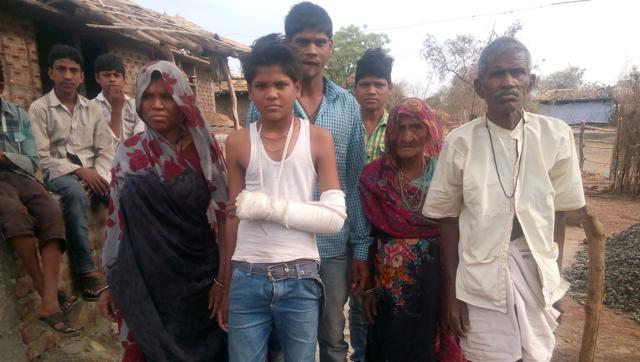
Upper caste people broke the arm of a 13-year-old Dalit boy in Sehore because he drank water from the well of an upper caste farmer. Image: Hindustan Times
मध्यप्रदेश में सामंतवाद और जाति उत्पीड़न की जड़ें बहुत गहरी रही हैं. राष्ट्रीय अपराध रिकार्ड ब्यूरो के आकड़ों पर नजर डालें तो 2013 और 2014 के दौरान मध्यप्रदेश दलित उत्पीड़न के दर्ज किये गए मामलों में चौथे स्थान पर था. लेकिन ये तो महज दर्ज मामले हैं. गैरसरकारी संगठन “सामाजिक न्याय एवं समानता केन्द्र” द्वारा किए गए एक अध्ययन में पाया गया है कि प्रदेश में दलित उत्पीड़न के कुल मामलों में से 65 प्रतिशत मामलों के एफ.आई.आर ही नहीं दर्ज हो पाते हैं.
चाय की दुकानदार द्वारा चाय देने से पहले जाति पूछना और खुद को दलित बताने पर चाय देने से मना कर देना या अलग गिलास में चाय देना, नाई द्वारा बाल काटने से मना कर देना, अनुसूचित जाति , जनजाति से सम्बन्ध रखने वाले पंच/सरपंच को मारना पीटना,शादी में घोड़े पर बैठने पर रास्ता रोकना और मारपीट करना, मरे हुए मवेशियों को जबरदस्ती उठाने को मजबूर करना, मना करने पर सामाजिक-आर्थिक बहिष्कार कर देना, सावर्जनिक नल से पानी भरने पर रोक लगा देना और स्कूलों में बच्चों के साथ भेदभाव जैसी घटनाऐं अभी भी यहां के अनुसूचित जाति के लोगों के आम बनी हुई हैं।
साल 2014 में गैर-सरकारी संगठन “दलित अधिकार अभियान” द्वारा जारी रिपोर्ट “जीने के अधिकार पर काबिज छुआछूत” से अंदाजा लगाया जा सकता है कि मध्यप्रदेश में भेदभाव की जडें कितनी गहरी हैं.
मध्यप्रदेश के 10 जिलों के 30 गांवों में किये गये सर्वेक्षण के निष्कर्ष बताते हैं कि इन सभी गावों में लगभग सत्तर प्रकार के छुआछूत का प्रचलन है और भेदभाव के कारण लगभग 31 प्रतिशत दलित बच्चे स्कूल में अनुपस्थित रहते हैं. इसी तरह से अध्यन किये गये स्कूलों में 92 फीसदी दलित बच्चे खुद पानी लेकर नहीं पी सकते, क्योंकि उन्हें स्कूल के हैंडपंप ओर टंकी छूने की मनाही है जबकि 93 फीसदी अनुसूचित जाति के बच्चों को आगे की लाइन में बैठने नहीं दिया जाता है,42 फीसदी बच्चों को शिक्षक जातिसूचक नामों से पुकारते हैं,44 फीसदी बच्चों के साथ गैर दलित बच्चे भेदभाव करते हैं,82 फीसदी बच्चों को मध्यान्ह भोजन के दौरान अलग लाइन में बिठाया जाता है.
हालिया चर्चित घटनाओं पर नजर डालें तो बीते 3 अप्रैल को मध्यप्रदेश के सीहोर जिले में स्थित दुदलाई गांव में 13 साल के एक दलित बच्चे को इसलिए बुरी तरह से पीटा गया क्योंकि उसने तथाकथित ऊँची जाति के एक किसान के ट्यूबवेल से पानी पी लिया था, वहां फैक्ट फाइंडिंग के लिए गयी एक जांच दल के अनुसार बच्चे को इतना मारा गया कि उसके एक हाथ की हड्डी टूट गई.यही नहीं परिवार वाले जब इसकी रिपोर्ट लिखवाने गए तो थाने में उनकी रिपोर्ट नहीं लिखी गयी. कुछ दिनों बाद जब इस घटना की खबर अखबारों में छपी तब जाकर रिपोर्ट दर्ज हो हुई लेकिन इसके बाद दबंगों द्वारा गावं में रहने वाले अनुसूचित जाति के करीब 100 परिवारों का बहिष्कार कर दिया गया. इस गावं के सरकारी स्कूल केवल अनुसूचित जाति के बच्चे ही पढ़ते हैं तथाकथित उच्च जाति के लोगों ने सरकारी स्कूल का बहिष्कार कर अपने बच्चों के लिए प्रायवेट स्कूल खोल लिया है. इसी तरह से दमोह जिले के खमरिया कलां गांव के प्राइमरी स्कूल में पढ़ने वाले 8 साल के बच्चे की बावड़ी में गिरने से मौत हो गयी, दरअसल जब बच्चे को स्कूल के हैंडपंप से पानी लेने से रोका गया तो वह पास ही के एक कुएं पर पानी लेने चला गया जहां संतुलन बिगड़ने की वजह से कुएं में गिरकर उसकी मौत हो गई. पिछले साल हुए पंचायत चुनाव में शिवपुरी जिले के कुंअरपुर गांव में एक दलित महिला अपने गांव की उप सरपंच चुनी गई थीं, जिन्हें गांव के सरपंच और कुछ दबंगों ने मिलकर उनके साथ मारपीट की और उनके मुंह में गोबर भर दिया. अनुसूचित जाति के लोग जब सदियों से चली आ रही अपमानजनक काम को जारी नहीं रखने का फैसला करते हैं तो उन्हें इसके लिए मजबूर किया जाता है इसी तरह की एक घटना 2009 की है जब अहिरवार समुदाय के लोगों ने सामूहिक रूप से यह निर्णय लिया कि वे मरे हुए मवेशी नहीं उठायेंगें, क्योंकि इसकी वजह से उनके साथ छुआछूत व भेदभाव का बर्ताव किया जाता है. इसके जवाब में गाडरवारा तहसील के करीब आधा दर्जन गावों में दबंगों ने पूरे अहिरवार समुदाय पर सामाजिक और आर्थिक प्रतिबंध लगा दिया उनके साथ मार-पीट की गयी और उनके सार्वजनिक स्थलों के उपयोग जैसे सार्वजनिक नल, किराना की दुकान से सामान खरीदने, आटा चक्की से अनाज पिसाने, शौचालय जाने के रास्ते और अन्य दूसरी सुविधाओं के उपयोग पर जबर्दस्ती रोक लगा दी गई थी. उनके दहशत से कई परिवार गाँव छोड़ कर पलायन कर गये थे इसके बाद से उस क्षेत्र में लगातार इस तरह की घटनायें होती रही हैं. पिछले साल जून में भी इसी तरह की घटना हो चुकी है. तमाम प्रयासों के बावजूद इसे रोकने के लिये प्रसाशन की तरफ कोई ठोस कदम नहीं उठाया गया है.
उत्पीड़न और भेदभाव की उपरोक्त घटनायें बहुत आम हैं लेकिन अब समुदाय में चेतना बढ़ रही है और उनकी तरफ से इसकी सावर्जनिक अभिव्यक्ति भी हो रही है. लेकिन इधर दलित,अम्बेडकरवादी संघटनों द्वारा आयोजित सावर्जनिक कार्यक्रमों पर भी हमले की घटनायें सामने आ रही हैं. इसी साल फरवरी में ग्वालियर की एक घटना है जहाँ अंबेडकर विचार मंच द्वारा 'बाबा साहेब के सपनों का भारत” विषय पर एक कार्यक्रम आयोजित किया गया था जिसमें जेएनयू के प्रो.विवेक कुमार भाषण देने के लिए आमंत्रित किये गये थे. इस कार्यक्रम में भाजयुमो, बजरंग दल, विहिप व एबीवीपी के कार्यकर्ताओं ने अंदर घुस कर हंगामा किया. इस दौरान दौरान पथराव हुए और गोली भी चलायी गयी, इन सब में कई लोग चोटिल हुए. आयोजकों का कहना है कि यह संगठन पहले से ही तैयारी कर रहे थे और सुबह से ही वे कार्यक्रम स्थल के आसपास जुटना शुरू हो गये थे.
इसी तरह की एक और घटना झाँसी की है जहाँ 31 जनवरी 2016 को बहुजन संघर्ष दल द्वारा रोहित वेंगुला को लेकर एक श्रद्धांजलि सभा का आयोजन किया गया था. इस सभा में बहुजन संघर्ष दल के राष्ट्रीय अध्यक्ष और पूर्व विधायक फूल सिंह बरैया ने जब यह कहा कि 1857 के संघर्ष का पूरा श्रेय अकेले रानी लक्ष्मीबाई को देकर उन्हें ही महिमामंडित किया जाता है जबकि झलकारी बाई को भी इसका श्रेय मिलना चाहिए. इसके बाद भारतीय जनता पार्टी के कार्यकर्ताओं ने इसे रानी झांसी का अपमान बताते हुए सभा पर हमला बोल दिया और सभा स्थल पर तोड़फोड़, मारपीट की गयी और जमकर उपद्रव मचाया गया. ज्ञात हो जिन झलकारी बाई का जिक्र फूल सिंह बरैया कर रहे थे वे एक गरीब कोली परिवार से थीं जो बाद में रानी लक्ष्मीबाई की नियमित सेना की महिला शाखा दुर्गा दल की सेनापति बनीं.बताया जाता है कि वे रानी लक्ष्मीबाई की हमशक्ल भी थीं और दुश्मनों धोखा देने के लिए वे रानी के वेष में भी युद्ध पर जाती थीं.रानी के वेश में युद्ध करते हुए ही वे अंग्रेजों के हाथों पकड़ी गईं थीं उनकी वजह से रानी को किले से भाग निकलने का मौका मिला था. झलकारी बाई के बहादुरी की कहानी आज भी बुंदेलखंड की लोकगाथाओं और लोकगीतों में सुनाई पड़ते हैं.
2011 की जनगणना के अनुसार मध्यप्रदेश में 15.6 प्रतिशत दलित आबादी है इसके बावजूद राजनीति में वे ताकत नहीं बन पाए हैं. उत्तर प्रदेश की तरह यहाँ बहुजन समाज पार्टी अपना प्रभाव नहीं जमा पायी. आज भी सूबे पूरी राजनीति कांग्रेस और भाजपा के बीच सिमटी है. इन दोनों पार्टियों ने प्रदेश के दलित और आदिवासी समुदाय में कभी राजनीतिक नेतृत्व उभरने ही नहीं दिया और अगर कुछ उभरे भी तो उन्हें आत्मसात कर लिया. एक समय फूल सिंह बरैया जरूर अपनी पहचान बना रहे थे लेकिन उनका प्रभाव लगातार कम हुआ है. ओबीसी समुदायों की भी कमोबेश यही स्थिति है यहाँ से सुभाष यादव, शिवराज सिंह चौहान और उमा भारती जैसे नेता निकले जरूर. चौहान व भारती जैसे नेता सूबे की राजनीति में शीर्ष पर भी पहुचे हैं लेकिन यूपी और बिहार की तरह उनके उभार से पिछड़े वर्गों का सशक्तिकरण है .इस तरह से प्रदेश में आदिवासी, दलित और ओबीसी की बड़ी आबादी होने के बावजूद यहां की राजनीति पर पर इन समुदायों का कोई ख़ास प्रभाव देखने को नहीं मिलता है. यही वजह है कि जाति उत्पीड़न की तमाम घटनाओं के बावजूद ये राजनीति के लिए कोई मुद्दा नहीं बन पाती हैं.