Home Blog Page 2549

Student Protests Against MHRD and VCs Rage On, Hunger Fasts in JNU and Allahabad Enter 11th and 5th Days

0

As the Indefinite Hunger Strike, at JNU and Allahabad by Student Representatives Continues the Ministry for Human resources Development ( MHRD), the Government of India(GOI) and the University Administrations Remain Unmoved

Modi's Current Campaign Claims on Governance for the Youth are Belied by a Ruthless Intransigence towards protesting students. Even the police force has been used by the VCs of JNU, Allahabad and Hyderabad Central University against peacefully protesting students

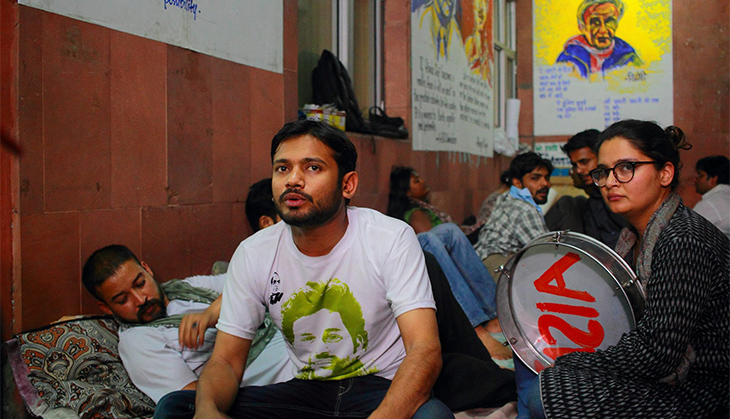
Fourteen Students of JNU and Several Students of Allahabad University are on a Hunger Fast; the former have been fasting for eleven days and the latter for four days now

Fourteen Fasting Students of the JNU are determined to carry their battle forward, a battle against not just an unjustly produced HLEC Report, but the wider struggle for freedom and autonomy in universities, to the scheduled meeting of the university's Academic Council on May 10. A mass mobilisation seeks to ensure that the first item discussed is the unlawful manner in which the HLEC Report was prepared and punishments meted out. Sabrangindia has analysed this report in detail.

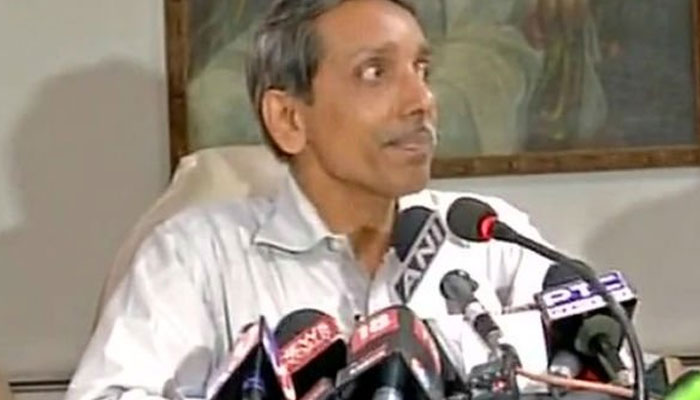
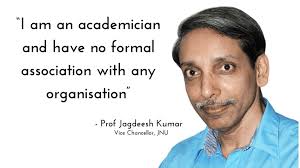
A recent diktat by the Jawaharlal Nehru University’s administration asking students to not invite outsiders for protest in the campus has not gone down well with the JNU Teachers’ Association (JNUTA), who have launched a protest against the administration by going on a hunger strike starting Saturday. “JNUTA had met the Vice-Chancellor Jagadesh Kumar two days ago with the hope of finding a solution to the on-going problem. However, to our utter shock, the JNU administration chose to threaten the teachers’ body on the basis of hearsay. JNUTA has so far not invited any individual or institution to join the hunger strike,” said Bikramaitya Choudhary, Secretary of JNUTA. “However, it would like to reassert that it is the privilege of an elected teachers’ body to call any institution or individual that it finds fit to speak in the university. It is well within its democratic rights,” he added.

‘Persecution based on perception’
In a circular issued on Friday, the JNU administration had said: “The JNU Administration has been holding discussions with the JNUTA, JNUSU and the students on hunger strike. It reiterates that the best way to resolve the issues is through dialogue and discussion. It requests all the teachers and students to avoid inviting people from outside the campus for any gathering or activity to press their demands, which could undermine peace and security in the campus.”

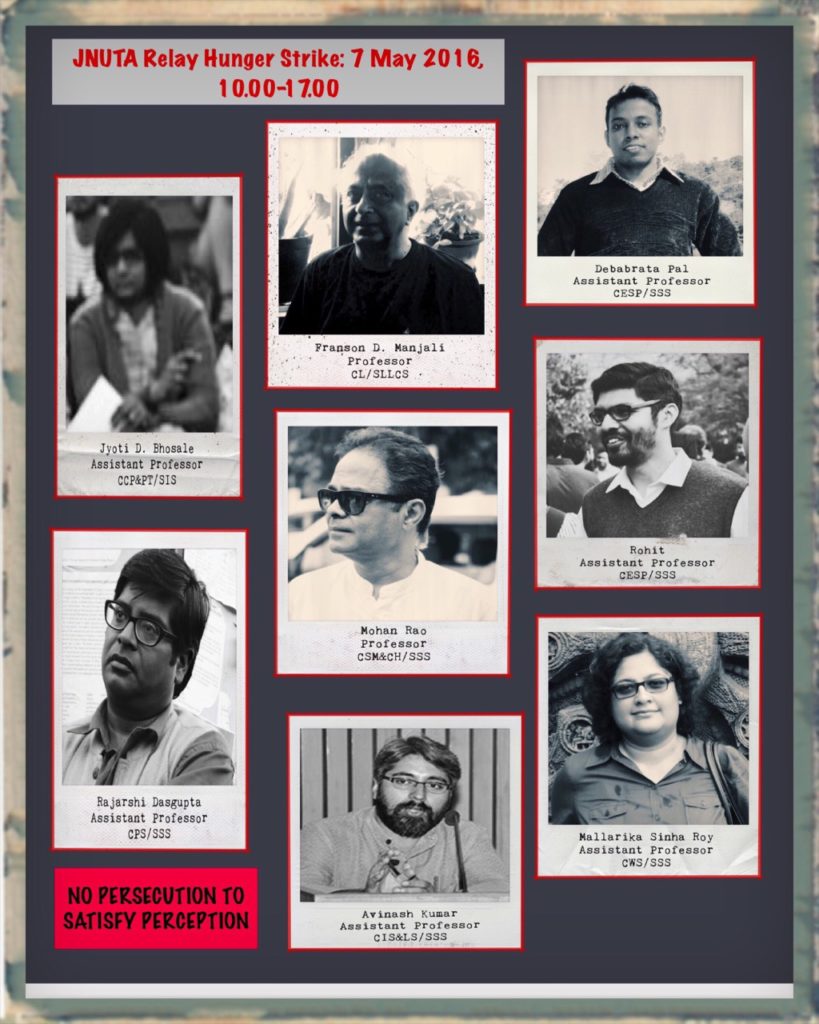
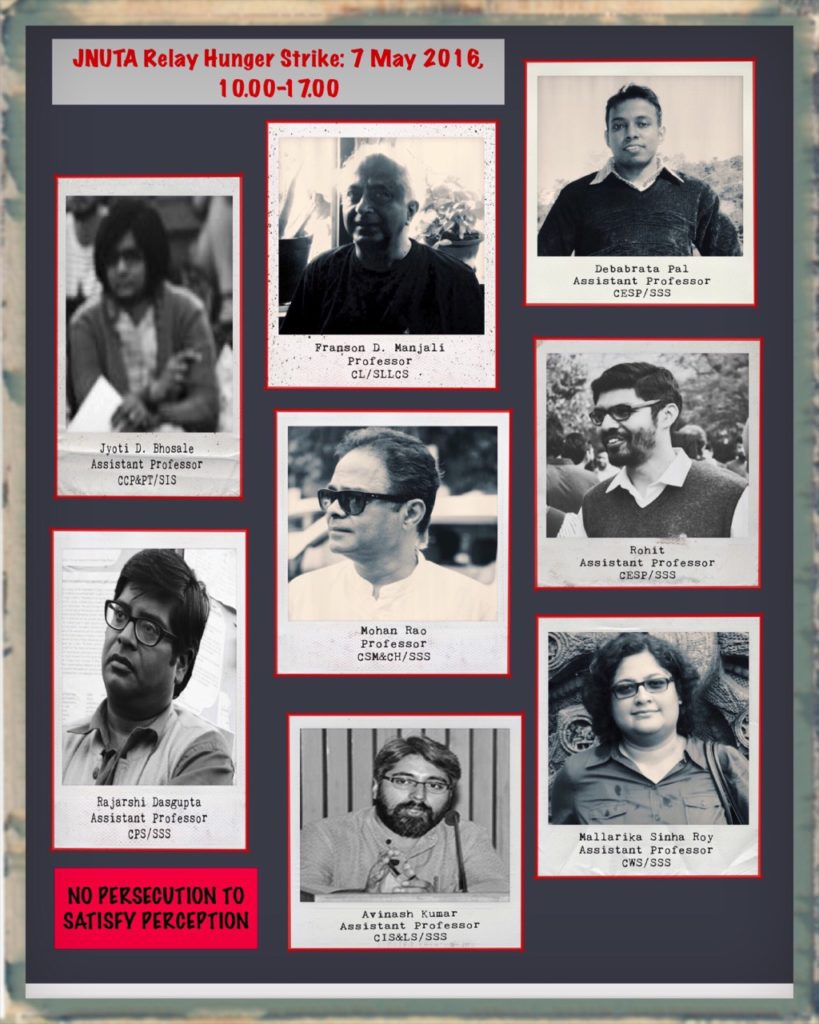
The JNUTA has made its stand clear. “No persecution to justify perception”, a huge banner near the protest site reads.  “the administration cannot take action on students or threaten teachers only on the basis of perception.” “In our meeting with the V-C, he told us that there was a need for the punishments on the February 9 incident because of the larger perception against the students regarding the incident. Now this is what we have to oppose through our protest, there can be no persecution on the basis of perception,” Mr. Choudhary added. The relay hunger strike by teachers in support of the students can be viewed here, in pictures.

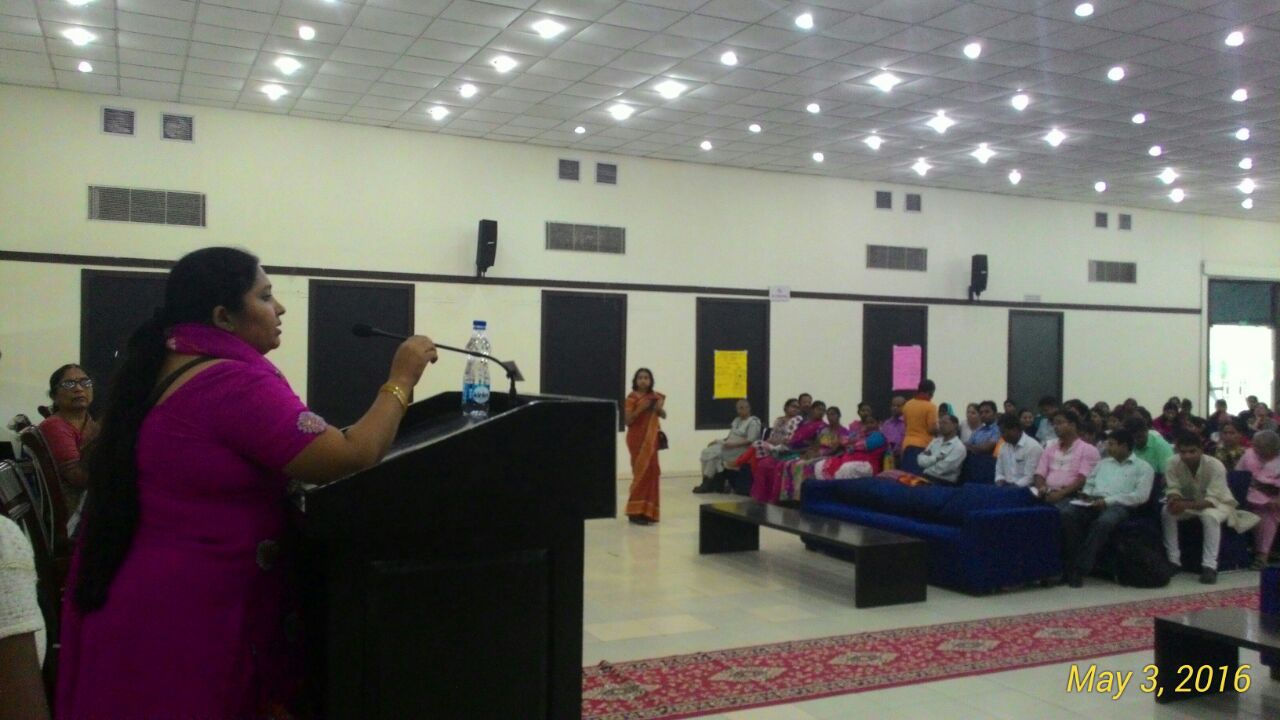
Meanwhile on Saturday, May 7, Alumnus of the JNU formed a Human chain on the campus. A group of JNU alumni also joined the protesting students and teachers and observed a hunger strike on Saturday. In the evening, a human chain was formed by students, teachers and alumni in front of the admin block, which has become the hub of all protests in the campus.

At least three Vice Chancellors, Jagadesh Kumar (JNU), suspended VC Appa Rao (HCU) and RL Hangloo (Allahabad) have, while freely allowing representatives of the RSS-affiliate Akhil Bharatiya Vidyarthi Parishad (ABVP) on the campus, been with the help of police and the lathi, cracking down on students who articulate a secular, progressive and inclusive vision of nationhood. On March 22, a brutal lathi charge by the Hyderabad police on 32 students and faculty of the Hyderabad Central University (HCU) who had been peacefully protesting the sudden and inexplicable return of suspended VC Appa Rao to the campus, had invited widespread condemnation. The past ten days have seen extremely muted media coverage of the Student Leader protests in Indian print and television media.

This Post By Team Kanhaiyya indicates the spirit of this young students leader who has captured the imagination of the country. Despite his fragile health, he was determined to continue until doctors advised otherwise.

कन्हैया को आज भी डॉक्टर एम्स में ही रखेंगे। सीटी स्कैन व कुछ टेस्ट्स होने बाकी है । वे पहले से थोड़ा बेहतर महसूस कर रहे हैं, पर ज्यादा सुधार नहीं है। कन्हैया ने सभी शुभचिंतकों का शुक्रिया अदा किया है, और भूख हड़ताल पर बैठे हुए अपने सभी साथियों को अपना सलाम भेजा है। बीमार हालत में भी वे आज 2 बजे एड ब्लॉक पर होने वाले प्रोटेस्ट के बारे में पूछ रहे थे व भारी संख्या में छात्रों से जुटने की अपील की है। साथ ही केरल में दलित लड़की ज़ीशा का बलात्कार कर जघन्य हत्या कर दिये जाने के विरोध में बापसा द्वारा दिये गये प्रोटेस्ट कॉल पर केरल भवन के सामने 11बजे से होने वाले प्रोटेस्ट में शामिल होने की अपील की है।

Sabrangindia has been in close touch with the agitating students as also the representatives of the teacher's body, the JNUTA. This hunger fast is Kanhaiya Kumar's fifth fast in the space of one year making his close associates and doctors extremely anxious. Rama Naga too has fasted once earlier this year. JNUSU President Kanhaiya Kumar, reportedly withdrew from his hunger fast on the 10th day due to deteriorating health.

Meawnhile, the JNUTA as also alumnus of the university have stood firmly with the agitating students.

Umar Khalid in this inspiring speech on the tenth day of his fast communicates the resolve of the young student leaders

In the neighbouring state of Uttar Pradesh, the struggle of students agitating for both offline and online admissions has also taken a sharp turn  A press release issued by Richa Singh, President of the Allahabad University Students Union (AUSU) says:

Indefinite hunger in University of Allahabad enters 4th day; health conditions of students have Deteriorated
·         Hunger strike enters fourth day
·         University administration refused to engage with students
·          The VC left the campus and the city, when the conditions of protesting students deteriorated
·         Samajwadi Party, Left, Congress and the BJP have extended support to protesting students and have sent sent their respective delegations to meet the fasting students

This press release says that even as the indefinite hunger strike in Allahabad University entered its fourth day the VC, instead of meeting with the students has reportedly left for Delhi. The health of President, Richa Singh and student leader Ajit Yadav worsened and they experienced vomiting on the fourth day of the hunger strike. Student Union, joint secretary Shravan Kumar has been admitted to hospital, after he became unconscious. Students have been protesting against compulsory online admission application and exam and have been demanding the offline admission option
along with online option so that aspirants from rural backgrounds are not eliminated.

President, Richa Singh said, “ The VC is adamant on imposing compulsory online admission application and exam on the name of ‘Digital India’. He is saying that to implement the P.M.’s dream project of Digital India initiative, he has taken this decision. I would like to ask whether Digital India will be compulsory imposed on people, when half of the country is suffering from drought.  Prime Minister must intervene in the matter and should make his stand clear. “

Meanwhile, the agitation of the Allahabad students has spread to neighboring districts and protests in favour of both online and offline option took place in adjoining colleges located in rural areas. It is interesting that in UP, all political parties, including BJP have extended supported to student union. Along with political parties, on May 7, the Bharatiya Kisan Union also extended its support to the fasting students and their demands.

Tapan Kumar Sen Member of Parliament (MP) of the Communist Party of India-Marxist(CPM) raised the issue of offline option and police action against students in Allahabad University in the Rajya Sabha on May 5. On the same day K C Tyagi (JDU), Pramod Tiwari (Congress), Javid Ali Khan (SP), D Raja (CPI), D P Tripathi (NCP) and Tapan Sen (CPM) also released statement to the press in support of  protesting and fasting students of the Allahabad University.
 

SC Rejects Odisha Govt Plea for Mining in Niyamgiri: Watch 6 videos on Save Niyamgiri Struggle

0

In April 2013, the Supreme Court of India (SC), in a historic judgement order banned mining by Vedanta Aluminium in the hills till the gram sabhas cleared it. In a furtive attempt, three years later, the Odisha government sought to get this historic verdict overturned. In the latest plea from the state government-owned Odisha Mining Corporation (OMC) was to mine in the region independently.

The SC turned down this attempt. In a setback for Odisha government that virtually sought reconsideration of the Supreme Court ruling three years ago against mining in the state’s tribal-inhabited Niyamgiri hills, the apex court said on Friday that local gram sabhas can’t be reconvened to take a re-look at whether mining in the locality “would tantamount to infringement of the religious, community and individual rights of local forest-dwellers.”

Yesterday, on May 7, a SC bench headed by Justice Ranjan Gogoi said that it is not inclined to entertain the application. All aggrieved parties shall challenge the decision of gram sabhas and the subsequent refusal of environmental clearance by the Ministry of Environment and Forests (MoEF) before an appropriate forum, it said. Senior counsel CA Sundaram, appearing for the state government, argued that the gram sabhas had failed to take into account the court’s directive to consider the cultural and religious rights of the tribals and forest dwellers living in Rayagada and Kalahandi districts, but have gone beyond their mandate by deciding against mining in the hills. However, the court said that “that is in your perception. The conclusion is that people don’t want mining and then the II stage (environmental) clearance can’t be given.”

On April 11 this year, Sabrangindia had reported how human rights defender, Prafulla Samantara, President, of the  Lok Shakti Abhiyan and Convenor of NAPM was allegedly set upon by goons hired by the Vedanta company on April 6, 2016 and was rescued by the timely intervention of the villagers. The struggle of the Adivasis in the Koraput district of Odisha where Gram Sabhas of five villages have rejected the proposal of mining of the Niyamgiri hills by Vedanta and where allegations of police-govrnment-criminal nexus is threatening the fundamental rights of Adivasis. This attack on Prafulla Samantara is being seen by human rights activists as a bid to break the back of tribal unity that has stood firm against efforts by the corporate giant to get Gram Sabhas to change their stand on bauxite mining in the region

April 2016
The Supreme Court directed the Odisha government to file a fresh petition on Niyamgiri miningafter it had tried the irregular route of filing an interlocutory application to re-open the Supreme Court’s decision on this case without making Gram Sabhas a party. The Odisha government’s move for mining in the Niyamgiri hills received a jolt today with the Supreme Court of India directing it to file a fresh petition making all the affected and interested sides as parties in the application.

February 2016
In February 2016, in a questionable move, Vedanta moved the Supreme Court to, essentially, re-visit the judgement of April 2013. This application had not even made the Gram Sabhas parties to the application. This move was made through an interlocutory application in the Supreme Court. The historic judgement of the Supreme Court of India, giving primacy to the rights of tribals, the indigenous peoples, can be read here. 

The Adivasi people of Niyamgiri observe an unique protest-prayer-celebration atop the sacred hill to oppose the mining and refinery project.

These Videos Tell the Unique Story of the Adivasi Struggle to Preserve the Natural Environment

Victory March of Adivasi Dalit Bahujan of Niyamgiri after the Supreme Court accepted the Gram Sabha’s unanimous decision to cancel mining lease to Orissa Mining Corporation & Vedanta.

Rally demanding the closure of illegal Aluminium refinery in Lanjigarh, Year 2010

the Dongria Kondh movement to Save Niyamgiri, Music: Mili Bhagat

An animation depicting the Adivasi (Original inhabitants of the land) life in Orissa and their anti-mining struggles. The artist pays tribute to the men, women and children who have been shot dead by the police since 2001 for resisting mining and industrial activities on their land in Kalinga Nagar and Kashipur. The illustrations are in Idital (Saora Adivasi art) and music is from the Koya and Bonda Adivasi.

Against Police Atrocities in Niyamgiri, Year 2013

Video Source: Video Republic / Surya Shankar
 

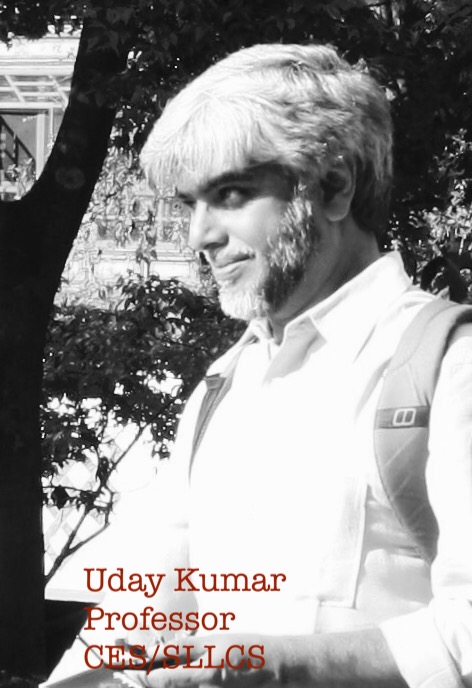
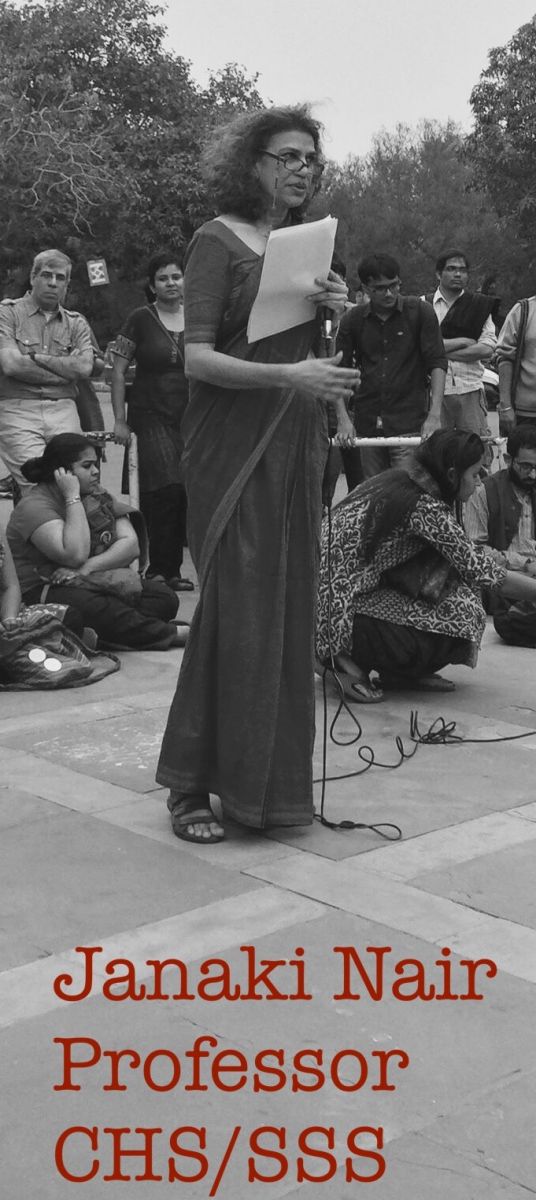
JNUTA Relay Fast in Support of JNU Students, In Pictures

0

JNUTA Relay Fast in Support of JNU Students, In Pictures

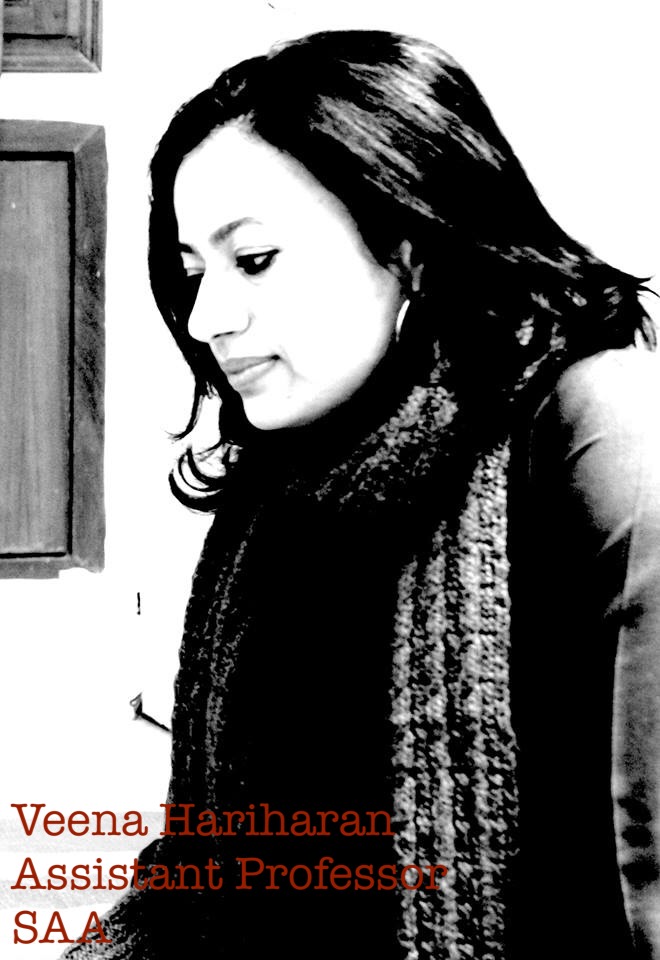
And here are the individual faces….


Foreign Education Bill: The Tall & False Claims of the Modi Government

0

Executive Council Member of the Delhi University, Abha Dev Habib, De-bunks the False Claims of the Modi Government on the Foreign Education Bill

Newsclick Production, May 2, 2016

The government is all set to allow foreign universities to set up campuses in India and allow them to repatriate profits from operations here. As per the proposed plans, the Centre is working to make it easy for foreign universities to set up campuses in India in collaboration with local partners.

The NITI Aayog has submitted a report to the Prime Minister’s Office (PMO) and Ministry of Human Resource Development (HRD) in favour of inviting foreign universities to set up campuses in India. Last year, Prime Minister Narendra Modi asked NITI Aayog to study all reports regarding setting up of foreign universities and the reasons on why it could not move forward. Governments in the past have made several attempts to enact legislation for entry, operation and regulation of foreign universities in the country. The first was in 1995 when a Bill was introduced but could not go forward. In 2005-06 too, the draft law could not go beyond the Cabinet stage.

The last attempt was by UPA-II in 2010 in the shape of the Foreign Educational Institutions Bill, which failed to pass muster in Parliament and lapsed in 2014 since it was opposed by the BJP, Left and Samajwadi Party. One of the reservations on foreign universities operating in India was that they would raise the cost of education, rendering it out of reach for a large part of the population.

To discuss this, NewsClick interviewed Abha Dev Habib, executive council member, Delhi University. According to her the argument that foreign universities coming to India will stop brain drain is not valid and will not stop the phenomenon. Excerpts from the interview.

How To Get India’s Women Working? First, Let Them Out Of The House

0

Rohini Pande, Jennifer Johnson & Eric Dodge, IndiaSpend.com


Image: Simon Williams


India boasts superior rates of women serving in political office compared to other emerging economies: the nation just swore in its 16th female Chief Minister, Mehbooba Mufti. Yet it lags well behind its competitors in its rate of women’s labour force participation. There is surprisingly little data to answer why. But one reason stands out: women can’t get to work.
 
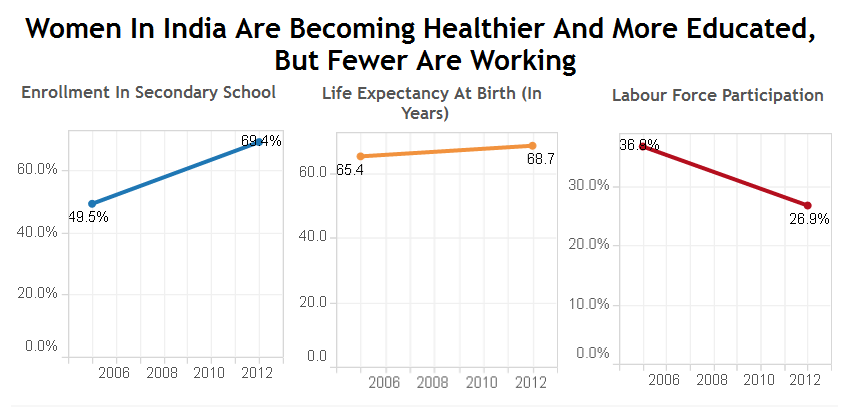
India is well beyond the point when economists would expect that high numbers of women would begin participating in the labour force. Instead, 25 million women have left the Indian labour force over the past 10 years. Today, only 27% of Indian women are in the labour force, the second-lowest rate of female labour-force participation in South Asia after Pakistan. And while that country’s female labour-force participation is rising, India’s is falling.


Limited mobility is one of the key challenges many women confront when they set out to find a job. India’s road network now spans more than 4.69 million km, a 39% increase over 10 years earlier. Between 2007 to 2011 alone, an additional 600,074 km were laid. The rate of car ownership is also rising, with more than 2 million cars sold last year in India, up 9.8% over 2014.
 
Public transportation systems are expanding, too. But these infrastructure improvements are not translating into substantive gains in women’s mobility and ability to get work. And when women do work outside the home, on average, they do not travel as far to work as men. In short: the further from home the opportunity, the less likely women are to access it.
 
Indian women want to work but held back by lack of skills, social norms
 
Our research at Evidence for Policy Design indicates that India’s women want to participate in the labour force at higher rates. But they are constrained by lack of skills, and by social norms restricting their mobility.
 
Women who work outside of agriculture are typically engaged in informal, home-based work activities. This is not necessarily reflective of their preferences—it also points at structural factors that keep women from pursuing employment outside the home. National Sample Survey data highlight that disparity, and a pilot survey we conducted of rural youth in Bhopal and Sehore backs it up: 91% of below poverty line, female respondents (aged 18-25) think women should go out of the house to work–yet nearly 70% of these women were unemployed in the previous year.


Within India, cultural attitudes about whether it is proper for women to leave the home by their own decision, and whether they need to be accompanied on these trips, vary by region.
 
How Indian men constrain women
 
Using two rounds of the Indian Human Development Survey (IHDS), we found that 79.9% of women reported not being allowed to visit the health centre without permission from their husbands or other family members. In 2012, 33% were not allowed to go alone to seek medical care, a marginal improvement over 2005 (35%).
 
Nationally, the IHDS survey also shows that 51.7% of women think it is usual in the community for a husband to beat his wife if she leaves the home without telling him. Even when a woman does have the freedom to leave the home, distance is still a pertinent constraint. In a sample of Skill India participants, 62% of unemployed women reported that they were willing to migrate for work, but 70% said they would feel unsafe working away from home.
 
The implications of a rapidly industrialising and urbanising India for rural women with restricted mobility are concerning. Projections indicate that most of India’s economic growth in the next 15 years will be generated in urban areas: In 2010, the McKinsey Global Institute estimated that India’s cities could produce 70% of Indian GDP and 70% of net new jobs created up to 2030, and stimulate a near four-fold increase in per capita incomes. As it stands, mobility statistics suggest that women outside of India’s major population centres face exclusion from the coming urban boom.
 
Women’s desire for productive work is not simply rhetorical. There are places in the Indian economy where women are well-represented in the labour force, but these tend to be fields where women can work close to home. Public works projects created under the Mahatma Gandhi National Rural Employment Guarantee Act (MGNREGA) have been quite successful in drawing women into the workforce. While only 27% of rural women work outside the home, MGNREGA’s participants were 51% female in 2014.
 
Several factors make MGNREGA attractive to women, including its 30% quota for women participants. By accident rather than by design, MGNREGA largely eliminates mobility constraints by being structured around thousands of community-based project sites. In addition to localising project sites close to where rural women live, MGNREGA also provides equal pay for equal work to both male and female labourers. Finally: MGNREGA projects are low-skilled work, and thus accessible to women without experience.
 
As we discussed in our December IndiaSpend feature, many women—especially rural women—express concern that they lack the skills necessary for the jobs they would like to have. The government of India has recently prioritised drawing huge numbers of India’s youth into the labour force and cities through Skill India and Make in India.
 
Both programs include quotas to ensure a certain proportion of trainees are women. These schemes present an unprecedented opportunity to bring many young women into the labour force, but they often require that women leave their home communities to pursue work placements after training, and there are currently no mechanisms in place to support women migrants once they have been placed.
 
MGNREGA may be the first step to letting women out of the house. Skill India’s challenge will be to help women be successful further afield, where greater economic and other opportunities may lie. Women’s education levels are rising, as is women’s financial inclusion. But women’s labour force participation is in decline–and our data shows that women’s mobility may be declining as well. This must be addressed, if India’s women are to have access to the same economic opportunities as their brothers.
 
(Pande is the Mohammed Kamal professor of public policy and co-director of Evidence for Policy Design (EPoD) at Harvard Kennedy School. Johnson is a Program Associate managing EPoD’s India programs. Dodge is EPoD’s Data Analytics Lead.)

Article first appeared on IndiaSpend.com