Home Blog Page 2557

I am Koonal Duggal, and they say I am “anti-university”: Dalit Student

0

Are Indian Universities becoming Authoritarian ?
 
Statement by EFLU-Joint Action Committee with Koonal Duggal
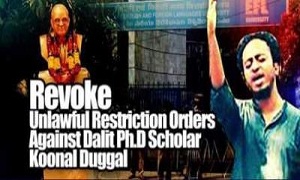
 

On April 14, 2016, on the occasion of the 125th birth anniversary of Babasaheb Ambedkar, Koonal Duggal, a Dalit PhD scholar in the Department of Cultural Studies, EFL University, and a guest faculty at the S N School of Fine Arts and Communication, UoH, for the first time learnt that he was no longer welcome on University premises by order of the Proctor, Prakash Kona Reddy.
 
That morning, Koonal had joined fellow Ambedkarite students and members of the SC ST Employees’ Association to participate in a small function paying homage to Dr. B. R. Ambedkar. Koonal was one of the invited speakers.
 
He spoke about why our engagements and convictions in Ambedkar have greater relevance in today’s context where young Dalit scholars, like Rohith Vemula and others, are being isolated and alienated to the point of self-annihilation.
 
He then sang a revolutionary song by Faiz Ahmed Faiz, “Hum Dekhenge..”, when four security guards entered the venue. As soon as he finished the song, the security guards surrounded Koonal, grabbed his hand and attempted to take him away from the programme.
 
When students and faculty intervened, they said that they were acting on orders from the Proctor, who had given specific instructions to disallow Koonal from entering the premises except with permission of University authorities. Students were not given any explanation or shown the official circular with details of the disciplinary action. In addition to the fact that by then the Ambedkar Jayanti celebrations had come to a standstill, the atmosphere had become chaotic and the audience could not pay attention to the rest of the speakers. The security guards were then told to at least respect the sentiments of the participants and wait till the end of the programme.
 
Eventually, because of the students’ intervention, Koonal could not be removed from campus but it could do little to alleviate the immense humiliation and harassment that he had been made to undergo. This was made worse by the fact that Koonal was made answerable to his fellow students about a crime that he was not aware of. He had not been personally intimated of the disciplinary action or its basis, nor was he given a chance to defend himself in front of the proctorial authority.

Koonal, who has been a student at the University for five years, whose academic research has only enriched the intellectual archives of this mediocre university, was immediately set aside from the student community for a “crime” that appeared to be so grave that it could not be articulated in a decent social setting. One can imagine the kind of fear, insecurity, shame, anger, self-doubt, embarrassment and loneliness that Koonal had to undergo until his decision to do something about it, to stand up to it and file a police complaint against the Proctor under the SC/ST Prevention of Atrocities Act.

I am Koonal Duggal, and they say I am “anti-university”
“I have been part of the Department of Cultural Studies, EFL University, as a JRF scholar since 2010. When I joined the University, my engagement with the social sciences was relatively new having just completed one year of MPhil at the Centre for Study of Social Sciences, Calcutta. I have sometimes spoken to my friends about how I found it difficult to come to terms with my Dalit identity. Growing up, I felt embarrassed to reveal my caste.

My apparently upper-caste surname often relieved me from the confrontations of discussing my Dalit identity. But despite my attempts at veiling my Dalit identity, I found out that my caste was questioned and I was marked as a Dalit. It was during my time at EFL University, first as a student of cultural and subaltern studies, and through my continued engagement with the Ambedkarite organization DABMSA (Dalit Adivasi Bahujan Minorities Students Association) where I was a member of the Drafting Committee, that I began to embrace the political imperative of my identity as a Dalit scholar and artist. The exposure for the first time to an Ambedkarite organisation where the leadership was with Dalits and Adivasi students who openly talked about their caste, their backgrounds and experiences made me comfortable with my own self-identification as a Dalit.

For the first time I was in the company of people who talked about caste politically, and not with stigma.

Most of my time at EFL University was spent reading and introspecting and participating as a research scholar in seminars organized by the University and by students’ organizations. In fact, one of the first times I spoke up in a public domain was during the protests against the rape of a girl student at EFL University in 2014. I spoke about the gender insensitive atmosphere at EFLU and how it had personally affected me. (The anger that drove me to speak can be traced back to the suicide of Mudasir Kamran in 2013 who was again pushed to commit suicide because of the insensitive homophobic and anti-minority behaviour of the university administration that is interlinked to my coming out as a queer individual). Since the submission of my thesis titled “Crossing Religious Boundaries: Representation, Caste and Identity in Contemporary Punjab”, I have been teaching as a guest faculty at the Fine Arts Department, UoH. I have been engaging with the politics of caste discrimination in institutions of higher education, especially in relation to Rohith Vemula’s suicide and the ongoing movement around it. The movement, in fact, gave me a more immediate context to write about my own experiences of discrimination at CSSSC. I wrote about how I felt that “[T]he larger society and its various forms of discrimination are very much present in the functionings of CSSSC and that of some of its teachers.”

Just when I was beginning to firmly locate myself in the public space and discourse as a politically educated and empowered Dalit-Queer individual, and when I was writing and speaking more about it, my political self-realization and assertion is broken and violently disrupted by the EFLU administration that has been historically known for discriminating and harassing Dalit students. It is as if such upper caste institutions will not stop persecuting dalits for their caste identity, whether they run from it or whether I embrace it.”
 
On April 15, Koonal was shown a circular by the security officials stating that “Mr. Koonal Duggal, registered in the PhD programme at the Department of Cultural Studies, EFL University, has submitted his thesis in September 2015. However, he continues to trespass on this campus, indulging in anti-university activities. Therefore, his entry into the EFL University campus, which includes the hostels, is strictly prohibited except with the permission of the Proctor.” Neither Koonal nor the student community has the slightest idea as to what anti-university activity Koonal has participated in. Was it the song that he had sung during the peaceful solidarity gathering for Justice for Rohith Vemula outside the University gates or was it the fact that he was one of the students cleaning the Ambedkar statue on April 13?

So what is it that makes Koonal such a threat to today’s university spaces? Upper caste institutions will do everything to victimize a Dalit and then when they are faced with the radical potential of the Dalit identity, they do everything to take that away as well, just as we have seen in the case of Rohith, so we see in the case of Koonal, who is being asked to prove his Dalit identity (because apparently Duggal is a surname whose ownership lies only with upper-caste Punjabi Khatris).
 
Koonal is a Dalit queer student who wouldn’t choose to keep quiet when a Kashmiri Muslim student was murdered by homophobia, when a girl is raped in his own campus, when fellowship cuts affect a research scholar and when a fellow Dalit student is forced to commit suicide in another campus, and when he himself is subjected to humiliation and discrimination in the institutions he has been part of. He knows he has got to speak.

See also:
1. Caste Discrimination in Prestigious Institutes

A Revolution Led by Indian Youth

0

The meeting titled "Student-Youth Assembly Against Discrimination" was organised by SFI AISF AISA PSF CHHATRABHARATI AIDSO RYA AIYF DYFI and saw overwhelming response from Mumbaikars despite attempts to scuttle it.

 
Watch: Student leaders welcomed with slogans

 
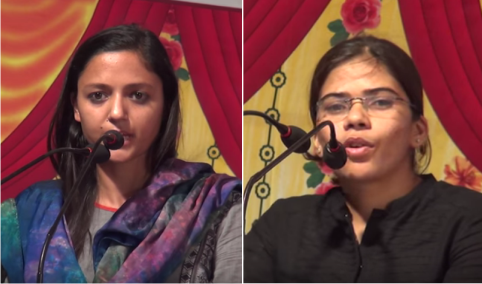
Richa Singh: “Like in 1942 We Told Britishers, Today We Tell RSS-BJP to Quit India”


Shehla Rashid: "The PM's Answer To Every Problem – Selfie"

Attempt to Strangulate Kanhaiya Kumar on Board a Flight, Is Assault the Only Tool to Fight Dissent He asks

0

Kanhaiya Kumar assaulted by an alleged BJP supporter who tried to strangulate him on board a Mumbai-Pune flight
Jet Airways off-loaded Kumar and the alleged attacker, Manas Deka, at the Mumbai airport for operational safety.

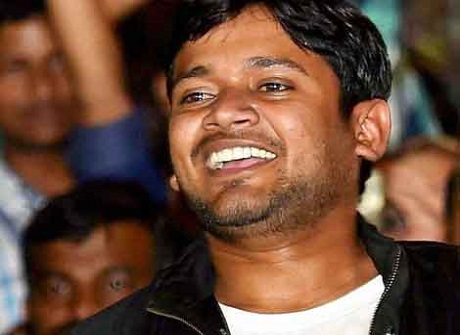
Nehru Students' Union President Kanhaiya Kumar was attacked by a co-passenger inside a Jet Airways flight on Sunday. He was asked to get off the flight along with Manas Deka, the man who allegedly tried to strangle him. Jet Airways' official statement said some guests on board the Mumbai-Pune flight were off-loaded at the Mumbai airport for operational safety.  This is the latest in a series of threats and attempted assaults on the JNU students’ union president.

Deka is believed to have ties with the Bharatiya Janata Party. One person has been detained in the case, the Mumbai police said. Kumar's associates confirmed to The Times of India that he was filing an FIR with the police. The student leader was on his way from Mumbai to Pune to attend a programme at the Film and Television Institute of India. The issue that led to the incident is not known yet. He said on Twitter that a man tried to strangulate him inside the flight. In a series of tweets that followed, he slammed the airlines for not taking any action against the other person involved in the incident.

On April 18, two people were arrested for sending a death threat to Kumar and student activist Umar Khalid.

Yet again, this time inside the aircraft, a man tries to strangulate me. — Kanhaiya Kumar (@kanhaiyajnusu) April 24, 2016 Some guests on board this morning's flight Mumbai to Pune were off loaded at Mumbai airport in interest of operational safety:

Jet Airways — ANI (@ANI_news) April 24, 2016
Basically @jetairways sees no difference between someone who assaults nd d person who is assaulted. They will deplane you, if you complain. — Kanhaiya Kumar (@kanhaiyajnusu) April 24, 2016

Kumar was sitting in a middle seat, his friend Nishant who was travelling with him told the media. The incident occurred before the plane took off. “The man in the window seat was talking on the phone, we heard him say things like ‘I will take care of it as soon as I get a chance'” he said. “Then he suddenly got up, while still on the phone, and put one hand around Kanhaiya’s throat and started pressing. When Kanhaiya tried to remove the hand, the man dropped his phone and grabbed Kanhaiya’s throat with both hands. By then, those of us travelling with Kanhaiya realised what was happening and managed to pull him off. Then security came, along with the Jet Airways pilot, and insisted that all of us get off the plane as we were ‘security threats’.”

Kumar and his fellow travellers are registering an FIR against the accused, who is currently in police custody at Mumbai airport. “He [the attacker] was travelling with several others, but the others were not asked to deplane,” Nishant added. The alleged attacker has apparently been identified as Manas Deka, who works for Tata Consultancy Services.

Kumar has also tweeted about the event.

Yet again, this time inside the aircraft, a man tries to strangulate me.

— Kanhaiya Kumar (@kanhaiyajnusu) April 24, 2016

Basically @jetairways sees no difference between someone who assaults nd d person who is assaulted. They will deplane you, if you complain.

— Kanhaiya Kumar (@kanhaiyajnusu) April 24, 2016

Manas Deka, works in TCS, a strong BJP supporter assaulted me inside the aircraft. Is assault the only tool you have, to fight dissent?

— Kanhaiya Kumar (@kanhaiyajnusu) April 24, 2016

Kumar has received multiple threats ever since he was branded as “anti-national” by certain groups after an event in JNU on February 9. He was attacked by a group of lawyers when presented at Patiala House court on February 17, attacked and abused within the JNU campus by an outsider on March 10 and had slippers and shoes thrown at him in Nagpur on April 14. A Meerut based politician Amit Jani has issued several threats to Kumar as well as JNU student Umar Khalid, and allegedly planted a threat letter and pistol in a DTC bus that enters JNU.

Kumar’s police security has been increased after all of these threats, and was with him until he was dropped to the airport in Mumbai.

International demand grows for release of Himal editor Kanak Dixit

0


Photo Credit: AFP

Over 60 leading editors and media figures, activists, intellectuals and scholars from across the world are rallying behind the prominent Nepali editor Kanak Mani Dixit, who was arrested in Katmandu by anti-graft officials yesterday, and have unequivocally demanded his release.
 

The situation has been complicated by Dixit’s sudden hospitalization this morning after suffering from high blood pressure after he was placed overnight in a prison cell.
 
Those who have signed the call for Kanak Dixit’s freedom say they “are deeply concerned about his safety and rights” and include prominent television personalities such as Karan Thapar, Barkha Dutt and Rajdeep Sardesai, the former BBC journalist Sir Mark Tully and feminist historian Uma Chakravarty. Other signatories are James Astill, Political Editor of The Economist, Prof. Sumit Ganguly, the Rabindranath Tagore Chair at Indiana University, as well as Sharmain Obaid , Pakistani award winning documentary film maker, Mahfuz Anam, founder-editor of the Daily Star in Bangladesh, and Imtiaz Ahmed, Executive Director of Regional Centre for Strategic Studies in Colombo.
 
The text of the statement follows: 
 
It is with deep concern that we have learned of the arrest of Kanak Mani Dixit, the widely respected founder-editor of Himal Media and a courageous voice for transparency, freedom of expression and democratic rights in Nepal and across South Asia. The charges are related to alleged corruption but Kanak Dixit says it is part of a vendetta pursued against him by people in Government. 
 
We have known Kanak Dixit as a true professional, human rights defender and energetic journalist whose credentials are built on robust research and tremendous courage. Himal Media, a pioneer in South Asia journalism, has published Himal South Asia, Nepali Times and Himal Khabar Patrika (in the Nepali language). He has written extensively for international media including leading newspapers in India and is chairman of Sajha Yatayat, a state run transportation company, which he has been turning around from a loss-making entity. 
 
Kanak Dixit's detention comes at a time of increased pressure on free media across South Asia. We call upon all national and international media organisations, individual journalists and editors, defenders of media under pressure, on those who believe in the freedom of expression, to seek Kanak Dixit's immediate release and a fair and transparent trial, free of bias.
 
We call upon the Government of Nepal to issue a transparent and unequivocal statement on his detention for we are deeply concerned about his safety and rights. We condemn all forms of pressure tactics on editors like him and other courageous media figures such as Mahfuz Anam of the Daily Star in Dhaka, who is facing 80 cases of sedition and libel in Bangladeshi courts, and other media persons who are committed to the rule of law and justice. 
 
 
Sanjoy Narayan, Editor, The Hindustan Times, New Delhi
Rajdeep Sardesai, Chief Editor, India Today TV Group, New Delhi
Sir Mark Tully, veteran broadcaster
TN Ninan, Chairman, Business Standard Pvt Ltd, New Delhi
James Astill, Political Editor, The Economist
Swaminathan S AnklesariaAiyar, Consulting Editor, Times of india Group
Barkha Dutt, Consulting Editor, NDTV
Sharmeen Obaid, Oscar Awardee for documentaries, Pakistan
Kathika Nair, poet and writer, Paris
Maja Daruwala, Director, Commonwealth Human Rights Initiative, New Delhi
Sevanti Ninan, editor, The Hoot, New Delhi
Siddharth Varadarajan, Founder Editor, The Wire, New Delhi

Sumit Ganguly, Rabindranath Tagore Chair in Indian Cultures and Civilizations and Professor of Political Science, Indiana University, Bloomington, US
Salil Tripathi, Journalist and Author, London
Imtiaz Ahmed, Executive Director, RCSS, Colombo
Mahfuz Anam, Editor, The Daily Star, Dhaka
Aunohita Mojumdar, Editor, Himal Southasian
Laxmi Murthy, Consulting Editor, Himal Southasian
Vijay Prashad, Contributing editor, Himal
Gillian Wright, Writer
Sara Hossein, Lawyer, Bangladesh Supreme Court
Zafar Sobhan, Editor, Dhaka Tribune
Afsan Chowdhury, Senior Journalist, Bangladesh
Rita Manchanda, South Asia Forum for Human Rights (SAFHR) 
Tapan K Bose, SAHFR
Dr. Naila Zaman Khan, Professor of Child Neurology and Development, Bangladesh
Lubna Mariam, Cultural activist, Bangladesh
Catherine Masud, Film Maker, US-Bangladesh
Dr Amena Mohsin, Professor, Dept. International Relations, University of Dhaka
Kalpana Sharma, independent journalist, Mumbai
Urvashi Butalia, Publisher, Zubaan
Dr. Sanjib Baruah, Professor of Political Studies, Bard College, New York, US
Dr. Bina D’Costa, Associate Professor and Director of Studies, Department of International, Australian National University
Tultul Biswas, Madhya Pradesh MahilaManch, Bhopal
C. Raja Mohan, Journalist
Tarun Basu, President, Society for Policy Studies (SPS), New Delhi
Subir Bhowmick, Senior Editor, BD24news, Kolkata
Pradip Phanjoubam, Editor, Imphal Free Press
Jyoti Malhotra, Senior Journalist, New Delhi
L. Somi Roy, Imasi Foundation, Manipur
Patricia Mukhim, Editor, The Shillong Times
Seema Mustafa, Editor, The Citizen, New Delhi
T. Monalisa Chankija, Editor, Nagaland Page, Dimapur
Akum Longchari, Editor, Morung Express, Dimapur
Teesta Setalvad, Journalist and Co-Editor Sabrangindia.in
Lalita Panicker, Senior Associate Editor, The Hindustan Times, New Delhi
Nalaka Gunwardene, Columnist, Sri Lanka
Seema Guha, senior journalist (freelance), New Delhi
Sangeeta Barooah Pisharoty, The Wire, New Delhi
Aruni Kashyap, Writer and Asst Professor of English, Ashoka University
Dr. Xonzoi Barbora, TISS, Guwahati
Dr. Sanjeeb Kakoty, Associate Professor, Rajiv Gandhi Institute of Management Shillong
Dr. Anjuman Ara Begum, Forum-Asia, Katmandu
Uma Chakravarty, feminist historian, New Delhi
Nisha Biswas, scientist and activist, Kolkata
Preeti Gill, editor and literary agent, New Delhi
Sanjoy Hazarika, independent columnist, New Delhi
Nupur Basu, senior journalist
Sanjoy K Roy, Teamwork Arts
Neena Gopal, Resident Editor, Deccan Chronicle, Bangalore
Geeta Seshu, Journalist, Mumbai
Anusheh Anadil, Musician and Cultural Activist, Bangladesh
Kishalay Bhattacharjee, author and journalist, New Delhi
Babul Gogoi, Assam Times, Guwahati
Dr Nayanika Mookherjee, Reader in Socio-Cultural Anthropology, Durham University, UK
Saadia Haq, writer and human rights activist, Pakistan
Rina Mukherjee, Independent Journalist, Kolkata
Rizio Yohannan Raj, Lila Foundation
Sandhya Srinivasan, Infochange News & Features, Mumbai
Pushpa Achanta, Journalist and Trainer, Bangalore
Manisha Chaudhry
Shoma Sen


Photo Credit: AFP