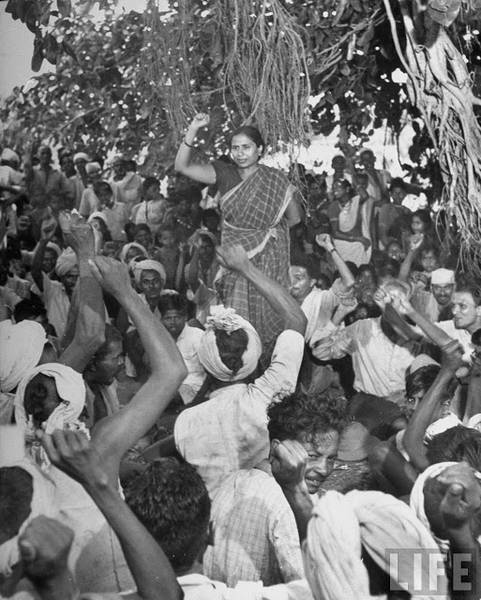
Godavari Parulekar was elected the first woman president of the AIKS at its Golden Jubilee Celebrations in Patna, 1986
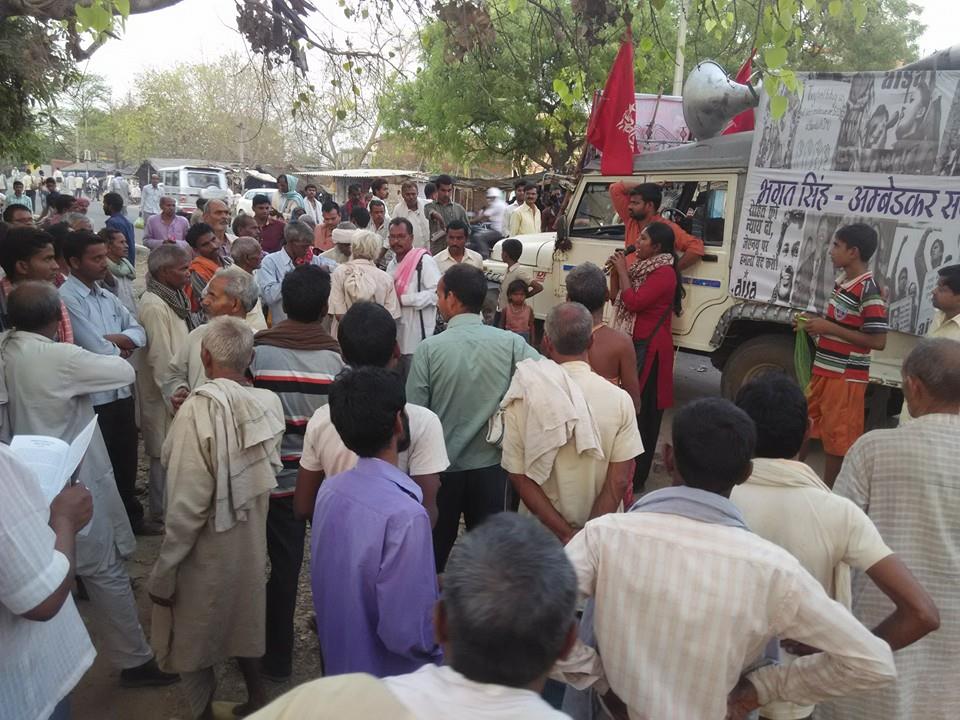
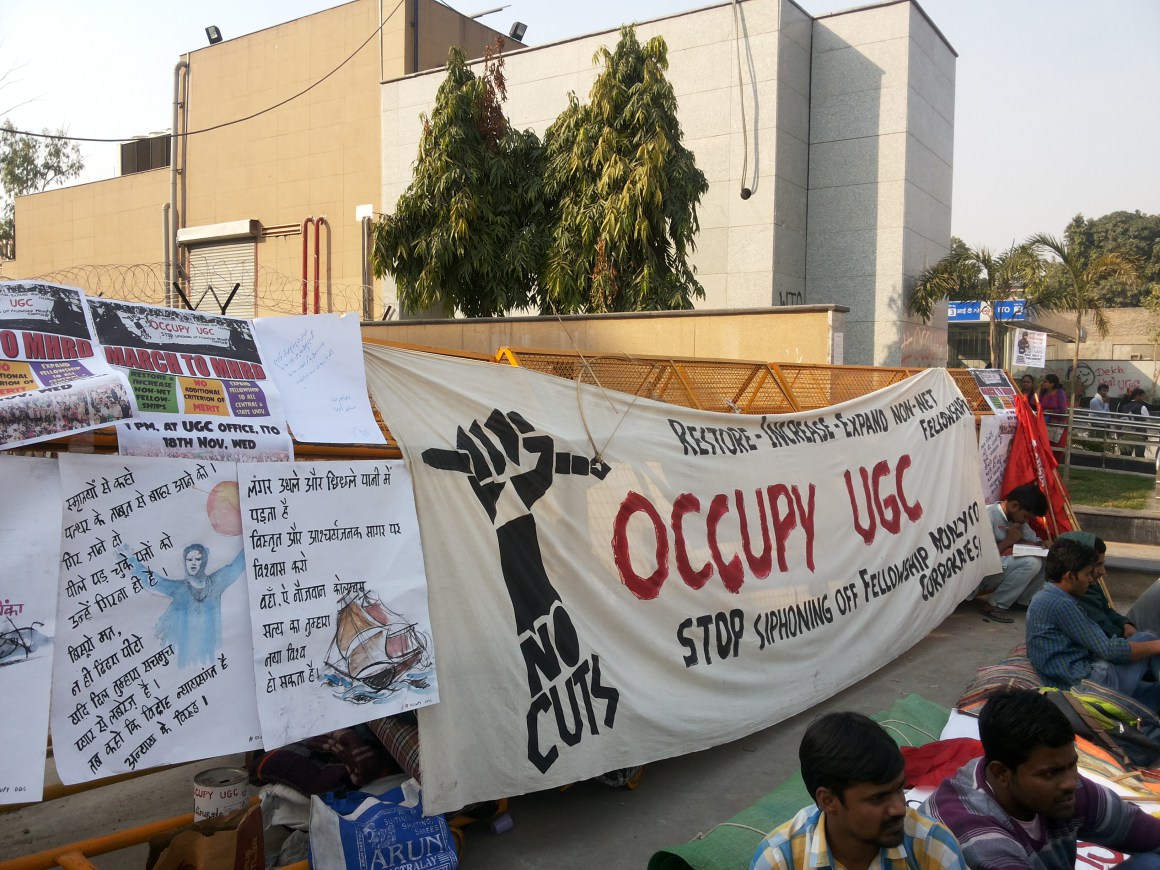
The All India Kisan Sabha formed on April 11 1936, eighty years ago has and will continue to play a key role in withstanding the assault on the rights of India’s farmer and the entire agrarian sector
The eightieth anniversary of the All India Kisan Sabha [1] is as significant today as it was eighty years ago. If not more. The birth of the Kisan Sabha was the product of the deep economic recession of the thirties and even today we find it functioning in the background of yet another recession, this one even more brutal as some three lakh peasants have been forced to commit suicide as the result of agrarian distress caused systemically by untenable policies.
These suicides are a result of the price of agricultural products not being able to defray the cost of production; of the galloping price of food-grains and other articles of consumption once their produce enters the hands of merchants and wholesalers; while the prices of seeds, fertilizers and inputs continue to rise and peasants are forced to borrow money largely from money-lenders at exorbitant rates of interest which most of them cannot pay back. Worst of all, these debts lead to the distress sales of land and other assets, like tractors and bullocks, all under duress.
[India has lost three lakh farmers since 1995. In Maharashtra alone nearly 60,000 farmers have ended their lives in the last two decades. In 2015 itself, the western Indian states recorded 3,228 farmer suicides with the maximum cases coming from drought hit Marathwada and Vidharbha region.]
Under the influence of a high powered discourse that promotes the neo-liberal economy with its mythology, we are given to understand that the best thing to do is to divest the small-holders of their land as a result of economic distress, and should that fail, to raise empty slogans of corporate production for export in SEZs to solve the unemployment problems in rural India, and actually loot the land from the peasantry by coercive laws and even force, with no jobs forthcoming.
The impact of the agrarian crisis can be seen in its most sharp form in the growing population of the rural landless. They were 23% of the rural population in 1981 and were over 55% by the time the 2011 census was finalized. This is a significant shift in our agrarian landscape.
Professor A.M Khusro pointed out in his book on “Economics of Land Reform and Farm Size in India (1973): “Indian research results almost everywhere in the country and almost without exception reveal that while occasional individual large farmers may have a high intensity of input use and high productivity per acre, as a class they invariably have a smaller yield per acre than small farmers have as a class”.
This was not a result of economic forces alone but directly a result of the policies pursued by the Indian government that were aimed at dispossessing the small and marginal farmer by a number of means. Much of this has to do with the fallacious and unscientific belief that small farms do not pay, despite the large body of material we have to refute it.
In fact, as Professor A.M Khusro pointed out in his book on “Economics of Land Reform and Farm Size in India (1973): “Indian research results almost everywhere in the country and almost without exception reveal that while occasional individual large farmers may have a high intensity of input use and high productivity per acre, as a class they invariably have a smaller yield per acre than small farmers have as a class”.
Indeed, it is with extreme hard labour and labour intensive production on small plots of land that the majority of our farmers have access to as their only means to survive, they have achieved the remarkable feat of increasing food grain production from 106.42 metric tonnes(mt) in 1970-71 to 241.56 metric mt in 2003-04, with the yield per hectare increasing from 872 Kg in 1970-71 to 1798 Kg per hectare(ha) in 2009-10. The cropping intensity has risen from 118.2 in 1970-71 to 133.2 in 2000-2001 while the area sown more than once increased from 24.93 million ha in 1970-71 to 54.97 ha in 2007-08.
This could not have been achieved without the land ceiling acts being implemented or at least the fear of holding land above the legal limit, by supports provided by the state like banks loans, subsidized fertilizers, HYV (high yield variety) seed, irrigation facilities and electricity as well as the Minimum Support Prices for the output. With this minimum state support, highly unevenly distributed, the Indian small farmer ensured not only food self-sufficiency but a rural home market for industrial production as well.
Misled by foreign financial agencies like the IMF however, governments that followed that of Narasimha Rao (from June 1991 onwards), in which Manohan Singh was the Finance Minister, agriculture was left to fend for itself from 1991-92 on. This was largely in a period when the economy was registering a rate of growth of 7%-9%, but in spite of that agriculture was starved of funds leading to increased distress and the agrarian crisis was further compounded by encouraging sales and takeovers of already declining per capita holdings.
The impact of the agrarian crisis can be seen in its most sharp form in the growing population of the rural landless. They were 23% of the rural population in 1981 and were over 55% by the time the 2011 census was finalized.
When the central investment in agriculture was cut down from 5.1% of all expenditure in 1998-99 to 3.5% in 2008-09 and even less in 2009-10, it brought down the percentage growth of the GDP in agriculture from 5.2% in 2005-06 to only 0.2% in 2009-10. At the same time the growth rate of agriculture and allied sectors that was 4.69% during the eighth Plan plummeted to 2.06% in the Ninth Plan period.
Since then, the index of agricultural production that had reached 200.7 in 2006-07 and 2007-08, came down to 185.6 in 2008-09. At the same time the per capita availability of foodgrains per day has come down from 503.1 grams(gms) in 1997 to 445.8 gms in 2006 and 440 gms in 2009, and the rate of growth of foodgrain production has gone down below that of population growth.
So our food security is once more going to be dependent on imports, something the Green Revolution had helped us to overcome.
In this period, the rural population has grown from 298.6 million in 1951 to 1028.7 million in 2001, of whom those in agriculture rose from 97.2 million in 1951 to 234.1 million in 2001, but its composition has changed drastically from 71.9% cultivators and 28.1% agricultural labourers in 1951 to 54.4% cultivators and 45.6% agricultural labourers in 2001.
These figures themselves reflect widespread dispossession of cultivators in the rural areas despite the best efforts of the peasantry who constitute a large majority of our population to preserve their status as independent owner-cultivators.
To add injury to insult, most governments at the Centre and in the states have not only reversed land ceiling laws but have also taken to large scale dispossession of lands farmed by Adivasis and traditional forest dwellers who have never been given pattas (small plots of land).
Between 1951 and 2007, “forest land” has seen an increase from 14.24% to 22.88% of all land, without any sort of proper survey and by driving out traditional farmers. Actual cultivators have been driven to farm less fertile land. Waste land has come down from 21.5% to 10% between 1951 and 2007, land under tree crops has come down from 6.97% to 1.13% and fallow land from 9.9% to 8.3%, but net sown area has increased only from 41.8% to 46% in the same period.
Moreover, as there is no ceiling on non-agricultural land, the land-grab from small-holders to land mafia monopolies continues.
On the other hand, land handed over for non-agricultural uses has increased from 3.3% to 8.3%. In effect nearly 2 lakh acres have been taken over for SEZs, 220 lakh acres have been given over to other non-agricultural uses and 53 lakh acres have been taken over as forest, leaving 19 lakh acres surplus land and 120 lakh acres to be distributed still while only some 57.7 lakh acres have been distributed to the rural landless.
Now, in the name of acquiring land for infrastructural projects and corporate agriculture, some 30% of arable land is threatened further. What is worse, this land is taken over by speculators and not even put to use. 67% of SEZ land today remains unused, so it is obvious that not only does this process not expand job potential, it impacts it further by increasing the number of jobless.
It was these policies that, quite naturally broke, the creative backbone of the peasantry, since the early 1990s. The growth rate in gross irrigated area fell from 2.62% 1990-1996 to 0.51% in 1996-2003, electricity consumption fell from 9.4% to -0.86%, total cropped areas from 0.43% to 0.48%, while the terms of trade came down from 0.95 to -1.69% in the same period.
It is no surprise, then, that in the decade of 1996 to 2005 we saw the rise of the suicide mortality rate of farmers per 100,000 increasing from 12.3% to 18.2% while the corresponding figures for the non-farming population were 11.9% and 13.4%, with a sharp divergence emerging between 2000-2001 when quantitative restrictions on agricultural imports were resorted to and farmers (65% with marginal holdings of less than 1 hectare) were plunged into competition with heavily subsided multi-billion dollar conglomerates.
Now, in the name of acquiring land for infrastructural projects and corporate agriculture, some 30% of arable land is threatened further. What is worse, this land is taken over by speculators and not even put to use. 67% of SEZ land today remains unused, so it is obvious that not only does this process not expand job potential, it impacts it further by increasing the number of jobless.
Given this dismal state of affairs, we are faced with a grim situation. It is one in which the All India Kisan Sabha, the largest mass organisation of the peasantry needs to find a renewed relevance. The AIKS was formed with the vision of on uniting Indian rural masses with the interest of the working people in the cities, and hence it must come forward today, and take up, issue by issue, the policies that cripple the peasantry, if we are to save the vast mass of our people from further distress and deaths.
This organisation has behind it the glorious history of the Punnapra Vayalar movement against the Travancore Darbar, the Tebhaga movement in Bengal for increasing the share of share–croppers, the Warli revolt of Maharashtra Adivasis, the Surma Valley and Tripura mobilizations against landlords and feudal rulers, the Telengana armed struggle against the Nizam of Hyderabad and the struggle against Mahaaja Hari Singh of Kashmir leading to the integration of the state with India, followed by the UP Zamindari Abolition Act, successful implementation of land reforms in West Bengal and Kerala, and even political leadership of the first elected Left Government in India that was led by a Kisan Sabha leader, EMS Namboodiripad, whose government introduced the Land Reform Ordinance in Kerala in 1959.
A similar role was played by Hare Krishna Konar who was a Kisan leader in West Bengal. In Punjab too we see the role of Harkishen Singh Surjeet in the Anti –Betterment Levy struggle in the 1950s. Indeed, at its Golden Jubilee Conference in Patna in 1986 the All India Kisan Sabha elected its first woman President, Godavari Parulekar, a leader of Maharashtra Kisan Sabha and an All India Vice President for a number of years before this.
This is significant as women have played an important role in agriculture for thousands of years but were kept in the background by patriarchy. The recognition of this fact by the Kisan Sabha reflects its important role in changing the social behavior in the rural society of post-colonial India as well.
Recently, the AIKS and the Bhoo Adhikar Andolan have shown that even the Modi government at the centre has had to bow down before the pressure of the Kisan Sabha on the issue of the Land Ordinance that the NDA government wanted to push through parliament. This victory should remind us of the importance of the organised strength of the peasantry in our country today.
Other issues highlighted above require a similar co-ordination between the mass movement of the peasantry and political steps to strengthen and carry forward the programme of expanding democratic rights in the interest of the Indian people, most of whom are from rural areas. The 80th anniversary of the AIKS ought to be dedicated to carrying forward the struggles of India’s backbone, its peasants.
(The author is the Joint Secretary All India Agricultural Workers Union affiliated to the Communist Party of India, Marxist [CPI-M])
Footnotes:
[1] All India Kisan Sabha (All India Peasants Union, also known as the Akhil Bharatiya Kisan Sabha), was the name of the peasants front of the undivided Communist Party of India (CPI), an important peasant movement formed by Sahajanand Saraswati in 1936, and which later split into two organisations known by the same name: AIKS (Ajoy Bhavan) and AIKS (Ashoka Road). The Kisan Sabha movement started in Bihar under the leadership of Sahajanand Saraswati who had formed in 1929 the Bihar Provincial Kisan Sabha (BPKS) in order to mobilise peasant grievances against the zamindari attacks on their occupancy rights, and thus sparking the farmers' movements in India.Gradually the peasant movement intensified and spread across the rest of India. The formation of Congress Socialist Party (CSP) in 1934 helped the Communists to work together with the Indian National Congress, however temporarily