Home Blog Page 2566

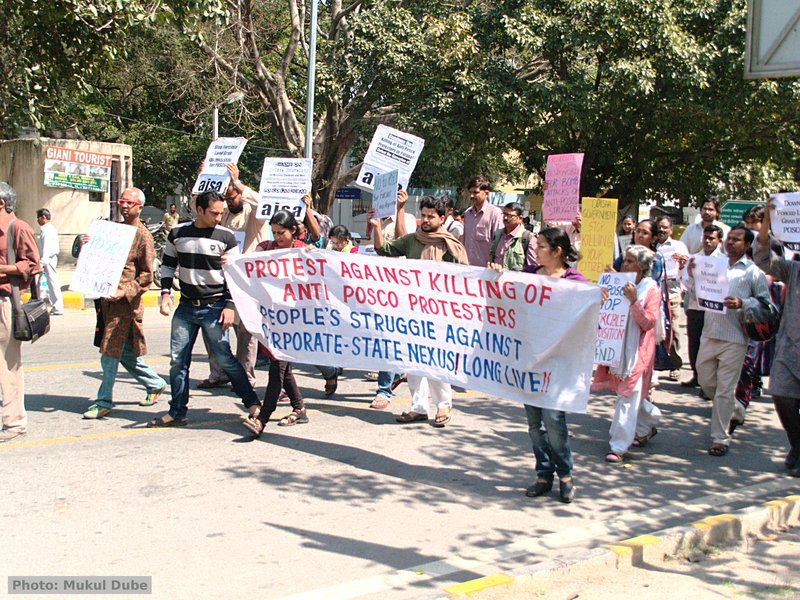
No POSCO Plant in Odisha, Boon or Loss?

0

UPDATE: March 9, 2016

POSCO’s Submission in the National Green Tribunal Saying it Will Not Establish a Plant in Odisha
Press Release

POSCO today informed the National Green Tribunal of its inability to complete the Steel Plant by July 2017 which is a condition in the environment clearance given for 8 million tonnes instead of 12 million tonnes. Further POSCO submitted that they are not in a position to carry on any work on the strength of this environmental clearance.

Prafulla Samantara, President, Lok Shakti Abhiyan had challenged the clearance for 8 million tones given in the year 2013. POSCO was not providing any answers to these queries for the past six months. This ambiguity got cleared yesterday. POSCO has to clear out.

There has been illegally felling of more than 2 lakh trees which is an irreparable loss to environment. It was done without forest clearance.

So the price of economic value of loss should be recovered from POSCO to enable a regeneration of the forest.  Mr Samantara has demanded that the government withdraw all the false criminal charges against people of Govindapur and Dhinkia and other Activists who were protesting democratically against displacement and land acquisition for POSCO.

He also urges the government to allot pattas of forest land to the villagers where they had access to cultivation since 1928. They are entitled as forest dwellers under FRA 2006 according to the Report of the Meena Gupta Committee.
Prafulla Samantara, President, Lok Shakti Abhiyan

April 8, 2016


Late evening today, Friday April 8, 2016 the news that the POSCO Plant would no more be set up in Odisha was received differently by different quarters, with rights activists, tribal communities and activists rejoicing and others –which include sections of the media—portraying it as a ‘loss’

Today, at a hearing before the National Green Tribunal (NGT),Posco India reportedly said that it would not establish the proposed 12 million tonne capacity steel plant near Paradip in Jagatsinghpur district of Odisha.The counsel of the South Korean company stated this before the National Green Tribunal during a hearing conducted on Friday. According to information, an NGT bench headed by Justice Swatantra Kumar conducted the hearing on a petition filed by noted environmentalist Prafulla Samantara opposing establishment of the proposed project near Paradip in Jagatsinghpur district.

Samantara had alleged before the NGT that environment clearance availed to the South Korean steel major by the Ministry of Environment and Forests (MoEF).Accordingly, the NGT had served notices to the MoEF, Posco and the Odisha State Pollution Control Board.

Notably, the Pohang Steel Company, the fourth largest steel-maker of the world, had signed an MoU with the Odisha Government on June 22, 2006 to establish a 12 million tonne capacity steel plant near Paradip. Though, the company had availed primary environment clearance from the MoEF, it faced many hurdles in getting subsequent environment and forest clearances. It also faced protests from locals and different political parties over displacement, water and captive port issues. 
 
Unparalled state repression had marked the people’s struggle against the establishment of the plant. Three activists protesting were also killed when Odisha police were accused of open connivance with the company in 2013.

On May 15, 2010 the police fired rubber bullets and tear gas shells and lathicharged hundreds of villagers staging a dharna on the road at Balitutha in Jagatsinghpur district of Orissa to clear all hurdles against land acquisition and allotment of mines to Posco at the earliest as committed by the government.It was alleged that this was done to help the administration acquire land for the steel project—Posco—police mercilessly beat up the villagers injuring more than 100 including many women from Dhinkia and nearby villages, (The Hindu, May 16, 2010: 8)

The South Korean company’s move to have a captive port was opposed as it would, arguably adversely affect Paradeep Port. The protesters also objected to its plan for captive iron ore mines instead of purchasing ore from the Orissa Mining Corporation. It has been alleged that the proposal to draw water from Mahanadi Barrage would affect the irrigation system and lead to ecological degradation. The Centre as well as State Government were accused of ignoring the issues raised by the anti-Posco protesters (Posco Pratirodh Sangram Samiti). Though the district authorities earlier termed the blockade illegal and clamped Section 144 of the Criminal Procedure Code in the area (prohibiting the assembly of five or more people), the government held no formal dialogue with the agitating villagers before using the police to remove the road blockade.
 
Today, April 8, 2016,  the NDTV reported the move as a threat to the future of 2,000 families who had given land for the project.  “With the ratification of the Mines and Mineral (Development and Regulation) Bill, 2015 by Parliament, which disallows preferential treatment for giving mining leases, uncertainty looms over the future of the steel-giant POSCO, threatening the future of over 2,000 families in Jagatsinghpur district of Odisha, who had given away their land for the project. The matter was also reported in The Economic Times.
 

I want Justice Not Character Assassination: Delta’s Father, Mahendra Meghwal

0

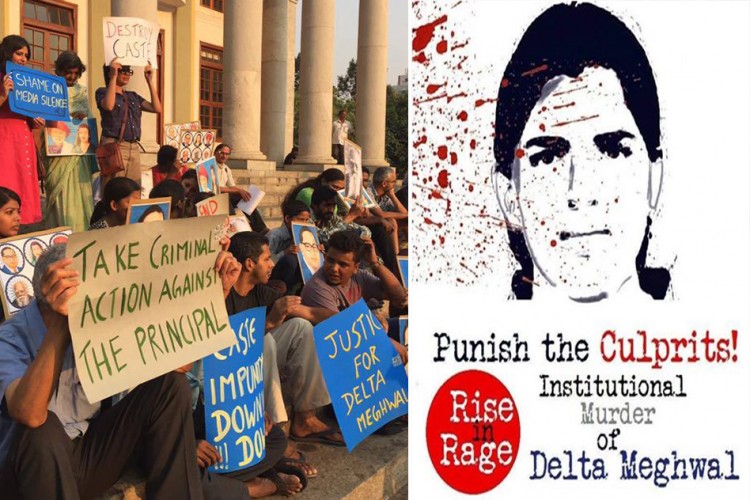
Releasing a Fact-Finding Report into the Murder of Delta Meghwal, her father, Mahendra Meghwal demanded Justice not Character Assassination of his Dead Daughter.


“I want justice for my daughter Delta. There should be an immediate stoppage to blatant attempts at character assassination.” A detailed factfinding report was released in Jaipur today at the Vinoba Nyan Mandir, Jaipur. Among the groups that have been part of the fact finding are All India Dalit Mahila Adhikar Manch, Akhil Bharatiya Janwadi Mahila Samiti, Natuonal Federation of Indian Women, PUCL-Rajasthan. These were the Organisations who also addressed the press conference and released the report.

Sabrangindia had been among the first to raise the issue of the rape and deat5h, in mysterious circumstances of delta Meghwal on Sunday, April 4 The Real Story Behind the Rape and Killing of Dalit Girl Student, Delta Meghwal . Another fact-finding report had also been released earlier.

Demands that were made today:
 
1.  Section 302 should be applied to the FIR and investigation and should not be removed until the complete investigation is over including the question of ‘drowning’ in the tank of its size.

2. An independent investigation be ordered by the CBI.

3. The security of other girls studying in the same institution is a matter of grave concern. A High Level Inquiry Committee of the Education Department needs to be set up to assess whether Security Concerns of Girls in this Hostel are being thoroughly met; and Steps should be taken by the College Administration to Ensure proper Security;

4. There has been a clear-cut violation of the newly enacted Sexual Harrasment Act of 2013 (Sexual Harassment at Workplace , Prevention, Prohition and Redressal Act). Therefore, Section 26 of this Law should be applied; Rs 50,000 fine should be levied on the institution and its permission/registration withdrawn.

5. Students, Teachers and Staff of this and Other Institutes should be given adequate trainings to become familiar with  the POCSO (Protection of children from Sexual Offences Act, 2012) and other laws concerning gender related offences.

6. The State Bal Adhikar Ayog (Rajasthan Commission for the Protection of Children) should immediately visit the institution and speak individually to all students. Trainings should also be conducted. Similarly the State Women’s Commission should also have direct contact with the women students and teachers of the institution.

7. The School in Delta Meghwal’s village Trimohi on Gadara Road, Barmer should be named after her and be declared as the Delta Meghwal Government Primary School. The school should be extended to secondary level so that girls have the facility to study in the cillage itself.

8. Prosecution of both Eashwar Chand Ved, chairman of the Jain Adarsh Teacher Training Institute and Secretary and Jagdishmal Lodha for criminal negligence should be initiated.

9. A Compensation of Rs 25 lakhs has also been demanded.

Report on Delta Meghwal Rape and Murder


Mangal Pandey Martyrd Today, 159 Years Ago: 1857

0

The Man who Fired the First Salvo that then set off 1857 Revolt Against the British was hung on April 8, 1857

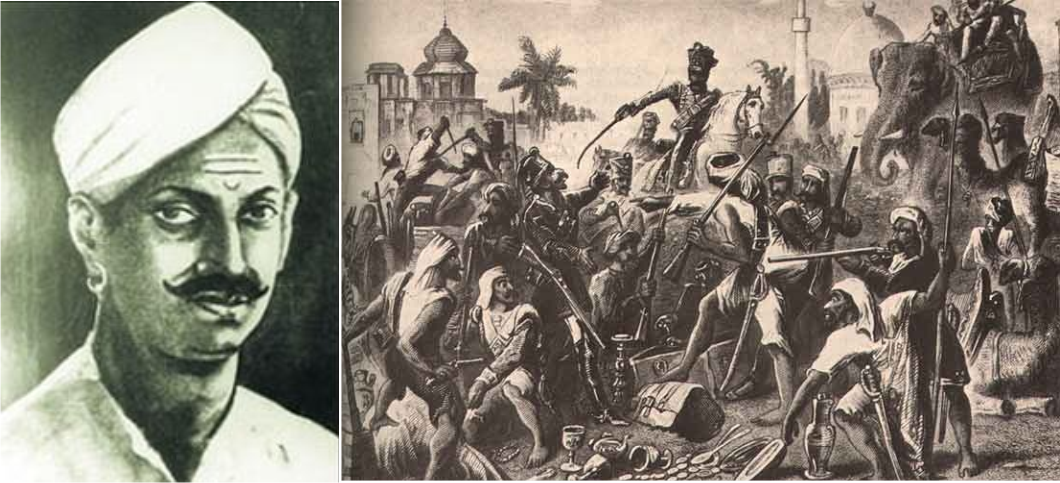
The First War of Independence began, metamorphically, with the salvo fired by Mangal Pandey. Resents had been brewing against oppressive British rule. The immediate provocation was the use of greased cartridges by the British. A rumour widely spread that the lubricant used was either cow or pig lard, which was repugnant to Hindus or Muslims, respectively. The belief arose among the sepoys that the British had deliberately used the lard on the cartridges.

Pandey was court-martialled by the British with speed and alacrity on April 6, 1857. At his hearing he insisted he had acted alone and in the name of India. He was due to be hanged on April 18 but the British, fearful of the widespread unrest, brought forward the date of execution and Pandey was hanged on 8 April 1857. Born on July 19, 1827, Akbarpur, a town near Faizabad. India, Pandey was hanged on April 8, 1857 at Barrackpore.
 
It was on a quiet and sleepy afternoon, a Sunday, in March 1857, that Mangal Pandey, an agitated sepoy in the English East India Company’s 34th Native Infantry marched on to the parade ground in Barrackpore, exhorting his comrades to join him in protecting their religion from the Europeans. When British officers arrived to arrest him, he drew his sword on them and then turned his musket on himself. As he was led off to the gallows just a few days later, Mangal Pandey passed into history and legend as the man who had fired the first salvo—into what was to turn into a nationwide uprising against the British.
 
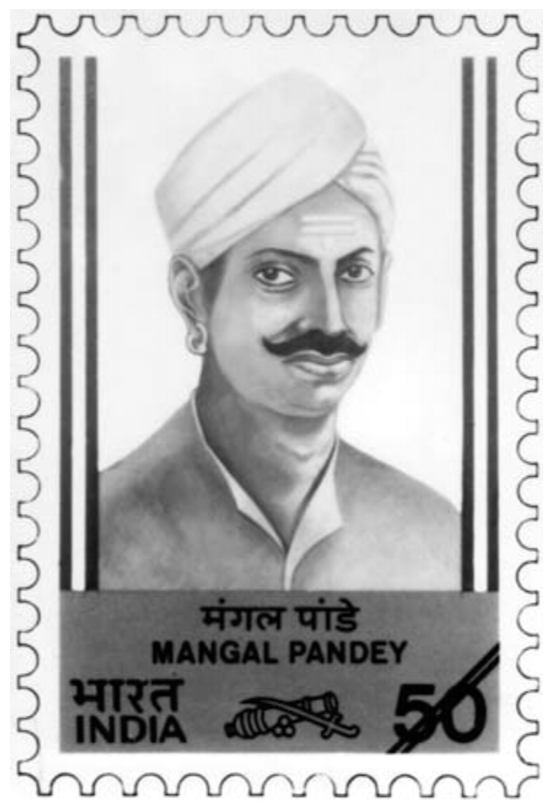
The First War of Independence has been controversially taught through colonial historiography as a minor mutiny. Over the years, independent Indian historians have brought in the rational and more cohesive understanding. A commemorative postage stamp with his image on it was issued by the Indian government in 1984.
 
This video, made for an easy understanding of the Revolt of 1857 has been produced by Khoj – Education for a Plural India.
 

The greatest and the most widespread armed uprising which shook the foundations of British rule in India took place in 1857. The accumulating hatred against British rule which had resulted in numerous though localised, outbreaks burst forth in a mighty rebellion in 1857. The dispossessed rulers of Indian states, the nobles and the zamindars (landlowners) who had been deprived of their lands, the Indian soldiers of Britain’s army in India, and the vast masses of peasants, artisans and others who had been ruined by British economic powers and had been rising up in revolt in their isolated pockets, were now united by the common aim of overthrowing British rule. The introduction of greased cartridges which showed the British rulers’ complete disregard of the religious beliefs of the Indian people provided the immediate cause of the revolt. It was on this day 159 years, April 8, 1857, ago that Mangal Pandey was martyrd.
 
The uprising again began in Meerut on May 10, 1857 when the Indian soldiers killed their British officers and marched to Delhi. They were joined by the soldiers stationed in Delhi and proclaimed the last Mughal Emperor Bahadur Shah II as the Emperor of India. The rebellion spread like wild fire and the British rule ceased to exist over a vast part of northern and central India for many months.
 
The major centres of the revolt, besides Delhi, where some of the fiercest battles were fought were Kanpur, Lucknow, Bareilly, Bundelkhand and Arrah. Local revolts took place in many other parts of the country. Among the prominent leaders of the uprising were Nana Sahib, Tantia Tope, Bakht Khan, Azimullah Khan, Rani Lakshmi Bai, Begum Hazrat Mahal, Kunwar Singh, Maulvi Ahmadullah, Bahadur Khan and Rao Tula Ram.
 
Mangal Pandey Indian soldier


Document:

From the Trial of Mangal Pandey

 
Proceedings in continuation of a native General Court-martial assembled at Fort William, and re-assembled at Barrackpore on Monday, the April 6, 1857, by order of the Major-General Hearsey, for the trial of Sepoy Mungul Pandy, 34th Regiment, Native Infantry, and all prisoners who may be brought before it.
 
PRESIDENT:
 
Subadar-Major Howahir Lall Tewary, 43rd Regiment, Native Infantry.
 
MEMBERS:
Subadar Bhola Opudeah, 17th Regiment, Native Infantry.
Subadar Hurruck Sing, 40th Regiment, Native Infantry.
Subadar Ram Sing, 9th Battalion, Artillery.
Subadar Amaunt Khan, 37th Regiment, Native Infantry.
Subadar Sewumbur Pandy, 34th Regiment, Native Infantry.
Subadar Dirga Ram, 70th Regiment, Native Infantry.
Subadar Khooda Buksh, 2nd Regiment, Native Infantry.
Subadar Meerwan Sing, 70th Regiment, Native Infantry.
Subadar Sookhlal Misr, 43rd Regiment, Native Infantry.
Subadar Ajoodhia Tewary, 70th Regiment, Native Infantry.
Subadar Jalim Sing, 43rd Regiment, Native Infantry.
Subadar Dewan Allie, 9th Regiment, Native Infantry.
Subadar Mohun Sing, 65th Regiment, Native Infantry.
Subadar Lalla Ram Buksh, 8th Regiment, Native Infantry.
 
JUDGE ADVOCATE:
Captain G.C. Hatch, Deputy Judge Advocate-General, Presidency Division.
 
INTERPRETER:
Lieutenant JamesVallings, 19th Regiment, Native Infantry.
 
The Court re-assembled at the Mess House of the 34th Regiment, Native Infantry, at Barrackpore, at 11 a.m., the President, Members, Judge Advocate, Interpreter all being present.
 
Lieutenant and Brevet-Colonel S.G. Wheler Commanding the 34th Regiment, Native Infantry, being appointed Prosecutor, takes his place in Court.
 
Mungul Pandy, Sepoy, No. 1446, 5th Company, 34th Regiment, Native Infantry, is brought a prisoner in Court.
 
The Division Orders directing the re-assembly of the Court-martial at Barrackpore, and the Station Order directing the hour and place of the Court’s assembly, are produced and read.
 
The names of the President and Members of the Court are read over to the prisoner.
 
BY THE JUDGE ADVOCATE
 
Question:         Sepoy Mungul Pandy, do you object to being tried by the president or by any of the Members of this Court-martial?
 
Answer:           No, I do not object.
 
The interpreter, President, Members, and Judge Advocate make the prescribed solemn affirmation.
 
The following charge is read:
 
Mungul Pandy, Sepoy, No. 1446, 5th Company, 34th Regiment, Native Infantry, confined by order of Major-General J.B. Hearsey, Commanding the Presidency Division, on the following charges:
 
1st  – For mutiny, in having at Barrackpore, on the 29th March 1857, gone on to the parade ground in front of the quarter-guard of his regiment armed with a sword and musket, and then and there used words tending to incite the men of his regiment to turn out and join him in resistance to lawful authority.
 
2nd – For having, on the occasion set forth in the first charge, used violence against his superior officers Sergeant-Major James Thornton Hewson and Lieutenant and Adjutant Bempde Henry Baugh, of the 34th Regiment, Native Infantry, by discharging at them, severally, his loaded musket, and then and there striking and wounding with his sword the said Lieutenant B.H. Baugh and Sergeant-Major J.T. Hewson.
 
By order of the Major-General Commanding Presidency Division.
 
ASST. ADJT. GENL.’S OFFICER, (Sd.) A.H. ROSS, Major,
 
BARRACKPORE; Asst. Adjt. Genl., Presy. Divn.
 
The 5th April 1857.
 
BY THE JUDGE ADVOCATE
 
Question:         Sepoy Mungul Pandy, No. 1446, 5th Company, 24th Regiment, Native Infantry, how say you, are you guilty, or not guilty, of these charges?
 
Answer:          Not guilty. 

60 % Water Cuts in Hospitals, Fear of Shut Down in May: Marathwada

0

Latur’s 600-bed Civil Hospital Reels Under Water Cuts due to Drought, Private Clinics also Affected

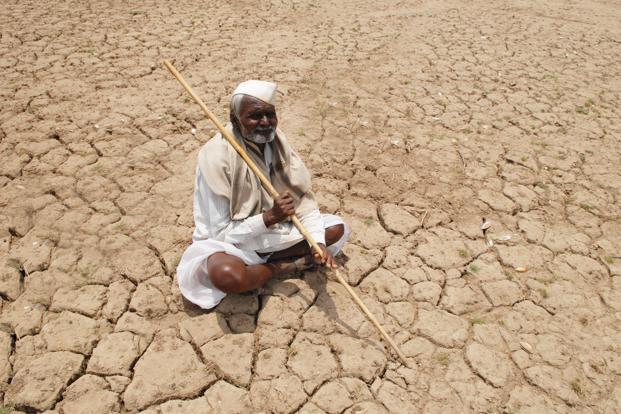
Acute water cuts due to the crippling drought in the Marathwada region of Maharashtra have put  tremendous burden and pressure on Latur’s 600-bed Civil Hospital that is now catering to a one hundred per cent rise in normal and emergency cases with patients preferring government facilities to the more expensive private ones. With the situation at a crisis level already in April, there is a real worry that in the latter part of May health services may have to be shut down, or curtailed.

“The average normal demand for water in our hospital is 1 to 1.25 lakh litres,” Dr Shailendra Chauhan, resident Medical Officer told Sabrangindia, “ Due to the cuts the Mahanagarpalika can only give us 30-40,000 litres per day. This is when pressure on our facilities is increasing. We normally catered to 30-35 normal deliveries every day; this figure has shot up to 50-60. Caesarian operations that averaged 10 a day are now up to 20.”

This means greater pressure on the 600-bed hospital that remains the main source for the region. The district does not have a hospital leaving this the major hospital for patients to turn to.

“This cut on the normal quota of water supply due to the drought, made more acute by increasing pressure of patients has forced us to cut the water supply by tap. Only limited and control water is supplied in drums, to the patients, “added the doctor.

This inevitably has had an impact on the overall cleanliness and while things are currently in control with private trusts and others chipping in by supplying water from tankers, there is a deep apprehension as to how the month of May will turn out. “Emergency road accidents, regular deliveries these are constants; how we will cope with these towards the latter half of May causes great concern. We just hope that we will not be forced to close down,” he adds on a somber note.

The Latur Civil Hpsital has 600 beds and due to acute water shortage in the Marathwada region is facing pressure of medical cases, normal and emergencies all being diverted to it as patients –faced with a huge economic crunch due to crippling drought—cannot anymore access the fancier and more expensive private medical facilities. There are 12 to 15 such in Latur.

The Latur Civil Hospital has a Staff of 425 Post Graduate Medical Students and 125 full-fledged Lectures/Associate Professors. The Nursing Staff is also vast numbering at 400-450. This entire team is currently under tremendous pressure in regular touch with the government administration and private organizations to alleviate the crisis.

On April 7, the Economic Times had reported that the situation is so grim that private doctors in the region are finding it tough to treat patients and are putting off surgeries. Many of these are being diverted to the government civil hospital that is facing a crush and burden.

There is presently an acute shortage of water as the Manjra dam and Dhanegaon river that used to supply water to the district has gone dry doctors. Bore wells within a 20-30 kilometres radius of Latur have run completely dry.

While basic medical services and access to basic drinking water threatens many ares of the state, including urban centres, Maharashtra will still go ahead and use huge quantities (nearly 60 lakh litres) of water on 20 IPL matches at three venues in the state between April and May 2016.

‘Break People’s Jaws if they don’t shout Bharat Mata ki Jai’ BJP Minister, Chhatisgarh

0


Yet Another Call to the Mob, Now Another BJP Minister Openly Exhorts Cadres to Violence if they do not Shout ‘Bharat Mata ki Jai’

 
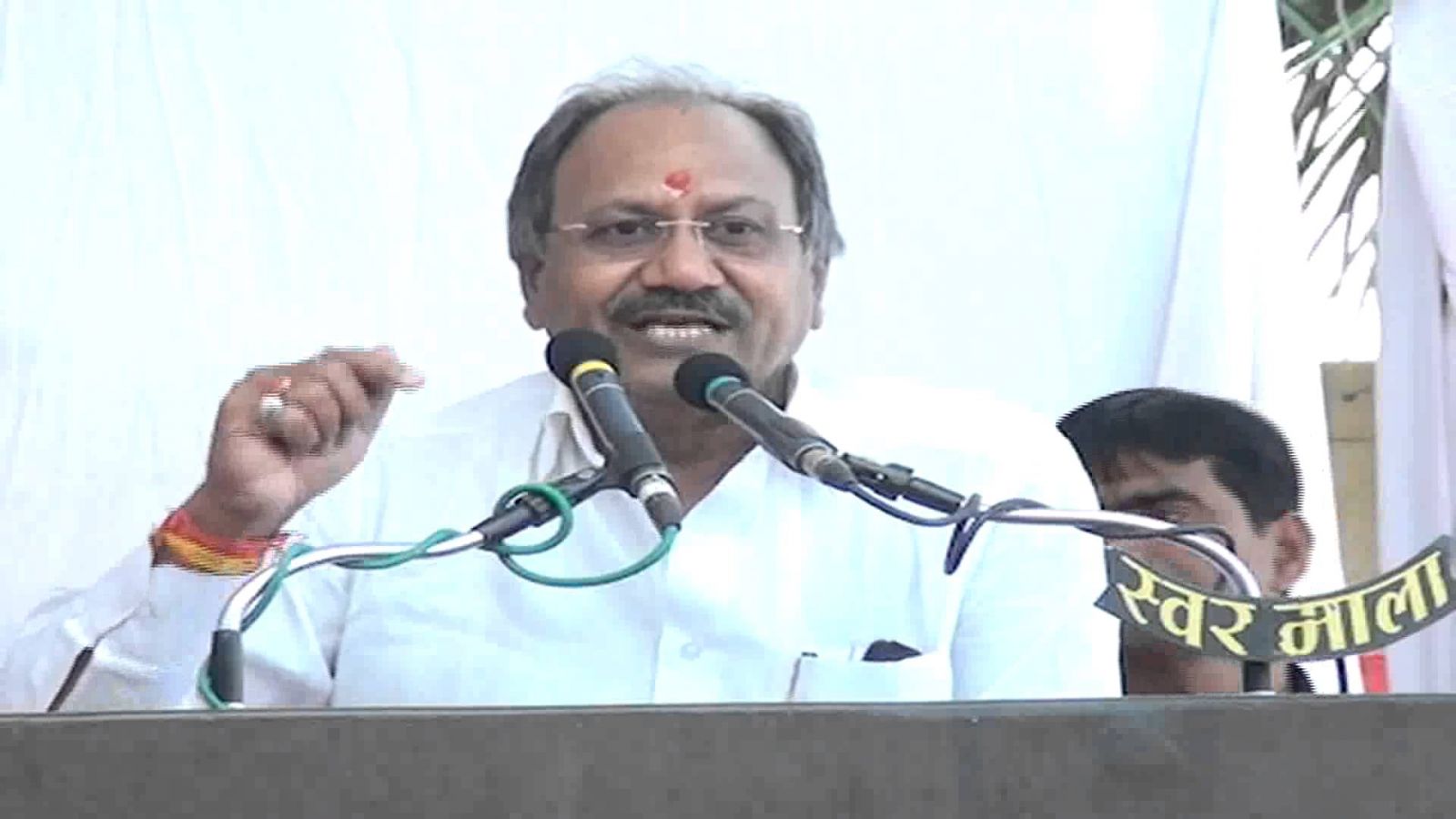
The Chhattisgarh Agriculture Minister from the ruling Bharatiya Janata Party (BJP, affiliated to the Rashtriya Swayamsevak Sangh (RSS), Brij Mohan Agrawal is the latest among a strong of ‘public figures’ exhorting cadres to violence over the ‘Bharat Mata ki Jai’ slogan as reported by the Press Trust of India .
 
 The event took place in the capital city of Raipur on April 7, 2016 . Brijmohan Agrawal said, "if any anti-national slogans are shouted in front of BJP workers, then they should respond with full force.” He was speaking at the Ekatma Parisar function held on Wednesday. He warned people against shouting anti-national slogans and said, "We have the power to rip out their jaws."He further mentioned, "It was unfortunate that even after 69 years of independence anti-national slogans are being raised."
 
He added, "Hamare karyakartaon ke saamne agar koi rashtra virodhi naara lagaye, toh uska jawaab puri takat ke saath dena chahiye ki hum log Bharatiya Janata Party ke hai.
(Translation: If someone were to shout anti-national slogans in front of our workers, they should answer with full force).

“Toh Bharatiya Janata Party ke iss sthapana diwas ke avsar par… jo rashtra virodhi naare lagayenge, unke jabde ko ukhadne ki hum takat rakhte hai, ye unko batane ki avashyakta hai
(Translation: On the occasion of BJP’s anniversary… we have to tell those who raise anti-national slogans that we have the power to rip out their jaws.)," he mentioned.

"Agar hindustan ki dharti pe tumne janm liya hai, hindustan ka tum ann kha rahe ho, hindustan ka pani pi rahe ho…tumhare marne ke baad bhi agar tumhe do gaj zameen milegi, toh voh hindustan ki dharti pe milegi. Isliye Bharat mata ki jai bolna padega
(Translation: If you eat Hindustan’s grain, are born here, drink the country’s water, and if you are buried in this land after you die, you have to say Bharat Mata ki Jai)," Agrawal threatened during the public event.
 
Agarwal is the last among a long line of leaders who have openly violated Indian law and threatened violence against citizens.

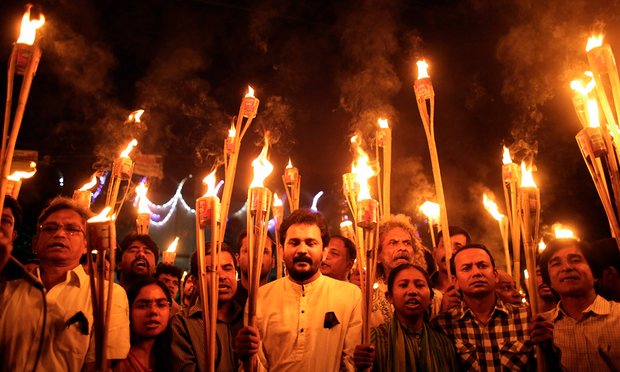
Another victim of state religion, free-thinker hacked to death by machete: Bangladesh

0


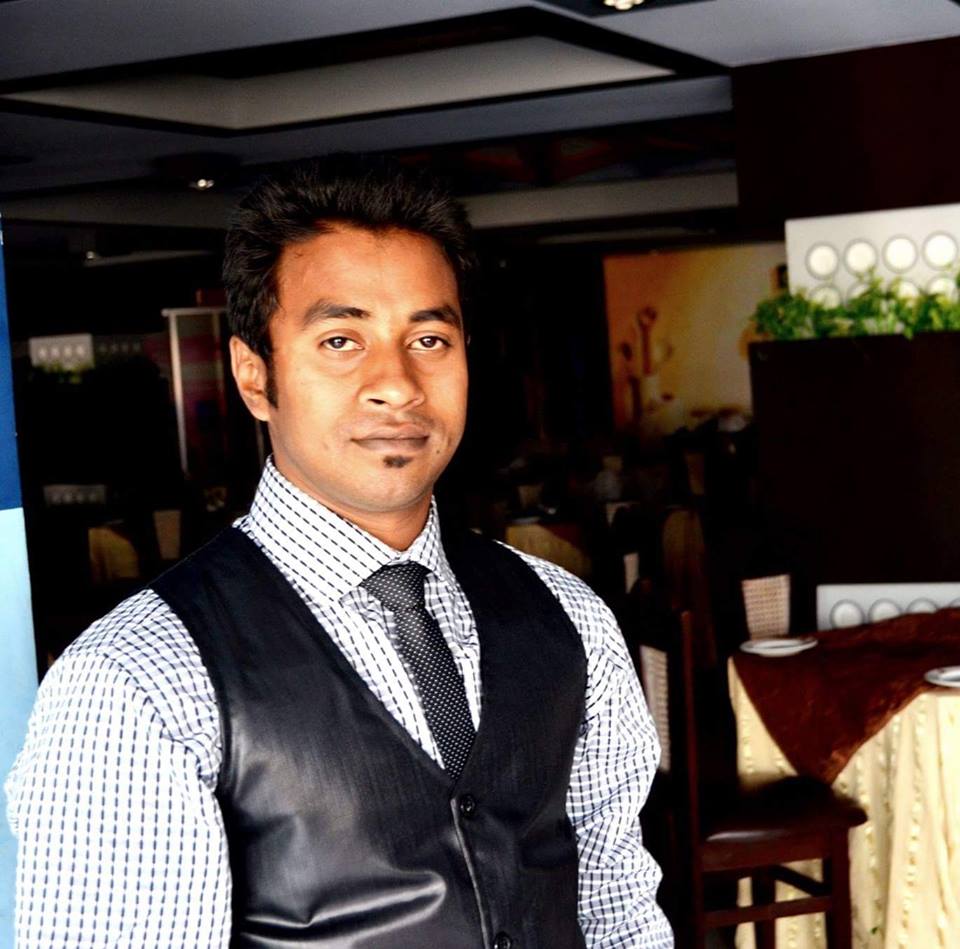
Nazimuddin Samad, Image Source: Facebook

Late on the evening of yesterday, April 6, 2016, at approximately 9 pm in the evening, Nazimuddin Samad, a student of the Jagannath University, was hacked to death by unknown assailants in Dhaka’s Sutrapur.

Samad had been organising campaigns for secularism on Facebook, and a day before the murder, Samad posted about his concerns over the “deterioration of law and order” in the country, calling it a “public disgrace.”
A post on the Bangla secular blogging platform Mukto-Mona (“Free Mind”) has responded  to tonight’s attack saying, “Even though nobody has claimed responsibility for this murder, the modus operandi was very similar to all the killings carried out by the extremist Islamist militants in Bangladesh.”

Mukto-Mona, describes Nazimuddin was a courageous freethinker; he was vocal in his support for a secular and humane Bangladesh.

As he was returning from his university a few young men, who came there on a motorcycle, intercepted him at the Ekrampur crossing and started hacking him with their machetes. In the end, they made sure that Nazimuddin would die by shooting him in the head. Witnesses said the assailants shouted “Allahu Akbar” (Allah is great) as they killed Nazimuddin.

Even though nobody has claimed responsibility for this murder, the modus operandi was very similar to all the killings carried out by the extremist Islamist militants in Bangladesh.

An Inquiry into the killing has been demanded A timeline of the killings of secularists in Bangladesh is available at bit.ly/CFIBangladeshTimeline.

According to the statement here he regularly posted atheist and feminist criticism of Islam. He was critical both of the Islamist political parties, and against the failings of the current government. Shortly before he was killed, he wrote a post implying that the ruling Awami League party would fall if it did not make swift changes, writing (in Bengali): “The situation of the country, deterioration of law and order in the country, speak that maybe you cannot stay long in power.”

In earlier posts, Nazimuddin responded to a cleric’s violent speech against women which referenced the Quran, contrasting the speech with the claim that “Islam is the highest honor given to women!” He asked for justice for a girl known as Tonu, who had been raped and killed in the military area of ‘Cantoment’, Comilla.

Nazimuddin recently criticised Prime Minister Sheikh Hasina’s support for madrassa (Islamic schools), which are increasingly associated with Islamist radicalism and militancy in the country. Nazimuddin had also shared posts from Washiqur Rahman Babu who was killed last year in a similar attack, carried out by two madrassa students who claimed they were acting on orders from someone associated with their Islamic schools.

In another post, he proposed a satirical strategy to overcome the aggressive push toward Islamism in the country, writing: “Please let’s have Sharia Law for just five years in Bangladesh. Rule the country with Medina Law. I guarantee you, after this 5 years, no Muslim of Bangladesh will ask for Islamic law! The loss and damage we will have after five years, it will take 1400 years to restore us to a modern country.”

Nurul Amin, assistant commissioner of Sutrapur division police, is reported as saying that the assailants must have kept an eye on Nazim’s activities ahead of the attack, and were aware of his route home. “We are investigating the case sincerely to know the motive of the murder,” he said.
President of the International Humanist and Ethical Union (IHEU), Andrew Copson, commented tonight:

“It is clear from Nazimuddin’s Facebook posts and protest activity that he was a politically and socially engaged young man. He offered criticisms of certain radical religious figures and doctrines, thoughts of a kind that many people, not just atheists and humanists but also many religious people, express all over the world, every day.

“Every time a thoughtful and honest person like Nazimuddin is hacked or gunned down, apparently for doing nothing more than speaking their minds on secularist, political and religious topics, we and others will make a point of finding out what he said, what he did, what he wrote about, and sharing it. It will be seen by more people than ever would have seen it before. And we will remember his name and the growing list of names of those who were singled out and killed, by small-minded, hateful extremists who appear to think that words can be killed. They cannot.”

In 2015, four bloggers variously identifying as humanist, atheist and freethinkers, as well as one publisher of secular books, (http://iheu.org/huge-alliance-protests-government-response-to-bangladesh-blogger-murders/)were killed by groups of men in machete attacks. These men in their writings or actions had all defended freedom of expression and belief, and criticised radical Islamism or particular religious ideas (which they variously regarded as prejudiced or socially detrimental). While this kind of writing and activism, especially where it contains humanistic, atheist or secularist criticism of Islamism, appears to most likely to attract the hit squads, the range of hatred encompassed by Bangladeshi radical Islamists also extends to foreigners and other religions; an Italian aid worker and a Japanese investor were killed in September and October 2015 respectively, an Italian priest was shot in November but survived, and ISIS claimed responsibility for the stabbing of a Christian convert last month ostensibly as a “lesson to others”.