Violence against women is one of the most prevalent human rights abuses in the world
Violence against women is one of the most prevalent human rights abuses in the world. It is estimated that 35% of women have experienced physical or sexual violence in their lives either by their partner or a stranger.
Yet there are no provisions under existing UN treaties which refer directly to this issue. This is unacceptable. It is time for the world to develop a new UN treaty on violence against women.
The absence of international, legally binding provisions set down in a UN treaty creates difficulties in holding countries accountable for their responses to domestic violence, forced marriage and a host of other abuses.
The UN’s primary instrument on the rights of women is the Convention on the Elimination of All Forms of Discrimination against Women (CEDAW), adopted in 1979. This convention contains no express mention of violence against women, although the CEDAW Committee (the convention’s monitoring body) interprets the issue as part of its remit.
In 1994, the first UN Special Rapporteur on violence against women, its causes and consequences was appointed, a position currently held by the Croatian Dubravka Šimonović. Despite this, the key difficulty has been that all of the statements issued by UN bodies on violence against women are “soft law”, meaning they are non-binding on states.
Gender-based violence is a form of discrimination that seriously inhibits women’s ability to enjoy rights and freedoms on a basis of equality with men.
The former UN Special Rapporteur on violence against women, Rashida Manjoo, has spoken out against the problems she faced in holding states accountable. In a report to the UN Human Rights Council in May 2014, she said that: “Although soft laws may be influential in developing norms, their non-binding nature effectively means that states cannot be held responsible for violations.”
Taking the lead from regional systems
In the absence of a global, legally binding treaty at UN level, some regions have taken matters into their own hands. In 2011, the Council of Europe adopted a Convention on Preventing and Combating Violence against Women and Domestic Violence, also known as the Istanbul Convention. The Istanbul Convention could provide a good starting point for the development of a UN treaty on violence against women. It is comprehensive in scope and places detailed obligations on states to adopt measures to prevent violence against women.
It covers specific issues such as forced marriage, stalking, psychological violence and forced abortion – all of which should be addressed in any global treaty on violence against women.
In addition to ensuring that countries' criminal justice and civil law systems are effective in responding to violence against women, countries that are party to the Istanbul Convention must take steps to raise awareness in society of issues surrounding violence against women. They must also provide support to victims, and provide sufficient training for professionals who come into contact with victims.
The large majority of states within the Council of Europe have either ratified the Istanbul Convention or stated an intention to do so. This apparent readiness could be an indication that other countries around the world could be willing to sign up to a global treaty on violence against women.
Holding countries accountable
Careful consideration would need to be given to how to monitor any new UN treaty on violence against women. All of the UN human rights treaties suffer from extensive enforcement difficulties – and it is unlikely that a new UN treaty would be any different.
If a state violates its obligations under a UN human rights treaty such as CEDAW, there are essentially no penalties which can be imposed by the relevant monitoring bodies. The primary monitoring mechanisms are reporting mechanisms, through which states must submit periodic reports on compliance. Yet, the value of binding treaty provisions, such as those found in CEDAW, lies in the fact that if a state breaches them, pressure can be exerted by other states in order to “shame” the offender into complying. In general, most countries do not wish to be seen to be repeatedly violating human rights law – although there are some which take this more seriously than others.
At present there does not appear to be widespread political will at the UN to adopt a new treaty on violence against women. Its development would be a long and challenging process. But it is unjustifiable that there are still no legally binding, global provisions on the issue of violence against women.
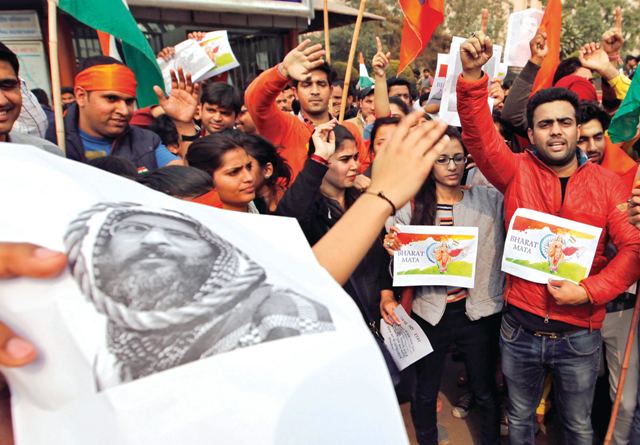
अफजल गुरु जेएनयू में आतंकवादी है, लेकिन भाजपा पीडीपी के साथ सरकार भी बना सकती है जो अफजल गुरु को 'शहीद' कहकर महिमामंडित करती है. संघ-भाजपा को यह पता है कि वे पूरी तरह फेल हैं और उनके लिए एकमात्र आशा उनके वे तूफानी घुड़सवार हैं जो किसी को विरोध नहीं करने दे सकते. देश को उनका डरावना चेहरा नहीं दिखे इसलिए वे मीडियाकर्मियों पर हमले करते हैं.अखिल भारतीय विद्यार्थी परिषद के कार्यकताओं ने हैदराबाद और जेएनयू में ‘मुखबिर’ की तरह सक्रियता दिखाई. देश जानना चाहता है कि हरियाणा में 9 दिनों के उपद्रव के दौरान वे कहां थे? वे वहां जातीय झगड़े की आग को बुझाते हुए नहीं दिखे. क्या वे वहां भीड़ का हिस्सा थे?
फोटो- अमरजीत सिंह
संघ-भाजपा की ‘राष्ट्रवादी’ सरकार सभी ‘राष्ट्रविरोधियों’ को प्रताड़ित कर रही है लेकिन इन ‘राष्ट्रवादी’ भारतीयों को लेकर कुछ तथ्यों पर गौर करना चाहिए. देश के पहले गृहमंत्री सरदार पटेल के मुताबिक, यह आरएसएस और हिंदू महासभा जैसे हिंदुत्ववादी संगठन थे जो गांधी की हत्या के जिम्मेदार थे. यह कुनबा आज भी उनकी हत्या को वध कहकर महिमामंडित करता है. 14 अगस्त 1947 को आरएसएस के मुखपत्र ‘आर्गेनाइजर’ ने लिखा था, ‘बदकिस्मती से जो लोग सत्ता में आए हैं, वे हमारे हाथों में तिरंगा पकड़ा देंगे लेकिन हिंदू इसे कभी स्वीकृति व सम्मान नहीं देंगे. तीन अपने आप में अशुभ है और तिरंगे में तीन रंग हैं जो निश्चित तौर पर बुरा मनोवैज्ञानिक असर छोड़ेंगे. यह देश के लिए हानिकारक होगा.’ जिन्होंने गांधीजी को मारा, जिन्होंने आजादी के बाद तिरंगे की तौहीन की, वे ‘राष्ट्रवादी’ हैं और जो युवा भारतीय चाहते हैं कि भारतीय राष्ट्र-राज्य सबके लिए मूलभूत अधिकारों और नीति निदेशक तत्वों पर अमल करे, उनकी अदालत के फैसले से पहले ही ‘आतंकवादी’ के रूप में ब्रांडिंग की जा रही है.
संघ भाजपा के जो कार्यकर्ता वंदेमातरम गा रहे हैं, उन्होंने अंग्रेजों के खिलाफ इसे कभी नहीं गाया. उन्होंने 1942 के ‘भारत छोड़ो आंदोलन’ के दौरान मुस्लिम लीग के साथ मिलकर सरकारें बनाई थीं जबकि कांग्रेस पर प्रतिबंध लगा था. जब नेताजी सुभाष चंद्र बोस सेना बनाकर भारत को आजाद कराने का प्रयास कर रहे थे तब हिंदुत्ववादी संगठनों ने मिलकर अंग्रेजी सेना के लिए ‘भर्ती कैंप’ लगाए थे. अब ये ‘राष्ट्रवादी’ लोग लोकतंत्र को नष्ट करने के लिए वंदेमातरम का इस्तेमाल कर रहे हैं.
बंटवारा करना संघ-भाजपा नेताओं और उनकी हिंदूवादी राजनीति के जीन में है. अपनी क्रूर राष्ट्रविरोधी विचारधारा के साथ वे न सिर्फ मुस्लिमों, ईसाइयों और दलितों के खिलाफ हैं बल्कि वे बहुसंख्यक समुदाय की भी एकजुटता के लिए खतरा हैं. हरियाणा के इतिहास में यह पहली बार है जब हम देख रहे हैं कि जाट और पंजाबी के बीच गहरे तक ध्रुवीकरण हुआ है. डॉ. आंबेडकर ने बहुत पहले कहा था कि ‘हिंदुत्व की राजनीति सिर्फ लोगों को बांटती है, इस तरह वह भारत का विनाश कर रही है.’
संघ-भाजपा के शासकों को यह महसूस हो रहा है कि वे जनता के बड़े हिस्से का समर्थन खो चुके हैं. वे अपने विरोधियों का ध्यान दूसरी तरफ केंद्रित करना चाहते हैं. यह भी एक तरह का राष्ट्रविरोधी कार्य है. वे अपना पुराना हिंदुत्ववादी एजेंडा पुनर्जीवित कर रहे हैं
कोई नहीं जानता कि हरियाणा और भारत हिंदुत्व की राजनीति के साथ कैसे रहेंगे. उन्होंने जेएनयू को राष्ट्रद्रोहियों का अड्डा घोषित कर दिया, लेकिन हरियाणा के बारे में क्या कहेंगे जहां पर बड़े पैमाने पर लोगों की जानें गईं और संपत्तियों को तहस-नहस किया गया. जेएनयू के राष्ट्रविरोधी हरियाणा में नहीं हैं और यह सब संघ-भाजपा के शासन में हो रहा है. इतिहास हरियाणा के हिंदूवादी शासकों को कभी माफ नहीं करेगा जिन्होंने हरियाणवी लोगों को जाट, पंजाबी और सैनी आदि में बांट दिया. हमारी सेना, जो हमारे देश का गौरव है, जिसका काम सीमा की सुरक्षा करना है, वह अपने ही लोगों पर गोलियां चला रही है.
अफजल गुरु जेएनयू में आतंकवादी है, लेकिन भाजपा पीडीपी के साथ सरकार भी बना सकती है जो अफजल गुरु को ‘शहीद’ कहकर महिमामंडित करती है. संघ-भाजपा को यह पता है कि वे पूरी तरह फेल हैं और उनके लिए एकमात्र आशा उनके वे तूफानी घुड़सवार हैं जो किसी को विरोध नहीं करने दे सकते. देश को उनका डरावना चेहरा नहीं दिखे इसलिए वे मीडियाकर्मियों पर हमले करते हैं. उन्होंने बाबरी मस्जिद ध्वंस के समय भी ऐसा ही किया था. वे भाड़े के गुंडे जो मीडिया, छात्रों और अध्यापकों पर हमले करते हैं, ‘राष्ट्रवादी’ भावना की बातें करते हैं.
जिन हिंदुत्ववादी अपराधियों ने गांधी जी को मारा, जिन्होंने मुस्लिम लीग के साथ 1942 में तब सरकार चलाई जब ब्रिट्रिश शासन ने कांग्रेस को प्रतिबंधित कर दिया था, नेताजी जब सेना गठित कर भारत को आजाद कराने की कोशिश कर रहे थे तब अंग्रेजी सेना के लिए भर्ती कैंप चलाए, भारतीय जेल से इस्लामिक आतंकी अजहर मसूद को कंधार छोड़ने गए, नरेंद्र दाभोलकर, गोविंद पानसरे और एमएम कलबुर्गी की हत्या की, शहीदे आजम के नाम पर बन रहे एयरपोर्ट का नाम बदलकर एक आरएसएस के बिचौलिये के नाम पर रख दिया और अफजल गुरु को शहीद घोषित करने वाली पीडीपी के साथ जम्मू और कश्मीर में सरकार चला रहे हैं, वे ‘राष्ट्रवादी’ हैं. यदि ये अपराधी ‘राष्ट्रवादी’ हैं तो एक धर्मनिरपेक्ष लोकतांत्रिक भारत के राजनीतिक भाग्य का अंत हो चुका है.
संघ-भाजपा के शासकों को यह महसूस हो रहा है कि वे जनता के बड़े हिस्से का समर्थन खो चुके हैं. वे अपने विरोधियों का ध्यान दूसरी तरफ केंद्रित करना चाहते हैं. यह भी एक तरह का राष्ट्रविरोधी कार्य है. वे अपना पुराना हिंदुत्ववादी एजेंडा पुनर्जीवित कर रहे हैं. उनके गुरु गोलवलकर ने अपनी किताब ‘बंच ऑफ थॉट्स’ में लिखा था कि मुस्लिम, ईसाई और वामपंथी इस देश के एक, दो और तीन नंबर के दुश्मन हैं.
गोलवलकर की किताब ‘वी आर आवर नेशनहुड डिफाइंड’ के मुताबिक, राष्ट्र पांच निर्विवादित तत्वों- देश, जाति, धर्म, संस्कृति और भाषा से बनता है. हालांकि, सावरकर की तरह उन्होंने भी संस्कृति को धर्म के साथ जोड़ा और इसे हिंदुत्व कहा. उनके अनुसार हिंदू एक महान तथा विशिष्ट राष्ट्र थे क्योंकि हिंदुओं की धरती हिंदुस्तान में रहने वाले केवल हिंदू यानी कि आर्य नस्ल के लोग थे. दूसरे, हिंदू एक ऐसी नस्ल से थे जिसके पास एक ऐसे समाज की विरासत थी जिसमें एक साझा रीति-रिवाज, साझा भाषा, गौरव और विनाश की साझा स्मृतियां थीं. संक्षेप में यह एक समान उद्भव स्रोत वाली ऐसी आबादी थी जिसकी एक साझा संस्कृति है. इस प्रकार की जाति राष्ट्र के लिए एक महत्वपूर्ण अवयव है. यहां तक कि अगर वे विदेशी मूल के भी थे तो भी वे निश्चित रूप से मातृ नस्ल में घुलमिल गए थे. उन्हें मूल राष्ट्रीय नस्ल के साथ न केवल इसके आर्थिक-सामाजिक जीवन से अपितु इसके धर्म, संस्कृति तथा भाषा के साथ एकरूप हो जाना चाहिए, नहीं तो ऐसी विदेशी नस्लें कुछ निश्चित परिस्थितियों के तहत एक राजनैतिक उद्देश्य से एक साझा राज्य की सदस्य ही मानी जा सकती हैं; लेकिन वे कभी भी राष्ट्र का अभिन्न हिस्सा नहीं बन सकतीं. यदि मातृ नस्ल अपने सदस्यों के विनाश या अपने अस्तित्व के सिद्धांतों को खो देने के कारण नष्ट हो जाती है तो स्वयं राष्ट्र भी नष्ट हो जाता है. नस्ल राष्ट्र का शरीर है और इसके पतन के साथ ही राष्ट्र का अस्तित्व भी समाप्त हो जाता है. इस प्रकार सावरकर और उन्हीं की तर्ज पर गोलवलकर नस्ली शुद्धता को हिंदू राष्ट्र निर्माण का आवश्यक साधन मानते थे. उनके राष्ट्रवाद में नस्लों के मिलन या अंतर्संबंधों के लिए कोई जगह नहीं थी.
गोलवलकर के अनुसार, ‘हम वह हैं जो हमें हमारे महान धर्म ने बनाया है. हमारी नस्ली भावना हमारे धर्म की उपज है और हमारे लिए संस्कृति और कुछ नहीं बल्कि हमारे सर्वव्यापी धर्म का उत्पाद है, इसके शरीर का अंग जिसे इससे अलग नहीं किया जा सकता. एक राष्ट्र एक राष्ट्रीय धर्म और एक संस्कृति को धारण करता है तथा उसे कायम रखता है क्योंकि ये राष्ट्रीय विचार को संपूर्ण बनाने के लिए आवश्यक हैं.’
गोलवलकर की हिंदू राष्ट्रीयता का सबसे महत्वपूर्ण अवयव नस्ल या नस्ली भावना थी, जिसे उन्होंने ‘हमारे धर्म की संतान’ के रूप में परिभाषित किया. उनके अनुसार, ‘हिंदुस्तान में एक प्राचीन हिंदू राष्ट्र है और इसे निश्चित तौर पर होना ही चाहिए और कुछ और नहीं- केवल एक हिंदू राष्ट्र. वे सभी लोग जो राष्ट्रीय यानी कि हिंदू नस्ल, धर्म, संस्कृति और भाषा को मानने वाले नहीं होते वे स्वाभाविक रूप से वास्तविक ‘राष्ट्रीय’ जीवन के खांचे से बाहर छूट जाते हैं… केवल वही राष्ट्रीय देशभक्त हैं जो अपने हृदय में हिंदू नस्ल और राष्ट्र के गौरवान्वीकरण की प्रेरणा के साथ कार्य को उद्धृत होते हैं और उस लक्ष्य को प्राप्त करने के लिए संघर्ष करते हैं. बाकी सभी या तो गद्दार हैं और राष्ट्रीय हित के शत्रु हैं या अगर दयापूर्ण दृष्टि अपनाएं तो बौड़म हैं.’
‘वे सभी लोग जो राष्ट्रीय यानी कि हिंदू नस्ल, धर्म, संस्कृति और भाषा को मानने वाले नहीं होते वे स्वाभाविक रूप से वास्तविक ‘राष्ट्रीय’ जीवन के खांचे से बाहर छूट जाते हैं… केवल वही राष्ट्रीय देशभक्त हैं जो अपने हृदय में हिंदू नस्ल और राष्ट्र के गौरवान्वीकरण की प्रेरणा के साथ कार्य को उद्धृत होते हैं और उस लक्ष्य को प्राप्त करने के लिए संघर्ष करते हैं. बाकी सभी या तो गद्दार हैं और राष्ट्रीय हित के शत्रु हैं या अगर दयापूर्ण दृष्टि अपनाएं तो बौड़म हैं’
बेशक गोलवलकर की यह परिभाषा पूरी तरह से हिंदू राष्ट्र के सावरकर माडल पर आधारित है और मुस्लिमों, ईसाइयों, या अन्य गैर हिंदू अल्पसंख्यकों के हिंदू राष्ट्र का हिस्सा होने के दावे को पूरी तरह खारिज करती है. गोलवलकर के अनुसार, ‘वे सभी जो इस विचार की परिधि से बाहर हैं राष्ट्रीय जीवन में कोई स्थान नहीं रख सकते. वे राष्ट्र का अंग केवल तभी बन सकते हैं जब अपने विभेदों को पूरी तरह समाप्त कर दें, राष्ट्र का धर्म, इसकी भाषा व संस्कृति अपना लें और खुद को पूरी तरह राष्ट्रीय नस्ल में समाहित कर दें. जब तक वे अपने नस्ली, धार्मिक तथा सांस्कृतिक अंतर को बनाए रखते हैं वे केवल विदेशी हो सकते हैं, जो राष्ट्र के प्रति या तो मित्रवत हो सकता है या शत्रुवत.
पूरी तरह से उनका हिंदूकरण या फिर नस्ली सफाया, भारत में अल्पसंख्यकों की समस्या से निपटने के लिए गोलवलकर ने यही मंत्र सुझाया था. 1925 में अपने निर्माण के बाद से ही आरएसएस ने कभी इसे अनदेखा नहीं किया. उनके अनुसार, मुस्लिमों और ईसाइयों को, जो कि बाहरी हैं, निश्चित तौर आबादी के प्रमुख जन, राष्ट्रीय नस्ल के साथ खुद को पूरी तरह समाहित कर देना चाहिए. उन्हें निश्चित तौर पर राष्ट्रीय नस्ल की संस्कृति और भाषा को अपना लेना चाहिए और अपने विदेशी मूल को भुलाकर अपने अलग अस्तित्व की संपूर्ण चेतना को त्याग देना चाहिए. अगर वे ऐसा नहीं करते हैं तो उन्हें राष्ट्र के रहमो-करम पर राष्ट्र की सभी संहिताओं और परंपराओं से बंधकर केवल एक बाहरी की तरह रहना होगा, जिनको किसी अधिकार या सुविधा की तो छोड़िए, किसी विशेष संरक्षण का भी हक नहीं होगा. विदेशी तत्वों के लिये बस दो ही रास्ते हैं, या तो वे राष्ट्रीय नस्ल में पूरी तरह समाहित हो जाएं और यहां की संस्कृति को पूरी तरह अपना लें या फिर जब तक राष्ट्रीय नस्ल अनुमति दे वे यहां उसकी दया पर रहें और राष्ट्रीय नस्ल की इच्छा पर यह देश छोड़कर चले जाएं.
इन ‘राष्ट्रवादियों’ ने आजादी आंदोलन में अंग्रेजों का साथ दिया और भारत को हिंदू पाकिस्तान बनाने के लिए प्रतिबद्ध रहे. आज वे जेएनयू के छात्रसंघ अध्यक्ष और अन्य छात्रों के लिए सख्त सजा की बात करते हैं, लेकिन यही ‘राष्ट्रवादी’ उस समय कुंभकरण मोड में चले जाते हैं, जब देश के दूसरे हिस्से में हिंदुत्ववादी कैडर 30 जनवरी को राष्ट्रपिता महात्मा गांधी के ‘वध’ का उत्सव मनाता है. बेशक, संघ और भाजपा के पाखंड को कोई भी मात नहीं दे सकता.
Newspapers have reported that the Aam Admi Government has reportedly told its legal team to file a criminal case against three channels for airing doctored videos where the words, “ Bandook”, “Sher ke bacche”, and “Hurriyat ke jawaan” were inserted (extraneously) into the videos to mislead the public. Even “Pakistan Zindabad” were telecast although they were not raised at the event after a magisterial inquiry submitted its investigation report.
Three of the seven videos examined by the Truth Labs, Hyderabad to ascertain whether they were doctored or not, were found to have been doctored. The television channels that telecast these doctored videos have not been named in the report.
The reporter and cameraman of Zee News were invited onto the campus at 5.20 p.m. by Saurabh Sharma of the RSS-affiliated Akhil Bharatiya Vidyarthi Parishad (ABVP) who is general secretary of the JNUSU, on February 9, and it is after the telecast by Zee television of the doctored videos the next day that the local police station lodged the FIR. The FIR, filed under section 124A of the Indian penal Code (IPC) did not name any students as offenders.
While Zee News/television willingly gave the CD of the Video recording of the news telecast that led to the registration of an FIR to the police, the same news channel, despite repeated requests did not make available any recording for the purpose of the Magisterial Inquiry. This amounts, in law to suppression of evidence and non-cooperation with a judicial officer.
Several of the Security Officers under the Administration gave contradictory statements to the District Magistrate and the Internal Inquiry Committee.
The Report submitted by Sanjay Kumar, Magistrate on March 2 completely exonerates Kanhaiya Kumar from shouting any anti-national slogans on February 9, 2016. Even on the role of Umar Khalid, the report states that the voice (allegedly heard giving certain slogans) is not visible on the video from the same source as the image, clearly suggesting doctoring. In the case of Anirban and Ashutosh, certain other slogans could be found to have been uttered by them but the melee and confusion of the crowd makes it difficult to offer certain conclusions. Further investigation has been recommended.
Delhi Government report on JNU Incident Factual Report by the Government of NCT of Delhi, on the Incident which took place at the JNU Camus on February 9, 2016. Sanjay Kumar, Magistrate, New Delhi
Major Findings of the Report of the District Magistrate (DM):
Nothing adverse could be found against Kanhaiya Kumar. No witness or video available to me could support allegation against him.
Umar Khalid was visible in videos. His support for the role of Afzal Guri is known and he was the organizer of the event. His role needs to be further investigated (Page 1 ) The Magistrate further says that after a close watching of the videos, he “did not hear any slogan from the mouth of Umar Khalid” (Page 23)
Three out of seven videos which were sent for verification were found to be doctored including one news clipping of a News Channel found on You-Tube
The report is regarding a February 9, 2016 protest march organised by a group of students at the campus of the Jawaharlal Nehru University (JNU) Campus where some anti-national slogans were raised. Another group of students protested against this event and raised slogans, JNU security and local police could avert any major fight On February 10, 2016 a news channel broadcast a video of a group of students raising slogans at the JNU campus. A controversy then erupted and many allegations and counter allegations were raised on diff media channels and on social media.
The Orders for Inquiry from the office of the deputy chief minister Manish Sisodia into the incident which happened at the JNU campus were given on February 13, 2016, the day after the arrest
Terms of Reference: “It is necessary to inquire into the incident and bring out a factual report. Accordingly it is hereby ordered that the District Magistrate, New Delhi will inquire into the incident and submit a factual report within 15 days.”
Methodology: The DM inquired into various footage of the incident available on You-Tube. Thereafter the DM selected and sifted those Videos that had clear contents and were supposed to support some allegations or counter those allegations. The DM also asked some of the reporters who interacted with him to share some links which are ‘raw footage of the original’. The decision was then taken to get a total of the seven videos examined by Truth labs, Bangalore.
The DM interacted intensely with the Vice Chancellor of JNU and other officials of the administration including the Internal Inquiry Committee. Several of the videos shot by the security staff of the G4S or other JNU officials on their cameras was also collected and examined by the Magistrate.
Significantly, the DM wrote to the Zee News channel to get the video footage of the incident. The Zee news Channel that has telecast these doctored videos on February 10, 2016 leading to the registration of the sedition case, not only did not reply to the District Magistrate, but did not submit any of the footage to him (as is required under law). “They maintained an ambivalent stand on sharing the footage. Till the time of writing the report, I have not received any footage from Zee news.”
Importantly, the District magistrate Sanjay Gupta concludes at Chapter 4 (Sequence of events) that “the event was not organised with prior permission. Hence it would not be right to say that the JNU administration withdrew the permission after granting the same. Although the JNU administration is taking the stand that permission was withdrawn. “Signatures of the Rector were not found on the Performa Permission form regarding the event by the Senior Security officer.
Contradiction between slogans recorded by the security staff of JNU and the slogans mentioned in the FIR:
“Kashmir ki janta sangharsh karo, hum tumhare saath hai, Kashmir ki mahilaon sangharsh karo, hum tumhare saath hai, Afzal ki hatya nahin sahenge..nahi sahenge..nahi sahenge.. Kitne Afzal maroge, har ghar se Afzal niklenge University Prashasan khabardar Zor lga kar hallaa bol Hum kya chate hain, azaadi, Hai haq hamaara azaadi Ham lekar rahenge azaadi.”
First Information Report (FIR) The First information Report (FIR) related to the incident is filed after Zee News telecasts a programme on February 10, 2016, ostensibly on the events that took place on the JNU campus on February 9, 2016. This programme showed some students shouting ‘anti-national’ slogans including ‘Pakistan Zindabad.’ Police then write to Zee News to get the copy of the footage of the video shot by Zee News o February 9, 2016. Police got the CD from Zee news. (Page 16 of the Report)
Page 16 of the Report: The FIR records that “people involved in the rally under the leadership of Umar Khalid were shouting anti-national slogans and sentences.” As per the FIR these slogans were, Fatal ki hatya nahin sahenge..nahi sahenge..nahi sahenge.. Kitne Afzal maroge, har ghar se Afzal niklenge Kashmir ki naujawan sangharsh karo, hum tumhare saath hai, Halla Bol, halla bol Lal Chauk par uncha bola Kitne Maqbool maroge, har ghar se Maqbool niklega Sajaaye Maut ko radd karo Haq hamaara azaadi Lad kar lenge azaadi “Pakistan Zindabad” And other anti-national slogans.
The police registered a case alleging sedition (under section 124A/34) of the Indian Penal Code.
Role of the Media, Zee News: The DM’s report states that the Zee news reporter, Pawan Nara, enters the campus for meeting Saurabh Sharma, General Secretary of the JNSU (belonging to the RSS-affiliated, ABVP). Pawan Nara enters the campus till 7.20 p.m. along with cameraman. (Page 15 of the Report)
Presence of the Media (Page 19 of the Report) Despite the media agency Zee News having no permission to enter the campus, a reporter and videographer from Zee News was present at the campus. The Entry Register of JNU Campus shows that Zee News s entry was facilitated by Saurabh Sharma of the RSS-affiliated ABVP, general secretary of the JNUSU. The register shows the entry at 5.20 p.m.
The JNU authorities claimed, according to the DM report, that the organizers invited the media without permission of the authorities. But, says the DM’s report, “this was a misconception that the authorities could have corrected.. “Only this news channel could video the event. This news channel flashed the news and thereafter thee Police obtained the copy from their office and filed the FIR.
Considering the gravity of the incident that took place on February 9, 2016, university authorities constituted a High level Enquiry Committee of three faculty members on February 10, 2016 to enquire into the whole incident although oral orders for constituting the committee was issued on February 11, 2016.
On February 11, 2016, the DCP (South) writes to the Vice Chancellor, Jagadesh Kumar for permission to enter the campus and the same day, the Registrar promptly grants this permission on behalf of the Vice-Chancellor.
On February 12, 2016, the Chief Proctor of JNU was allegedly forced to sign a letter recommending the suspension pending enquiry) of eight students. The Chief Proctor, Krishna Kumar resigned from his position on February 29, 206 and has been replaced by A.P. Dimri. Representatives of the JNUTA have been stating that the Chief proctor, Kumar was made to play into the hands of the Registrar, Bhupinder Zutshi. First a proctoral committee is formed which is then replaced by a Inquiry Committee; but when a suspension letter is to be issued it I signed by the Chief proctor.
Examination of Videos and Doctored Videos The video available at the URL. http://youtube.com/watch?v=Xnl.6d4YoVlc titled as Very Shocking and Disturbing Video from JNU has been finely edited and the word “Bandook” could have been inserted into the recording at around 5 minutes 8 seconds 327 milliseconds The video clip from a news channel where “Pakistan Zindabad was supposed to be heard or “Aazadi” was said by Kanhaiya; the videos were edited and the forensic examination found that the sound and video was coming from two different sources. “Hence,” says the Magistrate, “it is a doctored video with possible intention to misguide the public.”
Content of the FIR The police did nothing to prevent the occurrence of a cognizable offense as per the duty cast on the police under section 151 of the CrPC.
In the FIR registered on February 10, 2016 following the telecast on Zee News television and examination of the video footage provided to the police by the channel, “people raised anti-national slogans under the leadership of Umar Khalid.” At no place in the FIR does it state that “Umar Khalid raised the slogans” or “ Kanhaiya Kumar raised anti-India slogans.” (Page 23 of the Report)
Police write slogan “Pakistan Zindabad” in inverted comas itself, while other slogans are not in inverted comas. There are doubts of whether the slogan “Pakistan Zindabad: was raised at all since the slogan is neither heard in the Zee News raw footage not in the transcripts of the videos shot by the security staff of JNU. (Page 23 of the Report)
This shows the presence of a doubt in the minds of the police regarding the raising of “Pakistan zindabad” slogan and on who raised these slogans.
Important Witnesses and Internal Videos Devendra Singh Bist, Manager G4S, gives two distinct set of statements. In the first statement, he attributes distinct slogans to Umar Khalid. The DM asked him closely whether he heard the slogans from the mouth of Umar Khalid. After the first statement, he changes his statement. Thereafter he admits that he had not specifically heard Umar Khalid uttering these statements: he attributes these sound to the crowds below. (Page 24 of the Report)
Amarjeet Singh, a guard with the G4S testified to the sloganeering by Umar Khalid and gang and admitted on detailed examination was found to have contradictory statements about Umar Khalid. The DM found that none of the words attributed to Umar Khalid were spoken at that moment. (Page 24 of the Report)
VP Yadav was another important witness who gave contradictory statements, one version to the JNU Inquiry Committee, another to the District Magistrate. He submitted before the Internal Committee of JNU that “he heard Kanhaiya giving anti national slogans near the Ganga Dhaba.” To the DM this witness had said that he was not at the Ganga Dhaba. This witness has changed his statement. (Page 25 of the Report)
Role of Different Students Kanhaiya Kumar has not been found either by the DM’s report, or even by the JNU Inquiry Committee as having raised any anti-national slogans.
After a close scrutiny of the videos, including the doctored ones that have according to the DM’s report inserted voices with words and slogans that could mislead the public, the DM’s report finds that Umar Khalid’s voice can be heard only uttering “Kashmir ki janta sangharsh karo, hum tumahare saath hai, Kashmir ki mahilaon sangharsh karo, hum tumhare saath hai.” Even this is not certain.
As far as the other slogans allegedly raised, the DM’s report states that they were possibly raised by Anirban and Ashutosh but in the recording of the crowd this cannot be certain.
Finally, the DM’s report concludes that since the programme was organised in solidarity for Kashmiris, students from outside JNU also participated and that “possibly students of Kashmiri descent identified through their accent, covering faces, shouted pro-Azaadi, pro-Afzal and anti-India slogans. Though the JNU has segregated many of these faces and put them up on the board for identification purposes, the DM says it is still difficult to say conclusively whether these other four students shouted these slogans or not. Two of these could also be JNU students. This aspect needs to be further investigated.
Last year, on the 118th Death Anniversary of Savitribai Phule, my son Rohith came home to Guntur and said, “Savitribai Phule" fought and struggled for Dalit Women. Rohith also said that the students of the Hyderabad Central University (HCU) celebrated Savitribai Jayanthi as Dalit Women's Day on March 10, on the university campus. Rohith is not with me, not with us anymore. I want to organise a meeting on that day, March 10, 2016 on the HCU Campus.
Because in this country, no Dalit Women is treated as per law, equal before the law.
Additionally, Mrs. Smriti .J. Irani, the Hon'ble Minister of MHRD, has treated me as if I am worth nothing, harassed amd tortured me in the name of my caste. Because of this targeting, I have lost both my son, Rohith and my adoptive mother.
To this date, this Government is trying very hard to prove that I am not a Dalit, that I do not belong to the scheduled caste. This is a shame and causes deep pain. (As conveyed through Rohith Vemula’s brother, Raja Vemula)
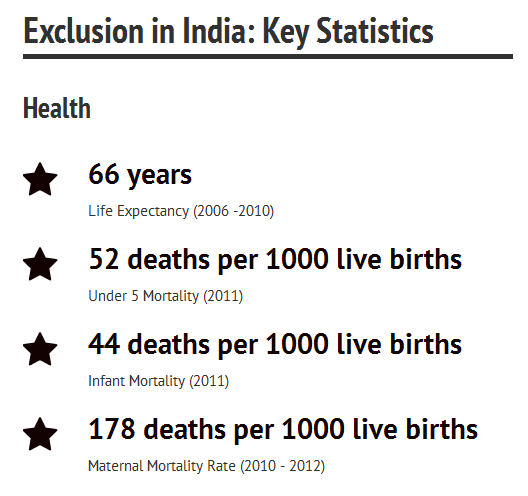
* Up to 43% of women in the working age (about 153 million) in India only do domestic work, indicating the scale of their exclusion from the workforce.
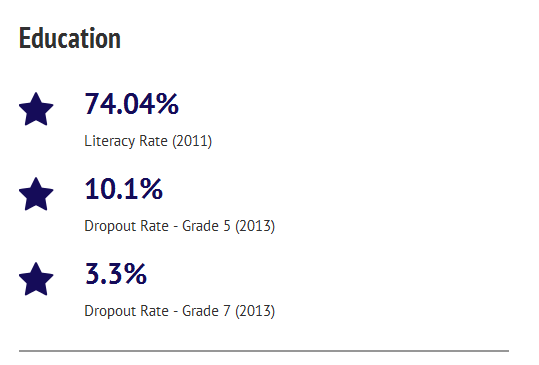
* A quarter of Indians (300 million) are illiterate, with 10% of those aged six to 14 dropping out of school.
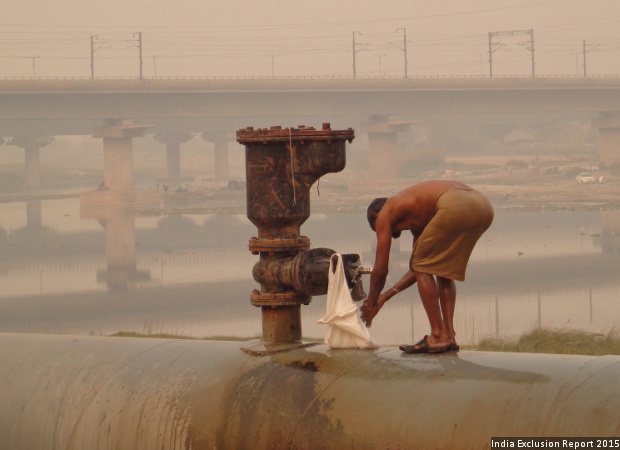
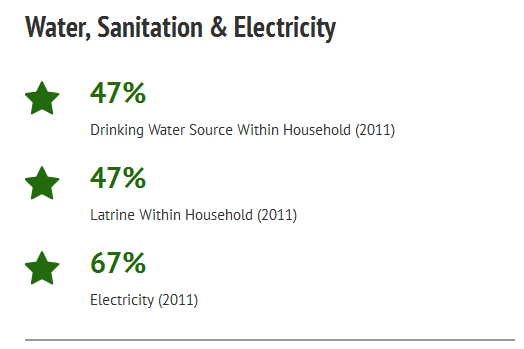
* Nearly half of all homes (47%) lack piped drinking water and sanitation.
* About 88% of diarrhoeal deaths are caused by poor sanitation.
These are some reminders of the scale of India’s continuing backwardness–despite economic progress–and the linkages between poverty, health and access to a better quality of life, explained in the India Exclusion Report (IXR) 2015, released on Saturday, March 5, by New Delhi’s Centre for Equity Studies.
IndiaSpend was associated with the report’s data research.
How India struggles to get the basics right
A quick glance at the 283-page report reveals that the result of poor maternal and infant healthcare is a life expectancy of 66 years (lower than the global average of 71, just a year more than Ethiopia’s 65 and seven years behind poorer Cambodia’s 73).
However, while the 2011 Census put India’s life expectancy at 66 years, the latest government data for 2014 puts the figure at 71.5, on par with the world average.
These indices are particularly related to a lack of piped water for drinking, and sanitation–absent in 47% of Indian homes–emphasising governmental failures in providing basic infrastructure to the poor and vulnerable.
The IXR also discusses practices that can help overcome such lack of access.
It explains free, clean primary health services in Pimpri Chinchwad, Maharashtra, for the poor. In Chennai, it analyses a surveillance, disease prevention and outbreak response; in Raipur, Chattisgarh, strong community outreach practices.
Rather than ruthlessly evacuating slums, the parivartan (transformation) programme in Ahmedabad started in 1996, assured slum dwellers that they would not be evicted for the next 10 years. The assurance was not legally binding, but it helped ensure community participation to upgrade physical infrastructure (water supply, sanitation, drainage, roads) with financial assistance from the corporation.
In Bangalore, the Bangalore Water Supply and Sewerage Board considers the urban poor as potential customers. In 2000, procedures to get a water connection were simplified: “The requirement of formal tenure documents for new connections was replaced with simple occupancy proof (to address concerns of land tenure), connection fees were reduced and tariff structure for domestic water was revised to introduce lower minimum monthly charge (to address concerns of affordability), and shared connections were offered as an alternative”, said the report.
Exclusion from public goods particularly affects women, children
Exclusion is viewed as lack of access to key public goods, provided and maintained by governments and civil society–such as health infrastructure, sanitation, drinking water and work opportunities, especially for women.
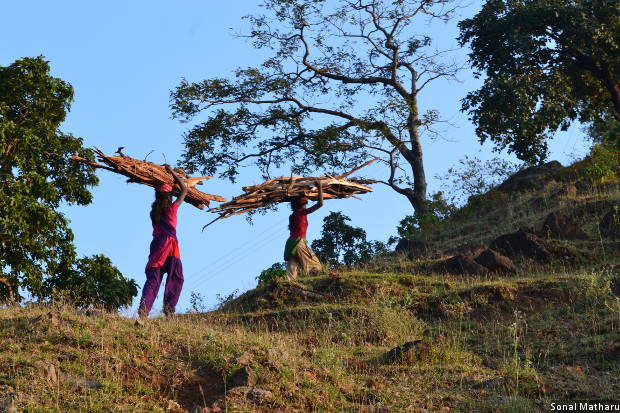
Poor health and education infrastructure adversely affects women. Maternal health benefits don’t reach women easily and lack of access to education limits employment opportunity among them; 43% of women in the working age-group of 15-59 years only do domestic work, according to the report.
India has 71 million single women, according to data from Census 2011, and an IndiaSpendanalysis had observed a 39% rise in about a decade. Single women include widowed and divorced women; the social stigma associated with their status excludes them from participating equally in economic activities, the IXR report said.
An estimated 44 million children in India work, the report said. Other than lack of access to education, these children also suffer from poor health.
“Disaggregated data for urban child workers are unavailable, although some reference is made to occupations such as construction, work in factories, the service sector,” said the report. “Poverty and lack of social security are the main causes of child labour.” Child workers typically suffer from a variety of health effects, including orthopaedic ailments, injuries, stunting of gastro-intestinal, endocrinal and reproductive systems because of strain and exposure, and greater preponderance of substance abuse as compared to children who are not in labour.
Disadvantaged groups: Victims of violence
“52 persons lay dead, over 60 had been grievously injured, and scores of houses destroyed in fires, across 14 villages (the effects radiating to 74 adjoining villages) in (the) two districts” of Muzaffarnagar and Shamli in western Uttar Pradesh in September 2013.
Violence spread to about 74 villages in the adjoining districts of Muzaffarnagar and Shamli. The largest violence-induced migration in recent times–mainly of Muslim families–is part of a continuing phenomenon, the report said, warning that “many instances of deaths, injuries, sexual violence, and destruction of property remain uncounted to this day”. Indeed, official figures themselves vary greatly, as this IndiaSpendreport explained.
Will a new tax make life more difficult for the poor?
The implementation of Goods and Services Tax (GST) can increase the Gross Domestic Product by 2%, according to the IXR. This will, in turn, increase the government’s tax income, possibly enabling it to provide better services.
But tax, the report said, “is inevitably a burden on every person who has to pay it”. Indirect taxes on consumer goods are high, and this means everyone–the rich and the poor–must pay equally.
“… indirect taxes (i.e., the taxes imposed on the production, trade and sales of goods and services), which are regressive in nature as they do not distinguish potential tax payers on the basis of their ability to pay or, in other words, on the basis of their incomes… By virtue of being included as a part of the price of a good, an indirect tax also generates socio-economic exclusion, especially for the poor consumer,” said the report.
“GST continues to be on the drawing board with a consensus between the centre and state governments proving elusive. Depending on the actual format of its implementation, as and when that happens, including the rates of taxation and the list of commodities exempted from taxation, the implications of the GST burden on the poor household would have to be reassessed.”
(Tewari is an analyst with IndiaSpend.)
This story has been updated to include the latest government data on India’s life expectancy.
We welcome feedback. Please write to respond@indiaspend.org. We reserve the right to edit responses for language and grammar.
First published on: Jan 10, 2016 Photo credits: www.indiasamvad.co.in
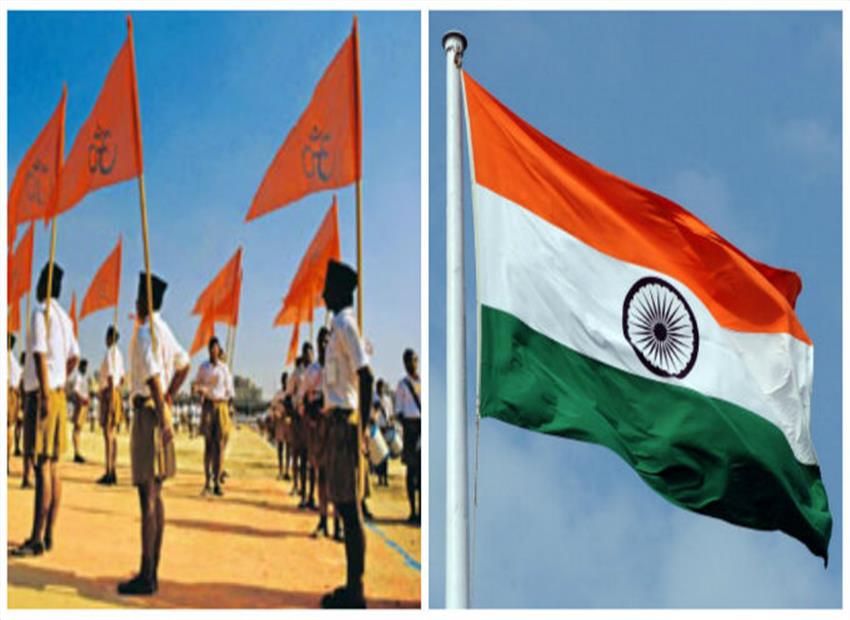
The self-professed guardians of patriotism, the Rashtriya Swayamsevak Sangh (RSS) have done it again. At pains to imprint a peculiar version patriotism on Indian Muslims, an RSS outfit, the Muslim Rashtriya Manch has launched a nationwide campaign to get all madrassahs in the country to hoist the Indian tricolor this January 26; India’s Republic Day. India’s largest Muslim seminary, Darul Uloom has shot back a response, “Does the RSS hoist the flag at its headquarters in Nagpur?[1]
But check its history, past and more recent. It has a schizophrenic relationship with both Indian nationalism and the Indian tricolor. Its bhagwa for the supremacist fanatics and the Tricolor for the ‘others’, read Muslims. Not so long back while on its familiar and sinister track of de-bunking composite Indian nationhood, on September 20, 2015, the RSS’ All India Prachar Pramukh, Manmohan Vaidya raised objections over the Tricolour of the Indian flag. According to Vaidya, the usage of different colours to represent different religions in India, was bound to evoke a communal thought. [2]
The first time that the RSS hoisted the Tricolor on its own headquarters was during the term of the first NDA I government in power in New Delhi, in 2002![3] Similar brow-beating tactics that the RSS is using now were used by sadhvi and RSS/VHP leader, Uma Bharati when, on August 15, 1994 she attempted to hoist the national flag at Idgah Maidan Hubli.[4] Then again, in 2011, again the RSS and its front the BJP once again, its bid to whip up a frenzy against Muslims, announced that they planned to unfurl the Tricolour, the Indian national flag, in Srinagar on January 26, 2011.
As Shamsul Islam, the author, in this article re-published below points out, “It may not be out of context to know that BJP and its RSS mentors, so zealous about hoisting the Tricolour in Srinagar, have least respect for the Tricolour, as we will see from the following documentary evidence from the RSS archives.”
Organiser, the RSS English organ, in its third issue (July 17, 1947), disturbed by the Constituent Assembly's decision to select the Tricolour as the national flag, carried an editorial titled 'National Flag', demanding that the saffron flag be chosen instead. The same demand continued to be raised in editorials on the eve of independence (July 31 editorial titled 'Hindusthan' and August 14 editorial titled 'Whither'), simultaneously rejecting the whole concept of a composite nation. The August 14 issue also carried 'Mystery behind the Bhagwa Dhawaj (saffron flag)', which, while demanding the hoisting of a saffron flag at the ramparts of Red Fort in Delhi, openly denigrated the choice of the tricolour as the national flag in the following words: "The people who have come to power by the kick of fate may give in our hands the tricolour but it will never be respected and owned by Hindus. The word three is in itself an evil, and a flag having three colours will certainly produce a very bad psychological effect and is injurious to a country."
Even after Independence when the Tricolour became the National Flag, it was the RSS which refused to accept it as the National Flag.
Golwalkar, second chief of the RSS and the most prominent ideologue of the organisation till date, while addressing a gathering in Nagpur on July 14, 1946, stated that it was the saffron flag which in totality represented their great culture. It was the embodiment of God: "We firmly believe that in the end the whole nation will bow before this saffron flag."
Even after independence, when the Tricolour became the national flag, it was the RSS which refused to accept it. Golwalkar, while discussing the issue in an essay titled 'Drifting and Drifting' in the book Bunch of Thoughts, a collection of his writings, published by RSS and treated as a bible for its cadres, has the following to say: "Our leaders have set up a new flag for our country. Why did they do so? It is just a case of drifting and imitating. Ours is an ancient and great nation with a glorious past. Then, had we no flag of our own? Had we no national emblem at all these thousands of years? Undoubtedly we had. Then why this utter void, this utter vacuum in our minds?"
Importantly, nowhere in the functioning of RSS is the Tricolour or national flag used even today. The RSS headquarters at Reshambaugh, Nagpur, does not fly it, nor do the RSS shakhas display it in their daily parades.
For RSS, it seems, the national flag is meant only to whip up frenzy against Muslims. In the 1991 'Ekta Yatra', it was Murli Manohar Joshi, another favourite in the RSS hierarchy, who went to unfurl the Tricolour at Lal Chowk of Srinagar, Kashmir. Uma Bharti carried a Tricolour when it was an Idgah that was being targeted by Hindutva. But when the Hindutva cadres went to demolish the Babri mosque in 1992, they did not carry the tricolour. They carried only saffron flags which were subsequently hoisted there.
The RSS is faced with a peculiar dilemma. For Hindus it has the saffron flag, and for Muslims, the Tricolour. This selective use of national symbols is bound to boomerang and further expose the Hindutva camp's real designs. But one thing is for sure: 'Muslim Bashing' remains the favourite pastime of the Hindutva gang. And communal polarisation – at all costs – their favourite short-term and long-term obsession. Even on the Republic Day.
Background (Shamsul Islam)
The RSS since its inception in 1925 hated anything, which symbolised the united struggle of the Indian people against British rule. The case of the Indian tricolour is the most pertinent one. It was in December 1929 that the Indian National Congress at its Lahore session adopted ‘Purna Swaraj’ or complete self-rule as the national goal and called upon the people to observe January 26, 1930 as Independence Day by displaying and honouring the Tricolour (the Tricolour was by consensus considered the flag of the national movement by this time). In response to this Hedgewar as Sarsanghchalak issued a circular to all the RSS shakhas to worship the bhagwa jhanda (saffron flag) as the national flag.
The RSS is faced with a peculiar dilemma. For Hindus it has the saffron flag, and for Muslims, the Tricolour. This selective use of national symbols is bound to boomerang and further expose the Hindutva camp's real designs.
Even after Independence when the Tricolour became the National Flag, it was the RSS which refused to accept it as the National Flag. Golwalkar while discussing the issue of the national flag in an essay entitled ‘Drifting and Drifting’ in the book Bunch of Thoughts, an RSS publication and collection of writings of Golwalkar, has the following to say: "Our leaders have set up a new flag for our country. Why did they do so? It is just a case of drifting and imitating….Ours is an ancient and great nation with a glorious past. Then, had we no flag of our own? Had we no national emblem at all these thousands of years? Undoubtedly we had. Then why this utter void, this utter vacuum in our minds?"2
The English organ of the RSS, Organizer (dated August 14, 1947) carried a feature titled 'mystery behind the bhagwa dhawaj' (saffron flag) which while demanding hoisting of saffron flag at the ramparts of Red Fort in Delhi, openly denigrated the choice of the Tri-colour as the National Flag in the following words: "The people who have come to power by the kick of fate may give in our hands the Tricolour but it never be respected and owned by Hindus. The word three is in itself an evil, and a flag having three colours will certainly produce a very bad psychological effect and is injurious to a country."
There is an interesting end note to this. Historical documents also show that the RSS showed anger at the national flag after Mahatma Gandhi’s assassination.[5] So the duplicitous doublespeak is simple: its Tiranga for the ‘Others’ and bhagwa for itself as far as the RSS is concerned.
References
1. MS Golwalkar, Shri Guruji Samagar Darshan (collected works of Golwalkar in Hindi), Bhartiya Vichar Sadhna, Nagpur, nd, Volume I, p. 98. Hereafter referred as SGSD. 2. MS Golwalkar, Bunch of Thoughts, Sahitya Sindhu, Bangalore, 1996, pp.237-238.
[5] The Sangh and the Tiranga: A love hate relationship; http://thetimesofbullshit.blogspot.in/2011/02/sangh-and-tiranga-love-hate.html; “Their allegiances (the RSS’) were sectarian rather than national — indeed, they chose to elevate their own bhagwa dhwaj above the tiranga jhanda. Shortly after Mahatma Gandhi's assassination, there were widespread reports of RSS activists trampling upon the tricolour. This greatly upset the Prime Minister, Jawaharlal Nehru. In a speech on February 24, 1948, Nehru spoke sorrowfully of how "at some places, members of the RSS dishonoured the National Flag. They know well that by disgracing the flag they are proving themselves as traitors … "
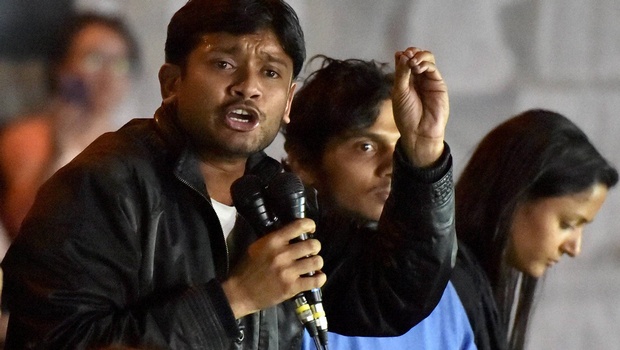
The media calls him “idealistic” because he believes that the promise of the Constitution, not only as it was drafted but even as it was envisoned by Babasaheb Ambedkar, can actually be the basis of concrete transformative action to change India’s deeply divided and unequal society. Like most young activists who share this ideal, Kanhaiya recognises that it is a long and difficult struggle but where he stands out among them is that he has got right to the heart of the problem as to how this change can be brought about democratically in contemporary India.
Kanhaiya identifies education as the key to realising the constitutional goals of equality and social justice. But this is not just some vague do-gooder conception of how everyone should get the opportunity to be in school but a clear direction towards an education system which in its very establishment would challenge all forms of discrimination and inequality. Contrary to current “commonsense” and preference, Kanhaiya argues for a system of free and universal common schooling for all children in institutions where the son or daughter of the President studies in the same classroom together with the children of farmers, workers, the middle-class and the well-to-do. Caste, religious and gender oppression can be overcome only by this constant interaction at study and play among all children and by the state provision of a system of genuinely equal opportunity so that no child is systemically disadvantaged by the “facts of his birth” as Rohith Vemula so poignantly phrased it in his `suicide’ note.
Education cannot be privatised and commercialised, sold to the highest bidder and made available only to those with deep pockets and a sense of entitlement. Thus the importance of demanding adequate scholarships for all researchers at central and state universities, which is the goal of the “Occupy UGC!” struggle that he led as President of the Jawaharlal Nehru University Students Union (JNUSU). Thus the importance of institutions like the Jawaharlal Nehru University (JNU) which Kanhaiya repeatedly emphasises allows students like him from a household run on his mother’s income of three thousand rupees a month as an anganwadi-worker to be able to pursue his doctoral studies.
It is significant that Kanhaiya rejects private high-fee charging universities and professional institutions not only because they restrict access to those who can pay, but also because they put a market value on education reducing it to a system for the production of degrees and “skills” rather than its truly democratic role in promoting critical and independent thought. Thus Rohith is Kanhaiya’s icon and his struggle is a continuation of Rohith’s struggle. At the same time he can understand the frustration and injustice that limited the choices of the constable in Tihar jail who too had wanted to study further but was compelled by circumstances to forget his dreams and take up a job.
Kanhaiya sees freedom of speech, the inalienable right to think independently, as a necessary part of the struggle to protect both the autonomy of the universities and to enlarge the democratic space for dissent in wider society. The right to democratic dissent distinguishes modern democratic constitutional governance from all forms of authoritarian and even fascist governments. The political project of replacing this constitutionalism with what Kanhaiya pithily called a “patented” form of RSS/Sanghi “nationalism” places the State/government/ ruling party or “office” above the people who constitute the nation.
Kanhaiya’s view, as he himself recognises, belongs to the tradition of the freedom struggle, of the national movement against British imperialism with its great icons who contributed to the idea of a modern, egalitarian and democratic India like Jyotiba and Savitri Bai Phule, Rabindranath Tagore, Bhagat Singh, Gandhi, Periyar, Babasaheb Ambedkar, Nehru and Subhash Bose among others.
Delivering the Convocation Address at the Allahabad University in 1946, Jawaharlal Nehru had said: “A University stands for humanism, for tolerance, for reason, for progress, for the adventure of ideas and for the search for truth. . . . If the universities discharge their duty adequately, then, it is well with the nation and the people.” It seems fitting today, when democratic India is faced with perhaps its greatest threat, that a young man heading the students union in the university named after Nehru should be the one to articulate that vision with such force and clarity.
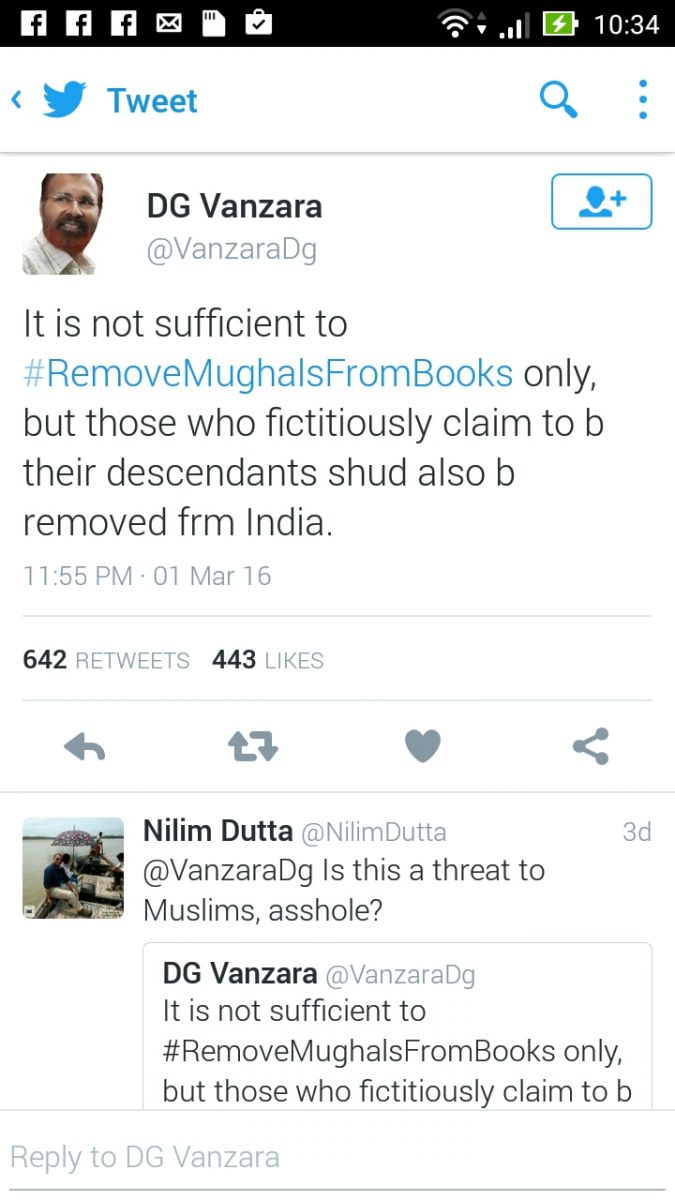
Dahyaji Gobarji Vanzara (DG Vanzara) former Deputy Inspector General, Gujarat, jailed from 2007 until 2015 on charges of having conducted a series of extra-judicial murders (encounters) while heading the Anti-Terrorist Squad (ATS), has done it again. In a tweet a few days ago (screen shot below) he has said that not only should Mughals be removed from Books, endorsing the twitter hashtag #removemughalsfrombooks but he has gone several steps further. He says not only Mughals from books, but “those who fictitiously claim to be their descendants should be removed from India.”
(As this article is being posted, Zee News has reported the shocking news that a BJP youth has offered an award of Rs. 5 lakh to anyone who cuts off the president of the Jawaharlal Nehru Univeristy Student Union, Kanhaiya Kumar's tongue: March 5, 2016, 11.54 a.m.)
Vanzara has been in a spate of television interviews on the Ishrat Jahan case recently and has announced that he will be interviewed by Sudharshan television (closely affiliated to the Rashtriya Swayamsevak Sangh, RSS) on Saturday March 5 and 5.30 p.m.
Vanzara walked out of jail, on bail on February 18, 2015 and in a brazen echo of support for his political masters said these were now “Acche Din” for Gujarat policemen. (http://www.firstpost.com/india/vanzara-gets-bail-its-ethically-and-morally-wrong-to-reinstate-cops-accused-of-fake-encounters-2113691.html)
On March 2, 2016, the hash tag #removemughalsfrombooks was trending for the whole day (http://www.india.com/news/india/removemughalsfrombooks-bhakts-twitter-campaign-erase-mughal-history-school-books-998444/).
The banal stereotype of Mughal rule is a favourite with the sangh parivar, who’s ideological route is the RSS. The reductionist propaganda then equates all that is Mughal with all that is Muslim (sic). (http://scroll.in/article/804547/5-quintessentially-indian-things-that-will-have-to-go-if-we-removemughalsfrombooks)
Vanzara is an officer of the Indian Police Services (IPS) 1987 batch. One of the accusations int he chargesheet of the Sohrabuddin case relates to allegedly 331 calls from then minister of state for home, Amit Shah to Vanzara and other police officers, many of them around the time of these killings. Shah has since been discharged by a Bombay CBI Court (December 31, 2014) in the Sohrabuddin and Tulsiram Prajapati cases. Initially brother of Sohrabuddin approached the High Court in appeal but since has backed out of fighting the challenge (http://indianexpress.com/article/india/india-news-india/fake-encounter-sohrabuddins-brother-takes-back-plea-against-bjp-president-amit-shah/).
In September 2013, there were as many as 32 police officers, including six IPS officers who were on jail for these encounters. Many of them had worked under Vanzara.These officers were also among those who had been highly rewarded under Modi and Shah. Vanzara himself had a meteoric rise since the early 2000s, when the encounters to eliminate terrorists began.
In this 10 page controversial resignation letter addressed to Additional Chief Secretary (Home) dated September 1, Vanzara, lodged in Sabarmati Central Jail in connection with a string of alleged fake encounter cases, said the accused officers and men "simply implemented the conscious policy" of the state government. In his hard-hitting letter, Vanzara said if policemen could be sent to jail for alleged fake encounters, the place of the state government "should either be in Taloja central prison at Navi Mumbai or in Sabarmati Central Prison at Ahmedabad."
"I would like to categorically state in the most uninquivocal words that the officers and men of Crime Branch, ATS and Border Range, during the period between 2002 to 2007, simply acted and performed their duty in compliance of the concious pro-active policy of zero tolerance towards terrorism of this government after Godhra riots," he said.
"Gujarat CID and Central agency CBI had arrested me and my officers in different encounter cases holding us to be responsible for carrying out alleged fake encounters.
"If that is true then the CBI investigating officers have to arrest the policy formulators also as we, being field officers, have simply implemented the conscious policy of this government which was inspiring, guiding and monitoring our actions from the very close quarters," Vanzara said.
"By this reasoning I am of the firm opinion that the place of this government instead of being in Gandhinagar, should either be in Taloja central prison at Navi Mumbai or in Sabarmati Central Prison at Ahmedabad," he said.
Vanzara accused the state government, particularly former minister of state for home Amit Shah of betraying him and 32 other officers, in jail in encounter killing cases being probed by the CBI. The suspended officer blamed Shah, currently a BJP general secretary, for shifting Sohrabuddin Sheikh encounter killing case transferred outside Gujarat.
"The crux of the whole matter is that it was just to facilitate his trivial personal interest of fighting Gujarat Assembly Elections of 2012 that Amit Shah got the trial (Soharabuddin encounter case) transferred and betrayed our trust reposed in him whereby he forced us to suffer more and more…" Vanzara said.
He said in the letter that he used to adore Modi like God, who could not rise to the occasion under the "evil" influence of Shah, a co-accused in Sohrabuddin Sheikh and Tulsiram Prajapati encounter cases.
Vanzara, who was unsparing in his attack on Shah for the plight of policemen jailed in fake encounter killing cases, was sarcastic while referring to Modi… saying, "…but I am sorry to state that my God could not rise to the occassion under the evil influence of Amit Shah who usurped his eyes and ears and has been successfully misguiding him by converting goats into dogs and dogs into goats since last 12 years."
"Chief minister of Gujarat has very rightly been talking of repaying his debt which he owes to Mother India. But, it would not be out of context to remind him that he, in the hurry of marching towards Delhi may kindly not forget to repay the debt which he owes to jailed police officers who endowed him with the halo of brave chief minister among the galaxy of other chief ministers who do not bare the same adjective before their names," Vanzara said.
"I state with all my humility that, but for the sacrifices made by me and my officers in thwarting the onslaught of initial disorder in the state the Gujarat Model of Development which this government is so assiduously showcasing at the national level would not have become possible," Vanzara said.
Vanzara is a prime accused in the alleged fake encounter killings of Tulsiram Prajapati, Sadik Jamal, Mumbai student Ishrat Jahan, Javed Shaikh, and two alleged Pakistani nationals Amjad Ali Rana and Zeeshan Johar, dubbed the Gujarat government as "spineless" when it came to protecting its own officers.
"…I have to state in nutshell that this spineless government of Gujarat which is valiant only in words otherwise coward in deeds and impotent in actions has ceased to command my allegiance, trust and loyalty… and that is why this government has no reason to keep me continued in its service nor I have a reason to continue to be in the service of this government even for a single day," he said in his resignation letter .