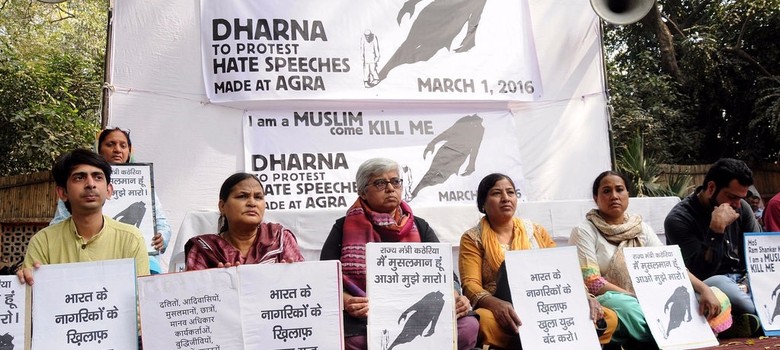
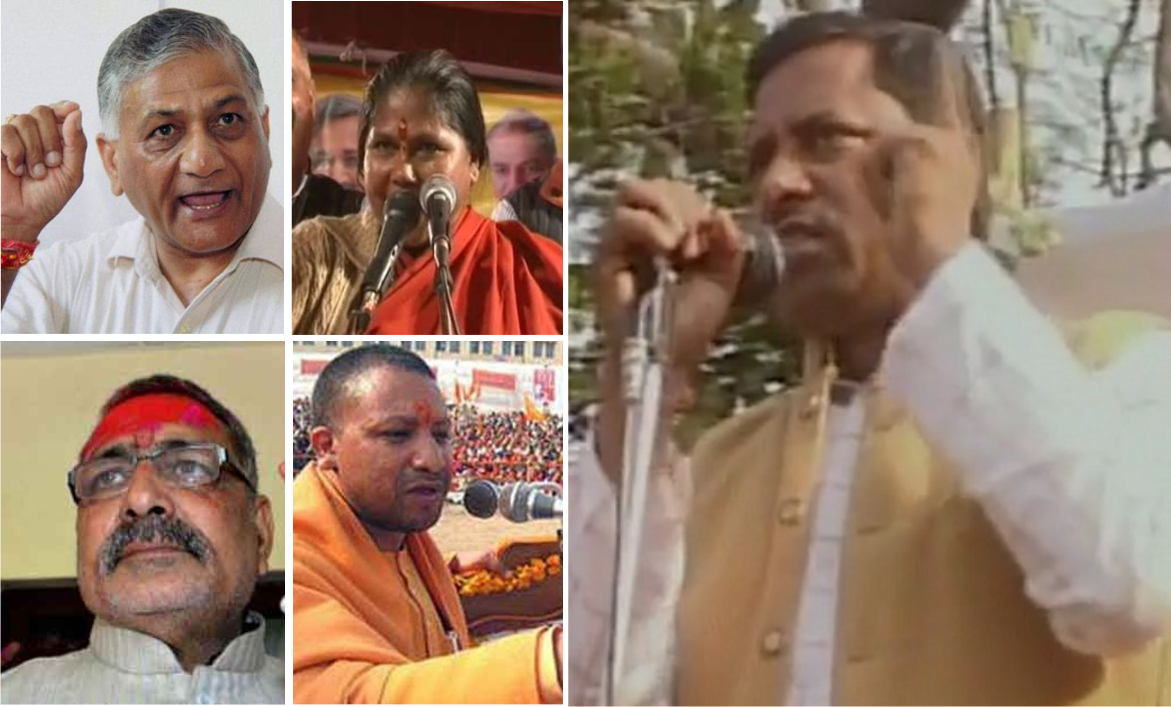
The remarks made in Agra by Ram Shankar Katheria, the Union Minister of State for Human Resource Development, have raised a storm in Parliament. Speaking at a condolence meet organised by the Sangh Parivar on February 28, Katheria had allegedly said that Muslims should prepare for the “final battle” and that a conspiracy was being hatched against Hindus. Along with local Bharatiya Janata Party leader Kundanika Sharma and the Vishwa Hindu Parishad’s Agra secretary Ashok Lavanya, Katheria has been booked under sections 295A (wounding religious sentiment) and 153A (promoting enmity against groups) of the Indian Penal Code – the two laws most commonly invoked in cases where a hate speech is thought to have been made.
The minister’s comments are not surprising given that the BJP and its sister organisations have been trying to get maximum political mileage from the death of Arun Mahaur, a Dalit leader from the VHP was shot on his way back from a temple. Katheria’s provocative statements cannot be divorced from the timing, coming as it did in the run-up to campaigning for the Uttar Pradesh Assembly elections.
This is not the first time that a minister in the incumbent National Democratic Alliance government has been accused of making a hate speech. In December 2014, at a rally in the run-up to the Delhi Assembly elections, Union minister of state for food processing industries Sadhvi Niranjan Jyoti said that voters would have to choose between Ramzaade (followers of Lord Ram) and haraamzaade (illegitimate children).
Clear irony This trend of politicians making provocative statements ahead of election season is not new. But what is frightening is these politicians are ministers in the ruling dispensation who wield enormous political power and can influence the minds of voters. They also seem to make these speeches with impunity. Sections 295A and 153A constitute serious offences – cognisable and non-bailable, carrying a maximum punishment of up to three years. If the speech in question is made at a time when the Election Commission has announced the election dates and official campaigning has begun, then a conviction under section 153A can be used to disqualify a candidate for indulging in a corrupt practice under sections 123(3) A of Representation of Peoples Act. In addition, “promoting enmity between classes” in connection with an election is an electoral offence under section 125 of the same Act.
Despite these protections in law, politicians continue to spout hate speech, while the same laws – 153A and 295A in particular – are often used to harass and intimidate artists, dissenters and academics. The irony is hard to miss. The most striking example is that after all the explicit hate speech made by Shiv Sena leaders in its mouthpiece Saamna, especially in and around the period of the 1992-'93 communal riots in Mumbai, there have only been two convictions by trial courts, and that too, of party members near the bottom of the hierarchy.
Seeking solutions Given the continuing problem of hate speech despite having laws in place, the Supreme Court in 2014 took up a Public Interest Litigation on the issue filed by the Pravasi Bhalai Sangathan, an organisation working for the welfare of migrant workers.
The Supreme Court referred to three ways in which Canadian courts have approached such matters. The first is that courts must apply hate speech prohibitions objectively. The second is that the term “hatred” or “hatred and contempt” in the law should be interpreted narrowly and restricted to extreme manifestations of the emotion described by the words “detestation” and “vilification”.
This would exclude speech that while may be repugnant and offensive, does not incite the level of abhorrence, delegitimisation and rejection that risks causing discrimination or harm. The third is that the focus of tribunals and courts should be the effect of the words in terms of whether it exposed the targeted person or group to hatred by others, and not whether the words were repugnant.
As per the Canadian courts’ approach to the issue, hate speech is not about causing distress to an individual or community, but about laying the groundwork for future attacks on a community, which can range from discrimination to ostracism, segregation, deportation, violence, and in extreme cases, genocide. India’s Supreme Court, while referring to the nuanced view that the Canadian Courts have taken, requested the Law Commission to look into the matter.
Dangerous speech Another framework that has gained currency internationally are principles suggested by the law academic Susan Benesch. Drawing on earlier developments in international law, Benesch defines a domain of speech called “dangerous speech”, or speech that has a reasonable chance of catalysing violence against a group, which needs to be regulated. The most dangerous speech would be one where all the five variables mentioned below are present and maximised:
1. A powerful speaker with a high degree of influence over the audience 2. The audience has grievances and fears that the speaker can cultivate 3. A speech act that is clearly understood as a call to violence 4. A social or historical context that is propitious for violence, for any of a variety of reasons, including longstanding competition between groups for resources, lack of efforts to solve grievances, or previous episodes of violence 5. A means of dissemination that is influential in itself, for example because it is the sole or primary source of news for the relevant audience
Going by these frameworks, there is no doubt that the utterances of Katheria, Sadhvi Niranjan Jyoti, and a number of other politicians fall squarely under the category of speech that must be proscribed. The question is whether our institutions of governance are independent enough to follow through with these cases and ensure that those who cross the "lakshman rekha" of “dangerous speech” are prosecuted, and these prosecutions are taken to their logical conclusion, so that they serve as deterrents to persons across the political spectrum.
Even as this is being written, the sedition law (section 124A) is being used to silence dissent at Jawaharlal Nehru University. Sedition law is an anachronism. It makes the demand of the loyalty of citizens, a demand that should not be proscribed in law. Hate speech law (sections 153A and 295A) govern the relationship between groups of citizens based on the assumption of the British lawmakers that Indians were excitable subjects. These laws need to be seriously re-evaluated to ensure that they are not used to regulate hurt sentiments (which are subjective), and instead to prosecute “dangerous” speech (with more objective criteria) and to prevent speech that leads to discrimination, ostracism, segregation, deportation, violence, and genocide as defined by the courts in Canada.
Siddharth Narrain is a lawyer and Research Associate at Sarai – Centre for the Study of Developing Societies, Delhi.
German students and soldiers work together in Berlin to transform sports hall into refugee center. Fabrizio Bensch/Reuters
This article written by a German professor in the context of the 2015 student protests in USA has equal relevance to our own context with campuses across India in ferment
The protests over race and diversity that shook campuses across the U.S. in 2015 continue to reverberate.
In January the president of Ithaca College resigned. In February Princeton University began public discussions of the controversial legacy of its former president and U.S. President Woodrow Wilson. And also in February, the University of Missouri fired the professor who called for reporters to be removed from covering a campus protest.
Although some administrators deem such students’ demands as fair and justified, others accuse them of revisionist and wrong, claiming “history cannot be comprehended if erased.”
As a German Studies scholar, I am observing the controversies on U.S. campuses attentively. I am reminded of the discussions that students initiated in Germany in the 1960s to overcome the past.
Indeed, looking back at the protest movement in Germany reveals parallels that help to understand the present.
The German burden
Probably no other country has struggled as hard to come to terms with its past as Germany.
The Nazis' unimaginable crimes cost the lives of millions of people, many of whom died in ghettos or in concentration, labor and death camps. Most of these victims were Jewish. Others included ethnic and religious minorities, political activists, members of resistance groups and gays.
After the war, all visible signs of Nazi rule – such as swastikas and portraits of Hitler – were removed under orders from the Allied Powers of the U.S., United Kingdom, France and the Soviet Union. But that did not mean that racism had been uprooted in postwar German society.
Students helped to democratize German society through instigating public debates on topics such as gender equality, wealth distribution, and the meaning of public leadership. And if necessary, former protesters took matters into their hands and founded their own media outlets such as the left-leaning newspaper cooperation “taz” in Berlin in 1978.
It was students who sparked a public discussion on race and gender. It was they who initiated what ended up being a cathartic process of healing. In the process, however, there was resistance and violence on both sides. The students' targets were clear. They were protesting against universities' failure to remove professors that were known racists and had served in the Nazi administration; against the authoritarian and paternalistic structures at universities; and in favor of equality among the sexes.
In doing so they were targeting the German government itself.
First attempts to undo 12 years of Nazi propaganda
The Nazis had consolidated their power through centralization and massive organizations. The Nazi Party itself had more than 8 million members or almost 10 percent of the population. The German Labor Front, a state-mandated union whose leaders supported the regime counted as many as 25 million members.
The sheer number of people who had been members of Nazi organizations made the goal of removing them from government and public offices impossible. Many were able to move into high positions in the West German government, and some of those even had the backing of the United States, who considered them efficient anti-communists.
One of these was the director of the Federal Chancellery of West Germany, Hans Globke, a jurist who had co-authored the Nuremberg Laws that revoked Jews’ citizenship in 1935.
Yes, the Nuremberg trials of 1945-46 convicted – in the spotlight of the international media – 22 main Nazi officials, military officers and business leaders. And, yes, there were a number of trials to follow in the 1950s. But it took until the 1960s and the Auschwitz trials for the larger public to be shaken out of its comforting illusion that an economic recovery could continue without addressing the traumatic experience of Nazi crimes and the involvement and passive support of significant segments of the population.
New role models for students
Student protests in West Germany were kick-started by the decision of the center left Social Democratic Party to exclude its student union from party membership in 1961.
The students saw themselves as legitimate political players. They began speaking up not just against the establishment’s decision to silence them but also the establishment’s past.
In their fight against the “lies of the fathers,” students turned to new intellectual role models, such as Theodor W. Adorno and Herbert Marcuse , leading figures of the Frankfurt School of Critical Theory who had been in exile during the war. But if these “fathers of the revolution” sparked debate, it was often women who took action.
The political activist Beate Klarsfeld, for example, received major public attention when she slapped Kurt Georg Kiesinger, German chancellor from 1966-69.
Kiesinger had been a Nazi Party member and deputy director of the State Department’s foreign radio network.
It was unacceptable to students that a staunch opponent of free speech could be the highest dignitary of West Germany.
Kiesinger, however, struck back. He introduced an infamous “Emergency Law” in 1968 that only intensified the protests against the government and its representatives.
The law was implemented in May 1968 and authorized the government to make wide-ranging decisions without confirmation or consent by the German Parliament. It gave the government power to strip citizens of constitutional rights such as the right of free speech in case of an armed conflict or a natural disaster.
Students attacked the law as undemocratic and took to the streets. Demonstrations became violent. The deadly shooting of Benno Ohnesorg in 1967 (whose attacker was revealed in 2012 as an undercover agent for the East German Stasi secret police) and of charismatic student leader Rudi Dutschke a year later, brought matters to a boiling point.
In the wake of this violence the student movement split. Most continued peaceful protests. But some, notably the Red Army Faction (RAF), turned to terrorism. It was their kidnapping and 1977 murder of Hanns-Martin Schleyer, the president of the Confederation of German Employers Association that pushed the government into a state of emergency.
And once again the wartime past reared its head.
Until his kidnapping, the public had known little about Schleyer – one of the country’s most powerful business leaders. Now it was revealed that he had been an active Nazi party member, a Nazi Student Organization leader, and a Second Lieutenant in the infamous and murderous Schutzstaffel or “SS.”
The legacy
The RAF was undoubtedly a criminal organization without lasting impact on society as a whole. But the student protests changed the German mindset forever.
Students’ demands to have a role in governing universities were largely accepted. The government increased spending on education, changed curricula to prepare students better for the job market, and introduced Universities of Applied Sciences or “Fachhochschulen.”
More female high school graduates entered higher education. New non-discrimination laws made it easier for women to pursue careers in higher education. In addition, universities lowered access barriers for students from low income families.
Students helped to democratize German society through instigating public debates on topics such as gender equality, wealth distribution, and the meaning of public leadership. And if necessary, former protesters took matters into their hands and founded their own media outlets such as the left-leaning newspaper cooperation “taz” in Berlin in 1978 – a publication that continues to be a thought leader today despite its relatively small circulation of 52,000 copies.
Other former protesters cofounded the Green Party, now a major player in Germany’s political landscape with an average 10% of the votes countrywide and currently in coalition governments in no less than eight of the sixteen German states. The Green Party’s most prominent member to this day is a former student leader from Frankfurt, Joschka Fischer, who was the country’s Foreign Secretary from 1998-2005.
2015-2016
The echo of student protests in the 1960s and ‘70’s can still be heard to this day.
Yes, there are a growing number of nationalists that oppose Angela Merkel’s decision to open borders to 1.1 million refugees mainly from Syria, Afghanistan and Eritrea. But at the same time, students in Germany have vociferously expressed their support for refugees by volunteering in aid projects, teaching the German language, helping with translations, offering legal advice, and accompanying migrants to medical doctors. More and more universities are opening up their English course offerings for refugees and a new tuition-free university in Berlin is targeted specifically at migrants.
Merkel’s politics, I believe, can be seen as a result of lessons learned by German history. The official response to political oppression and racism, in other words, must be civility and responsibility.
History, much like in the U.S., should adapt to the values of the present, not the past.
Top Feature Image: Saladin and Guy of Lusignan after the Battle of Hattin in 1186 by Said Tahsine (1904-1985, Syria). Public Domain via Wikimedia Commons
leppo, Mosul, Tikrit, Acre… Until just a few years ago, these names meant little to the average American. Now they are all too familiar, as are the atrocities being committed there in the name of religion. Eight hundred years ago the situation in that region was much the same, except then, Christians were committing acts of cruelty no less numerous or shocking than Muslims. Both did so during the course of Holy Wars that came to be known as “the Crusades.”
Of all the warriors who fought in those wars, none cast a larger shadow than the Sultan, Saladin, who died on this day in 1193 CE. His exploits eclipsed even those of his most famous adversary, Richard I (“the Lionheart”). It was Saladin who annihilated King Guy’s army at the Horns of Hattin in 1187 CE and reclaimed Jerusalem for Islam after it had been ruled by Christian Franks for nearly a century. And when Richard and Philip II of France came to Palestine at the head of a third Crusade, it was Saladin who met them, denied them Jerusalem, and forced them to abandon their quest to free the Holy Land from Muslim dominion. And yet, Saladin became a source of myth and legend more for his image as the “noble enemy” than for his victories on the battlefield. For he, more than the Christian knights who opposed him, exemplified chivalrous ideals in his conduct both as a military leader and civil servant.
After taking Jerusalem for Christendom in 1098 CE, Godfrey of Bouillon had its Muslim defenders massacred by the thousands. When Saladin reclaimed the Holy City for Islam in 1187 CE, he responded not in kind, but spared the lives of its Christian defenders in return for a modest ransom and bondage for those who were unable to pay. Later, he permitted Christians to visit Jerusalem without paying tribute and also granted them free access to the other holy places under his control.Equestrian statue of Saladin in the Citadel, Damascus, Syria by Graham van der Wielen. CC BY 2.0 via Wikimedia Commons.
On Wednesday, 4 March 1193 CE Saladin died. The cause of his fatal illness though uncertain had features consistent with tuberculous meningitis. At the time of his death, only one Tyrian gold piece and forty-seven pieces of silver remained of the vast wealth he had amassed during his conquests, so irresistible had been his impulse for giving while he lived. Unfortunately, none of his 17 sons inherited either his generosity or his statesmanship. No sooner was their father gone then they began fighting amongst themselves, and in just a few years had reduced the empire he had created into a fragmented patchwork of powerless states.
In 2005, Ridley Scott released an epic film, The Kingdom of Heaven, loosely based on the life and legacy of Saladin. Near the end of the film there is a poignant scene in which Saladin, having just entered Jerusalem at the head of his victorious army, picks up a cross that had been knocked to the floor during the siege of the Holy City and respectfully places it back on its table. According to journalist Robert Fisk, when he saw the film in a Beirut cinema, that particular scene brought the Muslim audience in attendance to its feet applauding. Their reaction gives hope that after nearly a thousand years of unrelenting religious strife in the Holy Land, a formula for peace may yet be found in the principles of the “noble enemy” that motivated Saladin throughout his life.
(The author is an Emeritus Professor of Medicine and Carolyn Frenkil and Selvin Passen History of Medicine Scholar-in-Residence at the University of Maryland School of Medicine in Baltimore, Maryland. He is also the author of Diagnosing Giants: Solving the Medical Mysteries of Thirteen Patients Who Changed the World)
Former judges and IPS officers, jurists, scientists and businessmen – a list that includes Justice PB Sawant and Julio Ribeiro — have in a fervent appealto the Chief Justice and all other Judges of the Supreme Court of India urged suo motu constitutional action on the issue of alarming and threatening statements being made by persons currently in powerful constitutional positions within the Union government. Quoting from the shocking and brazen speech made by Ram Shankar Katheriya, Union minister of state for human resources development (MHRD) in Agra as reported in the Indian Express on February 29, 2016, the representation also includes references to other shocking instances of hate speech from minister and elected representatives of the present government at the Centre.Stating that India was being pushed to the brink by such statements, the signatories have urged that the Supreme Court set up a Permanent and Sitting Commission to monitor and oversee (video tape, record and document) all such meetings happening to prevent a situation of hate driven provocation and attacks on marginalised sections.
Justice PB Sawant former judge of the Supreme Court of India and chairperson of the Press Council of India heads the list that also includes Julio Ribeiro, former director general of police, Punjab and ambassador to Romania. The other prominent signatories include Justice (retired) Rajinder Sachar, Justice (retired) BG Kolse Patil, Justice (retired) Hosbet Suresh, Iqbal Chagla (senior counsel), Cyrus Guzder (businessman), PM Bhargava (scientist), Dr Syed Zafar Mahmood (President, Zakat Foundation of India), Reverend Fr Dr Packiam T Samuel, Nandan Maluste (financial analyst), Janak Dwarkadas (senior counsel), Navroz H Seervai (senior counsel), Anil Dharker (senior journalist) and, IM Kadri (architect) and SM Mushrif (former inspector general of police).
The letter was submitted to the Supreme Court of India today. A similar appeal has also been made to the President of India, Pranab Mukherjee.
The letter also states that:
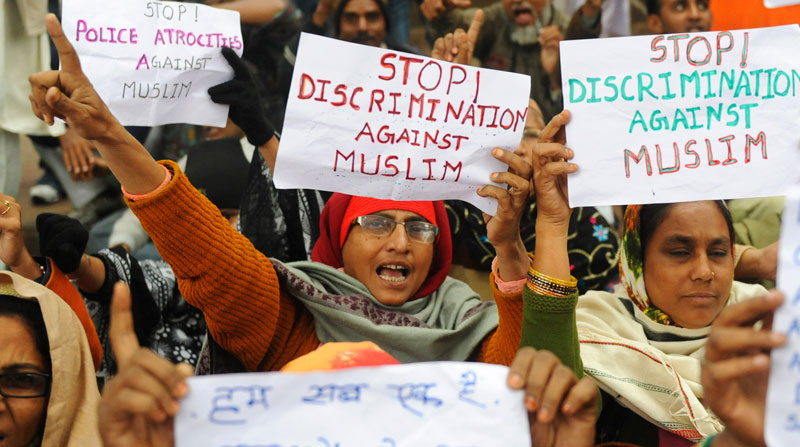
— These statements have caused fear and insecurity among India’s citizens, the marginalized sections, especially minorities, Dalits and Adivasis.
— The signatories have annexed here a news report titled “Muslims warned of ‘final battle", where in the presence of a minister of state in the central government and a member of parliament (MP) of the ruling party, Muslims were equated to “demons” and “descendants of Ravana”, and were warned of a “final battle”.
— Speakers reportedly urged Hindus to “corner Muslims and destroy the demons (rakshas)”, while declaring that “all preparations” had been made to effect “badla (revenge)” before the 13th-day death rituals for Mahaur. “Human skulls would be offered to his martyrdom,” VHP district secretary Ashok Lavania, who has been jailed earlier for assaults on Muslims, reportedly said.
— Talking about the coming Assembly elections in Uttar Pradesh, BJP MLA Jagan Prasad Garg reportedly told the crowd, “You will have to fire bullets, you will have to take up rifles, you will have to wield knives. Elections are approaching in 2017, begin showing your strength from now onwards.” The 5,000-odd crowd chanted slogans such as “Jis Hindu ka khoon na khaule, khoon nahin wo pani hai (Any Hindu whose blood does not boil isn’t Hindu enough)”.
— MP Babulal reportedly urged an open fight with Muslims, and said: “Don’t try to test us… We will not tolerate insults to the community. We do not want unrest at any cost, but if you want to test Hindus, then let’s decide a date and take on Muslims.”
— Agra's BJP leader Kundanika Sharma reportedly said, "We want the heads of these traitors, the killers of Arun Mahaur,”. “This is not the time to sit quiet. Chhapa maaro, burqa pehno, lekin inhen gher-gher kar le aao. Ek sar ke badle dus sar kaat lo" (Raid them, wear burqas, but corner them. Behead ten in revenge for one head).”
— VHP district secretary Ashok Lavania reportedly said, “Ultimately it becomes an act of the society. Once people are galvanised, no question would be raised at all. In cases like Ram Janmbhoomi, Muzaffarnagar, the party had disappeared. But it is certain that revenge will be taken before the terahvin (13th day) is over. Khoon ka badla khoon (Blood for blood). Action will obviously be in Mantola area (where Mahaur was killed), but also across Agra. Wherever Hindus are in majority, it will happen. We are fully prepared. If they retaliate, then it will be a mahasangram, Mahabharat. The final battle.”
— “During Kali worship, narmund (human skulls) are offered after beheading demons. Before his terhavin, the Hindu community will perform a similar act and offer these narmunds. I am confident,” Lavania said.VHP leader Surendra Jain reportedly claimed they would now dispense their own justice, and asked his members to form Gau Raksha Samitis (cow protection units) in every village and asked the administration to “not thwart their efforts as they are doing the administration’s work”. “If anyone, even the IG here, has any doubt about the law, they can approach me. I will show them the clauses of the IPC that say if you (police) do not perform your duty then common citizens can take law in their own hands.”
— Jagmohan Chahar, the Bajrang Dal district coordinator, reportedly dared Muslims “to come out in the open”.
— The fact that this report in The Indian Express refers to an upcoming election in the state of Uttar Pradesh (2017) and elections in several states this year, bodes ill for social harmony and peace.
— The fundamental rights of the people under Article 14, 19, 21 and 25 of the Indian Constitution need to be protected.
The Letter urges that the Hon'ble Supreme takes suo motu notice of this and issues strict directions that protect the fundamental rights of all Indians.
— The minister, the MP, the MLA and all other culprits need to be punished for violating their constitutional duty under Article 51A(e) to promote harmony and the spirit of common brotherhood amongst all the people of India transcending religious diversities.
— The offenders need to be proceeded against under Sections 124A, 153A, 153B, 292, 293, 295A, 505 of the Indian Penal Code.
— The letter also urges that the Hon'ble Supreme Court that a Permanent and Sitting Commission be appointed to monitor and oversee (video tape, record and document) all such meetings happening to prevent a situation of hate driven provocation and attacks on marginalized sections. Our country is being pushed to the brink with these kinds of statements,
The representations were submitted today, Friday, march 4, 2016. The other references included in the representation include:
Other references to hate speeches were submitted in a CD to the Supreme Court of India:
1. MOS, HRD Katheria, warned of ‘final battle’ at Sangh meet. Katheria says, "We’ve to show our strength." BJP MP, MLAs also present at meet; Muslims called “traitors”, “demons”, Hindus told to pick up “guns” for poll. http://indianexpress.com/article/india/india-news-india/muslims-warned-of-final-battle-at-sangh-meet-mos-katheria-says-weve-to-show-our-strength/
2. MOS External Affairs VK Singh: "If somebody throws a stone at a dog, then the government is responsible?.” The retired general and Union minister said this in response to the murder of two Dalit children in Faridabad; November, 2015. http://www.ndtv.com/india-news/not-governments-fault-if-one-stones-a-dog-vk-singh-on-dalit-childrens-killings-1235137
3. MOS Sadhvi Niranjan Jyoti, at a public rally during Delhi elections, December 2014: “People of Delhi have to decide whether they want a government of Ramzaadas (followers of Ram) or haraamzaadas”; https://www.youtube.com/watch?v=tMLOwSb48D4
4. BJP MP, Yogi Adityanath, at a public meeting against alleged the ‘Love Jihad’ of Muslims, August 2014. “If they take one Hindu girl, we will take at least 100 Muslim girls. If they kill one Hindu, we will kill 100 Muslims”; https://www.youtube.com/watch?v=5WgcoTPCuTY
5. MOS Giriraj Singh: “Those opposed to Modi should go to Pakistan”; https://www.youtube.com/watch?v=A8zete3Y2FU
6. BJP MP, Sakshi Maharaj, September 2014: “Education of terrorism is being given in madrassas. They (madrassas)… are making them terrorists and jihadis….It is not in national interest”; https://www.youtube.com/watch?v=i_FsdXdOXwY
7. BJP president, Amit Shah, at an election rally in Bihar, October 2015: “If BJP loses Bihar elections, crackers will be burst in Pakistan” http://www.ndtv.com/bihar/if-bjp-loses-bihar-elections-crackers-will-off-in-pakistan-amit-shah-1237845
8. MOS for parliamentary affairs, Mukhtar Abbas Naqvi, during a TV programme; May 2015, “All those who desperately want to eat beef should go to Pakistan”. https://www.youtube.com/watch?v=6U-MOTB3uYw
9. RSS chief, Mohan Bhagwat, , at the golden jubilee celebration of VHP in Mumbai, August 2014: “Hindustan is a Hindu nation…Hindutva is the identity of our nation and it (Hinduism) can incorporate others (religions) in itself”; http://indianexpress.com/article/india/india-others/india-is-a-hindu-nation-and-hindutva-is-its-identity-says-rss-chief-mohan-bhagwat/
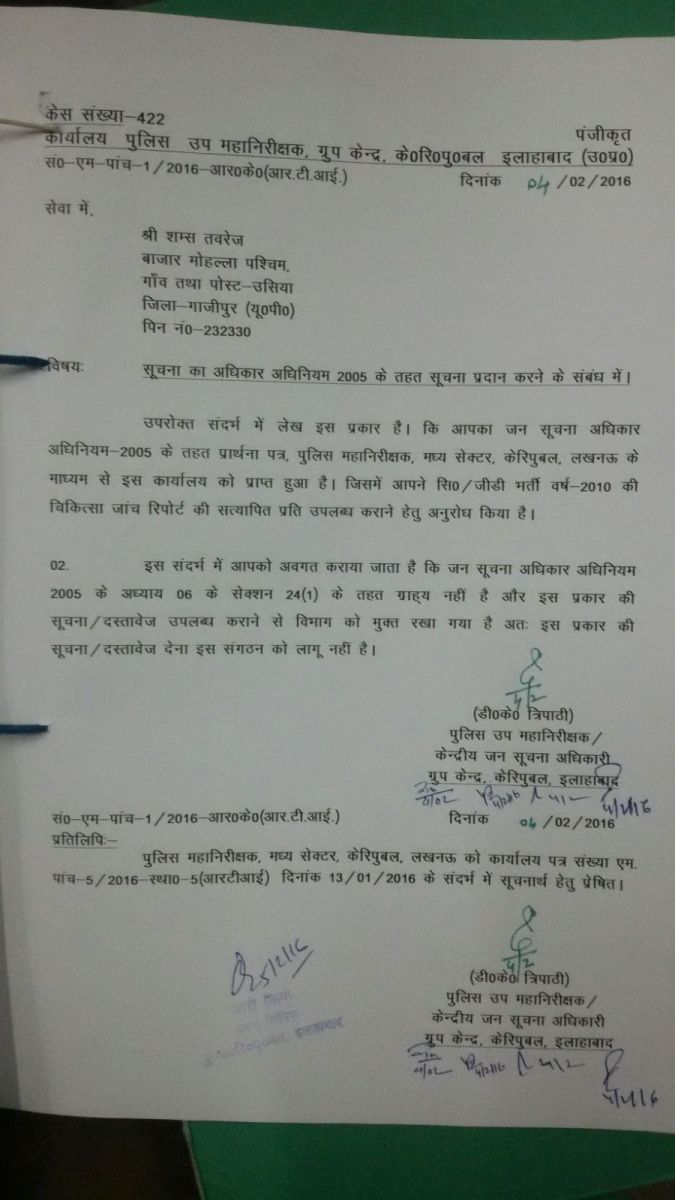
A fresh communal storm is brewing in UP with a Muslim youth claiming that in response to his RTI application, he received a registered letter dated February 4, from the Allahabad-based CRPF DIG, Dinesh Kumar Tripathi, in which he allegedly wrote that the RTI query could not be entertained as “you are from the Muslim community which follows the religion of terrorists.”
In a telephonic conversation with SabrangIndia this afternoon, Tripathi claimed that the letter which the RTI-applicant Shams Tabrez from Usia village in Ghazipur district in UP has circulated in the media has been forged by someone with the intent of stoking communal passion in the state. “I am filing an FIR with the police in Allahabad today as a proper investigation is needed unearth the truth”, he said.
“The CRPF is a politically neutral force. We are specially requisitioned in communally charged situations to impartially enforce rule of law. Leave alone a senior officer like me with 28 years of service, even a junior in my office cannot ever conceive or dream of writing such a letter”, Tripathi told SabrangIndia.
Later this evening, while speaking to SabrangIndia Tabrez insisted that DIG Tripathi’s letter which he had shared with the media was none other than the one that he had received by registered post. “Please note, it was received by registered post, not ordinary post or hand delivered”, he added. What’s more, “Two days before approaching the media, I have already made written complaints with the National Human Rights Commission, the National Commission for Minorities and the Union home ministry”.
“Over several generations, members from my family have served in the Indian army, sacrificed their blood for the nation in the wars against Pakistan and during the formation of Bangladesh. But today my family and all Muslims have become followers of the religion of terrorists”, a deeply hurt and highly agitated Tabrez told Sabrang India. A dynamic RTI activist, in the last four months alone Tabrez has filed over 50 RTI applications for information from the home ministry. “I wonder if it is because of this that there is an attempt to frame me,” he said.
A post-graduate in journalism and mass communications, in keeping with his Hashmi family tradition of military service, Tabrez is especially proud of the fact that while a student he did two years weapons training and received a ‘C’ certificate of merit from the NCC.
The letter from DIG Tripathy which Shams Tabrez insists he received through registered post.
The multi-edition Inquilab daily which has seven editions published from different cities in UP had this morning splashed a report of its front page along with the letter Tabrez claims to have received from DIG Tripathi by registered post. We are reproducing here both the letter allegedly written by Tripathi and also the letter which Tripathi claims he actually wrote to Tabrez. The former letter is three paras long while the latter is only two paras long.
According to Tripathi, the additional para in the forged letter has been inserted by someone “with the obvious intent of inciting communal passion”. The controversial para reads as follows: “You are informed… that as you are from the Muslim community which is the religion of terrorists, for security reasons as stipulated under section 8(1)(k) of the RTI Act, the information/ documents cannot be made available”.
While it is for the police to investigate who is behind the attempt to light one more communal fire in UP, it is difficult to imagine that Tabrez would personally indulge in what, if true, would amount to a serious criminal offence.
What is sure to get buried in the process however is Tabrez original grouse that despite passing all written, physical and medical tests, he was denied a job by the CRPF due to apparent bias.
Office copy of the letter which DIG Tripathi claims is the official letter he wrote to Tabriz
In Tabrez’s Own Words:
मेरा नाम शम्स तबरेज़ है और मेरा सम्बन्ध आतंकियो के मजहब अर्थात मुस्लिम समुदाय से है। ऐसा मैं नहीं बल्कि देश की सबसे बड़ी अर्धसैन्य बल सी.आर.पी.एफ. कह रही है।
केन्द्रीय रिजर्व पुलिस बल ने अपने एक पत्र में स्पष्ट शब्दों में कहा है कि ”आप मुस्लिम समुदाय से सम्बन्धित हैं जो आतंकियों का धर्म है।”
मैं वर्ष 2010 में सी.आर.पी.एफ. का कैन्डीडेट था उस वक्त मैंने इलाहाबाद केन्द्र में पांच किलो मीटर की दौड़ पूरी की, पूरा फिजिकल टेस्ट पास किया और लिखित परीक्षा दिया जिसके बाद मुंझे मेडिकल टेस्ट के लिए बुलाया गया।
चूंकि मैं उस समय यू.पी. पुलिस से मेडिकल फिट था इसलिए मुंझे इस बात से बेफिक्र था कि मेरा मेडिकल नेगेटिव नहीं हो सकता।
लेकिन मेडिकल टेस्ट भी हुआ और मेडिकल फिट भी बताया गया तथा नियुक्ति पत्र 45 दिन के भीतर भेजने का आश्वाषन भी दिया गया लेकिन जब ज्वाईनिंग लेटर नहीं आया तो मैनें अपने साथी कैन्डीडेट, जिनकी नियुक्ति पत्र आ चुका था, से संपर्क किया तो पता चला कि मेरा नाम नियुक्ति सूची में नहीं है।
खैर मैं तब तक ग्रेजुएट हो गया चुका था इसलिए एम.ए. में दाखिला ले लिया। लेकिन इस बात की टीस मेरे दिल में हमेशा रहती थी कि मैं सी.आर.पी.एफ. का एक असफल कैंडिडट हूं। मैने 2013 में सी.आर.पी.एफ. के महानिदेशक कार्यालय नई दिल्ली से अपना पूरा डिटेल मांगा, जिसमें बताया गया कि मैं मेडिकल अनफिट था इसलिए ज्वाईनिंग नहीं मिली। लेकिन मेडिकल टेस्ट की रिपोर्ट देने से इन्कार कर दिया।
पुनः नवम्बर 2015 में आॅनलाईन माध्यम से मैने गृह मंत्रालय में एक आर.टी.आई. फाईल किया जिसे शुरूआत में निरस्त कर दिया गया लेकिन प्रथम अपील के बाद 30 नवम्बर को सी.आर.पी.एफ. के डी.जी. हेड क्वार्टर नई दिल्ली को मेडिकल रिपोर्ट देने की निर्देश दिया गया।
मामला उत्तर प्रदेश का होने के कारण डी.जी हेडक्वार्टर ने 28 दिसम्बर को आर.टी.आई. एक्ट की धारा 6(3) के तहत लखनऊ स्थित मध्य कमान स्थानान्तरित कर दिया गया। उसके बाद 10 फरवरी को डी.के. त्रिपाठी पुलिस उप महानिरीक्षक इलाहाबाद ने अपने पत्र रजिस्टर्ड डाक से भेजा जिसे 4 फरवरी को जारी किया गया था। इस पत्र में बताया गया कि “आप मुस्लिम धर्म से सम्बन्धित हैं जो आतंकियों का धर्म है अतः सूचना का अधिकार अधिनियम 2005 की धारा 8(1)(क) के तहत सुरक्षा कारणों से सूचना/दस्तावेज नहीं दिया जा सकता। साथ ही सी.आर.पी.एफ. को आर.टी.आई. एक्ट की धारा 24(1) के तहत आर.टी.आई. एक्ट के दायरे से बाहर भी बताया गया।”
अब सवाल यह है कि अगर मुस्लिम धर्म आतंकियों का मजहब है और सी.आर.पी.एफ. को आर.टी.आई एक्ट की धारा 24(1) के तहत सूचना देने से छूट प्राप्त है तो गृह मंत्रालय ने मेरे आवेदन को सी.आर.पी.एफ. के डी.जी. हेडक्वार्टर क्यों भेजा, और डी.जी. ने लखनऊ को मेडिकल रिपोर्ट देने के लिए क्यों आदेशित किया?
आज मेरा मजहब आतंकियों का मजहब हो गया?
मेरे वंशज स्वतंत्रता सेनानी थे। मेरे दादा 6 भाई हैं जिनमें से 3 दादा ने सेना में थे मेरे चाचा भी सैनिक है और मेरे पिता भी एक राज्यकर्मी हैं खुद भारतीय थल सेना ने मुंझे 2 साल की सैन्य प्रशिक्षण दिया। मेरा हाशमी घराना सेना में अपने दमखम के लिए जाना जाता है। जिन्होने चीन, बांग्लादेश और कारगिल की जंगे लड़ी, राष्ट्र की सेवा में अपने खून बहाया और आज भी ये सिलसिला जारी है। ये सब किसके लिए किया? आतंकियों के लिए!
मामला सामने आने के बाद सी.आर.पी.एफ. भले ही इसे तकनीकि या प्रिंटिग मिस्टेक कह दे लेकिन जिन शब्दों का चयन मेरे मजहब के लिए किया गया है वह एक गाली है। जिसने मेरे हाशमी खानदान और उन तमाम शहीदों को गाली दिया है जिन्होने अपने खून इस देश के इतिहास लिखा।
वीरों की धरती कही जाने वाली ग़ाजीपुर के हर उस सैनिक का अपमान किया है जिसके लिए यह क्षेत्र जाना जाता है। लेकिन सी.आर.पी.एफ. ने गलत जगह हाथ डाल दिया है। मैं केन्द्रीय सूचना आयोग जाने की तैयारी में कर रहा हूं जहां मैं सी.आर.पी.एफ. को आर.टी.आई. की परिभाषा बताऊंगा, मैने भारत समेत 5 देशों के आर.टी.आई. एक्ट पर शोध किया है और वेब न्यूज चैनल का पत्रकार हू।
मैं देश के प्रधानमंत्री, राष्ट्रपति और उत्तर प्रदेश की लखनऊ स्थित अखिलेश फ्रेंचाईज़ी सरकार को एक खुला पत्र भी लिखने वाला हूं।
कल तक हम लोगों को पाकिस्तानी, आतंकवादी, लव जेहादी और देशद्रोही कहा जाता था लेकिन अब सरकारी पत्र में लिखित रूप से आतंकवादी कहा जा रहा है लेकिन सबको अपनी पड़ी है देश के साम्प्रदायिक बनाने के लिए केन्द्र और राज्य सरकार मिलकर काम रही है।
The recent events in Hyderabad and Jawaharlal Nehru universities and the actions of some “nationalists”, took me back to the 1940s and 1950s and question the nationalism I grew up with. I was eight years old at independence but even at that age I was exposed to the thinking of the freedom movement, because my father was one of its small time members. He would tell us about the country that the freedom fighters aspired for. He practised in the handloom establishment which he owned. His task was to cyclostyle the Kannada news bulletin of the movement. He could do it in his office without getting caught because the noise of the handlooms drowned the noise of the cyclostyling machine. More importantly, there were thirty handloom workers in his enterprise, Christians, Hindus and Muslims. But none of them betrayed him, so he never went to jail because the workers viewed India’s freedom as their joint enterprise. Their longing for free India united their group divided by religion and caste. We were exposed to that nationalism at independence and lived it in our neighbourhood of Christians and Hindus of different castes. That represented a country with religious, cultural, linguistic and other diversities in which all communities are equal.
When I see the fundamentalists of today proclaiming their version of nationalism, I wonder whether the pluralism for which our forefathers fought has disappeared. My first encounter with the predecessors of today’s Desh Bakths was on January 31, 1948 when some of them went round distributing sweets to celebrate Mahatma Gandhi’s assassination the previous day.
Like those who celebrate Godse today, they too did not want the diversity that Gandhi and the freedom fighters stood for. One has, therefore, to ask whether the Hindu Rashtra that the rightist forces would like to build will allow diversity. Or is it to be exclusive like Hitler’s Germany? I was just six when the world war ended so I did not know much about Hitler but I studied about him at school.
And I ask myself whether I am imagining what look like parallels between his Nazism and what the rightist forces propagate in my country today. Is their nationalist exclusive and the opposite of the inclusive nationalism amid unity in diversity that independent India stood for? Hitler’s exclusive Nazism was founded on a Germany that belonged only to the Aryan race which he defined as blonde and tall though he himself was short and somewhat on the darker side.
Those who did not belong to his pure race, for example Jews and gypsies, and others like trade unionists and Communists who disagreed with him, were jailed or sent to the gas chambers. The difference with the “nationalists” of today’s India is that they are ready to tolerate Muslims, Christians, Dalits, Tribals and Women in their Bharat, as long as they accept to be subordinate second class citizens under the “owners” of the country.
My first encounter with the predecessors of today’s Desh Bakths was on January 31, 1948 when some of them went round distributing sweets to celebrate Mahatma Gandhi’s assassination the previous day.
The events of the last few days and weeks make me wonder whether there is a second similarity. Hitler and his propagandist Himmler created an army of hooligans to attack their opponents.
They would first create myths showing their opponents in a bad light as anti-national and then attack them. One sees it happening in our country too. Those who shout slogans or write what the “nationalists” do not like are called traitors. Some of them like Pansare and Kalburgi have been eliminated, a few others like Prof. Kancha Illaiah, Dr Sandeep Pandey and Dr Sai Baha have been ostracised after accusing them of being Naxalites or anti-national.
Many others, for example the teachers and students of JNU and journalists who were covering their case, have been beaten up by lawyers and law makers. The freedom fighters stood for a different type of nationalism. The instructions of Gandhi to his followers were to exhibit their nationalism in the service of the poor.
That is what I witnessed in my childhood in persons like our neighbour homeopathic doctor Shastri (cricketer Ravi Shastri’s grandfather). He was the ward Congress president but he gave up politics and spent his life serving the poor particularly children in whose medicines he specialised. The spirit of nationalism was thus shared in service, not imposed through violence and today’s “nationalists” seem to think that they should do. The police look the other way when they beat up their opponents even in a court of law as it happened in the premises of Patiala House.
The Nazis came to power by using the democratic system. Once in power they used the army of hooligans to destroy its institutions. One sees a similar process in India today.
It is difficult to believe that the police can behave the way they did without instructions from those who control their department. The “nationalists” first created a myth that anti-national slogans were raised by the students of JNU and then beat up the “traitors”. The police arrested some students for sedition despite a Supreme Court judgement that slogans do not constitute sedition and that only a call for violence does.
That call has come from the “nationalists” some of whom have gone on record that they are ready to repeat their violent acts and even shoot some traitors. All that the police have done is to issue arrest warrants against some lawyers. They have not been arrested though they are highly visible and are staging demonstrations. They arrested an MLA, gave him tea and snacks and let him off after fifteen minutes. But some of those whom the “nationalists” accuse of being traitors are in jail or are under threat of being arrested because they made statements that the self-styled protectors of Bharat dislike.
Thirdly the Nazis came to power by using the democratic system. Once in power they used the army of hooligans to destroy its institutions. One sees a similar process in India today.
Dissent that is a basic feature of a democracy is considered sedition. People are beaten up inside the court premises thus preventing the judiciary from doing their duty. Their position of power is used to take control of the educational and research institutions because all thinking has to support their concept of nationalism.
Universities that encourage students and teachers to think for themselves become subversive. A democratic principle is that dissent has to be tolerated even when it goes beyond what moderate elements may consider unacceptable as long as it does not preach or encourage violence. But today’s “nationalists” invent sedition in all forms of dissent of questioning of established positions. Violence takes the place of debate and lawlessness overtakes law abiding citizens.
These developments should challenge people who love the country to come together and reflect on the type of India they want. India has the option of behaving as a civilised nation that encourages debate, dissent and creative thinking or join the banana republics in which creative thinking is sedition.
(The author is a former founder-director of North Eastern Social Research Centre, Guwahati is at present senior fellow in the same institution; this article also appeared in the Shillong Times)
Fr Cedric Prakash, a senior human rights activist from Gujarat is now in Beirut, Lebanon, from where he will be contributing a regular column for SabrangIndia
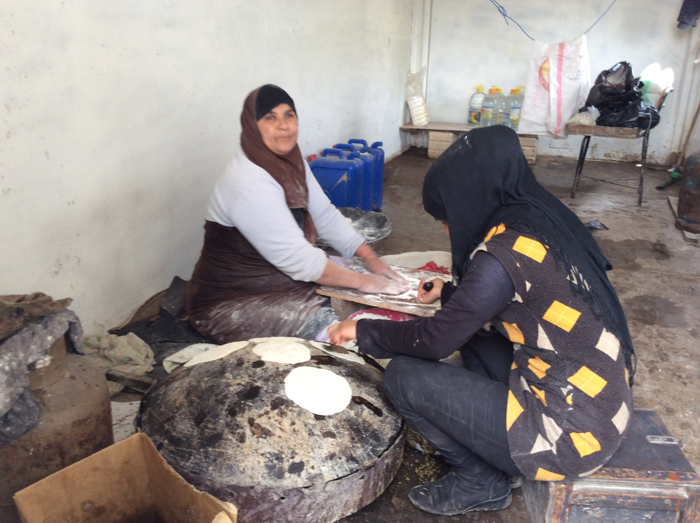
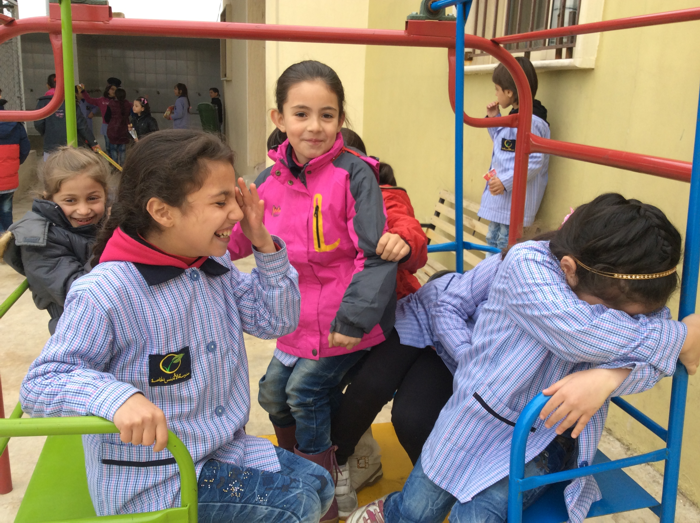
Tasnim is just about seven years old. It’s been a year now that her parents Zemzoun and Mohammed fled with their five children (Tasnim, Ghofran, Rawan, Razan and Khaled) from war –ravaged Syria to the safer and more secure environment of neighbouring Lebanon. Tasnim does not remember very much about the day they had to leave the comfort of their small home just outside Damascus; ‘it was very painful and difficult’ she says and then just tunes off clearly trying to forget the way her family had to come away from the place they once called ‘home’ .
The reality of Tasnim –is easily the story of two million Syrian refugee children who today live in neighbouring countries. The Syrian conflict will soon enter its sixth year. In 2015, the number of refugees fleeing Syria surpassed 4 million and Lebanon became the country with the highest per capita concentration of refugees in the world.
At the end of November 2015, the number of UNHCR registered Syrian refugees in Lebanon was 1,070,189 while the exact number remains unknown: the reported number strictly reflects those registered with UNHCR. Lebanese authorities estimate the number of unregistered Syrian refugees to be as high as 500,000[1].
Children and youth figure prominently in the flow of Syrian refugees. Based on recently published figures by UNHCR on Lebanon, half of the total number is children below the age of eighteen; of these, there are more than 477,000 Syrian children who are school-aged [2]. As of October 2015, more than 70% of them were out of school.
The Government of Lebanon launched a strategy in 2014 for educating refugee children in the country: Reaching All Children with Education (RACE), which aligns the country’s refugee response with the Lebanese Government’s Education Sector Development Plan. RACE promises to provide access to formal education to a great number of Syrian refugee students. This program, even if implemented perfectly to plan, will reach less than half of the school-age Syrian children in Lebanon.
Another essential problem that RACE does not promise to solve is aligning Syrian refugee students’ educational capacities with the requirements of the Lebanese curriculum. Syrian children face significant language barriers in adapting to the Lebanese curriculum, which provides certain subjects in English and French. These obstacles, in addition to the lack of available spaces, transportation costs, discrimination and bullying, social and economic issues, as well as unpredictable enrolment regulations[3], are the entrenched barriers to Syrian children’s successful enrolment and attendance in both formal and non-formal education provided through public schools.
According to UNHCR, more than 67 percent of the Syrian refugees in Lebanon are living in the North and Bekaa regions due to their proximity to Syria. The ratio of Syrian refugees to Lebanese citizens in the Bekaa is now as high as 1:2. Unlike refugees living in the Beirut and Mount Lebanon governorates, a large proportion of refugee families in the Bekaa region are staying in makeshift camps, leaving them vulnerable to poor weather, hygiene and protection concerns.
Security incidents are more frequent in the region due to the proximity to the Syrian border, which presents additional challenges for humanitarian access and delivery of assistance to refugees living in the Bekaa.
Children are often forced to start working in order to help provide for their families, and usually take jobs or work daily/seasonally in the agricultural sector. Many of the children are exposed to pesticides, toxic chemicals, heavy loads and exhausting hours.[4]
According to a study conducted in 2014, over half of the Syrian children living in the Bekaa had only attained basic reading and writing skills or elementary education before starting work.[5] The Bekaa region has the highest number of out of school children (85%) in the country, largely due to the lack of proximity to schools.[6]
But Tasnim is one of the more fortunate refugee children of the Bekaa region as she studies today in the Al-Andalus school which is administered by the Jesuit Refugee Service (JRS) since October 2015. She is delighted about this. She enjoys learning and playing in school. She looks forward to the daily snacks and the other facilities given to her in school. She revels in the warmth, affection and acceptance lavished upon her by her teachers.
Tasnim sits on the front bench of her class. Some visitors come in. They ask those ‘normal’ questions which a little child is subjected to: “When you grow up, what would you like to become?” Answers are the usual ones which a child would give perhaps anywhere in the world:” policeman’, ‘teacher’, ‘cook’ etc.
The question is directed to Tasnim, in an answer which belies her seven years and surprises everyone she looks at the visitor, with her arms folded she coyly says “Doctor!”. Later on, she is asked the ‘why’ of her desire. She does not hesitate in saying ‘I want to heal others; I don’t like seeing people dying, killing one another.
She also shares her longing to go back home to Damascus. She remembers her grandfather with a glisten in her innocent eyes. She loves him very much and she enjoyed playing in his house; besides, she says her grandfather used to play with her too. Then one day he became very sad, she says, because his son (her Uncle) was killed. She began feeling very sad too because he was sad. She misses her grandfather very much and wishes that he would come and live with them in Lebanon.
In the Bekaa valley there are thousands of refugee children who have to labour in muddy fields picking up fruits or vegetables or just doing almost anything to eke out an existence. A few months ago the New York Times (November 5, 2015) carried an insightful story entitled ‘The Displaced: Hana’.
This is the story of Hana Abdullah, another Syrian refugee child in the Bekaa valley a little older than Tasnim. But Hana is not as fortunate as Tasnim –as she slogs for long hours to help her family survive.
Though Tasnim is in school and is cared for, her father Mohammed finds it really difficult to make both ends meet. By profession he is a carpenter; back home in Syria he earned a decent wage and was able to provide his family with a comfortable life. The past five years have meant a dramatic change in his fortunes. He had no alternative but to flee with his family to Lebanon. He desperately tries to make both ends meet by doing odd jobs- that does not happen daily. No one speaks about a ‘just wage’ for a refugee. His wife Zemzoum looks after the children and the handles other household chores
In a world enveloped in darkness; where the tragedy of the uprootment ofRefugees reigns supreme, one speaks of a ‘lost generation’. Tasnim (though an exception) comes as a ray of hope.
Does she understand the meaning of her words, her wish, her dream? This is anybody’s guess.
Though she is just a little child today, her song is not “Que sera? Sera?” (Whatever will be, will be….) She has no doubts when asked what she wants to be. A doctor! The odds are however heavily stacked against Tasnim and her dream.
Is the World listening?
(The writer is a human rights activist. He is currently based in Beirut, Lebanon as the Advocacy and Communications Officer of the Jesuit Refugee Service(JRS) in the Middle East and North Africa Region)
[1] “Flow of Syrian refugees to Lebanon drops after restrictions,” Daily Star Lebanon, January 20, 2015.
Full text of Kanhaiya Kumar’s JNU speech on March 3 calling for freedom from hunger and exploitation, for the rights of Dalits, Tribals, women and minorities
Friends, all of you present – be they students, be they workers, be they teachers, be they security guards, be they shopkeepers, be they workers in shops – my revolutionary greetings and welcome to all of you.
Friends, from this platform, on behalf of all students, as the JNUSU [Jawaharlal Nehru University Student Union] president, I thank all the people of the country via the media channels present here. My salutations to them, my thanks to them.
Friends, I want to thank people from all over the world – be they academicians, be they students – who have stood by the JNU [unclear audio because of applause].
And I want to thank all those – be they from media, be they from civil society, be they from the political class, be they non-political people – all those people who are standing up to save JNU, those who are standing up to get justice for Rohith Vemula. I salute them all. My laal salaam, my red salute to all of them.
And I specially want to thank all those big and very important personages of this country who sit in Parliament and claim to be deciding on what is right and what is wrong. My thanks to them, my thanks to their police, my thanks to those TV channels.
There is a saying in our parts, ke badnaam hue to kyaa huaa, naam nahii huaa? So what if we were made infamous, at least our name was taken. At least they gave us space on prime time even if it was to try and bring disgrace to JNU.
One BJP leader said in Parliament that our soldiers are dying. I want to ask him, is he your brother? Or instead, the crores of farmers who have committed suicide in India, who produce the food for us and those soldiers and who are the parents of those soldiers, what have you said about them?
We have no hatred for anyone – particularly for ABVP. That is because the ABVP [Akhil Bharatiya Vidyarthi Parishad] on our campus is actually far more rational than the ABVP outside.
And I want to say that all those who consider themselves political experts, they should check out the last presidential debate video at least once. Please do see what the ABVP was reduced to, particularly the "most intellectual" person of the ABVP, and how he was left overwhelmed and speechless. Perhaps you can get an idea of what will happen in the rest of the country from that.
That is why, we have no ill-feeling towards the ABVP. Because we are truly democratic people. Because we really believe in the constitution, we do not look at the ABVP as an enemy but as a political opponent – and that is how it is for those who believe in the democratic process.
My friends, I will not do any witch-hunting. Besides, even when it comes to hunting, only those are hunted who are worth the trouble.
And this whole process… I tell you, this is the first time, I swear – and it is not like someone who, if born in the month of Saavan, when it rains, complains about the flood in the very next month of Bhaadon – I tell you, truly, the way JNU stood up in the country, and what JNU has shown – and the way JNU has stood up to call what is right, right, and what is wrong, wrong – and the best part is that this is spontaneous.
I’m saying this because all of their actions were planned, but ours were spontaneous. This country’s constitution, its law, and its judiciary and the legal system, I have faith in, I also have confidence that change alone is truth, and we will change things, we stand in support of change and progress. I stand here with confidence in the constitution, with belief in what I started with, socialism, secularism, equality, it is with this that I stand here.
You want to shut down all those voices that could unite – whether he’s standing at the border, giving up his life working in his field or battling in JNU for his azaadi – you do not want these voices to come together as one.
Someone asked, I wanted to say, that I’m not going to lecture. I just want to tell you of my experience because before I used to study more and suffer less from the system, this time I studied less and suffered more. This is why I have to say JNU people actually do research. I have primary data. I have first hand information.
The first thing is that the judicial process, I don’t want to comment on. I just want to say to all the people who truly love the constitution, who want Babasaheb Ambedkar’s dreams to become reality, they will understand. That which is sub-judice I don’t want to talk about. But the Prime Minister has tweeted. He said, Satyameva Jayate (the truth always triumphs), I also say, PMji, satyameva jayate is not just yours, it’s this country’s so I too say, Satyameva Jayate.
To all the people, don’t believe that sedition is being used as a political tool against a student. Think of it this way, we come from the villages, and for us every railway station has magic shows, where a magician does magic and sells you a ring that will fulfill all your wishes. There are people like this in the country, who say “black money will return,” “Har Har Modi”, “Inflation will come down, “Sabka saath sabka vikaas.” All these jumlaas… it is true that Indians forget things quickly, but this time the tamasha was such that we can’t forget it.
Their effort is for us to forget their false promises. How? By cancelling the fellowships of all the research fellows in the country. Then what will they start doing? Start saying, please give us fellowships, then the government will say, the Rs 5,000 or 8,000 we used to give before, we will continue giving that. Meaning, there is no question of increasing this. Who will raise this? JNU.
So when you are being insulted, don’t worry. You are reaping as you sow. In this country, if you call them an anti-people government, what will their cyber cell do? They will deliver a doctored video. They will send you insults. And they will count condoms in your dustbins. But there is very little time, so in this short time, we need to think with trepidation.
If we establish a dialogue with those who have a scientific temper, we will be able to get the azaadi that we are demanding – from hunger and poverty, from oppression and exploitation, for the rights of Dalits, Tribals, women and minorities – we will not give up till we get that azaadi. And we will ensure that this azaadi will come to this country via this very constitution, this very Parliament, and this very legal system – that is our dream.
This attack on JNU was prearranged. And this was planned because they wanted to delegitimise the Occupy UGC movement. It was planned because you were fighting for justice for Rohith Vemula.
You are running JNU’s struggle on prime time, respected ex-RSS, because you want the people to forget that the PM promised Rs 15,000 to each person’s account. But let me tell you this getting admission into JNU is not easy, and getting JNU to forget is as hard.
You might think we will make them forget, but we will keep reminding you, that when the people of this country rose up, the loudest voices came from JNU and that’s what we are raising now. The Sangh cannot dilute our struggle. What are they saying, on one side the soldiers are dying? I want to salute our soldiers. I have one question, I have learnt one thing in JNU, when the struggle is over ideas, one shouldn’t give someone unnecessary publicity, so I will not take that leader’s name. One Bharatiya Janata Party leader said in Parliament that our soldiers are dying. I want to ask him, is he your brother? Or instead, the crores of farmers who have committed suicide in India, who produce the food for us and those soldiers and who are the parents of those soldiers, what have you said about them?
I want to ask, those who work in the farms are my father, my own brother, goes into the army, and dies there, and you cannot use this to bind the people with false claims. Tribals are dying, the marginalised are dying, so I want to ask, who are you playing politics against in the Parliament? Those who are dying, who will take responsibility for them? The ones fighting aren’t at fault, the one who are making them fight are to blame.
Shanti nahin tab tak, jab tak bhaag na sab ka sum ho, Nahin kisi ko bahut adhik ho, nahin kisi ko kum hoga!
(There cannot be peace in this world until everybody gets a fair share. Nobody should have too much, and nobody should be left needy).
Hon’ble Prime Minister was saying, he was talking about Stalin and Khrushchev, and I felt that I should enter into the TV set, tug at his suit and say, ‘Modiji, please say something about Hitler as well… OK, forget Hitler, at least talk about Mussolini whose black cap you wear [the reference is to the RSS black cap], the one whom your Guruji, Guru Golwalkar had gone to meet and who preached to learn the definition of Indian-ness from Germans…’
Who is responsible today? Who is the one causing the fights?
In this atmosphere, is there something wrong with asking for freedom? They ask, who are you asking for freedom from? You only tell us. Has India enslaved anyone? No. That’s why we’re not asking for freedom from Bharat. We are not asking for freedom from India, we are asking for freedom in India. This is a crucial distinction.
We are not asking for freedom from the British. That the people of this country fought, and got. Now I come to laal salaam. The police asked me, what is this laal salaam, laal salam. This was not a part of the investigation. When they were giving me food, or taking me for the medical test, and even at that time we JNU people can’t survive without talking, so I started talking to the policeman.
And it turned out that he was just like me. In this country, who are the policemen? The ones whose parents are farmers, labourers, their kids are policemen. I too am from one of the backward states in the country, from a poor family, I am from a farmer’s family, and even in my family there are people in the police. I am speaking of constable, head constable and inspectors, not about the IPS [Indian Police Service] – I don’t have much information about them.
But the constable started talking to me and I wanted to tell you about that.
He asked: What is this "Laal Salaam", "Laal Salaam"?
I said: Laal (or red) means revolution and salaam means salute, so a salute to the revolution. He said: I do not understand the meaning.
I asked do you know "Inquilab zindabad" [”Long Live the Revolution!”]?
He said he knew it.
So I said: Kraanti or revolution is called Inquilab in Urdu.
He said: This slogan is also chanted by the ABVP.
I said: Do you now understand? They are the fake revolutionaries and we are the real revolutionaries.
Then he said: You’ve got everything so much subsidised and cheap in JNU.
I said: Should I tell you something?
He said: Sure, do tell.
Then I asked: Why do you also not get it?
I realised that he was having to work for 18 hours.
I asked: Do you get overtime?
He said: No.
Then I asked: How do you manage?
He said: This is what happens – what you call corruption.
I said I understood. Now, what they get – I realised that they get Rs 110 for their uniform. Now you tell me, in this much one can’t even get undergarments, how can one buy uniform? This is what those policemen themselves were asking.
I said this is exactly what we want Azadi from: from hunger, from corruption.
Meanwhile, a protest movement started in Haryana. And all of you know very well that the maximum number of people in Delhi Police come from Haryana. I salute them all because they are very hardworking people. So I said: This reservation…
He said: The caste-system is really bad…
I said this is the caste-system that we want azaadi from.
He said there was nothing wrong in this, there was no sedition (desh-droh) in this.
I said: Please tell me, who has the maximum power in the system?
He said: My stick (danda).
I said: Absolutely correct. But can you wield this stick as you want, of your own will?
He said: No.
I said: The entire power has gone to whom?
He said: The one who is giving statements on a fake tweet.
I said we want azadi from exactly such Sanghi-people or those from the RSS who make fake tweets.
He said: Should I tell you the truth, friend? It now seems as if you and I are now standing together.
I said: Yeah, but there is one problem with it.
We’re in this for the long haul. The people who want to divide this country, both within and outside JNU, the RSS and the BJP people who want to bring the country to the brink of destruction – we need to unite and stand against them. The fight that has been sparked off by Occupy UGC, Rohith Vemula, you, all the peace loving and progressive people in the country – we will fight that fight and we will win it.
And I am now aiming this at all the friends in the media. I am saying it humbly. Because all the people in media do not get their salaries from there. Some of them indeed get their salaries from there. And while working in media, while reporting from Parliament, some of them are trying to enter Parliament and they are the very people who have created such an atmosphere that… while I talk to you one to one, they go, “See this – sensationalism!”
They have created such an atmosphere, friends, that, he said: I felt that when you come here, because your name had appeared in the FIR…
I said: Before it appeared in the FIR, it had appeared in the ABVP paper.
The ABVP paper had put down all the names of all of us accused in their paper much before it was noted in the FIR.
He said: We had thought that when you come here, I will really beat you up but after talking to you I feel as if I should go and beat them up.
It’s something very serious he has said and I want to attract the attention of the people of the entire country.
That policeman, who like me belongs to an ordinary family, and like me also wanted to do PhD. But he could not get into JNU. Like me, he too wanted to understand the system of this country and fight the battle like me, he wanted to understand the difference between being literate and educated, today he is working for the police.
This is where JNU stands. This is why you want to stifle our voice so that a person from the weaker sections does not end up doing a PhD because education that is being sold out will cost in lakhs and he will not have the money to pay the fees and that is why he will not be able to do his PhD and that is why you want to shut down JNU.
You want to shut down all those voices that could unite – whether he’s standing at the border, giving up his life working in his field or battling in JNU for his azaadi – you do not want these voices to come together as one.
I want to tell you that Babasaheb [Ambedkar] had said that political freedom will not be enough, will not do – we will establish social freedom, which is why we keep talking about the Constitution. Lenin has said, “Democracy is indispensable for socialism”. That is why we talk about democracy, that is why we talk about freedom of expression, that is why we talk about equality, that is why we talk about socialism – so that the son of a peon and the son of a President both can go to the same school. [next sentence gets drowned in applause]. And you, you want to stifle our voice.
But what a coincidence. Science tells us, the more you press, the more will be the resultant pressure – but they have nothing to do with science. Because to study science is one thing and to be a scientist – or have a scientific temper – is something else altogether. So if we establish a dialogue with those who have a scientific temper, we will be able to get the azaadi that we are demanding – from hunger and poverty, from oppression and exploitation, for the rights of Dalits, Tribals, women and minorities – we will not give up till we get that azaadi. And we will ensure that this azaadi will come to this country via this very constitution, this very Parliament, and this very legal system – that is our dream.
This was Babasaheb’s dream. This indeed is Comrade Rohith [Vemula]’s dream. Now just watch – you have killed one Rohith, but in continuation of that, the one protest you wanted to suppress, that protest and movement has now emerged in such a huge manner, and how massive this movement has become. Just note this.
There is something else I want to say from my experience in prison – we people from JNU – and this is my self-criticism, and if you feel it’s a self-criticism, do acknowledge it for sure – we people from JNU do speak in a civilised and measured manner, but we use very heavy terminology. And the common people of this country do not follow that. It’s not their fault. They are honest, good, sensible people – but you do not manage to put things at their level in a manner that they can understand.
And what do they receive? And what do they get? “Forward it fast and you will get what you want.” Forward it fast and you will get what you want? Send it to as many groups as you can! Now they see [no more?] and sell it on OLX. We have to establish a dialogue with this mentality of selling.
Now I want to share something I experienced in prison. I was served in two bowls. One of them was blue and the other one was red. Now when I saw these two bowls, I was repeatedly reminded that while I do not believe in destiny, that I do not know God either, but something good is sure to happen soon in this country – after all, the red and blue bowls came together on one plate. And that plate seemed like India to me, the blue bowl seemed like the Ambedkarite movement to me and that red bowl seemed like the colour of … [unclear].
It seemed to me that if this unity could be achieved in this country, then I tell you the truth – now we will have to see no more and send out the seller. We do not need those who are selling out [the country], we will make a government that would be able to ensure justice for all. “Sabkaa saath, sabkaa vikaas” – with everyone, development for all – we really will establish this. And that is our battle.
There was strict watch in the jail. I have brought – I have brought chanaa [gram] for all of you. And there is a saying, as long as we have chana in our pockets, we will keep going and coming. Although it’s been quite some time since anyone from JNU was sent to jail – but let me tell you something funny that is linked to it. Today, the respected Prime Minister, the honourable Prime Minister – it will have to be said after all – who knows, this too might get doctored and sedition charges levelled once again – Hon’ble Prime Minister was saying, he was talking about Stalin and Khrushchev, and I felt that I should enter into the TV set, tug at his suit and say, “Modiji, please say something about Hitler as well… OK, forget Hitler, at least talk about Mussolini whose black cap you wear [the reference is to the RSS black cap], the one whom your Guruji, Guru Golwalkar had gone to meet and who preached to learn the definition of Indian-ness from Germans…”
So talking about Hitler, Khrushchev, the prime minister, we were discussing, Mann ki Baat he discusses, but he doesn’t listen. It’s a personal matter, I spoke to my mother after nearly three months today. Whenever I went home, I wouldn’t talk much. After going to jail, I realised I should be in touch better, you all should talk to your family also. I told my mother, you pinched Modi well. She said, i didn’t pinch him, that those people do, joking and playing is their job, we speak of our pain, those who understand, appreciate, and those who don’t, they laugh.
She said: This is my pain. Modiji is also someone’s son. But your son has been called anti-national and jailed. So sometimes there is Mann ki Baat, and sometimes Ma ki Baat.
I had no reply, because what is happening in this country is frightening. This is why I’m not talking about one party or one media channel. This is why I don’t only speak of soldiers. This is matter for the whole country, What kind of a country is it if there are no people in it? We have to keep saluting those who stood up to support the people of JNU. Because they understand what kind of people come here.
Here, we have 60% women. I can say this with pride that reservations are applied in JNU. And where they don’t apply, we are struggling to make sure they come in. The people who come here, this I haven’t said until today and you wouldn’t have realised, but my family runs on Rs 3000 per month. Can I do a PhD in any of the big universities? The way JNU has been attacked and the people who supported it have been attacked, and I’m not associating with a specific political party here, but the people who spoke up for us, they were also called anti national.
Sitarama Yechury was also called anti national? Rahul Gandhi was also called anti national? D Raja also? And the people of the media were threatening – Kejriwal too – and the media people who were supporting JNU, don’t support us, just set the record straight. They are being insulted, threatened, what kind of nationalists are these?
A few constables asked me in jail, did you really raise those slogans? I said yes. They asked, would you raise slogans again? I said yes. I asked them, can you tell the difference, Bhaisaab, this government has only been in power for two years, we have to suffer them for three more years. Because 69% of the people voted against these people. Only 31% voted for them. And out of those, some were drawn in by false promises. Some you pulled in saying ‘har, har’, and now they’re troubled by the price of Arhar daal.
Don’t think of this as your permanent victory. This is true that if you tell a lie a 100 times, it becomes the truth, but this only works with lies. If you called it the moon instead of the sun 100 times, would it suddenly become the moon? It will still remain the sun. You can spin lies and lies, but you can’t suppress the truth.
Outside the Parliament they bring distracting proposals, and distract from the legitimate demands of the people. There are new agendas to divert the people. Occupy UGC was happening here, when Rohith was murdered. When voices were raised for Rohith, then suddenly they cried, look at the country’s biggest anti nationals, this den of anti nationals. It won’t go on for too long.
They are preparing again. "We will build the Ram Temple". I’ll speak of today, today I spoke to a constable before leaving. He asked me: Do you believe in religion? I said I don’t even understand religion. Let me understand it, then I might believe.
He said, you must have been born into a family, I said by coincidence I was born into a Hindu family. He said, so do you know anything about it? I said with the knowledge I have, God created the universe – even a pebble has god inside it. God is in each and every particle. He agreed. So I asked him: some of these people want to build something for that God, what do you think of that? “It’s a terribly silly idea,” the constable scoffed.
How many times will you flog the same horse? You went from 80 to 180 once by fooling the people, but that won’t work again. But they’re still at it, trying to pull wool over our eyes so that no once discusses or debates the legitimate questions that need to be asked about the country. As your stand here today, it feels like someone has attacked on you. And it’s true – this is a big attack. However, this hasn’t started today. I’d like to remind you that the RSS’s mouthpiece, the Organiser had a cover story in JNU. Subramanian Swamy had a statement on JNU too.
I have full faith in democracy. If my friends from the ABVP are listening, it is my humble request that they get Swamy in for a debate, face-to-face. If Swamy can logically prove that JNU needs to close for 4 months then I’ll agree with him. If not, however, I’ll request him to leave the country, just as he had once done earlier.
It’s interesting how much planning and co-ordination went into this attack on JNU. The same anti-JNU posters have been used by the Hindu Kranti Sena, the ABVP and even “ex-armymen” on their march. This means all of this is being strategised at Nagpur [the RSS headquarters]. There is nothing spontaneous about this at all.
The main takeaways are: plans to crush the voice of struggle in this country. To distract the public away from the foundation questions of his existence. To brand Umar, Anirban, Anant, Ashutosh Kanhaiya and every other JNUite as a seditionist and to crush, delegitimise JNU’s voice. But this isn’t going to be that easy. You’re not going to be able to crush our struggle – the more you try, the greater our movement grows.
We’re in this for the long haul. The people who want to divide this country, both within and outside JNU, the RSS and the BJP people who want to bring the country to the brink of destruction – we need to unite and stand against them. The fight that has been sparked off by Occupy UGC, Rohith Vemula, you, all the peace loving and progressive people in the country – we will fight that fight and we will win it. I thank you, everyone who has been involved in this fight and I appeal for you to continue the fight. And with this, I end my speech. Thank you and long live the revolution!




.png)