Home Blog Page 2588

Why Sheldon Pollock

0


A historian’s response to the petition against Sheldon Pollock:

A petition, signed by 132 “academics” asking Rohan Murty and Narayan Murthy to dismiss Prof Sheldon Pollock from his role as Editor of the Murty Classical Library Series, is receiving attention that the signatories did not anticipate.  I put the word “academics” in quotes because the commitment of the signatories to an academic evaluation of Sheldon Pollock’s intellectual leadership is nowhere in evidence, since a quotation from Pollock was changed mid-way through the signature campaign. Nor does it seem as if the signatories have ever held any one of the hot- pink,  beautifully produced volumes in their hands, where   as much attention has been paid to looks and fonts,  as to the quality of translations.

Had they done so, they too would have appreciated the significance of this effort, in bringing to the wider reading public the oceans of literary texts and traditions, in a mind-boggling array of languages,  from a period covering two and a half millenia.  The individual translators and editors are among the best in the field. Thanks to this series, so many more Indians and others will learn of the sheer beauty and anguish of Punna, a  Therigatha poet (translated from Pali, 3rd century BCE).  People of the south will hear the voice of Bulle Shah, translated from Punjabi, and those from other parts of India will read Allasani Peddanna, translated from Telugu.  True we will miss the mellifluous chanting, or the energetic sounds of performance: for now, we will have to make do with the books on hand. Read more…

The  “academics” deserve attention for another reason. In their unseemly haste to oppose Pollock, they did not read the lecture from which the quote they first cited was taken. In this lecture delivered at Heidelberg, Sheldon Pollock had provided a very useful history of the trajectory of Indology and South Asian Studies in the US, (in particular) as a way of acknowledging the achievements of the Heidelberg Center for South Asian Studies.  Were South Asian ways of thinking, as opposed to more instrumental forms of knowledge production about South Asia, given short shrift by the administrators of the programmes in US universities and indeed the State Department? Can a case be made for strands of Indian thinking as holding continued relevance in our modern world? Pollock, a man who enjoys a formidable reputation of being extraordinarily gifted in his knowledge of  several Indian and other languages, has frankly declared that while he does not uphold the view that  South Asia be valorised as exceptional,  there are sub-continental ways of thinking that deserve attention even in a modern world dominated  by the laws of the market and the methods of science. (At the same time, neither the new marketplace dominated by immaterial labour nor the laws of aerodynamics will be adequately served by our rich literary cultures.)

This inattentive reading of Pollock is a symptom of what the “academics” really wish to save India, Infosys, and the reading public from. It is extremely unusual for  a petition, which receives thousands of endorsements from amongst the hyperactive denizens who trawl the internet,  to   alter  the quotation from the man they vilify, to substitute one statement for an even more innocuous statement?  In their revised petition, the new quote has been defended as “more appropriate”.

Here are the two quotes:
Are there any decision makers, as they refer to themselves, at universities and foundations who would not agree that, in the cognitive sweepstakes of human history, Western knowledge has won and South Asian knowledge has lost?  …That, accordingly, the South Asian knowledge South Asians themselves have produced can no longer be held to have any significant consequences for the future of the human species?

This was replaced by the “more appropriate” correction

The theoretical discourse of sastra becomes in essence a practical discourse of power.
 
It is not at all clear what the objection to the second, unexceptional quote is. But we soon get to know the reasons for the lack of trust in a well acknowledged scholar, in India as elsewhere.
A project such as Murty’s Classical Library series, we are told,  must  “be imbued with a sense of respect and empathy for the greatness of Indian civilisation.”  Since no examples are given from the published works of any disrespect for such greatness, we can only speculate: might it be that Buddhist women poets have been allowed to be heard? That Sufi singers have found new audiences? That Akbar’s life and times are being read by more than medieval historians?

Proceeding further, the petition then states that Pollock’s  approach to the (Sanskrit) sastras is not respectful enough, citing an article from which the second quote is taken from. Once we know that it is Pollock’s alleged “disrespect”, (no evidence is forthcoming) and not his scholarship, that is unacceptable to the self-authorised custodians of Sanskritic knowledge, we understand the real anxieties of the signatories.

Finally, but most importantly, the petition turns with a flourish to the crux of the objection, which explains why it has been made now, and not when the volumes were released. We are confronted (once more!) with the two strings of words which have coursed the length and breadth of our republic since that fateful  February 9, 2016, thanks to the extraordinary zeal of writers, TV anchors, parliamentarians, lawyers, and other “patriotic” and tech savvy Indians. At last we have it,  that it is Prof Pollock’s signature of support for the students and teachers of  a reputed Indian university,  (to which some of the signatories belong), that has disturbed  these academics.

Having created a menacing aura around a man who endangers the very literary history of India ,  the petition itself takes on a menacing tone, speaking on behalf of the possible hurt sentiments of “those who practice these traditions” the Indian subcontinent.  Here again, we are baffled. Who exactly will be disturbed by the poems of the first Buddhist women? Who is practicing Sufi music
from among the grey eminences who have signed this petition? Who “practices” Abul Fazl’s Akbar?

Just  as we are led to think that this petition may  after all only be a thinly disguised  application from AADHAR card carrying  intellectuals  to the Infosys Foundation for funds  to  “develop an ecosystem of  India based research,” we are once more turned to the final and deep concern of the signatories. What if, they speculate, a word is untranslatable into English? What diabolical strategy will the American professor  then adopt to undermine, disgrace and cast asunder the great Indian civilisation? Worse still, will he use his authority to comment on “The Foreign Aryan Theory” and other such lines of thought?

Now we need not wonder why Rohan Murty chose Sheldon Pollock, Arvind Raghunathan Professor of South Asian Studies at the Department of Middle Eastern, South Asian, and African Studies at Columbia University, as Editor of the series.  As the petition reveals, we are currently inhabiting a republic of hurt sentiments, which, once it has exercised its labours of being  vigilant,  will leave us clutching at a few strands of what is a truly resplendent  tapestry  of Indian literary culture of which we have been given a sample. We wish that the illustrious scientists, scholars and Sanskritists, who have not only laid claim to the texts and literary cultures of the subcontinent, but demand that it remain the preserve of a cloistered few,  read just one song of the heart taken from the what the book calls  the first anthology of women’s poetry in the world:

Who told you that,
Like a know-nothing speaking to a know-nothing,
That one is freed from the fruits of an evil act
By washing off in water?
Is it that frogs and turtles
Will all go to heaven,
And so will water monitors and crocodiles,
And anything that lives in water, (…)

But these rivers might carry away all the good done too,
you’ll be besides yourself about that,
aren’t you afraid of that, Brahman,
each time you go down into the water?
And at the end of the dialogue the Brahman expresses gratitude  to Punna for her advice which changed him.

kafila.org

(The author is a professor at Centre for Historical Studies, JNU)

Another article on the controversy:

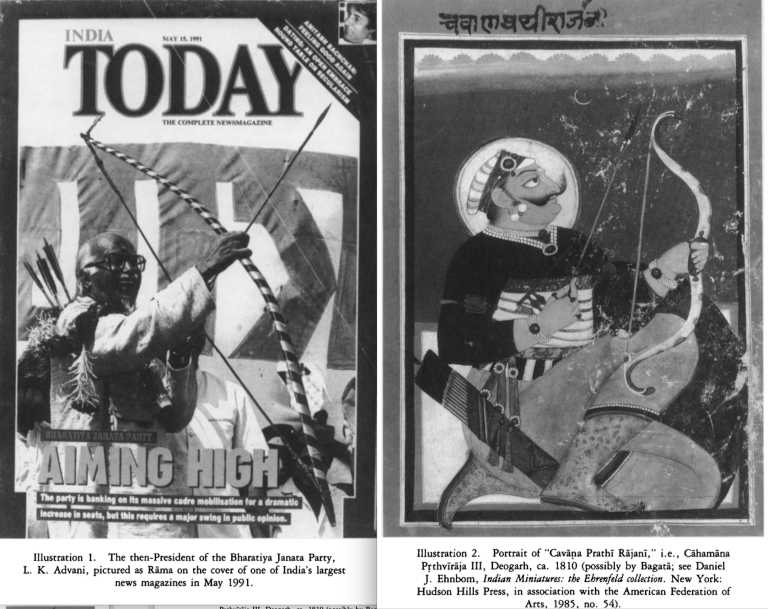
The struggles at JNU are now reaching other institutions in India– the Lok Sabha, the courts, the media channels. Though, to be fair, the struggles at JNU were first troubles at University of Hyderabad and before that at IIT Madras. Certainly, before that at Kashmir University. The world outside Delhi, Hyderabad, Madras, Srinagar has stood in solidarity with these struggles. Across South Asia, in UK, in America, hundreds of thousands have stood up, spoken, signed their names to be counted in the struggles. There are numerous vectors coinciding in this– anti-caste, pro-freedom of speech, pro-academy, anti-Modi and more. Sheldon Pollock, the Arvind Raghunathan Professor of South Asian Studies at Columbia University is one such supporter– having signed a petition for JNU. Presumably for this support, Pollock is now the target of a petition against him– demanding that he be removed from his editorial role at a series he founded. You can read about the petition here and a rebuttal from Dominic Wujastyk here.

Given that this petition is a publicity effort aimed at harassing a scholar, I was tempted to ignore it. However, as the news of this petition has circulated, I realized that people are largely unaware of both Pollock’s scholarship, and the history of why scholarship– such as his or Wendy Doniger’s– is consistently under attack by the Hindu Right parties. Unaware of either, I see the danger of people jumping to conclusions about the validity of the slur against Pollock or why it matters that we speak up for him. It is important, I think, that we properly contextualize the intellectual work of Pollock’s career but also the claims behind his detractors. This attack on Pollock has a genealogy, more precise and more general, than what is readily evident– the Hindutva Right has long targeted historical production on Indian past that was anti-caste, anti-communal or feminist, and it has long targeted Sheldon Pollock for articulating how political imagination frames historical thinking.

This is a struggle for the right to narrate–connecting JNU and Pollock. Pollock, too, is charged as an “anti-national” because slogans were reportedly chanted for Kashmir or Pakistan at JNU. The text of the petition requires that we see the Indian nationalist state as strictly Hindu, strictly masculine, and strictly aggrieved. The Petition’s effort to ask for “native” (read Hindu) Indologist has consumed Indian politics for a while now.

Today there is a call to #removemughalsfrombooks — and it perfectly encapsulates my contention. Books, written texts, need to be cleaned out; British histories, and colonial readings of Mughals eliminated; a Hindu history written in.

Courtesy: chapatimystery.com

Systemic Prejudice, Absence of Grievance Redressal reasons for Dalit Suicides: Teacher Testimonies

0

Here is the Text of the Submission Filed by Concerned Teachers, Scientists and Academics, Hyderabad before the Commission of Inquiry, University of Hyderabad


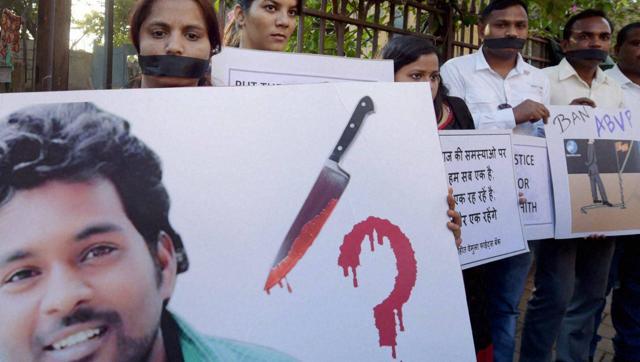
Image: PTI

The suicide of Dalit research scholar Rohith Vemula in Hyderabad Central University has brought to the fore the issue of caste discrimination in higher educational institutions. We believe that the suicide is only the tip of the iceberg of many problems that students from Dalit and other marginalized groups are experiencing. University administrations have generally attributed these deaths to personal psychology instead of initiating broad systemic and attitudinal reforms to prevent such suicides.

In 2012, in the wake of series of suicides by marginalised students in higher educational institutions, the University Grants Commission formulated two Regulations to ensure social equity and set in place grievance redressal mechanisms.  In 2013, Andhra Pradesh High Court took suo moto notice of the student suicides in Andhra Pradesh in PIL No 106/2013 and issued several directives to the Universities to prevent the recurrence of suicides. However, neither the UGC Regulations of 2012 nor the Court directives have been implemented by the Universities.

Rohith’s suicide also highlighted the lack of standardised procedures and due process in the universities in issuing disciplinary orders. The disciplinary enquiries in Rohith’s case as well as those conducted in other central universities such as EFL-U and MANUU reveal insensitivity and disproportionate punishment.  Major punishments such as rustication, hostel expulsion and stopping of fellowships are decreed without following due process or paying heed to the serious consequences of such punishment for the lives of students and especially those from disadvantaged backgrounds. This exercise of power is exacerbated by the absence of substantial appeal provisions within the University.  In such a context the student is forced to approach the High Court for relief which involves time, expenses and the risk of entering an adversarial litigation.  Also such litigation places the individual student in a disadvantageous position vis-à-vis the University which has both time and financial resources at its disposal.

In this context, we the undersigned teachers and concerned academics would like to bring to your kind attention the need to ensure that Universities follow the UGC Regulations, 2012 and the UGC Guidelines on Student Entitlements, 2013 and the AP High Court Orders dated 1-07-2013 in PIL No 106/2013:

2012   Set up the Equal Opportunity Cell headed by the Anti-discrimination Officer as per the UGC (Promotion of Equity in Higher Educational Institutions) Regulations 2012. (Annexure 1)

2013   Institute the Grievance Redressal Committee headed by the Ombudsman as per UGC (Grievance Redressal Regulation) 2012. (Annexure 2)

2014   Implement all the Directives in the Order passed by the High Court of Andhra Pradesh in PIL No. 106/2013. (Annexure 3)

2015   In keeping with the AP High Court Order Interim Measure No 3, a Special Commission be instituted to review disciplinary orders imposing major penalties such as rustication, expulsion from hostels and stoppage of fellowships in the case of all students and especially those from SC/ST/OBC and other marginalised backgrounds.

Further we assert that :

2016-17 The Special Commission should be constituted by the University Grants Commission for the Central and State universities. There should be a separate Commission for each State. It should be a three member quasi-legal body, with a three year tenure, and should convene at least once in every three months, and more often if there is urgency.

Its members should be a) an eminent scholar, b) a representative from the State SC/ST Commission, c) a senior professor from a law university.
 

1.    The Special Commission will have the powers to set aside, confirm or modify the orders passed by the University. While reviewing the Disciplinary Order, it will examine if principles of due process and natural justice have been followed in awarding the punishment.

2.    The Commission will provide personal hearing to both the University and the student. The student may be accompanied by a person of his choice to support him/her in the proceedings.

3.    The Commission will particularly take into account a) the social and economic background of the student and b) if he or she is a first generation learner.

— It will strive to conduct its proceedings in a non-adversarial and healing manner and make every effort for a settlement of the dispute between the university and the student without jeopardizing the interest of the student.
— The Commission should conduct its hearings and pass its Order within two months from the date of issue of the University Order.
 
4.     The Orders passed by the Universities should become operational only after it is reviewed by this Special Commission. During the pendency of hearing, the student will be deemed to be part of the University.

5.     The Special Commission will have powers to punish any official of the University for willful neglect of duty or failure to follow procedures. Such punishment may include suspension, forfeit of office, or withholding of salary.

We therefore request this Commission to recommend to the University Grants Commission and the Ministry of Human Resource Development to conduct audit of Universities’ compliance in following existing Regulations and Court Orders in spirit and letter and legislate fresh Rules in respect of the Special Commission for equitable, peaceful and productive functioning of the University and any other reliefs that this Judicial Commission deems fit to order in the interests of justice.
 
Place of Testimony: At the Golden Threshold, Abid Road, Hyderabad
 
Date: February 25, 2016,

Undeclared Emergency from Bastar to Delhi

0

There is an alarming threat to the Rule of Law and Freedom of Expression

March 3, 2016

A Statement by Concerned Citizens

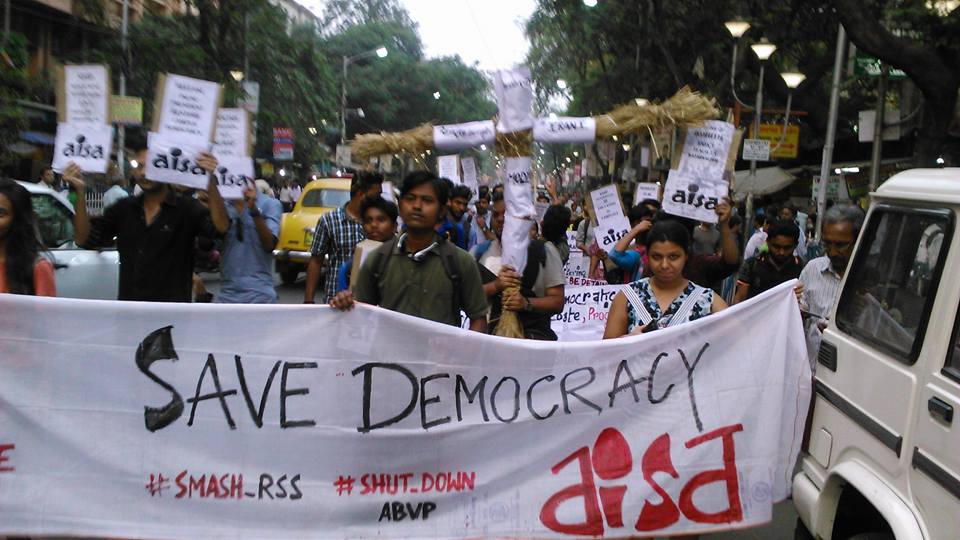
It seems that an undeclared state of emergency is sought to be imposed upon us: a series of seemingly unconnected events across the country, in universities (most recently in Hyderabad and Delhi), factory premises and court halls, our streets and over large parts of the countryside, bear this out. We would like to draw wider attention, in particular, to recent disturbing developments in Jagdalpur, Bastar, that have been somewhat overshadowed by events in the Jawaharlal Nehru University, New Delhi.

In Delhi as in Bastar, the state is using its coercive power to stifle dissent and lock up dissenters by labelling them anti-national or, in the case of Bastar, Maoists. In Chhattisgarh, it has long been standard practice to label anybody with an opinion of development contrary to the mainstream view (of development as corporate welfare and environmental destruction) as a Maoist. This is usually a prelude to police action ranging from harassment and intimidation to arrest, torture, and even death. The Adivasi inhabitants of Bastar have not enjoyed the rule of law since 2005, when the Salwa Judum, a vigilante paramilitary group, was formed in the name of combating Maoism. Nor does the law offer much protection to ordinary people elsewhere seeking to exercise their constitutional rights as law enforcement agencies and governments trample upon civil liberties in the name of nationalism.

During the last few weeks the government of Chhattisgarh has made a concerted effort to evict journalists and lawyers who write about (or speak for) adivasis challenging corporate crimes, state collusion with such crimes, and human rights abuses in the form of rape and murder by security forces.

Human rights defenders like Soni Sori have been attacked in broad daylight with toxic chemicals. The Jagdalpur Legal Aid Group (JagLAG) – a small band of committed, bright public interest lawyers – have been hounded out of their home. Bela Bhatia, a well-respected researcher, and journalists, including Malini Subramaniam of Scroll.in and Alok Putul of the BBC, are being driven out of Chhattisgarh by hooligans in and out of uniform. Somaru Nag and Santosh Yadav, two Hindi language journalists, have already been put in prison.

All these individuals have exposed chilling cases of rape, sexual assault and violence by security forces during anti-insurgency operations. In Chhattisgarh, as in Delhi, police officials are overseeing these events: the Inspector General of Police for Bastar, S.R.P. Kalluri, has been personally accused of intimidation and harassment. We hope that the NHRC team presently investigating human rights violations committed by the armed security forces in Bastar will probe into the complicity of the Chhattisgarh police in the eviction of human rights defenders, lawyers, journalists and the attack on Sori and the constant threats being given to her family.

The parallel with recent events in the Jawaharlal Nehru University is evident, with the difference being that constitutional rights have been effectively suspended over large parts of Baster since 2005. What is difficult to do in Delhi without attracting widespread attention and protest is easy to do in a remote region to poor groups that impinge much less upon the public consciousness. But both are different sides of the same coin and testify to this government’s readiness to stifle dissent by force and scare-mongering whereby all those who subscribe to a different idea of India – one envisioned in our constitution, of an polity that is secular, just and democratic – are labelled anti-national.

It is in times like this that it is necessary to say even more loudly and clearly than before that we, and those being called anti-national by the government, are in fact defending the constitution. The central government (and the government of Chhattisgarh) must realise that a national government remains national only when it is vested in the greater common good; and that sovereignty rests in the active exercise of the democratic rights by ordinary people and not in the apparatus of the state. We welcome the Delhi High court order of 2nd March 2016, granting interim bail to Shri Kanhaiya Kumar, President of JNUSU.

Shashank Kela, Writer, Chennai
Karuna D W, Historian, Chennai
Nityanand Jayaraman, Writer, Chennai
V Geetha, Writer, Chennai
Karen Coelho, Academic, Chennai
Madhumita Dutta, Researcher, Chennai
Prema Revathi, Writer, Chennai
Kalpana Karunakaran, Academic, Chennai
Binitha V Thampi, Academic, Chennai
Venkat T., Researcher, Chennai
Vijayabaskar, Academic, Chennai
Satya Sivaraman, Writer, Chennai
Nalini Rajan, Academic, Chennai
Anandhi Shanmugasundaram, Academic, Chennai
Satyarupa Shekhar, Researcher, Chennai
Gita Jayaraj, Chennai
Radhika Rammohan, Chennai
Bamini Narayanan, ‘Citizen of India’
V Srinivasan, Organic farmer, Chennai
Om Prakash Singh, Chennai
 

Bail Granted to Kanhaiya Kumar

0

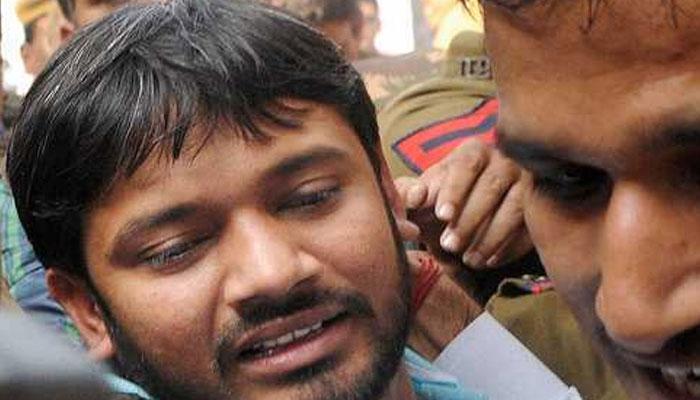
The Delhi High Court today (Wednesday, March 2, 2016), granted interim bail for six months to JNU Students Union president  Kanhaiya Kumar on a personal bail bond of Rs 10,000. The court has also asked Kanhaiya to cooperate in the investigation. At the last hearing on Monday, February 29, 2016 Justice Pratibha Rani had reserved the order after over three hours of hearing. Full Full text of the Delhi High Court order by Justice Pratibha Rani, granting Kanhaiya Kumar bail for 6 months can be read here. It was delivered around 6.45 p.m. on Wednesday, March 2, 2016.

Two advocates, Victor Dheesa and Bajinder Singh were present in the courtroom when the order was delivered. Speaking to Sabrangindia, advocate Dheesa said that Kanhaiya Kumar was likely to be released tomorrow after the matter of standing surety and the bail bond of Rs 10,000 was furnished in the Court. Kanhaiya Kumar was not present in the courtroom when the order was read out. Senior counsel, Kapil Sibal had argued the matter for over three hours on Monday. Vrinda Grover was also assisting the team.

Kanhaiya Kumar had been arrested on February 12, 2016 by the Delhi Police, allegedly without a warrant. On February 18, 2016 he had written a letter to the National Human Rights Commission (NHRC) saying he feared for his life. See SabrangIndia
  
On February 17, 2016 in a shameful attack, men in black coats had brutally assaulted Kanhaiya Kumar in the premises of the Tees Hazari Court even as the Supreme Court of India had been approached in a petition filed by activist ND Jayaprakash. See SabrangIndia
 
Sabrangindia had, within days of Kanhaiya Kumar's arrest, carried a translation of the speech he made at JNU, the day he was arrested, See SabrangIndia
 

We reproduce here the English translation of his speech:

 
"They are the ones who burnt the Tricolour. They are followers of Savarkar who apologised to the British. They are the ones who, in Haryana, have changed the name of one airport. There was one airport named after Bhagat Singh. The Khattar government has now named it after one Sanghi (a person associated with the RSS).
 
What I mean to say is that we don't need the certificate of patriotism from the RSS. We don't need a nationalist certificate from the Rashtriya Swayamsevak Sangh (RSS). We belong to this country. We love this country. We fight for the 80 per cent of the poor population of this country. For us, this is nation worship.
 
We have full faith in Babasahab (Ambedkar). We have full faith in the Constitution of India. We want to say this very forcefully that if anyone tries to challenge the Constitution, be it the Sanghis, we will not tolerate.
 
We have faith in the Constitution. But we don't have faith in the Constitution that is taught in Jhandewalan (RSS headquarters in Delhi) and Nagpur. We don't have faith in Manusmriti, we don't have faith in the caste system in this country.
 
The Constitution and Babasahab Ambedkar talk about corrective measures. The same Babasahab Ambedkar talks about abolishing capital punishment. The same Babasahab Ambedkar talks about freedom of expression. And we want to uphold the Constitution, we want to uphold our right.
 
But it's shameful and sad that the Akhil Bharatiya Vidyarthi Parishad (ABVP), in association with friends from a section of the media, is running such an orchestrated campaign. Yesterday, the ABVP joint secretary said that we fight for fellowships. How ridiculous it sounds! Their government, Madam ManuSmriti Irani is ending fellowships and they accuse us of fighting for fellowships. Their government has reduced the higher education budget by 17 per cent.
 
Our hostel has not been built for the past four years, there is no Wi-fi.  BHEL gave us one bus but the administration has no money for oil. And ABVP people stand like Dev Anand claiming that they will get hostels built, they will get Wi-fi and they will get fellowships.
 
They will be exposed if there is a debate on the basic issues in this country. We are proud of being JNU-ites because we discuss and debate the basic issues concerning this country. We raise issues related to the dignity of women, Dalits, tribals and minorities in this country. And so, their Swamy (Subramanian Swamy) says that jihadis live in JNU, that JNU students spread violence.
 
They (RSS) say that five fingers are not equal. They advocate that women should emulate Sita and give agnipariksha. There is democracy in this country, and democracy gives equal rights to all – be it a student, a worker, the poor or the rich, Ambani or Adani. And when we talk about equal rights of women, they accuse us of destroying Indian culture.

On behalf of JNU, I want to challenge RSS ideologues. Call us and hold a debate. We want to debate the concept of violence. We want to raise questions about the frenzied ABVP's slogans, their slogan that they will do tilak with blood and aarti with bullets. Whose blood do they want to spill?
 
They aligned with the British and fired bullets on the freedom fighters of this country. They fired bullets when poor people demanded bread; they fired bullets when people dying of hunger talked about their rights; they have fired bullets on Muslims; they have fired bullets on women when they demand equal rights.

They say that five fingers are not equal. They advocate that women should emulate Sita and give agnipariksha. There is democracy in this country, and democracy gives equal rights to all – be it a student, a worker, the poor or the rich, Ambani or Adani. And when we talk about equal rights of women, they accuse us of destroying Indian culture.
 
We want to destroy the culture of exploitation, the culture of caste, the culture of Manuwad and Brahminism. Till now, the definition of culture has not been resolved. They have a problem when people of this country talk about democracy, when they give blue salute along with red salute, when people talk about Ambedkar along with Marx, when people talk about Asfaqulla Khan (the freedom fighter). They can't tolerate. It is their conspiracy. They were British stooges. I dare them to file a defamation case against me. I say that the RSS's history is one of siding with the British. These traitors today are distributing certificates of nationalism.
 
Check my mobile phone, friends. Dirty abuses are being hurled at my mother and sister. Which Mother India are you talking about? If my mother is not part of your Mother India, your concept of Mother India is not acceptable to me.
 
My mother is an Anganwadi sewika, my family runs with the Rs 3,000 she earns and they are abusing her. I'm ashamed that in this country, the mothers of the poor, Dalit farmers are not part of Mother India. I will hail the mothers of this country, I will hail the fathers of this country, I will hail the mothers and sisters of this country, I will hail the poor farmers, Dalits, tribals and labourers. I will tell them that if they have courage, then say ' Inquilab zindabad', say 'Bhagat Singh zindabad', say 'Sukhdev zindabad', say 'Asfaqulla Khan zindabad', say 'Babasahab Ambedkar zindabad'.
 
Only then will I believe that you have faith in this country.
 
They are enacting the drama of celebrating Ambedkar's 125th birth anniversary. If they have courage, they should raise the issues Ambedkar raised. Caste system is one of the biggest problems in this country. Talk about caste system, bring reservation in every sector, bring reservation in the private sector. Raise these questions, then I will believe that you have faith in this country.
This nation had never been yours and will never be yours. A nation is made by its people and if there is no place for hungry and poor people in your idea of the nation, then it is no nation.
 
Yesterday, I said in one TV debate that we are in difficult times. The way fascism is coming in the country, even the media would not be spared. The media would be provided with written scripts from the RSS office, just as written scripts came from the Congress office during the Emergency.
 
Some media friends told me that JNU runs on taxpayers' money, on subsidy. Yes, it is our right that JNU runs on subsidy. But I want to raise the question: what are universities for?
 
Universities are there for critical analysis of the society's collective conscience. Critical analysis should be promoted. If universities fail in their duty, there would be no nation. If people are not part of a nation, it will turn into a grazing ground for the rich, for exploitation and looting.
 
My mother is an Anganwadi sewika, my family runs with the Rs 3,000 she earns and they are abusing her. I'm ashamed that in this country, the mothers of the poor, Dalit farmers are not part of Mother India. I will hail the mothers of this country, I will hail the fathers of this country, I will hail the mothers and sisters of this country, I will hail the poor farmers, Dalits, tribals and labourers.

If we don't assimilate people's culture, beliefs and rights, a nation would not be formed. We stand firmly with the country, we stand for the dreams of Bhagat Singh and Babasahab Ambedkar. We stand for equal rights. We stand for the right to live. Rohith (Vemula) had to lose his life to stand for these rights.
 
But we want to tell these Sanghis – "shame on your government". We challenge the central government – we will not allow in JNU whatever it did in the case of Rohith. Rohith will not lose his life here. We will not forget Rohith's sacrifice. We will stand for freedom of expression.
Leave aside Pakistan and Bangladesh, we call for unity of the poor and the toiling masses of the world. We hail the humanity of this world, we hail the humanity of India.
 
We have identified those who are against humanity. This is the biggest issue before us today. We have identified that face of casteism, the face of Manuwad, the face of the nexus between Brahminism and capitalism. And we have to expose these faces. We have to usher in real freedom, and that freedom will come through the Constitution, through Parliament. And we will achieve it.
 
I want to appeal to you friends that despite all the differences, we have to safeguard this freedom of expression, we have to safeguard our Constitution, we have to safeguard the unity and integrity of this country. For this, we have to remain united and fight the forces trying to divide our country, the forces that give shelter to terrorists.
 
One last question before I end my speech. Who is Kasab? Who is Afzal Guru? Who are these people, who are in a state to wrap bombs around their body and kill? If these questions are not raised in universities, the existence of universities becomes pointless.
 
If we don't define justice, if we don't define violence and how we see violence? Violence is not only about killing somebody with a gun. There is violence when the JNU administration denies the constitutional rights guaranteed to Dalits. This is institutional violence.
 
They talk about justice. Who will decide what justice is?
 
Brahminism did not allow Dalits to enter temples. The British did not allow dogs and Indians to enter restaurants. That was justice then. We challenged that justice and today we challenge the justice of the ABVP and the RSS because their justice does not accommodate justice for us. If their justice doesn't accommodate justice for us, we will not accept their justice and this freedom.
 
We will accept this freedom when every person gets his constitutional right. We will accept justice when there is equal rights for all.
 
Friends, the situation is very serious. Under no circumstances does the JNUSU (the JNU students' union) support any violence, any terrorist, any terror incident and any anti-India activity. I want to reiterate that the JNUSU strongly condemns slogans of "Pakistan zindabad" raised by some unidentified people.
 
I want to share one thing with you, friends. It is a question related to the JNU administration and the ABVP. Thousands of things take place on this JNU campus. Listen carefully to the slogans being raised by the ABVP now. They are calling us 'communist dogs'. They are calling us 'Afzal Guru's dogs'. They are calling us 'children of jihadis'.
 
If the Constitution gives us the right to be citizens, then is it not an attack on our constitutional right when they call our parents dogs? We want to ask this question to the ABVP and the JNU administration.
 
We want to ask the JNU administration for whom, with whom and on what basis it works. It is now clear that the JNU administration first gives permission and then withdraws it on receiving a call from Nagpur. This thing of first giving permission and then withdrawing, it has intensified.
 
First, they will announce fellowship and then tell that it has been withdrawn. This is the RSS and ABVP pattern with which they want to run this country.
 
We want to ask the JNU administration. Permission (for the February 9 programme where eventually the anti-India slogans were shouted) was granted despite the fact that posters had been put up and pamphlets distributed. When it gave permission, on whose directive was it withdrawn? We want to ask this to the JNU administration.
 
At the same time, understand the truth of these (ABVP) people. Don't hate them. I feel sad for them. They are jumping today because they feel that the way they got Gajendra Chauhan (in the FTII), they would get people like him in every institution. They feel that with people like Chauhan everywhere, they would get jobs. Once they get jobs, they will forget nation worship and Bharat Mata. What to tell of the Tricolour, which they have never respected? They will also forget the saffron flag.
 
I want to know what kind of nation worship they are talking about? If an owner doesn't behave properly with his employees, if a farmer doesn't do justice with his workers, if a highly paid CEO of a media house doesn't behave properly with the meagrely paid reporters, then what is this nation worship?
 
Their nation worship ends with an India-Pakistan cricket match. After that when they go out on the road, they misbehave with the person selling bananas. When the person selling bananas tells them that a dozen comes for Rs 40, they abuse him and accuse him of looting customers. They demand a dozen for Rs 30.
 
The day the person selling bananas turns and tells them that you are the real looters, they will term the poor fellow anti-national. Nation worship begins and ends with wealth and facilities. I know a number of ABVP people and I ask them whether the fervour of nationalism moves them? They tell me: "What to do, brother, this government is for five years and two years are already over. Three years' talktime is left and whatever has to be done, should be done in this period."
 
But I ask them what will happen if, tomorrow, one of their own members, who is going around in trains checking for beef, holds them by the collar and accuses them of being anti-national since they are from JNU? They could be lynched. I ask them whether they realise this danger?
 
They tell me that they realise this danger and so are opposing‪ #‎JNUShutdown (a Twitter hashtag). First, they build an atmosphere against JNU and, then, oppose it when they realise that ultimately they have to live in JNU only.
 
This is why I want to tell all JNU-ites that elections are coming in March. The ABVP people will seek your votes with the "Om" flag. Ask them: "We are jihadis, we are terrorists, we are anti-nationals and by taking our votes, will they also become anti-national?" Do ask them these questions. I know when you ask them these questions, they will tell you, "not you but a few people are anti-nationals". Then ask them, "why did they not tell this in the media then"? Ask them why their vice-chancellor and registrar too did not tell then?
 
Tell them that those few people too are saying that they did not raise slogans of "Pakistan zindabad", nor did they support terrorism. Those few people are asking why at first permission was granted and then withdrawn and this is an attack on their democratic right? These few people are saying that if somewhere a democratic struggle is being fought, they will stand for it.
 
They will never understand this. But the people, who have gathered here at short notice, understand the issue. They will go around the campus and tell the students that the ABVP is not only breaking this country but also JNU and we will not allow this to happen.
 
Long live JNU. JNU will continue to actively participate in all democratic struggles taking place across the country, continue to strengthen the voice of democracy, the voice of freedom and freedom of expression. We will struggle and win and defeat the traitors of this country. With these words, I thank you all and appeal for unity.

Jai Bhim, Lal Salaam."
 

In the video below, Kanhaiya Kumar nails the Delhi police inaction during Patiala House court attack on February 17, 2016