Home Blog Page 2589

For Children, Just a Pittance in the 2016-2017 Budget

0


HAQ: Centre for Child Rights

 
Mr. Finance Minister deserves a huge applause when he says, “I have outlined the agenda of our Government to ‘Transform India’ for the benefit of the farmers, the poor and the vulnerable”, but perhaps this is minus children, who are yet to become a priority.
 
Though children constitute 37 percent of the country’s population, this year’s budget speech found no specific mention of children. While there is a slight increase in budgetary allocations up to 3.32 % from last year’s 3.26 %, this in no way compensates for the drastic almost 30 % cut last year, the first full-fledged budget of the Modi government.
 
Progress of a country can be determined by the health of its citizens, especially children. But does this year’s budget (2016-2017) reflect this concern at all?
 
The calculation of children’s share is the budget is based on the figures presented by the Government in Statement 22, Expenditure Budget Volume I 2015-16 and 2016-2017 –Budget Provisions for Schemes for the Welfare of Children.  However, this year’s analysis was challenged by the discrepancies in the figures presented in  Statement 22, which raises concerns not just about the veracity of the numbers presented, but also the seriousness of the government towards its young citizens.
 
Some Good News
 

  • Of the 442 million children of the country, the young child (0-6 years age group) has the most reason to rejoice as there is a substantial increase in the budget for schemes like the ICDS, Kalawati Saran Children’s Hospital. This is long overdue and much needed attention to the young child is welcome, but the same should have been paid to the other age groups and sectors as well. We know that ICDS had witnessed drastic cuts in the budget last year, some of which was restored in the supplementary budget. However, it still is not adequate for the targets of universalisation of education

 
However
Share of children in all sectors except child development has gone down both in the Union Budget and the Budget for Children (BfC). As always health and protection remain the most under-resourced sectors.
 
Child Protection
Not only does the protection sector remain the most under-resourced, the 2016-17 budget clearly does not offer much solace with the allocation for Integrated Child Protection Scheme (ICPS) down by 1.3%
 
Example of Discrepancies
The Finance Minister Mr. Arun Jaitley in his budget Speech of 2016-17 mentioned that Plan allocations have been given special attention for sectors like agriculture, irrigation, social security including health and women and child development etc. But if we delve deeper into the document [Statement 22] there are several discrepancies which must be highlighted at the outset:

Discrepancy No. 1
The Statement No. 22 of 2015-16 [ Budget Statement related to the Welfare of Children, Expenditure Budget Vol. I] indicated that a total sum of Rs. 57918.51 Crore was allocated at BE stage for children specific programmes. But, in Statement 22 of 2016-17, the total allocated amount for children at BE stage in 2015-16 has been incorrectly indicated as Rs. 58016.72 Crore. There is a huge difference of Rs. 98 Crore in government’s own documents brought out in two different years with respect to Budget Estimates for the year 2015-16. [See the images below]. This makes it difficult for people undertaking budget analysis to arrive at a final set of calculations and increases scope for unreliability. (Detailed Discrepancies below)
 
Quick Highlights

  • The share of children in the Union Budget 2016-17 goes up to 3.32%, a slight increase from 3.26% in the year 2015-16. Although this small increase is welcome after the drastic almost 30% decrease we saw last year, it still does not compensate for the falling share of children in the budget over the years.


  • Of the 442 million children of the country, the young child (0-6 years age group) has the most reason to rejoice as there is a substantial increase in the budget for schemes like the ICDS, Kalawati Saran Children’s Hospital. This is long overdue and much needed attention to the young child is welcome, but the same should have been paid to the other age groups and sectors as well. We know that ICDS had witnessed drastic cuts in the budget last year, some of which was restored in the supplementary budget. However, it still is not adequate for the targets of universalisation.  
  • Share of children in all sectors except child development has gone down both in the Union Budget and the Budget for Children (BfC). As always health and protection remain the most under-resourced sectors.
Sectoral Share in Union Budget (in per cent)
YearHealth BEDevelopment BEEducation BEProtection BEOther than BfC
2012-20130.181.103.440.0495.24
2013-20140.161.103.340.0395.36
2014-20150.161.063.260.0495.49
2015-20160.130.512.570.0596.74
2016-20170.120.772.400.0396.68


Sectoral Share within BfC (in per cent)
YearHealth BEDevelopment BEEducation BEProtection BE
2012-20133.7723.1672.220.85
2013-20143.4223.7972.070.72
2014-20153.5923.3672.210.78
2015-20163.9315.7478.951.38
2016-20173.5923.2372.141.04


  • Despite repeated claims of striving for inclusive growth, the budget fails to live up to it as it is the already marginalised who will bear the brunt of the budget cuts.
Reduced Allocation in Schemes Related to children belonging to Religious or Traditionally Minority Strata
Programmes & Schemes2015-20162015-20162016-2017 
 BEREBEPercent increase /decrease in Allocation over the last year
Pre-Matric Scholarship for Minorities1040.001040.10931.00-10.48
Post Matric Scholarship for Minorities580.10580.10550.00-5.19
Girls Hostels for SC4.994.403.90-21.84
Boys Hostels for SC2.460.460.49-80.08
Pre-matric scholarship for children of those engaged in certain occupation8.822.071.62-81.63
Up-gradation of merit of SC students3.903.903.00-23.08
Assistance to voluntary organizations for SCs7.507.507.35-2.00
Boys and Girls hostels for OBCs4.153.783.60-13.25
Assistance to Voluntary Organisations for OBCs0.900.750.54-40.00
Prematric Scholarship for OBCs121.50108.22114.30-5.93
Pre-Matric Scholarship for SCs743.28479.99485.10-34.74
Strengthening of education among ST girls in low literacy districts40.000.000.00-100.00
Scheme for providing Education to Madrassas/ Minorites375.50335.50120.00-68.04
Incentive to children of vulnerable groups among Schedule Caste0.1000.000.010-90.00


  • Some critical flagship schemes  have witnessed reduced allocations, including the Deendayal Disabled Rehabilitation Scheme – the only one that is in this statement for disabled children.
Reduced Allocations in Flagship Schemes
Programmes & Schemes2015-162015-20162016-2017Percent increase /decrease in Allocation over the last year
 BEREBE
Routine Immunization0.000.000.000.00
Pulse Polio Immunization0.000.000.000.00
Reproductive and Child Health Project0.000.000.000.00
National Bal Bhavan19.7019.2815.50-21.32
Scheme for Setting up of 6000 Model School at block Level as Benchmark of Excellence1.000.000.00-100.00
National Scheme for Incentive to Girl Child for Secondary Education (SUCCESS)100.00112.0045.00-55.00
National Means Cum Merit Scholarship Scheme70.0081.5035.00-50.00
Rajiv Gandhi National Crèche Scheme205.94144.00150.00-27.16
Grant to Lakshdweep council for child welfare and providing accommodation for Anganwadi, creche Centres (Lakshdweep)0.620.000-100.00
Nutrition (A&N Islands)3.375.003-10.98
Deendayal Disabled Rehabilitation Scheme24.0020.4018.00-25.00
Funds for Children Corner0.030.000.00-100.00
Crèche Facilities for CRPF0.500.000.00-100.00
Crèche Facilities for CISF0.490.000.00-100.00
Provision for NE Region & Sikkim42.1942.8739.76-5.76
Improvement in working conditions of child/women labour25099.50140-44.00
Scheme for welfare of working children in need of care and protection107.003-70.00
Central Adoption Resource Agency11.856.8510.5-11.39
Integrated Child Protection Scheme402.23402.23397-1.30

 
SECTORAL HIGHLIGHTS
 
Education

  • As share of the Union Budget, education has seen a consistent decline over the last five years, going down from 3.44% in 2012-13 to 02.40% in 2016-17.
  • As against a 21.90% decline in the allocations for education last year, this year there has been an increase of 3.75%. However, proportion of Union Budget, it has declined from 2.57% in 2015-16 to 2.40% in 2016-17.

Health

  • As against a 21.84% decline in the child health allocations last year, this year witnesses an increase of 3.60%, but as proportion of Union Budget, it has declined from 0.13% in 2015-16 to 0.12% in 2016-17.
  • As share of the Union Budget, child health has seen a consistent decline over the last five years, going down from 0.18% in 2012-13 to 0.12% in 2016-17.

Development

  • As against a 51.88% decline in the child development allocations last year, this year there has been an increase of 67.60%.
  • Even as proportion of Union Budget, the share of child development has improved marginally from 0.51% in 2015-16 to 0.77% in 2016-17.

 
 Protection

  • There has been a significant decrease of 14.39% in the share of allocations this year as against an increase of 26.57% in child protection allocations last year. This is particularly worrying that this cut in budget is despite increase in crimes against children as well as number of children coming in conflict with the law. Even as proportion of Union Budget, it has declined from 0.05% in 2015-16 to 0.03% in 2016-17, going back to the situation that existed in 2013-14.
  • This reflects the very low priority accorded to protection of children despite all the lip service from the legislators and members of the government. At a time when there is need for increased investment in child protection, a decline is bound to give a major setback to the most vulnerable and unprotected children of India. It also amounts to ignoring the various Supreme Court directions for strengthening the child protection system.

The Devolution Saga

The Statement 22 (a separate budget statement on children related scheme) of 2015-16 Union Budget, explained “the heavy cuts towards children specific Centrally Sponsored Schemes (CSS) on account of enhanced devolution of Union Taxes to States as recommended by the Fourteenth Finance Commission (FFC) and to keep the Budget for such programmes unchanged, States are to contribute from their enhanced resources”[1]. The Fourteenth Finance Commission recommended that share of the states in the divisible pool of taxes should be increased to 42% from 32%.
While, in principle, the Devolution of Central taxes to States is an ideal arrangement, there have been various media reporting of States feeling discomfort around the new development[2]. Economists are concerned over the suddenness with which the changed devolution mechanisms have been thrust upon States.

Although, devolution of Central taxes to State governments are expected in increased share of States, but the States’ revenue is not going to increase multiple fold. For example, Tamil Nadu has not gained due to higher devolution of taxes. There is only 1.16% increase for Tamil Nadu State after devolution by the 14th Finance Commission[3]. Moreover, most of the weaker States are not fully equipped to generate resources on their own and it is feared that children related schemes would not form core of the State agenda. Thus in order to fulfill the National Development Agenda, States cannot be left on their own without significant support from the Central government. The States have raised their inability to adapt to the new fiscal arrangement even in the Sub-Group of Chief Ministers on rationalization of CSS, constituted by NITI Ayog. Thus, the onus of financing the CSS majorly lies on the Central Government through adequate resource allocation in the Union Budget.

At a recent an interface with the government officials and other stakeholders in Assam and Tripura shared similar concerns over poor allocation of ICPS, especially in light of the enactment of the new Juvenile Justice Act which calls for money to meet the additional infrastructural and human resource requirements laid down in it.

Detailed Analysis

  • Education

As a proportion of the Gross Domestic Product (GDP), the expenditure on education was reported in the Economic Survey of 2015-16 to be hovering around 3 per cent during 2008-09 to 2014-15. This despite an age old goal of reaching at least 6% of GDP. The Survey further highlights that during 2013-14, out of the total expenditure on social services, 11.6 per cent was spent on education.
 
Quoting the 2014 ASER Report that showed a declining trends in percentage of enrolment in government schools in rural areas from 72.9 per cent in 2007 to 63.1 per cent in 2014, The Economic Survey 2015-16 states, “In addition to the need to increase the percentage of enrolment substantially to achieve universalization of education, concerns about the decline in enrolment in government schools need to be identified and addressed”.
 
However, the Finance Minister seems to be thinking quite differently as he believes India has achieved universalisation of primary education. In his speech he stressed that “After universalisation of primary education throughout the country, we want to take the next big step forward by focusing on the quality of education. An increasing share of allocation under Sarva Shiksha Abhiyan will be allocated for this. Further, 62 new Navodaya Vidyalayas will be opened in the remaining uncovered districts over the next two years”.
 
Indeed the Economic Survey also points out that “Decline in enrolment in government schools and some shift to private schools might be largely related to the poor quality of education offered in government schools, since it is free or offered for a nominal fee”. Finance Minister’s focus on improving quality of education and an allocation of Rs. 22500 for SSA is therefore quite welcome.
 
Can a mere 2.3% increase in the SSA budget from the previous year help address both decline in enrolment in government schools and improved quality of primary education? 
 
And there is yet another side to the story that has been completely ignored. This is about closing down of government schools in the recent past in Karnataka, Rajasthan and other states and how this is affecting the children.[4]  The closure of the government schools leaves no option for parents but to send their children to private schools, or not send them to school at all. It must be remembered that it is the poor children that go to government schools.
 
Can the Finance Minister’s proposal to start 62 new Navodaya Vidyalayas address this problem and that too in a school education system that is highly stratified with parallel systems of government schools in operation? Will these 62 schools cater to the real poor of the country? Is this truly being inclusive? These questions remain unaddressed.
 
Last year the NDA government had announced the “Scheme for Setting up 6000 Model schools at block level as benchmark of excellence” with great pride. It took just a year for the government to revisit its decision and hence no more model schools in 2016-17.
We cannot but wonder if that will also be the fate of the proposal to make 10 public and 10 private higher education institutions world-class institutions.

Here are the following schemes under Department of School Education and Literacy that have seen budget cuts:

SchemeDecline (in percentage)
National Bal Bhavan21.3%
National Scheme for incentive to girl child for Secondary Education55%
National Means cum Merit Scholarship Scheme50%
Education scheme for Madarsas/Minorities68%


  • Child Protection

Not only does the protection sector remain the most under-resourced, the 2016-17 budget clearly does not offer much solace with the allocation for Integrated Child Protection Scheme (ICPS) down by 1.3%
 

Integrated Child Protection SchemeBE 2015-16 (in Crores)BE 2016-17 (in Crores)
402.23397.00

 
The ICPS was designed as a flagship scheme in the Eleventh Five Year Plan to enable the creation of a protective environment for children through the creation of child protection mechanisms at every stage. Some of these structures have even found place in the new Juvenile Justice Law. Moreover, this scheme was designed based on the low allocations in the budget for protection of children. To see it so badly under-resourced is very disheartening.

But what is even more surprising is to see ICPS is subsumed under what is now termed as the “Umbrella ICDS”, only to make child rights activists wonder how one flagship scheme can be subsumed under another. Or is this a deliberate decision to suggest that the Ministry now plans to cut down on its staff and have one and the same division/department handling ICDS and other children related schemes including the ICPS.
 
Both increase in Crimes against Children and by Children make them even more vulnerable, and hence this lack of attention to child protection is very disconcerting. Despite  considerable economic and social progress since independence, a large number of children in India still live in inhuman and pathetic conditions. Unfortunately, with increase in incidence of child abuse, exploitation and violence, the well-being of our 442 million children and that of our country is questionable. Indeed it places every other right under threat.
 

  • A total of 89,423 cases of crimes against children were reported in the country during 2014 as compared to 58,224 cases during 2013, showing an increase of 53.6%. 
  • On the other hand, a total of 48,230 juveniles were apprehended during 2014 as against 43,506 in 2013. 
  • Such children need special care and protection. They need to be rescued, rehabilitated, repatriated and reintegrated into the mainstream of life.

India’s Public Expenditure on Child Protection and Juvenile Justice: A case in point
 
According to the 264th Report of Department-Related Parliamentary Standing Committee on Human Resource Development, the percentage share of children’s budget within the Union Budget has been reduced from 4.76% in 2012-13 to 4.64% in 2013-14 [para 3.44, pg.39].
 
Budget for Children analysis undertaken by HAQ: Centre for Child Rights in India also reveals a consistent decline in children’s budget in the last few years, going down from 4.52% in 2014-15 to 3.26% in 2015-16. The dip in the financial year 2015-16 is huge and there are no answers as to how will this improve the children’s condition.
 
Inadequacy in public spending on child protection and juvenile justice is reflected in the fact that on an average, in the last ten years, child protection received only 3 paise out of every 100 Rupees spent by the Union of India. Analysis of flagship programmes like the Integrated Child Protection Scheme, which is the vehicle for implementing juvenile justice and child protection, shows poor financial planning, abysmal funding and huge under spending.

The report further highlights that of all sectors, the budget for child protection has always been the lowest and in 2015-16 it is only 0.04% of the total union budget. This covers juvenile justice system, child labour and provision for orphan and street children. Further, the report says, “These low investments result in different financial outlays in different states. The training support is not uniform and the secretariat support to CWC and JJB is limited and most importantly the investment into developing infrastructure is negligible”.[5]

While there is no separate and distinct budget for implementing the juvenile justice legislation, the Integrated Child Protection Scheme (ICPS) is the main scheme which provides the financial resources for implementing various child protection laws, including the law on juvenile justice. Although 2015-16 budget allocates 402.23 Crore Indian Rupees for the ICPS, this was only a 0.5% increase from the allocation made in 2014-15 (INR 400 Crore) and was still short of the requirement as per the revised financial norms set out for the scheme. And now, a further decline in the budget for ICPS to 397 Crore Rupees indicates a further dilution in the commitment to child protection, including the commitment to ensuring safety of child victims of sexual abuse, for which ICPS never had any budget.

As per the revised norms, the cost of setting up a State Child Protection Society (SCPS) in the 35 states, and a District Child Protection Unit (DCPU), a Child Welfare Committee (CWC), a Juvenile Justice Board (JJB) in 675 districts, comes to INR 363.30 Crore.
If the only the recurring costs of other components of ICPS are added, the amount would far exceed the current allocation of 397 Crore, which is less than the allocation of INR 402.23 in the previous year.   These other components include Central Adoption Resource Authority (CARA), State Adoption Resource Agencies (SARA), Childline mother NGO, Regional Centres of Childline and Childline services on ground, National Institute for Public Cooperation & Child Development (NIPCCD) and its Regional Centres, various institutions for children, non-institutional care other than adoption e.g. foster care and sponsorship, and the Central Project Support Unit located in the Ministry of Women and Child Development.

  • Child Health

Unfortunately, child health continues to be largely understood as that for infants and the young child. Adolescent health remains unrecognised largely and unaddressed, except perhaps reproductive and sexual health (ARSH). So the specific child health related programmes are those that fall under the reproductive and child health initiatives.

As share of the Union Budget, child health has seen a consistent decline over the last five years, going down from 0.18% in 2012-13 to 0.12% in 2016-17, showing the low priority accorded to this sector over the years. Right to health as a fundamental right remains a distant dream.

As against a 21.8% decline in the child health allocations last year, this year witnesses an increase of 3.6%. But as proportion of Union Budget, it has declined from 0.13% in 2015-16 to 0.12% in 2016-17. The 2015-16 Economic Survey clearly notes that “While the achievements of the National Health Mission in reaching affordable healthcare services must be applauded, the need of universal healthcare, both in terms of access and quality remains a cause of concern”.

Despite the fast growing economy of the country the health situation of children has not improved adequately. Malnutrition is more common in India than in sub-Saharan African countries where per capita income is much lower than that of India. Although statistics on malnutrition show improvement, about 30% of children below the age of five are reported to be underweight, 38.8% are stunted and 15% wasted. While India had a Millennium Development Goal target of 27 for infant mortality rate, it still remains at 42. India had the highest number of under-five deaths in the world in 2012, with 1.4 million children dying before reaching their fifth birthday. 140,000 children of them are estimated to be dying every year due to diarrhoea. WHO’s Global Analysis tells us that environmental factors contribute to 36% of all deaths of children between 0 to 14 years. Reportedly, 1.3 million deaths occur in India due to environmental pollution every year. Thus children’s well-being in particular and human development in general continues to be a major challenge even in the times of economic growth of the country.
 
The only child health schemes that have seen a consistent increase in the last two years have been the Kalawati Saran Children’s Hospital and Child Care Training Centre, Singur.

The largest increase has always been for the Kalawati Saran Children’s Hospital despite Kalawati Saran Children’s Hospital featuring in media for all the wrong reasons, including the deplorable condition of children in this hospital. The Hindustan Times article dated 09th July 2015 reported that one of Asia’s biggest hospitals is sitting on infection bomb as filth and biomedical waste lie all around the hospital in open[6].

The Finance Minister has announced provision of health insurance of up to Rs. 1 lakh per family; and a top up of Rs. 30,000 for people above 60 years.

While the plan is a good step, the insurance coverage amount of Rs. 1 lakh and the implication that this may see with respect to reduced public spending on healthcare, raise concerns about slipping on the universal health care goals.
 
Conlcusion
 
The growth of GDP has now accelerated to 7.6%, announced the Finance Minister in his opening remarks of the Budget Speech, 2016-17. Indeed this is something to feel proud of. But what is really being done for children? Mr. Finance Minister seems to have already forgotten the warning from the Economic Survey 2015-16 which stated that “India is already halfway through its demographic dividend, and taking full advantage requires a healthy and educated population”.

What more, the government seems to have forgotten its own commitment to inclusive growth. A mere increase from 3.26% to 3.32% cannot be a call for celebration, when children remain unprotected and uncared for.
 
We forget that children and childhood cannot be divided to focus only on one stage of development in their life. So while, the increased budget for the young child (0-6 years) is appreciated, not much is forthcoming for others. 
 
The glaring blunders in Statement 22 this time only add to confusion with respect to government’s intent and pose questions on reliability of the budget figures.
 
Blunders by the Government in Budget 2016-2017: The Nation Wants to Know!
 
The Finance Minister Mr. Arun Jaitley in his budget Speech of 2016-17 mentioned that Plan allocations have been given special attention for sectors like agriculture, irrigation, social security including health and women and child development etc.
 But if we delve deeper into the document [Statement 22] there are several discrepancies which must be highlighted at the outset:

Discrepancy No. 1
The Statement No. 22 of 2015-16 [ Budget Statement related to the Welfare of Children, Expenditure Budget Vol. I] indicated that a total sum of Rs. 57918.51 Crore was allocated at BE stage for children specific programmes. But, in Statement 22 of 2016-17, the total allocated amount for children at BE stage in 2015-16 has been incorrectly indicated as Rs. 58016.72 Crore. There is a huge difference of Rs. 98 Crore in government’s own documents brought out in two different years with respect to Budget Estimates for the year 2015-16. [See the images below]. This makes it difficult for people undertaking budget analysis to arrive at a final set of calculations and increases scope for unreliability.

Discrepancy No. 2
In Statement 22 of 2015-16 Budget, under the Ministry of Tribal Affairs, there were two schemes mentioned, which were:

  1. Strengthening of education among ST girls in low literacy districts
  2. Umbrella Scheme for education of ST children

Coming to the Statement 22 of 2016-17 Union Budget, we found that this year too, there are two schemes under Ministry of Tribal Affairs, which are:

  1. Grant-in-Aid to voluntary organisations working for Welfare of STs
  2. Umbrella Scheme for education of ST children

Even though the Grant-in-Aid to voluntary organisations working for Welfare of STs seems to have been introduced only in 2016-17 since there was no such scheme in Statement 22 for the year 2015-16, the Statement 22 of 2016-17 shows allocations made under this scheme in 2015-16 also. In other words, either the 2015-16 Statement 22 was incorrect or the one this year is incorrect, further increasing unreliability of Budget for Children given in Statement 22. [see the images below]
 
Discrepancy No. 3
In Annexure III-B to Part A of Budget Speech of 2016-17, the allocations for ‘Integrated Child Development Scheme (Umbrella ICDS)’ is indicated to be a sum of Rs. 16120 Crore. But if one looks at Statement 22 for 2016-17, even the total allocation for ‘Umbrella ICDS’ comes to only Rs. 15360 Crore, though somehow this umbrella ICDS covers a lot more than ever before with inclusion of the Rajiv Gandhi National Creche Scheme, the ICPS and the scheme for working children in need of care protection in addition to the usual ICDS related programmes. There is a huge discrepancy of Rs. 760 Crore between Statement 22 and Annexure III-B to Part A of the Finance Minister’s Budget Speech. One can only wonder where is the rest of money for ICDS if the Finance Minister’s speech is to be relied upon?

Discrepancy No. 4
 
Further, the figure given for allocations for ‘Kalawati Saran Children’s Hospital’ in the year 2015-16 are different in the in Statement 22 published last year and the one presented this year. This once again puts a question mark on the reliability of budget figures and makes calculations difficult.


Discrepancy No. 5

In another blunder, the allocations for Andaman and Nicobar Islands at BE stage have been completely changed in Statement 22 of 2016-17 as compared to Statement 22 of 2015-16. [see images below]


Discrepancy No. 6
The allocations for ‘Pre Matric Scholarship’ under Ministry of Minority Affairs appears slightly different in Statement 22 of 2016-17 as compared to Statement 22 of 2015-16. This slight difference amounts to INR 10 lakh in real and absolute terms.


[1] Excerpts from Statement 22; Expenditure Budget Volume I 2015-16
[3] Chief Ministers’ Sub Group report on Rationalization of CSS; http://niti.gov.in/mgov_file/Final%20Report%20of%20the%20Sub-Group%20submitter%20to%20PM.pdf
[5]Parliament of India, Rajya Sabha (February 2015), Department-Related Parliamentary Standing Committee on Human Resource Development, Two Hundred Sixty Fourth Report, The Juvenile Justice (Care And Protection Of Children) Bill, 2014, Presented to the Rajya Sabha on 25th February 2015 and Laid on the Table of Lok Sabha on 25th February 2015, p 39.  Rajya Sabha Secretariat, New Delhi. Available on:
www.prsindia.org/uploads/media/Juvenile%20Justice/SC%20report-%20Juvenile%20justice.pdf

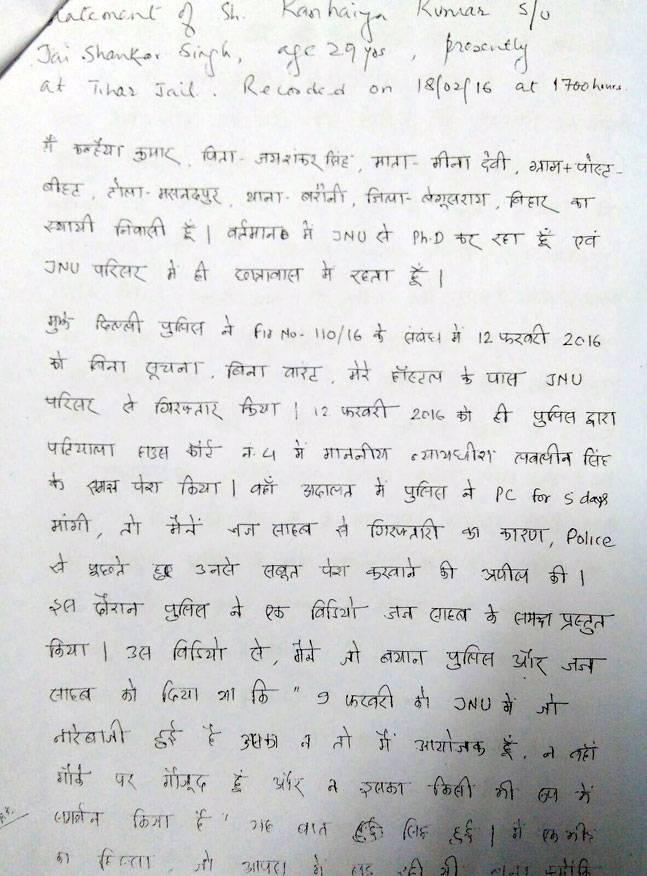
My Life is Under Threat: Kanhaiya Kumar to NHRC

0

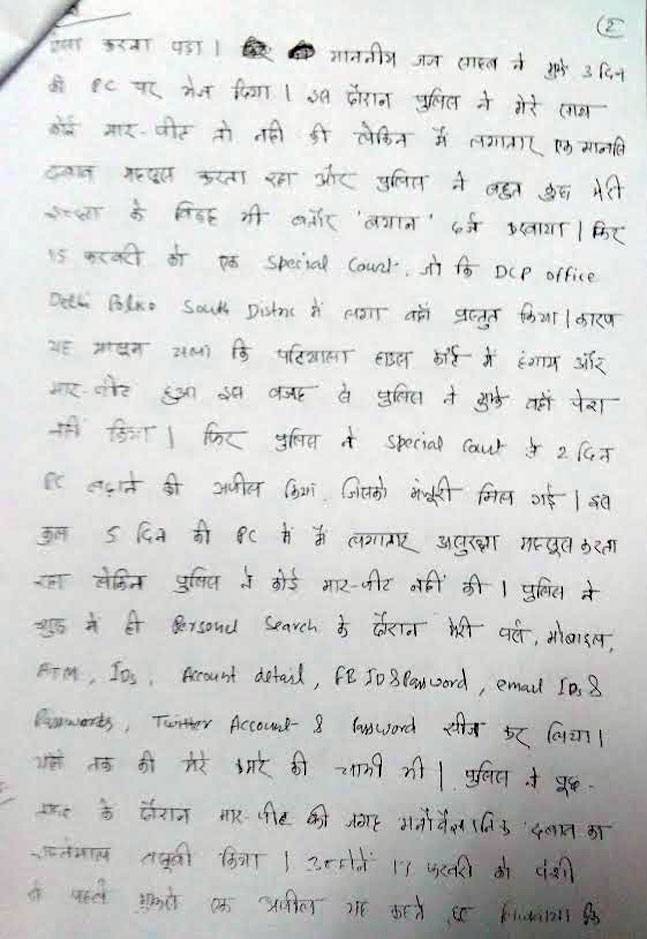
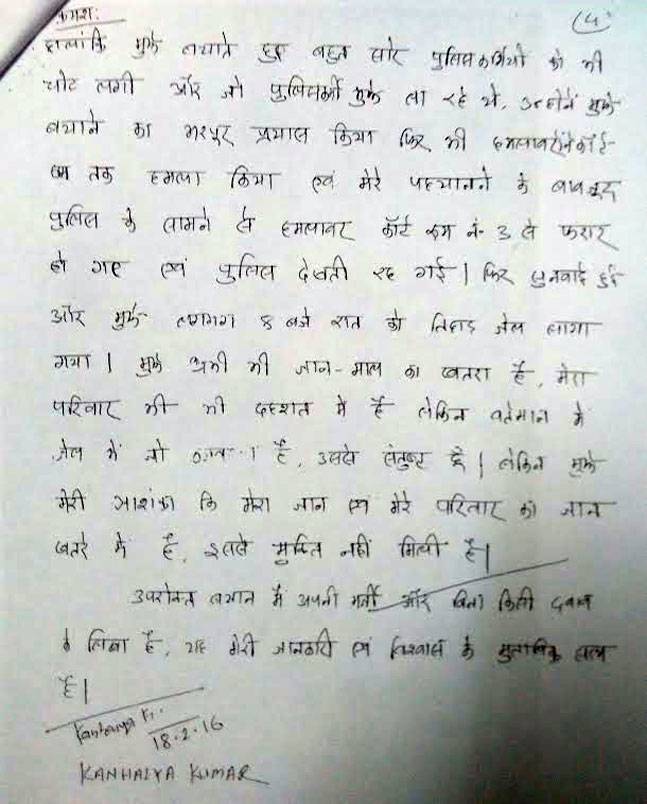
The president of the Jawaharlal Nehru University Students Union (JNUSU) Kanhaiya Kumar has written a four-page letter to the National Human Rights Commission (NHRC). The letter carries serious charges against the police that is required, under law, to follow due process. He has stated that the Delhi Police arrested him on February 12, 2016 from his hostel at the Jawaharlal Nehru University (JNU) without any warrant or a notice. In the letter, Kanhaiya also claims to have been under extreme mental pressure under detention even though he was not physically manhandled by the police.

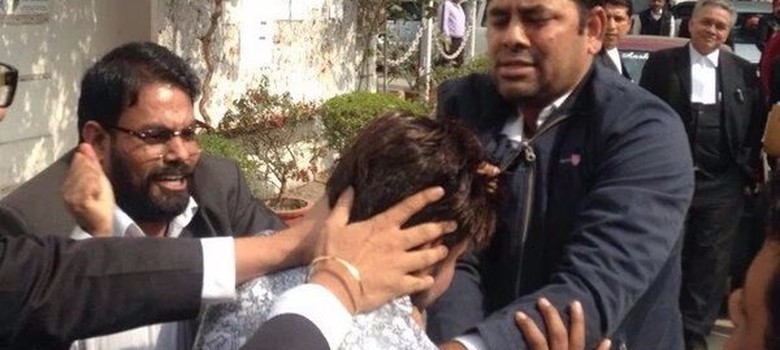
Kanhaiya had been beaten brutally by men in black coats claiming to be lawyers on February 17, 2016 and had detailed his ordeal before the Court Commissioners appointed by the Supreme Court of India.


Dalits, Adivasis off the Radar: NDA II Budget

0

A total of Rs 75,764 crore has been denied to Dalits and Adivasis in the second full-fledged NDA II budget

The Union Budget for 2016-2017 has drastically reduced the budgetary allocation for Scheduled castes to only 7.6 per cent when the due allocated amount should be 16.8 per cent of the total.While the allocation of Rs. 500 crores under the stand-up India scheme for SC/ST entrepreneurs is a part of the budget, it is the overall allocations under SCSP (Schedule Caste Sub-Plan) TSP (Scheduled Trives Sub Plan) that are extremely poor.
 
In  a prompt analysis of the second complete budget of the BJP-led NDA II government, the National Campaign for Dalit Human Rights (NCDHR) has said that, at the promised 16.8 per cent of the total the allocated amount to the SCSP should have amounted to Rs.91,301 and at 8.6% under the TSP, the amount that should have been allocated should amount to Rs.47,300 Crs. Thus a total of Rs 75,764 crore has been denied to Dalits and Adivasis in the second full-fledged NDA II budget.The NCDHR has strongly condemned this denial in allocation.

The budget also comes at a crucial point with the University Grants Commission (UGC) has withdrawn the non-NET fellowships (that affect students from social and economically backward sections, especially Dalits, Adivasi and OBC children) and around which students across the country have been agitating : #Occupy UGC Campaign.

The budgetary blow also comes at a time when the death of Rohith Vemula a PhD student at Hyderabad University has not only led to demands for a Rohith Law but sharply focussed on institutional discrimination within institutes of higher learning in India . The underlying issue of both these instances has been the denial of mandatory funds to research scholars. In this analysis of the budget, Paul Divakar, General Secretary, National Campaign on Dalit Human Rights, holds the finance minister accountable when and questions, “Where is the missing Rs. 75,773 Crs? Yet another massive denial & disinterest to bridge the growing development gap.”

Dr. B.R. Ambedkar reasoned that higher education was an important instrument, to seek power and dignity for all. Hence he advocated for public education being critical for the empowerment of Dalits and the backward classes. Access to and the opening up of educational institutions for the historically excluded groups has caused a moment of rupture in history and met with a violent backlash from the dominant and entrenched communities.

The events of the previous months— cutting of non-NET fellowships, denial of fellowship money to PhD students in Hyderabad and other universities— point towards this violent backlash from the dominant community.

The Union Budget 2016-17 is another example of this violent backlash. The denial in money allocated for the purpose of higher education to be accessed by the Dalits and Adivais makes their struggle for equality an even tougher one. Additionally, it acts as violation of constitutionally mandated rights of the SC/ST community.
Of the total of Rs 897 crore allocated under UGC. 60% goes towards capital assets and another 30% towards grants-in-aid and only 8% of the funds allocated directly benefit students from the Scs and STs.

Sector Wise Analysis
If we analyse the allocation of the union budget sector wise, over 86% of the Dalit budget is spent on the Social Service, Welfare and Housing Sectors. They do not form the triggers for development except for Higher education. Without greater allocations for Agriculture and allied, rural development Schemes, Energy, Industry and Mineral, Science and Technology and communication, the overall growth of the Dalits (SCs) and Adivasis (ST) will be lopsided. Innovation is needed to design schemes for the Dalit and Adivasi, both men and women within these sectors.

Dalit Adivasi women continue to be at the margins
The budget continues to marginalise Dalit-Adivasi women by allocating a paltry 1% to Dalit women and 2% to Adivasi women without taking into account the needs, and voices of women. The schemes lack an understanding of their lived reality and is blind to the concerns of the Dalit and Adivasi women. 


JNU teachers slam Bar Council report that justifies the Patiala House attack

0

A joint statement by several faculty members challenges the “patently false” report of the Bar Council of India

Full text of the statement by the Jawaharal Nehru University faculty

In a shockingly partisan statement that blatantly misrepresents events, the Bar Council of India has issued a report that justifies the well documented attacks by a mob of lawyers on Jawaharlal Nehru University students, teachers and media at Patiala House Courts over two days (February 15 and 17, 2016) as “a reaction to the incidents, which are grave in nature and very dangerous for the country”.

The Bar Council of India Joint Secretary Ashok Kumar Pandey claimed that a large number of JNU teachers and students and others had arrived at the court in three to four buses and raised slogans and used “provocative words”. This led to the untoward incident in which “both the sides took part,” said the report, adding that “any true citizen or a lawyer of India” was supposed to react strongly to the “anti-India” slogans.

We, the undersigned faculty members of Jawaharlal Nehru University, wish to set the record straight. Nine of us reached Patiala House Court No 4 between 1 and 1.15 pm on 15th February 2016 to attend the hearing on Kanhaiya Kumar’s bail plea. The sole objective of our presence there was that when Kanhaiya Kumar was produced he would see the faces of his teachers in the courtroom. At that time, a few students and other teachers of JNU, and some members of CPI, the parent organisation of Kanhaiya’s student group, were already waiting silently outside, similarly wanting him to see friendly and familiar faces when he was produced. There were about 15 to 20 of them, hardly enough to fill four cars, let alone one bus.

Initially, we (signatories to this letter) waited on the benches outside the courtroom, along with a few journalists. After the lunch break the court clerk and stenographer invited us to come into the courtroom and we were seated there even when a few lawyers, an under-trial and a policemen, etc walked in and out of the room. We were not asked by anybody at that point to leave. About fifteen minutes later, about ten to twelve men dressed in lawyer’s clothes rushed in, shouting at us to get out. These lawyers were led by a man whom we later recognised from the media coverage the next day as Mr Vikram Singh Chauhan. At that time we did not know who any of them were. They crowded the small room and abused us, saying that JNU teachers were anti-national and “deshdrohis”, that we were all “Pakistanis” and asking us ‘what kind of antinational education do you give your students’?

We tried to reason with them not to be abusive, and said that we had a right to be in the courtroom, but they continued to heckle us as “Pakistanis”, and told us that the seats were for lawyers alone. The police kept on just watching and did not intervene to stop them. Some of us even got up and told them that they could take our chairs and we would just stand, but they started physically trying to push us out of the courtroom. Our younger male colleague, Dr Rohit, who was standing at the back, was grabbed by his collar and dragged towards the centre of the courtroom. Chauhan said “maar do isko” and began raining blows on Rohit. Women faculty close to him tried to stop him physically, but the lawyers continued hurling abuses, and some of us were pushed and jostled and touched inappropriately in the process. The attempt was clearly to intimidate and harass us into leaving the courtroom, and indeed Patiala Court premises. The police and court staff kept on watching and did not intervene to stop them.

Profs Neera Kongari, Rohit, Himanshu and Janaki Nair were pushed outside the courtroom. Most of the men dressed in lawyers’ clothes rushed out after them. Extremely abusive language was used by the lawyers.

Those of us who remained inside could hear sounds of men shouting from outside, and fearing that we would be subject to even greater physical violence, five women faculty – Profs. Ayesha Kidwai, Madhu Sahni, Nivedita Menon, Susan Viswanathan, and Chitra Harshvardhan – once again sat down. A larger contingent of policemen entered the courtroom and asked us to vacate the courtroom. Some of the aggressive lawyers came back in and although we requested the police to hold them back, they did not even ask these lawyers to leave. Instead they were allowed to enter and leave the courtroom as they wished. We asked the police to bring us orders from the magistrate asking us to clear the courtroom and demanded to be escorted out of the building. We were told that the magistrate had given verbal orders to the police to clear the courtroom, but we insisted that we be given police protection throughout. When a contingent of policewomen arrived, it took the police 10 minutes to find a way to escort us out of the courtroom as the doorways and the courtyard was blocked by shouting lawyers. The police were forced to find another exit and led us to another ground floor exit but that was blocked too by shouting and screaming lawyers. We were led then up the stairs and at least two other stairwells were tried but we were led away as the police was unsure that they could get us out safely.

Other lawyers who passed us on the corridor kept up the threatening tone, saying we should all be sent to Pakistan. Finally, a safe exit into the ground floor shed where the notary publics sit, was found. The police escorted us to the gate and bundled five of us into autorickshaws as they feared that we would be assaulted even if were to walk to our cars parked in the parking lot.

JNU faculty who had been pushed outside the courtroom were completely silent, and they noted that the lawyers led by Chauhan, when finally obstructed by the police, sent in two women lawyers who also shouted abuse at the JNU faculty assembled in the courtroom. A few minutes later all the lawyers rushed out of the courtroom saying “nikal gaye” and began beating up every young person assuming they were JNU students, including a very young couple.

Later media coverage confirmed that students and the media people, as well as a CPI member, were assaulted by the mob outside.

Kanhaiya Kumar was not produced in court on that day, and when he was produced on the 17th, only one JNU faculty member was present, Prof Himanshu; in fact we were asked by Kanhaiya’s lawyers to stay away so that our presence would not create the opportunity for further violence. It was on that day, when no faculty was present, and only the same handful of JNU students and CPI activists, that Kanhaiya was physically assaulted and the media terrorised and beaten up for the second time by the same lawyers in full view of a passive police force.

So the claim of provocative slogans from “3 to 4 busloads” of JNU people rousing lawyers to physical assault is patently false.

The Bar Council report surprisingly fails to mention two crucial bits of evidence:

  1. The WhatsApp message in Hindi that was circulated over February 14-15, that clearly mobilised for the attack. The message, snapshots of which are freely available in the media, calls upon all recipients to assemble in large numbers at Patiala House on Monday 15th to “peacefully and legally” “produce befitting consequences” (anjaam tak pahunchana) for the traitors who have been conspiring in Ganga Dhaba (JNU) and,
  2. The sting operation by India Today that reveals Vikram Singh Chauhan and others boasting about their violent assaults on Kanhiaya and others.

From the transcript of the deposition of Kanhaiya Kumar to the Supreme Court judges’ panel after the attack on him the second day, made public on February 27th by CNN-IBN, it is also clear that the registrar general of the high court had been present at the time, and had asked Jatin Narwal, DCP, New Delhi, “to catch the guy” whom Kanhaiya identified as his attacker, but he failed to do so. When the DCP claims at one point that he was not in the room when Kanhaiya was attacked, the registrar again intervenes, saying “No sir, he was inside the room along with 10-12 officers.” (Transcript available in The Indian Express of February 28, 2016).

It is shocking that the Bar Council of India should produce such a patently false account of events that exactly matches the claims of Vikram Singh Chauhan and BJP MLA OP Sharma who led the violent mob. Even more appalling is the fact that a body that represents practising lawyers should justify physical violence on the grounds that anti-India slogans were raised, which is any case, a blatant lie.

Is the legal community now going to subvert due process and rule of law and take matters into their own hands whenever they feel their sentiments are hurt? This is particularly paradoxical given Vikram Singh Chauhan’s recent interview to The Hindu (February 27, 2016) in which he says the media has “already found him guilty”, for it seems BCI not only justifies Kanhaiya’s being “found guilty” by self-proclaimed nationalist lawyers, even before he is produced in court, but also their attack on him on the basis of their perception.

Chitra Harshvardhan
Himanshu
Ayesha Kidwai
Neera Kongari
Nivedita Menon
Janaki Nair
Rohit
Madhu Sahni
Susan Visvanathan

Photo Credit: VictorVibhu/Twitter

A Farmer’s Budget but where is the Minimum Support Price?

0

The budget vowed to double farmer income by 2020, but was silent on the National Commission on Farmers recommendation of a minimum support price (MSP)–the price at which the state buys crops from farmers–of 50% above agricultural production costs. Except for rabi pulses during 2008-09 and 2013-14, the MSP for foodgrains has not increased substantially over four years.


Continuing the poetic trend seen in budget speeches, Finance Minister Arun Jaitley started with these lines, signalling the fiscal path of his government towards budget management during a global slowdown and farm distress at home.

With agriculture growth contracting 1% in the October to December quarter of 2015 and growing only 1.1% in the financial year 2015-16 (advance estimate, obtained by extrapolation of latest available data); back-to-back droughts, the worst in 30 years; and winter (rabi) crop sowing dropping below 60 million hectares, the worst in four years; and a few thousand farmers committing suicide in 2015—Jaitley, 63, kept his budget for 2016-17 focused on the 834 million people who live in rural India.

 In addition, rural workers’ wages (inflation adjusted) declined for the first time in half a century, Jawaharlal Nehru University economist Himanshu wrote in the Indian Express.

 Jaitley’s budget has nine pillars: Agriculture, rural development, health, education and jobs, infrastructure, financial reforms, governance and ease of doing business, prudent fiscal management, and tax-administration reforms.

 With the rural-focus explicit, stockmarkets (BSE Sensex) tanked 2% during the speech and then recovered, as Jaitley laid out accelerated reforms in tax compliance and administration, especially for small and medium enterprises, and closed 0.66% below.


Jaitley’s aim–to double farmer income by 2020–is very tough
Jaitley set aside the most money ever for agriculture and farmer welfare: Rs 47,912 crore ($7 billion), a rise of 84% from Rs 25,988 ($4 billion) last year. This includes Rs 6,000 crore for groundwater management, Rs 12,500 crore for irrigation and Rs 5,500 crore for crop insurance.
Changing irrigation, insurance and groundwater-use patterns will not be easy.

Only 34% of India’s farmland is irrigated, despite more than Rs two lakh crore spent over 65 years, as we reported, and no more than 15% of 138 million farmers (2010-11 Agriculture Census), or 20 million, have crop insurance, although no more than 10% (12.5 million) actually received insurance benefits.

As for groundwater, levels in India are now more critical than anywhere else on earth, IndiaSpend reported. More than half of India now faces what is called “high” to “extremely high” water stress, most across the fertile Ganga-Brahmaputra basin, as this graphic indicates.

The budget vowed to double farmer income by 2020, but was silent on the National Commission on Farmers recommendation of a minimum support price (MSP)–the price at which the state buys crops from farmers–of 50% above agricultural production costs. Except for rabi pulses during 2008-09 and 2013-14, the MSP for foodgrains has not increased substantially over four years.

Courtesy: www.indiaspend.com