Home Blog Page 2594

“Most US Jewish students don’t see Israel as ‘civilized’ or a ‘democracy”: pro-Israel polster

0


Photo courtesy: Mondoweiss

At a secret conference organised by Israel Minister Gilad Erdan with 150 top supporters of Israel, American right wing pollster Frank Luntz rolled out statistics which show that most US Jewish students don’t see Israel as ‘civilized’ or a ‘democracy”.
 
According to the independent website, Mondoweiss, which attracts a million views a month, Luntz made the disclosure at the secret conference organised to consider ways of combating the growing global campaign, ‘Boycott, Disinvest and Sanctions’ (BDS) movement against Israeli oppression of Palestinians.   
 
Highlights of Luntz’s disclosure:

  • The ministry of tourism’s attempt to market Israel as a cool destination (girls and bikinis) has failed.
  •  Jewish American students have an increasingly negative image of Israel  
  • Just 42% believe Israel wants peace.
  • Just 38% believe “Israel is civilized and Western”.
  • Just 31% believe Israel is a democracy.
  • No less than 21% believe the US should side with the Palestinians.

In November 2014, the Republican pollster and best known propagandist for selling Israel to the American public had conceded that Zionism had become a dirty word for American opinion-making elite. Clearly, his prescription then was to keep reminding Israel’s critics in the US, “we’re allies.” But the magic mantra does not seem to be working.
Mondoweiss now reports that “the new, or not so new, agenda” put forward by Luntz, the “guru of political opinion” at the conference was this: Israel’s supporters should say that they are in favour of a dialogue and peace-building through diplomacy, and accuse BDS supporters of obstructing dialogue, and spreading hate.

The New School in Solidarity with JNU

0

We, the undersigned, students, faculty, alumni, and staff at the New School University, New York, stand in solidarity with the students, staff, and faculty at Jawaharlal Nehru University, New Delhi, in their protests against the militarization of the campus and suppression of dissent by anti-democratic and divisive Hindu nationalist groups allied with the Modi government.

We condemn the arrest and detention of JNU Students Union president Kanhaiya Kumar, the criminalization of peaceful demonstration and healthy debate through the use of anti-democratic sedition laws, and the surveillance, intimidation, harassment of and outright brutality and use of force against members of the JNU community.

We condemn the Modi administration’s part in the complex of factors that led Ph.D. student Rohith Vemula to decide to end his life; we condemn the use of party machinery to expel and intimidate minority and marginalized students who are already underrepresented and face constant discrimination in an Indian university system that largely maintains and consolidates the power of upper caste Hindu elites; we condemn the blatant complicity of the police and mainstream media and the inflammatory statements made by Arnab Goswami, among others; and we condemn this latest attack on academia that the state has also opportunistically used to draw attention away from Dalit struggle on campuses and its part in expelling Rohith Vemula.

We affirm a shared transnational struggle to bring to light and address long legacies of colonialism, marginalization and erasure in our scholarship, institutions, and communities. We find the Indian government’s use of colonial era sedition laws deeply disturbing, and its use of anti-colonial rhetoric to demonize progressive politics manifestly hypocritical.

Recent statements by Home Minister Rajnath Singh and Minister of Education Smriti Irani are indicative of the fundamental opposition of the current regime to free thought and expression, and show the degree to which BJP politicians enjoy impunity for their part in the systematic suppression of dissent that the Modi administration and its associated complex of Hindu nationalist organizations has carried out since its rise to power. Student protests have been quashed, forestalled, and criminalized through the use of every tactic possible. ABVP chapters across campuses have orchestrated a concerted campaign of intimidation, aided by massive police complicity and the full support of state, police and media, to suppress talks, film screenings, and peaceful demonstrations, threaten and harass students, faculty and staff, and start smear campaigns condoning and inciting the use of violence against scholars deemed “anti-national”. The Modi government routinely targets scholars already made vulnerable by multiple axes of marginalization, seeking to silence their dissent at the expense of their safety and their lives.

The Modi government seeks to criminalize any disagreement with India’s undemocratic actions as “anti-national”. This “anti-nationalism” can only have meaning in relation to an imagined nation that is, at its core, fascist. Such a nation equates the peaceful expression of dissent with violence in order to justify its own brute force, creating a cycle that has no hope of ending when every avenue of democratic accountability is being systematically infiltrated or removed.

As members of a university that was founded on exile and resistance to fascism and that shares with JNU a fundamental commitment to justice, we stand with the courageous and inspiring protests at JNU and call on scholars and allies everywhere to do the same.
In solidarity,

  1. Jasveen Sarna, BA Literary Studies, Eugene Lang College
  2. Sabrina Garity, MFA Creative Writing Non Fiction
  3. Melissa Guerrero, Eugene Lang College
  4. Luis Herran Avila, PhD, Politics and History, The New School For Social Research
  5. Joshua Lacle, BA, Theater, Eugene Lang College
  6. Tamara Oyola-Santiago, Wellness and Health Promotion
  7. Ana Miljak, BA Literary Studies, Eugene Lang College
  8. Andrew P. Tucker, Design & Urban Ecologies
  9. Evangeline Scazzero, Journalism+Design Junior, Eugene Lang College
  10. Ryan Khosravi, BA, Culture and Media, Eugene Lang College
  11. Masoom Moitra, Student Co- Chair, Social Justice Committee, MS Design and Urban Ecologies, Parsons School of Design

As a co-chair of the Social Justice Committee at The New School, I strongly condemn these actions. They not only have a grave impact on the lives of students who have directly been targeted by the government, they have a long-term impact on the future of institutions that are supposed to  nurture and cultivate lovingly, the minds of students in the country. This is a massive betrayal. The concept of ‘sedition’ is obsolete and must be destroyed! This is an insult to the idea of a democracy!

  1. Geeti Das, PhD Candidate, Politics, The New School For Social Research

The attacks on Rohith Vemula, MM Kalburgi, Kanhaiya Kumar, FTII, and JNU are the actions of those who respond to their own fear by trying to create it in others. No student should find themselves left with only the hope of “knowing other worlds” because the one in which they find themselves so devalues their brilliance and their humanity. A just and democratic society can have no reason to meet peaceful dissent with brute force.

  1. Nihira Ram, Freshman, Eugene Lang College
  2. Kumar Kartik Amarnath, MS, Design and Urban Ecologies; School of Design Strategies; Parsons School of Design
  3. Jamie Piper, Screen Studies, Eugene Lang College, Sophomore
  4. Aliyah Hakim, BA, Theater, Eugene Lang College
  5. Mariana Bomtempo, School of Design Strategies
  6. Gamar Markarian, MS Design and Urban Ecologies, School of Design Strategies, Parsons
  7. Sascia Bailer, MA Theories of Urban Practice, Parsons
  8. Nicholas Allanach, Dir. of Academic Operations (& alumnus, 2006)
  9. Miriam Ticktin, Associate Professor, Anthropology
  10. Kelsey Podaras, Eugene Lang College
  11. Adriana Herrera Perhamus, BA Culture and Media, Eugene Lang College
  12. Silvia Resende Xavier, MS Design and Urban Ecologies, School of Design Strategies, Parsons School of Design
  13. chris crews, Politics, New School for Social Research

An attack against one is an attack against all.

  1. Katyayani Dalmia, PhD Candidate, Anthropology, New School for Social Research
  2. FaDi Shayya, MA, Theories of Urban Practice
  3. J. Ricky Price, PhD Candidate Politics, New School for Social Research
  4. E Condon, BA/BFA dance/fine arts
  5. oona sullivan, BA, Psychology, Eugene Lang College
  6. Suhyun Choi, Fine Arts, Parsons School of Design
  7. Rachel Heiman, Associate Professor of Anthropology
  8. Horace Charles, Administrative Assistant, English Language Studies, NSPE (BA, 2015)
  9. Luis L., Philosophy
  10. Margarita Velasco, Politics, New School for Social Research (2008)
  11. Daniel Younessi, PhD
  12. Jawied Nawabi, MA in Economics (2008) and Ph.D in Sociology (2014)
  13. Lopamudra Banerjee, Assistant Professor, Department of Economics, New School for Social Research
  14. Marielle Tejada Taveras, Sociology/Global Studies
  15. Rishabh Kumar, PhD Economics, New School for Social Research
  16. Tait Mandler, Design and Urban Ecologies, Parsons
  17. Kieran Gannon, MA, Theories of Urban Practice
  18. Jasmine Rault, Assistant Professor, Culture and Media, Eugene Lang College, The New School
  19. Alexandria Eisenbarth, Ph.D., Economics, New School for Social Research
  20. H Howell Williams, PhD candidate, New School for Social Research, Politics
  21. Brandon Fischer, Staff – SPE – GLUE (alumnus, 2015)
  22. Chelsea Ebin, PhD Politics, New School for Social Research
  23. Joel de Lara, Philosophy
  24. Issachar Curbeon Dieng, Global Studies
  25. Johanna Oksala, Visiting Professor, Department of Politics, The New School for Social Research
  26. Blair Bainbridge, MA, Anthropology
  27. Samuel Miller, MA
  28. Tamara Alvarez Fernandez, PhD Anthropology, New School for Social Research
  29. Cagla Orpen, PhD student in Politics and History, New School for Social Research
  30. Kevin Aportela-Flores, MA, Politics
  31. Soheil Asefi, Graduate student, Politics department, and Independent journalist and scholar at The New School for Social Research
  32. Michael Isaacson, Economics
  33. Alix Jansen, MA Politics, New School for Social Research
  34. Ilker Aslantepe, PhD, Economics, New School for Social Research
  35. Jackie Vimo, PhD Candidate, Politics, New School for Social Research
  36. Eli Nadeau, MA candidate, Politics 2016, MFA Creative Writing, 2013
  37. Alexandra Délano, Assistant Professor of Global Studies
  38. Susan Austin, Staff
  39. Franziska König-Paratore, PhD
  40. Eli Lichtenstein, MA in Philosophy
  41. Greig Roselli, MA, Philosophy, New School for Social Research
  42. Alex Altonji, MA Philosophy (2015)
  43. Ramaa Vasudevan, Visiting Scholar
  44. Sara Shroff, Phd Candidate, New School for Public Engagement
  45. Veronica Sousa, MA, Anthropology
  46. Julienne Obadia, Doctoral Candidate
  47. Christopher DellaCamera, Journalism
  48. Katherine Moos, PhD Student
  49. Amanda Zadorian, Ph.D. Candidate, Politics, NSSR
  50. Micha Steinwachs, BA (2015)
  51. George Fisher, Part-time faculty, Mannes School of Music

The right to peaceful dissent without punishment or harassment should belong to all people in civilized society.

  1. Rhea Rahman, PhD Candidate
  2. Rachel Knopf Shey, Assistant Director Wellness and Health promotion, Student Health Services
  3. Jonathan Bach, Associate Professor
  4. Kemi Soyeju, M.A. Psychology
  5. Douglas de Toledo Piza, PhD student, Sociology, New School for Social Research

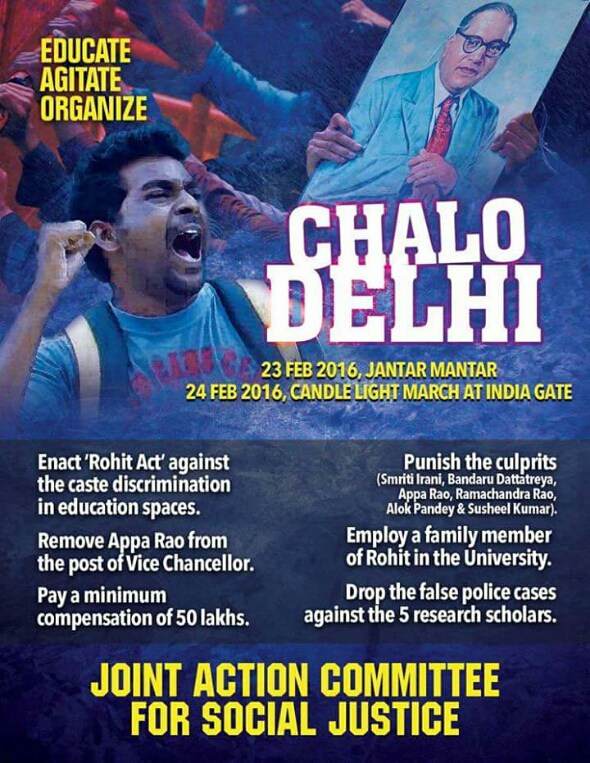
In good spirits, Kanhaiya Kumar appeals for the success of the Justice for Rohith Rally

0

"I am resolute, the rally for Rohith tomorrow on February 23 must be successful", Kanhaiya Kumar told his brother, Manikant Singh and uncle Rajendra Singh who met him with veteran CPI leader, Amarjit Kaur and the legal team consisting of advocate Bankim and others. The group met him in the forenoon today, February 22, at the Tihar jail where Kanhaiya Kumar has been after the unseeemly scenes at the Tees Hazari Court on February 15 and 17, 2016. He was arrested on February 12, 2016.

Tomorrow, that is February 23, 2016, senior counsel Kapil Sibal will head the legal team that is applying for bail for Kanhaiya Kumar in the Delhi High Court.
 
Kanhaiya Kumar was in good spirits, encouraging and strong concerned that the rally for “Justice for Rohith” should be successful.

Justice for Rohith
It has been more than a month that we have been fighting against this casteist criminal administration and the larger power structures. When we asked, why was the new committee constituted by R.P. Sharma scrapped? On what basis did Sub-committee, Executive Council took the atrocious decision of Social Boycott? Why did the University administration sensationalize it by linking it to Yakub Memon instead of locating it in the context of movie screening of Muzaffarnagar Baaqi Hai? Why were the counter affidavits filed by Cyberabad Commissioner of Police on 3rd October and Inspector General of Police on 31st October in the High Court overlooked and ignored? Why was Vipin Srivastav who headed the Sub-Committee of Executive Council that took the decision of Social Boycott and is main accused in the institutional murder of yet another Dalit student Senthil Kumar, appointed as the interim Vice-Chancellor? Why did BJP ministers interfere in an academic institution? We got no answers to the questions raised.

Appa Rao Podile has not been sacked from the post of Vice-Chancellor yet. The murderers have not been arrested yet. After playing a major role in the entire process of inquiry sending five letters to Appa Rao Podile including Bandaru Dattatreya’s “appeal”, MHRD is trying at its best to wash off its hands off the crime that the entire saffron brigade, in a well calculated manner, executed. The two-member committee constituted by MHRD held the Vice-Chancellor responsible for the murder giving clean chit to all the BJP ministers and constituted a one judge judicial probe to investigate into the issue. The latest convenient move by MHRD is that in the backdrop of Rohith’s death, they have decided to convene a meeting with all Central University Vice-Chancellors to reach Delhi on 18th February to discuss ways to end discrimination against marginalized sections. Three days back, the Hyderabad High Court put a stay order on the arrest of BJP MLC Ramachandra Rao and ABVP President Susheel Kumar. To cancel out the SC/ST Atrocities Act charges, they are hell bent on proving that Rohith is not a Dalit. Even after his death, they have killed him several times by forcefully cremating him without his mothers’ consent, his mother being constantly harassed and name calling Rohith as terrorist, anti-national and what not.

What gives us hope, strength and inspiration today is the unity of the people forged against the saffron brigade. Students, Workers, Professors, Film makers, Cultural activists and people from all walks of life have come together. The entire country is witnessing protests against the injustice meted out not just to the Dalit five research scholars in our University but discrimination, subjugation and humiliation faced by Dalits across the country. After Rohith’s death, the anger and outrage in all of us has shown a way to take our struggle and Rohith’s aspirations forward for a casteless society.

In a time when freedom of expression is being attacked all around us, and progressive voices are being silenced or murdered, there are some who continue to use their voices to bring light into a world seemingly engulfed in darkness. We appeal to the entire nation to join us in Delhi on 23rd February for #JusticeforRohithAttachments are


#NoDissentNoCountry #StandWithJNU

0


Williams College Stands with JNU!


Kajri Jain, University of Toronto


Aarti Sethi, (JNU 2009), Columbia University

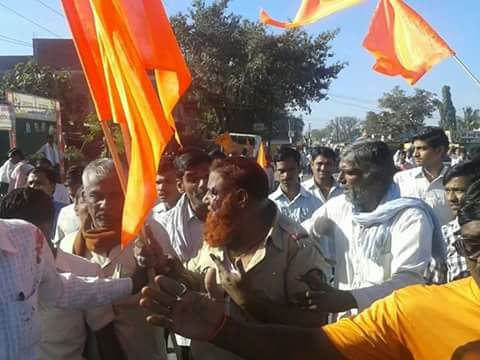
Muslim policeman at duty beaten up and paraded in Maharashtra

0


Photo: Two Circles

Latur (Maharahstra): In an apparent display of anarchy, a Muslim policeman is beaten up badly and paraded in the streets by a mob in Pangaon town of Latur District in Maharashtra.
On Friday morning at around 9 am ASI Shaikh Yunus Pashamiya, 56, was surrounded by 200 men and beaten up by sticks after he was asked to hold saffron flag, parade and dance.
Maharashtra was celebrating Maratha warrior Shivaji’s birth anniversary on Friday due to which people were tying saffron flags in different areas.

As per sources, on Friday Pashamiya had restricted some men from tying saffron flags in certain sensitive areas sighting orders from superiors but people got angry due to such opposition and warned him of consequences.

Reportedly, Pashamiya was singled out from policemen and was beaten up brutally by the mob. Reports suggest that mob also tried to shave his beard off and was asked to make parade with saffron flag in his hands.

Name of one local ‘Chavan’ is making round on social media for being responsible of instigating the mob against Pashamiya.

One local told TwoCircles.net on condition of anonymity that mob targeted Pashamiya even though he was standing with his colleague ASI K Awaskar.
He is now recuperating at civil hospital in Latur. Family of Pashamiya could not be contacted for comment on the incident.

Meanwhile, Imtiaz Jaleel, MIM MLA from Aurangabad of Maharashtra twitted “Shocking: Muslim policeman beaten up/paraded on street with saffron flag in Latur village for doing his duty/ shame”.
 
(http://twocircles.net/2016feb21/1455995939.html?utm_source=feedburner&utm_medium=email&utm_campaign=Feed%3A+Twocirclesnet-IndianMuslim+%28TwoCircles.net+-+Indian+Muslim+News%29#.VssfteZL6Vx)
 

Rights body cries halt to sedition mania in Bangladesh

0

Human Rights Watch calls for repeal of sedition laws and abusive criminal defamation

The US-based Human Rights Watch has called upon Bangladeshi authorities to immediately withdraw all criminal charges filed against the editors of the Daily Star and Prothom Alo, the country’s leading newspapers. Bangladesh should repeal its criminal defamation and sedition laws, which violate international standards, said a statement issued by HRW two days ago.

Full text of the statement:

As of the time of writing, the editor of the English-language Daily Star, Mahfuz Anam, faced a total of 54 criminal defamation cases and 15 sedition cases, largely for publishing corruption allegations from military sources several years ago. On February 16, 2016, a court in Narayangunj issued an arrest warrant against Anam in a case filed by a private lawyer.

Fifty-five cases have been filed against Matiur Rahman, the editor of Prothom Alo, Bangladesh’s highest circulation Bengali-language daily newspaper (and the sister paper of the Daily Star), as well as against the newspaper and some journalists associated with the paper, for criminal defamation and “hurting religious sentiment.” Each criminal defamation charge allows for two years’ imprisonment, and each sedition charge for three.

“Criminal charges against editors of the leading newspapers in Bangladesh are a clear attempt to intimidate all media in the country,” said Brad Adams, Asia director. “A government controlling almost all seats in parliament and all national executive authority has to be particularly protective of a free press – or risk turning Bangladesh into an authoritarian state.”

The cases are part of a larger, organized assault on independent media in Bangladesh over several years.

Bangladeshi authorities have closed critical media houses, jailed editors, tried bloggers, and charged journalists with contempt of court for reporting unfavorably on government actions. The editor of Amar Desh newspaper, Mahmudur Rahman, has been jailed without trial since 2013 on charges of sedition and unlawful publication of intercepted conversations.

The editors of the Daily Star and Prothom Alo were among a significant segment of public opinion backing the “minus two” effort by the military when it effectively took power and installed a caretaker government from 2007 to 2009. The military and segments of Bangladeshi society backed a move to remove Sheikh Hasina, the leader of the Awami League and current prime minister, and Khaleda Zia, the leader of the Bangladesh Nationalist Party and a former prime minister. Both were accused of corruption.

The charges against Anam and the Daily Star are related to corruption allegations against Sheikh Hasina and other current government officials based on information provided by the country’s military intelligence service, the director general forces intelligence (DGFI). At the time, the DGFI was leading the “minus two” effort and routinely threatened and intimidated the media and civil society. DGFI was also responsible for extrajudicial killings, torture, and disappearances. The allegations were published in 2007, but the current assault against Anam came about as a result of a February 3, 2016 admission on his part that he relied on uncorroborated information from DGFI when he published the stories. Anam said he regretted having published material without sufficient corroboration.

The assault on speech affects not only the media, but also critical civil society. Journalists report engaging in self-censorship. Activists and human rights defenders have faced charges, arrest, and intimidation. Bloggers who have expressed atheist sentiments have been killed, yet others have faced charges of insulting religious feelings

The charges against Matiur Rahman of Prothom Alo stem from a series of articles the paper ran on alleged irregularities in the purchase of power tillers by a local government office, as well as for running a cartoon in the paper’s political satire section. Rahman surrendered at the Jhalakati jail following an arrest warrant issued in January 2015. He was granted bail and given permission to be physically absent from further hearings in the cases. The cases have not yet been resolved.

Both the Daily Star and Prothom Alo have faced government retaliation for their reporting. Media personnel have alleged to Human Rights Watch that this includes a ban on advertising by large private companies in the two papers. Several corporate sources speaking anonymously stated that they had received these instructions in an article published by Al Jazeera in October 2015.

“Defamation should not be treated as a crime,” Adams said. “If a newspaper intentionally publishes false information that harms an individual’s reputation, then a civil defamation case is the proper remedy, so long as a fair and impartial trial can be assured. But Bangladesh should not be in the business of jailing journalists for what they write.”

Human Rights Watch called for repeal of the sedition law, which is overly broad and vague. The law states that anyone by show or use of force or “any other unconstitutional means” who “subverts or attempts or conspires to subvert the confidence, belief or reliance of the citizens to this constitution or any of its article, his such act shall be sedition and such person shall be guilty of sedition.” Anam faces at least 15 sedition charges.

Bangladesh’s sedition and criminal defamation laws are contrary to the country’s international human rights obligations. The International Covenant on Civil and Political Rights (ICCPR), which Bangladesh ratified in 2000, prohibits restrictions on freedom of expression on national security grounds unless they are provided by law, strictly construed, and necessary and proportionate to address a legitimate threat. Such laws cannot put the right itself in jeopardy. The United Nations Human Rights Committee, which interprets the ICCPR, has said that states parties should move toward abolishing criminal defamation and that no one should ever risk imprisonment for defamation.

Human Rights Watch said that laws imposing criminal penalties for peaceful expression are of particular concern because of their chilling effect on free speech. The UN special rapporteur on the promotion and protection of the right to freedom of opinion and expression has stated that with such laws in place, individuals face the constant threat of being arrested and subjected to criminal trials, fines, and imprisonment, as well as the stigma of having a criminal record.

The assault on speech affects not only the media, but also critical civil society. Journalists report engaging in self-censorship. Activists and human rights defenders have faced charges, arrest, and intimidation. Bloggers who have expressed atheist sentiments have been killed, yet others have faced charges of insulting religious feelings. A 2014 media policy banned speech that is “anti-state,” “ridicules the national ideology,” and “is inconsistent with Bangladesh’s culture,” and would restrict the reporting of “anarchy, rebellion, or violence.” The government is currently drafting an onerous and overly broad law on publishing in electronic media.

“These criminal charges are clearly a form of retribution against political enemies of the government,” said Adams. “And while it is going after journalists, the government has taken no action to hold members of DGFI accountable for the extrajudicial killings, disappearances, and torture that took place during the caretaker period. Bangladesh’s sedition and criminal defamation laws need to be repealed, and charges against all media and other critics withdrawn immediately.”

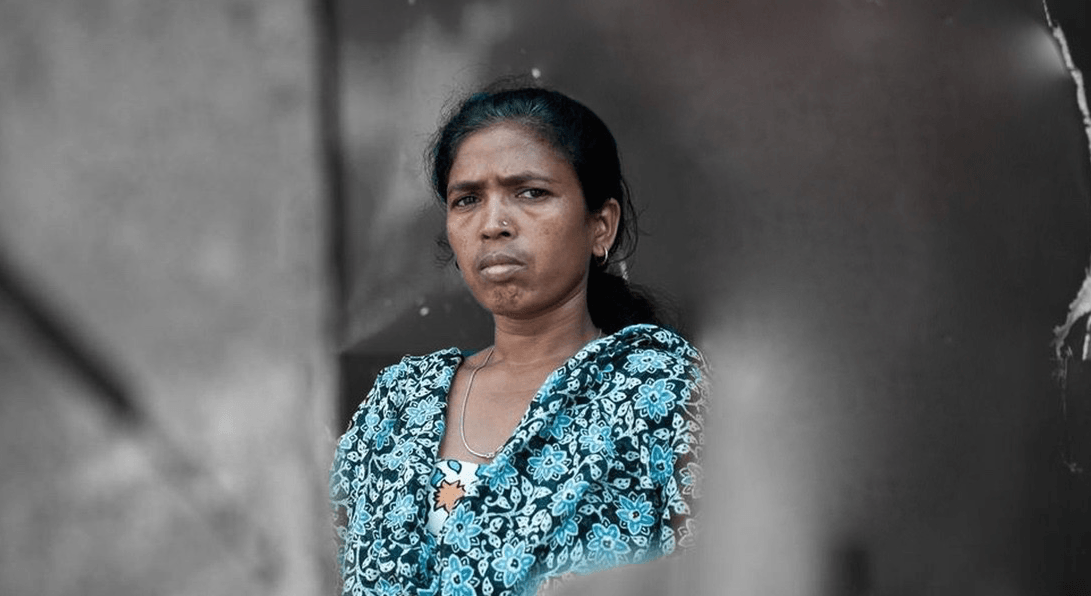
Why Adivasi leader Soni Sori was attacked: Complaint against IG Kalluri

0


Image: thewire.in
 
Soni Sori was on the verge of filing an FIR against IG Kalluri when she was attacked

 
One of the main likely reasons why Adivasi leader, Soni Sori was attacked on the night of Saturday, February 20 was that for a week-ten days before the attack she was trying to get an FIR registered under ST/SC atrocities prevention act against IG, Police Chhatisgarh, Kalluri.
 
Soni Sori reportedly made two attempts, one was at Dantewada ST/SC thana and another was at ST/SC Thana Raipur. But both the times, the thana (police station) refused to even accept her complaint. At Dantewada, she was misinformed and given an absurd reason that Kalluri is an Adivasi and thus a complaint against him cannot be filed at this particular thana.
 
Thereafter, Soni Sori and her lawyers tried to look into the veracity of the claim It was found to be untrue. Later, it was confirmed that he is not an ST. Kamma’s World¸ a web portal that can be viewed at http://kammasworld.blogspot.in/2010/09/kamma-ips-officers.html  proudly has him as IPS officer from this caste at serial number 31.

Over the next few days, she got busy with the Mardum encounter case, where she was helping the family raise the issue of the fake encounter in Mardum thana in Bastar district, in which Hidma was killed.
 
Her second attempt to file an FIR against Kalluri himself was on February 15, 2016, when she took Hidma’s wife and seven children to Raipur for a press conference. In Raipur her complaint was refused saying the incident did not lie within their geographical jurisdiction [This is a stock response of the police despite rulings of the Supreme Court of India repeatedly maintaining that a criminal complaint can be filed outside the geographical area from where it is crimes are alleged to have taken place.]
 
Soni Sori then decided to go directly to the SP Dantewada for filing this compliant when she was attacked. Sabrangindia has accessed a copy of the Complaint she was trying to file in which she clearly says how she fears for her life because of him, Kalluri a senior police officer of the Chhatisgarh state.

The copy of the FIR with attached media clippings as evidence can be read here.

Her team of lawyers are now considering lodging a complaint with the National Commission for Scheduled Tribes which takes up cases of atrocities against STs and also pursue the question of registering an FIR against Kalluri.
 
Meanwhile,  letters to the United Nations Special Rapporteur on Human Rights Defenders are also being sent by supporters and many protests being held across the country in protest against the attack on Soni Sori. Draft Letter to OHCHR(UN)
 
Please also see NHRC intervenes as BJP govt. hounds defenders of Adivasis' rights in Bastar
https://sabrangindia.in/article/nhrc-intervenes-bjp-govt-hounds-defenders-adivasis-rights-bastar

Soni Sori flown to Delhi, fears for her children's safety
https://www.sabrangindia.in/article/soni-sori-flown-delhi-fears-her-children%E2%80%99s-safety

How Zee TV fuelled state action against JNU students

0

Local police filed their FIR not on the basis of the information they gathered on campus on February 9, but on the basis of Zee TV footage made available to them.

THE HOOT desk reports the incitement its anchors indulged in


If there is a sedition case filed against the alleged anti-nationalism on display on the Jawaharlal Nehru University campus, it is because of Zee News more than Times Now. Arnab Goswami’s Newshour is getting too much credit for feeding the outrage over slogans shouted on the JNU campus. Zee News was off the block first, was even more single-minded than Times Now in demanding accountability if that is possible, and was strident in questioning the BJP, the Press Club and others as to why the police was not being brought into the picture. This channel’s answer to Goswami is Zee’s Rohit Sardana who converted his show called Taal Thok Ke into an inquisition against the campus protests and its leaders.

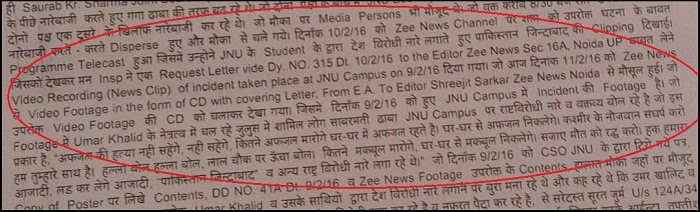
But first, Zee’s contribution to the first information report registered at the Vasant Kunj North police station.


Extract from FIR filed naming JNUSU President Kanhaiya Lal (sic) and others,  dated 11-02-2016, in Police station Vasant Kunj North
 
Here is what the FIR says: At 7.30 pm on the evening of February 9 a call was received by the PCR to report that two groups had clashed near the Sabarmati Dhabha and the situation was deteriorating. A police team set out and found two groups approaching Ganga Dhabha and shouting slogans. The FIR says the local police and JNU security staff maintained distance between them, and media persons were also present. By about 8.30 the groups dispersed and went their way still shouting slogans.

On February 10 the police came to know that Zee TV had telecast a programme which showed that the students had been chanting anti-national slogans. The FIR says the police requested footage from Zee TV and a CD given to them showed them the kind of slogans which were being shouted, including Pakistan Zindabad. The slogans are further described and then an FIR registered on the basis of the offences recorded.

The short point is that the police were present when the groups were clashing and shouting slogans, they stayed on the campus until the two sides dispersed, they saw no reason to register any complaint on the basis of the slogan shouting they heard. It is the Zee video which gave them actionable evidence. The implication is that Zee did their recording by being there in time for the action, did it at length, and showed the ‘anti-national’ parts the next day. How did the police come to know of the programme shown? It does not say. Did the channel bring it to their notice?

FIR no 0110 at police station Vasant Kunj North was registered on the 11th of October. Two days after the event, even though a police team was present at the spot on the 9th night. Who brought pressure on them to register an FIR?

Reporter or anchor, from February 10 onwards the programming was heavily judgmental. On a Feb 10 Aaj Ka Special the slogan shouting is replayed and Pavan Nara of Zee News intones, how long should we tolerate this? An ABVP student activist gets time to have her full say on the anti national behavior of the slogan shouters.

On another programme the same day anchor Sudhir Chaudhury harangues viewers about the amount of money spent on JNU students by the government, and invokes the sacrifice of Lance Naik Hanumanthappa. He goes on to talk about the bill France has passed taking away the citizenship of those indulging in terrorism.

Chaudhury of Zee and Arnab Goswami of Times Now curiously have the same points of attack against the students, and both channels repeated these every day. That they are getting an education heavily subsidized by the tax payer, and this subsidy is feeding anti-national activities. And that at a time when Lance Naik Hanumathappa was fighting for his life here were these students making a mockery of his sacrifice by supporting those convicted for terrorism such as Afzal Guru.

Sardana and Zee anchor Sudhir Chaudhary between them conducted two to three shows on the JNU agitiation every day on the 10th, 11th and 13th that are archived on YouTube. The first conducted inquisitions, telling student leader Umar Khalid nastily at one point, when he asked a question, you are not here to ask me questions, you are here to answer my questions.

On the 10th Zee news was asking the Vice Chancellor of JNU whether he would take action against those who had shouted anti national slogans. On YouTube the programmes are billed thus:
MUST WATCH!! Anti India event organiser of JNU ripped apart by Zee News Anchor Rohit Sardana !!

On the 11th the channel was asking the Press Club of india president why he had allowed the premises of the club to be used for a meeting by SAR Geelani and not filed a written complaint against Geelani for the way the meeting went. The same day on an edition of Taal Thok Ke Sardana was upbraiding the BJP spokesperson on his show: Sambit Patra you kept saying desh drohi hai but your government did not take any suo moto action against these sloganeering students, why not?

He goes on to jibe, “The same day Lance Nayak Hanumanthappa dies the government that boasts of a 56 inch chest does nothing?” He gets so aggressive that he puts Sambit Patra on the defensive.
At one point JNUSU president Kanhaiya Kumar tells Sardana, ‘TRP ke liye pura desh ka mohol kharab kar rahein hai”. ( You are destroying the peace of the country for the sake of TRPs.) He is told to listen, while the slogans that have been telecast many times over on this channel are repeated for him to hear.

Zee TV’s programmes amounted to incitement against the students of JNU. On February 19 when Ravish Kumar of NDTV conducted a programme registering his objection to the way TV anchors were behaving, a long extract played without the visuals was from a harangue by Rohit Sardana, using the words desh drohi.

Courtesy: The Hoot