Home Blog Page 2597

‘Defend People’s Constitutional Rights’: Left Front calls for a 3-day, all-India campaign

0


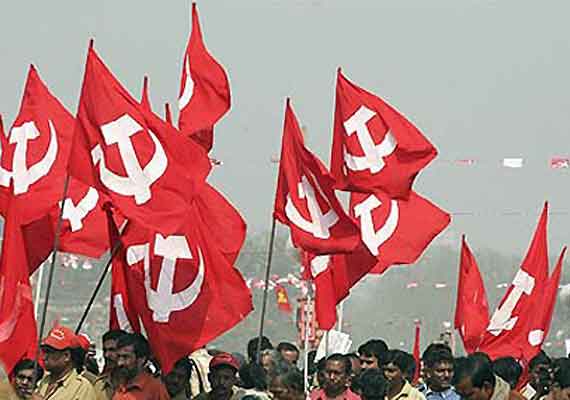
In a joint statement issued today, top leaders of six Left parties strongly condemned “the attack launched by the RSS-BJP against the Left and all other progressive forces” and gave a call for an all-India protest from February 23 to 25, “against the machinations of the Central government under RSS
guidance”.

“It is clear that under the false allegation of being ‘anti-national’ the RSS-BJP have mounted an all-India attack against the Indian people,” the statement added. It appealed to all progressive, left and secular forces to join the protest under the “Defend People’s Constitutional Rights” banner.

The Left parties demanded that the JNU Students Union president, Kanhaiya Kumar must be released and all cases of sedition filed against students must be withdrawn forthwith. “No harassment and witch hunting must be allowed. The truth has now come out that most of the evidence produced by the government was fabricated. Those who have fabricated the evidence and propagated it must be punished under the law,” said the statement.

The statement strongly condemned “the attack mounted by the RSS under the patronage of this BJP-led NDA government” against the Jawaharlal Nehru University stating that this was part of “a larger design by the communal forces to carry forward their agenda in institutions of higher learning”. This systemic pattern, it stated, was clearly visible in the incidents in Film & Television Institute of India, Hyderabad Central University leading to the tragic suicide of Rohith Vemula, the incidents in IIT Chennai and now in Jadavpur University.

“It is clear that the RSS-BJP is mounting an open attack on the democratic and constitutional rights of the people. Further, such attacks are part of the efforts to sharpen communal polarisation in the country to also divert the attention of the people from the growing burdens being imposed upon them by the total failure of this NDA-led Modi government on all fronts”, the statement added.

The joint statement was issued today following a meeting in Delhi. It was attended by Sitaram Yechury, Prakash Karat and S Ramachandran Pillai [CPI(M)], Sudhakar Reddy, Gurudas Dasgupta and D Raja [CPI], Swapan Mukherjee [CPI(ML)-Liberation], Abani Roy [RSP], Pran Sharma [SUCI(C)] and Debabrata Biswas [AIFB].
 

Open letter: Over 100 Mumbai lawyers condemn ‘tyranny’ of fellow-lawyers at Patiala court

0


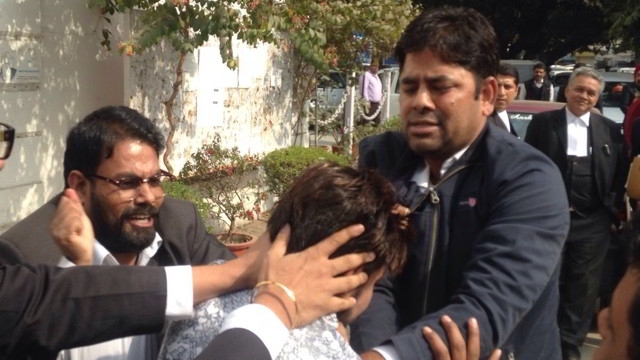
We, the undersigned lawyers practicing in Mumbai, condemn the undignified behavior of our professional colleagues in the Patiala House Court Complex, Delhi during this week. As members of the legal fraternity we are ashamed of their conduct which is neither becoming of the dignity of the profession nor as citizens of a free and democratic country. This is nothing but tyranny and mockery of a system we took an oath to practice in.

We practice in a system that recognizes freedom of speech and expression and a right to be represented before a court. As officers of the court and upholders of law it is not becoming of us lawyers to engage or indulge in such acts of assaulting, beating up and intimidating people within or outside the Court premises.  The conduct of assaulting any citizen of the country is not only taking law into our hands but proclaiming that we have no faith in justice and the very legal system we practice in.

Freedom of speech and expression is the very foundation of our practice and if these very rights and freedoms are curtailed it threatens the edifice of our profession.

A fundamental principle of law is that everyone is innocent till proven guilty and by such unbecoming conduct we are declaring the entire process of law infructuous. If guilt were to be decided outside the court, through popular sentiment the entire judicial process would be rendered meaningless. We as practitioners of law must desist from such conduct and uphold the dignity of the profession.

We write this open letter with the hope, that our fellow lawyers will respect and uphold the dignity of our profession.

  1. Anil Anturkar, Sr. Counsel
  2. Aspi Chinoy, Sr. Counsel
  3. Dinyar Madon, Sr. Counsel
  4. E. P Bharucha, Sr. Counsel
  5. Gayatri Singh, Sr. Counsel
  6. Janak Dwarkadas, Sr. Counsel
  7. Mihir Desai, Sr. Counsel
  8. Milind Sathe, Sr. Counsel
  9. Navroz Seervai, Sr. Counsel
  10. Rahul Narichania, Sr. Counsel
  11. Rajani Iyer, Sr. Counsel
  12. Ravi Kadam, Sr. Counsel
  13. Sanjay Singhvi, Sr. Counsel
  14. Shirish Gupte, Sr. Counsel
  15. Shyam Mehta, Sr. Counsel
  16. Venkatesh Dhond, Sr. Counsel
  17. Adv. Aabad Ponda
  18. Adv. Aayush Tainwala
  19. Adv. Abdul Bari Ansari
  20. Adv. Abhilasha Sharma
  21. Adv. Abhinav Tiwari
  22. Adv. Aditya Swarup
  23. Adv. Afreen  Khan
  24. Adv. Anita Castellino
  25. Adv. Apeksha Parekh
  26. Adv. Archana Rupwate
  27. Adv. Arshad Shaikh
  28. Adv. Arun Ferrera
  29. Adv. Asadulla A Sayed
  30. Adv. Asha Rudiyal
  31. Adv. Ayaz Shaikh
  32. Adv. Bruno Castellino
  33. Adv. Butul A Sayed
  34. Adv. D. British
  35. Adv. Deepa Chhabria
  36. Adv. Farhana Latief
  37. Adv. Flavia Agnes
  38. Adv. Hemant B. Kumar
  39. Adv. Hemant Ingle
  40. Adv. Imtiyaz Shaikh
  41. Adv. Irene Sequeira
  42. Adv. Jalaja Nambiar
  43. Adv. Jaya Menon
  44. Adv. Kanika Joshi
  45. Adv. Karl Tamboli
  46. Adv. Kranti LC
  47. Adv. Lara Jesani
  48. Adv. Maharukh Adenwalla
  49. Adv. Maneck Mulla
  50. Adv. Mani Prakash
  51. Adv. Manoj M Kadam
  52. Adv. Medha Deo
  53. Adv. Meenaz Kakalia
  54. Adv. Mini Mathew
  55. Adv. Monica Sakhrani
  56. Adv. Mridula kadam
  57. Adv. Mussadique Shaikh
  58. Adv. Naushad Engineer
  59. Adv. Nausheen Yousuf
  60. Adv. Nikhil Sakhardande
  61. Adv. Nilima Dutta
  62. Adv. Nita Bhatia
  63. Adv. Persis Sidhva
  64. Adv. Pradeep mandhyan
  65. Adv. Prajakta Keni
  66. Adv. Pranali Pawar
  67. Adv. Priyank Kapadia
  68. Adv. Raju Moray
  69. Adv. Rebecca Gonsalves
  70. Adv. Riddhi Dadia
  71. Adv. Robin Fernandes
  72. Adv. Roshni Tandale
  73. Adv. S M Algaus
  74. Adv. Sangeena Aliyar
  75. Adv. Sanober Keshwaar
  76. Adv. Sarah Kapadia
  77. Adv. Sarosh Bharuch
  78. Adv. Saumya Brajmohan
  79. Adv. Scherezad Parelvala
  80. Adv. Shalini Devi
  81. Adv. Sharan Jagtiani
  82. Adv. Sharmila Kaushik
  83. Adv. Shonottra H. Kumar
  84. Adv. Shrey Fatterpekar
  85. Adv. Shreya Jha
  86. Adv. Shruti Jadhav 
  87. Adv. Shweta Moray
  88. Adv. Siddha Pamecha
  89. Adv. Somasekhar Sundaresan
  90. Adv. Sonal Waingankar
  91. Adv. Sumangala Biradar
  92. Adv. Sunil R Pandey
  93. Adv. Surabhi Singh
  94. Adv. Suraj Sanap
  95. Adv. Suresh Rajeshwar
  96. Adv. Susan Abraham
  97. Adv. Swaraj Jadhav
  98. Adv. T. Parakkadan
  99. Adv. Utkarsh Mishra
  100. Adv. Veena Gowda
  101. Adv. Veena Johari
  102. Adv. Vidhi Kotak
  103. Adv. Vijay Hiremath
  104. Adv. Vinamra Kopariha
  105. Adv. Yug Mohit Chaudhry
  106. Adv. Zaman Ali


An open letter to Zee News on #JNUCrackdown

0
ndtv-vs-times-now

February 19, 2016
Maitreyee Shukla

Dear Zee News,
Maybe you are aware that a new video has emerged. A video which proves that the clipping shown by Sudhir Chaudhary in his segment is not the entire truth. And as always, half truth turned out to be dangerous. Your channel has manipulated the video and made it appear as if Kanhaiya and Umar were raising slogans for the secession of Kashmir by asking for ‘Azaadi’ from India. Although, even then, these slogans were nowhere close to being seditious, however, some might have considered them objectionable or offensive. Now, after seeing what the complete slogans were, its plain as the nose on your face that the slogans raised by Kanhaiyya and Umar are not even remotely offensive. In other news, the government has denied any intelligence report on Umar being a JeM sympathizer, whom you have declared to be a terrorist in your recent segments.

By twisting their words, you have made two innocent students into ‘traitors’ in the eyes of the nation. This is not just an injustice to these two, but a grave injustice to the prestigious institution of JNU, the entire student and teachers community of JNU, and also the ‘nation’ whose integrity you claimed to be your supreme concern. The way you drove the entire nation into a frenzy of hatred towards the entire JNU community is condemnable. Your media trial of Kanhaiyya and Umar has fairly reduced their chances of getting a fair trial. This is not the “Hakeeqat jaisi, Khabar waisi” you claimed once. (Is this why you changed your punchline?) Frankly, it’s shitty journalism on your part.

You guys are an expert on whataboutery, so let me ask a few ‘what abouts’ to you. What about the time when JNU students were taking water cannons and lathis after long hunger strikes in freezing cold weather? Where were you? What about when JNU stood in solidarity with students of HCU in demand of justice for Rohith Vemula? Where were you?

In your attempt to malign my university, you used the death of the brave Lance Naik Hanuman Thappa. Now, know that JNU has since long supported the demand raised by Pakistan to declare Siachin as a ‘No War Zone’. It was your beloved government who did not listen and caused the death of these soldiers. Secondly, you raised the issue of the taxpayers’ money. Zee network, the taxpayers’ money is wasted when the government uses them to write off taxes of huge corporations, not when students organize themselves into political parties to discuss the issues of the country and attempt to solve them. In another segment you labelled us ‘anti-national’ because we celebrate Mahishasur Diwas instead of Durga pooja. Again, you gave half the truth. We celebrate Mahishasur Diwas ALONG with Durga Pooja. We do that because Mahishasur is a local deity for many tribes, just like Raavan, and we wish to give everyone equal space. And if as per you, Mahishasur is anti national, then your knowledge about the diversity of India is severely flawed.

After your false DNA test, here is an account of what we JNU students have faced, and you have been gracious enough to ignore.

1. Our beloved university defamed, to the extent that people demanded its shutdown.
2. Several innocent students targeted, including our leader, Kanhaiya Kumar.
3. Mob-o-cracy in world’s largest democracy. Several students and teachers manhandled.
4. Landlords in Munirka have asked us JNU students to vacate their premises.
5. Name calling and abuses on social media and as well as outside. (I have been called a ‘deshdrohi’ by my own brother.)
6. Problems in everyday tasks, such as transportation because no one is willing to help ‘anti-nationals’.
7. The threat of violence at every step. It is impossible to wear our JNU tee shirt in public without getting hateful looks.
8. Holdup of classes. And mind you, the taxpayer’s money is being wasted now, when we are not able to hold regular classes.
9. Our country is deriving worldwide criticism. Even Noam Chomsky has criticized the Indian government for its crackdown. By the way, now is the time when the nation is being defamed, not when scholars were protesting.
10. On a lighter note, we are wasting our time debating with cyber goondas and morons.

You have misused your extent of reach and have betrayed the trust of the entire nation, and for this you owe us an apology. Note that even now, I am not asking for #ShutDownZeeNews like you asked for #ShutDownJNU. I demand for a defamation case to be filed against you. But unlike you, Zee news, I want to give you the chance you never gave us, the chance to tell your side of the story. You are welcome to JNU’s beautiful campus and trust me, even though you have caused us immense pain and harassment, we will not mob you, or lynch you, we will hear you out and debate( A proper debate, not what your friend Arnab does).

If that sounds unbelievable to you, that is because you do not know JNU. JNU teaches us the value of free speech, the value of debate, dissent and fairness. JNU tells us to give a platform to everyone, even those who hate us. That is what we were doing on the evening of 9th when some fringe elements (who were probably not even from JNU) were provoked by the unconstitutional curbing of their free speech by the administration and some hooligans, and then, you, behaving even more immaturely than those idiots, went on a ‘destroy JNU’ rampage! Your coverage has been frenzied, biased and unethical by all standards of journalism.

In the end, I just have one message for you. Please consider when you have time to think between your extortion and biased journalism. Calm. The. Hell. Down.

Love,
A disappointed JNU student.

Attacking the Defenders of Freedom, Chhatisgarh: Lawyers and Journos being Forced Out

0


Days after Scroll contributor Malini Subramaniam at Bastar in Chattisgarh came under pressure from local groups and the police following to her reportage on police atrocities, Isha Khandewal, the lawyer representing Malini and a member of legal aid group JagLAG, has said they are being forced to leave Jagdalpur. JagLAG (Jagdalpur Legal Aid group), a non-profit that has been providing free aid to tribal communities in south Chhattisgarh’s five Naxal-affected districts, chose to legally represent Malini Subramaniam following a physical assault on her property in Bastar on February 8.

Malini Subramaniam, a journalist writing for scroll.in has been served an eviction notice by her landlord while her husband Ashim is still being held inside the police station and not let out. The landlord of the Jagdalpur Legal Aid group, who’s arms have been twisted by the local police by seizing his sole vehicle that is a means of livelihood, may also have to give in to the pressure. The message is clear. Freedom of Association, Movement and Expression are being openly throttled in the Bastar region, yet again. The state government is the same that controls the reigns at the Centre. The Chhatisgarh government wants the Jagdalpur legal aid group, an intrepid group of women lawyers who have been working in the Bastar region for three years, ensuring some legal rights for the Adivasis, out.
 
Sabrangindia has been consistently carrying reports of the resistance by Adivasis and the repression in Chhatisgarh. Here we reproduce a public appeal made by the Jagdalpur Legal Aid Group, a few minutes before the midnight hour on February 18-19, 2016.
 
 Things are taking an ugly turn in Jagdalpur.  
 
  First there were whispered threats, 'Don't go to Bijapur, the police will arrest you if you go there again'. Then, there was a whole week of public lynching of JagLAG as defenders of "blood-thirstly Naxalites" by the Samajik Ekta Manch, a vigilante group formed by the police.  At the same time, the local Bar Association again renewed their campaign to stop our practice by harassing the local lawyers standing with us.
 
Then, late last night, police visited our landlord – who is a driver by profession, and took him away to the police station. He was kept there till wee hours of this morning, and dropped back in a police vehicle; his car having been impounded.  Our badly shaken landlord informed us at 2:00 am this morning that he has no option but to ask us to vacate our house and office within a week.
 
Things have been rocky for us in Jagdalpur for a while now.  For a year and a half now, we are being hounded out by the local police.  From giving thinly veiled threats at press conferences that the police are closely monitoring NGOs providing "legal aid to Naxalites", to informing our clients that the police are about to arrest us for our Naxalite activities, to claiming before visiting journalists and researchers that we are merely a "Naxalite front", various officials of the police have been out to get us.
 
We have had police diligently investigating "anonymous" complaints that we are "fraudulent" lawyers.  For which, we had to make multiple trips to the police station with all our impeccable certificates and sound credentials. Then the local Bar Association, clearly prompted by the police, took out a resolution prohibiting our practice in the local courts. We countered this by challenging this resolution in the State Bar Council and obtaining an interim order allowing our practice. Unable to get at us any other way, now, the police are resorting to pressuring our landlord and his family.
 
The timing of these events does not escape our notice. This is coming at a time when the whole countryside of Bastar is on fire. Under the guise of anti-Naxal operations, the security forces are indulging in rape, pillage and plunder. With teams of women activists, we have documented at least three cases of mass sexual violence in the past three months itself, where security forces have run amok in the villages, stripping women, playing with their naked bodies and indulging in gangrape, looting their precious food supplies, and destroying their homes and granaries. The number of so-called "encounters" is at an all-time high, people are simply "disappearing" from villages in large numbers, only to show up in the list of "surrendered" or "arrested" Naxalites several days or weeks later. The local police and administration are talking in one voice of "clearing" the area within one year.
 
In this scenario, all who are challenging the official narrative, are being silenced. Social mobilizations are being orchestrated by the police to provide a cover to their illegal harassment of journalists, lawyers, activists. When mass gangrapes in Bijapur were being uncovered, a group calling itself the "Naxal peedit Sangharsh samiti" under the leadership of the ex-Salwa Judum leader Madhukar Rao, took out noisy belligerent rallies against Soni Sori, Bela Bhatia and "outside NGOs", threatening all of us with physical violence if we entered Bijapur again. When Malini Subramaniam wrote about the fake surrenders of Maoists, or the fake encounters, a motley group led by the nephew of the local MLA, calling themselves the "Samajik Ekta Manch" launched a vilification campaign against her. 

When we tried to get her complaint of stones thrown into her house registered, the Manch publicly declared us as their next target, for defending "khoonkhar Naxalites" ( खूंखार नक्सली – dreaded naxalites) and going to villages inciting people against the state.(राज्य सत्ता के खिलाफ भड़काते हैं).The local Bar Association also renewed their fatwa against local lawyers working with us..
 
Unable to stop us from continuing our work here, the police have now resorted to threatening others associated with us.  Prachi, the young household help working at Malini's, was summoned to the police station twice yesterday for interrogation, and kept there for hours.  Despite the clear letter of the law that women witnesses can only be examined at their place of residence, she was taken away to the police station late at night for questioning, much to the alarm of her family. She has been taken to the police station again this morning and is still there.  Malini's landlord,who lives in Raipur, was also summoned to the thana this morning, and by now has also issued an eviction notice to her.  Malini's husband, Ashim, who was called inside the thana in the afternoon, is also now being held inside and not being allowed outside.

Our landlord, a person of very modest means, is also a member of the minority community, and vulnerable in this climate of pervasive fear.  Our landlord's family have always had the greatest love and concern for us, which we return in equal measure.  We understand that they had no choice this time but to ask us to vacate. We also understand that it would be exceedingly difficult to find another rental place in this time of inflamed passions and provoked agitations.  We are still trying. 
 
 We take solace in the despair apparent in the highest echelons of police, who have had to stoop to such crude levels of indecency to throw us out of Jagdalpur. 

  Shalini Gera and Isha Khandelwal have issued this statement.

#StandwithJNU: Solidarity Statement from the Institute for Gender, Race, Sexuality and Social Justice at the University of British Columbia

0

We, graduate students and faculty at the Institute for Gender, Race, Sexuality and Social Justice and the broader University of British Columbia community stand in absolute and resounding support of the students, faculty, staff and allies at Jawaharlal Nehru University (JNU). We condemn the political and legal clout being exercised by the Indian government in Kanhaiya Kumar’s arrest and subsequent reaction to protests. Not only is Kanhaiya’s arrest erroneous and suspect to begin with, the consequent unraveling of systematic hatred towards these “anti-national” scholars creates an environment where anyone perceived to be against ‘Hindu’-hence-Indian culture is at risk of personal harm meted out by the State.

It is deeply disturbing to note public debate around this on mainstream Indian media and TV news channels. The contention is that universities should not be spaces of political engagement, but of quiet scholarly repose.  As students and researchers committed to the principles of transnational social justice, it is distressing to note this attempt to depoliticize the university space by dismissing students as undeserving of their spot for being actively engaged in the future of their country.

To term universities and institutions that foster alternative spaces of being and thinking ‘anti-national’ is commandeering an invective that is untrue and wholly vicious.  Moreover, the violence meted out to Kanhaiya as well as journalists at Patiala Court is horrifying, especially noting Delhi police’s inaction and complicity in this, despite tight presence. It is precisely this sort of unprovoked violence by the State apparatus that is undemocratic. It is baffling to note the Delhi police’s apparent inability to track down the people who attacked Kanhaiya, while at the same time it launches a now country-wide witch hunt for another JNU student leader Umar Khalid (who allegedly organized the protest in question), based on completely false Islamophobic allegations.

We believe that universities are sites of active engagement, and using an old colonial remnant that is the sedition charge betrays intent to suppress the voice of a democracy. To hold debates and discussions is not anti-national, even more so when there is overwhelming testimony that Kanhaiya Kumar was not involved in the particular sloganeering for which he was arrested. An active and thriving student body presence is what makes JNU one of Asia’s premiere institutions. It is deeply disappointing to note the efforts by the current government to clamp down on this. It is with rising alarm that we register the chain of events that connect other established institutions like the Film and Television Institute of India (FTII) and the University of Hyderabad (UoH).

These threats to academic freedom and the right to dissent are not contained to national borders. They affect us all globally. In JNU we see ourselves. To our fellow students, faculty and staff at JNU: we commend you for your courage in this struggle. India stands at a pivotal moment right now. May we never tire of fighting the good fight. We #StandwithJNU.
February 19, 2016.
In solidarity,

  • Shruti Buddhavarapu, Graduate Student, Institute for Gender, Race, Sexuality and Social Justice
  • Noal Amir, Graduate Student, Institute for Gender, Race, Sexuality and Social Justice
  • Kristi Carey, Graduate Student, Institute for Gender, Race, Sexuality and Social Justice
  • Iman Baobeid, Graduate Student, Institute for Gender, Race, Sexuality and Social Justice
  • Dina Al-Kassim, Associate Professor, English Department and Institute for Gender, Race, Sexuality and Social Justice
  • Renisa Mawani, Associate Professor, Sociology
  • Jen Sung, Communications staff, Institute for Gender, Race, Sexuality and Social Justice
  • Sanjeev Routray, Sessional Lecturer, Department of Sociology
  • Prajna Rao, PhD student, School of Community and Regional planning
  • Leah Grantham, Graduate Student, Institute for Gender, Race, Sexuality and Social Justice
  • Thomas Kemple, Professor, Sociology
  • Magnolia Pauker, Graduate Student, Institute for Gender, Race, Sexuality and Social Justice
  • Tanvi Sirari, Graduate Student, Sociology
  • Sara Shneiderman, Assistant Professor, Department of Anthropology and Institute of Asian Research
  • Madeleine Reddon, Graduate Student, English Department
  • Sunera Thobani, Associate Professor, Institute for Gender, Race, Sexuality and Social Justice
  • Janice Stewart, Senior Instructor, Institute for Gender, Race, Sexuality and Social Justice
  • John Paul Catungal, Instructor I, Institute for Gender, Race, Sexuality and Social Justice
  • Rima Wilkes, Professor, Sociology
  • Victoria James, Graduate Student, SLAIS
  • Conor Wilkinson, Graduate Student, History
  • Sydnie Koch, Graduate Student, Civil Engineering
  • Mark Adams, Graduate Student, Electrical Engineering
  • Sampath Satti, Graduate Student, Biomedical Engineering
  • Hanna Dahlström, Graduate Student, Institute for Gender, Race, Sexuality and Social Justice
  • Denise Ferreira da Silva, Associate Professor, Institute for Gender, Race, Sexuality and Social Justice
  • J. Lowik, Graduate Student, Institute for Gender, Race, Sexuality and Social Justice

#StandWithJNU: Solidarity Statement by Academics in the UK

0

This is a statement by over three hundred and fifty academics based in the UK.

We, the undersigned, stand in solidarity with the students, faculty, and staff of Jawaharlal Nehru University (JNU). We condemn the BJP government-sanctioned police action in the JNU campus and the illegal detention of the JNUSU President Kanhaiya Kumar. We strongly condemn the manner in which political dissent is being stifled, reducing academic spaces to fortresses. We also condemn the widespread witch-hunt of left-wing students and student groups that this police action has unleashed.

These recent acts are representative of the larger trend that we have been observing – the imposition of an authoritarian and regressive agenda in institutions of higher learning from Films and Television Institute [FTII], Hyderabad Central University [HCU] to Jawaharlal Nehru University [JNU]. From the institutional murder of HCU student, Rohith Vemula, and the suppression of student protests at FTII to the illegal detention of the student union leader Kanhaiya Kumar and pervasive police presence at JNU, there has been a constant non- observance and disregard of administrative and legal norms as well as a gross infringement of the democratic rights of the student community. These actions are embedded in a deeply chauvinistic cultural nationalism, which espouses a casteist and Brahmanical, homophobic, and patriarchal worldview.

We strongly believe that student politics is being targeted currently by giving a new lease of life to a sedition law that was a draconian tool in the hands of the colonial state and has no place in a democracy. It is our democratic right to dissent, disagree, organise and struggle against state, institutions or policies that transgress and suppress democratic and egalitarian values. Expression of dissent cannot and should not be equated with being ‘anti-national’ (or any other such constructed category) and is definitely not punishable under law especially if it is non-violent.

Disguising targeted assault on oppositional student groups/political movements within the narrative binaries of nationalism/anti nationalism only reflects how vulnerable the BJP government feels in its own ability to provide accountable governance.

We also believe that institutions of higher learning should be publicly funded spaces for political engagement, debates, and critical discussions – a legacy campuses (be it JNU, DU, or FTII) have embodied. As they always have, university spaces should subsidise costs of education for students, irrespective of the political disposition of the students. A rather disturbing feature of the narratives around this issue has been the construction and furthering of an artificial dichotomy between academics and politics that suggests that being ‘political’ is an aberration. This would certainly appear to be the case, if seen through the neoliberal lens of perceiving education as an industry that produces ‘semester bred’ automated ‘disciplined’ individuals who are mere consumers.

However, as the nonviolent expressions of dissent by students in JNU clearly demonstrate, contrary to this neo liberal view of academia,we believe that ‘personal is political’ and there is no sphere that is devoid of politics.We believe that good academic work necessarily involves a critical engagement with society and its power inequities and in that sense is always politically engaged. This engagement thrives in the democratic space of the university where many dissenting views can be heard and debated. The vilification of JNU as a space of ‘anti-national’ politics is being carried out by ABVP and BJP in order to attack and break this democratic spirit of academic and political life in Indian universities.

As teachers, students, scholars, and academics from the UK, who are keenly observing the developments unfolding in JNU, we express our solidarity with the students, faculty and staff of JNU as they non-violently resist this infringement on their rights. We urge the Vice Chancellor of JNU to uphold the institutional autonomy and the democratic rights of the student community. We also urge the government of India to stop encroaching on our rights as citizens, students, activists, political and politicised subjects.
 

  1. Akanksha Mehta, SOAS, University of London
  2. Priyanka Basu, SOAS, London
  3. Neha Vermani (JNU, 2013), Royal Holloway college, University of London
  4. Partha Pratim Shil, PhD student, Trinity College, University of Cambridge
  5. Niyati Sharma, University of Oxford
  6. Benarji Chakka, Chevening Scholar, SOAS, UoL
  7. Javed Wani, Department of History, Royal Holloway, University of London
  8. Chacko, University of London.
  9. Jay Lingham, SOAS, University of London
  10. Anjali B Datta, University of Cambridge
  11. Shinjini Das, University of Cambridge
  12. Jaice Sara Titus, Brunel University London
  13. William Rees, SOAS, (2015)
  14. Alex Wolfers PhD Researcher at Cambridge University
  15. Aditya Balasubramanian, University of Cambridge
  16. Mayur Suresh,
  17. Lipika Kamra, University of Oxford
  18. Sneha Krishnan, University of Oxford
  19. Prashant Kidambi, University of Leicester
  20. James Eastwoos (SOAS, University of London)
  21. Rohan Deb Roy, Lecturer in South Asian History, University of Reading
  22. Prerna Bhardwaj, King’s College London
  23. Tristan Burke (University of Manchester)
  24. Surabhi Ranganathan, University of Cambridge
  25. Sanya Samtani, University of Oxford
  26. Baisali Mohanty, Post-graduate candidate, contemporary south asian studies, University of Oxford
  27. Prithvi Hirani, Aberystwyth University
  28. Dr Lorenza Monaco, SOAS, University of London
  29. Suman Ghosh, Bath Spa University
  30. Nayanika Mathur, University of Cambridge
  31. Marie-France Courriol,UniversityofCambridge
  32. Jayesha Koushik, University of Oxford
  33. Aditya Ramesh, SOAS
  34. Umika Pidaparthy, University of Oxford
  35. Sruthi Muraleedharan, SOAS, University of London
  36. JD Brown, SOAS, London
  37. Sudarshana Srinivasan, King’s College London
  38. Wiktor Ostasz (University of Oxford)
  39. T Khaitan, University of Oxford
  40. Erica Wald, Goldsmiths, University of London
  41. Deepa Kurup, Oxford University
  42. Sanjoy Bhattacharya, University of York, UK
  43. Thomas Marois, SOAS, University of London
  44. Saba Hussain, University of Warwick
  45. FeyziIsmail,SOAS
  46. Joe Buckley, PhD candidate, SOAS, University of London
  47. Sandipto Dasgupta, Newton International Fellow of the Royal Society and the British Academy
  48. Annabelle Sreberny, Emeritus Professor, SOAS, University of London
  49. Sahil Warsi, University of Leeds
  50. Subir Sinha, Department of Development Studies, SOAS
  51. Sabiha Allouche, Centre for Gender Studies, SOAS, University of London
  52. Abhay Regulagedda – MIPLC
  53. Jaimie Johansson, University of East Anglia
  54. Shabnum Tejani, Senior Lecturer in Modern South Asian History, Department of History, SOAS, University of London
  55. Dr Kerem Nisancioglu, SOAS University of London
  56. Alfredo Saad Filho, SOAS University of London
  57. Arijeet Pal, University of Oxford
  58. Elisabeth Leake, Royal Holloway, University of London
  59. Musab Younis, Oxford University and SOAS
  60. Smitana Saikia King’s College London
  61. Dr Rahul S Gandhi BSc (Neuroscience) MBCHB, Member – Royal Australasian College of Physicians
  62. Sara Stevano, SOAS University of London
  63. Rachel Harrison, SOAS
  64. Jonathan Daniel Luther (SOAS)
  65. Abeera Khan, MA Gender Studies, SOAS
  66. Alexandra Tzirkoti, King’s College London
  67. Aditya Sarkar, Warwick University
  68. Teja Varma Pusapati, Phil Student in English, University of Oxford
  69. Secki Jose, PhD candidate, University of Leicester
  70. Shreya Sinha, SOAS, University of London
  71. Ashok Kumar, Queen Mary University of London
  72. Steven Martin, University of Cambridge
  73. Dr Helen Elsey, University of Leeds
  74. Dr Mandy Turner, Middle East Centre, LSE
  75. Zarah Sultana, NUS Black Students’ Campaign
  76. Nicholas Simcik Arese, University of Oxford
  77. DrAravindaGuntupalli,SeniorLecturerinPublicHealth,TheOpenUniversity,
  78. Milton Keynes, UK
  79. Lisa Tilley, University of Warwick
  80. Uttara Shahani, PhD Candidate, University of Cambridge
  81. Nadje Al-Ali SOAS
  82. Saumya Saxena, University of Cambridge
  83. Diya Gupta, Department of English, King’s College London
  84. John Wood Aberystwyth University
  85. Dimitra Kotouza, University of Kent
  86. Nilanjana Sen Graduate Student King’s College London
  87. Gerhard Kling, SOAS University of London
  88. Akhila Yechury, University of Andrews
  89. Professor Arshin Adib-Moghaddam, SOAS, University of London
  90. Rudra Sen (SOAS)
  91. Cam Stocks, Medical Student, Barts and The London School of Medicine
  92. Manjeet Ramgotra, SOAS University of London
  93. Juanita Elias, University of Warwick
  94. Sarah Gandee, University of Leeds
  95. Roy, SOAS
  96. Dr Richard Williams, University of Oxford
  97. Tom Cowan, King’s College London
  98. Layli Uddin, Royal Holloway
  99. Dr Sarah Hodges, History, University of Warwick
  100. Emma Hart, University of St Andrews
  101. Meenakshi Sinha, King’s India Institute, King’s College London
  102. Antonio Ferraz de Oliveira – University of Warwick
  103. Eve Tignol (Royal Holloway University of London)
  104. Ashwitha Jayakumar, MA student, University of Leeds
  105. Alastair McClure, PhD Student at the University of Cambridge
  106. Amir Khan – University of Cambridge
  107. Javier Moreno Zacarés, Warwick University
  108. Professor Stephen Hopgood, SOAS University of London
  109. Jordan Osserman, UCL
  110. Josh Holroyd, Socialist Appeal
  111. Ina Goel, Gender and Sexuality Studies, University College London
  112. Julian Benda, SOAS
  113. Ola Innset, European University Institute
  114. Nicole Beardsworth, University of Warwick
  115. Fatima Rajina, SOAS
  116. Karthikeyan Damodaran, University of Edinburgh
  117. Vanya V Bhargav, University of Oxford
  118. Meghna Nag Chowdhuri, University of Cambridge
  119. Ranjita Neogi, University of Reading
  120. Aparna John, Institute of Development Studies, University of Sussex
  121. Omar Raii, UCL
  122. Ashna Sarkar – UCL
  123. Garikoitz Gómez Alfaro, University of Brighton
  124. Tom Cunliffe, KCL
  125. Mihika Chatterjee, University of Oxford
  126. Kavita Maya (SOAS, University of London)
  127. Niharika Pandit, master’s candidate, SOAS
  128. Jonathan Saha, University of Leeds
  129. Farooq Graduate Teaching Asst. SOAS, London
  130. Shreya Agrawal, Student at UCL
  131. Malia Bouattia, NUS Black Students’ Officer (UK)
  132. Amogha Varsha (University of Oxford, UK)
  133. Amelia Bonea, University of Oxford
  134. Avinash Paliwal, King’s College London
  135. Amrita Shodhan, SOAS, University of London
  136. Jacob Bard-Rosenberg, Birkbeck College, University of London
  137. Laurence Gautier, University of Cambridge
  138. Smriti Sawkar, University of Oxford
  139. Arianna Tassinari (University of Warwick)
  140. Anindya Raychaudhuri, University of St Andrews
  141. Onaiza Drabu, University of Oxford
  142. Mipsie Marshall University of Sussex
  143. Amit Kumar, DPhil Chemistry, University of Oxford
  144. Ishan Mukherjee, University of Cambridge
  145. Urmimala Maitra, University of Oxford
  146. Sahil Nijhawan (Student, University College London)
  147. James Lecturer in Islamicate South Asia, SOAS, University of London
  148. Anirudh Mathur, Student, Inner Temple
  149. Maia Barkaia, (JNU, 2010),Research Fellow, LMH, Oxford University
  150. Sheiry Dhillon, DPhil OB/GYN (C) MD (C)
  151. Jacob George Pallath, GDL student at University of Westminster
  152. Sadie Coventry University
  153. Dr Nicholas Cimini, Lecturer and EIS-ULA Exec member at Edinburgh Napier University
  154. Leandro Vergara-Camus, SOAS, University of London
  155. Chandak Sengoopta, Professor of History, Birkbeck College, University of London
  156. Ozan Kamiloglu, Associate Lecturer, University of London, Birkbeck
  157. Selbi Jumayeva, Visiting Research Fellow, IGS at LMH University of Oxford
  158. Somak Biswas, University of Warwick
  159. Divya David, University of Oxford
  160. Mihika Chatterjee, University of Oxford
  161. Mishka Sinha, University of Cambridge, UK
  162. Emile Chabal, University of Edinburgh
  163. Radhika Govinda, University of Edinburgh
  164. Varun Ramesh – University of Oxford
  165. Nat Raha, University of Sussex
  166. David Dahlborn, UCL
  167. Lesley Hoggart, The Open University, UK
  168. Chinmay Sharma SOAS
  169. Sahil Kureshi, University of Oxford
  170. Leshu Torchin, University of St Andrews
  171. Ameya Kelkar-SOAS, London
  172. Ankita Pandey, Phil candidate, University of Oxford
  173. Sinthujan Varatharajah, UCL Geography
  174. Maanasa SOAS
  175. Dr Ghazala Mir, University of Leeds
  176. Deepa Kurup, University of Oxford
  177. Secki P Jose, University of Leicester
  178. Rashmi Varma, University of Warwick
  179. Sneha Menon, University of Oxford
  180. Yasser Shams Khan, University of Oxford
  181. Harry Stopes, University College London
  182. Nithya Natarajan, SOAS
  183. Dr Marika Rose, Durham University
  184. Mansi Sood, Student, University of Oxford, 2015-16
  185. Mukulika Banerjee, Director of LSE South Asia Centre and Associate Professor of Anthropology, LSE
  186. Fatima Shahzad, Postgraduate Student, SOAS, University of London
  187. Rodrigo Torres, UCL
  188. Kanika Sharma, Birkbeck, University of London
  189. Paavani Singh – King’s College London
  190. Mallika Leuzinger, University College London
  191. Kashish Madan, A. English Literary Studies, Durham University
  192. Grace Egan, University of Glasgow
  193. Joseph McQuade, University of Cambridge
  194. Amrita Lamba, SOAS
  195. Sarah Kunz – PhD student, UCL
  196. Shamim Zakaria, University of Sussex
  197. Rubina Jasani, University of Manchester
  198. Moiz Tundawala, PhD candidate, London School of Economics and Political
  199. Aditya Ray, Queen Mary University of London
  200. Rahul Rao, SOAS, University of London
  201. Dr Lee Jones, Queen Mary University of London
  202. Manish Kushwaha, University of Warwick
  203. Kalpana Wilson, London School of Economics and Political Science
  204. Daniela Lainez del Pozo – University College London
  205. Praveen Priyadarshi, PhD Candidate, London School of Economics
  206. Anju Christine, King’s College London
  207. Amogha Varsha (University of Oxford)
  208. Ashutosh Kumar, University of Leeds, UK
  209. neha kagal, Doctoral Scholar, SOAS
  210. Dr Hannah Boast, University of York
  211. Phiroze Vasunia, University College London
  212. Saawani Raje, King’s College London
  213. Sanghita Sen, University of Andrews. Scotland
  214. Dr Rohit K Dasgupta (WSA), University of Southampton
  215. Utsa Mukherjee, Royal Holloway
  216. Senjuti Chakraborti, Birkbeck College, University of London
  217. Aakshi Magazine, University Of St Andrews
  218. Souraj Dutta, Research student, University of St Andrews, Scotland
  219. Megan Robb, University of Oxford
  220. Andrew Kinnell, President of Stirling Students Union
  221. Grant Buttars, University of Edinburgh
  222. Johannes Makar, student at SOAS and KU Leuven
  223. Dr Anandi Ramamurthy, Sheffield Hallam University
  224. Anish Vanaik, Purdue University (Oxford, 2013)
  225. Akshyeta Suryanarayan, University of Cambridge
  226. Eleanor Newbigin, SOAS, University of London
  227. Rubina Jasani, University of Manchester
  228. Siddharth Chawla, Cambridge University
  229. Dimble Mathew University of Bradford
  230. Kshiti Gala, SOAS, University of London
  231. Bjorn Berntson, University College London
  232. Sreenanti Banerjee, Birkbeck, University of London
  233. Pori Saikia University of Essex
  234. James Harland (Department of History, University of York)
  235. Kanwar Nain Singh, University of Cambridge
  236. Ayça Çubukçu, Assistant Professor in Human Rights, London School of Economics and Political Science
  237. Dr Satoshi Miyamura, SOAS, University of London
  238. Kyle Jordan (UCL)
  239. Gautam Bondada, Phil student, University of Oxford
  240. Tom Robinson, UCLU Welfare & International Officer
  241. Ettore Morelli, School of Oriental and African Studies
  242. Dr Jayasree Kalathil, Survivor Research, UK
  243. Tvisha Nevatia, LSE
  244. Karin Sjöstedt, SOAS
  245. Joya Chatterji, University of Cambridge
  246. Dr Peter Dwyer, Ruskin College, Oxford
  247. Dr Chris Rossdale, University of Warwick
  248. Rama Dieng, SOAS
  249. Anish Augustine, Queen Mary, University of London
  250. Sofa Gradin, Queen Mary University of London
  251. Nandini Maharaj, Sheffield Hallam University
  252. Shivangi Pareek, University of Cambridge
  253. Shubranshu Mishra, University of Kent
  254. Ritanjan Das, University of Portsmouth
  255. Ananya Rao-Middleton, University of Cambridge
  256. Ganga Shreedhar, London School of Economics
  257. Swapna Kona Nayudu, LSE
  258. Elizabeth Frazer, Head of Department, Politics and International Relations, University of Oxford
  259. Dr William McEvoy, University of Sussex, UK
  260. William Gould, University of Leeds
  261. Marta Garcia Aliaga (SOAS, University of London, and NALSAR)
  262. Ayse Zarakol, University of Cambridge
  263. Prof Gurminder K Bhambra, University of Warwick
  264. Lisa Skwirblies, D. Candidate (University of Warwick)
  265. Louiza Odysseos, University of Sussex
  266. Alex Anievas, University of Cambridge
  267. Dr Meera Sabaratnam, SOAS
  268. Kirsten Forkert, School of Media, Birmingham City University
  269. Eda Ulus, University of Leicester
  270. Premalatha Balan, University of Nottingham and University College, London
  271. Adelie Chevee, SOAS, University of London
  272. Manishita Dass, Royal Holloway (University of London)
  273. Rosalind Galt, King’s College London
  274. Priyasha Mukhopadhyay, Oxford
  275. Rod Earle, Dept of Health & Social Care, The Open University
  276. Caoimhe Mader McGuinness, Queen Mary University of London
  277. Julie Dayot University of Oxford
  278. Sai Englert, PhD candidate, SOAS, University of London
  279. Sonali Campion, London School of Economics
  280. Dr Cathy Bergin, University of Brighton
  281. Aditya, University of Oxford
  282. Akshi Singh, Queen Mary, University of London
  283. Karan Katoch, University of Oxford
  284. Raghav Kishore, University of Huddersfield
  285. Dr Tanvi Pate, PAIS, University of Warwick
  286. Dr Bhabani Shankar Nayak, University of Salford, UK
  287. Konrad M Lawson (Lecturer St Andrews)
  288. Professor Emilia Jamroziak, University of Leeds
  289. Anwesha Sengupta, University of Oxford
  290. Andy Rixon The Open University UK
  291. Natalie James, UCLU
  292. Mirna Guha, PhD School of International Development, University of East Anglia
  293. Sita Balani King’s College London
  294. Steffan Blayney, Birkbeck, University of London
  295. Mehroosh Tak, SOAS
  296. Tanya Singh, University of Wolverhampton
  297. Kathryn Maude, Swansea University
  298. Hilary Aked, University of Bath
  299. S.V.P. Capildeo, Affiliate, St. John’s College, University of Cambridge
  300. Katy Sian, University of York
  301. S Lidher (Cambridge)
  302. Paul Kirby, University of Sussex
  303. Gayathri Sekhar, King’s College London
  304. Marijn Nieuwenhuis, Politics and Int. Studies, University of Warwick
  305. Lorena Lombardozzi (SOAS)
  306. Alen Toplisek, Queen Mary University of London
  307. Owen Clayton, University of Lincoln, UK
  308. Dr Terese Jonsson, University of Portsmuth
  309. Alexandra Sporidou Nottingham Trend University
  310. Professor Azrini Wahidin, Nottingham Trent University
  311. Janhavi Mittal, King’s College London
  312. Špela Drnovšek Zorko, SOAS, London
  313. Aapurv Jain, SOAS, University of London
  314. Noelle Richardson
  315. Vicki Baars
  316. Abhilasha Joshi, DPhil Neuroscience
  317. Fuad Ali, OtherAsias
  318. Miqdad
  319. Zara Kayani
  320. Jack Bardsley
  321. Joel White
  322. Pallavi Roy
  323. Vinayak Raj Gathoria
  324. Suchitra Sebastian
  325. Shariq
  326. Debanjali Biswas
  327. Umer Malik
  328. sabahat ijaz
  329. Sharon Mallon
  330. Arushi Menon
  331. Kaushik Banerjee
  332. Saumya Singh
  333. Sophie Mayer (independent scholar)
  334. Zara Qadeer
  335. Darshana Gurung
  336. Sahiba student masters
  337. Nihad Ahmed
  338. Nasir Arafat
  339. Shreya Chatterjee
  340. Edyth Parker
  341. Sinjini Chatterjee, student
  342. Daniel Ong
  343. Sunny Singh
  344. Ritika Bose
  345. Sanaz Raji, Independent Research & Campaigner
  346. Sameen Ali
  347. Shruti Sekhar Ravindran
  348. Shamira Meghani — scholar and teacher
  349. Leon Sealey-Huggins
  350. Neeharika Shetty
  351. Abhishikta Mallick
  352. Lakshmy Venkatesh
  353. Owen Clayton, University of Lincoln, UK
  354. Dr Terese Jonsson, University of Portsmuth
  355. Alexandra Sporidou Nottingham Trend University
  356. Professor Azrini Wahidin, Nottingham Trent University
  357. Janhavi Mittal, King’s College London
  358. Špela Drnovšek Zorko, SOAS
  359. Aapurv Jain, SOAS, University of London
  360. Laura Schwartz, University of Warwick
  361. Deepa Kurup, University of Oxford
  362. Gopal Balakrishnan
  363. Arwa Awan, Visiting Undergrad, University of Oxford
  364. Matthew Cole, University of Leeds
  365. Nikita S.
  366. Mohamed Hussain

Solidarity Statement for JNU by IIT Scholars

0

This is a statement issued by the undersigned, scholars of Departments of Humanities and Social Sciences of IITs across the country.

We, the undersigned, scholars of Departments of Humanities and Social Sciences of IITs across the country, condemn the police action in JNU and the arrest of the JNUSU President Kanhaiya Kumar on the charge of sedition. We also denounce the repeated acts of violence unleashed by some lawyers and others at the Patiala House Court against faculty, students and the media, as well as police inaction regarding the same.

In addition, we appeal for media and public trials to cease and for civil society to instead focus on debating issues in an amicable and reasonable manner, without slandering JNU or questioning the academic integrity or patriotic fervour of JNU and its supporters. We criticise the general atmosphere of fear and intimidation that is being created to target the entire university. Given the fast polarizing political atmosphere in the country, we appeal to the media organisations to display greater responsibility and conduct television debates in such a manner that no prejudicial public opinion is created while there is an ongoing enquiry into the entire episode by the authorities concerned. Resorting to jingoism and sensationalism may cause avoidable hazards.We see the attack on JNU as one of a series of attacks on academic autonomy and the liberal ethos of learning. The attempt to ban the Ambedkar-Periyar Study Circle at IIT-Madras, questionable appointments at various institutions of higher education, and the recent attack on the Ambedkar Students’ Association at the University of Hyderabad leading to the death of research scholar Rohith Vemula, must be seen as a part of a very disturbing trend.

To function meaningfully, academic spaces should be vibrant and democratic, conducive for free enquiry and debate. We believe that universities have been and should remain, places for dialogue and deliberation. They should accommodate diverse opinions and cultures, where disagreements are resolved through the use of calm reason and balanced debate on both sides. Tampering with free inquiry by taking recourse to threat or intimidation not only tramples academic autonomy but leaves us poorer as a society. It is only through free exchange of thought, where ideas are allowed to propagate, and there remains a possibility of revision of previously-held opinions, that we develop as a nation and contribute to its further growth. We uphold the vibrant nature of India’s democracy and champion the right to dissent and examine the most fundamental concepts that are of interest to all Indian citizens. We stand in solidarity with JNUSU, JNUTA, JNU students, and all democratic bodies and individuals who are defending the liberal ethos of universities and appreciate the critical role they play in maintaining constitutional democracy.

Aditi Singh, IIT Kharagpur
Ahsan Mohammed, IIT Madras
Akaitab Mukherjee, IIT Dhanbad (ISM)
Amit Kumar Mishra, IIT Kharagpur
Amit Saurabh, IIT Bombay
Anitha Iris, IIT Madras
Ankit Saxena, IIT Roorkee
Ankita Agarwal, IIT Kharagpur
Ankita Das, IIT Dhanbad (ISM)
Ankur Betageri, IIT Delhi
Anukripa Elango, IIT Madras
Archana Kumari, IIT Dhanbad (ISM)
Archana Verma, IIT Dhanbad (ISM)
Arya Prakash, IIT Madras
Asha Rani Horo,  IIT Kharagpur
Ashni A L, IIT Madras
Ashwin Kurian Philip, IIT Madras
Asmita Verma, IIT Delhi
Bibhuti Mary Kachhap, IIT Dhanbad (ISM)
Chandana R B, IIT Madras
Chetan Kale, IIT Kharagpur
Chinju Johny, IIT Delhi
Debarati Dutta,  IIT Kharagpur
Debjani Sarkar, IIT Dhanbad (ISM)
Debashis Pahi,  IIT Kharagpur
Deepa Kozhisseri, IIT Madras
Diana Evangeline, IIT Madras
Drishadwati  Bargi, IIT Delhi
Geeta Mishra, IIT Delhi
Gurmeet Kaur, IIT Delhi
Hasna Ashraf, IIT Madras
Himanshi Pandey, IIT Kharagpur
Ishita Verma, IIT Dhanbad (ISM)
Jayshree Borah, IIT Madras
Joydeep, IIT Kharagpur
Justin Joseph, IIT Madras
Jyotsna Priyadarshni, IIT Kharagpur
Kalpana, IIT Kharagpur
Kranthi Kumar K, IIT Bombay
Keerthy P A, IIT Madras
Lalita, IIT Delhi
Laxmi Kumari, IIT Dhanbad (ISM)
Madhumit, IIT Kharagpur
Madhura Balasubramaniam, IIT Madras
Manohar Kumar, IIT Delhi
Manoj T P, IIT Madras
Mahendra Shahare, IIT Delhi
Mayuri Dilip, IIT Madras
Moupikta Mukherjee, IIT Dhanbad (ISM)
Meera M Panicker, IIT Madras
Mohammad Shahid Zaman,IIT Madras
Nishant Kumar,IIT Madras
Neha Gupta, IIT Delhi
Nikhil Yadav, IIT Delhi
Pallavi Kiran, IIT Dhanbad (ISM)
Prateek Vijayavargia, IIT Bombay
Pratyusha Bhowmik, IIT Kharagpur
Pritika Nehra, IIT Delhi
Purvi Oraon, IIT Madras
Queen Sarkar, IIT Kharagpur
Ranjith Kallyani, IIT Bombay
Ravi Chakraborty, IIT Delhi
Reema Singh, IIT Kharagpur
Reena Ashem, IIT Delhi
Rituparna Sengupta, IIT Delhi
Robin EJ, IIT Delhi
Ruhi Sonal, IIT Delhi
Rupali Bansode, IIT Delhi
Sahel Md. Delabul Hossain, IIT Dhanbad (ISM)
Saliha Shah, IIT Delhi
Sana Huque, IIT Bombay
Sandip Datta, IIT Delhi
Sarbani Bandyopadhyay, IIT Bombay
Seema Ladsaria, IIT Dhanbad (ISM)
Shashwati Sinha, IIT Kharagpur
Shikha Vats, IIT Delhi
Smrity Sonal, IIT Dhanbad (ISM)
Soumya Mohan Ghosh, IIT Dhanbad (ISM)
Sreelakshmi R, IIT Madras
Sree Hari A P, IIT Madras
Sridhar S, IIT Madras
Suchitra Pramanik, IIT Kharagpur
Sukruth Koundinya, IIT Madras
Supriya Pandey, IIT Kharagpur
Supriya Kumari Singh, IIT Kharagpur
Swati Mantri, IIT Delhi
Swayamshree Mishra, IIT Delhi
Swetha Sridhar, IIT Madras
Syed Junaid Ahmad, IIT Delhi
Tamali, IIT Bombay
Tanima Kumari, IIT Dhanbad (ISM)
Thapasya J, IIT Madras
Upasana Sinha, IIT Dhanbad (ISM)
Urmila Reghunath, IIT Madras
Vikas Malhotra, IIT Kharagpur
Vikram Chukka, IIT Delhi
Vinay, IIT Bombay
Vishal Singh, IIT Kharagpur
Zenia Nanra, IIT Kharagpur

 

#NoDissentNoCOUNTRY #StandWithJNU

0

As the People’s Republic of Delhi dances to freedom’s song, people from around the world liberate banned speech. Bol Ke Labh Azad Hain Tere!

 
Divya Cherian, (JNU 2008) Rutgers University


Dora Zhang and Damon Young, University of California, Berkeley

 
Greta LaFleur, Yale University