Rape, beatings and looting in Bastar by the security forces remain hidden because of media indifference.
Aritra Bhattacharya analyses why this happens
Courtesy: The Hoot
Over the course of four days (11-14 January 2016) that the patrol party spent at Nendra village in left wing extremism-affected Basaguda block of Chhattisgarh, they gang-raped 13 women, stripped several others naked, fondled their breasts and genitals, berated and abused them physically and verbally and threatened to thrust chillies up their rectum ('gannd mein mirchi daalnege' were their exact words, say villagers).
In normal circumstances, the media may have been expected to report on, at the very least, the rather serious allegations of the rape of vulnerable tribal women by the security forces. Thirteen women raped over four days by those supposed to protect 'the country' isn't a mere statistic. Studies in India and abroad have shown repeatedly how violence in any conflict is gendered, and 13 isn't a number any women's rights organisation would want to paper over. Not in normal circumstances.
Except that the circumstances in Bastar aren't normal. This 'allegation' of rape and gangrape, if you will, came barely two months after the registration of an FIR in the same district alleging rape by the security forces. Over 40 women had complained, on that occasion in full media glare, about men from the 'force' molesting them routinely. The November FIR – the first ever instance of one detailing rape by the security forces in conflict-torn Bastar – was the first acknowledgement by the state machinery in these parts that such crimes may have been committed by its own functionaries.
When the allegations of rape and loot in Nendra first surfaced this time on 17 January, the media had adequate reason to accord them some importance, given that they were coming from the same block as the ones in November 2015. Yet, not a word of the allegations made it to the national media at a time when 16 tribals, including eight rape survivors, kept trying to reason unsuccessfully with the bureaucracy and police machinery to at least register an FIR.
The villagers were helped in this task by a fact-finding team from Women Against Sexual Violence and State Repression (WSS) which was in the area.
What is reported and what isn’t
If pursuing a story is still a basic tenet of journalism in the digital age, national newspapers and web outlets should have turned their focus to the allegations in Bastar, more so because most of them had reported the lodging of the FIR on similar grounds just two months earlier. Yet, only The Hindu among the English dailies ran a story on 22 January, a day after the FIR was registered.
No media house, including those powerful enough to buy off governments, has since sent in its correspondents into these villages to investigate the grave allegations. This failure exposes, once again, how coverage of the Maoist conflict is incident-based and fact-based. The lodging of an FIR is an incident, a fact; allegations of rape aren't. So the former is often news and the latter mere hearsay not worthy of investment or coverage.
Incidentally, this is exactly how the security establishment, the accused in this case, views the matter. In a conversation with members of WSS regarding the need to register an FIR, Anti-Naxal Operations (ANO) ASP Elsela reportedly said, “Allegations (of rape) will keep coming. Does it mean we will lodge an FIR every time?”
In subscribing to the establishment's viewpoint on a matter as grave as sexual violence and rape by the security forces, the media inadvertently becomes party to the crime, perhaps also a co-conspirator. And despite our thriving democracy, those journalists who refuse to toe this line, such as Scroll.in contributor Malini Subramaniam, expose themselves to immense risk, threats and violence.
Government sources dictate the coverage
That the media sides with the establishment when it comes to covering the Maoist conflict isn't a revelation for those who have followed it. As a recent piece on this site examining coverage of the Naxal issue pointed out, media coverage of the Maoist conflict is represented “in terms of what the government [is] actively doing to address the crisis through its police interventions and pro-social work.”
One look at newspapers across the board in Bastar will tell you that the police and government functionaries are the only regular sources of information for 'local news'. Most journalists working for the local media or providing content to the national media don't dare to venture into villages inside the jungle to bring out aspects of the conflict and provide analysis and understanding that go beyond staged incidents like encounters, arrests, and official statements.
For those who do, like Santosh Yadav (a freelance journalist who has been in police detention since September 2015), the price is high as yet another recent piece here showed: illegal detention, beatings, imprisonment, and false cases.
Reporters working for local channels and newspapers in Bastar are at the mercy of the police and Maoists, in that order. In the aftermath of Yadav's arrest, journalists there have formed a union to draw the government's attention to their plight and give voice to the routine harassment by police officials when reporters go about their normal work.
Reporters of the national media outlets are insulated from several of these threats; if nothing else, the heft of their employers protects them from harassment from within the system. Yet, no media outlet has a correspondent on the payrolls in Bastar. The Indian Express and The Hindu have one correspondent each in Raipur.
What happens when reporters do report
Scroll.in is the only English language media outlet that has a contributor based in Jagdalpur. Over the last three months, Malini Subramaniam has been reporting for Scroll.in on rape allegations against security personnel, fake surrenders, human trafficking and – a contentious matter in these parts – roads.
Hers were the only stories that were consistently taking news of routine human rights violations to an educated urban English-speaking audience. The fact that she is based in Jagdalpur ensures better access and understanding of various aspects of the conflict; yet, this same aspect also exposes her to danger.
Since January this year, the Samajik Ekta Manch, a newly formed group that claims it is working to counter the spread of Maoism in Bastar, has been pressuring Subramaniam, staging demonstrations outside her house. After goons on bikes pelted stones at her residence under cover of darkness last week, Scroll.in released a statement backing its correspondent.
Among other things that she was accused of by the pro-police Samajik Ekta Manch was that she writes against development. “You write against roads. You don't want progress in Bastar,” they told her.
They were referring to a November 2015 story where Subramaniam reported increased violence by security forces against villagers in areas where roads are being constructed. Like those quoted in her story, the villagers in Nendra from where the rape allegations surfaced are also wary of roads.
In Bastar, a road is more than just a road
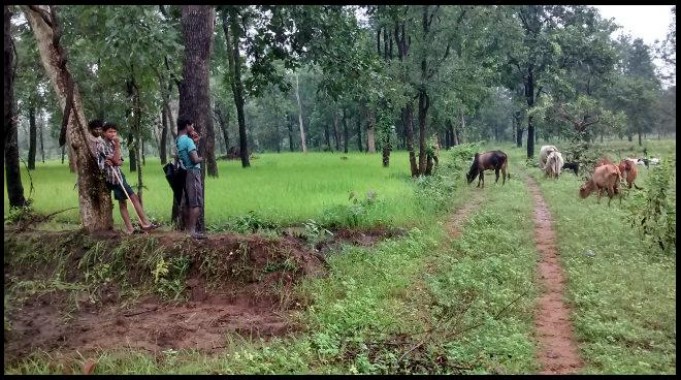
For local as well as national journalists, Nendra is far away. The district headquarters of Bijapur lies bang in the middle of 'affected territory' and that is also the point up to which a private vehicle will take you. From there on, unless you have your own vehicle, you must depend on a single bus that will take you 50 km inside, through the jungle. Once off the bus, it's another 5 km walk into the jungle, without a road beneath your feet.
Nendra had not seen a journalist till I and another fellow journalist happened to visit in September 2015. So great was the surprise of media-wallahs in the village that men who were working in the fields were called home. To us then, as now to the WSS fact-finding team members and officials in the collectorate and the police, the villagers narrated tales of beatings, torture and loot by the security forces during patrols. They narrated tales of women being chased through fields, their clothes torn, molested.
In a quiet clearing by the fields flush with paddy, they recalled rather casually how men in the patrol parties had been threatening them: 'Dekho hum tum logon ka kya kartein hain' (See what we do to you). Then, in September 2015, there were no allegations of rape.
A CRPF jawan at the last camp en route to Nendra had told us, a few hours before this conversation, that a road would be constructed through the forest, passing by Nendra, very soon. A new camp was to be constructed inside the jungle.
Road construction in fact seems to be the reason why the hostilities in Nendra increased between September 2015 and January 2016. The November 2015 FIR on rape by the security forces had also thrown up the road question. Then, defending his men against rape allegations, SP Bijapur K. L. Dhruw had told The Hindu: “An operation did take place in the area and a force of around 500 men was there. These boys ventured into that Maoist sensitive area as a road is to be built there.”
In any case, when the patrol party comprising men from CRPF and the district police arrived in Nendra on 11 January, the road was firmly on the agenda of the powers-that-be in the area. Sources said that most men fled the village into the jungle when the 'force' arrived that day. One of them, who had spent several years in jail on false charges only to be acquitted, managed to reach tribal activist and AAP leader Soni Sori a couple of days later: he pleaded with her for help, detailing the pillage by men from the forces in the village.
Sori informed the WSS team that was in the area in connection with another fact-finding exercise. By the time this team reached the village and heard the horror stories of the security forces running amok, plundering, looting, and raping, it was 17 January. By the next day, the team had managed to find eight rape survivors willing to come forward and register an official complaint.
Nendra in Basaguda block is the third instance in the last two months that survivors of rape by the security forces have come forward to lodge an official complaint. The WSS team had played an important part in the first instance too, in November 2015.
Everywhere, sexual violence
After visiting villages close to Peddagelur, Budgicheru and Gundam villages in the same Basaguda block, they brought out a report detailing rape, sexual violence and loot by the security forces. During that instance, over 40 women had come forward to register complaints of sexual violence. This was what resulted in the first FIR under the amended Section 376 in Bastar which provides for severe punishment for police and security forces convicted of rape.
The involvement of WSS and Soni Sori and their assistance to villagers has been crucial in the local media and some web outlets carrying news on the Bastar rapes. Yet, those WSS team members who are based in Bastar, such as academic Bela Bhatia and Soni Sori, have been facing increased pressure and threats from groups like Samajik Ekta Manch.
The attacks on Subramaniam and others who help ensure that human rights violations in Bastar are reported, confirms that, at its heart, the game centres on information and its availability. The routine recurrence of rape, sexual violence, abuse, beatings, torture and illegal detention by the 'forces' is as common in Bastar as concrete buildings in a city. Yet information about it cannot and must not go out of the conflict area.
In Bastar, you could walk into any village and people would tell you, in guarded conversations, about how things have been this way since the 'force' started visiting the area. People in Nendra would tell you how, over four days, the 'force' looted and consumed 175-200 chickens, local liquor, several goats, pigs, pigeons, vegetables, and rations stocked up in homes in preparation for the migration season.
Out here on our TV screens and newspapers, we only hear of the Editors' Guild issuing a statement condemning attacks on the press. Wouldn't it be worthwhile if one of the big guys at the Guild also pushed in a correspondent into this zone with all the required backing?
(The author is Principal Correspondent with The Statesman and a PhD scholar at the Centre for Studies in Social Sciences, Calcutta. He can be reached at aritra.bhattacharya@gmail.com via e-mail and @b_aritra on Twitter)
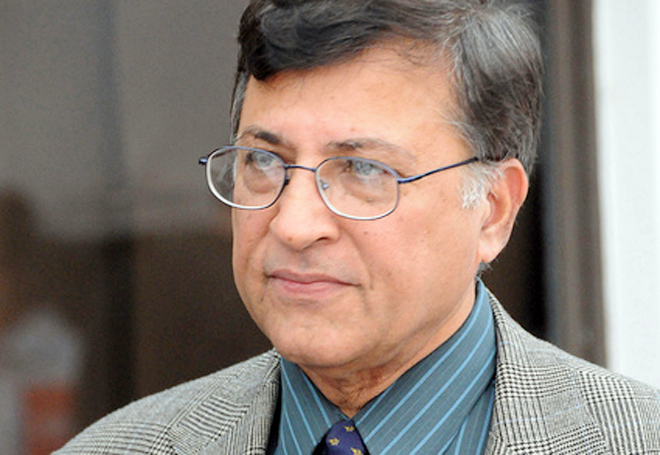 A tribute to the ethos at the university, not from Hafiz Saeed, but scientist, essayist and staunch secularist Pervez Hoodbhoy
.jpg)