Home Blog Page 2606

Explain termination of Dr Sandeep Pandey, High Court orders BHU

0


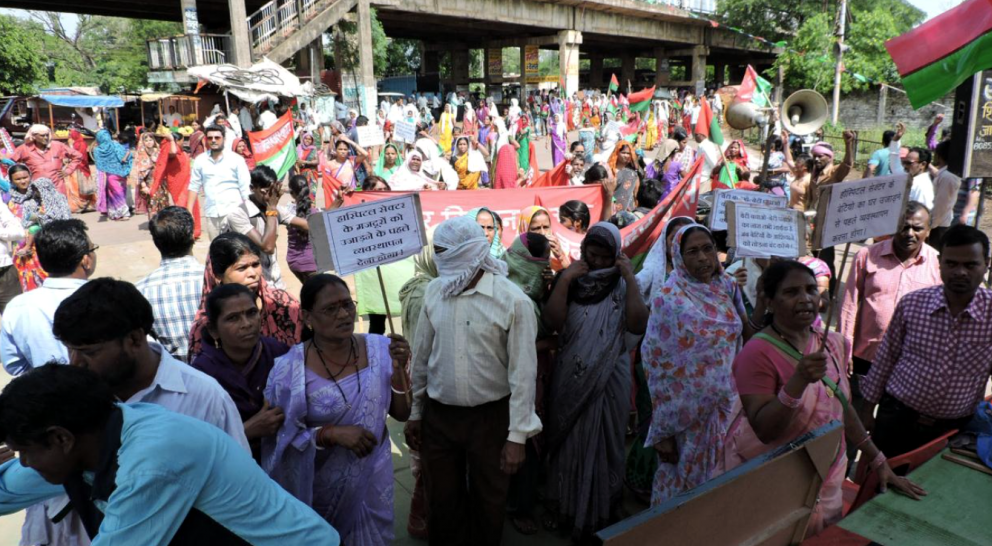
In a major setback to its summary and unilateral decision to terminate the services of renowned Gandhian, professor and Magsaysay award winner, Dr Sandeep Pandey on January 6, 2016, the Allahabad High Court has ordered the Banaras Hindu University (BHU) to explain the Board of Governor (BOG) decision that led to the termination.  
 
It was in pursuance of Resolution No 3.59 passed at the meeting of the Board of Governors held on December 21, 2015 that the decision to terminate the services was taken. The BOG, of the IIT BHU will now have to defend its resolution, which has been passed, casting stigma and making serious allegations against Dr Pandey. Dr Sandeep Pandey was called 'anti-national', without providing any opportunity for him to be heard, or giving him a chance to respond or explain. The BOG simply took cognisance of a letter from a student of M.A. IInd year Political Science (who never attended the IIT classes), even without taking any pains to verify the correctness of the allegations leveled. Dr Pandey was Visiting faculty at the IIT, BHU.
 
This action had drawn widespread condemnation across the country and was seen to be not just arbitrary but a manifestation of the machinations of the Rashtriya Swayamsevak Sangh (RSS) sway on the everyday functionings of the Ministry for Human Resources Development (MHRD).(See story below). The termination of the services of Dr. Sandeep Pandey as visiting faculty in the Department of Chemical Engineering, IIT BHU was challenged by him in Civil Misc. Writ Petition No. 5323 of 2016, Sandeep Pandey Vs. Union of India and others.
 
The matter was taken up before the High Court at Allahabad on Friday, February 5, 2016  before the bench consisting of Justices V.K. Shukla and  M.C. Tripathi. The High Court under its order has asked the counsel appearing for IIT BHU to seek instructions in the matter as to how he defends the termination order and has posted the matter for hearing on February 11, 2016. Advocate Rahul  Mishra, appeared for Dr Pandey and Ajeet Kumar Singh for IIT BHU.
 
Dr Pandey in his petition has argued that his removal is an open abuse of power on ideological and non-academic grounds and it has its roots somewhere else. Besides he has argued that
the Vice Chancellor-Professor G.C. Tripathi was appointed as the Chairman of IIT Board of Governors by the Ministry of HRD, Government of India, bypassing the panel of five names recommended by the resolution of the Board. Professor G.C. Tripathi and Dean of Faculty Affairs, IIT (BHU), Professor Dhananjay Pandey, both gentlemen are associated with RSS, who has primarily forced the decision.

-The decision taken by the Board for terminating the services of Dr Pandey sans any academic considerations and it is merely on account of conflict of ideologies and therefore if such a decision stands vindicated, it will surely pose a threat to the basic fundamental freedoms granted in the Indian Constitution.

-The decision of the Board at the instance of the Chairman is in fact a step further to saffronisation of the IIT (BHU) and the University and in our democratic state such an attempt which is aimed at suppressing the ideologies is required to be nipped in bud as otherwise it will have serious effects.

-The framers of our Constitution have given to us the fundamental right in the shape of freedoms as detailed in Article 19 of the Constitution of India, particularly freedom to speak under Article 19 (1) (a), which includes professing even different ideologies and State is prohibited from curbing such freedoms which are subject only to some reasonable restrictions (in the interest of sovereignty and integrity of India, the security of State, friendly relations with foreign States, public order, decency or morality or in relation to contempt of court, defamation or incitement to an offence) and the IIT (BHU) by means of the resolution and the consequent termination order has made a dent upon the freedoms guaranteed by the Constitution of India.   

-The BOG resolution and order under challenge in the petition, has nothing to do with the academic performance of Dr Sandeep Pandey and he has been simply punished by the dictates of the Chairman of the Board. The Board was guided in its decision with the complaint of Avinash Pandey which appears to have been procured, without any verification. The truthfulness of the contents of the complaint were not verified through any preliminary fact finding enquiry. It was a rushed and un-thought through decision. .

-The branding of Dr Pandey as anti-national under the opinion formed by the Board has very serious effects as he is being sought to be permanently non-suited for any appointment/ engagement by any academic institute and that too without any enquiry or opportunity for him to be heard.

-The resolution and termination order under challenge in the High Court, which is stigmatic and passed without affording opportunity to the petitioner, Dr Pandey, and without even any fact finding enquiry-(i) goes to infringe fundamental rights of the petitioner under Article 14, 16, 19 (1) (a) & 21 of the Constitution of India; (ii) is in complete violation of principles of natural justice & (iii) is wholly without jurisdiction because it was passed in the absence of any agenda on the board. 
 
See also
Intolerance Strikes, Sandeep Pandey is out of BHU
 
https://sabrangindia.in/article/intolerance-strikes-sandeep-pandey-out-bhu
 
RSS hardliners ensured the premature termination, says Pandey
 
My contract at the IIT, Banaras Hindu University (BHU) Varanasi as a visiting faculty has prematurely ended after teaching there for two-and-a-half years. This decision was prematurely taken by the Board of Governors (BOG). In a recent Board meeting the Vice Chancellor of BHU, who was made the Chairman of the IIT Board of Governors by the Minister of HRD, government of India, Smriti Irani, after by-passing the panel of five names recommended by a resolution of the Board of Governors. Thereafter, professor G.C. Tripathi, and Dean of Faculty Affairs, IIT, BHU and professor Dhananjay Pandey, both gentlemen associated with Rashtriya Swayamsevak Sangh (RSS), primarily forced the decision.

The charges levelled against me are that I am a Naxalite, showed a banned documentary on Nirbhaya case and am also involved in anti-national activities.

I wish to clarify that I'm not a Naxalite. The ideology that I would consider myself closest to is Gandhian.

But I do identify with the causes taken up by Naxalites even though I may not agree with their methods.

The banned documentary on Nirbhaya made by BBC was to be screened in my Development Studies class during the even semester of academic year 2014-15 but the decision was withdrawn after intervention of Chief Proctor of the BHU and officer of the Lanka Police Station just before the class. However, a discussion on the issue of violence against women in our society was conducted after screening a different documentary.

I do not believe in the idea of a nation or national boundaries, which I think are responsible for artificial divisions among human beings similar to the ones on the basis of caste or religion. Hence I cannot be anti or pro-nation. I am pro-people. I'm not a nationalist but am a universalist. I have no regrets as the decision to terminate my contract has not been taken based on my academic performance but it is because of my political views and activities. I've enjoyed my stay at IIT, BHU and wish the Institute and the University the best.
 
(Sandeep Pandey, a Magsaysay awardee for emergent leadership has trained in Mechanical Engineering but has been working on social justice issues; he is co-founder of Aasha)
 

Why Ambedkar rejected, outright Gandhi’s views on Temple entry

0


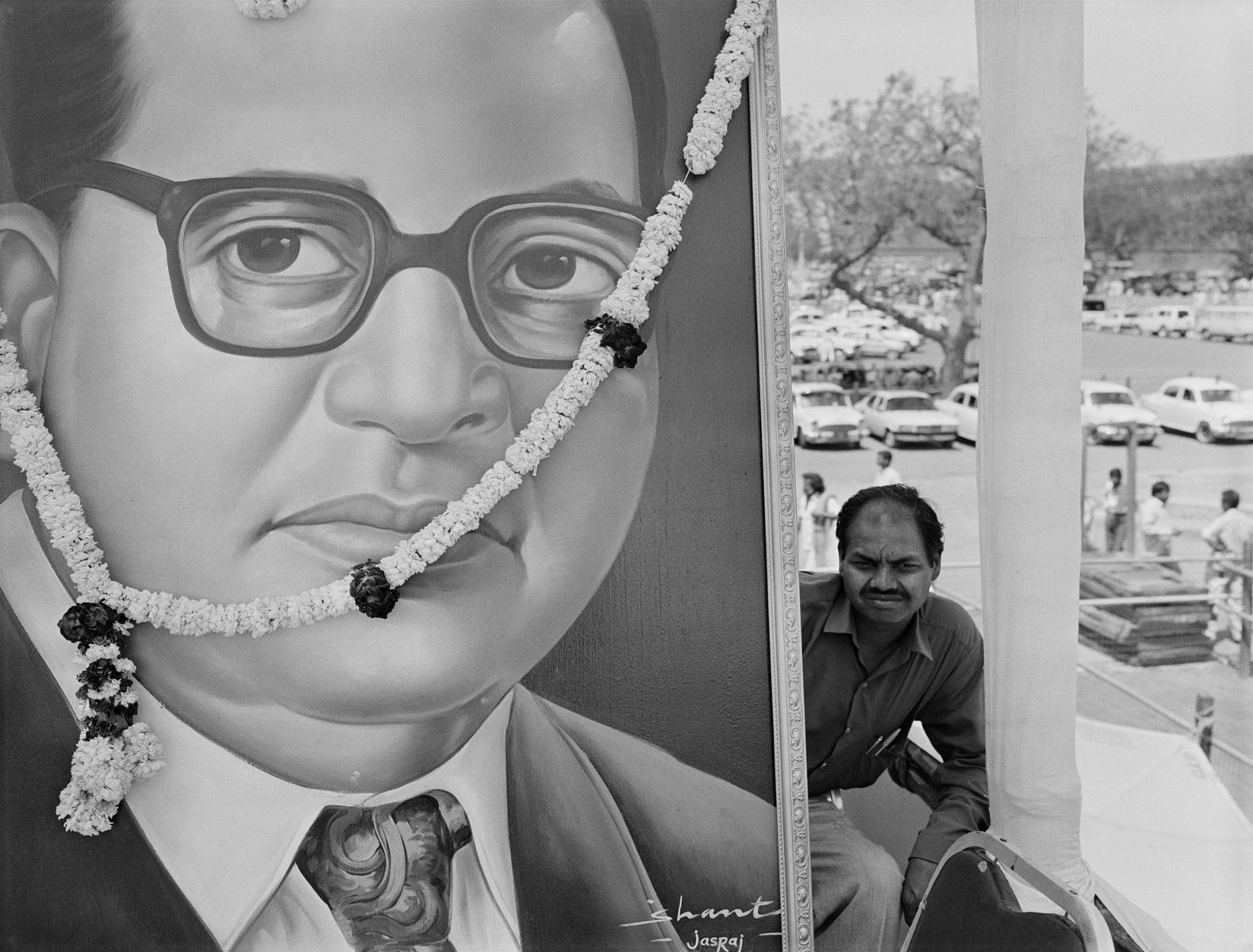
Image: Ram Rahman

Gandhi’s refusal to accept that caste was at the core of both inequality and untouchability within Hinduism lay at the heart of their difference

At a historic meeting that marked 83 years ago yesterday, February 4, Ambedkar and Gandhi met at the Yeravada prison in 1933.

Gandhi requested Dr. Ambedkar to lend his support to Dr. Subbarayan’s Temple entry Bill and that of Ranga Iyer. Dr. Ambedkar declined in person. Ten days later, he issued a statement on February 14, 1933. He outlined the impracticability of the bill, crticised it for not making Untouchability illegal and outlined why he would not prefer just temple entry.

Ambedkar in his own detailed arguments, on why he did not support Gandhi on Temple Entry

The main question is: Do the Depressed Classes desire Temple Entry or do they not? This main question is viewed by the Depressed Classes by two points of view. One is the materialistic point of view. Starting from it, the Depressed Classes think that the surest way of elevation lies in education, higher employment and better ways of earning a living. Once they become well placed in the scale of social life, they would become respectable the religious outlook of the orthodox towards them is sure to undergo change, and even if it didn’t happen, it can do no injury to their material interest. Proceeding on these lines the Depressed Classes say that they will not spend their resources on such an empty things as Temple Entry. There is another reason why they do not care to fight for it. Their argument is the argument of self-respect.

Not very long ago there used to be boards on club doors and other social resorts maintained by Europeans in India, which said “Dogs and Indians” are not allowed. The temples of Hindus carry similar boards today; the only difference is that the boards on the Hindu temples practically say: “All Hindus and all animals including gods are admitted; only Untouchables are not admitted”. The situation in both cases is of parity. But Hindus never begged for admission in those places form which the Europeans in their arrogance had excluded them.

Why should an Untouchable beg for admission in a place from which he has been excluded by the the arrogance of the Hindus? This is the reason of the Depressed Class man who is interested in material welfare. He is prepared to say the Hindus, “to open or not to open your temples is a question for you to consider and not for me to agitate. If you think, it is bad manners not to respect the sacredness of human personality, open your temple and be a gentleman. If you rather be a Hindu than a gentleman, then shut the doors and damn yourself for I don’t care to come.”

What is the drive behind this offer of temple entry ? Is temple entry to be the final goal of the advancement in the social status of the Depressed Classes in the Hindu fold? Or is it only the first step and if it is the first step, what is the ultimate goal? Temple entry as a final goal, the Depressed Classes can never support.

I found it necessary to put the argument in this form, because I want to disabuse the minds of men like Pandit Madan Mohan Malaviya of their belief that the Depressed Classes are looking forward for their patronage.

The second point of view is the spiritual one. As religiously minded people, do the Depressed Classes desire temple entry or do they not? That is the question. From the spiritual point of view, they are not indifferent to temple entry as they would be, if the material point of view alone were to prevail. But their final answer must depend upon the reply which Mahatma Gandhi and the Hindus give to the questions namely: What is the drive behind this offer of temple entry? Is temple entry to be the final goal of the advancement in the social status of the Depressed Classes in the Hindu fold? Or is it only the first step and if it is the first step, what is the ultimate goal? Temple entry as a final goal, the Depressed Classes can never support.

Indeed they will not only reject it, but they would then regard themselves rejected by Hindu Society and free to find their own destiny elsewhere. On the other hand, if is only to be a first step they may be inclined to support it. The position would then be analogous to what is happening in India today. All Indians have claimed dominion status for India. The actual constitution will fall short of Dominion status and many Indians will accept it. Why? The answer is that as the goal is defined, it does not matter much if it is to be reached by steps and not in one jump. But if the British had not accepted the goal of Dominion status, no one would have accepted the partial reforms which many are now willing to accept.

In the same way, if Mahatma Gandhi and the reformers were to proclaim what the goal which they have set before themselves is for the advancement of the social status of the Depressed Classes in the Hindu fold, it would be easier for the Depressed Classes to define their attitude towards Temple entry.

The goal of the Depressed Classes might as well be stated here for the information and consideration of all concerned. What the Depressed Classes want is a religion, which will give them equality of social status. To prevent any misunderstanding, I would like to elaborate the point by drawing a distinction between social evils are which are the result of secular causes and social evils which are founded upon doctrine of religion. Social evils can have no justification whatsoever in a civilised society. But nothing can be more odious and vile than that admitted social evils should be sought to be justified on the ground of religion. The Depressed Classes may not be able to overthrow inequalities to which they are being subjected. But they have made up their mind not to tolerate a religion that will lend its support to the continuance of these inequalities.

The Depressed Classes can say that they are Hindus only if the theory of Chaturvarna and Caste system is abandoned and expunged from the Hindu shastras. Do the Mahatma and the Hindu reformers accept this as their goal and will they show the courage to work for it?

If the Hindu religion is to be their religion, then it must become a religion of Social Equality. The mere amendment of Hindu religious code by the mere inclusion in it of a provision to permit temple entry for all, cannot make it a religion of equality of social status. All that it can do is to recognize as nationals not aliens, if I may use the common terms which have become so familiar in politics. But that cannot mean that they would thereby reach a position where they would be free and equal. , without being above and below anyone else, for the simple reason that the Hindu religion does not recognise the principle of equality of social status : on the other hand it fosters inequality by insisting upon grading people as Brahmins, Kshatrias, Vaishyas and Shudras, which now stand toward one another in an ascending scale of hatred and descending scale of contempt.

If the Hindu Religion is to be a religion of social equality then an amendment of its code to provide temple entry is not enough. What is required is to purge it of the doctrine of chaturvarna. That is the root cause of all inequality and also the parent of the Caste system and Untouchability, which are merely forms of inequality. Unless it is done not only will the Depressed Classes reject the temple entry, they will also reject the Hindu faith. Chaturvarna and the Caste system are incompatible with the self-respect of the Depressed Classes. So long as they stand to be its cardinal doctrine, the depressed classes must continue to be looked upon as low.

The Depressed Classes can say that they are Hindus only if the theory of Chaturvarna and Caste system is abandoned and expunged from the Hindu shastras. Do the Mahatma and the Hindu reformers accept this as their goal and will they show the courage to work for it? I shall look forward to their pronouncements on this issue, before I decide upon my final attitude. But whether Mahatma Gandhi and the Hindus are prepared for this or not, let it be known once and for all that nothing short of this will satisfy the Depressed Classes and make them accept temple entry. To accept temple entry and be content with it, is to temporise with evil and barter away the sacredness of human personality that dwells in them.

There is, however, one more argument which Mahatma Gandhi and the reforming Hindu may advance against the position I have taken. They may say: “acceptance by the Depressed Classes of Temple entry now, will not prevent them from agitating hereafter for the abolition of Chaturvarna and Caste. If that is the view, I like to meet the argument right at this stage so as to clinch the issue and clear the road for future developments. My reply is that it is true that my right to agitate for the abolition of Chaturvarna and Caste system will not be lost, if I accept Temple entry now. But the question is on what side will Mahatma Gandhi be when the question is put. If he will be in the camp of my opponents, I must tell him I can’t be in his camp now. If he will be in my camp he ought to be in it now.

(Almost all the Depressed Classes leaders of Dr. Ambedkar’s persuasions, endorsed the view of their leader. Srinivasan, Permtai and Malik upheld views of their leader.

Gandhi issued a statement in reply in which he stated : “I am a Hindu, not merely because I am born in the Hindu fold, but I am one by conviction and choice. There is no superiority or inferiority in Hinduism of my conception. But when Dr. Ambedkar wants to fight Varnashram itself, I cannot be in his camp, because I believe Varnashram to be an integral part of Hinduism. )

(Source: SECTION- IV Kalaram Temple entry Satryagraha, Nasik and Temple entry movement, Volume-XVII. Dr. Babasaheb Ambedkar Writing and Speeches)