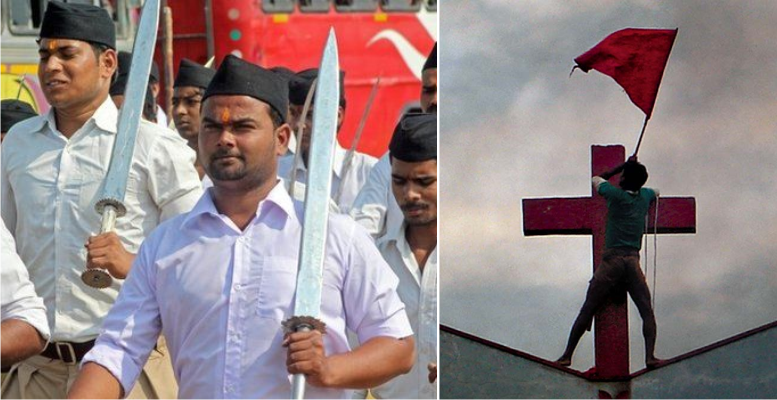
Dalit and Adivasi write to the Liason officer, Indian Institute of Mass Communication, New Delhi urging action
Dalit Students of the Indian Instiute of Mass Communication, New Delhi have registered strong outrage and protest against fellow students who have allegedly launched an especially vicious hate and abusive campaign against them on social media. In a written communication dated February 1, 2016 they have requested sensitisation classes to avoid spreading “ill will” against students belonging to Scheduled caste and Scheduled Tribe community on the Campus failing which they would be compelled to take legal action.
It is shocking that this sort of abuse has been resorted to by an Institute that will produce tomorrow’s journalists, television honchos, advertisement and public relations personnel apart from film makers!
The communication has been addressed to the Liason Officer, SC/ST Cell of the Institute.
The post on social media platform – Facebook on the January 18, 2016, “is derogatory and demeaning to the SC and ST students studying in IIMC. It clearly promotes ill will and hurts sentiments of the undersigned students.” There are, on paper, statutory safeguards under the Prevention of Atrocities Act.
Students have attached screen shots of their comments on the post which are reproduced below. The usage of Hindi words such as “Randi Rona” by the alleged offenders, shows contempt for the solidarity shown to a brother Dalit student, Malai Khana” on the matter of affirmative action towards social justice and the promotion of equity etc. And these are only some examples of the kind of statements which make the students feel that they are being look down upon.
Sabrangindia is in possession of a copy of the complaint. Dalit and Adivasi students have said that they do not want any punitive action “except a public apology and undertaking against the person writing or spreading such messages.” The follow up letter urges that,” we would beg to request a slot in the academic timetable to be allocated for sensitizing of all the students by experts in the field of Caste/Tribe reality and affirmative action, to promote amicability and inclusivity on campus. This initiative would make us feel human and dignified.”
Copies of the complaint have been also been addressed to Sunil Arora, IAS, Chairman, IIMC, Anurag Mishra, IIS, OSD, IIMC, All Dept. Heads and Course Coordinators , Ministry of Social Justice, Govt of India and the Ministry of Tribal Affairs, Govt of India.
In a follow-up communication the students have also appreciated the positive response from the authorities. Students have further drawn attention to certain incidents that have occurred on campus aggravating discontent amidst the Dalit and Adivasi student post the petition filing. These are:
Case 1: Social media are now flooded with hashtags (#) of supporting the perpetrator and they say abusing and derogatory remarks made are freedom of speech and expression. (Annexure 1)
Case 2: In the campus there is an air of worry that one course is instrumental in trying to raise voice against the issue and it is juvenile on the part of that specific course. (Annexure 2)
Case 3: Comments are being passed and remarks made loud when the students pass through the corridors in the college and hostels.
Students have urged proactive action by the faculty to ensure harmony and amicability on campus failing which they would be forced to take legal recourse against their will. Dalit and Adivasi students are simply not able to focus on their studies.
The return of Pandits to the Valley has been a sordid saga of ill-conceived plans and mischief informed by a trust deficit
Last week, January 25, when the announcement of the Padma Bhushan award to the former Jammu and Kashmir governor Jagmohan was made, there were notes of both jubilation and criticism from the two major communities of Kashmir. Both these communities view his role in the flight of the Kashmiri Pandits(KPs) after militancy erupted in the Valley and the massacres of Kashmiri Muslims, in striking contrast.
The narratives are so far apart that, to date even the figures of the Pandits killed in Valley during the years of militancy and those who were displaced remain strongly contested. Official figures suggest 219 Pandits were killed and about 50,000 Kashmiris are registered as displaced families.[1] These also include some Kashmiri Muslims and non-Kashmiri speaking Hindus. However, Hindutva-driven right wing groups among the Kashmiri Pandits talk about thousands being killed and put the size of the displaced community to anything between 5 to 7,00,000. Incidentally, this number is far higher than the total population of Pandits, according to the 1981 census. [2]
A more realistic figure of the number of slain Pandits is offered by the Kashmiri Pandit Sangarsh Samiti (KPSS)—a non-migrant KP organization. The KPSS president Sanjay Tickoo, who claims to have documented all cases of Kashmiri Pandit killings since 1989 maintains that 670 Pandits have been killed in Kashmir in militancy related violence. Tickoo also deflates the theory of “holocaust day” observed by some right wing Pandit groups on January 19 when their flight from the Valley began, maintaining that only 6 Pandits were killed in 1989. “We oppose observing January 19 as ‘Holocaust/ Exodus Day’ as we stayed put in Kashmir and faced tough times along with our Muslim brethren and the day has no meaning for us,” he said in a recent interview to a newspaper. [3]
Two and a half decades after militancy began and Kashmiri Pandits fled en masse due to fear from the Valley, the events viewed from these exclusivist and coloured prisms have failed to reconcile the narratives of Kashmiri Muslims and Hindus. The greater tragedy is that it is the bitter narratives, though by no means in a majority, that have been louder and dominating. This manufactured and dominant minority voice creates barriers and totally fails in any attempt to build bridges between the two communities. Neither does it facilitate any enabling plan for the return and rehabilitation of Kashmiri Pandits who have been displaced. Many of those displaced live a sorry life in camps getting a meagre cash relief of Rs 2500 per head per month.
The return of those displaced Kashmiris, suffering for over two decades in camps or even those living in plush houses cut off from their roots, has been jinxed by many factors – the serious trust deficit between the two communities, the lack of political will and ill-conceived and poorly implemented packages. Added to this, is the vulnerability of the Kashmiris to right wing politics and petty politicking of political forces out to exploit their plight which has further closed the doors on their return.
The displacement of this minuscule population from the Kashmir Valley has hugely impacted on the social and economic fabric of the entire state. The importance of bringing back Pandits to their homes minus the ugly demand of a separate homeland or the impractical option of fully secluded safe zones cannot be underscored. The Pandits have suffered from both an identity crisis and also other factors caused by displacement –and this includes socio-economic exclusion — and thus need to return to their roots. This homecoming is as important for Kashmiri Muslims, who too have suffered a great deal with the total erosion of the Kashmiri plural culture, added to their lived trauma of experiencing an everyday gun culture and a huge rise in the graph of human rights violations.
A small and negligible population of Pandits do continue, even today, to live in the Valley but a majority of Kashmiri Muslims do not even get to interact with them. A new generation of Kashmiris in and outside the Valley, born in the last two decades, is therefore totally oblivious of their existence and in absolute ignorance of a plural culture as a way of life. Such a plurality is vital for any civilization to escape the web of stagnation.
To date, there has been no real political will to bring back displaced Pandits to the Valley, either from the governments at the State or Centre. The last decade or so has seen introduction of a slew of hurriedly thrashed out rehabilitation and return plans, none of which have been effectively implemented on ground.
One reasonable exercise was started by the UPA-II government at the Centre with the creation of Committee for Action Plan for Return and Rehabilitation of Kashmiri Migrants, in which several members from both communities were involved in a consultation process with the government. However, the Committee became the victim of usual official boredom and procrastination among policy makers. No serious effort was put in after the first few rounds of meetings. Corresponding to this move, the government announced 3000 jobs for displaced Kashmiris willing to return as part of the Prime Minister’s package in 2011. The scheme has not been effective because of the poor and shabby arrangements in flats reserved for the beneficiaries of the scheme. The flats are inadequate, in terms of quality and quantity. 723 flats for transit accommodation had been constructed at various locations in the Kashmir valley which were then being utilised for accommodating migrant employees.
The1981 census put the population of Pandits to less than 1.25 lakh (1,23, 828). According to 1941 census, the Kashmiri Pandit population was 76,868 as against the Muslim population of over 17 lakh. (quoted by Kulbhushan Warikhoo in his book Cultural Heritage of Kashmiri Pandits, page 339)
Under the recent plan for Kashmiri migrants, and as part of the Prime Minister’s Rs 80,000 crore package for Jammu and Kashmir, the construction of 6000 additional units for transit accommodation in the Kashmir valley for migrants to whom state government jobs had been provided was also approved. The accommodation for these employees is scattered across the Valley – Vessu Qazigund, Sheikhpora (Budgam), Hawal (Pulwama), Khanpora (Baramulla), Nutnussa (Kupwara) and Mattan, (Anantnag).
As part of this fresh package, 3000 additional jobs have also been approved. However, what is not much talked about is the fact that the 3000 posts created through the earlier package, have yet to be filled in.
These 3000 posts had been created within various government departments in 2011 for providing employment to Kashmiri migrant youth, who were interested in serving in the valley. Out of 2184 selections made by the recruiting agencies, 1446 candidates have so far already joined various departments. Of the remaining 1554 vacancies, 1443 posts had been referred to the Jammu and Kashmir Services Selection Board (JKSSB) and 111 Class-IV posts to the Relief Organization (M) in 2012. JKSSB had since issued a select list of 430 candidates while the Relief Organization issued a select list of 87 candidates against the 111 Class-IV posts referred to them.
The return policy is ineffective due to several reasons. The main one being that there are few takers for the job opportunities being created. The package has come too late in the day. Many youth among displaced Kashmiri Pandits families, including some still living in camps in Jammu, Udhampur and Delhi, have already dispersed to other parts of the country and joined a world outside of Kashmir –be it in education or employment — many of them are well settled and not keen to return. Secondly, the reports of beneficiaries of the employment package reeling under neglect and poor living conditions has further discouraged others to embark on this adventure. Thirdly, a feeling of insecurity exacerbated by suspicions of Muslims continues to exist.
This trust deficit, instead of being bridged, has widened ever since the BJP took over the reins of power in New Delhi and later also entered into an alliance with PDP to rule in Jammu and Kashmir. Last year, the present government under prime minister Narendra Modi, announced cluster colonies and separate safe townships for Kashmiri Pandits. The announcement was met with stiff resistance in the Valley because it invoked fears among the Muslims of the BJP pursuing a saffron agenda.
The fears were enhanced as the announcement came in the backdrop of similar reports in the media, quoting union home ministry sources. No official then made any clarification about such reports that played a huge role in arousing misgiving and suspicions and created perceptions among moderates in both communities that such policy further damages the sanctity of secular and plural traditions of Jammu and Kashmir, the Kashmir Valley in particular. The media reports defined the broad elements of the policy as creating three separate cities within the Valley for Kashmiri Pandits and of further extending its benefits to all refugees by obliterating the difference between the refugees from Pakistan Administered Kashmir, who are state subjects of Jammu and Kashmir, and the West Pakistan refugees, who are historically not residents of the state. If this proposal was ever conceived or existed in the minds of Delhi’s policy makers, it is one laced with not just ambiguity but by blatant mischief.
This brand of mischief finds continuity within the overall narrative within which the official word is missing or wanting. In more recent times, Kashmiri Pandit leaders with right wing leanings (the latest to join the bandwagon is Bollywood actor Anupam Kher)[4] have begun to link the revocation of Article 370 with the return of Kashmiri Pandits. Such voices inspire fears of the BJP trying to fulfill its Hindutva agenda of artificially changing the demography of the only Muslim majority state in the country.
The return of the Pandits is an essential, though not the only component, to conflict resolution in Kashmir. Official plans and packages will always have their limitations. The exodus of the Pandits from the Valley happened within the general feeling of mistrust between communities and ultimately created even more mistrust, fuelled by right wing elements on both sides, including hawks within the government. Therefore, any policy for return and rehabilitation requires a more comprehensive policy of facilitating and laying the ground work for building bridges for which communities need to be involved, not turned antagonistic to each other through confusions, whisper campaigns and unverified media reports.
It would be important to revive the UPA government’s half-hearted attempt to involve communities and all stake holders through the creation of a Committee for Action Plan for Return and Rehabilitation of Kashmiri Migrants. The present union government, if it is sincere about the return of the Pandits to the Valley, could do well to pick up the threads from where this last official attempt was left off, because any plan of return and rehabilitation rooted in a policy of segregation would ultimately breed more malice, animosity, mistrust and othering, especially if it was imposed from above without the involvement of all communities.
It is also important to make a real beginning by preserving the vital link between the two communities who remain in Kashmir — the Pandits who refused to flee in the face of all odds and Kashmiri Muslims. Protecting them and their interests can effectively aid the process of building bridges. Sight cannot be lost of the fact that the valley Pandits are reeling under a deep fear psychosis, far greater than the Muslims of the Valley by virtue of there being a minute, negligible minority. They are also suffering due to acute economic distress stemming from years of neglect. This is where the government needs to step in.
While, the lure of jobs and building flats can be good inducements to bring back the Pandits, their stay can sustain only with a re-doubled, genuine community level effort, for which the government ought to play the role of facilitator, not aggravtor. The active involvement of the communities in any return plan will ensure the necessary opinion building which will in turn create a more conducive, amicable and welcoming atmosphere for not just the Pandits but all other minorities.
In any normal situation, where the trust deficit between communities has been seriously damaged, the onus of restoring confidence apart from the government lies with the majority community. However, the majority community of the Valley battered and shattered by the conflict, is today extremely powerless. The Kashmiri Muslims themselves live amid a stifling atmosphere of excessive militarization and it would not be easy for the Muslims to play the normal role of pro-active engagement, without genuine efforts made by officialdom. Despite and inspite of their plight, however, Kashmiri Muslims ought to rise to the occasion and show the magnanimity of accepting Pandits warmly, irrespective of what their ideologies are. Pandits have been and continue to be a part and parcel of Kashmiri society.
The Pandits willing to return would also need to keep these limitations of local Muslims in mind, rather than being hamstrung with their own victimhood. They have suffered immensely but they are not the only sufferers. The two communities need to come together on an equal footing, start at the minimal level of trust and build on from there, not view each other within the equation of perpetrator and victim, as some hardliner right wing KPs are trying to do. Such ‘othering’ and demonising of an entire community is a dangerous position to begin from. Breaking out of the miasma requires both commitment and vision.
A community level participation is the most vital component of any return plan. Such genuine participation should highlight the need for continuing dialogue(s) at the community level, would require initiatives to move out of conference halls into the homes of people. The good thing is that many people at an individual level have maintained that contact. Besides, many Kashmiri Pandits, Sikhs and non-Kashmiri speaking Hindus have continued to live in Kashmir through the years of conflict. So, all that is required is the significant move of building further, multiplying in a sense the contact between the two major communities. This will then ensure that this dialogue percolates down from one generation to another – with greater focus on the generation that has grown up oblivious to each other’s existence. That is where the key to any return of the Kashmiri Pandit lies.
[1] 60,452 Kashmiri migrant families are officially registered in different parts of the country, of which about 38,119 registered Kashmiri migrant families are residing in Jammu
[2] The1981 census put the population of Pandits to less than 1.25 lakh (1,23, 828). According to 1941 census, the Kashmiri Pandit population was 76,868 as against the Muslim population of over 17 lakh. (quoted by Kulbhushan Warikhoo in his book Cultural Heritage of Kashmiri Pandits, page 339)
[4] This year, January 19, 2016, Kher was on sections of national television in a ‘documentary’ that showed the plight of Pandits, albeit exaggeratedly; days later he was recipient of the Padma Bhushan award along with Jagmohan
The Russian scientists wanted to determine the state of mind of the Chinese leader by looking for chemicals in the excrement they believed were linked to certain behaviour and traits
“I am here to do more than eat and shit,” an irate Mao ZeDong shouted during his only meeting with Josef Stalin in Moscow, having been kept waiting for days. This was Stalin’s attempt to show him who was the real boss. Yet it transpires that he was far more interested in Mao’s inner workings than he let on.
According to recent reports, former Soviet agent Ivor Atamanenko claims Stalin had ordered Mao to be fed well during his ten days of closely supervised “hospitality”. Mao was also asked to use a special toilet, where his excrement was collected daily and sent to a secret lab for analysis. The Russian scientists wanted to determine the state of mind of the Chinese leader by looking for chemicals in the excrement they believed were linked to certain behaviour and traits. It may sound completely crazy but the anecdote does raise a valid question. How much can you tell about someone’s mental state from the chemicals in their poo? Let’s take a look at the science.
Dubious research The researchers, tasked with analysing stool samples from a number of foreign leaders, believed that high levels of brain chemicals such as the amino acid tryptophan were a sign of someone likely to be calm and easy to deal with. If levels were low, however, it would mean the opposite. The also believe a lack of potassium in poo was a sign that somebody was nervous and suffering from insomnia.
We don’t know Mao’s actual results or even how accurately they could measure the chemicals. Many fields of science in Russia during Stalin’s time were in many fields caught up in the dogmatic political struggles of the era.
Stalin had, for ideological reasons, banned classical genetics as it was based on what he regarded as tainted Western Darwinian views. Instead, he encouraged alternative theories – for example, his favourite scientist Trofim Lysenko used Lamarckism to argue that grain yields could be trebled simply by burying seeds in cold ground. He faked huge experiments for years until the truth became too embarrassing to tell. Millions starved and the Soviet union grain supply suffered terribly.
For that reason, it was quite unlikely that tryptophan could be measured accurately enough in 1949 to detect subtle changes. The trusted secret police fixer Lavrentiy Beria, who was in charge of the project, would probably have given Stalin the results he wanted to hear. Failure was not a good career move.
Gut microbes versus DNA So was it all just pseudoscience? Actually, while potassium is unlikely to say much about our personalities, tryptophan is more useful. It comes from the proteins in our diet and is the source of key brain chemicals produced in our intestines. These include melatonin (responsible for regulating sleep and abnormal in many anxiety states) and serotonin (associated with a variety of mental conditions such as depression but also appetite). Having good levels of tryptophan in our stool samples is probably a sign of good health and ironically gives our waste product its nasty smell. However the interplay of these gut chemicals with the brain (our gut-brain axis) is much more complex than we imagined.
Serotonin has recently been linked to our gut contents in mysterious ways. The 100 trillion microbes in our colon produce at least a third of all our bodies’ chemicals and many vitamins. The gut microbes in our large intestine are responsible for maintaining most of our serotonin supplies, which influence our mood. Anxiety and stress in lab animals lead to changes in the numbers and types of gut microbes and alter the chemicals they produce. When pellets of poo are taken from these animals and transferred to the sterile guts of normal mice they become anxious and stressed. This means that anxiety can truly be infectious.
In humans, thousands of different microbe species can be now rapidly identified by DNA techniques just by swabbing a bit of toilet paper. Tests are showing that we all have a unique microbial fingerprint that consistently identifies us throughout life. On average we share less than 20% of our common microbes with other people compared to sharing 99.9% of our DNA.
Small human studies have shown major abnormalities in microbe populations with people with chronic pain, depression and autism compared to normal controls. While disruption to our microbes could be partly due to the stress of the disease it suggests they could also be contributing. Studies using probiotics to change microbes and the chemicals they produce to improve mental symptoms have been very successful in lab animals, and in a few human studies, like a recent pilot improving exam stress in Japanese medical students.
It may seem unlikely, but current analyses of thousands of poo samples from different populations are showing that even with our crude understanding, the ability to predict a common disease like obesity, diabetes, autoimmune disease or accelerated ageing from a stool examination is orders of magnitude better than with DNA testing.
Maybe Stalin’s experiment wasn’t so crazy after all – and if we had Mao’s poo sample today we could learn a lot more about him. World leaders should take greater care of their excrement – it could fall into the wrong hands.
Two kilograms of daal per household per month must be provided to every household for the drought-affected period by the Central/State governments as daal is a principle source of high and yet daal consumption has been reducing and is worse in this drought affected year that has severely impacted on hunger. The Tamil Nadu pattern of distributing daal at Rs 30 per kilogram is a feasible one.
Besides, eggs (or milk) need to be urgently provided within the Mid-Day Meal Schemes to school going children especially in drought-affected areas. Where milk is in short supply one egg per child is mandatory. These are some among a list of critical suggestions made by the Swaraj Abhiyan in its Written Arguments filed before the Supreme Cort today, January 29. The Abhiyan had filed a detailed petition before the supreme court praying for an enforcement of the National Food security Act, Mahatma Gandhi National Rural Employment Guarantee Scheme (MNREGA) especially in drought affected areas of the country. The petition and the written arguments can be read here. Senior advocate Prashant Bhushan and academic-activist Yogendra Yadav have formed and led the Swaraj Abhiyan.
Twelve states in the country including Uttar Pradesh, Madhya Pradesh, Karnataka, Andhra Pradesh, Telangana, Maharashtra, Gujarat, Jharkhand, Bihar, Haryana, Chhattisgarh and Odisha are drought affected; however while all these declared their states as drought-affected between September and October 2015, the notable exceptions were Gujarat, Bihar and Haryana.
The Swaraj Abhiyan conducted an intense survey of Bundelkhand district in October 2015 and thereafter filed a petition asking for judicial directives for government schemes to be implemented forthwith to stem the acute distress prevalent in rural India. The petition was heard on January 4 and 22, 2016. The nest hearing of the petition is on February 1, 2016.
The petition and the written notes both make a strong plea for the Manual for Drought Management to be followed by the Government for managing water resources in the drought-affected areas including policy for use of reservoir storage, repair and augmentation of all existing water supply schemes and other emergency measures for supply of drinking water
In its petition, the Swaraj Abhiyan has relied on data collected by the Samvedana Yatra across nine states between October 2 to 15, 2016 to assess the ground situation resulting from the drought and also conducted an independent survey in 108 representative villages in the severely affected Budelkhand region of Uttar Pradesh which shows alarming figures: 39% families had not consumed dal even once in the last 30 days, 60% had not consumed any milk and 14% admitted going to bed hungry at least once during this period; 40% families had to resort to distress sale of their cattle, 24% had to mortgage or sell their land and 79% had to eat roti or rice with just salt of chutney at some point since the crop failure around Holi this year.
The Swaraj Abhiyan, in its petition, claims that this has been confirmed subsequently by various media reports, and that though it had addressed letters to Chief Ministers of various states to request urgent action on drought relief, they have failed to redress the misery of this vast population, they have even failed to properly implement the existing schemes that could have provided support during this period of distress. Swaraj Abhiyan has also stated in its writ petition that except for 2 states no other states have implemented the National Food Security Act, resulting in the failure to provide adequate food grains through the Public Distribution System at this hour of crisis.
In its petition, the response of the Centre and states have been described as ineffective and sluggish: “The total number of person days employment generated under the Mahatma Gandhi National Rural Employment Generation Scheme has actually gone down during this drought period, when it was needed most. States have not followed the relief work required under their own drought manual. Not a single state has as yet paid any relief or compensation for Kharif crop loss; most of the respective governments have failed to fully pay for the crop losses during previous Rabi crops; insurance schemes have benefitted only a tiny fraction. State governments do not have adequate funds to handle this disaster and the Government of India does not follow any transparent method to provide funds for this purpose.”
While the fact of drought is admitted by the Union of India and various states and that eight states have already officially declared a state of drought, the states of Bihar, Gujarat and Haryana have not yet declared a drought despite recording rainfall deficit of 28%, 14% and 38% respectively, states the petition. Slamming the states for their weak, ineffective and tardy response towards alleviating the conditions of drought affected citizens, the petitioner has made the startling claim that no government has provided any compensation or relief to the farmers for crop loss during this drought. The Swaraj Abhiyan has charged the states of being highly negligent in performing their obligations and accused them of causing enormous damage to the lives of the people due to their inaction.
The petitioner has claimed that though the states are bound to give open handed employment of 150 days at the legal minimum wage for all willing to avail in the drought affected areas in accordance with the standard laid down by the respondents themselves under the MGNREG Act, 2005, they have failed to provide the same. Further, Swaraj Abhiyan, in its PIL has stated that the States have failed to implement the National Food Security Act, 2013 whose very purpose is to provide food security means and make available sufficient food-grains to meet the domestic at affordable prices.
The Abhiyan has asserted that the negligence on the part of the Central Government and the State governments amounts to a contravention of the rights of citizens guaranteed under Articles 21 and 14 of the Constitution of India, and it has also charged the states with having abdicated their constitutional obligation under Article 21 of the Constitution of India which makes it mandatory for the Respondents to ensure the right to life of the citizens which includes the right to live with dignity with at least two square meals a day.
The petition seeks the intervention of the Supreme Court in such dire circumstances to alleviate the conditions of the drought affected people, the Swaraj Abhiyan has inter alia, sought for directions to the Centre and the 11 states arrayed as the respondents in the writ petition to : (i) declare a drought in their respective states and provide immediate essential relief and compensation to their people to tackle the present natural calamity; (ii) provide adequate and timely compensation for crop loss and input subsidy for the next crop to the farmers affected by drought; (iii) immediately make available and make timely payment for employment of 150 days under the MGNREG Act to the drought affected people, and (iv) immediately make available food-grains as specified under National Food Security Act, 2013 to all the rural people in drought affected areas irrespective of any classification such as APL/BPL; (v) restructure crop loans for damaged crops and other debts of farmers in the drought affected areas; (vi) to formulate uniform standard rules for the purpose of declaration of drought; and (vii) fix fair, objective and transparent package for crop loss compensation.
On the first date of hearing of the matter on January 4, 2016, the Supreme Court asked the Centre to collate data on the various social security schemes being implemented in the 12 drought-affected states. The court asked states to assist the Centre in doing so. The court asked the Centre to collate data on deficit rainfall, implementation of National Food Security Act, midday meal scheme and the Rural Employment Guarantee Act. The petition has sought timely disbursement of crop loans, drought compensation, help in procurement of subsidized cattle fodder and formulating an integrated water policy.
Meanwhile, the ongoing Right to Food Campaign has collated its findings on the efficacy of the National Food Security Act (NFSA).
Critical data mapping by the Right to Food Campaign (this updated map and this detailed table which depicts the inclusion and exclusion criterion, eligibility lists of beneficiaries and toll free helplines) reflects the rollout of the National Food Security Act (NFSA)NFSA across India based on statements by the central and state governments. This is a crucial mapping in a year when almost half of the country’s districts reel under severe drought conditions. The situation on the fround however tells a different tale. Especially in states that have only recently enacted and launched the Act, the situation on the ground is far different.
Starvation Deaths: There has been a spate of starvation deaths in the news over past months, especially with the 65 deaths in the tea gardens of West Bengal in the last six months of 2015, in the drought-affected districts of Odisha and even Chhattisgarh. In Uttar Pradesh the drought has been described as a situation of man-made starvation (Hindi). In West Bengal, the Duncan group has agreed to open langars in their gardens but the situation remains grim in other estates. The findings from the ground on the implementation of the NFSA by the Right to Food Campaign reveal the following:
Uttar Pradesh: Uttar Pradesh, where 50 of the 75 districts have been affected by deficit rainfall, was committed to launching the NFSA on December 1, 2015 in three phases till April 2016. But in Bundelkhand the situation is dire. Families are forced to eat rotis made of grass, farmers are mired in debt and out-migration rampant in a situation of official denial of hunger and man-made starvation [Hindi]. A survey conducted by Swaraj Abhiyan in October also found that in 30 days, 39% families had not consumed dal even once, 60% had not consumed any milk and 14% admitted going to bed hungry at least once.
Odisha:The NFSA was officially rolled-out on October 2, 2015 and subsidised grain was distributed from early November in 14 districts. But there has been some confusion on the ground at a time when 26 of 30 districts have been affected by drought. The Dongria Kondhs have been denied Antyodaya Anna Yojana (AAY) cards, that they are automatically eligible for as Particularly Vulnerable Tribal Groups (PVTGs). In November=December 2015, the Odisha Khadya Adhikar Abhiyan also organised a Lok Adhikar Yatra which converged in Sambalpur.
Jharkhand: The NFSA was formally launched on September 25, 2015, but the distribution of new ration cards has been fraught. The state campaign organised a two-day training program to monitor the implementation of the Act. A one-page survey proforma, guidelines and a software program have also been designed to match the list of eligible beneficiaries from the state government website with the Census 2011 Primary Census Abstract population database, which can be adopted by other state campaigns too.
Jammu and Kashmir: There has been sustained opposition to the NFSA by some opposition parties and citizens who have taken to the streets to demand that their original guarantee of 35 kilos per person be retained instead of 5 kilos per person.
But on the positive front, there have been a few important developments:
West Bengal: In a welcome development the state government has announced that with an additional expenditure from its own coffers, it will expand the coverage to 80-85% of the population eligible for foodgrains under the Act. This will expand coverage from the current 3.33 crore people in the state to almost 9 crore. In September-October 2015, the state campaign had organised an NFSA awareness campaign with motorbike rallies on 5 routes.
Antyodaya Anna Yojana Restored: Some months ago, the Food Ministry had proposed the winding-up the AAY category to provide 35 kilograms of subsidised foodgrain to ‘poorest of the poor’ families over time. But after much opposition by the campaign, citizens and people’s organisations, that provision has been dropped. The original and modified orders are here.
ICDS: After substantial across-the-board budget cuts for social sector programs and sustained protests by civil society, allocations for the current year for the ICDS has been marginally increased to Rs.15,485.77 crores. But in the midst of drought, there are reports from Uttar Pradesh that 1.5 lakh children have been denied cooked meals at anganwadis for three months due to delays from the centre.
Dear young friends who went to Jhandewala on Rohith Vemula’s birthday,
And all those who were there in spirit, in Delhi, Hyderabad and elsewhere. I am writing to you because I think you might have all taken things much further than anyone can quite imagine or understand at present.
I am writing to you, for today and for tomorrow, so that every time in the future that young people gather to celebrate their friend Rohith’s birthday, we might all begin to have a different kind of conversation. So that the boundaries between mourning and celebration, between anger and joy may always remain blurred enough for us to know what to do next, each time.
Since you had a close encounter with the police and their colleagues in the RSS on Rohith’s birthday, I want to spend a little time thinking about them with you. Bear with me. I sincerely hope we will not have to bear with them for much longer.
It is an undisputed fact that the ungainly khaki shorts of the far-right RSS (Rashtriya Swayamsevak Sangh / National Volunteer Force) militia’s uniform were inspired by the working attire of rank and file policemen in British India. Once upon a time it was the RSS which looked up to the police, playing out its fantasies about street-power in cop-drag. Nowadays, it is policemen, especially, but not only, those working here in our city with the Delhi Police (with us, for us, always) who seem to be guided by the RSS. Men with small minds and big sticks have always had a tendency to worship and obey men with smaller minds and bigger sticks.
Mark them well, dear students, dear young friends and comrades of Rohith, whosoever you may be, as you study, as you protest, as you agitate, educate and organize, as you walk the streets of our cities and take out marches in campuses, as you laugh and sing and grieve and fall in love with each other, discovering with your solidarities what it means to desire and demand a better life, for your bodies and for your minds, and, (as Rohith did) for your mothers too, and for all their sewing machines. For each and every body that labours and gives life to the world.
They, the men in Khaki, (shorts or trousers) are here to pull the shutters down on your world. They are the adversaries of all your desires. It is they, not you, who want to drag us all down from our destinations in the imagined world of stars, who want to close down universities, cut fellowships and pulp books and burn libraries. It is they, not you, who want to maintain the practices and protocols of exclusion and humiliation, to enforce the casual caste apartheid of canteens, common rooms and hostels. It is they, not you, who stop screenings, disrupt meetings and violate the daily intercourse and play of conversations. It is they, not you, who can’t deal with the fact that students do what students must – read, think, argue, learn, push their desires and curiosities. Never forget them, never forgive them. Look them calmly in the eye and do not yield an inch. They are terrified of your gaze, of the beauty of all your gatherings and assemblies.
The events unfolding before all our eyes, including the pathologically bellicose responses to all dissent (and even the mere suspicion of dissent) in and around university campuses in India makes it clear that in this regime led by Narendra Modi and administered by (Manu)Smriti Irani, in this winter of our discontent, the RSS and all that it represents and presides over, with its meagre moral compass and its frugal, miserable imagination, carries the biggest stick of all, especially when it comes to anything to do with education, culture and civic life. You are beginning to understand this more, aren’t you, with each semester that passes, with each passing day.
Rohith Vemula, a student of Hyderabad Central University (HCU) paid with his life for the clarity with which he came to this understanding. You, his young comrades, in their thousands, are now paying, all over the country with your peace of mind, with bruises, broken bones and lots of shattered dreams. We should treat this as an emergency that is already in operation in campuses across India, and wherever you, the young, gather.
The Delhi Police shakha (branch) of the RSS protected its masters in Jhandewalan on the afternoon of Saturday, the 30th of January by mercilessly thrashing several of you – unarmed, peaceful students demonstrating against the complicity of the far right, especially the ABVP, (the RSS aligned student organization) and ministers of the BJP government at the Centre (who obey every ‘cultural and educational’ diktat of the RSS hydra) in the circumstances that drove the Dalit student-activist Rohith Vemula to suicide in Hyderabad Central University (HCU)
It is an undisputed fact that the ungainly khaki shorts of the far-right RSS (Rashtriya Swayamsevak Sangh / National Volunteer Force) militia’s uniform were inspired by the working attire of rank and file policemen in British India.
But for those of us who are new to this conversation, (because the whole world is listening), a brief recap, as they say on TV.
You, students (aligned to different organizations, as well as individuals) from all the major universities in Delhi (JNU, DU and JMI) had gathered at Ambedkar Bhavan in Central Delhi intending to march peacefully to the RSS headquarters at Jhandewalan on Saturday This was planned as an intrinsic part of an All-India programme of peaceful protests called by a ‘joint action committee of students for social justice’ demanding justice for Rohith Vermula on 30th January, which also happened to be Rohith’s birthday. The protest of the 30th of January was a logical continuation of what had started at the HCU campus, and that had spread, campus by campus, throughout the country, through day protests and night vigils, through speech, song and silence, in a splendor of dignified, angry, calm, considered actions and gatherings.
But not only were the students in Delhi not allowed to march to exercise constitutionally guaranteed rights to assembly and peaceful protest, rather, more disturbingly, a clearly disproportionate level of violence was unleashed to prevent them from doing so. What should have been a normal, routine, protest meeting turned into vortex of unprovoked violence unleashed by ‘the forces of law and order’. Women students were manhandled and abused by male police personnel. Journalists were assaulted. Cameras were broken. Men in plain clothes, clearly visible in a video that has gone viral on social networks, who the protesting students allege are RSS goons, joined the policemen in attacking the students. The police did nothing to stop, or restrain them. It allowed some men to take the law into their own hands in order to stop a peaceful protest. In doing so, the Delhi Police stands accused of violating the very structure of ’law and order’ that it is supposed to uphold. They have proved themselves to be nothing others than goons in uniform, acting in concert with goons in mufti.
The RSS has issued a customary and shameless denial that its members had any hand in thrashing the unarmed students. Since the RSS maintains no record of ‘members’, any RSS activist can do anything in any riot or situation of violence and then have higher office bearers resort to denials. This modus operandi of ‘plausible deniability’ is nothing but standard operating procedure as far as the sangh is concerned. Meanwhile, RSS-ABVP-BJP spokesmen, and key ministers of the Modi government (Smriti Irani and Sushma Swaraj) have continued to slander the spontaneous students movement that has emerged in rage from the grief over Rohith Vermula. They have continued their barrage of innuendo against Rohith and his grieving mother especially in connection with Rohith’s Dalit identity.
The Delhi Police (DP), on its part, initially suggested that the conflict near Jhandewalan occurred because of ‘tensions’ between two factions within the protesting students, one keen to contain the demonstration, and another eager to take it forward. This was exposed to be a lie when all the different student organizations present at the protest clearly stated that there were no ‘differences’ between them with regard to the conduct of the protest. It is well known that the Delhi Police apparatus has greater competence when it comes to wielding lathis in comparison to when it comes to bare faced lying. Someone should teach at least a few DP officers to occasionally aspire to a slightly higher standard of untruth on camera than they are accustomed to deploying on a routine basis in the lower courts of the capital. As of now, the police commissioner, who said he was unaware of what had been going on, has suggested that an internal enquiry will be conducted. The report of that enquiry can be predicted in advance – “anti-social and anti-national elements within the protesting students created a provocative situation…some students attacked some other students…the police personnel acted (with utmost restraint) to uphold law and order…”. A case of rioting, obstructing police personnel on duty and violating section 144 (prohibiting assembly of more than a certain specified number of persons) will in all probability be filed against a group of unknown persons. And so on.
While this recent incident of police-sangh brutality seems to have caught the attention of the mainstream media at last, it needs to be understood that this is only the latest instance of a long chain of events which we can begin to more accurately describe as a war being conducted by the Modi regime against the young. Perhaps in consonance with the great traditions that they lay exclusive claim to, they should call it ‘Operation Ekalavya’.
In recent months, Operation Ekalavya has meant that universities have suspended students, thrown them out of hostels and withdrawn fellowships as punitive measures (as happened in HCU with Rohith and his comrades). It has meant that administrators and student politicians affiliated to the ABVP have humiliated and attacked students on casteist, sexist and communal lines. That police have repeatedly entered university campuses, drenched students with water cannons on the streets of cities, conducted severe lathi-charges, undertaken pre-dawn swoops and detentions, taken students into custody and attacked peaceful gatherings with tear gas shells.
This has happened for any number of reasons – to protect politically connected administrators complicit in protecting those accused of sexual harassment (for instance in Jadavpur University, where the Trinamool Congress has mimicked the BJP in the way it handled dissent) – to break the spine of the ‘Occupy UGC Movement’ that refuses to lie low in campuses all over India – to measures undertaken to bolster the presence of incompetent favorites of the regime in power at the centre – as in the official responses to the protests at FTII.
In fact the momentum of attacks on students and young people has shown no sign of slowing down in recent days. One would have thought that given the rage that broke out in response to HCU’s shameless conduct with Rohith Vemula, university administrators and others with influence and power on campuses might have acted (in their own self interest, for the sake of maintaining a semblance of order) with a degree of restraint. That has not been the case. In fact, authorities have acted provocatively, and with a deliberate intent to scare students. For instance, students in Haryana Central University, (at the Mahendragarh Campus) were not only not allowed to take out a silent candle lit march to express their grief for Rohith Vemula, the organizers of the march were threatened by ABVP members who filed police complaints against them, university authorities also threatened them with suspensions and other punitive measures. A few students were even made to sign undertakings, under duress, to the effect that they would neither participate in nor organize such events while in the university. Similar threats were also made to students and faculty trying to organize a peaceful meeting in Udaipur. Police and RSS members assaulted students taking out a protest march in Kolkata, exactly as they did in Delhi on the 30th of January.
What the events of the last few days reveal is a pattern that has been visible for a while now to anyone following what is going on in academic life in India. Across India, in university and college campuses, on streets and in public spaces, the current regime has unleashed a systematic assault on the young, and this includes both young students as well as young workers. It has made attempts to deprive researchers of fellowships (which has led to the ‘Occupy UGC movement’ , it has placed tight controls on freedom of expression in university campuses and workplaces, it has tried to police every aspect of the social, personal and political lives of students and young working people. It has assaulted people gathered to celebrate love, freedom, equity and dignity on campuses. It has arrested young workers who have tried to protest against inhuman working conditions. It has heaped casteist abuse and humiliation on dalit students and and sought to drive terror into the hearts and minds of students and young people from ethnic, religious and sexual minorities. It has especially sought to curtail the mobility and personal autonomy of young women.
What should have been a normal, routine, protest meeting turned into vortex of unprovoked violence unleashed by ‘the forces of law and order’. Women students were manhandled and abused by male police personnel. Journalists were assaulted. Cameras were broken. Men in plain clothes, clearly visible in a video that has gone viral on social networks, who the protesting students allege are RSS goons, joined the policemen in attacking the students.
Contrary to what many of the idiots who appear as talking heads on television screens believe, I suspect that the Modi regime has come to recognize that it actually does not enjoy the support of a substantial section of the young. No amount of spin doctoring, ad copy and PR can actually alter that fact. The regime’s intense and pathological hatred of the normal life of young people in campuses all over India is indicative of the depth of its paranoia. And its stupid, clumsy responses to the life of the young, are its desperate attempts to dominate the one sphere of social life (in universities and higher education) where it feels it does not yet have total control.
Modi and his cronies are confident about the fact that their nonsense gets taken seriously in board-rooms, editorial offices, barracks, prisons, court-rooms and in the labyrinth of the bureaucracy, but they know that the places that they get laughed at routinely, on a daily basis is on campuses, workplaces and factory shop-floors – which is where the young gather. Unlike factories (where trade unions, who are unable to adjust to the realities of contractualization and in formalization, and are consequently no longer necessarily key loci of dissent, which has moved to other informal organizational forms) university campuses are still venues of a kind of formal political life around student organizations. The regime has understood that its promise of ‘better days’ has been seen through for the sham that it is, especially by the young, who actually have a real stake in the future. Coupled with this, as the sociologist Sanjay Srivastava has recently said, there is now, finally, thanks to reservation, a real presence of students from economically and socially deprived sections of society in higher education and research. These students, many of them from dalit backgrounds, know better than anyone else that the talk of ‘good days’ is only fakery. The radicalization of students like Rohith Vemula is a living example of this process at work.
Of late, the role played by Dalit and Ambedkarite student groups, increasingly in dialogue with a new kind of culture of independent left mobilization on campuses, has been the biggest thorn in the side of the effort to enforce what we might call the Modirani (Narendra Modi + Smriti Irani) consensus about the contours of higher education. This is important for the Modi regime for two reasons – firstly, if successfully implemented, it enables the regime to have a greater control over culture and the symbolic and intellectual engines of social life, and secondly, it also enables it to dominate the very spaces where the articulate elites (administrators, journalists, judges, civil society activists) of the near future will emerge from. The favorites of the regime know well that they have a real problem as far as the ‘quality’ of people who come up the standard ‘sangh’ structure. Most of them are inarticulate, ill-informed morons, and few have a pulse on life outside shakhas. They are not the best material to run a power structure with. Hence the desperate measures, implemented primarily through the ABVP, to get control, over the material, political and imagined life of university spaces.
It is not that ABVP activists are not young people, but that by aligning themselves with the active machinery of repression in universities, they are given an opportunity to quickly come into the political notice of BJP apparatchiki. This temptation to take a ‘short cut’ to a possible political career with the BJP acts as an incentive even insofar as the violent implementation of measures that are actually counter to the interests of all students qua students is concerned. The ABVP activist who willingly goes along with measures to destroy the functioning of universities, supports cuts, repressive administrative measures and constraints on student life is doing so only because he (and it is usually he) is promised a leg up in what is promised as a lucrative political career in the BJP, despite the fact that these measures actually hurt his interests as a student. (This is by no means particular to the ABVP and the BJP alone, the career of many SFI activists during the time that the CPI-M destroyed universities and academic life in West Bengal, or the career profile of a successful NSUI activist under a Congress dispensation would reveal features identical to this general pattern). At present, this leads to a kind of competitive thuggery, and a constancy of internal one-upmanship within the ABVP on campuses. With rival factions and leaders within the ABVP competing with each other to show who can be most disruptive, and consequently, who can obtain the greatest fraction of political patronage from a senior BJP politician. The chain of events that led to Rohith Vemula’s tragic suicide, with ABVP leaders ratcheting up the levels of obstruction to normal student political activity, including involving Bangaru Dattatreya, a union minister and a senior BJP leader, essentially to settle a petty campus score is clearly indicative of the consequences of this mode of operation.
There is now a chain of command that originates from the highest level of governance (cabinet ministers like Smriti Irani and Bangaru Dattatreya) and filters down to classrooms and canteens, mediated through the local ABVP ‘adda’ on a campus. It is this chain of command that disrupts and tries to dominate universities and colleges. This is the front-line of the war on the young, where some of the young also get used, as quislings and cannon fodder.
This war has only started, and its only going to get more ugly. Contrary to what a list of forty busy body courtiers suggest, the provocations in university campuses across India are not actually coming from the student opposition, it is coming from those close to power. The student groups who find themselves in opposition are doing all the little things that student groups always do – making posters, organizing events, inviting speakers, holding screenings, doing campaigns in classrooms and hostels, along with studying, going to the library, hanging out in canteens and undergoing all the personal and social ups and downs that striate the lives of young people all over the world. It is the student activists close to the ruling dispensation that act as obstructive forces, disrupting the normal rhythm of life in campuses.
What this means is that had the ABVP activists in Hyderabad Central University simply held a screening in opposition to Rohith Vemula and his friends’ attempt to screen a film on campus on the Muzaffarnagar Riots, or had they held a counter-meeting to a discussion that engaged with Yakub Memon’s hanging, we would not have had to come to this pass in Hyderabad. Instead of acting in a spirt of convivial but intense agonism, as normal student groups do – which is to say – to put up a poster in opposition to a poster, or to organize a meeting or screening to oppose a meeting or a screening, to share in the normal polemical life of a campus, they violently opposed the normal processes of student activism. They used their proximity to power, both administrative and political, to repress the intellectual and moral lives of their fellow students. It is this that led to the drama of suspension, expulsion from hostels, curtailment of dues and the administratively enforced, politically motivated social boycott that resulted in Rohith’s death. This is the kind of collateral damage that the war on the young is extracting routinely from our university spaces.
The Modi regime, as of now shows no sign of moderation or intelligence, and seems hell-bent, on provoking even more confrontations. The student opposition cannot afford to let its guard down. If it does, the universities will turn into mediocre teaching shops with shakhas attached to them.
This may require an escalating program of teach-ins, discussions and co-ordination between students, faculty and staff in universities to defend academic life from the corrosive influence of the Sangh Parivar and the Modi Regime. It will certainly require an insistence that there can be dialogue with the authorities only subsequent to the resignations of Smriti Irani and Bangaru Dattatreya – the two union ministers directly culpable for the situation that led to Rohith Vermula’s death. It can only express itself through an attitude of zero tolerance towards police-sangh violence against peaceful student protestors. This requires the immediate suspension of the police officers and authorities who commanded the ‘I-2-3 – Charge’ on unarmed students. It requires a serious investigation of the collusion between the police and the RSS.
This morning, at eleven, there is a call for students to assemble in protest at the Delhi Police Headquarters. Gather there, dear students, peacefully, but in rage, to register your disgust with the war the regime has declared on you. If you are listened to in the coming days, then you have the option to recognize the restoration of a certain kind of normalcy in the universities. If you are not listened to, you have the option to recognize that it is this regime that is transforming the spaces of higher education into zones of abnormal confrontation. If, in order to then defend the space of the university from further attacks you find yourself needing to transform the terms of engagement by taking your dissent outside the walls of the university and into every pore of society then only this regime, not you, will be called upon to answer for the situations that come to pass. What is at stake is all our futures, because you, more than anyone else can stake your claim to the republic of the future.
A few years ago, in the winter of 2012-2013 you, the young people of Delhi had gathered, many times, and in the face of gross violence, to express your solidarity with a young, then unnamed woman who had come to represent through her injured self the agonies that patriarchy unleashes on to the world. At that time, it was said, by some, that your assemblies were gatherings of the elite, that they did not represent wider solidarities. You proved those cynics wrong then, you are proving them wrong again. By making the substance of the assertion of a Dalit life the criterion for judging the way that the regime treats the young, the future, you have given everyone a chance to re-write the language of solidarity in this land.
Three years ago, you had lain siege to Raisina Hill, the very epicenter of power in this vast land, and had shaken that power to its foundations, for a few days. Is it time now for you to gather again, in even larger numbers, to insist that you will not let the evil of caste and its brokers, prejudice and the obscene fantasies of a fascist makeover of our social universe ever take root? Is it time once again for you to show us that the world, and the stars that Rohith Vermula was so drawn to can be re-imagined on the streets of Delhi, on the gradient of Raisina Hill?
The Modi regime may have started this war, Smriti Irani may have conducted a few maneuvers, but you – young people of oppressed castes and classes from Delhi, Hyderabad and everywhere – you who are students, workers, women, queer, friends and comrades, rivals even – all you lives that can share what it means to know yourself and others as dalit, without state or estate – who gather as beautifully as a rain-storm on the horizon of a parched land, to annihilate caste and the castes of mind that perpetuate violence and indignity of all kinds, you may yet be the ones who will bring it to an end,
Hyderabad, Jhandewala, Raisina Hil Everywhere that you appear, you shall prevail, you shall win.
Tomorrow is a historic day before the Supreme Court of India. The Supreme Court will hear in open court, on February 2 2016, a curative petition of gay activists challenging the court's own verdict criminalising homosexuality in the country. This last ditch challenge to the Supreme Court’s own judgement – declaring Article 377 that criminalises homosexuality as constitutional – will be heard through a curative petition. A bench headed by Chief Justice T S Thakur agreed to hear the curative petition filed by gay rights activists and NGO Naz Foundation against the Supreme court's December 11, 2013 judgement upholding validity of section 377 (unnatural sexual offences) of IPC and the January 2014 order, by which it had dismissed a bunch of review petitions against the order. In its controversial judgement, the Supreme Court had validated Section 377 while observing that the Indian Parliament has the power to change the law.
This is one of the issues before the Supreme Court that has evinced strong reactions. The attitude of Indian higher courts have also generated international comment and criticism given the fact that this section of Indian criminal law is widely viewed to be completely outdated. Three of the Court’s most senior judges, Chief Justice Justice T.S. Thakur, Justice Anil R. Dave, and Justice Jagdish Singh Kehar will hear the curative petitions.
Three alternate courses of action could result: the Judges could decide to hear the matter, and begin the proceedings immediately, they could decide to hear the matter and post it for another date, or they could dismiss the case. The stand of the Modi government will be watched closely given the varied statements made by ministers in the government and representatives in Parliament. If the case is dismissed, then opponents of the law will have to wait until a fresh case challenge comes before the courts.
The hearing of the curative petition comes barely a a month after Members of Parliament in the Lok Sabha voted down a motion to discuss a private members Bill drafted by Congress MP Shashi Tharoor, that asked for section 377 to be amended to remove from its ambit consensual sex between adults.
Though in the public arena, members of the Indian ruling party have periodically made some statements, hesitatingly affirming gay rights, these views were belied by the conduct of representatives of the same party, in Parliament.The MPs’ refusal to even discuss the bill, let alone consider passing it, demonstrated that it is the judiciary that is best placed to consider the constitutionality of this law. Left to elected members of the legislature, section 377 is unlikely to be changed soon.
The Delhi High Court delivered on July 2, 2009 had brought a whiff of freedom for India’s queer community. Thousands of persons from the LGBT community had hailed the long overdue verdict. In the four years between 2009 and the set back to their rights from the December 2013 verdict of the Supreme Court, thousands from the LGBT community came out of the closet; became open about their sexual identity. The Delhi High Court judgement, decriminalised gay sex. Suddenly, four years later, they faced the threat of being prosecuted.
In the arguments to protect their basic rights, the LGBT community had argued that criminalising gay sex amounts to violation of fundamental rights of the LGBT community. This argument will be made again tomorrow. The Supreme court had earlier dismissed a batch of review petitions filed by the Centre and gay rights activists against its own earlier verdict declaring gay sex an offence so serious as to be punishable with terms that could go upto life imprisonment.
While setting aside the July 2, 2009 verdict of Delhi High Court, the apex court had held that Section 377 of IPC does not suffer from the vice of unconstitutionality and that the declaration made by the high court was legally unsustainable. Amid huge outrage against the judgement, the Centre had filed a review petition in the apex court seeking a relook into the issue, to "avoid grave miscarriage of justice to thousands of LGBT" persons who have been aggrieved by the apex court judgement, contending it is "unsustainable" as it "suffers from errors".
A curative petition is the last judicial resort available for redressal of grievances in the Supreme Court, which is normally decided by judges in-chamber. In rare cases, such petitions are given an open court hearing. This will be the case with this curative petition. The petitioners, including the NGO, which has been spearheading the legal battle on behalf of Lesbian, Gay, Bisexual, and Transgender (LGBT) community, has contended that there was an error in the judgement delivered on December 2013 as it was based on an old law.
"The judgement was reserved on March 27, 2012 but the verdict was delivered after around 21 months and during this period lots of changes took place including amendment in laws which were not considered by the bench which delivered the judgement," the pleas had said. The apex court had then said it did not see any reason to interfere with the December 11, 2013 verdict and had also rejected the plea for oral hearing on the review petitions which are normally decided by judges in chamber without giving an opportunity to parties to present their views. It revived the penal provision making gay sex an offence punishable with life imprisonment, in a setback to people fighting a battle for recognition of their sexual preferences.
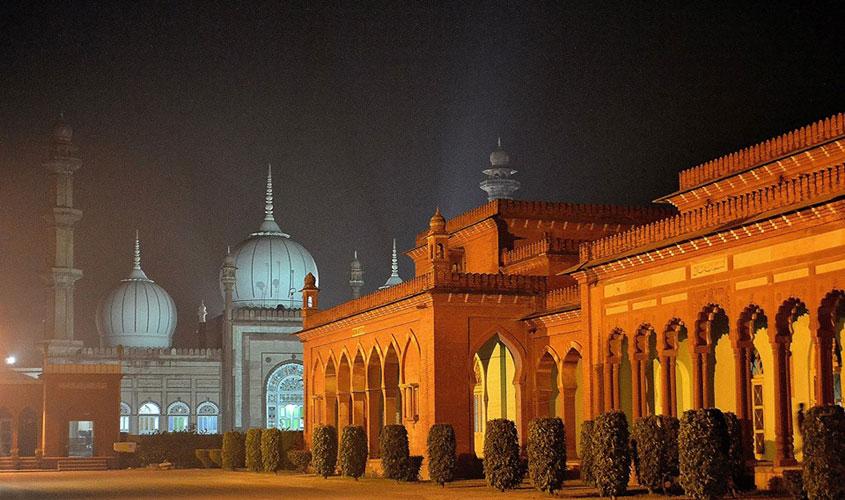
Interestingly, tomorrow’s Court hearing coincides with the India release of Hansal Mehta’s film based in Aligarh, on the life and death of Aligarh Muslim University (AMU)’s Professor Ramchandra Siras, who committed suicide after he was expelled from the campus of the university, because of an unethical sting conducted in his residence on campus where he was filmed having sex with a man. Although Siras challenged the university’s decision to expel him from the campus successfully in the Allahabad High Court, he committed suicide soon after. Siras, who was the head of the department of modern Indian languages at AMU, took on the role of an activist in the short span that this episode played out, and publicly talked about the difficulty of being gay in a conservative environment.
Professor Siras’ tale reflects the lives of millions of LGBT persons in India today. Faced with the prospect of societal censure, and laws that criminalise consensual sex, LGBT persons continue to bravely speak up about the discrimination they face, and demand equal rights. The story of Professor Siras reflects the core argument that has been made in court against section 377 – even if it is difficult to gauge the exact number of arrests made under this law, the fact is that the law creates an atmosphere legitimising discrimination and abuse of LGBT people. It sends out a message to people that they are unequal, and there is something wrong with them. It allows for quacks posing as psychiatrists to prescribe electric shock therapy to homosexuals in order to ‘cure’ them.
The petitions before the Supreme Court are asking for the judges to cure the defects in the judgment as laid down by the same court in 2013. These defects, the petitions argue would lead to such a gross miscarriage of justice, that the court must exercise its powers and correct its previous decisions.
The curative power of the court is a recent judicial innovation, and this case in some ways is a test of how this power is exercised. Will the Supreme Court use this power to rectify its mistake in 2013 completely ignoring reams of evidence placed before it, evidence that showed the ways in which the law impacts the LGBT community? Or will it uphold its earlier view that ‘that there was insufficient evidence of discrimination against what it termed “a miniscule minority”’?
The struggle for LGBT rights in India is a relatively recent political battle that has galvanized support from a wide spectrum of people across ideological boundaries, and cutting across barriers of age, language and class.
The colourful pride marches; flamboyant imagery, the determination and enthusiasm with which this battle has been waged have won the minds and hearts of many in this country. Whichever way the court goes, the gains made by the LGBT movement cannot be reversed that easily. Thousands of people continue to come out every day, and law or no law, there is no way that LGBT persons can be forced back into the closet.
The stage is set. The long emotive legal battle has lasted for over a decade. It will be ironic if the political struggle for LGBT rights is not matched by appropriate legal changes. The Supreme Court’s decision in 2013 stands out like a sore thumb among its own judgments, including the Court’s 2014 NALSA verdict on the rights of transgender persons. It remains to be seen if this bench of the Supreme Court will display courage to right a wrong that has and is being committed, through an inhuman application of the law, against sections of our own people.
Christians should beware of the sangh parivar’s latest bid to co-opt them to their blatantly anti-Constitutional, anti-Christian agenda. ‘Dialogues’ over the past decade have gone hand-in-hand with growing hate propaganda, intimidation and violence against the community
A recent news report (‘Now, RSS plans to launch a Christian outfit’; The Times of India, January 4, 2016) has taken the Christian community in India by storm. The report quotes Indresh Kumar, senior pracharak, member of the national executive and margdarshak (guide) of the Muslim Rashtriya Manch as saying: “On December 17, 4-5 Archbishops, 40-50 Reverend Bishops from across 10 to 12 states met and it was decided to build a movement. This is preparing the ground to lay the seeds for an organisation.” According to the report, the proposed organisation, likely to be named Rashtriya Isai Manch, is to work along the lines of the Rashtriya Muslim Manch. The supposed aim is to build “goodwill” among India’s Christians.
The report also mentions that while addressing a Christmas celebration organised by the Catholic Bishops Conference of India in December, Union home minister, Rajnath Singh assured Christians that he would not let any "injustice" happen to them. Singh added that he was deeply hurt by the attacks on churches in the year before. This was followed a few days later by Union finance minister Arun Jaitley hosting clergy and professionals from the Christian community at a gathering which was attended, among others, by Cardinal Oswal Gracias, who is a member of Pope Francis' advisory council.
In short, Indian Christians are being wooed simultaneously by the RSS and top ministers in the government led by Narendra Modi, the sangh parivar’s preferred candidate for the the prime ministerial chair. It is curious, to say the least, that the man chosen by the RSS to be the face of the proposed Christian outfit, Kumar, is the same person who stands accused of instigating the most widespread and vicious anti-Christian violence in 300 years – Kandhamal, Odisha during 2007-08 and whose name has also figured in ‘saffron terror’ cases.
What’s going on here? Why this sudden love and affection for a community which has been demonised and repetedly targeted, especially since the late 1990s? Is this a fresh RSS hoax or a case of naivete among a few church members? How does RSS propose “to build bridges of goodwill with the Christian community”? What, if any, was the outcome of the several dialogues with the Church in the recent past? Does RSS have some hidden agenda behind such dialogues? How does the Church respond to the idea of an RSS-inspired Christian outfit? While the top Church leadership is yet to respond to the proposal of launching an RSS-friendly Christian outfit, let us try to understand what is behind the proposed launching of this outfit and the possible options before the Church.
The series of attacks on adivasi Christians in Gujarat in 1998 rattled and unnerved the peace-loving Christian community in India. The Church leadership did not know how to respond to these diabolical attacks. The Church leaders’ prime concern for the protection of the members forced them to have direct talks with the leaders of the perpetrators rather than the state actors (the latter, in many cases, were hand-in-glove with the former).
Talking peace with the bully The Church in India has and continues to contribute to nation building, especially in the sphere of education and health care of the marginalised groups. The Church’s humanitarian response to all disasters, whether man-made or natural, remains unparallelled. Yet, in recent years the sangh parivar has repeatedly targeted the community with hate campaigns, physical attacks and intimidation, questioned the intention behind the services provided by the Church for the marginalised groups as never before.
The series of attacks on adivasi Christians in Gujarat in 1998 rattled and unnerved the peace-loving Christian community in India. The Church leadership did not know how to respond to these diabolical attacks. The Church leaders’ prime concern for the protection of the members forced them to have direct talks with the leaders of the perpetrators rather than the state actors (the latter, in many cases, were hand-in-glove with the former).
Thus began the story of dialogue between Church groups and the sangh parivar in December 1998. Those who participated in the first conference included the then BJP president Shashikant 'Kushabhau' Thakre, RSS joint general secretary KS Sudershan, BJP general secretary Narendra Modi on one hand and Catholic Bishops Conference of India president Archbishop Alan de Lastic of Delhi, Archbishop Aruldas James of Madras, Evangelical Fellowship of India general secretary Richard Howell, the Church of North India's Sushma Ramaswamy, All-India Association of Christian Higher Education director Mani Jacob, Indian Social Institute director Father Ambrose Pinto and All-India Catholic Union national secretary John Dayal on the other.
Of equal concern was the NDA government's wilful refusal to condemn the violence, the fact that as home minister Advani was not living up to his oath of office (do right to all manner of people in accordance with the Constitution and the law without fear or favour, affection or ill-will). But the official response was: “There is no law and order problem in Gujarat”. Alan de Lastic’s untimely car accident in Poland in June 2000 left a void.
The chart below clearly shows how dialogues between the Church and the sangh parivar have not resulted in any let up in the attacks against Christians:
Dialogues between Church groups and the sangh parivar
Year
Incidences of attacks on Christians
Not known
1997
24
Church of North India/Evangelical Fellowship of India/Catholic Bishops Conference led by Alan de Lastic and BJP-RSS represented by then BJP president, SK Thakre, RSS joint general secretary KS Sudershan, BJP general secretary, Narendra Modi
1998
90
Not known
1999
94
First round: CBCI represented by Archbishop Oswald Garcias and RSS chief, KS Sudershan Second Round: RSS chief spokesman, Madan Vaidya, senior RSS functionary, Dr. S. Shastri and representatives of CBCI
Third Round: Dr. Cyril Mar Baselios, president, CBCI and KS Sudershan, RSS; dialogue on November 27, 2001 in Cochin
2001
Not Available
Christian-RSS Bangalore meet on 22 March 2002 RSS represented by KS Sudershan, John Joseph, Member, National Commission for Minorities (NCM); Church represented by OV Jonathan, Stanley Samarth, Dr. Ken Gnanankan
Delhi Meet Archbishop Vincent Concessao and the Shankaracharya of Gowardhan Peeth, Adhokshanand
Kerala Meet: RSS Delegates: KS Sudarshan (RSS sarsanghchalak), P Parameswaran, (director, Bharatiya Vichara Kendram), R. Hari (Akhil Bharatiya Baudhik Pramukh), Sethumadhavan (Prant pracharak), TV Anandan (Prant sanghchalak), AR Mohan (Prant karyavah) and others Christian Delegates: Dr MV Pylee, (Justice, retired) KT Thomas, MA John, Paul Pothen, B Wellington, NM Joseph and others.
2002
Not Available
Not known
2006
116
Not known
2007
450
First Meet Bhubaneswar and Delhi archbishops meet BJP leaders, LK Advani and Sushma Swaraj and Swami Chidanand Saraswat
Second Meet Cardinal Varkey Vithayathil, Major Archbishop Baselios Clemis, led the Church. Hindus represented by Swami Vivekanandan Saraswathi, Swami Jnana Mirthanandapuri, Swami Ritambaranandaa, RSS/VHP leaders PEB Menon, AR Mohanan, Kummanam Rajasekharan & Prof. Sasikala
2008
1650
Cardinal Jean Louis Tauran, head of the Vatican's pontificial council of inter-religious dialogue, Cardinal Oswald Gracias and Shankaracharya of Kanchi Kamakoti Mutt, Sri Jayendra Saraswati, Sri Sri Ravishankar, BJP’s Sudheendra Kulkarni
2009
152
Not Known
2010
140
Cardinal Jean-Louis Tauran, president, pontifical council for inter-religious dialogue, Vatican, Bishop Thomas Dabre and Swami Shrikantananda, head of Ramakrishna Mission represented Hindus
2011
172
Not Known
2012
131
Not Known
2013
151
Not Known
2014
147
Not Known
2015
149
As indicated above, dialogue after dialogue continued over the years at different levels. But it meant nothing for the Christian community which was under relentless attack even, as the RSS laid claim to ongoing dialogues with the Church. Chaos was evident among the Church groups as some unknown faces with varied interest holding dialogues with the RSS and claiming positive outcomes. But for the RSS, it was simply a joy ride. Meeting a few self-serving individuals/fronts and Church associates at different locations, billing them as Church-RSS meets were too part of their strategies. The only use of these dialogues was to lend credence to the pretence of BJP leaders in government that the attacks on Christians were the handiwork of anti-social elements unrelated to the sangh parivar. As the dialogue drama unfolded, Christians who had participated in them despite their reluctance and apprehensions realised that the RSS was not at all serious and that it could not meet the community expectations.
In 2002, the Kerala Council of Churches, affiliated to the National Council of Churches of India (NCCI), urged its parent body to reassess the process of dialogue. “The strategy adopted by the RSS for a dialogue with churches, the committee observed, “appeared to be intended to divide the churches”.
A year earlier, Bishop Thomas Mar Athanasius, president, Ecumenical Study and Dialogue Centre flayed the move for a dialogue between the CBCI-NCCI and the RSS arguing that those entering into a dialogue with the RSS were only weakening their credibility to speak on behalf of the Christian community.
Seeing through the hidden agenda Fr. Ambrose Pinto, former director of Indian Social Institute, New Delhi, one of the delegates for the first-ever meeting between top Church and RSS leaders held in 1998 sees the future of any further Church-RSS meet thus: “First of all, we need to know: a) what RSS stands for, b) why is the RSS saying what it is saying? c) the difference between its propaganda and facts, and d) in case Christians join them, do those Christians represent us? Understanding the nature of the fascist organisation, we should resist them as a community in solidarity with the prople of goodwill”. Would he like to be part of any future dialogue? “I was a reluctant participant. I did not want to be there. Even at that meet, I was one of those who spoke against their designs. I shall never join any kind of dailogue with RSS. You cannot dialogue with fascists”.
Says John Dayal, one of the delegates for the first Church-RSS dialogue: “To the parivar, there is only one mantra. Stop Conversions, and everything will end. To the sangh parivar, a dialogue is a monologue in which it speaks its mind, and the other has to take it or lump it. After all, Christianity is all about dialogue, both within the church and outside. Parivar spokespersons keep on repeating the same old manufactured lies like a Goebblesian zombie. If any single community, Sikh or Christian or Muslim, thinks it can reach a bilateral peace with the sangh parivar, it is only deceiving itself, and allowing the parivar to buy time”.
As the above chart shows for the RSS dialogue was mere pretense. The dialogues were punctuated with increasing violence year after year. The worst ever violence against Christians in India in 300 years was in Orissa in 2007-08 which continued unabated for over four months. It took nearly four years for the displaced adivasi and dalit Christians to return to their homes; even today there are several villagers where the forcibly displaced are not able to return eight years after the carnage.
The only use of these dialogues was to lend credence to the pretence of BJP leaders in government that the attacks on Christians were the handiwork of anti-social elements unrelated to the sangh parivar. As the dialogue drama unfolded, Christians who had participated in them despite their reluctance and apprehensions realised that the RSS was not at all serious and that it could not meet the community expectations.
While the dialogue was underway, the sangh parivar stepped up its hate campaign and violence against the Christian community. It is important to reflect why the earlier dialogues have failed to yield results. What are the issues that the RSS and the Church bring to the table? The RSS is quite clear about its agenda as has been articulated both in words (media) and actions (violence). As for the Church, it is still debatable whether it does or does not want any further dialogue. If yes, for what purpose and towards what end?
No one should be confused about what the RSS stands. There are certain key issues on which the sangh parivar’s stand is consistent and clear. The real agenda behind the so-called dialogue it seeks with Christians is to browbeat the community into meekly concurring with its ‘non-negotiable’ stands on these issues. These are repeatedly articulated through its mouthpiece, the Organiser. Here below are just a few examples:
Hindutva on conversions: ‘anti-national’ act
“Religious conversions that affected cultural identity of peoples had dangerous consequences for nations. Conversion militates against the core ethos of our nationhood”.
“Evangelists are subverting Indian culture… conversion, especially in tribal areas, leads to demographic disturbances which in turn lead to resentment and violence.”
“Conversion is an act of violence… Religious conversion destroys centuries-old communities and incites communal violence. It is violence and it breeds violence.”
“Conversions ban [are] a national necessity… Conversions are resorted to for political reasons and not for faith. There is, therefore, absolute justification for imposing a ban on free conversions. Lawlessness in India has taken place whenever the governments have failed the people to satisfy their legitimate feelings”.
“They went away (to other religion) because of some allurement and thus there is nothing wrong in bringing them back to original fold… It is like a thief who steals our valuables. The thief is caught and we will get our valuables back. They are ours.”
“An aggressive campaign is required for ghar wapsi of those Hindus who had converted to other religions in the past.”
BJP’s Lok Sabha MP, Yogi Adityanath, at a conference ‘Dharmantaran Rashtranataran Hai’ (Religious conversion is the same as change of nationality) at Gorakhnath Temple in Gorakhpur. It was announced that BJP MPs Yogi Adityanath and Tarun Vijay will introduce private member bills in the the Lok Sabha and Rajya Sabha respectively to stop religious conversions and debate the issue in next session of the Parliament, in The Indian Express, September 27, 2015.
Hindutva on affirmative action for minorities: vehement opposition
The denial of justice to the Dalit Christians and Muslims goes against the letter and spirit of Articles 14, 15, 16 and 25 of the Constitution of India on equal justice, equal opportunities and freedom of religion. Both Ranganath Mishra Commission and Sachar Committee reports address the anamoly in denying reservation meant for Scheduled Castes to Christian and Muslim Dalits. The sangh parivar however remains vehemently opposed to any affirmative action, as is evident from the writings and statements of its leaders, spokespersons and ideologues:
“The Ranganath Misra Commission’s report is… a sinister, treasonous conspiracy… it is the UPA’s gift to the Vatican and the Pakistani-Arab sponsors of jehad. It is on the verge of capitulating to a notorious paedophile organisation, masquerading as a religious dispensation and the licentious, Islamist criminals enthroned by the British… For quite sometime now Christian evangelists and Islamist jehadis have been working overtime to subvert the Indian judiciary. They want to disempower it and for real decision-making authority to reside with suborned politicians ready to facilitate the rapid ensnaring of Indian society… If reservations (for Scheduled Castes) are extended to Christians and Muslims a no-holds-barred campaign of bribery and chicanery will commence to entice underprivileged Hindus into their political fold. At present Hindus are harder to lure because Hindu society legislated reservations to help them overcome historic disadvantages. The Islamo-Christian calculation is that an extraordinary opportunity to finish Hindus off is at hand”.
“If perverted reports like those of Justices like Sachar and Ranganath Misra indulge in travesty of justice, who will save the law of the motherland? Ours is a nation governed by the will of the people. These justices may come and go, the nation is inexorably an essential unity, adhering to only one global ethic – dharma. Sachar and Ranganath Misra have done a signal disservice to the integrity and unity of the nation by promoting a sectarian view, which will not achieve an integrally developed Bharat with equal opportunities for everyone to realise his or her full potential”.
“Minorities cannot ask for caste quotas. If either Christians or Muslims accept and practice caste discrimination amongst themselves, the conversion process among such groups or individuals should be legally declared to be inadequate and incomplete. In other words, they may be declared as non-Christians and non-Muslims and asked to either complete the process of their transformation to the new faith, or return to the Hindu fold. There can be no half-way house in this matter”.
“The need to strip converts of quota regime: The Kendriya Sarna Samiti (KSS) asserts that tribal converts no longer belong to the Scheduled Tribe as they have renounced their traditional identity as a sine qua non of the conversion process”.
Cannibalizing Hindu society: Evangelicals have jealously sought access to the caste-based reservation benefits of Hindu depressed classes. They saw their chance when the Mandal Commission listed some ‘Muslim castes’ among the OBCs. Political parties were too short-sighted to challenge this dangerous opening, and Christians began to lobby for SC/ST benefits for ‘Dalit Christians’.”
“Enough is enough! Stop looting! Don’t try patience of Hindus: Why should Hindu tax-payers pay for vicious design by Islamic fanatics? Why should Hindu SCs, OBCs and STs and other meritorious Hindus allow Muslims and Christians to snatch their school/college seats, jobs, loans, lands and political rights?… STs converted to Christianity should not be allowed to retain and enjoy their ST reservations. Articles 25 to 30, minority privileges should be cancelled”.
“It is the story of another anti-Hindu policy of Orissa government, which is going to create an explosive situation… Levinus Kindo, IAS, the member of state board of revenue, has issued a circular to all the collectors that during his last tour of the tribal areas, he found that the tribal Christians (tribal converted to Christianity) are being deprived of getting proper benefit as they are being recorded as only Christians in the government records and in their respective Record of Rights (RoR) too… ‘Such an illegal and anti-national circular of Orissa government will encourage the missionary to undertake more conversions in the tribal areas. Christians will enjoy double privilege as tribals along with their present religion, says Sarat Chandra Sarangi, state general secretary of VHP, Orissa while expressing his reaction on the issue’.”
Hindutva on secularism: ‘a façade for anti-Hinduism’
For the ideologues and votaries of Hindutva, secularism is a dirty word:
“Secularism has degenerated as the backbone of terrorists & evangelists: This India had to be a Hindu India. The ideology of Indian secularism, misconceived from the very outset, has become the backbone of Islamic jihad and fundamentalist evangelism. The one is committing mass murder, the other attempting to transform India’s cultural and political landscape in order to reimpose foreign rule over it”.
“Secularism: A facade for anti-Hinduism: We became enamoured of the word secular because of our contact with the Britishers during their 150 years rule or because of our association and appreciation of the British polity… Why are not Pakistan and Bangladesh secular states?”
“For RSS, secularism is irrelevant in India: The perversion of the concept of secularism has resulted in the terming of nationalists as communal and people with communal thinking being hailed as secular. Saffron should have been the only colour on the national flag as other colours represented a communal thought.”
“Secularism is the most misused word in the country…This must stop. Because of the rampant misuse of the word, there have been instances of tension in society.”
Issue after issue of the Organiser is splashed with headlines such as ‘Secularism as insulting Hindus’,‘Obnoxiousapplication of secularism’. The media and secular groups who ‘dare’ to spoke out against anti-Christian or anti-Muslim atrocities are severely castigated for alleged “minority appeasement” and “pseudo-secularism”.
Hindutva on India’s minorities: ‘Your Safety lies in our goodwill’
“Hindutva is facing severe jolts all over the world. Muslim fundamentalists and Christian missionaries are the age old enemies of Hinduism. Next to them the communists have come forward to squeeze the throat of this great way of life. They have also walked a long way in this deadly mission”
“Unravelling the poisonous power of discourse: The UPA government made a great communal leap when it formed the Ministry of Minority Affairs… The creation of National Commission for Minorities is another instance of communalism… The Sachar Committee’s functioning needs to be probed… it has violated not only its terms and references but created a poisonous atmosphere. The recommendations are not [only] communal and divisive [but] a complete retreat to hey days of the Muslim Leagues’ politics”.
“Conversion to Christianity in the pretext of service, health, education and co-operation is an insult and devaluation to the service itself and a crime against humanity… It proves that your services are selfish motivated and expansionist as well as intolerant… In all the states, districts, areas where the Christian missionaries are active and powerful, the hatred, crime, social unrest, separatism, addiction are on the increase and the environment of peace, harmony, brotherhood and happiness are fading away”.
“Christianity inherited this [Roman] instinct of cruelty. The Pope wants to convert us Hindus into Christianity. The West wants to have control over our destiny. Can we allow these things to happen?”
“An Indian Christianity not just desirable, it is a must: Indian Christians must purge their faith of… imperial distortions… Indian Christians must leave this tradition of violence. They are legatees of the Indian (Vedic) tradition of love (of humanity as a family) and the Buddhist tradition of compassion. But this also happens to be the tradition of Jesus. Christianity was born as a religion of love. Today it is a religion of hatred. This must be a matter of concern to Indian Christians. Only the guidance of a lofty world view such as that of Vedanta can release them from their predicament. Only they can save Christianity’.
The above quotes are just a few examples, taken mostly from the RSS mouthpiece, Organiser, which clearly shows the hostility of the sangh parivar towards the principles and values enshrined in the Indian Constitution, demonisation of Christianity and Islam, animosity and hostility towards’s the country’s Christians and Muslims. There is nothing new here.
The term Hindutva was coined by Vikram D Savarkar leader of the Hindu Mahasabha a century ago. In his book with the same title, he had argued that India belongs only to those for whom the country was both a pitrubhoomi (fatherland) and punya bhoomi (holy land). Madhav S Golwalker, the second and the longest serving sarsanghchalak (chief) of the RSS (1940-1973) in its 90-year-old history, till date remains the most revered ‘Guru’ of the sangh privar. In his book We, or our nationhood defined first published in 1939, had also asserted that non-Hindus may at best aspire to continue living in his imagined Hindu Rashtra as second class citizens. In the early 1960s, he had identified Muslims, Christians and communists as the three “internal enemies” who are far more dangerous than external enemies and Hindus must guard against them.
Thus, what the leadership and the ideologues argue of the sangh parivar argue today, as may be seen from statements and writings such as those referred to above lie spring from the core ideas of Hindutva formulated a century ago. Even today, the sangh parivar remains committed to turning secular-democratic India in to a Hindu Rashtra.
As in case of the Rashtriya Muslim Manch, through the institution of the proposed Rashtriya Isai Manch, the sangh parivar wants to create a forum of RSS-friendly Christians to legitimise its anti-Constitution, anti-secular democratic, anti-minorities world views. It is important to recall that the Rashtriya Muslim Manch was floated in the aftermath of the anti-Muslim pogrom of 2002 in Gujarat under the watch of then chief minister Narendra Modi and the proclamation by the RSS top leadership that Muslims must have cordial relations with Hindus in the interests of their own safety. It is no less important to remember who Indresh Kumar, the man who is being projected as the RSS face for the proposed Christian front, is. For the Survivors Association of Kandhamal (SAK), Odisha, he along with VHP leader, PravinTogadia are the masterminds of the 2008 mass crimes against the state’s Christians.
Church for combating Fanaticism and fundamentalism Contrary to the sangh parivar’s baseless allegations of forced or induced conversions, the Church promotes the idea of “building bridges of friendship with the followers of all religions, in order to seek the true good of every person and of society as a whole”. But it also warns against the dangers of religious intolerance, fundamentalism and extremism.
In 2013, Cardinal Tauran, president of Justice and Peace Commission affirmed that religious freedom was a sacred and inalienable right, convinced that to deny or limit religious freedom in an arbitrary fashion means cultivating a reductive vision of the human person and rendering impossible the affirmation of an authentic and lasting peace for the whole human family.
During his visit to Turkey in 2014, Pope Francis stated: “Fanaticism and fundamentalism, as well as irrational fears which foster misunderstanding and discrimination, need to be countered by the solidarity of all believers. Inter-religious and inter-cultural dialogue can make an important contribution to attaining this lofty and urgent goal, so that there will be an end to all forms of fundamentalism and terrorism which gravely demean the dignity of every man and woman and exploit religion.
Final Comments Should the Church join hands with those who believe in a just, equitable and diverse world or should they seek security from communal, hate-filled and violent groups that demonise other religious traditions? This is a very important moment in history when the Church could and should join eminent writers, thinkers, academicians, film makers and civil society who speak for the overwhelming majority of all Indians and who believe in a secular democratic polity which protects and promotes the equal rights and freedoms of all citizens, including the right to freedom of religion. Of course, the Church could and should also engage in dialogue with Hindu religious leaders too. But nothing is to be gained in cozying up with the wolves of the sangh privar parading about in sheep’s clothing.
With a vision of crafting an institution like Oxford, Sir Syed Ahmad Khan, a Muslim philanthropist started the Aligarh Muslim University (AMU) movement in the mid-nineteenth century, never imagining that his dream would, close to 200 years later, become the matter of both polemics and politics. The Indian Parliament passed the Aligarh Muslim University Act, to upgrade and confer the Muhammedan Anglo-Oriental (MAO) College the status of a University in 1920. This was in tune with the vision of the founder. Today that vision lies under a shadow. The minority status of Aligarh Muslim University is once again in dispute after the Attorney General of India recently made a controversial statement in the Supreme Court of India indicating that the Central government, under the present regime, may review AMU’s minority status.
Intention of the Legislature The preamble of AMU Act, 1920 grounds sections 3 and 4 which shows that the MAO. College, Muslim University Association and the Muslim University Foundation Committee had come to an end legally, and all the three bodies voluntarily surrendered all the moveable and immoveable property they had to the Aligarh University. Through Section 23 of the Act, the Court of the University was constituted, which by law became the governing body of the university. Under this section, no person other than Muslims could be a member of the Court. The Governor-General of India was, under this law, the Lord Rector of the University (Section 13). Governor-General in Council was given power to remove any difficulties which might arise in the establishment of the university (Section 40).
Following the acceptance by independent India of the Constitution of India, the Aligarh Muslim University (Amendment) Act, 1951 was passed. Under this law, Sections 13 and 14 were amended, and in place of the Lord Rector, a Visitor was appointed by the University, and the powers of the Visiting board were bestowed on the Visitor. The proviso of section 23(1) was deleted which resulted in non-Muslims also becoming members of the Court of the University. Moreover, compulsory religious instruction was made optional.
In 1965, the Act was replaced by the Aligarh Muslim University (Amendment) Act, 1965 (originally an Ordinance). The result of this amended law was that the Court of the University was no longer the main governing body. Many of its powers were taken away and powers of the Executive Council were increased. The Court became a mere body nominated by the Visitor, and all the people holding office before the promulgation of the Ordinance ceased to hold office from the said date until the Court was reconstituted.
The Genesis of the Present Controversy The controversy started when Supreme Court in 1968 reflecting on issue in the Azeez Basha versus Union of India (constitutional validity of 1965 Amendment Act and 1951 Amendment was challenged) held that Aligarh Muslim University is not a minority institution as it is not established and administered by Muslims and therefore cannot seek protection of Article 30 of the Constitution. It will be pertinent to mention here that AMU was not a party to this controversial judgment.
Subsequently, on the recommendations of the Beg committee and the Minorities Commission of India, the AMU Act 1920, was amended once again in 1981by the Parliament so as to remove the technicalities which prevented AMU from being declared a minority institution in Azeez Basha. The amendments seek to reduce the Act to its actual substance and intention i.e. its intention was to declare and incorporate MAO College into a university namely AMU and not to establish an entirely separate entity. Hence, the 1920 Act was like a vehicle through which MAO College was transformed or incorporated into AMU.
Section 2(1) of the AMU Act (after the 1981 amendment) makes a substantive definition linking the identity of the original MAO College and the incorporated University. It states that the University was only subsequently incorporated from and only out of the original MAO College, which already existed and since this was a fact, and if there is no distinction between these two, then, the mere process of incorporation, cannot snatch away its character as a minority institution. The 1981 Amendment to the original act created a deemed provision, ratified it through a statutory enactment. This should have settled the matter and dispute, finally.
The controversy started when Supreme Court in 1968 reflecting on issue in the Azeez Bashav. Union of India (constitutional validity of 1965 Amendment Act and 1951 Amendment was challenged) held that Aligarh Muslim University is not a minority institution as it is not established and administered by Muslims and therefore cannot seek protection of Article 30 of the Constitution. It will be pertinent to mention here that AMU was not a party to this controversial judgment.
For 25 years, the Aligarh Muslim University (that is, from 1981 to 2005) enjoyed the right under Article 30 and in the continuation of this right, the University proposed the reservation policy for Muslim students, In 2005, the Allahabad High Court in Dr. Naresh Agarwal v. Union of India strongly and wrongly relying on Azeez Basha case –despite the subsequent amendments and enactments –declared the Act unconstitutional.
It is always open for the Parliament to change the basis or to remove the defects and the impediments pointed out by the Court and to explain and clarify any abstruse part of the statute which was made basis of law declared by the Supreme Court. The Supreme Court has done so in the past. (Reference may be made to the decision of this court in Mohd. Ahmad Khan versus Shah Bano Begum, which was domineered by Parliament by the enactment of the Muslim Women (Protection of Rights on Divorce) Act, 1985)
The 1981 Act, acknowledged the historical fact that was apparent from the records before the Parliament; that the Aligarh Muslim University was established by Muslims, hence, the declaration in Section 2(I) read with Section 5 (2) (c) being a recognition of a historical fact cannot be challenged so far as it is within the legislative competence of the Parliament. The legislative power of the Parliament can be questioned only on two grounds: (a) that the legislature has no competence to enact the law and (b) that the legislation is hit by the rights guaranteed under Part-III of the Constitution.
The legislative competence of the Parliament to enact the Amendment Act of 1981 cannot be disputed by virtue of Entry 63, List-I, Schedule-VII of the Constitution. The Amendment Act, 1981 is only in furtherance of the commitment of the State to fulfill and protect the rights of the minority community and as such it cannot be said to be hit by any of the Articles contained in Part–III of the Constitution of India.
De-coding the Basha Judgment The Court in Azeez Basha, recognised various definitions of the term “establish” and noted that the word could mean both to found and to create. In the judgment itself, it has been accepted that the word ‘establish’ could mean ‘to make or form’, ‘to found’, ‘make’, ‘start’, ‘originate. Reference may be made to the meaning of the term “establish” as intended by the drafters of our Constitution, who incorporated the articles on the cultural and educational rights, with specific emphasis on minorities. The framers, explicitly highlighted the necessity to establish such institutions in the sense of founding them, and further, to manage and to control such institutions as desired by the minorities.
Alternatively, even if the meaning imparted to the term “establish” by the court is correct, that is, “To bring the University into existence”, it is submitted that the university was brought into existence by the Muslim community by the only means by which a University could have been brought into existence i.e. by invoking the exercise by the sovereign authority of its legislative power. The lands, buildings, colleges and other endowments without which, the university as a body corporate would be an illusory abstraction, was provided by the Muslim community. Though, Muslim community could have established a university, the degrees ir provided students had to be recognized only by the government for which they had approached the sovereign power.
The Supreme Court in Azeez Basha disregarded the fact that the very purpose of the University, which was the educational renaissance of Muslims would be defeated if its degrees were not recognised by the government.
Azeez Basha: High Water Mark of Legal Positivism Although, the Basha judgment comprehensively studied the historical development of the University, the final decision was not based on the legalities and technicalities attached to it enactments. The Supreme Court, today, should not decide this matter on narrow technical grounds, which are the outcome of a misreading of the history of the case at hand. AMU was established by the Muslims for the educational and cultural advancement of the Muslim community and it owes its origin to the MAO College founded by Sir Syed Ahmed Khan.
AMU in reality is nothing but an extension of the MAO College. Sir Syed envisaged the MAO College as a University for Muslims that was in tune with the British education system, while staying true to the core fundamentals of Islam. Sir Syed Ahmed Khan’s son, Mr. Syed Mahmood, a Cambridge educated scholar, fostered and put forth a proposal to the Anglo-Oriental College Fund committee, of converting the college to an independent university. The idea of an independent Muslim university gathered tremendous support, consequentially leading to the founding of the Muslim University Association, which was asked by the government of India, to collect a sum of Rupees 30 Lakh before the University could be established.
The Muslim University Foundation Committee was formed and it collected the needed capital as inquired by the government for the formation of the Muslim University. Further, the British government supported the establishment and promised grants in aids since, from its very conception; the MAO College was seen as catering to the educational needs of a particular community. At the meeting of the Governor General’s Legislative Council in which the bill was finally passed as the AMU Act, 1920, the Governor-General recorded that, “……I should like to add my congratulations to the Muslim community on the passage of this bill. I have come here specially this morning to preside in order that I might add my good wishes and congratulations to those which have already been uttered in this Council.”[1]
It was the Azeez Basha case that flatly snatched the legal right of the Aligarh Muslim University, to get legal recognition under Article 30 of the Indian Constitution. The Supreme Court and later, even the Allahabad High Court, departing from the broad spirit in which Courts had decided cases on the cultural and educational rights of minorities, have held — on narrow, technical grounds — that a minority community which had striven hard to establish a Muslim University and endowed it with considerable property and money, has simply not established such a University at all. Not only is this judicial assessment flawed but it ignores the legal and statutory history of the AMU entirely.
(The writer is Head, Glocal Law School, Glocal University Saharanpur, Uttar Pradesh)



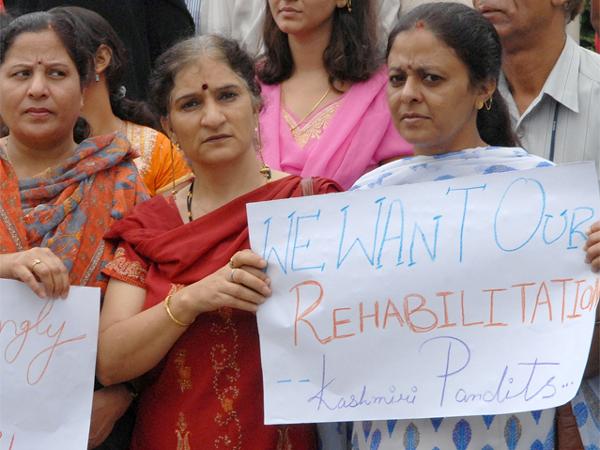

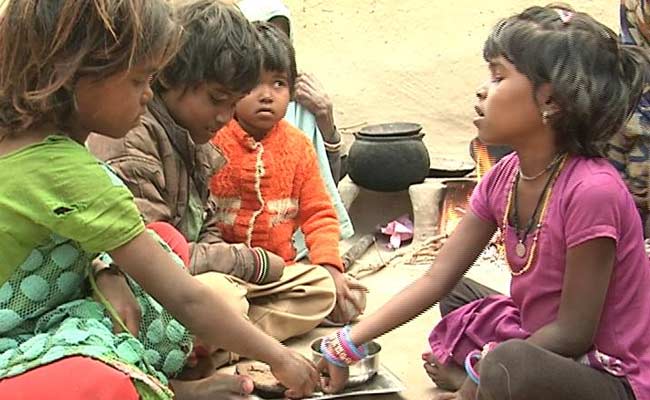
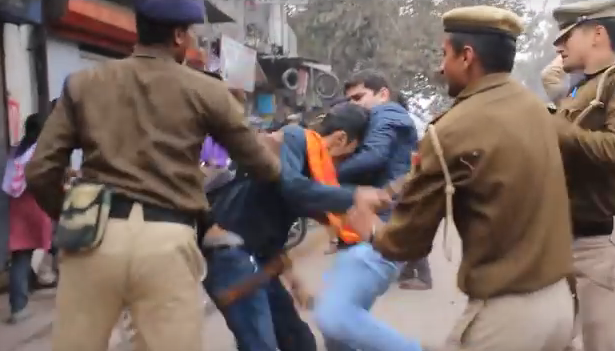
.jpg)